
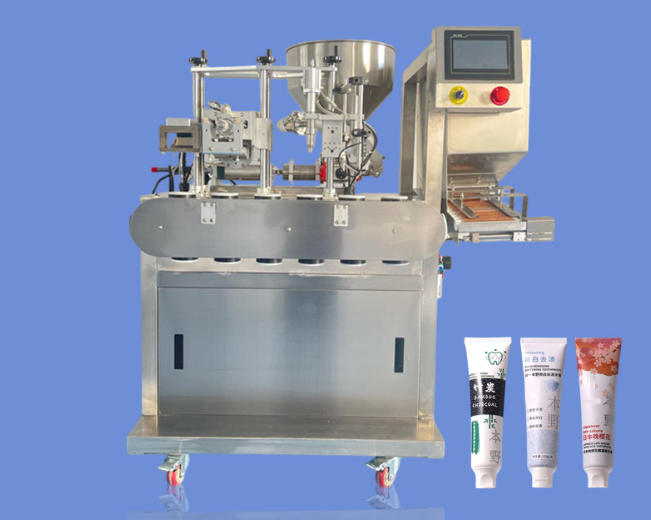
The tube on a pharmacy shelf or beauty counter used to be invisible — a vessel, nothing more. Today, it is one of the most important business decisions a cosmetic or pharmaceutical brand makes.
The global cosmetic tube packaging market is valued at USD 4.2 billion in 2025 and is projected to reach USD 8.4 billion by 2035, growing at a CAGR of 7.2%, according to Future Market Insights. That growth isn’t coming from more products on shelves. It’s coming from smarter packaging — tubes that do more, protect more, communicate more, and align with the values modern consumers and regulators demand.
For manufacturers, distributors, and agents in soft tube production, this shift changes the game entirely.
Packaging is no longer just a cost center that keeps product inside and contamination outside. It is a brand asset, a regulatory compliance tool, a consumer engagement channel, and a sustainability statement — all in one squeezable cylinder.
What this means for you: The machinery you run, sell, or recommend defines which of these innovations your clients can access. Brands that can’t produce recyclable tubes, print smart labels, or switch formats without a full-day downtime are losing contracts. The producers who can are gaining them.
This guide walks through every major packaging trend reshaping soft tube production — with real data, material comparisons, compliance timelines, and direct implications for your production line.

Modern cosmetic and pharmaceutical soft tube production — where innovation meets precision manufacturing. Walk into any premium retailer today and you’ll notice something: the packaging IS the product story. Consumers read labels, squeeze tubes to test texture, examine materials for recycling symbols, and scan QR codes before they buy.
This isn’t a niche trend. According to Mintel’s Beauty Packaging Insights, more than 60% of beauty consumers now consider packaging sustainability when making purchase decisions. And this preference extends to the tube itself — not just the formula inside.
What are buyers specifically looking for?
- Sustainability signals — a clear recycling symbol, PCR (post-consumer recycled) content percentage, or a certified biodegradable material claim
- Ergonomic convenience — squeezable formats that dispense cleanly, don’t leak, and don’t leave product stuck at the bottom
- Brand transparency — tubes that communicate formula origins, certifications, and usage instructions without cluttering the shelf
- Sensory experience — soft-touch finishes, matte coatings, and embossed surfaces that create a tactile memory
Real-world response from brands:
L’Oréal, the world’s largest cosmetics group, has publicly committed to making 100% of its plastic packaging refillable, reusable, or recyclable. For their Cool Silver range, they partnered with tube manufacturer Albéa to create a refillable tube format that uses 74% less packaging than a standard single-use option.
BYBI Beauty has gone further — their tubes are produced from post-consumer recycled plastic, designed for repeated recycling within the same material stream.
The production implication is direct: if your machinery can’t handle PCR resin (which behaves differently from virgin PE during extrusion and sealing due to variable melt flow index), you are already locked out of a growing segment of brand contracts. The same applies to laminate structures that meet recyclability criteria — they require specific sealing parameters that older or less configurable machines can’t hit consistently.
Glossary:
- PCR (Post-Consumer Recycled) content — plastic resin recovered from products that have already been used by consumers and recycled, rather than virgin petroleum-derived plastic.
- Melt flow index (MFI) — a measure of how easily a plastic melts and flows through a mold or extruder; PCR resin typically has higher MFI variability, requiring tighter machine calibration. A tube that reminds users when to reapply sunscreen. A cap that verifies product authenticity with a smartphone tap. A label that shows real-time usage data to a brand’s skincare app. These aren’t concept renders — they are in market today.
NFC tags (Near Field Communication — tiny wireless chips embedded into a tube label or cap that communicate with smartphones) and QR codes (scannable matrix barcodes that link to digital content) are enabling brands to turn tubes into digital touchpoints.
According to Authena’s smart packaging platform data, brands using NFC-authenticated packaging have seen measurable reductions in counterfeit incidents and significant increases in consumer re-engagement via app-linked features.
What smart tubes actually do in the real world:
| Smart Feature | Technology Used | Consumer Benefit | Brand Benefit |
|---|---|---|---|
| Product authentication | NFC chip in cap | Verify it’s genuine before use | Block counterfeits, protect brand value |
| Usage reminders | Temperature-sensitive or time-release QR | Reminds user to reapply SPF, reorder | Increases repeat purchase rate |
| Personalized routines | App-linked QR code | Custom skincare advice based on skin type | First-party data collection |
| Supply chain traceability | Blockchain + QR | See where ingredients come from | Supports eco-claims with verified data |
| Anti-tamper detection | Holographic or NFC seal | Know if product was opened | Reduces returns fraud and liability |
The L’Occitane example is instructive: Their smart cap technology notifies users via a connected app to reapply hand cream at set intervals. It turns a disposable tube into a recurring engagement platform — dramatically increasing brand touchpoints per unit sold.
For tube production, smart packaging doesn’t require you to replace your filling line. It requires that your tube supplier or label applicator can handle pre-embedded NFC inlays without damaging the chip during the sealing or labeling process, and that your QR printing registration is accurate enough that codes scan reliably on curved tube surfaces.
The cosmetic smart packaging market is growing, but adoption at the production level requires machinery that maintains tube orientation consistency during printing and labeling — something that rotary indexing systems on modern filling lines handle well.
Glossary:
- NFC (Near Field Communication) — short-range wireless technology that allows a smartphone to read data from a chip embedded in packaging, typically within 4 cm of contact.
- QR code (Quick Response code) — a two-dimensional barcode scannable by a smartphone camera that links to a URL, video, or app experience. Sustainability in tube packaging is no longer a brand choice — it is becoming a legal requirement.
The EU Packaging and Packaging Waste Regulation (PPWR 2025/40) — which entered into force in February 2025 and applies from 12 August 2026 — mandates minimum PCR content thresholds for plastic packaging sold in EU markets. According to the European Commission’s packaging waste framework, plastic packaging must meet minimum recycled content levels: no less than 10% by 2030, 20% by 2040, and 30% by 2050.
Any brand selling cosmetics or pharmaceuticals into the EU after August 2026 must prove their packaging meets these requirements or face market access restrictions.
The three main sustainable tube structures today:
Mono-Material PE Tubes
Single-material polyethylene tubes are fully recyclable within existing HDPE or LDPE waste streams. They eliminate the separation problem of multi-layer laminates. The trade-off: lower barrier performance against oxygen and moisture compared to aluminum-plastic laminates. Best suited for formulas with preservatives that don’t require full oxygen exclusion.
Cost implication: Switching from standard multi-layer to mono-material typically increases tube material cost by 8–15% but reduces downstream waste sorting costs and can eliminate Extended Producer Responsibility (EPR) fees in regulated markets.
PCR (Post-Consumer Recycled) Tubes
Tubes made with 30–50% PCR resin content allow brands to make credible recycled-material claims. PCR resin currently costs approximately 33% more than virgin plastic on commodity markets (Propacks data), but increased recycling infrastructure is improving supply and narrowing this premium over time.
The production challenge: PCR resin has higher melt flow index variability. Your extruder temperature zones and die head settings need tighter monitoring to maintain consistent wall thickness and avoid weak spots that cause seal failures downstream.
Compostable and Bio-Based Laminates
Emerging tube structures using PLA (polylactic acid — a bioplastic derived from corn starch or sugarcane) or paper-hybrid substrates are gaining traction in the premium natural beauty segment. These require specific sealing temperature profiles — often lower than standard PE — and are sensitive to moisture during storage.
Brand leaders shaping the market:
- Fenty Skin has publicly moved toward recyclable tube formats across its skincare line — driven by Rihanna’s brand commitment to inclusive, responsible beauty.
- Aveda has used PCR packaging in hair care tubes since 2007, giving it two decades of supply chain experience that newer sustainable brands are now trying to replicate.

Recyclable mono-material and PCR tubes are now a procurement requirement, not just a green marketing claim.
Glossary:
- PPWR — EU Packaging and Packaging Waste Regulation. The law that governs recyclability, recycled content, and producer responsibility for packaging sold in the European Union.
- EPR (Extended Producer Responsibility) — a policy approach where the producer of a product is financially or physically responsible for its end-of-life management, including recycling costs.
- PLA (Polylactic Acid) — a bioplastic made from fermented plant starch, often used as a compostable alternative to petroleum-based plastics. For manufacturers and machinery buyers, tube structure selection has direct consequences for machine configuration, sealing parameters, barrier performance, and cost-per-unit. The following 10 structures represent the full current landscape — from commodity formats to emerging specialty options.
The laminated tube market itself is valued at USD 2.8 billion in 2025, projected to reach USD 5.2 billion by 2035 at a CAGR of 6.4%, driven by demand for barrier protection in both cosmetics and pharmaceuticals (Future Market Insights laminate tube report).
| # | Tube Structure | Key Advantage | Typical Application | Recyclability | Production Note |
|---|---|---|---|---|---|
| 1 | Standard PE (Polyethylene) | Low cost, flexible | Mass-market lotions, hair care | Limited (multi-layer) | Standard sealing temps, wide compatibility |
| 2 | Mono-Material PE | Fully recyclable | Eco-label skincare, EU-market products | ✅ High | Requires precise temperature control |
| 3 | Aluminum-Plastic Laminate (ABL/AIL) | Superior barrier, light protection | Medicated creams, long shelf-life formulas | ❌ Low | Needs higher sealing pressure, crimp sealing |
| 4 | Full-Body Printed Tubes | 360° brand canvas | Premium cosmetics, gift sets | Varies by substrate | Requires high-registration printing equipment |
| 5 | Recyclable Hybrid Laminates | Barrier + sustainability | Natural beauty, EU-market brands | ✅ Moderate–High | Adhesive bonding compatibility check required |
| 6 | Barrier-Coated Tubes (EVOH, PVDC) | Oxygen/moisture resistance | Sensitive serums, pharmaceutical ointments | ❌ Limited | EVOH layers require specific extruder screw design |
| 7 | Squeegee-Design Tubes | Minimizes product waste | High-cost formulas, medical creams | Varies | Requires modified tail sealing geometry |
| 8 | Refillable & Modular Tubes | Circular economy model | Premium, refill-program skincare | ✅ High (reuse model) | Requires compatible cap/connector standardization |
| 9 | Antimicrobial-Coated Tubes | Prevents microbial contamination | Clinical skincare, wound care, OTC pharma | Varies | Coating must be applied pre-filling; compatibility check needed |
| 10 | Transparent & Semi-Transparent Tubes | Product visibility | Clear gels, serums, premium brands | Moderate | Requires non-marring tube handling; optical clarity spec |
A closer look at the structures most critical for machinery selection:
EVOH Barrier Tubes use a layer of ethylene vinyl alcohol — a polymer with extremely low oxygen permeability — sandwiched within the tube wall. This is the go-to structure for oxygen-sensitive formulations like vitamin C serums, retinol creams, and certain OTC pharmaceutical ointments. The challenge: EVOH is moisture-sensitive during processing. Extruder humidity control and die head temperature uniformity are critical. Poorly maintained machinery causes EVOH layer delamination, which destroys the barrier function the tube was designed to provide.
Antimicrobial-Coated Tubes are increasingly specified by pharmaceutical and clinical skincare buyers. These coatings — often silver ion-based or quaternary ammonium compounds — are applied to the inner tube surface to inhibit bacterial growth during product shelf life. This is particularly important for preservative-free formulations (a growing segment driven by consumer demand for “clean” labels). Production adjustment required: tube handling between coating application and filling must minimize contact-surface contamination.
Transparent Tubes present a specific challenge — consumers can see the product, which means any air bubble, discoloration, or fill inconsistency is immediately visible. Fill accuracy requirements tighten from ±3% on standard tubes to ±1% or better. This is where servo-driven filling systems earn their investment back.
The Miyoda tube extrusion machine line is engineered to handle ABL and PBL (plastic barrier laminate) substrates with precision temperature-controlled adhesive metering — a critical requirement when switching between conventional and barrier-structured tube formats on the same production line. Cosmetic packaging has always been visual. What’s changed is how deep the design experience goes — and how directly it affects consumer purchasing behavior.
Research consistently shows that packaging is the first moment of truth for a cosmetic product. A Fast Company analysis of Glow Recipe’s brand strategy highlighted how the brand engineered every sensory element — pastel gradient colors, embossed fruit motifs, soft-squeeze textures — to create what co-founder Sarah Lee describes as making “skincare feel like entertainment.” The result: a brand that went from a curated K-beauty retailer to a cult beauty label with a loyal Gen Z and millennial following, largely driven by packaging that photographs beautifully and feels distinctive in hand.
The design techniques driving demand:
Textured Finishes and Soft-Touch Coatings Matte soft-touch lacquers applied over printed tubes create a velvet-like surface feel that communicates luxury before the product inside is even tested. These coatings are typically UV-cured and require a compatible printing/coating line — often inline with tube offset printing.
Color-Shifting and Thermochromic Inks These specialty inks change color with temperature — useful both aesthetically (metallic-to-pastel color shifts) and functionally (indicating whether a product has been stored at correct temperature). Thermochromic inks require printing at controlled temperatures and cannot be exposed to the heat of standard tube tail-sealing without masking or print protection.
Embossing and Debossing Three-dimensional surface texture — raised (embossing) or recessed (debossing) brand marks, logos, or patterns — applied directly to the tube body or shoulder. This requires tooling at the tube manufacturing stage, adding lead time but creating a shelf differentiation that no competitor can achieve with a simple label change.
Custom Tube Geometry Oval tubes, flat tubes, double-walled tubes — shapes that move away from standard round cross-sections are gaining traction in premium skincare. Each geometry requires specific tube production tooling and compatible filling/sealing heads. The business case: distinctly shaped tubes can’t be counterfeited by substituting generic product, providing an additional layer of brand protection.
Gradient and Multi-Color Printing 360° full-body tube printing using offset or digital techniques allows seamless gradient color transitions across the entire tube surface — a capability that was prohibitively expensive even five years ago but is now accessible at production scale through digital inkjet tube printing.
Industry insight: One premium skincare manufacturer we work with estimates that their shift to soft-touch matte tubes reduced return rates by 12% — not because the formula changed, but because the perceived quality of the product increased. Consumers equated the tactile premium of the packaging with higher formula quality, and brand complaints about “product not working” decreased. Compliance is no longer just a pharmaceutical concern. Beauty brands supplying into the EU, UK, North America, and increasingly Southeast Asia face a rapidly expanding web of packaging regulations — and the tube you produce today must meet tomorrow’s rules.
The three regulatory frameworks every tube producer must understand:
EU PPWR (Packaging and Packaging Waste Regulation)
The most comprehensive packaging regulation currently in force, the EU PPWR applies from 12 August 2026. Key requirements affecting soft tube production:
- All plastic packaging must be recyclable by design by 2030
- Minimum PCR content mandates apply progressively from 2030 to 2050
- Packaging must carry standardized recyclability labeling
- Brands bear Extended Producer Responsibility (EPR) — meaning they pay into national recycling systems based on packaging weight placed on market
What this means for machinery buyers: Your clients will increasingly specify tube structures that are PPWR-compliant. If your production line can’t run mono-material or verified-recyclable laminates, you lose those specifications. If you’re a distributor, clients will ask whether the machinery you represent supports EU-compliant tube structures before signing purchase orders.
U.S. FTC Green Guides
The Federal Trade Commission’s Green Guides govern environmental marketing claims for products sold in the U.S. market. Brands making “recyclable,” “compostable,” or “eco-friendly” tube claims must have verification — which means the tube must be certified recyclable in facilities available to a significant majority of consumers. Unsubstantiated eco-claims on tubes now carry real regulatory and reputational risk.
ISO 22716 and FDA 21 CFR 211
For pharmaceutical and clinical skincare tubes, compliance isn’t optional. ISO 22716 (Good Manufacturing Practices for cosmetics) and FDA 21 CFR 211 (Current Good Manufacturing Practice for pharmaceuticals) require documented control over packaging materials, contamination prevention, and traceability. This affects tube material documentation, supplier qualification processes, and filling line sanitation protocols.
Practical action for tube producers:
- Obtain material declarations from your tube substrate supplier — you need documented proof that laminates meet recyclability and PCR content requirements.
- Build tube format flexibility into your production line — regulations will evolve. Machinery that handles only one tube structure creates strategic risk.
- Document production parameters for each tube format — barrel temperatures, seal settings, fill weights — so you can demonstrate process control during brand or regulatory audits.

Compliance with EU PPWR, FDA 21 CFR 211, and ISO 22716 is now a baseline requirement for supply contracts with regulated beauty and pharmaceutical brands. The problem most manufacturers face isn’t awareness of innovation — it’s production capability that can keep up with it.
A brand comes to you with a new mono-material tube specification. Your current line runs standard PE laminate. The barrier-layer extruder you need isn’t available, or your sealing system can’t reliably seal the thinner-gauge mono-material without creating delamination at the crimp. You lose the contract to a competitor whose machinery was configured for flexibility.
This scenario plays out daily across cosmetic tube manufacturing facilities globally.
The core production efficiency challenges introduced by innovative tube structures:
Challenge 1: Material Changeover Time Switching from a standard PE laminate to an ABL aluminum tube on an inflexible line requires purging all previous resin, adjusting temperature profiles across all extruder zones, recalibrating die gap settings, and running a waste batch until the new material stabilizes. On conventional lines, this takes 4–8 hours. On modern servo-controlled lines with recipe memory systems, the same changeover runs in under 45 minutes.
Challenge 2: Sealing Parameter Variation Each tube structure — mono-material, ABL, EVOH-barrier — has a different optimal sealing temperature and dwell time. A line calibrated for aluminum tubes will over-seal or under-seal a mono-material PE tube using the same settings. Precision hot-air sealing systems with independent temperature zone control and digital recipe storage solve this. Machines without this capability require manual recalibration every changeover, adding both time and quality risk.
Challenge 3: Print Registration on New Formats Transparent tubes with gradient printing, soft-touch coated tubes, and flat-geometry tubes all present different surface handling challenges for print registration. Tube orientation sensors, servo-driven indexing, and print registration cameras are the difference between a brand-quality print and a misregistered logo that triggers a quality rejection.
The output math:
A cosmetic manufacturer running 2 million tubes per month on a conventional line with 6-hour changeover cycles between SKUs loses approximately 72,000 production slots per month to changeover time alone (assuming 4 changeovers/week × 6 hours × 3,000 tubes/hour average output). Reducing changeover to 45 minutes per cycle recovers approximately 63,000 of those tubes per month — without a single additional shift.
At an average selling price of $0.18 per tube to the brand, that’s $11,340 per month in recovered revenue — or $136,080 annually — just from changeover optimization.
At Miyoda Packaging Machinery, our tube production engineers specifically address this challenge. The laminate tube making machine range is designed for ABL and PBL substrates with precision adhesive metering, multi-zone temperature control, and format change compatibility — so a single line can serve multiple brand clients running different sustainable and specialty tube structures.
Watch: How modern tube filling and sealing lines handle multi-format production

▶ Watch: High-Speed Automatic Tube Filling & Sealing Machine in Action
This video demonstrates multi-format tube handling, precision fill control, and hermetic sealing across different tube structures — the core capabilities driving scalability in modern soft tube production. If you’re a tube manufacturer, a machinery distributor, or a regional agent, your role in the beauty and pharmaceutical supply chain has changed fundamentally.
You are no longer just supplying machines or producing tubes. You are enabling brands to bring innovations to market that would otherwise be impossible for them to execute at production scale. That’s a different — and significantly more valuable — conversation to have with a buyer.
How to position your production capabilities to premium beauty brands:
Capability 1: Sustainable Tube Production Documentation Premium brands need to make verified eco-claims. If your line produces certified mono-material or PCR tubes, document exactly what percentage of recycled content is used, the substrate supplier’s certifications, and your process controls. A brand that can say “our tubes contain 40% certified PCR content, verified by [Supplier Name], produced to ISO 22716 standards” has a marketing and regulatory advantage that commands premium shelf positioning.
Capability 2: Speed-to-Market for New Tube Designs Premium and indie beauty brands increasingly operate on 12–16 week new product launch cycles. If your tooling lead time for a new tube shoulder mold is 8 weeks and your competitor’s is 12, you win that contract every time. Know your lead times precisely. Miyoda’s engineering team works to custom tube production specifications with confirmed timelines from inquiry through factory acceptance testing.
Capability 3: Quality Consistency at Scale A brand running a retail campaign with 500,000 units needs every tube identical. Seal integrity, fill weight, print registration, and dimensional consistency must be within specification across the entire run. This is a story told in data — defect rate per thousand, seal test pass rate, fill weight Cpk (a statistical measure of how consistently a process stays within specification limits). If you can present these metrics from your production history, you convert a price discussion into a quality discussion — and you win on value, not on rate.
Capability 4: Regulatory Documentation Package When a pharmaceutical buyer audits your facility, they will ask for material safety data sheets for every tube component, GMP compliance records, equipment calibration logs, and batch traceability documentation. Having this package ready — organized, complete, and current — is the difference between a two-day audit that ends in approval and a six-month qualification process.
Talking points for distributor and agent sales teams:
- “Our production line handles mono-material, PCR, ABL, and EVOH barrier tubes on a single configurable platform — your brand doesn’t need to split production across multiple suppliers.”
- “We’ve completed regulatory audits for clients selling into the EU, U.S., and GCC markets — our documentation package is audit-ready.”
- “Our changeover time between tube formats is under 45 minutes — your brand’s multi-SKU catalogue doesn’t create bottlenecks.”
- “We can provide sample production validation before order commitment — you send us your tube and fill material, and we send back data.”

Manufacturers, distributors, and agents who bring documented capabilities — not just price lists — win premium brand partnerships. The next five years in soft tube production will be defined by three converging forces: artificial intelligence applied to design and quality, biodegradable materials achieving functional parity with conventional plastics, and digital traceability embedded at the tube level.
AI-Driven Packaging Customization
According to McKinsey’s analysis of AI in beauty, generative AI is already being used by beauty brands to rapidly prototype packaging designs, predict consumer response to colorways and finishes before tooling investment, and optimize formulation-to-packaging compatibility. The practical impact on tube production: brands will expect shorter turnaround times from brief to production-ready sample — compressing timelines that currently run 8–16 weeks.
For machinery buyers, this means investing in digital production management systems that can receive and execute format change instructions rapidly — moving from manual setup to recipe-driven changeover triggered by ERP or production management software.
Biodegradable Smart Tubes
The convergence of compostable substrates (PLA, PBAT — polybutylene adipate terephthalate, a biodegradable plastic) with NFC smart label integration represents the frontier of tube innovation. A tube that biodegrades after use but carries digital product authentication, usage guidance, and traceability data during its active life — this is where premium sustainability and consumer engagement intersect.
Current production challenge: PLA and PBAT substrates require sealing temperatures 30–40°C lower than standard PE. Running these materials through conventional sealing equipment without parameter adjustment produces consistently failed seals. This is a solved problem on modern precision sealing equipment. On legacy lines, it’s a barrier to accessing this growing product category.
Blockchain-Based Traceability
The blockchain-enabled packaging market is growing at 15.5% CAGR, reaching USD 2.9 billion by 2033. Blockchain (a distributed digital ledger that records transactions in a way that can’t be altered retroactively) enables brands to document every step of a tube’s supply chain — from raw resin origin to filling facility to retail shelf — in a way that can be verified by the consumer via a simple QR scan.
For brands making sustainability claims, this verification capability is becoming a commercial necessity. Several major retailers, including select EU grocery and pharmacy chains, have begun requiring blockchain-verified supply chain documentation for packaging placed on their shelves.
Your action plan:
- Invest in modular, upgradable machinery — platforms that accept software updates and mechanical format upgrades without full line replacement. This protects your capital investment against regulation and format changes over a 10-year machinery life.
- Build supplier qualification for sustainable substrates now — qualifying PCR resin, mono-material PE, and bio-based laminate suppliers takes 3–6 months. Starting that process today means your line is ready when brand demand arrives.
- Develop your documentation capability — traceability, GMP records, material certification, and process data will be what separate qualified suppliers from commodity producers in the next market cycle.
- Partner with a machinery manufacturer who understands where the market is going — not just where it is today.
At Miyoda Packaging Machinery, we work with cosmetic and pharmaceutical tube manufacturers across Asia, the Middle East, and Europe — and the consistent conversation we’re having is not about current specifications. It’s about how to position production capability for the brand contracts that will define the next three to five years. You can explore our full tube production machinery range and connect with our engineering team to discuss your specific production development roadmap.

The next generation of soft tube production will be defined by AI-assisted design, biodegradable materials, and blockchain-verified supply chains — all requiring flexible, upgradable production infrastructure.
Frequently Asked Questions
1. What are the most in-demand soft tube structures in the premium beauty market today?
Mono-material polyethylene tubes and PCR-content laminate tubes are the most requested formats in the premium beauty segment, driven by brand sustainability commitments and EU regulatory requirements. EVOH-barrier tubes are in high demand for premium serums and pharmaceutical ointments where oxygen exposure causes formula degradation. Transparent PE tubes are growing rapidly in the K-beauty and clean skincare segments.
2. How can I produce recyclable tubes without sacrificing product protection or shelf life?
Mono-material PE tubes with appropriate wall thickness can provide adequate barrier performance for most cosmetic formulations containing standard preservative systems. For oxygen-sensitive formulas, mono-material PE with an internal EVOH co-extrusion layer offers recyclability (some single-material streams accept this) combined with barrier protection. Work with your tube substrate supplier to get documented oxygen transmission rate (OTR) data for any structure you’re considering — then validate against your formula’s stability requirements.
3. Are smart packaging features like NFC compatible with standard tube production lines?
NFC chips are embedded at the label or cap manufacturing stage — not during filling. Standard tube filling lines do not need modification to handle NFC-enabled tubes, as long as the chip is mounted in a location that doesn’t interfere with tube handling (typically the cap or a reinforced label zone). The filling and sealing process itself does not damage properly positioned NFC inlays. The investment is at the label printing and application stage, not the filling line.
4. What are the cost implications of switching from multi-layer to mono-material tubes?
Tube material cost for mono-material typically runs 8–15% higher than equivalent multi-layer structures due to the need for thicker gauge to compensate for lower barrier performance. However, this can be partially offset by reduced EPR (Extended Producer Responsibility) fees in EU-regulated markets, where non-recyclable packaging is subject to higher producer levies. Brands making the switch often recoup the material premium through improved retailer positioning and access to sustainability-mandated procurement programs.
5. How do I ensure my tube production complies with upcoming EU sustainability regulations?
The EU PPWR (Regulation 2025/40) applies from 12 August 2026. Compliance requires: (1) tubes designed to be recyclable per EU recyclability assessment methodology, (2) minimum PCR content in plastic packaging from 2030 onwards, (3) accurate recyclability labeling on-pack, and (4) EPR registration in each EU member state where packaging is placed on market. Start by requesting a recyclability assessment of your current tube structures from your substrate supplier, then identify which formats meet the 2026 baseline and which require reformulation.
6. Can existing tube filling and sealing machines handle new sustainable or smart tube designs?
It depends on the machine’s configuration. Standard hot-air sealing systems can handle mono-material PE tubes with parameter adjustment. Aluminum-free laminate tubes generally seal within conventional temperature ranges. Bio-based PLA tubes require lower sealing temperatures (30–40°C below standard PE settings). NFC and QR-enabled tubes require no filling line modification. If your line is servo-driven with digital recipe storage, most format transitions require a parameter recipe change. If your line uses fixed mechanical stops and manual temperature dials, material transitions may require significant setup time and increase quality risk.
7. What is the market demand for refillable or reusable cosmetic tubes?
Refillable tube formats are a growing niche, particularly in the premium skincare segment and among brands with active refill-program retail partnerships (such as in-store refill stations). Market adoption is still early — refillable tubes represent a small fraction of total unit volume — but brand investment in refill programs is accelerating, especially in European markets where EPR regulations reward reuse models. For machinery buyers, refillable tubes use standard filling equipment — the investment is in the refill cap/connector mechanism standardization.
8. How can I reduce material waste during the production of high-barrier laminated tubes?
The primary sources of waste in laminated tube production are: (1) startup scrap during material transitions and temperature stabilization, (2) dimensional rejects from die gap variation, and (3) seal failures from temperature drift. Precision servo-driven extruders with closed-loop temperature control reduce startup scrap by 40–60% compared to open-loop conventional systems. Inline dimensional monitoring cameras catch out-of-spec tubes before they reach the filling stage, preventing downstream waste. Regular preventive maintenance on sealing heads — specifically heating element replacement and temperature sensor calibration — is the single most impactful action for reducing seal-related waste.
9. What are the best practices for printing on flexible, curved tube surfaces without cracking?
Ink and coating formulation must match the tube substrate’s flexibility characteristics. Rigid UV-cured inks designed for rigid substrates will crack when applied to flexible PE tubes and squeezed by the consumer. Use flexible UV inks specifically formulated for extensible substrates. Apply a compatible flood coat primer before decorative printing to improve adhesion and prevent delamination. Keep print coverage of metallic inks or foil-effect finishes below 30% of tube surface area to prevent cracking at the tail fold. Validate print flexibility using a 180° bend test at your defined minimum squeeze radius before approving any new ink system.
10. What certifications should I have to supply tubes to pharmaceutical or clinical skincare brands?
Minimum requirements: ISO 22716 (GMP for cosmetics) for cosmetic tube supply, and ISO 15223 / ISO 11607 compliance for pharmaceutical primary packaging. FDA-regulated markets also require compliance with 21 CFR 211 for drug product packaging. Material safety documentation (REACH compliance in the EU, FDA food contact status for any resin in contact with pharmaceutical products) must be current and on file. Clinical skincare brands (selling through dermatologist or hospital channels) typically require the same documentation package as OTC pharmaceutical suppliers.
11. How can distributors and agents position advanced tube capabilities to attract premium beauty brands?
Lead with documented capability data: defect rates per thousand units, seal integrity test pass rates, fill weight Cpk values, and changeover times. Premium brands don’t make sourcing decisions based on price per unit alone — they evaluate supply reliability, quality consistency, and compliance documentation. Offer sample validation before commitment: provide production trials using the brand’s tube format and fill material, with documented output data. Demonstrate regulatory readiness: have your GMP certification, material documentation, and audit-ready records available at first meeting. This converts a commodity sourcing conversation into a qualified supplier selection.
12. Is transparent tube technology stable for light-sensitive formulations?
Standard transparent PE tubes offer no UV protection — light-sensitive formulations (vitamin C, retinol, certain peptides) will degrade with exposure. Solutions: use transparent tubes with a UV-blocking additive in the PE compound (validated by your substrate supplier), apply an opaque label that covers 90%+ of the tube body, or switch to a frosted semi-transparent format with integrated UV barrier. Always request the UV transmission data (measured in nm) for any transparent tube structure before validating against your formula’s stability data.
For production consultation, machinery specifications, or export pricing, contact the Miyoda Packaging Machinery team directly:
- 🌐 Website: www.miyodamachine.com
- 📧 Email: info@miyodamachine.com
- 📱 WhatsApp: +86 13774214471
Quick Reference Glossary
| Term | Plain-Language Definition |
|---|---|
| PCR (Post-Consumer Recycled) | Plastic resin made from used consumer products that have been collected and recycled, rather than made from new petroleum |
| ABL (Aluminum Barrier Laminate) | A tube laminate structure using an aluminum foil layer for superior moisture and oxygen barrier performance |
| PBL (Plastic Barrier Laminate) | A tube laminate using a plastic barrier layer (often EVOH) instead of aluminum, offering improved recyclability |
| EVOH (Ethylene Vinyl Alcohol) | A copolymer plastic with extremely low oxygen permeability, used as a barrier layer in high-protection tube structures |
| Melt Flow Index (MFI) | A measure of how easily a plastic melts and flows under heat; affects extruder settings and dimensional consistency |
| PPWR | EU Packaging and Packaging Waste Regulation — the comprehensive EU law governing packaging recyclability and recycled content from August 2026 |
| EPR (Extended Producer Responsibility) | A policy where brands bear financial responsibility for managing their packaging at end-of-life |
| NFC (Near Field Communication) | Short-range wireless technology in smart packaging that communicates with smartphones when tapped |
| GMP (Good Manufacturing Practice) | Regulatory framework governing manufacturing conditions, documentation, and quality control in cosmetic and pharmaceutical production |
| Cpk (Process Capability Index) | A statistical measure of how consistently a manufacturing process produces output within specification limits — higher Cpk = more consistent production |
| OTR (Oxygen Transmission Rate) | The rate at which oxygen passes through a packaging material — lower OTR = better barrier against oxidation |
| SMED (Single-Minute Exchange of Dies) | A lean manufacturing methodology for reducing equipment changeover time — applicable to tube format changeovers on production lines |
| PLA (Polylactic Acid) | A bioplastic derived from plant starch used in compostable packaging — requires lower sealing temperatures than standard PE |















