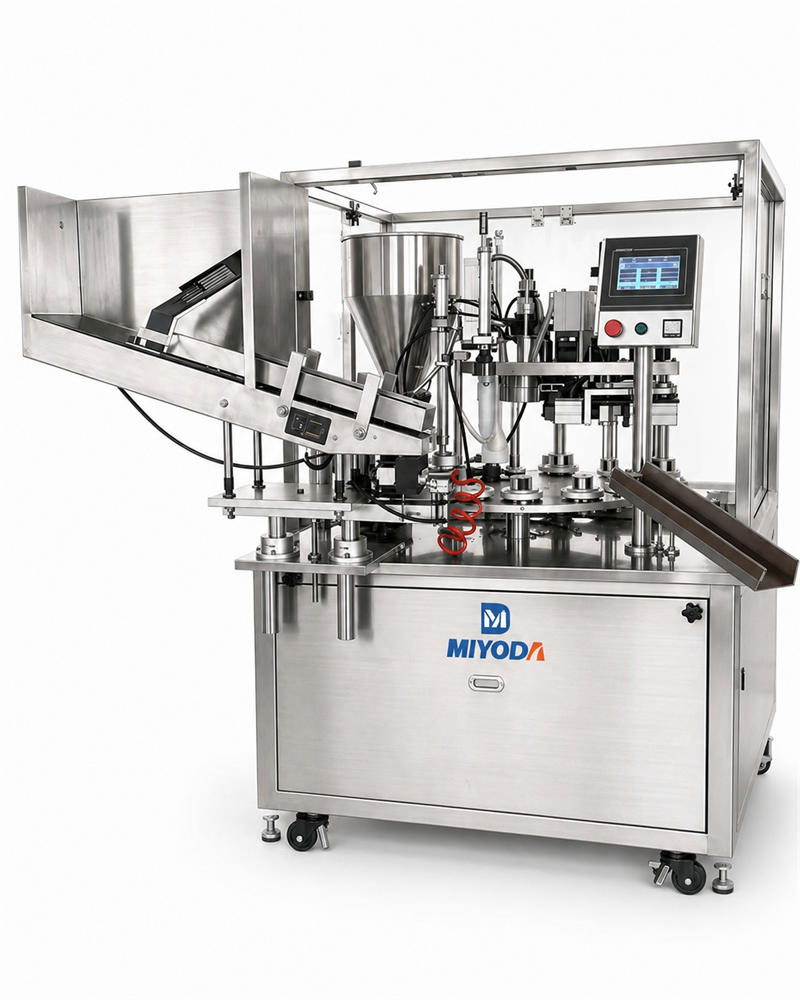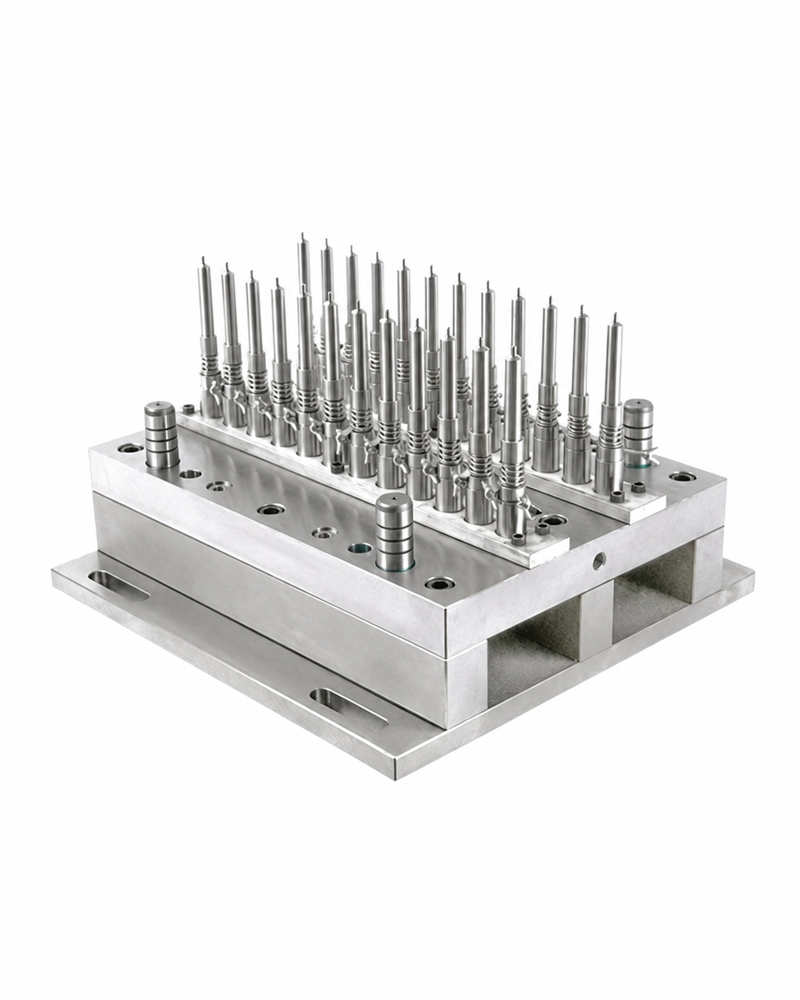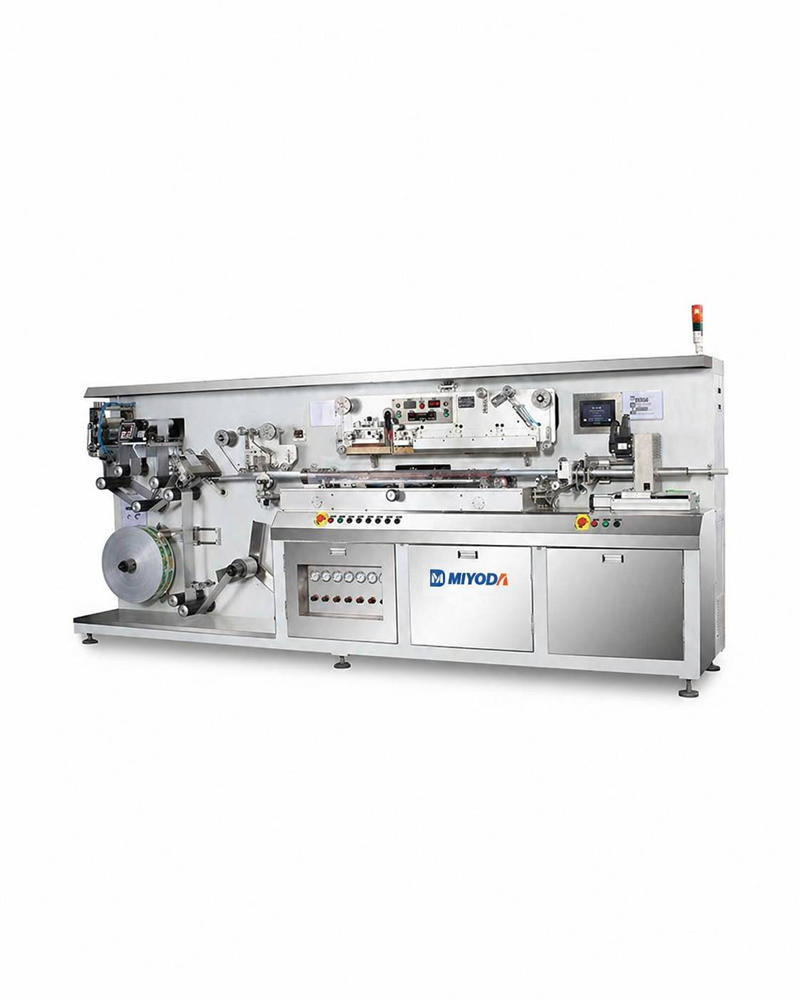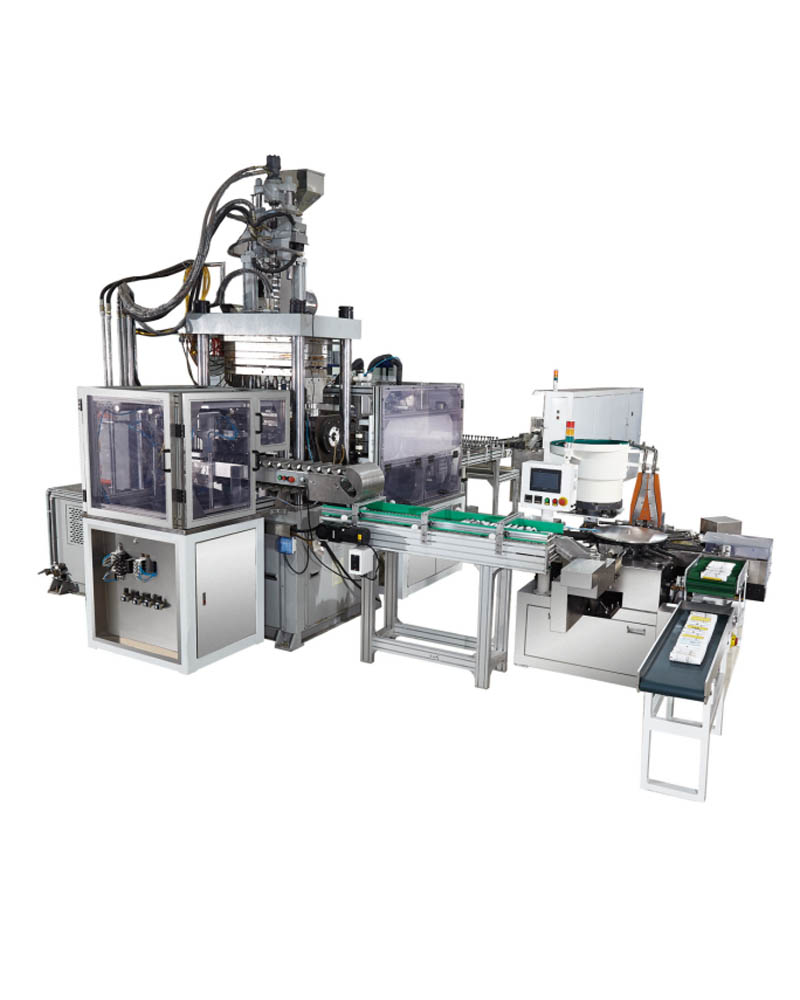
5 Benefits of Investing in an Injection Shoulder Machine for Cosmetic & Pharmaceutical Tube Production
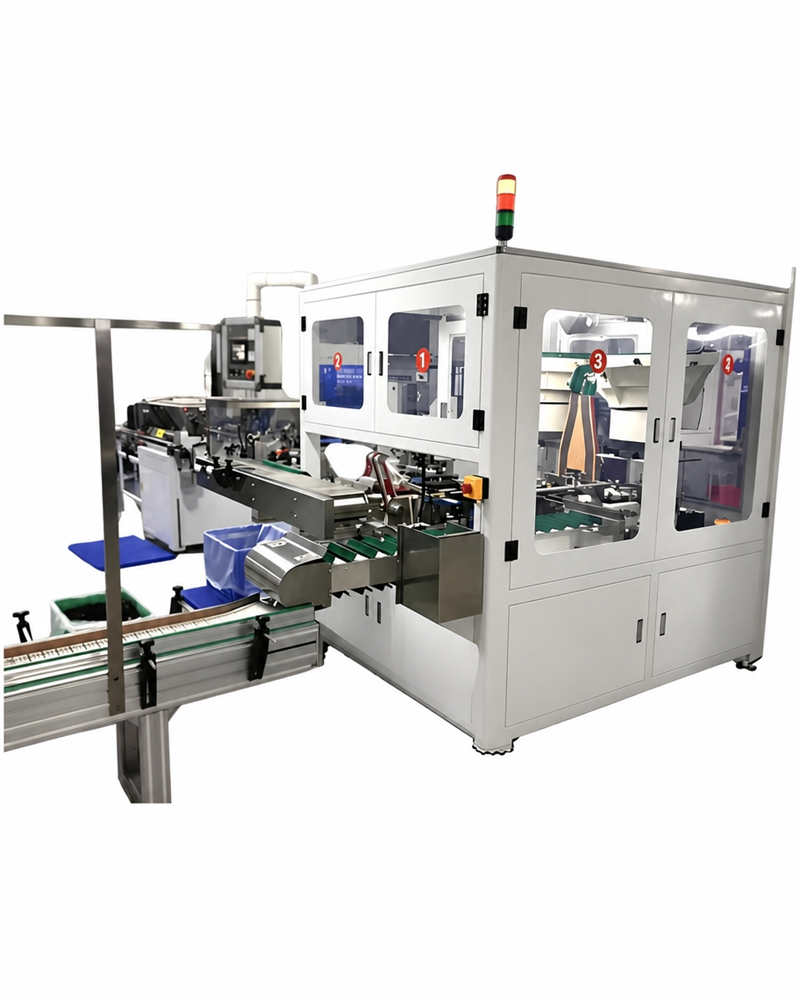
The injection shoulder machine sits at the critical junction between tube body production and finished packaging — its precision determines everything downstream.
The Pressure on Cosmetic and Pharmaceutical Tube Manufacturers
If you operate in cosmetic or pharmaceutical soft tube manufacturing, you are navigating a set of pressures that have only intensified in recent years.
Labor costs are rising in most major manufacturing markets. Quality requirements from pharmaceutical brand owners and cosmetic retailers have become more specific — and compliance failures more costly. Consumer demand for premium cosmetic packaging has accelerated SKU proliferation, putting new pressure on changeover speed and production flexibility. And for pharmaceutical tube producers, GMP audit standards continue to tighten.
The result: manufacturers who were managing fine with slower, more manual production setups five years ago are now finding those setups increasingly hard to justify — in cost terms, in quality consistency terms, and in the ability to win and retain contracts with demanding brand clients.
الـ injection shoulder machine — the equipment that molds the shoulder, neck, and cap-thread geometry directly onto the tube body — sits at the pivot point of this challenge. It is where the tube body becomes a finished, functional container. And the precision, speed, and material efficiency of this process directly determines your production cost per unit, your reject rate, and your ability to meet pharmaceutical-grade dimensional standards.
This guide examines five specific benefits of investing in a modern automatic injection shoulder machine — with real production data, cost calculations, and practical guidance for buyers, distributors, and agents evaluating this decision.
What Is an Injection Shoulder Machine? (And Why It Matters More Than You Think)
Before exploring the benefits, a clear definition helps frame the decision accurately.
Injection shoulder machine (also called a tube heading machine or tube shoulder injection machine): equipment that injection-molds a plastic shoulder — the tapered upper section carrying the neck orifice and cap thread — directly onto the tube body. The process uses a closed mold that shapes molten PE or PP resin around the tube body end, creating a hermetic, dimensionally precise connection between tube body and dispensing orifice.
Glossary — Injection molding: a manufacturing process in which molten plastic is injected under pressure into a precision mold cavity, cooled to solid form, and ejected as a finished component. For tube shoulders, the mold forms the taper angle, neck bore diameter, and cap-thread geometry in a single automated cycle.
For extruded PE tubes, the shoulder is injection-molded directly onto the extruded tube body — a process sometimes called “heading.” For laminate tubes (ABL or PBL construction), the shoulder is injection-molded and then assembled onto the formed tube body.
Why does it matter? Because the shoulder-to-body junction is the most dimensionally critical point of a soft tube. The neck bore diameter determines how the product dispenses — too wide, and the consumer gets an uncontrolled flow; too narrow, and the product won’t express cleanly. The cap thread must be geometrically precise to prevent cross-threading and leakage. The shoulder taper angle must be consistent to ensure the tube fits standard filling machine mandrels without jamming.
Every one of these parameters is determined by the injection shoulder machine — and all of them affect your downstream production performance, your product quality, and your customer satisfaction.
The global injection molding machine market was valued at USD 11.66 billion in 2026 ومن المتوقع أن يصل إلى USD 18.45 billion by 2034, growing at a CAGR of 5.9% (Fortune Business Insights, 2026). A significant share of that growth is driven by the expansion of cosmetic and pharmaceutical packaging production — exactly the sector this guide addresses.
Benefit 1: Dramatically Improved Production Efficiency

Continuous, uninterrupted injection cycles — with automated tube loading and mold clamping — are what separate 1,200 shoulders per hour from 4,800.
The Throughput Gap Between Manual, Semi-Automatic, and Automatic Systems
The efficiency difference between production approaches is not incremental. It is categorical.
A manual shoulder assembly process — where operators hand-press pre-molded shoulder components onto tube bodies — typically achieves 300–600 assembled tubes per operator per hour under sustained conditions. The variability between operators and across a shift adds further inconsistency.
A semi-automatic injection shoulder machine, where the operator loads tube bodies and the machine manages injection and clamping, typically produces 1,200–2,400 assembled tubes per hour with a single operator.
A fully automatic injection shoulder machine — with servo-driven tube loading, automatic mold clamping, injection, cooling, and tube ejection — operates continuously at 3,600–7,200 shoulder-molded tubes per hour, depending on cycle time and mold cavity count.
| نوع النظام | Output (Tubes/Hour) | مطلوب مشغلون | Fill Weight Accuracy |
|---|---|---|---|
| Manual shoulder assembly | 300–600 | 2–4 | High variability |
| Semi-automatic injection | 1,200–2,400 | 1–2 | ±0.1g |
| Fully automatic injection | 3,600–7,200 | 1 (monitoring) | ±0.05g |
What Continuous Operation Means for Your Production Economics
The economic advantage of continuous operation compounds through the shift. A machine that runs without interruption accumulates output at its rated cycle time. A machine that requires manual intervention — tube loading, component repositioning, jammed-tube clearance — loses that cycle time permanently.
Glossary — Cycle time: the total elapsed time from the start of one injection cycle to the start of the next. For a tube shoulder injection machine, this includes: mold closing, injection, cooling, mold opening, and ejection. Typical cycle times for PE tube shoulders range from 8–25 seconds depending on shoulder geometry and wall thickness.
At a cycle time of 12 seconds per tube (a realistic figure for a 35mm diameter PE shoulder), a fully automatic machine produces 300 tubes per hour per cavity. A 4-cavity mold configuration produces 1,200 tubes per hour — continuously, without pace variation, for the full production shift.
The output calculation for a single line:
$$\text{Daily Output} = \frac{3600\text{ sec/hr} \times 8\text{ hrs}}{12\text{ sec/cycle}} \times 4\text{ cavities} = 9{,}600\text{ tubes/shift}$$
At a wholesale value of $0.25 per tube: $2,400 in revenue per shift from a single machine, at a cycle time that a manual operation cannot approach.
Seamless Integration with Existing Tube Production Lines
Automatic injection shoulder machines are designed to feed directly into the downstream filling and sealing process. Tube shoulders are formed and the tube body is immediately ready for filling — eliminating the staging, counting, and inter-operation transport that semi-automatic or manual operations require.
For manufacturers running a complete tube extrusion production line, the injection shoulder machine operates as a synchronized station in a continuous sequence: extrusion → cooling → cutting → heading → downstream operations. This integration eliminates the work-in-process inventory and double-handling that accumulates in disconnected production steps — and the quality exposure that comes with each handling event.
Faster Mold Changeovers Increase Production Flexibility
Modern injection shoulder machines are designed for quick mold changes — a critical feature for manufacturers producing multiple tube diameters or shoulder geometries across their SKU range.
Quick-release mold mounting systems, where the mold is clamped with quarter-turn fasteners rather than bolted connections, reduce mold changeover time from 90–180 minutes to 15–25 minutes for a comparable format change. For a manufacturer producing 6 shoulder formats across 250 production days, that changeover time reduction recovers approximately 325 additional production hours per year — equivalent to more than 40 full production shifts.
Benefit 2: Significant Reduction in Labor Costs
The Labor Cost Equation Is Shifting — and Injection Automation Is the Answer
In every major cosmetic and pharmaceutical tube manufacturing market, labor cost is increasing. In Southeast Asia, wage growth in the manufacturing sector has averaged 5–8% annually over the past five years. In Eastern Europe — a significant hub for pharmaceutical tube contract manufacturing — labor costs in production roles have risen 40–60% since 2020. In Western European markets, the combination of rising minimum wages and labor scarcity has pushed fully-loaded operator costs to €35,000–€55,000 per year.
Against this backdrop, the labor calculation for injection shoulder production has fundamentally changed. The question is no longer “can I justify automation?” It is “how quickly does automation pay back?”
One Operator, Multiple Machines: The Supervisory Model
A fully automatic injection shoulder machine, once set up and running, requires one technician to monitor 3–4 machines simultaneously — managing exception events, material reloads, and quality checks, rather than performing the production cycle itself.
Compared to a manual or semi-automatic setup requiring 2–3 dedicated operators per machine, the labor reduction is substantial:
$$\text{Annual Labor Saving} = (2.5 – 0.3) \text{ operators/machine} \times $28{,}000 \times 3\text{ machines} = $184{,}800/\text{year}$$
(Using a conservative $28,000 fully-loaded annual operator cost — lower than most markets in North America, Western Europe, or increasingly, Southeast Asia)
At that saving, the capital cost premium for full automation over semi-automation on a 3-machine installation is typically recovered in 14–24 months — without counting any throughput or quality improvement.
Reduced Dependency on Skilled Labor in High-Turnover Environments
Manual and semi-automatic tube shoulder operations require operators with developed hand skills — the consistent hand pressure and positioning judgment that produces uniform shoulder seating. These skills take 4–8 weeks to develop to production standard and are lost when that operator leaves.
Automatic injection shoulder machines remove this dependency entirely. The machine applies consistent injection pressure, clamping force, and cooling time — regardless of who is operating it. Turnover no longer translates directly into quality variation and retraining costs.
Glossary — Clamping force: the pressure applied by the mold halves against each other during injection. Measured in tons (kN). Insufficient clamping force allows molten plastic to escape the mold cavity — called “flash” — creating dimensional defects and material waste.
For distributors and agents representing injection shoulder machines to clients in markets with significant labor turnover in production roles, this is often the most compelling commercial argument. The machine de-risks the human factor in quality consistency.
Benefit 3: Enhanced Product Consistency and Quality

Consistent dimensional accuracy at the shoulder — wall thickness uniformity within ±0.2mm, neck bore within ±0.1mm — determines whether tubes pass customer specification audits and function correctly throughout their lifecycle.
What “Pharmaceutical-Grade Precision” Actually Means in Numbers
The quality standards required for pharmaceutical tube shoulders are specific and measurable. They are not marketing language — they are documented dimensional and functional specifications that your tube must pass for the pharmaceutical brand client to accept it.
| Dimension | Cosmetic Standard | Pharmaceutical Standard |
|---|---|---|
| Wall thickness uniformity | ±0.3mm | ±0.2mm |
| Neck bore diameter | ±0.15mm | ±0.1mm |
| Cap thread form | ±0.2mm | ±0.1mm |
| Injection weight accuracy | ±0.1g | ±0.05g |
| Surface appearance | No visible flash, sink marks | No visible flash, sink marks, weld lines |
A modern automatic injection shoulder machine achieves injection weight accuracy of ±0.05g — the pharmaceutical standard — through servo-driven injection units with real-time pressure feedback. This is not achievable by hand and is unreliable in semi-automatic systems without closed-loop pressure control.
How High-Precision Molds Reduce Defects and Rework
The mold is the dimensional master for every shoulder produced on a machine. A precision mold — manufactured to tolerances of ±0.01mm in the cavity geometry — produces consistent shoulder dimensions across millions of cycles. A standard-grade mold with ±0.05mm cavity tolerance produces shoulders that are individually within spec but vary enough across the run to create cap-fit problems, labeling misregistration, and filling machine jamming.
The direct cost of mold quality difference:
- A precision mold producing 1% dimensional reject rate on a 5-million-tube annual run rejects 50,000 tubes — at $0.15 material cost per tube, $7,500 in annual scrap
- A standard mold producing 4% dimensional reject rate rejects 200,000 tubes — $30,000 in annual scrap
The price difference between a precision and standard mold for a standard cosmetic tube shoulder: typically $3,000–$8,000. The scrap cost difference: $22,500 per year. The precision mold pays back in year one — and continues paying back every year the machine runs.
Compliance with FDA, GMP, and ISO Standards
For pharmaceutical tube producers and premium cosmetic manufacturers supplying regulated markets, the quality produced by the injection shoulder machine directly affects your compliance posture.
لوائح إدارة الغذاء والدواء الأمريكية (FDA) المتعلقة بممارسات التصنيع الجيدة (cGMP) (under 21 CFR الجزء 211) require that packaging components — including tube shoulders — meet written specifications, are produced by validated processes, and are tested by documented procedures before release. A machine that produces within-specification dimensions consistently is a machine that supports your validation documentation. A machine that requires frequent parameter adjustment to maintain specification is a compliance liability.
ISO 15378 — the packaging materials GMP standard for pharmaceutical primary packaging — requires that equipment used to produce pharmaceutical packaging components is qualified, calibrated, and maintained according to documented programmes. Automatic injection shoulder machines that support IQ/OQ/PQ validation documentation (Installation Qualification, Operational Qualification, Performance Qualification — the three-stage pharmaceutical equipment validation framework) are a prerequisite for pharmaceutical contract manufacturing.
FDA cosmetics GMP guidelines (under MoCRA 2022) are moving toward mandatory GMP for cosmetic manufacturers in the US market. Equipment that produces documented, consistent quality is a forward compliance investment for cosmetic manufacturers operating in or supplying to the US.
Benefit 4: Greater Material Efficiency and Waste Reduction
Where Material Waste Occurs in Injection Shoulder Production — and How to Stop It
Injection molding of tube shoulders generates material waste through three primary mechanisms: over-injection (more material injected than the cavity requires, creating flash and excess that must be trimmed or scrapped), runner and sprue waste (the solidified plastic in the channels connecting the injection point to the mold cavities, scrapped after each cycle in cold-runner systems), and startup scrap (tubes rejected during machine warm-up and parameter stabilisation before the process reaches steady state).
Modern automatic injection shoulder machines address all three:
Closed-loop injection control monitors actual cavity pressure in real time during each injection cycle and adjusts the injection volume to maintain the correct cavity fill. Over-injection is prevented not by setting a fixed injection volume (which drifts as material temperature and viscosity change through the shift) but by controlling to a pressure endpoint — stopping injection when the cavity is precisely full. The result: injection weight accuracy of ±0.05g sustained across the full production run, with material consumption per shoulder held to specification ±0.1%.
Glossary — Flash: excess material that escapes between mold halves during injection, creating thin fins around the shoulder exterior. Flash causes cap application problems, consumer perception of low quality, and in pharmaceutical packaging, potential particulate contamination. Eliminated by correct clamping force and precise injection volume control.
Hot-runner systems eliminate runner waste entirely by keeping the plastic in the injection channels molten throughout the production run — so no solidified runner is formed and no runner scrap is generated. Compared to cold-runner systems (where runner scrap typically represents 3–8% of total material consumed), hot-runner systems recover that 3–8% as productive output. On an annual production of 5 million tube shoulders at a PE resin cost of $1.80/kg and an average shoulder weight of 3g, eliminating 5% runner waste saves:
$$\text{Annual Material Saving} = 5{,}000{,}000 \times 0.003\text{ kg} \times 5% \times $1.80 = $1{,}350/\text{year}$$
Modest in isolation — but compounding over 10 years of machine life: $13,500 in cumulative material savings from a single operational feature.
Compatibility with Sustainable and Recyclable Resins
The cosmetic and pharmaceutical packaging industry is under sustained pressure from brand owners, retailers, and regulators to move toward sustainable packaging materials. For tube shoulders, this means compatibility with:
- Post-Consumer Recycled (PCR) PE resin — PE made from recycled consumer packaging, with identical functional properties to virgin PE but a significantly reduced carbon footprint
- Biobased PE — polyethylene produced from sugarcane ethanol rather than petroleum, with equivalent performance characteristics and improved lifecycle carbon metrics
- Mono-material PP — polypropylene shoulders on PP tube bodies, enabling complete mono-material tube recyclability in PE/PP plastic waste streams
Modern injection shoulder machines, including those in the Miyoda tube extrusion production line range, are designed to process PCR PE and biobased PE without process modification. This is not universal — older or lower-specification machines may require barrel temperature adjustments, screw geometry changes, or mold temperature modifications to process recycled-content resins reliably.
When evaluating an injection shoulder machine for a brand client moving toward sustainable tube packaging, confirm explicitly: has the machine been validated with the specific PCR resin grade your supplier provides? Request trial data — not just a “compatible with PCR” claim.
A note on PP mono-material tubes: PP injection shoulders require higher processing temperatures (210–250°C vs. 160–200°C for PE) and different mold cooling parameters. Confirm your machine’s barrel specification covers the PP processing window before committing to a mono-material PP tube strategy.
Benefit 5: Scalability and Future-Proofing Your Production
Why Scalability Is a Financial Decision, Not Just an Operational One
Every capital equipment investment carries a fundamental strategic question: will this machine still be serving my business in 8 years?
For cosmetic and pharmaceutical tube manufacturers, the answer depends on whether the machine can grow with your volume, adapt to new tube formats, and integrate with evolving automation and compliance requirements — without requiring replacement.
A machine purchased for today’s production volume that cannot be upgraded when volume doubles does not depreciate; it becomes obsolete. And the cost of premature replacement — capital write-off, downtime for installation, operator retraining, re-validation for pharmaceutical clients — is substantially higher than the cost of a modular machine designed for expansion from the outset.
Modular Design: Expanding Capacity Without Replacing Equipment
Modular injection shoulder machines are built on a platform architecture where individual production heads — each responsible for a set of mold cavities — can be added to the base machine as volume grows.
A manufacturer starting with a 2-head configuration producing 3,600 shoulders per hour can add a third head to reach 5,400 per hour, then a fourth head to reach 7,200 — without changing the machine frame, control system, or installation footprint. Each head addition costs a fraction of a new machine purchase and takes hours to install rather than weeks.
The financial comparison:
| Approach | 5-Year Capital Cost | 5-Year Output Capacity |
|---|---|---|
| Buy fixed-capacity machine, replace when outgrown | $280,000–$420,000 | Capped until replacement |
| Modular platform, expand as needed | $160,000–$220,000 | Grows with business |
The modular approach delivers the same ultimate capacity at 35–45% lower 5-year capital cost — and without production downtime for a machine changeover when expansion is needed.
Adaptability Across Tube Sizes, Shoulder Profiles, and Closure Types
The tube formats your machine must handle are not fixed by your current product range — they are defined by the customers you plan to win.
A manufacturer supplying cosmetic creams today may add pharmaceutical ointments next year (requiring pharmaceutical-grade dimensional tolerances and validated process documentation) or premium cosmetic serums the year after (requiring a different shoulder taper and flip-top closure compatibility). A machine that handles only its original configured format requires additional capital to serve these new opportunities; a machine designed for multi-format flexibility via quick-change tooling opens them without incremental investment.
Key adaptability parameters to specify:
- Tube diameter range: What is the minimum and maximum tube body diameter the machine can head without a machine frame change? (16–60mm is the range covered by Miyoda’s tube heading and shoulder machine)
- Shoulder profile options: Can the machine run both standard taper angles (45° and 60°) and specialty formats (oval shoulders, double-orifice shoulders for dual-chamber tubes)?
- Cap thread compatibility: Is the machine validated for standard thread forms (M16×2, M20×2) and custom thread forms that premium cosmetic and pharmaceutical brands increasingly specify?
Industry 4.0 Readiness: Why Smart Machine Connectivity Protects Long-Term Investment
Machine connectivity — the ability to transmit real-time production data to dashboards, ERP systems, and remote support platforms — is increasingly a requirement from pharmaceutical brand owners and major cosmetic groups when qualifying contract manufacturers.
Glossary — Industry 4.0: the fourth industrial revolution — the integration of digital technologies (IoT sensors, cloud platforms, AI analytics) with physical manufacturing equipment to enable real-time monitoring, predictive maintenance, and data-driven process optimization.
An injection shoulder machine with IIoT connectivity (Industrial Internet of Things — connected industrial sensors that transmit production data in real time) generates data on cycle time, injection pressure, melt temperature, clamping force, and rejection rate — continuously. This data:
- Enables predictive maintenance: a cycle time that has increased from 12.0 to 12.8 seconds over three weeks is a machine developing a cooling circuit issue — detectable weeks before it causes a stoppage (Industry 4.0 and predictive maintenance in injection molding — Hunter Plastics)
- Supports pharmaceutical audit trails: every production cycle is time-stamped with process parameters — the documentation foundation for batch traceability
- Allows remote diagnosis: your equipment manufacturer’s support team can access machine data and guide corrective action without waiting for an on-site service visit
Watch: Automatic Tube Shoulder Injection Process — From Tube Body to Finished Shoulder
Understanding the physical process — what the machine actually does during each cycle — provides context that specification sheets cannot. This video shows the full tube heading and shoulder injection sequence, including mold clamping, injection, cooling, and tube ejection on a continuous automatic production line:
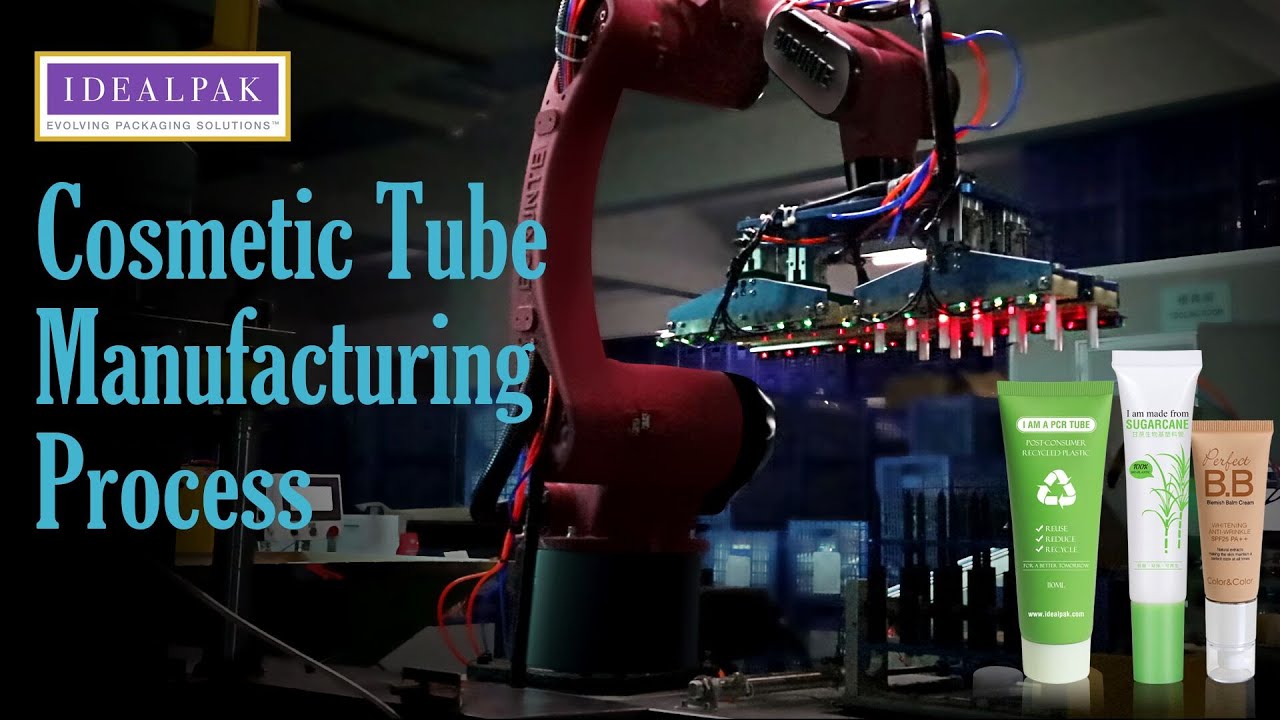
▶ Cosmetic Tube Manufacturing Process: Shoulder Injection & Heading — watch the automatic injection cycle, mold clamping sequence, and tube ejection on a high-speed production line.
Real-World Application: A Case Study in Measurable Results
The Starting Point: Rising Defects, Rising Labor Costs, a Lost Contract
A mid-sized cosmetic tube manufacturer in Central Europe was producing PE tubes for 22 cosmetic brand clients, using a semi-automatic shoulder heading setup requiring 3 operators per shift per machine. Their defect rate on shoulder-related issues — cap thread failures, dimensional rejects at filling machine mandrels, flash on shoulder exteriors — was running at 6.8% of output, consuming 340,000 tubes per year in scrap and rework.
A pharmaceutical brand client conducting a supplier qualification audit flagged three issues: their documented injection weight accuracy was ±0.3g (against the pharmaceutical specification of ±0.05g), they had no validated process parameters for the heading process, and their maintenance records were incomplete. The contract — worth €1.4 million annually — was conditional on resolving all three findings within six months.
What Changed: A Targeted Equipment Investment
The manufacturer invested in two fully automatic injection shoulder machines with:
- Servo-driven injection units capable of ±0.05g weight accuracy
- Closed-loop cavity pressure monitoring
- Hot-runner systems eliminating runner scrap
- IQ/OQ/PQ validation documentation package
- IoT connectivity for production data logging and remote support access
Total investment: €185,000 for two machines, installed and commissioned with full operator training.
Results After Six Months
| النظام المتري | Before | After | Change |
|---|---|---|---|
| Shoulder defect rate | 6.8% | 2.4% | −65% |
| Output (shoulders/shift, 2 machines) | 9,600 | 13,440 | +40% |
| Operators required (2 machines) | 6 | 2 | −67% labor |
| Annual material waste (runner scrap) | €28,000 | €3,400 | −88% |
| Pharmaceutical contract status | Conditional | Awarded | ✅ Secured |
Annual financial impact:
$$\text{Labor saving} = 4 \times €28{,}000 = €112{,}000$$
$$\text{Scrap reduction} = €28{,}000 – €3{,}400 = €24{,}600$$
$$\text{Pharmaceutical contract} = €1{,}400{,}000$$
$$\text{Total annual benefit} = €1{,}536{,}600$$
Payback on the €185,000 investment: under 6 weeks when the pharmaceutical contract revenue is included.
This is the case for injection shoulder machine investment framed in the terms that matter to a business decision-maker: not technical specifications, but financial outcomes.
What to Look for in a Reliable Injection Shoulder Machine Supplier
Technical training, spare parts availability, and responsive after-sales support are as important as machine specifications — and far harder to verify from a brochure.
Support Infrastructure: What Matters More Than the Machine Spec Sheet
A machine specification sheet is the easiest part of the supplier evaluation to assess. The support infrastructure that determines your experience for the next 10–15 years is harder to evaluate and more consequential.
On-site installation and commissioning: The installation process — where the machine is physically set up, connected to utilities, calibrated, and production-proven with your actual tube material — is the first evidence of your supplier’s technical depth. A supplier whose installation engineer cannot answer questions about process parameter optimisation for your specific PE resin grade is not the right partner for a pharmaceutical-grade heading operation.
Operator training depth and structure: Training that covers machine operation checklists is the minimum. Training that explains why injection pressure affects shoulder wall thickness, how cooling time determines dimensional stability, and what a cavity pressure curve looks like when a check valve is beginning to wear — that training produces operators who maintain consistent output without requiring constant technician support.
Spare parts availability: The components with the highest wear frequency in injection shoulder machines are: check valve springs (in the injection barrel), mold heating cartridges, cooling circuit O-rings and seals, and ejector pin springs. Confirm: are these parts stocked at a regional warehouse, or do they ship from the manufacturing facility? A 6-week parts wait on a mold heating cartridge — a $40 component — can mean 6 weeks of compromised production.
Customisation capability: Many production scenarios require shoulder geometries, neck thread forms, or orifice specifications that differ from standard configurations. A supplier who offers only catalogue mold designs cannot serve the full range of cosmetic and pharmaceutical tube applications. Confirm before purchase: can they produce a validated mold for your specific shoulder profile, and what is the lead time?
شركة ميودا لآلات التغليف supports customers through the complete tube production process — from extrusion and shoulder injection through decoration and filling — with documentation support for pharmaceutical GMP validation, regional spare parts availability, and technical support accessible via WhatsApp and remote diagnostics for production-critical issues.
For a broader view of how shoulder injection integrates with the full cosmetic tube manufacturing process, the Miyoda cosmetic tube manufacturing complete guide provides detailed context on every production stage and the equipment decisions at each.
Evaluating Total Cost of Ownership, Not Purchase Price
The purchase price is the most visible number in any equipment decision and the least reliable indicator of value.
Industry analysis of injection molding machine economics consistently shows that the purchase price represents only 55–65% of the 5-year total cost of ownership (Plastmachinemould TCO Analysis). The remaining 35–45% is energy, maintenance, spare parts, and downtime losses.
The 5-year TCO formula:
$$\text{5-Year TCO} = P + (E \times 5) + (M \times 5) + (S \times 5) – R$$
Where:
- P = Purchase price
- E = Annual energy cost ($3,000–$12,000 for a production-grade injection machine)
- M = Annual maintenance cost (target: 5–8% of purchase price)
- S = Annual spare parts cost ($2,000–$6,000)
- R = Residual value after 5 years (typically 20–35% of purchase price for well-maintained equipment)
A machine priced 15% lower than a competitor but consuming 25% more energy and requiring 2× the maintenance cost may cost $40,000–$80,000 more over 5 years — despite the lower purchase price. Build the full TCO calculation before making the final decision.
Your Competitive Advantage Starts with the Right Investment
The five benefits examined in this guide — production efficiency, labor cost reduction, quality consistency, material efficiency, and scalable flexibility — are not abstract advantages. They are measurable financial outcomes that directly affect your margin, your capacity to win contracts, and your ability to sustain growth in a competitive market.
The injection shoulder machine is not a commodity purchase. It is a strategic investment in the operational foundation of your tube manufacturing business. The right machine — specified to match your production requirements, supported by a supplier with genuine technical depth and responsive after-sales infrastructure — creates advantages that compound over its entire service life.
Manufacturers who invest in precision automation now are positioned to win the pharmaceutical and premium cosmetic contracts that require GMP-compliant documentation and ±0.05g injection accuracy. Those who defer the investment are defending contracts that will increasingly be won by more capable competitors.
If you are evaluating an injection shoulder machine purchase — or advising clients as a distributor or agent — the starting point is a clear specification: your tube diameter range, required throughput, regulatory environment, material requirements, and growth plan for the next three to five years. From that foundation, a machine specification and supplier evaluation can be built that produces a genuinely informed investment decision.
The team at شركة ميودا لآلات التغليف is available for technical consultations, factory demonstrations with your actual tube material, and GMP validation documentation support for pharmaceutical applications. Their complete tube extrusion production line includes integrated heading and shoulder injection capability for manufacturers building or upgrading complete tube production systems.
📞 WhatsApp: +86 13774214471 📧 Email: info@miyodamachine.com 🌐 Website: miyodamachine.com
Technical Glossary
| المصطلح | Definition |
|---|---|
| Injection shoulder machine | Equipment that injection-molds the plastic shoulder (neck + cap thread) directly onto the tube body in a single automated cycle. Also called tube heading machine or tube shoulder injection machine. |
| Cycle time | Total elapsed time per injection cycle: mold close + inject + cool + open + eject. Typical range: 8–25 seconds for cosmetic tube shoulders. |
| Clamping force | The closing pressure applied by the mold halves during injection (measured in tons/kN). Prevents flash by keeping mold halves sealed against injection pressure. |
| Flash | Excess plastic that escapes between mold halves during injection, creating fins on the shoulder exterior. Caused by insufficient clamping force or over-injection. |
| Hot-runner system | A mold design that keeps plastic in the injection channels molten throughout production, eliminating runner scrap. Higher upfront mold cost; significant material saving in production. |
| Cold-runner system | A mold design where plastic in the injection channels solidifies with each cycle, creating runner scrap (3–8% of total material). Lower mold cost; ongoing material waste. |
| التحقق من الصلاحية (IQ)/التأهيل التشغيلي (OQ)/التأهيل الدائم (PQ) | Installation Qualification / Operational Qualification / Performance Qualification — the three-stage pharmaceutical equipment validation framework. |
| PCR resin | Post-Consumer Recycled resin — plastic made from recycled consumer packaging. Performance-equivalent to virgin resin; reduced carbon footprint. |
| Closed-loop pressure control | Injection control that monitors actual cavity pressure during each cycle and adjusts injection volume in real time to maintain consistent cavity fill. |
| Flash (cavity pressure) | The moment of complete cavity fill, detectable by a rapid pressure rise in the mold cavity. Used as the injection stop signal in closed-loop systems. |
| Weld line | A visible line on an injection-molded surface where two flow fronts of molten plastic meet and bond. Indicates potential structural weakness in the part. |
| IIoT | Industrial Internet of Things — connected industrial equipment that transmits real-time operating data for remote monitoring, dashboards, and predictive maintenance. |
| MoCRA 2022 | Modernization of Cosmetics Regulation Act — US legislation requiring GMP compliance for cosmetic manufacturers, with increasing documentation requirements for equipment and processes. |
Frequently Asked Questions (FAQs)
1. How does an injection shoulder machine improve the integrity of soft tubes used in pharmaceutical packaging?
Pharmaceutical packaging requires tube shoulders to meet dimensional specifications that determine cap thread fit, neck bore diameter, and shoulder wall thickness — all within tolerances of ±0.1mm or tighter. A modern automatic injection shoulder machine achieves injection weight accuracy of ±0.05g and dimensional consistency through precision mold design and closed-loop cavity pressure control. This ensures every tube shoulder meets the written specification that pharmaceutical GMP validation requires — consistently, across millions of production cycles. Manual or semi-automatic heading processes cannot achieve or sustain these tolerances reliably, which is why pharmaceutical contract qualification increasingly specifies automatic injection shoulder equipment.
2. Can the machine handle both cosmetic and medical-grade tube production?
Yes — with the correct configuration and documentation. Cosmetic tube shoulder production requires injection weight accuracy of ±0.1g and dimensional tolerances of ±0.2–0.3mm. Pharmaceutical and medical-grade production requires ±0.05g injection accuracy, ±0.1mm dimensional tolerance, and documented process validation (IQ/OQ/PQ). A machine specified to the pharmaceutical standard runs cosmetic production comfortably — the tighter specification is a superset of the cosmetic requirement. The documentation package — process parameters, validation records, calibration certificates — is what distinguishes pharmaceutical from cosmetic production on the same machine. Confirm that your supplier provides IQ/OQ/PQ documentation templates as part of the purchase package.
3. What is the typical return on investment (ROI) for an injection shoulder machine?
ROI varies with production volume, current defect rate, and labor cost in your market. For a manufacturer producing 3–5 million tube shoulders annually and transitioning from semi-automatic to fully automatic injection, the typical payback calculation combines: labor cost reduction (typically $40,000–$120,000 per year depending on market), material waste elimination from hot-runner technology ($5,000–$25,000 per year at production scale), and quality scrap reduction (quantified from your current defect rate against the machine’s documented ±0.05g accuracy). For manufacturers in regulated markets whose pharmaceutical contract qualification is contingent on injection accuracy documentation, the contract revenue enabled by the qualification can make payback near-instantaneous — as in the European case study in this guide, where a €185,000 investment unlocked a €1.4 million annual contract within six months.
4. How long does installation and operator training take?
For a standard automatic injection shoulder machine installation: physical installation takes 2–3 days; electrical and utility connection takes 1–2 days; initial calibration and first-production qualification takes 1–2 days. Total time to production: typically 1 week from delivery. Operator training — delivered on-site with your actual production material — should cover machine operation, parameter setting, mold changeover, daily maintenance, quality checks, and fault response. A structured training programme takes 3–5 days for the primary operator team. For pharmaceutical applications where process validation is required, add 2–4 weeks for IQ/OQ/PQ execution with your QA team.
5. Is the machine compatible with multi-layer or barrier resin materials?
Yes — modern injection shoulder machines process both PE (LDPE and HDPE grades) and PP resins, including multi-layer co-extruded tube bodies with EVOH barrier layers. The injection process bonds the shoulder to the outermost PE layer of the tube body — the barrier layers in the tube wall are not affected by the heading process. For PCR (Post-Consumer Recycled) PE and biobased PE resins, confirm compatibility with the specific resin grade and MFI your supplier provides — processing parameters may require minor adjustment compared to virgin resin. Hot-runner systems are fully compatible with all PE and PP grades including recycled-content materials.
6. Can I integrate this machine with my existing tube filling and sealing lines?
Yes — injection shoulder machines are designed to feed directly into downstream operations. Tube bodies exit the heading station with the shoulder already formed, ready for filling line mandrel loading. Integration requires: conveyor or transfer system between heading and filling stations, PLC handshake signals to synchronise the production pace of both machines, and tube orientation alignment to ensure headed tubes enter the filling machine correctly. Confirm with your heading machine supplier and your filling machine supplier that these integration signals are compatible before committing to a configuration. For manufacturers building or upgrading a complete tube production line, working with a single supplier — such as Miyoda Packaging Machinery’s complete tube production line offering — simplifies integration significantly.
7. What maintenance is required, and how often?
Daily maintenance: clean all mold surfaces and product-contact areas; inspect ejector pins for wear; verify injection weight accuracy with a first-shot calibration check (weigh 5 consecutive shoulders on an external calibrated scale). Weekly: inspect check valve function; verify mold heating cartridge temperatures against setpoints; check cooling water flow rate and temperature. Monthly: deep clean of barrel and screw; full mold disassembly for parting line cleaning and surface inspection; lubrication of tie bars and mold mounting plates. Quarterly: injection unit recalibration; servo drive parameter verification; cooling circuit inspection for scale buildup. Annual professional service: full barrel and screw wear measurement; mold cavity dimension verification against original drawings; servo drive recalibration and firmware update.
8. Do you offer customisation for specific shoulder designs or tamper-evident features?
Reputable injection shoulder machine manufacturers supply custom mold tooling for non-standard shoulder profiles — including oval shoulders, double-orifice configurations, flip-top hinge-integrated shoulders, and tamper-evident neck geometries. The mold design process typically requires: a 3D model of the specified shoulder geometry, a material specification for the resin to be used, and a target cycle time. Lead time for a custom mold: 6–12 weeks from approved 3D design. Confirm that the mold design includes the mold flow analysis (simulation of how molten plastic flows through the cavity, revealing potential weld lines or incomplete fill zones) before committing to tooling fabrication — this step catches design problems at $500–$2,000 in simulation cost rather than at $15,000–$40,000 in physical tooling that requires rework.
9. How does the machine ensure compliance with international packaging standards?
Compliance is achieved through three mechanisms: precision dimensional control (ensuring the shoulder meets the dimensional specifications required by FDA, EU GMP, and ISO packaging standards), documented process validation (IQ/OQ/PQ records demonstrating that the machine is installed correctly, operates within its specification range, and consistently produces conforming output), and production data logging (recording process parameters for every production batch, providing the audit trail required by pharmaceutical GMP and increasingly by major cosmetic brand quality systems). A machine that supports all three — with documented performance rather than marketing claims — is a machine that passes regulatory and customer audits.
10. Are spare parts readily available globally for quick replacements?
This is one of the most important practical questions in any equipment decision and one that too few buyers ask before purchase. Critical wear parts for injection shoulder machines — check valve springs, mold heating cartridges, ejector pin springs, cooling circuit seals — should be stocked at a regional warehouse, not shipped exclusively from the manufacturing facility. Ask your supplier: what is the ex-stock lead time for each of the five most frequently replaced components? What is the lead time if those components are not in stock? A supplier who cannot answer both questions does not have visibility into their own parts logistics — which tells you something important about the support you will receive when a critical part fails at 11 PM on a Friday before a Monday morning shipment deadline.
11. What kind of technical support do you provide post-purchase?
Technical support should include: 24-hour response availability for production-critical faults (the fault that stops your production does not schedule itself for business hours); remote diagnostic access — with your authorisation — enabling the supplier’s engineers to view live machine data and guide corrective action without waiting for an on-site visit; documented troubleshooting guides specific to your machine configuration; and periodic proactive check-ins — not just reactive response. When evaluating suppliers, request the mobile contact number for the support engineer who would handle your production-critical calls — not a general support email address. The quality of technical support is the dimension of the supplier relationship you will live with every day.
12. Can distributors get exclusive regional rights or sales incentives?
This varies significantly by manufacturer and market. Distributors and agents representing injection shoulder machine manufacturers should request a clear written distribution agreement that specifies: territory exclusivity or preferred-partner status; commission structure on direct and referred sales; technical training access (both initial and ongoing); co-branded marketing material and lead-sharing arrangements; and support infrastructure commitments — what technical resources the manufacturer will provide in your territory and at what response time. A distribution agreement that does not specify support infrastructure commitments exposes you to the scenario of representing a product you cannot adequately support — damaging your client relationships when the inevitable post-installation issue arises.
13. Does the machine support Industry 4.0 connectivity (IoT, remote monitoring)?
Modern injection shoulder machines from reputable suppliers are designed with IIoT connectivity — typically via standard industrial protocols (OPC-UA, Modbus, EtherNet/IP) that allow machine data to be transmitted to plant-level SCADA systems, ERP platforms, or the manufacturer’s remote support dashboard. Parameters transmitted in real time typically include: injection pressure profile, melt temperature, clamping force, cycle time, shot weight, and fault codes. This data enables predictive maintenance (detecting developing mechanical issues before they cause production stops), electronic batch records for pharmaceutical compliance, and remote support diagnosis that reduces mean time to repair by 40–60% compared to phone-only support. When evaluating a machine for a pharmaceutical client or major cosmetic brand, confirm the specific communication protocol supported — and that it is compatible with the client’s existing plant systems.
14. What is the production capacity range (units per hour)?
Production capacity depends on three variables: cycle time (determined by shoulder geometry and wall thickness — typically 8–25 seconds), number of mold cavities (1–8 cavities per machine cycle), and machine availability (accounting for startup, quality checks, and minor interruptions — a realistic availability of 85–92% on a well-maintained machine). A single-cavity machine with a 12-second cycle time produces 300 shoulders per hour; an 8-cavity machine with the same cycle time produces 2,400 per hour. Most production-grade automatic injection shoulder machines for cosmetic and pharmaceutical tube applications operate in the 1,200–7,200 tubes-per-hour range at multi-cavity configuration. For your specific production requirement, the calculation is: required output per hour ÷ expected machine availability (0.88) = required rated capacity to specify.
15. How do I calculate the total cost of ownership over 5 years?
Use this framework:
$$\text{5-Year TCO} = P + (E \times 5) + (M \times 5) + (S \times 5) – R$$
Where P = purchase price; E = annual energy cost ($3,000–$12,000 depending on machine size and operating hours); M = annual maintenance cost (target 5–8% of purchase price annually); S = annual spare parts consumption ($2,000–$6,000); R = residual value at year 5 (20–35% of purchase price for a well-maintained machine from a reputable manufacturer). Apply this calculation to every machine you are evaluating — not just the purchase price. A machine priced 15% below a competitor but consuming 30% more energy, with a 10% higher annual maintenance requirement and no verifiable residual market value, may cost $50,000–$80,000 more over five years than the higher-priced alternative. The purchase price comparison is the starting point of the decision, not the conclusion.
References and Further Reading
- Injection Molding Machine Market Report 2034 — Fortune Business Insights
- FDA CGMP Regulations — 21 CFR Part 211
- FDA Cosmetics GMP Guidelines — MoCRA
- Industry 4.0 and Predictive Maintenance in Injection Molding — Hunter Plastics
- Injection Molding Machine 5-Year TCO Formula — Plastmachinemould
- How to Calculate Total Cost of Ownership — Graco
- Tube Heading and Shoulder Machine — Miyoda Packaging Machinery
- Complete Tube Extrusion Production Line — Miyoda Packaging Machinery
- Cosmetic Tube Manufacturing Process — Miyoda Packaging Machinery
- Tube Extrusion Machine with PCR Compatibility — Miyoda Packaging Machinery
- Maximize ROI in Injection Molding — RJG Inc.