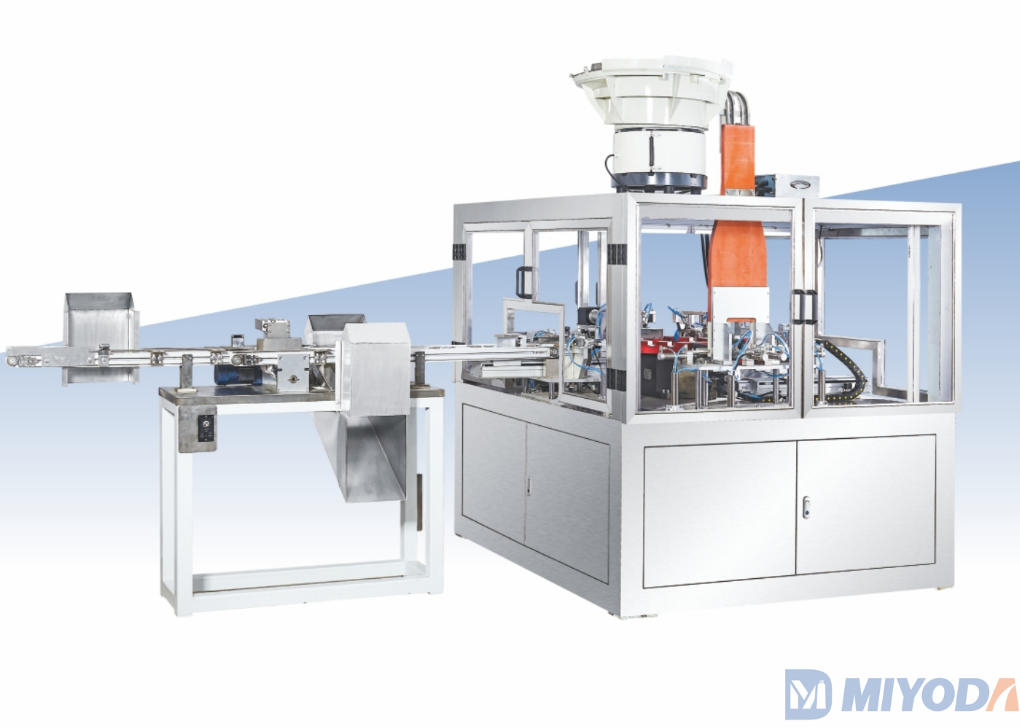
Top 5 Tips for Maximizing Efficiency with Your Cosmetic Tubes Making Machine

A well-optimized cosmetic tube production line is the difference between hitting your shipment targets and explaining delays — every single week.
Here is the number that should open every efficiency conversation in cosmetic tube manufacturing: a production line running at 72% OEE versus one running at 86% OEE — on the same machine, same shift structure, same product — produces approximately 19% more tubes per year with zero additional capital investment.
On a line producing 8 million tubes annually at a $0.09 margin per tube, that gap is $136,800 in annual profit, lost entirely to inefficiency, not to market conditions or competition.
The global cosmetic tubes market is projected to grow from USD 2.16 billion in 2025 to USD 3.66 billion by 2035 at a CAGR of 5.4% (Towards Packaging, 2025). That growth creates real opportunities — but only for manufacturers who can deliver consistently, at volume, without the operational friction that erodes margin and damages delivery commitments.
This guide is written specifically for cosmetic and pharmaceutical tube packaging producers, distributors, and agents who need practical, data-backed strategies — not generic advice. Every tip that follows is built on real production data, documented case studies, and the operational realities of running soft tube manufacturing lines in competitive markets.
The Real Cost of Inefficiency in Tube Production
Before the five tips, it helps to understand what inefficiency actually costs — because the figure is rarely visible on a single line item.
When a tube filling or forming machine runs below capacity, you lose revenue. When it stops unexpectedly, you lose revenue and incur emergency repair costs. When changeovers are mismanaged, you lose production time and consume startup waste. When operators aren’t trained, quality defects reach your customers.
Research across packaging manufacturing consistently shows that facilities without structured optimization programs lose 5–20% of annual productivity to unplanned downtime alone (Packaging Equipment News). On a 10-million-tube-per-year operation, 10% productivity loss equals 1 million tubes that were never produced, packaged, or invoiced.
The four most common efficiency drains in cosmetic tube production — in order of frequency — are:
- Unplanned downtime from deferred maintenance and worn components
- Changeover inefficiency between tube sizes, diameters, or formulations — typically consuming 15–25% of daily production time
- Operator knowledge gaps creating shift-to-shift output variability that compounds across the year
- Suboptimal machine parameters — conservative settings that protect quality at the expense of throughput, often set during commissioning and never revisited
All four are controllable. The five tips below address each one directly.
Tip #1 — Implement Preventive Maintenance Schedules

Preventive maintenance is not overhead — it is the single highest-ROI action available to cosmetic tube manufacturers before any new equipment investment.
Why Reactive Maintenance Is Costing You More Than You Know
Most tube production facilities run maintenance reactively — they fix things when they break. This approach is consistently the most expensive maintenance strategy in the industry, and the gap between what it costs and what preventive maintenance costs is not close.
A seal jaw failure on a 150-tube-per-minute cosmetic line during a peak production run costs the price of the jaw plus 4–6 hours of downtime, the output loss, potential scrap from tubes in the machine at failure, and emergency delivery expediting if the run was against a committed shipment date. That single event typically costs 8–15 times more than the planned jaw replacement would have.
Industry data is consistent on this: 72% of unplanned packaging line stoppages trace directly to components that should have been identified during routine preventive maintenance (OxMaint, 2025). Structured preventive maintenance programmes deliver an 11.2× ROI on their implementation cost — the highest single-activity return in packaging line management.
Building a Maintenance Schedule That Works in Practice
The framework that works for most cosmetic and pharmaceutical tube operations is a three-tier system:
Daily (15 minutes per shift, before startup)
Every operator beginning a shift should complete this checklist before the first production run. The goal is catching anything that developed during the previous shift:
- Inspect seal jaw faces for cracks, pitting, or carbon buildup
- Confirm fill nozzle is clean and shows no post-shift drip or crystallisation
- Verify tube indexing mechanism moves cleanly through a manual cycle
- Check lubrication points for correct level and no evidence of contamination
- Clear and review any control panel fault codes logged from the previous shift
Weekly (1–2 hours)
- Inspect drive belts and chains — replace if elongation exceeds 2%
- Verify all tube-position sensors for detection accuracy
- Check pneumatic system pressure and drain condensate trap
- Run a 15-tube fill weight check on a calibrated external scale — not the machine display
- Inspect ultrasonic sonotrode amplitude if applicable (see Glossary)
Monthly (4–8 hours)
- Full drive system inspection: gearboxes, couplings, bearings — check for abnormal heat or vibration
- Complete lubrication refresh per manufacturer’s schedule
- Seal jaw replacement assessment: measure jaw face dimensions against documented wear limits
- Full machine cleaning — remove product residue from fill station and tube transfer paths
- Calibrate temperature sensors and fill weight sensors against certified reference instruments
Glossary — Sonotrode: A precision-machined titanium component in an ultrasonic sealing system that converts electrical energy into high-frequency mechanical vibration at the tube seal interface. Operates at 20–40 kHz. Wears gradually, causing progressive seal quality decline before any visible failure.
The ROI Calculation: What One Prevented Stop Is Worth
On a cosmetic tube line running at 80 tubes per minute and a margin of $0.09 per tube, a single prevented 4-hour unplanned stop preserves $1,728 in output before accounting for scrap, emergency technician cost, or expediting fees. A preventive maintenance programme that prevents just six such events per year — very conservative for most operations — saves $10,368 in direct output loss.
Against an annual preventive maintenance cost of $8,000–$15,000 for most tube filling lines, the return is unambiguous. Budget maintenance at 5–8% of your machine’s purchase price annually. It is not an expense — it is a production cost reduction strategy.
Create a maintenance calendar tied to your production schedule, not to fixed dates. Schedule monthly deep maintenance during product changeovers or planned shift gaps. Schedule quarterly calibration during your slowest production weeks. When maintenance is planned around production, it costs you downtime; when it causes downtime because it was never planned, it costs you far more.
Tip #2 — Optimize Raw Material Handling and Feeding Systems

Laminate film tension, gauge consistency, and reel changeover procedures directly determine how consistently your tube-making machine performs — before any machine setting is even considered.
How Material Inconsistency Silently Drains Production Efficiency
The fill product and tube materials going into your machine determine a significant portion of what comes out. This is one of the most under-managed efficiency variables in cosmetic tube production.
Laminate film gauge variation — the difference in sheet thickness from reel to reel or supplier batch to batch — directly affects weld quality, seal strength, and rejection rate on laminate tube lines. A laminate sheet that is 0.05 mm thinner than specification changes the energy requirement of the ultrasonic sealing process. The machine’s parameters, set for the original specification, produce weaker seals on the thinner material — seals that may pass visual inspection but fail under distribution stress.
Fill product viscosity drift is the most common speed limiter on the fill station. High-viscosity products — thick creams above 50,000 mPa·s (centipoise), dense gels, wax-based lip products — require longer fill cycles than lower-viscosity products. If your fill product batch-to-batch viscosity varies by 15–20% (which is common without strict supplier specification control), your line speed must be set conservatively enough to handle the most viscous batch — meaning you run below optimal speed on every other batch.
*Glossary — Viscosity (mPa·s / cP): A measure of how thick a product is and how it resists flow. Water = 1 mPa·s. A standard moisturiser = 5,000–20,000 mPa·s. Toothpaste = 50,000–300,000 mPa·s. Higher viscosity requires slower fill cycles.*
Incoming tube quality variation — tube bodies that don’t meet wall thickness, diameter, or print registration specification — creates rejection cascades on filling lines that are often attributed to the filling machine rather than the incoming tube material. Establish an incoming quality inspection protocol: measure 30–50 tube bodies per incoming lot for wall thickness and outer diameter before they go to the line.
Automated Feeding and Real-Time Material Monitoring
The most effective way to eliminate material-handling downtime is to invest in automated tube loading and real-time feed monitoring:
Automatic tube loaders and magazine feeders eliminate manual tube loading labour on semi-automatic lines and prevent the operator-pace limitation that caps throughput well below machine rated speed. A semi-automatic line rated at 60 tubes per minute that requires an operator to manually load each tube is practically limited to 35–45 tubes per minute — the sustained pace a human can maintain over a full shift. An automatic tube magazine feeder removes that cap entirely.
Reel-tension monitoring on laminate tube making machines detects film tracking errors and tension drift before they cause wrinkles, seam defects, or machine jams. A film that is 2° out of alignment produces a consistent defect in tube body seam quality — but the defect develops gradually enough that it is not always caught until a quality batch rejection reveals the accumulated problem.
Material Sourcing Discipline: What to Require of Your Suppliers
Three requirements that protect your production efficiency at the material sourcing level:
- Certificate of Analysis (CoA) for every batch — specifying film gauge tolerance (±5% maximum), MFI (Melt Flow Index) for PE resins, and for laminate materials, peel adhesion strength from the previous production lot. If your supplier cannot provide batch-specific CoAs, they cannot be a reliable primary material source.
- Locked material specifications with tolerance limits — not a generic product description, but a written specification agreed between your quality team and the supplier that defines the acceptable range for every parameter affecting your production.
- A 2-week minimum buffer stock of your highest-volume tube formats and fill materials. Buffer stock has a carrying cost — but it is substantially smaller than the revenue loss from an unplanned line stop caused by a delayed delivery or a failed incoming inspection with no replacement stock available.
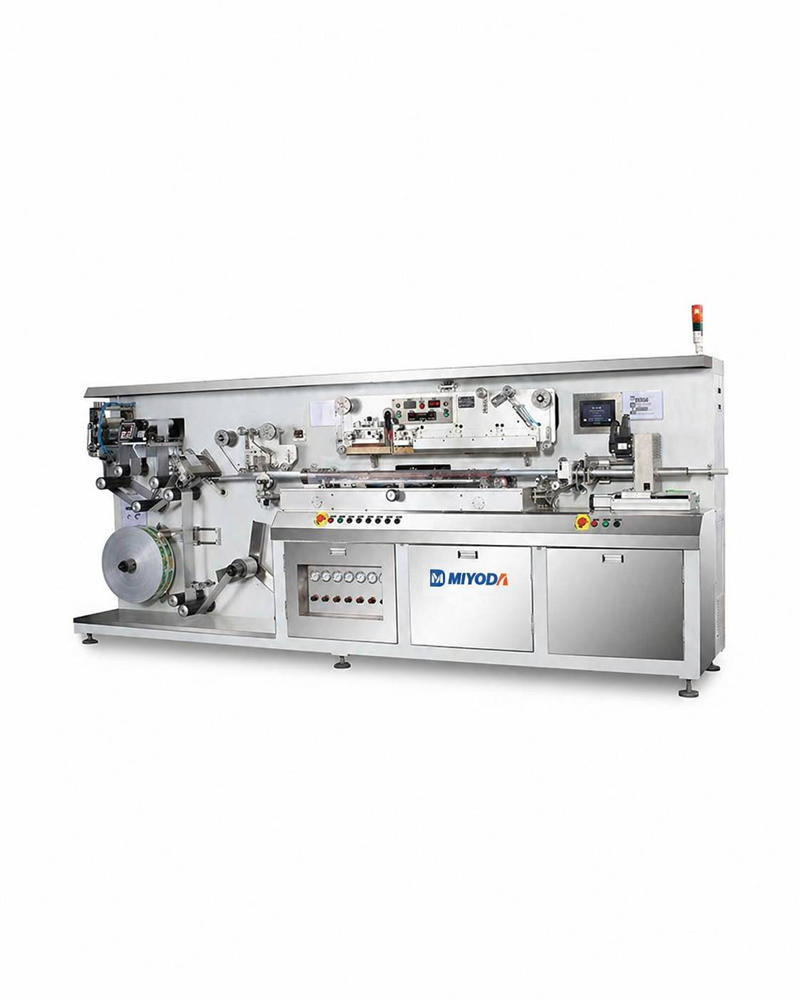
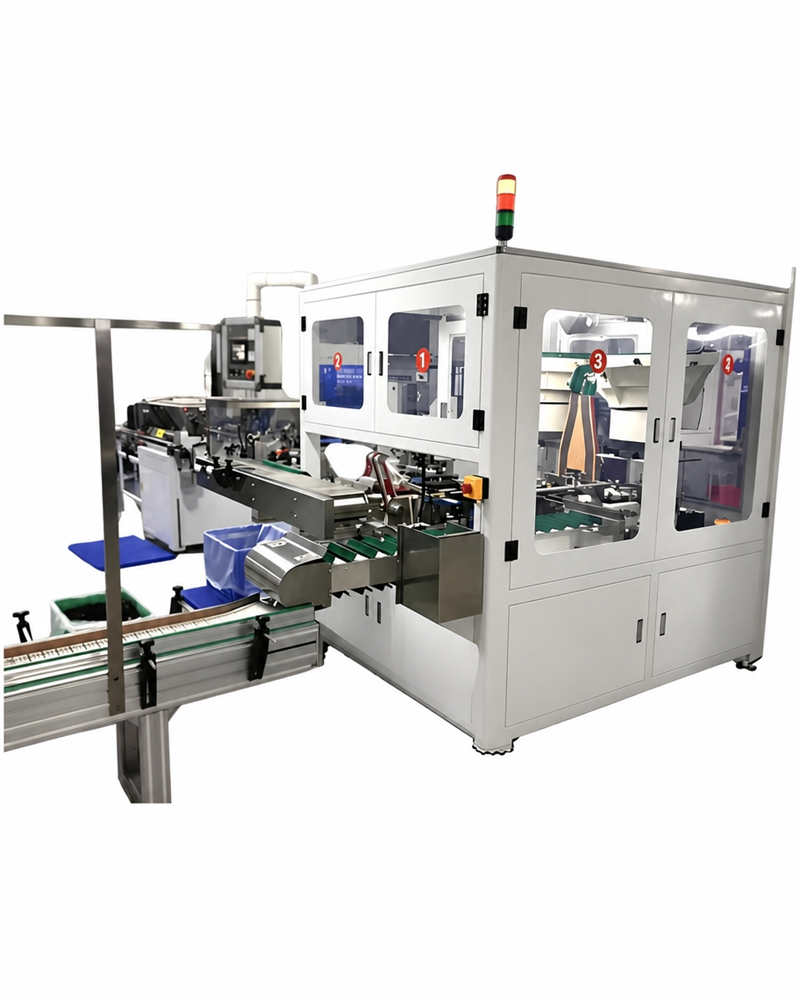
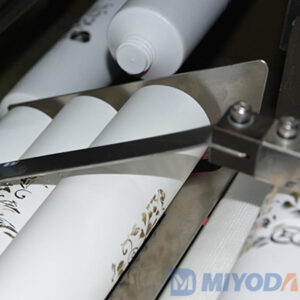
For laminate tube body production, the Miyoda laminate tube making machine incorporates a precision adhesive metering system with closed-loop application weight monitoring — addressing the laminate bond strength variability that is a primary source of seal rejection in poorly controlled lamination operations.
Tip #3 — Train Operators for Precision and Troubleshooting
The Operator Gap: What the Data Confirms
Research on operator training impact in packaging manufacturing confirms that well-trained operators achieve 20–35% higher output than undertrained staff on the same machine — with significantly lower quality rejection rates and fewer unplanned downtime events.
The mechanism is not complicated: a trained operator recognises the early signs of a developing problem. A seal jaw that produces a slightly different acoustic profile at hour five of a shift. A fill weight mean trending 0.3g low over the last two hours. A tube indexing sensor that hesitates on thin-wall tubes at high speed. These are correctable observations — if the operator knows what they mean and what to do about them.
An untrained operator waits until the machine stops itself, or until a quality complaint arrives from the customer.
On a 150-tube-per-minute line producing two shifts per day, the difference between a trained operator catching a fault in 6 minutes versus an untrained operator waiting 32 minutes for a maintenance technician is:
$$\text{Daily output recovery} = 2 \times (32 – 6) \text{ min} \times 150 \text{ tubes/min} = 7{,}800 \text{ tubes/day}$$
At $0.09 margin per tube: $702 per day, or approximately $175,500 per year on a single line — from training, not capital investment.
What Effective Operator Training Covers
Effective training for cosmetic tube machine operators is not a one-day induction. It builds three capabilities in sequence:
Technical understanding — How the piston pump creates fill volume. How the seal jaw temperature determines bond strength. How laminate film tension affects tube body seam quality. An operator who understands the mechanism identifies early warning signs. One who has only memorised a procedure does not.
Consequence awareness — What happens to fill weights when piston seals wear. What a thermocouple drift of 10°C looks like in production data (fill weight stable, seal strength declining). What a tension fluctuation in the laminate reel does to tube body rejection rate. Concrete examples, not abstract concepts.
Decision authority — Explicit permission and clear expectation that the operator stops production when something is wrong, without waiting for supervisor approval. Production pressure creates a powerful incentive to “run through” early warning signs. A facility that penalises operators for quality-related stops systematically produces worse outcomes than one that rewards early identification.
Standard Operating Procedures: The Consistency Foundation
SOPs (Standard Operating Procedures — documented, step-by-step instructions for completing a specific process the same way every time, regardless of which operator performs it) reduce shift-to-shift output variability more effectively than any single machine adjustment.
Build SOPs for these five processes first — they deliver the fastest variability reduction:
- Machine startup and thermal stabilisation sequence
- Fill weight verification and adjustment procedure
- Seal quality check: frequency, sample size, pass/fail criteria
- Changeover execution: step sequence, tooling storage, qualification tube count
- Fault response: the 15 most common fault codes and the operator’s first-response action for each
Laminate the critical SOPs and mount them at the machine. When an operator is troubleshooting at 11:30 PM, a laminated card at arm’s reach is faster and more reliable than navigating a digital system on a shared tablet.
Tip #4 — Standardise Changeover Processes Using SMED Principles
What SMED Is and Why It Transforms Tube Production Economics
SMED — Single-Minute Exchange of Die — is a lean manufacturing methodology developed originally by Shigeo Shingo at Toyota, focused on reducing machine changeover time to under 10 minutes. In packaging, “single-minute” is rarely achievable for tube format changes, but the methodology’s core principles consistently deliver changeover time reductions of 50–94% in documented packaging implementations (Lean Production, 2025).
Glossary — SMED: A structured process for reducing machine changeover time by identifying which tasks must be done while the machine is stopped (internal) and which can be done while the machine is running (external), then systematically converting internal tasks to external ones.
For cosmetic tube manufacturers, changeover time — the period from the last good tube of one run to the first good tube of the next — is consistently among the largest controllable efficiency drains. Industry analysis shows that 15–25% of total daily production time is lost to inefficient changeovers in most cosmetic tube operations. Structured SMED implementation gets that number to 5% or below.
How to Apply SMED to a Cosmetic Tube Making Machine
The four-step SMED implementation process for tube production changeovers:
Step 1 — Document your current changeover. Time-stamp every activity in your last five changeovers and identify exactly what is done, in what order, and how long each step takes. This baseline reveals which steps are genuinely necessary and which are inefficiencies that have simply become habit.
Step 2 — Separate internal and external tasks. Internal tasks are those that can only be done while the machine is stopped — removing tooling, cleaning product-contact surfaces, loading new tube blanks. External tasks are those that can be done while the machine is still running the previous batch — retrieving the next job’s tooling from storage, pre-heating the fill product, preparing documentation. Move every external task out of the stopped-machine period. Most operations discover that 30–40% of their changeover time consists of tasks that could have been done in advance.
Step 3 — Standardise the changeover sequence. Write a specific, numbered changeover checklist and laminate it at the machine. Operators who follow a documented sequence complete changeovers 30–40% faster than those working from memory — not because they are less capable, but because a documented sequence eliminates the micro-decisions that slow each step.
Step 4 — Implement quick-change tooling for high-frequency format changes. Tube diameter changes, cap format changes, and seal jaw format changes are the most common high-frequency changeovers on multi-SKU cosmetic tube lines. Quick-release tooling systems — quarter-turn locking mechanisms replacing 4–6 bolted fasteners — reduce tooling change time from 45 minutes to 10–12 minutes for the same format switch.
The Revenue Impact of Faster Changeovers
A cosmetic tube manufacturer producing 24 SKUs across three diameter formats, with monthly format changeovers, running an average changeover time of 65 minutes:
- Total annual changeover downtime: 24 SKUs × 12 months × 65 minutes = 18,720 minutes (312 hours)
- At 80 tubes per minute and $0.09 margin per tube: $134,784 in annual lost output from changeovers alone
After SMED implementation reducing average changeover to 18 minutes:
- Total annual changeover downtime: 24 × 12 × 18 minutes = 5,184 minutes (86.4 hours)
- Annual output recovered: 225.6 hours × 80 tubes/min × 60 min/hr × $0.09 = $97,459
The implementation cost for SMED training and quick-change tooling on a typical cosmetic tube line: $12,000–$20,000. Payback: under 3 months.
Tip #5 — Integrate Real-Time Monitoring and Data Analytics
Why “Running Blind” Is an Efficiency Tax
A tube filling line without real-time monitoring is a machine managed by symptoms, not by data. Operators know something is wrong when the alarm sounds. Supervisors know production is behind when they look at the end-of-shift count. Quality problems are discovered when the customer returns product.
Every one of those discovery points is later — and more expensive — than it needs to be.
Real-time production monitoring at minimum a production counter displaying current tubes-per-hour against shift target, with an accumulated total — changes management from reactive to proactive. Supervisors see a developing shortfall 90 minutes into a shift, not at the end. Operators see a fill weight trend moving toward the limit and intervene before it crosses. Maintenance planners see a temperature drift and schedule a thermocouple check before it causes a seal failure.
The economic justification is direct: a monitoring system that prevents two unplanned 4-hour stops per year on a 150-tube-per-minute line preserves approximately $6,480 in output value at $0.09 margin per tube. Against a basic monitoring system cost of $5,000–$8,000, payback is under 18 months — and that calculation excludes the avoided maintenance cost, scrap, and customer delivery risk from the prevented stops.
OEE: The Number Every Tube Manufacturer Needs to Know
OEE (Overall Equipment Effectiveness) is the single most important performance metric for a tube production operation. It combines three factors into one score:
$$\text{OEE} = \text{Availability} \times \text{Performance Rate} \times \text{Quality Rate}$$
- Availability: What percentage of scheduled production time is the machine actually running?
- Performance Rate: When running, what percentage of its rated speed is it achieving?
- Quality Rate: Of all tubes produced, what percentage meet specification first time?
A machine available 90% of scheduled time, running at 88% of rated speed when available, and producing 97% first-pass yield achieves: 0.90 × 0.88 × 0.97 = 76.9% OEE.
World-class OEE benchmark for packaging equipment: 85%. Pharmaceutical packaging industry average: 70% (Symestic OEE Benchmarks, 2025). If you don’t know your OEE, you don’t have a reliable picture of your machine’s actual performance — or your improvement potential.
IoT Sensors and Smart Dashboards: What to Track
Modern tube making machines increasingly incorporate IIoT (Industrial Internet of Things — connected industrial equipment that transmits real-time operating data to dashboards accessible by your team and your supplier’s support engineers) capability. The parameters worth monitoring in real time:
| Parameter | Why It Matters | Alert Threshold |
|---|---|---|
| Seal jaw temperature | Drift causes seal quality failure without visible warning | ±5°C from setpoint |
| Fill weight (inline) | Early warning of pump seal wear or check valve issue | Trend outside ±1.5% |
| Line speed vs. target | Identifies performance gap developing during shift | <85% of target for >15 min |
| Fault code frequency | Rising frequency of same fault = developing mechanical issue | 3+ same-code events per shift |
| Energy consumption | Abnormal draw = bearing, drive, or pump issue developing | >10% above baseline |
Predictive maintenance from machine data: Export your machine’s fault log monthly and identify the top five fault codes by frequency. For each, ask: does this fault occur more frequently after a certain number of production cycles? At a specific ambient temperature? On a particular shift? Each pattern is a diagnostic signal pointing toward a specific preventive action — before the failure it predicts.
Research on predictive maintenance in manufacturing environments documents 70–90% reductions in unplanned downtime and 40% reduction in maintenance cost compared to reactive-only approaches (PAG Machinery, Industry 4.0 Analysis).
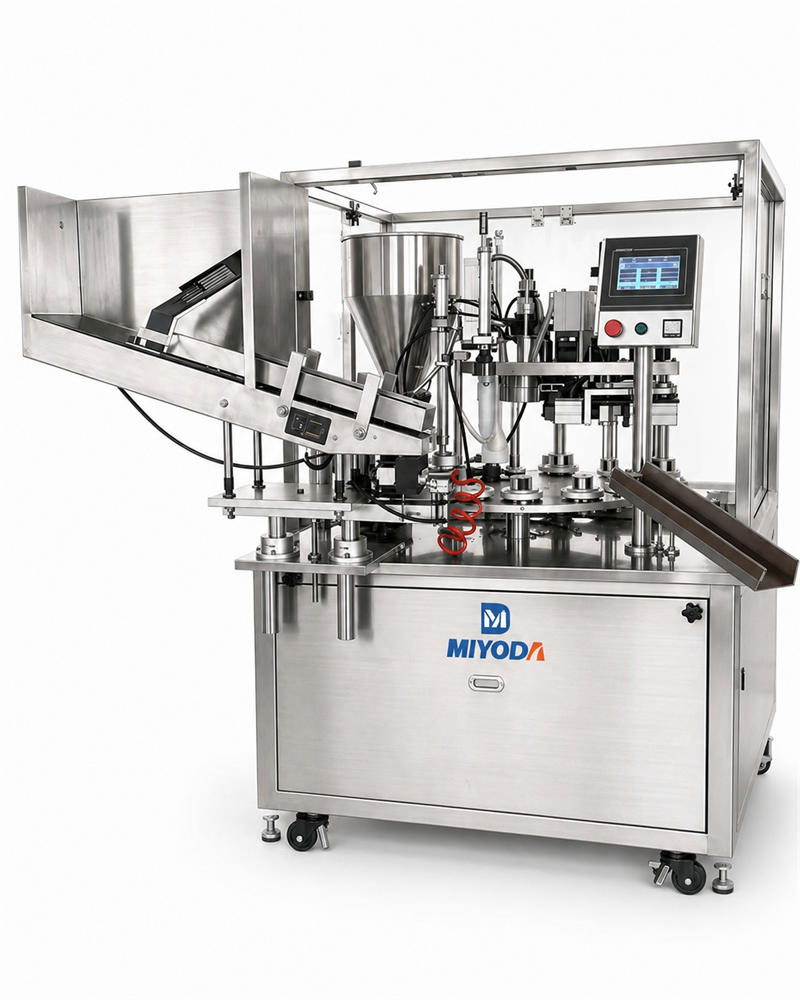
For manufacturers evaluating machines with integrated monitoring capability, Miyoda Packaging Machinery’s tube filling machine range includes IoT-compatible options with remote diagnostic support — allowing your team (and Miyoda’s technical support engineers, with your authorisation) to monitor line performance in real time and intervene before developing issues become production stops.
Case Study: How a Southeast Asian Contract Manufacturer Reduced Downtime by 40% and Increased Output by 25%
This case study reflects the documented experience of a mid-sized contract cosmetic tube manufacturer running three automatic filling and sealing lines producing cream, gel, and lotion tubes for 18 brand clients.
Starting position: The facility was running at an average OEE of 68%. Unplanned downtime averaged 11.4 hours per machine per month. Changeover time between tube formats averaged 72 minutes. Operator-to-operator fill weight variation across shifts was consistently at ±2.8% — close to, and occasionally exceeding, their ±3% specification limit.
Actions taken over six months:
- Preventive maintenance programme implemented — daily, weekly, and monthly schedules documented and assigned to operators and maintenance technicians. Seal jaw replacement moved from emergency events to scheduled 700,000-cycle replacements based on production counter data.
- SMED applied to changeovers — changeover activities were documented and separated into internal and external tasks. Quick-release tooling was retrofitted for the three most frequent diameter format changes. Average changeover time dropped from 72 minutes to 24 minutes.
- Operator training programme — all 14 production operators completed a 3-day structured training programme covering machine fundamentals, quality check procedures, and fault response protocols. SOPs were laminated and mounted at each machine.
- Basic monitoring system installed — production counters with shift-target displays and fill weight trend monitoring were added to all three lines.
Results after six months:
| Metric | Before | After | Change |
|---|---|---|---|
| Average OEE | 68% | 85% | +25% |
| Unplanned downtime/month | 11.4 hrs/machine | 6.7 hrs/machine | −41% |
| Average changeover time | 72 minutes | 24 minutes | −67% |
| Fill weight variation (shift-to-shift) | ±2.8% | ±0.9% | −68% variance |
| Annual output (3 lines combined) | 24.5M tubes | 30.6M tubes | +25% |
Total investment: USD 38,000 (training, monitoring systems, quick-change tooling, maintenance programme setup). Annual output gain at $0.09 margin per tube: 6.1M additional tubes × $0.09 = USD 549,000. Payback period: Under 4 weeks.
The most significant finding: none of the three machines were replaced or upgraded. The entire output gain came from operational improvements applied to existing equipment.
Watch: Modern Automatic Tube Filling Line at Production Speed
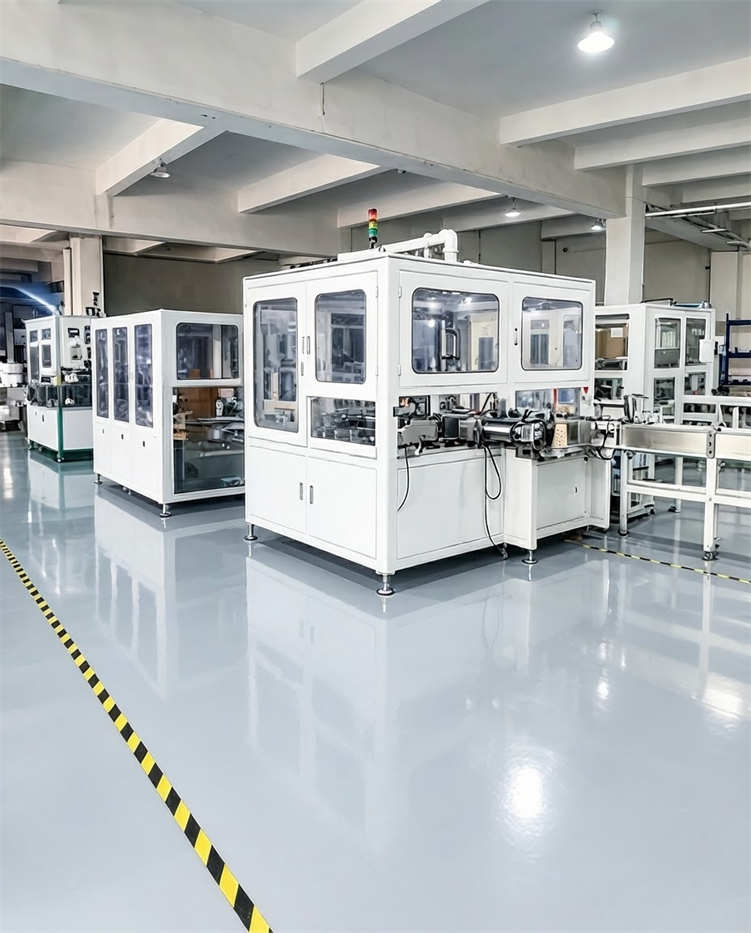
Understanding what an optimised automatic cosmetic tube filling and sealing line looks like in operation helps identify where your current line’s performance gaps are. This video shows fill station, seal station, and inline inspection running at full production speed:
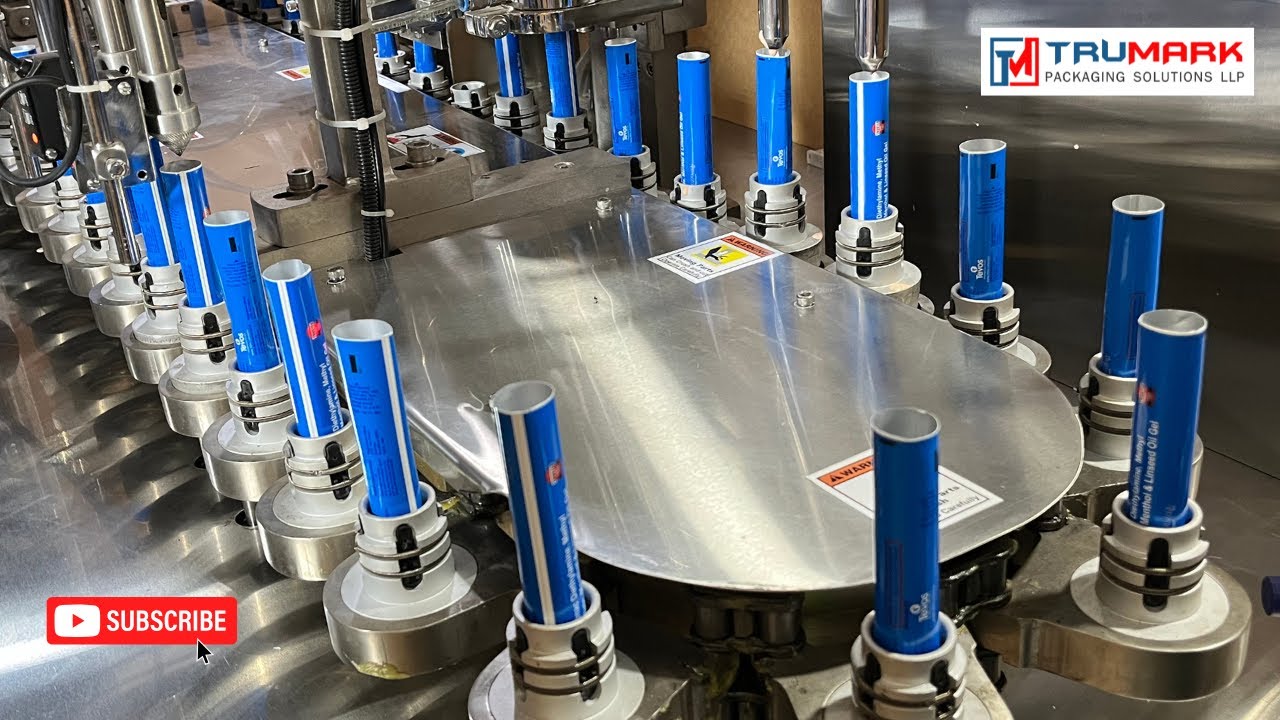
▶ Watch: Automatic tube filling and sealing machine at full production speed — observe the fill station, ultrasonic seal station, and inline inspection operating together on a cosmetic and pharmaceutical packaging line.
How Miyoda Packaging Machinery Machines Are Engineered for These Five Principles
The five tips above are not independent strategies — they are a framework. And the machines that support this framework most effectively are those designed with efficiency as a structural principle, not a marketing claim.
Miyoda Packaging Machinery engineers its tube production equipment around four design priorities that directly support the strategies in this guide:
Modular architecture — machines that can be upgraded from semi-automatic to fully automatic configuration in the field, with quick-change tooling systems for tube diameter, seal format, and cap format changes. This reduces changeover time structurally — the machine is designed for fast format changes, not adapted for them.
HMI with recipe storage (HMI — Human-Machine Interface: the touchscreen control panel through which operators set and monitor all machine parameters) — recipe recall stores complete parameter sets for each SKU, including fill weight, seal temperature, seal pressure, and line speed. One-touch recipe recall eliminates manual re-entry errors at changeover and reduces startup waste by ensuring parameters are correct from the first tube.
Servo-driven controls — servo motors with real-time positional feedback replace older pneumatic or cam-driven mechanical systems. Fill volume and seal jaw movement are controlled precisely at each cycle, enabling the machine to detect and correct parameter drift within the production run rather than requiring operator intervention.
Remote diagnostic capability — IIoT-enabled machines transmit real-time performance data to a monitoring dashboard. Miyoda’s technical support team can access this data with the customer’s authorisation, enabling remote diagnosis and guided correction of developing issues before they cause production stops.
For buyers evaluating the full tube production process — from extrusion through decoration and filling — the Miyoda tube extrusion machine range and the cosmetic tube manufacturing process guide provide the technical context needed to specify equipment correctly across the complete production line.
What Leading Manufacturers Are Doing Differently
Three patterns consistently separate high-OEE cosmetic tube producers from average performers:
1. They treat maintenance as a production function, not a support function. High-performing facilities schedule maintenance into the production calendar with the same discipline applied to production runs. Maintenance time is planned, tracked, and measured for ROI — not treated as an interruption to production.
2. They measure OEE by station, not just by line. An overall line OEE of 79% can conceal a single constraining station running at 62%. Manufacturers who measure performance at each station — fill, seal, tube load, inspection — invest improvement effort where it produces the highest net output gain, not where problems are most visible.
3. They connect operator performance to outcome data. The most effective training programmes include regular feedback sessions where operators see the fill weight data, OEE numbers, and changeover times from their own shifts — and participate in identifying what drove the results. Operators who understand the connection between their daily actions and their line’s performance metrics improve faster and sustain improvements longer than those who receive performance data only through supervisors.
Technical Glossary
| Term | Definition |
|---|---|
| OEE (Overall Equipment Effectiveness) | Composite efficiency metric: Availability × Performance Rate × Quality Rate. World-class benchmark: 85%. Pharmaceutical packaging average: 70%. |
| SMED (Single-Minute Exchange of Die) | Lean methodology for reducing changeover time below 10 minutes by separating internal (machine-stopped) from external (machine-running) tasks. |
| Viscosity (mPa·s / cP) | Resistance of a product to flow. Higher viscosity = slower fill cycle = lower maximum line speed. Toothpaste: 50,000–300,000 mPa·s. Standard cream: 5,000–20,000 mPa·s. |
| Sonotrode | Titanium or aluminium component in an ultrasonic sealing system that converts electrical energy into mechanical vibration at the tube seal interface. |
| HMI (Human-Machine Interface) | Touchscreen control panel through which operators set, monitor, and adjust all machine parameters. |
| SOP (Standard Operating Procedure) | Documented, step-by-step instructions for completing a specific process consistently regardless of which operator performs it. |
| IIoT (Industrial Internet of Things) | Connected industrial equipment that transmits real-time operating data to monitoring dashboards, enabling remote performance tracking and predictive maintenance. |
| First-Pass Yield | The percentage of tubes that pass quality inspection without rework or rejection on their first production pass. Target: ≥97%. |
| MFI (Melt Flow Index) | Measure of how easily a PE resin flows at processing temperature. Variation in MFI between material batches directly affects extrusion line performance and wall thickness consistency. |
| Internal vs. External Changeover Tasks | Internal: tasks requiring the machine to be stopped. External: tasks that can be completed while the machine is still running the previous batch. SMED converts internal tasks to external wherever possible. |
Frequently Asked Questions (FAQs)
1. How often should I perform maintenance on my cosmetic tube making machine?
For most cosmetic and pharmaceutical tube making operations, a three-tier schedule is effective: daily pre-shift visual checks covering seal jaws, fill nozzles, and lubrication points (15 minutes per shift); weekly mechanical inspections covering drive systems, sensors, and fill weight verification (1–2 hours); and monthly deep maintenance covering full lubrication, calibration, and component inspection (4–8 hours). Exact intervals should be calibrated to your actual production volume and machine age — a line running three shifts seven days a week needs more frequent inspection than one running single shift five days a week.
2. What are the most common causes of downtime in cosmetic tube production?
In order of frequency: deferred preventive maintenance (worn seal jaws, degraded pump seals, drifted temperature sensors), inefficient changeover processes that consume production time, operator knowledge gaps that delay fault response, and material feed inconsistencies — laminate tension variation, viscosity-variable fill products — that trigger rejection events. The important practical finding is that all four are controllable with the strategies in this guide; none require new machine investment to address.
3. Can I realistically reduce changeover time between different tube sizes?
Yes — SMED implementation in cosmetic tube manufacturing environments consistently achieves 50–70% changeover time reduction without capital investment, primarily by separating preparation tasks from stopped-machine tasks and creating standardised written checklists. Adding quick-release tooling systems for high-frequency format changes extends the reduction to 70–90% of original changeover time. A 65-minute changeover becoming an 18-minute changeover on a 150-tube-per-minute line recovers approximately 2,244 tubes per changeover event — at scale across a full year, this is often the largest single source of recoverable production output.
4. How significantly does operator training affect my machine’s output numbers?
The documented range is 20–35% higher output on the same machine with trained versus undertrained operators. The mechanism is early fault detection — trained operators identify developing problems and intervene in 5–8 minutes; untrained operators wait for the machine to stop, adding 25–35 minutes of recovery time per event. On a line with two such events per shift, the daily output difference is 7,500–10,500 tubes. Across 250 production days, this represents 1.9–2.6 million additional tubes annually from training investment.
5. What raw materials work best with high-speed cosmetic tube making machines?
Consistent, pre-validated materials with tight batch-to-batch specification tolerances perform best. For PE tube extrusion: LDPE with a Melt Flow Index (MFI) of 0.3–1.0 g/10 min and a documented ±10% maximum lot-to-lot MFI variation. For laminate tube making: PE films and laminate sheets with gauge tolerance of ±5% or better, with Certificate of Analysis provided per shipment. For fill products: pre-validated viscosity specifications with summer and winter versions if your fill product is temperature-sensitive. The most reliable path to consistent high-speed production is locking tight material specifications with suppliers and enforcing them through incoming quality inspection.
6. Is automation a worthwhile investment for small to mid-sized cosmetic tube producers?
Targeted automation — automatic tube loaders, inline fill weight verification, quick-change tooling systems — delivers a better return for small to mid-sized operations than full machine replacement because the investment is smaller and the ROI period is shorter. An automatic tube loader converting a semi-automatic line from manual tube loading (limiting throughput to operator pace) to continuous-feed loading typically costs $8,000–$20,000 and delivers throughput improvement equivalent to a machine upgrade at a fraction of the capital cost. Evaluate component-level automation before committing to full machine replacement.
7. How do I monitor my machine’s performance in real time?
Entry-level: production counters with shift-target displays and cumulative output tracking, retro-fittable to most existing machines for $2,000–$5,000, give immediate visibility into output rate vs. target. Mid-level: SCADA-connected systems tracking temperature, fill weight trends, fault frequency, and OEE — typically $15,000–$40,000 — provide the data granularity needed for predictive maintenance. Enterprise level: IIoT-enabled machines with cloud dashboard and remote access. The right level depends on your production scale — but even the most basic production counter provides more management information than a purely reactive approach.
8. What is OEE, and why does it matter specifically for cosmetic tube manufacturing?
OEE (Overall Equipment Effectiveness = Availability × Performance Rate × Quality Rate) matters for cosmetic tube manufacturing because it is the only metric that captures all three dimensions of production loss simultaneously. A machine with a high availability score (rarely stops) but a low performance score (runs well below rated speed when running) looks different from a machine with high availability and high performance but a poor quality rate (runs fast but generates high rejection). Only OEE combines all three into a single actionable number. The world-class packaging benchmark is 85%. Most cosmetic tube operations without structured optimisation programmes run at 65–72%. The gap between those numbers is the efficiency opportunity this guide addresses.
9. How do I minimise material waste during startup and changeovers?
Three specific actions reduce startup waste: first, use HMI recipe recall to load all parameters for the next job before the machine starts — eliminating manual re-entry errors that cause the first production tubes to be off-specification while settings are adjusted. Second, implement a thermal pre-stabilisation sequence — run the machine at low speed for 3–5 minutes to reach thermal equilibrium before ramping to full production speed, reducing the number of out-of-specification tubes produced during warm-up. Third, define a specific qualification tube count per changeover (typically 15–30 tubes) that are checked before production output is accepted — preventing non-conforming tubes from entering the production count while ensuring startup is completed efficiently.
10. Can one machine handle both cosmetic and pharmaceutical-grade tube production?
Yes — with appropriate specification and configuration. Cosmetic and pharmaceutical tube production share the same fundamental process; the difference is in documentation requirements, material certification, and cleaning validation standards. A machine configured for pharmaceutical production needs product-contact surfaces meeting 316L stainless steel specification, CIP (Clean-In-Place) capability, fill weight data logging with batch traceability, and support for IQ/OQ/PQ validation documentation (Installation Qualification, Operational Qualification, Performance Qualification — the three-stage validation framework required for pharmaceutical equipment). Cosmetic production on the same machine uses the same hardware with less stringent documentation requirements. If you plan to serve pharmaceutical clients, specify the machine to pharmaceutical standard from the outset — retrofitting these requirements later is substantially more expensive.
11. Do modern tube making machines offer remote diagnostic support?
Yes — IIoT-enabled tube filling and tube making machines transmit real-time performance data including alarm history, temperature logs, and cycle count data to a monitoring dashboard accessible by your operations team and, with your authorisation, the machine manufacturer’s technical support engineers. When an anomaly develops, remote diagnosis can begin in minutes rather than waiting for a technician to travel to your facility. In documented implementations, remote diagnostic capability has reduced Mean Time to Repair (the average time to restore a machine to full operation after a fault) by 40–60% compared to traditional telephone-only support models.
12. What support can I expect after purchasing a cosmetic tube making machine?
Reputable cosmetic tube machine suppliers provide: on-site installation and commissioning with your actual production materials; a structured operator training programme (minimum 3–5 days) covering operation, changeover, basic maintenance, and fault response; a documented spare parts list with recommended on-site inventory quantities; a preventive maintenance schedule tied to cycle counts or hours; and ongoing remote technical support for production issues that arise after commissioning. When evaluating suppliers, ask specifically for their committed response time for production-critical support calls, their regional spare parts stocking arrangement, and references from current customers in your product category and production scale. The support relationship that begins on installation day determines your production reliability for the next 10–15 years.
Efficiency Is a Strategy, Not a Machine Specification
The single most important message of this guide is this: the manufacturers capturing the best returns from their cosmetic tube making machines are not necessarily those with the newest equipment. They are the ones running the right maintenance programme, managing their materials tightly, training their people seriously, controlling their changeovers, and making decisions from real data.
A 5-year-old machine running at 86% OEE with a structured maintenance programme, trained operators, and 18-minute changeovers outperforms a 2-year-old machine running at 69% OEE with none of those things — on every metric a brand customer cares about: quality consistency, delivery reliability, and per-tube cost.
Invest in the strategies first. The equipment decisions that follow will be made from a position of data, operational clarity, and financial strength — not from urgency.
Ready to Optimise Your Cosmetic Tube Production Line?
Whether you are evaluating new equipment, looking to get more from your current machines, or supporting clients as a distributor or agent, Miyoda Packaging Machinery provides the technical framework and equipment range to support your production goals.
The team offers no-obligation efficiency consultations — share your current output, tube format, and machine configuration, and receive specific, data-backed guidance on where your line’s highest-value improvement opportunities are.
📞 WhatsApp: +86 13774214471 📧 Email: info@miyodamachine.com 🌐 Website: www.miyodamachine.com
References and Further Reading
- Cosmetic Tubes Market Size & Forecast 2025–2035 — Towards Packaging
- Preventive Maintenance ROI for Packaging Equipment — Packaging Equipment News
- Packaging Line Preventive Maintenance Checklist — OxMaint
- SMED: Single-Minute Exchange of Die — Lean Production
- OEE Benchmarks by Manufacturing Industry — Symestic
- Industry 4.0 and IoT in Smart Packaging — PAG Machinery
- Cosmetic Tube Manufacturing Process — Miyoda Packaging Machinery
- Laminate Tube Making Machine — Miyoda Packaging Machinery
- Tube Extrusion Machine — Miyoda Packaging Machinery
- Tube Filling and Closing Machine Range — Miyoda Packaging Machinery
- Tube Filling Machine Buyer’s Guide — Miyoda Packaging Machinery