
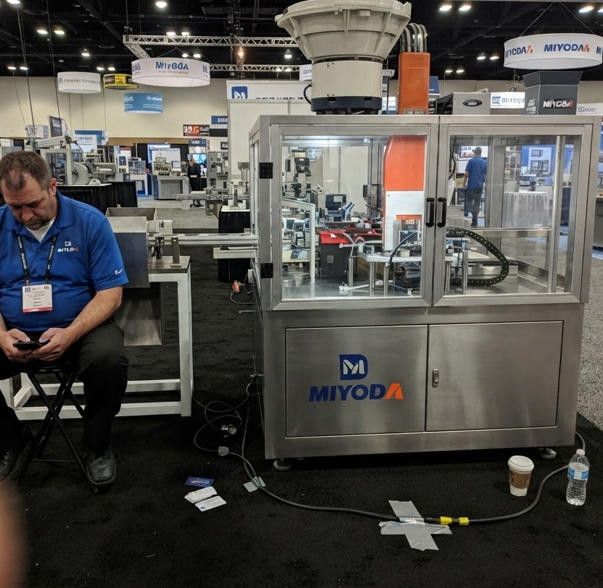
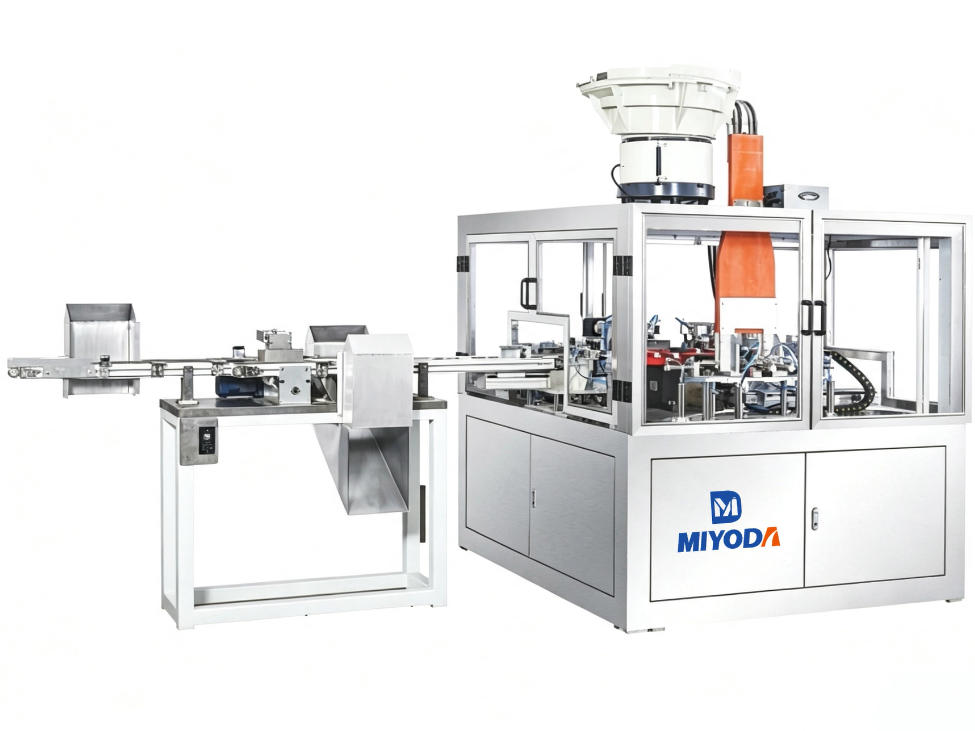
Comprehensive Guide: Key Features to Look for When Buying an Injection Shoulder Machine for Soft Tube Production
A Strategic Buyer’s Guide for Cosmetic & Pharmaceutical Packaging Producers, Distributors, and Agents
Before a cosmetic cream tube reaches your customer, it passes through one process that determines whether everything downstream — filling, capping, sealing, decoration — works correctly or fails. That process is shoulder injection.
The shoulder is the molded top section of every soft tube. It carries the thread geometry that engages the cap, the sealing surface that interfaces with your filling line’s chuck, and the aesthetic profile that represents your brand. If the shoulder is dimensionally inconsistent, the cap fails torque testing. If the surface has flash — excess resin at the mold parting line — the seal is compromised. If the shoulder-to-body bond is weak, the tube leaks under fill pressure.
The machine that forms the shoulder determines your production yield, your downstream line compatibility, and your regulatory readiness for pharmaceutical applications. A cosmetic tube line running at 92% first-pass yield versus 84% generates a material cost difference of approximately $14,400 per month on a 100,000-tube run at $0.18 material cost per tube — before counting the labor, rework, and scheduling impact of rejected tubes.
This guide covers the ten features that separate a well-matched injection shoulder machine from a costly mistake. Every section connects the technical specification to the production and financial outcome it creates — because the right machine for your business is not the one with the highest rating or the lowest price. It is the one that delivers the output, quality, and compliance your specific operation requires, reliably, over a 10–15 year service life.
Miyoda Packaging Machinery builds tube heading and shoulder machines for cosmetic and pharmaceutical tube producers across Asia, Europe, the Middle East, and the Americas. The data and operational insights in this guide reflect what experienced buyers ask before purchase — and what production records show after it.
1. Understanding Your Production Needs: Matching Output to Business Goals
The foundation of any machine decision is a clear, honest calculation of what you actually need to produce — not what your business produces today, but what it will require in three years, and whether the machine you purchase today can grow with you.
Start with the OEE-adjusted output formula. OEE (Overall Equipment Effectiveness — the standard metric for realistic machine productivity, calculated as Availability × Performance × Quality, expressed as a percentage) is the bridge between a machine’s rated speed and its actual sustained throughput. Most well-run injection shoulder machines achieve 80–85% OEE under consistent production conditions. Using 82% as a conservative benchmark:
$$\text{Actual Output (shoulders/hour)} = \frac{\text{Cavities} \times 3{,}600}{\text{Cycle Time (seconds)}} \times \text{OEE Factor}$$
| Monthly Target | Machine Configuration | Rated Output | OEE-Adjusted Output |
|---|---|---|---|
| 150,000 tubes | 2-cavity, 15-sec cycle | 480/hr | ~394/hr |
| 400,000 tubes | 4-cavity, 15-sec cycle | 960/hr | ~787/hr |
| 800,000 tubes | 8-cavity, 12-sec cycle | 2,400/hr | ~1,968/hr |
| 1,500,000+ tubes | 16-cavity, 10-sec cycle | 5,760/hr | ~4,723/hr |
Cavitation refers to how many shoulder cavities exist in a single mold — one cycle of the machine produces that many shoulders simultaneously. A 4-cavity mold at a 15-second cycle produces 960 rated shoulders per hour. Under real production conditions with the 82% OEE factor, that is approximately 787 usable shoulders per hour. Plan your machine specification against the OEE-adjusted number, not the rated speed.
The more consequential planning question is your 3-year volume projection. Cosmetic tube production has predictable seasonal peaks — body lotions and moisturizers surge before winter in northern hemisphere markets, SPF products peak in Q2–Q3, gift set production compresses in September–October ahead of the holiday season. A machine purchased to meet your current daily output runs at near-capacity during these peaks, leaving no buffer for quality holds, mold maintenance, or line re-starts. Industry data consistently shows that operations without growth headroom in their shoulder machine capacity lose 12–18% of peak season output opportunity to capacity constraints — orders they accept but cannot deliver on schedule.
The correct specification: a machine that meets your current monthly target at 75–80% of its OEE-adjusted maximum output. The remaining 20–25% covers peak demand, scheduled maintenance, and 2–3 years of volume growth before you need additional capacity.
2. Precision Injection Molding: Ensuring Consistent Shoulder Quality
Precision is the specification that separates a tube shoulder that passes your cap supplier’s compatibility test from one that fails it — consistently, on every cycle.
Uniform wall thickness in the injection shoulder means that the resin distribution within the mold cavity is even across the shoulder cross-section. Non-uniform wall thickness creates stress concentrations where the shoulder material is thinner than specified — which appear as micro-cracks under filling pressure or thermal cycling during shipping. For aluminum barrier laminate (ABL) pharmaceutical tubes where the shoulder bonds to a rigid laminate substrate rather than a flexible PE body, wall thickness variation at the shoulder-to-body interface is the primary cause of delamination during shelf life.
The critical dimensions and their required tolerances for cosmetic and pharmaceutical tube shoulders are:
| Dimension | Target | Acceptable Tolerance | Consequence of Exceedance |
|---|---|---|---|
| Thread height | Per cap spec | ±0.02 mm | Cap strips under normal use |
| Shoulder outer diameter | Per cap spec | ±0.05 mm | Visible cap gap — aesthetic reject |
| Neck bore diameter | Per filling line spec | ±0.08 mm | Filling nozzle alignment failure |
| Shoulder height (from tube end) | Per design spec | ±0.10 mm | Filling line chuck incompatibility |
| Sealing surface flatness | — | ≤0.03 mm runout | Cap seal failure; leakage |
Achieving these tolerances across a sustained production run requires closed-loop control — a machine system where sensors measure actual injection pressure, mold cavity pressure, and fill position in real time during each cycle, and the control system adjusts injection parameters automatically to compensate for variation. Without closed-loop feedback, parameter drift — from resin viscosity variation, mold temperature fluctuation, or ambient temperature change — accumulates across the shift until it produces visible dimensional defects. With closed-loop control, the machine detects and corrects drift within 2–3 cycles, before it affects dimensional output.
Published injection molding research confirms that closed-loop injection pressure control reduces part-to-part dimensional variation by 40–65% compared to open-loop processes under equivalent conditions. For tube shoulder production where the dimensional requirement is ±0.02 mm on thread height, that variation reduction is the difference between a process running at Cpk (Process Capability Index — a statistical measure of how consistently a process hits its target within specification limits; Cpk ≥ 1.33 is the pharmaceutical production minimum) of 1.4 and one running at Cpk of 0.8.
The downstream impact of poor shoulder precision is compounding. A shoulder outside the neck bore diameter tolerance causes filling line chuck rejection — the tube is rejected at the filling station before any product is added, losing the tube’s material cost plus the filling line time consumed in the rejection event. At 1,200 rejections per shift on a line running 60 fills per minute, that is 20 minutes of filling line capacity lost to shoulder defects — on a machine that already ran its full shift producing those shoulders.
3. Customization Flexibility for Diverse Tube Designs
The cosmetic and pharmaceutical tube market does not standardize on a single shoulder design. Your machine must accommodate the formats your customers currently require — and the formats they will request as their product ranges evolve.
The primary dimensions of shoulder customization are:
Neck finish diameter. The most common cosmetic tube neck finishes are 16mm, 19mm, 20mm, 24mm, and 28mm, with the appropriate cap thread standard for each diameter. Pharmaceutical tubes often use modified neck finishes for child-resistant closures or tamper-evident bands. A machine that is tooled only for 19mm and 24mm finishes cannot produce a 28mm wide-mouth body lotion tube or a 16mm precision applicator tube without a complete mold change.
Thread type. Standard cosmetic tubes use continuous (single-start) threads; pharmaceutical and child-resistant formats often use interrupted threads or bayonet-style closures. The thread geometry is determined entirely by the mold — but the machine must be capable of the injection pressure and cooling time required for the thread form’s wall thickness.
Shoulder geometry. Flat shoulders, tapered shoulders, domed shoulders, and panel-feature shoulders each require dedicated mold geometry and, in some cases, different injection speed profiles to fill the mold cavity without visible flow lines or weld marks in the finished shoulder.
Quick mold change systems are the feature that makes multi-format production economically viable. On a machine without a quick-change system, mold changeover for a different tube diameter requires removing the existing mold (bolted installation), repositioning cooling water connections (threaded couplings), and re-establishing mold temperature — a process that typically takes 90–180 minutes on a mid-size machine. With a magnetic or hydraulic clamp quick-change system paired with standardized cooling water quick-connect fittings, the same changeover takes 15–25 minutes.
For a production operation running 6 different tube formats per month with 2 changeovers per format, the difference between a 120-minute and a 20-minute changeover is 12 hours of recovered production time monthly. At a machine output of 800 shoulders per hour at 82% OEE, that is approximately 9,840 additional shoulders per month — from changeover time reduction alone.
Child-resistant and tamper-evident closures are a growing requirement in pharmaceutical tube packaging and premium cosmetic segments. These closure systems require specific thread geometry (typically interrupted or bayonet-style) and in some cases co-injection of a secondary material at the neck finish for the tamper-band substrate. Confirm that any machine under consideration can produce your current and planned closure configurations — both from a mold compatibility perspective and from a material injection capability perspective if multi-material neck finishes are in scope.

4. Energy Efficiency and Operational Cost Optimization
Energy is the operating cost that most buyers forget to calculate during the machine purchase decision — and the one that most reliably differentiates machine types over a 5-year ownership period.
The technology split that determines energy consumption is the drive system: hydraulic versus servo-electric versus hybrid.
Traditional hydraulic machines run a continuously operating hydraulic pump motor — drawing 15–25 kW whether the machine is actively injecting or waiting between cycles. On a 16-hour production day with 35% idle time between cycles, a 20 kW hydraulic pump consumes approximately 112 kWh per day in pure idle energy — energy consumed while producing nothing.
All-electric servo machines draw power only during active servo axis motion. Between cycles, power draw drops to near zero on the drive systems. Documented comparison data from major machine manufacturers shows that all-electric machines consume 40–60% less energy than equivalent hydraulic machines under comparable production conditions. On a 240-day annual production schedule at $0.12/kWh, this energy saving translates to $3,500–$8,600 per year per machine.
Servo-hydraulic hybrid machines achieve 30–40% energy reduction by replacing the fixed-speed hydraulic pump with a servo-controlled variable-speed pump — matching hydraulic output to actual demand rather than running at maximum output continuously. Topstar’s published hybrid machine data confirms 40% energy savings achievable versus traditional hydraulic through this servo-hydraulic coordination.
The 5-year energy cost comparison for a mid-size injection shoulder machine operating 2 shifts/day, 240 days/year at $0.12/kWh:
| Machine Type | Avg. Power Draw | Annual Energy Cost | 5-Year Energy Cost |
|---|---|---|---|
| Traditional hydraulic | 22 kW | $15,206 | $76,032 |
| Servo-hydraulic hybrid | 14 kW | $9,677 | $48,384 |
| All-electric servo | 9 kW | $6,220 | $31,104 |
| Energy saving (electric vs. hydraulic) | — | $8,986/year | $44,928 over 5 years |
Heat recovery systems on premium shoulder injection machines capture the thermal energy generated by the cooling system — which runs continuously during production to extract heat from the mold — and redirect it to pre-heat incoming resin or maintain barrel temperature during startup. On a machine consuming 8–12 kW for mold cooling, heat recovery reduces net thermal energy demand by 15–25%.
The ROI calculation is straightforward for operations comparing an all-electric machine at a $25,000–$35,000 purchase premium over an equivalent hydraulic:
$$\text{Payback Period} = \frac{$30{,}000 \text{ (avg. purchase premium)}}{$8{,}986 \text{ (annual energy saving)}} = 3.3 \text{ years}$$
After year 3, the all-electric machine generates $8,986 in annual energy savings indefinitely — on a machine designed for 15+ years of service life.
5. Ease of Maintenance and Reduced Downtime
Every hour your injection shoulder machine is down for unplanned maintenance has a total cost that extends well beyond the stopped machine’s output. It stops the downstream tube production line waiting for shoulders, creates overtime pressures to recover the schedule, and potentially delays committed customer deliveries.
Industry analysis of packaging equipment downtime consistently places unplanned stoppages at $2,000–$15,000 per hour when all direct costs are correctly calculated — lost output, idle downstream labor, in-process material waste, emergency repair labor, and expedited spare part logistics. The cost of the mechanical failure is routinely the smallest component of the total.
Modular design is the feature that determines how fast your maintenance team can access and replace the components that will need service. The critical wear components on an injection shoulder machine — barrel liner, screw tip, heater bands, mold components, injection nozzle — require periodic replacement on documented intervals. On a machine with modular component access (tool-free or single-fastener access panels), replacing a heater band takes 8–12 minutes. On a machine where the same component requires removing an access cover secured by 16 fasteners and partial disassembly of the injection unit, the same replacement takes 55–75 minutes.
Across 52 heater band checks per year and an estimated 8 replacements, the difference between 12-minute and 65-minute access is 35 hours of maintenance labor annually — on a single consumable item. That labor has a direct cost at your facility’s maintenance rate and an indirect cost in production line time that could be running.
Predictive maintenance integration on modern PLC-controlled machines generates continuous data streams that allow maintenance teams to identify developing failures before they cause unplanned stops. Specific diagnostic signals to look for in machine specifications:
- Injection pressure trend monitoring: Progressive increase in peak injection pressure at constant parameter settings indicates screw tip wear or barrel liner wear — typically providing 2–4 weeks of advance warning before the component causes production quality issues.
- Cycle time trend monitoring: Progressive extension of cycle time at constant cooling parameters indicates cooling channel fouling or mold temperature controller degradation — providing 1–3 weeks of advance notice.
- Servo motor current monitoring: Increasing current draw on clamping or injection servo axes indicates ball screw lubrication depletion or guide rail wear — detectable weeks before mechanical failure.
A machine generating these diagnostic alerts automatically — and sending them to a maintenance team dashboard rather than waiting for an operator to notice a problem — operates with fundamentally different maintenance economics than a machine that provides only binary fault alerts (machine stopped / machine running).
Technical support and spare parts availability are the service dimensions that determine how quickly a failure becomes a production recovery rather than a production crisis. The evaluation criteria that matter:
- Does the supplier maintain a regional parts warehouse, or do emergency orders ship from the factory?
- What is the documented maximum delivery time for critical wear components to your facility?
- Is remote diagnostic access available — where the supplier’s engineers can review machine data and guide your team through corrective procedures via secure connection?
For international buyers, remote diagnostic capability is not a luxury — it is the difference between a 3-hour resolution via video-assisted troubleshooting and a 5-business-day wait for a service engineer’s travel schedule.
6. Integration with Existing Production Lines
Your injection shoulder machine does not operate in isolation. It sits within a production sequence — receiving tube bodies from an extrusion or laminate line, passing formed shoulders to trimming, decorating, filling, and capping stations. Its throughput must match the line design, and its communication must support the production monitoring and quality traceability systems your operation uses.
Physical integration begins with throughput matching. If your tube extrusion line produces 800 tube bodies per hour and your shoulder machine processes 600 shoulders per hour, the shoulder machine is the bottleneck — the extrusion line runs slower than its capacity, or buffers build and create handling risk. Confirm that the shoulder machine’s OEE-adjusted output matches or exceeds the upstream supply rate and the downstream processing rate before purchase.
Footprint considerations are increasingly significant in manufacturing facilities optimizing for output per square meter. The floor area required by an injection shoulder machine ranges from 4–6 m² for a small 2-cavity machine to 18–30 m² for a high-cavitation continuous production machine. Add 50% for operator access clearance, maintenance space, and material staging area. In space-constrained facilities, vertical integration — stacking the shoulder machine discharge directly above the filling line infeed conveyor — reduces floor footprint requirements by 20–35% compared to horizontal line layouts.
Industry 4.0 communication protocols determine whether your shoulder machine can participate in your digital production monitoring infrastructure. The two relevant standards:
- OPC UA (Open Platform Communications Unified Architecture — a machine-to-machine communication protocol that allows production equipment from different manufacturers to exchange structured data through a common interface) is the current international standard for machine data exchange in manufacturing. A machine with an integrated OPC UA server can send real-time production data — cycle count, parameter values, alarm states, production totals — to your MES (Manufacturing Execution System — the software layer that tracks and manages production operations in real time) or dashboard without custom integration work.
- Ethernet/IP is the alternative standard used primarily in Allen-Bradley/Rockwell Automation environments. Confirm which protocol matches your facility’s existing automation infrastructure.
OPC UA integration on injection molding machines allows production supervisors to monitor shoulder machine output, quality parameters, and maintenance alerts from the same dashboard as their filling and sealing lines — transforming a collection of standalone machines into a connected production system where performance data flows continuously.
The practical benefit: when the shoulder machine’s cycle time increases by 8% over a 3-hour period — a pattern that indicates developing cooling system issues — the production manager sees the trend on the monitoring dashboard and schedules a maintenance check during the next planned break, rather than discovering the issue when the machine stops mid-run.
7. Material Compatibility and Waste Reduction
The resin you inject into the shoulder mold must match the tube body it bonds to — chemically, physically, and in terms of the bond strength the finished tube requires for its application. This compatibility is not assumed. It is validated in a production trial with documented test results.
PP (Polypropylene) shoulders offer higher rigidity than PE — important for tube formats carrying pump dispensers, flip-top closures, or child-resistant mechanisms that apply torque loads a softer PE thread cannot sustain consistently. PP requires higher melt temperatures (220–270°C) than PE and bonds less readily to PE tube bodies, typically requiring either a co-injection of a PE bonding layer at the shoulder interface or a surface activation treatment on the tube body. Confirm that the machine’s barrel and screw specification covers the full PP melt temperature range, and that the nozzle design prevents thermal degradation of PP at the injection point.
PE (Polyethylene) shoulders on PE tube bodies represent the majority of cosmetic tube production. The molecular compatibility creates a strong fusion bond — under correct processing conditions. The risk with PE is that its wide processing window (melt temperature 180–230°C, mold temperature 15–35°C) can mask the need for precise parameter control, resulting in inconsistent bond strength that passes visual inspection but fails the 2.5 N/15mm peel test that cosmetic tube quality standards require.
Multi-layer and recycled materials are the growth area in tube shoulder production as the cosmetic industry responds to retailer sustainability requirements. Recycled HDPE content (rHDPE) at 30–50% in the resin blend introduces process variation — recycled resin has more variable melt flow index than virgin resin, meaning the same injection parameters produce different fill rates and pressures between batches. Machines without closed-loop cavity pressure control produce visible quality variation when running rHDPE blends. Machines with closed-loop pressure feedback compensate automatically for the batch-to-batch melt flow variation.
Startup waste reduction is a material efficiency dimension that few buyers quantify before purchase. Every production start — at shift beginning, after a mold change, after an unplanned stop — requires a purge and stabilization period during which resin is injected and discarded until process parameters reach stable, specification-conforming values. On machines without advanced nozzle temperature control and recipe-recall capability, this stabilization consumes 15–25 minutes of production output. On machines with precise barrel zone temperature control (±2°C per zone) and stored parameter recipes, the stabilization period is 3–8 minutes. For an operation starting production twice per shift, 240 days annually, the difference between a 20-minute and a 5-minute startup waste period recovers 1,200 hours of startup time annually — at 800 shoulders per hour, that is 960,000 additional shoulders from better startup efficiency. Even at 60% yield during the stabilization period, the improvement is material.
Hot-runner mold systems eliminate the runner waste that cold-runner systems generate with every cycle. In a cold-runner system, the resin in the sprue and runner channels solidifies with each cycle and must be separated — representing 8–15% of the total resin injected. A hot-runner system maintains the runner channels at melt temperature throughout the production run, meaning only the shoulder cavity solidifies per cycle. On a 200 kg/shift resin consumption rate, 10% runner waste elimination is 20 kg/shift — at $2.50/kg for standard PE, that is $50/shift, $24,000/year in recovered material cost.
8. Operator Safety and Ergonomic Design
A shoulder injection machine operates at melt temperatures of 180–270°C, clamping forces of 20–200 tons, and cycle speeds of 8–18 seconds per cycle. The safety systems on the machine are not compliance checkboxes — they are the mechanisms that prevent serious injury when something goes wrong.
Safety interlock systems prevent the machine from initiating an injection or clamping cycle when operator access to the mold area is detected. The minimum required standard is a safety gate interlock on the mold area access — the machine physically cannot initiate a clamp or injection cycle while the gate is open. Higher-specification machines add light curtains — infrared beam arrays that detect any intrusion into the mold area and halt the machine within milliseconds, without requiring the operator to open a gate. Light curtains are the preferred safety architecture for operations where operators need frequent access to the mold area for part removal, inspection, or adjustment.
ISO 13849 is the international standard for safety-related parts of machine control systems — specifying the performance level required for each safety function based on the severity of the hazard it protects against. For an injection shoulder machine’s clamping safety system, ISO 13849 Performance Level “d” (PL d) is the minimum appropriate specification, meaning the safety system must have a probability of dangerous failure below 10⁻⁶ per hour. CE marking indicates compliance with European Machinery Directive requirements, which incorporate ISO 13849. Verify CE marking and request the machine’s safety system documentation before purchase — particularly for facilities operating under national regulations that mandate CE-compliant equipment.
Intuitive HMI design (HMI — Human-Machine Interface: the screen and control panel through which operators set parameters and monitor machine status) directly affects operator error rates and training time. An HMI with a logical parameter structure, graphical representations of injection profiles, and guided troubleshooting (the machine displays the probable cause and corrective steps when an alarm occurs, rather than just an error code) reduces the operator training time required before independent operation from the typical 5–7 days to 3–4 days — and reduces the frequency of parameter entry errors that cause off-specification production.
Multilingual HMI capability is a practical requirement for international manufacturers. An operator who cannot read the parameter labels is guessing — not operating. Confirm that the machine’s HMI is available in the working languages of your production team, and that the parameter names and alarm descriptions are translated correctly (not machine-translated from a primary language with technical terminology errors).
Ergonomic design considerations affect both operator health and production quality. Mold area access height should match standard operator standing height (approximately 0.9–1.1 m from floor to mold center) to avoid postural strain during the frequent access events that quality checking and minor adjustments require. On high-speed machines with automated robotic take-out systems, operator physical interaction with the mold area is minimized — eliminating the repetitive manual pickup motion that causes cumulative shoulder and wrist strain in manual-operation configurations.
9. Quality Assurance and Process Monitoring
A shoulder that looks correct is not necessarily dimensionally correct. Visual inspection by operators — the default quality control method on manual and semi-automatic lines — catches visible surface defects (flash, discoloration, short shots) but misses dimensional variation that is within visual detection thresholds but outside the ±0.02 mm thread tolerance. The defect that passes visual inspection and fails the cap supplier’s torque test is the defect that costs the most to correct.
In-line vision systems address this limitation by performing automated dimensional and surface inspection on every shoulder produced — not on a statistical sample. AI vision systems for injection-molded part inspection, such as those from Cognex, detect flash, short shots, weld lines, surface discoloration, and dimensional variation in real time, triggering automatic part rejection before the defective shoulder reaches the downstream production process.
The financial value of inline inspection is calculated from the cost avoided by catching defects at the shoulder stage versus downstream:
| Detection Point | Cost per Rejected Tube |
|---|---|
| Shoulder inspection (inline, at machine) | $0.18 (material cost only) |
| Filling line rejection (shoulder defect detected at chuck) | $0.18 + $0.12 (filling line time cost) = $0.30 |
| Post-fill quality check (filled, sealed, but rejected) | $0.18 + $0.35 (fill cost) + $0.12 = $0.65 |
| Customer return (defective tube reaches market) | Material + freight + customer service + brand damage: $4.50–$18.00+ |
At 1,200 defect events per month on a mid-volume line, the difference between catching defects inline at the shoulder machine versus post-fill rejection represents $540–$840 in direct monthly cost savings — before brand impact.
Data logging and traceability are GMP (Good Manufacturing Practice — the regulatory framework governing pharmaceutical manufacturing processes, requiring documented evidence that every process variable affecting product quality is controlled and recorded) requirements for pharmaceutical tube shoulder production. Every production batch must be traceable to the machine parameters under which it was produced — melt temperature, injection pressure profile, mold temperature, cycle time, and operator identification. A machine that cannot log and export this data to a batch record cannot be used in a validated pharmaceutical production process, regardless of its mechanical capability.
SPC integration (Statistical Process Control — the use of statistical methods to monitor and control a manufacturing process, typically using control charts that display process data against statistical control limits) connects your shoulder machine’s dimensional output to a continuous improvement system. SPC in injection molding works by plotting measured dimensions (shoulder diameter, thread height, neck bore) on control charts that display the process mean, standard deviation, and control limits (typically set at ±3 sigma from the mean). When the control chart shows a measurement trending toward its control limit — not yet out of specification, but moving consistently in one direction — the SPC system alerts the process engineer to investigate and adjust before the process drifts out of specification. This is the difference between preventing a defect batch and containing one.
10. Supplier Expertise and After-Sales Support
The machine performs as specified in the factory demonstration. The supplier’s after-sales infrastructure determines whether it performs as specified in your facility, three years after purchase, during a peak production period when equipment failure has maximum commercial impact.
Turnkey solution capability means the supplier can support the entire shoulder machine implementation — equipment design, mold tooling, installation, process validation, operator training, and ongoing technical support — rather than delivering a machine and leaving integration and training to your team. For first-time tube shoulder machine installations, or for operations expanding to a new tube format that requires new tooling, a turnkey-capable supplier reduces implementation time and risk significantly.
The specific implementation support that should be confirmed before purchase, in writing:
- On-site installation and machine commissioning (minimum 5 days)
- Mold installation and process parameter development using your actual tube body material and target resin
- Factory Acceptance Testing (FAT — a witnessed production trial at the supplier’s facility before shipment, using your material specifications if possible, confirming the machine meets your dimensional and output requirements before you accept delivery)
- Operator training: minimum 5 days on-site, in your team’s working language, covering machine operation, parameter setting, changeover, alarm response, and routine maintenance
- IQ/OQ/PQ documentation templates for pharmaceutical applications
- Documented SOP (Standard Operating Procedure — a step-by-step written instruction for completing a specific process consistently regardless of which operator performs it*) for each machine function, provided in your facility’s working language
Global service network reality-testing: ask any shortlisted supplier for the name and location of the nearest service engineer to your facility, and their average on-site response time for a production-stop emergency. Ask for contact information for two current international customers — not references provided in the sales process, but customers whose facilities you identify from the supplier’s case studies or regional presence — and call them about their experience with service response.
Spare parts logistics is the maintenance dimension that surprises international buyers most after purchase. A critical mold component ordered from a manufacturer with no regional inventory can take 3–8 weeks to arrive — 3–8 weeks of either full production loss or degraded output on a worn component. The evaluation standard: does the supplier maintain verified stock of critical wear components at a regional distribution point, with a documented maximum delivery time to your facility?
Miyoda Packaging Machinery’s tube heading and shoulder machine range is supported by a technical team with direct experience in both cosmetic and pharmaceutical tube shoulder production — including IQ/OQ/PQ documentation support and regional spare parts coordination for international customers.
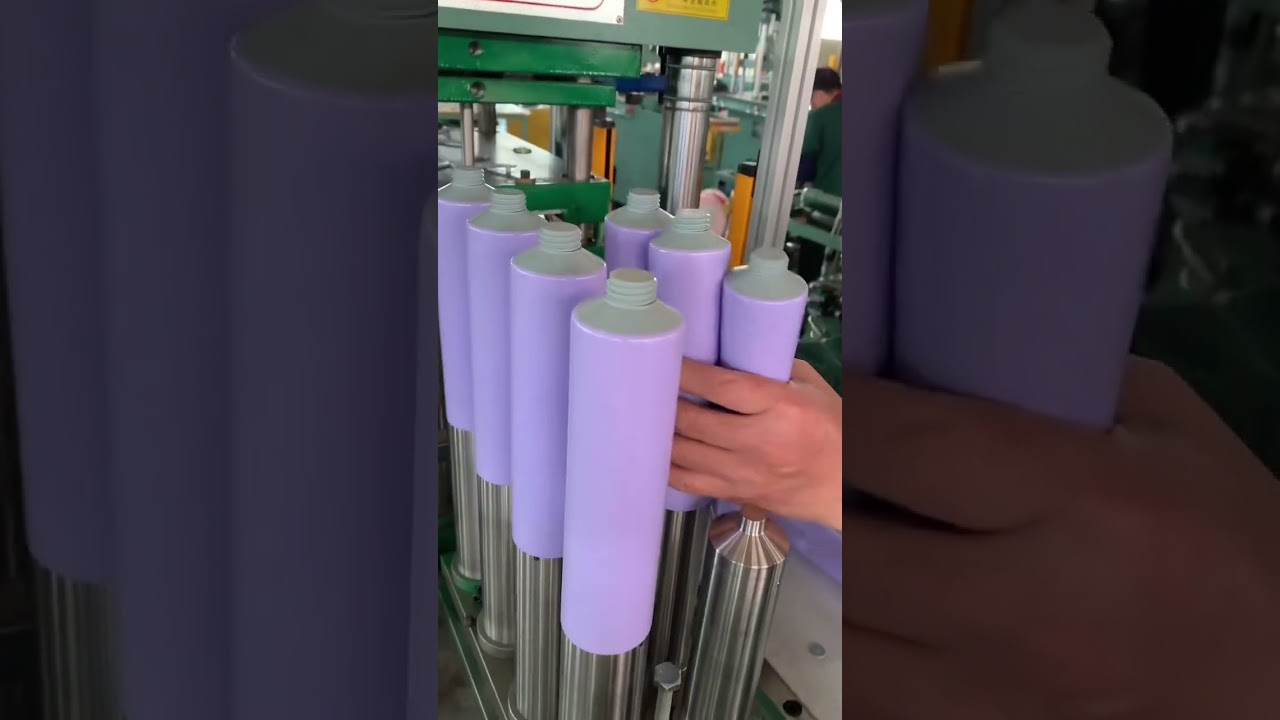
▶ Watch: Automatic injection shoulder machine producing precision tube shoulders for cosmetic and pharmaceutical soft tube production at high speed

Glossary of Key Technical Terms
| Term | Definition | Why It Matters |
|---|---|---|
| Cavitation | Number of shoulder cavities in a single mold — parts produced per machine cycle | Determines output per hour; key production planning input |
| OEE (Overall Equipment Effectiveness) | Availability × Performance × Quality — realistic throughput metric | Bridge between rated speed and actual output |
| Cpk (Process Capability Index) | Statistical measure of process consistency within specification limits; ≥1.33 = pharmaceutical minimum | Dimensional quality benchmarking |
| Closed-Loop Control | System where sensors measure actual output and automatically adjust machine parameters to compensate for variation | Core precision technology for ±0.02 mm tolerance |
| Flash | Excess resin escaping mold cavity during injection, forming a thin membrane at the parting line | Visual and compliance defect; indicates pressure/clamping issue |
| GMP (Good Manufacturing Practice) | Regulatory framework requiring documented, controlled pharmaceutical production processes | Required for all pharmaceutical tube shoulder production |
| IQ/OQ/PQ | Installation, Operational, and Performance Qualification — the regulatory validation sequence for pharmaceutical equipment | Required before pharmaceutical production can begin |
| OPC UA | Machine-to-machine data communication protocol enabling Industry 4.0 connectivity | Real-time production monitoring and MES integration |
| SPC (Statistical Process Control) | Statistical method for monitoring process output against control limits to detect drift before specification is exceeded | Continuous quality improvement system |
| Hot Runner | Mold system that keeps runner channels at melt temperature — eliminating runner waste per cycle | 8–15% resin saving per cycle |
| HMI (Human-Machine Interface) | Operator screen and control panel for machine parameter setting and status monitoring | Operator training time and error rate |
| TCO (Total Cost of Ownership) | Complete 5-year cost including purchase, energy, maintenance, labor, and downtime | Correct framework for machine financial comparison |
| SOP (Standard Operating Procedure) | Documented step-by-step instruction for a specific task, ensuring consistent execution across operators | Operator consistency; GMP requirement |
Frequently Asked Questions
1. What output capacity should I look for in an injection shoulder machine for soft tubes?
Use the OEE-adjusted formula: (Cavities × 3,600 ÷ Cycle Time in seconds) × 0.82 OEE factor. A 4-cavity machine with a 15-second cycle delivers approximately 787 usable shoulders per hour under real production conditions — not the 960 rated figure. Specify the machine to reach its efficient operating range at your 3-year projected volume, not your current output. This gives you peak demand buffer and growth headroom without paying for a decade of unused capacity.
2. Can the same machine produce both cosmetic and pharmaceutical-grade tubes?
Yes — provided the machine meets the specifications that pharmaceutical production requires: closed-loop parameter control with data logging capability for batch records, cleanroom-compatible design (typically all-electric, no hydraulic oil contamination risk), material compliance certification for all product-contact surfaces, and IQ/OQ/PQ documentation support for regulatory validation. A machine designed exclusively for cosmetic production that lacks parameter logging and data export capability cannot be formally validated for pharmaceutical use.
3. How long does it take to switch molds between different tube sizes?
With a quick-change mold clamping system (magnetic or hydraulic) and standardized cooling water quick-connect fittings, changeover between tube formats takes 15–25 minutes. Without a quick-change system — on a standard bolted mold installation — the same changeover takes 90–180 minutes. For operations running 3 or more tube formats per week, this time difference directly translates to production capacity: 6–8 additional hours of shoulder production per week recovered from changeover reduction alone.
4. Is the machine compatible with recyclable or biodegradable materials?
Modern injection shoulder machines support recycled HDPE (rHDPE) content up to 50% in the resin blend and bio-based PE resins derived from sugarcane or other renewable feedstocks. The processing requirement is that the machine has closed-loop cavity pressure control — because recycled resins have more variable melt flow index than virgin resins, meaning the same injection parameters produce different fill pressures between batches. Machines without closed-loop feedback produce visible quality variation when running rHDPE blends. Always validate recyclable or bio-based material compatibility with a documented production trial before volume commitment.
5. Do you offer customization for special neck finishes or tamper-evident features?
Yes — the shoulder geometry is determined by the mold tooling, which is custom-engineered for each neck finish diameter, thread specification, and closure type. Child-resistant closures (CRCs) require interrupted or bayonet-style thread geometry that cannot be achieved with standard continuous-thread tooling. Tamper-evident bands are typically a separate injection stage or a co-injection layer at the neck finish. Confirm with your machine and mold supplier that the tooling design and injection configuration supports your specific closure requirement — and request validated seal test data demonstrating the closure meets the applicable child-resistance standard (e.g., ISO 8317) before approving tooling.
6. What kind of energy savings can I expect compared to older hydraulic models?
All-electric servo machines reduce energy consumption by 40–60% compared to traditional hydraulic machines in comparable production conditions, based on documented manufacturer data. Servo-hydraulic hybrid machines achieve 30–40% reduction. On a 2-shift, 240-day annual schedule, these savings translate to $3,500–$8,600 per year in utility cost reduction per machine — recovering the all-electric machine’s purchase premium within 3–4 years, after which the savings continue for the remaining 10+ years of machine service life.
7. How is product consistency ensured during long production runs?
Closed-loop injection control is the primary mechanism — real-time cavity pressure sensors detect variation from the set-point pressure profile within each cycle and adjust injection speed and transfer-point timing automatically to compensate. This keeps dimensional output within specification even as resin viscosity varies slightly with temperature changes across a long production shift. Supplemented by mold temperature controllers that maintain ±0.5°C accuracy at the mold surface, and by integrated SPC monitoring that tracks dimensional trends and alerts operators to drift before it reaches specification limits, closed-loop systems maintain Cpk ≥ 1.33 across production runs that manual-adjustment machines cannot sustain beyond 2–3 hours.
8. What safety certifications should I verify before purchasing?
The minimum certifications to verify are: CE marking (mandatory for equipment operating in EU markets and increasingly required globally as a quality signal), ISO 13849 Performance Level compliance for safety-critical functions — specifically the clamping zone safety system which should meet PL d, and material compliance certificates confirming all product-contact surfaces meet FDA 21 CFR 177, EU 10/2011 food-contact material standards, or their pharmaceutical-grade equivalents. For pharmaceutical applications, additionally verify that the machine design has no dead zones in the shoulder-forming area where resin can accumulate between cleaning cycles — a design feature that regulatory inspectors assess during equipment qualification reviews.
9. Can the machine integrate with our current tube printing and filling lines?
Yes — through standardized industrial communication protocols (OPC UA or Ethernet/IP depending on your facility’s existing automation infrastructure) and physical conveyor interfaces matched to your downstream equipment’s infeed requirements. The key integration parameters to confirm: shoulder machine discharge rate (shoulders per minute) matches downstream infeed capacity; shoulder discharge orientation (face-up, face-down, or arbitrary — randomized by conveyor bowl) matches the downstream feeder system’s orientation capability; and the machine’s PLC can accept production synchronization signals from your line controller if you are running synchronized multi-station production.
10. What maintenance is required, and how often?
A tiered maintenance schedule covers the full service requirement: daily — lubrication point checks, mold surface inspection, control system alert review, and nozzle condition check (15 minutes per shift before startup); weekly — barrel seal inspection, cooling water pressure and temperature verification, servo drive status check, and ejector pin lubrication (1–2 hours); monthly — full calibration of all temperature sensors against certified reference instruments, injection pressure sensor verification, mold parting surface dimensional inspection, and complete machine cleaning (4–6 hours); quarterly — ball screw and linear guide inspection, servo motor bearing check, and mold component wear measurement; annually — OEM full machine service including barrel and screw inspection. Machines with integrated self-diagnostic systems generate maintenance alerts based on actual wear data — transitioning from schedule-based to condition-based maintenance, which reduces both unnecessary maintenance (over-servicing components before they need it) and unplanned failures (components failing before their scheduled service interval).
11. Do you provide operator training and installation support?
Full on-site commissioning, operator training, and — for pharmaceutical applications — IQ/OQ/PQ documentation support should be contractual delivery requirements, not optional services. Minimum on-site delivery: 3–4 days of mechanical installation and process parameter development using your actual tube body material and resin; 5 days of operator training in your facility’s working language, covering machine operation, parameter setting, alarm response, changeover, and routine maintenance; and 1–2 days of acceptance testing producing documented dimensional and output data against your agreed quality specification. Suppliers who cannot commit to this on-site support structure in writing, before the purchase order, are not equipped to ensure successful machine deployment in your production environment.
12. What is the typical lead time for delivery and installation?
Standard machine configurations with standard mold specifications: 12–16 weeks from order confirmation to factory acceptance testing, plus 2–4 weeks for international shipping and on-site installation. Custom configurations — specialized neck finish geometry, non-standard shoulder profiles, multi-material co-injection capability, or pharmaceutical-grade cleanroom design features — extend the timeline to 18–24 weeks. Factor in a 4–8 week ramp-up period after installation during which process parameters are refined and operators reach full proficiency — your production plan should not show full rated output from the machine until 6–8 weeks after installation completion.
13. How do I reduce startup waste when beginning a new production batch?
The most effective startup waste reduction comes from two machine features: stored parameter recipes (the machine recalls all validated parameters for a specific product — melt temperature per zone, injection speed profile, hold pressure, cooling time, mold temperature — in a single operator action, eliminating the manual re-entry and stabilization time required when parameters are set from scratch) and precise barrel zone temperature control (±2°C per zone versus the ±8–12°C typical of lower-specification machines). Together, these features reduce startup stabilization from 15–25 minutes to 3–8 minutes — recovering 12–17 minutes of production output per startup event. For an operation starting production twice per shift, 240 days annually, this represents 96–136 hours of recovered production time per year.
14. Are spare parts readily available globally?
This depends entirely on the supplier — and it is one of the highest-risk assumptions buyers make. The evaluation requirement: ask the supplier to document specifically which critical wear components are held in stock at a regional warehouse (not at the factory), what the guaranteed maximum delivery time is to your facility for emergency orders, and whether they have long-term parts supply agreements that lock pricing and availability for the machine’s service life. Suppliers who answer with “we can typically source parts within 2–3 weeks” are describing a supply chain that will cost you $4,000–$15,000 per emergency event in downtime costs — every time a critical component fails.
15. Can the machine be upgraded in the future for new technologies?
Machines designed with genuine modularity support capacity expansion (adding cavities to the mold without replacing the base machine), automation additions (robotic take-out systems, inline inspection, automatic material loading), and control system upgrades (replacing the HMI and PLC with current-generation hardware as control technology evolves, without replacing the mechanical base). The evaluation question: “What is the maximum cavitation your base machine frame can support, and what is the documented cost and timeline to move from my initial configuration to that maximum?” A supplier with a real modular upgrade path answers this with a specific component list and price. A supplier without one provides aspirational language about “future flexibility.”
The Right Machine Is the One Built for Your Operation
Choosing an injection shoulder machine for soft tube production is not a specification exercise. It is a business decision — one that determines your production yield, your operational costs, your regulatory readiness, and your ability to grow with market demand over the next 10–15 years.
The ten features in this guide are the specification dimensions where the right and wrong machine diverge most significantly in real production conditions. A machine with closed-loop control, servo-driven energy efficiency, quick-change mold capability, Industry 4.0 connectivity, and a supplier with genuine after-sales infrastructure will outperform a cheaper alternative on every metric that matters to your business within the first 12–18 months of operation.
The goal is not to buy the most sophisticated machine available. It is to buy the machine that solves your specific production challenges — current and projected — with the precision, reliability, and support your operation requires.
[Start the Quiz Now] → Use Miyoda Packaging Machinery’s tube machine configuration tool to identify the shoulder injection machine specification that matches your tube format, production volume, material requirements, and compliance environment — and receive a technical comparison tailored to your operation.
For a direct technical consultation on machine selection, process validation, or turnkey tube production line design, contact the Miyoda Packaging Machinery team — specialists in cosmetic and pharmaceutical tube production equipment with a verified track record in shoulder injection machine deployment for producers across Asia, Europe, the Middle East, and the Americas.
This guide is written exclusively for business owners, production managers, distributors, and agents who need reliable, specific information to make confident capital equipment decisions in cosmetic and pharmaceutical tube production. Every claim in this guide is grounded in documented production data, published technical research, or verified industry practice — not generalized marketing language.















