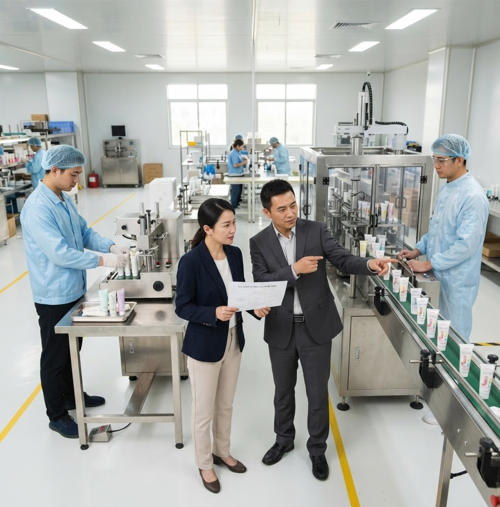
Why Your Sealing Equipment Matters More Than You Think
Every cosmetic cream and every pharmaceutical ointment that reaches a shelf has passed through one final, unforgiving checkpoint: the tube seal. If that seal is weak, off-center, or inconsistent, the product leaks in transit, fails a retailer’s quality audit, or — in a pharmaceutical context — triggers a batch rejection that can cost tens of thousands of dollars. Tube sealing is often the last thing a production manager thinks about and the first thing a customer notices when a tube arrives crushed or leaking on their doorstep.
This guide is built around one core idea: equipment selection is a financial decision disguised as a technical one. A tube sealer (the machine that closes the open end of a filled tube, usually by folding and heat-welding it, or crimping a metal tube) determines your maximum daily output, your defect rate, your labor cost per unit, and — for pharmaceutical manufacturers — whether you can pass a regulatory audit at all.

The Business Impact of Sealing Technology
The gap between manual, semi-automatic, and fully automatic sealing isn’t cosmetic — it’s arithmetic. A manual sealing station run by one operator might close 30 to 50 tubes per hour with a defect rate between 2% and 5%. A fully automatic inline system can seal, code, and inspect over 200 tubes per minute with a defect rate under 0.5%. That difference compounds daily into thousands of dollars in labor, waste, and missed orders.
There’s also a hidden cost to staying on outdated equipment that rarely shows up on a balance sheet until it’s too late. Manual sealing stations tie up skilled labor on repetitive tasks, generate inconsistent seal strength that leads to customer returns, and cap your ability to accept larger contract-manufacturing orders. Many brand owners only discover this ceiling when a major retailer or distributor asks for a volume commitment they physically cannot fulfill.
Equipment selection, in other words, is not purely an operations question handled by a plant manager. It’s a strategic decision that affects sales capacity, cash flow, regulatory risk, and your company’s ability to compete for larger accounts — which is why this guide treats it as a business case, not just a machinery spec sheet.
Who This Guide Is For
This resource speaks directly to four groups of readers who face the same underlying question from different angles.
- 🏭 Growing cosmetic and pharmaceutical manufacturers evaluating whether it’s time to move off manual sealing or upgrade a semi-automatic line that’s hit its ceiling.
- 🤝 Distributors and machinery agents who need a structured framework to recommend the right-sized equipment to clients, rather than defaulting to whatever is easiest to sell.
- 📊 Production managers trying to pinpoint exactly where bottlenecks are forming and what volume threshold justifies a capital request.
- 💰 Business owners and finance leads who need a defensible ROI model before approving a five- or six-figure equipment purchase.
Understanding Your Current Production Stage
H2: Assessing Your Business Growth Phase
Before comparing machines, you need an honest picture of where your operation actually stands. Most manufacturers overestimate their current efficiency and underestimate how close they are to a bottleneck, largely because daily output numbers get averaged over good weeks and bad ones alike.
H3: Evaluating Your Current Production Volume
Start with a simple calculation: total tubes sealed in the last 30 days, divided by actual working days (not calendar days). This gives you a realistic daily rate rather than a theoretical maximum. Compare that figure to your sales order backlog — if you’re routinely pushing orders into the following week to keep up, you’re already past capacity, not approaching it.
Industry benchmarking helps put your number in context. According to MarketsandMarkets’ tube packaging market analysis, the global tube packaging sector is projected to grow from USD 3.92 billion in 2026 to USD 5.27 billion by 2031, a 6.1% compound annual growth rate driven largely by cosmetics and pharmaceutical demand. That growth is a signal: competitors scaling production capacity are also scaling their equipment, and manual-only operations risk falling behind on lead times.
To find your actual bottleneck, track three numbers for two weeks: tubes sealed per operator-hour, minutes lost to changeovers between SKUs, and minutes lost to unplanned stoppages (jams, re-seals, quality holds). In most manual operations, changeover and rework — not raw sealing speed — turn out to be the biggest time drains.
H3: Analyzing Your Current Operational Costs
Manual and semi-automatic sealing carry cost categories that rarely appear as a single line item but add up quickly. Direct labor is the obvious one, but quality control rework, waste from failed seals, and overtime during demand spikes typically cost as much or more than the base wages themselves.
The table below breaks down where those hidden costs typically concentrate for a mid-sized operation producing around 3,000 tubes per day.
| Categoria de custo | Manual Sealing | Semi-Automatic Sealing |
|---|---|---|
| Direct labor (2 operators, $15/hr) | ~$240/day | ~$240/day (higher output per hour) |
| Defect/rework rate | 2%–5% | 0.5%–1.5% |
| Overtime frequency (peak season) | Semanal | Occasional |
| Unplanned downtime | Low mechanical risk, high human-error risk | Moderate (jaw/nozzle maintenance) |
| Effective cost per 1,000 tubes | $65–$95 | $30–$50 |
H3: Measuring Quality and Consistency Metrics
Defect rate is the single clearest signal that equipment has outgrown its purpose. Manual sealing typically produces a 2% to 5% defect rate because seal pressure, dwell time, and tube alignment depend on operator fatigue and consistency across a shift. Semi-automatic systems narrow that to 0.5%–1.5%, while fully automatic lines with inline vision inspection routinely hold below 0.5%.
Pharmaceutical products face a stricter bar than cosmetics because a failed seal isn’t just a cosmetic defect — it’s a potential sterility or stability breach. Regulatory frameworks referenced in the FDA’s current Good Manufacturing Practice regulations require documented, repeatable sealing performance, which manual processes struggle to prove consistently across batches.
Manual vs. Semi-Automatic vs. Fully Automatic Sealers
H2: Comparing the Three Sealing Systems

H3: Manual Tube Sealers: When They Still Make Sense
Manual sealers still have a legitimate place in production — typically for operations under 500 tubes per day, small-batch cosmetic launches, or contract packagers testing a new formulation before committing to volume. The capital investment is low, often under $2,000, and training an operator takes a single afternoon.
The tradeoff is scalability. Manual sealing quality depends entirely on operator technique, meaning seal strength varies not just between operators but across a single operator’s shift as fatigue sets in. For a startup validating market fit, that’s an acceptable tradeoff; for a brand fulfilling retail purchase orders, it’s a liability.
H3: Semi-Automatic Tube Sealers: The Growth Sweet Spot
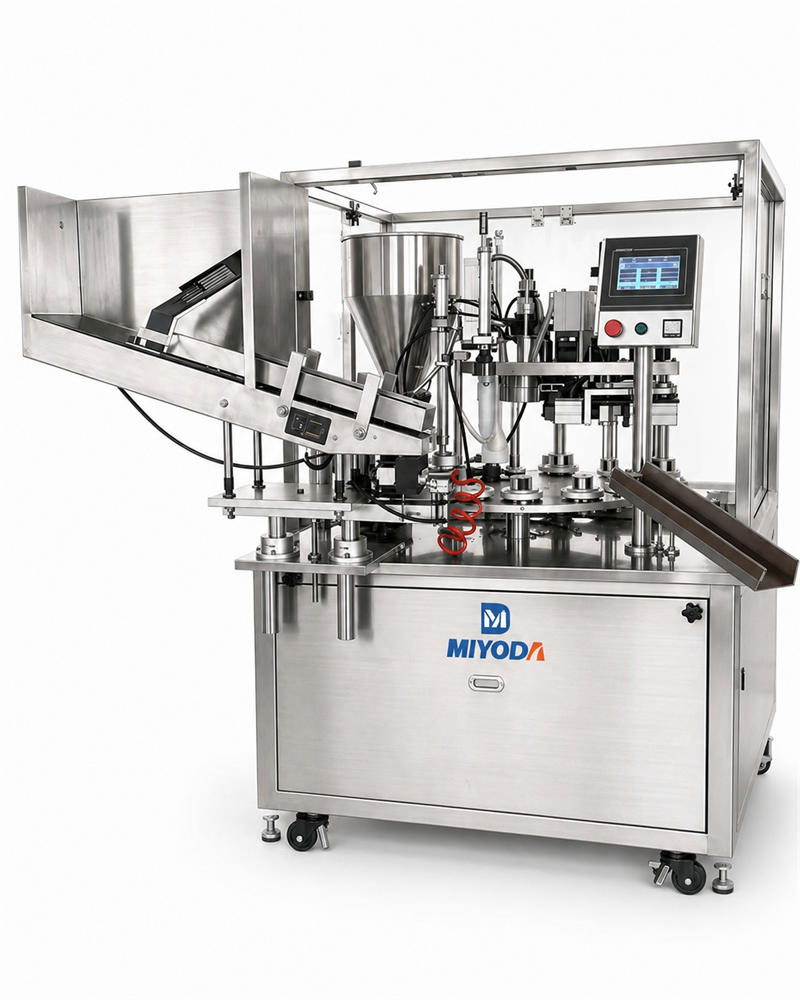
A semi-automatic tube sealer (a machine that automates the fill-and-seal cycle — dispensing, folding, heat-sealing, and batch coding — while an operator manually loads and unloads each tube) is where most growing cosmetic brands land. Miyoda’s own comparison data on automatic versus semi-automatic tube filling machines shows semi-automatic systems running at 10 to 35 tubes per minute — a five-to-tenfold jump over manual output — while keeping capital costs in the $5,000 to $30,000 range.
What makes semi-automatic systems attractive for growth-stage brands is flexibility. Quick-change tooling lets one machine handle multiple tube diameters and materials, which matters when a brand runs several SKUs with different formulations and tube sizes but hasn’t yet reached the volume that justifies a dedicated automatic line for each.
H3: Fully Automatic Tube Sealers: Enterprise-Level Solutions
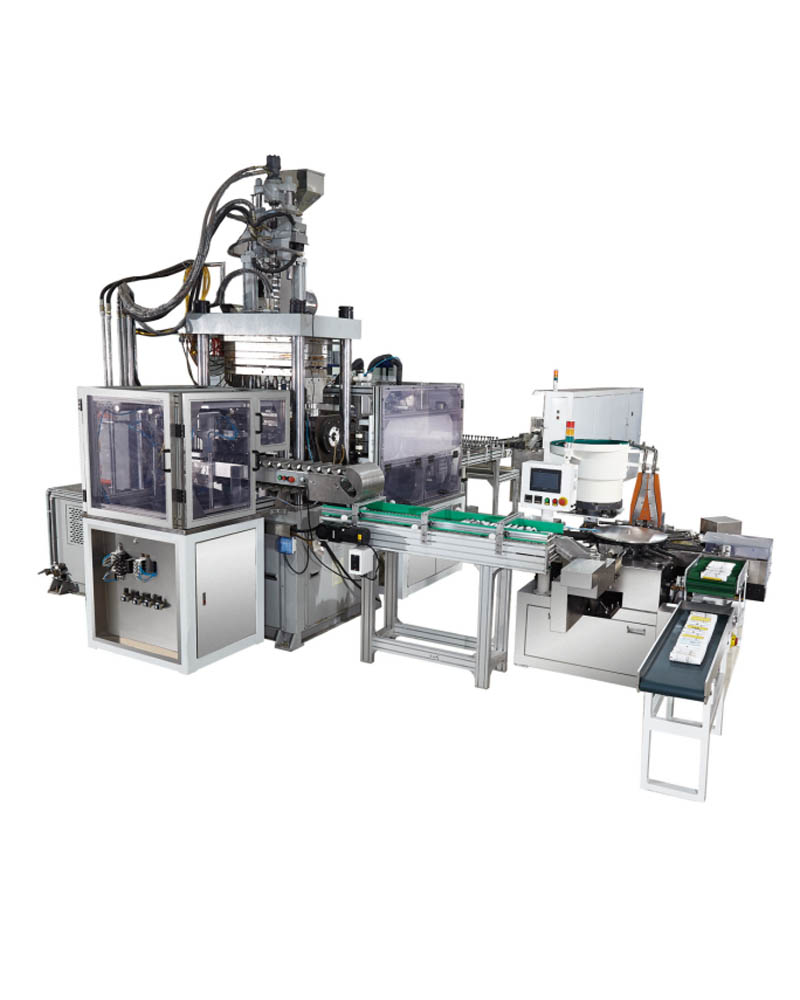
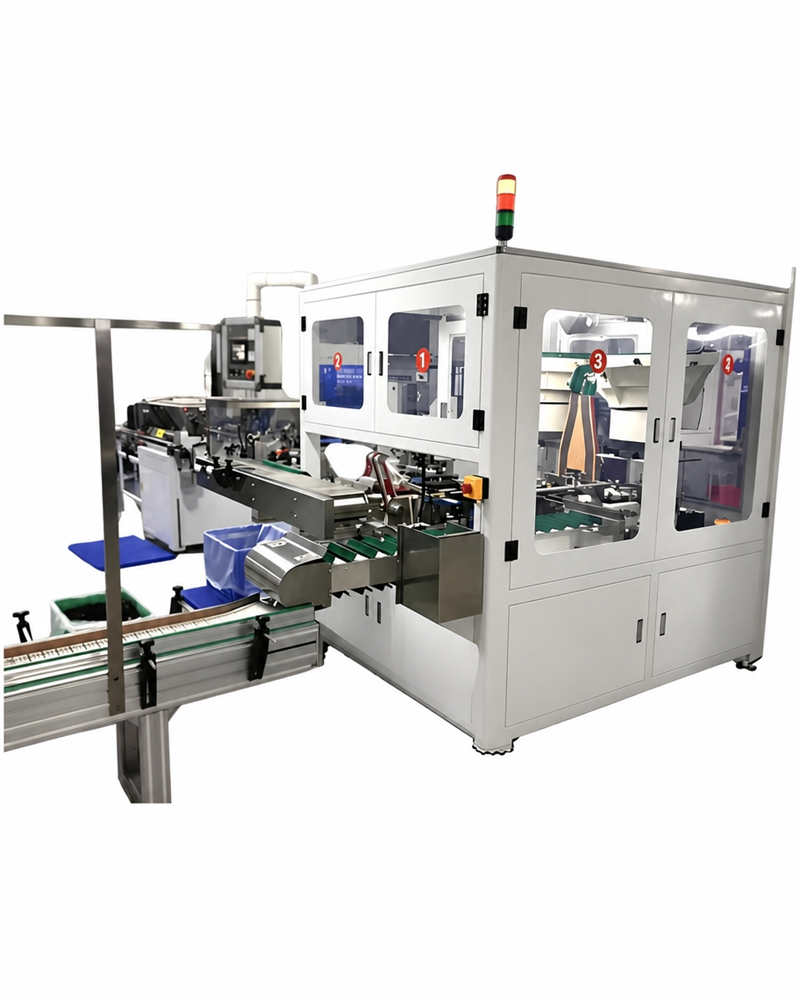
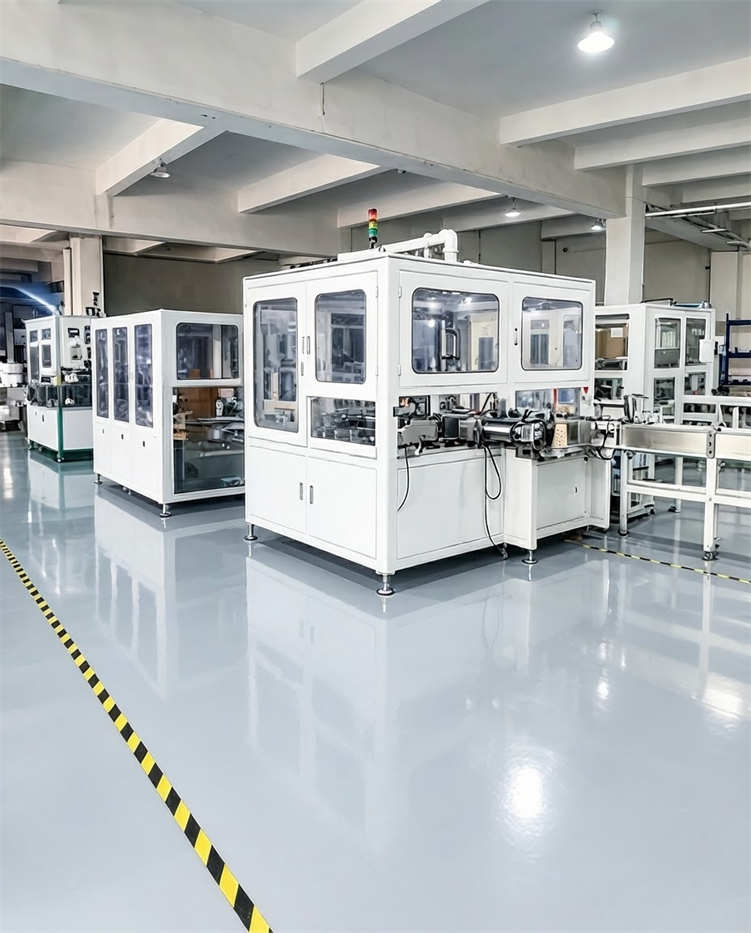
Fully automatic systems remove the operator from the load/unload cycle entirely, integrating tube feeding, filling, sealing, batch coding, and often vision inspection into a single continuous line. Miyoda’s guide to choosing the best automatic tube sealer for fast-moving factories notes that industrial ultrasonic and hot-jaw systems now routinely exceed 120 tubes per minute, with top-tier rotary configurations pushing past 200.
These lines also bring smart features that matter increasingly for pharmaceutical compliance: real-time seal-integrity sensors, automatic rejection of out-of-spec tubes, and digital batch logs that satisfy traceability requirements without a separate paper trail. For an operation producing above roughly 5,000 tubes per day, the labor savings alone typically justify the higher capital outlay within two to three years.
Production Volume Benchmarks and Capacity Planning
H2: Determining Your Volume Thresholds
H3: Calculating Your Break-Even Production Volume
The simplest break-even formula compares the incremental equipment cost against the labor and waste savings it generates per month:
A real-world example: a cosmetics brand producing 4,000 tubes/day upgrades from manual (2 operators, 4% defect rate) to semi-automatic (1 operator, 1% defect rate). At $15/hour wages and a raw material cost of $0.35 per tube, the combined labor and waste savings often reach $2,800–$3,500 per month — meaning a $20,000 semi-automatic machine typically pays for itself in 6 to 8 months.
H3: Industry Benchmarks by Product Type
Throughput expectations differ meaningfully between cosmetic creams/gels and pharmaceutical ointments, largely due to viscosity and regulatory fill-accuracy requirements. The table below summarizes typical output ranges across the three equipment categories.
| Equipment Type | Velocidade típica | Ideal Daily Volume | Typical Fill/Seal Accuracy |
|---|---|---|---|
| Manual | 30–50 tubes/hour | Under 500 tubes/day | 5%–8% variance |
| Semiautomático | 10–35 tubes/minute | 500–5,000 tubes/day | 1%–2% variance |
| Fully Automatic | 40–200+ tubes/minute | 5,000+ tubes/day | Under 0.5% variance |
Cosmetic manufacturers should also plan for seasonal swings — holiday gift sets and summer skincare launches can push demand up 40%–60% for several weeks, which is exactly the scenario where semi-automatic operations without a scalable second shift start missing delivery windows.
H3: Projecting Your Growth Trajectory
A useful rule of thumb: size your equipment purchase for your projected volume 18–24 months out, not your current volume. Buying strictly for today’s numbers often means a second capital request within a year, which carries its own disruption cost. At the same time, over-buying capacity you won’t use for three years ties up cash that could fund marketing or new SKU development — the goal is a deliberate buffer, not a maximal one.
ROI Analysis and Financial Calculations
H2: Making the Financial Case for Equipment Upgrade
H3: Total Cost of Ownership (TCO) Framework
Custo Total de Propriedade (TCO) is the full cost of owning a machine over its useful life, not just the sticker price — it includes installation, training, spare parts, energy, and maintenance. Miyoda’s tube mill investment ROI calculator and cost analysis guide breaks this down into capital cost, commissioning cost, and a five-year operating cost projection, which is the timeframe most finance teams use for equipment depreciation planning.
| TCO Component | Semiautomático | Fully Automatic |
|---|---|---|
| Capital equipment cost | $5,000–$30,000 | $60,000–$150,000 |
| Installation & training | $1,000–$3,000 | $5,000–$10,000 |
| Annual maintenance/spare parts | $1,500–$3,500 | $4,000–$8,000 |
| 5-year total cost of ownership | $35,000–$70,000 | $265,000–$480,000 |
| Best-fit monthly volume | 5,000–80,000 tubes | 80,000+ tubes |
H3: Labor Cost Savings Calculations
Labor savings scale directly with operator reduction. At 50,000 tubes/month, two semi-automatic operators at $15/hour produce a labor cost of roughly $0.057 per tube, while a single supervisory operator overseeing a fully automatic line brings that down to approximately $0.019 per tube — a savings of nearly 67% per unit once volume justifies the switch.
H3: Indirect Financial Benefits
Beyond labor, three indirect benefits routinely get left out of ROI models but materially affect the payback timeline. Reduced material waste from fewer failed seals lowers your cost per finished unit; tighter consistency reduces customer-driven returns and the associated reverse-logistics cost; and faster order fulfillment improves cash flow by shortening the time between production and invoicing.
H3: Creating Your ROI Projection Model
Build your model in three volume scenarios: conservative (80% of forecast), expected (100%), and optimistic (120%). Recalculate quarterly once you have real production data — most manufacturers see actual first-year volume land 10%–30% off their original projection, and a model that only accounts for one scenario will look badly wrong within six months.
Quality and Compliance Considerations
H2: Meeting Industry Standards and Regulatory Requirements
H3: Pharmaceutical Packaging Requirements
Pharmaceutical sealing equipment must be validated, not just purchased and plugged in. IQ/OQ/PQ — Installation Qualification, Operational Qualification, and Performance Qualification — is the three-stage validation process regulators expect before equipment can be used for commercial production. As explained in The FDA Group’s basic guide to IQ, OQ, PQ, this process proves with documented evidence that the machine is installed correctly, operates within specification, and performs consistently under real production conditions.
Budget four to eight weeks and roughly $10,000–$25,000 for full validation on a new pharmaceutical sealing line. Traceability is equally critical: modern sealers should log batch number, seal temperature, dwell time, and operator ID automatically, which satisfies the electronic record-keeping expectations under 21 CFR Part 11 without relying on manual paper logs that are easy to falsify or lose.
H3: Cosmetic Packaging Standards
Cosmetic buyers rarely enforce the same regulatory documentation as pharmaceutical clients, but they enforce something equally unforgiving: visible quality. A crooked seal, an uneven crimp, or a tube that leaks in transit shows up in a one-star review, not a regulatory citation — and for a direct-to-consumer brand, that’s arguably worse.
Miyoda’s cosmetic tube sealing machine buyer’s guide points out that seal integrity also affects shelf-life stability; an incomplete seal lets in oxygen and moisture that can degrade active ingredients like vitamin C or retinol well before the printed expiration date.
H3: Quality Control Integration
Modern semi-automatic and fully automatic sealers increasingly build quality verification directly into the sealing cycle rather than relying on end-of-line spot checks. Vision inspection cameras flag misaligned seals in real time, seal-strength sensors verify pressure and dwell time on every cycle, and data logging creates a searchable record for traceability — features that Miyoda details further in its guide to must-have features in today’s tube filling equipment.
Implementation and Transition Strategy
H2: Planning Your Equipment Upgrade Successfully
H3: Phased Upgrade Approach
The safest transition path runs the new equipment in parallel with the existing line for one to two production cycles before fully decommissioning the old system. This protects you from a worst-case scenario where a mechanical issue on day one of full changeover leaves you unable to fulfill orders at all.
H3: Vendor Selection and Due Diligence
Evaluate vendors on more than price. Ask for site references from operations of a similar size and product category, request a live demonstration with your actual formulation and tube material (not just the vendor’s demo product), and confirm the warranty terms in writing before signing. Miyoda’s pre-purchase audit guide for tube processing line suppliers outlines a two-day, on-site evaluation framework covering documentation, compliance history, and after-sales capability that distributors can use when vetting equipment on a client’s behalf.
H3: Installation and Validation
Plan installation timing around your lowest-demand production week, not your highest. Semi-automatic installations typically take two to four weeks from delivery to full production; fully automatic lines with pharmaceutical validation can take six to twelve weeks once IQ/OQ/PQ documentation is factored in.
Technology Features and Smart Integration
H2: Future-Proofing Your Equipment Investment
H3: Advanced Features in Modern Tube Sealers
Programmable sealing parameters let one machine handle different tube materials and formulations without manual recalibration — critical for brands running multiple SKUs on shared equipment. Miyoda’s overview of innovations in plastic tube sealing machines for 2026 highlights how robotic tube handling now reduces manual-contact contamination risk, a detail that matters specifically for sterile pharmaceutical products.
H3: Industry 4.0 and Data Integration
Industry 4.0 refers to the integration of internet-connected sensors, real-time data analytics, and automated decision-making into manufacturing equipment. On a tube sealer, this typically means remote monitoring of seal quality trends, predictive maintenance alerts before a component fails rather than after, and direct data feeds into a plant’s Manufacturing Execution System (MES) for centralized production reporting.
H3: Scalability and Future Growth
Look for modular equipment architecture — machines designed so that a semi-automatic base unit can later accept an automatic infeed/outfeed module rather than requiring a full line replacement. This upgrade path protects your initial capital investment even as volume outgrows the original configuration.
Common Challenges and Solutions
H2: Addressing Implementation Obstacles
H3: Overcoming Budget Constraints
Equipment leasing, typically structured over three-to-five-year terms, spreads capital cost into predictable operating expenses and preserves cash for other growth priorities. Phased investment — starting with a single semi-automatic unit and expanding as volume proves out — is often a more defensible approach for a first-time capital request than committing to a full automatic line upfront.
H3: Managing Operational Disruption
The biggest risk during any equipment transition isn’t the machine — it’s the gap in fulfilling existing customer orders while the new line ramps up. Building a two-to-three-week buffer of finished inventory before changeover, and communicating realistic lead times to key accounts in advance, prevents the transition from becoming a customer-service crisis.
H3: Troubleshooting Common Issues
Most early-stage seal quality problems trace back to three causes: incorrect temperature calibration for the specific tube material, misaligned tube orientation at the feed station, or inconsistent product viscosity affecting fill weight and seal contact. Miyoda’s tube mill troubleshooting and maintenance optimization guide walks through diagnostic steps for these issues in more technical detail.
Case Studies and Real-World Examples
H2: Learning from Successful Equipment Transitions
H3: Case Study 1 — Cosmetic Manufacturer Scaling from Manual to Semi-Automatic
A mid-sized skincare brand producing 1,200 tubes/day manually was rejecting nearly 4% of output for seal defects and paying regular overtime to meet retail delivery windows. After moving to a semi-automatic line, defect rate fell to 1.1%, one operator position was reassigned to quality control rather than eliminated, and the brand recovered its $18,000 equipment investment in just under seven months through reduced waste and overtime alone.
H3: Case Study 2 — Pharmaceutical Producer Upgrading to Fully Automatic
A contract pharmaceutical packager needed to meet stringent traceability and cleanliness standards while scaling from 8,000 to 35,000 tubes/day. The transition required full IQ/OQ/PQ validation, but the resulting automatic line’s inline vision inspection and digital batch logging cut regulatory documentation time per batch by roughly half, while seal-integrity failure rates dropped from 1.8% to under 0.4%.
H3: Case Study 3 — Distributor Perspective on Equipment Selection
Machinery distributors report that the most common client mistake is buying based on the lowest sticker price rather than the actual monthly volume the client is producing. Distributors who walk clients through a volume-based sizing exercise before recommending equipment — rather than defaulting to whatever unit carries the highest margin — consistently report stronger long-term client retention and fewer warranty disputes down the line.
Decision Matrix and Action Plan
H2: Your Equipment Selection Framework
H3: Step-by-Step Decision Matrix
Score each factor from 1 (low priority) to 5 (critical priority), then multiply by your actual production data to see which equipment category best fits your situation.
| Decision Factor | Manual | Semiautomático | Fully Automatic |
|---|---|---|---|
| Current daily volume under 500 tubes | ✅ Best fit | ⚠️ Overcapacity | ❌ Overcapacity |
| Daily volume 500–5,000 tubes | ❌ Under capacity | ✅ Best fit | ⚠️ Possible overinvestment |
| Daily volume 5,000+ tubes | ❌ Severely under capacity | ⚠️ Nearing ceiling | ✅ Best fit |
| Pharmaceutical validation required | ❌ Difficult to validate | ⚠️ Possible with documentation | ✅ Built-in traceability |
| Frequent SKU/tube-size changes | ✅ Highly flexible | ✅ Flexible with tooling | ⚠️ Requires changeover planning |
| Limited capital available | ✅ Lowest cost | ✅ Moderate cost | ❌ Highest upfront cost |
H3: Creating Your 90-Day Action Plan
Weeks 1–2 focus on assessment: gather 30 days of real production data, calculate your current defect rate, and identify your actual bottleneck. Weeks 3–4 move into vendor evaluation, including site visits and live demonstrations with your own product. Weeks 5–8 are for financial analysis — build the ROI model described in Section 4 across all three volume scenarios. Weeks 9–12 cover final decision-making, contract negotiation, and installation scheduling around your lowest-demand production week.
H3: Key Questions to Ask Before Purchasing
Before signing any contract, confirm the vendor’s warranty terms in writing, ask for at least two client references in your product category, verify spare-parts lead time and local support availability, and request documented changeover times for your specific tube sizes and materials — not just the vendor’s fastest demo configuration.
Here’s a short demonstration of a fully automatic tube filling and sealing line in action, useful for visualizing how the feed, fill, seal, and coding stages integrate on a real production floor:
https://www.youtube.com/watch?v=Su1CNH1kU0E
Glossário de termos-chave
| Termo | Definição |
|---|---|
| Tube Sealer | A machine that closes the open end of a filled tube by folding and heat-welding (plastic) or crimping (metal). |
| Semi-Automatic Sealer | A machine that automates dispensing, sealing, and coding while an operator manually loads/unloads each tube. |
| Fully Automatic Line | An integrated system that feeds, fills, seals, codes, and often inspects tubes with no manual handling between stations. |
| IQ/OQ/PQ | Installation, Operational, and Performance Qualification — the three-stage validation process proving equipment works correctly and consistently. |
| Custo Total de Propriedade (TCO) | The full cost of owning equipment over its lifespan, including purchase, installation, maintenance, and energy — not just the sticker price. |
| Industry 4.0 | The use of connected sensors, real-time data, and automated analytics to monitor and optimize manufacturing equipment. |
| MES (Sistema de Execução da Produção) | Software that tracks and manages production data across a factory floor in real time. |
Making Your Equipment Decision with Confidence
The Strategic Importance of Right-Sizing Your Equipment
The right sealing equipment isn’t the most expensive option or the cheapest one — it’s the one matched to your actual volume, your product’s regulatory profile, and your growth trajectory over the next 18 to 24 months. Manual sealing serves small-batch validation well; semi-automatic systems carry most growing cosmetic brands through their scaling years; fully automatic lines become the clear financial choice once volume, labor cost, and compliance requirements align above roughly 5,000 tubes per day.
Get the sizing wrong in either direction and the cost shows up differently but just as painfully — either in missed orders and overtime bills from under-investing, or in idle capacity and unnecessary debt service from over-investing. The businesses that navigate this transition well are the ones that build a real financial model, as outlined in Section 4, before signing a purchase order rather than after.
Ready to move past guesswork on your next equipment purchase? Miyoda Packaging Machinery works directly with cosmetic and pharmaceutical manufacturers, along with the distributors and agents who advise them, to map production data against the right sealing configuration — whether that’s a semi-automatic upgrade or a fully validated automatic line.
Reach out through Miyoda’s contact page for a production assessment, or explore the tube filling and closing machine product line e automatic tube capping equipment to see configuration options that match the volume thresholds discussed throughout this guide.
Perguntas frequentes
1. How do I know if I’ve outgrown my manual tube sealer? If you’re routinely working overtime, pushing orders into the following week, or producing more than 300–500 tubes per day consistently, you’ve likely outgrown manual sealing. Semi-automatic equipment at this volume typically pays for itself within 12–18 months through labor and waste savings.
2. What production volume makes semi-automatic sealing cost-effective? Semi-automatic systems are most cost-effective between 500 and 5,000 tubes per day. Below that range, manual sealing may still be sufficient; above it, fully automatic systems generally deliver better ROI through labor reduction and higher throughput.
3. Can I upgrade from semi-automatic to fully automatic without replacing my entire line? Many modern semi-automatic systems use modular architecture that supports upgrading to automatic feed and inspection modules later. Facility space, electrical capacity, and compressed-air requirements should still be checked during the initial purchase to confirm the upgrade path is realistic.
4. How accurate are production volume forecasts for ROI calculations? Use conservative estimates around 80% of your projected volume when modeling ROI, and recalculate quarterly once real data comes in. Most manufacturers see 10%–30% variance from their initial projections in the first year.
5. What are the pharmaceutical industry requirements for tube sealer validation? Pharmaceutical applications require IQ/OQ/PQ validation aligned with FDA CGMP expectations, covering installation checks, operational testing, and performance verification under real production conditions. Budget four to eight weeks and roughly $10,000–$25,000 for a complete validation package.
6. How does sealing quality differ between manual, semi-automatic, and fully automatic systems? Manual sealing typically runs a 2%–5% defect rate, semi-automatic narrows that to 0.5%–1.5%, and fully automatic systems with inline inspection routinely stay under 0.5%. For pharmaceutical products, this directly affects batch acceptance rates during quality review.
7. What is the typical payback period for upgrading from manual to semi-automatic sealing? Most manufacturers recover their investment within 12–24 months once labor savings, waste reduction, and efficiency gains are factored in. Higher production volumes shorten this payback period significantly.
8. Are there financing options available for tube sealer equipment? Yes — common options include equipment leasing over three-to-five-year terms, manufacturer financing programs, and equipment loans from specialized lenders. Leasing tends to suit businesses prioritizing cash-flow flexibility over outright ownership.
9. What hidden costs should I factor into my equipment investment? Commonly overlooked costs include installation and setup, operator training, facility modifications for electrical or compressed-air needs, spare-parts inventory, and annual preventive maintenance contracts — together these can add 15%–25% on top of the base equipment price.
10. How long does it take to implement a new tube sealer system? Semi-automatic systems typically reach full production within two to four weeks of delivery. Fully automatic systems, especially those requiring pharmaceutical validation, can take six to twelve weeks from delivery to validated commercial production.