
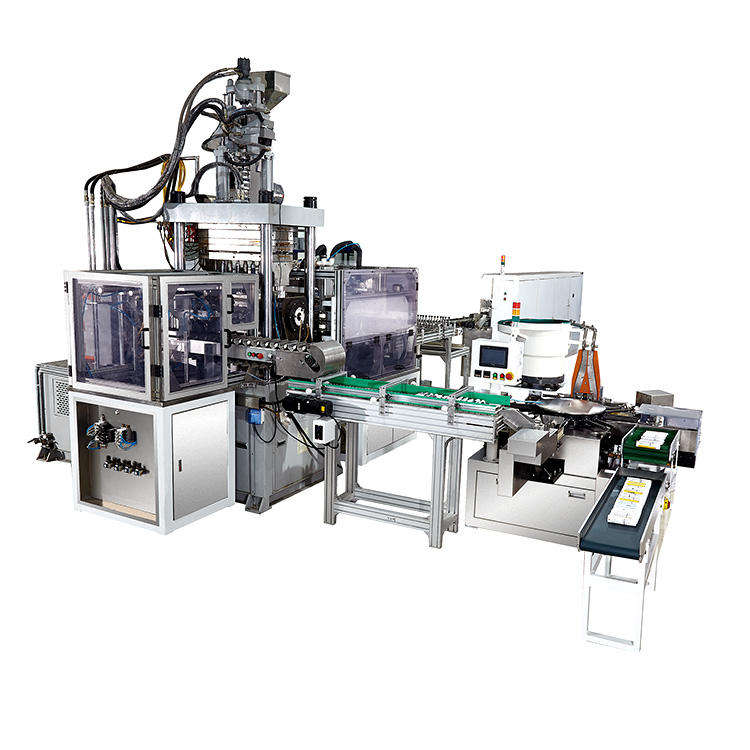
Advanced Strategies to Maximize Output, Reliability, and ROI from Injection Moulding Machines for Soft Tube Production
On a soft tube line, the shoulder is where you make or lose money. The shoulder is the moulded head with the neck, thread, and orifice. It is only 3–6 grams of plastic, but it decides whether the cap fits, whether the tube seals on the filler, and whether a pharma auditor signs off on your batch record.
Most producers don’t have trouble with the machine itself. They have trouble with everything around it: parameters that drift, maintenance that only happens after something breaks, slow changeovers, damp resin, and operators on the night shift making guesses.
This guide covers ten practical strategies for your soft tube injection moulding machine. It is written for cosmetic and pharmaceutical tube producers, and for the distributors and agents who support them. Each section explains the problem, shows what to change, and ends with a number you can check.
Quick definition: Injection moulding Injection moulding is a process where plastic pellets are melted in a heated barrel and pushed under pressure into a closed steel mould. In soft tube production, it forms the tube shoulder (also called the head) and bonds it to the extruded or laminated tube sleeve.
Key Takeaways at a Glance
| Strategy Area | Typical Starting Problem | Realistic Target |
|---|---|---|
| Process optimization | 3–5% shoulder scrap | Below 2% |
| Preventive maintenance | 3–6 unplanned stops per month | 1 or fewer |
| Cycle time | 5.0 s per shot | 4.1 s (about 18% faster) |
| Mould changeover | 2–3 hours | 45–60 minutes |
| Automation payback | Unknown | Under 14 months (high volume) |
| Traceability | Paper logs | Every cycle stored digitally |
1. Precision Process Optimization for Soft Tube Preforms
Fine-Tuning Melt Temperature, Injection Speed, and Packing Pressure
Tube shoulders have thin walls, often 0.6–1.2 mm. Thin walls leave very little room for error. Here are the three most common defects and where they come from:
- Flash is a thin fin of plastic at the mould parting line. It usually means injection pressure is too high, clamp force is too low, or the parting surfaces are worn.
- Short shots are incomplete shoulders, often at the thread or the orifice tip. They usually point to low melt temperature, slow injection speed, or a blocked vent.
- Warpage is an oval or tilted shoulder. It usually comes from uneven cooling or packing pressure that is too high.
Glossary: Packing pressure (hold pressure) This is the pressure the screw keeps applying after the cavity is full. It pushes in a little extra plastic to make up for shrinkage as the part cools. Too little causes sink marks. Too much causes stress and warpage.
Industry insight: Many shoulder lines run one fast injection speed from start to finish. A better approach is a multi-stage injection profile. Fill the thin thread area quickly, then slow down to about 60–70% speed as the melt reaches the shoulder-to-sleeve weld zone. This one change often gets rid of both flash at the orifice and weak bonds at the sleeve.
| Parameter | Typical Window (LDPE/HDPE shoulders) | If Too Low | If Too High |
|---|---|---|---|
| Melt temperature | 200–240 °C | Short shots, weak sleeve bond | Degradation, drool, yellowing |
| Injection speed | Profiled, 3 stages | Flow lines, short shots | Flash, burn marks |
| Packing pressure | 40–60% of injection pressure | Sink marks | Warpage, flash |
| Mould temperature | 15–30 °C | Longer cooling (it rarely goes too low) | Longer cycle, distortion |
Leveraging Real-Time Process Monitoring
Pharmaceutical buyers usually specify orifice diameter within ±0.05 mm and shoulder OD within ±0.10–0.15 mm. You can’t hold that with a check once per shift. Real-time monitoring tracks every shot for:
- Injection peak pressure
- Cushion (the small amount of melt left in front of the screw)
- Screw recovery time
- Mould temperature at the inlet and outlet
If any of these drift beyond a set band, the machine sends the part to the reject chute before it reaches the heading or capping station.
Case Example: Cutting Scrap by 38% with Closed-Loop Control
Illustrative scenario based on typical line data. A contract producer runs 35 mm PE shoulders on a 4-cavity mould. Scrap is 4.2%, mostly short threads and oval shoulders on the night shift.
They added closed-loop control, meaning the machine measures cavity pressure and corrects the next shot automatically. Scrap fell to 2.6%, which is a 38% reduction. At 6 million shoulders a year, that saves about 96,000 shoulders. The bigger win came downstream: the filling line stopped jamming on oval tubes.
2. Proactive Preventive Maintenance Schedules for Continuous Uptime
Customized Plans Based on Material Usage
A generic maintenance calendar doesn’t work well for tube shoulder machines, because different resins wear parts at very different rates:
| Material Type | Wear Level | Suggested Screw/Barrel Check |
|---|---|---|
| Virgin medical-grade PE/PP | Low | Every 4,000 operating hours |
| Pigmented PE (TiO₂ white masterbatch) | Medium, because titanium dioxide is abrasive | Every 2,500 hours |
| PCR recyclates (post-consumer resin) | High, due to contamination and grit | Every 1,500 hours |
Industry insight: More brands now ask for 30–50% PCR content to meet EU packaging rules. Producers who switch to PCR without changing their maintenance plan often see non-return valve wear twice as fast. The first sign is a cushion that slowly shrinks over several weeks.
Critical Checkpoints
- Barrel wear: Measure the inside diameter at several points. If wear exceeds about 0.15–0.20 mm over the original size, melt quality drops.
- Screw degradation: Check the flight outer diameter and look for pitting near the feed zone.
- Non-return valve (check ring): This part stops melt from flowing back during injection. A worn ring makes shot weight vary from shot to shot. You can test it with a “cushion hold test”: hold pressure with the nozzle closed and watch whether the screw creeps forward.
Condition-Based Monitoring
Glossary: Condition-based monitoring (CBM) Instead of servicing on a fixed date, you service when sensors show a part is starting to wear.
Two tools give the most value for the least cost:
- Vibration analysis on hydraulic pumps and electric motors. A rise in high-frequency vibration often warns of bearing trouble weeks ahead of time.
- Thermal imaging of heater bands, electrical cabinets, and hot runner connectors. A heater band running 20 °C cooler than its neighbours is about to fail.
Published research on predictive maintenance in industrial settings reports large reductions in unplanned downtime compared with purely reactive repair.
3. Energy Efficiency & Cycle Time Reduction Without Sacrificing Quality
Optimizing Cooling Time and Clamp Force with Cavity Pressure Sensors
Cooling usually takes 60–80% of a shoulder cycle, so that is where most of the time savings are. A cavity pressure sensor is a small sensor built into the mould that shows exactly when the plastic has frozen at the gate. Many shops set cooling time “by feel” and leave an extra 0.5–1.0 s just to be safe. The sensor data lets you remove that extra time safely.
The same data helps with clamp force. Many machines clamp 20–30% harder than needed. That wastes energy, speeds up wear on the tie bars, and can close off vents, which causes burn marks.
Servo-Driven Hydraulics and All-Electric Machines
| Drive Type | Energy Use vs. Fixed-Pump Hydraulic | Best Fit |
|---|---|---|
| Fixed-pump hydraulic | Baseline | Older lines, low utilisation |
| Servo-hydraulic | Roughly 30–50% lower | Mixed cosmetic production |
| All-electric | Roughly 50–70% lower | Cleanrooms, pharma, high precision |
ENGEL’s data shows that electric and servo-hydraulic drives can reduce injection moulding energy consumption by a large margin. Here is a simple example: moving from a 22 kW average draw to 12 kW, running 6,000 hours a year at $0.14/kWh, saves about $8,400 per year per machine.
Real-World Impact: 18% Faster Cycles Under ISO 15378
Illustrative scenario. A pharma tube supplier certified to ISO 15378 (the GMP standard for primary packaging of medicines) used cavity pressure data to cut cooling time. Cycle time went from 5.0 s to 4.1 s, which is 18% faster.
They didn’t just make the change. They treated it as a formal validated change: they documented it, ran three confirmation batches, and updated the batch record template. Speed improvements only count in pharma if the documentation keeps up with them.
4. Mould Compatibility & Quick Changeover Protocols
Standardizing Mould Interfaces
When every mould has different mounting plates, cooling connections, and hot runner plugs, a changeover becomes a hunt for adapters. Standardising on one component system, such as HASCO or DME, lets you:
- Use the same locating ring and clamp slot position on every mould
- Use colour-coded quick couplings for cooling water
- Use one standard multi-pin connector for hot runners and thermocouples
This matters most when you switch between tube diameters (for example 19 mm to 40 mm) or neck finishes (for example a screw cap to a flip-top orifice).
Robotic Assist and Pre-Heating Systems
Two simple habits can cut setup time by up to 50%:
- Pre-heat the next mould on a heated staging table while the current job is still running. That way it arrives at production temperature.
- Use robotic or trolley-assisted mould handling, so one technician can swap moulds safely without waiting for a crane.
Protecting Mould Surfaces During Transitions
Polished orifice cores and thread inserts damage easily. Best practice looks like this:
- Spray a rust inhibitor on the cavities before storage, especially in humid plants.
- Blow the cooling channels dry so scale doesn’t build up.
- Store moulds closed, with the latch straps fitted.
- Never use steel tools on the cavity surface. Use brass only.
If you are reviewing equipment for a multi-SKU operation, our guide on choosing the right injection shoulder machine explains how to size capacity and changeover capability to fit your order mix.
5. Material Handling & Drying Best Practices for Sensitive Resins
Preventing Moisture-Related Defects
To be accurate: PE and PP absorb very little moisture. They are not truly hygroscopic in the way PET or nylon are. In practice, though, moisture still gets into shoulder production in three ways:
- Surface condensation, when cold resin bags are brought into a warm, humid plant
- Masterbatches and additives, which can carry moisture
- PCR recyclates, which often hold water from the washing process
COC (cyclic olefin copolymer), used in some sterile and high-barrier applications, needs controlled drying and very clean handling. Moisture shows up as splay, which looks like silver streaks on the shoulder surface, and as small bubbles near the orifice.
Glossary: Dew point This is the temperature at which moisture in the air condenses. A desiccant dryer that delivers air at a –40 °C dew point is supplying very dry air.
Desiccant Dryers with Dew Point Monitoring and Traceability
For sensitive grades, specify:
- A desiccant (dehumidifying) dryer with continuous dew point display and an alarm
- A dryer hopper sized for at least 3–4 hours of residence at peak throughput
- A material traceability log that records the resin lot, drying start time, dew point, and the machine it fed
This log is often the first thing a pharma auditor asks to see after a complaint.
Avoiding Degradation Through Residence Time Control
Industry insight: Shoulder shots are small. A 4-cavity mould at 4 g per shoulder uses only 16 g per shot. If you run that on a barrel sized for 300 g, the melt can sit hot for several minutes before it is injected. The result is yellowing, black specks, and odour, which is a real problem for fragrance-sensitive cosmetics.
Rule of thumb: use 20–80% of barrel shot capacity. If you are below 20%, the barrel is too big for the job.
6. Data-Driven Quality Assurance & Traceability Systems
Integrating SCADA and MES Platforms
Glossary: SCADA and MES SCADA (Supervisory Control and Data Acquisition) collects live data from machines on the floor. MES (Manufacturing Execution System) links that data to orders, batches, operators, and quality results.
When they work together, each shoulder batch can be traced back to its process window: temperatures, pressures, cycle times, and alarms.
Full Batch Traceability for FDA and EU GMP
Regulators want records that are complete, secure, and can’t be changed without leaving a trace. The FDA’s guidance on Part 11 electronic records and signatures explains what “trustworthy” electronic data means. In Europe, the EudraLex Volume 4 GMP guidelines set the equivalent expectations.
For cosmetic tubes, many retail buyers now require ISO 22716 cosmetic GMP in supplier audits.
| Record Element | Why Auditors Ask for It |
|---|---|
| Mould ID and cavity number | Links a defect to one cavity |
| Resin lot + dryer log | Proves material condition |
| Operator ID + recipe version | Shows who ran what |
| Alarm and reject history | Shows the process was under control |
AI-Powered Anomaly Detection
Modern systems learn what a “normal” shot looks like. When the combination of pressure, temperature, and screw position starts to drift, even while each value is still inside its limits, the system warns operators before defects appear.
A common real example: injection pressure creeps up by 3–4% over 50,000 cycles while mould temperature stays the same. That usually means a partly blocked hot runner tip. If you catch it early, the fix takes 2 hours. If you don’t, you get a line stop and possibly a shipped batch of short-thread shoulders.

7. Operator Training Programs That Reduce Human Error
Structured Onboarding
A good onboarding path covers these steps, in order:
- Safety and lockout procedures
- Machine startup: heat-up sequence, purge, and first-article check
- Normal production: sampling frequency and reading the HMI (the touchscreen control panel)
- Changeover steps with a timed checklist
- Normal shutdown and emergency shutdown
Put a laminated one-page checklist at every machine. Night shift operators without a supervisor should never have to guess what alarm E-12 means.
Simulation-Based Troubleshooting
The best way to learn is to see a defect, find its cause, and fix it without scrapping real product. Simulation modules and structured shop-floor drills should cover these common faults:
| Defect | What It Looks Like | First Check |
|---|---|---|
| Drool | Plastic dripping from the nozzle between shots | Decompression setting, nozzle temperature |
| Splay | Silver streaks on the surface | Dryer dew point, resin moisture |
| Sink marks | Small dents, often on the shoulder skirt | Packing pressure and hold time |
| Stringing | A thin thread at the gate point | Nozzle temperature, hot runner tip |
Certification Levels Across Shifts
Set up three levels: Operator (runs production), Setter (does changeovers and parameter tuning), and Process Technician (validates changes and troubleshoots). Only Level 2 and above can change recipes. This one rule stops most of the “mystery drift” between day and night shifts.
8. Scaling Production with Modular Automation Integration
Designing Flexible Cells
A modular cell adds automation in steps instead of all at once:
- Robotic demoulding and transfer
- Inline leak testing, using pressure decay to check every tube
- Label application or date coding
- Vision inspection with automatic reject gates
Each module connects through standard signals, so you can add the next one when volume justifies it. On a complete line, the shoulder station feeds decoration and then a tube filling and closing machine. Matching speeds between these stations matters as much as the speed of any single machine.
Future-Proofing with IIoT Connectivity
Glossary: IIoT (Industrial Internet of Things) Machines with network-connected sensors that share live data with dashboards, MES, or your supplier’s support team.
When buying, confirm that the machine supports OPC-UA, an open standard that lets machines from different brands exchange data, along with remote access and data export. A machine that can’t share data now will be isolated on your line within a few years.
ROI Analysis: Automation Payback in Under 14 Months
Illustrative high-volume example (3 shifts, 20+ million shoulders per year):
| Item | Annual Value |
|---|---|
| Cell investment (robot + leak tester + coder) | $210,000 one-time |
| Labour saved (4 operators across shifts) | $88,000 |
| Scrap and rework reduction | $32,000 |
| Added saleable output from fewer stops | $60,000 |
| Total annual benefit | $180,000 |
| Payback | About 14 months |
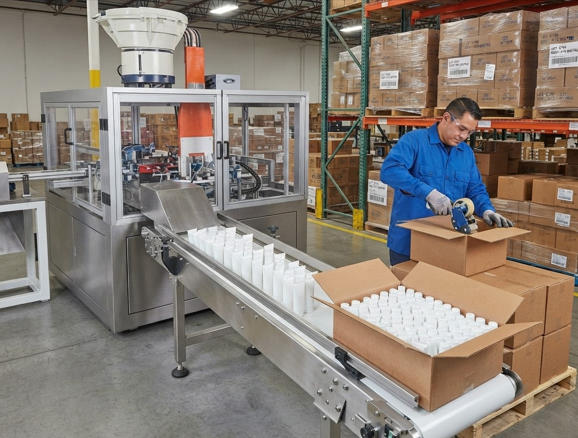
For a full line view from sleeve to finished tube, see this overview of a complete tube extrusion production line. If you run laminated tubes, the laminate tube making machine page shows how sleeve forming connects with shoulder heading.
9. Extending Machine Lifespan Through Lubrication & Hydraulic Care
Oil Analysis Programs
On hydraulic and hybrid machines, hydraulic oil works like the machine’s bloodstream. A lab test every quarter checks for:
- Particle contamination, measured against a cleanliness code such as ISO 4406. Servo valves usually need very clean oil.
- Water content. Above roughly 0.02% (200 ppm), pump wear speeds up quickly.
- Oxidation and additive depletion, which signal that the oil is nearing the end of its life.
An oil test costs about the same as a lunch. A replacement main pump can cost thousands and cause days of downtime.
Filter Changes and Water-in-Oil Monitoring
Industry insight: In tropical plants in Southeast Asia, India, Latin America, and the Middle East, water in the oil is the most common hidden killer of pumps. Warm oil cools overnight, humid air condenses in the tank, and the water builds up.
Useful countermeasures:
- A desiccant breather on the tank
- An inline water-in-oil sensor
- Changing filters based on differential pressure, not only on the calendar
- Keeping cooling water warmer than the room’s dew point to avoid condensation
Protecting Machines in 24/7 Operations
Machines that run around the clock for global brands never get a “quiet week” for service. Plan short, frequent maintenance windows (for example 2 hours every two weeks) instead of one big annual shutdown. Keep a critical spares kit on site: heater bands, thermocouples, nozzle tip, check ring, ejector pins, and filter elements.
10. Partnering with OEMs for Technical Support & Continuous Improvement
Remote Diagnostics, Firmware Updates, and Expert Consultations
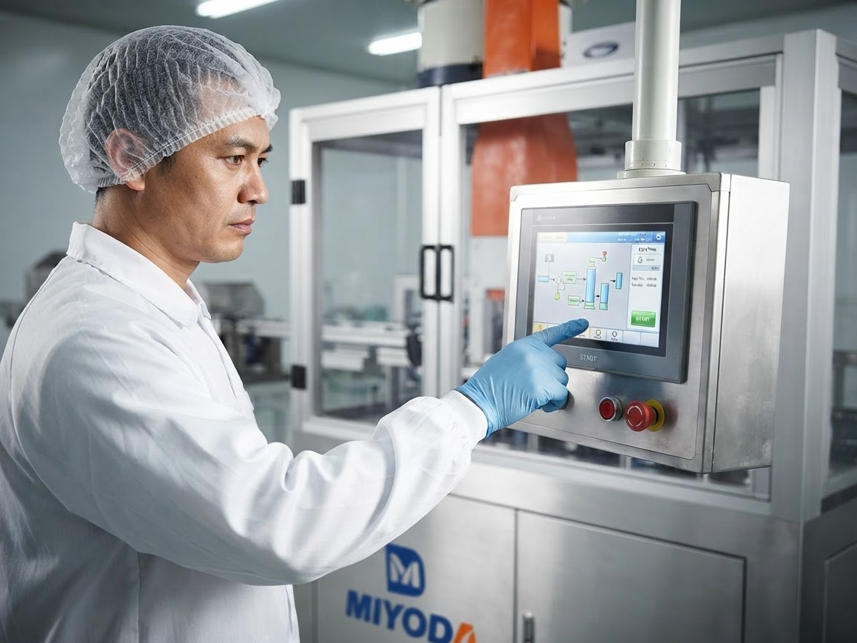
When a machine stops at 2 a.m., the speed of your supplier’s response is a cost on your P&L. With remote diagnostics, a technician can look at live PLC data, fault logs, and trends without flying in. Many issues are fixed in under an hour, compared with days spent waiting for an engineer to travel.
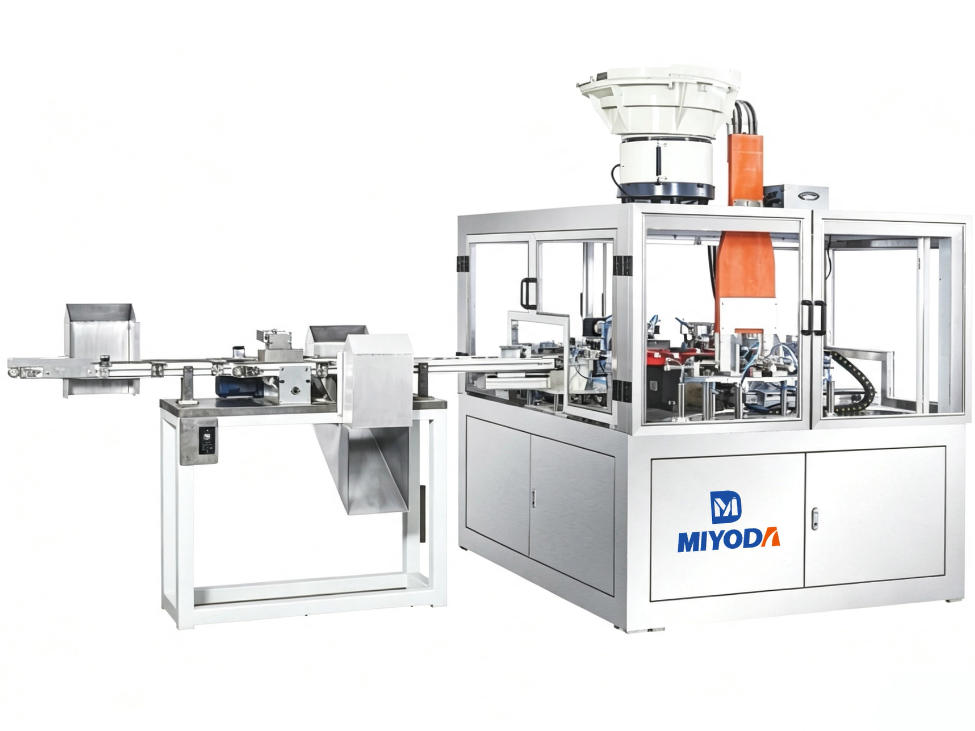
At Miyoda Packaging Machinery, our support model for tube producers includes remote assistance, spare parts supply, and on-site training at commissioning. Each tube heading and shoulder machine we build covers tube diameters from 16 mm to 60 mm and is designed to connect into complete production lines.
User Groups and Shared Best Practices
Distributors and agents are important here. When you gather local customers for a yearly technical day, they share settings, PCR experiences, and maintenance tips. That builds loyalty to your service business, beyond the machine sale.
OEM-Led Audits to Benchmark Performance
Once a year, ask your OEM to audit your line. The audit should measure OEE, compare process windows with the original commissioning baseline, and give you a ranked list of improvements. Our article on injection shoulder machine efficiency best practices includes a baseline checklist you can use before the audit.

Watch: Automatic Tube Shoulder Injection Moulding in Action
This video shows a fully automatic tube shoulder injection cycle. Watch the mould close, injection, cooling, and ejection steps, and notice how consistent each shoulder is at production speed.
https://www.youtube.com/watch?v=8EmFWeroUrQ
Glossary of Key Terms
| Term | Plain-English Meaning | Example |
|---|---|---|
| Shoulder / Head | The moulded top of the tube with neck and thread | A 35 mm tube with M13 thread |
| Cushion | Melt left in front of the screw after injection | 3–5 mm is typical |
| Cavity pressure sensor | Sensor inside the mould that reads plastic pressure | Shows the exact gate freeze time |
| Flash | Thin excess plastic at the mould joint | A fin on the orifice tip |
| Splay | Silver streaks from moisture or gas | Streaks on a white shoulder |
| OEE | Availability × Performance × Quality | 90% × 95% × 98% = 83.8% |
| Cpk | How well a process stays inside its limits | 1.33 or higher is a common pharma target |
| IQ/OQ/PQ | Installation, Operational, and Performance Qualification | Three-step validation before pharma production |
| PCR | Post-consumer recycled resin | 30% PCR shoulder for an EU brand |
To see how the shoulder fits into the full workflow, including extrusion, lamination, printing, and sealing, read the cosmetic tube manufacturing process guide.
Frequently Asked Questions
1. How can I reduce scrap rates when producing thin-wall tube preforms?
Use a multi-stage injection profile: fast through the thin thread area, slower at the weld zone. Add cavity pressure control so every shot fills the same way. Most lines that do both see scrap fall by 30–40%.
2. What maintenance tasks are most critical for injection moulding machines used in sterile packaging?
Daily nozzle and mould inspections, monthly screw pull or cushion checks, and quarterly hydraulic fluid analysis. For sterile packaging, add a documented cleaning of all surfaces near the product zone after each campaign.
3. Can I run both PP and HDPE on the same machine without contamination?
Yes. Use a proper purge sequence with a purging compound, and keep the two materials separate through drying, conveying, and hopper systems. Label every hopper and log each changeover.
4. How do I ensure my machine meets pharmaceutical regulatory standards (e.g., FDA, GMP)?
Choose machines with full electronic audit trails, validated cleaning procedures, and stainless steel or non-shedding surfaces near the product zone. Plan IQ/OQ/PQ validation with your OEM before delivery.
5. What causes drooling at the nozzle, and how can I stop it?
Drool usually comes from nozzle temperature that is too high or from low decompression (suck-back) after screw recovery. Lower the nozzle zone by 5–10 °C, increase decompression slightly, or fit an anti-drip or shut-off nozzle.
6. How often should I calibrate sensors and load cells on my machine?
Every 6 months, and after any major mechanical work such as a screw change, a platen repair, or replacing a hot runner.
7. Is it worth upgrading to an all-electric machine for soft tube production?
For cleanrooms and high-precision pharma work, usually yes. All-electric machines generate fewer particles, repeat more precisely, and use much less energy. For mixed cosmetic work, a servo-hydraulic machine is often a good middle ground.
8. How can I train new operators quickly without disrupting production?
Use OEM digital training modules or simulators, then have trainees shadow a certified setter. Tie their access rights to their certification level so trainees can’t change recipes.
9. What’s the best way to handle colour changes between production runs?
Run the lightest colours first and the darkest last, use a purging compound, and follow a written changeover SOP with target times. A good purge takes 3–5 shots, compared with 15–25 shots for a resin-to-resin changeover.
10. How do I integrate leak testing into my post-moulding process?
Install an inline pressure decay tester that is synchronised with the robot unloader, so every tube is tested. Failed tubes go automatically to a locked reject bin.
11. Can I monitor machine performance remotely if I manage multiple sites?
Yes. Cloud-connected machines can show live OEE, downtime alerts, and shift reports for every plant on one dashboard.
12. What causes sink marks on the skirt of my tube preform, and how can I fix it?
The usual causes are too little packing pressure or cooling that is too short or uneven. Extend the hold time, raise packing pressure in small steps, and check the cooling channels for scale.
13. How do I choose between hydraulic, hybrid, and electric machines for tube production?
Weigh your precision needs, energy prices, and cleanroom requirements. Electric suits pharma and cleanrooms. Hybrid suits mixed cosmetic and pharma work. Hydraulic still fits simple, lower-utilisation jobs.
14. Are there ways to reduce energy consumption without slowing production?
Yes. Use variable-speed or servo pumps, insulate barrels, recover waste heat from hydraulics, right-size clamp force, and trim cooling time using cavity pressure data.
15. How can I prove process consistency during regulatory audits?
Keep digital records of every cycle, including temperatures, pressures, alarms, and quality checks, linked to batch, resin lot, and operator. Add Cpk reports for critical dimensions such as orifice diameter.
Ready to Get More from Every Shot?
Higher output doesn’t come from pushing a machine harder. It comes from a stable process, maintenance that happens before failures, trained people, and data you can trust.
If you want an honest review of your current shoulder line, or you are planning a new one, talk to our tube machinery engineers. We can also review sample tubes and your production targets before you commit to any investment.















