
Why Your Toothpaste Tube Supplier Is a Business Decision, Not Just a Purchase
Most dental practices treat tube sourcing as a routine procurement task. You find a supplier, compare prices, place an order. Simple enough — until a shipment arrives with inconsistent sealing, faded print, or tubes that don’t sit straight on a retail shelf. By then, you have already paid for the order, and your patients are holding the evidence.
The right toothpaste tube supplier does more than deliver packaging. They protect your product’s shelf life, support your brand’s image, and keep your supply chain running without surprises. The wrong one costs you product recalls, rushed reorders, and patient trust that takes months to rebuild.
This guide breaks down the five things that separate a reliable tube supplier from one that creates problems — along with the questions you should be asking before you sign any agreement.
Quick Definition: Throughout this guide, “soft tube” refers to flexible, squeezable tubes made from laminated plastics or aluminium barrier laminates — the standard packaging format for toothpaste, gels, and oral care creams.
Tip 1: Prioritize Material Quality and Regulatory Compliance
Why Material Matters More Than You Think
Toothpaste is a regulated product. It contacts the inside of a tube for weeks or months before a patient squeezes it onto a brush. If the tube material is not chemically inert, compliant with food-contact regulations, and stable under storage conditions, the product itself can degrade — and in pharmaceutical or therapeutic toothpaste, that degradation has direct safety implications.
The three most common tube constructions for dental products are:
- ABL (Aluminium Barrier Laminate): The industry standard for most toothpastes. Multiple layers of polyethylene and aluminium foil create an oxygen and moisture barrier that protects fluoride stability and prevents flavour migration. ABL tubes are ideal for formulations sensitive to air or light exposure.
- PBL (Plastic Barrier Laminate): A lighter, fully recyclable alternative that replaces the aluminium layer with a plastic EVOH barrier. Used increasingly by brands with sustainability commitments. Slightly lower barrier performance than ABL, but acceptable for most standard toothpaste formulations.
- LDPE (Low-Density Polyethylene): Soft, flexible, and low-cost. Suitable for non-reactive cosmetic gels but not recommended for formulations requiring high barrier protection. BPA-free grades are widely available and FDA-compliant for indirect food contact.
Glossary: BPA (Bisphenol A) — A chemical compound once widely used in plastics, now known to be an endocrine disruptor. Regulatory bodies including the FDA advise against BPA use in food-contact applications. Specify BPA-free materials explicitly in every tube order.
Compliance Certifications to Require
Before placing any order, request documentation confirming:
- FDA compliance for materials in contact with oral care or therapeutic products (21 CFR Part 177 for polymers; Part 175 for coatings)
- ISO 13485 certification if the tubes will be used for medically classified toothpastes (e.g., prescription fluoride treatments or anti-fungal oral products)
- GMP (Good Manufacturing Practice) compliance in the supplier’s production facility
- REACH compliance (EU market) confirming the absence of substances of very high concern
A supplier who cannot produce these documents on request — or who produces documents that are expired, unrelated to the product type, or from a different facility — is showing you the first red flag.
How Your Production Equipment Connects to Compliance
The tube material you specify does not just affect shelf-life chemistry. It also determines how your filling and sealing equipment must be configured. ABL tubes require hot-air sealing at precisely controlled temperatures. PBL tubes often perform better with ultrasonic sealing. LDPE tubes need jaw temperature settings calibrated to the wall thickness.
Companies using production machinery from Miyoda Packaging Machinery can configure sealing parameters per tube material through HMI recipe storage — so switching between ABL and PBL in the same run does not require manual recalibration.
Tip 2: Evaluate Production Capacity and Scalability
The Volume Problem Nobody Plans For
Most dental brands underestimate how fast volume can grow once a product gains traction. A practice that orders 10,000 tubes per month today may be sourcing for a multi-location group or private label retail channel within 18 months — easily pushing volume to 50,000 or 100,000 units per month.
If your tube supplier’s production capacity cannot grow with you, you face one of the worst supply chain scenarios: a brand that is performing well but cannot fill its orders.
What to Evaluate Before Signing
Ask every potential supplier directly:
- What is your current maximum monthly capacity for tubes of my specification (diameter, length, laminate type)?
- How far in advance do you need a purchase order to guarantee on-time delivery at my target volume?
- What is your lead time for a 30% volume increase with less than 4 weeks’ notice?
- Do you run dedicated production lines, or is my order scheduled between other clients’ runs?
Standard production lead times for custom-printed, laminated toothpaste tubes run 25–40 days after sample confirmation, depending on volume and print complexity. For international sourcing, add 3–5 weeks for sea freight — meaning your total replenishment cycle from order to shelf can easily reach 10–12 weeks. Any supplier who cannot give you a clear, documented answer to these timeline questions is not set up to be a reliable supply chain partner.
Scalability in Practice: A Real Scenario
A dental group in Southeast Asia started sourcing custom ABL toothpaste tubes at 15,000 units per month from a small regional supplier. After 14 months, a retail distribution agreement pushed their volume requirement to 90,000 units per month. Their supplier, running four semi-automatic tube making lines, could not accommodate the jump without a 10-week production queue. The brand lost 6 weeks of shelf availability during the peak launch period — a direct sales impact they estimated at USD 38,000.
The lesson: evaluate your supplier’s scalability ceiling before you need it, not after you have hit it.
How Filling Equipment Plays Into Scalability
Scalability is not just about the tube manufacturer. If you are producing and filling tubes in-house, your filling line’s output speed is equally critical. Fully automatic tube filling machines can run at 60–220 tubes per minute, while semi-automatic machines cap out at around 10–40 tubes per minute with operator-dependent consistency. Understanding your production ceiling allows you to plan supplier capacity requirements accurately.
For an in-depth comparison of automatic versus semi-automatic output capabilities, Miyoda’s tube filling machine buyer’s guide for pharmaceutical and cosmetic production provides throughput data benchmarked against real product viscosities and tube dimensions.
Tip 3: Assess Customization and Branding Capabilities
Packaging Is Your Silent Brand Ambassador
In a dental practice, the toothpaste tube is the product a patient takes home. It sits on their bathroom shelf, next to national brands with professional design budgets. If your branded tube looks generic, poorly printed, or structurally inconsistent, it undermines the premium experience you have worked to create at every in-practice touchpoint.
Customization is not a luxury — it is a competitive tool.
What Meaningful Customization Looks Like
A capable tube supplier can accommodate:
- Custom diameters and lengths: Most ABL and PBL tube lines handle diameters from 13.5 mm to 50 mm and lengths from 50 mm to 220 mm. Confirm your specification is within their standard tooling range before sampling.
- Multi-color printing: Up to 8-color offset, flexographic, or digital printing on the tube shoulder and body. Ask for a printed sample — not a digital proof — because color fidelity on curved laminate surfaces is significantly harder to achieve than on flat substrates.
- Custom nozzle design: Standard nozzle orifice sizes, angled tips (useful for interdental products), and custom cap designs all affect the dispensing experience your patients have with the product.
- Matte and gloss finish options: Matte laminate finishes are increasingly associated with premium positioning in the personal care category.
- Embossed or debossed shoulder designs: Add tactile brand identity that cannot be replicated by label printing alone.
Industry Insight: According to market research on oral care packaging, brands with custom-designed private label tubes see an average 23% higher reorder rate from patients compared to brands using generic white-label packaging — because the perceived quality of the tube directly influences confidence in the product inside.
Matching Branding to Machine Capabilities
Custom printing and shaping is only possible when the tube manufacturer’s production line supports it — and your filling and sealing equipment is configured to handle the tube geometry without jamming, misaligning, or damaging the print surface.
Tube filling machines with precision mandrel alignment, color-mark detection systems, and servo-controlled indexing protect print integrity during filling. Without these features, even beautifully printed tubes can arrive at patients with smeared labels or off-center seals — erasing the investment in custom design.

Custom-printed ABL laminate tubes: consistent print registration and uniform tail sealing are the two most visible quality indicators patients judge at first use.
Tip 4: Analyze Cost vs. Long-Term Value
The Hidden Costs of the Cheapest Supplier
Tube packaging decisions made on price alone consistently generate the most expensive outcomes. Here is why.
A tube that is 12% cheaper per unit but has a seal defect rate of 2.5% costs you far more than the price difference — in product returns, re-labelling, replacement shipments, and the unmeasurable cost of a patient who received a leaking tube and did not come back.
Real cost analysis on a 50,000-unit monthly order illustrates this:
| Cost Factor | Premium Supplier | Low-Cost Supplier |
|---|---|---|
| Unit tube price | USD 0.22 | USD 0.19 |
| Monthly tube cost | USD 11,000 | USD 9,500 |
| Defect rate | 0.3% = 150 units | 2.5% = 1,250 units |
| Defective unit replacement cost (filling + packaging + reship) | USD 0.80/unit = USD 120 | USD 0.80/unit = USD 1,000 |
| Monthly quality cost | USD 120 | USD 1,000 |
| Effective monthly total | USD 11,120 | USD 10,500 |
| Annual difference | — | Saves USD 7,440/year |
| Brand damage, return handling, expedited reorders | Minimal | High (unquantifiable) |
At 50,000 units per month, the cheaper supplier saves approximately USD 620 per month on tube cost — but adds USD 880 in direct quality costs, making it more expensive before brand and operational impacts are even counted.
This is not a hypothetical. It is the actual cost structure that packaging managers discover after 2–3 months with an underqualified supplier.
Value-Driven Evaluation Criteria
When comparing suppliers, evaluate:
- Defect rate history: Request documented AQL (Acceptable Quality Level) data from recent production runs. AQL 1.0 or better is the standard for cosmetic packaging; AQL 0.65 for regulated medical products.
- Consistency across batches: Ask for colour Delta-E data across multiple production runs. A Delta-E above 3.0 (visible to the naked eye) indicates colour management problems.
- Packaging material traceability: Can the supplier trace each shipment to a specific production lot, laminate reel batch, and printing session? This is essential for regulatory investigations and recall management.
- Waste and defect visibility in their production process: Suppliers running statistical process control and in-line inspection catch defects internally — before they reach you. Suppliers relying on end-of-line sampling only ship you a proportion of their defects.
Glossary: AQL (Acceptable Quality Level) — A statistical sampling standard that defines the maximum defect rate considered acceptable in a shipment. An AQL of 1.0 means that in a standard sample from your shipment, no more than 1% of units may be defective before the batch is rejected.
Tip 5: Demand Exceptional Customer Support and Technical Service
Support Is Not an Add-On — It Is the Relationship
When you are in the middle of a production run and a batch of tubes jams your filling line because the seam tolerance is 0.3 mm out of spec, you do not need a marketing brochure. You need a technical engineer who can tell you within four hours whether the issue is the tube, the machine, or the interface between them — and who can authorize a replacement shipment on the same call.
That is what genuine supplier support looks like. And it is rarer than it should be.
What to Demand Before Signing
- 24/7 technical contact: Not just a sales number. A dedicated technical support line staffed by engineers who understand tube construction, laminate sealing behavior, and filling machine compatibility.
- On-site service capability: For significant quality issues or production integration problems, the supplier should be able to send a technical representative to your facility — not just offer email support.
- Spare parts availability: If you run your own tube production line, ask specifically where the supplier’s replacement tooling and wear parts are stocked, and what the lead time is for emergency delivery to your location.
- Operator training and documentation: Bilingual technical documentation (if needed for your production team), startup SOP guidance, and cleaning validation support.
- Sample provision as standard practice: Any reputable supplier provides printed, filled-spec samples before a bulk order — at no charge. A supplier who charges for samples or who resists providing them is signalling a lack of confidence in their own output.
The Distributor and Agent Perspective
For machinery distributors and agents representing tube filling equipment, customer support quality is the single metric that most strongly predicts account retention. A client whose machine performs well and who gets fast, technically competent responses when issues arise becomes a long-term account and a source of referrals.
Miyoda Packaging Machinery’s industry news and insights resource documents real-world case studies and support scenarios useful for distributors explaining value-added service differentiation to their customers.
The Role of Your Production Equipment in Ensuring Tube Excellence
Your Equipment Determines Your Output Quality
A dental brand can source world-class ABL laminate tubes from the most certified supplier in the market — and still deliver an inconsistent patient experience if the filling and sealing equipment is not matched to the tube specification.
The three machine factors that most directly affect what your patients see and feel are:
1. Seal quality and consistency. The tail seal — the fold at the bottom of the tube — must be tight, uniform, and correctly positioned on every single unit. Machines using hot-air sealing with servo-controlled jaw pressure achieve seal tensile strengths of 8–15 N/15mm — strong enough to survive the distribution chain and bathroom shelf use. Machines with worn or poorly calibrated jaws produce seals that fail in transit or allow product migration, resulting in leaky tubes and stained packaging.
2. Fill accuracy. A 100g tube filled to 96g or 104g passes a visual inspection but not a weight audit. In pharmaceutical toothpastes where active ingredient concentration per dose matters clinically, fill inaccuracy becomes a regulatory issue. In cosmetic products, underfill generates customer complaints; overfill is product giveaway at your cost.
3. Print registration protection. Modern tube filling lines use color-mark sensors and servo-indexed mandrel rotation to align each tube correctly before filling. This protects the print surface and ensures the product exits the nozzle with the brand-facing side always oriented correctly for downstream labelling and cartoning.
Automation as a Quality Multiplier
Fully automatic tube filling machines consistently outperform semi-automatic and manual alternatives on every quality metric. Published data from production environments shows:
| Quality Metric | Manual / Semi-Automatic | Fully Automatic |
|---|---|---|
| Fill weight accuracy | ±3–5% | ±0.3–0.5% |
| Seal defect rate | 1.5–3% | 0.1–0.3% |
| Colour mark alignment | Operator-dependent | Servo-controlled, ±0.5mm |
| Batch traceability | Manual log | Electronic, 21 CFR compliant |
| OEE (Overall Equipment Effectiveness) | 45–65% | 75–92% |
For dental brands producing or planning to produce tubes in-house, the investment case for automatic filling equipment is driven by quality and compliance, not just speed. The high-speed filling technology guide from Miyoda’s engineering team explains how servo-driven filling systems achieve and maintain this level of precision across multi-shift production runs.
Watch: Toothpaste Tube Filling and Sealing in Action
Before specifying either a tube supplier or filling equipment, watch a production-grade automatic line at operating speed. This gives you context that no specification sheet can convey — particularly the continuous motion of the sealing station and the precision of the fill cycle.
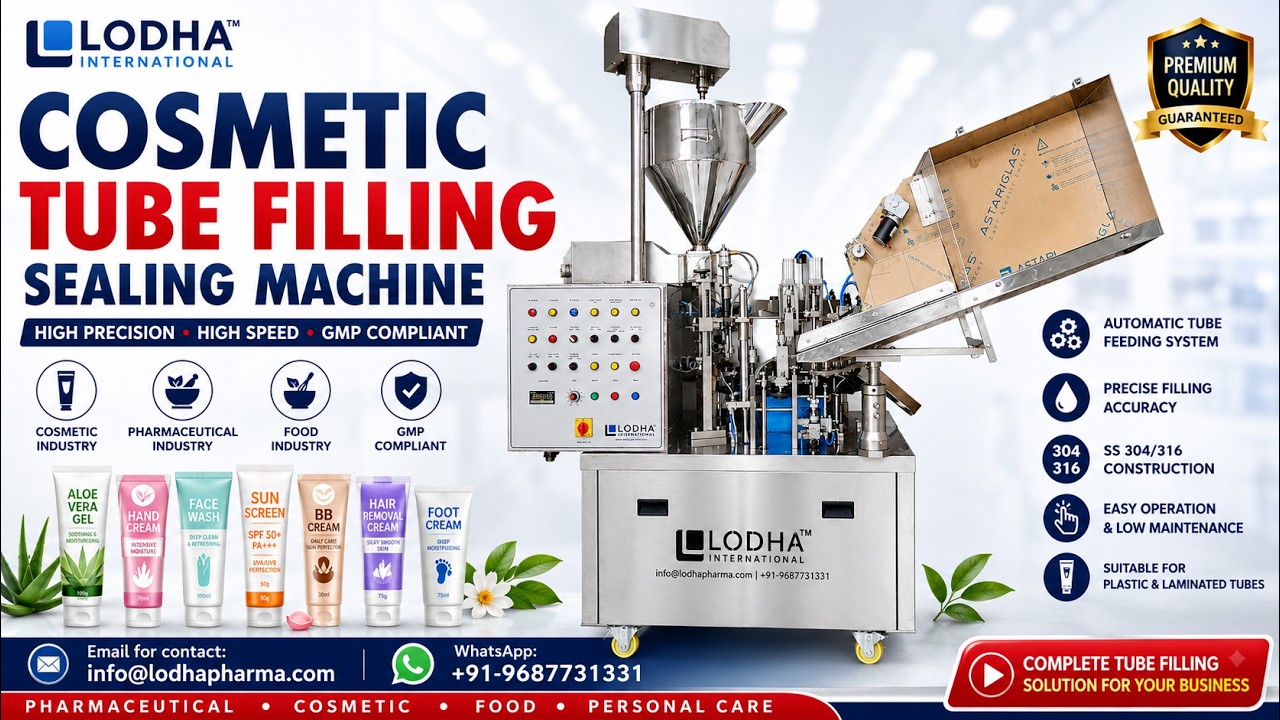
Click to watch: Automatic tube filling and sealing — observe the servo-indexed mandrel rotation, hot-air seal station, and in-line batch coding at full production speed.
Case Study: How a Dental Brand Elevated Patient Trust Through Premium Packaging
The Problem
A mid-sized multi-location dental group in Australia — operating eight practices with a combined patient base of approximately 14,000 active patients — had developed a private label fluoride toothpaste under their house brand. The formulation was effective, but the tubes they were sourcing from a generic contract supplier were creating friction:
- Inconsistent tail sealing: roughly 2.1% of shipments arrived with partially open seals
- Print colour drifted visibly between batch runs — Delta-E values measured at 4.2–6.8 (clearly visible to consumers)
- No batch traceability from the supplier when a patient complaint arose, the practice could not identify which production lot the tube came from
Patient feedback collected over two quarters showed that 31% of patients who received the branded tubes did not repurchase the product at their next appointment — a significantly higher non-repurchase rate than comparable national brands.
The Upgrade
The dental group switched to a certified ABL laminate supplier with ISO 9001 manufacturing, colour-controlled printing (Delta-E ≤ 1.5 per ISO 12647 colour standards), and documented AQL 1.0 inspection. They also renegotiated their filling contract to include in-line checkweighing and 100% seal integrity testing on every production run.
The Outcome
Over the following two quarters:
- Patient repurchase rate for the house brand toothpaste increased from 69% to 87%
- Zero seal defect complaints were recorded
- A retail pharmacy chain approached the group to distribute the product commercially, based on the packaging quality they observed at in-practice displays
- Projected annual revenue from the retail distribution agreement: AUD 180,000
The tube packaging change — driven entirely by supplier qualification criteria — created a revenue opportunity that did not exist with the previous supplier.
Premium tube packaging at the point of care: when a patient takes your branded tube home, the packaging quality continues to communicate your practice’s standards long after the appointment ends.
Red Flags to Watch For in Tube Suppliers
Spot These Early — Before You Are Committed
Most supplier problems are detectable before you place your first production order. Here is what to look for:
🚩 Inconsistent delivery schedules with vague explanations. If a supplier cannot give you a committed ship date with a ±2-day tolerance and a documented contingency for production delays, your supply chain is at their mercy.
🚩 Certifications that do not match what you are buying. An ISO 9001 certificate for a facility that does not make your tube type, or a GMP certificate issued for a different product category, is not evidence of compliance — it is a distraction.
🚩 Print quality that varies between the sample and the production run. This happens when suppliers produce samples on a different or specially configured line, then fulfil bulk orders on standard production equipment. Always request a small pilot run of 500–1,000 units before committing to a full order.
🚩 Sealing defects visible in samples. Hold the sample tube horizontally and inspect the tail seal under a bright light. Any wrinkles, channels, or uneven fold lines indicate jaw alignment, temperature, or dwell time problems that will not improve at scale.
🚩 No technical documentation or operator training available. If a supplier cannot provide a sealing parameter specification (jaw temperature, dwell time, pressure) for their tube type, they are not operating with the process control that compliance filling requires.
🚩 Unwillingness to provide samples before a bulk order. This is non-negotiable. Reputable suppliers provide samples — typically 20–50 filled or unfilled tubes for evaluation — as a standard part of the qualification process, at no charge.
🚩 Price quotations that are significantly below market without explanation. ABL laminate tubes from certified suppliers have a cost floor based on material prices, printing complexity, and production overhead. Quotations 30–40% below market rate typically indicate material substitution, non-certified laminate grades, or offshore production from an uncertified facility being brokered through a trading company.
For a broader framework on supplier qualification red flags, QC Advisor’s supplier audit guide provides a structured checklist applicable to any packaging supplier evaluation.
Conclusion: Partner for Performance, Not Just Price
The best toothpaste tube supplier for your dental practice is not the one with the lowest unit price. It is the one who:
- Delivers consistent, certified, BPA-free material quality that protects your product and your patients
- Has production capacity to grow with your brand without compromising lead times
- Produces custom printing and tube specifications that make your brand identifiable and trusted at the point of use
- Charges a price that reflects real quality — and can demonstrate that quality with data, not just assurances
- Picks up the phone when something goes wrong and has the technical capability to solve it
These five criteria are not aspirational. They are the minimum standard for a supply chain partner whose product goes directly into your patients’ hands.
If you are evaluating tube filling equipment to bring production in-house — or upgrading existing machinery to meet the quality thresholds that modern certified tube suppliers require — the engineering team at Miyoda Packaging Machinery works with cosmetic and pharmaceutical tube producers across Asia, Europe, and the Americas to match production goals to the right equipment configuration.
For suppliers and distributors handling tube production machinery: the conversations that win long-term accounts are the ones that help clients understand the full cost of their current setup — and present a clear, data-supported path to better output at lower total cost.
That is not a sales pitch. That is a partnership.

A fully automatic filling and sealing line: when your production equipment and your tube supplier are aligned on quality standards, consistent output at scale becomes the default — not the exception.
Glossary of Key Terms
| Term | Definition |
|---|---|
| ABL (Aluminium Barrier Laminate) | Multi-layer tube construction with aluminium foil centre layer — the standard for toothpaste due to its oxygen and moisture barrier properties |
| PBL (Plastic Barrier Laminate) | Fully plastic, recyclable alternative to ABL — uses an EVOH layer for barrier performance without aluminium |
| LDPE | Low-Density Polyethylene — a flexible, BPA-free plastic used for lower-barrier cosmetic tubes |
| AQL (Acceptable Quality Level) | Statistical sampling standard defining the maximum acceptable defect rate per shipment |
| GMP | Good Manufacturing Practice — regulatory minimum standards for pharmaceutical-grade production |
| ISO 13485 | International standard for quality management systems in medical device manufacturing |
| Delta-E | Numerical measure of colour difference — Delta-E ≤ 1.5 is imperceptible; ≥ 3.0 is visible to the naked eye |
| Seal tensile strength | The force required to pull a tube seal apart — a key quality metric for tail seal integrity testing |
| Cpk | Process Capability Index — a statistical measure of how consistently a machine or process meets its specifications |
| OEE | Overall Equipment Effectiveness — a combined measure of machine availability, performance, and quality output |
Frequently Asked Questions (FAQs)
Q1: What materials are safe and compliant for toothpaste tubes in dental practices?
The safest and most widely compliant materials for dental toothpaste tubes are ABL (Aluminium Barrier Laminate) and PBL (Plastic Barrier Laminate), both using BPA-free polyethylene inner layers. For products classified as drugs — such as prescription-strength fluoride treatments — materials must comply with FDA 21 CFR Part 177 (polymers) and be manufactured under GMP-certified conditions. LDPE is acceptable for cosmetic oral care products with lower barrier requirements. Always request the supplier’s material safety data sheet (MSDS) and FDA compliance declaration for the specific laminate grade used in your order.
Q2: How do I know if a tube supplier meets international quality standards?
Request copies of current certificates — not scanned images, but verifiable documents showing the issuing body, certificate number, and expiry date. For pharmaceutical or medically classified products, look for ISO 13485 and GMP certification. For cosmetic products, ISO 9001 and ISO 22716 (cosmetic GMP) are the relevant standards. Cross-reference the certificate scope with your product type and the supplier’s facility address. A certificate issued to a different factory, or covering a different product category, does not apply to your order.
Q3: Can I customize the size and design of toothpaste tubes for my dental brand?
Yes — modern ABL and PBL tube production lines accommodate custom diameters (13.5–50 mm), lengths (50–220 mm), multi-color printing (up to 8 colors), custom nozzle orifice sizes, and various cap and shoulder designs. Request printed samples — not just digital proofs — before approving a design, as color fidelity on curved laminate surfaces requires real-world verification. Minimum order quantities (MOQ) for custom-printed tubes typically start at 5,000–10,000 units, depending on the supplier.
Q4: What is the typical lead time for custom tube orders?
Standard custom tube production takes 25–40 days after sample confirmation, depending on order volume and print complexity. For international orders, add 3–5 weeks for sea freight. Full replenishment cycles from order placement to delivery at your facility therefore run 10–12 weeks in most sourcing scenarios. For time-sensitive launches, some suppliers offer air freight options and expedited production queuing at a premium. Build this timeline into your inventory planning — reordering only when stock is nearly depleted creates avoidable supply risk.
Q5: How does tube quality affect patient perception of my practice?
Packaging quality directly influences perceived product quality — especially when the patient takes the tube home and uses it over several weeks. Research in consumer perception consistently shows that packaging defects (uneven seals, colour drift, wobbly labels) lower confidence in the product inside, regardless of the formulation’s actual efficacy. For dental practices, where trust is foundational to the patient relationship, a poorly packaged house-brand product communicates the opposite of the professional image you have built at every other touchpoint.
Q6: What should I look for in a supplier’s production process?
Key production-process indicators of a reliable supplier include: automated in-line inspection (camera or sensor-based defect detection), statistical process control (SPC) dashboards showing real-time fill weight and seal data, documented changeover and cleaning procedures, and end-of-line AQL sampling with retained quality records per batch. Visit the facility if possible, or request a video walkthrough of the production line. The presence of cleanroom-grade production areas, calibrated weighing equipment, and batch traceability systems distinguishes a qualified supplier from a commodity one.
Q7: Are recyclable or eco-friendly tubes available for dental use?
Yes — mono-material HDPE tubes and PBL laminates with EVOH barriers are both recyclable options increasingly offered by qualified tube suppliers. PCR (Post-Consumer Recycled) content tubes are also available with up to 50% recycled PE content. Brands such as Colgate and Unilever have publicly committed to recyclable tube formats — if your patient base includes sustainability-conscious consumers, these options provide both an environmental benefit and a brand differentiation point. Note that some regional recycling systems do not yet accept multi-layer tubes, so recyclability claims should reference a specific regional collection infrastructure.
Q8: How can I reduce waste and defects in tube production?
The most effective waste-reduction strategy is equipment-level: machines with real-time checkweighing, in-line seal integrity testing, and servo-driven filling systems eliminate the root causes of most common defects (underfill, overfill, weak seals) before they generate waste at scale. At the supplier level, requiring AQL 1.0 inspection with retained data per shipment ensures that defects above threshold are quarantined before delivery. On the process side, validating sealing parameters specifically for your tube material (jaw temperature, dwell time, jaw pressure) and maintaining a preventive maintenance schedule for sealing components reduces seal-related defects significantly.
Q9: What kind of after-sales support should I expect from a tube supplier?
Minimum acceptable after-sales support includes: a dedicated technical contact (not just a sales representative) who understands tube construction and filling machine compatibility; documented sealing parameters for your tube specification; a replacement process for defective shipments within a defined turnaround time; and batch traceability records retained for a minimum of 2–3 years to support any regulatory investigation or customer complaint. For pharmaceutical products, the supplier should also support cleaning validation by providing extractables and leachables data for their laminate materials on request.
Q10: Can the same machinery produce tubes for both cosmetics and pharmaceuticals?
Yes — multi-product tube filling lines can switch between cosmetic and pharmaceutical product types with parameter changes and validated cleaning procedures. The key difference is the regulatory documentation required for pharmaceutical production: fill accuracy validation (Cpk ≥ 1.33), electronic batch records, and IQ/OQ/PQ qualification. The machine hardware can be identical; the validation and documentation framework differs significantly. If you are producing both cosmetic and pharmaceutical tubes on the same line, confirm with your equipment supplier that the machine’s audit trail and data logging capabilities meet pharmaceutical regulatory requirements.
Q11: How do I verify the consistency of tube sealing and filling?
For sealing consistency, the primary test methods are: peel strength testing (measures the force required to separate the seal — typically 8–15 N/15mm for ABL tubes), leak testing (pressurised air immersion or vacuum decay), and dye penetration testing (fills sealed tubes with coloured liquid to detect micro-channels). For filling consistency, in-line gravimetric checkweighing — where every tube is weighed and compared against target weight immediately after filling — is the gold standard. Any machine claiming to meet pharmaceutical GMP should incorporate 100% in-line checkweighing, not just periodic manual sample weighing.
Q12: Is it better to source tubes locally or internationally?
The right answer depends on your volume, timeline flexibility, and quality requirements. Local sourcing offers faster replenishment (2–3 weeks versus 10–12 weeks internationally), easier supplier audits, and lower supply chain risk — but typically at higher unit cost and with fewer customization options at low volumes. International sourcing, primarily from certified manufacturers in China, Vietnam, and India, offers significantly lower unit costs, broader technical capabilities, and access to a wider range of laminate and printing options — but requires longer planning horizons and rigorous supplier qualification before the first order. The most resilient supply chains use a primary international supplier for volume orders and a local or regional backup for emergency replenishment.
Q13: What certifications should my tube supplier have?
At minimum: ISO 9001 (quality management system), and ISO 22716 (cosmetic GMP) for cosmetic-use tubes. For pharmaceutical or medically classified products: ISO 13485, GMP compliance verified by a recognized regulatory body (FDA, EMA, or national equivalent), and materials compliance documentation (FDA 21 CFR Part 177 for polymers). For EU market access, the supplier’s facility and materials should also comply with the EU Cosmetics Regulation 1223/2009 and EU Food Contact Material Regulation 10/2011. Always verify that certifications are current, cover the specific production facility, and are issued by an accredited certification body — not self-declared.
Q14: How do I handle a supply chain disruption from my tube supplier?
The most effective disruption management strategy starts before the disruption: maintain a minimum 8–12 weeks of inventory buffer for your highest-volume SKUs, pre-qualify a secondary supplier who can produce to your specification (even if you do not currently use them), and negotiate a supply agreement with your primary supplier that includes defined escalation procedures and replacement shipment commitments for production failures. When a disruption occurs, contact the supplier immediately for a timeline assessment; do not wait for updates. If the disruption will affect a product launch or contractual delivery commitment, notify your downstream customer or distribution channel proactively — with a recovery timeline — before they discover the gap themselves.
Q15: Can I get sample tubes before placing a bulk order?
Yes — and if a supplier declines to provide samples, that is a disqualifying red flag. Reputable tube suppliers provide 20–50 samples (printed and unprinted, per your specification) as standard practice for new accounts. Request samples filled to specification if you are evaluating seal and fill compatibility with your production equipment. Assess: print colour fidelity under standard lighting, tail seal uniformity (visual and by peel test), nozzle orifice alignment, cap fit and torque, and dimensional accuracy (diameter, length, shoulder geometry). Do not approve a bulk order based solely on a digital proof or an unfilled tube — the filled-and-sealed sample is the only meaningful pre-production quality gate you have.















