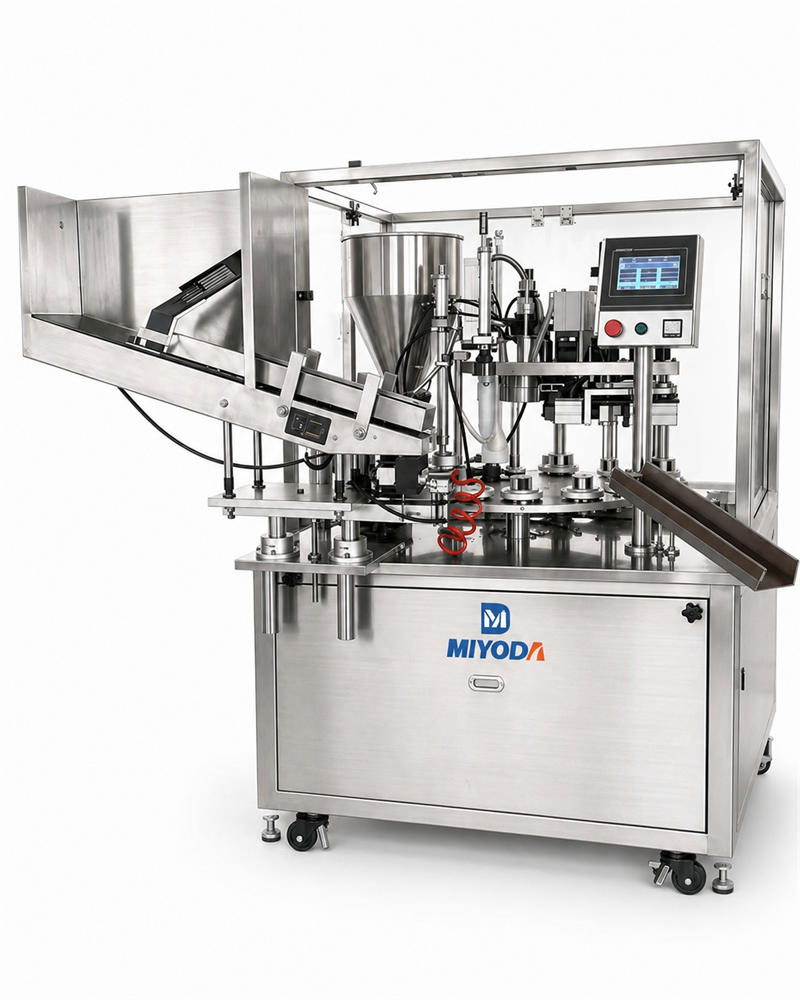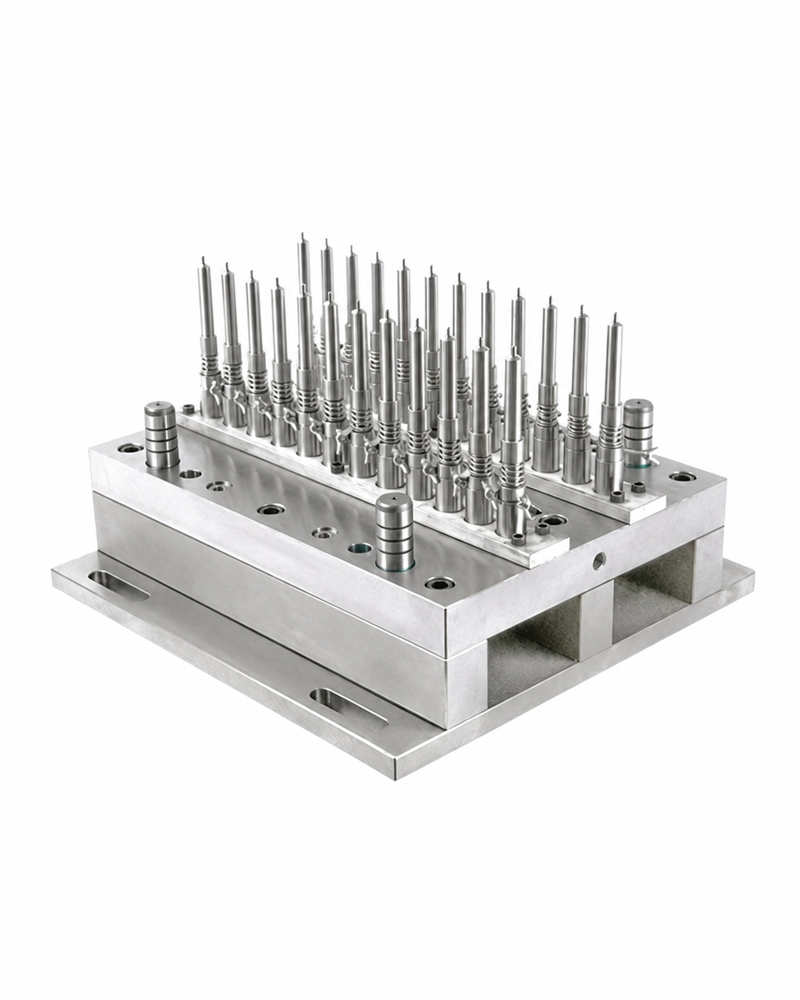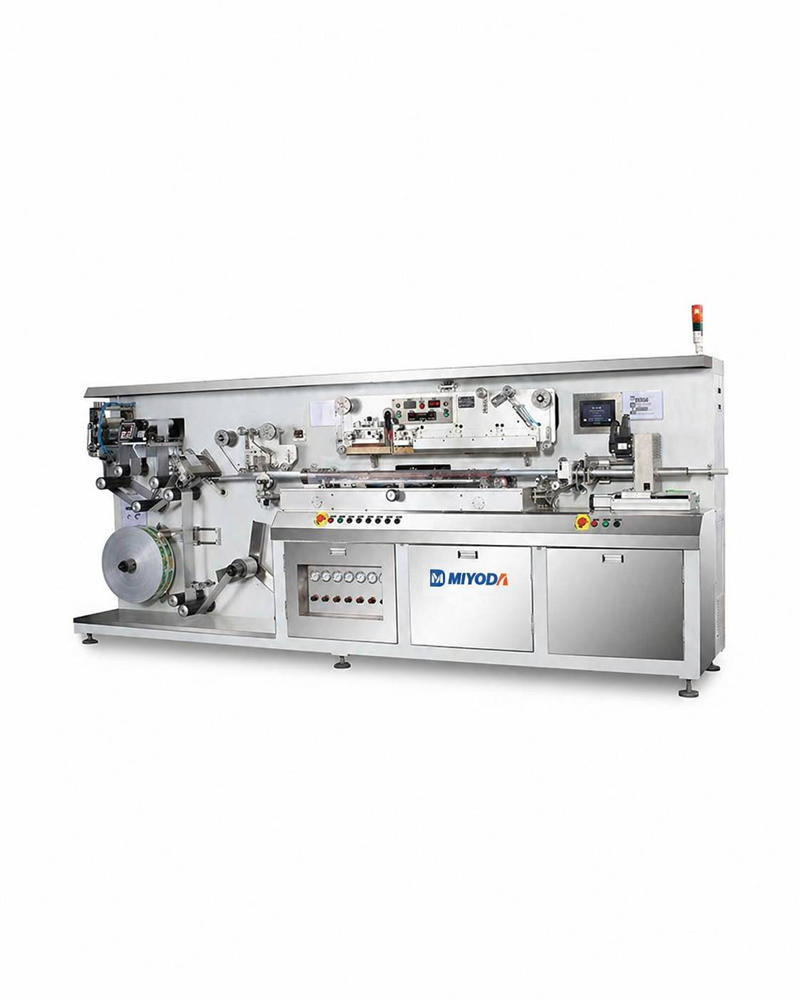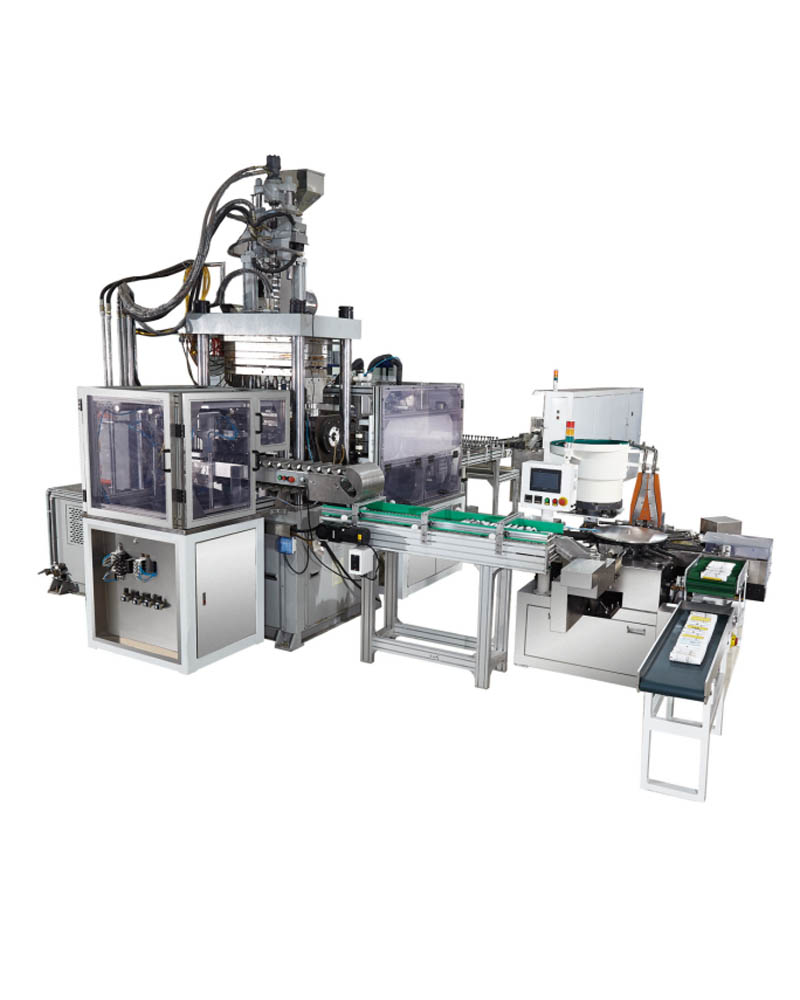
The production math your finance team needs to see: Unplanned downtime costs manufacturers an average of $260,000 per hour across all sectors—and by 2024, global manufacturing downtime losses had reached $1.4 trillion, a 62% increase over prior years, per iFactory’s 2024 analysis. For cosmetic and pharmaceutical tube manufacturers operating on tight margins and regulatory deadlines, even a 4-hour unplanned stop isn’t just a maintenance event. It’s a cascading problem: missed shipments, frustrated brand customers, compliance gaps, and a batch rejection cascade you spend weeks recovering from. The technology to prevent most of this exists today. The manufacturers who’ve implemented it are gaining ground. The ones who haven’t are funding their competitors’ advantage.

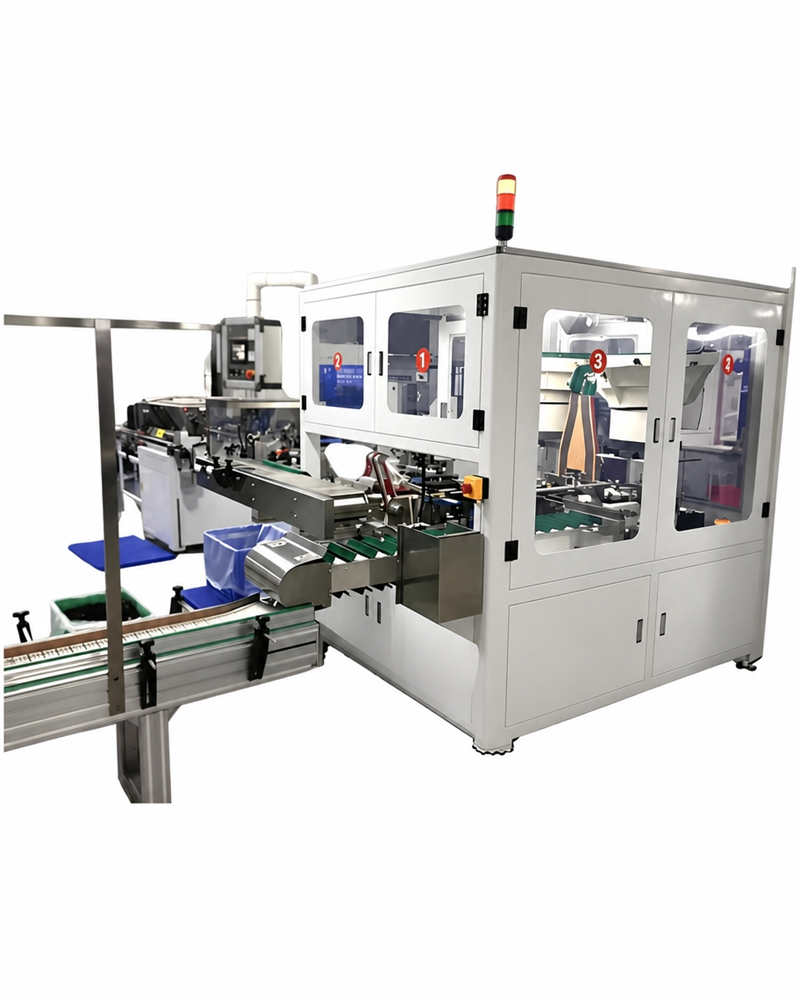
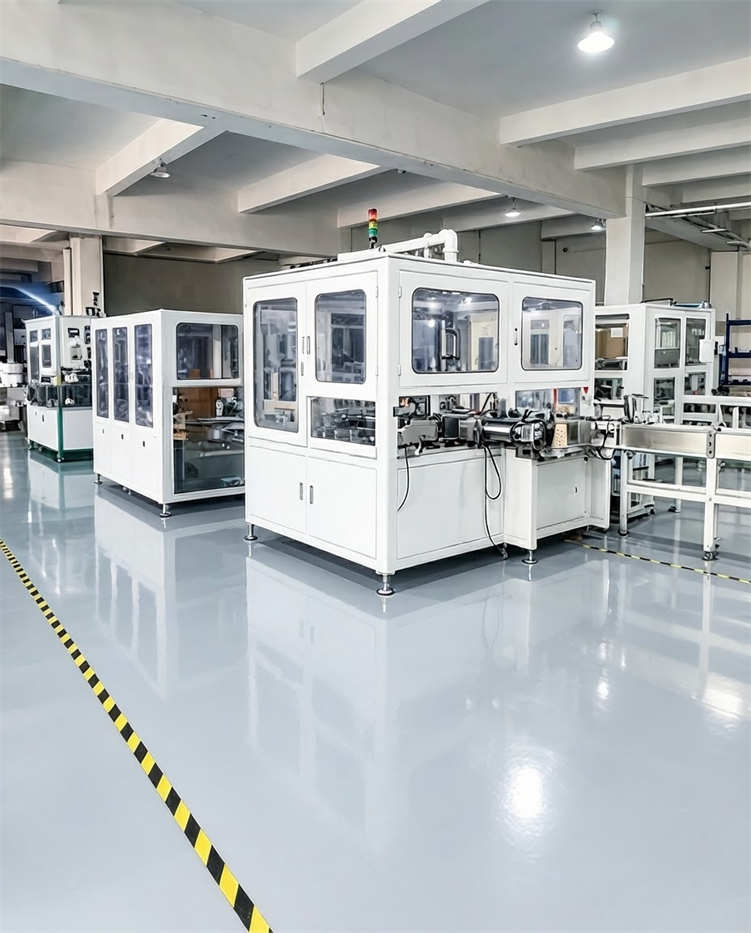
AI-connected tube filling production: where sensor data replaces guesswork at every stage. Image: Pexels
The Future of Tube Filling: How AI and IoT Are Revolutionizing Packaging Lines
Stop Losing Production Time and Money to Unexpected Breakdowns
Modern AI and IoT technologies are helping cosmetic and pharmaceutical manufacturers maintain peak efficiency, reduce costly downtime, and stay competitive in an increasingly demanding market. This guide shows you exactly how—with data from manufacturers who have already made the transition.
What you’ll learn in this guide:
- Why traditional tube filling systems are now a competitive liability
- How AI-powered predictive maintenance stops failures before they happen
- What real-time IoT monitoring actually tracks on your line
- How smart automation handles batch changeovers and viscosity changes automatically
- The compliance documentation advantage that IoT systems create
- A phased implementation roadmap that doesn’t disrupt your current production
1. Understanding Your Current Pain Points: Why Traditional Tube Filling Falls Short
The Real Cost of Unplanned Downtime in Your Facility
Traditional tube filling operations rely on reactive maintenance—you fix equipment after it breaks. This approach was acceptable when competition was regional and brand customers had fewer alternatives. Neither of those conditions holds anymore.
An unexpected filling head seal failure on a Thursday evening doesn’t just cost you the 6 hours to repair it. It costs you:
- The batch of product that was in-process when the failure occurred (often unsalvageable)
- The overtime labor to recover lost throughput over the following days
- The expedited material order if the failure consumed tube stock
- The customer conversation explaining why their order will ship late
- The compliance documentation gap if a pharmaceutical production batch record was incomplete at stop time
ABB’s industrial research found that 83% of industry decision-makers agree unplanned downtime costs a minimum of $10,000 per hour—and 76% estimate hourly costs above $50,000 when all downstream effects are included.
For pharmaceutical tube manufacturers, add the regulatory consequence: an incomplete batch record from an emergency shutdown requires a formal deviation investigation, CAPA, and potential regulatory notification. That’s not an afternoon of paperwork—it’s weeks of compliance burden generated by a single mechanical failure.
Common Problems You’re Likely Facing Right Now
If you operate traditional tube filling equipment, these challenges will be familiar:
- Unpredictable failure timing: Equipment fails on its own schedule, not yours. The only pattern is that it tends to fail at maximum inconvenience—high-volume runs, night shifts, pre-holiday production windows.
- Manual monitoring burden: Operators checking parameters by eye and by hand, every hour, across multiple lines. One missed check is one contamination event that reaches the customer.
- Fill volume inconsistency: Nozzle wear, viscosity variation from batch to batch, and temperature fluctuations cause fill weight drift that you catch only at the check-weighing station—often after thousands of substandard units have been produced.
- Slow batch changeovers: Switching from a 35mm body lotion tube to a 16mm eye cream tube on traditional equipment requires hours of manual adjustment, trial runs, and product waste while dialing in the new parameters.
How These Issues Affect Your Competitive Position
The manufacturers winning brand contracts in 2025 are not necessarily the lowest-cost producers. They’re the most reliable ones.
Brand procurement teams have been burned enough times by supplier delays, quality inconsistencies, and compliance failures. They shortlist manufacturers who can demonstrate predictable throughput, documented quality data, and lead time reliability. Traditional reactive-maintenance operations cannot make those promises credibly—because they don’t know when the next unplanned stop will occur.
The global tube filling machine market—valued at USD 4.7 billion in 2024, projected at USD 6.5 billion by 2030—is growing because brands are increasing tube packaging volume. But the share of that volume going to any specific manufacturer depends on that manufacturer’s ability to consistently deliver. AI and IoT capability is increasingly what separates reliable suppliers from the rest.
 Reactive maintenance on traditional filling equipment: expensive, unpredictable, and avoidable with modern predictive systems. Image: Pexels
2. What AI-Powered Predictive Maintenance Actually Does for You
How Predictive Maintenance Stops Problems Before They Start
Predictive maintenance (PdM) (definition: using sensor data and machine learning algorithms to forecast when equipment will fail, allowing maintenance to be scheduled before failure occurs) is the foundational application of AI in manufacturing—and the one with the most straightforward ROI calculation.
Here’s how it works on your tube filling line in practical terms:
IoT sensors installed on your equipment continuously measure vibration patterns, motor current draw, temperature at critical bearing and seal points, hydraulic pressure, and dozens of other parameters. These measurements—taken every few seconds, thousands of times per shift—form a baseline of what your machine looks like when it’s running properly.
AI algorithms then continuously compare real-time sensor readings against that baseline. When a vibration pattern at a filling head motor begins to deviate from its established normal range—even by a degree invisible to the human eye or ear—the system flags it. Bearing wear produces characteristic vibration signatures 2–6 weeks before the bearing actually fails. Seal degradation produces subtle changes in pressure differential before leakage becomes visible. The AI has learned to recognize these precursor signatures from thousands of similar failure events in its training data.
The result: your maintenance team gets an alert 2–6 weeks before the failure would have occurred, scheduling a planned replacement during the next scheduled maintenance window instead of an emergency repair at 2am.
Research published in TechRxiv (2024) documents that predictive maintenance reduces unplanned downtime by up to 50% (citing GE Digital case data), and a Deloitte analysis included in the same study found maintenance costs reduced by up to 40% and equipment reliability improved by 30–50%.
At the pharmaceutical scale, Novartis has implemented IoT sensor networks on critical filling equipment that continuously feed real-time condition data into AI algorithms predicting potential failures—representing one of the pharmaceutical industry’s most cited implementations of AI-driven equipment health monitoring.
The Financial Impact: What You’ll Actually Save
Let’s model a conservative scenario for a mid-sized cosmetic tube manufacturer running 2 shifts, 5 days per week:
| Cost Item | Reactive Maintenance Status Quo | With AI Predictive Maintenance |
|---|---|---|
| Unplanned downtime events per year | 8–12 | 1–2 |
| Average hours of downtime per event | 6 hours | N/A (planned) |
| Direct cost per unplanned downtime event | $60,000–$120,000 | $8,000–$15,000 (planned maintenance) |
| Annual downtime-related cost | $480,000–$1,440,000 | $16,000–$30,000 |
| Batch rejection from downtime-related quality issues | 2–3% of annual volume | <0.3% |
The State of Manufacturing Maintenance 2025 report (citing Mordor Intelligence and Deloitte data) documents 70–90% reduction in unplanned downtime at AI predictive maintenance maturity, and 10–40% reduction in total maintenance costs through optimized service intervals.
Full ROI on predictive maintenance implementation is typically achieved within 18–24 months—with some facilities reporting cost savings from predictive maintenance alone in the first quarter of operation.
Implementation Considerations for Your Operation
You don’t need to replace your tube filling equipment to implement predictive maintenance. Retrofit IoT sensors can be added to most existing machines—including older equipment without digital interfaces—to capture vibration, temperature, and pressure data. The sensor data is transmitted to a cloud analytics platform that runs the predictive algorithms.
The practical implementation sequence:
- Sensor installation: Typically 1–2 days per production line, no major machine modification required
- Baseline data collection: 4–8 weeks of normal operation to establish your machine’s specific performance fingerprint
- Alert threshold calibration: Your maintenance team and the vendor refine alert sensitivity to minimize false positives
- Predictive maintenance scheduling: Maintenance events planned around predicted failure windows rather than calendar intervals
Training your team to act on predictive alerts—rather than waiting for visible symptoms—requires a cultural shift as much as a technical one. The most successful implementations include a brief training program (1–2 days) that helps operators understand what the data means and why the alerts should be trusted.
3. Real-Time Monitoring Systems: Seeing Everything That Happens on Your Line
Why Visibility Into Your Production Process Changes Everything
There’s a significant difference between knowing your tube filling line is running and knowing how it’s performing. Traditional operations give you the former. Real-time IoT monitoring gives you the latter—and the distinction produces measurable commercial results.
When you can see, at any moment, that Line 3’s fill nozzle is producing tubes 0.8g under target weight, you catch it in the first 200 tubes of a 50,000-unit batch—not at the end-of-batch quality check. The cost difference between catching a fill deviation at 200 units and catching it at 50,000 units is not trivial; it’s the difference between a minor process adjustment and a complete batch rejection.
Real-time visibility also changes how your managers make decisions. Instead of reviewing yesterday’s shift report to understand what went wrong, they see what is happening now—and can act before problems become losses.
Remote monitoring capabilities are particularly valuable for multi-shift operations. Your quality manager doesn’t need to be physically present on the night shift to know whether Line 2 is hitting fill weight specifications and whether the sealing temperature is within tolerance. A phone alert at 11pm is infinitely preferable to arriving at 6am to discover that 8 hours of overnight production needs to be quarantined.
What Modern Monitoring Systems Track
A fully deployed IoT monitoring system on your tube filling line tracks—in real time, continuously, with automatic data logging:
- Fill accuracy and weight consistency: Gravimetric (weight-based) verification of every tube, with automatic flagging of tubes outside specification
- Sealing temperature and dwell time: Critical for seal integrity; even ±2°C deviation from specification affects burst pressure and leak resistance
- Nozzle pressure: Pressure drops indicate nozzle wear or partial blockage; pressure spikes indicate viscosity changes or transfer line issues
- Machine speed and throughput: Actual tubes per minute vs. target, providing real-time OEE (Overall Equipment Effectiveness—a standard manufacturing metric measuring percentage of planned production time that is truly productive) tracking
- Environmental parameters: Temperature and humidity in the fill zone, critical for pharmaceutical compliance and product stability
- Component wear indicators: Vibration signatures at bearings, seals, and drive components that predict upcoming maintenance needs
- Changeover timing: Time from last unit of previous batch to first conforming unit of next batch—a key efficiency metric your customers increasingly track
How This Data Directly Improves Your Product Quality
Micro-deviations—fill weight variations of 0.2–0.5g, sealing temperature fluctuations of 3–5°C—are invisible in manual monitoring but detectable in continuous sensor data. Catching these micro-deviations before they compound into batch-level quality failures is where real-time monitoring generates its most direct financial return.
For pharmaceutical packaging, continuous monitoring data creates the audit-ready documentation trail that FDA 21 CFR Part 11 and EU GMP Annex 11 require for electronic records in regulated manufacturing. Instead of manual batch records that require human transcription (and introduce transcription errors), the monitoring system captures every critical production parameter automatically, timestamped, with electronic signature capability. Your FDA inspection prep time drops from days to hours.
4. Smart Automation: Working Smarter, Not Just Harder
How Intelligent Automation Transforms Your Tube Filling Operation
Basic automation performs the same programmed action at the same speed every time, regardless of what the product or environment is doing. A basic automated filler set to dispense 50ml will attempt to dispense 50ml whether the product viscosity is 5,000 cP or 50,000 cP (cP = centipoise, the unit measuring how thick a fluid is; water is 1 cP, heavy cream is 10,000+ cP)—often producing underfill, overfill, or product contamination at the nozzle when viscosity is outside the programmed operating window.
Smart automation continuously reads real-time process data and adjusts operating parameters to maintain consistent output regardless of input variation. When the product temperature drops 2°C and viscosity increases, a smart filling system detects the pressure change at the nozzle and adjusts fill pressure and dwell time to maintain target fill weight—automatically, without operator intervention, without a test tube discarded while dialing in the adjustment.
This matters enormously in cosmetic and pharmaceutical tube production, where:
- Product viscosity can vary batch to batch from the same formulation due to temperature, mixing time, and raw material lot variation
- Tube body stiffness varies between laminate types and tube diameters, affecting sealing parameters
- Fill speed must be calibrated to product behavior—filling too fast creates air entrapment; too slow creates production bottlenecks
Key Automation Features That Solve Your Operational Challenges
Modern smart tube filling systems incorporate automation capabilities that directly address the operational problems your team deals with daily:
Automatic fill volume adjustment and verification: The system sets fill parameters based on the product recipe loaded in its database, verifies fill weight at the inline check weigher, and automatically trims fill parameters if weight trends drift. Operator intervention is required only when adjustment exceeds a defined threshold—meaning operators manage exceptions, not routine corrections.
Self-correcting production consistency: Statistical process control (SPC) algorithms (definition: real-time statistical analysis of production data to detect when a process is trending out of control before it produces non-conforming product) monitor fill weight data across a production run and apply micro-corrections that keep the process centered within specification. The result is fill accuracy Cpk values of 1.5–2.0 on modern automated systems, versus 0.8–1.1 on older manual-adjust equipment.
Intelligent changeover sequencing: When switching between product formulations, the system loads the stored recipe for the new product, executes the changeover sequence (nozzle change, parameter adjustment, first-fill verification) in a defined automated sequence that minimizes test tube waste and total changeover time. Manufacturers using recipe-driven automated changeover report 40–60% reduction in changeover time compared to manual changeover procedures.
Adaptive speed optimization: The system continuously reads production data and adjusts line speed to maximize throughput without sacrificing fill accuracy or seal integrity. It slows automatically when quality parameters approach limits; it accelerates when all parameters are stable and operating headroom exists.
The Competitive Advantage of Smart Automation
The commercial benefit of smart automation isn’t primarily cost reduction—it’s capability expansion.
A manufacturer with smart automated tube filling can profitably handle smaller batch sizes that would be uneconomical on traditional equipment, because fast automated changeover eliminates the labor and waste cost of format switching. This opens the market segment of emerging and indie brands that launch in quantities of 5,000–15,000 tubes per SKU—a segment that premium machinery holders are now actively competing for.
Faster time-to-market for new product launches—because the new product recipe can be programmed, tested, and validated in hours rather than days—gives brand customers a production partner who can respond to market opportunities rather than constraining them.
The Miyoda Packaging Machinery automatic vs. semi-automatic tube filling guide provides a practical framework for evaluating which automation level your specific production volume and product mix justify.

Smart automation control systems: recipe-driven changeovers, real-time parameter adjustment, and production data logging on a single interface. Image: Pexels
5. IoT Integration: Connecting Your Entire Packaging Operation
Building a Connected Ecosystem That Works for You
A single IoT-connected tube filling machine is valuable. An IoT-connected packaging operation—where filling, sealing, printing, quality inspection, and inventory systems share data in real time—is transformational.
The fundamental shift that IoT integration enables is eliminating data silos. In a traditional operation:
- Production knows throughput numbers, but maintenance doesn’t see them until the shift report
- Quality has batch rejection data, but production scheduling doesn’t integrate it when planning next week’s production
- Maintenance has the service history, but procurement doesn’t use it when planning spare parts inventory
IoT integration connects these information flows. When the fill nozzle wear indicator on Line 2 crosses a defined threshold, the system automatically creates a maintenance work order, checks spare parts inventory, and flags the procurement system if nozzle stock is below the reorder point—all without any human intervention.
The resulting operational coherence reduces the coordination overhead that consumes significant management time in most manufacturing facilities.
Practical IoT Applications in Tube Filling
Inventory management integration: Sensors on tube and cap supply hoppers monitor remaining stock in real time, feeding into production scheduling systems. When tube stock for the current production order drops to a 2-hour buffer, the system alerts the materials handler automatically—not when the hopper runs empty and the line stops.
Automated alerts for material shortages: Real-time monitoring of adhesive, ink, and product inventory connected to your filling system means material shortages generate alerts while there’s still time to act, not after the line stops.
Production scheduling optimization: Real-time throughput data flowing into your scheduling system allows dynamic adjustment of production plans when a line is running ahead of or behind schedule. Instead of discovering at the end of the shift that a batch will be late, you know at hour 2 and can adjust.
Cross-facility monitoring for distributors: This is a significant capability for distributors and agents managing multiple manufacturing client relationships. IoT monitoring platforms can aggregate performance data from multiple facilities into a single dashboard—enabling proactive service, remote troubleshooting, and data-driven recommendations to clients. This is how distributors transition from equipment sellers to ongoing production partners.
Scalability and Future-Proofing Your Investment
IoT platforms designed for manufacturing are built to scale with your business—adding new machines, new facilities, or new product lines doesn’t require rebuilding the monitoring infrastructure. Each new connected asset joins the existing data platform.
Cloud-based IoT platforms (definition: software hosted on remote servers rather than your on-site IT infrastructure, accessible via internet connection) eliminate the need for significant IT infrastructure investment. You don’t need a server room, an IT team, or complex on-premise software maintenance. The platform is maintained, updated, and secured by the vendor.
Critically, IoT capability can often be added to existing equipment without replacement. Retrofit sensor kits for older tube filling machines allow manufacturers to begin building data infrastructure on their current equipment while planning future equipment investments with full IoT integration as a specification requirement.
6. Regulatory Compliance and Quality Assurance in the AI Era
Meeting Pharmaceutical and Cosmetic Standards With Confidence
Regulatory compliance—particularly for pharmaceutical tube manufacturers selling into FDA-regulated markets (US), EU GMP-regulated markets (Europe), and equivalent frameworks in Japan, Australia, and the Gulf—is a documentation exercise as much as a manufacturing exercise. You must not only produce conforming product; you must prove it, with evidence that satisfies auditors who weren’t present during production.
AI and IoT systems fundamentally change the compliance documentation burden from a labor-intensive manual exercise to an automated output.
Every fill weight recorded by the inline check weigher, every sealing temperature logged by the temperature sensor, every environmental monitoring parameter captured during a production run—all timestamped, all electronically signed, all automatically integrated into the batch record. The batch record is complete at the end of the production run, not 48 hours later when a documentation team has caught up.
FDA 21 CFR Part 11 governs electronic records and electronic signatures in FDA-regulated manufacturing. IoT-connected systems with proper audit trail functionality satisfy 21 CFR Part 11 requirements—and the electronic records they produce are more defensible than paper records because they cannot be retroactively altered without leaving a detectable trail.
EU GMP Annex 11 (the EU equivalent governing computerized systems in pharmaceutical manufacturing) aligns with these requirements and is met by the same properly validated IoT monitoring platforms.
Quality Control That Protects Your Brand and Customers
Real-time fill accuracy verification: Every tube is weighed after filling. Tubes outside specification are automatically rejected before reaching the sealing station—not found by end-of-line QC sampling. The difference is a 0.5% defect rate at the customer versus a 0.5% rejection rate in your facility. Operationally, this distinction is everything.
Automated vision-system defect detection: AI-trained vision systems (camera-based inspection running at production speed) inspect tube bodies for seal defects, cap seating angle, label presence and legibility, and visible contamination. AI-powered quality control systems in pharma packaging consistently achieve defect detection rates above 99.5%—compared to human visual inspection rates of 80–90% under fatigue conditions.
Complete batch traceability: From raw material lot receipt through finished tube lot, every input and process step is linked in the electronic batch record. A quality complaint about a specific tube triggers a trace-back that takes minutes in an IoT-connected operation and days in a paper-based one.
Building Trust With Your Customers
Brand customers—particularly major cosmetic houses and pharmaceutical companies evaluating manufacturing partners—are now conducting quality audits of contract manufacturers that go beyond regulatory compliance. They want evidence of process control: data showing that your fill weights are consistently within specification, not just that your QC sampling passed.
IoT monitoring systems generate this data automatically. Sharing a statistical process control report with a brand customer—showing 6 months of fill weight data with Cpk consistently above 1.5, zero environmental monitoring excursions, and batch rejection rate below 0.2%—is a supplier qualification document that fewer competitors can produce.
7. Implementation Strategy: Getting From Where You Are to Where You Need to Be
Assessing Your Current Operation and Setting Realistic Goals
The gap between your current operation and a fully IoT-connected, AI-optimized filling line doesn’t need to be crossed in one step. The most successful implementations are phased—generating ROI at each stage that funds the next.
Start by quantifying your current problem:
- How many unplanned downtime events occurred in the last 12 months? What was the average duration?
- What is your current batch rejection rate? How much of it is attributable to fill accuracy, seal defects, and quality inconsistencies that real-time monitoring would catch earlier?
- How long do your batch changeovers take? How many test tubes are consumed per changeover while dialing in new parameters?
- How much time does your quality team spend preparing documentation for regulatory submissions and customer audits?
These numbers—which most manufacturers can pull from existing records with some analysis—define the financial opportunity that AI and IoT implementation addresses. They also become the baseline against which you measure results after implementation.
Setting measurable objectives:
- Reduce unplanned downtime events from X per year to Y per year
- Reduce batch rejection rate from X% to Y%
- Reduce changeover time from X minutes to Y minutes
- Reduce batch documentation preparation time from X hours to Y hours
Objectives should be specific and time-bound (achievable within 6 months, 12 months, 18 months), so you can evaluate whether the investment is delivering against the business case.
Choosing the Right Technology Partner
The AI and IoT solution provider you choose matters as much as the technology itself. Evaluation criteria specific to cosmetic and pharmaceutical tube filling applications:
- Pharmaceutical manufacturing experience: Has the vendor deployed monitoring systems in GMP-regulated environments? Can they provide references from pharmaceutical manufacturers in your region?
- Equipment compatibility documentation: Can they demonstrate sensor compatibility with your specific tube filling equipment manufacturer and model? Ask for a site visit and technical compatibility assessment before contracting.
- Validation support: Do they provide the IQ/OQ documentation (Installation Qualification / Operational Qualification—the documented tests proving equipment was correctly installed and operates within specification) for their monitoring system software, as required for pharmaceutical applications?
- Data ownership and exit provisions: If you change providers, do you own your historical production data? Can you export it in standard formats?
- Support model and SLA: What is their guaranteed response time for critical issues? Is 24/7 support included in the contract or priced separately?
The Miyoda Packaging Machinery tube filling and sealing essential guide covers equipment selection criteria that should inform your technology partner evaluation as well.
Phased Implementation That Minimizes Disruption
Phase 1 — Predictive maintenance (Month 1–6): Install sensors on your highest-criticality filling equipment. Focus on the components with the worst failure history. Collect baseline data. Begin receiving predictive alerts. Establish ROI baseline from first prevented failures. This phase typically pays for itself before Phase 2 begins.
Phase 2 — Real-time production monitoring (Month 4–12): Expand IoT coverage to production parameters—fill weight, sealing parameters, throughput. Connect to your quality management system. Begin replacing manual documentation with automated electronic records. Train operators on dashboard use and alert response.
Phase 3 — Smart automation and full integration (Month 10–24): Implement recipe-driven automated changeover. Connect inventory and scheduling systems to production data. Enable cross-line analytics. Build the data-sharing capability to differentiate with brand customers.
Each phase generates its own ROI before the next phase investment is required—making the financial case self-reinforcing rather than requiring full upfront commitment.
 Production analytics dashboards: from reactive guesswork to proactive data-driven decisions. Image: Pexels
8. Case Studies: How Manufacturers Like You Are Winning With AI and IoT
Real Results From Cosmetic Packaging Manufacturers
Scenario: Mid-sized cosmetic tube manufacturer, 3 filling lines, 60,000 tubes/month per line
The manufacturer was experiencing 9–11 unplanned downtime events per year across their three filling lines, averaging 5.5 hours per event. At an estimated $40,000 per unplanned event (direct labor, material waste, batch rejection, and expedited logistics), annual downtime-related costs were running $360,000–$440,000.
After implementing IoT predictive maintenance across all three lines and phasing in real-time production monitoring:
- Unplanned downtime events dropped to 2 per year across all three lines in the first 12 months—a 78% reduction
- Batch rejection rate fell from 2.4% to 0.3%, recovering approximately USD 180,000 in annual material costs
- Changeover time dropped 45% after implementing recipe-driven automated changeover, enabling the manufacturer to profitably take on a new brand customer with a 6-SKU product line requiring frequent format changes
- Total technology investment paid back within 19 months
AI-powered maintenance implementations across smart factory deployments document consistent 40%+ downtime reduction, with pharmaceutical and cosmetic packaging among the highest-impact application categories due to the high cost of quality failures in regulated products.
Pharmaceutical Packaging Success Stories
Scenario: Pharmaceutical topical tube manufacturer, FDA-regulated, 2 filling lines
A pharmaceutical manufacturer producing prescription dermatological creams in laminate tubes was facing recurring compliance findings during customer audits: fill weight variation exceeding specification on 1.2% of tubes, and batch documentation requiring 6–8 hours of manual assembly after each production run.
After implementing AI-driven quality monitoring with automated electronic batch records:
- Fill accuracy Cpk improved from 1.08 to 1.67—bringing 99.9% of tubes within ±1.5% of target fill weight
- Batch documentation time dropped from 6–8 hours to under 45 minutes (automated system compiling electronic records generated during production)
- The next customer audit resulted in zero fill accuracy findings—the first clean audit in 3 years
- Production was scaled from 2 to 4 effective production equivalent lines (two physical lines running at higher efficiency and throughput) without adding filling operators
The NIH-published analysis of AI and IoT integration in pharmaceutical manufacturing documents consistent quality improvement outcomes of this type across pharmaceutical manufacturing implementations, including the Novartis case where IoT sensor networks on critical equipment feed predictive AI algorithms that have measurably reduced equipment-related production disruptions.
How Distributors Are Using These Technologies
For cosmetic and pharmaceutical tube filling equipment distributors and agents, AI and IoT create a service layer that transforms the customer relationship from a transactional equipment sale into an ongoing partnership.
The capability distributors are building:
Remote monitoring services: Offering customers remote monitoring dashboards for the equipment they’ve purchased creates recurring monthly service revenue and keeps the distributor in constant operational contact with the customer—instead of only hearing from them at the next equipment replacement cycle.
Proactive predictive maintenance alerts: When the monitoring data from a customer’s filling line shows a bearing approaching its predicted failure window, the distributor reaches out with a maintenance recommendation and a spare part. The customer experiences this as exceptional service; the distributor converts a reactive service call into a planned maintenance appointment that’s more profitable and more convenient for both parties.
Data-driven expansion recommendations: When a customer’s IoT data shows consistent utilization above 85% OEE (Overall Equipment Effectiveness)—indicating the line is approaching capacity—the distributor has a data-backed conversation about adding a second line. This is not a speculative sales pitch; it’s a recommendation grounded in the customer’s own production data.
9. Overcoming Common Concerns and Misconceptions
“This Technology Is Too Complex for Our Operation”
This objection is understandable—and it was legitimate 8 years ago. Modern AI and IoT platforms designed for manufacturing floor deployment look nothing like enterprise IT systems.
Operator interfaces are built for production environments. Large touchscreens, color-coded status indicators, and alert systems designed to be understood at a glance by operators who are managing 3 things simultaneously—not navigating complex software menus. Training on modern IoT monitoring interfaces typically takes 1–2 days, not weeks.
You don’t need an IT department. Cloud-based platforms are maintained by the vendor. Software updates happen automatically. Data storage is managed remotely. Your team uses a browser interface, not a server room.
Integration is the vendor’s responsibility. Reputable AI/IoT solution providers have installed their systems across dozens of manufacturing environments and have established integration protocols for the most common tube filling equipment brands. They handle the technical installation; you provide access to the equipment and a network connection.
“The Initial Investment Is Too High”
The investment concern is best addressed by modeling the cost of not investing—which is what the downtime data earlier in this guide provides.
A manufacturer losing USD 360,000 per year to unplanned downtime, and spending USD 180,000 in rejected batch material costs, is spending USD 540,000 per year on preventable waste. An AI/IoT implementation costing USD 80,000–150,000 in system and installation costs, delivering a 70% reduction in those losses, returns USD 370,000+ in the first year—before the investment is fully paid back.
Financing options make the initial investment more accessible: most major IoT platform providers offer monthly SaaS (Software as a Service—subscription-based access to cloud software, paid monthly rather than as a one-time purchase) pricing that distributes cost over time. Implementation costs can often be structured as a lease or financed against the demonstrated ROI, making the business case essentially self-funding.
“We Don’t Have the Technical Team to Manage This”
Managed service options exist specifically for manufacturers who want the benefits of AI and IoT monitoring without building internal technical expertise. Under a managed service arrangement, the vendor handles system monitoring, alert interpretation, maintenance scheduling recommendations, and software updates. Your team acts on the vendor’s recommendations; the technical work stays with people who do it for dozens of manufacturing clients and are very good at it.
As your team’s familiarity with the system grows, responsibilities can gradually transfer inward—building internal expertise at a pace that doesn’t overwhelm your current operational capacity.
10. Your Path Forward: Making the Decision That Protects Your Future
Why Waiting Is Actually Costing You Money Right Now
Every unplanned downtime event your facility experiences while evaluating AI and IoT implementation is a preventable loss that has already occurred. The technology doesn’t help retroactively.
The predictive maintenance adoption data from GetMaintainX’s 2025 industry report shows that 27–30% of manufacturers have now implemented predictive maintenance—meaning roughly a third of your competitive landscape is already operating with this advantage. The ones who implemented earliest have already worked through the learning curve and are now running optimized systems while their competitors are still making the decision.
Brand customers increasingly expect their manufacturing partners to have data-driven quality systems. Procurement teams at major cosmetic and pharmaceutical companies now include questions about production monitoring capability in their supplier qualification questionnaires. “We don’t have IoT monitoring” is increasingly disqualifying in competitive supplier evaluations.
Next Steps to Get Started
1. Quantify your current pain points. Pull your downtime records, batch rejection data, and changeover time logs for the past 12 months. Calculate the total annual cost of your current operational inefficiencies. This number becomes the denominator in your ROI calculation.
2. Schedule a facility assessment. A qualified AI/IoT solution provider should offer a free on-site assessment that maps your current equipment against available monitoring solutions, identifies your highest-impact opportunities, and produces a prioritized implementation roadmap. This assessment is how you get a project scope and cost estimate that’s specific to your operation—not a generic quote.
3. Request reference customers. Ask any provider you’re seriously evaluating to connect you with two or three manufacturers of similar type and scale who have implemented their system. Conversations with practitioners about their actual experience—what worked, what was harder than expected, what they’d do differently—are worth more than any vendor presentation.
4. Plan the Phase 1 pilot. Start with predictive maintenance on your highest-criticality line. Define success metrics. Implement. Measure. The data from a successful Phase 1 pilot makes the case for Phase 2–3 internally—and gives you documented ROI to show your finance team.
Explore the Miyoda Packaging Machinery full tube production equipment range to understand how modern tube filling systems are designed for IoT connectivity from the ground up—reducing integration complexity and providing a single-vendor pathway from equipment to monitoring capability.
Questions to Ask Yourself Before Moving Forward
Before finishing this guide, consider these four questions honestly:
Can you afford to continue losing production time to unexpected failures? Calculate your last 12 months of unplanned downtime cost. Multiply it by 5 to get your 5-year exposure if nothing changes. That number is the maximum justifiable investment in prevention.
What would an extra 10–15% production capacity be worth to your business? A manufacturer running at 75% effective OEE who achieves 85% OEE through AI/IoT optimization has effectively added production capacity equivalent to a new production line—without the capital cost of new equipment.
How much is fill inconsistency costing you in waste and customer dissatisfaction? If 2% of your production fails QC or generates customer complaints, and your annual production value is USD 3 million, you’re writing off USD 60,000 per year in direct material costs before accounting for customer relationship damage.
Are you ready to lead in your market, or content to follow? The manufacturers capturing the best brand contracts, the longest supply agreements, and the premium pricing are doing so because they can demonstrate capabilities the competition cannot. AI and IoT is increasingly one of those capabilities.
Watch: AI Vision and IoT in Smart Packaging Automation
{% youtube xpyqRzu15Vc %}
Video: AI-powered cameras, IoT sensors, and automated systems working together on a smart packaging line—demonstrating real-time monitoring and quality control in action. Source: YouTube
The Future Is Here—And It’s Built on Data
The manufacturers and distributors winning in today’s cosmetic and pharmaceutical packaging market aren’t just filling tubes more efficiently. They’re operating production systems that learn from their own data, prevent failures before they occur, maintain quality without depending on perfect human execution, and generate the compliance documentation that regulated markets and sophisticated brand customers require.
AI and IoT technologies aren’t experimental anymore. They’re deployed at Novartis, at major cosmetic manufacturers globally, and at a growing number of mid-sized facilities that looked at the downtime data and made the decision.
The question isn’t whether to implement these technologies—it’s how quickly you can get the first phase running before another preventable failure costs you what it’s going to cost you.
📞 Ready to Transform Your Tube Filling Operation?
Don’t let another production day be disrupted by preventable downtime. Modern AI and IoT solutions are specifically designed for cosmetic and pharmaceutical tube manufacturers at every scale.
Schedule Your Free Facility Assessment — We’ll identify the specific opportunities in your operation and create a customized roadmap to increased efficiency, reduced costs, and competitive advantage.
Explore the Tube Filling & Closing Machine Range | Download the Tube Filling Buyer’s Guide
Frequently Asked Questions
1. How long does it typically take to see ROI from implementing AI and IoT systems?
Most manufacturers see measurable improvement in downtime reduction within 3–6 months of completing Phase 1 (predictive maintenance) implementation. Full ROI across the complete system is typically achieved within 18–24 months, consistent with Deloitte’s research on predictive maintenance payback periods. Facilities with high current downtime frequency tend to see faster payback because the baseline loss they’re preventing is larger.
2. Will implementing these technologies require us to replace our existing tube filling equipment?
Not necessarily. Retrofit IoT sensors can be added to most existing equipment—including older machines without digital interfaces—to capture vibration, temperature, and pressure data. What you can’t retrofit onto older equipment is fully integrated smart automation (automatic recipe changeover, adaptive speed control). The decision to retrofit vs. replace depends on your equipment age, condition, and the production capability gap between your current system and what smart automation would enable.
3. How does predictive maintenance know when my machine will fail?
AI algorithms analyze thousands of sensor data points per shift—vibration signatures, motor current draw, bearing temperature, hydraulic pressure—and compare real-time readings against the established baseline for your specific machine. Bearing wear produces characteristic vibration patterns 2–6 weeks before failure. Seal degradation changes pressure differential before leakage becomes visible. The AI recognizes these precursor patterns because it has been trained on data from thousands of similar failure events. It’s pattern recognition applied to machinery health, not guesswork.
4. What happens if the system gives a false alarm about an impending failure?
Modern predictive maintenance systems operate at 85–95% prediction accuracy, per industry benchmark data from iFactory and oxmaint. False positives are managed through confidence thresholds—the system generates an alert only when statistical confidence in the prediction exceeds a defined level. Even a false positive—which triggers a planned inspection that finds the component healthy—is infinitely less disruptive than an unexpected catastrophic failure at production speed.
5. Can these systems help us meet FDA and regulatory requirements?
Yes, directly. Real-time IoT monitoring systems automatically capture and log production parameters—fill volumes, sealing temperatures, environmental conditions, equipment performance data—in time-stamped electronic records with complete audit trails. This satisfies FDA 21 CFR Part 11 requirements for electronic records and EU GMP Annex 11. The same data that runs your production also creates your compliance documentation, eliminating the manual documentation burden that consumes quality team hours in traditional operations.
6. How much data storage do we need for an IoT monitoring system?
Cloud-based IoT platforms manage all storage infrastructure automatically—you don’t need on-site servers or significant IT resources. Data retention periods are typically configurable to match your regulatory requirements: most pharmaceutical manufacturers retain production data for a minimum of 1 year after product expiry (which often means 3–5 years of total retention). Older data can be archived to lower-cost cloud storage tiers without deletion, satisfying audit trail requirements without escalating storage costs.
7. Is our production data secure when using cloud-based monitoring?
Reputable AI and IoT providers use enterprise-grade encryption for data both in transit (when traveling between your facility and the cloud) and at rest (when stored in cloud infrastructure). Look for providers with SOC 2 Type II certification—the independent security audit standard that verifies security controls are operating effectively. If your data sovereignty requirements mandate local data storage, look for providers offering private cloud or on-premise deployment options.
8. Can we monitor multiple tube filling lines from a single dashboard?
Yes—this is one of the primary operational advantages of IoT monitoring. All production lines feed data into a unified platform dashboard. You can view real-time status of all lines simultaneously, drill down to any individual line or machine, and set up comparative analytics that identify which line is performing best—and why. For distributors managing multiple client operations, multi-facility dashboards aggregate data across all client sites into a single interface.
9. What if we have older equipment that doesn’t have digital interfaces?
Retrofit sensor kits solve exactly this problem. Wireless vibration sensors, temperature probes, and current monitoring clamps can be installed on virtually any electromechanical equipment—regardless of age or original design—to begin capturing performance data. The data from retrofit sensors is less comprehensive than fully integrated new-equipment monitoring, but still provides meaningful predictive maintenance insights and represents a viable path to IoT capability without equipment replacement.
10. How much training will our operators need?
Initial training on modern IoT monitoring interfaces takes 1–2 days for operators, with ongoing vendor support. The interfaces are intentionally designed for manufacturing floor use—large displays, color-coded alerts, and simple navigation that communicates machine status at a glance. The learning curve is significantly gentler than traditional complex manufacturing software because the interface is a dashboard for viewing information, not a complex control system for operating machinery.
11. Can AI systems help us reduce product waste during changeovers?
Yes, directly. Smart automation systems store the complete parameter recipe for each product—fill volume, fill speed, seal temperature, seal dwell time, nozzle type—and load these settings automatically when a new product is selected. This eliminates the trial-and-error manual adjustment that generates test tube waste during traditional changeovers. Manufacturers using automated recipe changeover typically report 40–60% reduction in changeover waste compared to manual procedures.
12. What if we work with multiple product formulations with different viscosities?
Modern smart filling systems handle viscosity variation through real-time pressure and flow monitoring at the fill nozzle. When viscosity changes—either from switching formulations or from temperature variation within a single formulation—the system detects the change as a pressure differential and automatically adjusts fill speed and dwell time to maintain target fill weight. Each formulation’s response curve can be characterized during initial commissioning and stored in the recipe database for future production runs.
13. How do these systems help with traceability for pharmaceutical packaging?
IoT systems create complete digital batch records linking every tube lot to the specific production parameters under which it was filled and sealed—fill weight, sealing temperature, operator identification, environmental conditions, and quality check results. This creates an unbroken chain of custody from raw material receipt through finished tube shipment. A quality complaint about a specific tube lot triggers a trace-back in minutes using the electronic batch record, compared to days of manual file review in paper-based systems.
14. Can distributors use these technologies to provide better service to their clients?
Absolutely—and the commercial model is compelling. Distributors offering remote monitoring services receive recurring monthly revenue from clients who have purchased equipment. Predictive maintenance alerts allow distributors to provide proactive service—contacting clients when their data suggests an upcoming maintenance need—instead of reactive service after a failure. Data-driven expansion recommendations (showing a client their utilization data when it indicates capacity constraints) convert historical sales data into forward-looking conversations. This model shifts the distributor relationship from transactional to strategic.
15. What’s the difference between basic automation and “smart” automation?
Basic automation executes the same programmed sequence at the same parameters every time—reliable for consistent inputs, but unable to adapt when inputs vary. Smart automation uses real-time sensor data and AI algorithms to continuously adjust operating parameters based on what the process is actually doing. It detects that the current product batch is slightly more viscous than the last, adjusts fill parameters automatically to compensate, and maintains target fill weight without operator intervention. Smart automation learns from experience: its adjustment algorithms improve as it accumulates production data, getting better at handling your specific products and your specific equipment over time.
Quick Reference Glossary
| Term | Plain-Language Definition |
|---|---|
| Predictive maintenance (PdM) | Using sensor data and AI to forecast equipment failure before it occurs, enabling planned repair rather than emergency repair |
| IoT (Internet of Things) | Network of physical sensors and devices that collect and share data via internet connection, without requiring manual data entry |
| OEE (Overall Equipment Effectiveness) | Standard manufacturing metric measuring what percentage of planned production time is truly productive; world-class benchmark is 85% |
| Cpk (Process Capability Index) | Statistical measure of how consistently a process produces within specification limits; ≥1.33 is pharmaceutical industry minimum |
| SPC (Statistical Process Control) | Real-time statistical analysis of production data to detect process drift before it produces non-conforming product |
| cP (Centipoise) | Unit measuring fluid viscosity (thickness); water = 1 cP, heavy cream = 10,000+ cP |
| SaaS (Software as a Service) | Cloud-based software accessed via subscription rather than purchased outright; vendor maintains infrastructure |
| 21 CFR Part 11 | FDA regulation governing electronic records and signatures in regulated pharmaceutical manufacturing |
| IQ/OQ | Installation Qualification / Operational Qualification—documented tests proving equipment was correctly installed and operates within specification |
| CAPA | Corrective Action / Preventive Action—formal pharmaceutical quality process for investigating and preventing recurrence of production deviations |
Sources: iFactory Hidden Downtime Cost Analysis | State of Manufacturing Maintenance 2025 — OxMaint | Predictive Maintenance in Manufacturing — TechRxiv 2024 | AI/IoT in Pharmaceutical Manufacturing — NIH/PMC | Tube Filling Machine Market — Strategic Market Research | ABB Industrial Downtime Research | FDA 21 CFR Part 11 | Miyoda Packaging Machinery