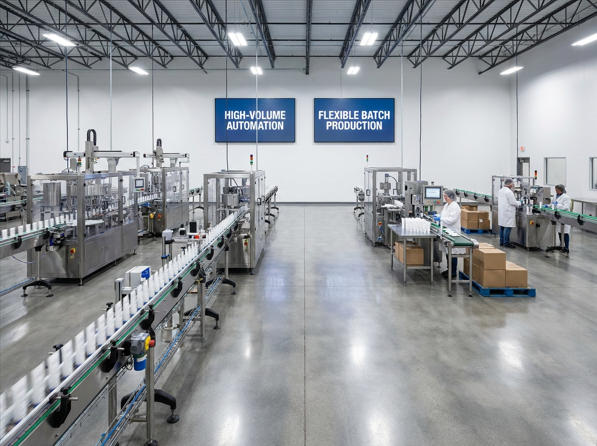
For procurement managers and production engineers evaluating a tube filling and sealing machine for cosmetic or pharmaceutical packaging, the first strategic decision is almost always identical: fully automatic, or semi-automatic? The answer shapes your capital expenditure, labor headcount, regulatory compliance posture, and maximum throughput for the next 8–12 years.
This guide unpacks every critical dimension — automation level, throughput benchmarks, 3-year total cost of ownership, format flexibility, maintenance, and the exact production scenarios where each machine type wins — backed by real production data and structured comparison tools you can use directly in your supplier evaluation process.
Cosmetic Tube Filling Machine Types
Semi-Automatic Filling Machine Overview
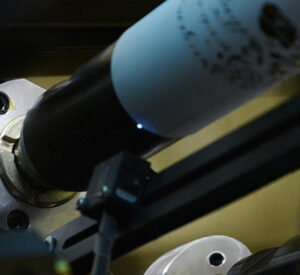
A semi-automatic tube filling machine automates the fill-and-seal cycle — product dispensing, tail sealing, and batch coding — but relies on an operator to manually load each empty tube onto the mandrel and remove the finished tube from the discharge position. The fill cycle is triggered by foot pedal or proximity sensor after each manual load. Throughput runs between 10 and 40 tubes per minute in real sustained production — approximately 600–2,400 tubes per hour — with actual output heavily operator-dependent.
The mechanical architecture is intentionally simple: a PLC-controlled piston or peristaltic pump handles fill volume, and a hot-air nozzle or ultrasonic sealing jaw closes the tube tail. That simplicity keeps purchase prices between $8,000 and $35,000 and maintenance manageable with generalist technicians.
Automatic Filling Machine Overview
In-Feed
& Align
Station
/ Crimp
& Trim
Conveyor
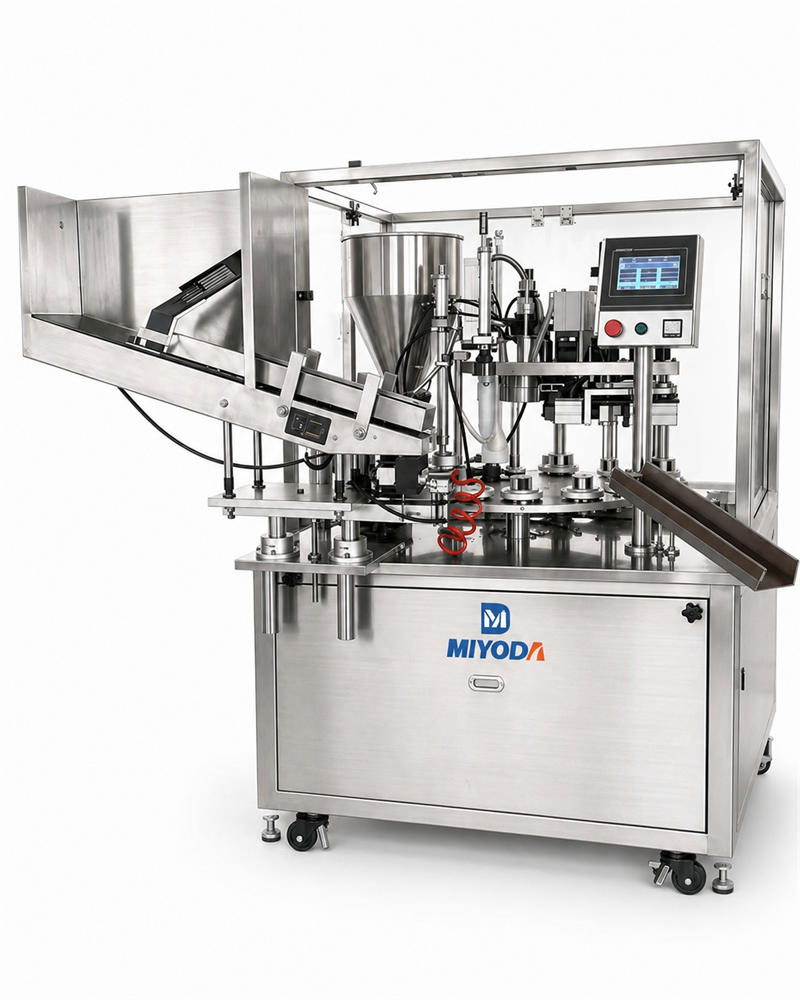
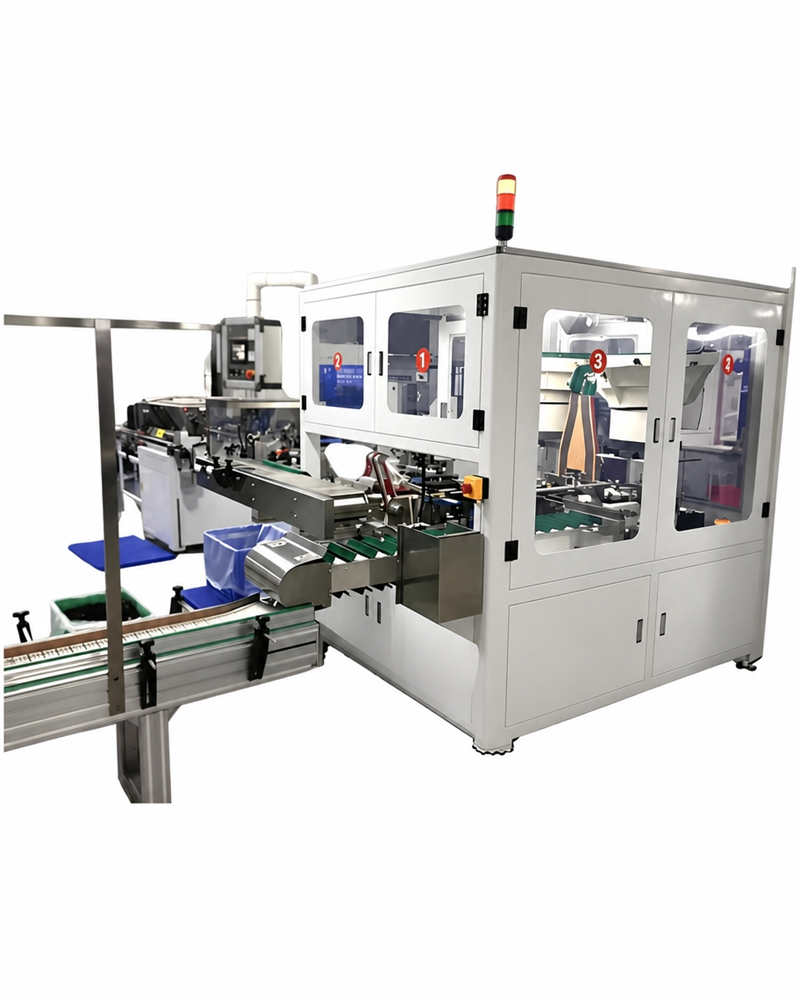
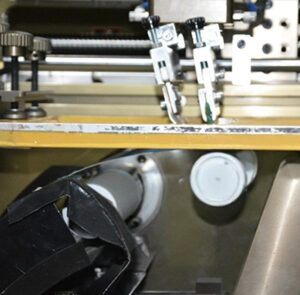
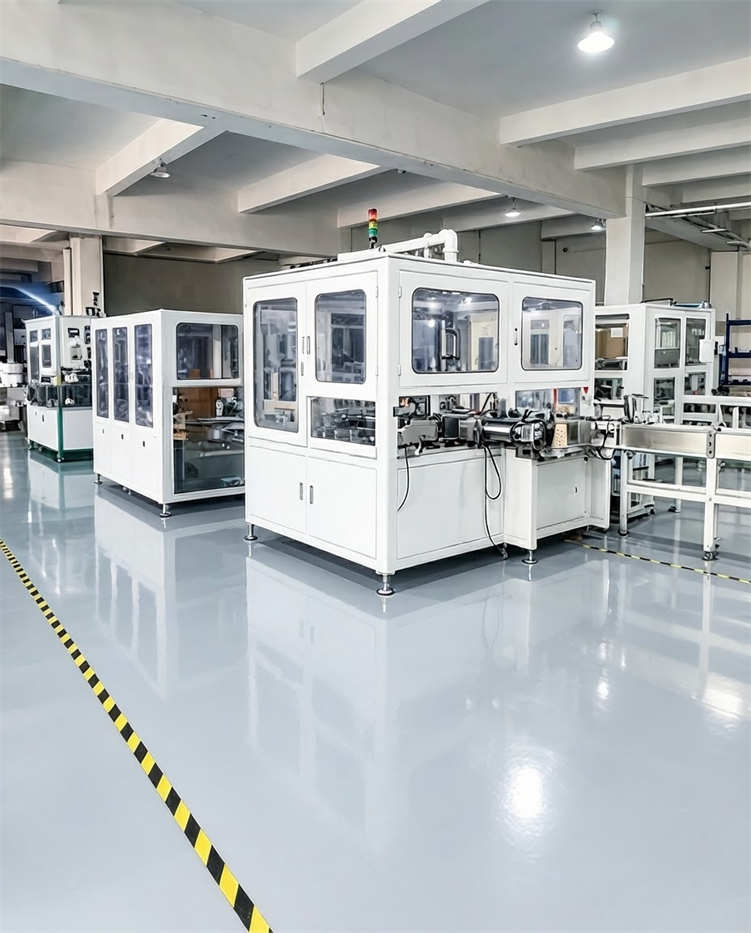
A fully automatic tube filling machine handles the complete production cycle without station-level operator intervention. Empty tubes load in bulk into a hopper or rotary magazine; a servo-driven indexing mechanism moves them through orientation, filling, sealing, batch coding, and finished-tube ejection. Modern automatic systems cycle at 60 to 200+ tubes per minute, with fill weight accuracy typically within ±0.3%–0.5% by volume.
The hardware integrates servo motors, vision orientation sensors, SCADA-compatible data interfaces, and often automated CIP circuits. Entry-level automatic systems start around $60,000–$80,000; high-speed multi-head models with vision inspection exceed $250,000.
Automation vs. Human Involvement
The practical distinction is not simply “operator present vs. absent” — it is about where human expertise adds value. In a semi-automatic setup, the operator touches every tube, introducing ergonomic fatigue and hygiene variables that scale linearly with volume. In a fully automatic line, human involvement shifts to changeover setup, quality sampling, and predictive maintenance — tasks requiring higher technical skill but dramatically lower headcount relative to output.
Industry Insight: The global tube filling machine market was valued at USD 1.2 billion in 2024 and is projected to reach USD 2.2 billion by 2034 at a CAGR of 5.9% (Global Market Insights). The primary growth driver is the migration of cosmetic and pharmaceutical manufacturers from semi-automatic to fully automated lines — a transition that companies like Miyoda Packaging Machinery engineer as complete turnkey line upgrades for their B2B clients.
Productivity Comparison
Output of Automatic Filling Machines
A single-head automatic machine at 80 tubes/minute completes 4,800 tubes per hour — roughly 38,400 finished, sealed, and coded tubes per 8-hour shift. A dual-head system at 120 tpm reaches 57,600 per shift. At a 20-shift month, a mid-range automatic system delivers over 1.1 million tubes per month with fill weight consistency governed entirely by servo-driven pistons.
The consistency gain is documented in production: a pharmaceutical manufacturer filling 50 ml topical ointment tubes reported that migrating from semi-automatic to an automatic rotary system reduced weight-variance rejection from 1.8% to 0.18% — recovering approximately 900 kg of product waste per month.
Output of Semi-Automatic Machines
At a sustained operator rate of 25 tubes/minute (realistic for a trained operator), a semi-automatic machine delivers approximately 12,000 tubes per 8-hour shift. For a contract filler managing 30 different SKUs per week with average batch sizes of 800–2,000 tubes, this is often the right balance of flexibility and output.
Workflow Efficiency
📊 Throughput Comparison — Automatic vs. Semi-Automatic Tube Filling (Tubes per 8-Hour Shift)
slow/new operator
trained operator
peak sustained
80 tpm @ 90% OEE
120 tpm @ 90% OEE
tpm = tubes per minute | Automatic figures assume 90% OEE. Semi-auto rates reflect real operator-sustained averages including minor stops.
Automatic machines also integrate directly with upstream product tanks and downstream labeling or cartoning conveyors via PLC handshake signals — eliminating the manual staging buffers that semi-automatic setups require between each process step. For facilities targeting OEE above 80%, a fully automatic configuration is generally a prerequisite.
Cost and Investment
Semi-Automatic Filling Machine Cost
Entry-level semi-automatic tube fillers — basic single-station units with piston fill and hot-air seal — start around $8,000–$15,000. Mid-range models with digital fill-volume control, ultrasonic sealing, and tube-length adjustability run $18,000–$35,000. Installation costs are minimal: most semi-automatic machines run on standard power, require no special foundation, and can be in production within one day of delivery.
The hidden cost is labor. Assuming a single line operator at $28/hour across two shifts, annual labor cost attributable to manual tube loading alone exceeds $115,000/year per machine. In Southeast Asia or China, this figure drops substantially — but the throughput ceiling does not change regardless of labor market.
Automatic Filling Machine Cost
Mid-range, well-specified automatic machines — such as those in the integrated line portfolio at Miyoda Packaging Machinery — typically fall between $60,000 and $120,000. European-engineered high-speed systems exceeding 150 tpm with integrated vision inspection and servo changeover can surpass $200,000–$250,000.
Ancillary costs include installation (3–5 days on-site), compressed air supply infrastructure, and operator qualification training. Facilities pursuing pharmaceutical-grade validation (IQ/OQ/PQ) should budget an additional $10,000–$30,000 for validation activities.
ROI Factors
| Cost Factor | Semi-Automatic | Fully Automatic |
|---|---|---|
| Machine Purchase Price | $8,000 – $35,000 | $60,000 – $250,000+ |
| Annual Labor (2 operators / 2 shifts) | $115,000 – $160,000 | $28,000 – $55,000 (1 technician) |
| Annual Preventive Maintenance | $2,000 – $6,000 | $8,000 – $20,000 |
| Fill Weight Rejection Rate | 1.5% – 3.0% of output | 0.1% – 0.5% of output |
| Annual Throughput Ceiling | ~3 – 5 million tubes | ~10 – 25 million tubes |
| Typical ROI Payback Period | 6 – 18 months | 18 – 36 months |
| Scalability Path | Limited — add parallel machines | High — speed upgrades, extra heads |
| GMP Data Compliance Cost | High SOP investment required | Built-in: alarms, fill logs, audit trail |
🥧 3-Year Total Cost Breakdown — High-Volume Scenario (5–8M Tubes/Year)
Semi-Automatic Line
3-Year Total ≈ USD 540,000
Fully Automatic Line
3-Year Total ≈ USD 320,000
Illustrative estimates for a 5–8M tube/year scenario. Actual costs vary by region, product, and tube format. Labor savings alone typically justify automatic investment within 24 months at this volume.
▶ Watch: Automatic 2-Head Tube Filling & Sealing Machine in Operation
Before finalizing specifications, watching a production-grade automatic tube filler at operating speed provides context that spec sheets alone cannot convey. Observe the continuous rotary cycle, servo-driven indexing table, automatic tube in-feed orientation, hot-air sealing station, and batch code embossing:
Automatic 2-Head Tube Filling & Sealing Machine — note the continuous rotary cycle, servo indexing table, automatic tube orientation, and in-line hot-air sealing station running at production speed.
Flexibility and Versatility
Hot-air seal
13–60 mm Ø
Hot-air seal
High barrier
Ultrasonic seal
Lightweight
Mechanical crimp
Pharma grade
Semi-Automatic Machines: Adaptability
Semi-automatic machines genuinely excel at format flexibility. Switching between a 30 mm diameter plastic cream tube and a 40 mm diameter laminate tube typically requires swapping the filling nozzle and adjusting sealing jaw clearance — completing in 15–25 minutes without specialized tooling. Because tube positioning relies on the operator rather than automated in-feed, the machine is format-agnostic in ways that fully automatic systems require additional tooling sets to replicate.
This makes semi-automatic machines the natural choice for contract manufacturers, R&D and stability-batch facilities, and emerging brands with high SKU counts and moderate batch sizes. Running eight different cream SKUs in a single week incurs minimal changeover penalty — a critical commercial advantage at that production scale.
Fully Automatic Machines: Adaptability
Modern automatic tube fillers have significantly improved changeover capability through SMED-influenced tooling design: quick-release mandrel sets, stored HMI recipe parameters, and color-coded format components can reduce diameter changeover to 25–45 minutes in well-designed machines. However, the in-feed magazine and tube-orientation station remain the bottleneck — a full diameter change on rotary automatic systems can still require 60–90 minutes plus qualification trial tubes.
Product Changeover Time Benchmarks
| Changeover Type | Semi-Automatic | Fully Automatic |
|---|---|---|
| Fill volume only (same tube) | 2 – 5 min | 1 – 2 min (HMI recipe) |
| Tube length change (same diameter) | 5 – 10 min | 10 – 20 min |
| Tube diameter change | 15 – 25 min | 30 – 90 min (tooling) |
| Product material change (cream → gel) | 20 – 40 min (manual rinse) | 20 – 45 min (auto CIP) |
| Full format + product change | 45 – 70 min total | 60 – 120 min total |
Industry Insight: A European contract cosmetics manufacturer running 24 cream and gel SKUs weekly reported that moving to an automatic line with servo-driven jaw adjustment and HMI recipe management reduced total weekly changeover time from 6.2 hours to 1.8 hours — recovering 228 additional production hours per year.
Maintenance and Operation
Filling Line
Simplicity
Maintenance for Automatic Filling Machines
Automatic tube filling machines carry more mechanical and electronic complexity, and maintenance schedules reflect this. A typical planned preventive maintenance (PPM) program includes: daily cleaning of all product-contact surfaces and nozzle tips; weekly lubrication of indexing table bearings, drive chains, and inspection of sealing jaw faces; monthly fill weight calibration verification; and every six months servo drive diagnostics, vision system calibration, and gearbox oil analysis.
Well-designed machines incorporate tool-free nozzle removal, stainless steel product-contact surfaces compliant with FDA 21 CFR or EU food-contact material standards, and accessible cleaning ports. These design choices can reduce daily cleaning time from 45 minutes to under 20 minutes. For pharmaceutical facilities, automated CIP circuits significantly simplify mandatory cleaning validation requirements.
Maintenance for Semi-Automatic Machines
Primary wear components are: piston pump seals and O-rings (replaced every 3–6 months depending on product abrasiveness), sealing jaw heating elements and contact faces, and the tube-positioning mandrel assembly. A well-maintained semi-automatic machine operates reliably for 8–12 years with consistent daily cleaning and quarterly seal inspection. The key maintenance risk is not mechanical failure but inconsistent cleaning practice — manual tube handling introduces contamination pathways that automatic systems eliminate by design.
Operator Training
A semi-automatic machine operator can typically reach competent sustained production speed within 1–3 days of structured on-the-job training. An automatic filling line technician needs to understand PLC alarm diagnosis, servo drive parameters, vision system calibration, and changeover sequencing — a realistic training period of 2–4 weeks. Suppliers like Miyoda Packaging Machinery provide on-site commissioning training with structured qualification documentation and video-based remote support programs — critical for facilities in markets where specialized maintenance technicians are difficult to source locally.
Business Suitability
Small and Medium Production
For manufacturers producing fewer than 3–4 million tubes per year, or operations with high SKU diversity and small-to-medium batch sizes, semi-automatic machines represent the more rational capital investment. The machine cost savings versus an automatic system — typically $30,000–$70,000 — can fund regulatory certification, formulation development, or market expansion activities that generate revenue more directly at this scale.
However, if your product portfolio includes pharmaceutical-grade topical creams or ointments subject to GMP audit, an automatic machine’s built-in electronic batch records, real-time fill monitoring, and alarm traceability may be required regardless of batch size.
High-Volume Production
At volumes above 5 million tubes per year, semi-automatic line economics become increasingly difficult to justify. At that volume, you require multiple machines and multiple operators per shift — labor costs that typically exceed the annualized cost of a single automatic system within 18–24 months. Major cosmetic and pharmaceutical buyers also impose supplier audits assessing fill weight Cpk values, seam integrity, and coding legibility — all metrics where automatic machines deliver measurably superior process capability.
Companies building or rebuilding complete tube packaging operations can explore full line solutions at miyodamachine.com, where Miyoda Packaging Machinery has documented client cases showing operational efficiency improvements of 30% or greater following transition from semi-automatic to fully automated tube production lines.
Industry Use Cases
| Application | Tube Type | Preferred Machine | Key Requirement |
|---|---|---|---|
| Mass-market cosmetics (moisturizer, sunscreen) | Plastic / ABL, 30–150 ml | Automatic | Speed, seam consistency |
| Luxury / prestige skincare | Laminate / aluminum, 15–75 ml | Auto + vision | Zero defects, precision fill |
| Pharmaceutical OTC topicals | Aluminum / plastic, 15–100 ml | Automatic (GMP) | cGMP compliance, batch records |
| Prescription topical drugs | Aluminum, 5–50 ml | Automatic (aseptic) | FDA/EMA audit-ready |
| Contract filling (multi-brand) | Various formats | Semi-Automatic | Fast changeover, low MOQ |
| R&D / Pilot scale | All types, small qty | Semi-Automatic | Minimal waste, easy setup |
| Toothpaste & oral care gel | ABL laminate, 50–200 ml | Automatic high-speed | Throughput, air-free filling |
| Medical device gel (ultrasound, ECG) | Plastic, 60–250 ml | Automatic | ISO 13485 traceability |
Not sure which configuration fits your production line?
Miyoda Packaging Machinery’s engineering team works with cosmetic and pharmaceutical tube manufacturers worldwide — matching machine specification to your tube format, output target, compliance requirements, and floor layout.
Talk to Miyoda’s Team →Full Side-by-Side Specification Reference
| Dimension | Semi-Automatic | Fully Automatic |
|---|---|---|
| Automation Level | Fill & seal automated; loading/unloading manual | Full cycle — in-feed, orient, fill, seal, code, eject |
| Sustained Throughput | 600 – 2,400 tubes/hr | 3,600 – 12,000 tubes/hr |
| Fill Weight Accuracy | ±1% – ±2% (operator-dependent) | ±0.3% – ±0.5% (servo-driven) |
| Fill Weight Cpk | 0.9 – 1.2 typical | 1.5 – 2.0 typical |
| Machine Purchase Price | $8,000 – $35,000 | $60,000 – $250,000+ |
| Labor Required (per shift) | 1–2 operators per machine | 1 technician monitors multiple lines |
| Floor Footprint | 0.5 – 2 m² | 4 – 20 m² |
| Diameter Changeover | 15 – 25 min | 30 – 90 min |
| GMP / cGMP Suitability | Feasible with rigorous SOP | Built-in: alarms, fill logs, CIP, audit trail |
| Maintenance Complexity | Low — seals, O-rings, jaw faces | Medium–High — servos, vision, conveyors |
| Operator Training | 1 – 3 days | 2 – 4 weeks |
| Typical ROI Payback | 6 – 18 months | 18 – 36 months |
| Best Scenario | <5M tubes/yr; high SKU; contract fill | >5M tubes/yr; volume SKUs; pharma compliance |
Performance Scorecard
🤖 Fully Automatic Machine
👷 Semi-Automatic Machine
Key Technical Terms
- GMP / cGMP
- Good Manufacturing Practice / current GMP. Regulatory minimum standards for pharmaceutical and regulated cosmetic production. Mandatory for pharma tube filling.
- OEE (Overall Equipment Effectiveness)
- Availability × Performance × Quality. World-class tube filling OEE is 85–92%. Automatic lines typically achieve 85–90%; semi-auto lines 70–80%.
- CIP (Clean-in-Place)
- Automated chemical flushing of product-contact surfaces without disassembly. Critical for fast product changeover and pharmaceutical cleaning validation.
- Cpk (Process Capability Index)
- Statistical measure of fill weight consistency relative to spec limits. Pharma requires Cpk ≥ 1.33; automatic machines typically achieve 1.5–2.0.
- ABL / PBL Laminate Tube
- Aluminum Barrier Laminate / Plastic Barrier Laminate. Multi-layer tube constructions providing oxygen and moisture barrier protection for sensitive formulations.
- SMED
- Single-Minute Exchange of Dies. Lean methodology for reducing machine changeover time, ideally under 10 minutes. Increasingly built into modern automatic tube filler tooling design.
- IQ / OQ / PQ
- Installation / Operational / Performance Qualification. Pharma validation protocol confirming a machine performs as specified before production release.
- Hot-Air vs. Ultrasonic Sealing
- Hot-air heats the tube tail externally before jaw crimping — universal for plastic and laminate. Ultrasonic uses high-frequency vibration energy — faster, energy-efficient, preferred for heat-sensitive products.
Which Machine Is Right for Your Operation?
Semi-automatic tube filling machines deliver the most rational return for operations producing under 3–5 million tubes per year, running diverse SKU portfolios with frequent changeovers, or requiring modest capital to enter or expand in cosmetic or pharmaceutical tube packaging. The lower machine cost, simpler maintenance, and superior format flexibility are genuine advantages at this scale.
Fully automatic machines become the rational choice once annual production exceeds 5 million tubes, when labor cost is a significant variable in unit economics, when regulatory audit requirements mandate electronic batch records and in-process fill weight verification, or when customer quality agreements specify process capability standards that manual loading cannot reliably achieve.
The most productive facilities in cosmetic and pharmaceutical tube packaging often deploy both — automatic lines for core high-volume SKUs and semi-automatic stations for development batches, limited editions, and new product launches not yet at scale. For a complete picture of how filling lines integrate with upstream tube production and downstream capping, explore the full line solutions at Miyoda Packaging Machinery, including their laminate tube making machines and automated tube capping systems. For broader market context, the Global Market Insights tube filling machine market report is a recommended external reference.