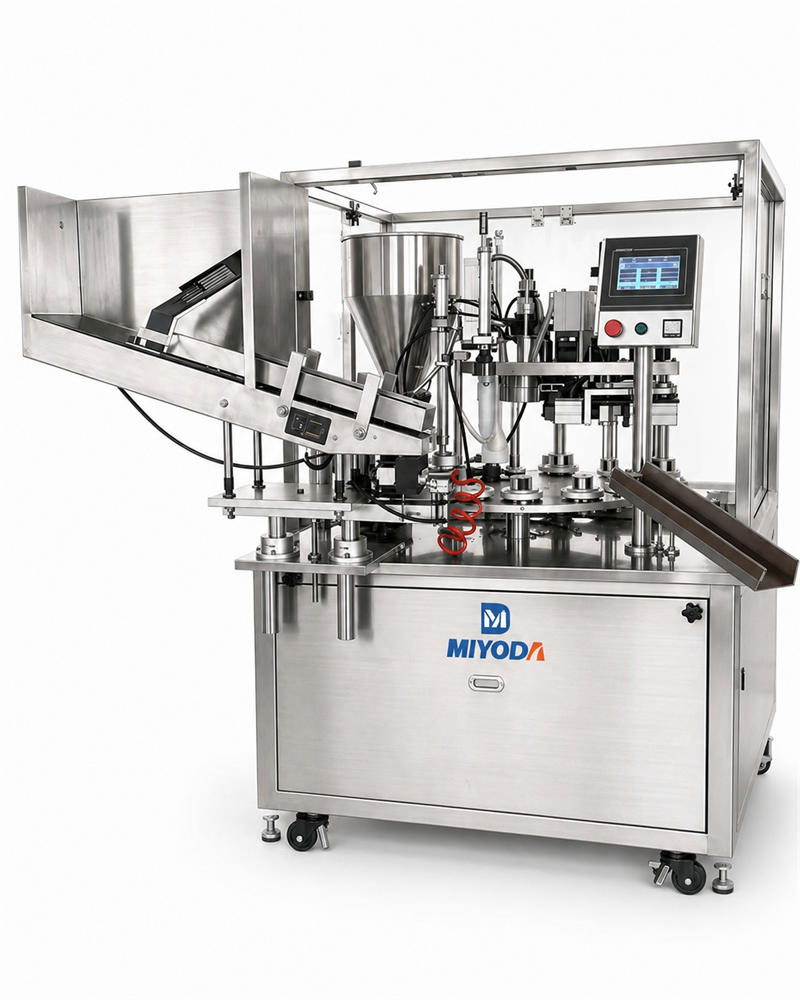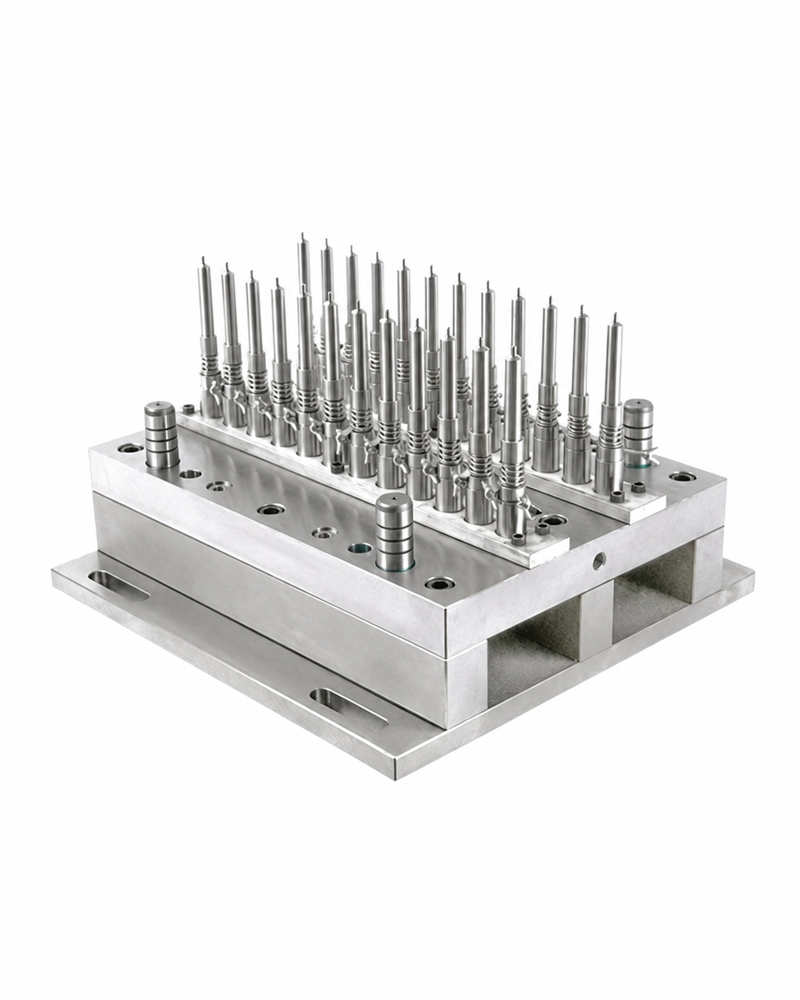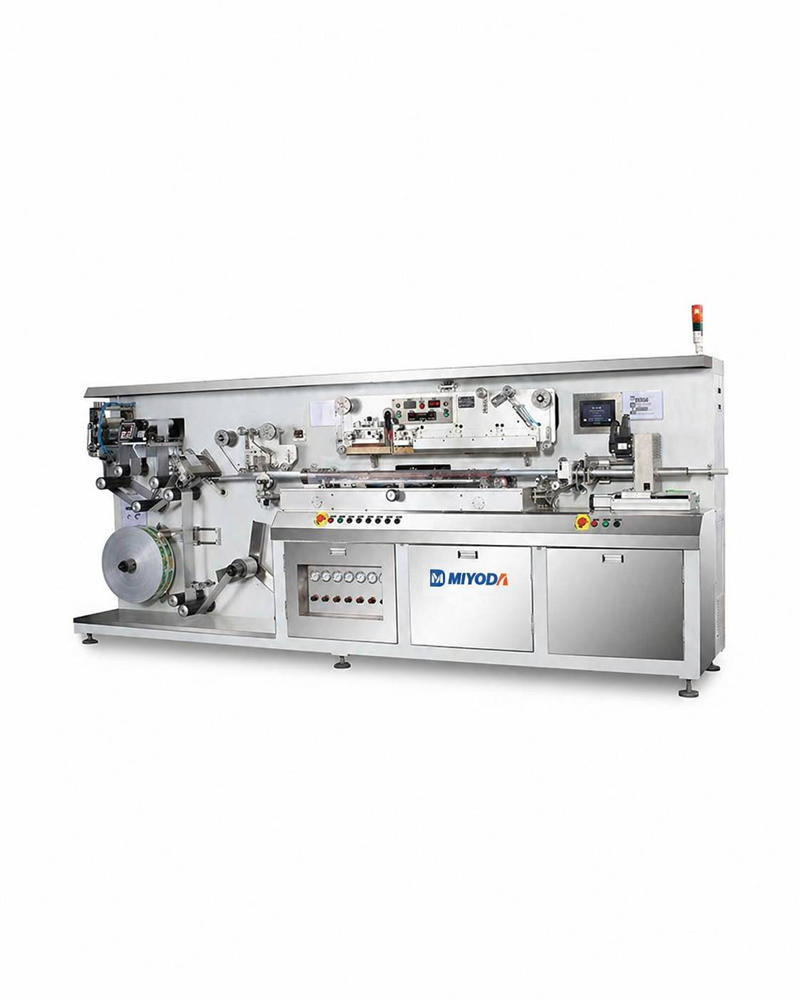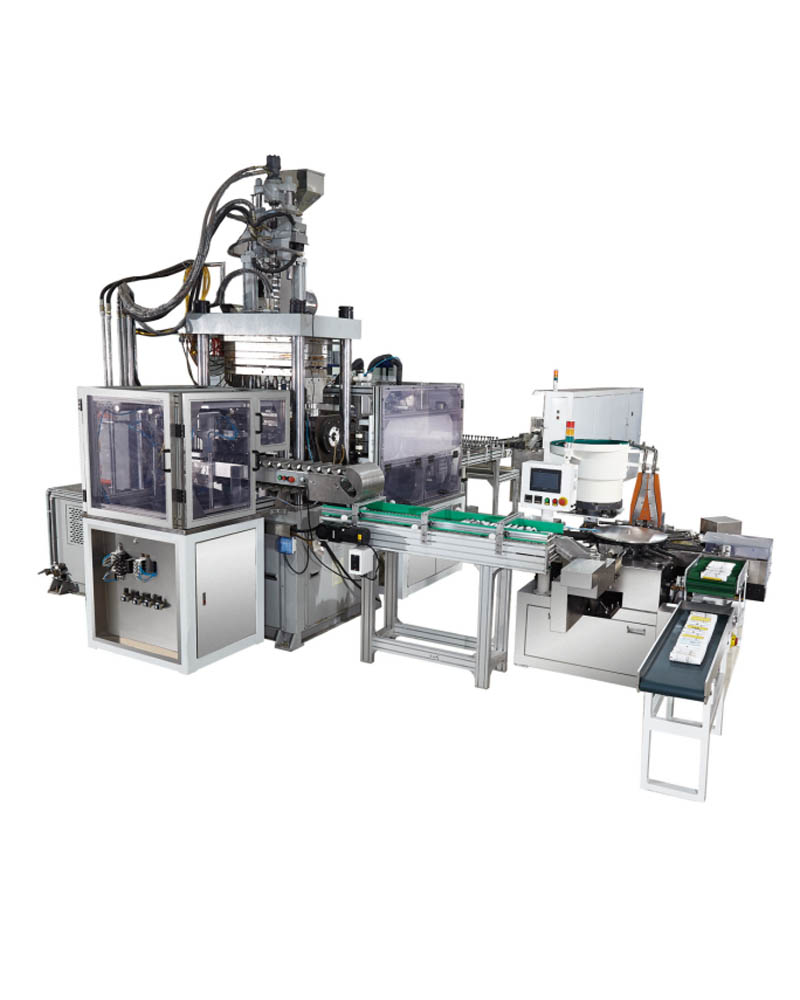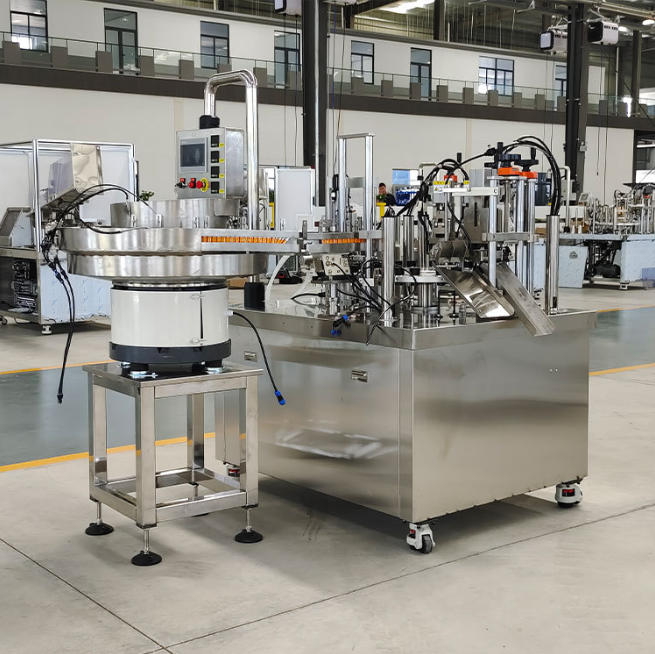
Manufacturing soft tubes for cosmetics and pharmaceuticals demands precision. When filling operations fail, you lose revenue, damage your reputation, and risk regulatory compliance. This guide reveals real production disasters and the proven solutions that turned them around — so you can avoid learning these lessons the expensive way.
The Hidden Costs of Production Line Failures
Most manufacturers can tell you what a filling line shutdown costs in tubes-per-hour. Very few can tell you what it costs in total — because the visible output loss is often the smallest part of the bill.
What Happens When Your Filling Line Goes Down
When a tube filling line stops, the problem doesn’t stay contained at the filling station. The mixer upstream continues holding temperature and viscosity for a product that isn’t moving. Downstream equipment — cartoners, labelers, case packers — sits idle while overhead, depreciation, and shift labor all continue ticking.
The restart cycle creates its own costs. Heating systems must recover sealing temperature. Fill nozzles require inspection or cleaning. Tubes already inside the rotary table need to be checked and, in many cases, rejected. Every unplanned stop creates a cascade that adds mechanical stress, product waste, and labor cost beyond what the simple output gap would suggest.
Direct Costs: Downtime, Waste, and Emergency Repairs
For a cosmetic manufacturer running at 80 tubes per minute, an unplanned 4-hour shutdown means approximately 19,200 finished tubes not produced. At an average net margin of $0.15 per tube, that single event costs $2,880 in lost output before accounting for wasted in-process product, emergency technician overtime, and any express parts freight.
Emergency repairs routinely cost 3–5× more than planned maintenance for the same component replacement — because urgency, overtime rates, and expedited logistics all compound simultaneously. A sealing jaw heating element that costs $80 to replace in a planned maintenance window can cost $400–$600 to replace during a shift emergency when a technician is pulled from another job and parts are air-freighted overnight.
Indirect Costs: Missed Deadlines, Customer Dissatisfaction, and Lost Contracts
In contract manufacturing and private-label tube supply, delivery reliability is often the primary factor in contract renewal. A manufacturer that misses two shipment windows in one quarter signals operational instability — the kind that pushes buyers toward alternative suppliers before the next RFQ cycle.
Quantifying this loss is uncomfortable but necessary. If a single mid-size retail account represents $180,000 in annual revenue and a pattern of late deliveries triggers supplier switch after 18 months, the cost of that unreliability is not the two late orders — it is the entire account value, compounded by the cost of replacing that business with a new customer acquisition.
Why This Matters for Cosmetic and Pharmaceutical Manufacturers
Regulatory Compliance at Stake
Pharmaceutical tube manufacturers operate under some of the most demanding quality documentation requirements in any manufacturing sector. FDA 21 CFR Part 211.94 mandates that drug product containers and closures maintain product identity, strength, quality, and purity throughout their shelf life. A seal failure on a pharmaceutical tube is not a quality inconvenience — it is a regulatory event requiring documented investigation, CAPA (Corrective and Preventive Action, the formal documented process for identifying, fixing, and preventing quality failures), and potential product recall.
The FDA’s container closure integrity guidance requires manufacturers to demonstrate, through validated testing, that their tube filling and sealing process reliably produces leak-proof, contamination-proof seals across the full range of operating conditions. Manual-inspection-only seal quality systems do not satisfy this requirement.
Brand Reputation on the Line
For cosmetic manufacturers, the regulatory stakes may be lower — but the brand exposure is faster and more public. A customer who opens a leaking hand cream tube and posts the image takes approximately 30 seconds. The brand response takes days. Research by Container and Packaging Solutions documents that 52% of consumers who experience a packaging failure do not repurchase that brand in the same category for at least 6 months — a retention damage that far exceeds the cost of the defective unit.
Case Study #1 — The Clogging Catastrophe: A Mid-Size Cosmetics Manufacturer’s $50,000 Nightmare
This case involves a cosmetics contract manufacturer in Southeast Asia producing approximately 800,000 tubes per month across a range of moisturizing creams and sunscreen formulations. In Q3 — their peak season for a major retail client — their primary filling line began showing symptoms that their team misread until it was too late.

Nozzle clogging during peak production season: what starts as intermittent fill inconsistency escalates to full line shutdown within hours if root cause is not identified.
What Went Wrong: The Production Timeline
Initial Symptoms: Inconsistent Fill Volumes and Product Backup
The first signs appeared six weeks before the major shutdown. Fill weights on their 50ml sunscreen tube line began showing variance outside the ±2% specification window — inconsistently, not systematically. Some runs were fine. Others produced clusters of underweight tubes that the end-of-batch checkweigher flagged.
The production team’s initial response was manual: operators adjusted the piston pump stroke by feel, ran additional samples, and moved on. The variance appeared to correct itself after each adjustment — because it did, temporarily. What they didn’t recognize was that the “correction” was masking a progressive nozzle fouling problem. The sunscreen formulation contained zinc oxide particles in suspension. At the operating temperatures of their filling environment, those particles were gradually building a deposit at the nozzle tip exit, partially restricting flow — creating pressure-driven variance that worsened as the deposit grew.
The Breaking Point: Complete Line Shutdown During Peak Season
Week six: the deposit reached critical mass. Mid-shift, the line stopped producing acceptable fills entirely. The nozzle was now functionally occluded. Attempting to clear it while the line ran resulted in product spraying back from the nozzle, contaminating the tube holders and the surrounding station. The line was shut down for emergency cleaning.
Emergency cleaning on a production line configured for hot-air sealing requires full cool-down before technicians can access nozzle components safely. The shutdown consumed the remainder of that shift plus the first four hours of the following shift — 14 productive hours lost. The in-process product batch — 280 kg of finished sunscreen formulation — had exceeded its maximum open-time specification by the time the line restarted and had to be scrapped. Emergency overtime for the restart, re-inspection of the previous run’s tubes, and the formulation loss combined to a documented cost of just over $50,000 — against a line that had cost $28,000 new.
Root Cause Analysis: Why Clogging Happened
Inadequate Product Viscosity Management
Zinc oxide suspensions and mineral-based cosmetic formulations are inherently prone to particle settling during the transfer from bulk vessel to filling nozzle. The manufacturer’s feed system held product in an unheated, unstirred reservoir tank. As ambient temperature dropped in the overnight shift (their facility had no HVAC in the production area), the sunscreen formulation’s viscosity increased — slowing flow and creating conditions where zinc oxide particles could deposit at the lowest-velocity points in the system: nozzle tip exits.
The correct approach for particle-containing formulations is a heated, agitated feed hopper that maintains product temperature within ±2°C of the specified filling temperature and keeps particles in suspension throughout the production run.
Poor Nozzle Design and Maintenance Protocols
The manufacturer was using a standard straight-bore nozzle — appropriate for homogeneous creams, but creating a flow-velocity drop zone at the nozzle tip exit that accelerated particle accumulation for a mineral suspension product. The maintenance protocol called for nozzle cleaning “after each production batch” — but there was no documented standard for what constituted acceptable cleanliness, and no quick-change nozzle system that would have allowed mid-run nozzle swap without stopping the line.
The Solution They Implemented
Upgraded to Precision Nozzle Systems with Anti-Clog Technology
The manufacturer invested in a set of anti-drip precision nozzles with tapered-bore geometry, which maintains higher exit velocity and reduces the dead-zone deposition that standard straight-bore designs create. They added a heated nozzle body option (maintaining the nozzle tip at 38–40°C) and implemented a quick-change nozzle system that allows a clogged nozzle to be swapped for a clean backup in under 90 seconds without stopping the fill cycle — the clogged nozzle is cleaned offline while production continues.
Established Preventative Maintenance Schedules
They created a formal nozzle inspection standard with go/no-go visual criteria (photographed and laminated at the station), implemented a 2-hour mid-run nozzle check trigger for all mineral-containing formulations, and installed a heated, agitated hopper with temperature display and minimum temperature alarm.
Results and Lessons Learned
95% Reduction in Clogging Incidents
In the 12 months following implementation, the manufacturer recorded three minor mid-run nozzle blockages — all caught and resolved mid-production without line shutdown using the quick-change system. Their previous rate was two to three full-shutdown clogging events per quarter. Total production loss from clogging in the 12 months post-implementation: under $3,000. Pre-implementation annual cost: $80,000–$100,000 in combined downtime and scrap.
ROI Achieved Within 8 Months
The nozzle upgrade, heated hopper, and quick-change system combined cost approximately $12,500. Against documented monthly savings of $6,000–$8,000 in avoided downtime, formulation scrap, and emergency labor, the investment returned itself in full within the first 8 months.
Case Study #2 — Seal Failures and Regulatory Rejection: A Pharmaceutical Manufacturer’s Compliance Crisis
This case involves a mid-size OTC pharmaceutical tube manufacturer in Eastern Europe producing medicated ointment tubes for multiple national pharmacy chains. Their primary product — a corticosteroid cream in 30ml aluminum-laminate tubes — represented approximately 60% of their annual revenue. A routine annual customer audit uncovered a problem that had been accumulating undetected for months.
The Disaster: Product Recalls Due to Failed Seals
How Seal Failures Went Undetected Initially
The seal failures were not visible. The tubes, when inspected by hand and visual check at end-of-line, appeared correctly sealed. Tails were closed, folded cleanly, and showed no obvious deformation or obvious gap. The problem was microscopic: a combination of worn sealing jaw faces and drift in the heat control system had been producing seals that met visual specification but failed the leak test threshold under the pressure differential equivalent of standard distribution handling conditions.
The formulation inside — a water-based corticosteroid — was not leaking visibly at the point of manufacture. It was micro-seeping, slowly, at the seal line. In the distribution chain — exposure to temperature cycling in transit and retail storage — a proportion of tubes were arriving at pharmacies showing product seepage at the tail seal. The pharmacy chain’s quality manager collected 14 complaint units over 6 weeks before escalating to the manufacturer.
The Regulatory Inspection That Changed Everything
The customer’s complaint triggered a supplier audit, which in turn triggered a regulatory inspection by the national medicines authority. During the inspection, auditors requested seal integrity test records for the previous 6 months. The manufacturer could not produce them — their end-of-line inspection protocol was visual-only. No documented leak testing had been performed since the initial process validation 3 years earlier.
The inspection result: a mandatory product recall of all batches from the previous 90 days (approximately 340,000 units), a production suspension pending corrective action, and a formal warning notice citing failure to maintain ongoing process validation. Total direct cost of the recall and production suspension: approximately €280,000. Revenue impact from the suspended distribution contract: an additional €150,000 over the following 6 months while the suspension was in force.
Why Seals Were Failing: Technical Breakdown
Inconsistent Heat Settings and Timing
The manufacturer’s hot-air sealing system used a single thermocouple to control heating element temperature. Over 18 months of continuous operation, the thermocouple had developed calibration drift of approximately +12°C from its displayed reading. The system showed 180°C; the actual sealing air temperature was 168°C — below the minimum threshold for reliable sealing of their ABL (Aluminum Barrier Laminate — a multi-layer tube material with an aluminum foil inner barrier layer) tube material at their specified dwell time.
At 168°C, sealing was occurring — the inner polyethylene layer was melting and bonding — but the bond strength was reduced. At room temperature and zero pressure, these seals held. Under the thermal stress and physical handling of distribution, a statistically significant fraction failed.
Worn Sealing Equipment and Calibration Drift
The sealing jaw faces — the hardened steel surfaces that apply clamping pressure to the heated tube tail — had developed surface wear that reduced contact area by approximately 15% from the original validated configuration. Reduced contact area means uneven pressure distribution across the seal width, creating weak zones even when temperature is correct. The combination of temperature drift and jaw wear created a compounding vulnerability that no single variable would have caused alone.
The Comprehensive Fix
Invested in Automated Seal Quality Monitoring Systems
The manufacturer installed a real-time seal integrity monitoring system — a combination of seal pressure sensors (measuring the jaw clamping force per seal cycle), post-seal leak detection (using a vacuum decay test on every 50th tube automatically selected), and fill weight checkweigher integration. The system generates a production record log that automatically captures seal force, sealing temperature, and fill weight for every batch — satisfying the regulatory requirement for documented ongoing seal integrity verification.
Implemented Real-Time Temperature and Pressure Controls
A dual-thermocouple sealing temperature control system replaced the single-thermocouple design — one thermocouple controls the heating element, a second independently monitors actual air exit temperature and generates an alarm if the two readings diverge beyond 5°C. Sealing jaw faces were replaced with new calibrated components and a 6-monthly jaw wear inspection was added to the formal maintenance schedule with documented measurement records.
Compliance Recovery and Competitive Advantage
Passed Re-Inspection with Zero Defects
The national medicines authority re-inspection, conducted 4 months after the corrective actions were implemented, resulted in a clean audit report. The manufacturer’s documented seal monitoring records, calibration certificates, and corrective action closure evidence satisfied every inspector concern. Production suspension was lifted. The distribution contract was reinstated.
Gained Customer Confidence and Premium Pricing
The pharmacy chain’s quality manager, having seen the manufacturer’s corrective action depth and the new monitoring capability, upgraded them from “conditional approved supplier” to “preferred supplier” status — a category change that improved payment terms by 15 days and enabled them to bid on new product lines. The manufacturer used the documented monitoring system as a competitive differentiator in subsequent RFQ responses, contributing to two new pharmaceutical contract wins the following year.
Case Study #3 — Inconsistent Fill Volumes: How One Distributor’s Client Lost Market Share
This case involves a cosmetic tube distributor who supplied private-label face cream in 50ml tubes to a mid-tier European skincare brand. The brand had built its market positioning around value — strong formulation at accessible pricing — and fill volume accuracy was central to their cost model. When customers began noticing that some tubes seemed to run out faster than expected, the brand initially dismissed it as perception. The data told a different story.
The Problem: Customer Complaints About Product Quantity
Why Customers Noticed the Inconsistency
Consumers who use a product consistently develop a baseline expectation of how long a tube of a given size should last. When fill weights drift low by 4–6% — below the visible threshold when a tube is full, but cumulatively noticeable across a week of use — consumers don’t necessarily identify “short fill.” They identify “this tube didn’t last as long as usual.”
The brand’s retail review platform began accumulating 1-star reviews citing product longevity beginning in the third month of the affected production run. Volume: 38 reviews over 6 weeks across two retail channels. Average review rating for the affected SKU dropped from 4.3 to 3.6. For a brand competing on value perception, a drop in the “you get what you pay for” metric is commercially catastrophic.
The Financial Impact: Returns, Refunds, and Reputation Damage
The brand’s retail partner initiated a quality investigation and suspended reorders pending outcome. During the 8-week investigation period, the brand absorbed €42,000 in lost reorder revenue, €8,500 in return and refund processing costs, and an estimated €25,000 in promotional spend to defend their review rating on the retail platform — a total of approximately €75,500 attributable to a fill accuracy problem that, at its root, was caused by a single worn piston pump component worth under €200 to replace.
Technical Investigation: Finding the Real Culprit
Worn Pump Components and Calibration Issues
The distributor’s contract manufacturer was running a filling line using a piston pump system that had been in continuous operation for 22 months without a full pump inspection. Piston seals — the rubber O-ring assemblies that create the precise displacement volume for each fill cycle — degrade through continuous compression cycling. As seals wear, they allow minor backflow at the compression stroke, reducing the actual dispensed volume below the set point.
The critical insight: the machine’s digital fill-volume display was showing the set volume, not the actual dispensed volume. The calibration had not been independently verified against physical fill weights in 4 months. The volumetric drift was approximately 4.8% below target on average — precisely in the range that consumers notice but doesn’t appear on a visual inspection.
Lack of Automated Volume Verification Systems
The manufacturer’s quality protocol relied on a manual sample-check process: 5 tubes sampled per batch start, 5 at mid-run, 5 at end. That’s 15 tubes checked from a typical 30,000-tube production run — a 0.05% sampling rate. Statistical process control (SPC, a method of using real-time data to monitor and control manufacturing processes) at that sampling density cannot detect gradual drift. The systematic fill variance that was accumulating over weeks was invisible to a sampling protocol designed to catch sudden, acute failures.
The Turnaround Strategy
Upgraded to Precision Volumetric Filling Technology
The manufacturer replaced the worn piston pump assembly and upgraded to a servo-driven piston system with encoder feedback — meaning the machine itself measures the actual piston travel distance and confirms it matches the set displacement before completing each fill cycle. Any deviation triggers an alarm rather than producing a tube. This approach achieves fill accuracy of ±0.5–1.0% — compared to the ±3–5% drift that the worn manual system had been producing.
Added Inline Weight Verification and Rejection Systems
A 100% inline checkweigher was installed on the discharge conveyor. Every tube is weighed after filling. Tubes outside the ±2% acceptance window are automatically rejected into a separate collection bin. The system generates a fill weight trend chart by the hour, making calibration drift visible long before it accumulates to a customer-noticeable level.
Results That Matter to Your Business
Achieved ±2% Fill Accuracy Consistently
In the first 30 days post-upgrade, the production line’s fill weight Cpk improved from approximately 0.85 (the level that was producing the customer complaints) to 1.58 — comfortably above the pharmaceutical-grade minimum of 1.33 and well within the cosmetic industry’s accepted standard. Out-of-spec tube rates dropped from 4.8% to 0.3%.
Eliminated Customer Complaints Within 60 Days
The retail partner’s review score for the affected SKU recovered to 4.1 within 60 days of the corrected production run reaching shelf. Reorders were reinstated. The distributor used the incident and corrective outcome as documented evidence of their quality system responsiveness in their next supplier qualification submission — strengthening the commercial relationship rather than damaging it permanently.
Common Tube Filling Failures Explained: Technical Breakdown for Decision-Makers
Clogging: The Most Common Production Killer
Clogging — the partial or complete blockage of a fill nozzle or product feed line — is the single most frequently reported tube filling failure mode. It halts production instantly, wastes in-process product, and in severe cases contaminates the filling station.
Why It Happens: Product Characteristics, Nozzle Design, and Environmental Factors
The trigger is almost always a mismatch between the product’s physical behavior and the nozzle design. Products containing suspended particles (minerals, pigments, exfoliants) require nozzle geometries that maintain high exit velocity across the full nozzle bore — if any section of the bore creates a velocity drop zone, particles accumulate there. High-viscosity products like thick ointments and dense creams can cold-flow in unheated feed lines overnight, creating a semi-solid plug by morning shift start.
Environmental factors — particularly ambient temperature — are underestimated clogging contributors. A product that flows freely at 25°C may increase in viscosity by 40–60% at 18°C (a common factory floor temperature in winter months), dramatically increasing clogging risk in the overnight shift.
How to Spot Early Warning Signs Before Catastrophic Failure
The signature early warning is fill weight variance that correlates with time into shift — underweight fills that appear in the first 30 minutes of production (cold-start blockage), or that worsen progressively during a run (accumulating deposit). A properly maintained line should show consistent fill weight Cpk across an 8-hour shift. Any trend — upward or downward drift in fill variance across a run — is a clogging precursor signal worth investigating immediately.
| Warning Sign | What It Indicates | Urgency |
|---|---|---|
| Fill weights trending low early in shift | Cold-start viscosity clogging | Inspect nozzle, check feed temperature |
| Progressive variance increase mid-run | Accumulating particle deposit | Immediate mid-run nozzle swap |
| Sudden fill weight drop with no parameter change | Acute partial blockage | Stop and clean before full occlusion |
| Product visible outside nozzle tip | Backflow from pressure build-up | Stop immediately — line contamination risk |
Inconsistent Fill Volumes: The Silent Profit Killer
Unlike clogging, fill volume inconsistency rarely stops production. It kills profit and reputation quietly, over weeks and months, while the filling machine continues running and the team believes output is acceptable.
Measurement Errors vs. Actual Equipment Drift
There is an important distinction between a calibration error (the machine’s reference point is wrong, so all fills are consistently displaced from target) and equipment drift (the machine fills correctly at the start of a run but diverges progressively as components wear or environmental conditions change). Calibration errors are easy to identify and correct. Equipment drift is the dangerous failure mode — it is invisible to operators checking only against the machine’s own displayed parameters, and only visible through independent fill weight verification against a calibrated reference scale.
Why Manual Adjustments Don’t Work Long-Term
When operators observe fill weight variance and adjust the piston stroke manually to compensate, they are correcting the symptom while the root cause — worn seals, calibration drift, worn pump components — continues progressing. Each manual adjustment buys hours or days of acceptable fills, after which the drift resumes from the new baseline. Over weeks, the machine requires increasingly frequent manual intervention and increasingly large adjustments — a pattern that signals imminent pump component failure, not a calibration problem.
Seal Failures: Your Compliance Nightmare
A failed tube seal is the single failure mode that simultaneously creates customer harm, regulatory exposure, and brand damage. It is also one of the most preventable — when monitoring systems are in place.
Heat-Related Failures and Timing Issues
Hot-air sealing success depends on three precisely controlled variables: air temperature (the heat delivered to the tube tail surface), dwell time (how long heated air contacts the tube before jaw closure), and jaw pressure (the clamping force applied after heating). A variation of ±5°C in air temperature or ±0.1 seconds in dwell time is enough to shift seal strength from above-specification to below-specification on laminate tube materials — without producing any visible change in seal appearance.
This is why visual inspection of tube seals is not sufficient for quality assurance. A seal that looks correct may have strength of only 6 N/25mm when the specification minimum is 10 N/25mm — a 40% strength deficit that passes visual inspection and fails only under the mechanical stress of distribution.
Material Degradation and Equipment Wear
Sealing jaw faces — the hardened contact surfaces that compress the heated tube tail — are consumable components with a finite service life. Depending on material, production speed, and product abrasiveness, jaw face replacement cycles range from 6 to 24 months. Most manufacturers replace them reactively (when seal failures begin occurring) rather than proactively (on a scheduled interval before the critical wear threshold is reached).
Leakage During Production and Transport
Product leakage during production contaminates the filling station and can result in cross-batch contamination if not caught immediately. Leakage during transport — in the distribution chain — is a customer-facing product failure that generates returns, reviews, and regulatory complaint filings.
Causes: Improper Seal Pressure and Temperature Control
Distribution leakage is almost always traceable to a sealing parameter that was within specification when measured at room temperature but insufficient to survive the thermal cycling (heating in transport vehicles, cooling in warehouse environments) that occurs between production and consumer use. Seal validation that tests only at ambient manufacturing conditions misses this failure mode entirely.
Prevention: Real-Time Monitoring and Automated Corrections
A seal monitoring system that measures jaw clamping force on every cycle — not just sampled tubes — creates a continuous record of whether sealing parameters are being met. When jaw face wear begins reducing clamping force, the system detects the drift and triggers maintenance before seal failures reach distribution.
Product Separation and Settling
Many cosmetic and pharmaceutical formulations are multi-phase systems: emulsions, suspensions, or gels where the active components are distributed throughout a carrier medium. When these products are held in the filling machine’s feed system without adequate agitation, the phases begin to separate — and the resulting tubes contain inconsistent concentrations of active ingredient across the batch.
Why It Happens with Multi-Phase Formulations
Separation rate depends on particle or droplet size, phase density difference, and the viscosity of the continuous phase. A high-viscosity gel may show no separation over 4 hours. A low-viscosity lotion with mineral pigments may begin visibly separating in 20 minutes. The critical risk period is the first fill after a production pause — when product in the feed line has been sitting without agitation.
Solutions: Agitation Systems and Proper Nozzle Design
The engineering solution is a continuously agitated, temperature-controlled hopper with a recirculation loop that gently returns product from the nozzle zone back to the hopper — maintaining homogeneity throughout the production run. For particularly sensitive formulations, some manufacturers use a low-shear gentle mixer integrated directly into the hopper — providing just enough agitation to prevent separation without destroying emulsion structure.
Preventative Maintenance: The Strategy That Saves You Money

Preventive maintenance is not a cost — it is a production cost reduction strategy. Every $1 spent on planned maintenance prevents $3–$5 in emergency repair and downtime.
Creating a Maintenance Schedule That Actually Works
A maintenance schedule that works is one that specifies exactly what to inspect, what the acceptance criterion is, what action to take if the criterion is not met, and who is responsible for documenting the result. A schedule that says “check nozzles daily” without defining what “check” means and what “acceptable” looks like is not a maintenance schedule — it is an audit decoration.
Daily Checks: What Your Operators Should Inspect
| Component | Check Method | Acceptance Criterion | Action if Failed |
|---|---|---|---|
| Nozzle tip exterior | Visual + wipe test | No product buildup, no crystallization | Clean per SOP before next run |
| Sealing jaw face | Visual | No visible wear marks, pitting, or surface irregularity | Flag for supervisor, schedule replacement |
| Fill weight (first 10 tubes) | Calibrated scale | Within ±2% of target | Adjust and recheck; if unable to correct, stop |
| Heating system display vs. setpoint | Control panel cross-check | Within ±5°C of setpoint | Calibrate or service heating control |
| Tube orientation sensor | Test with 5 blank tubes | 100% correct orientation registration | Clean sensor lens; recalibrate if needed |
Weekly Deep-Dives: Critical Components That Need Attention
Weekly maintenance is where most manufacturers under-invest. Daily checks catch acute failures. Weekly inspection catches progressive wear — the gradual degradation that creates the conditions for a future catastrophic event.
The weekly schedule should include: piston seal condition assessment (looking for bypass evidence in fill weight variance data from the past week), complete nozzle disassembly and internal bore inspection, sealing jaw face measurement against the original specification (jaw faces have a documented acceptable wear range — when measurements approach the lower limit, schedule replacement before reaching it), and a full fill weight calibration run with an external reference scale.
Predictive Maintenance Using Modern Technology
Sensor-Based Monitoring for Early Failure Detection
Modern tube filling machines from manufacturers like Miyoda Packaging Machinery increasingly incorporate sensor arrays that monitor not just operating parameters but rate of change in those parameters. A sealing temperature that is stable at 180°C is not concerning. A sealing temperature that is stable at 180°C but required a 3°C setpoint increase over the past two weeks to maintain that actual reading — that is a sensor telling you the heating element is losing efficiency and will fail within the next 200–400 operating hours.
This distinction — between current state and trend — is the difference between reactive maintenance and predictive maintenance. Predictive maintenance replaces components before they fail; reactive maintenance replaces them after they’ve already stopped production and created scrap.
Data Analytics to Prevent Problems Before They Happen
Fill weight trend analysis is the most accessible form of predictive maintenance for tube filling operations. When daily fill weight Cpk data is trended across weeks, progressive pump wear appears as a gradual decline in Cpk values — from 1.8 to 1.6 to 1.4 — long before the pump fails outright or produces out-of-spec tubes. At 1.4, you have time to schedule a planned pump service. At 0.9, you’re already producing defective product.
A simple spreadsheet tracking daily Cpk with a control chart provides this capability at zero technology cost. IoT-connected machines provide it automatically.
Training Your Team to Prevent Failures
Operator Certification Programs and Best Practices
Operators who understand why a maintenance step matters — not just that they are supposed to do it — perform it more consistently. The most effective training programs for tube filling operations combine technical instruction (how the piston pump creates fill volume, how the sealing jaw creates bond strength) with consequence awareness (what happens to fill weights when piston seals wear, what happens to seal strength when jaw faces pit).
An operator who understands that the morning nozzle wipe-down is preventing the clogging event that cost the team an 8-hour emergency shutdown last quarter will perform that check with attention. An operator who understands it as a compliance box to tick will not.
Creating a Culture of Quality and Accountability
The most reliable indicator of a well-maintained tube filling line is not the maintenance schedule — it is whether operators feel safe stopping production when something is wrong. Production pressure creates a powerful incentive to “run through” early warning signs. A facility where operators are rewarded for catching problems early (before they become shutdowns) and not penalized for production pauses during legitimate quality concerns produces consistently better quality outcomes than facilities where the cultural message is “keep running unless it’s obviously broken.”
Choosing Equipment Built for Reliability
What to Look for in Tube Filling Machines
Equipment reliability begins at the design specification, not at the maintenance schedule. When evaluating tube filling machines, the components that determine long-term reliability are: drive system quality (servo vs. mechanical cam — servo provides consistent force regardless of wear, cam followers degrade), filling pump specification (quality of piston seal material, availability of replacement seal kits, ease of pump access for maintenance), and sealing system design (whether jaw temperature is controlled by a single or dual thermocouple, whether jaw faces are replaceable without disassembling the sealing head).
For cosmetic and pharmaceutical applications, the Miyoda Packaging Machinery tube filling machine buyers’ guide provides a detailed technical comparison framework covering these specifications across different production scales and compliance requirements.
Why Upfront Investment in Quality Saves Thousands Later
A mid-range automatic tube filling machine at $90,000 with SS316L product-contact parts, servo-driven filling, dual-thermocouple sealing control, and tool-free changeover is not $50,000 more expensive than a $40,000 budget machine. It is, over a 5-year service life, approximately $150,000 cheaper — because it eliminates the emergency repair costs, unplanned downtime, product scrap, and premature component replacement cycles that budget machines generate.
The budget machine saves money on invoice day and costs money on every subsequent production day.
Solutions That Work: Proven Fixes for Your Production Line
Anti-Clog Technology and Nozzle Innovations
How Precision Nozzle Design Prevents Product Backup
The engineering principle behind anti-clog nozzle design is exit velocity maintenance. A nozzle bore that tapers toward the exit — wider at the entry, narrower at the tip — accelerates product flow at the point where particles are most likely to deposit under a standard straight-bore design. Combined with an anti-drip valve that prevents product from sitting in the nozzle between fill cycles, this geometry dramatically reduces the surface area and dwell time available for particle accumulation.
For products requiring particularly aggressive anti-clog protection (high-concentration mineral suspensions, abrasive exfoliants, wax-containing formulations), heated nozzle bodies maintain product at filling temperature through the full bore length — preventing the cold-end viscosity increase that initiates most blockages.
Material Compatibility and Temperature Management
Nozzle material selection matters for both clog prevention and product integrity. SS316L nozzles with electropolished bores (Ra ≤ 0.4 μm) minimize adhesion of product residue. For products containing retinol, vitamin C, or other oxidation-sensitive actives, the material and surface finish of product-contact components affect stability — a surface that traps residue is a surface that allows oxidative degradation between runs.
Advanced Seal Quality Assurance Systems
Automated Monitoring vs. Manual Inspection
Manual seal inspection — squeezing a tube, looking at a seal under light, feeling the closure — detects approximately 70–80% of defective seals when performed by a trained, attentive inspector. Under production conditions at the end of a 10-hour shift, that rate drops to 50–60%. An automated leak detection system — vacuum decay, pressure decay, or helium leak test — detects defective seals with 99%+ sensitivity regardless of operator attention, shift length, or inspector variability.
The economics are unambiguous: automated monitoring costs more at purchase, less in operation, and produces far superior protection against the compliance and brand exposure that defective seals create.
Real-Time Adjustments That Catch Problems Instantly
The most important capability of an automated seal monitoring system is not detection — it is the time-to-detection. A system that samples 1 in 100 seals catches a systematic failure after 100 defective tubes have been produced. A system that monitors every seal catches a systematic failure at the first defective tube. For pharmaceutical tube manufacturers, where every defective seal is a potential compliance event, that difference is the difference between a minor corrective action and a product recall.
Volumetric Precision Systems
How Weight-Based Verification Ensures Accuracy
Weight-based verification — weighing every filled tube on a calibrated inline checkweigher — is the gold standard for fill accuracy monitoring because it measures the actual output (how much product is in the tube) rather than the process parameter (what the machine’s display shows). A filling machine that has drifted 5% below target will show its set point on the HMI. It will not show the actual fill weight. Only an independent checkweigher confirms the actual.
Modern inline checkweighers integrate directly with the filling machine’s PLC, generating automatic alarms when fill weight trends approach the specification limit — giving operators time to investigate and correct before out-of-spec tubes are produced, rather than after they’ve been packaged and shipped.
Integration with Your Existing Production Line
Retrofitting a 100% inline checkweigher to an existing tube filling line is typically achievable without line reconfiguration, provided the filling machine discharges tubes horizontally to a conveyor. Integration with the filling machine PLC for automatic alarm and data logging requires that the machine’s control system support a standard communication protocol (most modern PLC systems do). The investment is typically $8,000–$25,000 depending on throughput speed and integration complexity — and the payback from eliminated scrap and customer returns at volumes above 200,000 tubes per month is usually under 12 months.
Environmental Controls That Matter
Temperature and Humidity Management for Consistent Results
Product viscosity, seal material performance, and even tube dimensional stability are all functions of ambient temperature. A production environment that fluctuates between 18°C and 28°C across seasons — common in facilities without dedicated HVAC — is producing output variability that no machine calibration can fully compensate for.
For consistent tube filling quality, production areas should maintain 20–25°C ±2°C year-round and 45–60% relative humidity. These are not luxury specifications — they are the environmental baseline for consistent viscosity control, reliable seal formation, and stable tube material performance.
Why Your Facility Conditions Affect Tube Quality
Relative humidity specifically affects seal quality in laminate tube formats. At high humidity (above 65%), the outer paper or polymer layers of ABL and PBL laminate tubes absorb moisture, which can interfere with hot-air sealing of the inner layers. A facility running at 75% humidity in summer may be producing seals that are consistently weaker than the same machine at the same settings in winter at 40% humidity — a seasonal variation that appears as intermittent seal quality problems without any machine cause.
Smart Equipment Upgrades for Modern Manufacturers
IoT-Enabled Machines That Communicate Problems
IIoT (Industrial Internet of Things) connected tube filling machines transmit real-time production data — fill weight, sealing temperature, throughput rate, alarm history — to a central monitoring dashboard accessible via desktop or mobile. For manufacturers managing multiple lines or multiple facilities, this means that a sealing temperature drift on line 3 generates an alert to the maintenance manager’s phone before it produces a defective tube.
Beyond alerts, IIoT connectivity enables remote diagnostic support from the equipment manufacturer’s engineering team. When a machine alarm occurs and the local team cannot identify the cause, the equipment manufacturer can review the machine’s live parameter history remotely, diagnose the likely cause, and provide guided resolution — often within minutes rather than the hours or days required for traditional remote support.
Remote Diagnostics and Support From Equipment Providers
The value of remote diagnostic capability is directly proportional to the remoteness of the production facility. For manufacturers in markets where specialized tube filling machine technicians are not locally available, the ability to connect the equipment manufacturer directly to the machine’s data stream is the difference between a 1-hour remote resolution and a 3-day wait for a technician to fly in.
Miyoda Packaging Machinery provides video-based remote support programs specifically designed for clients in markets where local filling machine service expertise is limited — allowing operators to resolve most first-level technical issues with guided remote support rather than waiting for physical technician dispatch.
Making the Business Case: ROI and Risk Mitigation
 The equipment upgrade decision is ultimately a financial one. When total cost of ownership is correctly calculated, reliability investments routinely show payback periods under 18 months.
Calculating the True Cost of Production Failures
Downtime Costs, Waste, and Hidden Expenses
The correct framework for calculating production failure costs has four components, and most manufacturers only calculate one.
Component 1 — Lost output value: Hours down × tubes per hour × net margin per tube. This is the only cost most people calculate.
Component 2 — Wasted in-process product: The batch value of any formulation that cannot be used after an unplanned shutdown.
Component 3 — Recovery labor costs: Overtime, emergency technician call-out, cleaning and restart labor beyond normal production staffing.
Component 4 — Indirect commercial costs: Late delivery penalties, expedited freight for emergency shipments, quality investigation labor, potential customer credit or compensation.
In the three case studies above, Component 1 ranged from 15% to 30% of the total failure cost. Components 2–4 constituted 70–85% of the real loss.
How to Quantify Impact on Your Bottom Line
$$\text{True Failure Cost} = \text{Lost Output} + \text{Wasted Product} + \text{Recovery Labor} + \text{Commercial Penalties}$$
For a line producing 80 tubes/minute at $0.80 average net revenue per tube, a 6-hour unplanned shutdown produces:
- Lost output: 80 × 60 × 6 × $0.80 = $23,040
- Wasted batch (partial run, 200 kg @ $22/kg): $4,400
- Emergency technician overtime + restart labor: $1,800
- Late delivery penalty on that run’s order: $2,500
- Total: $31,740 from a single 6-hour event
Investment Analysis: Equipment Upgrades vs. Continued Problems
Payback Periods for Common Solutions
| Upgrade | Typical Investment | Monthly Saving | Payback Period |
|---|---|---|---|
| Heated, agitated hopper | $4,000–$8,000 | $3,500–$6,000 (avoided clogging losses) | 1–2 months |
| Quick-change nozzle system | $3,000–$6,000 | $2,000–$4,000 (reduced line-stop duration) | 1.5–3 months |
| Inline checkweigher (100%) | $8,000–$25,000 | $5,000–$12,000 (scrap reduction + complaint avoidance) | 2–5 months |
| Dual-thermocouple seal monitoring | $5,000–$12,000 | $4,000–$8,000 (seal failure avoidance) | 1.5–3 months |
| Full automatic system upgrade | $80,000–$120,000 | $18,000–$28,000 (labor + scrap + compliance) | 4–7 months |
Long-Term Profitability of Preventative Approaches
A useful financial frame: the manufacturer in Case Study #1 spent $12,500 on preventive upgrades and avoided an estimated $80,000–$100,000 in annual failure costs. That is a 6.4–8× annual return on the preventive investment — returns that compound every year the upgraded equipment runs.
The alternative — continuing to spend $80,000–$100,000 per year in avoidable failure costs while deferring the $12,500 upgrade — is a financial decision that no manufacturer would make consciously. But it is the decision that results from failure to calculate the true cost of not upgrading.
Risk Mitigation Beyond Financial Metrics
Regulatory Compliance and Avoiding Penalties
The FDA’s enforcement record on pharmaceutical tube manufacturers is specific and documented. Warning letters citing inadequate seal integrity testing, incomplete batch records, and unvalidated sealing processes have resulted in consent decrees, import alerts, and facility shutdowns affecting manufacturers across North America, Europe, and Asia. The FDA’s container closure integrity guidance provides explicit requirements for what pharmaceutical tube manufacturers must demonstrate — and manual visual inspection of seals does not satisfy those requirements for products subject to stability-protocol seal testing.
Brand Protection and Customer Retention Value
The financial value of brand protection is structurally similar to insurance — difficult to attribute to any single preventive action, but concrete and large when the risk event materializes. A cosmetic tube brand that recalls a batch, whether from a retailer’s shelves or from a pharmacy channel, spends between $100,000 and $2 million on the event itself. The erosion of brand trust in the channel — the change in buyer perception from “reliable supplier” to “quality risk” — has no invoice, but it is reflected in every subsequent contract negotiation, every new product pitch, and every price concession demanded in the next annual review.
Questions to Ask Equipment Suppliers
What Guarantees and Support Should You Expect?
A supplier who cannot provide specific, documented answers to the following questions is telling you something important about their post-sale commitment:
- What is the mean time between failures (MTBF) for the sealing jaw system and filling pump on this model, and what is this claim based on?
- Can I speak with two pharmaceutical customers who have run this machine for more than 12 months under GMP conditions?
- What is your committed response time for a remote diagnostic request during production hours?
- What spare parts should I stock locally, and what is the current lead time from China/Europe/your warehouse for critical components?
How to Evaluate Reliability Claims and References
Supplier reliability claims are only as good as the evidence behind them. A machine brochure claiming “99.8% uptime” without specifying the measurement methodology, production conditions, and sample size is not a meaningful guarantee. Ask for the actual maintenance logs and downtime records from a reference customer running a similar product and tube format — that data tells you what the machine actually delivers in production, not what it achieves in optimal demonstration conditions.
Choosing the Right Equipment Partner: What Distributors and Manufacturers Need to Know
Red Flags in Equipment Design and Support
Warning Signs of Unreliable Manufacturers
The following patterns in a supplier’s commercial behavior are reliable predictors of poor post-sale support:
- No Factory Acceptance Test (FAT) offered or only available at additional cost — this means you accept the machine based on specification, not performance evidence
- Spare parts priced at 300–500% of market rate for equivalent components, with no alternative sourcing permitted under the warranty
- Technical support limited to email-only, with no stated response time commitment
- Customer references provided only for the same country or region as the supplier — indicating a limited track record in your operating environment
Questions That Reveal True Product Quality
Ask specifically: “Show me your sealing jaw wear data — how many hours of operation before jaw face replacement is required under your maintenance protocol?” A supplier who cannot answer this question has not characterized their own machine’s wear profile — meaning they don’t know when it will fail, and neither will you.
What World-Class Tube Filling Equipment Includes
Essential Features for Pharmaceutical and Cosmetic Applications
For pharmaceutical applications, non-negotiable features include: SS316L product-contact surfaces (not SS304 — the difference in corrosion resistance and cleanability is significant for aqueous pharmaceutical formulations), CIP-compatible machine design, fill weight Cpk ≥ 1.33 documented in FAT protocol, and electronic batch record generation.
For cosmetic applications, the essential features are: servo-driven filling for consistent accuracy across the full shift, dual-thermocouple sealing control, inline weight verification compatibility, and quick-change tooling for format flexibility.
The comparison guide on Miyoda Packaging Machinery’s website provides a detailed feature-by-feature analysis across leading cosmetic tube machine brands and models — a useful reference when structuring your own supplier evaluation.
Scalability and Flexibility for Growing Businesses
A machine purchased for today’s production volume that cannot accommodate tomorrow’s tube formats or production speeds requires full capital replacement — not just an upgrade. When evaluating machines, ask specifically about the maximum fill volume range, the diameter range without full tooling replacement, and the maximum speed upgrade path available within the same platform. These questions reveal whether the machine is an investment in production capability or a fixture that will become a constraint.
Support and Service: The Difference Between Vendors
Local Technical Support and Spare Parts Availability
For manufacturers in markets outside China or Europe, the most critical supplier selection criterion is often not the machine specification — it is the support architecture. A machine with superior specifications that is unreachable for remote support and has a 6-week spare parts lead time is more dangerous to your production continuity than a machine with slightly lower specifications backed by 24-hour remote support and a regional spare parts warehouse.
Before purchase, verify: (1) Where the nearest locally-based service engineer is. (2) What the documented lead time is for the 10 most frequently replaced components. (3) Whether the control system (PLC, HMI) is from a global brand with global support (Siemens, Allen-Bradley) or proprietary — proprietary control systems create vendor dependency that is expensive to escape if the relationship deteriorates.
Training Programs and Ongoing Partnership
The most effective equipment suppliers treat the training scope as a capability transfer — not a product walkthrough. A 5-day on-site commissioning and training program should leave your team able to: perform all daily and weekly maintenance tasks independently, diagnose and resolve the top 10 most common alarms and their root causes, execute a full tube diameter changeover from start to first-qualified-tube, and generate a compliant batch record. If the training scope does not explicitly cover all four capabilities, negotiate it before signing.
Building Relationships with Reliable Suppliers
How to Evaluate Long-Term Partnership Potential
The best indicator of a supplier’s long-term partnership quality is how they handle the first significant post-delivery problem. A supplier who ships a machine and then argues defensively about warranty responsibility when an early issue appears is showing you exactly how every subsequent interaction will go. A supplier who responds to a post-delivery problem by sending a technician, solving the problem, and documenting the root cause is showing you a service culture that compounds in value over a machine’s 10–15 year service life.
Ask for customer references who have had a post-delivery problem — not references who describe flawless installations. Anyone can find happy customers for a reference list. Finding a reference who describes how a problem was handled gives you the information that actually matters.
Negotiating Terms That Protect Your Business
Include the following in any tube filling machine purchase agreement: documented FAT protocol with acceptance criteria agreed in writing before the test, warranty terms that specify the supplier bears travel costs for on-site warranty remediation (not just parts coverage), committed response time SLA for remote technical support (e.g., 4-hour response during business hours), and a documented spare parts availability commitment for critical components for a minimum of 10 years from machine delivery.
Your Path to Reliable, Profitable Tube Production
Key Takeaways From Real-World Failures and Solutions
The three cases in this guide share a structural similarity that extends far beyond the specific failure modes. In every case: the failure had early warning signals that went unrecognized because no system was in place to identify them. The cost of the eventual failure was 8–40× greater than the cost of the prevention measure that would have averted it. And in every case, the corrective action that followed the failure produced a lasting competitive advantage — not just a return to the status quo.
The lesson is not that tube filling failures are inevitable. The lesson is that the manufacturers who never experience catastrophic failures are not luckier — they have invested in the monitoring, maintenance discipline, and equipment quality that converts early warning signals into planned actions rather than production disasters.
The Investment in Reliability Pays Dividends
Reliability in tube filling production is not a cost center. It is a profit center that is measured in avoided losses, retained customers, regulatory compliance status, and the commercial confidence to bid on new contracts knowing your line can deliver what you promise.
A manufacturer whose line runs at 95% OEE with ±0.5% fill accuracy and zero seal failures over 12 months does not just have lower production costs than a competitor running at 75% OEE with intermittent problems. They have a different commercial identity — one that earns better pricing, longer contracts, and faster qualification by major retailers and pharmaceutical buyers.
Next Steps: Audit Your Current Operation
Before investing in any new equipment, conduct an honest audit of your current production data:
- What is your fill weight Cpk over the past 90 days? If you don’t know, that is itself the answer.
- What is your seal failure rate per 1,000 tubes? If you don’t have that data, it exists — in your customer complaint log.
- What percentage of unplanned downtime is attributable to clogging, seal failures, and fill volume issues? If it’s above 5%, you have a documented preventive investment case.
The numbers will tell you where to start. The case studies in this guide show you what is possible when you do.
Get Your Custom Tube Design Consultation
Miyoda Packaging Machinery’s engineering team will review your current production setup, identify your highest-risk failure points, and provide specific equipment and process recommendations — based on your tube format, product type, production volume, and compliance requirements. No sales pitch. Just production engineering.
Watch: High-Speed Automatic Tube Filling & Sealing Machine in Operation
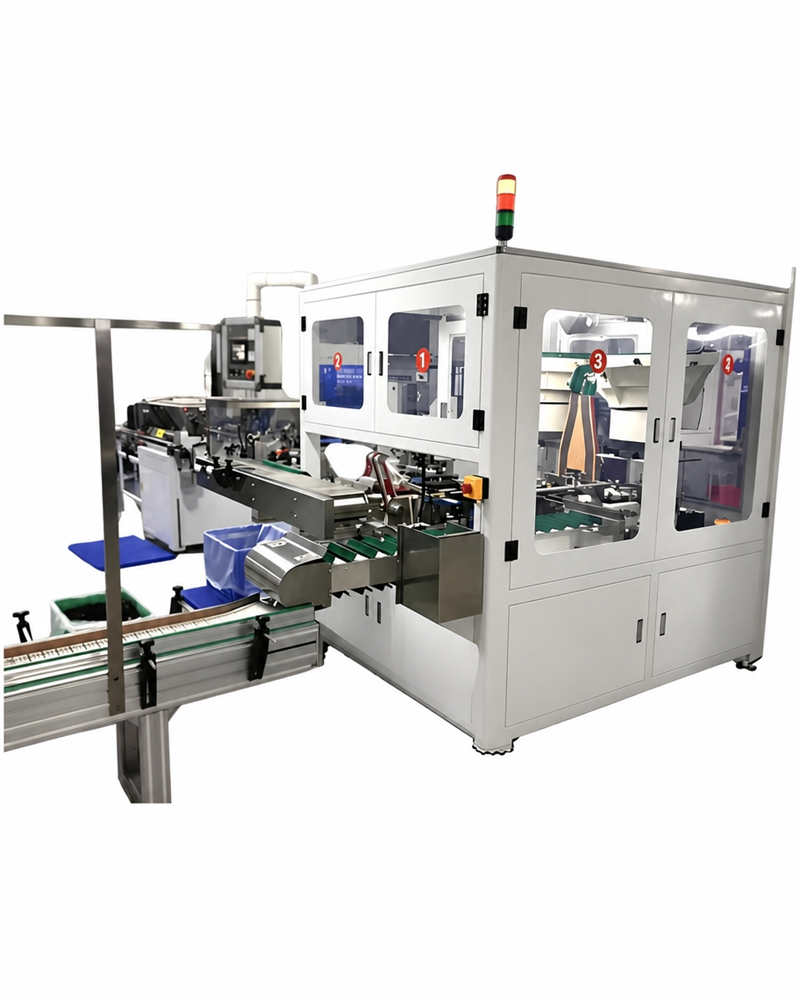
Before making any equipment decision, it helps to see a production-grade filling line at working speed — observe the servo-driven rotary indexing, automatic tube orientation, precision fill station, hot-air sealing jaw, and in-line batch coding all operating simultaneously with zero manual tube-by-tube intervention:
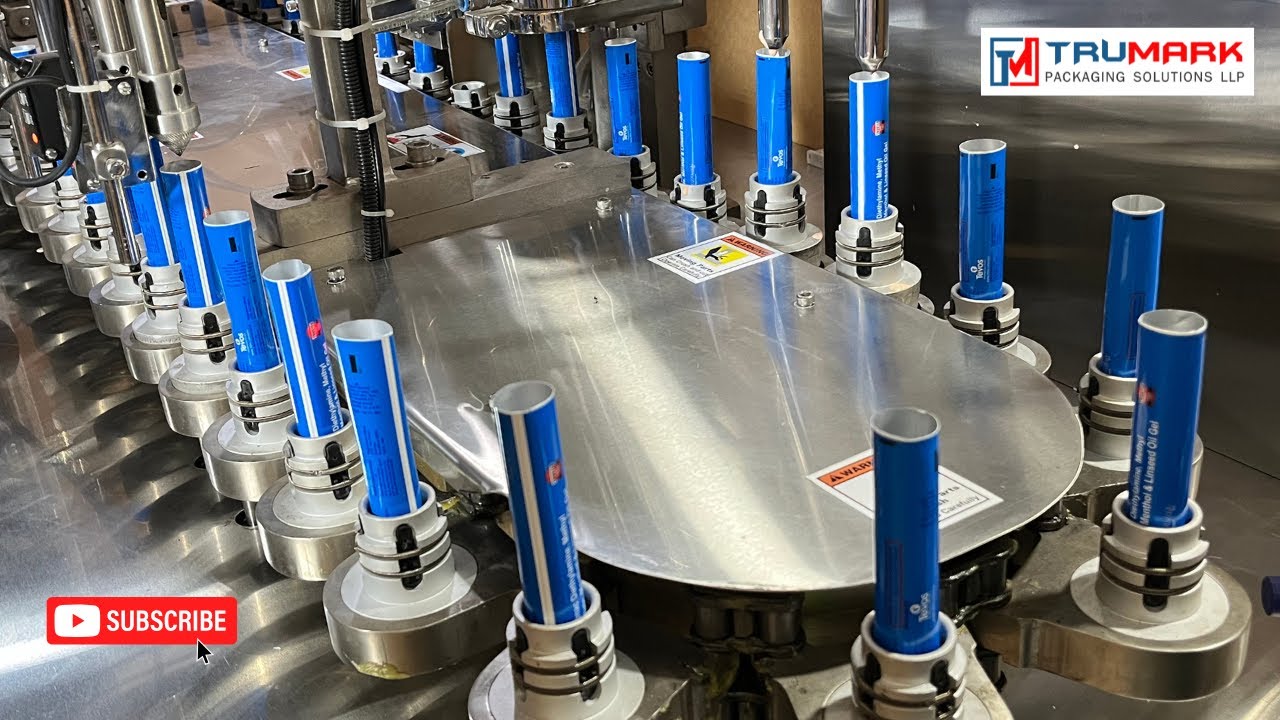
High-Speed Automatic 2-Head Tube Filling & Sealing Machine — the production speed, seal consistency, and automatic batch record generation that prevent the failure modes documented in this guide.
 Quality teams that review fill weight trends, seal force data, and throughput efficiency daily catch problems when they are correctable — not when they have already become recalls.
Glossary of Key Terms
| Term | Definition | Example |
|---|---|---|
| Cpk (Process Capability Index) | Statistical measure of how consistently a process produces within specification limits. Higher = more consistent. | Pharmaceutical minimum: Cpk ≥ 1.33. Manual filling: Cpk 0.9–1.2. Automatic servo: Cpk 1.5–2.0. |
| CAPA | Corrective and Preventive Action — the formal documented process for identifying, fixing, and preventing quality failures | Required for every batch rejection in GMP pharmaceutical manufacturing |
| Hot-Air Sealing | Sealing method where controlled-temperature air heats the tube tail before jaw compression creates the bond | Standard for PE, HDPE, and laminate tubes. Controlled by temperature, dwell time, jaw pressure. |
| ABL (Aluminum Barrier Laminate) | Multi-layer tube material with aluminum foil inner layer providing near-zero oxygen transmission | Used for retinol, vitamin C, corticosteroids — products sensitive to oxidation |
| OEE (Overall Equipment Effectiveness) | Availability × Performance × Quality. Measures productive use of scheduled machine time. | World-class: 85–92%. Well-run automatic line: 82–90%. |
| Checkweigher | In-line weight verification device that weighs every tube and rejects those outside specification | A 100% inline checkweigher catches fill drift in real time; end-of-batch sampling catches it after defective tubes are produced |
| SPC (Statistical Process Control) | Real-time use of statistical data to monitor and control manufacturing processes | A Cpk control chart showing gradual decline from 1.8 to 1.4 over 4 weeks is an SPC early warning signal |
| IQ/OQ/PQ | Installation / Operational / Performance Qualification — pharma equipment validation protocol | Required before first commercial pharmaceutical production; costs $20,000–$100,000 depending on scope |
| Seal Integrity Testing | Verified testing of tube seal closure against defined leak threshold | Required by FDA 21 CFR 211.94 for pharmaceutical tubes — visual inspection alone does not satisfy this requirement |
| MTBF | Mean Time Between Failures — average operating time between unplanned equipment failures | A sealing jaw system with MTBF of 2,000 hours on a 2-shift operation fails approximately every 6 months |
Frequently Asked Questions About Tube Filling Operations
General Operations & Troubleshooting
Q: How do I know if my tube filling machine is operating at peak efficiency?
Peak efficiency is defined by three simultaneously met criteria: consistent fill volumes within ±2% variance across the full shift, zero seal failures over 1,000+ consecutive cycles, and unplanned downtime below 5% of scheduled production time. If you don’t currently track these metrics with documented data — not operator memory — that gap is your first operational risk. Modern machines include dashboards showing these in real time; older equipment requires manual logging. The most important number to establish first is your fill weight Cpk over the past 90 days. If it is below 1.33 and you’re producing pharmaceutical tubes, you have an active compliance risk.
Q: What’s the difference between a clog and a genuine equipment failure?
A clog is a product-related blockage in the nozzle or feed line — caused by particle accumulation, cold-start viscosity, or product setting between runs. It is a process problem, not a machine problem, and resolves with cleaning and process correction. An equipment failure involves mechanical wear, calibration drift, or component breakdown — worn piston seals, degraded jaw faces, failing heating elements. The diagnostic test: if cleaning the nozzle restores normal fill weights, it was a clog. If cleaning restores normal output temporarily but fill weight variance returns within the same run, a mechanical component is the underlying cause.
Q: How often should I perform maintenance on my tube filling equipment?
Daily checks should cover nozzle cleanliness, seal jaw visual condition, and first-run fill weight verification — taking 15–20 minutes. Weekly maintenance should include pump seal inspection (reviewing the fill weight trend data from the past week for evidence of bypass), full nozzle disassembly and bore inspection, and sealing jaw face measurement. Quarterly professional servicing should cover servo drive diagnostics, full fill weight calibration against an external reference, and all lubricant replacements. Pharmaceutical lines may require more frequent calibration documentation to satisfy audit requirements.
Q: Can I use the same filling machine for both cosmetic creams and pharmaceutical ointments?
Yes, with a documented and validated cross-contamination prevention protocol between product runs. For pharmaceutical products, this means a validated cleaning procedure with swab testing to confirm residue limits before each new product introduction, separate product-dedicated nozzle sets (not just cleaned nozzles), and documented evidence of cleaning effectiveness in the batch record. The machine hardware can be shared; the quality system requirements differ significantly between cosmetic and pharmaceutical applications.
Q: What should my target fill accuracy be, and how do I measure it?
Industry standard fill accuracy targets: ±2–3% for cosmetics, ±1–2% for pharmaceuticals. These targets must be measured using an independent calibrated scale — not the machine’s own fill volume display. Measure a minimum of 30 tubes per verification point (beginning, middle, end of run) and calculate the standard deviation and Cpk from those measurements. A single mid-run sample of 5 tubes does not provide statistically meaningful fill accuracy data. Modern automatic machines include automated 100% or high-frequency weight verification that generates this data continuously.
Clogging Prevention & Solutions
Q: Why does my filling line clog more frequently during winter or in humid conditions?
Cold temperatures increase product viscosity — for every 5°C drop in ambient temperature, many cream and lotion formulations increase viscosity by 20–40%. This slows flow velocity through the nozzle bore and creates conditions where suspended particles settle faster. The practical fix is maintaining product temperature at the fill station within ±2°C of the specified filling temperature, using a heated hopper and heated nozzle body for winter production. High humidity (above 65%) independently affects laminate tube seal performance — not clogging directly, but humidity management is part of the same environmental control investment.
Q: What’s the fastest way to clear a clog without stopping the entire production line?
A quick-change nozzle system allows a clogged nozzle to be removed and replaced with a clean backup nozzle in under 90 seconds — while the line continues operating. The clogged nozzle is cleaned offline and returned to the backup rotation. This approach reduces a clogging event from a 2–4 hour shutdown (emergency cleaning of the installed nozzle with full line cool-down) to a 90-second nozzle swap. For manufacturers running particle-containing formulations or products with high clog risk, quick-change nozzle capability is not optional — it is the single highest-ROI anti-clog investment available.
Q: Are there products that are inherently prone to clogging, and how do I handle them?
Yes — the highest-risk categories are: mineral sunscreens (zinc oxide, titanium dioxide suspensions), color cosmetics with pigment loadings above 15%, wax-containing formulations (lip treatments, intensive skin repair), and any product with insoluble solid particles above 50 microns in diameter. Engineering solutions for each: mineral suspensions require agitated, heated hoppers and recirculation loops; high-pigment formulations require wider nozzle bores and higher exit velocity nozzle geometry; wax-containing products require maintained temperature above the wax melting point through the entire feed and fill system.
Seal Failures & Quality Assurance
Q: How can I prevent seal failures before they happen, rather than catching them during inspection?
The prevention architecture has three components: real-time seal parameter monitoring (measuring jaw clamping force and sealing temperature on every cycle), periodic seal strength testing (destructive pull testing of sampled tubes per the ASTM F88 seal strength standard at minimum weekly frequency), and scheduled jaw face replacement on a documented wear interval — not waiting until failures begin occurring. Prevention is structurally different from detection: prevention means no defective seals reach the product stream. Detection means catching defective seals before they reach the customer. Only the first is adequate for pharmaceutical applications.
Q: What’s the relationship between fill speed and seal quality?
Fill speed determines the tube’s dwell time at the sealing station. If fill speed increases without corresponding adjustment of sealing temperature and dwell time, the tube tail receives less heat exposure per cycle — reducing seal bond strength proportionally. This is the most common mechanism behind the “we increased throughput and then started seeing seal complaints” pattern. The correct approach when increasing production speed: revalidate sealing parameters at the new speed, document the validated parameters, and update the machine recipe. Most production problems attributed to “machine issues” after a speed increase are actually sealing parameter mismatches.
Q: Do I need different sealing equipment for different tube materials?
Yes. PE and HDPE plastic tubes seal via hot-air heat applied to the inner tube surface — settings are material-specific. ABL laminate tubes require higher temperatures to seal through the outer polymer layer to the inner polyethylene. PBL laminate tubes use ultrasonic sealing in many configurations. Aluminum tubes require mechanical crimp-fold — no heat. Using incorrect sealing parameters for a tube material typically produces seals that look acceptable and fail under distribution stress — the worst possible failure mode because it is invisible at production and only detected by customers. Always validate sealing parameters separately for each tube material type.
Fill Volume Consistency
Q: My fills look consistent visually, but weight checks show variation. What’s happening?
Visual consistency and weight consistency measure different things. Visual assessment confirms the tube appears full — it cannot detect a 4% volume deficit because the tube wall flexes to accommodate fill volume variation while appearing identical. The most common cause of visually consistent but weight-inconsistent fills is air entrapment in the product. Aerated product has lower density than degassed product — a tube containing 5% air by volume will look full but weigh significantly less. Install a deaeration system on your product feed, and verify fill weights only on a calibrated scale, not visual assessment.
Q: How do I adjust fill volumes without stopping production?
Modern servo-driven machines allow real-time fill volume adjustment through the HMI without stopping the line. However, best practice is: stop, adjust, run 20 verification tubes, confirm weight compliance with independent scale, then resume. Adjusting without stopping produces an unknown number of out-of-spec tubes during the adjustment transition — those tubes cannot be retrospectively identified and must be either all accepted (risk) or all scrapped (waste). The 10-minute stop-adjust-verify cycle avoids both outcomes.
Q: What causes fill volume drift over an 8-hour shift?
The four most common causes, in order of frequency: (1) piston seal wear allowing progressive bypass at the compression stroke — this creates gradual fill volume decline that accelerates as the shift progresses; (2) product temperature rise in the hopper during the shift, reducing viscosity and increasing flow rate for the same piston displacement; (3) air bubble accumulation in the product feed line, which compresses under piston pressure and reduces effective displacement; (4) calibration drift in the fill volume setpoint under sustained vibration. The diagnostic approach: log fill weights at 2-hour intervals across the shift. If the drift is linear (consistent rate of change), suspect pump wear. If the drift correlates with product temperature, suspect viscosity-related flow change.
Equipment Selection & Investment
Q: What’s the ROI timeline for upgrading from manual to semi-automatic filling?
For a manufacturer currently running two manual operators per filling station at $22/hour loaded rate, a semi-automatic machine producing 1,200–2,000 tubes/hour vs. the manual operator’s 300–500 tubes/hour creates a labor efficiency gain of 3–5×. At $80,000/year in combined labor cost for the two operators, and a semi-automatic machine cost of $15,000–$25,000, payback from labor savings alone occurs within 3–4 months. The complete ROI calculation should also include waste reduction (semi-automatic fill accuracy ±1–2% vs. ±3–5% manual), reduced customer complaint costs, and improved capacity to take larger orders — factors that typically reduce the total payback period further.
Q: Should I buy used or refurbished tube filling equipment to save money?
For pharmaceutical applications: avoid used equipment unless you can obtain the complete maintenance and calibration history, original validation documentation, and a manufacturer’s inspection certification confirming the machine meets its original specification. Revalidating a used pharmaceutical filling machine to current standards typically costs $30,000–$60,000 — often approaching the cost of new equipment. For cosmetic applications, used equipment is viable if you can inspect it running your actual product at production speed before purchase, confirm parts availability from the original manufacturer, and negotiate a warranty for at least 6 months.
Q: What questions should I ask a tube filling equipment supplier before purchasing?
Six questions that reveal a supplier’s true quality and support commitment: (1) What is your MTBF data for the sealing jaw and filling pump on this model — not the specification, the measured data from production installations? (2) Can I conduct a witnessed Factory Acceptance Test with my actual product and tube format before shipment? (3) What is the lead time for the top 10 most frequently replaced spare parts — and are any available from a regional warehouse? (4) What exactly is included in the on-site training — can you provide the training agenda and the operator competency criteria? (5) Can you provide two references from manufacturers running similar products in a similar regulatory environment for more than 18 months? (6) What is your committed remote support response time during production hours — and is this in the contract?
Regulatory & Compliance
Q: How do seal failures impact FDA compliance for pharmaceutical tubes?
Under FDA 21 CFR Part 211.94, pharmaceutical tube closures must maintain product identity, strength, quality, and purity throughout shelf life. A seal failure is, by definition, a violation of this requirement. The regulatory consequence depends on scope: isolated discovered-at-plant failures require documented investigation and CAPA. Failures discovered in distribution require a formal field alert report or market withdrawal. Systematic failures across multiple batches risk triggering a mandatory product recall, with full regulatory reporting obligations. The documentation requirement is equally important: manufacturers must demonstrate through ongoing process monitoring data — not just initial validation — that their sealing process remains in control.
Q: What documentation do I need for pharmaceutical tube production?
The minimum documentation set for pharmaceutical tube filling includes: equipment validation (IQ/OQ/PQ protocol and execution records), ongoing calibration certificates for all critical instruments (scales, thermocouples, pressure sensors), operator training records with competency assessment evidence, batch records including fill weights and seal integrity data for every production run, deviation reports for any out-of-specification event, and cleaning validation records demonstrating that cross-contamination prevention between products is effective. Modern automatic filling machines generate most of this documentation electronically — manual systems require dedicated quality staff time to create and maintain it. The WHO guidelines on pharmaceutical packaging materials provide the international baseline reference for this documentation standard.
Q: How often should I validate my tube filling process?
Initial validation (IQ/OQ/PQ) before first production batch. Annual performance requalification at minimum — typically a condensed process capability assessment against the original validated parameters rather than a full three-protocol re-execution. Additional revalidation is triggered by: any change to tube material, formulation, fill volume, or sealing parameters; any major equipment repair (replacement of filling piston, sealing jaw assembly, or control system); and any production stoppage exceeding 6 months. FDA’s 21 CFR Part 211.68 and EU GMP Annex 15 provide the regulatory basis for these requirements.
Troubleshooting & Support
Q: My equipment supplier is slow to respond to technical issues. What should I do?
Document all technical issues and response times with timestamps — this documentation is your evidence base for commercial remediation and, if needed, warranty enforcement. Escalate to the manufacturer’s headquarters directly if the local distributor is unresponsive — most equipment manufacturers have a separate technical support function that operates above distributor level. In parallel, qualify an alternative supplier for your next capital purchase — the best leverage you have on a current supplier’s support quality is demonstrable willingness to change. Include specific response time SLAs in your next equipment purchase agreement: “4-hour remote response during business hours for critical production issues” is a contractually enforceable standard that “prompt response” is not.
Q: Can I troubleshoot equipment problems using YouTube videos or online forums?
For basic operational issues on cosmetic filling lines — nozzle cleaning procedures, fill volume calibration steps, operator-accessible changeover — yes, manufacturer-published video content is a legitimate training resource. For pharmaceutical applications, improvised troubleshooting that deviates from the qualified machine configuration creates compliance risk: if the fix is not documented in your qualified procedures, it cannot be reflected in your batch record, which means you’ve produced a batch under unqualified conditions. Complex mechanical or electronic failures on either cosmetic or pharmaceutical lines should be referred to the equipment manufacturer’s technical support — the risk of an incorrect fix creating further damage or a safety issue outweighs the short-term convenience.
Q: What’s the average lifespan of tube filling equipment, and when should I plan upgrades?
Well-maintained tube filling equipment from reputable manufacturers operates reliably for 10–15 years. The upgrade decision should be triggered by one of three economic signals: (1) annual maintenance and repair costs exceeding 40–50% of the current replacement cost of the machine (the economic threshold beyond which continued maintenance is less efficient than replacement); (2) unplanned downtime frequency increasing to more than 2 full production-day equivalents per quarter despite adequate maintenance investment; or (3) a significant technology generation gap — when new machine platforms offer fill accuracy, compliance documentation, or format flexibility capabilities that your current machine cannot achieve through modification, and your customers or regulatory environment are beginning to require those capabilities. The third signal is the one that most manufacturers miss because there is no financial threshold that triggers it — it requires a proactive market intelligence review of what your most demanding customers and regulators are beginning to specify.