
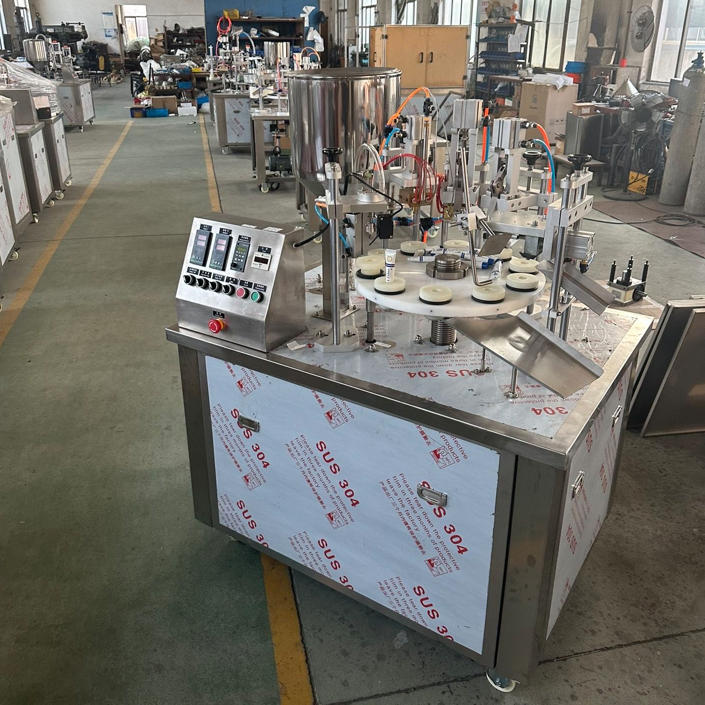
Why Your Soft Tube Line Is Underperforming — And What To Do About It
Most soft tube production lines don’t fail because of broken machines. They underperform because of small, compounding inefficiencies — a sealing temperature drifting by 5°C, a servo axis running 80ms out of sync, a film tension not matched to the laminate’s modulus. Individually, none of these seem critical. Together, they can cost you thousands of tubes per shift.
This guide is for cosmetic and pharmaceutical manufacturers and their machinery agents who need practical, tested answers — not abstract advice. Every section is built around problems we hear directly from production floors: inconsistent seals, excessive waste, compliance pressure, and teams that aren’t yet equipped to prevent the failures they keep reacting to.
Whether you operate a single tube filling line or manage multi-site production for a global brand, the following 10 strategies will help you extract maximum performance from your current equipment — and plan intelligently for what comes next.

1. Maximizing Output Without Upgrading Equipment
Before any capital conversation begins, consider this: in a documented case across a mid-sized cosmetic tube plant running laminated tube filling machines, engineers achieved an 18% throughput increase purely through parameter tuning — no new equipment, no additional headcount.
The gains came from three coordinated adjustments. First, sealing dwell time was recalibrated from a default 0.9 seconds to 0.72 seconds after thermal mapping of the jaw surface revealed the actual heat transfer was faster than the factory preset assumed. Second, servo motor phase offsets between the infeed conveyor and the tube positioning arm were re-synchronized using the PLC’s oscilloscope function — eliminating a 60ms stagger that was forcing a micro-pause before each cycle. Third, material tracking sensors were re-tensioned to eliminate a 1.5mm tube positional drift that was causing 3% of tubes to be rejected at the vision camera.
What this means for your line: Sealing temperature should be validated with a contact pyrometer against the controller readout — most aging machines show a 4–8°C real-vs-displayed gap due to thermocouple drift. Dwell time should be the minimum needed to achieve a leak-free bond per your material specification, not the default. And servo synchronization should be reviewed every 500 operating hours or whenever you introduce a new tube diameter.
“We had been running at 62 tubes per minute for two years. After recalibration, we were consistently hitting 73 — same machine, same team, same material. The difference was in the settings we hadn’t touched since installation.” — Production Manager, Southeast Asian cosmetic contract manufacturer
2. Preventive Maintenance: A Proactive Approach to Avoid Downtime
Reactive maintenance — fixing things after they break — costs 3 to 5 times more than preventing the failure in the first place, according to industry benchmarks from the Reliability Connect framework widely used in process manufacturing. On a soft tube line producing 120 tubes per minute, a two-hour unplanned stop represents over 14,000 tubes of lost capacity — plus material spoilage, labor cost, and potential order delays.
The discipline of preventive maintenance (PM) means scheduling inspections and replacements based on time or usage cycles — before failure occurs. For soft tube machinery, this translates into three tiers of care:
Weekly checks should cover guide rail cleanliness and alignment, pneumatic line pressure consistency (typically ±0.05 bar of target), proximity sensor response times, and tube mandrel surface condition. A scored mandrel creates micro-scratches on tube bodies that only show up under UV inspection — by which point hundreds of defective units may have already passed downstream.
Monthly deep checks should include full lubrication of all high-wear linear and rotary components using the manufacturer’s specified grease grade (not a generic substitute — viscosity matters), torque verification on sealing jaw mounting bolts, and full PLC backup of current parameters before any adjustment is made.
Annual audits should assess the overall mechanical state: bearing play in drive shafts, calibration drift of load cells and encoders, electrical cabinet thermal imaging to spot hot spots before they cause drive failures, and a full pneumatic leak test using soapy water or an ultrasonic detector.

Monthly PM Checklist: Quick Reference
| Component | Check Point | Action if Abnormal |
|---|---|---|
| Guide Rails | Surface scoring, debris accumulation | Clean + re-lubricate; replace if worn >0.3mm |
| Pneumatic System | Pressure at ±0.05 bar of setpoint | Check regulator, filter, and line fittings |
| Sealing Jaws | Surface flatness, thermocouple continuity | Resurface or replace; re-calibrate controller |
| Mandrels | Surface scratches, dimensional tolerance | Polish minor scores; replace if outside ±0.05mm |
| Proximity Sensors | Response time, detection distance | Clean face, adjust mounting; replace if drift >1ms |
3. Troubleshooting Recurring Seal Defects in Laminated Tubes
Seal defects are the single most reported quality issue in soft tube production — and they are also the most misdiagnosed. Most operators adjust temperature first, which sometimes works but frequently masks the real cause. In practice, seal failures in laminated tubes fall into four distinct categories, each requiring a different fix.
Temperature variance is identified by inconsistent seal strength across the width of the tube tail. If the left edge seals correctly but the right edge peels at under 8N, the jaw face has an internal temperature gradient — usually from a failing cartridge heater on one side. Replace the heater and re-calibrate with a multi-point pyrometer before resuming production.
Pressure imbalance shows up differently: the seal looks visually complete but fails under burst testing because the two jaw faces are not making parallel contact. Check jaw parallelism with a feeler gauge (tolerance is typically ±0.02mm) and inspect the pneumatic cylinder for internal wear that might cause variable stroke force.
Material incompatibility is the trickiest. If you’ve recently switched laminate supplier or film lot and seals are suddenly weaker, the inner sealant layer may have a different melt flow index or thickness tolerance than your machine’s parameters were set for. Request a material data sheet from your film supplier and compare the sealing temperature window to your current setpoint.
Worn sealing jaws cause consistent rejects across the full seal width. Inspect the jaw face surface under magnification: any pitting, scale deposit, or edge chipping means the jaw needs resurfacing or replacement. For aluminum-plastic laminate (APL) tubes used in pharmaceutical packaging, jaw surface roughness above Ra 0.8µm is enough to cause seal inconsistency.
Seal Defect Root Cause Flowchart
Is it consistent across full seal width?
YES → Check jaw surface condition → Replace/resurface if worn
NO → Is it on one side only?
YES → Diagnose temperature gradient → Check cartridge heater
NO → Is seal visually complete but fails burst test?
YES → Check jaw parallelism and pneumatic pressure
NO → Compare material data sheet to current parameters
4. Reducing Material Waste in Tube Forming and Filling
Material waste in soft tube production hides in two places most operations don’t measure closely: tube length variation and fill volume deviation. A tube cut 1.5mm longer than spec doesn’t just create a visual defect — it also wastes laminate film at a rate that, across a 10-hour shift producing 50,000 tubes, can add up to several hundred meters of scrap material per month.
Tube length precision is controlled by the encoder that signals the cutting mechanism. Over time, encoder wheel wear or mounting slip causes cumulative drift — the encoder reads one value while the physical cut happens slightly later or earlier. Recalibrating against a physical reference standard (a precision-ground gauge block of the target tube length) every three months catches this drift before it compounds. One plant producing ABL pharmaceutical tubes achieved a 27% reduction in laminated foil waste after implementing quarterly encoder recalibration as a standard procedure.
On the filling side, overfill and underfill are often blamed on pump wear — but the more common cause is an unclosed loop: the filling system is running on a time-based or volume-based preset without feedback from the actual fill weight. Retrofitting a closed-loop filling system (one that uses an inline load cell or flow meter to verify each fill and adjust the next cycle in real time) typically reduces fill weight deviation from ±3% to ±0.5%. For pharmaceutical tubes where exact dosing is a regulatory requirement, this is not optional — it’s a GMP necessity.

5. Improving Changeover Efficiency Between Product Runs
If your line takes 4 hours to change over between a 35mm cream tube and a 22mm gel tube, you’re paying for every minute of that gap with lost capacity. Changeover time is one of the most controllable variables in soft tube production — and one of the most neglected.
The first lever is standardized tooling kits. Every size-specific component — mandrels, sealing jaw adapters, guide rail inserts, nozzle tips — should live in a labeled, dedicated kit that travels with the job order. When operators have to hunt for the right part, changeovers stretch. When every part is staged before the previous run ends, they compress.
The second lever is digital job presets. Modern tube filling and closing machines with HMI touchscreens allow parameter sets (diameter, fill volume, sealing temperature, conveyor speed) to be saved and recalled by product code. A trained operator recalling a preset should need no more than 10–15 minutes to return the machine to production-ready state. Compare that to manually dialing in each parameter from a printed sheet.
The third lever is structured operator training. A documented changeover checklist — with steps sequenced to be performed in parallel where possible (e.g., one operator changes the sealing jaw while another flushes and re-primes the filling circuit) — reduces changeover times by 35–40% compared to undirected team performance. This is a measurable, achievable target that agents and distributors can offer as added value to their clients.
6. Ensuring Compliance with Pharmaceutical Packaging Standards
Pharmaceutical tube manufacturers operate in a different compliance environment than cosmetic producers. ISO 15378 — the GMP standard specifically designed for primary packaging materials for medicinal products — requires that equipment be designed, operated, and documented in ways that prevent contamination and support full traceability.
From a machine design perspective, this means stainless steel enclosures (typically 304 or 316L grade) for all surfaces that contact or are near the product, with no exposed threads, crevices, or non-drainable dead legs. Pneumatic exhaust ports must be filtered or directed away from the filling zone. Any lubricant used on mechanisms near the product pathway must be food-grade or pharma-grade (NSF H1 or equivalent).
Preventing particulate contamination during tube forming is an underappreciated challenge. The tube body itself generates fine polymer or laminate dust during cutting and heading — and if the machine’s dust extraction or air handling is inadequate, that particulate can settle into the open tube before filling. Machines intended for cleanroom environments should have positive-pressure enclosures around the forming station, with HEPA-filtered air supply.
Audit-readiness means your machine generates retrievable records: batch production counts, fill weight logs, sealing temperature histories, and operator identity logs. For sites subject to FDA 21 CFR Part 11 or EU Annex 11 requirements, these records must be electronic, time-stamped, and protected from retroactive editing. If your current machine cannot produce this data, retrofitting a data logger is a significantly lower-cost path than full machine replacement.

7. Integrating Sensors and IoT for Real-Time Line Monitoring
You don’t need to replace your entire production line to access real-time monitoring data. The smarter path — and the one most cost-effective for mid-sized operations — is to retrofit targeted sensors onto your existing critical drive components and connect them to a simple edge computing device that aggregates and alerts.
The three sensor types that deliver the highest return for soft tube lines are vibration sensors on drive shaft bearings, thermocouple or infrared sensors on sealing bar heating elements, and pressure transmitters on the main pneumatic manifold. Together, these three data streams cover the majority of failure modes that cause unplanned downtime: bearing degradation, heater element failure, and pneumatic pressure loss.
A vibration sensor on a sealing machine’s main drive bearing, for example, will typically show a rising RMS vibration level over 4–6 weeks before a bearing fails catastrophically. That’s a window in which you can order a replacement bearing, schedule a 2-hour maintenance stop at a convenient time, and avoid the 6–12 hour emergency repair (plus associated material scrapped during the uncontrolled stop) that a bearing seizure causes.
For distributors and agents, remote diagnostics via IoT connectivity is an especially powerful value-add. With customer permission and a secure VPN connection, your technical team can view machine parameter logs, identify anomalies, and guide on-site operators through corrections without the time and cost of a site visit. This capability is a strong differentiator in competitive machinery markets. Learn more about IoT-based OEE monitoring for packaging lines and how it transforms reactive support into proactive service.
8. Addressing Film Tension Issues in Multi-Layer Lamination
Wrinkles, delamination, and edge misalignment in multi-layer laminated tube bodies are almost always tension problems — and tension problems are almost always setup problems that compound over time as components wear.
The dancer roller (a free-floating roller that absorbs tension variations between the unwind spool and the forming station) is the first component to inspect when wrinkles appear. A dancer roller that has lost its pneumatic cushion pressure (or whose pivot bearings are worn) will oscillate erratically, sending tension spikes downstream that the forming guide cannot absorb. Pneumatic pressure on the dancer system should be set to match the specific film’s tension requirement — which is a function of its modulus of elasticity. High-modulus films like aluminum-plastic laminates (APL) require higher dancer pressure than soft PE films.
Unwind-rewind torque matching is equally critical. As the unwind spool diameter decreases (from full roll to core), the torque required to maintain consistent web tension increases — because the mechanical advantage of the spool radius decreases. An open-loop brake system (i.e., a fixed-friction brake) cannot compensate for this; it will over-tension at the end of the roll and under-tension at the start of a new roll. A closed-loop tension control system using a load cell in the web path is the correct solution for multi-layer laminate materials with tight thickness tolerances.
Common Film Tension Defects: Diagnosis Table
| Defect | Most Likely Cause | First Action |
|---|---|---|
| Longitudinal wrinkles | Under-tension / dancer arm pressure too low | Increase dancer pressure; check pivot bearings |
| Edge curl / delamination | Over-tension / excessive brake friction | Reduce unwind brake; re-calibrate tension loop |
| Lateral web drift | Guide roller misalignment | Re-align guide rollers using dial indicator |
| Inter-layer delamination | Film humidity / adhesive layer degraded | Check film storage conditions; contact supplier |
9. Enhancing Operator Training to Reduce Human Error
Across the packaging industry, human error accounts for approximately 23% of all quality rejections on automated lines — not because operators are careless, but because they were never given the tools to understand what they’re looking at. An operator who doesn’t know that a specific alarm code (say, E-07 on the HMI) means “sealing jaw thermocouple open circuit” will default to the one response they know: stop the machine and call maintenance. That call can take 30–60 minutes to resolve something a trained operator could have identified and escalated in under 5.
Developing a strong Standard Operating Procedure (SOP) library is the foundation. Each SOP should cover a specific task — machine startup sequence, product changeover, sealing jaw replacement, daily sensor cleaning — and be written at a level that a new operator can follow without guessing. Visual aids (laminated reference cards mounted at the workstation, or digital displays showing the current job’s parameter targets) dramatically reduce parameter entry errors during changeover.
For agents and distributors, offering a structured operator certification program as part of the after-sales package is a meaningful differentiator. Certified operators reduce your after-sales support burden (fewer emergency calls), improve customer satisfaction, and protect the machine’s performance record — which matters when that customer is evaluating their next equipment purchase.
Miyoda Packaging Machinery supports both onsite and remote operator training programs, tailored to the specific machine configuration and the customer’s production environment. Contact Miyoda’s team to discuss a training program for your facility or your clients.
10. Future-Proofing Your Line: Scalability and Upgrade Pathways
The question isn’t whether your production requirements will change — it’s when, and how prepared your equipment will be when they do. For soft tube manufacturers adding new SKUs, entering new markets, or responding to customer demands for serialization or sustainability compliance, the ability to upgrade incrementally rather than replace entirely is a significant competitive and financial advantage.
Modular design is the architecture that makes this possible. Machines built on modular platforms — where printing, vision inspection, cartoning, or labeling stations can be added as bolt-on modules rather than integrated at the factory — allow manufacturers to invest in capability as demand justifies it. A cosmetic tube line producing unlabeled tubes today can add an inline hot-stamp printer when a brand customer requires it, without replacing the forming or filling stations.
Retrofitting automation interfaces is the other upgrade path. SCADA (Supervisory Control and Data Acquisition — a software system that monitors and controls plant equipment) and MES (Manufacturing Execution System — software that tracks and documents production from raw materials to finished goods) integration is increasingly expected by large FMCG and pharmaceutical customers who require real-time production data to feed into their ERP systems. Many machines manufactured in the last 8–10 years have PLC hardware capable of supporting these integrations with an OPC-UA or Modbus gateway — no full machine replacement required.
When evaluating whether to upgrade or replace, the key metric is not machine age — it’s the cost of the capability gap. If your current machine can produce all current SKUs at quality and volume targets, and the upgrade cost to add the new capability is less than 40% of a new machine cost, upgrading is almost always the better financial decision. If the machine requires more than three major mechanical retrofits simultaneously, a purpose-built replacement line — like those available from Miyoda’s laminate tube making machine range — may deliver better long-term ROI.
Watch: High-Speed Tube Filling & Sealing Machine in Action
Before diving into your next optimization decision, it helps to see what best-in-class performance actually looks like on a modern automatic tube filling and sealing line. The video below demonstrates key aspects of high-speed operation — infeed synchronization, filling precision, and sealing jaw cycle — that directly relate to the parameters discussed in this guide.
Glossary of Key Technical Terms
- Sealing Dwell Time
- The duration (in seconds) that the heated sealing jaw remains in contact with the tube tail to achieve a bond. Too short → weak seal; too long → material scorching or cycle time loss.
- Dancer Roller
- A free-floating roller suspended in the film web path, typically air-cushioned, that absorbs tension variations between the unwind spool and the forming station. Critical for wrinkle-free multi-layer laminate processing.
- Closed-Loop Filling System
- A filling control system that uses real-time measurement (weight or flow) from each fill cycle to automatically correct the next cycle’s fill volume. Reduces deviation from ±3% to ±0.5% in most applications.
- ISO 15378
- The international standard combining ISO 9001 quality management requirements with GMP principles, specifically for manufacturers of primary packaging materials for pharmaceutical products.
- SCADA
- Supervisory Control and Data Acquisition — a software platform used to monitor, control, and log data from production equipment in real time. Common in pharmaceutical and large-scale FMCG manufacturing.
- Encoder Calibration
- The process of verifying and correcting the relationship between an encoder’s electronic count and a physical dimension (e.g., tube cut length). Prevents cumulative drift that causes dimensional rejects.
- APL (Aluminum-Plastic Laminate)
- A multi-layer tube material combining aluminum foil with plastic layers (PE, EVOH, or LDPE) for high barrier properties. Common in pharmaceutical ointment and cosmetic packaging. Requires precise tension and temperature control.
Frequently Asked Questions
How can I increase production speed without buying a new machine?
Start with servo motor synchronization review and sealing parameter optimization. In documented cases, recalibrating servo phase offsets and adjusting dwell times have achieved 15–20% speed improvements without any hardware changes. Use your PLC’s oscilloscope function to identify timing mismatches, and validate sealing temperatures with a contact pyrometer rather than relying on the controller display alone.
What are the most common causes of tube seal failure?
The four primary causes are: inconsistent jaw temperature (often from a failing cartridge heater on one side), jaw parallelism issues causing uneven pressure, worn jaw surface above Ra 0.8µm for APL materials, and material incompatibility when the inner sealant layer’s melt flow index doesn’t match your temperature setpoint. Diagnose systematically — starting with jaw surface condition — rather than defaulting to temperature adjustments first.
How often should preventive maintenance be performed on a soft tube machine?
Weekly visual inspections of guide rails, sensors, and pneumatic pressures; monthly deep checks covering lubrication, jaw calibration, and PLC parameter backup; annual full-system audits including bearing play measurement, encoder calibration, and electrical cabinet thermal imaging. Adjust frequency upward if your machine runs more than two shifts per day.
Can I reduce waste during product changeovers?
Yes — the most effective method is digital job presets. By saving all parameters (diameter, fill volume, sealing temperature, conveyor speed) as a named recipe in the HMI, an operator can recall a full configuration in under 2 minutes rather than manually entering each value. Combined with standardized pre-staged tooling kits, this approach consistently reduces changeover waste by 35–40%.
What maintenance tasks can my operators perform in-house?
With basic training, operators can handle: guide rail cleaning and lubrication, proximity sensor face cleaning and range verification, fill nozzle removal and cleaning, sealing jaw visual inspection and temperature spot-checking, and basic PLC alarm acknowledgment and logging. Tasks requiring specialized tools or safety isolation — such as heater element replacement, bearing changes, or encoder calibration — should remain with qualified maintenance technicians.
How do I know when sealing jaws need replacement?
Three indicators: increasing seal rejection rate even after temperature and pressure are at setpoint; visible surface pitting, scoring, or scale deposit visible under a 10x loupe; and seal strength test results dropping more than 15% below your specification minimum. For APL pharmaceutical tubes, surface roughness measurement (Ra) above 0.8µm is a definitive replacement trigger.
Are your machines compatible with aluminum-plastic laminates used in pharma?
Yes. Miyoda’s laminate tube making machines are engineered specifically for both ABL (Aluminum Barrier Laminate) and PBL (Plastic Barrier Laminate) substrates, with closed-loop tension control, temperature-regulated forming sections, and ultrasonic sealing options for materials that require low-heat processing.
Can I integrate a soft tube machine with existing filling or labeling lines?
In most cases, yes. Current machines support standard industrial communication protocols including EtherNet/IP, Modbus TCP, and OPC-UA, which are compatible with the majority of filling and labeling line controllers on the market. A brief PLC review by your machine supplier or systems integrator can confirm compatibility before any commitment is made.
What support is available for urgent troubleshooting?
Miyoda Packaging Machinery provides remote diagnostic support via secure connection, video-guided troubleshooting through WhatsApp or Teams, and a network of trained regional agents for on-site response. For critical pharmaceutical lines, a spare parts inventory agreement can be structured to keep high-wear components (sealing jaws, heating elements, encoder wheels) in-country and available within 24 hours.
How can I ensure my machine meets FDA or EU GMP requirements?
Machine compliance with FDA 21 CFR Part 211 or EU GMP Annex 15 requires documented Installation Qualification (IQ), Operational Qualification (OQ), and Performance Qualification (PQ) protocols. Miyoda provides machine-specific IQ/OQ documentation packages and supports customer qualification activities, including process parameter validation and data integrity review aligned with 21 CFR Part 11.
Do you offer operator training programs?
Yes — both onsite commissioning training and remote training programs are available, including machine-specific SOP development, operator certification, and refresher courses for teams experiencing high turnover. Agents and distributors can offer this as a branded value-added service to their customers.
What sensors should I monitor to predict machine failures early?
The four highest-value monitoring points are: motor bearing vibration (RMS acceleration, trend over time), sealing bar temperature deviation from setpoint (>±3°C sustained = heater degrading), main pneumatic manifold pressure (drops indicate leaks or compressor issues), and infeed conveyor servo motor current draw (increasing current at constant speed indicates mechanical drag or bearing wear).
How do I reduce film wrinkling during laminated tube forming?
First, check dancer roller pivot bearing condition and pneumatic cushion pressure. Second, verify that unwind brake torque is set correctly for your current roll diameter — many open-loop systems are set for a full roll and generate excessive tension as the roll depletes. Third, inspect all guide rollers for parallelism using a dial indicator. Misalignment of even 0.3mm on a guide roller will cause consistent lateral web drift that leads to edge wrinkling.
Can I upgrade my current machine for smart manufacturing?
If your machine has a modern PLC (Siemens S7-1200/1500, Allen-Bradley CompactLogix, or equivalent), retrofitting IoT capability is straightforward. An OPC-UA gateway, three to five targeted sensors, and an edge computing device with a cloud dashboard connection can typically be installed in 2–3 days without modifying existing machine logic. The result is real-time visibility into the four or five parameters that drive 80% of your unplanned downtime.
What is the typical lifespan of a well-maintained soft tube packaging machine?
Industry experience puts this at 12–15 years for machines that receive consistent preventive maintenance, timely part replacement, and periodic recalibration. Machines that run on reactive-only maintenance typically need major mechanical rebuilds at 6–8 years. The difference in total cost of ownership between these two approaches, across a 15-year machine life, commonly exceeds the original machine purchase price.
Ready to Optimize Your Soft Tube Production Line?
Whether you’re troubleshooting a recurring seal defect, planning a compliance upgrade for a new pharmaceutical customer, or evaluating how to scale your cosmetic tube line to meet growing demand — the right starting point is a conversation with people who understand these machines from the inside out.
Talk to Miyoda Packaging Machinery’s Technical Team →
Explore our full range of tube production machines, including laminate tube making, tube extrusion lines, tube heading and shoulder machines, and integrated filling and closing systems — all engineered for cosmetic and pharmaceutical soft tube production.















