
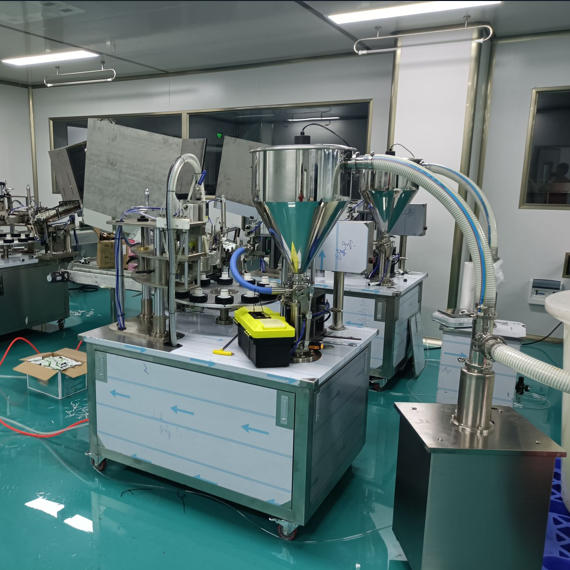
Choosing the Right Vendor Is One of the Most Expensive Decisions You’ll Ever Make — Or Not Make
Most production line failures don’t start on the factory floor. They start in the procurement meeting — when a vendor is chosen based on the lowest quote, a polished brochure, or a sales promise that sounds too good to skip. This guide is for the people who can’t afford that mistake: plant managers running tight production schedules, procurement officers protecting capital budgets, and machinery distributors who stake their reputation on every machine they place.
1. Executive Summary: Why Vendor Selection Is a Strategic Business Decision
When a leading personal care manufacturer in Southeast Asia switched tube packaging machine vendors in 2022, they weren’t just buying a new machine — they were betting three production lines, a $4.2M annual revenue stream, and their relationship with two major retail chains on a single decision. Within six months of the switch, changeover time dropped from 4.5 hours to under 90 minutes. Regulatory audit prep time fell from two weeks to three days. That’s not marketing language — that’s what the right vendor actually delivers.
Vendor selection in the cosmetic and pharmaceutical tube packaging industry is not a procurement task. It is a long-term investment in production reliability, compliance readiness, and profit margin protection. A machine that goes down unexpectedly for 48 hours on a high-volume laminate tube line can cost $15,000 to $40,000 in lost output — before you even factor in rescheduling penalties and raw material waste. And the vendor who sold you that machine? They may be unreachable at 2am on a Saturday.
Poor vendor selection doesn’t announce itself upfront. It shows up six months in: in the form of spare parts that take eight weeks to arrive from an overseas warehouse with no regional stock, operators who were only trained for a single day and are now troubleshooting by trial and error, and validation documents that don’t meet FDA or EU MDR audit standards. These are the real costs — and they don’t appear on any quote sheet.
This guide was written specifically for decision-makers in the cosmetic and pharmaceutical tube sector. It walks you through every evaluation layer — from assessing machine capability and vendor support infrastructure to calculating total cost of ownership (TCO) and running a structured vendor scorecard. If you’re serious about building a production operation that performs consistently and scales without pain, the decision starts here.

2. Understanding Your Operational Needs: Aligning Machine Capability with Business Goals
Before you compare vendors, you need to know exactly what your production demands. This sounds obvious, but it’s the step most buyers shortcut — and it’s why so many machines end up either bottlenecking the line or sitting underutilized. The question isn’t just “how many tubes per minute?” It’s a layered assessment of materials, markets, and margins.
Output volume and material compatibility are your starting constraints. Cosmetic and pharmaceutical tubes span a wide range of material types — from single-layer PE extruded tubes used in personal care to multi-layer laminate structures (ABL and PBL) used in pharmaceutical creams and toothpaste. Aluminum barrier tubes, used for products requiring maximum chemical protection, have completely different forming and sealing requirements. A machine optimized for PE extrusion will not deliver the same sealing quality on laminate structures without significant reconfiguration — if it can handle them at all. Your vendor must demonstrate specific, verifiable experience with the exact tube format and material you run.
Regulatory requirements add another layer. If you serve pharmaceutical clients or plan to, your machine must be compatible with GMP (Good Manufacturing Practice) environments — meaning cleanable surfaces with no dead zones, validated cleaning protocols, and audit-ready documentation. FDA 21 CFR Part 11 becomes relevant if your machine runs software that logs production data electronically. ISO 13485 governs medical device packaging. These aren’t checkbox items — they’re constraints that eliminate entire categories of machines from contention.
Scalability matters more than most buyers admit at the time of purchase. The tube diameter range you need today is rarely the range you’ll need in three years, especially as sustainable packaging formats (mono-material tubes, bio-based laminates, refillable formats) continue reshaping product portfolios. Ask vendors directly: can this machine be upgraded to handle a new diameter range or a different shoulder-forming method without a complete rebuild? Can the control system accept new I/O modules as your line evolves? A machine with a modular architecture, like the tube extrusion systems offered by Miyoda Packaging Machinery, is designed to grow alongside changing product requirements — an important consideration when evaluating your 5-year production roadmap.
The decision between standard and custom machine configurations also needs deliberate thinking. Standard machines offer shorter lead times and more predictable spare parts availability. Custom machines offer better fit for niche tube formats or high-speed, high-complexity lines. The right answer depends on your product portfolio’s diversity — if you run 12 different tube SKUs across three diameter ranges, a machine with fast, tool-free changeover capability may justify a higher upfront cost many times over in annual labor savings alone.

3. Evaluating Vendor Support: Beyond the Sale — The Lifeline of Your Production
The machine you buy is only as good as the support structure behind it. This is the part of vendor evaluation that gets the least scrutiny during purchasing — and causes the most operational pain afterward. When your tube sealing station fails at 11pm before a major customer delivery, you’re not thinking about the machine’s output speed. You’re thinking about whether anyone will pick up the phone.
24/7 technical support availability is a baseline expectation, not a premium feature. But “24/7 support” can mean very different things. Some vendors provide a recorded message and a callback within 48 hours. Others provide direct access to a qualified technical engineer who can initiate remote diagnostics within the hour. Ask vendors to be explicit: what is the guaranteed first-response time for a critical production stoppage? Who exactly answers the call — a customer service representative or a field engineer? Is your time zone and language covered?
For global buyers — particularly those purchasing from Asian manufacturers for deployment in Europe, North America, or Latin America — multilingual support teams are not a luxury. Miscommunication during a live troubleshooting call costs time and money. A vendor with regionally based technical staff or in-language documentation significantly reduces this risk.
On-site versus remote troubleshooting capabilities define your risk exposure. Remote diagnostics — especially when supported by IoT-connected machine monitoring — can resolve up to 60% of common faults without any technician travel time. But for complex mechanical failures, cam timing issues, or sealing head rebuilds, physical presence is irreplaceable. Ask vendors: what is their average on-site response time in your country or region? Do they have local service partners or authorized technicians? What is the escalation process when remote support reaches its limit?
Spare parts logistics is where vendor promises most frequently diverge from reality. A vendor who stocks critical wear parts regionally — sealing jaws, drive belts, cam followers, heating elements — can have you back online within 24 hours of a failure. A vendor whose parts ship exclusively from a central warehouse in another country, without a regional distribution node, may leave your line idle for two to six weeks. This is not an exaggeration — it’s a scenario that plays out regularly and is completely preventable with the right questions asked before purchase. Ask for the vendor’s spare parts catalog and their regional inventory commitment in writing.
4. Assessing Documentation Quality: Your Blueprint for Compliance and Efficiency
Documentation is the operational backbone of any regulated production environment. It’s also the area most buyers evaluate last — typically after the machine has arrived and the operators are staring at a 400-page manual written in the vendor’s native language with machine-translated corrections throughout. Don’t let this be your story.
Machine manuals should be clear, structured, and available in your working language before the contract is signed. A well-written manual reduces operator training time, speeds up changeovers, and provides a reliable reference during fault diagnosis. Ask to review a sample chapter before purchase. Look for clear diagrams, step-by-step procedures, safety warnings in context (not buried in a legal appendix), and maintenance schedules that tell operators exactly what to check, how often, and what tolerance deviations require action. Vendors who invest in documentation quality are usually the same vendors who invest in machine design quality.
For pharmaceutical clients, IQ/OQ/PQ validation documentation is not optional — it is a regulatory prerequisite. IQ (Installation Qualification) confirms the machine is installed correctly per specifications. OQ (Operational Qualification) verifies it operates within defined parameters. PQ (Performance Qualification) proves it consistently produces output meeting product specifications. Vendors who have pre-prepared these protocols for your machine type eliminate weeks of custom documentation work from your regulatory timeline. Ask explicitly: are these documents available, and can they be provided in your required language and format?
Beyond compliance, look for maintenance schedules, safety protocols, and changeover guides that are practical and operator-accessible. Documents should exist in both print and digital formats, with version control that ensures your team always works from the current revision. A QR-code-linked digital manual system, for example, allows operators to access the current revision on a tablet from anywhere on the floor — a small feature that has measurable impact on changeover speed and error rates.
5. Training Programs: Empowering Your Team for Peak Performance
A well-trained operator team is the single biggest variable in day-to-day machine performance. The same machine, run by a well-trained team, can achieve 95%+ uptime. Run by an undertrained team, it frequently runs at 70-75% with higher defect rates, more unplanned stoppages, and faster component wear from improper adjustments. Training is not an optional add-on — it’s a core component of your return on investment.
Onboarding training should cover more than the power-on sequence. Effective initial training includes hands-on operation across the full range of tube formats the machine will run, changeover procedures for every SKU, fault recognition and first-response troubleshooting, and safety protocols for every maintenance task. A minimum of three to five days of structured on-site training is the industry baseline for a new tube packaging line — anything less should raise immediate questions. Ask whether the training is structured around your specific tube formats and your operators’ experience level, or whether it’s a generic factory-floor walkthrough.
Vendors offering tiered training — separate tracks for machine operators and maintenance technicians — provide significantly better long-term outcomes. Operators need speed, accuracy, and fault recognition. Technicians need deep mechanical understanding, PLC-level diagnostics, and the ability to perform preventive maintenance to manufacturer specifications. These are different knowledge sets, and blending them into a single generic session serves neither group well.
Training materials left behind after onboarding are equally important. Look for video tutorials that cover common changeover steps and fault-clearance procedures — format that operators actually use on the floor, as opposed to dense PDFs that stay in the binder. Troubleshooting flowcharts posted at the machine save hours of downtime over a year. Access to a vendor-hosted support portal where operators can log issues and access answers extends the value of training indefinitely. Companies like Miyoda Packaging Machinery have built their after-sales model around exactly this kind of ongoing operator support, recognizing that a machine’s performance over time reflects directly on their brand reputation.
▶ See a High-Speed Automatic Tube Filling & Sealing Machine in Action
Understanding how a fully automatic tube filling and sealing line operates helps you ask the right questions when evaluating vendors and comparing machine capabilities.
6. Critical Questions to Ask Before Purchase: A Due Diligence Checklist
Every vendor conversation before a purchase decision should be a structured evaluation, not a product demonstration. Below is a field-tested set of questions that separate vendors who have real answers from vendors who have polished scripts. Ask them in order — the responses to the early questions will change how you interpret the later ones.
- Can you provide references from clients specifically in the cosmetic or pharmaceutical tube sector? — not general packaging, not food. Ask for contacts you can call directly.
- What is your average Mean Time to Repair (MTTR) for critical components like sealing jaws, servo drives, and shoulder-forming heads?
- How do you handle software updates and cybersecurity for machines with networked PLCs or HMIs?
- Do you offer predictive maintenance tools or IoT integration? If so, what sensor data is captured, and who monitors it?
- What is your changeover time for different tube diameters and lengths — and can you demonstrate it live with your machine?
- How do you ensure compliance with ISO 13485 or 21 CFR Part 11? Ask for specific design features and documentation examples.
- What is your warranty coverage, and what’s explicitly excluded? Get this in writing before you sign anything.
- Can you integrate with our existing line automation — filling machines, sealing stations, coding and labeling systems?
- How long have you been serving the tube packaging industry specifically? Years of general packaging experience are not equivalent.
- What is your global service footprint, and do you have local partners in our operating country?
- How do you handle machine validation support for regulated markets? Ask who leads the process and what their regulatory background is.
- What is your lead time for spare parts in our region? Ask for the last five emergency parts requests they fulfilled and the actual turnaround times.
Record the answers to every question in writing — not as a bureaucratic exercise, but because vendors who give credible, consistent, and documented answers are demonstrably more reliable than those who answer verbally with vague commitments and no follow-up. The rigor of this process also signals to the vendor that you are a serious buyer who expects to be treated as a long-term partner, not a one-time transaction.
7. Red Flags in Vendor Promises: Spotting Overstatements and Hidden Risks
Some vendor red flags are obvious. Others are wrapped in confident language and impressive slide decks. The following patterns appear consistently in vendor interactions that precede poor outcomes — treat each one as a signal requiring follow-up investigation, not dismissal.

“Plug-and-play” claims are almost always an oversimplification. No high-speed tube packaging line integrates into an existing production environment without commissioning time, parameter tuning, and often some mechanical interfacing work. Vendors who dismiss integration complexity are either unfamiliar with your line architecture or are prioritizing the sale over your long-term success.
No verifiable client references in your industry segment is a critical gap. A vendor with 200 installations in food packaging has genuinely different experience from one with 50 validated installations in pharmaceutical tube production. Ask for references specifically in cosmetic or pharmaceutical tube manufacturing — and actually make those calls. Most experienced buyers are willing to share honest feedback when contacted professionally.
Vague delivery timelines or reluctance to sign Service Level Agreements (SLAs) signal that the vendor either lacks operational confidence or has no intention of being held accountable. A reputable vendor will commit to delivery windows, response times, and parts availability in a formal SLA without hesitation. If they won’t, don’t proceed.
Minimal or generic documentation pre-sale is a preview of what you’ll receive post-sale. If a vendor can’t provide a sample manual section, a spare parts list, or a sample validation protocol before purchase, assume you won’t receive adequate documentation after. Regulatory-grade documentation takes significant time and expertise to produce — vendors who haven’t invested in it don’t suddenly develop the capability after the order is placed.
Training “included at no cost” but limited to one day with no follow-up is not training — it’s an orientation. Real competency on a tube packaging line requires structured, multi-day engagement with your specific tube formats, your team’s starting knowledge level, and built-in time for questions and practice. One-day “training” is a check-the-box exercise that leaves your team underprepared and your machine underperforming.
Uptime claims above 99% without data or conditions deserve immediate scrutiny. What is the baseline for the calculation? Does it exclude planned maintenance windows? What tube formats and production speeds was it measured at? Under what maintenance regime? Ask for the data — not the claim. Credible vendors will provide MTBF (Mean Time Between Failures) data from real installations in comparable environments.
Inability to discuss GMP or audit readiness is disqualifying for any vendor targeting pharmaceutical or regulated cosmetic clients. A vendor whose sales team cannot explain how their machine design supports GMP cleaning validation, material traceability, or electronic batch recording has no business selling into regulated markets — regardless of how competitive their price is.
8. Total Cost of Ownership (TCO): Looking Beyond the Initial Price Tag
The purchase price of a tube packaging machine is typically the smallest cost you’ll pay over its operational life. Most buyers discover this between years two and four, when the accumulated weight of maintenance costs, spare parts markups, energy inefficiency, downtime events, and operator errors begins to reframe what “cheap” actually means. A rigorous TCO analysis before purchase prevents this realization from arriving too late.
| Cost Category | Year 1 | Years 2–5 (Annual) | Key Vendor Differentiators |
|---|---|---|---|
| Machine Purchase Price | High (one-time) | — | Lower-cost vendors may hide quality gaps here |
| Installation & Commissioning | $5,000–$25,000+ | — | Included vs. billed separately |
| Spare Parts | Starter kit | $3,000–$15,000 | Regional stock availability; pricing markup |
| Unplanned Downtime | Variable | $10,000–$80,000 | MTTR, remote support, on-site response time |
| Energy Consumption | Monthly operating cost | $4,000–$18,000 | Drive efficiency, heating system design |
| Operator Training & Errors | $2,000–$8,000 | $1,000–$5,000 | Quality of onboarding and refresher programs |
| Rework & Scrap Rate | Varies by process | $5,000–$30,000 | Sealing consistency, reject rate specifications |
| Regulatory Compliance Costs | $5,000–$50,000 | Audit support annually | Pre-validated documentation vs. custom work |
When a vendor offers a machine at $18,000 below a comparable alternative, that saving evaporates quickly if the cheaper machine generates 3% higher tube rejection rates, requires twice the changeover labor, and uses spare parts that take six weeks to ship. A real TCO comparison — modeled over five to ten years — frequently reverses the apparent price advantage of the lower-cost option. Industry data consistently shows that total three-to-five year ownership costs for poorly supported machines exceed those of well-supported alternatives by 40–80%.
For a structured guide to evaluating machine costs across the full production lifecycle, the laminate tube machine buying guide from Miyoda Packaging Machinery offers a solid framework grounded in real production scenarios. External resources like the packaging equipment supplier selection checklist from SupplyOne also provide a useful cross-industry perspective on lifecycle cost evaluation.
9. Case Study Snapshot: How a Leading Cosmetic Tube Producer Reduced Downtime by 40%
The Situation: A mid-sized cosmetic tube manufacturer producing laminate tubes for a major European skincare brand was running two aging tube production lines purchased from a vendor primarily focused on the food packaging sector. Their core problem wasn’t the machines themselves — it was everything around them. Maintenance manuals existed only in a non-translated format. Spare parts had an average delivery lead time of 34 days from the vendor’s central warehouse. Operator training had consisted of four hours at the vendor’s factory during acceptance testing — with no follow-up. When line stoppages occurred (averaging 11 per month across both lines), the team was troubleshooting from memory and improvisation.
The Decision to Switch: After a critical sealing jaw failure caused a 72-hour production stoppage during a peak order period — resulting in a $38,000 delivery penalty from their brand client — the production director initiated a full vendor evaluation. They shortlisted three vendors with documented cosmetic tube sector references and conducted structured audits using a weighted scorecard covering support infrastructure, documentation quality, training depth, spare parts logistics, and five-year TCO modeling.
What the New Vendor Delivered: The chosen vendor provided complete English-language digital manuals with QR-linked video procedures for each changeover step. IQ/OQ documentation was pre-prepared for their tube formats, reducing regulatory audit preparation from 12 days to 3. Regional spare parts stock was confirmed in writing, with 24-hour delivery for the top 40 critical wear items. Onboarding training ran for five days on-site, with a technician-level follow-up session at 90 days post-installation. Remote diagnostic capability via an IoT-connected HMI was enabled from day one.
Results After 12 Months:
- 📉 Unplanned downtime events: reduced from 11/month to 6.5/month (a 41% reduction)
- ⏱️ Average changeover time: from 3.8 hours to 1.1 hours per SKU switch
- ✅ Regulatory audit preparation time: from 12 days to 3 days
- 💰 Annual spare parts cost: reduced by 28% due to regional stock pricing and shorter lead times
- 📦 Tube rejection rate: dropped from 2.3% to 0.7% following operator retraining
The total cost difference between the two vendor setups — when modeled over the first year of operation — was $94,000 in favor of the new vendor, despite the new machine carrying a $22,000 higher purchase price. The lesson is clear: the machine price is the beginning of the conversation, not the conclusion.

10. Final Decision Framework: A Scorecard for Vendor Selection
After completing your due diligence across all evaluation dimensions, consolidate your findings into a weighted scorecard. This transforms a multi-variable decision — one that can easily become paralyzed by competing priorities — into a structured, defensible ranking that your procurement team, production director, and finance team can all align behind.
| Evaluation Criterion | Weight | Key Sub-Criteria |
|---|---|---|
| After-Sales Support | 25% | Response time SLAs, regional coverage, spare parts logistics, 24/7 availability |
| Total Cost of Ownership (5-Year) | 20% | Energy, maintenance, downtime cost, parts pricing, labor efficiency |
| Regulatory Compliance Readiness | 15% | GMP design, IQ/OQ/PQ docs, FDA/ISO 13485 alignment, audit support |
| Documentation Quality | 15% | Language options, digital access, version control, completeness |
| Training Program Depth | 15% | Duration, operator vs. technician tracks, materials provided, follow-up |
| Verified Industry References | 10% | Contacts in cosmetic/pharma tube sector, verifiable case data |
| Total Weighted Score | 100% | Score each vendor 1–10 per criterion; multiply by weight; sum totals |
Shortlist three vendors who meet your minimum threshold on each criterion and advance them to the next stage: on-site or virtual factory audits. A factory audit gives you ground-truth data that no brochure can replicate — you’ll see how machines are built, how the production floor is organized, whether the service team is on-site and accessible, and whether the vendor’s operational culture matches their marketing claims.
Where possible, request a demo run with your actual tube material and specifications. This is the highest-value evaluation activity available to you. A vendor who will not allow material testing before purchase is a vendor who is not confident in their machine’s performance with your product — and that confidence gap will become your operational problem post-installation.
For buyers evaluating complete tube production systems — from extrusion or laminate tube making through to capping and filling — the full Miyoda Packaging Machinery product range covers the complete production line architecture, with dedicated pages for each machine type including the laminate tube making machine, tube heading and shoulder forming equipment, and tube filling and closing systems. For a broader perspective on supplier evaluation methodology across industries, Wicely’s weighted scoring framework provides a useful cross-reference for procurement teams building formal evaluation processes.

📖 Key Terms Glossary
- GMP (Good Manufacturing Practice): Regulatory standards requiring manufacturing processes, facilities, and equipment to consistently produce products meeting quality specifications. Mandatory for pharmaceutical production.
- IQ/OQ/PQ: Installation Qualification / Operational Qualification / Performance Qualification — a three-phase validation protocol required to certify that pharmaceutical manufacturing equipment is properly installed, operates correctly, and produces compliant output.
- MTBF (Mean Time Between Failures): The average time a machine operates between unplanned failures. A higher MTBF indicates greater mechanical reliability.
- MTTR (Mean Time to Repair): The average time required to restore a failed machine to operational status. Lower MTTR indicates faster recovery from breakdowns.
- TCO (Total Cost of Ownership): The complete cost of a machine over its operational life, including purchase price, installation, energy, maintenance, spare parts, downtime losses, and end-of-life costs.
- SLA (Service Level Agreement): A formal contract specifying the minimum service standards a vendor commits to, including response times, parts availability, and support coverage windows.
- ABL / PBL (Aluminum Barrier Laminate / Plastic Barrier Laminate): Two common laminate tube material formats. ABL provides superior barrier properties for pharmaceutical applications; PBL offers flexibility and printability for cosmetics.
- OPC UA: A machine-to-machine communication protocol widely used for integrating packaging equipment into factory automation networks and Industry 4.0 environments.
- 21 CFR Part 11: FDA regulation governing electronic records and signatures in pharmaceutical manufacturing environments — relevant for machines with networked PLCs or digital production logging.
- ISO 13485: International standard specifying quality management system requirements for organizations involved in the design and manufacture of medical devices and related packaging.
Frequently Asked Questions: Expert Answers for Informed Decisions
The questions below represent what experienced tube packaging buyers — and the regulators who audit their facilities — consistently ask. They’re structured to help you go deeper than the standard sales conversation.
1. How do I verify a vendor’s claims about machine reliability?
2. What should I look for in a vendor’s service contract?
3. Why is industry-specific experience important in a vendor?
4. Can I get validation documents (IQ/OQ/PQ) in my local language?
5. How long should operator training last for a new tube packaging line?
6. What happens if the machine fails during a critical production run?
7. Are software updates included in the service package?
8. How do I know if the machine is compliant with FDA or EU MDR?
9. Can the machine handle both cosmetic and pharmaceutical tubes?
10. What training materials will my team receive after installation?
11. Do you offer remote monitoring or predictive maintenance tools?
12. How quickly can I get replacement parts for wear components?
13. Is your documentation audit-ready for regulatory inspections?
14. Can I visit your facility or see a demo with my tube specifications?
15. What support do you offer for line integration with filling and sealing machines?
Ready to Evaluate Your Next Tube Packaging Machine Vendor?
Whether you’re building a new tube production line from scratch or upgrading an existing one, the right vendor partnership makes the difference between a line that hits its KPIs and one that keeps your maintenance team running in circles. Start the conversation with Miyoda Packaging Machinery — a team that has been designing and supporting cosmetic and pharmaceutical tube production lines for clients across multiple continents.















