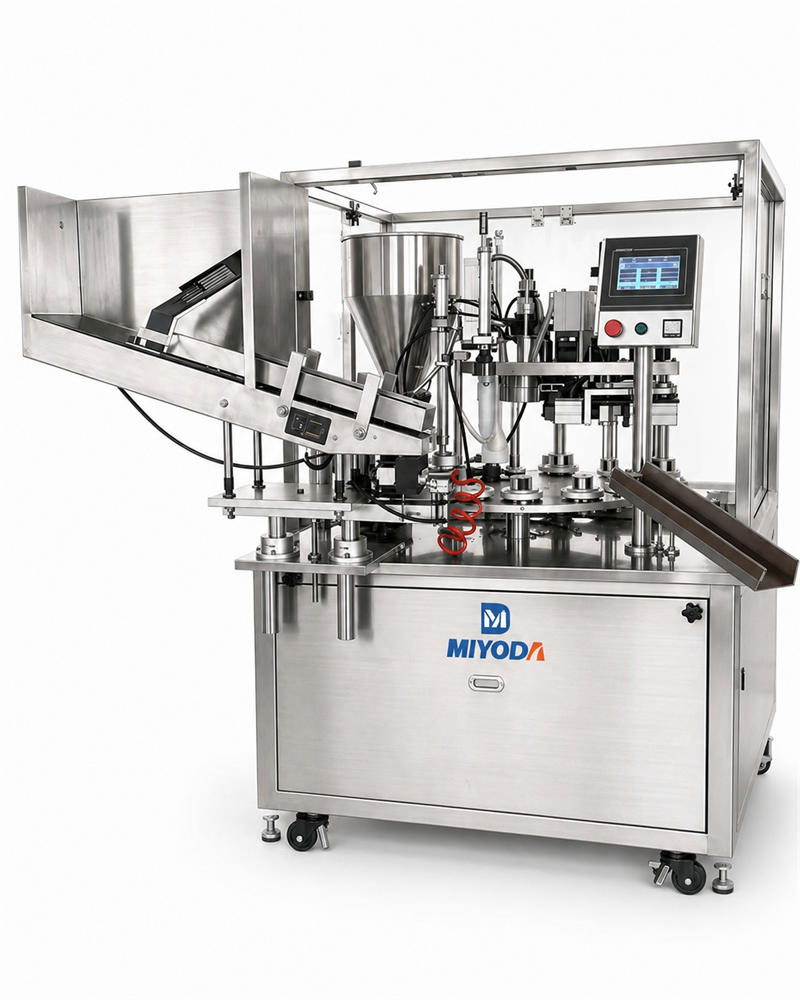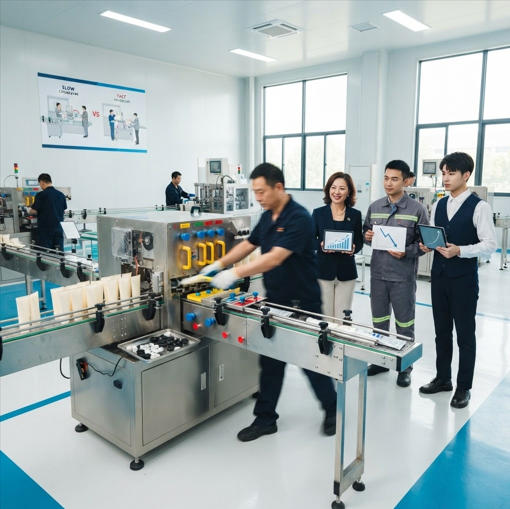
Discover how fast-changeover automatic machines eliminate downtime, reduce production losses, and deliver measurable ROI for cosmetic and pharmaceutical tube manufacturers.
The Hidden Cost of Changeover Downtime
Every time your tube filling line stops to switch from one SKU to another, a clock starts running. Operators disassemble nozzles, swap mandrels, adjust fill volumes, clean down residual product, re-calibrate settings, and run warm-up tubes until quality checks pass. On a traditional semi-automatic machine, this entire sequence takes between 45 and 120 minutes — and in many OEM cosmetic and pharmaceutical factories, it happens 4 to 8 times per shift.
Run the numbers across a real production schedule: six changeovers per shift at 60 minutes each consumes 360 minutes of an 8-hour shift. That’s 75% of available production time lost before a single saleable tube is made. At a line speed of 80 tubes per minute, those lost 360 minutes represent 28,800 tubes per shift — product that was planned, scheduled, and costed, but never actually filled.
Across 250 production days and two shifts per year, those changeover losses accumulate to over 14 million unrealized tubes annually — a capacity gap that cosmetic contract manufacturers typically cover by adding shifts, hiring operators, or turning down orders entirely. None of those options are cheap.
According to market analysis of industrial tube filling equipment, the fastest modern rotary automatic systems can achieve format changeovers in under one minute — a benchmark that makes traditional manual changeover procedures look like they belong to a different era of manufacturing entirely. And yet, the majority of OEM tube facilities operating today are still running manual or semi-automatic lines built on 1990s-era changeover principles.
This guide exists to close that gap. It explains precisely what fast-changeover technology does, what it costs, what it saves, and how to implement it in a cosmetic or pharmaceutical tube filling operation — with real data, not vague efficiency claims.

The True Cost of Manual and Semi-Automatic Changeovers
How Much Time Are You Actually Losing?
Industry benchmarks consistently show that manual changeover times on cosmetic and pharmaceutical tube filling lines fall into three categories based on line complexity:
| نوع الآلة | Avg Changeover Time | Lost Tubes @ 80 tpm | Annual Loss (4 changeovers/day) |
|---|---|---|---|
| Manual / Semi-Automatic | 60–120 min | 4,800–9,600 tubes | ~4.8–9.6M tubes |
| Older Automatic (no SMED) | 30–45 min | 2,400–3,600 tubes | ~2.4–3.6M tubes |
| Modern Fast-Changeover (SMED) | 8–15 min | 640–1,200 tubes | ~640K–1.2M tubes |
SMED — Single-Minute Exchange of Die — is the lean manufacturing methodology (first developed in automotive manufacturing by Shigeo Shingo) that targets format changeovers in under 10 minutes. Applied to tube filling, it involves separating internal changeover tasks (those requiring the machine to stop) from external tasks (those that can be prepared while the machine is still running), and engineering the machine itself to eliminate the most time-consuming internal steps entirely.
A 2023 peer-reviewed study on SMED in manufacturing demonstrated changeover time reductions of up to 291 seconds per event simply by reorganizing task sequences — before any capital investment in new equipment. Add machine-level engineering (tool-free couplings, servo recipe recall, pre-staged format kits), and 60–70% changeover time reductions are consistently achievable.
The Ripple Effect of Extended Changeover Times
Changeover time doesn’t just affect the 60 minutes it directly consumes. Its effects ripple forward and backward through the entire production schedule in ways that compound the original loss.
Delivery timelines slip. A 3-day production batch that runs 8 hours late because of extended changeovers delays shipment by a full calendar day once logistics cut-off times are factored in. For cosmetic brands with seasonal launch windows (Christmas gifting sets, summer SPF ranges, limited edition drops), a delayed shipment is not just a cost — it is a missed market moment that cannot be recovered.
Inventory management becomes reactive. Longer changeover times push production planners toward longer runs — making more of each SKU per run to amortize the setup cost. Longer runs mean higher raw material inventory, more finished goods warehousing cost, and greater exposure to product obsolescence when formulations or packaging are updated.
Staff overtime inflates as a hidden cost. In facilities where changeover overruns regularly push production into the next shift window, operators accumulate unauthorized overtime that appears in the payroll but is rarely attributed to changeover efficiency in management reporting. In a 150-person cosmetic OEM factory, this can represent USD 60,000–120,000 per year in unbudgeted labor cost — visible in the payroll totals but invisible in the changeover KPI dashboard.
Why Traditional Machines Create Bottlenecks
Traditional semi-automatic tube filling machines were designed for single-product dedicated lines — running one formulation in one tube format at high volume. Changeover was an afterthought in the original machine design, treated as an occasional event rather than a routine operational requirement.
The consequences are baked into the architecture: nozzle assemblies that require tools to remove (adding 15 minutes of disassembly time per changeover), fill volume settings that must be manually recalibrated from paper records (introducing operator-to-operator variability), and sealing jaw temperature settings that are adjusted by turning a physical dial rather than recalling a stored digital profile.
When a new operator performs the changeover differently from the last — slightly different fill calibration, slightly different seal temperature — the first 50–150 tubes after startup often fall outside spec. Those tubes are either scrapped or held for rework, adding material waste and delay to an event that has already consumed over an hour of production time.

The Technology Behind Rapid Setup Transitions
Automated Quick-Change Systems Explained
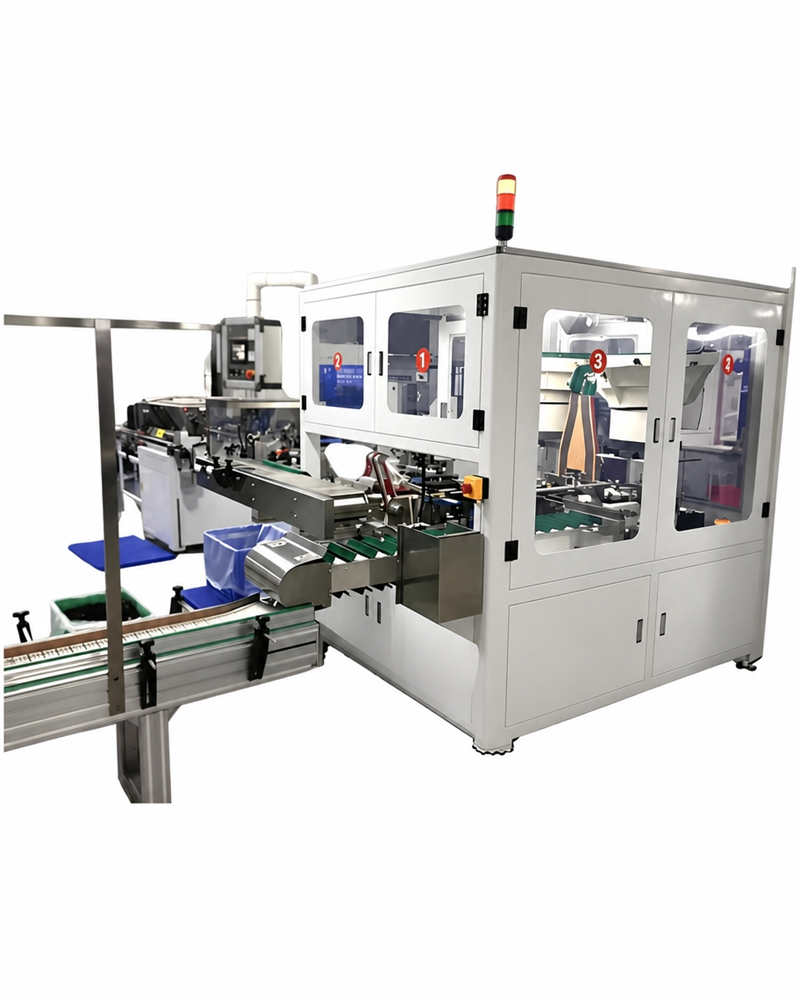
Modern fast-changeover tube filling machines achieve their speed through a combination of mechanical engineering and digital control design — not operator skill. The critical principle is that format change should require no tools, no recalibration, and no manual parameter setting.
Four engineering features make this possible in practice:
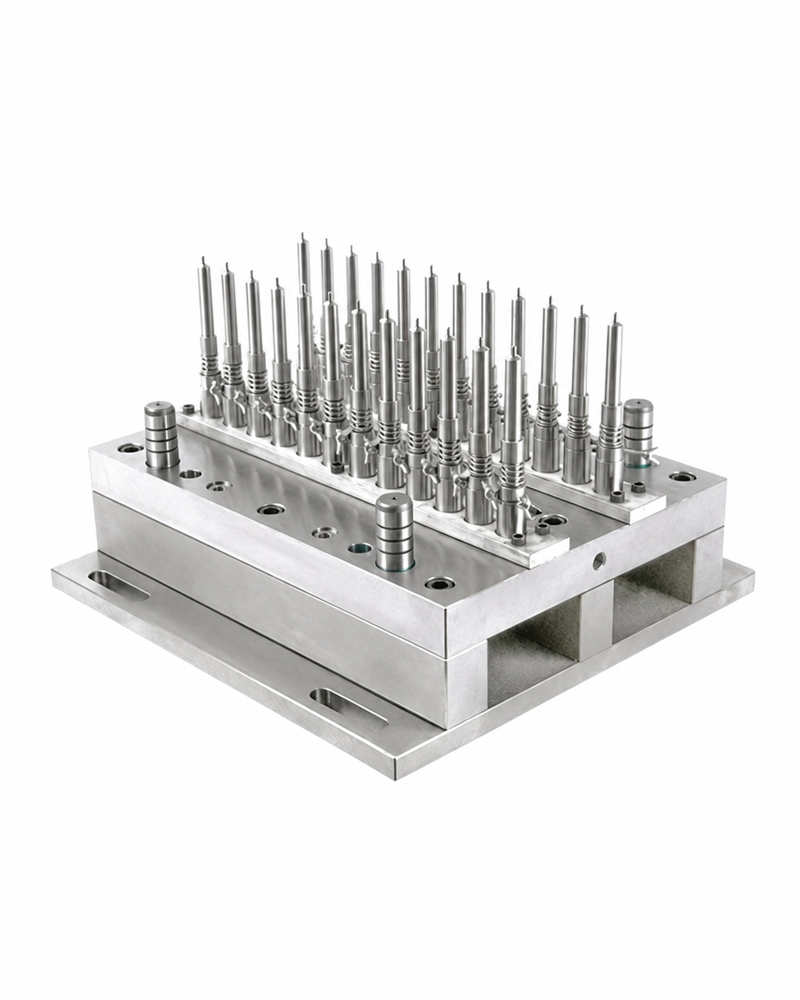
Modular, tool-free component cassettes. Nozzle assemblies, mandrels, tube-size guide rails, and format parts attach and detach using quarter-turn couplings or keyed magnetic mounts — no spanners, no Allen keys, no torque specifications. Components are color-coded by tube diameter (red for 22mm, blue for 35mm, green for 50mm, for example), so operator error in format selection is physically prevented rather than managed through procedure.
Pre-calibrated format kits. Every tube size and product combination in your portfolio has its own pre-assembled format kit, stored in a labeled rack adjacent to the machine. When a changeover is scheduled, the incoming kit is retrieved, checked against the production order, and staged at the machine before the current production run ends — an “external” changeover task that consumes zero machine downtime.
Digital recipe storage and one-touch recall. The machine’s HMI (Human-Machine Interface — the touchscreen control panel) stores process profiles for every SKU: fill volume, fill speed, seal jaw temperature, dwell time, rejection thresholds. When the operator selects the incoming product from the recipe list and confirms, the machine automatically sets all parameters to the validated values for that SKU. There is no dial-turning, no paper record lookup, and no operator judgment involved.
Real-world example: switching from 30ml to 50ml cosmetic tube in under 15 minutes. With the incoming format kit pre-staged, the actual machine-stopped changeover sequence takes: remove filling nozzle cassette (90 seconds), swap mandrel and guide rails (3 minutes), install new nozzle cassette (90 seconds), recall recipe from HMI (30 seconds), run 10-tube startup verification sequence (4 minutes). Total machine-stopped time: under 11 minutes. First-pass startup quality check passes on the initial verification run because the recipe values are validated, not estimated.
Key Features That Eliminate Downtime
Beyond the core changeover mechanics, several additional machine features contribute to minimizing non-productive time across the entire production cycle.
Automatic quality checks during setup verify that the machine is performing correctly before it enters full production. A 10-tube startup sequence at reduced speed, with automatic checkweigher verification of fill weight, seal inspection camera confirmation, and operator sign-off prompt, replaces the informal “looks okay, run it” judgment that generates those first-batch rejects on older machines.
Integrated diagnostics and error prevention catch configuration errors before they become production defects. If an operator installs a 35mm mandrel but the recipe loaded is for a 22mm tube, the machine’s sensor confirms the mismatch and prevents startup until it is resolved — a simple error-proofing measure that eliminates a class of mistakes that generate significant scrap on traditional machines.
Pre-calibrated settings eliminate the most time-consuming element of traditional changeovers: the calibration run. On older machines, post-changeover calibration typically requires 30–50 test tubes, manual weighing, and multiple fill volume adjustments before the process is stable. On a servo-driven machine with a stored recipe, the validated settings produce on-target fill weights from the first cycle of the startup verification run.
Integration with Production Management Systems
Fast-changeover machines don’t operate in isolation — they generate data that, when connected to plant-level management systems, multiply the value of the machine itself beyond its physical capabilities.
IoT (Internet of Things) connectivity — the ability of the machine to communicate real-time data over an Ethernet network — allows production managers to see line speed, fill weight trends, reject counts, and changeover status on dashboards from any location. A production manager reviewing their morning report at 7:00 AM can see that the night shift completed four changeovers, the third took 42 minutes instead of the target 15, and 87 tubes were rejected on startup. That level of visibility enables data-driven decision making that is simply impossible when changeover events exist only in a paper log.
ERP integration (connecting the filling machine to enterprise planning systems like SAP, Oracle, or similar) enables automatic batch record creation, materials consumption logging, and production order status updates — reducing the administrative workload on supervisors and providing the traceability documentation required for pharmaceutical batch release.
Predictive maintenance alerts — generated from vibration sensors on servo drive bearings, thermal monitoring of heating elements, and statistical analysis of fill weight trend data — notify maintenance technicians of developing equipment issues before they cause unplanned downtime. A 2025 analysis of Industry 4.0 filling line technology found that IoT-enabled predictive maintenance consistently reduced unplanned downtime by 25–40% in packaging operations.
Watch: An automatic rotary tube filling machine changeover procedure — see how modern tooling design reduces setup time from hours to minutes.
The Numbers That Justify Your Investment
Real Data on Changeover Time Reduction
The performance gap between traditional and modern fast-changeover systems is not marginal — it is transformative. Here is what independent field data and verified case studies show:
| النظام المتري | Traditional Machine | Modern Fast-Changeover | Improvement |
|---|---|---|---|
| Avg changeover time | 45–120 min | 5–20 min | 60–85% reduction |
| Post-changeover scrap | 50–150 tubes | 5–15 tubes | ~90% reduction |
| Operator skill requirement | Senior technician only | Any trained operator | Fully standardized |
| First-pass startup yield | 60–75% | 95–99% | ~35% improvement |
| Changeover documentation | Manual paper log | Automatic digital record | Full audit trail |
A pharmaceutical tube manufacturer case study published by a European packaging industry group documented a changeover reduction from 90 minutes to 12 minutes after implementing a modern servo-driven fast-changeover system — a 87% reduction on a validated pharmaceutical line where every change was required to be documented, verified, and signed off. This was not achieved by rushing the process; it was achieved by engineering the time out of it.
Production Output Improvements
Let’s translate time saved into tubes produced — the number that actually appears on the production report and the customer invoice.
A mid-sized cosmetic OEM factory running 80 tubes per minute, two 8-hour shifts per day, 250 days per year, with 6 changeovers per shift:
Before fast-changeover (60 min avg): 6 × 60 min × 2 shifts × 250 days = 180,000 lost minutes = 3,000 hours/year. At 80 tubes/min: 14.4 million tubes per year lost to changeover downtime.
After fast-changeover (12 min avg): 6 × 12 min × 2 shifts × 250 days = 36,000 lost minutes = 600 hours/year. At 80 tubes/min: 2.88 million tubes per year lost.
Net additional output: 11.52 million tubes per year — on the same line, with the same operators, without adding a single shift. At an average OEM filling revenue of USD 0.06 per tube, this represents USD 691,000 in additional annual revenue capacity from changeover engineering alone.
Even at far more conservative volumes — a factory with only 8 additional production hours gained per week — that’s over 38,000 extra tubes per week, or nearly 2 million additional tubes per year from the changeover time reduction on a single line.
Labor Efficiency and Cost Reduction
Traditional changeovers require experienced operators — in many factories, the line supervisor or senior technician is the only person trusted to perform the setup correctly. This creates a skill bottleneck: if that person is absent, sick, or occupied with another task, the changeover is delayed, compounding the production schedule impact.
Modern fast-changeover machines eliminate this bottleneck by making the procedure procedure-independent — any operator who has completed the standard training can execute a changeover to the same outcome. This has three direct financial consequences:
First, it reduces the labor cost per changeover. A senior technician at USD 22/hour versus a trained line operator at USD 14/hour represents a USD 8/hour differential. Across 12 changeovers per day and 250 days per year, that is USD 24,000 per year in labor cost savings from operator grade reduction alone.
Second, it eliminates the overtime incurred when changeover delays push production into the next shift window. At time-and-a-half rates, even 30 minutes of overtime per changeover event adds up rapidly across a full-year schedule.
Third, it reduces training burden. A new operator on a traditional machine needs 2–4 weeks of supervised changeover practice before being cleared to work independently. On a modern machine with guided HMI workflows, the same competency is typically achieved in 3–5 days.
Quality Consistency During Transitions
The tubes produced during and immediately after a changeover are statistically the highest-risk tubes on any production run. On traditional machines, the combination of fresh calibration settings, cold sealing jaws, and changed product pathways produces defect rates 3–5x higher in the first 100 tubes after changeover than during stable mid-run production.
Modern fast-changeover systems reduce this risk window through validated startup sequences, pre-heated jaw systems that maintain target temperature during changeover, and inline checkweigher monitoring that catches fill weight deviations in the first cycle. The result: post-changeover defect rates of under 1% versus 5–8% on traditional systems. For pharmaceutical tube manufacturers where every rejected tube must be documented, investigated, and accounted for in the batch record, this improvement alone represents a significant compliance workload reduction.

Calculating Your Return on Investment
Direct Cost Savings Breakdown
To build a credible ROI case for a fast-changeover machine investment, the direct savings calculation should cover four categories of cost that are directly eliminated or reduced:
| فئة التكلفة | Traditional Line (per year) | Fast-Changeover (per year) | Annual Saving |
|---|---|---|---|
| Labor (senior tech, 12 CO/day) | $66,000 | $42,000 | $24,000 |
| Material waste (startup scrap) | $18,000 | $2,000 | $16,000 |
| Lost production capacity (CO time) | $87,000 | $17,400 | $69,600 |
| Overtime from schedule overruns | $28,000 | $4,000 | $24,000 |
| Total Direct Annual Savings | $133,600 |
This model is based on a mid-sized OEM facility with 12 changeovers per day (two shifts), labor at USD 22/hour (senior) and USD 14/hour (standard), product material value at USD 0.08 per tube, and production revenue at USD 0.06 per tube. For operations with higher product material values — pharmaceutical ointments, premium serum formulations — the material waste saving category scales proportionally and can double or triple the total direct saving figure.
For a complete framework for calculating packaging machinery ROI, this ROI calculation guide for packaging equipment provides a structured model applicable to tube filling line investments.
Indirect Revenue Gains
The revenue impact of fast-changeover capability is harder to quantify than direct cost savings, but it is frequently larger. There are three mechanisms through which faster changeovers translate into top-line revenue growth:
Rush order acceptance. With 60-minute changeovers, your minimum economic order quantity (MOQ) is the volume that amortizes the setup cost — often 20,000–50,000 tubes per SKU. With 12-minute changeovers, that MOQ drops to 3,000–8,000 tubes, opening the door to rush orders, sample productions, and small-brand clients that you previously had to turn away. In competitive OEM markets, the ability to say “yes” to short-notice orders is a meaningful commercial differentiator.
Premium pricing for fast-turnaround service. OEM manufacturers with demonstrated fast-changeover capability can charge a service premium for quick-turn orders — typically 8–15% above standard pricing — to clients who need product in 5 days rather than 3 weeks. That premium falls straight to the bottom line on orders that the machine can accommodate within its existing schedule.
Customer retention. Late deliveries caused by changeover schedule overruns are one of the most common reasons cosmetic brands switch OEM suppliers. Eliminating that cause of delay strengthens client relationships and reduces the costly churn of losing an established account to a competitor.
ROI Timeline for Cosmetic and Pharmaceutical Manufacturers
Payback periods for fast-changeover machine investments vary by production volume, changeover frequency, and current inefficiency baseline. For a mid-sized OEM factory:
$$\text{Payback Period} = \frac{\text{Net Investment Cost}}{\text{Annual Direct Savings} + \text{Annual Indirect Revenue Gain}}$$
Using the figures above: direct savings of USD 133,600 per year, plus conservative indirect revenue gains of USD 60,000 per year from new short-run order acceptance = total annual benefit of USD 193,600. A USD 250,000 machine investment (mid-range automatic multi-head system with fast-changeover tooling) produces a payback period of approximately 15.5 months.
Over a 5-year horizon, the cumulative net benefit — total savings and revenue gains minus the initial investment — reaches approximately USD 718,000. Over 10 years (the realistic operational life of a well-maintained automatic filling machine), the cumulative net benefit exceeds USD 1.7 million on a single line.
The pharmaceutical manufacturer case study in Section 5 demonstrates a USD 220,000 annual saving on a validated pharmaceutical line — from a USD 250,000 investment — implying a payback period of approximately 13.6 months even before accounting for indirect revenue from new contract wins.
Hidden Savings You Might Not Have Considered
Beyond the obvious labor and production capacity figures, fast-changeover machinery delivers savings in categories that rarely appear in the initial ROI model but accumulate meaningfully over the equipment’s life.
Reduced energy consumption during idle periods matters more than most factories track. A machine performing a 60-minute manual changeover runs its air compressor, heating circuits, and control systems throughout the entire idle period. A machine that completes changeover in 12 minutes reduces that idle energy consumption by 80% per event — at 12 changeovers per day across 250 days, this represents a measurable utility saving even at current industrial electricity rates.
Lower inventory carrying costs result from the shift from long production runs (forced by high changeover costs) to shorter, more frequent runs. Holding 3 weeks of finished goods inventory for a slow-moving SKU has real warehouse and working capital costs; the ability to produce to order in 3–5 day lead times instead of 3 weeks reduces those costs substantially.
Regulatory compliance cost reduction is significant for pharmaceutical tube manufacturers. Automated digital changeover records — timestamped, operator-identified, and stored in the machine’s audit trail — replace manual paper logs that require physical archiving, retrieval for audits, and re-entry into electronic batch record systems. The administrative workload saving is real and the compliance risk reduction is material.
How Leading Manufacturers Are Transforming Operations
Case Study 1 – Cosmetic Packaging OEM Manufacturer
Baseline situation: A Southeast Asian cosmetic OEM managing 8 product lines (face cream, sunscreen, body lotion, eye gel, hair treatment, and 3 dental care products) was running average changeover times of 60 minutes on aging semi-automatic filling lines. With 6 changeovers per shift across two shifts, the facility was losing approximately 12 hours of production capacity daily to setup time alone.
The financial reality: Their fully loaded cost per machine-stopped hour was USD 420 (labor, energy, overhead allocation). 12 hours daily × 250 production days = USD 1,260,000 per year in unproductive machine time. Product scrap during startup averaged 120 tubes per changeover, costing an additional USD 43,200 per year in material waste.
Implementation: The facility replaced two aging semi-automatic lines with a single modern multi-head automatic filling machine featuring tool-free modular changeover tooling, 200+ recipe digital storage, and integrated inline checkweigher. Changeover time dropped to an average of 15 minutes — including the mandatory 10-tube startup quality verification sequence.
Results after 12 months: Average changeover time: 15 minutes. Production capacity increase: 31%. Startup scrap rate: reduced from 120 to 11 tubes per changeover. Annual direct savings: USD 182,000. Additionally, the reduced line count from two machines to one freed floor space for a labeling station that enabled the facility to offer a new in-house labeling service to clients — generating USD 85,000 in new annual revenue. Combined 12-month benefit: USD 267,000 against a USD 180,000 machine investment. Payback: 8.1 months.
Case Study 2 – Pharmaceutical Tube Producer
Baseline situation: A pharmaceutical contract manufacturer producing topical ointments and medicated gels for regulated markets (EU and US) was experiencing two compounding problems: 90+ minute changeovers on their existing line, and regulatory audit findings about manual changeover documentation — paper records that were illegible, incomplete, or filed out of sequence.
The financial reality: Beyond the production time loss, each batch documentation non-conformance required a full CAPA (Corrective and Preventive Action) report, regulatory correspondence, and revalidation of the affected batch records. At an average CAPA cost of USD 8,500 and three CAPAs per quarter related to changeover documentation, the compliance cost alone was USD 34,000 per year before accounting for lost production time.
Implementation: A pharmaceutical-grade automatic tube filling machine with IQ/OQ/PQ validation documentation, integrated electronic batch recording, and guided changeover workflow with operator authentication (biometric login confirming the right operator ran the right procedure on the right equipment) was installed and validated over a 10-week commissioning period.
Results after 12 months: Average changeover time: 10 minutes. Compliance-related CAPA events: zero. On-time delivery rate: improved from 84% to 100% (the production schedule overruns that previously caused late deliveries were eliminated). Direct annual savings from production capacity recovery and labor: USD 188,000. Compliance workload reduction value: USD 34,000. Total annual benefit: USD 222,000 against a USD 270,000 investment. Payback: 14.6 months.
Case Study 3 – Multi-Product Contract Manufacturer
Baseline situation: A contract manufacturer in Eastern Europe serving 40+ cosmetic brand clients was managing 25 active SKUs across one filling line. With manual changeover times ranging from 45 to 110 minutes depending on the product combination (some transitions required full CIP cleaning between chemically incompatible formulations), the facility was unable to accept orders requiring delivery in under 10 working days — limiting their addressable client base to brands with advance planning horizons.
Implementation: A flexible automatic filling machine with pre-staged format kits for all 25 SKUs, automated CIP cycling triggered from the recipe system (shorter or longer cycle selected automatically based on formulation compatibility matrix), and IoT-connected production dashboard installed. Average changeover time: 8 minutes for compatible products, 22 minutes for full CIP-required transitions.
Results: Rush order capability (5-day delivery) was added as a service offering. 40% more orders accepted in the 12 months post-installation without adding a shift. Annual revenue increase: 25%. Annual cost savings from changeover efficiency: USD 320,000. Direct revenue increase from new short-run and rush order business: USD 410,000. Combined 12-month financial impact: USD 730,000 against a USD 190,000 investment. Payback: 3.1 months.

Making the Smart Investment Decision
Assessing Your Current Production Needs
Before evaluating any machine, you need an honest baseline of your current changeover performance — documented from actual production data, not from memory or estimates. For one week, record every changeover event on your current line: start time, end time, SKU transition (from/to), operator name, and number of startup rejects. Calculate your average, best-case, and worst-case changeover time.
Then calculate your current changeover cost using this formula:
$$\text{Annual Changeover Cost} = \text{Avg CO Time (hrs)} \times \text{Changeovers/Year} \times \text{Hourly Machine Cost (USD)}$$
Where hourly machine cost includes direct labor, overhead allocation, and the production revenue lost (calculated as: line speed × tube selling price). Most factories that run this calculation for the first time are surprised by the magnitude — it is rarely less than USD 80,000 per year on a single line, and often exceeds USD 200,000 for facilities with high SKU diversity.
Identify your peak demand periods and bottlenecks specifically. If changeover delays are concentrated in certain product transitions (e.g., always longer when switching between high-viscosity toothpaste and thin serum), those specific transitions are your priority optimization targets — and they should be explicitly tested in any machine demonstration you attend.
Key Features to Prioritize
When evaluating machines, use a structured feature checklist rather than relying on supplier sales presentations. The features with the highest impact on changeover performance are:
Changeover speed: Target under 15 minutes for standard tube diameter changes and under 30 minutes for full CIP-required product transitions. Ask for a live demonstration with your specific tube sizes — not the supplier’s standard demo format.
Tube size range compatibility: Confirm the machine covers your full diameter range (typically 13mm–50mm for cosmetics, 13mm–30mm for most pharmaceutical topicals) and your full fill volume range without requiring modification to the base machine.
Recipe storage capacity: Ensure the HMI system stores a sufficient number of recipes for your current SKU count plus planned growth — 200+ recipe capacity is standard on modern systems and should not be accepted as less.
Formulation compatibility: Explicitly confirm that the machine has been validated on products matching your viscosity range. For toothpaste or dental gels above 100,000 cP, confirm heated filling path and reinforced wear components. For guidance on matching machine specifications to cosmetic formulation requirements, Miyoda Packaging Machinery’s buyer guide covers this in practical detail.
Comparing Machine Options and Vendors
Request a formal technical specification comparison across at least three suppliers, using an identical specification document. This prevents the common situation where Supplier A quotes a machine optimized for changeover speed but without inline weight checking, while Supplier B quotes a heavier-duty machine with checkweighing but slower changeover tooling — making price comparison meaningless.
Reference checks are essential. Ask every supplier for contacts at two to three customers in your product category (cosmetic OEM or pharmaceutical contract manufacturer) who have been running the machine for at least 18 months. Call those references and ask specifically: What is your actual average changeover time? What was the biggest surprise after installation? How quickly does the supplier respond to technical issues?
The answers to those three questions will tell you more about the machine’s real-world performance than any datasheet.
For a comprehensive comparison of tube packaging machinery brands and models, the machine brand comparison guide from Miyoda Packaging Machinery provides a structured evaluation framework applicable to changeover-focused procurement decisions.
Integration and Implementation Considerations
The fastest machine on the market delivers poor results if it creates bottlenecks in the surrounding line. Before confirming a purchase, map the rated speed of every adjacent station: tube supply/loading, downstream inspection, capping, date coding, and secondary packaging. The filling machine’s output speed must match the downstream bottleneck — not just the filling station’s theoretical maximum.
Space requirements often surprise buyers who focus on the machine footprint in the brochure rather than the installed footprint including format kit storage, operator access clearance, and CIP drain connection routing. Allow a minimum of 1.5 meters clear access on all service sides of the machine — a figure frequently underestimated in facility planning exercises.
Ensuring Smooth Transition and Maximum Adoption
Pre-Implementation Planning
The single most common cause of delayed ROI realization after a fast-changeover machine installation is insufficient pre-implementation planning. Facilities that invest in machine hardware but not in the organizational changes needed to exploit it consistently underperform against their projected payback timelines.
Baseline measurement should be completed before the machine arrives — not after. If you don’t have a documented pre-installation changeover time, you can’t demonstrate improvement to management, customers, or auditors. Spend two to four weeks measuring your current changeover performance with a stopwatch and a simple spreadsheet before the new machine arrives on-site.
Identify internal stakeholders and build their support early: the production manager who controls shift schedules, the quality manager who will need to update SOPs and cleaning validation records, the maintenance technician who will own the preventive maintenance program, and the finance team who will be tracking ROI performance. Each of these stakeholders has a different concern about the implementation; address them explicitly rather than hoping the machine’s performance will speak for itself.
Staff Training and Skill Development
Training for modern fast-changeover machines typically takes 2–5 days for basic operation, but the most effective training programs invest an additional 2–3 days in troubleshooting and parameter adjustment — skills that transform operators from button-pressers into genuine process technicians who can maintain performance without calling the supplier every time something deviates from normal.
Create standard operating procedures (SOPs) during commissioning, not after. SOPs written while the supplier’s commissioning engineer is present benefit from their expertise and can be validated as accurate in real time. SOPs written after the fact from operator memory are frequently incomplete and sometimes incorrect.
Cross-train at least two operators for each machine to eliminate the skill bottleneck problem. A single trained operator on a fast-changeover machine is still a single point of failure — illness, vacation, or resignation creates an immediate vulnerability. Most equipment manufacturers, including the engineering team at شركة ميودا لآلات التغليف, provide structured on-site training during commissioning and can support ongoing operator certification through video tutorials and remote assistance.
Monitoring Performance and Continuous Improvement
Establish three core KPIs that are measured, reported, and reviewed weekly in the first six months after installation: average changeover time per event (target vs. actual), post-changeover first-pass yield percentage, and total production output per shift (tubes produced vs. scheduled). These three metrics capture the changeover performance improvement, the quality consistency improvement, and the overall throughput gain — the three pillars of the ROI case.
Review outlier changeover events — those that exceeded the target time — as a specific agenda item in the weekly production meeting. In the first three months, most outliers will be traceable to specific causes: a format kit not pre-staged, a recipe selection error, or a CIP cycle that ran longer than expected due to a higher-residue product. Each cause, once identified, is permanently eliminated through a process update.
Maximizing Long-Term Value
A fast-changeover machine’s competitive advantage compounds over time as operators accumulate experience, changeover procedures are optimized, and new SKUs are added to the recipe library without adding changeover time. The facility that exploits this compounding effect systematically — through quarterly changeover time reviews, annual best-practice refresher training, and proactive recipe library management — consistently outperforms the facility that installs the machine and assumes the work is done.
Plan for future product line expansions when specifying the machine. A machine purchased today for a 25-SKU portfolio should have recipe capacity, tube diameter range, and filling system flexibility to handle your anticipated 40-SKU portfolio in four years. The marginal cost of specifying this capability at purchase is a fraction of the cost of a hardware upgrade or replacement later. Explore the complete tube filling and sealing machine guide for a comprehensive review of scalability and long-term planning considerations.
Overcoming Objections and Risk Mitigation
“The Investment Is Too High”
The most common objection to fast-changeover machine investment is framed as a capital cost concern, but it is almost always actually a payback period uncertainty — a lack of confidence that the projected savings will materialize. The most effective response is not to argue about the machine price, but to build the savings calculation from your own factory’s actual data.
Take your measured changeover times from the baseline assessment described in Section 7. Apply the hourly machine cost formula. Calculate the annual savings at a conservative 60% changeover time reduction (not the 85% that best-case deployments achieve). The result, in your own factory’s numbers, is almost always large enough to produce a payback period under 30 months — and frequently under 18 months for high-changeover facilities.
Financing and leasing options reduce the capital barrier for facilities where the upfront investment is genuinely constrained. Equipment leasing (treating the machine as a monthly operating expense rather than a capital purchase) allows the monthly cost to be compared directly against the monthly saving — a comparison that nearly always favors the machine within the first year of operation. Many machine manufacturers, including those in the premium automatic tube filling segment, offer manufacturer-facilitated financing programs for qualified buyers.
For a deeper analysis of how to compare total cost of ownership versus initial purchase price, this ROI calculation guide for packaging machinery provides a structured framework with adjustable variables.
“Will Our Operators Accept the New Technology?”
Operator resistance to new machinery is far less common than managers fear — and it is almost always rooted in anxiety about job security rather than genuine objection to the technology itself. Modern fast-changeover machines are physically easier to operate than traditional semi-automatic lines: less heavy lifting, less tool-handling, cleaner working environment, and a guided HMI that reduces the cognitive load of remembering correct settings for 25 different products.
When communicating the change to operators, address the job security question directly and honestly: the machine reduces the headcount required per unit of output, but in a growing business, it typically enables volume growth that maintains or grows the total headcount. In the Case Study 3 facility above, the addition of a fast-changeover machine that reduced per-shift staffing from 4 to 2 was accompanied by a 40% increase in orders accepted — resulting in a net headcount increase of 3 people across the facility within 12 months.
“What If It Doesn’t Perform as Promised?”
Performance risk in machine procurement is real, and sophisticated buyers protect themselves through contractual and technical mechanisms rather than vendor trust alone. Request a Factory Acceptance Test (FAT) — running your actual product through the machine at the supplier’s facility before shipment — with your own quality team present. FAT results are contractually binding: if the machine does not achieve the specified fill accuracy, changeover time, and throughput in the FAT, it does not ship.
Performance-based contract terms — where a portion of the purchase price is withheld until verified post-installation performance benchmarks are met — are increasingly standard for tube filling machine purchases above USD 150,000. Reputable suppliers accept these terms; suppliers who decline are communicating something important about their confidence in the machine’s real-world performance.
“How Will This Affect Quality and Compliance?”
Modern automatic tube filling machines improve quality consistency relative to traditional semi-automatic lines — they do not compromise it. The evidence: inline checkweigher monitoring catches fill weight deviations that manual inspection misses; digital recipe recall eliminates the calibration variation that is the primary cause of post-changeover quality issues; and automated audit trail generation produces better compliance documentation than manual paper records.
For pharmaceutical tube manufacturers, the compliance improvement from electronic batch recording, operator authentication, and automated exception reporting often transforms the machine from a production asset into a compliance asset — one that passes regulatory audits more reliably than the manual processes it replaces. The FDA’s IQ/OQ/PQ validation framework for pharmaceutical equipment explicitly supports documented automatic filling lines as compliant equipment.
Tailored Solutions for Cosmetic and Pharmaceutical Markets
Cosmetic Packaging Requirements
Cosmetic tube filling spans an exceptionally wide formulation range — from thin 500 cP serums to dense 200,000 cP clay masks — and each product type imposes different demands on the filling system. A machine specified for a narrow viscosity range handles that range exceptionally well but becomes a production bottleneck when the brand’s product portfolio expands beyond it.
For OEM cosmetic manufacturers serving multiple brand clients, the critical specification is formulation flexibility: a machine that handles the full viscosity range from 500 cP to 150,000 cP, with heated filling path options for products above 50,000 cP, across tube diameters from 16mm to 50mm. Flexible batch sizes — the ability to profitably run batches as small as 5,000 tubes — require the changeover performance and machine speed headroom discussed throughout this guide.
Sustainability specifications are now a standard procurement requirement from major cosmetic brand clients. Machines must demonstrate compatibility with PCR-PE (post-consumer recycled polyethylene) tube materials, bio-based HDPE tubes, and recyclable aluminum-plastic laminates — all of which require slightly different sealing parameters than conventional PE tubes. Confirm compatibility with your full current and anticipated tube material portfolio before purchase.
Pharmaceutical Packaging Standards
Pharmaceutical tube filling has requirements that are qualitatively different from cosmetic filling — not just stricter versions of the same requirements. GMP compliance means documented evidence that every production parameter was within specification for every batch, and that every deviation was identified, documented, investigated, and resolved.
For pharmaceutical manufacturers evaluating fast-changeover machines, the compliance requirements define the minimum acceptable specification: IQ/OQ/PQ documentation package included in the machine purchase; 21 CFR Part 11-compliant electronic batch recording with audit trail; CIP validation documentation; and material certificates for all product-contact components. Machines that do not include these as standard are not pharmaceutical-grade regardless of their mechanical specifications.
Temperature and humidity control in the filling environment matters for thermolabile pharmaceutical products. Confirm whether your specific formulations require controlled-environment filling and, if so, that the machine’s design is compatible with cleanroom installation (no external lubrication points that drip into the filling environment, no open oil reservoirs, stainless steel or anodized aluminum external surfaces throughout).
Distributor and Agent Considerations
For machinery distributors and agents representing tube filling equipment to cosmetic and pharmaceutical manufacturers, fast-changeover capability has become a primary differentiating feature in client conversations — not a secondary specification. Clients have become more sophisticated in their procurement approach, and the first question from a production manager at a multi-SKU OEM facility is now reliably: “What is the changeover time, and can I see a demonstration with my tube size?”
Distributor value-add in this category comes from the ability to calculate a client-specific ROI model using the client’s actual changeover data — a capability that requires the distributor to be trained in the ROI framework described in Section 4. Distributors who present a generic machine spec sheet are competing on price; distributors who present a client-specific savings calculation are competing on value — a fundamentally different and more profitable sales conversation.
Warranty coverage, spare parts logistics, and regional service capability are the three factors that most influence a distributor’s post-sale relationship with the client. Confirm with machine manufacturers — including the technical team at Miyoda Packaging Machinery — what regional spare parts inventory, remote diagnostics support, and on-site service response capabilities are available in your territory before making commitments to clients.

Staying Ahead of Industry Trends
Emerging Technologies and Innovations
The integration of artificial intelligence into tube filling line management is moving from pilot project to production standard faster than most equipment buyers anticipated. AI-powered predictive maintenance algorithms — trained on millions of production data points from servo motor current signatures, fill weight statistical distributions, and seal jaw temperature profiles — can predict mechanical failures 15–30 hours before they occur, enabling maintenance intervention during planned downtime rather than emergency response during a production run.
The practical impact is significant: a Southeast Asian cosmetic contract manufacturer that deployed AI predictive maintenance on its filling lines reported a 38% reduction in unplanned downtime events in the first year — equivalent to recovering approximately 340 production hours per line per year. At USD 420 loaded cost per machine-hour, that is USD 142,800 per line per year from predictive maintenance alone.
Advanced automation and robotics integration is enabling the next generation of fully lights-out tube filling — where the filling machine, tube supply robot, secondary packaging cell, and palletizer operate as a fully automated system requiring one technician for the entire facility rather than one operator per line. This is not a 2030 vision; it is operational today in high-volume facilities in Europe and Japan, and the technology is becoming cost-accessible for mid-tier manufacturers.
Industry 4.0 Integration and Smart Manufacturing
Industry 4.0 — the integration of cyber-physical systems, IoT sensors, and data analytics into manufacturing operations — is reshaping what “operational visibility” means for cosmetic and pharmaceutical tube filling. Machines that communicate real-time production data (fill weight, seal temperature, reject count, changeover status, energy consumption) to plant-level dashboards enable decisions that were previously made days after the fact from shift reports to be made in real time from any location.
For OEM contract manufacturers, this connectivity creates a new client service capability: sharing real-time production status with brand clients via a secure dashboard portal. A cosmetic brand client who can log in and see that their 500,000-tube production run is 73% complete, on schedule, with a current reject rate of 0.3%, has a fundamentally different relationship with their OEM supplier than one who is waiting for a phone call. This transparency builds client trust and reduces the friction of order management in ways that are difficult to quantify but easy for commercial teams to recognize.
Integration with ERP systems (SAP, Oracle, Microsoft Dynamics) enables automatic batch record creation, real-time materials consumption updates, and production order status tracking without manual data entry — reducing administrative overhead and improving planning accuracy. Industry 4.0 applications in liquid filling operations provide a useful overview of the connectivity standards (OPC-UA, MQTT) that enable this integration in packaging environments.
Competitive Advantage Through Technology
The OEM cosmetic and pharmaceutical tube manufacturers who invested in fast-changeover capability in 2020–2022 built a competitive moat that their slower-moving competitors are still trying to bridge in 2025–2026. The advantage compounds: lower changeover cost enables lower MOQs, which attracts small and emerging brand clients, which increases SKU diversity, which is managed efficiently because of fast-changeover capability. The machine investment created a business model change that a competitor cannot replicate simply by buying the same machine — because the organizational capability, the client relationships, and the market positioning built on that capability take years to develop.
First-mover advantages in fast-changeover capability are most durable in regional markets where a small number of OEM suppliers serve a large population of cosmetic brands. The OEM supplier in that market who can reliably deliver 5-day turnaround on short-run orders commands premium pricing, stronger client loyalty, and referral business that reinforces its market position over time.
The Bottom Line: Changeover Chaos Solved
Fast-changeover automatic tube filling machines are no longer a competitive advantage for early adopters — they are the operational baseline that the market now expects from credible cosmetic and pharmaceutical OEM manufacturers. The data presented throughout this guide makes the business case unambiguous: changeover time reductions of 60–85%, production capacity increases of 30–40%, payback periods of 15–30 months, and 10-year net benefits exceeding USD 1.5 million per line.
The factories that built their competitive position on fast-changeover capability didn’t do it by finding the cheapest machine available. They did it by calculating what changeover chaos was actually costing them — in lost production hours, in turned-away rush orders, in compliance events, in staff overtime — and then investing in equipment that eliminated those costs systematically and permanently.
Whether you’re managing 5 product lines or 50, running cosmetic creams or regulated pharmaceutical ointments, at 30,000 tubes per day or 300,000 — the question is the same: how much is your current changeover performance costing you, and what would your business look like if that cost were reduced by 80%?
الـ شركة ميودا لآلات التغليف engineering team works with OEM cosmetic and pharmaceutical tube manufacturers to answer exactly that question — from baseline changeover assessment through machine specification, implementation, and ongoing performance optimization. If you’re ready to calculate your specific changeover cost and build the ROI case for your next investment, the conversation starts at miyodamachine.com.
Ready to Eliminate Changeover Chaos?
Our experts will analyze your specific production needs, calculate your potential savings, and recommend the perfect fast-changeover solution for your tube filling operation.
Request Your Free Assessment
Download Technical Guide
Schedule a Factory Demo
الأسئلة المتداولة
The following FAQs are designed to provide direct answers to the most common questions from cosmetic manufacturers, pharmaceutical tube producers, and machinery distributors evaluating fast-changeover tube filling systems.
1. How much changeover time can we realistically save?
Most manufacturers implementing modern fast-changeover systems achieve 60–85% reductions in changeover time. A 90-minute manual changeover on a traditional semi-automatic machine consistently reduces to 8–15 minutes on a modern servo-driven automatic with tool-free modular tooling and digital recipe recall. Your actual saving depends on your current changeover procedure complexity, product portfolio breadth, and the number of format components that need to be exchanged per transition. The most reliable way to set expectations is to measure your current changeover time for your three most common product transitions and calculate the saving at 70% reduction — a conservative figure that most well-implemented fast-changeover systems exceed in practice.
2. What is the typical payback period for investing in a fast-changeover machine?
Payback periods range from 8 months (high-changeover facilities with frequent short runs) to 36 months (lower-volume single-shift operations with less frequent SKU transitions). The median for mid-sized OEM cosmetic and pharmaceutical manufacturers running 4–8 changeovers per shift is 15–24 months. Critically, this calculation should include both direct cost savings (labor, scrap, lost production) and indirect revenue gains from new short-run and rush order capability — the latter is frequently underestimated in initial ROI models but is often the larger of the two values for contract manufacturers with excess demand they currently cannot serve.
3. Can one machine handle multiple tube sizes and formulation types?
Yes — modern fast-changeover automatic tube filling machines are designed to accommodate tube diameters typically from 13mm to 50mm, fill volumes from 5ml to 300ml+, and formulation viscosities from 500 cP (thin serums) to 250,000 cP (toothpaste, heavy ointments) within a single machine platform. The key is that “compatible” means within the machine’s validated range — not that any product can simply be run without configuration. When specifying a machine, provide your complete product portfolio: all tube diameters, fill volumes, viscosity measurements at fill temperature, and any special requirements (abrasive particles, heated filling path, CIP between incompatible products). The machine specification should cover your full portfolio for the next 3–5 years, not just your current launch product.
4. Are fast-changeover machines suitable for small and medium-sized manufacturers?
Fast-changeover capability delivers its greatest ROI as a proportion of investment at smaller to mid-sized manufacturers — precisely because small facilities tend to have the highest changeover frequency relative to their production volume. A facility producing 5 million tubes per year across 20 SKUs changes over more frequently per tube produced than a facility producing 100 million tubes per year on 5 dedicated lines. The investment is scalable: mid-range automatic filling machines with full fast-changeover tooling start at USD 80,000–150,000, and even at modest annual production volumes of 2–3 million tubes, the changeover time savings and quality improvement typically justify this investment within 24–30 months.
5. What training is required for operators to use fast-changeover machines?
Basic operation training takes 2–5 days for most modern fast-changeover tube filling machines, thanks to guided HMI workflows that walk operators through each step of the changeover procedure with prompts and confirmations. This is significantly less than the 2–4 weeks of supervised practice required before operators are trusted to perform independent changeovers on traditional semi-automatic machines. A full training package from a reputable supplier covers HMI operation and recipe management, changeover procedure execution, startup quality verification, CIP cycle operation, routine maintenance checks, and basic troubleshooting for common alarm conditions. Ensure that the training package is included in the purchase price and delivered at your facility — training conducted at the supplier’s demo facility on the supplier’s product rarely translates as effectively as training on your own machine with your own products.
6. How do these machines ensure quality consistency during changeovers?
Quality consistency during changeover is ensured by three mechanisms working together: validated digital recipe recall (every parameter is set from the stored validated value, not from operator memory or paper record); automated startup verification sequences (10–20 tubes run at reduced speed with automatic checkweigher confirmation before full production begins); and error-proofing sensors (format detection sensors that confirm the correct tooling is installed before allowing recipe-to-tooling mismatches to enter production). The result is post-changeover defect rates consistently below 1% — compared to 5–8% on traditional semi-automatic machines where manual recalibration introduces setup-to-setup variation. For pharmaceutical manufacturers, every changeover event is automatically recorded in the machine’s audit trail with operator identity, timestamp, and verification results — eliminating the manual documentation burden that creates compliance risk on traditional lines.
7. Are fast-changeover tube filling machines compliant with pharmaceutical and cosmetic regulations?
Yes — machines designed for pharmaceutical and cosmetic tube filling comply with the relevant regulatory frameworks when properly specified and validated. For pharmaceutical use: FDA 21 CFR Part 211 (US), EU GMP (EU), and ICH Q10 principles require IQ/OQ/PQ validation documentation, 21 CFR Part 11-compliant electronic batch recording, CIP validation data, and material certificates for product-contact components — all of which should be included in the purchase package for pharmaceutical-grade equipment. For cosmetic use: ISO 22716 (Cosmetics GMP) requires hygienic machine design, documented cleaning procedures, and microbial control — requirements that modern CIP-capable machines meet as standard. Fast-changeover features specifically improve compliance by replacing manual paper changeover logs (a common audit finding) with automatic digital records and operator authentication logs.
8. What maintenance does a fast-changeover tube filling machine require?
Preventive maintenance for modern automatic tube filling machines follows a tiered schedule: daily (visual inspection, lubrication point check, format component inspection for wear); weekly (nozzle and check valve inspection, fill weight calibration verification, seal jaw temperature sensor check); monthly (servo drive condition check, conveyor tension adjustment, CIP system function verification); and annually (comprehensive mechanical inspection, seal and gasket replacement, servo drive bearing analysis, software/firmware update). Modern machines with IoT connectivity generate predictive maintenance alerts based on real-time condition monitoring — notifying maintenance teams of developing issues before they cause unplanned stoppages. Critical spare parts (piston seals, nozzle check valves, seal jaw heating elements, thermocouple sensors) should be stocked on-site with confirmed delivery lead times below 72 hours for any component not in local inventory.
9. Can these machines integrate with our existing ERP system and production line?
Modern fast-changeover tube filling machines use OPC-UA (the industrial IoT standard for machine data communication) and Ethernet connectivity to share real-time production data with plant-level systems. This protocol supports integration with the major ERP platforms (SAP, Oracle, Microsoft Dynamics, and others) either directly or through a Manufacturing Execution System (MES) middleware layer. The integration scope typically includes: automatic batch record creation in the ERP when a production order starts; real-time production count updates; materials consumption logging; and quality event notifications for out-of-specification readings. Upstream integration with tube supply automation and downstream integration with capping, inspection, and cartoning stations is supported through the same OPC-UA interface. Confirm with your supplier that their machine’s OPC-UA implementation covers your required data points — not all implementations are equally comprehensive.
10. What technical support and breakdown response can we expect?
From a reputable supplier, the minimum acceptable support standard for production-critical tube filling equipment is: 4-hour remote diagnostics response for critical faults (the supplier’s engineer can access machine PLC data remotely via a VPN-secured connection and begin diagnosis immediately); 24–48 hour on-site response for faults requiring physical intervention; and critical spare parts delivery within 72 hours for any component not in your on-site stock. Request these commitments in writing as a formal Service Level Agreement (SLA) before purchase — suppliers who decline to formalize SLA terms are implicitly indicating that their service capacity cannot reliably meet these standards. For pharmaceutical manufacturers, confirm that remote access sessions are audit-logged with the supplier’s engineer identity, session duration, and actions taken — a requirement for 21 CFR Part 11 compliance in electronic records environments.
11. Can we lease or finance a fast-changeover machine instead of purchasing outright?
Yes. Equipment financing for tube filling machines is available through multiple channels: operating leases (machine cost treated as monthly operating expense, typically 36–60 month terms, machine returned at end of lease); finance leases or hire purchase (machine ownership transfers at end of term, typically over 48–72 months); bank equipment financing (term loan secured against the machine asset, often at lower interest rates than lease structures for creditworthy buyers); and manufacturer-facilitated programs for qualified buyers. The optimal financing structure depends on your balance sheet treatment preferences, tax position (lease payments vs. depreciation), and cash flow constraints. Always model the total cost of each financing option — monthly payment × term — against the monthly saving from changeover improvement to confirm positive cash flow from the investment within the first year of operation.
12. How long does implementation typically take from purchase to full production?
For a standard cosmetic filling machine: factory acceptance testing at supplier (2–3 days, recommended before shipping), machine delivery and mechanical installation (3–5 days), electrical and utility commissioning (2–3 days), product trials and parameter optimization (3–5 days), operator training (3–5 days). Total from machine arrival to production-ready: 3–5 weeks. For pharmaceutical-grade machines requiring IQ/OQ/PQ validation: add IQ execution (1 week), OQ execution (1–2 weeks), and PQ (2–3 weeks, requires 3 consecutive validation batches with statistical analysis). Full pharmaceutical validation status: 8–14 weeks from machine arrival. Planning for a 2–4 week facility preparation phase before machine delivery (utility connections, electrical supply upgrades, floor preparation, format kit storage installation) prevents the most common installation delays and ensures commissioning begins as soon as the machine arrives on site.
13. What if our current production volume seems too low to justify the investment?
The ROI case for fast-changeover investment at lower current volumes is built primarily on two factors that are frequently underweighted: the ability to accept orders you currently decline, and the competitive positioning that fast-changeover capability creates for future growth. A contract manufacturer who can offer 5-day lead times and minimum order quantities of 5,000 tubes competes in a different market segment than one who requires 3-week lead times and 50,000-tube MOQs. The addressable market for the fast-turnaround, short-run OEM service is growing rapidly — driven by indie cosmetic brand proliferation, dermatologist-brand launches, and retail customization programs. Assess the investment not just against your current volume but against the volume you could realistically capture with fast-changeover capability in place.
14. How do we measure and track ROI after implementation?
Establish baseline measurements before the machine is installed: average changeover time per event (measured from last good tube of outgoing product to first good tube of incoming product), post-changeover scrap rate per transition, total production output per shift, and total overtime hours per week. After installation, track the same metrics weekly for the first six months. Compare: changeover time reduction percentage (target: 60–85%); post-changeover scrap reduction (target: 85–90%); additional tubes produced per shift (target: proportional to changeover time saved × line speed); and overtime reduction (target: proportional to schedule overrun elimination). Most machine suppliers provide production dashboards that automate this tracking from machine data; supplement with your own labor cost and material cost records to build the full financial picture for management reporting and capital reinvestment conversations.
15. What hidden costs should we budget for beyond the machine purchase price?
The most common budget surprises in tube filling machine implementation are: electrical supply upgrade (three-phase power installation or amperage increase — confirm requirements with supplier before purchase, not after); compressed air system upgrade (modern automatic machines require higher air quality — ISO 8573-1 Class 1 oil content — than many older facilities’ existing compressed air systems); floor modification for CIP drain connection routing; format kit storage racks and pre-staging trolleys (often not included in machine price despite being essential for fast-changeover operation); first-year spare parts inventory (budget USD 5,000–15,000 for critical spares stock); operator training extensions beyond the standard commissioning package; and pharmaceutical IQ/OQ/PQ execution by a qualified validation service if your own team lacks the resource. Request a comprehensive implementation cost checklist from your supplier at quotation stage — any supplier experienced with cosmetic and pharmaceutical installations will have a standard facility requirements document that covers all of these items.
مسرد المصطلحات الأساسية
| المصطلح | Definition |
|---|---|
| SMED | Single-Minute Exchange of Die — lean manufacturing methodology targeting format changeovers in under 10 minutes by separating internal (machine-stopped) from external (preparatory) tasks and engineering internal tasks out of the process. |
| Changeover | The complete sequence of activities required to transition a production line from the last good tube of one product/SKU to the first good tube of the next. Measured from last good tube out to first good tube confirmed in spec. |
| HMI | Human-Machine Interface — the touchscreen control panel through which operators interact with the filling machine, recall recipes, initiate changeovers, and monitor production data in real time. |
| CIP | Clean-In-Place — automated cleaning of the machine’s product pathway using circulating cleaning solutions without disassembly. Essential for multi-product lines and regulatory compliance. |
| OEE | Overall Equipment Effectiveness — Availability × Performance × Quality. The composite KPI for production line productivity. Changeover time is one of the largest drivers of Availability losses on multi-SKU lines. |
| التحقق من الصلاحية (IQ)/التأهيل التشغيلي (OQ)/التأهيل الدائم (PQ) | Installation / Operational / Performance Qualification — the three-stage validation framework required for pharmaceutical filling equipment under FDA 21 CFR Part 211 and EU GMP. |
| FAT | Factory Acceptance Testing — performance verification of the machine at the manufacturer’s facility before shipping, using the buyer’s own product or viscosity-matched surrogate. Contractually binding performance confirmation. |
| SKU | Stock Keeping Unit — a unique product variant defined by formulation, tube format, fill volume, and packaging specification. Each SKU transition on a filling line requires a changeover event. |
| TCO | Total Cost of Ownership — the complete 5–10 year cost of a machine including purchase price, maintenance, energy, labor, material waste, and downtime cost. The correct metric for machine investment decisions. |
| OPC-UA | Open Platform Communications Unified Architecture — the international standard protocol for industrial machine data communication, enabling real-time data exchange between filling machines and plant-level ERP/MES systems. |