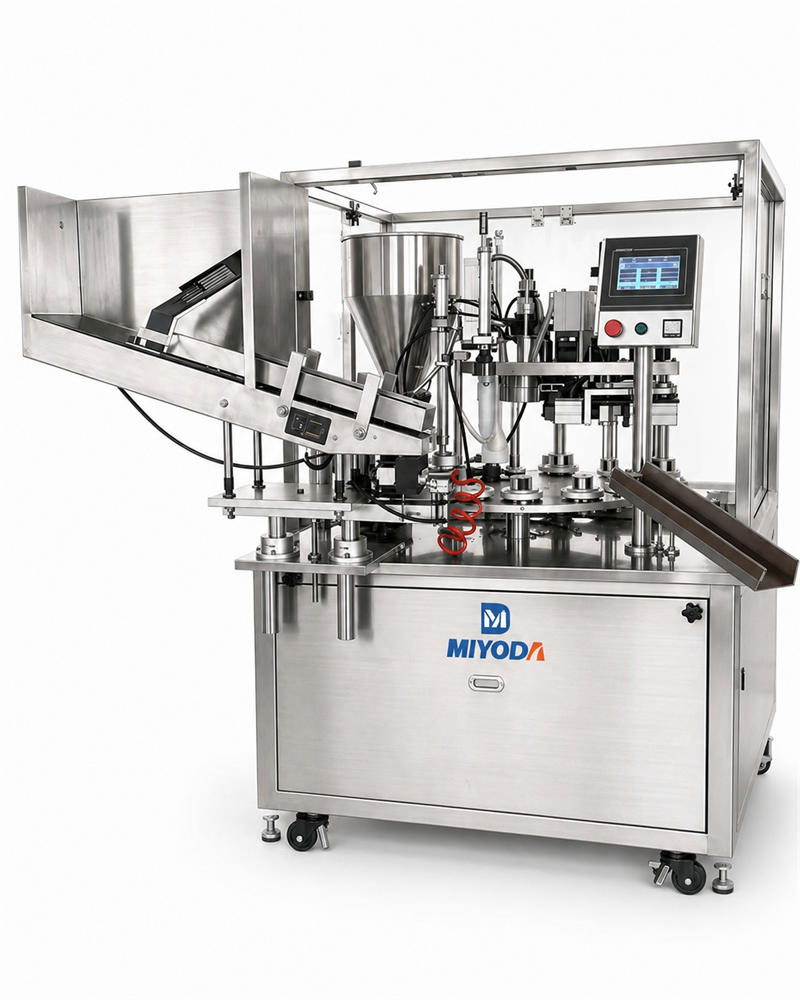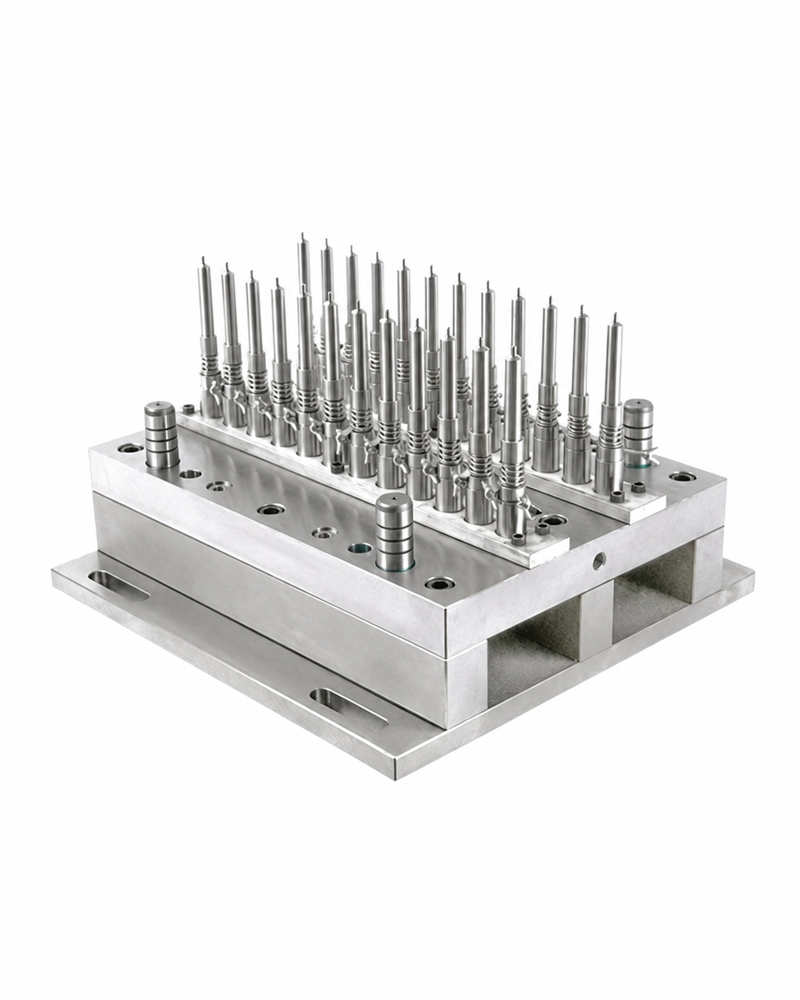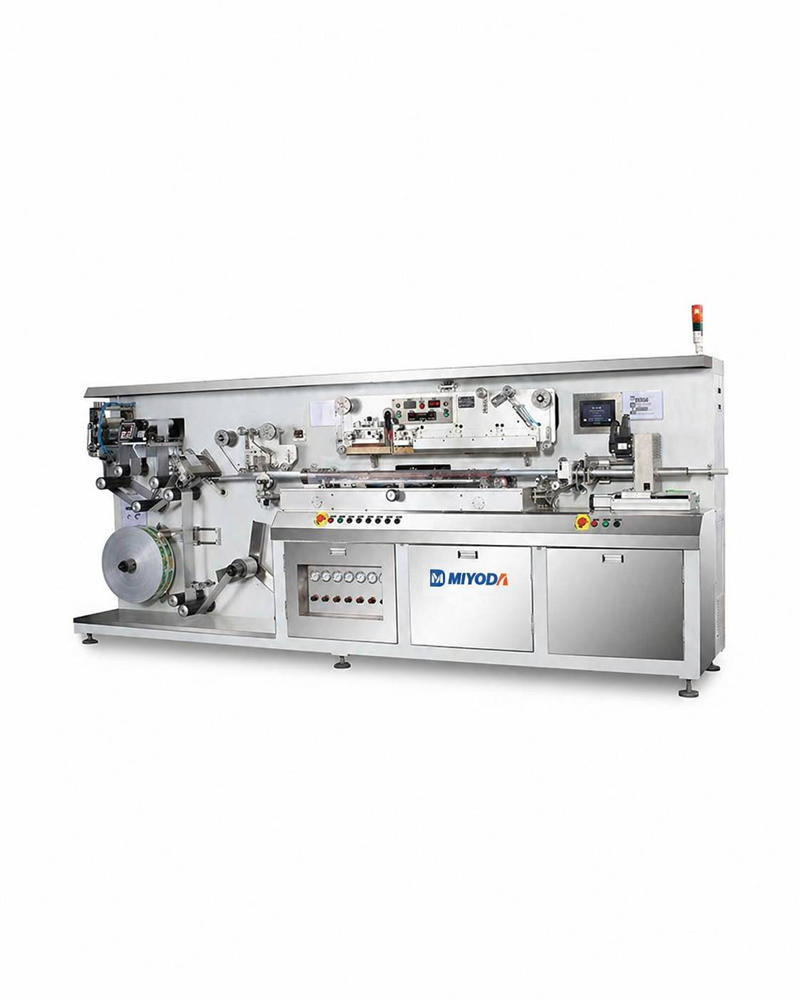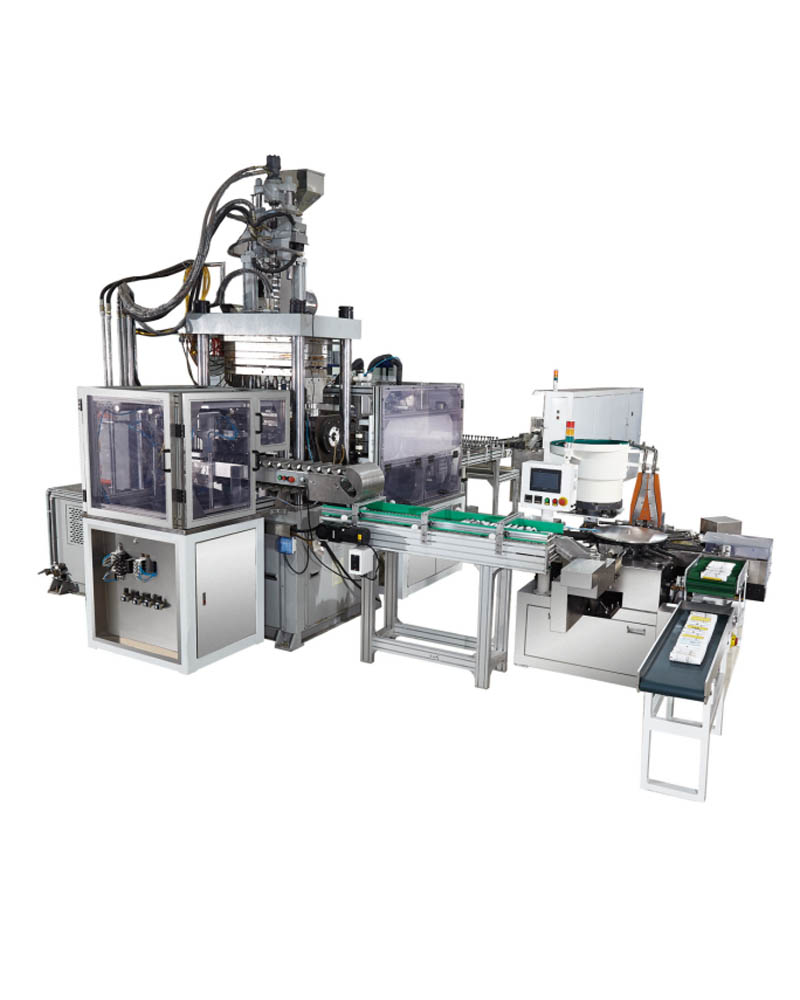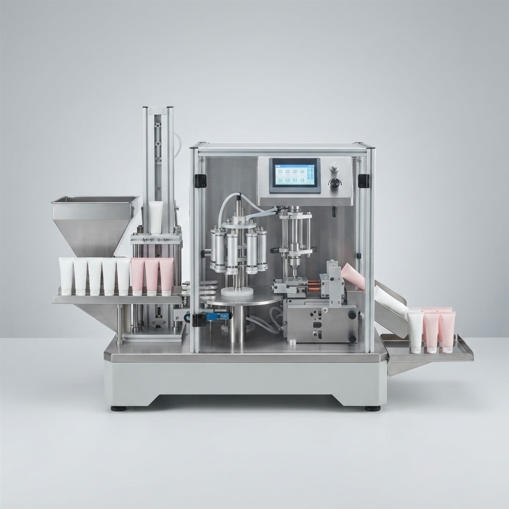

A Complete Total Cost of Ownership Guide for Cosmetic & Pharmaceutical Tube Manufacturers, Distributors, and Agents
You receive the invoice. The machine is paid for. The line starts running. And then — quietly, month by month — costs begin accumulating in places nobody warned you about.
For cosmetic and pharmaceutical tube manufacturers, screen printing equipment represents far more than a capital purchase. The ink that runs through those screens, the mesh that degrades under production pressure, the chemical cleaners your team goes through every shift, the operator hours tied to machine configuration, the batches scrapped due to a worn squeegee — each of these carries a real price tag that does not appear anywhere in your original quote.
This guide is written for one specific audience: the people making sourcing and budgeting decisions for soft tube packaging operations. Whether you manufacture cosmetic cream tubes, pharmaceutical ointment tubes, or laminated personal care packaging — or whether you are a distributor or agent helping clients evaluate equipment — you need an honest picture of what tube screen printing actually costs to run.
Because the manufacturers who build long-term competitive advantage in this industry are not the ones who bought the cheapest machine. They are the ones who understood their true operational cost profile — and made decisions accordingly.
📌 What This Guide Covers
- The five cost categories that impact your bottom line beyond machine purchase
- Real ink consumption and annual budget benchmarks by production volume
- Screen replacement cycles for cosmetic vs. pharmaceutical standards
- Cleaning supply and chemical disposal costs that are routinely missed
- Labor efficiency gaps between manual, semi-automated, and fully automated systems
- A machine-by-machine TCO breakdown over a 5-year horizon
- Quality control, compliance, and supply chain cost management strategies
Beyond the Purchase Price: Understanding Total Cost of Ownership for Tube Printing Operations
The Real Numbers Behind Machine Investment
Most purchasing decisions for tube screen printing equipment are made based on three figures: the machine price, the quoted throughput speed, and the delivery timeline. What rarely enters the conversation — at least at the outset — is what the machine will cost to operate every single month for the next five to ten years.
A manufacturer running 100,000 soft tubes per month with a mid-range screen printing press will typically spend significantly more on consumables, labor, maintenance, and quality-related rework over a five-year period than the original equipment cost. This is not an exception — it is the norm. According to industry TCO benchmarks from operations in cosmetic and pharmaceutical tube packaging, a manual press at this production volume carries an annual operating cost of approximately $128,500, while a fully automated system at the same volume runs closer to $95,900 — despite costing considerably more to acquire.
For distributors and agents, this is one of the most powerful conversations you can have with prospective clients. Manufacturers who see only the sticker price will consistently underinvest in the right equipment tier — and they will pay for that decision month after month through labor inefficiency, material waste, and production inconsistency.
| فئة التكلفة | Manual Press / yr | Semi-Auto / yr | Fully Auto / yr |
|---|---|---|---|
| CAPEX Amortization (7 yr) | $5,700 | $9,300 | $25,700 |
| Operator Labor | $72,000 | $48,000 | $18,000 |
| Screens & Consumables | $28,000 | $34,000 | $38,000 |
| Preventive Maintenance | $4,200 | $6,800 | $11,000 |
| Unplanned Downtime Cost | $18,600 | $8,400 | $3,200 |
| Total Annual Operating Cost | $128,500 | $106,500 | $95,900 |
Source: Adapted from TCO benchmarks for cosmetic/pharmaceutical tube packaging operations at ~120,000 units/month. See full methodology at Miyoda Packaging Machinery’s Buyer’s Guide.
The Five Major Cost Categories That Affect Your Bottom Line
Understanding TCO (Total Cost of Ownership — the complete financial picture of owning and operating equipment over its useful life, including purchase price, operating expenses, maintenance, and end-of-life costs) means thinking across five distinct cost buckets that interact with each other in ways that a simple “cost per tube” calculation misses entirely.
The five categories are: ink and consumables, screen replacement and care, cleaning supplies and chemical management, labor and operator efficiencyو maintenance and downtime. Each carries a different weight depending on your production volume, substrate type, and whether you serve cosmetic or pharmaceutical clients. A pharmaceutical packaging line running under FDA cGMP (Current Good Manufacturing Practice — the minimum standards set by the U.S. Food and Drug Administration for drug manufacturing quality and control) requirements, for instance, will face significantly higher cleaning and compliance costs than a cosmetic-only operation — and must budget accordingly.
Ink Costs: The Ongoing Expense That Surprises Most Tube Manufacturers

Understanding Ink Consumption Rates for Soft Tube Production
Ink is not a fixed cost — it is a highly variable one. A 35mm cosmetic cream tube printed with a full-circumference four-color design consumes dramatically more ink per unit than a pharmaceutical ointment tube with a single-color regulatory label. Wall thickness also matters: thinner LDPE (Low-Density Polyethylene — the most common material for soft cosmetic tubes, characterized by flexibility and light weight) tube walls absorb slightly more ink under squeegee pressure than thicker laminate constructions, pushing up per-unit consumption by 8–15% in comparable print designs.
For a manufacturer printing 100,000 tubes per month with moderate design complexity, monthly ink expenses typically land between $3,000 and $6,000 — representing 8–15% of total production costs. Operations that have not tracked actual consumption often discover their real ink spend is 20–30% higher than estimated, because setup waste, color matching tests, and screen flushing at shift end are invisible in any budget that only measures production ink.
Cost Comparison: Standard vs. Specialty Inks for Cosmetic Packaging
UV-curable inks are the dominant choice for high-speed cosmetic tube production. They cure instantly under UV lamps, eliminating drying tunnels and enabling 80–160 tubes per minute on modern printing lines. The tradeoff is a higher per-liter cost and the capital investment in UV curing stations ($12,000–$30,000 each). For a contract packager running two shifts on 50mm cosmetic tubes, a high-speed automated UV printing line can reduce per-tube ink cost by as much as 18% compared to solvent systems — purely through elimination of evaporation waste during curing.
Water-based inks are the standard for pharmaceutical tube printing in most regulated markets (EU, US, Japan) because they carry the lowest ink migration risk — the concern that ink compounds may penetrate through thin tube walls and contaminate the product inside. They are also the cleanest from an environmental and waste disposal standpoint. Their limitation is that adhesion on bare LDPE surfaces is weaker than UV or solvent alternatives, typically requiring corona pre-treatment (a process that increases surface energy of the tube substrate to improve ink adhesion) to achieve durable bond strength.
Solvent-based inks deliver exceptional adhesion on aluminum collapsible tubes — the traditional pharmaceutical tube format — where UV systems struggle with metal surface energy variability. However, solvent inks carry significant VOC (Volatile Organic Compound) disposal and ventilation costs that are rising sharply under EU REACH (Registration, Evaluation, Authorisation and Restriction of Chemicals — the EU regulatory framework governing chemical substances) compliance requirements. European tube manufacturers using solvent systems are increasingly switching to water-based or UV alternatives to reduce this compliance burden.
Ink Waste and Spillage: Hidden Losses in Your Production Line
Most tube printing operations lose between 3–8% of total ink volume to setup waste, over-mixing, and end-of-shift flushing procedures. At a monthly ink spend of $4,000, that is $120–$320 disappearing before it ever touches a tube. Properly trained operators who calibrate ink viscosity precisely at the start of each run and follow documented flushing procedures consistently reduce this waste percentage below 3% — a difference that compounds to $1,500–$2,500 annually on a single production line.
Budgeting for Annual Ink Expenses Without Sacrificing Quality
The manufacturers who control ink costs most effectively do three things: they track actual consumption per production run (not just per order), they negotiate volume-tiered pricing agreements with their ink suppliers at the start of the year, and they resist the temptation to switch suppliers solely for a lower per-liter price without validating adhesion performance on their specific tube substrates first. A seemingly attractive 12% price reduction from a new ink supplier that causes 4% higher reprint rates nets out as a loss — one that often takes three months of production data to identify.
For pharmaceutical-grade inks specifically, the cost premium of 20–40% over standard cosmetic inks is non-negotiable. These inks meet purity and migration standards mandated by regulatory frameworks that pharmaceutical clients cannot waive. Build this cost difference explicitly into your pharmaceutical production pricing from day one.
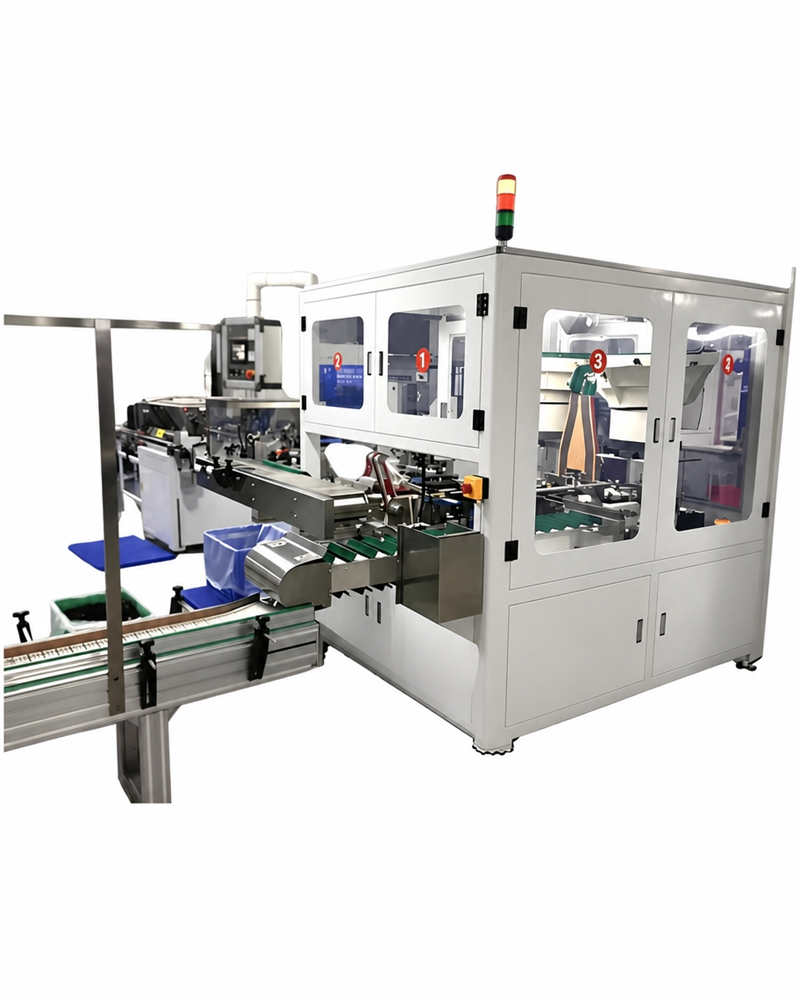
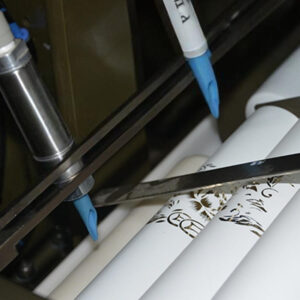
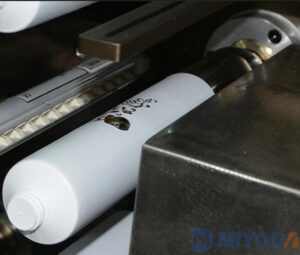
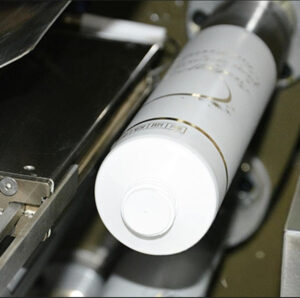
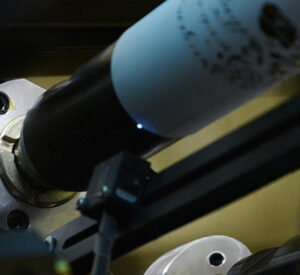
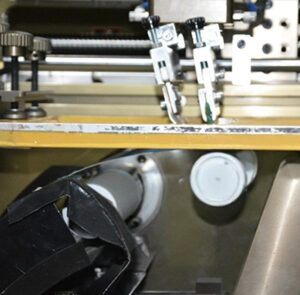
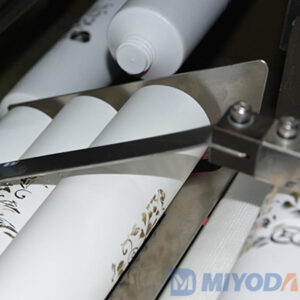
🎬 See It in Action: Automatic Screen Printing on Cosmetic & Pharmaceutical Tubes
High-speed automatic screen printing on cosmetic and pharmaceutical soft tubes — note the ink laydown precision and cycle speed.
Screen Replacement Cycles: Planning for Recurring Maintenance Expenses
How Often Screens Actually Need Replacement in Tube Printing
Ask ten screen printing operators how long a screen lasts, and you will get answers ranging from “a few months” to “over a year.” Both can be correct — because screen lifespan is a function of mesh count, ink type, cleaning method, and production intensity, not simply elapsed time. Under controlled conditions with proper cleaning protocols, a screen used for water-based cosmetic printing may deliver 800,000–1,000,000 impressions before the mesh tension degrades enough to affect print quality. The same screen used with abrasive UV inks on metallic laminate tubes may need replacement after 300,000 impressions.
Pharmaceutical packaging demands even more frequent attention. Stricter cleanliness standards under GMP protocols mean screens cannot be reused as aggressively across batch changeovers, and any visible mesh degradation — no matter how minor — constitutes a defect risk that the quality system cannot accept. In pharmaceutical environments, complete screen sets are typically refreshed every 6–9 months regardless of apparent condition.
Screen Degradation and Its Impact on Print Quality and Costs
Screen degradation does not announce itself with a sudden failure. It creeps in gradually — ink density begins to drift, registration shifts slightly between color stations, fine text characters on pharmaceutical labels develop soft edges. By the time these defects are visible to naked-eye inspection, the screen has likely been producing marginal-quality tubes for hours. The cost is not just the defective tubes themselves (which must be reprinted at 100% of material and labor cost), but the downstream inspection time spent catching them — and the customer relationship damage if any escape into shipment.
For a cosmetic brand with a premium positioning, tube print inconsistency translates directly into retail buyer complaints and potential de-listing. For a pharmaceutical client, a degraded screen producing illegible lot number text is a regulatory incident — not a quality complaint.
Preventive Screen Care: Reducing Replacement Frequency and Costs
The single highest-return maintenance practice in screen printing is proper post-run cleaning. A screen that is thoroughly cleaned within 30 minutes of production ending — before ink residues dry in the mesh — consistently lasts 30–45% longer than screens cleaned at the start of the following shift. This is not a trivial difference: at $120–$250 per screen, extending average screen life from four months to six months across a four-station press saves $960–$2,000 annually in screen replacement cost alone, before accounting for the changeover labor avoided.

Storage conditions also matter significantly. Screens stored in areas with high humidity or direct sunlight exposure suffer emulsion breakdown (the photo-sensitive coating that defines where ink can and cannot pass through the mesh) at two to three times the rate of screens kept in climate-controlled environments. A dedicated screen storage cabinet — a modest $200–$400 investment — can meaningfully extend screen inventory life across a high-volume operation.
Calculating Your Annual Screen Budget for Consistent Production
For a four-color cosmetic tube printing line running 150,000 units monthly, a realistic annual screen budget sits between $12,000 and $20,000 depending on design complexity and ink system. Multi-color operations require proportionally more screen inventory because each color station needs its own set — and screens across stations degrade at different rates depending on print area and ink viscosity. Build a contingency of 15–20% above your baseline screen budget to cover unexpected emulsion failures and urgent reprinting requirements without forcing unplanned supplier orders at full price.
🔍 Key Terms: Screen Printing Mesh
- Mesh count (tpi — threads per inch): Controls ink volume per stroke and maximum print resolution. 80–120 tpi for solid brand-color fills; 230–280 tpi for fine regulatory text on pharmaceutical tubes.
- EOM (Emulsion over Mesh): The stencil emulsion thickness above the mesh surface in micrometers — controls ink deposit height and color density.
- Screen tension (N/cm): Tautness of the mesh, measured in Newtons per centimeter. Industry standard for tube printing: 20–25 N/cm. Below this threshold, ink density becomes uneven across the print width.
Cleaning Supplies and Chemical Costs: The Overlooked Operational Burden
Daily Cleaning Requirements That Add Up Quickly
Cleaning is not optional in tube screen printing — it is a daily operational requirement that consumes real budget whether or not it appears as a line item in your cost model. A standard cosmetic tube printing line running two shifts requires emulsion removers, mesh degreasers, screen wash solvents, and squeegee cleaning agents every single working day. At a production volume of 100,000 tubes monthly, these consumables typically add $800–$1,500 per month in direct chemical costs — before disposal.
Pharmaceutical tube operations face a materially higher bar. GMP standards require that cleaning procedures are validated (documented and proven to reduce contamination below specified limits), that cleaning agents themselves are tracked in batch records, and that cross-contamination between product batches is demonstrably prevented. This means more thorough cleaning procedures, longer cleaning cycles between product changeovers, and chemical consumption rates that run 40–60% higher than in cosmetic-only operations.
Comparing Manual vs. Automated Cleaning Systems
A skilled operator manually cleaning a four-station screen printing press at shift end typically spends 45–75 minutes on the task. Across a two-shift, five-day operation, that is 7.5–12.5 hours of labor weekly consumed exclusively by cleaning — before any screen reclamation or storage work. For an operator earning $18–$25 per hour, this represents $7,000–$16,000 annually in cleaning-dedicated labor cost on a single press line.
Automated cleaning systems for high-volume operations can reduce this to under 15 minutes of supervised automation per shift. For operations producing 200,000+ tubes monthly, the ROI on automated cleaning equipment is typically achieved within 12–18 months through labor savings alone — with the additional benefits of improved cleaning consistency (which extends screen life) and reduced chemical waste from precision-metered application.
Chemical Safety and Compliance Costs Often Missed in Budgets
Beyond the purchase price of cleaning chemicals sits a category of costs that most manufacturers do not budget for explicitly: OSHA-compliant chemical storage (secondary containment, ventilation requirements, hazardous materials signage), staff training on chemical handling and emergency procedures, and — critically — waste disposal.
Chemical waste disposal adds 15–25% to your baseline cleaning supply cost. For a pharmaceutical operation generating solvent and emulsion remover waste at high-volume production rates, compliant chemical disposal through a licensed hazardous waste contractor costs $500–$1,500 per month in most US and EU jurisdictions. This is not a discretionary expense — regulatory inspectors treat improper chemical disposal as a significant violation with direct financial penalties.
Creating a Realistic Cleaning Supply Budget
Build your cleaning supply budget from the bottom up: estimate chemical consumption per shift based on your press configuration and substrate type, multiply by working days, add a 25% buffer for waste disposal, and verify that bulk purchasing agreements with your chemical supplier are reducing your per-liter cost. Many tube manufacturers purchase cleaning chemicals on an as-needed basis — a practice that routinely costs 15–25% more per unit than a quarterly bulk purchase agreement with the same supplier.
Labor Efficiency: How Machine Type Impacts Your Workforce Costs

The Hidden Labor Costs Associated with Different Machine Types
Labor is typically the largest single operating cost in a manual or semi-automated tube printing operation — yet it is often the cost that manufacturers least accurately account for when comparing machine options. The reason is that labor costs are rarely assigned per machine. They are paid as salaries or wages across a workforce, and their relationship to specific equipment becomes visible only when you analyze operator-to-output ratios carefully.
A single-head manual screen printing press for tube packaging requires dedicated operator attention throughout the production run — tube loading, positioning, print initiation, and unloading are all manual steps. At a typical throughput of 600–900 tubes per hour, one operator can realistically manage one machine. That same operator, on a four-head semi-automated system, may manage 2,500–3,500 tubes per hour with comparable attention load — meaning the labor cost per 1,000 tubes drops by roughly 65–75%.
Operator Skill Level and Training Costs
Semi-automated and fully automated tube printing systems demand more technically skilled operators than manual presses. Setting print registration parameters, calibrating UV lamp intensity, troubleshooting servo indexing errors, and performing in-process color density checks require genuine technical competence — not just attentiveness. Experienced operators with these skills command wages 20–35% higher than entry-level press operators, and the training timeline to bring a new hire to full competence on a multi-head automated system is typically 6–12 weeks.
The investment in operator training, however, pays for itself rapidly. Operations that document their new-hire training programs and track competency assessments at 30, 60, and 90 days consistently report 25–35% fewer production errors in the first year compared to operations relying on informal on-the-job learning — a difference that directly translates to reduced ink waste, fewer screen failures, and lower reprint rates.
Production Downtime: The Invisible Cost Eating Your Profits
Unplanned downtime is the cost multiplier that most manufacturers consistently underestimate. When a pharmaceutical client has a scheduled delivery and your press line goes down unexpectedly, the financial impact extends far beyond the value of tubes not produced. Every hour of unplanned downtime in a pharmaceutical tube printing operation costs an estimated $500–$2,000 in lost production value — before any customer penalty clauses, expedited shipping costs, or overtime paid to recover lost output.
Manual presses, paradoxically, generate the highest downtime losses per incident — not because they break down more often than automated systems, but because they have no redundancy. A single manual press failure stops 100% of its production output. A multi-head automated system from شركة ميودا لآلات التغليف with modular station architecture can often continue partial production on remaining stations while a single faulty station is being serviced — reducing effective downtime cost by 40–60% per incident.
Optimizing Labor Allocation Across Your Tube Printing Operation
The most operationally efficient tube printing operations build cross-training deliberately into their workforce planning. When an operator is trained only on one machine type or configuration, a single absence creates a cascading bottleneck. Facilities that cross-train at least 50% of their printing operators across two or more machine types report 18–24% better equipment utilization rates — simply because skill availability is no longer the binding constraint on production scheduling.
Machine-Type Breakdown: Which System Fits Your True Cost Profile
Manual Screen Printing Machines: Best for Small-Batch Cosmetic Producers
For a cosmetic brand just entering tube packaging — perhaps a regional skincare line running 5,000–15,000 tubes per month across a handful of SKUs — a manual screen printing press offers the lowest entry point both financially and operationally. Upfront investment is typically $8,000–$25,000 for a quality manual press configured for tube substrates, and the simplicity of the system means operators reach functional competence within two to three weeks.
The hidden cost reality, however, is that manual presses carry the highest per-unit operating cost of any system type. At production volumes below 20,000 tubes per month, this is acceptable — the overhead structure of a manual operation remains manageable. But between 30,000 and 50,000 units monthly, the labor cost per tube on a manual system begins to noticeably erode margins, and the competitive pricing pressure from manufacturers operating semi-automated lines becomes difficult to absorb.
Total Cost of Ownership for Manual Systems Over 5 Years
| Year | Manual Press | Semi-Auto | Fully Auto |
|---|---|---|---|
| Year 1 (incl. CAPEX) | $145,000 | $175,000 | $285,000 |
| Year 2 | $128,500 | $106,500 | $95,900 |
| Year 3 | $131,500 | $108,000 | $94,500 |
| Year 4 | $135,000 | $109,500 | $93,200 |
| Year 5 | $139,000 | $111,000 | $92,000 |
| 5-Year Total | $679,000 | $610,000 | $660,600 |
Illustrative TCO at ~120,000 units/month production volume. Fully automated system shows highest Year 1 cost but lowest ongoing operating cost, with break-even vs. semi-auto typically reached in Year 3–4.
Semi-Automated Machines: The Middle Ground for Growing Operations
Semi-automated tube printing systems — where tube feeding and indexing are mechanically assisted but the operator still manages setup and changeover — represent the most commonly purchased category for growing cosmetic tube manufacturers. They reduce per-unit labor costs by 40–60% compared to manual systems, handle 2,000–4,500 tubes per hour depending on configuration, and offer a more manageable capital investment than fully automated lines.
The operational sweet spot for semi-automated equipment is 30,000 to 150,000 tubes per month. Below this range, the capital cost is difficult to justify against a simpler manual press. Above it, the labor cost structure of semi-automated systems increasingly becomes a competitive disadvantage against fully automated alternatives.
For pharmaceutical clients specifically, semi-automated systems with integrated print registration monitoring and in-line rejection capability offer a pragmatic compliance pathway — providing the documentation and defect control that pharmaceutical quality systems require, without the full capital commitment of an automated line. The team at شركة ميودا لآلات التغليف offers detailed configuration guidance for operations navigating exactly this transition point.
Fully Automated Systems: Premium Investment for High-Volume Tube Manufacturers

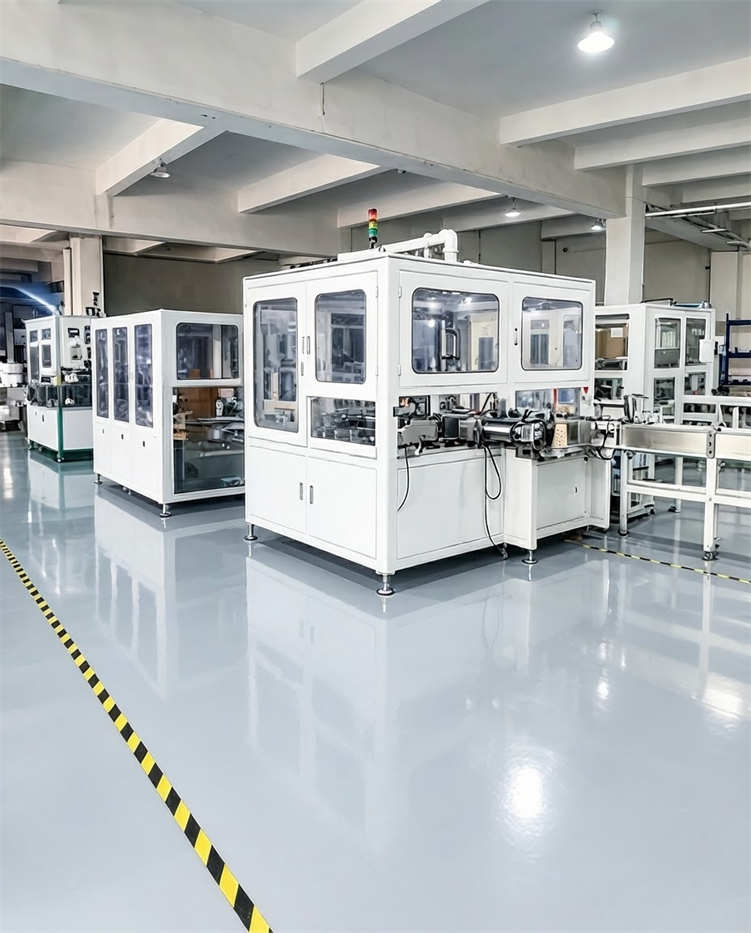
At production volumes exceeding 200,000 tubes per month, fully automated screen printing systems are not a luxury — they are a financial necessity. The per-unit cost advantage at this scale is decisive: fully automated systems produce tubes at $0.04–$0.12 per unit, compared to $0.15–$0.35 for manual operations. The compounding effect of this cost difference at 300,000 units monthly translates to annual savings of $33,000–$93,000 in direct production cost — well above the additional capital amortization of automated equipment.
The maintenance profile of fully automated systems is, however, materially more complex. Servo drives, vision inspection modules, UV curing system electronics, and pneumatic feed mechanisms all introduce failure modes that a basic manual press does not have. Preventive maintenance schedules must be followed rigorously — and operations lacking in-house technical capability should strongly evaluate manufacturer service contracts rather than relying on reactive repair. Annual preventive maintenance costs for a fully automated tube printing line typically run $11,000–$18,000 — compared to $4,000–$6,000 for a manual or semi-automated equivalent — but this investment prevents catastrophic failures that carry four-figure hourly downtime costs.
Long-Term TCO for Automated Systems (5–10 Year Horizon)
The financial case for automation strengthens considerably when extended to a 10-year timeframe. The capital investment amortizes to near-zero in Year 7–8 while ongoing operating costs continue to decline slightly as maintenance teams build institutional knowledge of the equipment. Manufacturers who have operated the same automated press line for eight or more years consistently report per-unit operating costs 20–30% below their Year 1 projections — because the learning curve in preventive maintenance, consumable optimization, and setup efficiency compounds meaningfully over time.
Preventive Maintenance: Investing Now to Avoid Catastrophic Costs Later
The True Cost of Neglecting Machine Maintenance
Emergency repairs cost 30–40% more than planned maintenance — and that figure does not capture the production losses, expedited parts shipping, overtime labor, and customer penalty clauses that accompany an unplanned breakdown. For pharmaceutical manufacturers with time-sensitive production orders, a press failure on a Thursday afternoon can mean a Friday delivery missed — with consequences that extend well beyond the repair invoice.
The most common failure points in tube screen printing equipment are predictable and preventable: squeegee carriage bearing wear, UV lamp degradation, mandrel drive belt elongation, and emulsion coating system pump failure. Each of these components has a documented mean time between failures — and each can be replaced on a planned schedule at a fraction of the cost of an emergency replacement.
Maintenance Schedule That Protects Your Investment
| التردد | المهمة | Estimated Cost |
|---|---|---|
| يوميًا | Screen cleaning, squeegee inspection, UV lamp wipe-down, ink viscosity logging | Labor only (~45 min) |
| أسبوعي | Squeegee edge condition check, flood bar seal inspection, UV intensity measurement | $20–$80 in parts |
| شهريًّا | Bearing lubrication, belt tension check, servo drive calibration, registration accuracy test | $150–$400 |
| ربع سنوي | UV lamp replacement (if intensity below threshold), full press alignment, pneumatic system service | $800–$2,000 |
| Annual | Full mechanical inspection, drive belt replacement, control system firmware update, comprehensive calibration | $3,000–$7,000 |
Building a Maintenance Reserve Fund
Best practice for tube printing operations is to set aside 2–4% of total equipment value annually as a maintenance reserve — funds earmarked specifically for parts replacement and servicing that are not visible in the day-to-day operating budget. For a $150,000 automated press line, this means $3,000–$6,000 per year in reserve funding that prevents the painful situation of delaying a necessary repair because the operating budget is exhausted. Maintaining a buffer stock of the 10 highest-frequency wear parts — squeegee blades, UV lamp assemblies, flood bar seals — eliminates the most common cause of extended production stoppages: waiting for parts delivery.
Service Contracts vs. DIY Maintenance: Financial Analysis
For tube printing operations without dedicated maintenance engineers, manufacturer service contracts typically represent superior financial value despite their upfront cost. A service contract for a fully automated tube printing line costs $8,000–$15,000 annually — but provides on-site response within 48 hours, parts coverage for major components, and remote diagnostic access that can often resolve electrical and software issues without a site visit. The break-even calculation is straightforward: if the contract prevents just four or five days of unplanned downtime annually (at $500–$2,000 per hour lost production), the contract has paid for itself multiple times over. For pharmaceutical manufacturers, FDA cGMP documentation requirements for equipment qualification also make formal service agreements easier to maintain than ad-hoc repair records.
Quality Control Costs: Preventing Expensive Reprints and Customer Rejections
How Print Defects Drive Hidden Costs in Tube Manufacturing
Every defective tube represents 100% of its material and labor cost with zero recoverable revenue. In cosmetic tube printing, typical defect rates without active quality control hover between 3–8% of production volume — meaning for every 100,000 tubes printed, 3,000–8,000 require rework or disposal. At a blended material and labor cost of $0.25–$0.40 per tube, that is $750–$3,200 in direct waste per 100,000 units produced.
For pharmaceutical clients, the stakes are considerably higher. A single batch rejection triggered by print quality failure — illegible lot number, color density out of specification, registration error on a regulatory symbol — can cost $5,000–$20,000+ per incident when you factor in the full cost of materials, reprocessing, documentation, and regulatory notification. This is why pharmaceutical tube manufacturers treat print quality investment not as a cost, but as risk mitigation against a far larger potential loss.
Inspection Systems and Quality Assurance Equipment
Color matching and spectrophotometric verification — the process of measuring actual ink color against a defined standard using an optical measurement device — is now considered standard practice in premium cosmetic tube printing. Entry-level spectrophotometers for in-production color verification cost $2,000–$5,000. For operations producing for multiple brand clients with strict color tolerances, the ROI is typically achieved within 6 months by reducing the frequency of color-related reprints.
Automated visual inspection systems — camera-based systems that capture and analyze every tube as it exits the press — represent the highest quality control investment but offer compelling ROI at volumes above 150,000 units monthly. These systems consistently catch defect rates of 0.2–0.5% that pass visual operator inspection, eliminating the risk of defective tubes reaching customers and triggering relationship-damaging complaints.
Documentation and Compliance Costs for Pharmaceutical Clients
Pharmaceutical tube printing requires batch records that document every critical print parameter — ink batch number, screen tension, UV lamp intensity, print registration offset — for every production run. This documentation is not optional: it is a prerequisite for releasing pharmaceutical product to market under cGMP compliance frameworks. The labor cost of manual record-keeping on a pharmaceutical production line adds 0.5–1.5 operator-hours per shift — a hidden cost that disappears entirely when presses are equipped with integrated data logging that generates batch records automatically.
Supply Chain Management: Optimizing Inventory Without Tying Up Capital
Balancing Inventory Levels to Minimize Costs
The inventory challenge for tube screen printing operations sits between two expensive failure modes: carrying too much inventory (which ties up working capital, risks material degradation, and increases storage costs) and carrying too little (which leads to emergency purchases at premium prices, production delays, and missed delivery commitments). The optimal position is specific to your production profile — but a useful rule of thumb for consumable planning is to maintain 2–3 months of standard items (mesh screens, squeegee blades, standard cleaning chemicals) and only 2–4 weeks of specialty inks, which carry both higher per-unit costs and shorter shelf lives.
Supplier Relationships and Bulk Purchasing Discounts
Tube printing operations that consolidate their consumable purchasing with fewer suppliers — rather than sourcing each item from the cheapest available vendor — consistently negotiate better pricing. Volume commitment agreements, where you guarantee a minimum annual purchase quantity in exchange for a fixed per-unit price, typically deliver 12–20% savings on ink and 8–15% savings on screen materials compared to spot purchasing. The risk of this approach is supplier dependency — which is why maintaining a qualified second supplier for every critical consumable category, even if you rarely use them, is essential business continuity practice.
Import and Logistics Costs for International Supply Chains
For tube manufacturers sourcing specialty inks or custom screens internationally — particularly from European or Japanese suppliers for pharmaceutical-grade materials — logistics costs can add 8–18% to the FOB (Free on Board) price of consumables, depending on origin, shipping mode, and current freight market conditions. Lead times of 4–8 weeks for specialty items from overseas suppliers require precise demand forecasting; a single miscalculation that creates a stockout on a critical ink color for a pharmaceutical client can force emergency air freight at costs 4–6x higher than standard ocean shipping rates.
Building strong relationships with regional distributors — like the partner network supported by شركة ميودا لآلات التغليف — provides access to regionally stocked consumables and technical support without the lead times and logistics complexity of direct international sourcing.
Conclusion: Creating Your Comprehensive Cost Management Strategy
Putting It All Together: Your Total Cost of Ownership Framework
The manufacturers who consistently achieve the best financial performance in cosmetic and pharmaceutical tube printing are not those with the lowest equipment budgets — they are those who understand every element of their operational cost structure and make decisions accordingly. TCO analysis brings that clarity: it transforms the equipment purchase from a transaction into a strategic investment decision grounded in your actual production economics.
To build a credible TCO model for your operation, start with your current production volume and project forward 60 months using a conservative growth assumption. Assign realistic costs to each of the five categories: ink, screens, cleaning supplies, labor, and maintenance. Include downtime assumptions based on your current experience or industry benchmarks. Then model the same cost structure across manual, semi-automated, and fully automated alternatives — and let the numbers drive the decision, not the purchase price.
Action Steps for Distributors and Agents
For equipment distributors and agents serving cosmetic and pharmaceutical tube manufacturers, TCO analysis is your most powerful sales and advisory tool. A client who sees only the machine price will always gravitate toward the cheapest option. A client who understands that a $55,000 semi-automated press carries $106,500 in annual operating costs — versus $95,900 for a $180,000 automated system — makes a fundamentally different decision. Your role is to provide the analytical framework that makes this comparison transparent, credible, and specific to the client’s production context.
Distributors and agents who lead with TCO education build a different kind of client relationship — one based on genuine advisory value rather than price competition. These relationships generate repeat business, referrals, and the kind of long-term partnership that withstands market pressure.
Long-Term Financial Planning for Sustainable Growth
Budget for equipment upgrades before production outgrows your current system — not after. The worst time to evaluate a new press investment is when you are already running at 95% capacity and quality is beginning to suffer. The best manufacturers in this industry plan their capital allocation two to three years ahead, using TCO analysis to identify the production threshold where their current equipment tier will no longer be financially competitive — and preparing their financing, vendor evaluation, and installation timeline accordingly.
Ready to Understand the True Cost of Your Tube Printing Operation?
Schedule a confidential consultation with our equipment specialists at Miyoda Packaging Machinery. We will analyze your production requirements, calculate realistic TCO projections for different machine types, and help you make the investment decision that maximizes profitability for your cosmetic or pharmaceutical packaging business.
الأسئلة المتداولة
Answers grounded in operational reality for cosmetic and pharmaceutical tube manufacturers, distributors, and agents.
📖 Glossary of Key Terms
- TCO (التكلفة الإجمالية للملكية)
- The complete financial picture of owning and operating equipment over its useful life — including purchase price, operating expenses, maintenance, downtime, and end-of-life costs.
- LDPE (Low-Density Polyethylene)
- The most common substrate for cosmetic soft tubes, characterized by flexibility and lightweight construction. Requires corona pre-treatment for optimal ink adhesion.
- cGMP (Current Good Manufacturing Practice)
- FDA regulations establishing minimum quality standards for pharmaceutical manufacturing, processing, and packaging. Non-compliance carries significant regulatory and financial penalties.
- OEE (فعالية المعدات الإجمالية)
- Availability × Performance × Quality. World-class benchmark: 85%. Industry average for printing operations: 55–65%. A reliable metric for measuring true production efficiency.
- التحقق من الصلاحية (IQ)/التأهيل التشغيلي (OQ)/التأهيل الدائم (PQ)
- Installation Qualification, Operational Qualification, Performance Qualification — the three-phase equipment validation process required for pharmaceutical manufacturing environments.
- EOM (Emulsion over Mesh)
- The stencil emulsion thickness above the mesh surface in micrometers, controlling ink deposit height and print color density.
- VOC (Volatile Organic Compound)
- Carbon-based chemicals that evaporate at room temperature, found in solvent-based inks. Subject to strict regulatory limits under EU REACH and US EPA frameworks.