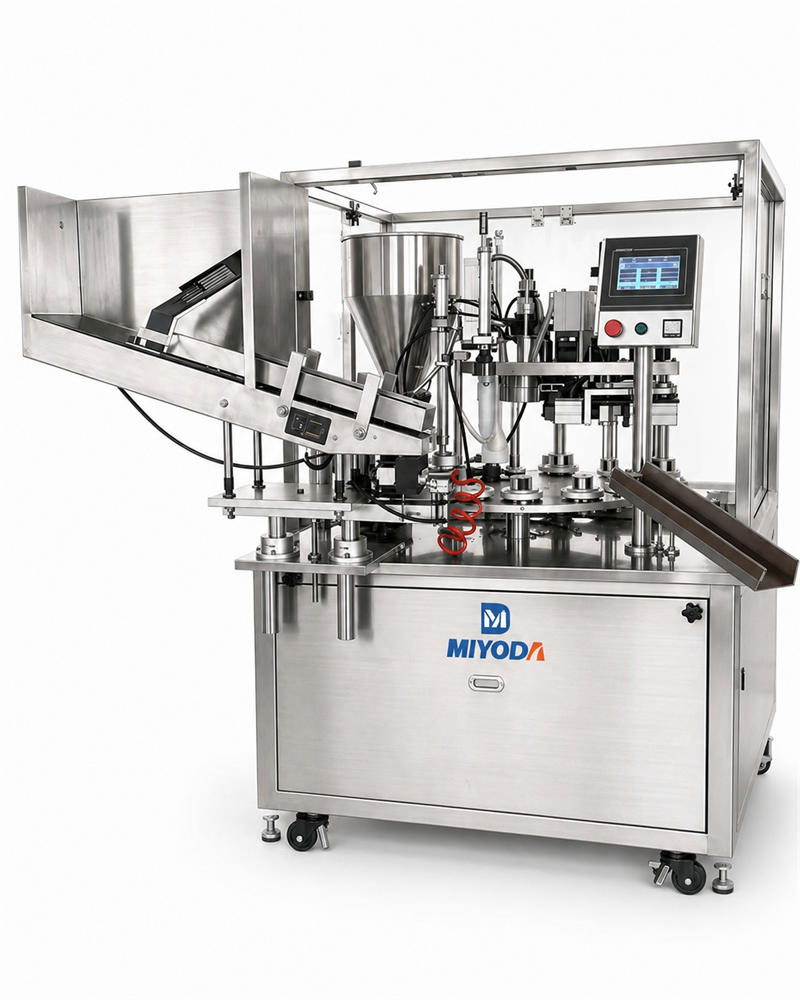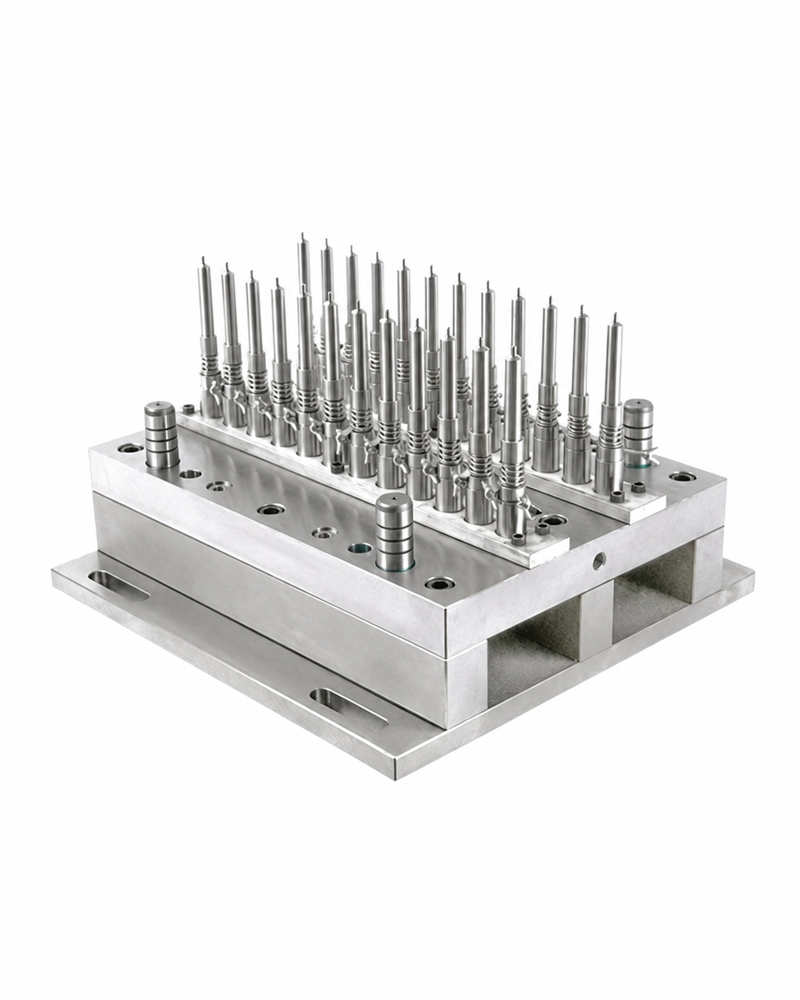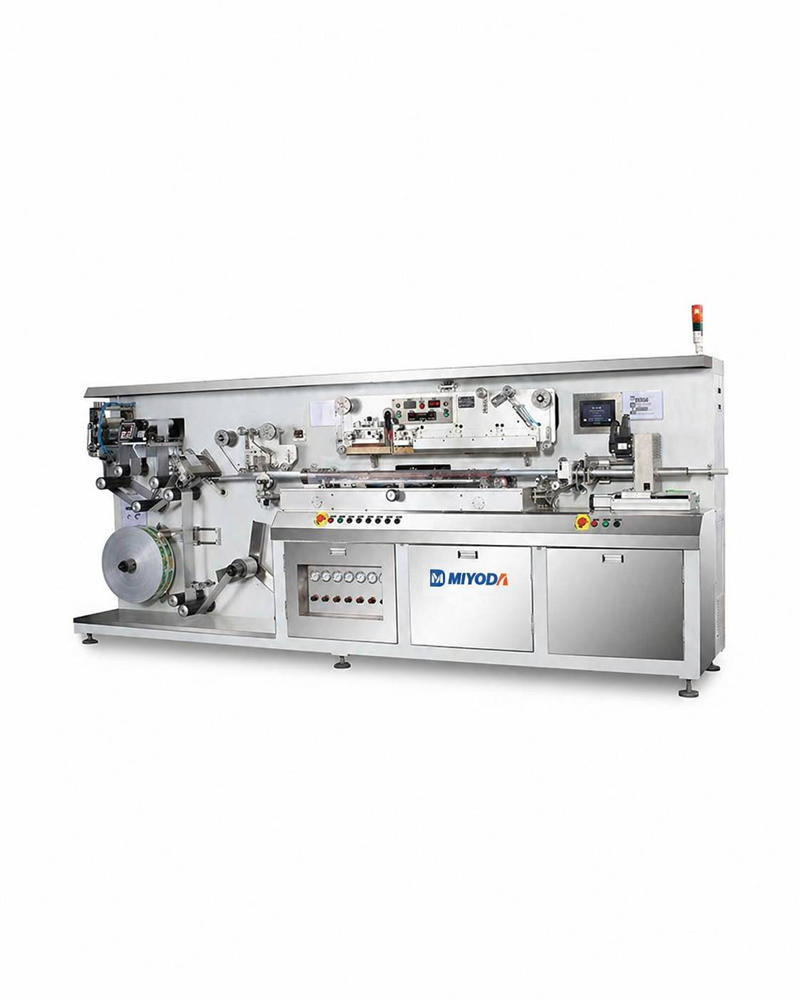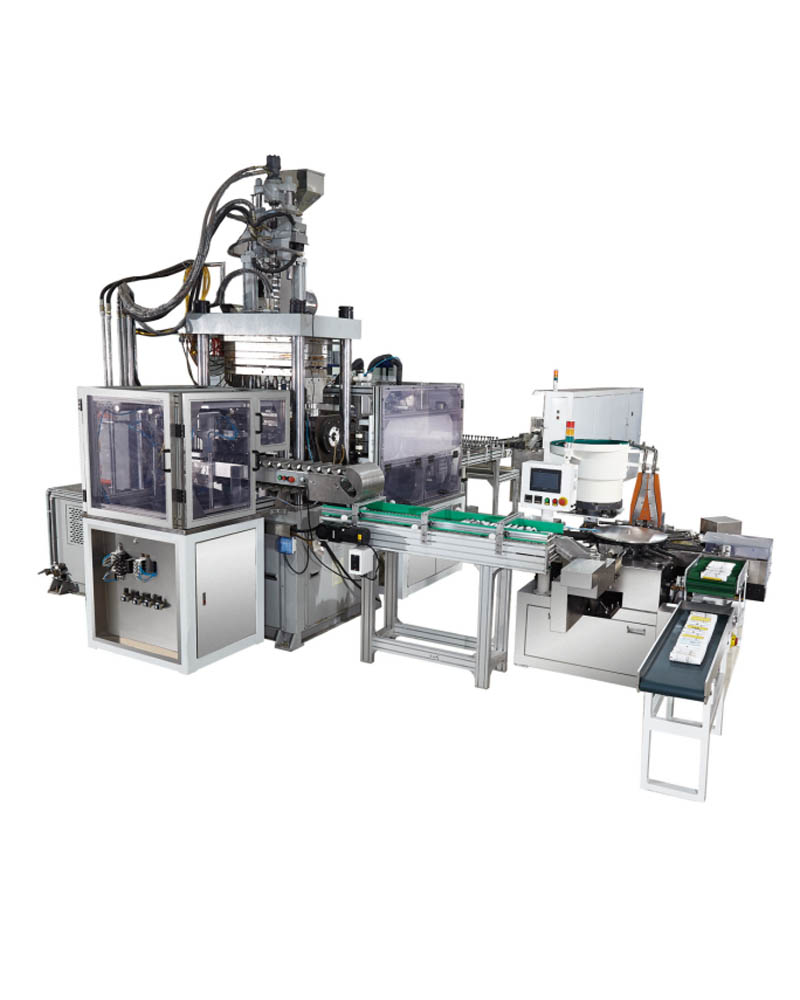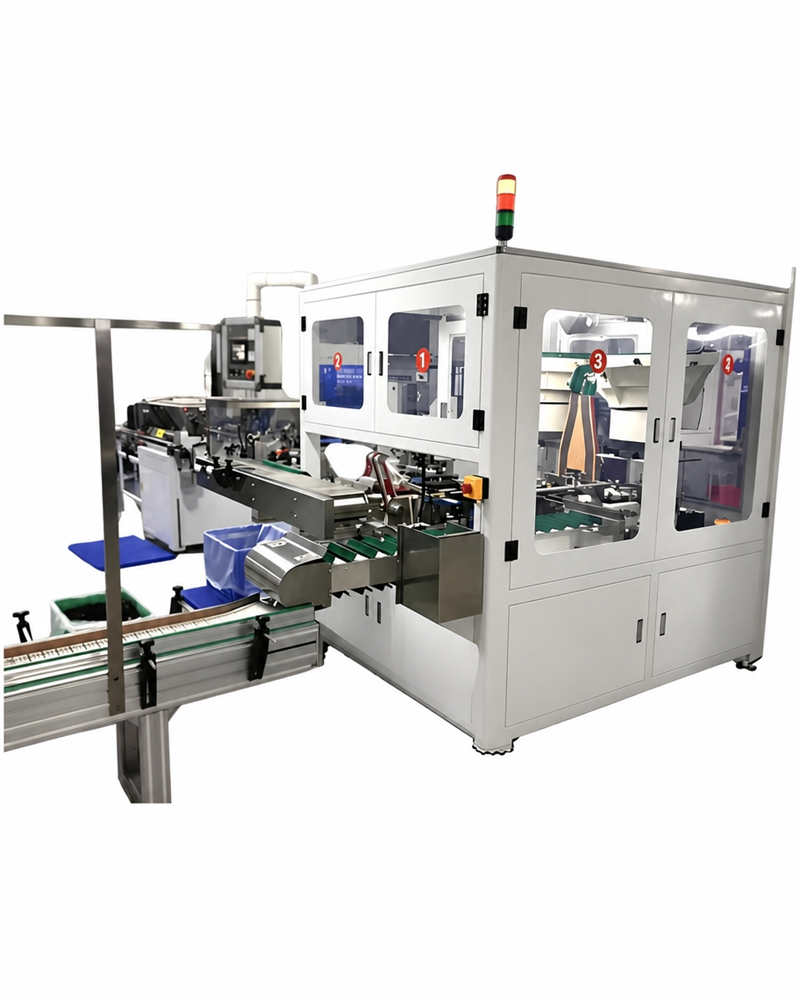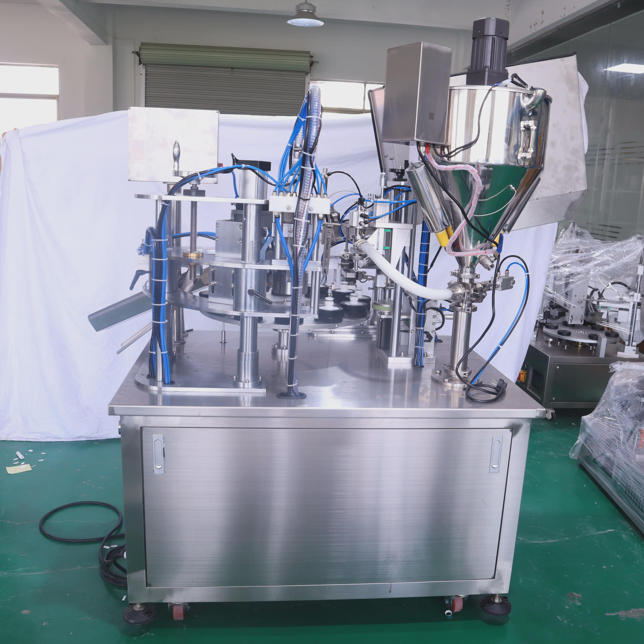
How to Properly Maintain Your Filling & Sealing Machine for Longevity

Preventive maintenance is not a cost line — it is the most reliable investment a tube filling operation can make.
Here is a figure that shapes every decision in this guide: unplanned manufacturing downtime costs between $10,000 and $260,000 per hour depending on production scale and product value (Oxmaint, 2025). For a cosmetic or pharmaceutical tube filling line running at 80 tubes per minute, a single 6-hour unplanned stoppage — from a seized sealing jaw, a clogged nozzle, or a pump seal failure — translates to roughly $23,000–$32,000 in combined losses: lost output, wasted in-process product, emergency technician overtime, and potential late-delivery penalties.
The most important fact about that number is this: most of those stoppages are entirely preventable.
This guide walks you through the maintenance programme that keeps your filling and sealing machine producing at peak performance — shift after shift, month after month, year after year. It is written for cosmetic and pharmaceutical tube producers, distributors, and agents who have invested in this equipment and need it to perform. Not for engineers writing SOPs. For people who need real results from their machines.
Why Maintenance Is Your Competitive Advantage
The businesses that compete most effectively in cosmetic and pharmaceutical tube packaging are not always those with the newest machines. They are the businesses whose machines are running when competitors’ machines are not.
In contract manufacturing and private-label tube supply, delivery reliability is often the primary factor in contract renewal. Research cited in documented case studies shows that 52% of consumers who experience a packaging failure do not repurchase the affected brand for at least six months — a retention cost that dwarfs the value of the defective unit. In the B2B world, a supplier who misses two shipment windows in one quarter signals operational instability — the kind that pushes buyers toward alternative suppliers before the next RFQ cycle.
Reactive maintenance — fixing problems after they occur — costs 3–5× more than planned maintenance for the same component replacement. A sealing jaw heating element that costs $80 in a planned maintenance window costs $400–$600 to replace during a shift emergency when a technician is pulled from another task and parts are air-freighted overnight.
Preventive maintenance is not a cost centre. It is a production cost reduction strategy that also protects your delivery commitments, your product quality, and your compliance posture.
A note on compliance: Pharmaceutical tube manufacturers operate under FDA CGMP regulations (21 CFR Part 211), which explicitly require documented equipment cleaning and maintenance records, calibrated measuring systems, and validated process controls. For cosmetics, ISO 22716 GMP for cosmetics requires that equipment is maintained in a condition that does not contaminate or alter product. Maintenance is not optional in these industries — it is a regulatory requirement.
Daily Maintenance Checklist: The Foundation of Reliability
Daily maintenance is the highest-leverage maintenance activity you perform. It takes 15–20 minutes. It prevents problems that cost 8–16 hours to recover from.
Every operator starting a shift should complete the following before the first production run begins:
Product-contact surface cleaning
All nozzle tips, fill heads, and product-contact piping must be wiped and inspected for residue from the previous run. Residual product — especially high-viscosity pastes, mineral-containing formulations, and any product with active ingredients — builds up at nozzle tip exits and dries between shifts. A 2-minute wipe-down prevents the nozzle fouling that causes fill weight drift or, in severe cases, complete nozzle occlusion requiring emergency disassembly.
Glossary — Nozzle occlusion: partial or complete blockage of the fill nozzle, preventing product from being dispensed at the correct volume. Caused by dried residue, particle accumulation, or product that has changed phase (e.g., cream that has solidified at the nozzle tip overnight).
Sealing jaw visual inspection
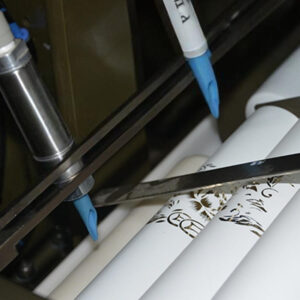
Inspect sealing jaw faces for surface wear, pitting, or product residue. The jaw faces — the hardened contact surfaces that compress the tube tail during heat sealing — degrade through continuous production cycles. A jaw face showing pitting or irregular surface wear creates uneven pressure distribution across the seal width, producing seal zones that may pass visual inspection but fail under distribution handling stress. If you see visible surface irregularity, flag for supervisor review before production starts.
Fill weight verification (first 10 tubes)
Weigh the first 10 filled tubes on a calibrated reference scale — not the machine’s internal display. Record the results. All 10 should fall within ±2% of target weight. If any fall outside that window, adjust and recheck before full production begins. This 5-minute verification catches overnight parameter drift, residual temperature effects from the previous shift, or any change in product batch viscosity — before it affects thousands of tubes.
Fluid line and seal integrity check
Check all flexible hoses and connections on the product feed system for signs of weeping, staining, or joint deterioration. A fluid line that is beginning to fail announces itself with minor seepage before it fails completely. Find it here; do not find it in the middle of a production run.
Heating system verification
Confirm that the sealing system’s displayed temperature matches the setpoint within ±5°C before production starts. If the display shows 180°C setpoint but reads 167°C actual after warm-up — or vice versa — the thermocouple or heating element requires attention. Sealing temperature drift is the most common cause of seal quality failures in hot-air sealing systems, and it is invisible without this check.
| Daily Check | الطريقة | Acceptance | Action if Out of Spec |
|---|---|---|---|
| Nozzle tip exterior | Visual + wipe | No residue, no crystallisation | Clean per SOP before production |
| Sealing jaw face | Visual | No pitting, cracks, or surface irregularity | Flag for supervisor; schedule inspection |
| Fill weight (first 10 tubes) | Calibrated external scale | All within ±2% of target | Adjust and recheck; stop if cannot correct |
| Heating system display vs. setpoint | Control panel | Within ±5°C | Calibrate or escalate |
| Feed line connections | Visual inspection | No seepage, staining, or weeping | Stop and repair before production |
Weekly Operational Inspections: Catch Problems Before They Escalate
Weekly inspections address the wear processes that daily checks cannot see — the gradual degradation that accumulates silently between daily checks until it becomes a sudden failure.
Pump seal condition
Piston pump seals — the rubber O-ring assemblies that create precise displacement volume for each fill cycle — degrade through continuous compression cycling. As seals wear, they allow minor backflow at the compression stroke, reducing actual dispensed volume below the set point without triggering any machine alarm. The fill weight display continues showing the set volume. Only an external fill weight check reveals the drift.
A practical detection method: review your daily fill weight records from the past week. Healthy piston seals produce flat, consistent Cpk (Process Capability Index — a statistical measure of how consistently a process stays within specification; Cpk ≥ 1.33 is the pharmaceutical standard). If Cpk has trended from 1.8 to 1.5 over the week without any parameter change, pump seals are developing wear. Schedule a seal inspection now; do not wait for the Cpk to cross 1.33.
Nozzle disassembly and internal inspection
Remove nozzle assemblies weekly and inspect the internal bore for particle accumulation or surface staining. Products containing zinc oxide, titanium dioxide, kaolin clay, or silica abrasives leave deposits inside the bore that the daily external wipe does not address. Use a calibrated bore light and compare to a photograph of the nozzle in new condition — progressive discolouration or surface roughening inside the bore is a clogging precursor, not a cosmetic issue.
Temperature control calibration check
Use a calibrated external thermocouple or infrared reference thermometer to verify the actual sealing air exit temperature against the machine’s displayed value. Thermocouples drift — not suddenly, but progressively. A 10°C drift in sealing temperature from displayed to actual is enough to reduce seal bond strength significantly without producing any visible change in seal appearance. Weekly cross-checking catches this drift before it affects seal quality.
Conveyor belt and drive alignment
Check conveyor belt tension and drive sprocket alignment. A conveyor belt that is running 2° out of alignment produces subtle tube skewing under the fill nozzle — enough to cause consistent fill weight variance on one side of the tube that appears as real fill inaccuracy but is actually a tube positioning error. Correct alignment takes 10 minutes; diagnosing and correcting the downstream quality problem it causes takes hours.
Performance benchmark: what normal looks like
A well-maintained filling and sealing machine running at 80 tubes per minute on a standard cosmetic cream should show:
- Fill weight Cpk: ≥1.5
- Seal strength (if tested): ≥8 N/15mm for laminate tube formats
- Throughput rate: within 5% of rated speed
- Alarm frequency: zero unplanned stops per 8-hour shift
If any of these benchmarks is not being met, the weekly inspection is where you find out why.
Monthly Deep Cleaning & Lubrication: Protect Against Wear and Contamination
Monthly maintenance is where you disassemble, sanitise, and rebuild the components that daily and weekly maintenance cannot fully address. For pharmaceutical manufacturers, this process must be documented — date, operator, components cleaned, cleaning agent used, and sign-off from quality assurance.
Step-by-step monthly cleaning process
- Shut down and isolate. Lock out / tag out (LOTO — a safety procedure ensuring machinery cannot be accidentally energised during maintenance) before disassembling any component. Confirm all heating elements are cool before touching sealing system components.
- Disassemble product-contact components. Remove nozzle assemblies, piston pump bodies, check valves, product hoppers, and feed piping according to the manufacturer’s disassembly guide. Lay components on a clean inspection surface — a cleanroom-grade stainless table or equivalent.
- Clean with approved food-grade sanitiser. Use a non-corrosive, food-grade sanitiser specified by the manufacturer or your quality team. For pharmaceutical applications, the cleaning agent and concentration must be validated. Avoid chlorine-based bleach solutions on stainless steel pump bodies — chloride ions cause pitting corrosion in 304 and even 316L stainless steel over time.
- Inspect seals, O-rings, and gaskets. Replace any component showing compression set (permanent deformation — the seal no longer springs back to original shape), surface cracking, or discolouration. O-rings used in cosmetic and pharmaceutical filling applications should be replaced on a scheduled cycle — typically every 3–6 months — not run to failure.
- Re-lubricate all moving parts. Apply manufacturer-recommended lubricant to all designated lubrication points: guide rails, cam followers, conveyor drive bearings, and indexing system components. Use the specified lubricant — food-grade where product contact is possible, industrial-grade for external drive components. Over-lubrication is as harmful as under-lubrication: excess lubricant on moving parts near the fill station attracts particulate contamination.
- Reassemble, verify, and test. Reassemble in reverse disassembly order. Run a 30-tube test batch on a calibrated scale before returning the machine to production. Document the result.
GMP documentation note: تحت FDA 21 CFR §211.182, pharmaceutical manufacturers must maintain a cleaning and use log for each major piece of equipment — chronological, dated, and signed. This monthly cleaning record is a regulatory requirement, not optional documentation.
Quarterly Calibration & Performance Testing: Ensure Precision Over Time
Quarterly maintenance addresses the systematic drift that accumulates even in well-maintained machines — and provides the documented evidence that your process is validated and in control.
Fill accuracy verification
Perform a structured fill accuracy test using your actual production product and tubes. Fill a minimum of 30 consecutive tubes at operating speed. Weigh each on a calibrated reference scale (not the machine’s integrated checkweigher — use an external, independently calibrated scale). Calculate the mean, standard deviation, and Cpk.
If the result is Cpk ≥ 1.33: your process is in control. Document and move on. If Cpk falls between 1.0 and 1.33: the machine needs adjustment. Inspect pump seals, check valve condition, and nozzle check valve function before recalibrating the volume setpoint. If Cpk falls below 1.0: do not resume full production until root cause is identified and corrected. You are producing out-of-specification product.
Glossary — Cpk (Process Capability Index): a statistical measure of how well a process stays within its specification limits. A Cpk of 1.33 means your process average is at least 4 standard deviations from the nearest specification limit — the pharmaceutical industry standard. A Cpk of 1.0 means your process is barely inside the specification window.
Sealing pressure and temperature validation
Test sealing bond strength using a peel test or tensile test on sealed tube tails. Your laminate tube manufacturer can provide the specification — for ABL (Aluminium Barrier Laminate — the multi-layer construction standard for toothpaste, containing aluminium foil bonded to polyethylene inner and outer layers) and PBL (Plastic Barrier Laminate) tubes, minimum seal strength is typically 8–12 N/15mm depending on material and tube size.
If bond strength tests below specification:
- Verify actual sealing temperature against displayed value (thermocouple calibration check)
- Measure jaw clamping force (a force gauge applied to the jaw contact zone)
- Inspect jaw face surface condition for wear or contamination
Cycle timing verification
Verify that the machine’s actual cycle time — from tube presentation to discharge — matches the rated specification at the target throughput speed. A machine rated for 120 tubes per minute that is achieving 104 tubes per minute consistently has a cycle timing issue — usually a servo drive parameter drift, a pneumatic actuator response time increase (indicating pneumatic wear or supply pressure reduction), or a conveyor indexing delay.
Digital tool recommendations:
- Calibrated reference scale: 600g capacity, ±0.1g resolution minimum
- Infrared reference thermometer: ±1°C accuracy across 100–250°C range
- Seal strength tester: portable spring-balance peel tester or digital force gauge
- Digital calliper: for jaw face wear measurement (record in maintenance log)
Annual Professional Servicing: Maximize Machine Lifespan
Annual servicing is where the machine’s overall condition is assessed by someone with the technical depth to identify what the daily and monthly checks cannot: progressive mechanical wear, electronic system drift, software version compliance, and structural component fatigue.
What annual professional servicing should include:
Factory-trained technicians — either from the equipment manufacturer or a certified service partner — should perform the following during an annual service visit:
Motor diagnostics — measure motor winding resistance and insulation resistance. Electric motors with developing winding faults show characteristic resistance changes months before failure. Catching this now means scheduled motor replacement; missing it means an emergency motor failure during production.
Servo drive calibration and firmware update — servo systems drift in their torque and position parameters over time. Annual recalibration restores original precision. Firmware updates address known bugs and may add functionality that reduces downtime.
Wear part assessment and replacement — sealing jaw faces, bearing assemblies, cam followers, belt tensioners, and pneumatic valve seals all have rated service lives. Annual inspection confirms which components are approaching end of service life. Replace proactively; do not wait for failure.
Control system backup — take a complete backup of the machine’s PLC programme, recipe database, and HMI configuration. If a control system failure occurs between annual services, having a current backup is the difference between a 2-hour recovery and a 2-week wait for programme reconstruction.
Full performance qualification run — conclude the annual service with a documented production run: 100 consecutive tubes at production speed, with fill weight, seal strength, and cycle time recorded. This creates an annual baseline that confirms the machine is performing within specification and provides the documentary evidence required for pharmaceutical process revalidation cycles.
Expected machine lifespan with proper annual servicing: 10–15 years of productive operation, with major capital components (frame, PLC hardware, primary drive systems) typically lasting the full service life. High-wear contact components — pump seals, sealing jaws, nozzles — are consumable and scheduled; the machine itself is not.
Common Warning Signs & How to Respond
The gap between a warning sign and a production stoppage is your intervention window. Here is what to watch for and exactly what to do about it.

Early detection of fill weight drift, seal anomalies, and mechanical noise changes is the difference between a planned maintenance stop and an emergency shutdown.
Inconsistent fill levels
What you observe: Fill weights that vary by more than ±2% across consecutive tubes, or a consistent trend upward or downward across a shift.
Likely cause: Worn piston seals (gradual low fill), air entrainment in the product feed line (erratic variance), or a partially occluded check valve (variable fill depending on back-pressure).
Immediate action: Run a 15-tube calibration check on an external scale. If variance is systematic (consistent low or high), check valve condition first, then piston seal. If variance is random (no clear pattern), inspect for air in the product feed line — check the hopper agitation and feed pipe connections for any source of air ingestion.
Leaking nozzles between fill cycles
What you observe: Product dripping from the nozzle tip between fill cycles, leaving residue on tube exteriors or the fill station.
Likely cause: Worn or damaged anti-drip check valve (the spring-loaded valve inside the nozzle that prevents product from seeping between fills). Also possible: product viscosity has changed (new batch formulation, temperature change) creating a product that overcomes the valve spring tension.
Immediate action: Check product temperature in the hopper — if lower than specification, product is thicker and may be dripping from increased hydrostatic pressure in the fill head. If temperature is correct, the anti-drip valve requires inspection and likely replacement.
Seal defects — incomplete seals or open tails
What you observe: Tube tails that appear partially open, have visible gaps in the seal, or fail the squeeze test (product expressible from the sealed tail end).
Likely cause: Sealing temperature below minimum threshold (check thermocouple calibration), jaw face wear (inspect and measure), dwell time too short for current tube material (check cycle timing).
Immediate action: Stop production. Do not continue running and sort defective tubes later — a seal failure is a product integrity failure that requires root cause identification before resuming. Run the thermocouple cross-check procedure from Section 5. Inspect jaw faces. If you cannot identify and correct the cause within 30 minutes, escalate to a service call.
Unusual noises — grinding, clicking, or rattling
What you observe: A mechanical noise that was not present previously — during indexing, at the fill station, in the conveyor drive, or at the sealing head.
Likely cause: Bearing wear (grinding), cam follower wear or misalignment (clicking at regular intervals), loose mechanical fastener (intermittent rattle), or a tube that has jammed in the indexing system (sudden impact noise).
Immediate action: Do not continue running to investigate. Stop production, perform a manual inspection of the area where the noise originates, and identify the source before restarting. Running a machine with a mechanical anomaly causes secondary damage — a worn bearing that runs for another shift becomes a seized bearing that requires a conveyor rebuild.
For urgent troubleshooting support, Miyoda Packaging Machinery’s production line failure case studies resource documents the most common tube filling failure modes with root cause analysis and correction steps — a practical first-reference for maintenance teams dealing with production anomalies.
Spare Parts Management: Minimise Downtime with Smart Planning
The fastest way to reduce unplanned downtime is to already have the part you need when you need it. The second fastest way is to know exactly where to get it and how long it takes to arrive.
Parts to keep on-site at all times
These are the components with the highest failure frequency and the highest production impact when unavailable. The cost of holding them in stock is trivial against the cost of a 48-hour wait for air freight:
| Part | Typical Replacement Interval | Quantity to Stock |
|---|---|---|
| Piston pump seals and O-rings | 3–6 months | 2 complete sets |
| Anti-drip check valve assembly | 6–12 months | 2 units |
| Sealing jaw heating elements | 12–18 months | 2 units per sealing station |
| Thermocouple sensors (sealing system) | 18–24 months | 1 per sealing station |
| Conveyor drive belts | 12–24 months | 1 spare per belt position |
| Nozzle assemblies (complete) | Varies with product | 1 spare set per nozzle size |
| Tube-orientation sensor | 24–36 months | 1 unit |
| HMI backup battery | 3–5 years | 1 unit |
Supplier sourcing strategy
Source critical spare parts from the original equipment manufacturer (OEM) — particularly for components that interact with product-contact surfaces, where material compliance documentation (FDA, EU food contact) may be required. For structural and drive components (belts, bearings, electrical connectors), OEM-equivalent parts from reputable industrial supply sources are acceptable and typically faster to procure locally.
Before purchasing any machine, confirm with the manufacturer: what is the current ex-works lead time for each of the parts in the table above? Which parts are stocked regionally, and which are manufactured to order? A machine whose critical seal kits require 6–8 weeks from the factory is a machine that will cost you a 6–8 week production gap at some point in its service life.
Inventory discipline
Maintain a physical parts log — date received, date fitted, and serial batch for any product-contact component. For pharmaceutical manufacturers, this log is a regulatory requirement. For cosmetic manufacturers, it is the foundation of a functional maintenance system. A spare parts kit that has been sitting in a storage room for 24 months without inspection may contain degraded rubber seals that are not fit for service.
Training & Documentation: Empower Your Team for Success
The most reliable predictor of a well-maintained tube filling line is not the maintenance schedule — it is whether the operators running the machine understand why each maintenance step matters, not just that they are supposed to do it.
Operator certification programmes
Effective training for tube filling machine operators combines three elements:
- Technical understanding — how the piston pump creates fill volume, how the sealing jaw creates bond strength, how the thermocouple controls sealing temperature. An operator who understands the mechanism identifies early warning signs. One who has only memorised a procedure does not.
- Consequence awareness — what happens to fill weights when piston seals wear, what happens to seal strength when jaw faces pit, what a thermocouple drift of 12°C looks like in production data. Concrete examples, not abstract principles.
- Decision authority — explicit permission and expectation that the operator stops production when something is wrong, without waiting for supervisor approval. Production pressure creates a powerful incentive to “run through” early warning signs. A facility that penalises operators for quality-related stops produces worse quality outcomes than one that rewards early problem identification.
Ask your equipment manufacturer what training is included in the commissioning package — and what ongoing training is available. Norden Machinery’s operator training overview provides a useful benchmark for what a structured machine-specific training programme looks like.
Maintenance documentation — what to record
| Record Type | التردد | Contents | Required For |
|---|---|---|---|
| Daily inspection log | Every shift | Operator, date, checks completed, results, any anomaly noted | GMP audit readiness |
| Cleaning record | Every cleaning event | Date, operator, cleaning agent, components cleaned, sign-off | FDA 21 CFR §211.182 |
| Calibration record | Per calibration event | Date, instrument used, result, operator, deviation found | Process validation |
| Maintenance work order | Per maintenance event | Parts replaced, technician, hours, reason | Equipment lifecycle tracking |
| Fill weight run records | Per production batch | Machine ID, batch ID, fill weights, Cpk, outcome | Batch traceability |
Downloadable templates: Request maintenance log templates and SOP frameworks from your equipment manufacturer at commissioning. These should be part of the documentation package delivered with the machine — not something you build from scratch after the machine is already running.
Partnering with the Right Supplier: Ongoing Support for Your Success

The right equipment partner supports your production every day — not just on installation day.
The equipment you buy will be only as reliable as the organisation standing behind it. A technically capable machine from a supplier with poor after-sales infrastructure ultimately costs more over its service life than a slightly less capable machine from a supplier with strong regional support.
What post-purchase support should include
Remote diagnostics and IoT monitoring: Modern tube filling machines increasingly incorporate sensor arrays that transmit real-time production data — fill weight, sealing temperature, throughput rate, alarm history — to a monitoring dashboard accessible by your team and, with your permission, the equipment manufacturer’s support engineers. When a sealing temperature drift occurs, the support team sees it at the same time you do — and can begin guided diagnosis immediately, rather than waiting 24–48 hours for a technician to arrive on-site.
The IIoT (Industrial Internet of Things — connected industrial equipment that transmits real-time operating data) capability on modern tube filling machines has reduced Mean Time to Repair (MTTR — the average time to restore a machine to full operation after a failure) by 40–60% in documented installations compared to traditional phone-and-wait support models.
Extended warranty and preventive maintenance agreements: A 12-month parts warranty is the minimum acceptable standard. Ask specifically: what is excluded from warranty coverage? What constitutes a warranty claim versus wear-and-tear? What is the response time commitment for warranty repair visits? Suppliers who cannot answer these questions with specific, contractual commitments are telling you something about their post-sale priorities.
On-site installation and commissioning training: The commissioning visit — when the machine is installed, calibrated, and handed over — is the highest-value training event in the equipment’s entire life. Ensure that your maintenance team (not just your production team) is present and actively involved. The person who knows how to disassemble the piston pump and adjust the sealing jaw temperature is your most valuable maintenance asset.
شركة ميودا لآلات التغليف builds its client relationships around this kind of ongoing support — combining remote technical assistance, spare parts availability, and application-specific guidance for cosmetic and pharmaceutical tube producers across Asia, Europe, and the Americas. Their key factors guide for tube filling machine selection gives buyers and distributors the financial and technical framework to evaluate the total cost of a machine partnership — not just the invoice price.
For distributors and agents specifically: Your clients’ maintenance challenges become your commercial challenges. When a machine you placed breaks down, your relationship is on the line — not just the manufacturer’s. Represent manufacturers who can demonstrate — with documented MTBF data, reference customer contacts, and specific support response time commitments — that they stand behind their equipment in production. That is the standard that protects your client relationships and your own reputation in the market.
Watch: Tube Filling Machine Maintenance — Cleaning & Servicing Walkthrough
Before implementing your maintenance programme, watching the physical procedures performed correctly provides clarity that written procedures alone cannot. The video below covers safe shutdown, nozzle care, sealing system checks, and lubrication practice on a production tube filling line:

▶ Tube Filling Machine Cleaning & Maintenance Walkthrough — safe shutdown procedure, nozzle disassembly and cleaning, sealing jaw inspection, and re-lubrication points demonstrated on a production machine.
Maintenance ROI: The Numbers That Justify the Investment
The economic case for a structured preventive maintenance programme is unambiguous when the numbers are calculated correctly.
$$\text{Annual Maintenance Cost} = \text{Labour} + \text{Consumables} + \text{Planned Parts} = $8{,}000–$18{,}000$$
$$\text{Annual Avoided Failure Cost} = \text{Downtime} + \text{Scrap} + \text{Emergency Repairs} + \text{Commercial Penalties}$$
For a cosmetic tube filling line running 80 tubes per minute at $0.80 net revenue per tube, a single 6-hour unplanned shutdown costs approximately $31,740 in combined losses (lost output + wasted product + recovery labour + delivery penalties). Two such events per month — a frequency that is not unusual on poorly maintained lines — represent $761,760 annually in avoidable losses.
The same line running a disciplined preventive maintenance programme, with parts and labour costs totalling $15,000 per year, eliminates 80–90% of those unplanned events (Preventive Maintenance ROI research, Packaging Equipment News). The return on the maintenance investment is not 5×. It is not 10×. In documented cases, it is 30–50× the annual maintenance cost in avoided losses.
Industry Insight: What the Data Shows
Three benchmarks that belong in every maintenance conversation with your team or your clients:
1. Reactive repair costs 3–5× more than planned maintenance. Research across packaging equipment sectors consistently shows that emergency repair costs, including overtime labour, expedited parts, and secondary damage, run 3–5× the cost of the same repair conducted as planned maintenance. A $200 planned seal replacement becomes an $800–$1,000 emergency event. (Shemesh Automation Preventive Maintenance Research)
2. Packaging facilities lose 5–20% of annual productivity to unplanned downtime. The average facility that has not implemented a structured preventive maintenance programme loses between 5% and 20% of its annual production capacity to unplanned equipment stops. On a line producing 10 million tubes per year, 10% productivity loss equals 1 million unproduced tubes — revenue that is simply not recovered.
3. Fill weight Cpk directly predicts customer complaints. Analysis of contract manufacturing quality records shows a consistent correlation: Cpk values below 1.0 produce consumer-detectable fill quantity complaints at rates 8–12× higher than lines maintaining Cpk ≥ 1.5. The maintenance actions that keep Cpk above 1.5 — pump seal management, calibration discipline, nozzle care — are not quality activities. They are customer retention activities.
Frequently Asked Questions (FAQs)
1. How often should I clean my liquid filling and sealing machine?
Product-contact parts — nozzles, piston pump bodies, check valves, and product piping — should be cleaned at the end of every production shift and before every product changeover. A daily wipe-down of nozzle tips and fill station surfaces should be the first task of every shift start. Deep cleaning (full disassembly, sanitisation, and reassembly of product-contact components) should be performed monthly, or after any production run with a product that poses a high residue or cross-contamination risk. For pharmaceutical manufacturers, every cleaning event must be documented with the date, operator, cleaning agent, and QA sign-off.
2. What cleaning agents are safe to use on my filling and sealing machine?
Use non-corrosive, food-grade or pharmaceutical-grade sanitisers specified by your machine manufacturer or validated by your quality team. Isopropyl alcohol (IPA) 70% and dilute citric acid solutions are commonly used for cosmetic and pharmaceutical filling equipment. Avoid chlorine-based bleach solutions on stainless steel components — chloride ions cause surface pitting (a form of localised corrosion) in 304 and 316L stainless steel over repeated exposure, creating surface roughness that promotes microbial adhesion and product residue buildup.
3. Can poor maintenance affect the integrity of my tube seals?
Yes — this is one of the highest-consequence maintenance failures in cosmetic and pharmaceutical tube production. Worn sealing jaw faces create uneven pressure distribution across the seal width. A thermocouple that has drifted causes actual sealing temperature to fall below the minimum threshold without triggering an alarm. Both of these conditions produce seals that pass visual inspection but fail under the mechanical and thermal stress of distribution. The case study documented by شركة ميودا لآلات التغليف shows a pharmaceutical manufacturer whose thermocouple had drifted +12°C from displayed reading — producing seals that passed visual QC but failed distribution, resulting in a product recall costing over €280,000.
4. How do I know if my machine is properly calibrated?
Perform an independent fill weight verification: fill 30 consecutive tubes at production speed and weigh each on a calibrated external reference scale. Do not rely on the machine’s display — measure the actual output. Calculate the mean and Cpk. A Cpk ≥ 1.33 confirms the process is in control. Any variation beyond ±1% on 30 consecutive tubes, or a Cpk below 1.33, indicates that recalibration, pump inspection, or nozzle check valve service is required before continuing production.
5. What are the most common causes of filling inaccuracies?
In order of frequency: worn piston pump seals (the most common cause, producing consistent low-fill over time); air entrainment in the product feed line (produces erratic, random variance); partially occluded check valves (inconsistent fill pattern); temperature-driven viscosity change in the product (new batch, seasonal temperature variation); and misaligned tube positioning under the nozzle (consistent fill weight with product deposited outside the tube opening). Regular maintenance addresses the first three; the last two require process controls — temperature management of the product feed and proper tube orientation sensor calibration.
6. Are there specific maintenance requirements for pharmaceutical-grade production?
Yes — pharmaceutical tube manufacturers must maintain documented cleaning and use logs for all major equipment (FDA 21 CFR §211.182), calibrated measuring systems with calibration records, written SOPs for all maintenance activities, and documented evidence of process validation. Cleaning procedures must be validated — you must demonstrate that the cleaning process reduces residual product below an acceptable limit, not simply that cleaning has been performed. Annual professional servicing must be documented with performance qualification records confirming the machine continues to produce within specification.
7. How can I reduce downtime during maintenance?
Three strategies have the greatest impact: First, schedule preventive maintenance during planned production stops — shift transitions, weekend shutdowns, or planned product changeovers — so maintenance time does not consume production capacity. Second, hold critical spare parts on-site at all times; a planned 20-minute seal replacement takes 20 minutes when you have the seal in stock and 72 hours when you are waiting for delivery. Third, cross-train at least two operators to perform daily and weekly maintenance tasks, so a single person’s absence does not mean maintenance is skipped.
8. Should I lubricate the machine myself, and how often?
Yes — lubrication of moving parts is an operator-level maintenance task, not one that requires a technician. Lubricate all designated points monthly using the lubricants specified in the manufacturer’s maintenance manual. The specification matters: food-grade lubricants (NSF H1 rated) must be used at any lubrication point where incidental product contact is possible. Industrial-grade lubricants are appropriate for external drive components. Apply lubricant to the quantity specified — over-lubrication on parts near the fill station creates a particulate contamination risk as excess lubricant attracts and binds fine particles.
9. What spare parts should I always keep in stock?
The essential on-site inventory for a tube filling and sealing machine includes: piston pump seals and O-rings (2 complete sets), anti-drip check valve assemblies (2 units), sealing jaw heating elements (2 per station), thermocouple sensors (1 per sealing station), conveyor drive belts (1 per belt position), complete nozzle assemblies in all operating sizes (1 spare set each), and HMI/control system backup batteries. This inventory typically costs $5,000–$12,000 — compared to $30,000–$80,000 in losses from a single extended unplanned stoppage waiting for emergency parts delivery.
10. Can environmental factors affect machine performance?
Yes — significantly. Ambient temperature directly affects product viscosity; a cosmetic cream that fills accurately at 25°C may run 30–40% more viscously at 18°C (a typical winter factory temperature without climate control), causing fill weight drift and increased clogging risk. Humidity above 65% affects seal quality in laminate tube materials — moisture absorption by the outer layers interferes with hot-air sealing of the inner polyethylene seal layer. For consistent production, maintain your filling area at 20–25°C ±2°C and 45–60% relative humidity year-round.
11. Is remote diagnostics available for modern filling machines?
Yes — IIoT-enabled tube filling machines transmit real-time production data to a monitoring dashboard accessible by your operations team and, with authorisation, the equipment manufacturer’s support engineers. When a sealing temperature drift, fill weight anomaly, or mechanical alarm occurs, remote support can begin diagnosis immediately. In documented cases, remote diagnostics have reduced MTTR by 40–60% compared to traditional on-site service models. When evaluating suppliers, ask specifically whether remote diagnostic support is included in the after-sales package, what the response time commitment is, and whether this service is available outside local business hours.
12. Do equipment suppliers provide maintenance training for new operators?
Reputable filling machine suppliers include initial operator training as part of the commissioning package — covering machine operation, daily maintenance procedures, changeover protocols, and emergency stop procedures. Ask at the time of purchase what training is included and whether training documentation (operator manuals, maintenance checklists, SOP templates) is provided in your operating language. For ongoing training as your team changes, confirm whether the supplier offers refresher training programmes — on-site or via video — and at what cost.
13. How long should a well-maintained filling and sealing machine last?
With a structured preventive maintenance programme — daily checks, monthly deep cleaning, quarterly calibration, and annual professional servicing — a production-grade tube filling and sealing machine typically operates efficiently for 10–15 years. High-wear contact components (pump seals, sealing jaw faces, nozzles) are consumable and replaced on schedule; the machine frame, PLC hardware, and primary drive systems are designed for the full service life. Machines that are maintained reactively — repaired only when something breaks — typically require major capital refurbishment or replacement within 5–7 years.
14. What happens if I skip routine maintenance?
The consequences of deferred maintenance are not theoretical. They are: progressive fill weight drift that produces customer-detectable quantity shortfalls and consumer complaints; seal quality failures that create leaking products in the distribution channel and, for pharmaceutical products, regulatory compliance events; unplanned mechanical failures at the worst possible moments (peak season, committed delivery window); voided warranty coverage, as most equipment warranties require documented evidence of maintenance; and accelerated wear on secondary components that are damaged by the primary component that was not maintained. In most cases, the cost of a single maintenance-caused failure exceeds the cost of 12–18 months of preventive maintenance.
15. Can regular maintenance improve my production speed over time?
Yes — a well-maintained machine maintains its rated throughput across its entire service life. A poorly maintained machine loses throughput progressively as mechanical friction increases, cycle timing drifts, and components wear out of specification. More significantly, a maintained machine with accurate fill weights and reliable seals produces a higher proportion of first-pass conforming output — reducing the rework, resampling, and repeat production that eats into effective throughput on lines where quality problems are common. The best maintenance investment is not in chasing higher speed — it is in reliably achieving the rated speed, every shift, with zero unplanned stops.
This guide was developed for cosmetic and pharmaceutical tube packaging professionals who need practical, data-backed answers — not generic advice. Every section is built on documented production data, regulatory requirements, and real maintenance outcomes. Apply it to your operation and measure the result.
References and Further Reading
- FDA CGMP Regulations for Pharmaceutical Equipment — 21 CFR Part 211
- FDA GMP Guidelines for Cosmetics Equipment Maintenance
- ISO 22716 Cosmetics GMP Standard
- Manufacturing Downtime Cost Data — Oxmaint
- Preventive Maintenance ROI for Packaging Equipment — Packaging Equipment News
- Implementing Preventive Maintenance ROI — Shemesh Automation
- Tube Filling Production Line Failures: Case Studies — Miyoda Packaging Machinery
- Key Factors When Choosing a Tube Filling Machine — Miyoda Packaging Machinery
- Tube Filling Machine Buyer’s Guide — Miyoda Packaging Machinery
- Operator Training Programmes for Packaging Machinery — Norden Machinery
- FDA CGMP Equipment Maintenance Q&A