When a contract manufacturer in Malaysia sources plastic tubes for a new pharmaceutical ointment line, the choice of supplier is not a background logistics decision — it is a quality, safety, and regulatory decision that will define every batch that leaves the facility. Choose a manufacturer who ships off-spec tubes, and the problem does not surface at goods receipt. It surfaces during a GMP audit, a customer complaint investigation, or a product recall.
This guide is written for procurement managers, packaging engineers, and supply chain leads at cosmetic and pharmaceutical manufacturing companies. It covers everything that matters when evaluating, selecting, and building long-term supply relationships with plastic tubes manufacturers — from material science and compliance certification to MOQ realities, sustainability mandates, and the ordering processes that protect your production schedule.
The global plastic tube packaging market is valued at USD 4.5 billion in 2025 and projected to reach USD 6.3 billion by 2035 (Market Research Future, 2025). The suppliers competing in that market vary enormously in quality, capability, and reliability. This guide helps you tell them apart.

Why Quality Matters in Plastic Tube Packaging
Product Protection and Shelf Life
The primary function of a plastic tube is not aesthetic — it is barrier protection. Every formulation inside a tube is in a constant chemical dialogue with its packaging. Moisture vapour transmission, oxygen ingress, UV light penetration, and chemical leaching from incompatible polymer grades are all active degradation pathways that begin the moment product is filled.
For a pharmaceutical ointment containing an active ingredient sensitive to oxidation, a tube with inadequate barrier properties can reduce shelf life from the labelled 24 months to 14–16 months under standard storage conditions — a failure that may not be detected until a batch is already distributed. For an SPF sunscreen cream, UV light penetration through a translucent tube sidewall degrades photoactive compounds without any visible change to the product, creating an efficacy claim violation that is both a regulatory and liability problem.
This is why material specification — not supplier price — is the first quality variable that B2B procurement teams should resolve. The three dominant material architectures in the market are single-layer extruded polyethylene (PE), co-extruded multi-layer PE (which adds barrier layers without lamination), and laminated tubes — either ABL (Aluminum Barrier Laminate, which uses a thin aluminium foil layer) or PBL (Plastic Barrier Laminate, a fully plastic multi-layer alternative). Each delivers a different barrier performance profile at a different cost point.
Building Consumer Trust — and Protecting Your Brand
For B2B buyers supplying branded products to retail, the quality of the tube is the first tactile signal a consumer receives from the brand. A tube that collapses unevenly under dispensing pressure, develops surface cracks on shelf, or shows print colour shift after six months in store — all of these are tube manufacturing quality failures, not brand design failures. But they land on the brand owner’s reputation, not the tube manufacturer’s.
In pharmaceutical channel supply, the stakes are higher. A tube with inconsistent wall thickness can develop micro-perforations in transit under compression load — a failure mode that is entirely invisible at goods receipt but generates sterility failures during in-use contamination testing. This scenario, documented in multiple pharmaceutical packaging field studies, is why quality systems — not just material specs — are the correct unit of evaluation when choosing a tube manufacturer.
Cosmetic brands that switched from single-layer LDPE tubes to 5-layer co-extruded PE tubes on vitamin C serum products — a formulation highly sensitive to oxidation — reported consumer complaint rates on product discolouration dropping by 73% over an 18-month post-switch period. The tube material change, not the formulation change, was the driving variable. Source: industry case study data compiled by packaging consultants.
Selecting Plastic Tubes Manufacturers
Material Quality and Safety
The starting point for evaluating any plastic tube manufacturer is the material traceability and testing protocol behind their product. The question is not simply “what material do you use?” but “what is your incoming raw material qualification process, and what ongoing batch-level testing do you perform on finished tubes?”
For cosmetic tube applications, the relevant material safety standards include compliance with EU Cosmetics Regulation 1223/2009 (which governs what may contact cosmetic products), FDA 21 CFR regulations for cosmetic packaging materials in the US market, and — for food-adjacent personal care products — food contact material regulations. For pharmaceutical tube applications, the bar is higher: materials must meet pharmacopoeia standards (USP or EP) for extractables and leachables, meaning the tube manufacturer must be able to provide documented evidence that no harmful compounds migrate from the tube into the product under defined conditions of use.
A tube supplier who cannot provide a Material Safety Data Sheet (MSDS), a Certificate of Compliance (CoC) for each material batch, and a documented extractables/leachables testing protocol for pharmaceutical-grade products is not a suitable supplier for either cosmetic or pharmaceutical B2B applications — regardless of price.

Certifications and Compliance
Certification is the shorthand language of B2B quality assurance. Rather than auditing a supplier’s full quality management system on every procurement cycle, certifications provide third-party-verified evidence that specific systems and controls are in place. For plastic tube manufacturers supplying cosmetic and pharmaceutical clients, the relevant certification landscape is:
| Certification | Scope | Relevant For | Priority |
|---|---|---|---|
| ISO 9001:2015 | Quality Management System — covers process control, corrective action, and continual improvement | All cosmetic and personal care tube supply | Essential |
| ISO 15378 | GMP requirements specifically for primary pharmaceutical packaging materials. Extends ISO 9001 with pharma-specific requirements | Pharmaceutical and OTC drug tube supply | Essential (pharma) |
| ISO 14001 | Environmental Management System — documents environmental impact controls and sustainability commitments | Suppliers to brands with ESG reporting requirements | Important |
| FSSC 22000 / ISO 22000 | Food Safety Management System — relevant where tube contacts food or food-adjacent products | Food, nutraceutical, oral care tube supply | Application-specific |
| BRCGS Packaging | Global food safety packaging standard — required by major UK and European retailers | Tubes for food retail channel products | Channel-specific |
| GMP (EU / WHO) | Good Manufacturing Practice — framework for pharmaceutical manufacturing and packaging quality | All pharmaceutical packaging supply chains | Essential (pharma) |
| Halal / Kosher | Certifies that no prohibited materials are used in the tube or its manufacturing process | Products sold in Islamic or Jewish market channels | Market-specific |
For procurement teams sourcing tubes for pharmaceutical applications, ISO 15378 certification is the relevant industry benchmark — it is specifically designed for primary pharmaceutical packaging materials and extends GMP principles to the packaging supply chain in a way that ISO 9001 alone does not cover.
Customization and Variety
A manufacturer’s customization capability directly determines whether they can serve your product portfolio as it evolves — or whether you will need to resource a new supplier every time your brand team specifies a new tube format. The core customization variables to evaluate are tube diameter range (typically 13–50mm for cosmetic/pharma applications), length range, shoulder style (round, oval, offset), cap and closure compatibility, decoration capability (screen printing, offset printing, hot stamping, embossing), and material variant range (LDPE, HDPE, ABL, PBL, PCR content options).
Beyond standard customization, B2B buyers with complex product portfolios should specifically ask about airless tube capability — a growing format requirement for formulations sensitive to oxidation, including vitamin-rich serums, retinol products, and certain topical pharmaceutical preparations. Airless tubes prevent air re-entry during dispensing, extending in-use stability significantly compared to conventional squeeze tubes.
Evaluating Manufacturer Reliability
Checking Certifications
Certificates must be current, scope-specific, and independently verifiable. A certificate that expired 14 months ago is not evidence of current capability — it is evidence of a lapsed quality commitment. When requesting certification documentation, verify the issuing body, the certificate number, the scope statement (which products and processes are covered), and the expiry date. For ISO certifications, the issuing Certification Body (CB) should be accredited by a national accreditation body that is a member of the International Accreditation Forum (IAF).
For pharmaceutical tube supply, ask specifically whether the GMP or ISO 15378 certificate covers the specific manufacturing site and production lines that will produce your tubes — not just the corporate group. Multi-site manufacturers sometimes hold certifications at the group level that do not extend to all production locations.
Requesting Samples and Quotes
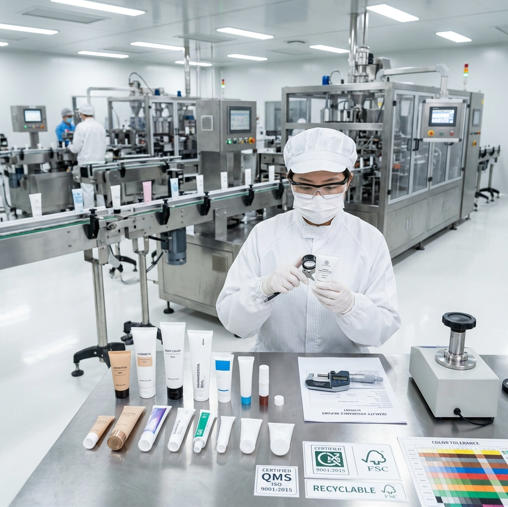
Physical samples are the single most information-dense evaluation tool available in tube supplier assessment. A sample evaluation should systematically test: dimensional accuracy against specification (tube diameter, length, shoulder geometry), wall thickness consistency across the tube barrel (measure at minimum six points), seal integrity under simulated dispensing pressure, print registration accuracy and colour consistency, cap torque performance (both application and removal), and compatibility with your specific fill formulation through a defined compatibility test protocol.
On quoting, B2B procurement teams should request quotes that itemise tooling costs separately from per-unit production costs, specify lead times for initial production runs versus repeat orders, clarify packaging and freight terms (EXW vs. CIF matters significantly for Asia-Pacific sourcing), and document the pricing validity period and revision trigger conditions (typically commodity polymer price indices).
Experienced packaging procurement managers routinely request samples from at least three suppliers simultaneously and run identical compatibility tests in parallel — filling the sample tubes with the actual production formulation and storing them at 40°C/75% RH (accelerated stability conditions per ICH Q1A guidelines) for four weeks before finalising supplier selection. This eliminates the category of failures that only appear under real storage conditions, which no paper qualification can replicate.

Reviewing Testimonials and Capacity
References from comparable B2B customers — comparable in product type, volume, compliance requirements, and market geography — are significantly more informative than generic testimonials. When requesting references, ask specifically for contacts at clients who manufacture products in the same regulatory category as yours (pharmaceutical, cosmetic, or food), who place orders in a similar volume range, and who have been supplying from the same manufacturer for at least 18–24 months. The 18-24 month qualification is important: it captures the experience through at least one material supplier change, one major production run, and one audit cycle.
Capacity validation is equally critical for medium and large B2B buyers. A manufacturer who can produce your initial order of 50,000 tubes may not be able to scale to 500,000 units per month without jeopardising delivery timelines or quality controls. Request documented production capacity figures — monthly output by tube type and diameter range — and ask how current utilisation compares to total capacity. A manufacturer operating at 95% utilisation with no announced expansion plans is a single-point-of-failure risk for your supply chain.
Sustainability in Plastic Tube Packaging
Eco-Friendly Materials and Practices
Sustainability in plastic tube packaging has crossed the threshold from brand preference to regulatory mandate. The EU Packaging and Packaging Waste Regulation (PPWR) 2025/40, which entered into force in February 2025 and will be enforceable from 12 August 2026, requires that all plastic packaging placed on the EU market meets defined recyclability criteria, minimum recycled content thresholds (rising progressively to 2030), and packaging minimisation requirements. For B2B buyers supplying EU-market products, this means your tube manufacturer’s material portfolio must now include compliant options — not as a future roadmap item, but as a current specification reality.
The practical implication for tube format selection: mono-material HDPE tubes (made entirely from a single polymer type) are the most straightforward recyclable format under current EU sorting and recycling infrastructure. ABL laminated tubes — which combine aluminium and plastic — face more complex recyclability classification and may require material composition declarations under PPWR’s digital product passport requirements. PBL laminated tubes occupy a middle ground depending on specific construction.
- Personal Care & Cosmetics — 38%
- Oral Care — 22%
- Pharmaceuticals — 18%
- Food & Beverage — 10%
- Others (Household, Industrial) — 12%
Renewable and Recyclable Options
The most commercially mature sustainable tube material alternatives currently available to B2B buyers are PCR PE (post-consumer recycled polyethylene, available in 25–50% blends with virgin PE), sugarcane-derived bio-based PE (which has identical processing and performance characteristics to petroleum-derived PE but carries a lower carbon footprint), and certified mono-material HDPE tubes that qualify for the “recyclable” designation under existing European and North American sorting protocols.
For pharmaceutical applications, the path to sustainable tube materials is narrower: regulatory agencies require demonstrated equivalence between new materials and previously validated specifications, meaning a switch from virgin LDPE to PCR LDPE requires a formal packaging change notification or variation depending on market jurisdiction. B2B procurement teams in pharmaceutical manufacturing should engage their regulatory affairs function before changing tube material specifications, not after.
Under EU PPWR, plastic packaging placed on the EU market from 2030 must contain a minimum 30% recycled content. For cosmetic tube buyers sourcing from Asian manufacturers who currently supply 100% virgin material tubes for EU-destined products, this is a 4-year transition window — which is roughly equivalent to one or two supplier qualification cycles including stability testing. Starting the qualification of PCR-content tube options in 2025–2026 is not early; it is on-schedule.
Avoiding Common Sourcing Pitfalls
Compliance and Regulations
The most expensive sourcing mistake in plastic tube procurement is selecting a manufacturer based on price and customization capability without fully mapping the regulatory compliance requirements of your target market — and then discovering the gap when a regulatory authority asks for it.
The specific compliance gaps that create the most significant problems in cosmetic and pharmaceutical tube sourcing are: absence of extractables and leachables (E&L) testing data for pharmaceutical-grade tubes; inability to provide EU-compliant Declaration of Compliance for food contact or cosmetic contact materials; lack of PPWR-aligned recyclability documentation for EU market product; and no established change control notification process — meaning the manufacturer can substitute raw material suppliers without notifying their customers, creating a compliance event on the buyer’s side without any prior warning.
A pharmaceutical contract manufacturer discovered — during a US FDA pre-approval inspection — that their tube supplier had changed the polymer resin grade used in their tubes 14 months earlier without notification. The new resin had not been included in the product’s packaging specification, creating a manufacturing deviation that required a formal CAPA (Corrective and Preventive Action) investigation and delayed the product’s NDA approval by seven months. Always require a change control notification clause in your tube supply agreement.
Minimum Order Quantities
MOQ (Minimum Order Quantity) is one of the most frequently misunderstood constraints in B2B tube sourcing. In the cosmetic tube market, standard MOQs from qualified manufacturers typically run 5,000 to 20,000 units per SKU, with the lower end of that range usually reflecting higher per-unit cost and limited customization depth (Gideapac, 2025). Custom-shaped or highly decorated tubes may carry MOQs of 10,000–30,000 units due to tooling investment recovery requirements.
For companies launching new products or managing a high-SKU portfolio with variable demand, MOQ management is a genuine operational challenge. The strategies that experienced procurement teams use include: negotiating consignment stock arrangements where the manufacturer holds inventory against a blanket purchase order; qualifying two manufacturers at different MOQ tiers (a premium supplier for high-volume SKUs, a flexible-MOQ supplier for new launches); and timing new product introductions to coincide with capacity windows at preferred suppliers that allow MOQ reductions as a commercial concession.
Communication and Support
Communication failures in tube supply relationships typically fall into three categories: technical specification miscommunication during the sample approval process (resulting in approved samples that do not match production output), delivery timeline misalignment (particularly when the buyer’s forecasting process does not provide adequate forward visibility to the supplier’s production planning), and quality incident response delays (where the supplier’s escalation process does not match the urgency of a line-stop event on the buyer’s side).
When qualifying a new tube supplier, explicitly map the communication protocols for each scenario: who is the named technical contact for specification queries, what is the committed turnaround time for sample approval feedback, what is the documented escalation path for a quality event, and what system (ERP-to-ERP, EDI, or manual portal) will govern purchase order and forecast exchange. Suppliers who cannot define these channels at the qualification stage will not perform better during a supply crisis.
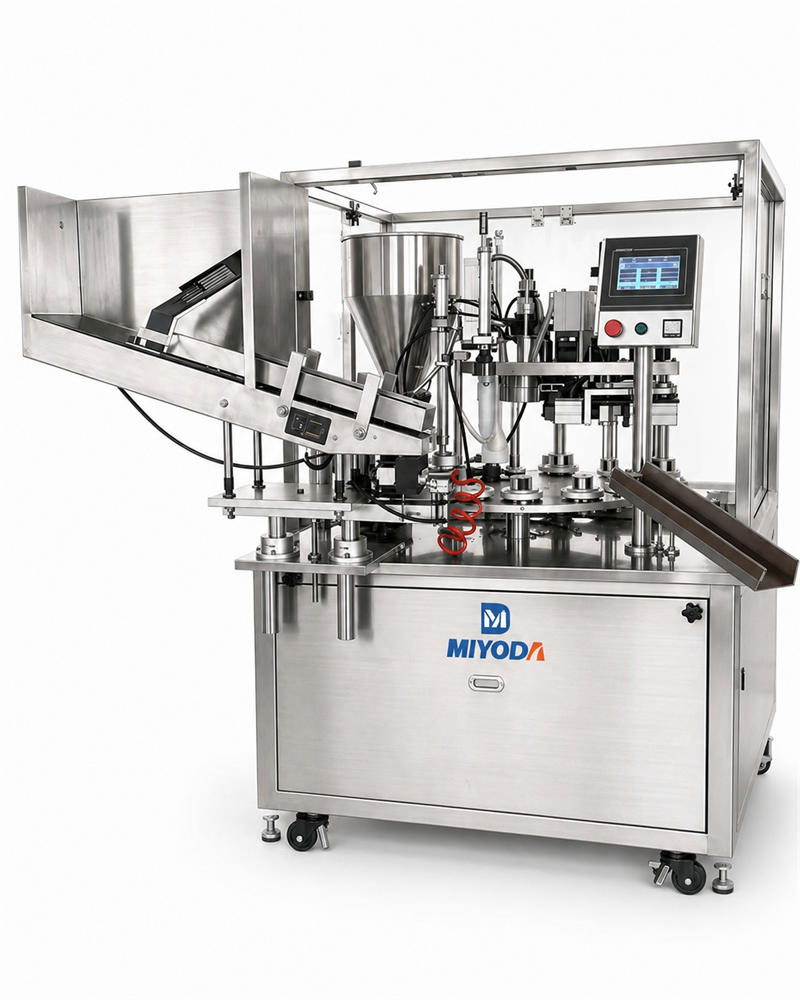
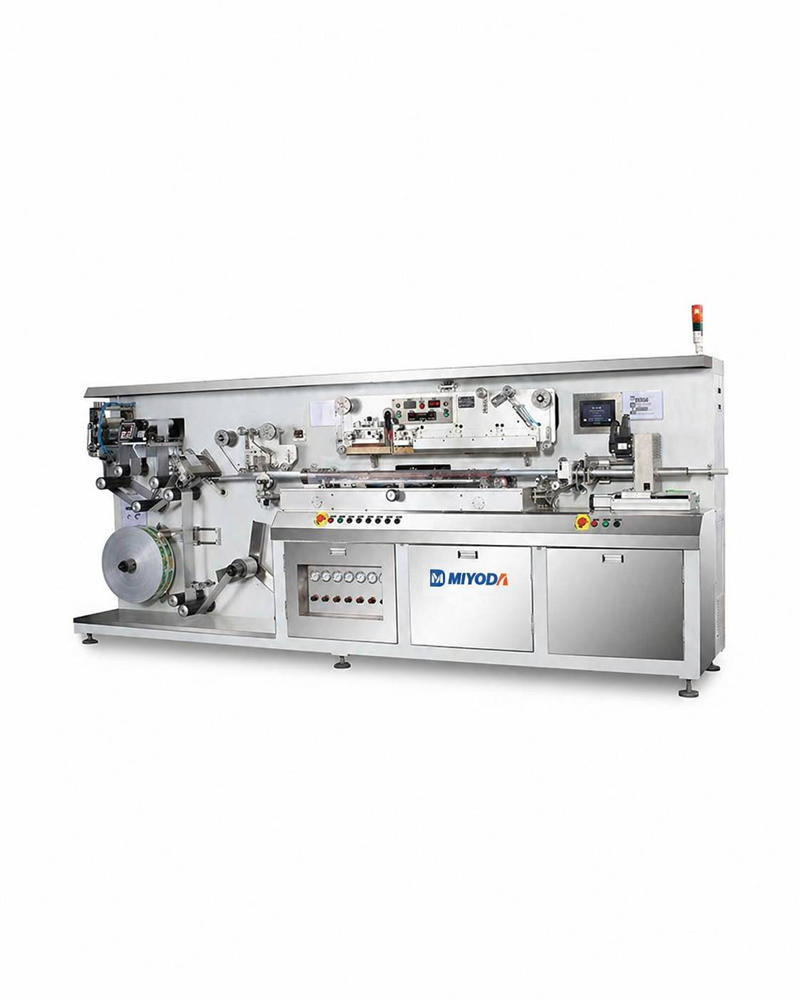
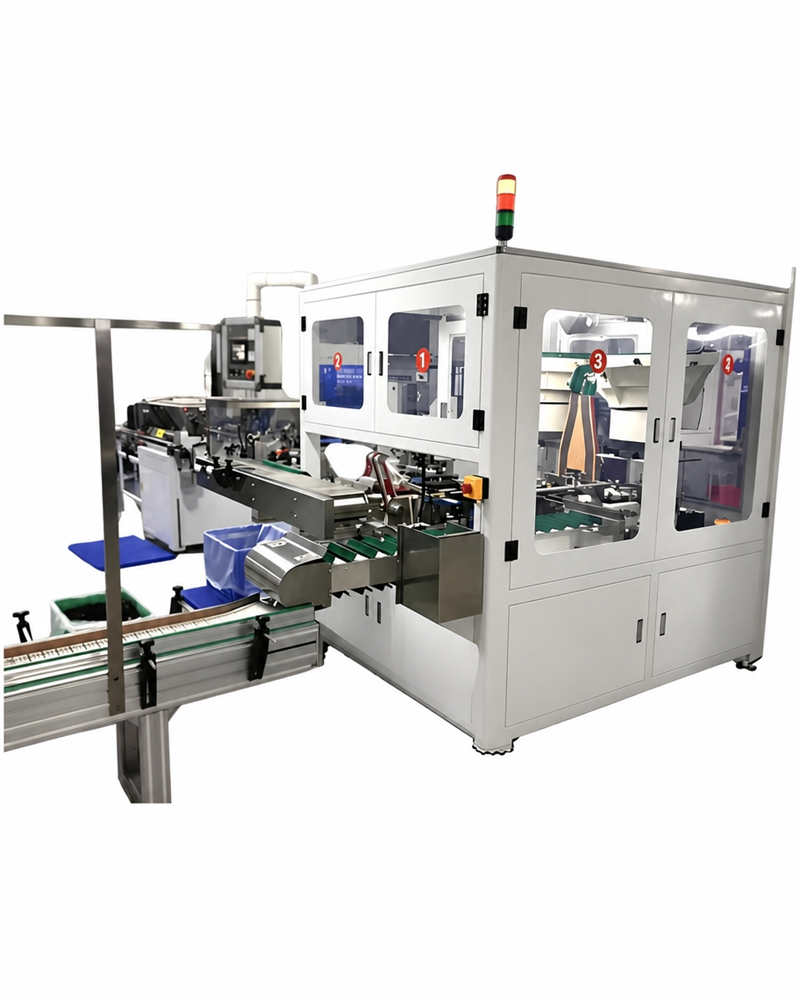
This is also where machinery matters as much as materials. Buyers who work with شركة ميودا لآلات التغليف — a specialist in tube filling and sealing equipment — often find that having machinery and tube supply well-matched from a technical standpoint reduces both setup time and seal quality variation on the production line. When your tube specification and your filling machine parameters are aligned from the start, the risk of incompatibility-driven production losses is substantially lower. Explore Miyoda’s range of tube filling machines to understand the compatibility requirements that should inform your tube sourcing specification.
The Ordering Process
Understanding the full ordering lifecycle — from initial inquiry to ongoing partnership — allows procurement teams to build realistic project timelines and avoid the most common schedule failures in new product launches.

Submit a comprehensive Technical Information Request (TIR) to shortlisted suppliers. The TIR should specify tube diameter range, length, material type (LDPE / HDPE / ABL / PBL), barrier requirements, decoration requirements, cap type, market destination (which determines applicable regulations), required certifications, annual volume forecast, and first order quantity. A supplier who cannot respond fully to a well-structured TIR is providing you with important information about their qualification process maturity. Allow 5–10 business days for initial response; complex customisation may require 2–3 weeks.
Request itemised quotations that separate tooling costs (one-time), unit production costs (volume-tiered), decoration costs, freight terms, and lead times for first production versus repeat orders. Negotiate payment terms that reflect your supply chain risk management requirements — standard terms in tube manufacturing range from 30% deposit with order to 70% on delivery, but established supply relationships often support Net 30–60 payment against invoice. Price validity periods are typically 30–90 days and are sensitive to HDPE/LDPE commodity price indices, which procurement teams should track independently via Plastics News resin pricing data.
Standard lead times for custom-decorated plastic tubes from Asian manufacturers are 45–75 days from approved sample sign-off. First production runs typically require a pre-production sample approval step (PP sample) before full production release — this adds 1–2 weeks but is non-negotiable for regulated product applications. Factor in shipping transit time (25–35 days for sea freight from China/Southeast Asia to Europe or North America) and customs clearance time when building your product launch timeline. Building 2–3 weeks of buffer beyond projected arrival date is standard practice for launch-critical packaging.
The most operationally resilient supply relationships are structured as partnerships with shared visibility on demand forecasting, agreed capacity reservation terms, and formal annual business reviews covering quality KPIs, cost structure, and capability roadmap. Set KPIs including on-time delivery rate (target: 95%+), defect rate per delivery (target: <0.2% for cosmetic, <0.05% for pharmaceutical), and certificate renewal timeliness. Conduct a formal supplier audit — either desk-based or on-site — every 12–24 months depending on supply criticality and regulatory requirements.
Supplier Evaluation Scorecard
Use the following framework to score and compare shortlisted tube manufacturers during your qualification process. Weight criteria according to the regulatory classification of your product application.
| معيار التقييم | Weight (Pharma) | Weight (Cosmetic) | Key Questions to Ask |
|---|---|---|---|
| Material Compliance & Documentation | 25% | 20% | Can you provide CoC, MSDS, E&L data, and pharmacopoeia compliance statements per batch? |
| Quality Certifications | 20% | 20% | Is ISO 15378 / ISO 9001 current, site-specific, and IAF-accredited? |
| Production Capacity & Utilisation | 15% | 15% | What is documented monthly capacity vs. current utilisation on our tube type? |
| Sample Quality (Physical Testing) | 20% | 20% | Do samples pass dimensional, wall thickness, seal integrity, and compatibility tests? |
| Change Control Process | 10% | 8% | What is the notification process and lead time when raw material suppliers change? |
| Sustainability Credentials | 5% | 10% | Can you supply PCR / bio-based / PPWR-compliant options with documentation? |
| Communication & Support Response Time | 5% | 7% | What are committed turnaround times for technical queries and quality incidents? |
📖 مسرد المصطلحات الأساسية
- ABL (رقائق الألومنيوم العازلة)
- A multi-layer tube construction incorporating a thin aluminium foil layer, providing excellent barrier against oxygen, moisture, and light. Used for pharmaceutical ointments, oral care products, and premium cosmetics requiring extended shelf life. Example: standard toothpaste tube construction.
- PBL (طبقة بلاستيكية عازلة)
- A fully plastic multi-layer tube construction without aluminium, offering good barrier properties with improved recyclability compared to ABL. Used where barrier performance of pure LDPE is insufficient but full aluminium laminate is not required or is incompatible with recyclability targets.
- E&L (Extractables and Leachables)
- Chemical compounds that can migrate from packaging materials into the contained product. Extractables are measured under aggressive laboratory conditions; leachables are measured under normal use conditions. For pharmaceutical primary packaging, E&L data is a regulatory requirement under ICH Q3E guidelines.
- MOQ (الحد الأدنى لكمية الطلب)
- The smallest quantity a manufacturer will produce in a single order. For custom cosmetic tubes, MOQ typically runs 5,000–20,000 units per SKU. MOQ is determined by tooling cost recovery, setup time efficiency, and materials purchasing economics — it is a commercial threshold, not an arbitrary one.
- PCR (Post-Consumer Recycled) Content
- Plastic material derived from recycled consumer waste (e.g., collected and reprocessed plastic bottles). PCR-content tubes allow brands to claim reduced virgin material use and contribute to circular economy metrics. EU PPWR mandates minimum PCR content thresholds rising progressively to 2030.
- PPWR (Packaging and Packaging Waste Regulation)
- EU Regulation 2025/40, enforceable from August 2026, which sets binding requirements for packaging recyclability, minimum recycled content, packaging minimisation, and digital product passport data provision across all packaging placed on the EU market.
- CoC (Certificate of Compliance)
- A document issued by the manufacturer confirming that a specific batch of material or product meets defined specification requirements. For pharmaceutical packaging, CoC is required per batch and must reference the specific test methods and acceptance criteria applied.
- Change Control
- A formal process for evaluating, approving, documenting, and communicating any change to a product’s specification, materials, process, or supplier. In pharmaceutical supply chains, changes to primary packaging must be notified to regulatory authorities in affected markets — making supplier-side change control processes a critical qualification criterion.
Sourcing Smarter in a Demanding Market

The plastic tube packaging market in 2026 is more demanding, more regulated, and more sustainability-focused than at any point in its history. Brand owners and contract manufacturers who treat tube sourcing as a purely transactional, price-driven decision are accumulating risks — compliance gaps, shelf life failures, supply disruptions, and sustainability non-conformances — that will eventually surface as costs far exceeding any unit price saving.
The procurement teams that consistently perform best in this environment follow a disciplined process: they define material and compliance requirements before approaching the market, they evaluate suppliers against documented criteria rather than sales presentations, they run physical compatibility tests rather than relying on supplier assurances, and they build supply relationships that include formal change control, capacity reservation, and joint sustainability roadmaps.
For operations where tube packaging is a critical input — pharmaceutical lines where a tube non-conformance can stop a batch, or cosmetic production facilities where packaging quality directly drives consumer loyalty — the investment in rigorous supplier qualification pays back many times over in avoided failures.
✅ B2B Procurement Action Checklist — Plastic Tube Sourcing
- Define material specification based on formulation barrier requirements — before approaching suppliers
- Map target market regulatory requirements (EU PPWR, FDA, GMP) to supplier certification requirements
- Request ISO 15378 (pharma) or ISO 9001 (cosmetic) certificates — verify current, site-specific, IAF-accredited
- Run physical compatibility tests with actual production formulation under accelerated stability conditions
- Request documented E&L data for pharmaceutical-grade tube applications
- Confirm MOQ against your volume forecast and negotiate consignment or blanket order structures if needed
- Include change control notification clause as a mandatory supply agreement term
- Qualify PCR-content or mono-material recyclable tube options ahead of EU PPWR 2026 enforcement
- Define KPIs for on-time delivery, defect rate, and certificate renewal — monitor quarterly
- Conduct formal supplier audit within 12 months of first production order
الأسئلة المتداولة
For pharmaceutical primary packaging supply, the minimum required certifications are ISO 15378 — the international standard for GMP requirements applied specifically to primary packaging materials for pharmaceutical products — and either EU GMP compliance documentation or WHO GMP certification depending on target market. ISO 15378 extends ISO 9001 with pharmaceutical-specific requirements including change control, batch traceability, extractables and leachables testing capability, and cleanroom or controlled environment manufacturing where relevant. ISO 9001 alone is insufficient for pharmaceutical tube supply. Additionally, the manufacturer should be able to provide per-batch Certificates of Compliance, material MSDS documentation, and pharmacopoeia compliance statements (USP or EP as applicable). Certificates should be current, site-specific, and issued by an IAF-accredited Certification Body.
ABL (Aluminum Barrier Laminate) tubes incorporate a thin aluminium foil layer between plastic layers, providing the highest barrier performance against oxygen, moisture, and light — appropriate for pharmaceutical ointments, products with short shelf life without high barrier, and any formulation where oxidation is a significant stability risk. PBL (Plastic Barrier Laminate) tubes are fully plastic multi-layer constructions without aluminium, offering good barrier performance with improved recyclability credentials compared to ABL — a growing specification for cosmetic brands managing EU PPWR compliance. HDPE mono-material tubes are single-polymer constructions with the strongest recyclability profile under current European sorting and recycling infrastructure, at the cost of lower barrier performance — appropriate for formulations that are stable without high barrier protection and where sustainability claims are a marketing priority. The selection should always start with your formulation’s stability requirements under defined storage conditions, not with the packaging trend.
Standard MOQ for custom cosmetic tubes from qualified manufacturers runs 5,000 to 20,000 units per SKU, with highly customised constructions (unusual shapes, complex decoration, special closures) often requiring 10,000–30,000 units. MOQ is driven by tooling cost recovery and production setup economics — it is a commercial threshold, not an arbitrary restriction. Strategies for managing MOQ constraints include: negotiating blanket purchase orders with scheduled releases (order 60,000 units but take delivery in 3 × 20,000 batches over 9 months); qualifying a flexible-MOQ secondary supplier for new product launches and low-volume SKUs; aggregating tube orders across multiple product lines to reach MOQ at the family level and amortise tooling across SKUs; and timing new product introductions to coincide with capacity windows where the manufacturer can offer MOQ concessions. Some specialist manufacturers specifically serve the low-MOQ market at premium unit cost — appropriate for product testing and limited edition runs.
EU Packaging and Packaging Waste Regulation (PPWR) 2025/40, enforceable from 12 August 2026, introduces binding requirements that directly affect B2B plastic tube sourcing: all plastic packaging placed on the EU market must meet defined recyclability criteria; minimum recycled content thresholds apply (rising progressively toward 2030 targets of 30%+ for plastic packaging); and packaging minimisation requirements restrict unnecessary material use. For tube buyers supplying EU-market cosmetic and pharmaceutical products, this means: your tube supplier must be able to document the recyclability classification of their tube constructions under PPWR criteria; PCR-content tube options must be qualified and available, with documentation supporting recycled content claims; and ABL laminated tubes face greater complexity under recyclability assessment than mono-material or PBL alternatives. Buyers sourcing from Asian manufacturers who currently supply virgin-material ABL tubes for EU-destined products should initiate the PPWR compliance assessment and alternative tube qualification process in 2025–2026 to avoid supply disruption at the enforcement date.
A rigorous compatibility test between a tube and a fill formulation should follow a defined protocol: fill production-representative samples with the actual formulation (not a surrogate), seal the tubes under production-equivalent conditions, and store sealed tubes at both room temperature (25°C/60% RH) and accelerated conditions (40°C/75% RH) for a minimum of 4 weeks, preferably 8–12 weeks for launch-critical products. Evaluate at defined time points (week 2, week 4, week 8) for: visual changes to tube (swelling, deformation, colour change); physical changes to formulation (viscosity, colour, odour, phase separation); seal integrity under simulated dispensing pressure; and — for pharmaceutical applications — chemical analysis for leachable compounds migrated from tube into formulation. Document all findings and compare against acceptance criteria defined in your product specification. A tube that passes supplier qualification documentation but fails this test is not a suitable choice, regardless of price or lead time advantages.
Change control is a formal process by which any change to a product’s material, specification, process, or supplier is evaluated, approved, documented, and communicated before implementation. In plastic tube supply, changes that require control include: raw polymer resin grade or supplier changes; changes to lamination adhesive formulations; changes to printing ink systems; changes to production line configuration or equipment; and changes to quality test methods or acceptance criteria. For B2B buyers in pharmaceutical supply chains, undisclosed changes by a tube manufacturer can create regulatory compliance events — a tube that was included in a regulatory filing with specific material specifications cannot be substituted without regulatory notification in most jurisdictions. A change control notification clause in the supply agreement — requiring the manufacturer to notify the buyer a defined period (typically 6 months for pharma, 3 months for cosmetic) before implementing any material change — is a contractual protection that every regulated packaging buyer should include as standard.
Standard lead times for custom plastic tubes from Asian manufacturers — which supply the majority of global cosmetic and pharmaceutical tube demand — run 45–75 days from approved pre-production sample sign-off for the production run itself. Adding the sample development and approval phase (typically 3–5 weeks), pre-production sample review (1–2 weeks), sea freight transit (25–35 days for Europe or North America), and customs clearance (typically 3–7 days), the total pipeline from supplier selection to goods available on your production floor is commonly 16–22 weeks for a new supplier or new tube construction. For repeat orders from qualified suppliers with pre-approved artwork, lead times compress to 30–45 days production plus transit. Procurement teams building new product launch timelines should work backwards from the confirmed launch date and add a minimum 4-week buffer beyond projected tube arrival to accommodate inspection, any required rework, and production scheduling. Not building this buffer is the single most common cause of tube-related product launch delays.
Tube material construction directly determines the sealing parameters required on the filling and sealing machine — and specifying one without accounting for the other is a common source of production line quality problems. LDPE single-layer tubes seal efficiently with hot-air sealing at standard temperature settings. ABL laminated tubes require specific jaw temperature and dwell time profiles calibrated to the laminate construction. HDPE mono-material tubes require higher sealing temperatures than LDPE. Multi-layer co-extruded tubes with barrier layers may require different sealing parameters than standard PE tubes of the same nominal diameter. When switching tube specifications — for example, moving from ABL to PBL for sustainability reasons — always verify that the new tube construction’s sealing parameters are within the range of your existing filling machine, and run a sealing validation study before committing to production scale. Miyoda Packaging Machinery’s tube sealing machine range is designed with adjustable sealing parameters to accommodate multiple tube constructions, which simplifies the qualification process when tube material specifications change.
The most operationally meaningful KPIs for plastic tube supply management are: On-Time-In-Full (OTIF) delivery rate — target 95%+, measured per delivery against confirmed purchase order date; Incoming Quality Reject Rate — target below 0.2% for cosmetic applications, below 0.05% for pharmaceutical; Certificate Currency Rate — 100% of required certificates current at all times, with renewal notifications received minimum 30 days before expiry; Change Control Notification Compliance — 100% compliance with agreed notification lead times; and Response Time on Quality Incidents — time from buyer’s formal quality notification to supplier’s root cause investigation report, target within 5 business days for cosmetic, 3 business days for pharmaceutical. These KPIs should be reviewed quarterly in formal supplier performance reviews and used as objective inputs to supplier rating and preferred supplier status decisions.
Verifying a tube manufacturer’s production capacity claim requires cross-referencing multiple data sources rather than accepting self-reported figures at face value. Request documented evidence of installed equipment — number of extrusion lines, tube header machines, and finishing lines, with equipment specifications and rated output per line. Ask for the factory’s monthly output figures for the previous 12 months by tube type and diameter range, which provides both capacity and utilisation data. During on-site or virtual facility audits, observe production scheduling boards or MES (Manufacturing Execution System) screens which show current work-in-progress against capacity. Ask for a list of current key clients and approximate volume tier (without breaching confidentiality) to triangulate utilisation. A manufacturer running at over 85% utilisation with no announced expansion investment carries meaningful capacity risk for buyers requiring significant volume growth within 12–18 months — this is a legitimate qualification screening criterion that should be discussed openly during commercial negotiations.
Ready to Upgrade Your Tube Packaging Line?
Miyoda Packaging Machinery specialises in tube filling and sealing equipment engineered for cosmetic and pharmaceutical manufacturers. Talk to our technical team about matching your tube specification to the right machine configuration — before you finalise your packaging procurement.
اطلب استشارة فنية →