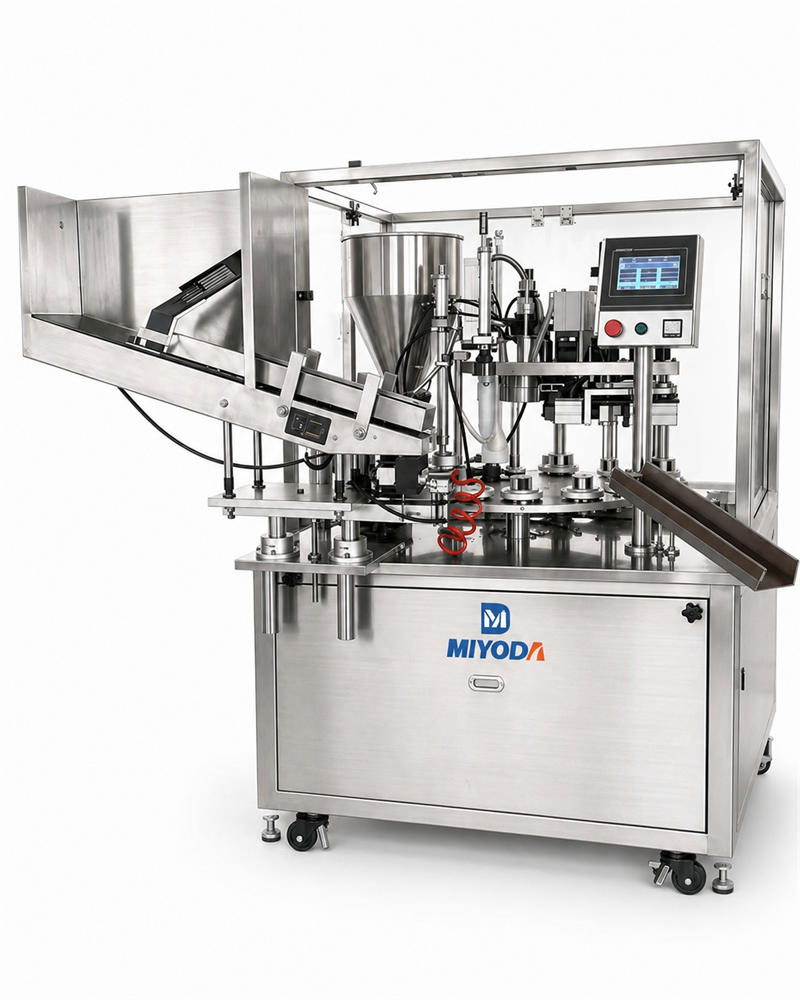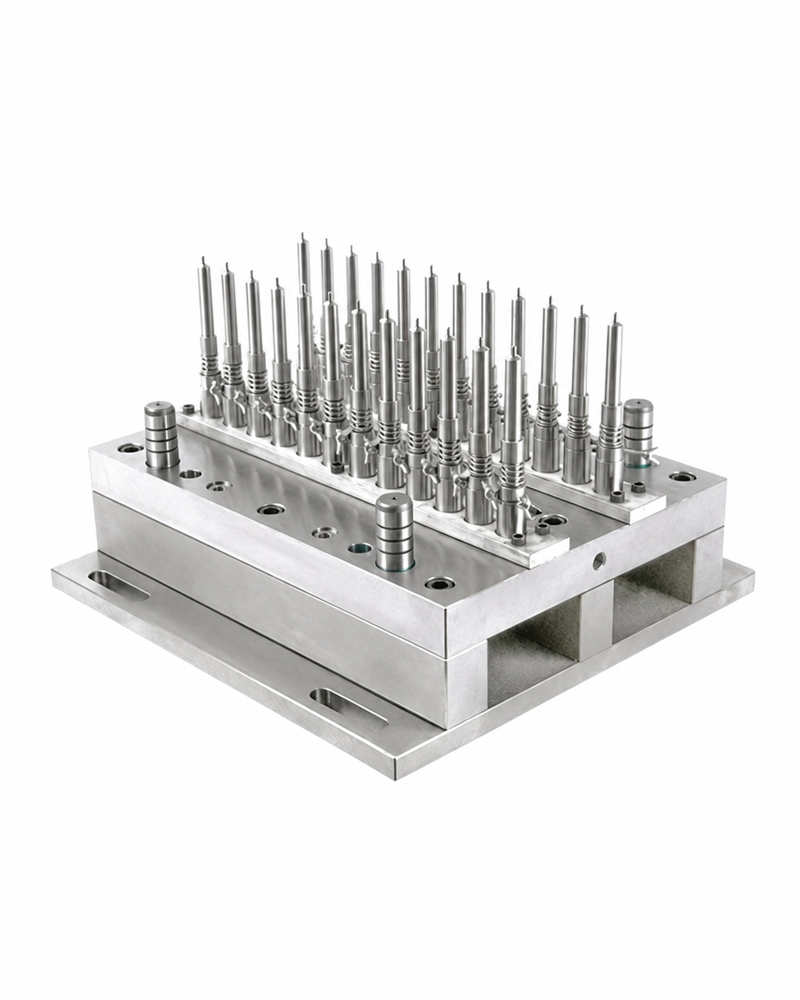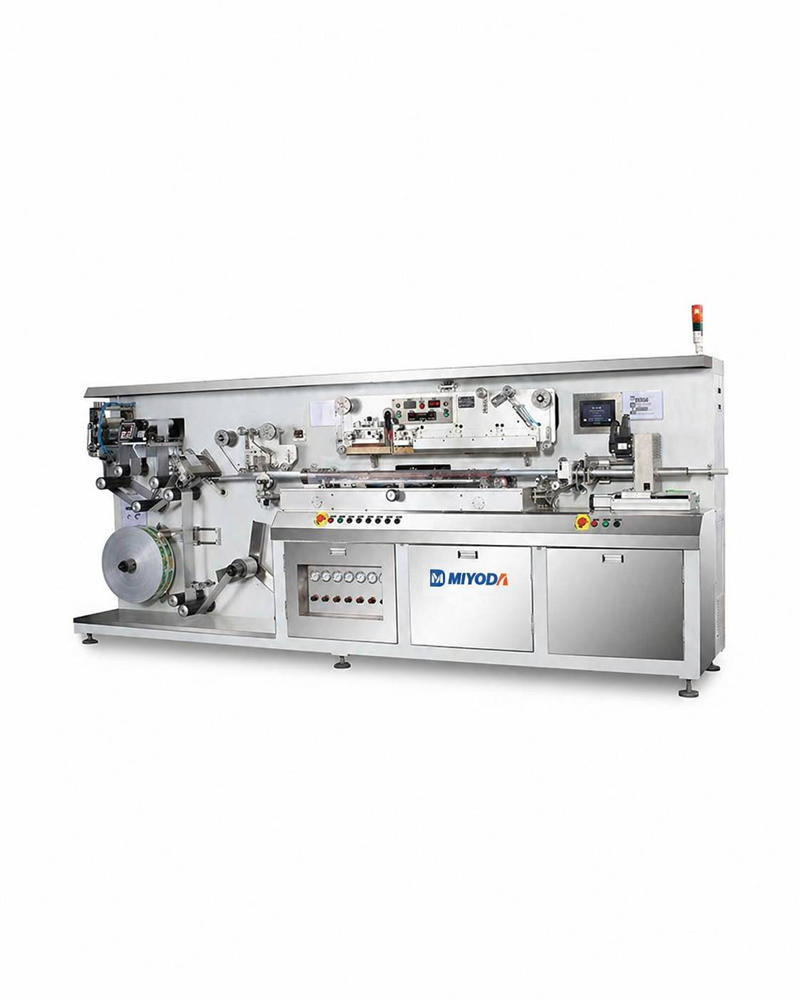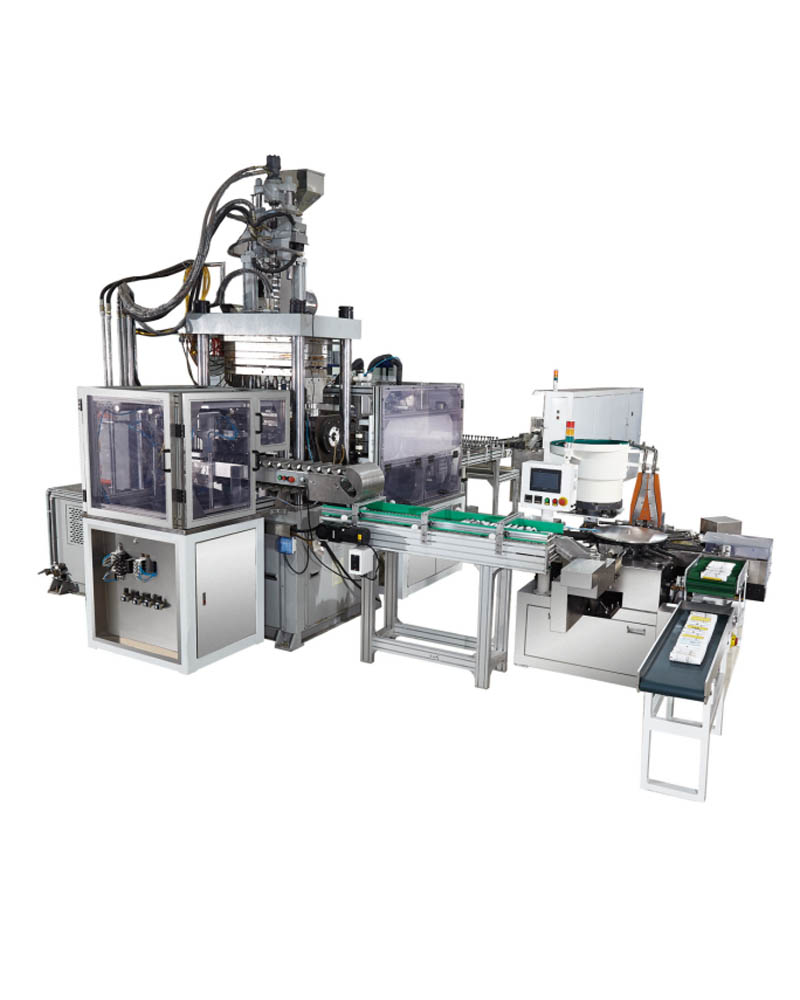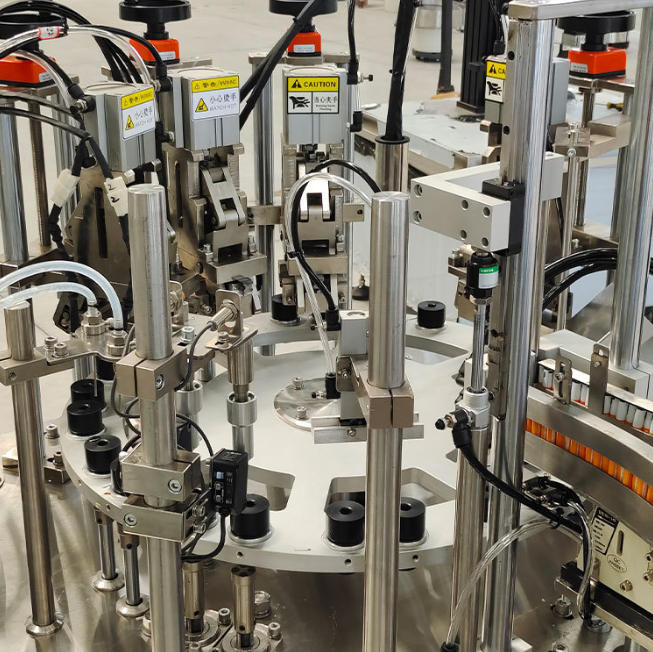
Stop Guessing About Equipment Investments — Use This Structured Selector to Discover the Exact Tube Filling Machine Your Manufacturing Operation Needs to Scale Production, Reduce Waste, and Meet Strict Compliance Standards
Choosing the wrong tube filling machine is one of the most expensive operational decisions a cosmetic or pharmaceutical manufacturer can make — not because machines are unreliable, but because the wrong machine for your specific production profile creates problems that no amount of maintenance or operator skill can fix.
A piston filler purchased for a thin gel formulation delivers fill weight variation that fails your AQL checks from day one. A semi-automatic line acquired for a product that reaches 8 million units per year becomes a labor-cost anchor within 18 months. An equipment purchase made without verifying compliance documentation compatibility triggers a GMP audit finding that shuts your line down during your highest-volume quarter.
This guide gives you the framework to avoid all of those scenarios — before you commit budget.
Understanding Your Production Volume Requirements
Why Production Volume Is Your Foundation (Not Just a Number)
Volume isn’t a box you fill in on a supplier questionnaire. It’s the variable that determines your machine type, your automation level, your labor structure, your floor footprint, your maintenance budget, and ultimately whether your equipment investment generates a return or becomes a financial drag.
The global tube filling machine market was valued at USD 1.2 billion in 2024 ومن المتوقع أن يصل إلى USD 2.2 billion by 2034 at a CAGR of 5.9%. The primary growth driver: cosmetic and pharmaceutical manufacturers migrating from semi-automatic to fully automated lines — a transition that consistently pays back in labor savings and quality consistency within 18–36 months at the right production volume.
Getting your volume calculation right before contacting any supplier is the single most productive thing you can do in this process.
The Hidden Costs of Oversizing or Undersizing Your Equipment
Oversizing creates capital that earns nothing. A machine rated at 150 tubes per minute running at 35% utilization costs the same to maintain and validate as one running at 85% — but generates a fraction of the depreciation return. At a purchase price of $120,000, every percentage point of unused capacity represents roughly $1,200 of idle capital investment per year.
Undersizing is the more common and more damaging error. A semi-automatic line that reaches its practical throughput ceiling while your order book grows forces one of three painful choices: purchase a second machine before the first has paid back, decline orders, or run overtime at degraded quality. Each option costs more than buying the right machine from the start.
Real scenario to calibrate this: a small-batch artisan cosmetics brand producing 8 SKUs at 2,000 tubes per month per SKU needs total monthly output of 16,000 tubes — roughly 75 tubes per production day on a 20-day month. A semi-automatic machine producing 600 tubes per hour covers this in under 2 hours. A fully automatic line costing $90,000 would take 4–5 years to justify at this volume. The wrong choice is obvious — once you do the math.
Identifying Your Current Production Capacity Needs
The formula that matters:
Required machine speed = (Monthly tube target ÷ production hours available) ÷ OEE factor
OEE (Overall Equipment Effectiveness — the industry standard metric combining availability, performance, and quality into a single efficiency score) for well-run semi-automatic lines runs 70–80%; for fully automatic lines, 82–92%.
If your target is 300,000 tubes per month, operating 20 days × 8 hours = 160 production hours, and you plan for 82% OEE:
$$\text{Required speed} = \frac{300{,}000 \div 160}{0.82} = 2{,}287 \text{ tubes/hr} = \textbf{38 tubes/minute}$$
A machine rated at 40 tubes per minute fits this target precisely — with minimal margin. Add 20% growth projection to that requirement, and you’re shopping for a machine rated at 48 tubes per minute minimum.
Seasonal demand compounds this calculation. Cosmetic brands producing SPF products, holiday gift sets, or dermatological treatments tied to skin condition seasonality often see 60–80% of their annual volume concentrated in 3–4 months. Your machine must be sized for your peak demand period, not your annual average — or your retailer commitments will consistently miss their windows in high-season.
Matching Volume to Machine Types
| حجم الإنتاج | Tubes per Day | Recommended Machine Type | Capital Range |
|---|---|---|---|
| Startup / Artisan | 500–2,000 | Semi-automatic | $8,000–$35,000 |
| Emerging brand | 2,000–5,000 | Semi-auto or hybrid | $20,000–$60,000 |
| Established manufacturer | 5,000–20,000 | Fully automatic | $60,000–$150,000 |
| Large-scale / pharma | 20,000–50,000+ | High-speed automatic | $150,000–$250,000+ |
Semi-automatic machines (10–40 tubes per minute sustained, 600–2,400 tubes per hour) are the rational investment for emerging brands, contract fillers managing high SKU diversity with small batch sizes, and R&D facilities producing stability batches. Their lower capital cost ($8,000–$35,000), simpler maintenance, and fast format changeover (15–25 minutes between tube diameters) make them commercially appropriate at volumes below 3–5 million tubes per year.
Fully automatic systems (60–200+ tubes per minute, 3,600–12,000+ tubes per hour) deliver their economic case above 5 million tubes per year — where labor costs on semi-automatic lines routinely exceed the annualized capital cost of the automatic equivalent. At 80 tubes per minute and 90% OEE, a single automatic line delivers approximately 38,400 finished, sealed, coded tubes per 8-hour shift — and does so with fill weight accuracy of 0.3–0.5% versus the 1–2% typical of semi-automatic production.
Hybrid and modular solutions — semi-automatic platforms with servo-driven fill control, programmable sealing parameters, and automated discharge — serve distributors managing multiple product lines across different client specifications. The operational flexibility of semi-automatic speed combined with programmable recipe management for different SKUs creates a practical middle ground that neither pure option provides.
Product Viscosity — The Critical Factor Most Manufacturers Overlook
Why Viscosity Determines Your Machine’s Performance
Viscosity — the resistance of a fluid to flow, measured in centipoise (cP) — is the single most important product characteristic that determines your filling mechanism. Not your tube material. Not your automation preference. Not your budget range.
Get viscosity wrong at the specification stage, and you get one of three expensive consequences:
- Product waste from inconsistent fill weights — a piston pump sized for 5,000 cP cream running a 500 cP serum delivers uncontrolled, erratic fills that fail your AQL sampling on the first production run
- Ingredient damage — a gear pump applying high shear force to a formulation containing suspended particles or fragile emulsions destroys the product structure before it reaches the tube
- Equipment stress — a peristaltic pump continuously processing a high-viscosity paste at its design limit wears tubing at 3–4× the normal replacement rate, converting a minor material cost into an ongoing maintenance burden

The cost of using wrong equipment isn’t theoretical — a personal care contract manufacturer discovered mid-campaign that their peristaltic pump unit was delivering ±6.8% fill weight variation on a high-viscosity foot cream (approximately 28,000 cP). The AQL failure rate was 34% of the batch. Root cause: the peristaltic pump’s tubing compression mechanism, designed for medium-viscosity products, couldn’t deliver consistent fill volumes at that viscosity. Correct equipment (a piston filler) was installed and the same product delivered ±1.4% fill weight variation on the next campaign.
Assessing Your Product’s Viscosity Profile
You don’t need a laboratory rheometer to get a working viscosity estimate. A Brookfield-type viscometer — a standard piece of quality lab equipment costing $2,000–$8,000 — measures viscosity at your filling temperature with adequate accuracy for equipment specification purposes. Your formulation supplier should be able to provide viscosity data at both ambient temperature and your planned filling temperature (many high-viscosity products are filled warm to reduce apparent viscosity and improve flow).
Critical: measure viscosity at your filling temperature, not at ambient storage temperature. A rich night cream with ambient viscosity of 45,000 cP may fill at 8,000 cP when heated to 40°C — shifting it from the “specialized piston filler” category into the range handled by standard piston equipment. This temperature effect determines whether you need a jacketed hopper with temperature control on your filling machine — a specification that adds $3,000–$8,000 to the machine cost but may allow you to use a simpler, less expensive filling mechanism.
Managing multi-viscosity product lines: If your product range spans thin gels (500–2,000 cP), medium-viscosity creams (5,000–15,000 cP), and thick pharmaceutical pastes (30,000–80,000 cP), you have two equipment strategy choices. Option 1: purchase separate machines optimized for each viscosity range — the cleanest performance solution but higher capital. Option 2: specify a machine with adjustable piston stroke, variable pump speed, and interchangeable nozzle sets — which handles a viscosity range of roughly 500–30,000 cP with parameter changes between SKUs but does not optimize performance at the extremes of that range. Option 2 is often the right commercial decision for brands at the 2–8 million tube per year scale.
Viscosity-Matched Machine Solutions
Piston-based fillers operate by drawing product into a precision cylinder and displacing it into the tube via a close-tolerance piston. The fill volume is determined mechanically by piston stroke length — adjustable down to fractions of a millimeter — making piston fillers the most accurate filling mechanism for high-viscosity products above 5,000 cP. Fill weight accuracy of ±0.5–1.5% is standard. They handle creams, ointments, pharmaceutical pastes, toothpaste, and other thick formulations where peristaltic or gear pumps would either stall or deliver inconsistent volumes. Most tube filling and sealing machines designed for cosmetic cream and pharmaceutical ointment applications use piston-based fill technology as their primary mechanism.
Peristaltic pumps work by progressively compressing a flexible tube to propel product forward in discrete volumes — a mechanism that never exposes the product to metal pump surfaces, making them the hygienic standard for sensitive formulations. They are ideal for: products containing suspended particles or abrasive components (the only part that contacts the product is replaceable tubing), fragile emulsions where mechanical shear must be minimized, sterile and aseptic filling applications where zero cross-contamination risk is mandatory, and medium-viscosity formulations between 500–10,000 cP. Their limitation: accuracy degrades as viscosity increases above 10,000–15,000 cP, and high-viscosity continuous running degrades tubing at accelerated rates.
Gear pump systems use meshing precision gears to meter product flow with high consistency across medium-viscosity ranges (1,000–20,000 cP). They deliver excellent volumetric consistency for large-volume runs on stable formulations — the standard choice for toothpaste, hair conditioner, and body care products where formulation consistency is tightly controlled and fill volumes are large (50ml+). Their primary limitation is cleanability: gear pump assemblies have more product-contact surfaces than peristaltic systems and require more thorough CIP protocols between product changeovers — a meaningful constraint for contract manufacturers running many different formulations through the same machine.
Tube Material Selection and Compatibility
How Tube Material Affects Your Machine Choice
Tube material is not an interchangeable variable — it determines your sealing technology, your fill pressure limits, your machine tooling requirements, and in the case of pharmaceutical products, your regulatory compliance options.
The four primary tube materials in cosmetic and pharmaceutical packaging each create specific equipment requirements:
| مادة الأنبوب | طريقة الختم | Precision Requirement | Typical Application |
|---|---|---|---|
| Plastic PE/HDPE | Hot-air or ultrasonic | Standard | Moisturizers, sunscreens, body care |
| رقائق ABL | الهواء الساخن | High (foil layer must not crack) | Retinoids, pharmaceuticals, OTC topicals |
| PBL laminate | Ultrasonic preferred | Medium | Premium cosmetics, recyclable packaging |
| الألومنيوم | Mechanical crimp-fold | Very high (no deformation) | Prescription pharma, premium cosmetics |

Chemical Resistance: Ensuring Your Product Doesn’t Degrade Your Tubes
This is the compatibility question that matters before you specify either your tube or your filling machine. Aggressive ingredients — high-concentration vitamin C, retinoids, AHA/BHA acids, essential oils, peroxide-based formulations — interact with tube materials in ways that can accelerate tube wall degradation, cause internal coating delamination, or migrate through the tube wall and alter product potency over shelf life.
The test framework: fill prototype tubes with your actual formulation, store at accelerated stability conditions (40°C/75% RH), and evaluate at 1-, 3-, and 6-month intervals. Check for wall softening or distortion, internal coating delamination, product color or odor change, and active ingredient concentration drift. A pharmaceutical company discovered that switching to a lower-cost aluminum tube with a different internal lacquer formulation caused detectable extractables in their topical antibiotic cream within 3 months — a finding that triggered a 6-month production halt while requalification was completed. The cost of the validation study that would have caught this upfront: approximately $15,000. The cost of the production halt: several hundred thousand dollars.
Barrier Properties: Protecting Sensitive Pharmaceuticals and Cosmetics
Barrier performance is the reason ABL (Aluminum Barrier Laminate) tubes exist. The aluminum foil interlayer — typically 9–30 microns thick — reduces oxygen transmission by over 98% and blocks light entirely. For formulations where these penetration pathways cause active ingredient degradation, the ABL tube’s cost premium (15–25% above comparable plastic tubes) is justified by the shelf life it protects.
PBL (Plastic Barrier Laminate) tubes use EVOH or PVDC plastic barrier layers that deliver approximately 80–90% of ABL’s oxygen barrier performance while remaining recyclable in PE waste streams — an increasingly significant retail listing requirement in European markets, where major grocery and pharmacy chains now require minimum 30% PCR (post-consumer recycled) content or mono-material recyclability in flexible packaging as a supplier qualification.
Sustainability Considerations: Eco-Friendly Materials and Machine Adaptability
PCR PE behaves differently in filling and sealing than virgin PE — slightly wider dimensional tolerance, different thermal response to hot-air sealing energy, and surface finish variation that can affect print adhesion. Machines validated only for virgin PE resin may need process re-qualification to run PCR content above 30%. Understanding this now — before your retailer mandates the transition — allows proactive validation rather than emergency adaptation under deadline pressure.
Machine Specifications for Different Tube Materials
Aluminum tube machines require specialized mechanical systems that plastic tube equipment cannot replicate. The tube wall is rigid and cannot tolerate the compression forces that a standard plastic tube filling machine uses to position and seal. Aluminum tubes are sealed by mechanical crimp-fold: a precisely engineered folder-crimper rolls and presses the tube tail into a triple-fold closure without applying heat. Fill pressure must be precisely controlled — excessive pressure deforms the tube body. The precision requirement is measurable: aluminum tube filling machines typically specify fill pressure tolerance of ±5%, versus ±15% acceptable on standard plastic tube equipment. The practical implication: aluminum tube machines are specialized equipment, not a configuration of a general-purpose filler.
Plastic tube systems offer the broadest format flexibility in the tube filling equipment category. A well-specified plastic tube filling machine handles LDPE, HDPE, and PE-based laminate tubes across a 13–60mm diameter range with tooling changes — making them the default choice for cosmetic brands managing diverse SKU portfolios with frequent formulation changes. Hot-air sealing is universal for plastic tubes; ultrasonic sealing is preferred for PBL laminates where the barrier layer responds better to vibration energy than to external heat.
Multi-material compatible machines — typically mid-to-high range automatic systems with interchangeable sealing heads, adjustable fill pressure, and stored HMI recipes for different tube formats — are the equipment investment that delivers the highest operational value for distributors or contract manufacturers serving multiple clients across different tube specifications. The equipment cost premium over a single-material optimized machine: typically $15,000–$40,000. The operational value: the ability to run pharmaceutical aluminum tubes in the morning and cosmetic PBL laminates in the afternoon without a machine change, only a tooling swap and recipe recall.
Regulatory Compliance and Quality Standards
Why Compliance Isn’t Optional — It’s Your Competitive Advantage
FDA issued 159 warning letters to pharmaceutical and cosmetic manufacturers in 2023, with documented fines totaling $190 million that year. A significant proportion of those actions were triggered not by formulation failures but by equipment-related GMP deficiencies — fill weight documentation gaps, inadequate cleaning validation, missing IQ/OQ/PQ records for production machinery.
For buyers at every production scale, compliance documentation is no longer a bureaucratic burden negotiated with your regulatory team after the equipment is installed. It’s a purchasing criterion that determines whether the machine you’re evaluating can legally produce product for the markets you’re serving.
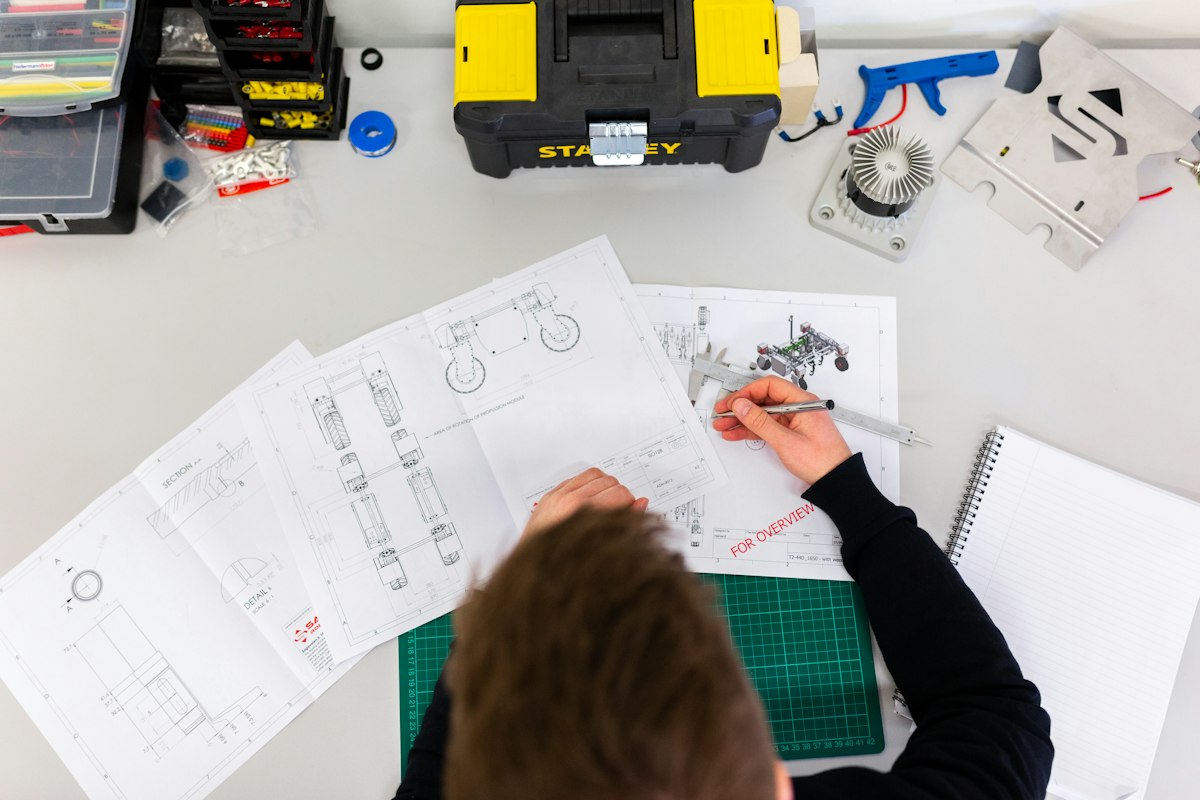
The compliance frameworks that govern tube filling equipment in the primary global markets:
United States (FDA):
- Cosmetics: MoCRA (Modernization of Cosmetics Regulation Act, effective 2024–2025) requiring facility registration, product listing, and safety substantiation
- Pharmaceuticals: اللائحة 21 من قانون اللوائح الفيدرالية (CFR)، الجزء 211، الصادرة عن إدارة الغذاء والدواء (FDA) — equipment must be “of appropriate design, adequate size, and suitably located to facilitate operations for its intended use and for its cleaning and maintenance”
European Union:
- Cosmetics: EU Cosmetics Regulation 1223/2009; EU Packaging Regulation (2025) recycled content and recyclability mandates
- Pharmaceuticals: EU GMP Annex 15 (qualification and validation); Annex 1 (sterile products); Falsified Medicines Directive serialization requirements
ICH (International Conference on Harmonisation): ICH Q10 Pharmaceutical Quality System defines the equipment lifecycle management requirements — from design qualification through decommissioning — that global pharmaceutical manufacturers must apply to tube filling machinery.
Essential Machine Features for Regulatory Success
Fill weight accuracy and documentation: Pharmaceutical tube filling requires fill weight monitoring to specifications tighter than cosmetic applications — typically ±1% versus ±2–3% for cosmetics. Critically, the monitoring must be documented: a fully automatic machine with integrated checkweigher and SCADA (Supervisory Control and Data Acquisition) data logging generates a continuous, tamper-resistant fill weight record for every tube in every batch. A semi-automatic machine without electronic monitoring requires manual sampling logs that FDA auditors increasingly view with skepticism for pharmaceutical applications.
Contamination prevention and cleanroom compatibility: Product-contact surfaces must be 316L stainless steel with a surface finish of Ra ≤ 0.8 μm (a roughness specification that prevents bacterial adhesion and enables validated cleaning). No dead legs in product flow paths. CIP (Clean-in-Place) circuits that allow chemical sanitization without disassembly. For facilities operating in ISO Class 7 or 8 cleanrooms, the machine’s physical design must not generate particulate contamination — all rotating seals must be enclosed, all lubrication must be contained, and all electrical enclosures must meet the facility’s IP rating requirements.
Traceability and batch coding: FDA 21 CFR Part 11 requires electronic records for pharmaceutical production systems to be generated by the machine, not added post-process. Your tube filling machine must capture: batch start/end timestamps, operator ID, fill weight data with statistical summary (mean, standard deviation, Cpk), sealing temperature log, any alarm events and their resolution. An integrated inkjet or laser coding system adds batch number, expiry date, and lot code to each tube — and the coding data must reconcile with the batch record.
Audit-Ready Equipment Selection
Documentation and certification standards to verify before purchase:
Before committing to any equipment purchase for pharmaceutical or regulated cosmetic application, require the following from the supplier in writing:
- Factory Acceptance Test (FAT) protocol covering fill weight accuracy, sealing integrity, and coding legibility at your production speed
- User Requirement Specification (URS) template that can be adapted to your products
- IQ/OQ/PQ documentation package — not a promise to provide it, but the actual document structure with sample content
- Material certifications for all product-contact components (316L certificate, food-contact compliance, or pharmaceutical-grade material declarations)
- CE marking certificate (EU) and any applicable safety directives compliance documentation
Maintenance protocols that ensure ongoing compliance: Equipment compliance is not a one-time qualification event. It requires a documented preventive maintenance schedule that, when followed, keeps the machine in its validated state. Any deviation from the maintenance schedule — a skipped jaw face inspection, a missed seal calibration — is a deviation from the validated process. Your equipment supplier should provide a maintenance log template that aligns with your QMS (Quality Management System) and can be presented to an auditor as evidence of continued compliance.
Training requirements for your production team: The EU GMP principle that “personnel should be qualified through appropriate education, training, and experience” applies to every operator who runs your tube filling line. The machine supplier should provide documented training records for the operators they train during commissioning. Your internal training SOPs should reference the machine supplier’s training materials and be maintained as controlled documents in your QMS.
Speed, Efficiency, and Return on Investment
Calculating True ROI Beyond the Purchase Price
The purchase price of a tube filling machine represents 30–40% of its total cost of ownership over a 10-year service life. The majority of what you’ll spend — and save — is in the operational costs that don’t appear on the supplier’s quotation.
The complete ROI framework:
$$\text{Total 5-Year Cost} = \text{CAPEX} + (5 \times \text{Annual Labor}) + (5 \times \text{Maintenance}) + (5 \times \text{Energy}) + (5 \times \text{Waste Loss}) – (5 \times \text{Revenue Premium from Capacity})$$
For a fully automatic line producing 5–8 million tubes per year, this calculation consistently favors the higher-CAPEX automatic machine over adding semi-automatic capacity after 18–24 months. Here is the documented comparison:
| Cost Component | Semi-Auto Line (2 operators/shift) | Fully Automatic Line |
|---|---|---|
| Machine Purchase Price | $8,000–$35,000 | $60,000–$250,000+ |
| Annual Labor (2 shifts) | $115,000–$160,000 | $28,000–$55,000 (1 technician) |
| Annual Preventive Maintenance | $2,000–$6,000 | $8,000–$20,000 |
| Fill Weight Rejection Rate | 1.5–3.0% of output | 0.1–0.5% of output |
| Annual Throughput Ceiling | 3–5 million tubes | 10–25 million tubes |
| ROI Payback Period | 6–18 months | 18–36 months |
At 5–8 million tubes per year, the 3-year total cost of ownership for a semi-automatic operation (labor dominant) consistently runs $400,000–$540,000. A fully automatic system at the same volume runs $280,000–$340,000. The $120,000–$200,000 gap — in favor of the automatic line — appears despite the automatic machine’s higher purchase price, because labor savings of $60,000–$100,000 per year compound through the comparison period.
Performance Metrics That Matter to Your Bottom Line
Tubes per minute vs. actual production output: Marketing claims cite rated speed under ideal conditions. Actual production output is rated speed × OEE × shift hours. An 80 tpm machine at 90% OEE produces 72 tubes per minute in sustained production — approximately 34,560 tubes per 8-hour shift. At 70% OEE (common in less mature operations), the same machine delivers 26,880 tubes per shift — a 22% output gap from the same capital investment. Before committing to any machine, ask the supplier: “What sustained production speed have your reference customers achieved over an 8-hour shift on this machine with comparable tube formats?” If the answer differs meaningfully from 80–90% of rated speed, the OEE gap is revealing a quality, reliability, or changeover issue worth investigating.
Downtime costs — unplanned vs. preventive: Unplanned downtime on a cosmetic or pharmaceutical tube filling line typically costs $500–$2,000 per hour in lost production value. On a line running at $1.20 per tube wholesale value and 80 tubes per minute, one hour of unplanned downtime destroys $5,760 of revenue potential. A 4-hour emergency repair event — not uncommon when a worn jaw heating element fails during peak production — costs $23,000+ in lost output, plus emergency parts and technician costs.
Preventive maintenance events are budgeted, scheduled during non-production time, and cost a fraction of the equivalent emergency repair. The ratio is consistent across manufacturing industries: planned maintenance costs 2–4× less than the equivalent emergency repair. Budget preventive maintenance at 5–8% of equipment purchase price annually — for a $120,000 machine, that’s $6,000–$9,600 per year to prevent events that would cost $15,000–$40,000 each if they occur unplanned.
Labor efficiency across automation levels: Semi-automatic machines require 1–2 operators per machine per shift for direct production support. A mid-range fully automatic line typically requires 1 technician monitoring 2–3 lines simultaneously. At a fully-loaded labor cost of $35/hour including benefits and overhead, the semi-automatic line carries $70–$140/hr in direct labor cost. The automatic equivalent carries $17–$23/hr across its supervised lines — a labor efficiency differential of 3–4× at comparable throughput.
Maximizing Equipment Efficiency
Scheduling strategies for multi-product manufacturers: Group tube changeovers by diameter similarity — running all 35mm tube SKUs consecutively rather than alternating with 22mm and 50mm formats — reduces total weekly changeover time by 40–60% by minimizing the tooling changes required. On a machine with a 45-minute full-diameter changeover, grouping 10 weekly diameter changes into 4 grouped transitions saves approximately 270 minutes per week — 4.5 hours of recovered production time every operating week.
Preventive maintenance that extends machine lifespan: The difference in equipment longevity between maintained and unmaintained tube filling machines is not incremental — it’s categorical. A maintained semi-automatic machine operates reliably for 10–12 years; an unmaintained one degrades to unacceptable quality performance within 4–6 years. For automatic machines, preventive maintenance is the practice that keeps electronic systems, servo drives, and vision components within their calibrated state — and keeps the machine in its validated pharmaceutical state if you’re in a regulated market.
Operator training that reduces errors and waste: Operator errors — incorrect nozzle selection, fill parameter entry mistakes, failure to detect jaw temperature drift — account for an estimated 25–35% of production quality events in semi-automatic tube operations. Structured, documented operator qualification (not just informal on-the-job demonstration) reduces this contribution to 8–12%. The investment in proper training is measured in days; the cost of the quality events it prevents is measured in batches.
Budget Considerations and Financing Options
Aligning Equipment Investment With Your Financial Reality

Entry-level machines for startups and small manufacturers ($8,000–$35,000 for semi-automatic systems) represent the lowest capital barrier to entering tube packaging production. They require no special electrical infrastructure beyond standard single-phase power, minimal floor space (0.5–2 m²), and can be operational within one day of delivery. Their economic limitations are real — a $25,000 semi-automatic machine carries a $115,000+ annual labor overhead at two-shift operation — but at production volumes below 2–3 million tubes per year, they remain the right financial decision.
Mid-range systems for growing brands ($60,000–$150,000) are the sweet spot for brands that have validated their market, established retail relationships, and now need to scale production to match committed volume. This range covers well-specified fully automatic single-head systems from established manufacturers — machines that run 60–100 tubes per minute with GMP-compatible design, electronic batch records, and IQ/OQ/PQ documentation support. The capital commitment is meaningful; the financial case is straightforward when production volume exceeds 5 million tubes per year.
Enterprise solutions for large-scale manufacturers ($150,000–$250,000+) deliver high-speed multi-head configurations, integrated vision inspection, automated CIP, and the throughput (100–200+ tubes per minute) required to serve major retail supply contracts or pharmaceutical volume commitments. At this investment level, the equipment becomes a production infrastructure asset with a 10–15 year service life — the financial analysis must reflect that time horizon, not a 2–3 year payback framework.
Total Cost of Ownership Breakdown
The standard industry framing — comparing equipment by purchase price — systematically understates the true cost of cheaper equipment and overstates the cost of premium equipment. The 5-year total cost of ownership (TCO) tells the accurate story:
| فئة التكلفة | Typical % of 5-Year TCO | ملاحظات |
|---|---|---|
| Equipment purchase | 25–35% | Only this number appears on the quote |
| Labor (operators, shifts) | 40–55% | Dominant cost driver for semi-automatic |
| Preventive maintenance | 5–8% per year of CAPEX | Budgeted annual cost |
| Energy / utilities | 3–6% | Higher for larger automatic lines |
| Spare parts / consumables | 8–12% | Seals, nozzles, heating elements, tubing |
| Training / qualification | 2–5% | One-time at installation; ongoing for new operators |
| Downtime / quality events | Variable | Reduced dramatically by right-sizing and maintenance |
The practical implication: a $25,000 semi-automatic machine with two operators across two shifts costs approximately $540,000 over 3 years at a 5–8 million tube/year scale. A $90,000 fully automatic machine costs approximately $320,000 over the same period at the same volume. The $65,000 higher purchase price of the automatic machine saves $220,000 over 3 years.
Spare parts availability and replacement costs deserve specific attention. The suppliers most likely to offer the lowest initial price are also most likely to have limited spare parts inventory, long lead times for replacement components, and thin technical support infrastructure. A sealing jaw heating element that takes 3 weeks to source creates a 3-week production disruption — at $500–$2,000 per hour of downtime cost. Require any supplier to document: what is the lead time for your 10 most commonly replaced components? Are they stocked domestically, or sourced from the manufacturing facility with standard international freight lead times?
Flexible Acquisition Strategies
Leasing vs. purchasing: Leasing preserves capital for revenue-generating activities — formulation development, market expansion, retail relationship investment — while accessing equipment capability that purchasing would require full capital outlay to secure. Lease terms for cosmetic and pharmaceutical filling equipment typically run 36–60 months with residual purchase options. Monthly payments on a $90,000 machine over 48 months at typical equipment financing rates run $2,100–$2,400/month — a predictable operational expense rather than a capital event on your balance sheet.
Purchasing makes stronger economic sense when you have stable, predictable production that justifies the capital commitment, when your regulatory compliance position benefits from equipment ownership (leased equipment can create validation complexity in pharmaceutical environments), and when your long-term volume projection indicates the equipment will operate at design capacity for its full service life.
Financing options that protect cash flow: Equipment financing through the manufacturer, through specialist packaging machinery financiers, or through your banking relationship each has structural implications for your balance sheet. Manufacturer financing often carries more flexible terms (extended warranty provisions, maintenance packages bundled into the financing structure) but at interest rates above pure banking alternatives. The right choice depends on your accounting treatment objectives and your lender relationship — worth a conversation with your CFO before selecting between options.
The Interactive Selector — Your Personalized Machine Recommendation
How the Selector Works
Rather than presenting a static comparison table and leaving the selection decision to your judgment without support, this section walks through the three question domains that generate a meaningful machine recommendation — calibrated to your production reality, not your aspirations.
The selector logic works by identifying your position on three independent dimensions: production profile, product characteristics, and operational requirements. Your intersection on these three dimensions points to a machine category, a filling mechanism, and a sealing technology. The questions below generate the inputs needed to place you on each dimension accurately.
Production Profile
Current and projected production volume:
Answer these four questions with specific numbers, not ranges:
- How many tubes do you produce (or plan to produce) per month at your current scale?
- What is your realistic projected volume in 24 months, assuming your current growth trajectory continues?
- What is your peak monthly volume (your highest-demand month of the year)?
- How many distinct tube SKUs do you produce in a typical month?
The output of these four answers determines your machine automation level (semi-automatic below 3 million tubes/year; fully automatic above 5 million) and your format flexibility requirements (high SKU count with small batches favors changeover-optimized equipment over maximum throughput).
Frequency of production runs and changeovers:
How many times per week do you change between tube sizes or product formulations? Each diameter changeover on a semi-automatic machine takes 15–25 minutes; on a fully automatic line, 30–90 minutes. If you’re changing diameters 8 times per week, the 90-minute automatic changeover consumes 12 hours of production time — 12.5% of your available production hours in a standard week. That cost must be factored into your throughput calculation, not just your OEE estimate.
Product Characteristics
Product viscosity and consistency:
Use this viscosity reference to identify your product’s position:
| نوع المنتج | Typical Viscosity (cP) | Recommended Filling Mechanism |
|---|---|---|
| Thin gels, serums, toners | 200–2,000 | Peristaltic pump |
| Light lotions, shampoos | 1,000–5,000 | Peristaltic or gear pump |
| Rich creams, body lotions | 5,000–20,000 | Piston filler |
| Thick creams, ointments | 20,000–60,000 | High-capacity piston filler |
| Pharmaceutical pastes | 60,000–150,000+ | Specialized piston with jacketed hopper |
Ingredient sensitivities and chemical compatibility:
Does your formulation contain any of the following? Each has equipment implications:
- Suspended particles (exfoliants, glitters, botanical extracts) → peristaltic preferred; piston only with large-bore nozzle
- Highly volatile compounds (certain essential oils, ethanol above 30%) → sealed product pathway, vapor-controlled environment
- Peroxide-based formulations → materials compatibility check against stainless steel and seals
- Temperature-sensitive actives → jacketed hopper with temperature control required
Operational Requirements
Available floor space and facility layout:
Semi-automatic machines occupy 0.5–2 m² and integrate into almost any existing production room without structural modification. A fully automatic filling line requires 4–20 m² depending on configuration, including in-feed conveyor, discharge conveyor, and operator access clearances on all four sides per machinery safety standards. If your facility footprint constrains your equipment options, identify this constraint explicitly before contacting suppliers — it eliminates machine configurations that cannot physically fit your available space and prevents you from receiving proposals that are commercially irrelevant.
Compliance and certification needs specific to your market:
Answer these three binary questions:
- Do any of your products require FDA pharmaceutical GMP compliance (21 CFR Part 211)? Yes/No
- Do any of your products require EU pharmaceutical GMP compliance (Annex 15/Annex 1)? Yes/No
- Do any of your products require ISO 13485 traceability (medical devices)? Yes/No
One or more “Yes” answers moves your equipment specification into the GMP-compliant category — stainless steel contact surfaces, electronic batch records, IQ/OQ/PQ documentation, and CIP capability are not optional features; they are baseline requirements for any machine that will produce product for those markets.
Interpreting Your Results and Next Steps
Understanding Your Personalized Recommendation
Based on the selector inputs above, your recommendation maps to one of four machine profiles:
Profile A — Semi-Automatic with Standard Piston Fill: Volume below 3M tubes/year, high SKU count (5+), medium-to-high viscosity product (5,000–50,000 cP), cosmetic compliance standard. Purchase range $18,000–$35,000. Key performance metrics: 10–35 tpm sustained, ±1.5–2.5% fill weight accuracy, 15–25 minute diameter changeover.
Profile B — Semi-Automatic with Peristaltic Fill: Volume below 3M tubes/year, medium-to-high SKU count, low-to-medium viscosity (500–10,000 cP), pharmaceutical or sensitive formulation. Purchase range $22,000–$40,000. Key feature: zero metal product contact, replaceable tubing for rapid contamination risk control.
Profile C — Fully Automatic Single-Head: Volume 3–10M tubes/year, 1–6 core SKUs, mixed viscosity range, cosmetic or pharmaceutical compliance. Purchase range $60,000–$120,000. Key performance metrics: 60–100 tpm, ±0.3–0.5% fill weight accuracy, electronic batch records, IQ/OQ/PQ documentation.
Profile D — Fully Automatic Multi-Head or High-Speed: Volume above 10M tubes/year, stable SKU base, pharmaceutical GMP or premium cosmetic compliance. Purchase range $120,000–$250,000+. Key performance metrics: 100–200+ tpm, Cpk ≥ 1.67, integrated vision inspection, automated CIP, SCADA integration.
Comparing Your Top Machine Options
When comparing two machines within your recommended profile, use this prioritized evaluation framework:
- Sustained production speed (verified by reference customer data) — the most important specification that suppliers most consistently overstate
- Fill weight Cpk at your product viscosity — request test data from a production trial with comparable product, not laboratory-condition demonstration
- Diameter changeover time for your specific tube range — test this during a supplier demonstration, not from a data sheet
- Compliance documentation package — completeness of IQ/OQ/PQ templates, FAT protocol, and material certifications
- Spare parts lead time — for the 10 most commonly replaced components, documented in writing
- Reference customer accessibility — three direct contacts in your product category and production scale who you can call before purchase
Upgrade Paths as You Grow
Any machine worth purchasing should have a documented upgrade path. For fully automatic equipment, this means: can production speed be increased through component upgrades (additional fill heads, faster indexing table)? Can automation be added (automated tube in-feed, vision inspection, CIP)? Can the machine handle additional tube formats with tooling additions rather than machine replacement?
Miyoda Packaging Machinery’s approach to this question: the full tube production line range is designed as a modular ecosystem — tube extrusion, lamination, heading, filling, sealing, and printing machines that integrate with each other and scale with your production volume — so your equipment investment compounds rather than depreciates as your business grows.
Taking Action on Your Results
Questions to ask equipment vendors before purchasing:
- Can you provide a Factory Acceptance Test at your facility using my actual tube format and product viscosity, witnessed by my team?
- What is the realistic changeover time between my specific tube diameter sizes — demonstrated, not stated?
- What is your lead time for your 10 most commonly replaced wear parts, and are they stocked locally?
- What on-site training is included in the purchase price, delivered by a qualified applications engineer?
- What is your response commitment for production-critical technical support issues?
- Can you provide three direct customer references in my product category and production scale?
Site visits and demonstrations: A live production demonstration at a reference customer’s facility — observing the machine during a normal production shift, not a controlled supplier demonstration — is the most reliable evaluation method available. It reveals real-world changeover behavior, operator interaction patterns, maintenance realities, and the quality of the machine’s output on actual product. If a supplier cannot arrange a reference site visit, that inability tells you something important about either their customer base or their customer relationships.
Common Mistakes to Avoid When Selecting Tube Filling Equipment
The Costly Errors That Derail Equipment Investments
Choosing Based on Price Alone Without Considering Total Cost of Ownership
The $15,000 semi-automatic machine that seems like a bargain against a $75,000 fully automatic alternative is not a bargain if your production volume is 8 million tubes per year — it’s a $220,000 more expensive choice over 3 years, once labor costs are included. Price-driven equipment selection is the most common and most expensive mistake in this category, and it almost exclusively occurs when buyers compare purchase prices without building a TCO model that includes labor, maintenance, waste, and energy across the equipment’s operational life.
Ignoring Future Growth: Undersizing Equipment and Needing Replacement Within 2–3 Years
The correct equipment choice is sized for your 24–30 month volume projection, not your current volume. A brand at 2 million tubes per year that expects to reach 7 million in 24 months should not be purchasing semi-automatic equipment optimized for the 2 million baseline — it should be purchasing (or planning a purchase timeline toward) automatic equipment that serves the 7 million target. The cost of replacing undersized equipment before it has paid back its initial investment is both the replacement capital and the residual value loss on the original machine — typically 30–50% of original purchase price within 3 years.
Overlooking Regulatory Requirements Until After Purchase
A tube filling machine that performs flawlessly from a production standpoint but cannot generate the batch records, traceability data, or validated cleaning documentation required for your regulatory market is a machine you cannot use for its intended purpose. Discovering this after installation creates a choice between expensive retrofitting (if the machine’s architecture allows it) or purchasing compliant replacement equipment — wasting the original capital entirely. Verify compliance documentation requirements before the purchase decision, not after commissioning.
Operational Mistakes During Implementation
Inadequate training leading to poor machine performance and high waste: The most capable filling machine on the market produces poor results in the hands of operators who haven’t been properly trained on its specific operating parameters, adjustment procedures, and cleaning protocols. Invest in documented operator qualification training — 5–10 days for semi-automatic; 2–4 weeks for fully automatic systems — and maintain training records as controlled documents. The reduction in operator-induced quality events is measurable: properly trained operators on cosmetic tube filling lines generate 60–70% fewer fill weight deviations and 40–50% fewer seal defects than undertrained operators on identical equipment.
Insufficient preventive maintenance creating unexpected downtime: The maintenance schedule provided by your equipment supplier is not a suggestion — it’s the documented basis for your machine remaining in the condition in which it was validated. Deviating from it by extending intervals to save time or maintenance budget converts predictable, low-cost preventive maintenance into unpredictable, high-cost emergency repairs. Implement the maintenance schedule as a controlled procedure in your QMS from day one of production.
Failure to account for product changeover time in production planning: Changeover time is production time consumed without producing sellable output. A 60-minute changeover on a 100 tpm machine destroys 6,000 tubes of potential output. If your production schedule includes 5 changeovers per week, that’s 30,000 tubes of capacity consumed by changeovers weekly — a constraint that must be planned for, not discovered after you’ve committed delivery timelines to your customers.
Long-Term Sustainability Issues
Selecting equipment without considering spare parts availability: A machine that produces no spare parts from its manufacturer 5 years after your purchase is a machine with a finite operational life determined not by its mechanical condition but by the availability of the components it needs to keep running. Before purchasing, require the supplier to commit in writing to spare parts availability for a minimum of 10 years. Any supplier who declines or hedges on this commitment is giving you a meaningful signal about their business model and the longevity of their product support.
Investing in technology that becomes obsolete as your market evolves: The tube packaging market is changing on sustainability (PCR content mandates, recyclability requirements), compliance (serialization, traceability), and production flexibility (short runs, digital decoration) simultaneously. Equipment that cannot adapt to PCR PE substrates, cannot generate serialized batch codes, or cannot changeover efficiently for short-run production creates a competitive disadvantage that compounds annually. Ask any equipment supplier: “How does your machine adapt to these trends over its service life?” The depth and specificity of the answer reveals how much they’ve thought about your long-term success, not just your immediate purchase.
Resources and Support for Your Equipment Decision
Beyond the Selector: Additional Tools and Expertise
Making a well-informed equipment decision in cosmetic and pharmaceutical tube filling takes more than a selector framework — it takes access to technical expertise that can translate your production requirements into specific machine specifications and validate those specifications against real production data.
Miyoda Packaging Machinery works with cosmetic and pharmaceutical tube manufacturers globally, matching equipment specifications to tube formats, compliance requirements, product characteristics, and production growth trajectories. The complete Miyoda equipment range covers the full tube production workflow — from extrusion and lamination through filling, sealing, printing, and decoration — designed as an integrated system rather than a collection of unrelated machines.
Educational Resources
For buyers who want to develop deeper process knowledge before or alongside their equipment evaluation:
Comparative machine guides: الـ automatic vs. semi-automatic tube filling machine comparison guide from Miyoda Packaging Machinery provides detailed throughput benchmarks, 3-year TCO calculations, and a production scenario framework for determining which machine type delivers ROI at your specific volume and product profile.
Regulatory compliance resources: الـ FDA’s current Good Manufacturing Practice guidance for finished pharmaceuticals is the foundational reference for all pharmaceutical tube filling equipment decisions in the US market — required reading for any buyer serving pharmaceutical customers.
Industry standards for tube material qualification: الـ USP/NF container closure systems guidance provides the material performance standards that pharmaceutical tube filling machines must be designed to handle — informing both material specifications and equipment surface finish and contact material requirements.
Video demonstrations of recommended equipment in action: Before finalizing specifications, watching a production-grade tube filling machine at operating speed provides context that specification sheets cannot convey.
Watch: Automatic Tube Filling and Sealing Machine in Operation
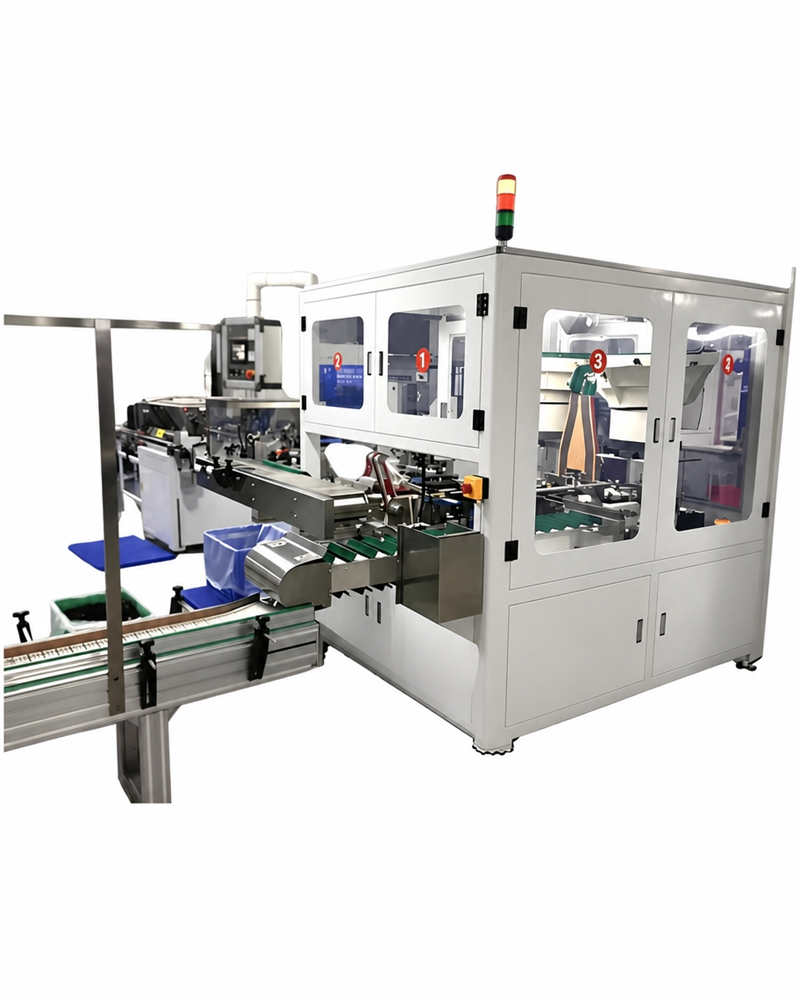
Observe the full production cycle — bulk in-feed, servo-driven tube orientation, piston fill station, hot-air sealing jaw, batch code embossing, and automatic discharge — running at production speed. This context clarifies the changeover, setup, and operation realities that specification sheets describe but don’t show.
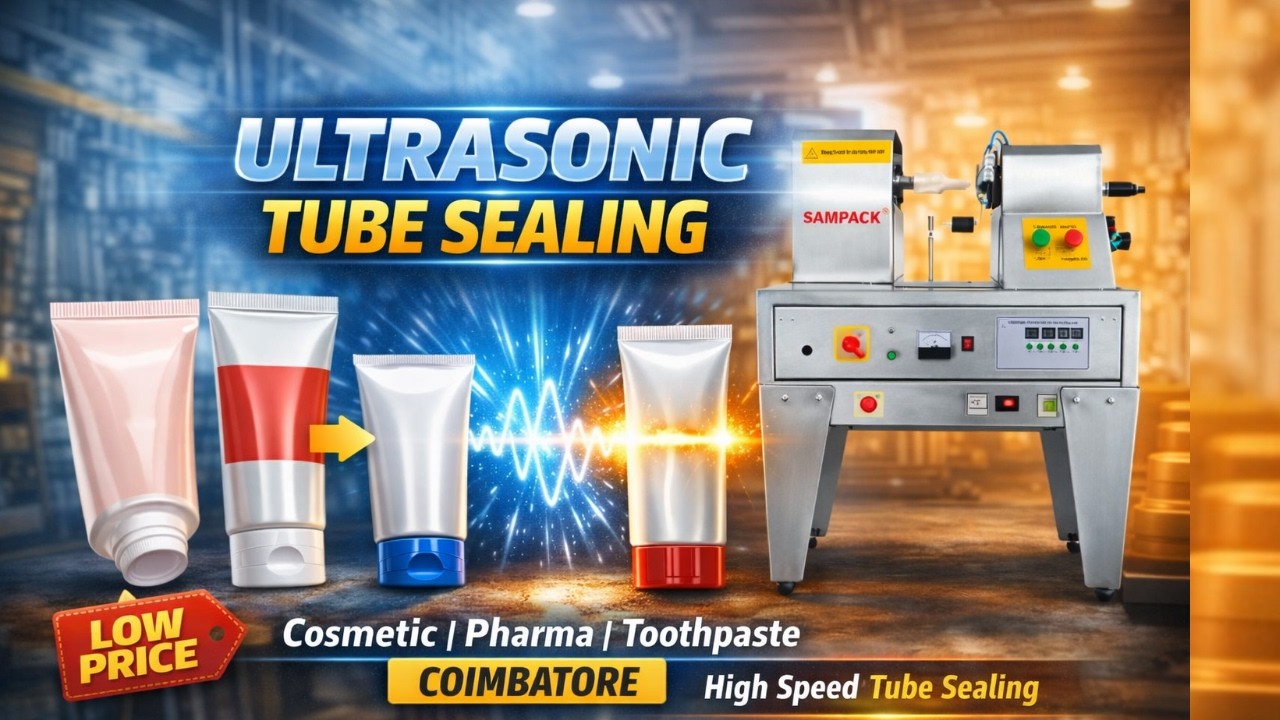
Fully automatic tube filling and sealing machine demonstrating the complete production cycle including servo-controlled piston filling, hot-air sealing, and in-line batch coding for cosmetic and pharmaceutical tube packaging.
Ongoing Support After Your Purchase
Installation and commissioning: On-site commissioning by a qualified applications engineer — not a distributor representative reading from a manual — is the standard that protects your investment. The commissioning engineer should set up and validate the machine with your actual tube format and product formulation, document the validated production parameters, and train your operators on those validated settings before leaving your facility.
Comprehensive operator training programs: Structured qualification training covers machine operation (including parameter setting and recipe management), daily cleaning procedures, routine maintenance tasks, and first-level troubleshooting. All training should be documented with individual operator qualification records — a requirement for pharmaceutical GMP environments and a best practice for cosmetic operations seeking to reduce operator-induced quality variability.
Preventive maintenance schedules and technical support: The maintenance schedule you implement from commissioning determines the reliability and quality consistency of your production for the machine’s entire service life. Request from your supplier a maintenance schedule document that specifies every maintenance task, its required interval, the procedure, and the documentation requirement — structured for direct integration into your QMS as a controlled procedure.
Your Path to the Right Equipment Decision
Making Confidence-Based Equipment Investments
The decision framework this guide provides converges on three practical actions before you commit budget to any tube filling equipment:
Action 1 — Build your TCO model before comparing equipment prices. Use the formula and cost category breakdown in Section 5 to calculate your 3-year total cost of ownership for each machine type under consideration. The machine with the lowest TCO over your planning horizon is the right financial choice — regardless of purchase price.
Action 2 — Verify supplier claims with reference data. Every specification a supplier provides about production speed, fill weight accuracy, changeover time, and maintenance cost should be verifiable through direct contact with a reference customer in your product category and production scale. Supplier claims that cannot be verified through references should be discounted significantly in your evaluation.
Action 3 — Require a production trial. The most reliable equipment evaluation is a witnessed production trial using your actual tube format, your actual product formulation, and your actual production parameters — run at the supplier’s facility or, ideally, at a reference customer’s site. A 500-unit trial costs time and some travel investment. It protects you from a $50,000–$250,000 capital commitment made on the basis of a demonstration that didn’t reflect your actual production conditions.
The right tube filling machine isn’t the one with the most impressive specification sheet or the most aggressive price. It’s the one that produces your product, at your quality standard, at your required volume, within your compliance framework, with the maintenance and support infrastructure to keep running for 10+ years. The knowledge in this guide gives you the framework to identify that machine — and to hold every supplier you evaluate to the standard that protects your investment.
Ready to Find Your Perfect Tube Filling Machine?
Don’t invest thousands in equipment based on guesswork. Use the selector framework in this guide — answer the questions in Sections 7 and 8, build your TCO model from Section 5, and bring your documented production requirements to every supplier conversation.
Explore the Complete Tube Filling Equipment Range → — Semi-automatic and fully automatic tube filling and sealing systems for cosmetic and pharmaceutical production.
Read the Full Tube Filling Machine Buyer’s Guide → — Detailed specification frameworks, compliance requirements, and ROI calculations for pharmaceutical and cosmetic tube filling equipment.
Compare Semi-Auto vs. Fully Automatic Systems → — Side-by-side data tables, throughput benchmarks, and a step-by-step decision matrix.
مسرد المصطلحات الأساسية
cP (Centipoise): The standard unit for measuring fluid viscosity. Water = 1 cP; light lotion ≈ 500–2,000 cP; rich cream ≈ 10,000–30,000 cP; pharmaceutical paste ≈ 50,000–150,000 cP.
CIP (Clean-in-Place): Automated chemical flushing of product-contact surfaces without disassembly. Critical for fast product changeover and pharmaceutical cleaning validation.
Cpk (Process Capability Index): Statistical measure of fill weight consistency relative to specification limits. Pharmaceutical minimum: Cpk ≥ 1.33. Fully automatic lines typically achieve 1.5–2.0; semi-automatic lines 0.9–1.2.
FAT (Factory Acceptance Test): A formal witnessed test of the equipment at the supplier’s facility, verifying it meets the agreed specification before shipment.
GMP (Good Manufacturing Practice): Regulatory minimum standards for pharmaceutical and regulated cosmetic production environments, equipment, documentation, and personnel.
IQ/OQ/PQ: Installation/Operational/Performance Qualification — the three-stage validation protocol confirming pharmaceutical manufacturing equipment performs as specified before production release.
OEE (فعالية المعدات الإجمالية): Availability × Performance × Quality. World-class packaging equipment benchmark: 85%. Fully automatic lines typically achieve 82–90%; semi-automatic lines 70–80%.
SCADA: Supervisory Control and Data Acquisition — software system that monitors and logs production machine data in real time, generating the electronic batch records required for FDA 21 CFR Part 11 compliance.
TCO (التكلفة الإجمالية للملكية): The complete cost of purchasing and operating equipment over its service life, including purchase price, installation, labor, maintenance, energy, consumables, and downtime.
URS (User Requirement Specification): The formal document defining what a piece of equipment must do to meet your production, quality, and compliance requirements — the foundation document for pharmaceutical equipment procurement.
الأسئلة المتداولة
Q1: How do I know if I need a semi-automatic or fully automatic tube filling machine?
The volume threshold is the clearest decision criterion. Semi-automatic machines (10–40 tubes per minute, $8,000–$35,000) are appropriate for operations producing fewer than 3–5 million tubes per year with high SKU diversity. Fully automatic systems (60–200+ tubes per minute, $60,000–$250,000+) deliver their financial case above 5 million tubes per year, where labor costs on semi-automatic lines systematically exceed the annualized capital cost of the automatic alternative.
The secondary criterion is compliance. If your products require pharmaceutical GMP documentation — electronic batch records, IQ/OQ/PQ validation, CIP capability — the compliance infrastructure built into fully automatic machines is significantly easier to operate and maintain than the equivalent SOP framework required to achieve the same compliance standard on a semi-automatic line.
Consider your 24-month growth projection, not just your current volume. If you expect to double production within 2 years, investing in automatic equipment now at the right volume threshold avoids the capital waste of buying semi-automatic equipment today and replacing it within 18 months.
Q2: Can one machine handle multiple product viscosities, or do I need separate equipment?
Modern tube filling machines with adjustable piston stroke, variable pump speed, and interchangeable nozzle sets can handle viscosity ranges of approximately 500–30,000 cP with parameter changes between SKUs. Within that range, one machine can serve most cosmetic product portfolios — light lotions through medium-bodied creams — without mechanism changes.
For extreme viscosity differences (thin gels at 500 cP alongside pharmaceutical pastes at 100,000+ cP), a single filling mechanism rarely optimizes performance at both extremes. At those ranges, either separate machines for each viscosity category or a machine with interchangeable pump heads (peristaltic for low viscosity, piston for high viscosity) provides the best quality outcome. Multi-viscosity capability is a key advantage for distributors managing diverse client product lines — specify this requirement explicitly and request a trial across your full viscosity range before purchasing.
Q3: What’s the difference between piston fillers and peristaltic pumps, and which should I choose?
Piston fillers use a precision cylinder and close-tolerance piston to displace product into the tube. Fill volume is set mechanically by adjusting piston stroke length. They deliver ±0.5–1.5% fill accuracy for viscous products above 5,000 cP — the standard mechanism for creams, ointments, and pharmaceutical pastes. They handle abrasive ingredients (provided the cylinder and piston materials are compatible) and high-viscosity products with consistent accuracy. Cleaning requires disassembly of the piston assembly — a meaningful time investment for each product changeover.
Peristaltic pumps compress flexible tubing progressively to propel product without metal contact. Every surface the product contacts is the tubing — making them the hygienic standard for fragile formulations, sterile products, and any formulation where metal contact is a contamination concern. They are gentler on suspended particles and fragile emulsions. Their limitation: fill accuracy degrades above 10,000–15,000 cP, and high-viscosity continuous operation wears tubing at accelerated rates. The right choice depends on your product — the selector framework in Section 2 provides the specific mapping.
Q4: How much downtime should I expect during product changeovers?
Realistic changeover benchmarks (measured from end of last good unit to first good unit of next product):
- Fill volume only, same tube format: 2–5 minutes (semi-auto); 1–2 minutes (automatic, HMI recipe recall)
- Tube length change, same diameter: 5–10 minutes (semi-auto); 10–20 minutes (automatic)
- Tube diameter change: 15–25 minutes (semi-auto); 30–90 minutes (automatic)
- Full format plus product change including cleaning: 45–70 minutes (semi-auto); 60–120 minutes (automatic)
If you run 5 or more different products regularly, the semi-automatic machine’s shorter changeover time is a genuine productivity advantage — even though the automatic line’s higher throughput rate exceeds the semi-automatic at any single sustained run. Choose machines with quick-change tooling components if you manage a high-SKU production schedule.
Q5: Will my specific cosmetic formula work with standard tube filling equipment?
Most cosmetic formulations — emulsions, gels, creams, lotions — fill reliably on standard equipment if the viscosity is matched to the filling mechanism and the tube material is chemically compatible with the product. The formulations that create equipment challenges are those with: abrasive suspended particles (scrub beads, mineral powders) that accelerate nozzle and piston wear; highly volatile components (high-concentration alcohols, specific essential oils) that require enclosed product pathways to prevent evaporation; or unusual rheological behavior (thixotropic gels that temporarily thin under shear then re-thicken in the tube).
For any formulation with these characteristics, request a 500-unit production trial with your actual product at the supplier’s facility before purchase. This investment — typically $2,000–$6,000 in time and travel — is the most reliable insurance against an equipment purchase that doesn’t perform with your specific formulation.
Q6: What’s the best tube material for pharmaceutical products, and does it affect machine selection?
ABL (Aluminum Barrier Laminate) tubes are the standard for prescription pharmaceutical topicals in most regulated markets — the near-total oxygen and light barrier they provide is required for formulation stability in most pharmaceutical ointment, cream, and gel applications. Aluminum tubes (all-metal) are specified for pharmaceutical applications requiring the absolute maximum barrier performance or where specific regulatory markets mandate them.
Machine selection impact: aluminum tube filling requires mechanical crimp-fold sealing technology rather than heat sealing — a different machine specification that cannot be retrofitted to a standard hot-air sealing system. ABL laminate tubes seal with hot-air sealing compatible with most standard equipment but require precise jaw temperature control because the foil layer responds differently to heat than pure PE. Specify your tube material before your equipment, and verify compatibility explicitly with any supplier you evaluate.
Q7: Can I use the same machine for both plastic and aluminum tubes?
Some mid-to-high range automatic systems accommodate both materials through interchangeable sealing heads — a hot-air jaw for plastic and laminate, a mechanical crimp folder for aluminum — with tooling changes requiring 45–90 minutes between material formats. This multi-material capability costs $15,000–$40,000 above a single-material optimized machine but eliminates the need for separate dedicated equipment.
Most machines are optimized for one tube material type. If you genuinely need multi-material capability, specify this requirement as a primary criterion in your supplier RFQ — not as an afterthought — and require a witnessed demonstration with both material types using your actual product formulations.
Q8: How do I ensure my tube filling machine prevents product contamination?
The design features that prevent contamination are deterministic — they either exist in the machine specification or they don’t. The checklist:
- Product-contact surfaces: 316L stainless steel, electropolished to Ra ≤ 0.8 μm surface finish
- No dead legs in product flow path — all product-contact tubing and nozzles must drain completely to prevent product retention
- CIP (Clean-in-Place) circuit for chemical sanitization without disassembly — particularly critical for pharmaceutical applications
- Enclosed product pathway in the fill zone — no open product exposure to ambient air
- Compressed air used in machine operation: filtered to ISO 8573-1 Class 1 (pharmaceutical environments) or Class 2 (regulated cosmetics)
Request the supplier’s contamination control design documentation as a purchase deliverable, not an afterthought.
Q9: What certifications and compliance standards should my tube filling machine meet?
The required certifications depend on your regulatory market and product category:
- EU (all products): CE marking — mandatory for all machinery sold in the European market
- US pharmaceuticals: Designed to support FDA 21 CFR Part 211 compliance; 21 CFR Part 11 electronic records capability for computer-controlled systems
- EU pharmaceuticals: EU GMP Annex 15 qualification documentation support; Annex 1 design standards for sterile product environments
- Medical devices: ISO 13485 traceability requirements for batch records and material certifications
- All pharmaceuticals globally: IQ/OQ/PQ validation documentation package from the manufacturer
Do not assume compliance. Request specific certificates, verify their current validity, and confirm the scope covers the exact machine configuration you are purchasing — not a generic platform from which your configuration is derived.
Q10: How do I verify that equipment meets my regulatory requirements before purchasing?
Five verification steps that protect your capital:
- Request the IQ/OQ/PQ document templates — not a promise to provide them, but the actual documents with sample content — before the purchase decision
- Require the supplier to provide three references in your regulatory category (pharmaceutical GMP / cosmetic MoCRA) who have successfully completed regulatory audits using this equipment
- Include a FAT (Factory Acceptance Test) in your purchase contract, with your URS as the acceptance criterion
- Verify material certifications for all product-contact components — 316L certificates, food-contact compliance declarations, or pharmaceutical material standards
- Review the machine’s cleaning validation support documentation — the protocol structure that enables you to validate your cleaning procedure, not just a statement that the machine “supports GMP”
Q11: What documentation and traceability features do I need for pharmaceutical manufacturing?
The minimum documentation set that a pharmaceutical tube filling machine must generate for FDA compliance:
- Batch start/end timestamps, automatically captured
- Operator identification for each production event
- Fill weight data: individual measurements at your sampling frequency, with batch summary statistics (mean, standard deviation, Cpk)
- Sealing temperature log: jaw temperature at defined intervals throughout the batch
- Alarm event log: every alarm triggered, with timestamp and resolution notation
- Equipment ID: the specific machine and software version that produced the batch
This data must be generated by the machine’s electronic control system, stored in a format that cannot be altered after the fact without an audit trail (21 CFR Part 11 requirement), and retrievable for a minimum of 7 years (FDA batch record retention standard).
Q12: How long does it typically take to recover my equipment investment?
ROI payback depends on your production volume, labor market, and the cost differential between machine options:
- Semi-automatic systems at low volume (below 2M tubes/year): 6–12 months payback, driven primarily by capital efficiency at low volume
- Fully automatic systems at medium volume (3–8M tubes/year): 18–30 months payback, driven by labor savings and waste reduction
- Fully automatic systems at high volume (above 8M tubes/year): 12–20 months payback, where labor savings compound rapidly
These timelines assume stable production volume. Volume shortfalls extend payback; volume exceeding projections compress it. The tube filling machine buyer’s guide provides a worked payback calculation framework you can adapt to your specific cost structure.
Q13: What are the hidden costs I should budget for beyond the machine purchase price?
The costs that don’t appear on the supplier’s quotation but routinely add 40–60% to your total 5-year investment:
- International freight and import duties: 10–18% of equipment value depending on origin country and destination
- Installation and commissioning: $3,000–$15,000 depending on machine complexity and site modifications required
- Operator training: 5–10 production days of applications engineer time — sometimes included, sometimes quoted separately
- Validation activities (pharmaceutical): $10,000–$30,000 for IQ/OQ/PQ execution if you’re managing this internally with external protocol support
- Initial spare parts inventory: 10–15% of purchase price for the components most likely to require replacement in the first 2 years
- Preventive maintenance contracts: 3–5% of purchase price annually if you’re using the supplier’s service program
- Facility modifications: electrical supply upgrades, compressed air infrastructure, cleanroom interface construction — site-specific and potentially $15,000–$80,000
Q14: Should I lease or purchase tube filling equipment?
Leasing advantages: lower upfront cash commitment, predictable monthly operating expense rather than capital event, flexibility to upgrade or return equipment as your production scale evolves. Leasing is the right model for brands testing new product categories, startups building production capability before revenue is established, and manufacturers whose growth trajectory makes the optimal equipment configuration uncertain over a 36–60 month horizon.
Purchasing advantages: lower total cost over the machine’s operational life (lease costs typically 25–35% more than purchase financing over equivalent terms), full depreciation benefit for tax purposes, no residual value uncertainty at lease end. Purchasing is appropriate for established manufacturers with stable, predictable production volumes and clear 5–10 year business visibility.
Q15: What maintenance costs should I expect, and how do I budget for them?
Annual preventive maintenance budget: 5–8% of equipment purchase price for a well-designed machine maintained on schedule. For a $90,000 machine: $4,500–$7,200 per year.
Routine wear parts replacement: Piston seals and O-rings every 6–18 months ($200–$800 per set depending on machine size). Sealing jaw heating elements annually ($300–$1,200). Peristaltic tubing every 2–6 months depending on product abrasiveness ($150–$600 per set). Nozzle tips every 12–24 months ($100–$400).
Unplanned repair reserve: Budget 2–3% of purchase price annually for unexpected failures not covered by preventive maintenance — for a $90,000 machine, $1,800–$2,700 per year.
Proper preventive maintenance extends equipment service life from 7–10 years to 12–15+ years — converting approximately $100,000–$150,000 of replacement capital into continued productive use of equipment that already knows your production parameters and has been validated for your products.
Q16: What training does my team need to operate tube filling equipment safely and effectively?
Structured training for a semi-automatic tube filling machine: 3–5 days covering machine operation, fill parameter setting, nozzle selection and installation, daily cleaning procedures, routine maintenance tasks, and basic troubleshooting. Fully automatic system training: 2–4 weeks covering all of the above plus PLC alarm diagnosis, HMI recipe management, servo drive parameter interpretation, vision system calibration verification, and changeover sequencing.
Training should be documented with individual operator qualification records — who was trained, by whom, on what topics, with what demonstrated competency evidence. These records are a GMP requirement in pharmaceutical environments and a best practice in any regulated cosmetic operation. Request that your equipment supplier provide both a training curriculum outline and individual training record templates as commissioning deliverables.
Q17: How do I minimize waste and maximize fill accuracy with my equipment?
The five highest-leverage practices for fill accuracy and waste reduction:
- Match filling mechanism to product viscosity — the single most impactful decision, made at the specification stage before purchase
- Calibrate fill weight at the start of every production shift — weight drift from piston seal wear or temperature change is predictable if you catch it early; it’s expensive if you discover it at end-of-batch
- Monitor fill weight at 30-minute sampling intervals — statistical control chart analysis of these samples reveals drift before it creates batch failures
- Maintain nozzle selection discipline — using an oversized nozzle for a thin product creates drip and inconsistent fill termination; undersized nozzle for thick product creates fill pressure variation
- Implement the manufacturer’s preventive maintenance schedule — the fill accuracy specification is only valid on a maintained machine; deferred maintenance creates progressive accuracy degradation that appears gradually and is often misattributed to product variation
Q18: What support and service should I expect from equipment vendors?
The minimum support standard for a credible equipment supplier:
- On-site installation and commissioning by a qualified applications engineer (not a distributor or freight agent)
- Technical support response within 24 hours for production-critical issues — documented in your purchase contract, not verbal commitment
- Spare parts available within 48–72 hours for the 20 most commonly replaced components (many suppliers stock these regionally; others ship from the manufacturing location with 2–4 week lead times — a critical difference in a production downtime scenario)
- Software updates and bug fixes for machine control systems throughout the equipment’s service life
- Remote diagnostic capability — the ability for the supplier’s engineer to connect to your machine’s PLC remotely for troubleshooting, reducing the need for costly on-site service visits for software-related issues
Q19: How do I evaluate equipment vendors and avoid unreliable suppliers?
The verification framework that reveals actual supplier quality before commitment:
- Years in business in tube filling equipment specifically — not general packaging machinery. 10+ years in the specific product category indicates an established engineering and support infrastructure
- Direct customer references in your industry and production scale — not the names of large companies they’ve supplied; specific contacts who will speak with you before you commit
- Facility visit — observe their manufacturing floor, their parts inventory, their engineering team, and their demonstration equipment operating under real production conditions
- Documentation quality — request a sample IQ/OQ/PQ package and a sample FAT protocol. The quality and completeness of these documents reveals the sophistication of their quality and engineering systems
- Contract terms — a supplier confident in their equipment’s performance includes performance guarantees, warranty terms of minimum 12–24 months, and spare parts pricing and availability commitments in the standard contract. A supplier who resists these terms is signaling uncertainty about their product’s reliability
Q20: What should I include in my equipment purchase contract to protect my investment?
The essential contract provisions that protect your capital:
- Performance guarantees: Minimum sustained production speed (verified by FAT), fill weight accuracy (Cpk value at your product viscosity), and seal defect rate — with agreed remediation process if performance falls below guarantee
- Warranty terms: Minimum 12–24 months covering parts and labor for manufacturing defects; clarity on what voids the warranty
- Spare parts commitment: Specific parts availability guarantee (which components are stocked, what lead times apply) and a price protection clause preventing unilateral price increases on committed parts
- Training delivery: Specific scope (days, topics, location, trainer qualification), timing (at commissioning, not after 3 months), and documentation deliverables (operator training records, procedure documents)
- Technical support terms: Response time commitment for production-critical issues, definition of what constitutes a production-critical issue, and escalation procedure if response times are not met
- Penalty provisions: For non-delivery on the performance guarantee within the warranty period — typically equipment remedy, extended warranty, or proportional price adjustment
Engage legal review for any equipment purchase above $50,000. The cost of contract review is negligible against the capital being committed; the cost of an inadequate contract that leaves you without recourse on a $150,000 equipment failure is not.