
In 2026, the cold roll forming machine — a piece of industrial equipment that continuously bends flat metal strip through a sequence of profiled roller pairs to produce uniform structural sections — is no longer a commodity press-shop investment. It has become the technological front line of metal fabrication: integrating servo-driven CNC automation, AI-powered predictive maintenance, computer-aided forming simulation, and modular quick-change tooling into a single production system that B2B manufacturers across construction, automotive, solar energy, and HVAC are actively competing to upgrade.
The market data confirms the acceleration. The Cold Roll Forming Machine Market was valued at USD 886.23 million in 2026 and is projected to reach USD 1.28 billion by 2032 at a CAGR of 6.1% (Research and Markets). A parallel analysis of the broader roll forming machine segment — including hot and cold forming — puts the 2026 value at USD 11 billion, growing to USD 15.1 billion by 2034 at 4% CAGR. Asia-Pacific leads global adoption with 31.1% market share, driven by China’s construction boom and the rapid expansion of domestic solar manufacturing.
Three forces are driving the innovation wave: automation maturity (servo motors and PLC systems now cost-competitive enough for mid-tier factories), material evolution (Advanced High-Strength Steel and aluminum alloys demanding more precise forming parameters), and digitalization (Industry 4.0 connectivity turning machines from mechanical assets into data-generating production nodes). This guide covers each of these vectors in technical depth — for factory engineers, procurement specialists, and operations directors making capital decisions in 2026.
Technological Advances in Cold Roll Forming Machines

Automation and CNC Integration
CNC (Computer Numerical Control) in cold roll forming means that every critical forming parameter — roller gap, punch position, cut-to-length dimension, and line speed — is governed by a digital program stored in the machine’s PLC (Programmable Logic Controller) rather than by manual mechanical adjustment. This is not a minor convenience: it fundamentally changes the production economics of the machine.
A conventional mechanically-adjusted roll forming line requires a skilled technician 45–90 minutes to change between profiles, with the risk of setup error that produces scrap material before the first conforming part exits the line. A servo-driven CNC system stores the complete parameter set for each profile — typically hundreds of profiles in modern machines — and reloads them at the press of a button, reducing changeover to under 10 minutes with zero manual adjustment and near-zero scrap at startup.
The Technavio Roll Forming Machines Market report identifies CNC incorporation as the primary growth driver for the global roll forming machine market in 2025–2029. The automatic roll forming segment is projected to account for 46.8% of total market share in 2026 (Coherent Market Insights) — up from an estimated 38% in 2022, reflecting the accelerating adoption of servo-electric over hydraulic-mechanical configurations.
Industry insight: The shift to servo-electric driving systems (replacing hydraulic cylinders for profile adjustment) is delivering a secondary benefit that procurement teams often underestimate — energy consumption reduction of up to 25% compared to hydraulic systems running at constant pressure, even during idle periods. For a factory running two shifts, that translates to a meaningful reduction in annual energy cost that improves the total cost of ownership calculation.
Computer-Aided Systems
COPRA RF (developed by data M Sheet Metal Solutions) is the industry’s leading roll forming design and simulation software. In simple terms, it allows engineers to design the complete forming sequence — every roller pass, every springback compensation, every material stress state — on a computer before any physical tooling is manufactured. The 2025 version introduced a re-engineered DTM (Downstream Tool Management) module operating in real time, enabling live simulation adjustments during the design phase rather than requiring batch recalculations.
The practical value: a new profile that previously required 3–5 physical tooling iterations (each costing $5,000–$20,000 in steel tooling and machine time) can now be validated in software through FEA (Finite Element Analysis — a computational method that simulates material deformation under applied forces) before a single roller is cut. COPRA’s FEA RF module simulates material thinning, edge wave, and residual stress with sufficient accuracy that leading manufacturers report reducing physical tooling iterations from an average of 3.8 to under 1.5 for complex profiles.
Beyond COPRA, modern CNC roll forming lines integrate with CAM (Computer-Aided Manufacturing) software and ERP systems via open protocols (OPC-UA, Modbus TCP/IP), enabling the machine to receive production orders directly from the factory’s planning system — closing the loop between order management and physical production without manual data re-entry.
Advanced Material Processing
The material range processed by cold roll forming machines has expanded significantly in 2025–2026. AHSS (Advanced High-Strength Steel) — steels with yield strengths above 550 MPa, developed primarily for automotive lightweighting — now represent over 70% of roll-formed automotive structural components. These materials require tighter roller alignment tolerances (typically ±0.05mm vs. ±0.15mm for mild steel), higher forming forces, and more sophisticated springback compensation — all areas where servo-CNC machines outperform conventional designs.
Aluminum alloys (particularly 6000-series aluminum used in solar mounting structures and EV battery enclosures) present a different challenge: lower yield strength than steel but high spring-back due to high elastic-to-plastic deformation ratio. Roll forming lines processing aluminum require specific roller coatings to prevent galling (surface damage from metal-on-metal contact), slower forming speeds to manage heat generation, and precise inter-pass distance management to prevent surface marking. Machines equipped with real-time force monitoring sensors can detect material property variations coil-to-coil and auto-adjust forming parameters to maintain dimensional consistency.
Sources: SW Forming Technology, MTC Industrial, Data M / COPRA RF, Technavio — 2025–2026 specifications
▶ Watch: How a Cold Roll Forming Machine Works — Industrial Process Demo
Watch how modern cold roll forming machines continuously feed metal strip through calibrated roller sequences to produce precision structural profiles at high speed.
Market Growth and Industry Trends
Industry Expansion and CAGR
The cold roll forming machine market is in a sustained growth phase, underpinned by structural demand drivers that are independent of short-term economic cycles. Construction activity — the single largest end-use segment — is growing across Asia-Pacific, Middle East, and Africa. Solar energy infrastructure build-out is generating demand for aluminum and galvanized steel mounting profiles at a rate that conventional fabrication methods cannot efficiently supply. And the automotive industry’s accelerating shift to electric vehicles is creating new demand for AHSS roll-formed body and chassis components optimized for crash performance rather than weight.
The cold roll forming segment specifically (as distinct from hot rolling) is growing at 6.1% CAGR — faster than the broader roll forming market’s 3.1–4.0% CAGR — because cold forming’s room-temperature process produces superior surface finish, tighter tolerances, and work-hardened mechanical properties that hot rolling cannot match. For industries like precision solar mounting, EV battery enclosures, and pharmaceutical facility construction where dimensional accuracy and corrosion resistance are non-negotiable, cold roll forming is the only viable process.
📊 Cold Roll Forming Machine Market Value — Actual & Projected (USD Million)
Source: Research and Markets Cold Roll Forming Machine Market 2026–2032. E = Estimate/Projection at 6.1% CAGR.
Application Diversification
Five years ago, cold roll forming’s primary markets were construction (roofing, wall cladding, purlins, framing) and traditional automotive stamping. By 2026, the application map has expanded substantially. The solar energy sector alone is driving significant demand: a large utility-scale solar farm requires millions of linear meters of aluminum or galvanized steel mounting channels, all of which are optimally produced by roll forming. A solar channel roll forming machine — producing C-strut and unistrut profiles for mounting frame structures — is now one of the fastest-growing machine categories, with dedicated manufacturers in China, Germany, and the US offering models optimized for continuous high-speed production of solar-specific profiles.
In automotive, the transition to electric vehicles is not reducing roll forming demand — it is reshaping it. EV battery trays, structural side sills, and floor reinforcement members in lightweight AHSS are all roll-formed components. The roll-formed automotive parts market was valued at approximately $12 billion in 2023 and is projected to reach $30 billion by 2030 as AHSS adoption reaches 80%+ of structural EV components.
Other high-growth application areas include: industrial racking and shelving (logistics boom driving demand for cold-formed steel uprights and beams), cold room and refrigeration construction (insulated panel frame profiles), HVAC ductwork, and modular construction framing (cold-formed steel stud and track systems for off-site building fabrication).
🥧 Cold Roll Forming Machine End-Use Market Share 2025
- Construction & Infrastructure: 38%
- Automotive & EV: 26%
- Solar & Renewable Energy: 16%
- Industrial Racking & HVAC: 20%
Source: YCS Machinery, Research and Markets, WXYW Roll Forming Machine — 2025 estimates
Geographic Leadership
Asia-Pacific holds 31.1% of the global roll forming machine market in 2026 and is the fastest-growing region by absolute value. China is both the largest consumer of cold roll forming machines (driven by its construction, automotive, and solar manufacturing sectors) and an increasingly significant manufacturer — with companies like LOTOSFORMING, PATECH, Wuxi J&R, and Hangzhou Roll Forming Technology now exporting CE-certified machines to European and North American markets at 30–50% below European-manufactured equivalents.
Europe maintains its position as the technology leader in precision and high-speed roll forming, with German companies (DREISTERN, data M / COPRA RF for simulation software) and Italian companies (Faccin Group, Dimeco) setting global benchmarks for forming accuracy and machine longevity. North America is experiencing a manufacturing reshoring trend that is driving new investment in domestic roll forming capacity — particularly for construction steel, EV components, and defense-related metal fabrication.
Middle East and Africa are emerging markets where infrastructure investment programs (Saudi Arabia’s Vision 2030, major African infrastructure corridors) are creating significant first-time demand for industrial roll forming capacity at a scale that warrants investment in fully automated lines rather than semi-manual equipment.
Flexibility and Utilization in Cold Roll Forming Machines

Flexible Manufacturing Strategies
The most significant shift in cold roll forming machine architecture in 2025–2026 is the modular cassette-type design. Traditional roll forming lines are built around a fixed sequence of roller stands, each machined for a specific profile. Changing the profile requires physically dismounting and remounting individual rollers — a process that consumes shift time and risks misalignment. The cassette architecture replaces individual roller stands with pre-calibrated cassette units: complete, pre-aligned roller assemblies that mount onto a common drive shaft and are swapped as a unit.
The MTC Industrial Cassette Type Roll Forming Machine exemplifies this approach — allowing a manufacturer to produce C-purlins, Z-purlins, rainwater gutter channels, and façade profiles on a single machine base, simply by swapping pre-calibrated cassettes. Each cassette is stored with its profile parameters already loaded in the PLC; when the cassette is installed, the machine automatically configures all forming parameters without manual entry. Profile changeover time: under 15 minutes, versus 60–90 minutes for a fixed-stand conventional machine.
For B2B manufacturers serving multiple market segments (construction + solar + HVAC, for example), the cassette-type approach eliminates the traditional choice between purchasing multiple dedicated machines or limiting the product range to a single-line capability. One well-configured cassette-type line can serve three to five distinct product families from the same floor space, capital investment, and operator team.
Industry insight: Contract roll forming companies — B2B manufacturers who produce profiles for multiple industrial customers — are the biggest adopters of flexible, multi-profile lines. A contract former with a cassette-type servo CNC line can take on orders for solar channel profiles in Q1, C-purlin framing profiles in Q2, and automotive reinforcement sections in Q3 using the same capital asset. This asset utilization model fundamentally improves the business case compared to single-profile dedicated lines where capital is idle during low-demand periods for that specific profile.
Downtime Management
Unplanned downtime in a roll forming operation is disproportionately expensive. Unlike a stamping press where a broken die affects one hit, a roll forming line failure stops the entire coil-to-product flow — and any coil already threaded through 20+ roller passes cannot typically be backed out without damage. The cost of a 4-hour unplanned stoppage at a mid-volume line running 40 meters/minute typically exceeds $8,000–$15,000 in lost production value plus emergency maintenance cost.
AI-powered predictive maintenance is now the primary technology response to this risk. IoT vibration sensors mounted on drive shafts and bearing housings continuously transmit data to cloud analytics platforms that compare real-time readings against baseline signatures established during commissioning. Deviations — indicating bearing wear, roller misalignment, or lubrication degradation — are flagged as maintenance alerts days or weeks before failure, allowing scheduled intervention during a planned maintenance window rather than emergency repair during a production run.
Published data from IoT predictive maintenance deployments in metal fabrication (Strainlabs, NCD.io) consistently shows 50% reduction in unplanned downtime and 30–40% reduction in reactive maintenance cost in the first 12 months of deployment. For a roll forming factory running two 8-hour shifts, eliminating even two unplanned 4-hour stoppages per month is worth $192,000–$360,000 per year in recovered production time — a figure that dwarfs the cost of the sensor system and cloud analytics subscription.
Sustainability and Regulation
Eco-Friendly Practices
Cold roll forming has an inherent sustainability advantage over alternative metal forming processes: it operates at room temperature, eliminating the energy-intensive heating required by hot rolling or forging. Material utilization in roll forming is typically 95–98% — the process produces minimal scrap because it bends rather than removes material, and the scrap it does generate (edge trim, cut-to-length offcuts) is clean, single-material recyclable steel or aluminum with high scrap value.
The 2025–2026 innovation focus within sustainability is on the lubricant system and the drive system. Water-based lubricants are replacing traditional petroleum-based forming oils, eliminating hazardous waste disposal requirements and reducing lubricant cost. Servo-electric drive systems (replacing hydraulic power units) eliminate hydraulic fluid, reduce energy consumption by 20–25%, and remove the risk of hydraulic fluid contamination of product or facility. Dreistern’s published sustainability data on roll forming notes that high-efficiency servo drives, combined with regenerative braking energy recovery, can reduce a forming line’s total energy consumption by up to 30% versus equivalent hydraulic machines.
Regulatory Compliance
For B2B manufacturers exporting roll-formed products or purchasing machines for EU-market operations, the regulatory compliance landscape in 2026 has several layers. CE marking (required for machines sold into EU markets) verifies conformity with the EU Machinery Directive (2006/42/EC), covering safety design, guarding, emergency stop systems, and noise emissions. ISO 9001 quality management certification from the machine manufacturer is a baseline expectation for any capital procurement. For operations with environmental management commitments, suppliers who hold ISO 14001 environmental management certification demonstrate documented environmental performance beyond what individual machine certifications alone verify.
Increasingly, procurement teams at large industrial manufacturers are also requiring suppliers to provide carbon footprint documentation for the machine manufacturing process itself — a reflection of Scope 3 emissions reporting requirements under EU Corporate Sustainability Reporting Directive (CSRD) obligations that are cascading through supply chains. Machine suppliers who can provide Environmental Product Declarations (EPDs) or carbon intensity data for their manufacturing operations are gaining a competitive advantage in tender processes for large industrial clients.
Energy Efficiency
Beyond drive system efficiency, energy efficiency in cold roll forming machines is being improved across three additional vectors. Intelligent speed control — where the line automatically decelerates during non-critical forming segments and accelerates through the precision forming zone — reduces average power consumption by 8–12% while maintaining throughput. LED machine lighting and heat recovery from motor drives contributes a further 3–5% reduction in facility energy attributed to the forming line. And optimized pass design — using fewer forming passes through computer simulation to achieve the same profile — directly reduces the motor energy required per meter of profile formed, with COPRA RF simulation studies showing 12–18% energy reduction when optimized pass sequences replace empirically developed conventional sequences.
These efficiency improvements are not only environmentally significant — they directly reduce operating cost. A roll forming line consuming 45 kW average running at 6,000 hours/year costs approximately $27,000/year in electricity at an industrial rate of $0.10/kWh. A 25% reduction saves $6,750/year — a figure that compounds over a 15-year machine life into over $100,000 in lifetime energy cost reduction per machine.
🌱 Sustainability Performance — Servo-CNC vs. Conventional Hydraulic Roll Forming Line
Sources: Dreistern Green Roll Forming, SW Forming efficiency data, Roller Die sustainable manufacturing report, Springer Nature energy efficiency study
Machine Types and Applications

Heavy-Duty Steel Machines
Heavy-duty cold roll forming machines are defined by their material thickness capacity — typically 2.0mm to 6.0mm gauge steel, including high-strength grades up to 700 MPa yield strength. These machines are deployed in infrastructure construction (highway guardrails, bridge decking), industrial racking (heavy-load warehouse systems), and energy infrastructure (solar tracker support structures, wind farm ground mounting). A typical heavy-duty 5mm automatic C-purlin machine features a 45 kW main drive motor, 18–24 forming stations, heavy-gauge roller tooling (typically GCr15 bearing steel, hardened to 58–62 HRC), and a hydraulic cutting system with automatic length measurement and cut-to-length accuracy of ±1mm.
The key specification differentiator in the heavy-duty segment is roller stand rigidity. Under the high forming forces generated by thick AHSS, inferior roller stands deflect — producing profile dimensional variation that accumulates through the forming sequence and results in twist, bow, or end flare in finished sections. Leading manufacturers address this through finite-element-optimized stand designs that minimize deflection to under 0.02mm at maximum rated forming force, maintaining dimensional consistency even at the maximum material specification.
Custom and Modular Designs
Custom roll forming machines — designed around a specific profile family or industry application — represent the premium segment of the market. For solar mounting structure manufacturers, a custom machine might integrate in-line punching (creating mounting hole patterns simultaneously with profile forming), automatic cut-to-length, and robotic stacking — producing a finished, punched, cut, and stacked component directly from coil with zero manual handling. The elimination of secondary operations in this configuration reduces labor cost, floor space, and work-in-process inventory simultaneously.
For automotive Tier-1 suppliers, custom roll forming lines producing AHSS structural components are validated through PPAP (Production Part Approval Process — an automotive industry standard for verifying that a production process consistently produces conforming parts), which requires dimensional measurement reports, capability studies (Cpk), and material traceability documentation from coil to finished part. The machine’s PLC must record process parameters (forming speed, punch force, cut position) for every part to support this traceability requirement — a capability that is standard on premium CNC machines and available as an option on mid-tier models.
Integration with Manufacturing Systems
The 2026 generation of cold roll forming machines is designed for factory integration, not standalone operation. Communication protocols — OPC-UA (an industrial standard for machine-to-machine data exchange), Modbus TCP/IP, and EtherNet/IP — allow the forming line’s PLC to interface with MES (Manufacturing Execution Systems), ERP platforms, and quality management systems. In a fully integrated factory, the forming machine receives production orders from the MES, reports actual production counts and dimensional inspection results back to the quality system, and flags coil material certificates against the order specification automatically.
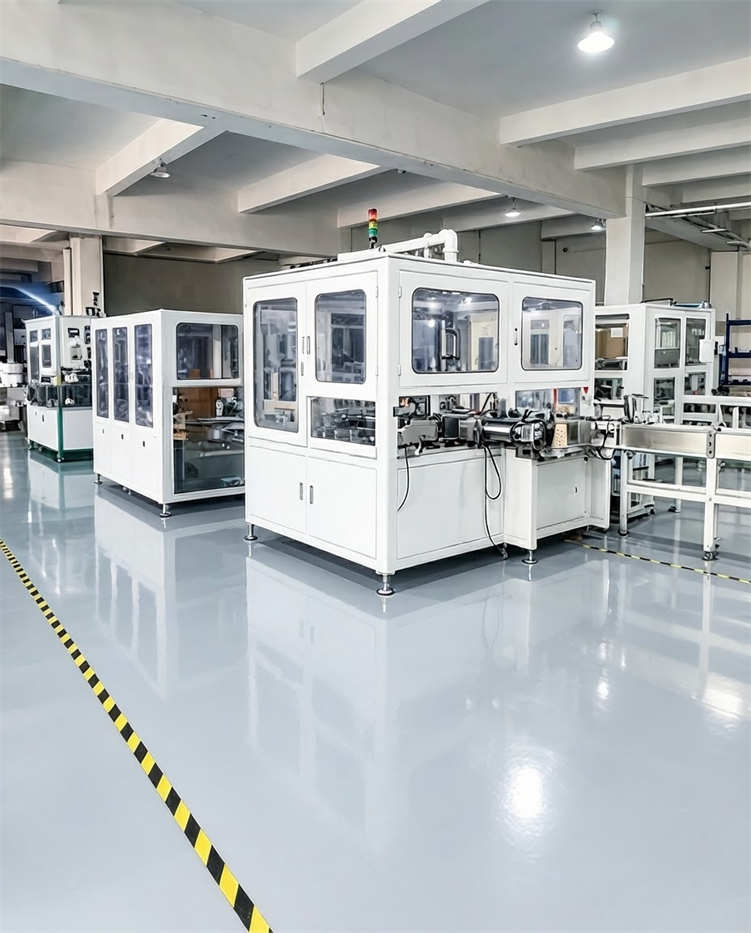
This integration architecture is analogous to what companies like Miyoda Packaging Machinery have implemented in their automated tube production lines for cosmetics and pharmaceutical manufacturers — where each machine station communicates its status and output data to a unified production management layer, enabling real-time OEE tracking and remote diagnostics. The same architectural principle applies: the machine becomes a data node in the factory’s information network, not just a mechanical production asset. For manufacturers evaluating how integrated control architecture is designed for tube packaging lines, Miyoda’s technical guide on automated production line design provides relevant insight on the factory integration methodology.
Industry Leaders and Innovation

Leading Manufacturers
The global cold roll forming machine market is served by a tiered supplier landscape. At the top, precision engineering companies set the technology standard: SMS group GmbH (Germany) leads in heavy-duty and strip-processing line integration; Bradbury Group (USA) dominates the North American roofing and metal building panel market; Faccin Group (Italy, operating three brands: Faccin, Boldrini, and Roundo) leads in plate rolling and profile forming for wind energy and shipbuilding. DREISTERN (Germany) is the benchmark for high-speed precision forming lines, particularly for automotive components.
In the Asia-Pacific tier, Chinese manufacturers have closed the technology gap significantly. LOTOSFORMING, PATECH Forming, Hangzhou Roll Forming Technology, and Wuxi J&R Roll Forming offer CE-certified machines with servo-CNC controls, PLC touchscreen interfaces, and remote diagnostic capability at capital costs 30–50% below equivalent European machines. For B2B buyers in cost-sensitive markets — Southeast Asia, Middle East, South America — the China-manufactured tier now delivers adequate technical performance for most construction and solar applications, with the trade-off being shallower local service networks in some regions.
For independent industry intelligence on supplier capability and market positioning, Research and Markets’ global roll forming companies analysis and Bradbury Group’s product range provide useful reference points for procurement benchmarking.
Partnerships and R&D
R&D investment patterns in the cold roll forming machine sector in 2025–2026 cluster around three themes: AI/machine learning for process control (academic partnerships with technical universities — RWTH Aachen, TU Delft, and equivalent Chinese universities — developing self-optimizing forming algorithms), digital twin technology (creating virtual replicas of physical machines that mirror real-time operating conditions for remote diagnostics and operator training), and materials science collaboration (partnerships with steelmakers like Voestalpine and SSAB to develop forming sequences optimized for new AHSS grades before they are commercially released).
data M’s COPRA RF software ecosystem exemplifies the R&D partnership model: the simulation platform integrates with machine OEM partners who embed COPRA’s forming analysis engine directly into their machine control systems, creating a closed loop where simulation-derived parameters are transferred directly to the machine without manual re-entry. This OEM integration model is creating competitive moats for machine manufacturers who are first to embed COPRA in their standard product offering.
Startups and Disruptive Tech
The most disruptive technology entering the cold roll forming machine space is AI-driven real-time quality inspection. Several startups and established vision system companies are deploying high-resolution line-scan cameras at the exit of forming lines, combined with machine learning models trained on thousands of profile cross-section images, to detect edge wave, twist, bow, and surface defects at production line speeds. These systems can make a pass/fail quality decision on every meter of profile produced — a capability that conventional sampling-based inspection (measuring every 20th profile with a gauging template) fundamentally cannot match.
Digital twin platforms (software replicas of physical forming lines that mirror real-time operating data) are moving from R&D pilots to commercial deployment. A forming line manufacturer can use the digital twin to diagnose a customer’s line fault remotely without sending an engineer on-site — dramatically reducing mean time to repair for international installations. For manufacturers in emerging markets where qualified roll forming machine service engineers are scarce, remote diagnostic capability via digital twin is becoming a decisive factor in machine procurement decisions, not a secondary feature.
Key Takeaways and Actionable Steps for Industry Stakeholders
The innovations shaping cold roll forming machines in 2026 are not incremental improvements to existing technology — they are a systematic convergence of automation, digitalization, materials science, and sustainability engineering that is redefining what a roll forming machine can do and who it can serve. The transition from mechanically-adjusted conventional lines to servo-driven, CNC-controlled, IoT-connected, AI-monitored forming systems is not a future roadmap; it is the current commercial offering from leading manufacturers and the expected baseline for new capital investment decisions.
For factory engineers and plant managers: audit your existing lines against the performance benchmarks in this guide. If your changeover times exceed 30 minutes, your startup scrap rate exceeds 2%, or you have no predictive maintenance monitoring in place, the productivity gap versus a 2026-generation machine is measurable and financeable. Run a full five-stream ROI model — labor savings, scrap reduction, energy efficiency, throughput gain, and maintenance cost reduction — before building the capital case.
For procurement specialists: evaluate suppliers on service infrastructure and digital capability as much as mechanical specification. A machine that costs 20% less but has no local service engineers and no remote diagnostic capability will cost more in lifetime downtime than the price difference saves. Require Factory Acceptance Tests with your actual material. Require COPRA RF simulation reports for new profiles as part of the commissioning specification. And confirm CE marking and ISO 9001 compliance as non-negotiable baseline requirements.
For broader context on automation investment strategy in industrial manufacturing — the same principles that govern cold roll forming line specification apply across metal fabrication: control architecture standardization, integration planning before equipment selection, and total-cost-of-ownership modeling over purchase-price comparison. Resources from Voestalpine’s cold roll forming technology documentation and independent market intelligence from Packaging Digest provide useful benchmarking context for manufacturing operations directors evaluating capital allocation across their facility portfolio.
📖 Key Terms Glossary
- Cold Roll Forming
- A metal forming process that continuously bends flat metal strip through a series of profiled roller pairs at room temperature, progressively forming the strip into a desired cross-sectional profile without heating the material.
- AHSS (Advanced High-Strength Steel)
- Steels with yield strengths above 550 MPa, engineered for automotive and structural applications where high strength-to-weight ratio is required. Requires more precise forming parameters and higher forming forces than conventional mild steel.
- CNC (Computer Numerical Control)
- Digital control of machine parameters via stored programs. In roll forming, CNC governs roller gap, punch position, line speed, and cut-to-length dimensions — enabling fast, precise profile changeover without manual mechanical adjustment.
- COPRA RF
- The industry’s leading roll forming design and simulation software (by data M Sheet Metal Solutions). Uses finite element analysis to simulate the complete forming process digitally before physical tooling is manufactured.
- Springback
- The elastic recovery of metal after forming — the tendency of the material to partially “spring back” toward its original shape after a bending force is removed. Higher strength steels have greater springback, requiring compensation in roller design.
- OPC-UA
- An industrial communication standard that enables secure, reliable data exchange between machines, PLCs, MES, and ERP systems — the standard integration protocol for Industry 4.0-connected manufacturing equipment.