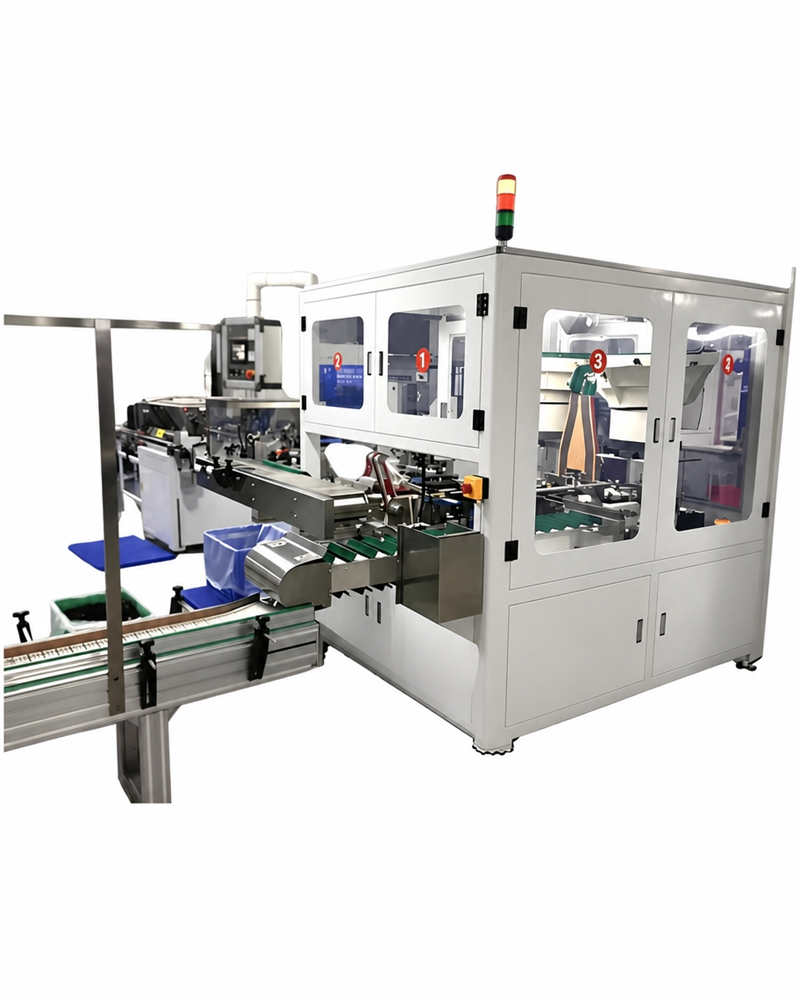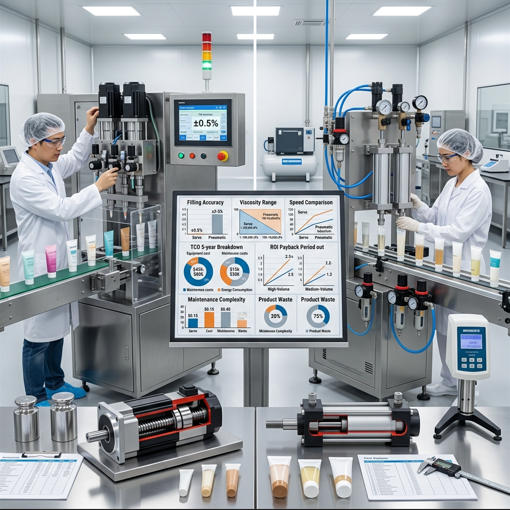
Overview of Filler Technologies
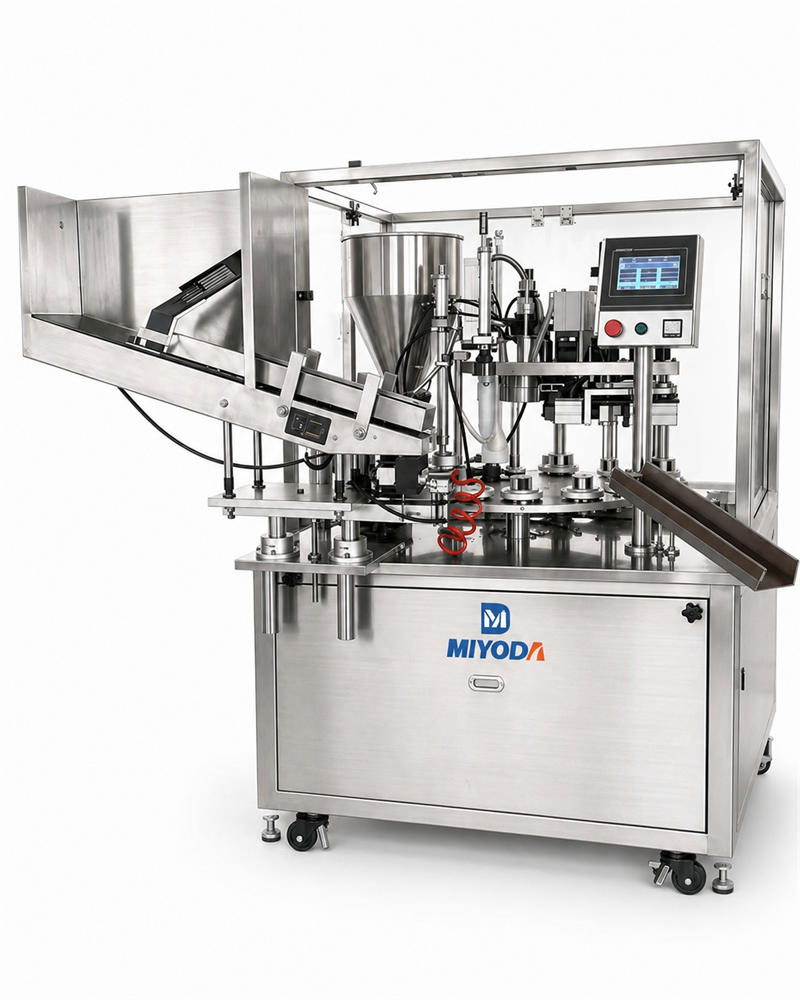
A cosmetic tube filler — also called a dispensing unit o dosing system — is the sub-system within a tube filling and sealing machine responsible for drawing a measured volume of product from a hopper or tank and delivering it precisely into an open tube before the tail is sealed. It is the most consequential single component in the filling line: an error of 0.3 g on a 20 g eye cream priced at $45 per unit translates directly to either over-giveaway (lost product cost) or under-fill (regulatory non-conformance).
In industrial cosmetic and pharmaceutical tube packaging, two actuator technologies dominate: servo-electric drive systems y pneumatic (compressed-air) drive systems. Both operate through a positive-displacement piston — a cylinder and piston assembly that draws in product on the return stroke and pushes a defined volume into the nozzle on the forward stroke. The difference lies entirely in what controls the piston: a precision electric motor with closed-loop feedback (servo), or a pressurized air cylinder regulated by solenoid valves (pneumatic).
Definition and Basic Operation
In a piston-type positive-displacement filler, fill volume is governed by the piston stroke length: the further the piston travels, the more product is displaced into the tube. In a servo system, that stroke is commanded by a servo motor through a ballscrew or linear actuator — the motor’s encoder measures actual position in real time and adjusts power to ensure the piston hits exactly the programmed endpoint, regardless of whether the product viscosity changes between batches. In a pneumatic system, the stroke is driven by compressed air at a set pressure; the piston travels until it hits a mechanical stop or a pressure-controlled limit, with no real-time position feedback.
This architectural difference — closed-loop feedback vs. open-loop pressure control — is the root cause of every performance gap between the two technologies discussed in this guide.
Common Configurations in Cosmetic Tube Lines
Single-Head Rotary
One dispensing head on a rotary indexing table. Typical output: 40–80 tubes/min. Common on semi-automatic and entry-level automatic machines. Most often pneumatic-actuated.
Multi-Head Linear
2–8 servo-driven heads filling simultaneously. Enables 120–200+ tubes/min. Preferred for high-volume cosmetic cream, lotion, and gel lines. Servo control is standard at this tier.
Peristaltic (Pump-Based)
Rotating rollers compress flexible tubing to move product. Servo-driven variants achieve ±0.5% accuracy for low-to-medium viscosity products such as serums and tonics.
Gear Pump Servo
Servo-controlled gear pump for thin to medium viscosity liquids. Preferred for tinted moisturizers and SPF fluids where piston friction marks products.
What Is a Servo-Driven Filler?

How Servo Motors Work in Filling Systems
A servo motor is a closed-loop electric motor that continuously measures its actual rotational position via an encoder (a sensor that counts revolutions) and feeds that data back to the drive controller. The controller compares actual position to the commanded position every few milliseconds and instantaneously adjusts motor current to eliminate any deviation — a process called closed-loop feedback control.
In a filling application, the servo motor drives a ballscrew (a high-precision threaded shaft) connected to the piston. When the PLC commands “fill 25.00 g,” the servo motor rotates until the encoder confirms the piston has traveled exactly the distance that displaces 25.00 mL of product — regardless of whether the cream viscosity increased because the hopper temperature dropped 2°C overnight. That real-time correction is what separates a servo from a pneumatic actuator.
Strengths and Limitations of Servo Fillers
Precision Across Viscosities
Maintains ±0.5% volumetric accuracy for products ranging from 1,000 cP (light lotion) to 250,000 cP (heavy shea butter paste), because position is measured and corrected, not assumed.
Programmable Recipes
Operators store fill parameters (volume, speed profile, anti-drip delay) as named recipes on the HMI. Switching between SKUs takes 1–2 minutes — no physical stop adjustments.
No Compressed Air Dependency
Eliminates reliance on a compressor — a component that consumes 15–30% of a factory’s total electricity bill and introduces moisture contamination risk if air dryers fail.
Higher CapEx
Servo drive units and ballscrew actuators add $8,000–$25,000 per head versus pneumatic equivalents. The premium is recovered through waste reduction and higher throughput — typically within 12–24 months at production volumes above 5 million tubes/year.
Requires Trained Technicians
Servo drive parameter diagnosis requires PLC knowledge. A technician unfamiliar with servo alarm codes can extend a minor fault into a multi-hour stoppage — an important factor in markets with shallow technical labor pools.
What Is a Pneumatic (Air-Driven) Filler?
How Pneumatic Fillers Work
A pneumatic filler uses a compressed air cylinder to move the piston. When the PLC signals “fill,” a solenoid valve opens the air supply port; compressed air (typically regulated to 4–6 bar) pushes the piston forward until it reaches a mechanical stop or a pressure limit switch. The fill volume is set by physically adjusting the stop position — a threaded rod with a locknut.
The mechanism is mechanically elegant in its simplicity: no servo drives, no encoders, no ballscrews. This is precisely why pneumatic fillers have dominated entry-level and mid-tier cosmetic filling lines for decades — they are robust, easy to source spare parts for, and comprehensible to generalist maintenance teams in any market.

Strengths and Limitations of Pneumatic Fillers
Low Acquisition Cost
Pneumatic fill heads cost 30–60% less than equivalent servo-driven units, making them the entry point for startups, contract manufacturers running small batches, and B2B buyers with sub-$40,000 budgets.
Simple Maintenance
Wear parts are O-rings, piston seals, and solenoid coils — all readily available, replaceable with basic training, and costing $15–$80 per item versus servo components that require specialist knowledge to diagnose.
Proven Durability
Air cylinders reliably log 10+ million cycles in well-maintained environments. For stable, single-SKU production runs with consistent product viscosity, pneumatic systems can match servo uptime metrics.
Accuracy Degrades With Viscosity Shift
When product temperature changes between shifts, a lotion viscosity of 8,000 cP in the morning may reach 12,000 cP by afternoon. Air pressure remains constant; fill volume drifts. A pneumatic system has no mechanism to detect or correct this deviation — operators must manually re-calibrate.
Compressed Air Operating Cost
Energy Star data shows compressed air generation accounts for up to 75% of a pneumatic system’s total life-cycle cost. A 15 kW compressor running two shifts consumes roughly $14,000–$18,000 in electricity per year — a recurring OpEx with no equivalent for electric servo systems.
Limited Recipe Flexibility
Every volume change requires a physical stop adjustment, calibration, and trial fill. On a line running 8–12 SKUs per week, changeover time per volume adjustment adds 15–30 minutes versus a 90-second HMI recipe switch on a servo system.
Key Performance Metrics for Cosmetics
Throughput, Accuracy, and Repeatability
📊 Figure 1 — Fill Accuracy Comparison: Servo vs. Pneumatic (% deviation from target weight)
Lower percentage = better. Data compiled from industry fill accuracy benchmarks (LIENM, iFACTORY, Lodha Pharma technical specs).
Scale: 0% = perfect accuracy. 100% = ±3.5% deviation (worst case heavy paste, pneumatic). All values are typical industry benchmarks, not guaranteed specs.
Throughput is where the two technologies converge more closely than accuracy. Both servo and pneumatic fillers can physically cycle fast enough to support 60–120 tubes/minute on a single-head rotary machine. The servo advantage here is not raw speed but consistent speed under load: because the servo motor adjusts torque in real time, cycle time remains stable even as product viscosity changes or the hopper level drops. A pneumatic cylinder loses effective stroke speed as air pressure bleeds down under high-viscosity products — creating subtle cycle-time variation that compounds across 100,000 tubes to produce measurable throughput variance.
Repetibilidad — the ability to fill the same volume to the same tolerance across a full production run of, say, 50,000 tubes — is where servo systems generate their clearest ROI signal. A pharmaceutical manufacturer filling 50 mL topical ointment tubes reported that migrating from pneumatic to servo reduced weight-variance rejection from 1.8% of output to 0.18% — recovering approximately 900 kg of product per month, with a direct raw-material cost saving of $22,500/month at a $25/kg formulation cost.
Volume Range and Dosing Precision
| Metric | Servo Filler | Pneumatic Filler | Advantage |
|---|---|---|---|
| Fill accuracy (light serum, stable temp) | ±0.3–0.5% | ±0.8–1.2% | Servo |
| Fill accuracy (heavy cream, viscosity variation) | ±0.5% | ±1.5–3.5% | Servo |
| Process Capability Index (Cpk) | 1.5–2.0 | 0.9–1.2 | Servo |
| Volume range (single head) | 1 mL – 500 mL (HMI-set) | 5 mL – 500 mL (stop-set) | Servo |
| Throughput (single head, typical) | 60–120 tubes/min | 50–100 tubes/min | Similar |
| Speed consistency under viscosity change | Stable (closed loop) | Variable (pressure-dependent) | Servo |
| Volume changeover time | 1–2 min (HMI recipe) | 10–30 min (mechanical stop) | Servo |
| Minimum viable batch size for changeover efficiency | Any size | 1,000+ tubes recommended | Servo |
Precision and Control: Speed, Stroke, and Repeatability
Tuning and Calibration
On a servo filling machine, calibration is a software exercise: the operator enters a target fill weight, runs 10 trial tubes, weighs them, and enters the measured average into the HMI. The controller calculates a correction factor and adjusts the stroke command parameter automatically. Total calibration time: 8–12 minutes. Re-calibration frequency: once per product batch start, or whenever the system’s built-in fill-weight monitoring detects drift beyond the control limit.
On a pneumatic filling machine, calibration is a mechanical exercise: the operator physically adjusts the stop rod, locks it, runs trial tubes, weighs them, re-adjusts the stop, and repeats until within tolerance. Total calibration time: 20–45 minutes for an experienced operator, longer for a newly trained one. In multi-SKU production environments — a contract cosmetics manufacturer running 10 different cream volumes per week — this calibration overhead compounds into 3–6 hours of lost production weekly.
Impact on Product Uniformity
Material Handling and Compatibility
Viscosity Considerations
Viscosity — the resistance of a fluid to flow, measured in centipoise (cP) — is the single most important material property when selecting a filler technology. The table below maps common cosmetic tube products to their viscosity ranges and the filler type best suited to each.
| Product Type | Typical Viscosity (cP) | Servo Suitability | Pneumatic Suitability |
|---|---|---|---|
| Toner / Facial Mist | 1 – 100 cP | ✅ Excellent (gear pump servo) | ✅ Good (low viscosity) |
| Serum / Light Lotion | 500 – 3,000 cP | ✅ Excellent | ✅ Good |
| Moisturizer / Hand Cream | 5,000 – 30,000 cP | ✅ Excellent | ⚠️ Acceptable (pressure must be increased) |
| SPF Sunscreen Cream | 20,000 – 60,000 cP | ✅ Excellent | ❌ Accuracy degrades significantly |
| Eye Cream / Night Cream | 40,000 – 120,000 cP | ✅ Excellent | ❌ Inconsistent fill, high rejection rate |
| Zinc Oxide Ointment (Pharma) | 200,000 – 500,000 cP | ✅ Excellent (high-torque servo) | ❌ Not suitable without heavy air boost |
| Toothpaste / Dental Gel | 50,000 – 200,000 cP | ✅ Excellent | ❌ Very limited suitability |
Material Compatibility and Contamination Risk
Both servo and pneumatic systems share the same product-contact components (piston, cylinder bore, nozzle, manifold), which are typically manufactured from 316L stainless steel for cosmetic and pharmaceutical applications. The contamination risk difference between the technologies lies not in the metal, but in the drive mechanism.
Pneumatic systems introduce compressed air into the machine environment, and compressed air — even after drying and filtration — carries residual moisture and micro-particulates. If the air dryer fails or the filtration elements are overdue for replacement, air-borne contaminants can enter product pathways through cylinder rod seals, particularly on aging machines. Servo systems are fully electrically actuated and carry zero air-contamination risk to the product zone.
Para FDA GMP-regulated cosmetic manufacturing and EU ISO 22716 compliance, this distinction is increasingly relevant as regulators scrutinize compressed-air quality management systems.
Maintenance, Reliability, and Downtime
Preventive vs Predictive Maintenance
Preventive maintenance (PM) schedules tasks by time or cycle count — regardless of actual component condition. Predictive maintenance (PdM) uses sensor data (vibration, current draw, temperature) to identify components approaching failure before they actually fail. Servo-driven filling machines lend themselves naturally to PdM: the servo drive’s built-in diagnostics continuously monitor motor current, encoder error, and temperature, and modern PLC systems can flag anomalies to maintenance teams before a fault stops the line.
Pneumatic systems have fewer built-in diagnostic signals — a cylinder that is about to fail typically doesn’t announce itself in advance. Fill weight drift (caught by in-process checks) is usually the first indicator, by which point 1,000–5,000 tubes may already have been dispensed outside of tolerance.
| Maintenance Item | Servo System | Sistema neumático | Notes |
|---|---|---|---|
| Primary wear part (fill head) | Ballscrew (every 20,000–50,000 hrs) | Cylinder seals (every 3–6 months) | Pneumatic seals are cheaper; servo ballscrews last longer |
| Diagnostic capability | Predictive (drive alarms, current monitoring) | Reactive (failure detected by fill weight drift) | Servo enables PdM programs; pneumatic relies on scheduled PM |
| Spare part cost (per incident) | $300–$2,000 (servo drive, encoder) | $15–$150 (seals, coils) | Pneumatic parts cheaper; servo parts rarer to need |
| Mean Time Between Failures (MTBF) | 15,000–25,000 hrs (well-maintained) | 8,000–15,000 hrs (seal-limited) | Servo MTBF advantage grows with product abrasiveness |
| Planned annual maintenance cost (per head) | $800–$2,500 | $400–$900 | Pneumatic lower annual PM cost; servo lower total lifecycle |
| Unplanned downtime frequency | Low (predictive monitoring) | Moderate (seal wear pattern) | Industry unplanned downtime avg: $260K/hour — frequency matters |
Downtime, Servicing, and Spare Parts
Safety, Compliance, and Cleanability
Sanitation in Cosmetic Lines
Clean-in-Place (CIP) — the automated flushing of product-contact surfaces with cleaning agents without disassembly — is increasingly required for pharmaceutical tube filling and is becoming standard practice on premium cosmetic lines. Servo filling machines integrate CIP circuits more naturally than pneumatic systems: the servo piston can be commanded to stroke through a full cleaning cycle at any speed, including slow, high-dwell passes that maximize detergent contact time. Pneumatic systems can also be CIP-equipped, but the air cylinder’s rod seal creates a potential ingress point for cleaning fluids that requires careful engineering.
For a comprehensive overview of CIP design for cosmetic filling lines, including validation protocols and detergent selection, the Miyoda Packaging Machinery CIP guide for cosmetic filling lines provides a structured technical framework used by cosmetic and pharmaceutical manufacturers internationally.
Regulatory Considerations and Documentation

For cosmetic tube manufacturers supplying pharmaceutical-grade customers or regulated markets (EU, US FDA, ASEAN), filling machine compliance documentation is non-negotiable. Key requirements include:
- 21 CFR Part 11 compliance (US FDA): Electronic batch records must be generated, stored with audit trail, and accessible for inspection. Servo-controlled machines with SCADA interfaces meet this natively; pneumatic machines with manual fill-weight logging require additional software investment.
- EU ISO 22716:2007 (Cosmetics GMP): Requires documented equipment qualification and cleaning validation. Both machine types can be qualified, but servo machines’ built-in electronic data make the qualification file faster and cheaper to assemble.
- IQ/OQ/PQ validation: Installation, Operational, and Performance Qualification protocols, signed by vendor and buyer’s QA team. Require vendor-supplied template documents as a standard deliverable — not a paid add-on.
▶ Watch: Servo vs Pneumatic Motion Control — Industrial Packaging
Video: A motion control engineer’s breakdown of servo vs. pneumatic actuator selection for OEM packaging equipment — covering response time, positioning accuracy, energy profile, and application fit. Essential viewing for engineers specifying filler actuator technology.
Cost of Ownership and ROI
CapEx vs OpEx
🥧 Figure 2 — Indicative 10-Year Total Cost of Ownership Structure (Servo Filler, High-Volume Line)
- 38% — Capital (machine purchase + installation)
- 23% — Operator Labour (technician monitoring)
- 17% — Planned Maintenance (PM + parts)
- 13% — Energy Consumption (electricity)
- 7% — Unplanned Downtime Cost
- 2% — Tooling & Consumables
Source: Compiled from field TCO data across cosmetic tube filling line installations (2019–2025) and industry benchmarks. Figures are indicative; actual split varies by market labour rates and machine reliability class.
En CapEx vs OpEx framing is one of the most misunderstood dimensions of filler technology selection. Procurement teams focused on minimizing purchase price (CapEx) systematically underestimate the compounding effect of operational cost (OpEx) — particularly energy, labour, and product waste — over the machine’s 10–15 year service life.
A pneumatic filling head costs $5,000–$12,000 less than its servo equivalent at purchase. But a pneumatic system running two shifts consumes approximately $14,000–$18,000 per year in compressor electricity — a cost with no servo equivalent. Over 10 years, that compressor energy gap alone exceeds the initial CapEx saving, before accounting for the higher waste rejection rates and longer changeover times of pneumatic systems.
Total Cost of Ownership and Payback
📊 Figure 3 — 3-Year TCO Comparison: Servo vs. Pneumatic Filler (5–10M Tubes/Year Scenario, USD)
All figures USD. Scenario: single-head filler, 2-shift operation, mid-viscosity cosmetic cream, blended labour $22/hr. Bars are proportional to 3-yr total; values shown are indicative.
💡 Servo saves ~$53,000 over 3 years in this scenario, driven primarily by lower energy and labour costs. CapEx premium pays back in approximately 18–22 months at this production volume.
Use Cases and Decision Guide for Cosmetic Brands
Brand Size, Line Speed, and Product Range

| Production Scenario | Annual Volume | SKU Count / Week | Recommended Technology | Key Rationale |
|---|---|---|---|---|
| Emerging cosmetic brand, single cream SKU | <2M tubes/yr | 1–3 | Pneumatic | Lower CapEx; stable formula = acceptable accuracy |
| Contract filler, multi-brand | 2–8M tubes/yr | 8–20 | Servo | Fast recipe changeover critical; viscosity diversity |
| Mid-tier cosmetic brand, cream + serum + SPF | 5–15M tubes/yr | 4–10 | Servo | SPF viscosity incompatible with pneumatic accuracy |
| Pharmaceutical OTC topicals (ointments) | Any | 1–5 | Servo | GMP, 21 CFR Part 11 electronic batch records required |
| Private-label oral care (toothpaste) | 10M+ tubes/yr | 2–6 | Servo | High viscosity paste; throughput at 150+ tpm |
| Luxury skincare, small-batch premium | <1M tubes/yr | 5–15 | Servo (semi-auto) | Precision required; HMI recipes for fast SKU switching |
| Mass-market body lotion (stable formula) | 20M+ tubes/yr | 2–4 | Servo (multi-head) | Volume demands multi-head servo; ROI unambiguous |
Decision Framework and Checklist
⚡ Choose Servo If:
- Your product viscosity exceeds 20,000 cP at any point in production
- You run more than 5 SKUs per week requiring volume changeovers
- You produce pharmaceutical-grade topicals requiring electronic batch records
- Your annual volume exceeds 5 million tubes on a single line
- You supply regulated markets (EU, FDA, GCC) subject to GMP audits
- Your brand positioning requires fill-weight Cpk ≥ 1.33
- You are building a new fully automatic line from scratch
💨 Choose Pneumatic If:
- Your production volume is under 3 million tubes/year on a single line
- You produce a single formula with stable, documented viscosity
- Your product viscosity is below 15,000 cP and temperature-controlled
- CapEx minimization is a primary constraint (startup or seed-funded brand)
- Your maintenance team has no servo drive training or local technical support
- You are in a market where compressed air infrastructure already exists
Implementation Roadmap
- Define Your Full Product Specification: List every SKU’s fill volume, viscosity range, product temperature at filling, and annual volume. This single document filters out 40% of unsuitable machine options before the first vendor call.
- Calculate Your 3-Year TCO: Use the framework in Figure 3 above with your actual labour rates, energy costs, and current waste rejection percentage to determine the financial crossover point between servo and pneumatic for your specific scenario.
- Run a Witnessed FAT (Factory Acceptance Test): Before purchase, require a minimum 4-hour continuous production run at target speed with your actual product — not water or a proxy fluid. Measure fill weight Cpk, cycle time consistency, and changeover time on record.
- Pilot Test with Your Most Challenging SKU: A filling machine that performs excellently on your easiest product (low viscosity, stable temperature) may fail on your hardest one (high viscosity, temperature-sensitive, small fill volume). Always evaluate against your worst-case formulation.
- Evaluate Vendor Infrastructure: Lead time for critical spare parts, remote diagnostic capability, and on-site training availability matter as much as machine specifications for production uptime over a 10-year ownership horizon.
- Validate Compliance Documentation: Confirm that IQ/OQ/PQ protocol templates are included in the machine supply scope. For pharmaceutical customers, verify 21 CFR Part 11 or EU GMP Annex documentation capability before signing.
The Right Technology for the Right Production Reality
The servo vs. pneumatic filler debate has no universally correct answer — but it does have a correct framework. Pneumatic filling systems remain a legitimate, commercially rational choice for stable, low-to-medium viscosity production at volumes below 3–5 million tubes per year, where compressed air infrastructure exists and CapEx minimization is genuinely necessary. Their simplicity is a real advantage in markets where servo-qualified technicians are scarce.
Servo-driven filling systems, however, are the only technology capable of maintaining ±0.5% fill accuracy across the full viscosity range that modern cosmetic and pharmaceutical tube portfolios demand — from tinted SPF fluids to heavy zinc oxide ointments. At production volumes above 5 million tubes per year, the compounding financial advantages of servo systems (lower energy, lower waste, faster changeover, predictive maintenance capability, GMP-native documentation) consistently produce a payback within 14–24 months on the CapEx premium.
The most productive path to the right decision is not defaulting to the industry norm — it is modelling your specific viscosity range, production volume, and regulatory environment against the TCO framework above, running a witnessed FAT on your hardest-to-fill product, and selecting the technology whose performance matches your actual production reality, not its specification sheet.
For manufacturers building new filling lines or upgrading existing ones — particularly in the cosmetic and pharmaceutical soft tube segment — integrating filler technology selection with upstream tube production line selection avoids the costly mismatch of a high-precision servo filler connected to a tube body production process that cannot hold dimensional consistency. Vendors like Miyoda Packaging Machinery who design and supply complete tube production lines from extrusion through filling understand this system-level dependency in a way that point-solution filler vendors often do not. Their guía de selección de máquinas llenadoras de tubos de cosméticos is a recommended resource for procurement teams starting this evaluation.
Key Technical Glossary
Ready to Specify Your Filling Line?
Whether you’re evaluating servo vs. pneumatic technology for a new line, upgrading an existing system, or integrating filling with upstream tube production, Miyoda Packaging Machinery’s engineering team works with cosmetic and pharmaceutical B2B manufacturers worldwide to match machine specification to your exact production requirements.
Talk to Miyoda’s Team →Preguntas frecuentes
What factors most influence the choice between servo and pneumatic fillers for cosmetic tubes?
The three most decisive factors are: (1) product viscosity range — pneumatic systems lose fill accuracy above ~15,000–20,000 cP, making them unsuitable for heavy creams, pastes, and pharmaceutical ointments; (2) annual production volume — the servo premium pays back within 14–22 months above 5 million tubes/year but is harder to justify below 2 million; and (3) SKU count and changeover frequency — servo machines change volume in 1–2 minutes via HMI recipe, versus 15–30 minutes of mechanical stop adjustment on pneumatic systems. Secondary factors include GMP regulatory requirements, compressed air infrastructure costs, and local technical support availability for servo drives.
How do viscosity and fill volume affect performance in servo vs. pneumatic systems?
In a servo system, viscosity changes have minimal impact on fill accuracy because the closed-loop encoder continuously corrects piston position regardless of the resistance the product offers. A servo filler calibrated for a 40,000 cP SPF cream will maintain ±0.5% accuracy even if that cream warms up to 35,000 cP mid-shift. In a pneumatic system, the air cylinder pushes against product resistance with a fixed air pressure. As viscosity increases, the piston decelerates and may not reach its full stroke endpoint within the programmed cycle time — causing under-fill. Operators must manually increase air pressure and re-calibrate, introducing downtime and the risk of over-fill after adjustment. For fill volumes below 5 mL, pneumatic systems also struggle with nozzle drip-back consistency — a problem servo systems address through programmable anti-drip retraction profiles.
What are the common maintenance best practices to minimize downtime on tube filling machines?
For both technology types, the highest-impact maintenance practices are: daily — clean all product-contact surfaces (nozzle tip, manifold, piston bore) at end of shift; check and record fill weight on 10 tubes at startup; weekly — lubricate moving mechanical parts per vendor schedule; inspect sealing jaw faces for wear marks; monthly — run a full fill weight Cpk verification across the complete volume range; calibrate all temperature sensors on heated product lines; quarterly — replace piston seals and O-rings on pneumatic systems (or per cycle count on servo); service air dryers and change filtration elements on pneumatic lines. For servo-specific practice: review drive alarm history monthly for early warning patterns (rising current draw, encoder count errors) and act predictively rather than waiting for fault-stop. The $260,000/hour industry average cost of unplanned downtime makes proactive maintenance investment the highest-return operational action available to filling line managers.
Can a pneumatic filler be upgraded to servo, or does the machine need to be replaced?
In many modern automatic tube filling machines, the fill head assembly is modular — the pneumatic cylinder assembly can be physically removed and replaced with a servo ballscrew actuator unit, provided the machine frame and PLC have the space and I/O capacity for the servo drive electronics. The upgrade cost typically runs $12,000–$28,000 per head, versus $60,000+ for a new machine. However, this is only viable if the existing machine frame, indexing table, and nozzle design are mechanically compatible with the servo unit, and if the PLC software can be modified (not just patched). Request a retrofit feasibility assessment from your machine vendor — or from the servo drive manufacturer — before committing to an upgrade path. For older pneumatic-only machines, full replacement is often more cost-effective than retrofit when the machine is already 8+ years old and approaching multiple component replacement cycles simultaneously.
What fill weight accuracy and Cpk values should pharmaceutical cosmetic tube manufacturers target?
For pharmaceutical-grade topical products (ointments, creams, gels) sold in regulated markets, the standard fill weight accuracy requirement is ±0.5% of nominal fill weight, with a process capability index (Cpk) of ≥ 1.33 for routine production and Cpk ≥ 1.67 for products subject to release testing on individual tube weight. Servo filling systems routinely achieve Cpk 1.5–2.0 in stable production; pneumatic systems typically achieve Cpk 0.9–1.2, which is below the pharmaceutical standard. For cosmetic products not subject to pharmaceutical regulation, the commercial standard varies: premium brands specify Cpk ≥ 1.33 for fill accuracy; mass-market brands may accept Cpk ≥ 1.0. In all cases, your customer quality agreement (CQA) with the cosmetic brand or pharmaceutical company will specify the Cpk requirement — and that number is a binding filler technology selection criterion.
How does compressed air cost affect the long-term economics of pneumatic fillers?
Compressed air is often called “the fourth utility” in manufacturing — and the most expensive one per unit of work delivered. According to US Energy Star data, compressed air generation accounts for up to 75% of a pneumatic system’s total lifecycle cost, and air compressors typically consume 15–30% of a factory’s total electricity spend. A 15 kW compressor running two 8-hour shifts at $0.12/kWh generates approximately $10,500–$15,000 in electricity costs per year, plus compressor servicing, filter replacement, and air dryer maintenance. Over 10 years, a pneumatic filling line dependent on a dedicated compressor incurs $120,000–$180,000 in compressor-related costs alone — a figure that exceeds the entire purchase price of the filling machine and substantially changes the TCO calculation compared to a servo system that draws only from the factory’s standard electrical supply.
What is the typical payback period when upgrading from pneumatic to servo filling on a cosmetic tube line?
Based on production scenarios documented in the cosmetic tube packaging industry, the payback period for upgrading from a pneumatic to a servo filling system at a line producing 5–10 million tubes per year typically falls between 14 and 24 months. The three principal saving drivers are: (1) product waste reduction from improved fill accuracy — typically $18,000–$45,000/year at formulation costs of $15–$35/kg; (2) compressor energy elimination — $10,000–$18,000/year; and (3) changeover labour efficiency — $12,000–$20,000/year on multi-SKU lines. At volumes above 15 million tubes/year, payback can occur within 10–14 months. At volumes below 2 million tubes/year, payback typically extends beyond 36 months, at which point the financial case for upgrade is weaker and should be evaluated against brand quality requirements and customer compliance mandates rather than purely financial metrics.
What GMP documentation should B2B buyers require from filling machine vendors before purchase?
At minimum, require the following documentation as part of the standard machine supply scope (not as paid extras): CE Declaration of Conformity (EU Machinery Directive 2006/42/EC); IQ/OQ/PQ protocol templates pre-formatted for your product category (cosmetic or pharmaceutical); Factory Acceptance Test (FAT) protocol including defined pass/fail criteria for fill weight accuracy, cycle time, and machine speed; Material Compliance Certificates for all product-contact components (316L stainless, food-contact elastomers); Spare Parts List with pricing (3-year forecast); and Maintenance Manual and Training Materials in your operational language. Vendors who treat IQ/OQ/PQ documentation as a separate paid service are signalling limited regulated-market experience — a risk factor for any buyer supplying pharmaceutical-grade customers or regulated cosmetic markets.
How does filler technology selection integrate with upstream tube production (laminate vs. extrusion)?
The upstream tube body technology — whether PE extrusion or ABL/PBL laminate — does not directly determine filler technology (servo vs. pneumatic), but it does affect the filling line specification in three ways. First, laminate tubes (ABL/PBL) have tighter dimensional tolerances at the tube opening than extruded tubes, requiring more precise nozzle-to-tube alignment — a demand better met by servo-indexed rotary tables. Second, pharmaceutical products predominantly packaged in ABL laminate (ointments, retinol creams) are typically high-viscosity formulations that require servo fill accuracy. Third, tube decorating quality achieved on a well-run laminate line (precision print registration, consistent weld seam) may be undermined by a pneumatic filler’s weight variation if the end customer audits fill weight Cpk as part of their supplier qualification. Máquinas para la fabricación de tubos laminados de Miyoda Packaging Machinery are designed to integrate with servo-driven filling lines as part of a complete tube production system, ensuring that tube dimensional consistency and fill accuracy are matched at the system level.
Is servo filling technology suitable for small-batch contract cosmetic manufacturers?
Yes — but the economics differ from high-volume producers. For a contract cosmetic manufacturer running 20–40 different SKUs per week with batch sizes of 500–3,000 tubes, the principal value of servo technology is not volume throughput but changeover speed and recipe accuracy. A servo system’s HMI recipe recall changes fill volume in 90 seconds without mechanical adjustment — eliminating the 15–30 minute calibration overhead that makes high-SKU pneumatic operation commercially costly. Semi-automatic servo fillers priced at $18,000–$35,000 are available and practical for this application tier, delivering the fill-weight precision and recipe flexibility that brand customers increasingly require in their contract filler qualifications, at capital costs accessible to SME contract manufacturers. The key evaluation question for a small-batch contract filler is not servo vs. pneumatic, but semi-automatic servo vs. fully automatic servo — a decision framework covered in detail in Miyoda’s automatic vs. semi-automatic tube filling machine comparison.