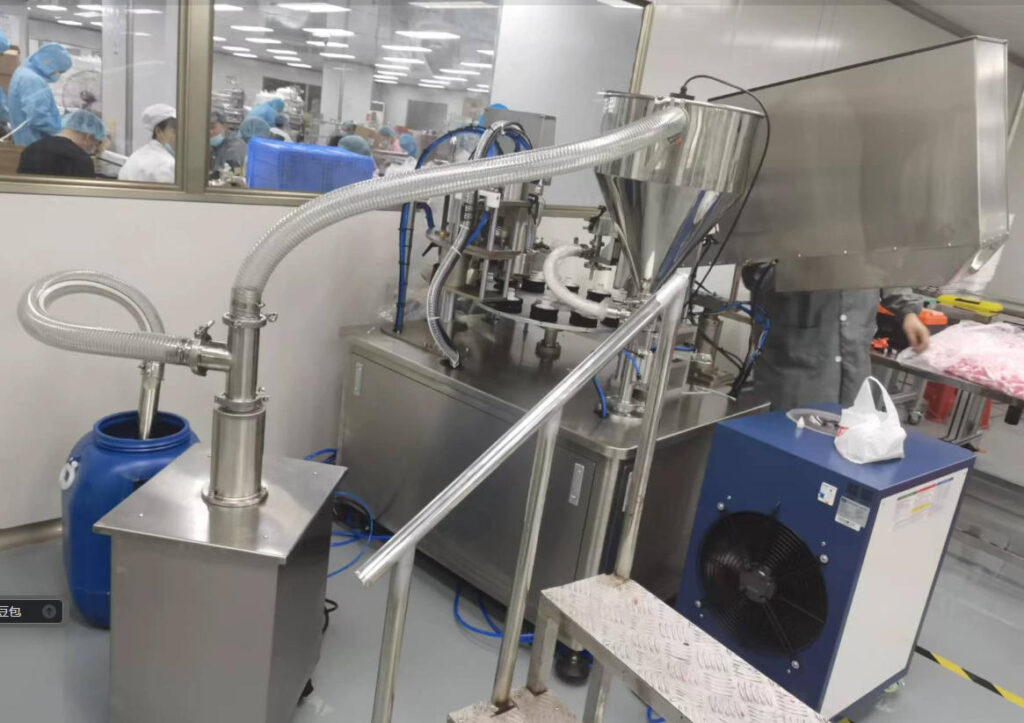
Why Understanding Tube Manufacturing Matters for Your Business
Understanding the cosmetic tube manufacturing process helps you make informed decisions about equipment investments, production timelines, and quality standards. This guide demystifies the journey from raw materials to finished packaging that protects your products and impresses your customers.
El mercado mundial de envases cosméticos en tubo se valoró en 3.9 mil millones de dólares en 2024 y se prevé que alcance 7.800 millones de dólares estadounidenses para 2034, growing at a CAGR of 7.2%. Behind that number is an enormous volume of purchasing decisions — made every day by brand owners, distributors, and machinery buyers — many of them made without a clear understanding of how the product they’re specifying is actually built.
That knowledge gap is expensive. And it’s entirely preventable.
The Challenge of Choosing the Right Production Equipment
How Lack of Manufacturing Knowledge Leads to Costly Mistakes
When a buyer doesn’t understand what happens inside their production line, they can’t evaluate what a supplier is actually selling them. They compare machines by their headline speed, not by their sustained throughput under real conditions. They approve equipment that runs 120 tubes per minute in the demonstration room — and discovers it sustains 84 in an 8-hour production shift.
They purchase a lamination machine optimized for PBL construction, then pivot to ABL tubes 18 months later and discover the machine requires significant tooling modifications they weren’t budgeted for. These aren’t fringe scenarios. They’re the standard consequence of equipment purchasing without process understanding.
Every stage of tube manufacturing — extrusion, lamination, forming, sealing, printing, quality control — has parameters that directly determine what equipment you need and what performance you’ll realistically achieve. Buyers who understand these stages ask better questions, receive more accurate answers, and make investments that actually fit their production goals.
Why Equipment Compatibility Affects Your Bottom Line
Cosmetic tube production is a system, not a collection of independent machines. A high-speed extrusion line paired with a forming machine that can’t maintain dimensional accuracy at that throughput doesn’t double your capacity — it doubles your scrap rate. A sealing system that runs at 150 cycles per minute paired with a filling machine rated at 80 cycles per minute creates a bottleneck, not a production line.
Equipment compatibility means understanding how each machine’s speed, tolerance, and material requirements interact with the next stage. Brands and distributors who grasp this avoid the capital waste of mismatched systems — and the operational frustration of production lines that perform far below their theoretical potential.
The Competitive Advantage of Informed Purchasing Decisions
How Knowing the Process Helps You Negotiate Better Terms
Process knowledge changes the dynamic of every supplier conversation. When you can ask specifically about a lamination machine’s seal width tolerance in ABL versus PBL configurations — rather than asking generally whether it “handles different materials” — you signal that you cannot be oversold on specifications that don’t match your needs.
Suppliers who understand they’re speaking with an informed buyer provide more accurate technical responses, more realistic performance guarantees, and more competitive pricing. They know you’ll verify their claims. That knowledge keeps the negotiation grounded in reality.
Why Production Efficiency Directly Impacts Your Profit Margins
In tube manufacturing, the relationship between process efficiency and margin is direct and measurable. A production line running at 85% OEE (Overall Equipment Effectiveness — the industry benchmark for world-class packaging equipment performance) versus one running at 68% produces approximately 25% more sellable output per shift hour. On a 100-tube-per-minute line, that gap represents roughly 6,900 additional tubes per 8-hour shift.
At a wholesale tube price of $0.25, that’s $1,725 of additional revenue per shift from the same capital investment. Over 240 production days, it’s $414,000 annually — from process knowledge that turned an underperforming line into a well-configured one.
The Three Main Types of Cosmetic Tube Construction
Understanding tube construction isn’t academic background — it determines which equipment you need, what raw materials you’ll source, and what performance your packaging will deliver to the formulas you’re protecting.

Aluminum Barrier Layer (ABL) Tubes — Maximum Protection for Premium Products
ABL tubes are built around an aluminum foil core — typically 9–30 microns thick — laminated between inner and outer polyethylene layers. The aluminum layer acts as a near-complete barrier: oxygen transmission can be reduced by over 98%, light penetration is blocked entirely, and moisture vapor transmission is negligible.
What Makes ABL Tubes Ideal for Light-Sensitive Formulations
Retinoids, vitamin C derivatives, peptides, fluoride toothpaste, pharmaceutical ointments — these are the formulations that degrade when exposed to oxygen or light. An ABL tube is essentially a light-tight, oxygen-tight container in flexible form. The foil interlayer doesn’t just slow degradation; it stops it.
For a brand selling a 1% retinol treatment at $80 retail, the cost difference between ABL and standard PE packaging — typically 15–25% higher for ABL — is negligible against the shelf-life and efficacy implications of choosing the wrong substrate. Product that reaches the customer at full potency justifies premium positioning; product that has oxidized during a 12-month retail cycle does not.
How ABL Construction Protects Product Integrity and Extends Shelf Life
The protection ABL delivers is structural. Because the aluminum layer cannot stretch like PE, ABL tubes have a characteristic body memory — they don’t snap back after dispensing, holding their compressed shape. For consumers, this means no air is drawn back into the tube after use. For formulators, it means the headspace in the tube remains product, not air, throughout the product’s life.
ABL tubes are the standard choice for pharmaceutical topical products globally and the premium choice for cosmetic actives. They require specific handling during tube forming — the aluminum layer must be scored and folded precisely to prevent cracking at the shoulder — which is one reason ABL tube manufacturing equipment has tighter engineering tolerances than PE-only equipment.
Plastic Barrier Layer (PBL) Tubes — Cost-Effective Solutions for Growing Brands
PBL tubes replace the aluminum foil interlayer with a plastic barrier — typically EVOH (Ethylene Vinyl Alcohol) or PVDC — laminated within multiple PE layers. The barrier performance is excellent but not absolute: PBL tubes typically deliver 80–90% of ABL’s oxygen barrier at 20–35% lower material cost.
Why PBL Tubes Offer the Best Balance of Protection and Affordability
For the majority of cosmetic products — moisturizers, sunscreens, body lotions, hair conditioners — the formulation doesn’t require the near-total barrier performance of ABL. A moisturizer without active retinoids isn’t meaningfully degraded by the modest oxygen exposure a PBL tube permits. The brand that specifies ABL for this product is paying a 20–25% packaging premium for protection their formula doesn’t need.
PBL tubes are fully recyclable in plastic waste streams — a growing retail listing requirement that ABL tubes cannot meet because of their mixed aluminum-plastic construction. For brands building sustainability credentials, PBL isn’t a compromise; it’s a strategic choice.
Which Cosmetic Products Work Best With PBL Packaging
PBL is the default for volume cosmetic and personal care: body lotions, face creams without high-activity sensitives, shampoo and conditioner (in flip-top tube format), hand creams, toothpastes without fluoride sensitivity requirements, and sunscreens rated SPF 30 or below without specific photosensitive actives. If your product’s active ingredient list doesn’t include retinoids, vitamin C above 10%, peptides, or other oxygen-reactive compounds, PBL delivers the protection you need at the cost that serves your margin.
5-Layer Construction — The Industry Standard for Pharmaceutical and Cosmetic Excellence
5-layer co-extruded tubes represent the engineering premium of plastic tube technology. Rather than laminating pre-made films, they’re produced in a single co-extrusion pass that bonds five distinct polymer layers into a unified tube wall — typically: PE outer / adhesive tie layer / EVOH barrier / adhesive tie layer / PE inner.
Understanding Each Layer’s Role in Product Protection
| Layer | Material | Primary Function |
|---|---|---|
| Outer PE | HDPE or LDPE | Structural integrity, printability, aesthetics |
| Adhesive tie layer | Modified PE | Bonds outer PE to barrier; prevents delamination |
| EVOH barrier | Ethylene Vinyl Alcohol | Oxygen and flavor/aroma barrier |
| Adhesive tie layer | Modified PE | Bonds barrier to inner layer |
| Inner PE | LDPE or LLDPE | Product contact; chemical compatibility, dispensing feel |
How 5-Layer Tubes Prevent Oxygen and Moisture Penetration
EVOH is the most effective plastic oxygen barrier commercially available in flexible packaging. At a typical 15–20 micron thickness within a 5-layer wall, it reduces oxygen transmission to levels that rival thin-gauge aluminum foil in many formulation types — while remaining fully recyclable in the PE waste stream (unlike ABL). Wall thickness consistency matters critically: in 5-layer co-extrusion, a ±5% variation in individual layer thickness compounds through the wall, affecting both barrier performance and seal quality. Equipment precision directly determines product protection.
Raw Materials — What You Need to Know Before Purchasing Equipment
Selecting Quality Plastic Resins and Barrier Materials
How Resin Quality Affects Your Production Costs and Final Product Quality
Plastic resin specification is the upstream decision that cascades through every subsequent production stage. Melt Flow Index (MFI) — the measure of how easily a polymer flows at processing temperature — determines your extrusion line settings. A resin with MFI outside your equipment’s validated range creates either a melt that’s too viscous (causing pressure spikes, irregular wall thickness, and motor overload) or too fluid (creating sagging, thin spots, and sealing problems).
Cosmetic tube production typically uses LDPE with MFI of 0.3–1.0 g/10 min for tube bodies. A resin substitution — even from the same supplier, if the production lot differs — can shift MFI by 15–20% and require full re-qualification of extrusion parameters. Brands that lock in material specifications with their resin supplier (including tolerance limits for MFI, density, and additive package) protect themselves from this invisible source of production variability.
Why Barrier Material Selection Impacts Your Equipment’s Performance
EVOH barrier films for PBL and 5-layer tubes are hygroscopic — they absorb moisture from ambient air, which reduces barrier performance and processability. EVOH must be stored at controlled humidity (below 60% RH) and processed at precisely controlled temperatures. Equipment that doesn’t provide a conditioned material feed zone for EVOH produces barrier layers with variable permeability — meaning the product protection you’re specifying on paper isn’t what you’re delivering in the tube.
Aluminum foil for ABL tubes must be free of surface contamination (oils, oxide layers) and specified to tight thickness tolerances (±1–2 microns) to maintain consistent lamination bond strength. Foil that doesn’t meet these specifications produces delamination — the separation of layers that creates both cosmetic defects and product integrity failures.
Sourcing Reliable Material Suppliers
Questions to Ask Suppliers About Material Consistency and Lead Times
Before qualifying any resin or barrier material supplier, the questions that matter most are not about price:
- What is your production lot-to-lot MFI tolerance? The answer should be ±10% or tighter. Wider tolerances indicate inconsistent manufacturing that will transfer directly to your production line performance.
- Can you provide a Certificate of Analysis (CoA) for each material shipment? This should be non-negotiable. A supplier who doesn’t routinely provide batch-specific CoAs does not have the quality system discipline to be a primary packaging material supplier.
- What is your lead time for emergency orders, not standard orders? Standard lead times are marketing. Emergency lead times reveal what happens to your supply chain when a batch fails incoming inspection 48 hours before your production run.
- Have you had supply interruptions in the past 24 months? Request documented examples and their resolution. This reveals supply chain resilience more than any quality certification.
How Material Sourcing Affects Your Production Schedule and ROI
A 5-day material supply disruption on a tube production line running 200,000 tubes per month costs approximately 33,000 tubes of lost output. At a finished tube wholesale value of $0.30–$0.80 depending on specification, that’s $10,000–$26,000 of lost revenue from a single supply event. Brands operating on single-source material supply — one resin supplier, one foil supplier — carry this exposure as ongoing operational risk.
Dual qualification of suppliers for your highest-volume materials is the standard risk mitigation approach. The cost: one additional supplier qualification study (approximately 4–8 weeks). The benefit: elimination of single-source supply risk for the production that drives your revenue.
The Manufacturing Process Step-by-Step
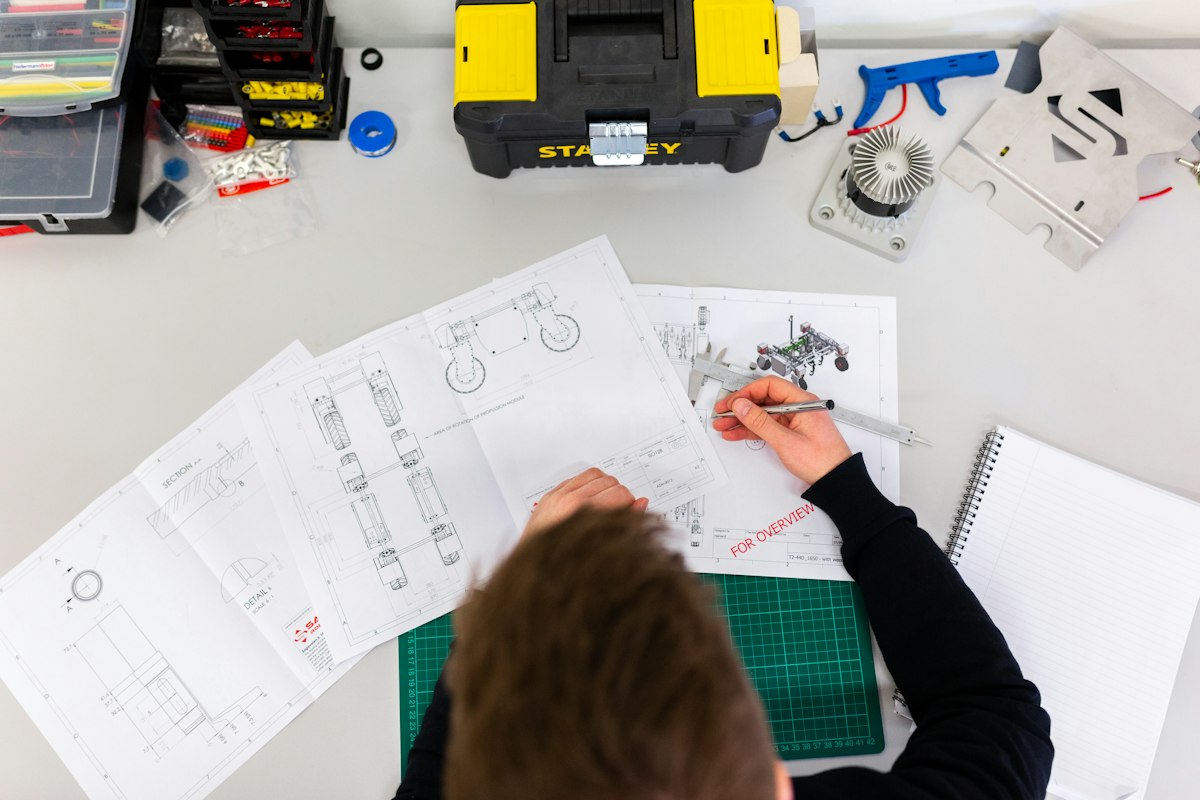
Stage 1 — Extrusion: Converting Raw Materials Into Tube Bodies
Extrusion is the foundation of the entire tube manufacturing process. Plastic resin pellets enter a heated barrel, where a rotating screw melts, homogenizes, and pushes the molten material through a precision die head that shapes it into a continuous tube profile. The tube stock is then cooled in a water bath, pulled at controlled speed, and cut to length.
How Extrusion Machines Work and What Specifications Matter for Your Production Needs
The key specification parameters that determine actual production performance:
- Screw diameter and L/D ratio: A 45mm screw with 30:1 L/D ratio provides significantly better melt homogeneity than a 30:1 equivalent — reducing wall thickness variation from ±0.12mm to ±0.05mm in controlled production.
- Barrel temperature zones: Multi-zone PID (Proportional-Integral-Derivative) temperature control — the system that precisely maintains each barrel zone at its setpoint — is essential for consistent melt quality. Equipment without independent zone control cannot maintain the thermal profile that produces uniform wall thickness.
- Die head precision: The die gap tolerance determines your tube wall thickness consistency. A die gap tolerance of ±2 microns is achievable on precision machinery; ±10 microns is common on lower-specification equipment — and the difference in wall thickness variation directly affects your sealing performance and material consumption.
En Miyoda tube extrusion machine range is engineered for cosmetic and pharmaceutical PE tube production, with multi-layer co-extrusion capability for 3- and 5-layer tube construction.
Why Temperature Control and Pressure Settings Affect Tube Quality and Equipment Longevity
Extrusion runs at barrel temperatures of 150–220°C depending on resin type. At the wrong temperature, melt viscosity is either too high (causing excessive back-pressure that stresses the drive system and creates non-uniform wall thickness) or too low (causing die drool, surface defects, and inconsistent tube dimensions).
A barrel running 15°C above its setpoint — because a heater element has drifted and the control system hasn’t been calibrated — will produce degraded material in that zone, creating visual streaks, mechanical weak points, and barrier layer disruption in multi-layer tubes. This is why daily temperature calibration verification isn’t optional maintenance; it’s the practice that maintains your output quality and protects your equipment from cumulative thermal stress damage.
Stage 2 — Lamination: Building Multi-Layer Protection

For ABL and PBL tubes, the tube material is produced as a laminated sheet before it reaches the forming machine. Individual material layers — PE films, aluminum foil or EVOH barrier film, adhesive tie layers — are unwound from roll stocks and bonded under controlled temperature, pressure, and speed to create a composite sheet with the structural and barrier performance the tube specification requires.
Understanding Adhesive Application and Layer Bonding in ABL and PBL Tubes
Bond strength between layers is the critical performance parameter of lamination. Insufficient bond strength produces delamination — the separation of layers that manifests as bubbling, whitening, or complete layer separation, typically visible as a quality defect but sometimes invisible until the tube is stressed during filling or by the consumer. The bond strength target for cosmetic laminate tubes is typically ≥2.5 N/15mm as measured by T-peel test.
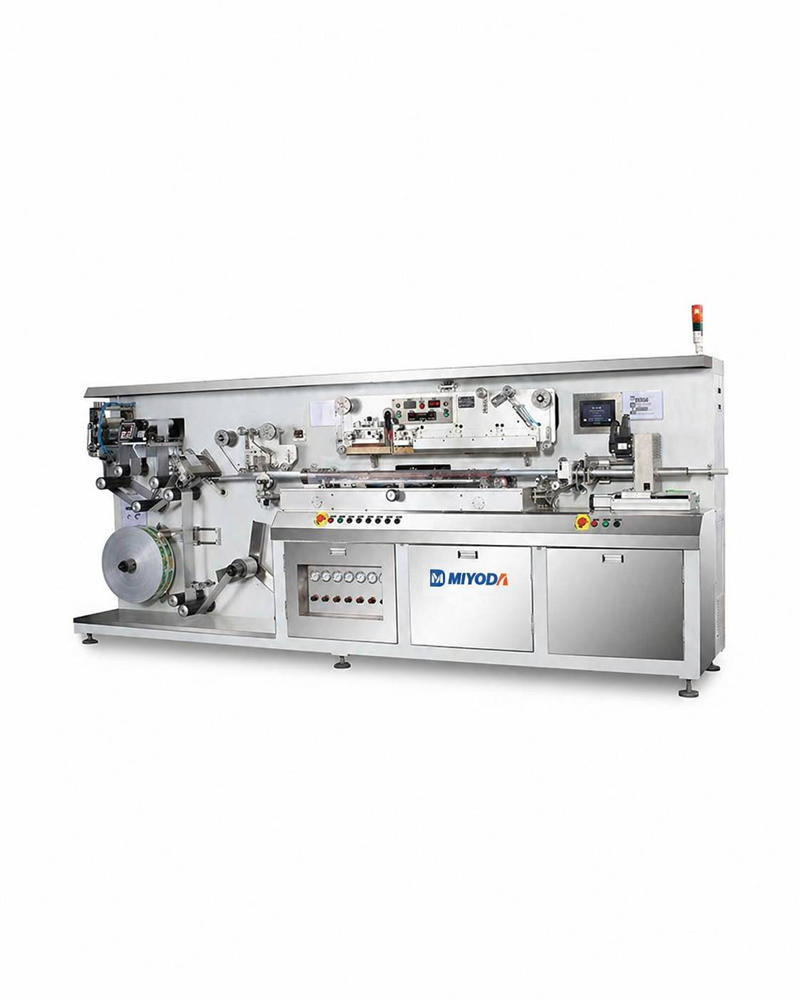
Adhesive application weight must be controlled to ±5% of the specified gram-per-square-meter target. Over-application wastes material and can create adhesive bleed-out at tube edges. Under-application creates bond strength below specification. Modern lamination equipment — including the Miyoda laminate tube making machine with its precision adhesive metering system — uses gravure roll coating with closed-loop weight monitoring to maintain adhesive application within specification throughout the production run.
How Lamination Speed Impacts Your Production Capacity and Equipment Efficiency
Lamination speed directly determines the linear footage of tube stock produced per hour, which in turn determines how many tube bodies can be formed per production shift. A lamination line running at 25 m/min produces 1,500 m/hour of tube stock; at 18 m/min, it produces 1,080 m/hour — a 28% capacity difference from the same equipment running at different speeds.
However, lamination speed is constrained by adhesive cure time (higher speeds require either more drying/curing energy or a compromise in bond strength) and by the tension control precision of the unwinding system (higher speeds create greater web tension variation, which can cause wrinkles in the aluminum foil layer of ABL stock). Understanding this trade-off allows buyers to evaluate realistic production capacity for their specific tube construction requirements, rather than accepting headline speed claims at face value.
Stage 3 — Forming: Shaping Tubes Into Final Dimensions
The laminated sheet or extruded tube stock passes through the forming station, where it’s cut to width, rolled into a cylinder, and seam-sealed longitudinally to create the tube body. The shoulder and neck are then injection-molded directly onto the tube body — a process called heading — which creates the dispensing orifice and cap-thread geometry that determines how your product actually reaches the consumer.
How Forming Machines Create Consistent Tube Diameters and Wall Thickness
Tube forming precision is measured in fractions of a millimeter. A tube specified at 35mm diameter must be formed to within ±0.2mm to ensure consistent cap fit, consistent labeling registration, and consistent filling machine performance. Tubes outside this tolerance cause cap cross-threading (leading to leaks), label print misregistration (leading to visual defects), and tube feeding jams in filling equipment (leading to downtime).
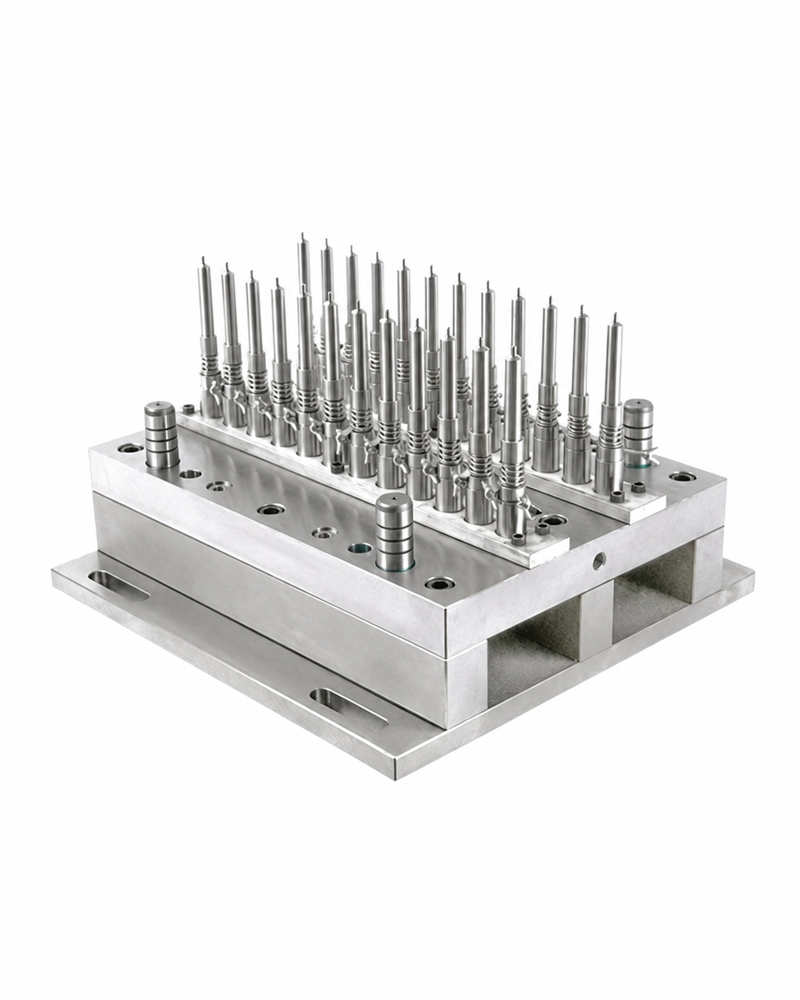
The heading process — the injection molding of the shoulder and neck — adds further precision requirements: the shoulder angle (typically 45° or 60°), neck bore diameter (±0.1mm tolerance for controlled dispensing), and thread form all must be consistent across the entire production run. The Miyoda tube heading and shoulder machine provides automated forming for tube diameters from 16–60mm with consistent dimensional control across high-speed production runs.
Why Precision Forming Reduces Waste and Maximizes Your Production Yield
Forming precision and scrap rate have a direct, measurable relationship. In a well-controlled forming operation, dimensional reject rates of 0.5–1.5% are achievable. In a poorly calibrated operation — incorrect forming mandrel temperature, worn tooling, inconsistent tube stock width — reject rates of 3–6% are common.
On a production run of 500,000 tubes, the difference between 1% and 5% reject rate is 20,000 tubes of wasted material, labor, and production capacity. At $0.15–$0.40 per tube in material cost, that’s $3,000–$8,000 in direct scrap value — before accounting for the production time consumed producing tubes that were never sold.
Stage 4 — Sealing: Creating Airtight Bottom Closures
Once tubes are filled with product, the tail end — the open bottom of the tube — must be sealed to create a hermetic closure that prevents leakage, maintains product sterility, and withstands the mechanical stress of distribution and consumer use.
The Difference Between Heat Sealing and Ultrasonic Sealing Technologies
Heat sealing uses temperature — typically 140–200°C applied by heated jaw dies — to melt and fuse the tube tail material. It is the established standard for PE tube sealing: reliable, compatible with most tube materials, and technically straightforward to implement and maintain. Heat sealing cycle times are typically 1.5–3 seconds, with real-world throughput of 40–80 tubes per minute depending on equipment configuration.
Ultrasonic sealing uses high-frequency mechanical vibration — typically 20–40 kHz — to generate frictional heat directly within the tube material, creating a molecular-level bond without an external heat source. The advantages are significant: faster cycle times (0.5–1.5 seconds), stronger and more uniform seals, no heated element that drifts with ambient temperature, and zero risk of thermal damage to heat-sensitive formulations near the seal zone. The trade-off is higher equipment cost and the requirement for tube materials that generate adequate frictional heat under ultrasonic energy.
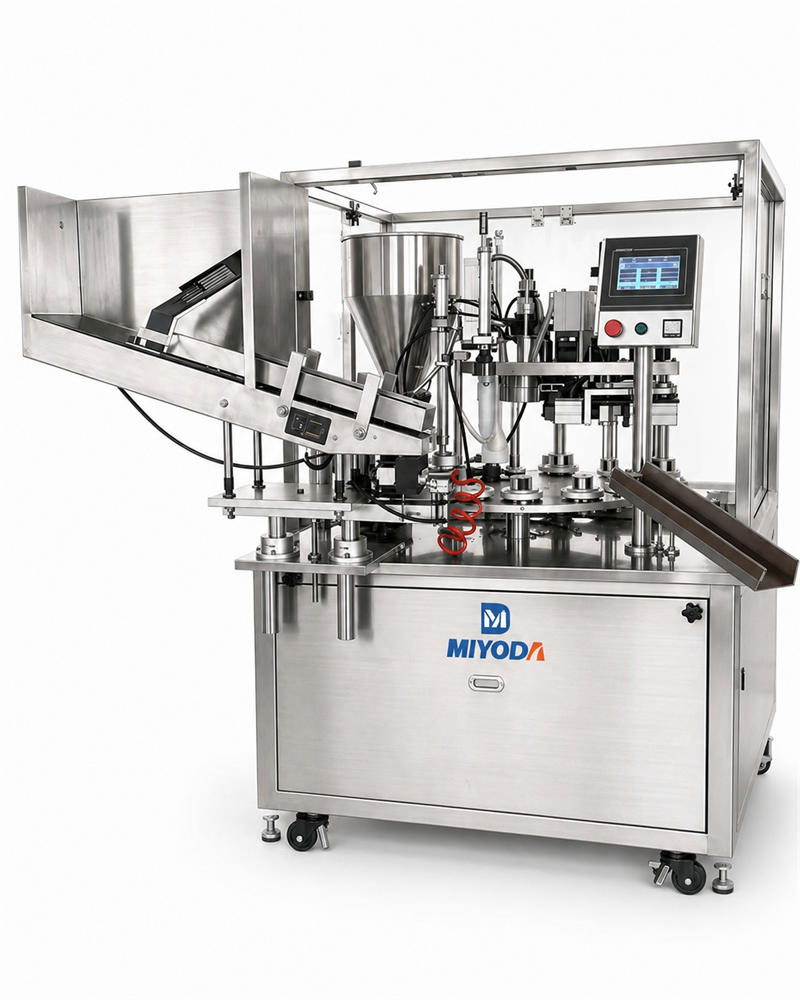
For buyers evaluating sealing technology: heat sealing is the right choice for most cosmetic brands using standard PE tubes and conventional cosmetic formulations. Ultrasonic sealing delivers meaningful performance advantages at higher throughput (above 80 tubes per minute) or when formulation heat sensitivity is a documented concern. The guide to semi-automatic vs. fully automatic tube sealers from Miyoda Packaging Machinery provides a detailed ROI comparison across both sealing technologies at different production volumes.
How Sealing Quality Affects Product Shelf Life and Customer Satisfaction
A tube seal is only as good as its worst point — a micro-leak invisible to visual inspection will allow product to seep under moderate pressure, and will allow oxygen ingress that degrades sensitive actives. Seal quality is tested by pressure testing (applying 2 bar internal pressure for 30 seconds) and by peel strength (minimum 15 N/15mm for cosmetic applications). Operations running without in-line seal inspection typically discover seal quality problems in the returns report — after defective product has already reached consumers.
Stage 5 — Printing and Decoration: Adding Brand Identity
Printing transforms a functional container into a brand communication tool. For cosmetic tubes, decoration quality is a direct expression of brand positioning — the print on a $40 serum must look like a $40 serum, every unit, across every production run.
Digital vs. Traditional Printing Methods and Their Impact on Your Brand Presentation
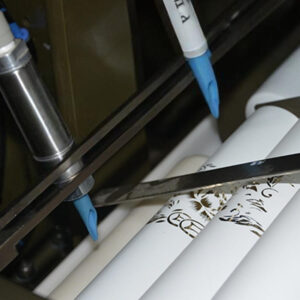
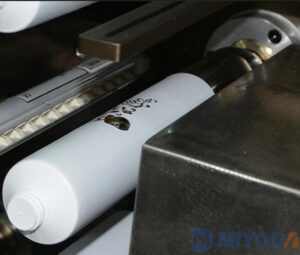
Silk-screen printing — the traditional cosmetic tube decoration method — applies ink through a mesh screen for each color, building up a design layer by layer. It delivers vibrant, opaque colors with excellent adhesion on PE tube bodies, and is cost-effective for high-volume runs (above 5,000 units per color separation). Setup time is 45–90 minutes per job; ink waste during setup and cleanup is material and measurable.
En Miyoda tube silk screen printing machine handles multi-color printing with UV curing, producing durable finishes resistant to moisture, abrasion, and the mechanical stress of consumer use — a critical performance requirement for tubes that live in bathrooms and gym bags.
Offset printing transfers ink from a metal plate to a rubber blanket and then to the tube surface — a process that delivers exceptional color accuracy and fine detail reproduction, making it the choice for photographic-quality graphics and complex gradient designs. Per-unit cost is lower than silk-screen for high volumes (above 50,000 units per run) but setup costs are higher.
Digital printing (inkjet-based, no plates or screens required) enables short runs from 1,000 units with zero setup waste and complete design flexibility between runs — ideal for limited editions, seasonal variants, regional label differences, and clinical trials requiring unique lot-specific decoration. Per-unit print cost is higher than offset or silk-screen, but the elimination of setup cost and minimum order quantity changes the economics for brands managing high SKU diversity.
How Printing Equipment Integration Affects Your Overall Production Line Efficiency
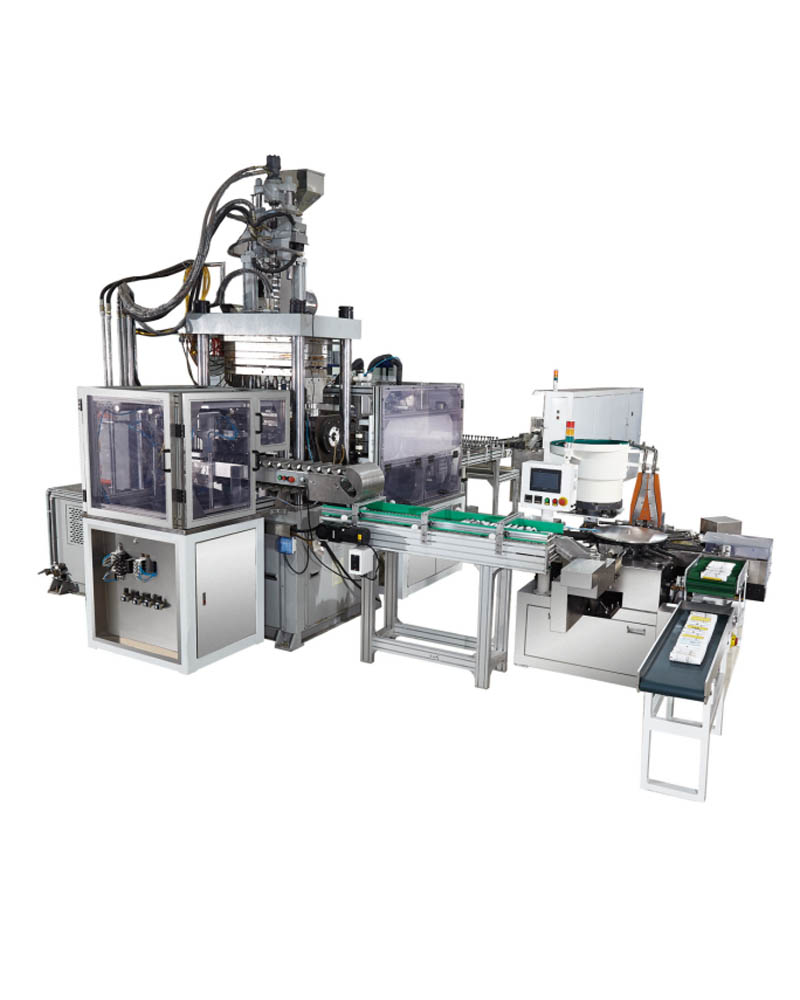
The most efficient tube production operations integrate decoration within the tube-making line rather than outsourcing it as a separate operation. An inline printing station — connected to the forming and heading machines — eliminates double-handling, reduces lead time, and removes the risk of printing quality variation introduced by a separate supplier. For brands evaluating end-to-end tube production lines, understanding how printing integrates with upstream stages determines whether you’re building a coherent production system or a collection of disconnected operations.
Stage 6 — Quality Control and Testing: Ensuring Compliance
Quality control is not the final stage of tube manufacturing — it is the continuous thread running through all five stages before it. A QC system that only checks finished tubes has already incurred the cost of every defect it finds; a QC system that monitors each stage catches defects at minimum cost.
What Tests Your Tubes Must Pass Before Reaching Customers
The standard cosmetic tube test battery includes:
| Test | Método | Standard |
|---|---|---|
| Integridad del sello | Pressure test: 2 bar, 30 seconds | Zero leakage |
| Seal strength | Peel test | ≥15 N/15mm (cosmetic); ≥25 N/15mm (pharmaceutical) |
| Fill weight accuracy | Gravimetric measurement, 10-sample AQL | ±2% of nominal (cosmetic); ±1% (pharmaceutical) |
| Dimensional compliance | Caliper measurement (diameter, length) | ±0.2mm of specification |
| Print quality | Visual inspection + colorimetry | ΔE ≤2.0 from approved reference |
| Prueba de caída | 1.2m onto concrete surface, 10 drops | Zero seal or cap failure |
| Compatibility | Accelerated stability: 40°C/75% RH, 3 months | No wall distortion, discoloration, or active degradation |
For pharmaceutical tube applications, the test matrix expands to include extractables and leachables, sterility testing (for sterile products), and material certification verification against Ph.Eur. or USP <661> standards.
Why Investing in QC Equipment Protects Your Brand Reputation and Reduces Returns
The cost of not having adequate in-line QC is visible in returns and invisible in the customer relationships those returns damage. A brand processing 300 seal-related returns per month carries approximately $1,800–$7,200 monthly in reverse logistics costs alone — before accounting for replacement product, customer service labor, and the goodwill gestures required to retain the customer.
In-line vision inspection systems — cameras mounted at the discharge station checking 100% of sealed tubes for seal width, fold uniformity, and gross defects — cost $8,000–$35,000 installed. They pay back in avoided returns and customer service costs within 6–18 months in most cosmetic operations, and provide the continuous process data that prevents quality drift from becoming a quality crisis.
Equipment Specifications That Matter — Making Smart Purchasing Decisions

Production Capacity: Matching Equipment to Your Business Growth
How to Calculate the Production Speed You Actually Need (Not What Manufacturers Claim)
Here is the calculation that matters — the one your supplier won’t volunteer:
Actual required production speed = (Monthly unit target ÷ Production hours per month) ÷ OEE factor
If you need 300,000 tubes per month and run 20 production shifts of 8 hours each (160 hours), your gross required throughput is 300,000 ÷ 160 = 1,875 tubes per hour = 31 tubes per minute.
But no production line runs at 100% of its rated speed for 100% of its time. A realistic OEE for a well-run cosmetic tube filling and sealing operation is 80–88%. Dividing your required throughput by 0.82 (a conservative but realistic OEE): 31 ÷ 0.82 = 38 tubes per minute of rated machine speed required.
Buy a machine rated at 40 tubes per minute, and you have appropriate capacity for your target with minimal growth headroom. Buy a machine rated at 80 tubes per minute, and you’ve paid for 40 tubes per minute of capacity you don’t need. Both errors are common; both are preventable with this calculation.
Why Oversizing Equipment Wastes Money, and Undersizing Limits Your Growth
Oversized equipment wastes capital in three ways: the purchase price premium for capacity you’re not using, the energy cost of running a larger machine at partial load (typically 10–15% less efficient than a right-sized machine running at design capacity), and the maintenance cost of an installation that’s mechanically stressed by running at low utilization.
Undersized equipment costs more subtly: as your business grows past the machine’s comfortable operating range, quality consistency drops (equipment running at maximum rated speed has less process stability than equipment running at 80%), and the production bottleneck actively limits your revenue. The right-size purchase — equipment rated at 120–130% of your current throughput requirement — provides near-term efficiency and 2–3 year growth headroom without paying for a decade of capacity you’re unlikely to need.
Flexibility and Customization: Future-Proofing Your Investment
Which Equipment Features Let You Produce Multiple Tube Sizes and Formulations
The tube size parameters that require tooling changes when switching products are: tube diameter (requires die change in extrusion, mandrel change in forming), tube length (requires cut-length adjustment), and cap thread format (requires heading tooling change). Quick-change tooling systems — where these components can be swapped in 30–45 minutes rather than 2–4 hours — are available on mid-to-premium equipment and pay for their cost premium in changeover time savings across a multi-SKU production schedule.
For a brand producing 6 tube SKUs across 3 diameter formats on 240 production days annually with monthly changeovers per SKU: the difference between 45-minute and 3-hour changeovers is (3 – 0.75 hours) × 18 changeovers per format × 3 formats = 121 hours of recovered production time annually. At 40 tubes per minute and a wholesale value of $0.35 per tube, that’s $102,060 in additional annual revenue from the same production team and the same capital investment.
How Modular Equipment Design Saves You Money When Scaling Production
Modular equipment design — where production speed, automation, and process modules can be added to a base machine configuration — is the approach that changes the economics of equipment investment for growing brands. Rather than purchasing a fully automated, high-speed line on day one (and carrying the capital cost and complexity of equipment that’s beyond your current operational maturity), modular design allows you to start with a semi-automatic configuration and upgrade as your volume and team capability grow.
Ask any equipment supplier specifically: “Can this machine be upgraded from semi-automatic to fully automatic in the field? What components would be replaced or added, and what would that upgrade cost?” The supplier’s answer reveals whether their equipment is genuinely modular or whether “modular” is a marketing term attached to a fixed-configuration machine.
Automation Levels: Finding Your Sweet Spot
Semi-Automatic vs. Fully Automatic Systems — Calculating Your True Labor Costs
Semi-automatic tube production lines require operator intervention at defined points — loading tube blanks, monitoring filling, managing sealing — typically requiring 2–3 operators per line. Fully automatic systems handle all these functions through servo-driven feeders, vision-guided tube orientation, and automatic rejection of out-of-specification units, typically requiring 1 operator per line for monitoring and exception management.
The labor cost calculation:
Semi-automatic: 2.5 operators × $28,000/year = $70,000/year labor per line Fully automatic: 1 operator × $28,000/year = $28,000/year labor per line Annual labor saving: $42,000
At a capital cost premium of $120,000 for the fully automatic over the semi-automatic equivalent, the payback purely from labor is approximately 2.9 years — before accounting for the quality consistency improvement (fully automatic lines typically run at 0.3–0.8% defect rates versus 1.2–2.5% for semi-automatic equivalents) and the higher throughput at full automation.
How Automation Affects Your Per-Unit Production Costs and Quality Consistency
The per-unit economics of automation improve with volume. At 30,000 tubes per month, the capital cost amortization of a fully automatic line adds approximately $0.08–$0.15 per tube — making the economics marginal compared to semi-automatic production. At 200,000 tubes per month, that amortized cost drops to $0.01–$0.02 per tube, while labor savings deliver $0.021 per tube in direct cost reduction. The fully automatic system’s quality consistency advantage — fewer returns, fewer customer service interactions, fewer compliance events — delivers additional value that doesn’t appear on the production cost spreadsheet but flows directly to brand equity and customer lifetime value.
Common Pain Points Solved by Understanding the Manufacturing Process
Problem: Quality Inconsistencies in Your Tube Production
How Understanding Each Manufacturing Stage Helps You Identify and Fix Quality Issues
Quality inconsistency in tube production almost always has a stage-specific root cause. A batch with seal width variation traces to the sealing station — jaw temperature drift, jaw face wear, or tube material temperature variation. Wall thickness inconsistency traces to extrusion — screw speed variation, die temperature drift, or raw material MFI inconsistency. Print color shift traces to the printing station — ink viscosity drift, UV cure lamp aging, or substrate surface treatment degradation.
Operators and managers who understand all six production stages can trace a quality symptom to its source systematically rather than empirically. The brand that knows their color shift problem is a UV lamp aging issue (standard replacement at 800–1,200 production hours) addresses it with a planned maintenance action. The brand without that knowledge replaces ink batches, adjusts screen tensions, and eventually calls an expensive technician to find a problem that cost $400 to prevent.
Why Process Knowledge Reduces Scrap Rates and Improves Your Profit Margins
Scrap rates in cosmetic tube manufacturing typically run 2–5% in operations without structured process control, and 0.5–1.5% in operations with documented process parameters and regular monitoring. On a 200,000-tube monthly production run at a material cost of $0.20 per tube, the difference between 4% and 1% scrap rate is 6,000 fewer destroyed tubes per month — $1,200/month or $14,400/year in direct material savings from process knowledge applied to a single production parameter.
Problem: Equipment Downtime Affecting Your Delivery Schedules
How Knowing the Manufacturing Process Helps You Maintain Equipment Properly
Unplanned downtime in tube manufacturing costs $500–$2,000 per hour in lost production output, plus the emergency maintenance cost and the expediting cost of recovering the delivery schedule. Most unplanned downtime events have a preventive maintenance action that would have prevented them — and that action was identifiable from the production data if anyone was watching the right metrics.
A sealing jaw that has accumulated 200 hours of use without a face cleaning and alignment check will develop hot spots and geometric distortion that appear as seal quality drift before they cause a production stop. An extrusion line whose barrel heater element has been reading ±8°C above setpoint for two weeks — visible in the temperature log, invisible if nobody looks at it — is 72 hours from a heater element failure that stops the line for 4–6 hours.
Why Preventive Maintenance Knowledge Saves You Thousands in Emergency Repairs
Preventive maintenance conducted on schedule costs 2–4× less than the same work performed as an emergency repair — because emergency maintenance carries technician travel cost, expedited parts cost, and the production opportunity cost of the unplanned stop. A planned preventive maintenance program covering all six production stages — with maintenance intervals set to the equipment manufacturer’s specifications and tracked in a simple digital log — reduces unplanned downtime events by 70–80% in operations where it’s implemented consistently.
Budget preventive maintenance at 5–8% of your equipment purchase price annually. A $200,000 production line costs $10,000–$16,000 per year to maintain proactively. The cost of three unplanned downtime events of 4 hours each — at $800/hour average — is $9,600. The preventive maintenance program costs slightly more and prevents far more than three events.
Problem: Difficulty Communicating with Equipment Suppliers and Technicians
How Manufacturing Knowledge Helps You Ask the Right Questions and Negotiate Effectively
The buyer who walks into an equipment evaluation knowing what MFI tolerance means for their extrusion line, what adhesive coat weight specification matters for their lamination quality, and what OEE benchmark to expect from a well-configured fully automatic sealing line asks fundamentally different questions than the buyer who knows only what product they want to produce.
Specific questions prevent vague answers. “What is the sustained production speed over an 8-hour shift?” cannot be answered with “our machine is rated at 120 tubes per minute.” “What is the seal width tolerance in your validated process window for 35mm ABL tubes?” cannot be answered with “our machines produce excellent seals.” Process knowledge makes you the buyer your supplier respects and your technician actually helps.
Why Speaking the Language of Production Builds Trust and Better Partnerships
Equipment suppliers, process engineers, and production technicians respond differently to buyers who demonstrate genuine process understanding. The relationship shifts from a transactional one — where the supplier manages information asymmetry in their favor — to a collaborative one, where both parties are working toward a shared production goal. That shift produces better equipment recommendations, more accurate technical support, and faster problem resolution when issues arise. It also produces better commercial terms: suppliers who respect a buyer’s technical knowledge are less likely to pad specifications, overstate performance, or bury unfavorable terms in technical fine print.
Problem: Uncertainty About Which Equipment Is Right for Your Products
How Understanding Tube Construction Guides Your Equipment Selection
The tube construction you’re producing determines your equipment requirements more specifically than any other factor:
- PE co-extruded tubes: Require a tube extrusion line with multi-zone barrel temperature control and precision die geometry. No lamination equipment needed.
- ABL laminate tubes: Require a lamination line with aluminum foil unwind, adhesive application station, and high-precision bonding rollers, plus a tube forming machine with aluminum-compatible scoring tools for the heading process.
- PBL laminate tubes: Similar lamination line requirements but without the aluminum foil handling — EVOH film is more dimensionally stable and easier to handle than foil, reducing equipment complexity slightly.
- 5-layer co-extruded tubes: Require a multi-layer co-extrusion line with 5 individual extruders feeding a single multi-manifold die head — the most capital-intensive entry point, but producing the most dimensionally uniform tube body achievable in plastic construction.
Why Matching Your Product Needs to Equipment Capabilities Ensures Your Investment Pays Off
Equipment that’s mismatched to your product — a standard PE extrusion line purchased by a brand that needs ABL laminate tubes for a retinol serum line — creates a problem with no good solution. You can’t run ABL laminate on PE extrusion equipment. The brand either needs to purchase additional equipment, outsource production, or reformulate their product. All three outcomes carry cost and delay that would have been entirely avoidable with clear product-to-equipment matching before the purchase decision.
Making the Investment Decision — What to Ask Your Equipment Supplier
Critical Questions About Production Capacity and Efficiency
How to Verify Actual Production Speeds (Not Marketing Claims)
Request that the supplier demonstrate sustained production speed at the following test conditions: your actual tube diameter, your actual tube material (if known), and a continuous 2-hour run rather than a 10-minute demonstration. Real-world sustained speed on an 8-hour shift is typically 10–30% below the manufacturer’s rated speed — not because the machines are performing poorly, but because rated speed is measured under ideal conditions that don’t account for changeovers, quality checks, and normal operating variation.
Request references from three current customers producing tubes similar to your specification, and contact them directly. Ask specifically: “What sustained throughput do you achieve in an 8-hour shift?” and “What is your first-pass yield on this machine?” These are the metrics that determine whether the equipment serves your production goals or becomes the constraint that limits them.
What Efficiency Metrics Matter Most for Your Business Model
OEE (Overall Equipment Effectiveness) combines three factors: Availability (what percentage of scheduled time is the machine running?), Performance (what percentage of its rated speed is it achieving when running?), and Quality (what percentage of output meets specification first time?). An OEE of 85% is the established benchmark for world-class packaging equipment performance. Ask your supplier: “What OEE do your reference customers achieve on comparable production schedules?” Any answer above 90% or below 70% warrants detailed follow-up.
Essential Questions About Quality and Compliance
Which Certifications and Standards Your Equipment Must Meet
For cosmetic tube production equipment:
- Marcado CE (EU): Mandatory for all machinery sold into the European market, covering mechanical safety, electrical safety, and noise emission
- ISO 9001 certification for the equipment manufacturer: Confirms their design and manufacturing quality system meets the international standard — a baseline indicator of their product reliability
- FDA 21 CFR, parte 211: For pharmaceutical tube production, equipment must be designed for GMP compliance — cleanable surfaces, no dead zones where product can accumulate, accessible for inspection and maintenance, with documented IQ/OQ/PQ validation support
How to Ensure Your Equipment Produces Tubes That Pass Industry Testing
The strongest quality assurance for a prospective equipment purchase is a production trial with your actual tube material and product formulation. Request that the supplier run a 500-tube trial, then test the output against your full quality specification: seal integrity, seal strength, fill weight accuracy, dimensional compliance, and drop test. The investment in a validation trial — typically $2,000–$8,000 in your time and travel cost — is the most reliable protection against a $50,000–$200,000 capital investment in equipment that doesn’t produce your quality standard.
Important Questions About Support and Training
What Training and Technical Support Comes With Your Equipment Investment
Operator training should be on-site, at your facility, with your actual production team, using your actual tube material and product — not at the supplier’s facility with their standard materials. A training program that ticks all the capability boxes at the supplier’s demo facility but transfers poorly to your actual production environment has not prepared your team for the conditions they’ll work in daily.
Require in your purchase contract: a minimum of 5 days of on-site operator training, documented procedures for all routine maintenance tasks, a troubleshooting guide specific to your machine configuration, and a 24-hour response commitment for production-critical technical support issues. These requirements cost the supplier nothing if they’re already committed to your success; the supplier who pushes back on them is telling you something important about the support relationship you’d be entering.
How Responsive Supplier Support Affects Your Long-Term Production Success
A production line that goes down and cannot be recovered for 48 hours because the supplier’s technical support team is unavailable or unresponsive costs you 2 days of production output, the recovery cost of catching up your schedule, and the customer relationship tension of a late delivery. Miyoda Packaging Machinery provides technical support documentation and remote diagnostic capability for their equipment range — a practical advantage for production teams who need answers without waiting for a service technician to travel to their facility. Full machine specifications and support resources are available through the Miyoda product pages.
Real-World Examples — How Understanding Manufacturing Improves Results
Case Study 1: Brand Owner Reduced Production Costs by 23% Through Equipment Knowledge
How Understanding Lamination Speeds Revealed Optimization Opportunities
A mid-scale cosmetic brand producing ABL laminate tubes for a premium skincare range had been running their lamination line at 18 m/min — 72% of the machine’s rated 25 m/min capacity. Their production manager assumed the conservative speed was necessary for quality; no one had documented why the speed was set that way in the first place.
After a process review in which the brand owner learned the relationship between lamination speed, adhesive cure time, and bond strength, the team ran a formal speed optimization trial. They increased speed to 22 m/min while monitoring bond strength at 100m intervals. Bond strength at 22 m/min was 2.9 N/15mm — above specification (2.5 N/15mm minimum) and statistically identical to production at 18 m/min.
The result: 22% increase in laminated sheet output per shift, reducing the production bottleneck that had been limiting tube output. Combined with a print scheduling optimization they implemented simultaneously, total production cost per tube dropped by 23% — not from capital investment but from knowledge applied to an existing machine.
The ROI Impact of Making Informed Equipment Choices
The cost of the process review and speed optimization trial: approximately $12,000 in consulting time and laboratory testing. The annual production cost saving at 23% reduction across a 2 million tube annual volume: approximately $138,000. Payback: 31 days. The ROI driver wasn’t new equipment — it was the knowledge to use existing equipment correctly.
Case Study 2: Distributor Increased Sales by Matching Clients to Right Equipment
How Manufacturing Process Knowledge Builds Client Trust and Loyalty
A regional packaging machinery distributor had been selling tube production equipment for 11 years primarily on specification comparison — tube speed, tube diameter range, machine dimensions. Their close rate on new customer inquiries was approximately 22%.
After investing in training their sales team on the complete tube manufacturing process — enabling them to conduct genuine needs assessments rather than specification presentations — their sales conversations changed. Instead of presenting machines, their team asked: “What tube construction are you producing, and what is your sustained required throughput?” “Have you calculated your OEE target?” “What QC infrastructure do you have at each production stage?”
This shift positioned the distributor as a production consultant rather than an equipment vendor. Their close rate increased to 41% over 18 months. More significantly, their customer retention rate — the percentage of customers who returned for their next equipment purchase — increased from 58% to 79%. Process knowledge turned a transaction into a relationship.
Why Educated Clients Make Faster Purchasing Decisions
Clients who understand the manufacturing process don’t need six months to evaluate equipment. They understand their requirements clearly, they can evaluate specifications meaningfully, and they don’t need to research every technical term in a supplier’s product data sheet before they can assess whether the machine meets their needs. Educated clients close faster and are significantly more likely to expand their purchase as their confidence in the supplier grows.
Case Study 3: Machinery Buyer Avoided a $150K Investment in Wrong Equipment
How Understanding Production Needs Prevented Costly Mistakes
A pharmaceutical contract manufacturer was evaluating an upgrade to their topical ointment tube line. They had received two competitive proposals — one for a standard PE tube extrusion and filling line at $145,000, and one for an ABL laminate tube production system at $290,000. The less expensive option was the apparently logical choice for a company managing costs carefully.
Before committing, the buyer engaged a process consultant to map their product pipeline against tube construction requirements. The review revealed that 70% of their pharmaceutical contract customers specified ABL tubes — because the topical antibiotic and antifungal formulations they contracted to fill required the near-total oxygen barrier only ABL provides. A PE extrusion line would have been incapable of producing the tube format their primary customers required.
The $145,000 “savings” would have delivered $0 in revenue for 70% of their pipeline, and required either outsourcing tube production (eliminating their margin on the packaging stage) or declining contracts they were otherwise capable of fulfilling.
The Value of Thorough Process Knowledge Before Major Capital Expenditure
Understanding tube construction — specifically, the functional difference between PE and ABL formats and the formulation types each is appropriate for — converted a $145,000 capital mistake into a correctly-sized $290,000 investment in equipment that served 100% of their current customer pipeline. The process knowledge that enabled this decision cost approximately $8,000 in consulting time. The avoided mistake was worth 18× that in the first year alone.
Future Trends in Cosmetic Tube Manufacturing
Sustainable Materials and Eco-Friendly Production
How Green Manufacturing Affects Equipment Requirements and Your Brand Positioning
The cosmetic tube industry’s sustainability transition is now a procurement requirement, not a brand-positioning option. Major European retailers require minimum 30–50% post-consumer recycled (PCR) PE content in flexible packaging as a listing condition. The EU Packaging Regulation (effective 2025) sets mandatory recycled content targets and recyclability requirements for all packaging placed on the EU market.
PCR PE behaves differently in extrusion than virgin PE: it typically has a wider MFI distribution, more color variation, and different thermal characteristics that require adjustment of barrel temperature profiles and die pressure settings. Equipment validated only for virgin PE resin may require process re-qualification to run PCR content above 30%. Understanding this now — before your retailer mandates the transition — allows you to validate PCR compatibility on your existing equipment proactively rather than under deadline pressure.
Why Investing in Sustainable Equipment Now Future-Proofs Your Business
The brands that are developing PCR and bio-based tube substrate capability now are building the supplier relationships, material qualification data, and equipment process knowledge that will become mandatory qualifications for retail supply in the next 3–5 years. The first-mover advantage in sustainable tube manufacturing is not primarily a marketing positioning — it’s a supply chain and regulatory readiness advantage. Manufacturers currently producing on equipment that cannot process PCR PE or handle mono-material PBL recyclable tube constructions are accumulating risk that will crystallize as a market access problem within a near-term horizon.
Smart Manufacturing and Industry 4.0 Integration
How IoT-Enabled Equipment Improves Production Monitoring and Efficiency
IoT (Internet of Things) integration in tube manufacturing connects equipment sensors to a central data platform, enabling real-time monitoring of production parameters — barrel temperatures, sealing jaw pressures, fill weights, line speed, and OEE — from any device, at any time. The practical value is not dashboards; it’s early warning.
A sealing jaw temperature that begins trending upward by 2°C per hour is invisible to an operator checking their gauge at shift start and shift end. It’s immediately visible to an IoT system that sends an alert when the trend crosses a defined threshold — before the drift causes seal defects and before it cascades into a production stop. Manufacturers report 20–40% reductions in unplanned downtime events after implementing IoT-based production monitoring, with the savings primarily in the avoidance of events that were predictable from the data.
Why Data-Driven Manufacturing Reduces Costs and Improves Quality
The shift from experience-based to data-based production management changes the economics of quality control. When fill weight data from every tube produced is stored and queryable, a quality drift that might take an experienced operator two shifts to notice by feel becomes visible in a control chart within 30 minutes of its onset. Root cause analysis that previously required a day of investigation now takes the time it takes to query the production database for the parameter that correlated with the defect onset time.
Data-driven manufacturing doesn’t replace process knowledge — it accelerates the application of process knowledge by making the data that reveals problems available in real time rather than retrospectively.
Personalization and Small-Batch Production Capabilities
How Flexible Equipment Enables You to Serve Niche Markets and Premium Segments
The global cosmetic market’s segmentation trend — toward more specific, targeted products for defined consumer groups rather than mass-market formulations serving broad demographics — is creating consistent demand for short production runs, frequent design variants, and rapid new product launch cycles. The brand launching 12 new SKUs per year, each in runs of 5,000–20,000 units, has fundamentally different production requirements than the brand producing three core SKUs in runs of 200,000+ units.
Equipment flexibility — fast changeovers, digital printing capability, modular line configuration — is the operational requirement that enables the first brand model. The production efficiency of the second model is built on standardization and volume. Understanding which model describes your business determines the equipment configuration that serves your commercial strategy.
Why Production Versatility Becomes a Competitive Advantage
The contract manufacturer or brand-owner producer who can run a 2,000-unit custom tube SKU for a niche clean beauty brand in the same week they run a 150,000-unit standard SKU for a mass-market client has a competitive position that a high-volume specialist cannot replicate. This versatility commands price premiums — niche and premium brands pay meaningfully higher per-unit contract prices for small-run production capability. Flexible equipment infrastructure is the asset that monetizes this pricing power.
Your Action Plan — Next Steps to Making the Right Equipment Investment

Step 1 — Assess Your Current and Future Production Needs
Questions to Answer Before Contacting Equipment Suppliers
Before any supplier conversation, document the answers to the following:
- What tube construction do I need — PE co-extruded, ABL laminate, PBL laminate, or 5-layer? (This single answer eliminates most equipment options from consideration.)
- What is my required monthly production volume for each SKU? (Calculate the actual tubes per minute using the OEE-adjusted formula above.)
- What tube diameter and length range do I need? What are my minimum and maximum dimensions?
- What is my product’s viscosity at filling temperature? (This determines filling equipment type.)
- What automation level is appropriate for my current team capability and labor cost structure?
- What is my 3-year volume projection, and does my equipment need to scale with it?
- What compliance requirements apply to my production — CE, FDA GMP, ISO standards?
- What is my realistic capital budget, and what is my payback period target?
How to Document Your Requirements for Accurate Equipment Matching
Create a one-page production requirements specification containing: tube construction type, diameter and length range, required monthly volume (with 3-year projection), product types (viscosity range, temperature sensitivity, filling temperature), compliance requirements, budget range, and site constraints (electrical supply, floor space, environmental controls). Share this document with every supplier you contact. It makes your needs unambiguous, forces suppliers to respond specifically rather than generically, and gives you a common reference for comparing proposals.
Step 2 — Evaluate Equipment Options Based on Manufacturing Knowledge
How to Compare Specifications Meaningfully
When comparing equipment proposals, the specifications that matter most are not the ones featured most prominently in brochures. The meaningful comparison framework:
- Sustained production speed (not rated maximum) — request reference data from comparable operations
- OEE benchmark — request the average OEE achieved by current customers on comparable production schedules
- Seal defect rate — request documented quality performance data, not claims
- Changeover time — for your specific tube size transitions, not the supplier’s best-case scenario
- Maintenance interval — how many production hours between planned maintenance events, and how long does each event take?
- Spare parts lead time — for the components most likely to require replacement in the first 3 years of operation
Why Seeing Equipment in Action Matters More Than Brochures
Request an in-person demonstration at a production facility where the equipment is running in conditions comparable to your planned application — your tube material, your diameter range, your production speed target. An equipment demonstration at a neutral facility, on material the supplier provides, at a speed they control, tells you very little about how the machine will perform in your production environment. A reference visit to a current customer’s facility — observing the equipment during a normal production shift — tells you almost everything.
Step 3 — Partner With Suppliers Who Understand Your Business
Red Flags That Indicate a Supplier Won’t Support Your Success
The indicators that predict a poor long-term partnership relationship are visible before you sign a contract:
- They cannot provide three current customer references in your product category and production scale
- They claim production speeds above 90% of rated capacity in sustained real-world operation
- They resist a validation trial with your actual material and formulation
- They provide no documentation of what after-sales support consists of and what response times are committed
- They pressure timeline — “this pricing is only available if you decide this week” is a sales tactic, not a business reality in capital equipment markets
How to Identify Partners Committed to Your Long-Term Growth
The supplier worth partnering with welcomes due diligence. They offer references proactively. They can explain every specification in their proposal in plain language. They’re willing to run a production trial. They provide a clear written commitment on training, spare parts availability, and technical support response times. They’ve been in business long enough to have a track record you can verify — not just a polished website.
For buyers evaluating tube production equipment in the cosmetic and pharmaceutical packaging space, Miyoda Packaging Machinery brings specialization in the complete tube production workflow — from extrusion through lamination, forming, heading, printing, and decoration — with equipment designed specifically for the construction types, compliance requirements, and production scales of cosmetic and pharmaceutical tube manufacturing.
Manufacturing Knowledge as Your Competitive Advantage
Understanding the cosmetic tube manufacturing process isn’t just technical knowledge — it’s the foundation for making smarter investments, reducing costs, and scaling your business confidently. Whether you’re a brand owner selecting equipment, a distributor guiding clients, or a machinery buyer evaluating options, this knowledge protects your investment and positions you for sustainable growth.
The six production stages described in this guide — extrusion, lamination, forming, sealing, printing, quality control — are not separate concerns to be delegated to specialists. They are an interconnected system, and the decisions made at each stage have direct consequences for the stages that follow and for the quality of the finished tube that reaches your customer.
The brands, distributors, and buyers who understand this system make better equipment decisions, build better supplier relationships, solve production problems faster, and protect their margins more effectively than those who treat tube manufacturing as a black box managed entirely by their suppliers. The knowledge itself is the competitive advantage.
Ready to Make an Informed Equipment Decision?
Explore Our Complete Tube Manufacturing Equipment Range → — Tube extrusion lines, laminate tube machines, heading and shoulder machines, printing systems, and full production line configurations for cosmetic and pharmaceutical tube production.
Read Our Tube Filling Machine Buyer’s Guide → — A practical reference for evaluating filling and sealing equipment based on your specific production needs, compliance requirements, and ROI targets.
Schedule a Consultation With Our Manufacturing Experts → — Discuss your production goals and get matched with equipment that serves your business — not just your current volume, but your 3-year growth trajectory.
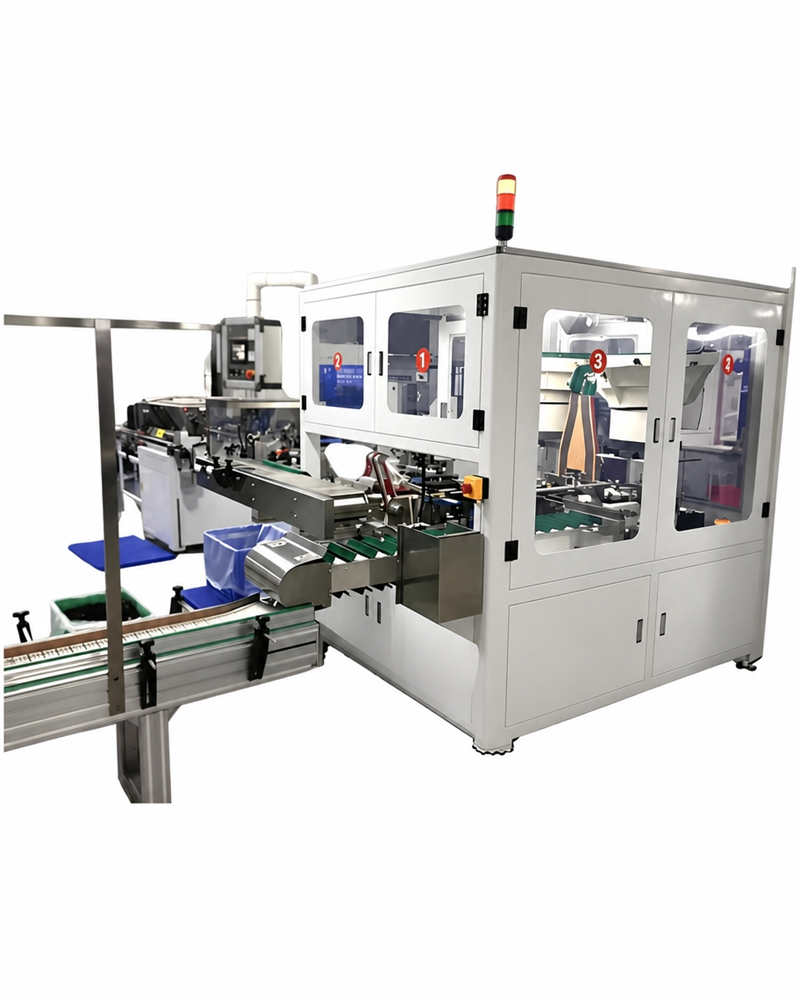
Watch: How Cosmetic Tube Production Works — From Laminate to Finished Tube
Understanding the complete production process is significantly clearer with a visual reference. This overview demonstrates the laminated tube production cycle — from material preparation through forming, heading, and quality inspection — at commercial production speed.
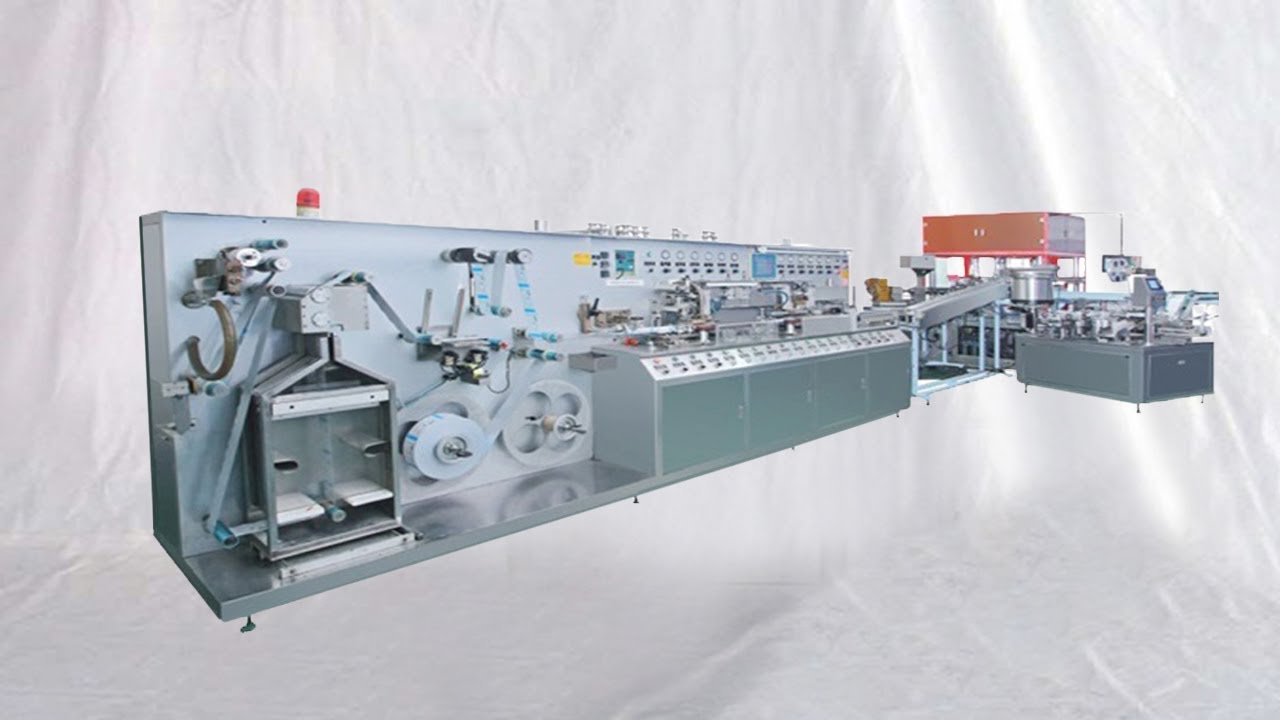
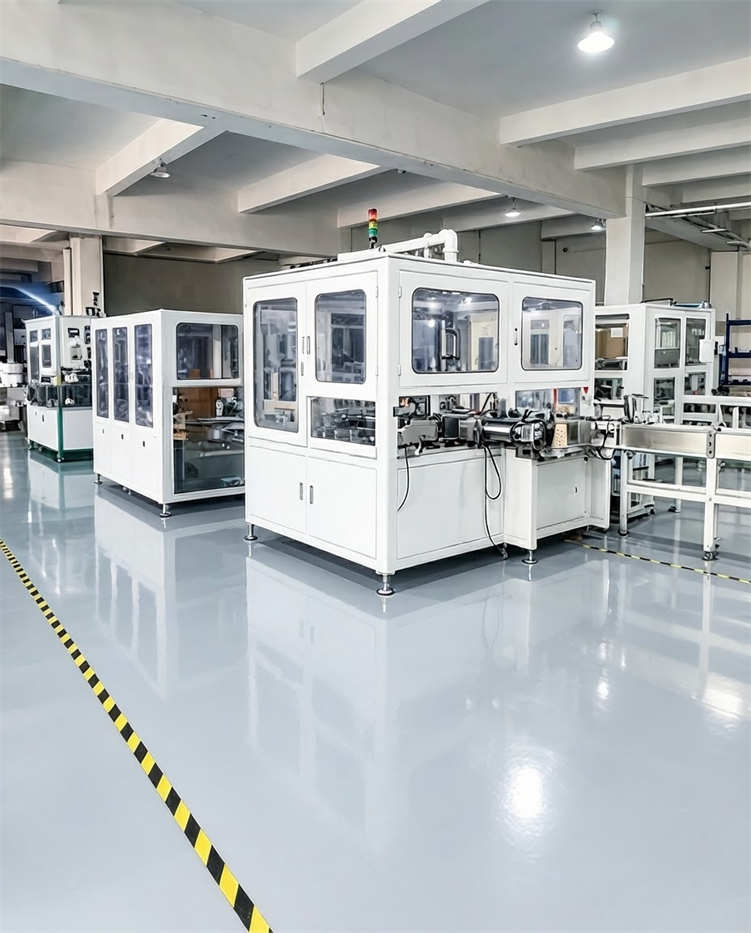
ABL and PBL cosmetic tube manufacturing production line — showing the complete process from laminated sheet through tube forming, shoulder heading, and quality inspection.
Glosario de términos clave
ABL (Aluminum Barrier Layer): A multi-layer tube construction incorporating an aluminum foil interlayer that blocks oxygen, moisture, and light with near-total effectiveness. The standard for pharmaceutical topicals and sensitive cosmetic actives.
Co-extrusion: A process in which multiple polymer layers are extruded simultaneously through a single multi-manifold die, producing a unified multi-layer tube wall in a single production pass. Used for 3-layer and 5-layer tube construction.
EVOH (Ethylene Vinyl Alcohol): A plastic copolymer with exceptional oxygen barrier properties. Used as the barrier layer in PBL tubes and 5-layer co-extruded tubes. Hygroscopic — requires controlled storage conditions.
MFI (Melt Flow Index): A measure of how easily a polymer flows at processing temperature. Directly affects extrusion settings — resin with MFI outside your validated range causes wall thickness variation and processing problems.
OEE (eficacia global de los equipos): Availability × Performance × Quality — the composite metric for production equipment efficiency. 85% is the world-class benchmark for packaging equipment.
PBL (Plastic Barrier Layer): A multi-layer tube construction using EVOH or PVDC plastic barrier layers rather than aluminum foil. Delivers 80–90% of ABL oxygen barrier performance at lower cost and with full recyclability in the PE waste stream.
Peel strength / T-peel test: A method for measuring the bond strength between laminate layers, expressed in Newtons per 15mm of sample width. Minimum specification for cosmetic laminate tubes: 2.5 N/15mm.
PID temperature control: Proportional-Integral-Derivative — a control algorithm that maintains process temperatures within tight tolerances by continuously adjusting the heating element output. Essential for consistent extrusion melt quality.
Scrap rate: The percentage of production output that does not meet specification and must be reworked or destroyed. Industry benchmark for well-controlled cosmetic tube operations: 0.5–1.5%.
15 Frequently Asked Questions About Cosmetic Tube Manufacturing
1. What’s the actual difference between ABL and PBL tubes, and which should I choose?
ABL (Aluminum Barrier Layer) tubes contain an aluminum foil interlayer that reduces oxygen transmission by over 98% and blocks light entirely. They are the right choice for formulations containing retinoids, vitamin C above 10%, peptides, pharmaceutical topicals, or any active ingredient that degrades through oxidation or light exposure. They cost 15–25% more than PBL tubes but deliver meaningfully longer effective shelf life for sensitive formulations.
PBL (Plastic Barrier Layer) tubes use EVOH or PVDC plastic barrier layers, delivering approximately 80–90% of ABL’s oxygen barrier performance at lower material cost and with full recyclability in PE waste streams — a growing retail listing requirement. For moisturizers, sunscreens, body care, and hair care products without high-activity sensitives, PBL delivers adequate protection at better economics. Your choice is determined by your formulation’s oxygen sensitivity, your target shelf life, and your retail market’s packaging sustainability requirements — not your budget alone.
2. How do I know if my equipment can produce the tube sizes my brand needs?
Equipment specifications should state minimum and maximum tube diameters and lengths with clear tolerances — not ranges described as “approximately.” For tube extrusion equipment, the critical dimensional parameters are die gap range (determines tube wall thickness) and haul-off speed range (determines tube length cutting capability). For forming equipment: mandrel diameter range and shoulder angle capability. Request production samples in your exact specifications before purchasing. Ask specifically about changeover time between your minimum and maximum diameter formats — this directly determines your multi-SKU production capacity.
3. What’s the real production speed I should expect from equipment?
Apply the OEE adjustment: real-world sustained throughput on an 8-hour shift is typically 70–88% of rated machine speed. A machine rated at 100 tubes per minute will sustain 70–88 tubes per minute in normal production — not 100. Factors causing the gap: changeovers, quality inspection stops, material loading, minor jams, and the natural variation in cycle time across 480 continuous minutes of production. Request “sustained speed on an 8-hour shift” documentation from reference customers — not the manufacturer’s rated specification. The two numbers should be within 15% of each other from a credible supplier; a gap above 25% warrants serious questioning.
4. How much does tube manufacturing equipment actually cost, and what’s included?
Entry-level semi-automatic tube extrusion and forming equipment ranges from $80,000–$200,000. Fully automated laminate tube production lines (lamination + forming + heading + printing) range from $300,000–$800,000+, depending on production speed, tube diameter range, and automation level. These prices typically include the equipment itself and factory commissioning. Costs not typically included in the headline price: international shipping and import duties (10–18% of equipment value), site electrical upgrades, foundation or installation work, on-site training (sometimes quoted separately), and initial spare parts inventory. Budget 15–25% above the equipment price for total installed and commissioned cost.
5. What’s the difference between heat sealing and ultrasonic sealing, and which is better?
Heat sealing uses temperature — typically 140–200°C jaw dies — to melt and bond tube tails. It’s proven, compatible with most PE tube materials, and technically straightforward to maintain. Real-world throughput: 40–80 tubes per minute depending on configuration. Ultrasonic sealing uses 20–40 kHz vibration to generate frictional heat within the tube material itself, producing stronger and more uniform seals at faster cycle times (0.5–1.5 seconds versus 1.5–3 seconds for heat sealing) without external heat that can affect heat-sensitive formulations. Ultrasonic equipment costs $15,000–$40,000 more than equivalent heat-sealing equipment. The performance premium justifies the cost for operations above 80 tubes per minute, or for products where formulation heat sensitivity is documented. For standard cosmetic PE tube production below that throughput, heat sealing is reliable and cost-appropriate.
6. How do I reduce scrap rates and improve production efficiency?
Cosmetic tube scrap rates run 2–5% in operations without structured process controls, and 0.5–1.5% in well-managed operations. The three highest-leverage actions for reducing scrap: (1) Lock in raw material specifications with your supplier including MFI tolerance limits — material variation is the most common root cause of forming and sealing defects. (2) Implement production parameter logs for all six manufacturing stages and review them daily — defects traced to their onset point resolve faster and more accurately than defects investigated retrospectively. (3) Conduct preventive maintenance on the manufacturer’s specified schedule rather than reactively — the majority of scrap-producing equipment failures are predictable from maintenance data if anyone is tracking it consistently.
7. What certifications and compliance standards must my tube manufacturing equipment meet?
For cosmetic production equipment in the EU: CE marking (mandatory), covering mechanical safety, electrical safety, and noise. For pharmaceutical tube production globally: GMP-compliant design (cleanable surfaces, no product retention zones, documentation-ready design) with IQ/OQ/PQ validation support documentation from the manufacturer. For US pharmaceutical production: FDA 21 CFR Part 211 compliance for manufacturing equipment in drug manufacturing environments. For equipment sold into China: CCC certification may apply to electrical components. Do not assume compliance — request specific certificates, verify their current validity, and confirm the scope of the certification covers the specific machine configuration you are purchasing.
8. How often should I maintain my tube manufacturing equipment, and what does maintenance cost?
Preventive maintenance intervals depend on production hours — the metric that matters, not calendar time. General guidelines: cleaning of product-contact surfaces (daily), sealing jaw inspection and calibration verification (daily for temperature; weekly for geometry), extrusion screw inspection (every 2,000–3,000 production hours), die head cleaning and inspection (every 500–1,000 hours), lamination roller and adhesive system inspection (every 1,000 hours). Annual maintenance budget: 5–8% of equipment purchase price. A $300,000 production line requires $15,000–$24,000 per year in preventive maintenance to maintain design performance and extend equipment life from 7–10 years to 12–15 years. Neglecting maintenance converts predictable maintenance costs into unpredictable downtime costs — which are systematically more expensive per event.
9. Can I produce multiple tube sizes on the same equipment without major modifications?
Most modern tube forming and heading equipment handles a diameter range of 13–60mm with tooling changes. Within a 5–10mm diameter range, changeover typically requires 30–60 minutes. Across a 20mm+ diameter range (e.g., 16mm to 40mm), changeover requires die, mandrel, and sometimes roller changes — 1–4 hours depending on equipment design. Quick-change tooling packages reduce changeover time by 40–60% and are worth specifying if you produce more than 3 tube diameter formats. Lamination equipment is generally less format-sensitive — most lamination lines handle a range of tube body widths with guide adjustments rather than tooling changes.
10. What’s the learning curve for operators, and how much training does the supplier provide?
Operators reaching basic production competency (running the line at target speed, conducting routine quality checks, performing shift-end cleaning) typically require 2–3 weeks on new equipment. Reaching full operational proficiency — troubleshooting parameter deviations, performing first-level maintenance, optimizing settings for a new tube SKU — typically requires 6–10 weeks. Training provided by the supplier should include: machine operation for each production stage, parameter setting and validation, routine quality control procedures, daily and weekly maintenance tasks, and first-level troubleshooting. Training should be conducted at your facility, by a qualified applications engineer (not a salesperson), using your actual tube material and product. Require this in your purchase agreement before signing, not as a verbal commitment after.
11. How do I evaluate whether equipment will actually achieve the ROI the supplier claims?
Build your own ROI model rather than accepting the supplier’s projection. Required inputs: equipment purchase price, installation cost, annual maintenance cost (5–8% of purchase price), annual energy cost (request machine power consumption in kW and calculate at your local electricity rate), annual labor cost (operators per shift × shifts × fully loaded hourly rate), and the per-unit revenue contribution of the tubes you’ll produce. Calculate payback: total annual operating cost ÷ annual revenue contribution. Compare to the supplier’s projection. Any payback period below 18 months should be examined skeptically — it usually involves understated operating costs or overstated throughput. Realistic payback for well-sized cosmetic tube production equipment: 2.5–4 years for semi-automatic systems; 3–5 years for fully automatic lines at their design production volume.
12. What should I look for in a reliable equipment supplier and ongoing support partner?
Non-negotiable criteria: 10+ years of experience in cosmetic or pharmaceutical tube manufacturing equipment specifically (not general packaging machinery); demonstrated reference customers in your product category and production scale whom you can contact directly; full written documentation of after-sales support scope, response times, and spare parts availability; willingness to provide a validation trial with your actual tube material and formulation before purchase commitment. The indicators that predict a poor partnership: pressure to decide within an artificial timeline, inability or unwillingness to provide direct customer references, production speed claims that significantly exceed industry benchmarks without specific documentation, and support commitments that are verbal rather than contractual.
13. How do raw material quality and consistency affect my equipment performance and production costs?
Raw material variation is responsible for 30–40% of production defects in tube manufacturing — more than any other single cause. Resin MFI variation causes extrusion instability and wall thickness inconsistency. Aluminum foil surface contamination causes lamination bond failures. EVOH barrier film moisture content variation (caused by improper storage) causes barrier layer performance inconsistency. Material cost represents 40–50% of finished tube production cost — but the cost of poor-quality material is never just the material itself; it’s the material plus the production time consumed making tubes from it that don’t meet specification. Establish written material specifications for all purchased inputs, require batch-specific CoAs, and conduct incoming inspection on each material shipment. The investment in material quality management is consistently the highest-ROI quality improvement available to tube manufacturers.
14. What’s the difference between digital and traditional printing for tube decoration, and which should I choose?
Silk-screen printing delivers vibrant, opaque colors with excellent abrasion resistance on PE tube bodies — the standard for high-volume cosmetic tube decoration above 5,000 units per color separation. Per-unit cost is low at volume; setup time is 45–90 minutes per job. Offset printing provides superior color accuracy and fine detail reproduction — the choice for photographic graphics and complex gradient designs at volumes above 50,000 units per run. Digital printing (inkjet, no plates or screens) enables runs from 1,000+ units with zero setup, immediate design changes between consecutive jobs, and per-unit costs that are higher than offset or screen but eliminate all setup cost and minimum order quantities. The economics of digital printing are compelling for brands with high SKU diversity (10+ tube label variants), frequent new product launches, or clinical trial requirements for lot-specific decoration. The Miyoda silk screen printing machine offers multi-color capability with UV curing for cosmetic tube decoration on production-scale equipment.
15. How do I future-proof my equipment investment as my business grows?
Future-proof by prioritizing three equipment characteristics: modularity (the ability to add speed, automation, or process modules to a base configuration without replacing the entire machine), material flexibility (validated capability for PCR PE content, bio-based substrates, and mono-material constructions that sustainability regulations will increasingly require), and manufacturer support longevity (10+ year spare parts availability commitment, with a supplier whose business model is aligned with your long-term success rather than with your next equipment purchase). Plan equipment for your 3-year volume projection — not your current volume — while maintaining the capital discipline to not purchase capacity you won’t need for 5+ years. The right equipment investment grows with your business without requiring replacement; the wrong one becomes the production constraint that limits the growth you’ve worked to create.