
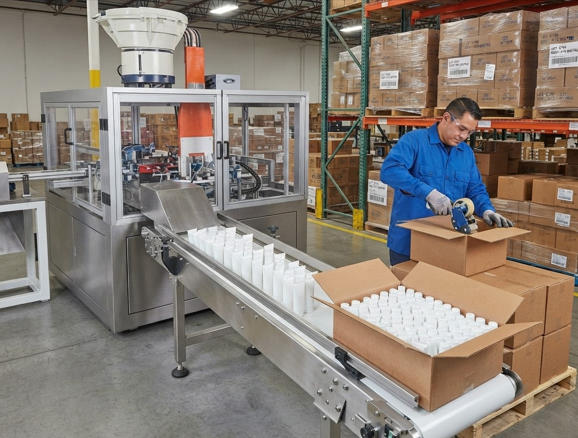
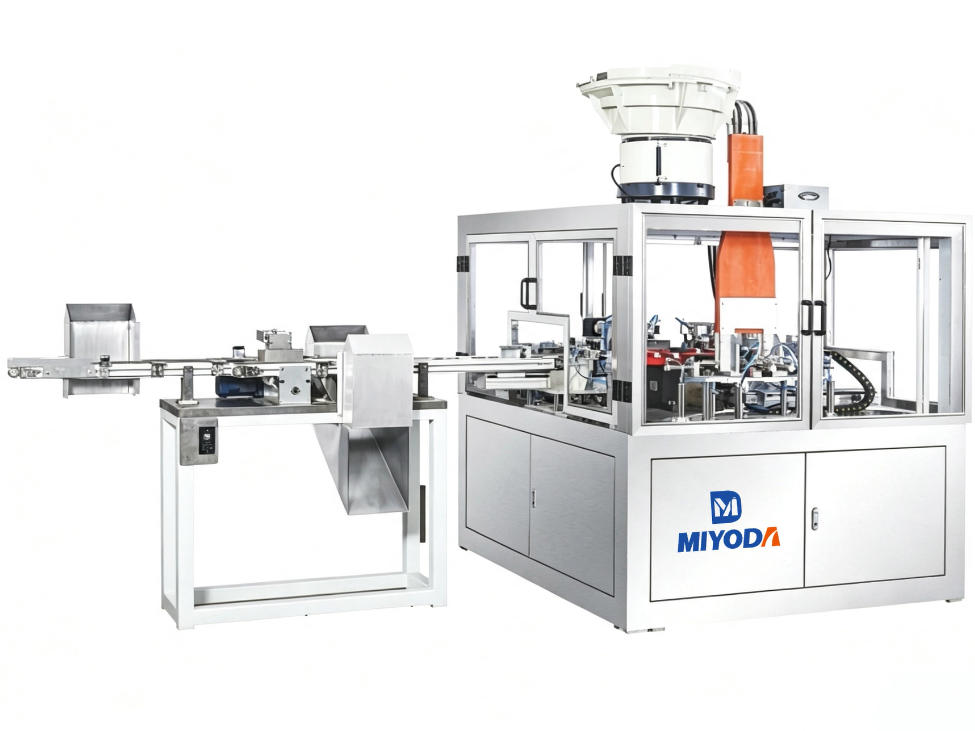
A high-speed automatic production line forming soft tube shoulders for cosmetic and pharmaceutical packaging — precision at every cycle matters.
The Decision That Shapes Your Entire Production Line
You can have the best tube filling machine on the market. You can run the most efficient printing and capping line in your facility. But if the shoulder — that small, threaded cap-end of every soft tube — comes out warped, undersized, or inconsistent, none of the rest matters.
The shoulder is where your product seals. It’s where the customer applies pressure. It’s the first thing a pharmacist’s hand feels when they dispense a medicated cream, and it’s the first thing a retail buyer notices when your tube sits next to a competitor’s on a shelf.
The injection shoulder machine is responsible for forming that shoulder — and choosing the wrong one is one of the most expensive mistakes a soft tube manufacturer can make.
The good news: you don’t need to make that mistake. This guide was built specifically for cosmetic and pharmaceutical manufacturers, machinery distributors, and agents who are evaluating injection shoulder machines right now. It cuts through the spec sheets and gives you the operational, financial, and compliance intelligence you actually need to make a confident decision.
The global cosmetic tube packaging market is projected to grow from USD 4.2 billion in 2025 to USD 8.4 billion by 2035, at a CAGR of 7.2% (Future Market Insights). That growth will reward manufacturers who have the right equipment in place — and punish those who don’t.
Let’s make sure you’re in the first group.
Understanding Your Production Needs — Matching Machine to Output Goals
Before you look at a single machine specification, you need to know your numbers. Not your aspirational numbers — your actual, committed production volume for the next 12 to 36 months.
Here’s why this matters: an injection shoulder machine that runs at 1,200 tubes per hour is not the same investment as one running at 4,800 tubes per hour. Not just in price — in energy consumption, mold tooling cost, operator skill requirements, and floor space. Buying more machine than you need ties up capital. Buying less creates a bottleneck that limits your entire production line.
How to Calculate Your Real Output Requirement
Start with your confirmed annual order volume. Then work backwards:
Where OEE (eficacia global de los equipos) — a standard manufacturing metric that measures what percentage of planned production time is truly productive — should be set at 0.75 to 0.85 for planning purposes on a new line. Assume 15–25% of scheduled time will be lost to changeovers, minor stoppages, and quality holds. That’s the real world.
Example: 3,000,000 tubes per year ÷ (250 days × 2 shifts × 8 hours × 0.80 OEE) = 938 tubes per hour required. A machine rated at 1,200 tubes/hour gives you headroom for growth without running at maximum stress.
The Under-sizing vs. Over-investing Trap
Manufacturers consistently underestimate volume growth and buy a machine that runs at 95% utilization from day one. When a new contract arrives — and it will — the machine has no capacity to absorb it. You either decline the business or run overtime, which drives up cost per unit and accelerates maintenance intervals.
On the other side, a machine with three times your required output sits idle for large portions of every shift. Its capital cost is amortizing against low volume. The ROI timeline stretches from 24 months to 48 months or more.
The right size is the machine that runs at 65–80% utilization at today’s volume, with clear mechanical headroom to reach 90% when your business grows.
| Annual Volume | Recommended Machine Capacity (tubes/hr) | Automation Level |
|---|---|---|
| < 500,000 | 600 – 1,200 | Semi-automatic |
| 500,000 – 2,000,000 | 1,200 – 3,600 | Fully automatic |
| 2,000,000 – 8,000,000 | 3,600 – 7,200 | Fully automatic + robotic handling |
| > 8,000,000 | Multi-machine configuration | Integrated smart line |
Material Compatibility — Ensuring Flexibility Across Formulations

The resin you run determines the processing conditions your machine must handle — and not every machine handles every resin equally well.
Not all soft tube shoulders are made of the same material — and this matters more than most buyers realize when they’re evaluating a machine.
The three dominant resins in soft tube shoulder production are:
- LDPE (Low-Density Polyethylene): The most common choice. Flexible, chemically inert, and easy to process. Melt temperature range: 160–220°C. Used for most cosmetic and personal care tubes where squeeze feel is important.
- HDPE (High-Density Polyethylene): Stiffer, with better chemical resistance. Used for pharmaceutical tubes and premium skincare where a firmer cap snap-fit is required. Requires tighter melt temperature control: 220–260°C.
- PP (Polypropylene): Higher heat resistance, making it suitable for tubes that may be sterilized or filled at elevated temperatures. More brittle at low temperatures — requires careful testing in cold-climate shipping scenarios.
The Growing Challenge of Recyclable and Bio-Based Resins
Here’s an industry shift that’s reshaping machine purchasing decisions: sustainability regulations in the EU (under the EU Packaging and Packaging Waste Regulation) and retailer ESG commitments are pushing cosmetic brands toward mono-material tube structures using recyclable HDPE y bio-based LDPE derived from sugarcane.
These materials behave differently from conventional resins. Bio-LDPE, for example, can have a slightly different melt flow index (MFI) — a measure of how easily molten plastic flows — than petroleum-based LDPE, which means processing parameters may need adjustment to maintain shoulder quality.
The critical machine specification here is precise, zone-by-zone barrel temperature control. A machine with ±2°C temperature stability across each heating zone can handle material variability without producing defects. A machine with ±8°C variation will struggle when you switch to a new bio-resin batch.
Ask your machine supplier this specific question: “What is your barrel temperature control tolerance, and how quickly does the system recover after a material changeover?” The answer will tell you more than the spec sheet does.
Material Switching Without Quality Loss
Many manufacturers run 3–6 different shoulder materials depending on the tube SKU. Color changes and resin switches require purging — the process of running a cleaning material through the barrel and screw to remove the previous resin before starting the next.
The time this takes, and the waste it generates, varies widely by machine design. Machines with optimized screw geometry for tube shoulder applications can complete a material purge in 8–15 minutes versus 35–50 minutes on a poorly designed system. At 4 material changes per day, that’s the difference between 32 minutes and 200 minutes of lost production time — every single day.
Precision Engineering — Achieving Consistent Shoulder Quality
This is where the technical and the commercial meet. The shoulder your injection machine produces must meet dimensional tolerances so precise that the entire downstream production chain — filling, sealing, capping, and consumer use — functions correctly.
Here’s what “precision” actually means in this context:
Orifice diameter tolerance: The opening through which product is dispensed must hold to ±0.05 mm. A pharmaceutical ointment labeled “apply 2 cm of product” has that dosing instruction calibrated against a specific orifice diameter. If the orifice runs 0.3 mm oversized across a batch of 50,000 tubes, every one of those tubes will dispense too much — creating both a clinical concern and a formulation waste problem.
Thread geometry uniformity: The threads that mate with the cap must be consistent across millions of cycles. Variation in thread pitch or depth causes caps to cross-thread during high-speed capping operations, creating a reject event that cascades across the entire line.
Sealing integrity at the body-shoulder joint: After the shoulder is injection molded, it’s attached to the extruded tube body in a heading operation (a heated forming process). If the shoulder’s dimensional geometry varies, the heading joint becomes inconsistent — and joint failure is the most common cause of tube burst events at retail.
What Drives Precision: Mold Control and Clamping Systems
Precision in injection molding comes from two things: mold quality y process consistency.
The mold — the steel tool that defines the shoulder geometry — must be machined to tolerances of ±0.01 mm on critical dimensions. This costs money: a quality 4-cavity shoulder mold for a standard 35 mm cosmetic tube runs $25,000–$45,000. This is not an area to cut corners.
Process consistency comes from the machine’s ability to repeat the same injection pressure, speed, and timing cycle after cycle. Modern injection shoulder machines with servo-electric drives achieve shot-to-shot weight repeatability of ±0.05 g — meaning every shoulder produced in a shift of 50,000 cycles has essentially identical dimensions. Older hydraulic-only systems can vary by ±0.3–0.5 g, which is enough to cause intermittent thread stripping or cap seal failures.
💡 Glossary — Key Terms:
- Clamping Force: The pressure (measured in tonnes) that holds the mold halves shut during injection. Insufficient clamping force causes “flash” — thin plastic fins at the mold parting line that contaminate the shoulder surface.
- Shot Weight: The mass of plastic injected per cycle. Consistent shot weight = consistent shoulder dimensions.
- Flash: Excess plastic that escapes between mold halves. A defect that requires manual trimming, adding labor and waste cost.
Speed vs. Stability — Optimizing Cycle Time Without Sacrificing Quality
Every buyer asks the same question: “How fast can this machine run?”
That’s the wrong question. The right question is: “What is this machine’s maximum speed at which it still produces parts within my quality tolerance?”
These are not the same number. And the gap between them is where production waste lives.
A high-speed tube shoulder injection machine is mechanically capable of 80–120 shots per minute. At that speed with a 4-cavity mold, you’re producing 320–480 shoulder components per minute. But running at maximum mechanical speed on a continuous 8-hour shift generates heat buildup in the mold, accelerated wear on ejector pins, and increased melt temperature variation — all of which drive up your defect rate.
The Production Reality: Sustainable Speed
In commercial soft tube production, the sustainable throughput speed — the rate at which a machine can run for a full 8-hour shift while maintaining a reject rate below 0.5% — typically falls at 65–80% of the machine’s rated maximum.
That means a machine rated at 100 shots/minute will realistically deliver 65–80 shots/minute over a production shift. Plan your capacity calculations around this figure, not the nameplate maximum.
The levers that let you push sustainable speed higher without increasing defect rates are:
- Optimized mold cooling channel design: Better cooling reduces the minimum cooling time per cycle, which is typically 60–80% of total cycle time.
- Servo-electric injection drives: Faster, more repeatable injection pressure ramp-up reduces fill time without over-packing the mold.
- In-mold temperature monitoring: Real-time mold temperature data allows the control system to compensate for heat buildup automatically.
Real-World Speed-Quality Data
A mid-sized cosmetic tube manufacturer running Φ35 mm LDPE shoulder components at 75 shots/minute with a 4-cavity mold reports a defect rate of 0.3% per 8-hour shift. When they pushed to 95 shots/minute, defect rate rose to 2.1% — a seven-fold increase in scrap that more than offset the throughput gain.
At 0.3% rejection on 1,000,000 shoulders per month, they waste 3,000 units. At 2.1%, they waste 21,000 units. At $0.12 material cost per shoulder, that’s the difference between $360 and $2,520 in monthly material waste — before accounting for the labor cost of inspection and rejection sorting.
Speed optimization is not about running faster. It’s about finding the highest speed at which your machine, mold, and material combination remains stable — and then maintaining it with discipline.
Automation Integration — Future-Proofing Your Production Line
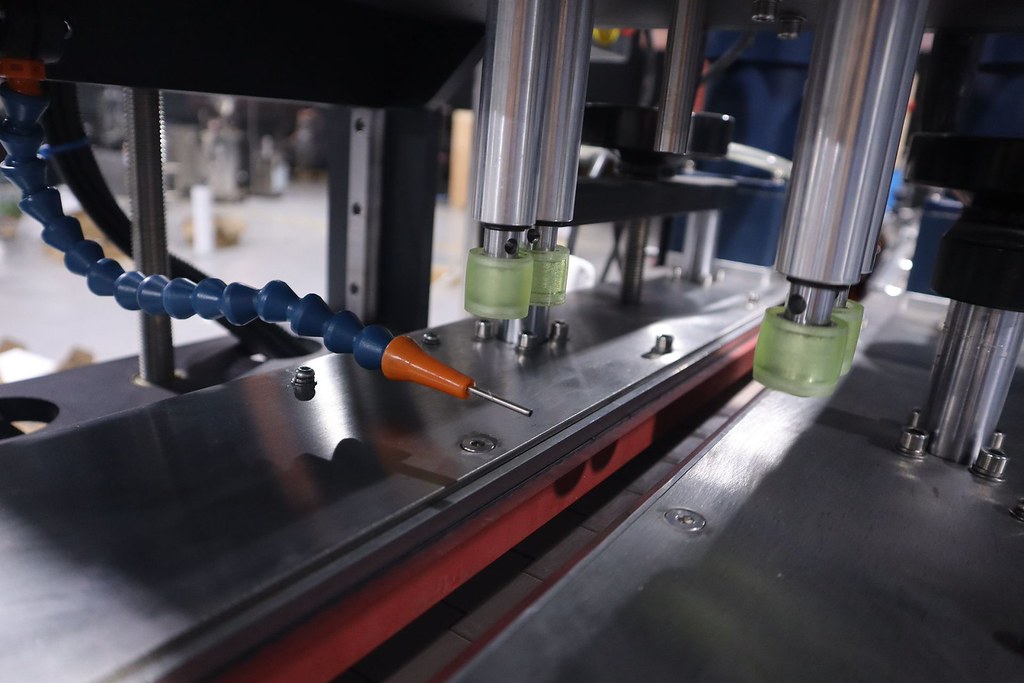
Automated tube lines with robotic handling and inline inspection are no longer a luxury — they’re the competitive baseline for manufacturers supplying major cosmetic and pharma brands.
The injection shoulder machine doesn’t operate in isolation. It feeds into a tube heading station, which feeds into a printing line, which feeds into a tube filling and sealing machine, which feeds into capping and packaging. Every machine in that chain needs to speak the same operational language — and if your shoulder machine can’t communicate with the rest of the line, you have a bottleneck wearing the disguise of a machine.
What “Integration-Ready” Actually Means
Integration readiness is not a marketing phrase — it’s a set of specific technical capabilities:
- Standardized communication protocols: Look for machines that support OPC-UA (Open Platform Communications – Unified Architecture), the industry standard for machine-to-machine data exchange in smart factories.
- PLC compatibility: The machine’s programmable logic controller (PLC) — the computer brain that runs the production cycle — should be from a major brand (Siemens, Mitsubishi, Allen-Bradley) with documented integration capability.
- Inline vision system interface: The machine should have a signal output port that can trigger a downstream camera inspection system when a potentially defective part is ejected.
- Robotic arm mounting points: For high-volume lines, a robotic arm handling system replaces manual shoulder loading and unloading — reducing labor by 1–2 operators per shift and eliminating the ergonomic injury risk of repetitive manual tube handling.
The Industry 4.0 Dividend
Manufacturers who have connected their tube shoulder injection machines to plant-wide Manufacturing Execution Systems (MES) — software platforms that track production data in real time — report concrete operational improvements:
- Predictive maintenance alerts that identify developing mold wear or screw degradation before it causes a production failure
- Automatic recipe recall that reloads saved process parameters when switching between shoulder SKUs — eliminating setup variation between shifts
- Real-time OEE dashboards visible to production managers from any device, enabling faster response to efficiency drops
En AI and IoT transformation already underway in tube filling machinery is coming to shoulder injection systems as well. Buyers who invest in integration-ready machines today are positioned to benefit from these upgrades without replacing equipment — buyers who don’t will face the choice of living with an isolated machine or a full replacement cycle in 3–5 years.
Maintenance and Downtime — Designing for Reliability and Easy Serviceability
Here is a number that focuses the mind: unplanned manufacturing downtime costs between $10,000 and $260,000 per hour depending on industry and production volume (OxMaint Manufacturing Downtime Research).
For a mid-sized cosmetic tube manufacturer, a realistic downtime cost is $8,000–$15,000 per hour in lost production, labor, and downstream disruption. A 4-hour unplanned shutdown costs $32,000–$60,000 — and it can happen from a single ejector pin failure that takes 45 minutes to diagnose because the part is buried inside the mold under the clamping unit.
Machine design is the primary defense against this. Here’s what to look for:
Failure Points and How Good Machine Design Addresses Them
The most common unplanned downtime causes on injection shoulder machines are:
1. Ejector pin failure: Ejector pins are the slender steel rods that push the formed shoulder out of the mold cavity. They operate under cyclic stress — push, retract, push, retract — millions of times. On machines designed for serviceability, ejector pin replacement takes 15–20 minutes. On machines where the ejector plate is buried under hydraulic lines and wiring harnesses, it can take 4–6 hours.
2. Heating barrel and nozzle wear: The barrel and nozzle that melt and inject plastic wear progressively over time. Machines with modular barrel assemblies allow nozzle replacement in under 30 minutes without pulling the entire injection unit.
3. Mold cooling channel blockage: Scale and mineral deposits from cooling water build up in the mold’s internal cooling channels over time, reducing cooling efficiency and lengthening cycle times. Machines with quick-disconnect cooling line fittings allow mold cooling circuits to be flushed without full mold removal.
4. Sensor and actuator drift: Position sensors, pressure transducers, and temperature controllers drift out of calibration over time. Machines with remote diagnostics capability — where your supplier’s engineers can view live machine data via a secure connection — can identify sensor drift before it causes a production quality event.
Maintenance Schedule Framework
| Maintenance Interval | Tasks | Duración habitual |
|---|---|---|
| Daily | Visual inspection of mold surfaces, nozzle check, cooling water temperature verification | 15–20 min |
| Weekly | Ejector pin lubrication, tie bar greasing, hopper and feed throat cleaning | 45–60 min |
| Monthly | Full barrel temperature calibration check, hydraulic oil level (where applicable), mold parting surface inspection | 2–3 hours |
| Quarterly | Screw and barrel dimensional check, cooling channel flow rate test, full electrical panel inspection | 4–6 hours |
| Annual | Full machine overhaul, mold polishing, hydraulic system service, control system firmware update | 1–2 days |
A machine that enables this schedule without requiring specialist engineers for routine tasks is worth significantly more over a 10-year production life than a machine that requires factory service calls for monthly maintenance.
Energy Efficiency and Sustainability — Reducing Operational Costs
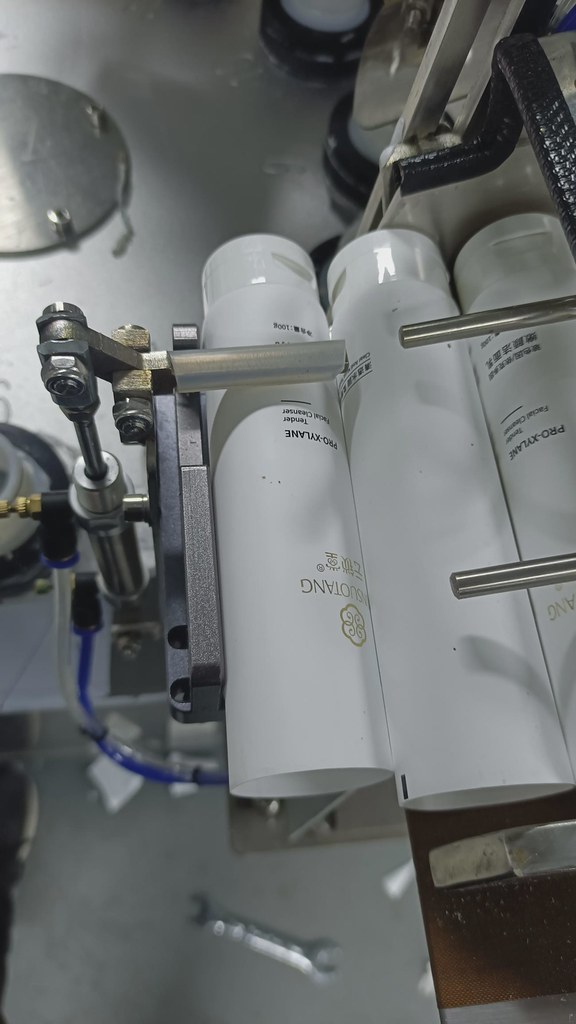
Real-time energy monitoring on servo-driven injection systems allows manufacturers to track cost per unit and identify optimization opportunities that directly improve profit margins.
Energy cost is the hidden line item that buyers forget when comparing machine prices. A machine that costs $20,000 less to buy but consumes 35% more electricity will cost more over a 5-year production life — often significantly more.
Here is the comparison that matters:
Conventional hydraulic injection shoulder machine: Runs a fixed-speed hydraulic pump continuously, consuming full power regardless of whether the machine is injecting, cooling, or idle. Typical consumption: 18–25 kW per operational hour.
Servo-hydraulic machine: Uses a servo motor to drive the hydraulic pump only when motion is required. The pump is effectively off during the cooling phase (which represents 60–80% of each cycle). Typical energy savings: 30–45% vs. conventional hydraulic (ENGEL Energy Reduction Data).
Fully electric (servo-electric) machine: All machine movements — injection, clamping, ejection — are driven by servo motors with no hydraulic system. Energy savings of 40–60% vs. conventional hydraulic are achievable. These machines also eliminate hydraulic oil as a consumable and contamination risk — a significant advantage in cleanroom pharmaceutical production environments.
The 5-Year Energy Cost Calculation
Conventional hydraulic (22 kW avg):
Servo-electric (10 kW avg):
Saving: $28,800 over 5 years — which means a servo-electric machine that costs $25,000 more at purchase breaks even on energy savings alone within 5 years, with better quality consistency and zero hydraulic maintenance costs as additional benefits.
Aligning with ESG and Sustainability Goals
Major cosmetic brands — L’Oréal, Unilever, Estée Lauder — have published net-zero manufacturing commitments and are cascading those requirements to their packaging suppliers through supplier codes of conduct. If you supply tubes to these brands, expect to be asked for energy consumption data per 1,000 units produced as part of vendor qualification audits within the next 2–3 years.
Manufacturers who can produce that data today — using energy monitoring systems built into their servo-driven injection machines — are positioned to win and retain those contracts. Manufacturers who cannot are increasingly at risk of supplier disqualification regardless of their product quality.
Supplier Partnership — Why Support Matters as Much as the Machine
Here is a pattern that experienced production managers recognize immediately: the machine looks perfect in the showroom. The sales presentation covers every feature. The reference customers are impressive. Then the machine arrives, the installation engineer leaves after commissioning, and a month later something breaks — and the supplier is unreachable for 72 hours.
This happens more often than suppliers admit. And for a continuous production facility, 72 hours of downtime on a shoulder injection machine is not an inconvenience. It’s a supply chain crisis.
What Genuine Supplier Partnership Looks Like
Technical support response time: For critical downtime events — machine failures that stop production completely — 24-hour response should be a contractual minimum, not an aspiration. Ask specifically: “What is your committed response time for a critical downtime event, and is it in the purchase contract?”
Spare parts availability: Critical wear parts — nozzles, ejector pins, heating bands, screw tips, check rings — should be available within 48–72 hours for standard components. Ask for the supplier’s spare parts lead time commitment in writing. A spare parts starter kit (typically 12–18 months of critical consumables) should be included in the purchase package.
Operator training quality: A machine’s performance ceiling is set by the operators running it. Factory training before shipment is standard. What differentiates good suppliers from great ones is on-site training during commissioning (when the machine is actually in your facility, running your material, producing your product SKUs), follow-up remote training for new operators, and maintenance technician certification programs.
Global service network: For manufacturers in Southeast Asia, South Asia, the Middle East, or Latin America, a European or Chinese supplier with no local service presence creates a structural support risk. Verify that the supplier has certified service engineers within a reasonable travel distance from your facility — or that remote diagnostics can genuinely resolve the majority of issues without a site visit.
Miyoda Packaging Machinery builds its customer relationships specifically around this partnership model — with technical support, global parts availability, and hands-on training designed for production environments in cosmetics and pharmaceutical packaging. You can reach the team directly via WhatsApp at +86 13774214471 or by email at info@miyodamachine.com.
Watch This First — Soft Tube Shoulder Production in Action
Before you finalize any equipment decision, it helps to see the process. This video from a cosmetic and pharmaceutical tube machinery production line shows the full cycle of tube shoulder forming — from tube feeding through injection, cooling, and ejection:
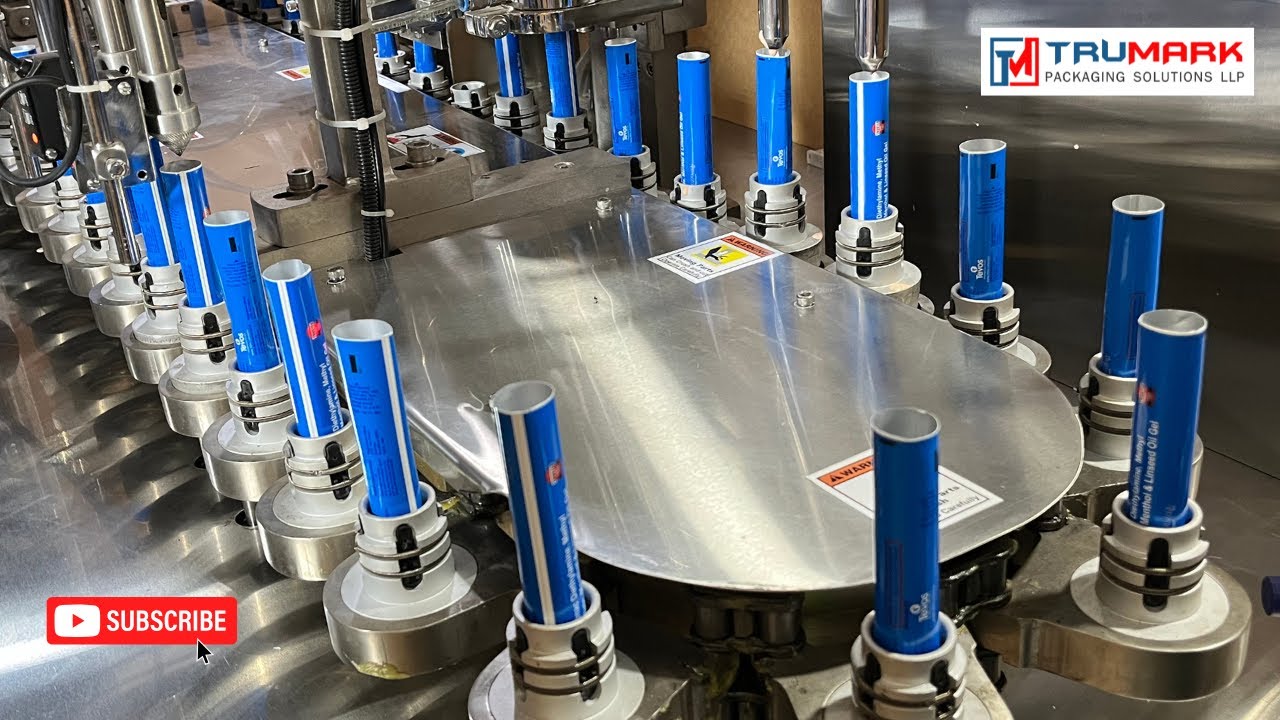
▶ Watch: Soft Tube Manufacturing Process — Shoulder Injection, Heading, and Production Line Integration
Pay attention to cycle timing, mold opening speed, and how the ejection system handles tubes — these are the operational details that separate a reliable production machine from one that looks fast in a demo but struggles under sustained production load.
Making the Final Decision — A Step-by-Step Selection Checklist
This checklist consolidates everything in this guide into a structured evaluation framework. Use it to compare suppliers side by side, or to validate that a machine you’re already considering actually meets your requirements.
Pre-Purchase Evaluation Checklist
Output and Capacity
- Calculated real required hourly output at 75% OEE target
- Confirmed machine capacity provides 20–30% headroom above current need
- Requested documentation of sustained throughput speed (not just peak speed)
Compatibilidad de materiales
- Verified machine handles all resins currently used (LDPE, HDPE, PP)
- Tested or documented compatibility with bio-based or recyclable resins if required
- Confirmed barrel temperature control tolerance (target ±2°C per zone)
- Established material changeover time with supplier reference customers
Precision and Quality
- Confirmed shot weight repeatability (target ±0.05 g or better)
- Reviewed mold cavity construction standard and steel grade
- Requested sample production run data showing dimensional consistency over 500+ consecutive cycles
- Verified defect rate documentation from production reference customers
Automation Readiness
- Confirmed OPC-UA or equivalent communication protocol support
- Verified PLC brand and integration documentation availability
- Evaluated robotic handling interface options and cost
- Assessed inline vision system integration capability
Maintenance and Serviceability
- Performed hands-on maintenance simulation (ejector pin change, nozzle replacement)
- Confirmed spare parts availability and lead times in writing
- Reviewed maintenance manual completeness and language availability
- Verified remote diagnostics capability
Eficiencia energética
- Compared kW consumption at production speed across shortlisted machines
- Calculated 5-year energy cost differential between options
- Assessed compatibility with sustainability reporting requirements
Compliance and Standards
- Confirmed CE certification (for EU market)
- Verified GMP-compatible design features (cleanable surfaces, no contamination risk zones)
- Requested FDA CGMP or ISO 22716 documentation support capability
- Confirmed extractables and leachables testing documentation for machine-contact materials
Supplier Support
- Reviewed critical downtime response time commitment (written)
- Confirmed spare parts starter kit inclusion in purchase
- Validated service engineer location relative to facility
- Requested references from cosmetic and pharmaceutical tube manufacturers currently using the machine
Commercial Terms
- Defined acceptance testing criteria tied to final payment release
- Confirmed warranty scope, duration, and travel cost responsibility
- Agreed training schedule: factory pre-shipment + on-site at commissioning
For a complete view of how the injection shoulder machine fits into your full tube production ecosystem — from extrusion through printing to filling — explore the complete tube production line overview at Miyoda y el cosmetic tube manufacturing process guide.
Choosing the right injection shoulder machine is not a purchasing decision — it’s a production strategy decision.
The machine you choose will determine your output capacity, your product quality ceiling, your maintenance burden, your energy cost profile, and your ability to integrate with the rest of your production line. It will affect whether you can serve pharmaceutical clients who require GMP documentation. It will determine whether you can switch to recyclable resins when your brand customers require it. It will shape whether a major supply chain disruption takes you offline for 6 hours or 6 days.
This guide has given you the framework to evaluate all of those dimensions — not just the speed and price that dominate most purchase conversations. Use the checklist. Run the numbers. Ask the hard questions. Request reference customers and call them.
The manufacturers who make confident, well-informed equipment decisions today are the ones who secure the contracts and build the production capacity that captures growth in a market projected to reach USD 8.4 billion by 2035.
If you’d like to discuss your specific production requirements with a specialist in cosmetic and pharmaceutical tube machinery — and explore how Miyoda Packaging Machinery’s equipment and support model fits your operation — reach out at www.miyodamachine.com or via WhatsApp at +86 13774214471.
Preguntas frecuentes (FAQ)
1. What output capacity do I need for my soft tube production volume?
Calculate your required hourly output by dividing your annual unit commitment by your planned operating hours, then multiply by 1.25–1.35 to account for OEE losses from changeovers and stoppages. A machine running at 65–80% of rated capacity gives you the production stability and growth headroom most manufacturers need. For reference, a fully automatic shoulder injection machine at commercial scale typically delivers 1,200–7,200 shoulder components per hour depending on mold cavity count and cycle speed.
2. Can one injection shoulder machine handle both cosmetic and pharmaceutical-grade tubes?
Yes — provided the machine is designed with GMP-compatible features: smooth, cleanable barrel and nozzle surfaces, documentation capability for process parameters, and material traceability systems. The machine itself doesn’t distinguish between cosmetic and pharmaceutical applications, but the quality system around it does. For pharmaceutical tube production, you’ll need batch records, process parameter logs, and cleaning validation protocols regardless of which machine you use.
3. How do I ensure the machine is compatible with recyclable or bio-based resins?
Ask the supplier for documented processing parameters for bio-LDPE, recycled-content LDPE, and mono-material HDPE — and request reference customer contacts who are currently running those materials on the same machine model. The key specifications are barrel temperature control tolerance (target ±2°C), screw geometry compatibility with bio-resins (which can have different melt flow characteristics), and purging procedure for material changeovers.
4. What cycle time should I expect for standard shoulder production?
For standard LDPE or HDPE tube shoulders (Φ19–Φ50 mm diameter range), a commercial automatic injection shoulder machine achieves cycle times of 5–12 seconds per shot depending on wall thickness, cooling channel design, and mold temperature management. A 4-cavity mold at 8 seconds per cycle produces approximately 1,800 shoulder components per hour. Always request sustained cycle time data at an agreed quality specification — not the minimum cycle time achievable under ideal conditions.
5. How does the machine maintain consistency across long production runs?
The primary mechanism is closed-loop process control — the machine’s control system continuously monitors injection pressure, melt temperature, and screw position, and makes real-time adjustments to maintain consistent shot weight. Servo-electric drives contribute by eliminating the hydraulic pressure variation that causes shot-to-shot inconsistency in older systems. Mold temperature controllers maintain mold surface temperature to ±1°C across the entire production shift, preventing the gradual cycle time and quality drift that plagues machines with uncontrolled mold temperatures.
6. Can the machine integrate with my existing tube filling and sealing lines?
Integration depends on communication protocol compatibility. Machines supporting OPC-UA or industry-standard PLC communication (Siemens, Mitsubishi, Allen-Bradley) can connect to most modern tube filling and sealing lines. For older filling line equipment without network interfaces, integration is still achievable through physical signal handshaking — but you lose the real-time data visibility that comes with full digital integration. Discuss your current line configuration with the supplier before purchase.
7. What level of automation is recommended for a mid-sized manufacturer?
For annual volumes of 500,000–2,000,000 tubes, a fully automatic machine with integrated robotic tube handling and in-line quality camera represents the optimal automation level. This configuration eliminates 2 manual operators per shift (saving $40,000–$80,000 per year in labor at typical regional rates), removes human variation from tube loading and unloading, and generates automatic defect data that supports quality reporting to brand customers. Semi-automatic machines remain appropriate for short-run, high-mix operations where frequent mold changes and small batch sizes make full automation less cost-effective.
8. How often does the machine require maintenance, and what parts wear out fastest?
Routine daily maintenance takes 15–20 minutes (visual inspection, cooling water check). Weekly lubrication and cleaning add approximately 45–60 minutes. The fastest-wearing components are the nozzle tip (inspect monthly, replace every 6–18 months depending on abrasive pigments), ejector pins (inspect monthly, replace on wear indication), and check ring/screw tip assembly (inspect quarterly, replace every 12–24 months). Full annual overhaul requires 1–2 production days and costs approximately $4,000–$8,000 in parts and labor.
9. Are spare parts readily available, and do you offer global technical support?
This varies significantly by supplier. Standard wear parts — nozzles, ejector pins, heating bands, thermocouples — should be available within 48–72 hours from a well-stocked supplier. Long-lead items like screws, barrels, and mold components can take 2–8 weeks. Negotiate a spare parts starter kit as part of the purchase agreement, covering 12–18 months of critical consumables. For technical support, ask specifically about the supplier’s maximum response time commitment for a critical production stoppage — and get it in writing.
10. What training is provided for operators and maintenance teams?
Minimum expectation: factory training before machine shipment (covering basic operation and routine maintenance), plus on-site training during commissioning in your facility with your materials and your SKUs. Best-in-class suppliers provide: post-commissioning remote training sessions for new operators, maintenance technician certification programs, and access to online documentation libraries with procedure videos. Evaluate the language availability of training materials — a manual in a language your team doesn’t read fluently is not useful documentation.
11. How energy-efficient are modern injection shoulder machines compared to older models?
Servo-electric injection shoulder machines consume 40–60% less energy than equivalent conventional hydraulic machines of the same clamping force — primarily because servo motors only draw power when motion is required, while hydraulic pumps run continuously at full power. At 4,000 operational hours per year and an electricity rate of $0.12/kWh, this translates to energy savings of $5,000–$15,000 per year depending on machine size. Over a 10-year machine life, that saving represents $50,000–$150,000 — often exceeding the purchase price premium of a servo-electric machine over a conventional hydraulic one.
12. Can I switch between different shoulder designs quickly on the same machine?
Yes — mold changeover on a modern injection shoulder machine takes 1–4 hours depending on mold size, machine design, and crew training. Machines with quick-clamp mold mounting systems and pre-set cooling water connections reduce changeover time to the lower end of that range. For high-mix production environments running 8–12 different shoulder SKUs, investing in a machine with tool-change-optimized design and pre-staging procedures can recover 2–4 production hours per day — a meaningful output gain in high-demand periods.
13. What quality control features should I look for to minimize defects?
Essential QC features: in-mold pressure sensors that detect short shots and flash events cycle-by-cycle, downstream camera inspection systems that verify shoulder geometry and surface finish at line speed, automatic rejection gates that divert defective parts before they enter the tube heading station, and SPC (Control estadístico de procesos) data logging that tracks key quality metrics across shifts and flags drift before it creates a reject event. For pharmaceutical applications, 21 CFR Part 11-compliant electronic batch records are additionally required.
14. Do you offer trial runs or sample production before purchase?
Reputable suppliers will run demonstration production on your actual material and mold (or a representative mold) before purchase. Request a minimum 500-cycle continuous production run with all samples measured against your dimensional specification. If a supplier declines to provide this, treat it as a significant risk indicator. For pharmaceutical applications, request a formal IQ/OQ (Installation Qualification / Operational Qualification) protocol that the supplier will execute during commissioning — this is standard practice for GMP equipment validation.
15. How do I verify that the machine meets pharmaceutical GMP or ISO standards?
For pharmaceutical tube production, verify the following: FDA CGMP compliance under 21 CFR Part 211, which governs equipment design, cleanability, and process documentation; ISO 22716 compliance (Good Manufacturing Practice for cosmetics) for cosmetic tube applications; Marcado CE confirming EU machinery directive compliance; and material safety documentation for all machine surfaces that may contact tube components during production. Ask the supplier for their GMP compliance documentation package — it should include equipment drawings, material certificates for contact surfaces, and cleaning procedure validation data.
Have questions about your specific production setup? The team at Miyoda Packaging Machinery is available to help you match the right injection shoulder machine to your exact requirements — including material, volume, compliance, and integration needs.















