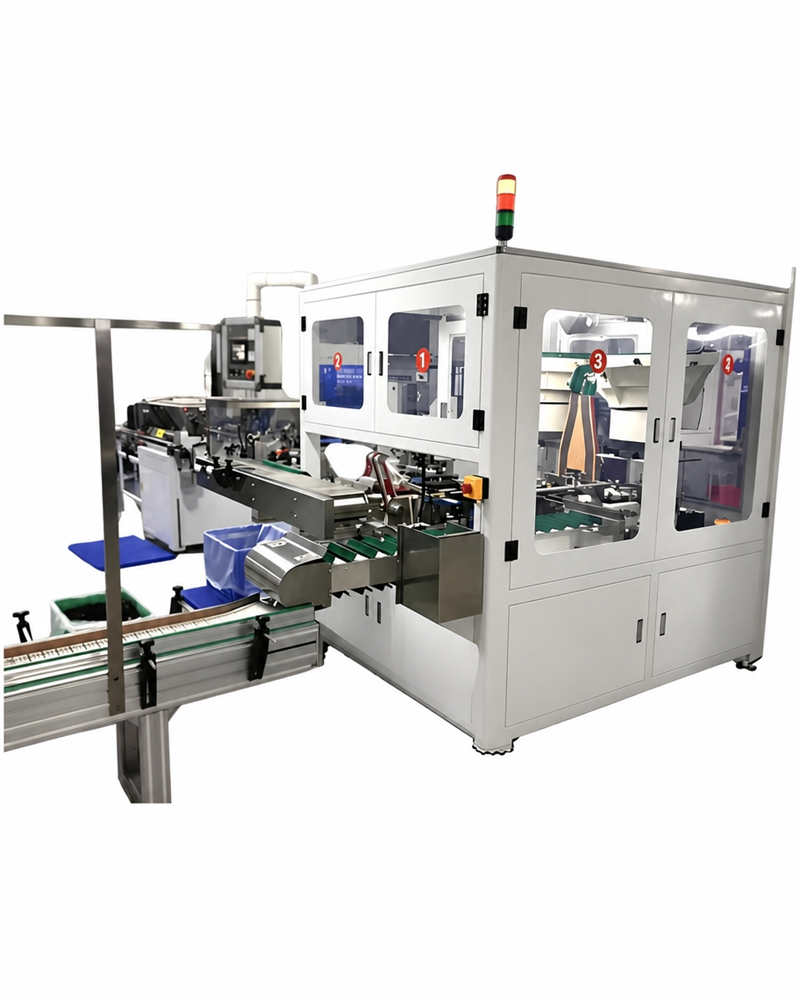
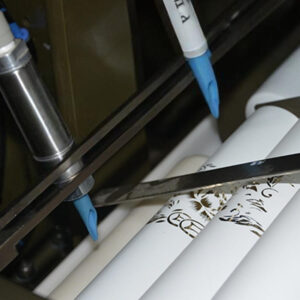
Tube printing is one of the highest-leverage decisions in cosmetic and pharmaceutical packaging — and one of the most underestimated sources of preventable loss. A single ink formulation error, a skipped surface treatment step, or a miscommunicated equipment specification can trigger adhesion failures across an entire production batch, pharmaceutical labeling rejections, or client contract reviews that take months to resolve.
El mercado mundial de envases de tubos para cosméticos alcanzó 3.9 mil millones de dólares en 2024 and is projected to grow at 7.2% CAGR through 2034, driven by premiumization in skincare and tightening traceability requirements in pharmaceutical packaging. In that environment, the manufacturers, distributors, and agents who build consistently defect-free tube printing operations do not win on luck — they win because they have systematically eliminated the mistakes that their competitors keep making.
This guide identifies the 10 most costly tube printing mistakes, explains exactly why they happen and what they cost, and gives you specific, production-tested protocols to eliminate each one permanently.

Mistake #1: Choosing the Wrong Ink Type for Your Tube Material
Why ink selection makes or breaks your printing success
Every tube substrate — whether it is LDPE (Low-Density Polyethylene — the most common material for cosmetic squeeze tubes), PP (Polypropylene), ABL (Aluminum Barrier Laminate — a multi-layer tube with aluminum foil core, used in pharmaceutical and premium cosmetic packaging), or PBL (Plastic Barrier Laminate — an all-plastic laminated alternative to ABL) — has a specific surface energy that determines which ink systems will bond to it durably.
Using an ink formulated for one substrate on a different substrate produces adhesion failures that often do not appear during production. They appear 30 days later, when an accelerated aging test reveals peeling under refrigerated storage conditions, or when a shipment arrives at your client’s warehouse and 8% of tubes fail incoming inspection.
The financial exposure is real: a batch rejection on a 200,000-unit pharmaceutical run at a blended tube cost of $0.40 per unit represents $80,000 in direct material loss — before penalty clauses, investigation costs, or contract review implications.
The consequences of ink-substrate mismatches
Untreated extruded PE tubes have a surface energy of approximately 32–34 mN/m. Standard UV-curable offset inks require a minimum of 38–44 mN/m for adequate adhesion. Without corona pre-treatment (a high-voltage electrical surface activation process that raises surface energy) to bring the tube surface to that threshold, the ASTM D3359 cross-hatch tape adhesion test — the industry-standard measure for ink adhesion — produces a rating of 2B or worse. Pharmaceutical buyers universally require 5B (zero ink loss on tape pull) for regulated packaging.
Consequences of ink-substrate mismatch include: peeling and flaking during shipping and handling, color fading that damages brand perception, regulatory compliance failures in pharmaceutical packaging, and increased waste and reprinting costs that accumulate invisibly across production months.
How to select the right ink for your specific tube material
| Tube Substrate | Surface Energy (Untreated) | Pre-Treatment Required | Recommended Ink System |
|---|---|---|---|
| Extruded PE/LDPE | 32–34 mN/m | Corona to ≥44 mN/m | UV-curable offset or screen |
| PP | 30–32 mN/m | Corona or flame to ≥44 mN/m | UV-curable offset; primer for digital |
| PBL | 33–36 mN/m | Corona + UV primer for digital | UV-curable offset, screen, or digital |
| ABL | 36–40 mN/m (lacquer coat) | Typically none for offset | UV-curable offset or screen |
| Tubo de aluminio | 42–48 mN/m (lacquer base) | Capa base de laca estándar | Dry offset UV (dominant in pharma) |
Source: Industry substrate compatibility benchmarks, 2025.
Conduct compatibility testing before full production runs. Work with your ink supplier to verify formulations are approved for your specific substrate — not a generic substrate of the same material family. Document every successful ink-substrate combination in a controlled specification record. For pharmaceutical tubes, ensure the ink supplier provides a migration test report confirming that ink components do not migrate into tube contents above regulatory limits (typically < 10 ppb for CMR substances under EU Regulation 10/2011).
Mistake #2: Failing to Properly Prepare Tube Surfaces Before Printing
Surface preparation is your foundation for print quality
Even the correct ink applied to the correct substrate fails if the surface is not properly prepared. This is the mistake that catches manufacturers who have been running the same tube type for years without incident — until a new raw material lot with slightly different surface characteristics produces a batch of tubes where the ink lifts clean off at 30-day aging.
For pharmaceutical tubes, the regulatory and commercial stakes are compounded: the FDA and EU GMP frameworks require that packaging maintain its labeling integrity throughout the product’s shelf life. A tube whose ink adhesion fails after six months does not just create a cosmetic (pun unavoidable) problem — it triggers a labeling integrity non-conformance that requires investigation, CAPA (Corrective and Preventive Action), and potentially a batch recall review.
Common surface preparation failures that cost you money
The four most common surface preparation failures are: dust, oils, and residue left from the tube manufacturing process (mold release agents on injection-molded shoulders are a particularly persistent contaminant); inadequate corona or plasma treatment on plastic tubes (corona discharge strength must be verified, not assumed from last week’s calibration); inconsistent surface tension across a production batch due to aging corona treater electrodes; and moisture or condensation on aluminum tubes stored in environments with humidity swings.
Corona treatment effectiveness also has a shelf life. A PE tube treated to 44 mN/m and left unstacked for 48–72 hours loses approximately 4–6 mN/m of surface energy through surface re-orientation — dropping below the minimum threshold for reliable ink adhesion. This means production scheduling matters: corona-treated tubes should move to printing within the same shift whenever possible.
The surface preparation process that ensures success
A validated surface preparation protocol requires: implementing pre-printing cleaning stations that remove manufacturing residue using IPA (isopropyl alcohol) wipe stations or ionized air blowoffs; using calibrated corona discharge or plasma treatment equipment with real-time surface energy monitoring (dyne test fluid verification before each production run); verifying surface tension measurements with dyne test fluids at the start of every run and after every two hours of production; controlling environmental humidity to prevent moisture condensation, particularly on aluminum tubes in air-conditioned facilities where temperature differences create condensation risk; and scheduling regular maintenance of corona treater electrodes — electrode gap drift of as little as 0.5 mm produces measurable treatment inconsistency.
Mistake #3: Over-Printing and Creating Registration Problems
Why printing too much ink undermines your professional appearance
Over-printing — applying excess ink volume per impression or allowing ink to bleed beyond design boundaries — is particularly destructive on curved tube surfaces where ink spreading behavior differs from flat substrates. On a 35 mm diameter PE tube rotating under a printing station, excess ink follows the curve rather than setting in place, causing edge-bleed that makes fine text look fuzzy and multi-color designs appear misregistered.
Registration misalignment — where successive color layers do not align precisely — is the most visible over-printing consequence. On a 5-color design, misregistration of just 0.5 mm between the white base coat and the key color layer makes text unreadable and brand colors appear muddy rather than crisp. For pharmaceutical tubes, regulatory text that is unreadable or partially overlapping fails legibility standards and triggers regulatory non-conformances.
How over-printing damages your cosmetic and pharmaceutical packaging
Excess ink bleeds beyond design boundaries. Multi-color prints become misaligned and look unprofessional. Ink transfer occurs during stacking and shipping, leaving ink offsets on adjacent tubes. Drying and curing times extend, slowing your production timeline. Regulatory labels become illegible or incomplete — a direct compliance failure for pharmaceutical tubes under FDA cosmetic labeling requirements.
The precise approach to ink application and registration control
Calibrate your printing equipment to manufacturer specifications before every production run — not just after failures. Use test prints to establish the optimal ink density (measured as Solid Ink Density, or SID — a densitometric measurement of ink coverage on a solid 100% patch) for your specific design and substrate. Acceptable SID ranges for standard cosmetic offset printing: Black 1.65–1.75, Cyan 1.35–1.45, Magenta 1.45–1.55, Yellow 1.30–1.40.
Implement registration marks on every production run and measure color-to-color misregistration at startup and every 5,000 impressions. On a premium automated press, registration tolerance should be ≤0.2 mm for offset and ≤0.3 mm for screen printing. Monitor ink viscosity at two-hour intervals and adjust for ambient temperature changes — a 5°C rise in workshop temperature reduces UV ink viscosity by approximately 8–12%, which directly affects dot spread and effective registration.
Train operators to recognize and correct registration drift immediately — not at end-of-shift. A registration drift of 0.15 mm over the course of a 2-hour production block produces approximately 3,000–4,000 tubes with progressively worsening misregistration before the issue is caught.
Mistake #4: Under-Printing and Compromising Brand Visibility
Light, faded printing signals poor quality to your customers
Under-printing — insufficient ink density that produces washed-out colors and low-contrast text — is the mirror image of over-printing but equally damaging. A premium face serum tube with a faded logo and barely legible ingredient text does not just fail quality inspection. It signals to the consumer that the brand inside the tube does not take its own product seriously. In a pharmacy aisle where your tube sits next to competitors with saturated, precise print quality, that perception gap translates directly into lost sales.
The brand equity damage is measurable. Research on cosmetic packaging perception confirms that color consistency and print vibrancy are primary drivers of consumer willingness to pay premium prices — with perceptible print quality degradation reducing willingness to pay by 15–20% even when the formula is identical. For a brand charging $45 for a 50ml serum, that is a $6.75–$9.00 per-unit impact from a printing decision.
Why under-printing damages your brand equity and sales
Regulatory text becomes non-compliant: FDA 21 CFR Part 701 (for cosmetics) and pharmaceutical labeling regulations require that mandatory information be legible and conspicuous. A tube where SID falls below 0.80 (roughly 50% of target density) fails legibility requirements for 6-point type at the reading distances specified in labeling regulations. Pharmaceutical packaging that fails legibility inspection triggers incoming rejection. Cosmetic brands receive chargebacks from retailers for non-compliant labeling. Brand logos lose visual recognition impact. Customers question product authenticity when packaging quality varies batch to batch.
How to achieve consistent, vibrant color saturation across all tubes
Establish baseline ink density standards specific to your design and substrate, documented in a press specification card that operators reference at setup and during the run. Use spectrophotometric color management — an X-Rite, Konica Minolta, or equivalent spectrophotometer — to measure ΔE (Delta-E, a perceptual color difference metric where ΔE < 1.0 is imperceptible and ΔE > 3.0 is visibly different and typically requires reprinting) against your approved color standard every 5,000 impressions. Conduct regular color matching against approved brand standards using physical tube color reference archives, not screen-based comparisons (monitor gamut does not replicate ink-on-substrate color behavior). Invest in quality control measuring equipment and train your team to identify under-printed tubes before they enter the packaging line — post-fill detection is far more expensive than pre-fill rejection.
Mistake #5: Neglecting Equipment Maintenance and Calibration
Your printing equipment requires consistent attention to maintain quality
This mistake is the one manufacturers rationalize most confidently — until the machine fails at 11 PM before a pharmaceutical delivery deadline. Deferred maintenance does not eliminate the failure; it reschedules it to the most inconvenient possible moment and amplifies the cost by converting a planned repair into an emergency one.
The average manufacturer experiences 800 hours of equipment downtime per year — more than two hours of lost production every single day. For a tube printing line producing 80 tubes per minute at a $0.40 blended revenue yield, two hours of unplanned downtime costs $3,840 in lost output per incident. Multiply by the failure frequency of under-maintained equipment (industry data shows 4–6 unplanned events per month for poorly maintained lines) and the annual downtime cost reaches $184,320–$276,480 — for a machine whose entire maintenance budget, properly executed, would cost $4,000–$8,000 per year.
The hidden costs of deferred maintenance and calibration neglect
Increased defect rates that require reprinting accumulate silently: a UV lamp operating at 80% of its rated curing energy produces under-cured ink that passes visual inspection but fails tape adhesion at 30-day aging. Unplanned equipment failures halt production and trigger expedite costs. Gradual quality degradation that clients notice before you do creates trust erosion that is difficult to reverse. Higher ink consumption results from misaligned printing stations compensating with higher ink delivery. Compliance issues arise when pharmaceutical packaging falls below documentation standards during an audit.
Your preventive maintenance roadmap for reliable, consistent printing
| Frecuencia | Task | Por qué es importante |
|---|---|---|
| Daily (pre-production) | Inspect print heads, registration marks, UV lamp output | Catches drift before production starts |
| Daily | Record SID and ΔE measurements on startup test print | Establishes baseline; detects calibration shift |
| Weekly | Clean and calibrate print heads and registration systems | Prevents ink buildup that causes streaking |
| Weekly | Inspect squeegee blades (screen), check blade edge condition | Worn blades cause uneven ink deposit |
| Monthly | Deep maintenance on ink delivery systems, nozzle inspections | Prevents clog-driven downtime |
| Monthly | Measure UV lamp intensity (mW/cm²); replace at <75% rated output | Under-cured ink fails adhesion at aging |
| Quarterly | Professional equipment servicing with qualified technicians | Catches mechanical wear invisible in daily checks |
| Quarterly | Full registration calibration across all color stations | Compensates for accumulated mechanical wear |
Stock critical replacement parts — UV lamps, squeegee blades, screen mesh, bearing sets — in sufficient quantity to support immediate repair without a multi-day parts delivery wait. Maintain detailed maintenance logs for every machine: the pattern of recurring issues in a maintenance log is the earliest diagnostic indicator of a failing component, often visible weeks before the component causes a production failure.

Mistake #6: Ignoring Environmental Factors That Affect Print Quality
Temperature, humidity, and air quality directly impact your results
A tube printing workshop that is not climate-controlled is not a controlled production environment — it is a variable that your operators are compensating for manually, batch by batch, often without realizing it. The consequences are baked into your defect rate and your color consistency metrics as unexplained variance that no amount of ink adjustment will permanently resolve.
Here is the specific mechanism: UV ink viscosity decreases by approximately 8–12% per 5°C increase in ambient temperature. A Southeast Asian production facility where morning temperature is 22°C and afternoon temperature reaches 32°C is running two different effective ink viscosities across the same shift — producing measurably different dot spread, ink film thickness, and color density on morning-run versus afternoon-run tubes from the same job. Clients who combine the two sub-batches for the same product find color inconsistency that fails their ΔE ≤ 2.0 brand specification.
How environmental conditions undermine your printing precision
Temperature fluctuations cause substrate expansion and contraction, particularly on LDPE tubes which have thermal expansion coefficients of approximately 150–200 μm/m°C — far higher than the steel mandrels holding them during printing, creating dimensional inconsistency that directly affects registration accuracy. Humidity variations above 60% RH in screen printing environments cause screen mesh to absorb moisture, subtly changing mesh tension and ink flow behavior. Static electricity in low-humidity environments (below 40% RH) causes tube surfaces to attract airborne dust immediately post-corona treatment, contaminating the surface before ink application. Dust and particles contaminate printing surfaces during production. Air circulation issues lead to inconsistent UV ink curing across the tube surface.
Creating a controlled environment that guarantees consistent results
Maintain workshop temperature between 20–24°C (68–75°F) for optimal ink and substrate behavior. Control humidity between 45–55% RH — below 45% increases static electricity and dust adhesion risk; above 55% causes moisture absorption that affects ink viscosity and screen mesh behavior. Install air filtration with HEPA (High-Efficiency Particulate Air) filtration rated for particle sizes down to 0.3 μm to eliminate dust contamination on corona-treated tube surfaces. Use anti-static flooring and equipment grounding to prevent electrostatic discharge (ESD) that causes ink transfer artifacts and registration shifts. Install real-time temperature and humidity data loggers at the printing station level (not just at door-mounted room sensors, which do not reflect localized conditions near heat-emitting UV curing stations). Adjust production scheduling when environmental control is inadequate — running UV-curable screen printing jobs during peak afternoon heat without ink viscosity compensation is a decision with predictable quality consequences.
Mistake #7: Using Incorrect Printing Techniques for Curved Tube Surfaces
Tubes present unique printing challenges that demand specialized approaches
A tube is not a flat label substrate. It is a cylinder whose printing surface is at a continuously changing angle relative to a fixed print head — and that geometric reality demands fundamentally different printing equipment, fixture design, and speed-pressure calibration than flat-surface printing. Manufacturers who run flat-surface printing equipment on tube substrates, or who apply flat-surface printing parameters to tube-configured equipment, absorb quality losses that they often attribute to ink or substrate problems — when the root cause is geometric mismatch.
The key mechanical challenge is that on a flat surface, every point on the substrate passes at the same distance from the print head. On a tube, the printing station must maintain consistent contact pressure across a rotating cylinder, which requires either a flexible print blanket that conforms to the curve (as in dry offset printing) or a rotary screen that follows the tube circumference (as in rotary screen printing). Using a flat squeegee on a curved tube in screen printing without proper pressure compensation produces variable ink film thickness — thick at the contact apex, thin at the edges — which creates visible color density gradients across the tube circumference.
Why standard printing methods do not work for tube substrates
Curved surfaces create variable distances between print head and substrate in flat-bed configurations. Ink application becomes uneven across the tube circumference. Multi-color registration becomes extremely difficult without rotary mandrel transport. Fine details and small text become distorted or illegible. Pressure and speed require adjustment for each tube diameter and wall thickness — parameters that must be re-established for each new tube format, not assumed from the previous job.
The specialized techniques that deliver professional results on tubes
Use dry offset or rotary screen printing equipment specifically engineered for cylindrical tube substrates, not adapted from flat-surface press configurations. Implement servo-driven mandrel transport systems that maintain consistent tube rotation speed (within ±0.5% of set point) throughout the printing cycle — speed variation directly affects ink transfer uniformity. Employ rotary printing methods that follow the tube’s circular path: a rubber blanket in offset printing or a rotary screen cylinder in screen printing provides the pressure-conforming contact that cylindrical substrates require. Test print speeds specific to your tube diameter and wall thickness — a 25 mm diameter tube requires different rotational speed than a 50 mm tube to maintain equivalent ink transfer velocity. Use mandrel fixtures that hold tubes securely without deforming thin-wall sections (below 0.3 mm PE wall is particularly vulnerable to fixture pressure deformation that creates registration errors). Verify that your equipment supplier has demonstrated tube-specific printing — not just claimed it.
Mistake #8: Skipping Quality Control and Inspection Protocols
Without rigorous inspection, defects reach your customers
The most expensive quality control failure is not the one you catch in your facility — it is the one you do not catch, that your client catches for you. A pharmaceutical client’s incoming inspection team that rejects a delivery of 150,000 tubes for print quality failures does not just send the tubes back. They issue a supplier non-conformance report, trigger a quality system investigation, place your account under enhanced monitoring, and — if the failure is repeated — open a preferred supplier list review that can end a long-term contract.
Industry data from digital printing quality analysis studies shows that machine-related print defects consistently contribute 40–50% of total reject causes, with average reject rates of 2–3% per production run on inadequately controlled lines. On a 200,000-tube monthly production volume at $0.40 per tube, a 2.5% defect rate represents $2,000 per month in direct material waste — before investigation costs, reprinting, or client penalty clauses.
Automated inspection systems that catch defects at the printing station — before tubes enter the filling line — prevent the far more costly scenario: discovering print failures on filled, sealed, and labeled product that must be scrapped at its full value.
Your comprehensive quality control system for zero-defect production
Implement automated vision inspection equipment at the exit of the printing station that inspects 100% of tubes for ink coverage, registration accuracy, and text legibility. Define specific accept/reject criteria documented in the product specification: ΔE ≤ 2.0 for cosmetic brand colors; ΔE ≤ 1.5 for pharmaceutical labeling critical colors; registration misalignment ≤ 0.2 mm for offset, ≤ 0.3 mm for screen; ASTM D3359 adhesion rating ≥ 4B for cosmetics, 5B for pharmaceutical applications.
Establish color matching standards using physical reference tube archives — approved color standards from a validated production run, stored under controlled conditions (20°C, away from UV light exposure) — not screen color comparisons. Perform SPC (Statistical Process Control — the use of control charts to monitor production parameters in real time and detect process shifts before they produce defects) sampling throughout production runs, with control limits set at ±2σ from the approved mean and action limits at ±3σ. Document all quality metrics and maintain traceability records linking each production sub-batch to its ink lot, substrate lot, machine settings, operator, and environmental conditions at print time — a documentation standard required for pharmaceutical GMP compliance and increasingly expected by premium cosmetic retailers.
Mistake #9: Failing to Account for Ink Drying and Curing Times
Premature handling and packaging ruins your finished product
UV-curable inks — the standard ink system for modern cosmetic and pharmaceutical tube printing — cure instantly when exposed to UV radiation of the correct wavelength and intensity. That statement is true under ideal conditions with a properly maintained lamp at rated output. It is not true when the UV lamp has degraded to 70% of its rated intensity, when production speed is running 15% above the speed used for UV cure characterization, or when the tube substrate has a slightly higher UV reflectivity than the substrate used in the curing validation — all conditions that occur regularly on production floors where curing system performance is not continuously monitored.
Under-cured UV ink on a tube surface has a waxy, slightly tacky surface film that is invisible to visual inspection at production speed. It passes the operator’s fingernail test at the printing station. It fails the tape adhesion test 24 hours later. And if it reaches stacking and boxing before that failure is detected, it transfers to adjacent tubes and packaging materials in a pattern that the client’s incoming inspection department describes as “smearing consistent with premature packaging after incomplete cure.”
How inadequate curing time creates post-production problems
Ink transfers to packaging materials during boxing — a failure mode that is impossible to remediate once tubes are boxed and shipped. Tubes stick together or to packaging surfaces. Color appears streaked or uneven under different lighting conditions (a classic indicator of partial cure, where cured surface refracts light differently from uncured sub-surface ink). Pharmaceutical labeling becomes illegible or damaged when tubes are separated from packaging materials they have adhered to. Stacked tubes smudge against each other during transit, producing an aesthetic defect that pharmaceutical and premium cosmetic clients refuse to accept.
The drying protocol that ensures ink sets perfectly every time
For UV-curable inks: measure UV cure lamp intensity (in mW/cm²) at production startup and every two hours of production using a calibrated UV radiometer. Replace lamps when output falls below 75% of rated intensity — this is the threshold at which under-cure risk begins under normal production conditions. Validate the curing system at your maximum production speed on your lowest-reflectivity substrate (typically black ink on dark-colored PE tubes, which absorbs UV rather than reflecting it back into the ink layer).
Establish a documented speed-to-cure relationship for each substrate and ink combination: the maximum line speed at which complete cure is achieved at the lamp’s current output. This relationship changes as the lamp ages — monthly measurement allows the maximum speed to be adjusted before under-cure events occur rather than after. Implement conveyor tube spacing at the exit of the curing station that ensures no tube-to-tube contact for a minimum of 30 seconds post-cure — even fully cured UV inks benefit from brief air-cooling before stacking. Test ink adhesion (ASTM D3359) from samples pulled at production speed before approving tubes for packaging operations.
Mistake #10: Not Communicating Specifications Clearly With Your Equipment Supplier
Misaligned expectations between you and your supplier create ongoing problems
The most preventable category of tube printing failure is also the most expensive in the long run: purchasing equipment that cannot actually fulfill your production requirements because the specification conversation with your supplier was incomplete, vague, or one-sided.
A pharmaceutical contract packager who tells a machine supplier “we print pharmaceutical tubes” without specifying tube diameter range (16–60 mm?), substrate types (PE? ABL? aluminum?), number of colors (2? 6?), regulatory documentation requirements (IQ/OQ/PQ protocols? 21 CFR Part 11 data logging?), and downstream integration requirements (filling machine throughput, cleanroom compatibility), ends up with a machine that was designed for a production reality that does not match theirs.
The downstream cost of this misalignment is not the purchase price difference between adequate and inadequate equipment. It is the operating cost, production limitation, and compliance gap accumulated over the 10–15 year lifetime of the machine — costs that a thorough pre-purchase specification conversation would have prevented entirely.
How specification gaps undermine your printing investment
Equipment lacks features needed for your specific tube types — a 4-color press acquired for a brand that launches a 6-color product 18 months later. The supplier does not understand your pharmaceutical GMP documentation requirements — IQ/OQ documentation packages take months to retrofit and cost $15,000–$40,000 to commission after installation. Training and support fall short of your operational needs, leaving operators without the procedural knowledge to resolve common fault conditions. Future upgrades or modifications become technically or commercially impossible. You end up with machinery that does not solve your actual production problems and requires replacement capital before it has been amortized.
The specification conversation that ensures you get the right equipment
Clearly define tube materials, sizes (diameter and length range), wall thicknesses, and monthly production volumes — not just your current volume but your 24-month growth scenario. Specify regulatory requirements explicitly: pharmaceutical applications under FDA 21 CFR or EU GMP? Cosmetic GMP? What documentation format does your pharmaceutical client require for supplier qualification?
Communicate your color accuracy and registration tolerance requirements in measurable terms: ΔE ≤ 2.0 for cosmetic, ΔE ≤ 1.5 for pharma; registration ≤ 0.2 mm. Discuss your current workshop’s environmental conditions and any physical constraints (ceiling height, floor loading, door width, compressed air supply capacity, electrical supply specification). Request equipment demonstrations with your actual substrates — not the supplier’s standard demo tubes. Ensure the supplier understands your growth trajectory and specify the machine’s upgrade path for additional color stations or higher throughput configurations.
Document all specifications in writing before purchase. The written specification is your production insurance policy: it establishes what the machine was purchased to achieve and provides the basis for performance remediation if those specifications are not met.
Miyoda Packaging Machinery provides structured pre-purchase specification consultations as a standard part of the equipment evaluation process — mapping tube format range, substrate mix, production volume, regulatory documentation requirements, and downstream integration parameters before a machine recommendation is made. This approach is why their installations in cosmetic and pharmaceutical facilities across Asia, Europe, and the Americas consistently meet production requirements from day one rather than requiring post-installation modifications.
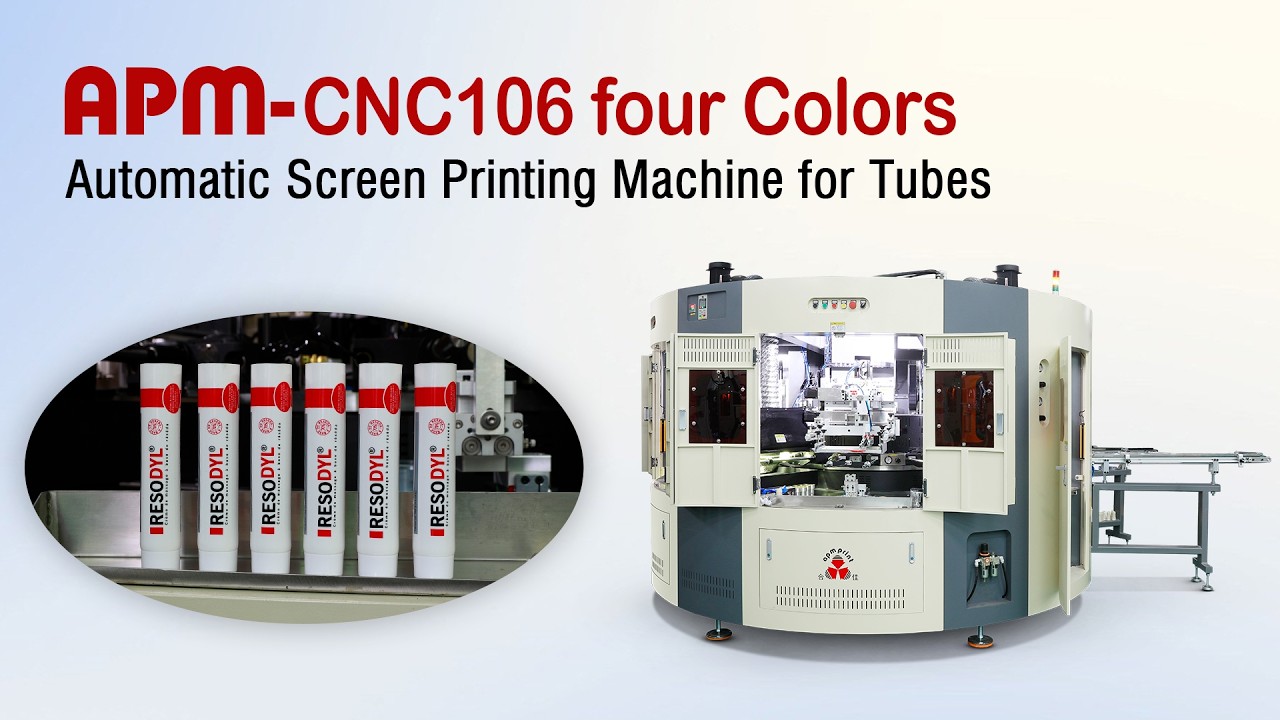
Watch: High-Speed Automatic Screen Printing on Cosmetic Tubes
See the precision, throughput, and multi-color registration of automated tube screen printing in production — the output quality that correct technique, proper surface preparation, and well-maintained equipment produces.
The Bottom Line: What These Mistakes Cost — And What Prevention Is Worth
Tube printing defects are not isolated production events. They cascade. An under-cured tube that adheres to packaging material generates a customer complaint. That complaint triggers an incoming inspection audit. The audit produces a non-conformance report. The non-conformance report triggers a CAPA requirement. The CAPA process consumes quality engineering hours, production investigation time, and potentially a hold on shipments while the root cause is documented and corrected.
For pharmaceutical manufacturers, that cascade can also include a regulatory authority notification and an inspection that covers the entire packaging quality system — not just the single batch that triggered the original complaint.
The ten mistakes documented in this guide share a common preventive logic: correct equipment selection and configuration, validated production protocols, consistent environmental controls, and thorough specification documentation. None of these are expensive in the absolute sense. The fully implemented preventive program for a mid-volume cosmetic or pharmaceutical tube printing operation — proper ink-substrate qualification, corona treatment monitoring, environmental controls, maintenance scheduling, inline inspection, and curing system monitoring — costs approximately $8,000–$20,000 per year in materials, calibration equipment, and labor.
The cost of not implementing it? Industry case study data from cosmetic tube operations documents batch rejection events averaging $25,000–$80,000 per incident in direct material loss alone, plus investigation, reprinting, and client relationship costs that can reach $150,000–$300,000 per significant quality event. The prevention economics are unambiguous.
Ready to Eliminate These Tube Printing Problems?
Your cosmetic and pharmaceutical packaging deserves equipment and expertise that delivers consistent, professional results — from the first production run and every run after it.
Whether you are a manufacturer looking to upgrade your printing capabilities, a distributor helping clients navigate equipment selection, or an agent sourcing machinery for a new pharmaceutical packaging operation, the right equipment specification and supplier partnership makes every other part of the production process easier.
📩 Contact Miyoda Packaging Machinery for a Free Consultation
💬 WhatsApp Direct Line: +86 137 7421 4471
Glosario de términos clave
| Término | Definición | Why It Matters in Tube Printing |
|---|---|---|
| ΔE (Delta-E) | A perceptual color difference metric. ΔE < 1.0 is imperceptible; ΔE > 3.0 is visibly different and typically requires reprinting. | The universal language of color accuracy in cosmetic and pharmaceutical packaging specifications. |
| ASTM D3359 | Cross-hatch tape adhesion test standard for measuring ink adhesion to a substrate. Rated 0B (complete failure) to 5B (no adhesion loss). | The test your pharmaceutical client’s incoming inspection team runs on your tube shipment. |
| Tratamiento contra el coronavirus | High-voltage electrical surface activation that raises the surface energy of PE/PP tubes from ~32–34 mN/m to ≥44 mN/m, enabling UV ink adhesion. | Without it, UV offset ink on extruded PE tubes peels within 30-day accelerated aging tests. |
| SID (densidad de tinta sólida) | Densitometric measurement of ink coverage on a 100% solid patch, measured with a spectrophotometer. | Your real-time in-production color control metric — falling SID is the first warning of under-printing. |
| Tinta curable por UV-C | Ink that polymerizes (cross-links) instantly under UV or UV-LED radiation, producing a chemically resistant, scratch-resistant film without solvent evaporation. | Standard for modern tube offset and screen printing. Under-cure failure mode is invisible until tape adhesion test reveals it. |
| ABL (laminado de aluminio con barrera) | Multi-layer tube with aluminum foil core bonded between polyethylene layers. Superior oxygen and moisture barrier performance. | Standard for pharmaceutical ointment tubes and premium skincare serums. Accepts offset UV inks with lacquer base coat without additional corona treatment. |
| PBL (laminado con barrera de plástico) | All-plastic laminated tube using EVOH as barrier layer instead of aluminum foil. More recyclable than ABL in PE recycling streams. | Requires UV-primer corona pre-coat step for digital UV ink adhesion at reliable pass rates. |
| SPC (Control estadístico de procesos) | Use of control charts to monitor production parameters in real time and detect process shifts before they produce defects. Control limits at ±2σ, action limits at ±3σ. | Converts your quality system from reactive (catching defects after they happen) to proactive (detecting drift before defects occur). |
| IQ/OQ/PQ | Installation Qualification / Operational Qualification / Performance Qualification — three-stage equipment validation required for pharmaceutical manufacturing under GMP. | The documentation framework that allows your pharmaceutical client to approve your printing machine as a qualified piece of GMP equipment in their supply chain. |
| CAPA | Corrective and Preventive Action — the formal quality system process for investigating a non-conformance, identifying root cause, correcting the immediate issue, and implementing systemic prevention. | Required by FDA 21 CFR and EU GMP for any significant quality event in pharmaceutical packaging. A customer complaint that triggers a CAPA adds $5,000–$25,000 in investigation and documentation cost per event. |
| Dry Offset Printing | Printing process in which ink transfers from a relief plate to a rubber blanket, then to the tube surface, without water or solvent. UV-curable inks cure instantly under UV or LED-UV lamps. | Achieves registration accuracy of ≤0.1–0.2 mm at speeds of 6,000–12,000 tubes/hour. Dominant method for high-volume cosmetic and pharmaceutical tube decoration. |
| Dyne Level (mN/m) | A measurement of surface energy on a substrate. A minimum of 38–44 mN/m is required for reliable UV ink adhesion on polyethylene tubes. | The single most important incoming QC parameter for tube substrates. Measure it before every production run — do not assume it is correct. |
Preguntas frecuentes
Q1. How do I know if my ink is compatible with my specific tube material?
Request substrate-specific compatibility testing from your ink supplier — not generic compatibility data for “PE tubes” as a category, but test data using samples of your actual tube substrate from your tube manufacturer, because surface energy and additive content vary between tube suppliers even on nominally identical materials. Conduct three standard tests before committing to full production: ASTM D3359 tape adhesion (target ≥ 4B for cosmetic, 5B for pharmaceutical), chemical resistance soak (72 hours at 45°C in your actual formula), and 30-day accelerated aging at 40°C/75% RH. Document every successful ink-substrate combination in a controlled specification record and update it whenever your tube supplier changes raw material batches.
Q2. What is the practical difference between corona and plasma surface treatment for tube printing?
Corona treatment uses a high-voltage electrical discharge between a treater electrode and a ground roll to raise surface energy on plastic tubes — effective, fast, and the industry standard for inline treatment integrated with printing machines. It raises PE surface energy from ~32 mN/m to 44–48 mN/m within 0.5–2 seconds of exposure and costs approximately $0.001–$0.003 per tube to operate. Plasma treatment (also called atmospheric plasma or cold plasma) uses ionized gas to perform a more thorough and chemically deeper surface modification that provides longer-lasting surface energy improvement and better treatment of complex 3D surfaces. Plasma is generally superior for difficult-to-treat materials (certain PP grades, multi-component tube shoulders) and for applications where treated tubes must be stored for
48 hours before printing. The cost premium for plasma is typically 3–5× corona on a per-tube basis. For most inline cosmetic and pharmaceutical tube printing operations, corona treatment is the correct choice; plasma adds value primarily when treatment-to-print delay is unavoidable. Consult Tantec’s adhesion treatment technical guidance for a detailed comparison of the two technologies.
Q3. How often should I calibrate my tube printing equipment?
At minimum: calibrate registration and ink density systems at startup before every production run (15-minute startup check protocol). Perform detailed calibration — full color profile verification against your spectrophotometric reference standard — weekly or whenever you change ink type, tube substrate, or print job. Schedule professional equipment servicing (mechanical calibration, UV lamp intensity verification, servo drive parameter review) quarterly. Adjust calibration whenever ambient temperature changes more than 3°C from your validated baseline — ink viscosity changes at that threshold are sufficient to shift SID measurably. Any time a batch fails ΔE tolerance during production, stop and calibrate before continuing — do not attempt to compensate with ink adjustments without recalibrating first, as compound adjustments accumulate errors.
Q4. What humidity and temperature range is optimal for cosmetic tube printing?
Maintain workshop temperature between 20–24°C (68–75°F) and relative humidity between 45–55% RH for consistent production results. Below 40% RH, static electricity accumulates on LDPE tube surfaces post-corona treatment, attracting airborne dust that contaminates the printing surface within seconds. Above 60% RH, screen mesh absorbs moisture that subtly changes mesh tension and ink flow behavior in screen printing, and extended UV ink drying on uncured surfaces causes inter-tube adhesion if stacking occurs. For facilities that cannot maintain full climate control (common in tropical manufacturing markets), measure and log temperature and humidity at the print station every two hours and adjust ink viscosity correction factors accordingly — and avoid scheduling screen printing jobs with metallic inks during peak afternoon heat without viscosity compensation.
Q5. Can I use the same ink settings and print speed for all tube diameters?
No — and this is a common source of registration problems when production teams switch tube formats without recalibrating. Different tube diameters require different mandrel rotation speeds to maintain equivalent surface velocity (the ink transfer speed at the tube surface, measured in meters per minute). A 50 mm diameter tube rotating at the same RPM as a 25 mm tube has twice the surface speed — producing effectively double the ink transfer rate per revolution and requiring different ink density settings to hit the same SID target. Your equipment supplier should provide a tube-diameter-to-speed conversion table for your specific press configuration. Always run a calibration test print and SID measurement before beginning full production whenever you change tube diameter — even within the same substrate and ink system.
Q6. How long should I wait before stacking and boxing UV-cured tube prints?
Under correct UV curing conditions (lamp at rated output, production speed within the validated cure window for your substrate-ink combination), UV-cured ink is surface-dry and tack-free within 0.1–0.5 seconds of UV exposure. However, full cross-link completion — where the ink film achieves its maximum adhesion and chemical resistance — takes 24–72 hours at ambient temperature. For pharmaceutical packaging and premium cosmetic production: allow a minimum 30-second air-cooling conveyor time before first tube-to-tube contact post-cure; do not box tubes within 2 hours of printing unless your curing validation explicitly supports immediate boxing; and test adhesion (ASTM D3359) on samples pulled from the production line at full run speed before approving any batch for packaging.
Q7. What causes registration problems on curved tube surfaces, and how do I fix them?
The primary causes, ranked by frequency: (1) Mandrel fixture wear — as tube-holding mandrels accumulate wear from repeated loading/unloading cycles, their diameter tolerance increases and tubes sit with slight positional variation, translating directly to registration error; inspect mandrel wear with a calibrated micrometer and replace mandrels when OD exceeds the wear tolerance specified by your machine manufacturer. (2) Servo drive calibration drift — the servo motor controlling mandrel rotation accumulates small positional errors over time that compound into registration misalignment; quarterly servo calibration corrects this. (3) UV lamp heat warping mandrel geometry — extended production runs generate heat in the curing station that can warp mandrel transport components; post-cure dimensional checks detect this. (4) Ink viscosity drift during a long production run in an uncontrolled temperature environment — ink thickens or thins as temperature changes, altering its spread on the curved surface and appearing as systematic registration drift across a batch.
Q8. How do I prevent static electricity from causing print defects and tube-to-tube adhesion?
Static electricity management requires an integrated approach: maintain humidity between 45–55% RH (static accumulation increases exponentially below 40% RH on LDPE surfaces); install ionizing air blowers at the tube infeed position, immediately after corona treatment, to neutralize charge before ink application; use anti-static flooring and ground all equipment, conveyor frames, and tube transport components to a common earth ground; install ionizing bars in the curing station exit zone where UV curing generates electrostatic charge on tube surfaces; and use anti-static tube hoppers and storage racks. Train operators to avoid dragging tubes across surfaces — contact friction on LDPE generates electrostatic charge levels exceeding 5 kV, sufficient to cause visible ink transfer and tube surface contamination.
Q9. What is the best quality inspection approach for pharmaceutical tube printing?
The pharmaceutical standard combines 100% automated inline inspection with statistical batch sampling for destructive testing. Automated vision inspection systems at the print station exit inspect every tube for registration accuracy, color density (via grayscale comparison to reference image), text legibility (character recognition against specified text string), and label position. Accept/reject decisions are made in real time, with rejected tubes diverted without entering the production count. Supplementary statistical sampling for ASTM D3359 tape adhesion (typically 5 tubes per 5,000 printed), ΔE measurement against spectrophotometric color standard (5 tubes per 5,000), and 30-day accelerated aging (30 tubes per batch held until aging results are available before batch release) provides the statistical confidence to support pharmaceutical batch release documentation. All inspection results must be documented in the batch manufacturing record with full traceability to the tube sub-lot, ink lot, and production parameters at the time of printing.
Q10. How do I choose between dry offset printing and screen printing for my tubes?
The decision depends on four factors in combination. Volume: offset wins above 25,000–30,000 tubes per SKU per year due to its speed advantage (6,000–12,000 tubes/hour versus 3,000–5,400 for screen); screen is more economical for 5,000–25,000 units. Design complexity: offset handles CMYK multi-color halftone designs and fine regulatory text at ≤0.2 mm registration; screen is limited to spot colors but deposits a 15–30 μm ink film (versus 3–6 μm for offset) that is the only way to achieve genuinely opaque white base coats or tactile raised-ink effects. Substrate: both methods work on PE, PBL, and ABL with proper surface preparation, but screen’s thicker deposit is mandatory for white base coat over metallic ABL substrates where background show-through would otherwise compromise color accuracy. Special effects: metallic inks, gloss spot UV varnish, and high-build tactile effects all require screen printing. Most premium cosmetic brands at scale use both methods in a hybrid line — offset for the main multi-color artwork, screen for opaque white base coat and specialty effects. Review Miyoda’s offset versus screen printing technology comparison for a structured framework for your specific production profile.
Q11. What documentation must I keep for pharmaceutical tube printing compliance?
At minimum under FDA 21 CFR Part 211.188 and EU GMP Annex 8: a Batch Manufacturing Record (BMR) for each production run containing ink lot numbers, substrate lot number, machine ID, operator ID, production date and time, quantity produced, and quantity rejected with rejection reason; press proof approval sheet with spectrophotometric color measurements (L*a*b* values) signed by your QA representative; in-process SID and ΔE log recorded at minimum every 5,000 impressions; ink safety data sheet and migration test report from your ink supplier; UV lamp intensity log (mW/cm² at setup and every 2 hours); and equipment calibration records showing that the press was in calibration at the time of the production run. For FDA-regulated operations, electronic batch records must meet 21 CFR Part 11 requirements for audit trail, access control, and data integrity.
Q12. How do I transition to a new ink supplier without disrupting production?
Run a formal ink transition protocol: do not switch suppliers based on price alone without completing the full qualification process. The protocol must include: new ink samples provided at your production volume (minimum 50 liters for a meaningful viscosity stability assessment); side-by-side test prints on your actual substrate at your production speed, with SID and ΔE measurements compared against your current ink standard; ASTM D3359 adhesion and 30-day accelerated aging (40°C/75% RH) on new-ink samples; chemical resistance soak in your actual product formula for 72 hours at 45°C; and a parallel production run of minimum 5,000 tubes with new ink before retiring the old ink. Maintain 30-day inventory of your approved existing ink throughout the qualification period. Do not dispose of your current ink approval documentation until the new ink’s approval documentation is complete and filed — your quality system needs the ability to revert to the approved ink if the new ink qualification fails.
Q13. Are there specific regulatory requirements for inks used in pharmaceutical tube printing?
Yes. For pharmaceutical-grade tube printing inks, regulatory requirements operate on two levels: the ink composition itself and the printing process documentation. Ink composition must be declared by your ink supplier in a written composition declaration; any ingredient that is a potential endocrine disruptor, CMR substance (Carcinogenic, Mutagenic, or toxic to Reproduction), or substance subject to migration limits under EU Regulation 10/2011 must be identified with its migration limit. A substrate-specific migration test report (not a generic PE migration study) demonstrating compliance with the relevant migration limit must be available in your qualification file. For US-regulated pharmaceutical packaging, FDA Drug GMP regulations under 21 CFR Parts 210 and 211 require that printed container-closure components are tested and documented for suitability for their intended use — this includes ink adhesion, legibility durability, and any extractables/leachables characterization your pharmaceutical client requires.
Q14. What is the most common cause of color inconsistency across a long production run?
Ink viscosity drift due to temperature increase in the production environment is the primary cause — it accounts for approximately 40–55% of color consistency failures across production runs longer than 4 hours, based on printing industry quality analysis data. UV ink viscosity decreases 8–12% per 5°C temperature rise; in a workshop that warms from 22°C in the morning to 29°C by afternoon, that viscosity change causes measurable dot spread increase, effective SID increase, and color density shift toward over-printing in afternoon-produced tubes versus morning-produced tubes — a systematic bias that manifests as customer complaints about “color differences between batches” even when the batches were from the same production run. Secondary causes: UV lamp aging (reducing cure energy and changing effective ink viscosity through incomplete cure in the ink train); worn squeegee blades in screen printing (inconsistent ink shear); and ink settlement in open ink trays in screen printing (viscosity drift from solvent evaporation). Climate control that maintains ±2°C at the print station eliminates the primary cause entirely.
Q15. How do I evaluate whether my current printing machine is fit for pharmaceutical-grade production?
Conduct a structured machine qualification gap assessment against the requirements of your pharmaceutical client or target market. Evaluate four areas: mechanical capability (can the machine consistently achieve ≤0.2 mm registration at your production speed, over a minimum 2-hour continuous run, verified with actual measurement data — not specification sheet claims?); environmental control (does the machine’s UV curing system have closed-loop intensity monitoring? Is corona treatment output verified per-run?); documentation (can the machine export batch data in a format compatible with 21 CFR Part 11 electronic records requirements? Is the machine covered by IQ/OQ documentation?); and maintenance program (is there a current, executed preventive maintenance schedule on file, with records showing actual completion dates and results?). If your current machine fails on any of these four areas, document the gap, assess the remediation cost versus replacement cost, and consult with your machine supplier about the feasibility of closing the gap through upgrades. Miyoda’s tube sealer and printing machine maintenance guide provides a practical benchmark for what a properly documented pharmaceutical-grade maintenance program should include.