
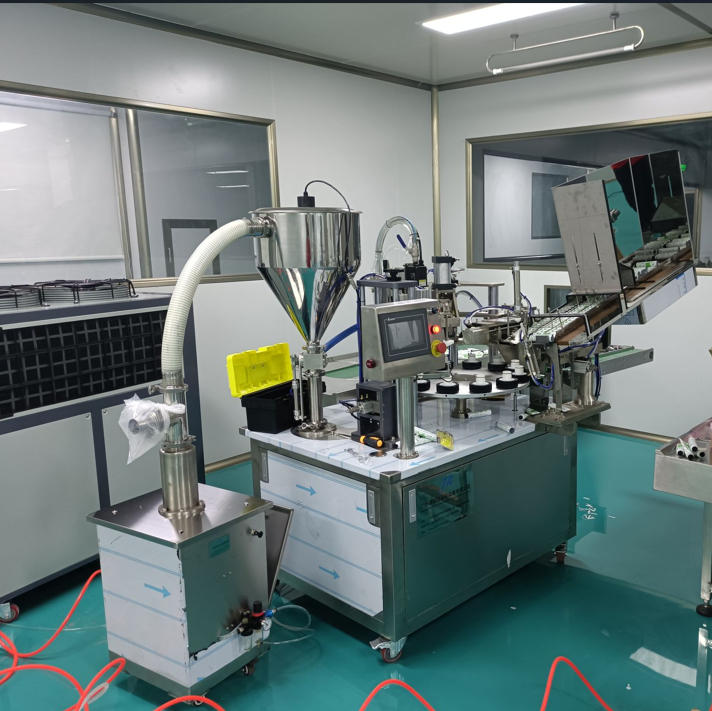
Why Technical Articles Are Your Strategic Decision-Making Tool
Technical articles aren’t sales brochures. When written well, they contain the engineering specifics, validated performance data, and real-world application notes that let you compare machines on the factors that actually matter — not the ones that look impressive in a catalog photo.
Here’s what we hear most often from buyers who’ve made costly machine purchases they later regret:
- High downtime that wasn’t apparent from the spec sheet — but was buried in the maintenance schedule section of the technical article, if only they’d known to look.
- Inconsistent seal quality on certain laminate materials — documented in application notes for that machine type, but not in the sales pitch.
- Scaling bottlenecks that appeared at 70% of rated output — because the “80 tubes per minute” claim was measured under lab conditions, not with the actual fill viscosity they’d be running.
- Compliance gaps that surfaced during a regulatory audit, because no one had checked whether the machine’s stainless steel grades matched GMP specifications for pharmaceutical contact surfaces.
This guide is built specifically for buyers and distributors of soft tube packaging machinery in cosmetic and pharmaceutical markets. Its purpose is straightforward: to show you how to read, use, and extract actionable intelligence from technical documentation before you spend a dollar — so your investment solves specific, real problems rather than just meeting a spec list.

Smart machine selection begins long before the first factory visit — it starts with reading the right documentation, the right way.
Define Your Production Challenges Before Evaluating Machines
The single most common mistake buyers make when evaluating packaging machinery isn’t choosing the wrong machine — it’s evaluating machines before they’ve clearly defined what problem they need to solve.
Before you open a single technical article or request a quote, run through this self-diagnosis. It takes 20 minutes and will save you months of evaluating the wrong solutions.
Are you losing output to slow cycle times or frequent stoppages?
If your line is running below 75% OEE (Overall Equipment Effectiveness), you likely have an automation or maintenance gap — not a speed gap. Buying a faster machine without fixing the root cause won’t solve it.
Are seal failures or fill drift generating QC rejections?
If more than 1.5% of your tubes are being rejected at end-of-line, the issue is almost certainly sealing temperature control or filling system precision. Focus your technical review on those subsystems specifically.
Are you running into regulatory compliance issues?
If you’re serving pharmaceutical clients or exporting to EU/US markets, your machine’s contact surface materials, documentation package, and GMP design must be auditable. This is a non-negotiable filter — not a feature comparison.
Are you managing multiple SKUs across different tube formats?
If you’re switching between 20ml eye cream tubes and 150ml body lotion tubes on the same line, changeover time and format flexibility aren’t just nice features — they’re the primary cost driver in your production economics.
Equally important is being specific about your product. A machine that performs perfectly on a 30mm PE tube running sunscreen at 4,500 cP may struggle with a 22mm ABL (aluminum-barrier laminate) tube filled with a pharmaceutical ointment at 180,000 cP. These are not edge cases — they’re the reality of cosmetic and pharmaceutical soft tube production.
10 Critical Evaluation Criteria for Soft Tube Packaging Machines
Not all performance claims in technical articles carry equal weight. Some are headline numbers that sound impressive but mean little without context. Others are the quiet specifications that determine whether the machine actually works for your production environment.
Here are the 10 criteria that matter most — and what to specifically look for in the technical documentation for each.
- Output speed (tubes per minute) and scalability
Ask for sustained throughput at your fill viscosity and tube diameter — not peak speed under ideal conditions. A machine claiming 120 TPM on a thin facial serum may deliver only 55 TPM on a pharmaceutical ointment. The technical article should specify the conditions under which speed was measured. - Material compatibility (laminate, PE, aluminum composite)
Confirm seal jaw temperature range. ABL tubes typically require 160–180°C; PE tubes seal at 130–150°C. A machine that only covers the lower range cannot reliably seal aluminum-barrier laminates — regardless of what the brochure says. - Dosing accuracy and consistency (critical for pharma compliance)
Look for fill accuracy expressed as a percentage: ±0.5–1% is the standard for regulated pharmaceutical tube production. Automated servo-driven filling systems consistently achieve this; manual or pneumatic piston systems typically run ±2–5%. For a 10,000-unit batch, that difference is measurable in both product cost and regulatory risk. - Sealing integrity and leak prevention mechanisms
The technical article should specify whether the machine uses hot-air sealing, ultrasonic sealing, or jaw-contact (impulse) sealing — and which tube materials each method is validated for. Ultrasonic sealing forms seals in under 2 seconds with 70% better energy efficiency than thermal methods, but requires tube material compatibility confirmation. - Changeover time between product runs
Manual changeover on a standard tube machine takes 60–90 minutes. HMI-guided automated changeover with recipe memory reduces this to 5–20 minutes. For a facility running 8 different SKUs per week, that difference represents 4–7 additional production hours recovered weekly — roughly 8–12% more usable production time. - Automation level (operator dependency, line integration)
Count the operator touchpoints per cycle. Every manual step — hand-loading tubes, manually adjusting parameters, visually inspecting seals — is a variability source and a cost. A fully automated line from Miyoda Packaging Machinery’s tube filling and closing platform can run one operator per line at 60 tubes per minute, compared to 3–4 operators on a semi-manual equivalent. - Maintenance requirements and service accessibility
Check for MTBF (Mean Time Between Failures) data in the technical documentation. World-class packaging lines run 2,000+ hours MTBF on major components. Also confirm: Are spare parts stocked locally or shipped from overseas? Lead times on critical wear components can determine whether a repair takes 4 hours or 4 weeks. - Compliance with GMP, FDA, and ISO standards
Request the declaration of conformity, not just a verbal confirmation. For pharmaceutical applications, confirm ISO 22716 compatibility, CE certification, and that the machine’s IQ/OQ (Installation Qualification/Operational Qualification) protocol package is included as a deliverable — not an optional paid service. - Energy efficiency and total cost of operation
Modern servo-electric machines consume 30–40% less energy than fixed-speed induction motor equivalents. Over a 5-year operating period on a high-volume line, this difference can represent $50,000–$80,000 in energy savings — enough to materially shift the TCO comparison in favor of a higher-priced but more efficient machine. - Vendor support: training, spare parts, remote diagnostics
The machine’s performance after installation depends heavily on the quality of the support behind it. Ask for specific commitments: response time for remote diagnostics, spare parts lead times for top-10 wear components, and whether the technical team who built the machine is the same team who answers your support calls three years later.

Compliance documentation isn’t optional — for pharmaceutical buyers, it’s the foundation of every auditable production process.
Map Machine Features to Your Specific Problem Types
A technical article is most useful when you treat it as a problem-solving filter — not a feature catalog. Here’s how to apply that filter across the three most common production challenges in cosmetic and pharmaceutical tube manufacturing.
Problem: Recurring tube leakage after sealing
What to look for in technical articles: Sealing technology type (ultrasonic vs. hot-air vs. impulse jaw), seal pressure control method (servo-driven vs. pneumatic), and whether the machine includes inline leak testing (pressure decay or vacuum). A machine with PID-controlled sealing temperature and 100% inline pressure decay testing eliminates escaping defects — a machine without it relies on statistical sampling, which will always let some failures through.
Problem: Managing multiple tube sizes and formats
What to look for in technical articles: Modular tooling design and HMI recipe storage. A machine that requires disassembly and re-tooling for every format change locks you into longer changeover windows. Look for quick-change mandrel systems covering your full tube diameter range — ideally 16mm to 60mm on a single platform — with documented changeover validation in the application notes.
Problem: Producing sterile or regulated pharmaceutical tubes
What to look for in technical articles: Cleanroom compatibility rating (ISO 5–7), contact surface material certificates (316L stainless steel for pharmaceutical, 304 for cosmetic), and an IQ/OQ documentation package. For US market access, confirm FDA 21 CFR Part 211 alignment. For EU, check GMP Annex 15 equipment qualification requirements are explicitly addressed in the machine documentation.
The soft tube production troubleshooting guide from Miyoda Packaging Machinery documents the six most costly production issues in cosmetic and pharmaceutical tube manufacturing — with root cause analysis that maps directly to the machine features responsible. It’s a useful reference for translating your production pain points into specific equipment specification requirements before you start your comparison.
A Simple 4-Step Comparison Framework
Most machine comparisons fail because they start at the wrong level — comparing feature lists side by side before the buyer has defined what problem they’re solving. This framework reverses that sequence.
Step 1 — Problem Prioritization
Write down your top 3 operational challenges in plain language. Not “we need better throughput” — but “we’re running 52 sustained tubes per minute when our target is 75, and our rejection rate is running at 2.1% on our ABL tube line.” Specificity at this stage determines the quality of the entire evaluation that follows.
Step 2 — Feature Filtering
Use technical articles to shortlist only machines whose documented features directly address your 3 prioritized problems. If changeover time is problem #1, immediately eliminate any machine that doesn’t provide documented changeover time data for your specific tube format range. This step typically reduces a long list of 8–12 candidates to 3–4 worth deeper evaluation.
Step 3 — Side-by-Side Scoring
Rate each shortlisted machine 1–5 on the 10 evaluation criteria above. Weight the criteria by their relevance to your prioritized problems — if dosing accuracy is your #1 concern, weight it 3x. If energy efficiency is a secondary concern, weight it 1x. This produces a weighted score that reflects your actual operational priorities, not an averaged list where every criterion carries equal importance.
Step 4 — Total Value Assessment
Compare the 5-year TCO (Total Cost of Ownership) of each finalist — not just the purchase price. Factor in energy cost differences, labor requirement differences, projected maintenance costs based on MTBF data, and the financial value of improved uptime and reduced rejection rates. A machine that costs $30,000 more to purchase but delivers $90,000 in operational savings over 5 years has a net value of $60,000 over its cheaper competitor.

A structured comparison framework turns a confusing equipment evaluation into a clear, defensible investment decision.
To build this comparison properly, the tube filling machine buyer’s guide for pharmaceutical and cosmetic manufacturers provides a complete specification framework covering fill system selection, compliance documentation requirements, and TCO calculation methodology — designed specifically for this type of side-by-side evaluation.
Use Technical Articles to Uncover Hidden Operational Risks
The most useful information in a technical article is often what isn’t stated prominently. Learning to read between the lines — to identify what conditions a performance claim depends on, and what risks a specification glosses over — is the skill that separates buyers who make confident investments from those who spend the first year of ownership discovering what the brochure didn’t mention.
Here are the most common hidden risks in soft tube machine technical documentation, and where to find them:
The “premium material required” footnote: A high-speed machine claiming 120 TPM may specify — in a small footnote — that this speed is only achievable with “premium-grade laminate film with minimum 35μm barrier layer thickness.” If your current laminate spec is a standard 25μm grade, you’re either running slower than advertised or upgrading your material supply chain. Both have cost implications that need to be factored into your TCO before purchase.
Vague maintenance schedules: A technical article that says “regular preventive maintenance required” without specifying intervals, procedures, and expected consumable costs is hiding information you need. Ask for the actual preventive maintenance schedule document. Seal jaws, filling nozzle tips, and conveyor belts all have finite service lives. If the article doesn’t specify them, request the data directly — a transparent supplier will provide it.
Missing validation documentation: For pharmaceutical applications, a machine without an available IQ/OQ protocol package means you’ll be commissioning your own validation from scratch — a process that typically costs $15,000–$30,000 and delays production start by 6–10 weeks. This is not a detail to discover after the purchase order is signed.
⚠️ Red Flag Checklist: If a technical article contains any of the following, treat it as a signal that deeper questioning is needed before proceeding:
- Speed or accuracy claims with no specified test conditions
- GMP or FDA compliance “suitability” language rather than certification documentation
- Maintenance intervals listed as “as needed” rather than defined schedules
- No case study or application note data from the cosmetic or pharmaceutical sector specifically
- Customer references available only “upon request” but never provided when requested
The tube filling production line failure case studies published by Miyoda Packaging Machinery document the direct financial impact of the most common seal and quality failures — including cases where failures reached retail before detection. Reading these before your evaluation gives you a concrete picture of the production and financial consequences of getting the sealing and quality systems specification wrong.
Use Technical Data to Negotiate with Suppliers
The buyer who walks into a machine negotiation armed with specific, technical questions derived from published documentation is in a fundamentally different position than the buyer who asks “what’s your best price?” Technical specificity signals seriousness, establishes credibility, and gives you the leverage to demand concrete, verifiable answers rather than reassuring generalities.
Here are the evidence-based questions that extract real information — and the answers that tell you whether a supplier is confident in their machine or hoping you won’t dig that deep:
| Your Question | What a Good Answer Looks Like | What a Concerning Answer Looks Like |
|---|---|---|
| “Your article claims 80 TPM. Under what specific conditions was this measured?” | Specifies tube diameter, fill viscosity range, material type, and sealing method used during the test — with a video or data log available. | “80 TPM is our rated capacity.” (No conditions specified.) |
| “What is your fill accuracy at 150,000 cP fill viscosity?” | Provides a specific figure (e.g., ±0.8%) with reference to the fill system type and whether load cell feedback is standard. | “Our machines are very accurate.” (No data, no conditions.) |
| “Can you provide a sample validation run with our actual tube format and fill product before we commit?” | “Yes — send us your tube samples and we’ll schedule a production trial with video documentation and fill data report within 2 weeks.” | “We can arrange a factory demo using our standard test tubes.” (They’ll show you what works, not what you need.) |
| “What is your MTBF for the seal jaw assembly, and what is the lead time on replacement jaws?” | Cites a specific MTBF figure (e.g., 2,200 hours), confirms seal jaws are stocked as spare parts, and provides lead time in working days. | “Our machines are very reliable and well-built.” (No data.) |
| “Can we see your IQ/OQ documentation package for the machine?” | Provides sample IQ/OQ protocol immediately; confirms the package is included in the machine price or lists the cost explicitly. | “We can help you with qualification, we have lots of pharma clients.” (Not the same as providing the documentation.) |
Once you have specific, documented performance data, you also have the basis for structuring performance guarantees into the purchase agreement — specifying, for example, that the machine must achieve a defined throughput rate, fill accuracy, and seal defect rejection rate during a Factory Acceptance Test (FAT), and that shipment is contingent on meeting those agreed criteria with your actual production materials.
Validate Machine Suitability Through Real-World Application Notes
Application notes are the technical documents that describe how a specific machine performed on a specific production challenge in a real operating environment. They’re the closest thing to a peer-reviewed reference in packaging machinery — and they’re dramatically more informative than catalog specifications because they tell you what the machine actually did, not what it’s designed to do.
When evaluating a soft tube packaging machine, prioritize technical articles that include application notes with the following characteristics:
Documented sector relevance: An application note from a cosmetic cream manufacturer running a 35mm PE tube tells you how the machine performs under conditions similar to yours. An application note from a food paste application — while technically valid — doesn’t give you the fill viscosity, tube material, or compliance context you need.
Quantified before-and-after results: The most useful application notes cite specific performance improvements with numbers: “Changeover time reduced from 88 minutes to 27 minutes,” or “Seal defect rejection rate reduced from 2.1% to 0.4% after implementing inline pressure decay testing.” These are testable, comparable claims. Qualitative statements like “significantly improved quality” are not.
Format adaptability evidence: Look for notes showing the same machine running across meaningfully different formats — for example, a 10ml eye cream tube (small diameter, thin wall, precision fill) and a 100ml body lotion tube (large diameter, thick wall, high-volume fill) on the same platform. This is the evidence that the machine’s claimed flexibility is real, not theoretical.
Pay equal attention to application notes that describe implementation challenges — the ones that say “initial production trials on a 22mm laminate tube required seal temperature adjustment from 165°C to 172°C to achieve consistent seal integrity on the thicker wall profile.” That kind of detail tells you the supplier understands the complexity of real production, has experienced and solved problems across formats, and isn’t sanitizing their published case data to hide difficulties. Honest application notes are a strong trust signal.
See It in Action: Soft Tube Filling and Sealing at Full Production Speed
Before finalizing any machine specification, it helps to see a production-grade soft tube filling and sealing line running at sustained speed — not a slow-motion demo clip, but the kind of continuous, high-cycle operation that reflects real production conditions. The following video demonstrates a high-speed automatic 2-head tube filling and sealing machine operating across cosmetic and pharmaceutical tube formats:
Watch the filling station, seal formation, and tube handling — these are the three most reliable indicators of whether a machine is engineered for sustained production or demonstration performance.
When watching this type of demonstration, focus specifically on: the consistency of tube orientation at the loading station (inconsistent orientation causes downstream jams), the uniformity of seal formation across consecutive tubes (variation signals temperature control instability), and the smoothness of the transfer system between stations (jerky transitions cause fill drift). These are the details that don’t appear in a spec sheet but define the actual production performance you’ll experience once the machine is running in your facility.
Partner with Vendors Who Provide Transparent, Actionable Technical Content
The quality of a supplier’s technical documentation is a direct indicator of the quality of their post-purchase support. This isn’t a coincidence — it’s a structural pattern. Suppliers who invest in producing detailed, honest, application-specific technical content do so because they have the engineering depth to back it up, and because their business model is built on long-term customer relationships rather than transaction volume.
Conversely, a supplier whose “technical articles” consist primarily of product photos, performance claim bullet points, and contact forms is telling you something important about how they’ll respond when you have a production problem at 2am on a Friday before a major delivery deadline.
Here is what to look for when assessing the quality of a supplier’s technical content:
Engineering specificity: Does the article explain why a feature works the way it does — the engineering principle behind it — or does it just describe what the feature does? A supplier who can explain why servo-driven piston filling achieves better fill accuracy than pneumatic piston filling (demand-responsive torque control vs. fixed pressure delivery) understands their machine at a level that translates to better application support.
Problem-focused structure: Is the content organized around customer problems — “How to eliminate seal failures on ABL laminate tubes” — or around machine features — “Our advanced sealing technology”? The first structure indicates that the supplier is thinking about your production challenges. The second indicates they’re thinking about their product catalog.
Verifiable claims: Are the performance numbers cited with source references, test conditions, or client case data? Unverifiable claims are a yellow flag; refusal to provide verification data when asked is a red one.
At Miyoda Packaging Machinery, technical content is developed as a genuine resource for buyers navigating this evaluation process — not as a marketing overlay on product pages. The technical library covers production efficiency, troubleshooting, compliance preparation, and machinery selection methodology with the specificity that reflects the depth of engineering experience behind the products.

Transparent technical content is the best pre-purchase indicator of the support quality you’ll receive after the machine arrives at your facility.
From Comparison to Confident Investment
Every section of this guide has been building toward the same outcome: reducing the information gap between what a machine claims to do and what it will actually do in your production environment, with your products, your tube formats, and your compliance requirements.
Here’s what a structured technical article evaluation — applied systematically — has delivered for buyers in cosmetic and pharmaceutical soft tube production:
| Production Challenge | What the Technical Review Identified | Result After Correct Machine Selection |
|---|---|---|
| Seal failures at 2.1% rejection rate on ABL tubes | Previous machine’s jaw temperature range was 20°C below ABL sealing requirement | Rejection rate reduced to 0.4% within first production month |
| 88-minute changeover between 5 tube formats | Technical review identified machines with HMI recipe storage and quick-change mandrels | Changeover time reduced to 22 minutes; 4+ production hours recovered weekly |
| Failed pharmaceutical regulatory audit | Contact surfaces were food-grade, not GMP pharmaceutical grade; no IQ/OQ documentation | Replacement machine with 316L stainless steel and full IQ/OQ package passed audit on first submission |
| Output ceiling at 52 TPM (target: 75 TPM) | Root cause was manual tube loading introducing cycle irregularity, not machine speed limit | Automatic loading integration on same machine achieved 76 TPM sustained — no new machine required |
The pattern in every case is the same: the right technical information, applied before the purchase decision, eliminated a problem that would have cost significantly more to fix after installation.
Your next step is to take this framework and apply it to your current evaluation. Request technical documentation from your shortlisted suppliers. Assess it against the criteria above. Ask the specific questions that test whether the performance claims hold under your production conditions. Demand sample validation with your actual tube formats before committing.
Ready to Start a Smarter Evaluation?
Miyoda Packaging Machinery provides full technical documentation, production trial support, and application engineering consultation for cosmetic and pharmaceutical tube manufacturers — and for the distributors and agents who represent them. Start the conversation with your production specs, not our brochure.
📖 Key Terms Glossary
- OEE (Overall Equipment Effectiveness)
- A single metric (Availability × Performance × Quality) measuring how productively a machine is being used. Industry average for packaging lines is ~65%; world-class is 85%+. Example: a machine that’s running 90% of the time, at 90% of its rated speed, producing 98% good product has an OEE of 79.4%.
<dt>MTBF (Mean Time Between Failures)</dt>
<dd>The average operating time between unplanned equipment failures. Higher MTBF = more reliable machine. World-class packaging equipment MTBF for major components: 2,000+ hours. Use this to compare reliability claims between machines.</dd>

<dt>TCO (Total Cost of Ownership)</dt>
<dd>The complete 5-year financial cost of a machine: purchase price + installation + energy + labor + maintenance + downtime losses. A machine with a $30,000 lower purchase price but $90,000 higher 5-year operating costs has a worse TCO.</dd>

<dt>IQ/OQ (Installation Qualification / Operational Qualification)</dt>
<dd>Documented evidence that a machine was installed correctly (IQ) and operates consistently within its specified parameters (OQ). Required for pharmaceutical regulatory compliance. Cost to commission independently if not provided by supplier: $15,000–$30,000.</dd>

<dt>ABL / PBL (Aluminum Barrier Laminate / Plastic Barrier Laminate)</dt>
<dd>Two common laminate tube structures in cosmetic and pharmaceutical packaging. ABL uses an aluminum foil layer for maximum barrier; PBL uses a plastic barrier layer. Each requires different sealing temperature profiles — confirm compatibility with your machine's seal system.</dd>

<dt>Closed-Loop Control</dt>
<dd>A machine control system where sensors measure actual output (fill weight, cut length, temperature) and feed that data back to the control system, which automatically corrects deviations. Opposite of open-loop, where parameters are set manually and not automatically adjusted based on actual results.</dd>

<dt>TPM (Tubes Per Minute)</dt>
<dd>The output rate of a tube filling and sealing machine. Always ask for <em>sustained</em> TPM under your specific production conditions — not peak rate under idealized test conditions.</dd>
Frequently Asked Questions
Answers to the questions buyers — and their teams — ask most often when evaluating soft tube packaging machinery for cosmetic and pharmaceutical production.
1. How do I know which machine is best for producing small batches of high-value cosmetic tubes?
For high-value, small-batch production — think premium serum tubes or limited-edition cosmetic formats at runs of 5,000–30,000 units — the critical specifications are low minimum changeover complexity, precision fill accuracy at small volumes (3–15ml range), and fill system compatibility with high-viscosity formulations. Look for machines that document fill accuracy at your specific viscosity range, not just at water-equivalent test fluids. Also check that the machine’s minimum fill volume setting can accommodate your small-format fills without requiring fill system modifications, which add cost and lead time.
2. What should I prioritize if my current machine causes frequent tube sealing failures?
Sealing failures on soft tubes almost always trace back to one of three root causes: seal jaw temperature inconsistency (the temperature drifts during a production shift, producing seals that look acceptable but haven’t reached full bond strength), sealing pressure variation (especially on pneumatic systems where pressure varies with shop air supply fluctuation), or tube material incompatibility (the machine’s rated temperature range doesn’t cover the specific laminate structure you’re running). When evaluating replacement machines, request temperature stability data across a full production shift — not just at startup — and confirm that the machine’s seal jaw temperature range is validated for your specific tube material’s sealing window.
3. Can one machine handle both pharmaceutical and cosmetic tubes efficiently?
Yes — provided it’s specified with both applications in mind from the start, not retrofitted from a cosmetic-only design. The key configuration requirements are: GMP-compatible contact surfaces (316L stainless steel for pharmaceutical, 304 acceptable for cosmetic-only), documented fill accuracy to ±1% or better (required for pharmaceutical dosing; most cosmetic applications can accept ±2%), IQ/OQ documentation package for pharmaceutical qualification, and modular format tooling that allows switching between pharmaceutical and cosmetic tube formats without full machine disassembly. Confirm material compatibility across your entire tube format range — pharmaceutical tubes are frequently narrower-diameter aluminum laminates, while cosmetic tubes span a much wider diameter and material range.
4. How do I verify the output claims made in a technical article?
There are three verification routes, in order of reliability: First, request a production trial — the supplier runs your actual tube samples at their facility and provides you with timed output data, fill accuracy measurements, and seal integrity test results. This is the gold standard. Second, request client references from operations running the same tube format and fill product as yours, and speak to those clients directly about actual production performance. Third, request factory acceptance test protocols and completed FAT reports from existing machine installations — these contain the actual measured performance data from commissioned machines in the field.
5. What maintenance indicators should I look for in technical documentation?
Look for four specific categories: (1) preventive maintenance schedule — specific intervals in hours or production cycles for each maintenance task, not vague “regular maintenance required” language; (2) consumable parts list with expected service lives — seal jaws, filling nozzles, conveyor belts, and O-rings should all have documented replacement intervals; (3) MTBF data for major components; and (4) spare parts stocking guidance — which parts should you hold locally to avoid production stops during repair? A supplier who provides a recommended on-hand spare parts kit with part numbers and lead times is signaling that they’ve thought carefully about your production continuity, not just their machine’s initial sale.
6. How important is automation when I have limited technical staff?
For operations with limited technical staff, automation level is the single most important specification to get right — and often the most under-weighted criterion in a purchase comparison. A highly automated machine with an intuitive HMI and clear fault diagnostics can run reliably with one trained operator per shift. A manually intensive machine requires continuous operator attention, generates more human-error-related defects, and becomes progressively harder to maintain as experienced operators turn over. Prioritize: HMI recipe storage (so format changes don’t require technical expertise to execute), self-diagnostic fault descriptions (that tell the operator what to do, not just what’s wrong), and remote support capability so the supplier’s engineers can troubleshoot alongside your team without requiring an on-site visit.
7. Are energy-efficient machines worth the higher upfront cost?
For high-volume producers — above 3 million tubes per month — yes, consistently. Modern servo-electric tube machines consume 30–40% less energy than fixed-speed induction motor equivalents. The payback calculation depends on your energy cost and production volume, but at typical industrial electricity rates, the energy saving on a high-volume line reaches $15,000–$25,000 per year. Over a 5-year operating period, that’s $75,000–$125,000 — more than covering a $30,000–$50,000 purchase premium over a less efficient machine. For lower-volume operations, the payback period is longer, but energy efficiency still reduces your per-tube cost and improves your competitive pricing margin.
8. How can I ensure the machine meets FDA or EU cosmetic compliance?
For FDA compliance (US market), the relevant standard is 21 CFR Part 211 for pharmaceutical GMP; cosmetic-only operations reference FDA voluntary GMP guidelines. For EU compliance, cosmetic manufacturers follow ISO 22716 Good Manufacturing Practice for cosmetics. In both cases, request the machine’s Declaration of Conformity, material certificates for all product-contact surfaces confirming compliant stainless steel grades, and confirmation that the machine’s design supports cleanability, no dead zones, and material traceability. Don’t accept verbal assurance of compliance — these are documentation-based standards that require documentation-based verification.
9. What’s the real impact of changeover time on my production costs?
The math is straightforward: on a machine running 60 tubes per minute, every 10 minutes of changeover time costs 600 tubes of lost output. At a contribution margin of $0.15 per tube, that’s $90 per changeover event. If you’re running 5 SKU changes per week, a reduction from 88-minute to 22-minute changeover (a 66-minute saving per change) recovers 330 minutes of weekly production — that’s 19,800 tubes recovered per week, worth $2,970 per week in contribution margin, or $154,440 per year. This is why automated format change systems with HMI recipe storage are worth careful evaluation even when the upfront cost difference seems significant.
10. How do I compare machines when technical specs seem similar?
When headline specifications converge, the differentiation lives in three places: application notes (real production data from comparable operations tells you far more than spec sheet numbers), lifecycle cost structure (maintenance schedules, consumable costs, and downtime risk data differentiate machines that look identical on paper), and supplier behavior during the evaluation process. A supplier who answers your specific technical questions with specific, verifiable data is demonstrating the same quality of response you’ll receive during production support. A supplier who deflects to generalities is previewing their post-purchase support model.
11. Can technical articles help me plan for future production expansion?
Yes — and this is one of the most underutilized applications of technical documentation in machine selection. Look specifically for scalability indicators: modular design architecture (can a second filling head or additional inspection station be added later without replacing the machine?), line integration capability (does the machine have standard communication interfaces for connection to upstream extrusion or downstream cartoning equipment?), and upgrade path documentation (what configuration upgrades are available and at what cost?). A machine that costs $15,000 less at purchase but requires full replacement to scale from 3 million to 6 million monthly units has a dramatically worse 5-year value profile than one that scales through a $25,000 module addition.
12. What red flags should I watch for in machine technical documentation?
The most reliable red flags: performance metrics with no test conditions specified; compliance claims using “suitable for” or “compatible with” language rather than citing specific certifications with documentation; maintenance requirements described vaguely without defined intervals; absence of any real-world application data from the cosmetic or pharmaceutical sector; and customer testimonials that describe general satisfaction without citing any specific performance metrics. Any one of these warrants deeper questioning. Multiple red flags in the same documentation set signal a supplier who is not prepared to be held to specific, measurable performance commitments.
13. How do I assess downtime risk before purchasing?
Three information sources: (1) MTBF data for major components in the technical specification — compare across machines and ask what assumptions underlie the MTBF figures (mean time under ideal conditions vs. mean time under real production conditions are often very different numbers); (2) service network coverage — where are the nearest qualified service engineers, and what’s the committed response time for on-site visits? For global operations, confirm whether remote diagnostics capability can resolve the majority of fault events without waiting for a service visit; (3) client references in comparable production environments — ask existing users specifically about downtime frequency and resolution time, not just general satisfaction.
14. Is it better to buy from a global supplier or a local specialist?
This is a real tension, and the right answer depends on your specific situation. Global suppliers often have deeper engineering teams, more extensive application documentation, broader compliance certification coverage, and established international supply chains for spare parts. Local specialists often have faster on-site response times, language-native support, and better understanding of regional compliance nuances. The practical approach: use technical documentation quality to evaluate engineering depth (often a global supplier advantage), and use service response commitments — specifically, committed on-site response time and local spare parts stocking — to evaluate support responsiveness (often a local specialist advantage). The best outcomes combine global engineering expertise with local service infrastructure.
15. How can distributors use technical articles to better serve their clients?
Distributors who can translate engineering documentation into client-relevant problem-solving language occupy a fundamentally different market position than those who simply forward supplier brochures. Practically, this means: building a library of application notes organized by production challenge rather than by machine model; developing a structured client needs assessment process (the 4-step framework in this guide can be adapted for exactly this purpose); pre-filtering machine options against client-specific requirements before presenting options; and being able to explain the engineering reasoning behind a specification recommendation, not just the commercial terms. This level of technical fluency builds the kind of client trust that generates repeat business and referrals — and it’s built directly from deep engagement with the supplier’s technical content.
Need Technical Documentation for Your Specific Production Requirements?
Miyoda Packaging Machinery provides application-specific technical documentation, production trial support, and 1:1 engineering consultation for cosmetic and pharmaceutical tube manufacturers — and for the distributors and agents who represent them globally.















