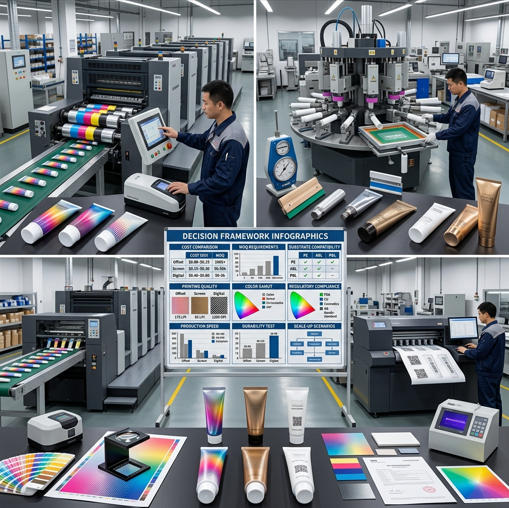

Printed cosmetic tubes ready for filling — the decoration method determines brand impact, batch flexibility, and regulatory compliance. (Photo: Unsplash)
Every printed tube on a pharmacy shelf or in a premium skincare retailer passed through one of three fundamental decoration processes: offset printing, screen printing, or digital printing. For a packaging engineer or procurement manager specifying a new tube production line, the choice between these three methods is far from cosmetic — it affects shelf appeal, regulatory compliance, ink durability after filling, and your total cost of ownership per million units.
The global cosmetic tube packaging market reached USD 3.9 billion in 2024 and is projected to grow at a CAGR of 7.2% through 2034, driven by premiumization in skincare and stricter traceability requirements in pharmaceutical packaging. Yet many B2B buyers still select a printing method based on familiarity rather than a structured decision framework — and then absorb the costs downstream when ink adhesion fails a tape adhesion test or a short-run reorder triggers an unexpectedly high setup charge.
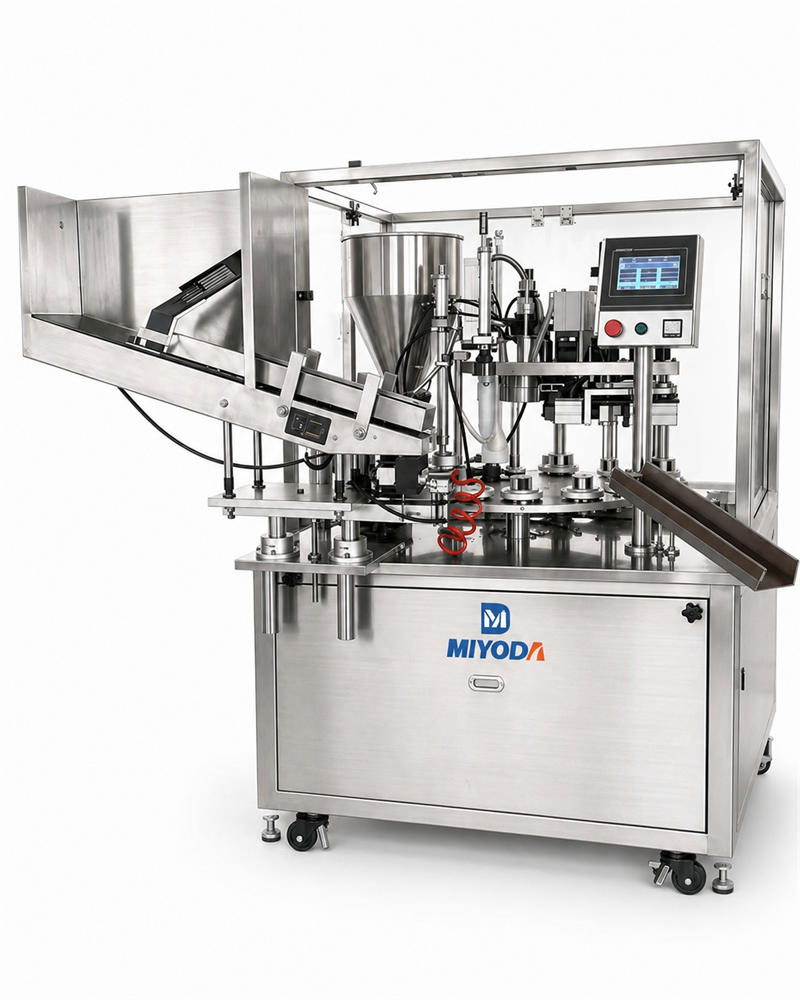
This guide — informed by real production data from tube manufacturers, ink suppliers, and machine integrators — gives you a decision framework for choosing between offset, screen, and digital printing. It covers method capabilities, substrate compatibility, regulatory documentation, cost crossover points, and a step-by-step pilot protocol you can use before committing to a full production run. Where relevant, we reference the tube printing machinery capabilities offered by Máquinas de embalagem Miyoda, whose multi-decoration production lines are used by cosmetic and pharmaceutical manufacturers across Asia, Europe, and the Americas.
Source: GM Insights
Driven by premiumization & pharma traceability
Understanding the Printing Options for Cosmetic Tubes
What Each Method Delivers (Offset, Screen, Digital)
These three methods differ fundamentally in how ink reaches the tube surface, how many colors they can handle economically, and how they perform under the chemical stress of cosmetic and pharmaceutical formulas. Here is a practical summary before we go deeper:
Dry Offset (Letterpress Offset)
- Ink film: ~3–6 µm
- Speed: up to 12,000 units/hr
- Colors: up to 6 per pass (CMYK + 2 spot)
- Best for: large-volume PE/PP extruded & laminated tubes
- MOQ: typically 10,000–30,000 units
Screen (Silk Screen / Rotary)
- Ink film: 15–30 µm (thick layer)
- Speed: up to 5,400 units/hr
- Colors: 1–6 per pass (spot colors only)
- Best for: tactile effects, opaque whites, pharma single-color batches
- MOQ: 5,000–10,000 units
Digital (UV Inkjet)
- Ink film: ~2–4 µm
- Speed: 500–3,000 units/hr
- Colors: unlimited (full CMYK+W photorealistic)
- Best for: short runs, variable data, rapid SKU changes
- MOQ: as low as 500–1,000 units
Typical Applications by Product Type
The right method is inseparable from the product category. A mass-market hand cream brand running 3 million units per year of a single SKU has an entirely different decision calculus compared to a pharmaceutical company producing 50,000 tubes of a prescription topical cream in 12 regional language variants.
| Product Category | Typical Annual Volume | Recommended Method | Key Reason |
|---|---|---|---|
| Mass-market body lotion / shampoo | > 500,000 units/SKU | Offset | Lowest CPT at volume; up to 6-color brand palette |
| Premium skincare (serums, eye cream) | 50,000–500,000 units | Offset + Screen for spot effects | Fine detail + tactile raised-ink accent panels |
| Pharmaceutical topical cream | 20,000–200,000 units per batch | Screen or Offset | Thick opaque ink layer, GMP-traceable process, lot coding |
| OTC / nutraceutical gel | 10,000–100,000 units | Digital or Screen | Frequent label changes (regulatory text, dosage), low MOQ |
| Indie / DTC cosmetic brand launch | 1,000–15,000 units | Digital | No plate tooling cost; rapid artwork iteration |
| Contract fill / private label (multi-SKU) | Variable, 20+ SKUs | Digital or mixed | Variable data, batch codes, multiple languages without reprinting plates |
Table 1 — Printing method selection by product category and annual volume
Offset Printing Deep Dive

High-speed offset printing equipment running continuous tube decoration cycles. (Photo: Unsplash)
Advantages and Limitations
Dry offset printing is the dominant method for high-volume cosmetic and pharmaceutical tube decoration. The process uses a multi-station printing deck — each station applies one color — with UV-curable inks that cure immediately after application. The result is a scratch-resistant, chemical-resistant ink layer approximately 3–6 µm thick.
In a verified production benchmark at a mid-sized cosmetic tube plant in Southeast Asia, a 6-color offset line running 50 mm diameter PE tubes achieved 11,200 units per hour with a defect rate of 0.18% — compared to a screen printing line on the same tube achieving 4,800 units per hour at 0.31% defects. That throughput advantage directly translates into machine utilization: the same floor space can produce 2.3× more units over an 8-hour shift.
The limitations are real, however. Offset tooling — the printing plates — typically costs USD 150–400 per color per set. For a 6-color job, that is a USD 900–2,400 upfront spend before the first tube is printed. Below approximately 10,000–15,000 units, that amortized tooling cost makes offset uncompetitive against screen or digital on a per-unit basis. Additionally, offset is constrained to process colors (CMYK) and a limited number of spot colors per pass; extremely opaque whites or metallics require a dedicated screen printing station.
When Offset Is the Right Fit
Offset printing is the right choice when all three of the following conditions apply:
- Your annual volume per SKU exceeds 30,000 units (the tooling cost is fully amortized below $0.01/unit by 30k).
- Your design uses 4–6 colors with fine halftone detail (gradients, photographic imagery, micro-text).
- Your tube substrate is extruded PE/PP, PBL, or ABL laminate — all of which accept offset UV inks without corona pre-treatment failures.
- Batch-to-batch color consistency is a contractual KPI (offset achieves ΔE₀₀ < 2.0 under standard pressroom ISO 12647-2 control).
Screen Printing Deep Dive
When Screen Printing Shines
Screen printing forces UV ink through a mesh stencil (typically 60–150 threads/cm) directly onto the tube surface, depositing an ink layer 15–30 µm thick — five to eight times thicker than offset. That thickness is not a bug; it is the entire value proposition for specific applications.
For pharmaceutical tubes, the thick opaque white base coat applied by a screen station ensures that the substrate color or aluminum foil sheen does not bleed through regulatory-required text. An ABL tube for a topical antibiotic cream, for example, typically carries a screen-printed white flood coat as the first step, followed by screen or offset color passes. Without that 20–25 µm white base, black text over a silver substrate reads at only 60–70% visual contrast — below the legibility threshold in many pharmacopoeias.
Screen printing also excels when your brand requires tactile raised-ink effects: a luxury hand cream brand running 80,000 tubes per year of a matte-black tube with gloss UV spot varnish on the logo achieves differentiation that cannot be replicated at that ink thickness with offset or digital. The thick screen layer creates a 3D texture customers can feel through the shelf display — a measurable haptic branding cue.
Surface Effects and Color Considerations
The spot-color constraint of screen printing is both a limitation and a cost lever. Because each color requires a dedicated screen (mesh + frame + stencil film), a 6-color screen job carries screen-making costs of USD 80–200 per screen — lower tooling cost per plate than offset, but the process is slower to set up and harder to register consistently on flexible tube substrates.
For brands whose palette is 1–3 Pantone spot colors, screen printing often wins on total economics against both offset and digital up to approximately 20,000–25,000 units. Beyond that threshold, offset’s speed advantage begins to dominate the CPT (cost per thousand) calculation.
Digital Printing Deep Dive
Short-Run Flexibility and Color Management
UV inkjet digital printing on cylindrical tubes has matured considerably since 2020. Modern rotary digital printers handle tubes from 13 mm to 60 mm diameter at speeds of 1,500–3,000 units per hour, with print resolution up to 1,200 × 1,200 dpi — sufficient for photographic imagery and fine-detail regulatory text in multiple languages simultaneously.
The defining characteristic of digital is the zero tooling cost. A pharmaceutical contract manufacturer producing 12 regional language variants of an OTC cream can print all 12 in a single machine setup, changing only the digital file — a workflow that would require 12 × 4-color plate sets (48 plates, USD 7,200–19,200 in tooling) under offset.
The DIGITRAN Group — a specialist in short-run digital tube printing — reports that their cosmetic customers achieving production flexibility for seasonal limited editions reduced new SKU launch time from an average of 8 weeks to under 3 weeks by switching from offset to digital for launches below 5,000 units, while keeping offset for their core SKUs above 50,000 units annually. This hybrid strategy is increasingly the market standard for mid-tier cosmetic brands.
Cost Efficiency for Small Batches and Rapid Changes
Digital printing’s per-unit cost at low volumes is substantially lower than offset or screen when tooling is factored in — but its machine throughput limitation means it becomes uncompetitive at volumes above approximately 20,000–30,000 units per SKU per year. The chart below shows the total cost crossover based on industry pricing data from 2025 supplier benchmarks.
📊 Cost per 1,000 Tubes by Method & Run Volume (USD, 2025 Benchmarks)
Includes tooling amortization, ink, machine time, and labor. Excludes substrate and finishing.
Bar Chart 1 — Cost per 1,000 tubes (USD) by printing method and order volume. Source: Industry supplier benchmarks, 2025. 4-color CMYK job on 35 mm PE tube assumed.
🥧 Global Cosmetic Tube Decoration Method Share (2025 Estimate)
By unit volume. Source: Packaging industry analyst synthesis, 2025.
Digital share is growing at ~22% YoY as short-run and variable data demand accelerates.
Pie Chart 1 — Global cosmetic tube decoration by printing method share (2025 estimate). Source: Packaging industry analyst synthesis.
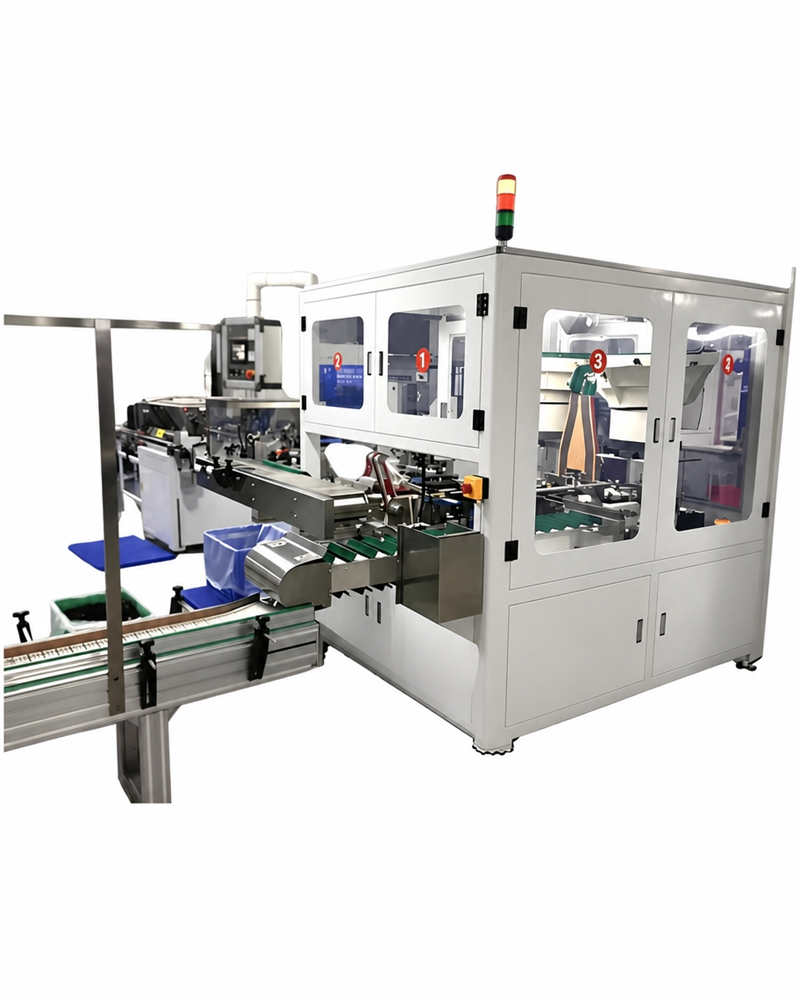
▶ Cosmetic & Pharmaceutical Tubes Offset Printing Machine — production line walkthrough covering multi-color registration, UV curing, and output inspection. (YouTube)
Key Decision Factors When Selecting a Method
Volume, Speed, and Setup Costs
The single most reliable predictor of which method wins on total landed cost is annual SKU volume. Below is a structured comparison across the three primary decision variables every production planner should evaluate before issuing an RFQ to a tube decoration supplier.
| Decision Variable | Dry Offset | Serigrafia | Digital UV |
|---|---|---|---|
| Tooling / setup cost | USD 150–400 / color (plate set) | USD 80–200 / color (screen) | USD 0 (file only) |
| Machine speed | 6,000–12,000 units/hr | 3,000–5,400 units/hr | 500–3,000 units/hr |
| Cost crossover vs. digital | Wins above ~25,000–30,000 units/SKU | Wins 8,000–25,000 units range | Wins below ~8,000 units/SKU |
| Changeover time (SKU switch) | 45–90 min (plate change + wash-up) | 20–45 min (screen swap + squeegee clean) | 2–5 min (file change only) |
| Minimum order quantity | 10,000–30,000 units | 5,000–10,000 units | 500–2,000 units |
| Typical lead time (first production run) | 10–20 business days (plate making + press approval) | 7–14 business days | 3–7 business days |
Table 2 — Decision matrix: volume, speed, and setup cost by printing method
Durability, Formulation, and Regulatory Considerations
Ink durability on a cosmetic or pharmaceutical tube is not simply about scratch resistance during shipping. It is also about chemical compatibility with the formula inside the tube, which can leach through thin-walled plastic substrates and affect ink adhesion over a 24–36 month shelf life. Key stress tests required by most cosmetic and pharma buyers include:
- Tape adhesion test (ASTM D3359 / ISO 2409): cross-hatch, tape pull-off — pass requires ≥ 4B rating on PE substrates after 30-day accelerated aging at 40°C/75% RH.
- Abrasion resistance (ASTM D4060, Taber abraser, 500 cycles, CS-10 wheel): acceptable weight loss < 15 mg for pharma tube outer decoration.
- Chemical resistance soak: immersion in the actual product formula for 72 h at 45°C; visual inspection for ink blistering, delamination, or color shift.
- Photostability (ISO 11476 / ICH Q1B for pharma): 1.2 million lux·hours UV exposure; ΔE₀₀ change < 3.0 acceptable.
Offset UV inks typically achieve the best scores in abrasion resistance (thin, fully cross-linked film). Screen UV inks, with their thicker deposit, often outperform in chemical resistance. Digital UV inks have improved significantly but may require an overprint varnish on PE substrates for pharma-grade durability qualification.
Brand Goals and Color Fidelity
Luxury skincare brands typically specify Pantone colors with a ΔE₀₀ tolerance of ≤ 2.0. Achieving this across a 500,000-unit run requires consistent ink viscosity control (±3°C in the ink train), calibrated spectrophotometric measurement after every 5,000 units, and a documented ICC profile for the press-substrate-ink combination. Offset presses under ISO 12647-2 process control routinely achieve ΔE₀₀ < 1.5 average across a run.
Digital printing achieves competitive color accuracy (< 2.0 ΔE₀₀) for CMYK builds but struggles with precise Pantone spot matches that fall outside the CMYK gamut (notably certain metallic Pantone shades). If your brand color is Pantone 877 C (metallic silver) or Pantone 871 C (metallic gold), neither offset nor digital can replicate it without a dedicated metallic spot screen printing station or hot stamping.
Substrate Compatibility and Tube Construction

Cross-section concept of laminate tube construction — the substrate layer sequence determines which printing method achieves durable adhesion. (Photo: Unsplash)
Material Compatibility
There are three primary tube substrate families in the cosmetic and pharmaceutical market, and each has distinct printing compatibility characteristics:
| Substrate Type | Construction | Surface Energy (untreated) | Pre-treatment Required | Compatible Methods | Recommended Profile |
|---|---|---|---|---|---|
| Extruded PE/PP | Single-material polyethylene or polypropylene extrusion | ~32–34 mN/m | Corona or flame treatment to ≥ 44 mN/m | Offset, Screen, Digital | Offset for >30k units |
| PBL (Laminado com Barreira Plástica) | LDPE outer / EVOH barrier / LDPE inner — 3–5 layers, no foil | ~33–36 mN/m | Corona treatment; some UV-primer coats for digital | Offset, Screen, Digital | Offset or Screen for tactile |
| ABL (Laminado de Alumínio com Barreira) | LDPE outer / aluminum foil / LDPE inner — superior O₂/moisture barrier | ~36–40 mN/m (foil aids adhesion) | Typically not required; primer coat for digital ink adhesion | Offset, Screen, Digital (with primer) | Screen or Offset; ABL’s sheen enhances metallic inks |
| Aluminum tube | Seamless extruded aluminum; soft, fully collapsible | ~42–48 mN/m | Lacquer base coat standard | Offset (dry offset dominant), Screen | Offset (pharma ointments, luxury cosmetics) |
Table 3 — Substrate compatibility matrix for offset, screen, and digital printing on cosmetic/pharma tubes
Layering, Coatings, and Barrier Properties
ABL tubes are the preferred substrate for pharmaceutical topical applications where moisture and oxygen barrier performance are critical. The aluminum foil layer also provides a superior printing surface for offset: the lacquer base coat provides a consistent, high-tack surface that achieves ink-to-substrate adhesion without the surface energy variability inherent in extruded PE.
PBL tubes are gaining market share due to sustainability pressure: major European cosmetic brands have committed to mono-material or fully recyclable packaging by 2027, and PBL’s all-plastic construction is compatible with PE recycling streams. Digital UV printing on PBL requires a UV-primer corona pre-coat step (add ~USD 0.008 per unit) to achieve tape adhesion pass rates consistently above 95%.
Color, Branding, and Finish Considerations
Pantone Matching and Color Consistency
Pantone color specification is the lingua franca of cosmetic packaging procurement: the buyer specifies Pantone 1767 C for a blush-pink lip balm tube, and the tube manufacturer must hit it — batch after batch, across different raw material lots and ambient temperature variations. The practical implementation differs sharply by method:
In offset printing, Pantone spot inks are formulated by the ink supplier to a spectrophotometric target (L*a*b* aim points ± 2.0 ΔE₀₀). The press operator monitors Solid Ink Density (SID) every 5,000–10,000 impressions. A well-documented ink specification card provided to Miyoda Packaging Machinery’s tube offset press customers — including target density, substrate whiteness, and ambient temperature correction — enables ΔE₀₀ < 2.0 across 200,000-unit runs.
In digital printing, color consistency is governed by the ICC profile built for the specific ink-set and substrate combination, and by the stability of the UV-LED curing energy. Well-calibrated digital presses achieve ΔE₀₀ < 2.5 for CMYK builds; pure spot Pantone matching outside gamut requires physical color gamut expansion through orange (O) or green (G) extended-gamut ink sets, available on newer 7-channel digital printers.
Metallic Effects, Gloss/Matte Finishes, and Textures
A luxury cosmetic tube specification frequently calls for a combination of finishes — matte overall tube with a gloss spot logo — that no single printing method achieves alone. The industry-standard solution is a hybrid decoration sequence:
- Flood coat — screen or offset white base coat on the tube.
- Process color printing — offset or digital for the main artwork.
- Spot UV varnish — screen-printed gloss UV applied over selected artwork areas; cured inline.
- Overall matte OPV — thin overprint varnish applied by screen to the non-spot areas.
- Hot stamping station (optional) — metallic foil applied for logo accents, brand icons, or decorative bands.
This five-step hybrid sequence is available on integrated multi-decoration tube lines. Comparing tube decoration machine models from leading manufacturers reveals that the ability to combine offset, screen, and hot stamping on a single mandrel-transport line is the key differentiator for brands targeting premium shelf positioning, as it eliminates tube transfers between separate machines — each transfer introduces registration errors of 0.3–0.8 mm.
Production Realities: Lead Times, MOQ, and Automation
Scheduling, Setup Times, and Run Planning
For a packaging procurement manager, lead time is as critical as unit price. A beauty brand launching a seasonal collection in Q4 that misses its September ship date loses not just revenue but potentially the entire season’s marketing investment. Understanding the actual setup and production scheduling realities of each printing method is therefore non-negotiable.
| Timeline Stage | Offset | Screen | Digital |
|---|---|---|---|
| Artwork to production-ready file | 2–4 business days (prepress, color separation, plate-ready PDF) | 2–3 business days (stencil-ready positive film) | 1 day (RIP-ready PDF direct to machine) |
| Plate / screen fabrication | 3–7 business days (CTP plate exposure + QC) | 2–4 business days (stencil burning + tensioning) | N/A — zero |
| Press proof / color approval | 1–2 days (physical strike-off on actual tubes) | 1 day | Same-day digital proof; 1 day for physical tube sample |
| Production run (100,000 units) | ~9 hr (at 11,000 units/hr) | ~21 hr (at 4,800 units/hr) | ~50 hr (at 2,000 units/hr) — requires multiple machines for large volumes |
| Total first-run lead time | 10–20 business days | 7–14 business days | 3–7 business days |
Table 4 — Lead time by printing method from artwork receipt to finished tube
Integration with Tube Manufacturing Lines and Downstream Processes
Printing is not an isolated step. It sits within a production flow that begins with tube extrusion or laminate welding and ends with filling, sealing, and cartonning. The printing station’s throughput must be matched to the upstream and downstream stations to prevent bottlenecks.
A common integration failure: a pharmaceutical client installs a new high-speed offset printing line capable of 12,000 tubes/hour but feeds it from a laminate tube welding machine rated at 8,000 tubes/hour. The printing line runs at 67% utilization — a USD 180,000 machine operating at two-thirds capacity. Proper line balancing, supported by a knowledgeable machine supplier, requires mapping every station’s rated throughput before specifying the printing system.
Máquinas de embalagem Miyoda approaches this as a systems integration problem: their application engineers map upstream extrusion or laminate tube body production rates, downstream filling and sealing machine throughput, and then size the decoration line — offset, screen, or hybrid — to avoid creating a bottleneck in either direction. This reduces first-year production underperformance, which industry data shows affects approximately 34% of new tube line installations where decoration and filling are specified independently.

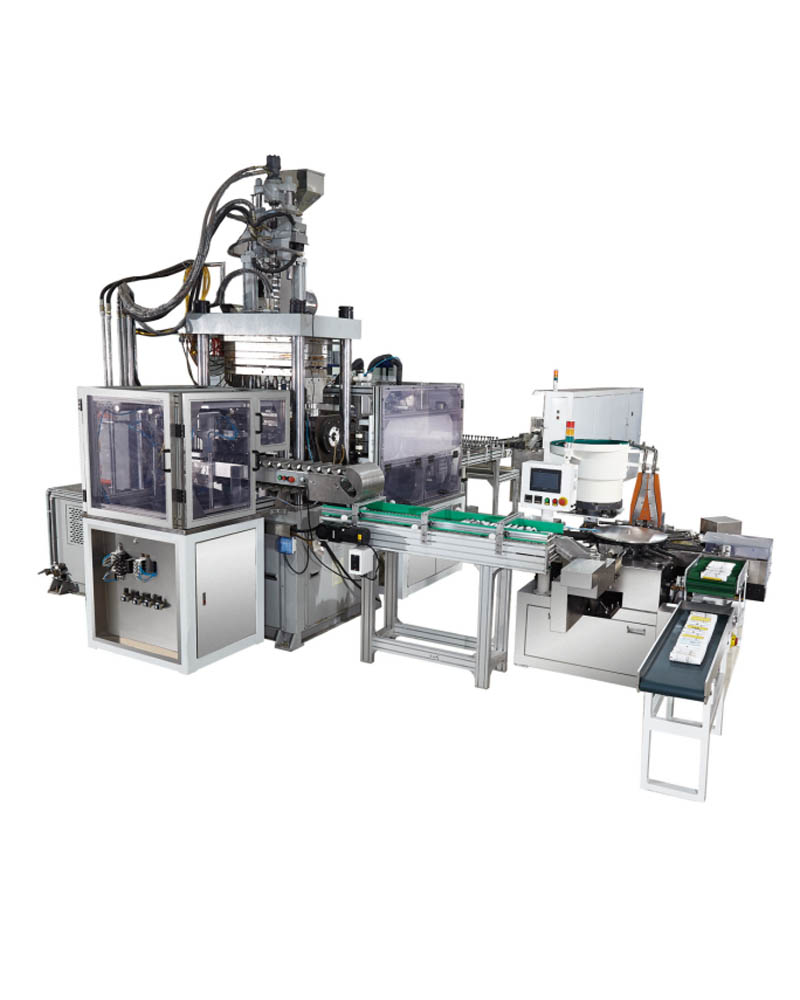
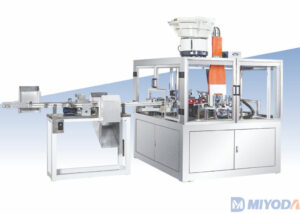
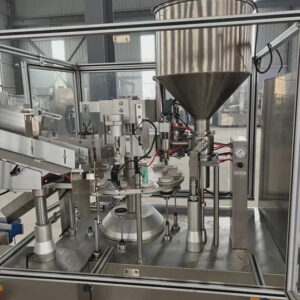
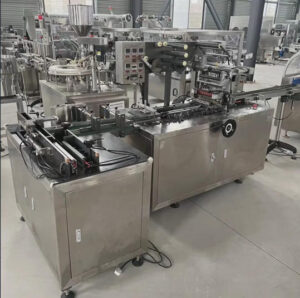
Automated tube line — decoration integrated with welding and downstream filling.

In-line print inspection station — color measurement every 500–1,000 units on modern automated lines.

Finished cosmetic tubes — offset-printed full-color with screen-printed metallic accent band.
Safety, Regulation, and QC for Cosmetic/Pharma Tubes
Documentation and Traceability
For pharmaceutical packaging, every printing run must be documented with the traceability depth required by GMP auditors. The minimum documentation set for a regulated tube printing process includes:
- Batch manufacturing record (BMR): ink lot numbers, substrate lot, machine ID, operator ID, date/time of run start and completion.
- Press proof approval sheet: signed by QA representative, with spectrophotometric color measurements (L*a*b* values) on the approved proof tube.
- In-process SID / ΔE log: recorded every 5,000 impressions, retained for minimum 1 year post-manufacture (EU) or 2 years post-distribution (US FDA 21 CFR Part 211.188).
- Ink safety data sheet and migration test report: supplier-issued, substrate-specific. Required under EU Regulation 10/2011 for any packaging that may have indirect food or drug contact.
- Change control record: any substitution of ink lot, substrate batch, or machine parameter requires a documented change control event and, for pharma, a re-qualification review.
According to the FDA Draft Guidance on Cosmetic Good Manufacturing Practices, the traceability obligation extends to the printed container — not just the formula. Buyers specifying a new tube printing machine should confirm that the machine’s control system supports data export in a format compatible with their ERP or MES (Manufacturing Execution System).
Quality Control Checkpoints for Inks and Adhesives
A robust QC protocol for tube printing covers three checkpoints: incoming material inspection, in-process measurement, and outgoing batch release.
| QC Checkpoint | What Is Measured | Method / Standard | Accept Criterion |
|---|---|---|---|
| Incoming: Tube substrate | Surface energy (dyne level) | ASTM D2578 (dyne test fluid) | ≥ 44 mN/m (post-corona); ≥ 36 mN/m (ABL with lacquer) |
| Incoming: Ink lot | Viscosity, color strength vs. standard | Brookfield viscometer; spectrophotometric draw-down | ΔE₀₀ ≤ 1.0 vs. standard; viscosity within ±5% of spec |
| In-process: Color | Solid Ink Density (SID) and ΔE₀₀ | X-Rite or Konica Minolta spectrophotometer; ISO 12647-2 | SID ±0.08; ΔE₀₀ ≤ 2.0 (cosmetic) / ≤ 1.5 (pharma) |
| In-process: Registration | Color-to-color misregistration | Loupe / digital vision system measurement | Misregistration ≤ 0.2 mm (offset); ≤ 0.3 mm (screen) |
| Outgoing: Ink adhesion | Tape pull-off adhesion | ASTM D3359 / ISO 2409 cross-hatch | ≥ 4B (cosmetic); 5B required for most pharma specs |
| Outgoing: Chemical resistance | Formula compatibility (soak test) | Internal protocol: 72 h at 45°C in formula | No blistering, peeling, or ΔE₀₀ > 3.0 after soak |
Table 5 — QC checkpoint matrix for cosmetic and pharmaceutical tube printing
How to Implement the Right Method for Your Product Line
Steps to Assess, Pilot, and Scale
Moving from a method selection decision to a validated, production-ready tube printing process requires a structured sequence of steps. Skipping the pilot phase — a common cost-cutting shortcut — is the single most frequent reason for production launch delays, with industry surveys showing that brands which bypassed physical pilot runs experienced an average 11-week launch delay when adhesion or color failures emerged during first production.
- Define the SKU portfolio and annual volume forecast. List all tube SKUs in scope: tube diameter, substrate type (extruded PE, PBL, ABL, aluminum), annual units per SKU, number of colors, and finish requirements. Group SKUs by volume bracket: < 10k, 10k–50k, > 50k.
- Audit your design brief for print-method compatibility. Convert Pantone references to L*a*b* aim points. Identify any design elements that require effects outside standard CMYK: metallics, tactile varnish, opaque white base coat. These elements will determine whether a hybrid decoration approach is required.
- Issue RFQs to 2–3 tube printing machine suppliers. Specify the tube substrate, diameter range, required color count, annual volume, and downstream integration requirements (filling machine throughput, cleanroom requirements for pharma). Request rated machine speed at your tube diameter, changeover time data, and OEE references from existing customers.
- Request actual tube samples — not printed flat sleeves. Any tube printer or machine supplier should be able to produce 50–100 sample tubes on your exact substrate with your artwork. Subject these to the adhesion, chemical resistance, and photostability tests described above before approving a production commitment.
- Run an accelerated stability pilot. Subject 30 sample tubes to 30-day accelerated aging at 40°C / 75% RH (ICH Q1B-equivalent conditions). Inspect at Day 0, Day 7, Day 14, and Day 30. Document spectrophotometric color measurements at each point. This catches substrate–ink chemical incompatibility before it manifests in a 500,000-unit production run.
- Confirm GMP documentation readiness. For pharmaceutical tubes, confirm the machine supplier can provide an IQ/OQ (Installation Qualification / Operational Qualification) protocol and test documentation pack. For cosmetic tubes sold in the EU or US, confirm ink safety data and migration test reports are available in the supplier’s documentation.
- Plan the scale-up with line-balancing data. Once the pilot is approved, finalize the production line design by mapping printing machine throughput against upstream tube body production and downstream filling and sealing rates. A trusted tube line supplier will provide this line-balancing analysis as part of the project engineering scope.
- Establish ongoing SPC monitoring at launch. Implement Controle Estatístico de Processos (SPC) for color density and registration from the first production batch. Set control limits at ±2σ from the approved pilot mean, with action limits at ±3σ.
How Our Machines Support Cosmetic/Pharma Tubes
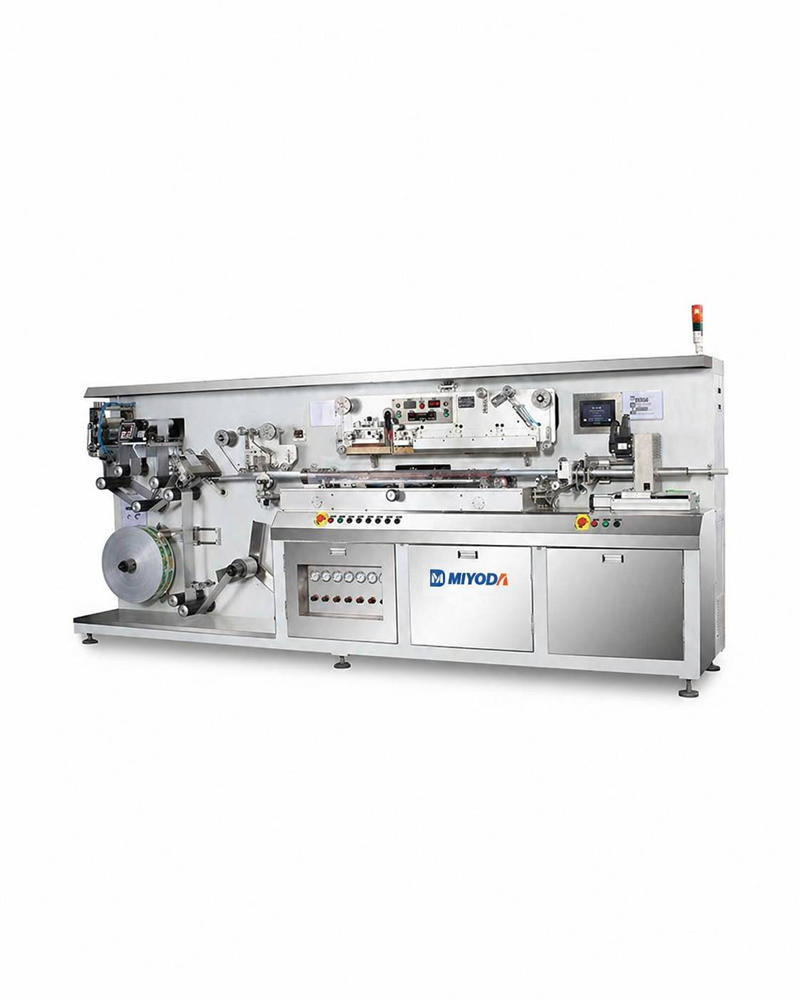
Selecting the right printing method is only half the equation — the machine platform determines whether the method’s theoretical capabilities are actually achievable in your factory. Máquinas de embalagem Miyoda‘s tube decoration equipment is engineered specifically for the cosmetic and pharmaceutical tube market, with the following production-critical features:
- Multi-color dry offset printing decks with servo-driven registration achieving ±0.1 mm color-to-color accuracy, verified across full-speed 12,000-unit/hour runs.
- Integrated UV/LED curing stations with closed-loop energy monitoring — curing energy maintained within ±3% of set point regardless of line speed variation, preventing under-cure (adhesion failure) and over-cure (substrate deformation).
- Modular screen printing station add-on for opaque white base coat, tactile varnish, or metallic spot color — configurable on the same mandrel transport line as the offset deck.
- Corona pre-treatment station for PBL and extruded PE substrates, with real-time surface energy monitoring (dyne meter feedback) ensuring consistent > 44 mN/m before every ink station.
- GMP-compliant stainless steel construction, wash-down-rated design, 21 CFR Part 11-compatible data logging for pharmaceutical production environments.
- Full integration compatibility with upstream máquinas para fabricação de tubos laminados and downstream filling and sealing equipment — with throughput-matched conveyor controls.
For teams evaluating the full tube production investment — from tube body formation to decoration to filling — Miyoda’s cosmetic tube sealer buying guide provides a complementary framework for specifying the sealing station downstream of the printing line.
Ready to Specify Your Tube Decoration Line?
Get a throughput-matched, substrate-specific tube printing recommendation from the Miyoda Packaging Machinery application engineering team — including a line-balancing analysis at no charge.
Explore Tube Printing Machines Read: Complete Tube Line GuideChoosing between offset, screen, and digital printing for cosmetic and pharmaceutical tube decoration is a strategic production decision — not a vendor preference. The method you select determines your unit economics at every volume level, the shelf finish your brand can achieve, your compliance posture with FDA and EU GMP requirements, and your line’s responsiveness to the short-run, multi-SKU demands that now characterize most cosmetic and pharma portfolio strategies.
The framework is consistent across categories: offset dominates above 25,000–30,000 units per SKU per year when design requires fine detail and multi-color registration; screen delivers where thick opaque layers, tactile effects, or metallic spot colors are non-negotiable; digital wins for short runs, variable data, and rapid product launches where tooling cost and lead time are the critical constraints. Most mature cosmetic brands operating at scale use a deliberate combination of all three.
The production integration dimension — printing line throughput matched to tube body production, filling, sealing, and downstream coding — is where the majority of new tube line investments underperform. The assessment, pilot, and scale-up protocol outlined in this guide, combined with a machine supplier who understands tube production as a system rather than a collection of standalone machines, is the most reliable path from specification to a validated, audit-ready decoration process.
Your next step: build the SKU volume matrix from Table 1, identify any design requirements that demand hybrid decoration, and initiate a substrate pilot on your actual tube bodies before committing to production tooling.
📖 Glossary of Key Terms
- ABL (Laminado de Alumínio com Barreira)
- A laminated tube structure containing a thin aluminum foil layer (9–12 µm) bonded between polyethylene layers. Provides superior oxygen and moisture barrier performance. Standard for pharma topical creams and luxury skincare.
- Corona Treatment
- A high-voltage electrical surface treatment that raises the surface energy of PE/PP tubes from ~32 mN/m to ≥44 mN/m, enabling UV ink adhesion. Required for extruded PE and PBL substrates before offset or screen printing.
- Cpk (Índice de Capacidade do Processo)
- A statistical measure of how consistently a process performs within its specification limits. Cpk ≥ 1.33 is the world-class target for tube printing operations (color density, registration). Cpk < 1.00 indicates an out-of-control process.
- ΔE₀₀ (Delta E 2000)
- A perceptual color difference metric. ΔE₀₀ ≤ 1.0 is imperceptible to the human eye; ΔE₀₀ ≤ 2.0 is the standard for Pantone-matched cosmetic packaging; ΔE₀₀ > 3.0 is visibly different and typically requires reprinting.
- Dry Offset (Letterpress Offset)
- The dominant tube printing process: ink transfers from a raised relief printing plate to a rubber blanket (offset), then to the tube surface — without water or solvent. UV-curable inks cure instantly under UV or LED-UV lamps.
- MOQ (Quantidade Mínima de Pedido)
- The smallest production batch a supplier will run — driven by the need to amortize setup and tooling costs. Offset MOQ is typically 10,000–30,000 tubes; screen 5,000–10,000; digital can start as low as 500–1,000 units.
- OEE (Eficiência Geral do Equipamento)
- A manufacturing KPI combining availability, performance, and quality. OEE = Availability × Performance × Quality. World-class OEE for high-speed tube printing lines is ≥ 85%.
- PBL (Laminado com Barreira Plástica)
- An all-plastic laminated tube using EVOH as the barrier layer instead of aluminum foil. More recyclable than ABL in mono-material PE recycling streams. Requires UV-primer corona pre-coat for digital UV ink adhesion.
- SID (Densidade de Tinta Sólida)
- A densitometric measurement of ink coverage on a solid (100%) printed patch. Used for real-time color control on offset presses. Standard targets: K 1.65–1.75, C 1.35–1.45, M 1.45–1.55, Y 1.30–1.40.
- SPC (Statistical Process Control)
- The use of control charts to monitor production parameters in real time and detect process shifts before they produce defects. Key variables for tube printing: SID, ΔE₀₀, registration error, UV cure energy (mJ/cm²).
- UV-Curable Ink
- An ink formulation that polymerizes (cross-links) instantly when exposed to UV or UV-LED radiation. Creates a chemically resistant, scratch-resistant film without solvent evaporation. Standard for tube offset and screen printing since the 1990s.