Why Tube Printing Machinery Matters More Than Ever for Your Business
The global tube packaging market was valued at USD 13.4 billion in 2025 e deverá atingir USD 21.9 billion by 2033. Behind every tube on a pharmacy shelf or in a prestige beauty display is a printing line that either builds brand equity or quietly erodes it — through color inconsistency, compliance gaps, or production delays that miss a seasonal launch window.
If you operate a cosmetic or pharmaceutical tube manufacturing business, or if you distribute and specify equipment for those who do, the machinery at the center of your decoration process is no longer a background cost center. It is a competitive variable — one that is changing faster in 2025 and 2026 than at any point in the previous decade.
This guide focuses exclusively on what matters to buyers, manufacturers, and distributors making real decisions about real machinery. No abstract technology trends. Every innovation described here is commercially available, carries documented production data, and directly addresses pain points that cost tube manufacturers money today.

The Growing Pressure to Differentiate Your Products in Crowded Markets
Walk into any mid-tier pharmacy chain today and count the number of tube products competing for the same shelf position within a single category — hand cream, toothpaste, sunscreen, topical ointment. The number is rarely below eight and often exceeds fifteen. In that environment, the tube itself is doing active selling work. The finish, the color accuracy, the tactile quality of the decoration, the cleanliness of the text — all of it registers in less than three seconds.
The pressure has intensified for a specific reason: e-commerce has compressed the visual evaluation window further. When a product photograph is the only pre-purchase touchpoint, print quality inconsistency between production batches — the kind of issue that’s “acceptable” in a physical store because shelf lighting masks it — becomes visible and damaging in high-resolution product photography.
Brands supplying major retail buyers are increasingly receiving decoration quality specifications as part of supplier agreements: Pantone color tolerance requirements expressed as ΔE (Delta E) values, print adhesion pass/fail criteria based on ASTM D3359, and photostability requirements for UV-exposed shelf positions. These are not requests. They are supplier qualification gates.
How Outdated Printing Equipment Is Costing You Money and Customers
A tube manufacturing facility running a mercury arc lamp UV curing system from 2015 is paying energy costs roughly 62% higher per shift than a comparable facility that has converted to LED-UV curing. That’s not a projection — it’s documented benchmark data from plants that made the transition in 2023–2024.
An operation using manual color density measurement — pulling tubes, walking to a bench spectrophotometer, logging results on paper — is generating data that arrives 40 to 90 minutes after the process has already drifted. By the time the operator identifies a color deviation, an average of 4,000 to 8,000 tubes have been printed outside the brand’s specification tolerance. At a scrap rate of even USD 0.12 per tube, that’s a USD 480–960 loss from a single undetected drift event — before accounting for the production time lost to reprinting.
The cost of keeping outdated equipment running also compounds invisibly. Industry data on planned versus unplanned maintenance in packaging equipment shows that facilities deferring scheduled maintenance absorb emergency repair costs three to four times higher than the deferred maintenance itself — with production downtime adding further losses at an average of USD 10,000–40,000 per unplanned stoppage in pharmaceutical environments.
What Forward-Thinking Manufacturers Are Doing Right Now
The manufacturers gaining market share in cosmetic and pharmaceutical tube production are not necessarily the largest. They are the ones making specific, targeted equipment upgrades that solve the exact problems described above:
Converting from mercury arc to LED-UV curing on offset and screen printing lines — recovering 60%+ in energy costs while simultaneously improving ink cure consistency. Implementing in-line spectrophotometric color monitoring — catching color drift at the 500-tube level rather than the 5,000-tube level. Installing quick-change format tooling — reducing SKU changeover time from 3 hours to 25–45 minutes, enabling profitable small-batch runs without the production scheduling penalty that made them uneconomical before. And integrating digital printing for short-run and variable-data work — reducing new SKU lead time from 8+ weeks to under 3 weeks by eliminating the plate-making stage entirely.
These are not future capabilities. They are available now, documented in production environments, and increasingly offered as standard configurations by equipment suppliers who understand the tube market specifically.
Understanding the Pain Points Your Current Equipment Can’t Solve
Quality Inconsistencies That Damage Brand Reputation
Why Traditional Printing Leaves Visible Defects on Premium Packaging
Traditional tube printing lines — particularly those using older flexographic or multi-station screen processes without servo-driven registration control — produce color-to-color misregistration errors of 0.3–0.8 mm as a matter of routine. On a 30mm diameter tube, a 0.5mm registration error is visible to the naked eye at arm’s length. On a premium skincare tube retailing at USD 45, it communicates manufacturing carelessness to a consumer who paid a premium specifically for quality.
Color variation across a production run — a consequence of unmonitored ink viscosity drift, UV cure energy fluctuation, or substrate surface energy variation batch to batch — is the most common cosmetic tube quality complaint reported by retail buyers. When a cosmetic brand’s signature color reads differently on Tube Lot A versus Tube Lot B, the consequences are tangible: retail buyers reject the inconsistent lot, triggering reprinting costs, delayed delivery, and the kind of supplier relationship damage that doesn’t appear in a quality defect report but does appear in the next contract renewal conversation.
How Modern Machinery Eliminates Registration Errors and Color Variations
Servo-driven registration systems — standard on current-generation offset tube printing machines — achieve color-to-color registration accuracy of ≤ 0.1 mm at rated production speed, maintained across a full 200,000-unit production run without manual adjustment. The servo system reads printed registration marks optically at every revolution and micro-corrects the impression cylinder position in real time.
Inline spectrophotometric measurement — a camera-based color measurement system positioned after each print station — continuously compares printed ΔE values against the approved color standard, generating a real-time SPC chart visible on the HMI. When color drifts outside the ±2.0 ΔE tolerance, the system flags the event immediately — stopping the pattern of discovering out-of-tolerance tubes only at end-of-shift inspection.
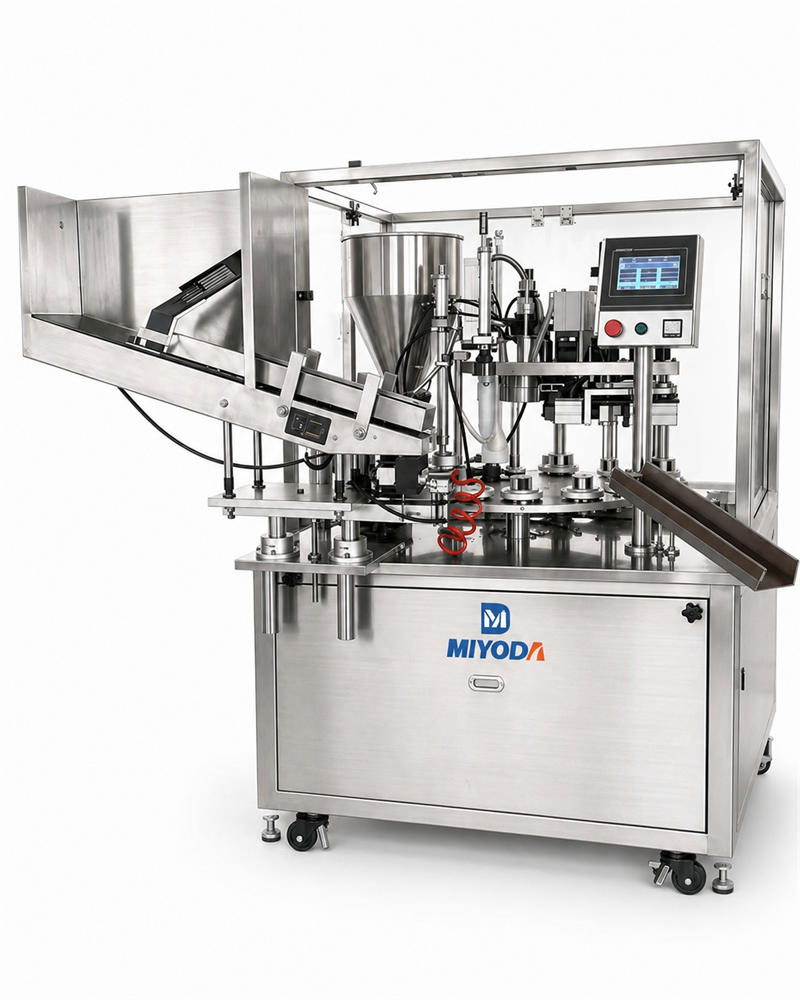
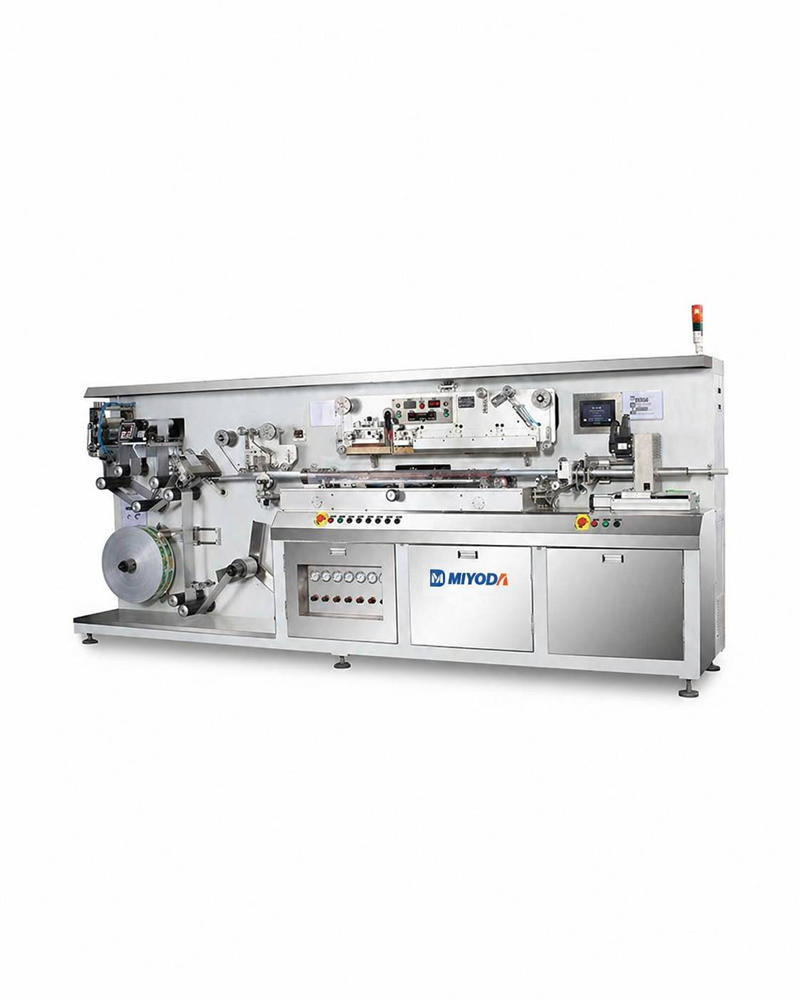
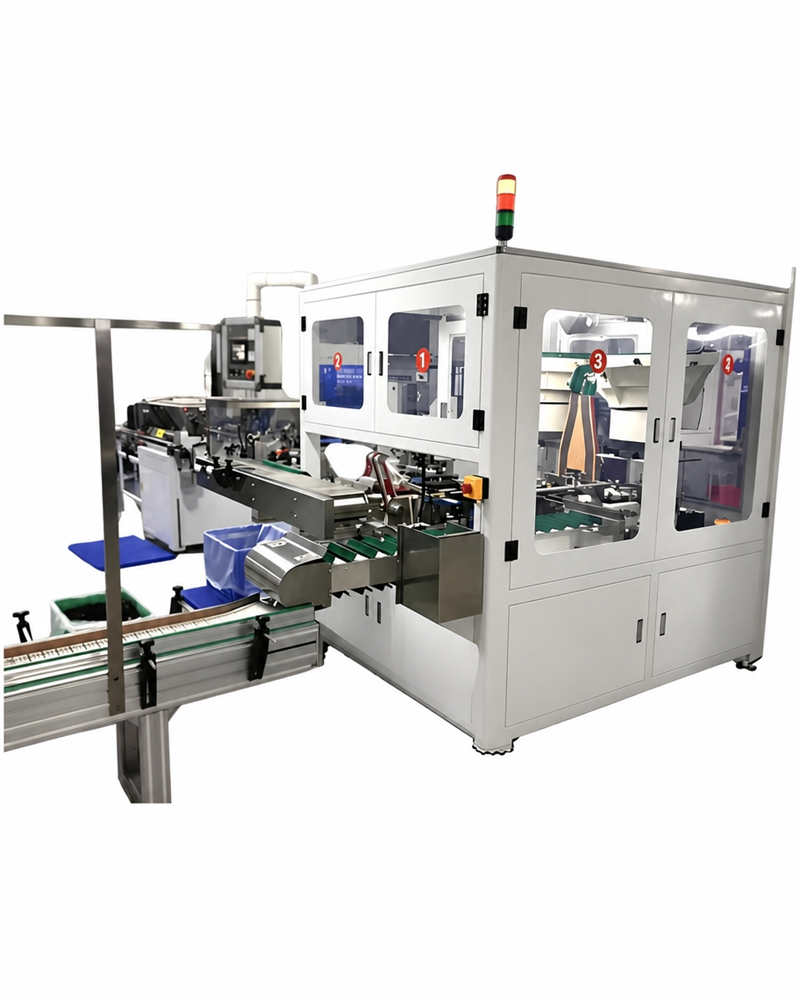
Máquinas de embalagem Miyoda configures their tube offset printing lines with servo-driven multi-station registration as standard, with optional inline color measurement integration for pharmaceutical and premium cosmetic applications where batch-to-batch color traceability is a contractual requirement.
Production Bottlenecks Slowing Your Time-to-Market
The Hidden Costs of Manual Adjustments and Downtime
Manual setup on a conventional offset tube printing line — plate mounting, ink train wash-up, color build and approval, registration verification — takes 90 to 180 minutes between SKUs. For a facility running 8 to 12 SKU changeovers per week, that is 12 to 36 hours of non-productive machine time weekly. At a loaded machine cost of USD 85–120/hour (depreciation, energy, allocated labor), that represents USD 1,020–4,320 in weekly overhead absorbed by setup time rather than production output.
The hidden cost multiplier is opportunity cost. A machine spending 25% of its available time on changeovers is a machine producing at 75% of its design capacity. Over a year, a facility running 4,000 annual machine-hours loses 1,000 hours to setup — equivalent to approximately 10–12 million tubes at 10,000–12,000 tubes per hour. That production capacity exists in theory. It never reaches an invoice.
How Automation Reduces Setup Time from Hours to Minutes
Modern quick-change printing systems store complete machine recipes — ink train settings, UV cure energy, registration offsets, mandrel speed profiles — digitally for each SKU. Calling up a saved recipe on the HMI takes under 2 minutes. The physical changeover — swapping printing plates, flushing ink circuits, and loading the new format’s tooling — takes 25 to 45 minutes on well-designed current-generation machines, versus 90–180 minutes on manually adjusted systems.
The SMED (Single-Minute Exchange of Die) principle — originating in lean manufacturing — has been applied systematically to cosmetic tube printing line design by leading machinery manufacturers. Applied to a screen printing line, SMED-compliant quick-change systems reduce screen swap and squeegee cleaning time from 45 minutes to under 20 minutes per color station.
At the Miyoda product line level, tube offset and screen printing machines are designed with tool-free plate-locking systems and color-coded format components — eliminating the most common source of changeover error: installing a component in the wrong position.
Sustainability Compliance Becoming Non-Negotiable
Meeting Stricter Regulations Without Sacrificing Profitability
The EU Packaging and Packaging Waste Regulation (PPWR), moving through implementation in 2024–2026, is the most consequential regulatory shift for cosmetic tube manufacturers serving European markets since EU GMP Annex 1. It mandates recyclability requirements, restrictions on certain packaging materials, and documentation obligations that reach into the printing process. Inks and coatings used in tube decoration are explicitly in scope: they must not inhibit the recyclability of the tube substrate in the relevant waste stream.
Solvent-based inks — still in use on a significant share of older screen printing lines — contain volatile organic compounds (VOCs) at concentrations that trigger both workplace exposure limits and environmental reporting requirements. Facilities operating under EU environmental permits in countries that have transposed the Industrial Emissions Directive will face progressively tightening VOC emission ceilings, with non-compliance penalties that have reached EUR 50,000–200,000 in documented cases across the EU.
The practical compliance response is the same action that also improves production economics: converting to UV-curable and water-based ink systems, which have near-zero VOC emissions and are compatible with PE and PBL recycling streams when formulated to current sustainability standards.
Reducing Ink Waste and Energy Consumption to Improve Margins
LED-UV curing systems, now standard on new-generation tube printing lines, reduce energy consumption per cured tube by 55–65% compared to mercury arc UV systems. A mid-volume facility running 6,000 hours annually saves approximately USD 28,000–42,000 per year in electricity costs from this conversion alone — with the added benefit of eliminating mercury lamp replacement costs (USD 800–1,400 per lamp set) and the production interruptions associated with lamp failures.
Precision ink metering systems on modern offset printing lines reduce ink consumption by metering ink delivery to within 2% of the theoretical minimum required for the target SID (Solid Ink Density). Compared to manually adjusted ink keys set conservatively to ensure no under-inking, precision metering reduces ink cost per 1,000 tubes by 18–23% — a saving that compounds significantly at annual volumes above 5 million tubes.
Digital Printing Technology: The Game-Changer for Cosmetic and Pharmaceutical Tubes

How Digital Printing Eliminates Traditional Printing Limitations
Key Term: Digital (UV Inkjet) Printing — A tube decoration process that fires UV-curable ink droplets directly onto the tube surface from a fixed print head array, with the tube rotating on a mandrel. No printing plates or screens are required. Ink cures instantly under an LED-UV lamp positioned after the print heads.
For the past decade, digital tube printing was positioned as a short-run alternative to “real” production printing. That positioning has collapsed. Current-generation rotary UV inkjet systems for tubes run at 1,500–3,000 tubes per hour, with print resolution of 1,200 × 1,200 dpi — sufficient for photographic imagery, fine pharmaceutical regulatory text in 6-point fonts across multiple languages on a single tube, and Pantone-matched spot color builds at ΔE < 2.5.
The practical consequence for tube manufacturers and their customers is that the minimum viable run length for branded tube production has dropped from 10,000–30,000 units (the offset plate tooling amortization floor) to 500–2,000 units — without any per-unit cost penalty for the plate tooling that doesn’t exist.
Print-on-Demand Capabilities for Shorter Production Runs
A cosmetic brand that commits to a 30,000-unit offset run of a seasonal SKU and then sells 18,000 units before the season ends is holding 12,000 units of printed tubes that may have an artwork version or regulatory text that will be obsolete before the inventory is consumed. At USD 0.18–0.35 per tube for a decorated tube blank, that’s USD 2,160–4,200 in tube inventory that will need to be scrapped or written down.
The same brand, operating a print-on-demand model with digital decoration, prints exactly what it needs when it needs it — eliminating finished-goods tube inventory and the write-down exposure that comes with it. DIGITRAN Group, a specialist in short-run digital tube printing services, has documented that cosmetic customers transitioning from pre-committed offset runs to digital print-on-demand reduced tube inventory write-downs by an average of USD 31,000 per year across their active seasonal SKU portfolio.
Exceptional Color Accuracy and Vibrant Finishes That Attract Consumers
Modern digital printing with extended-gamut ink sets (7-channel CMYKOGV — adding Orange, Green, and Violet to the standard four channels) achieves a color gamut that exceeds the offset CMYK gamut by approximately 30–40% in volume. Colors that previously required a dedicated spot-color screen printing station — electric blues, deep oranges, vibrant greens — are achievable within a single digital pass without additional tooling.
Variable Data Printing for Personalization Without Extra Costs
Key Term: Variable Data Printing (VDP) — A digital printing capability that changes one or more elements of each printed tube — text, graphics, barcode, QR code — from tube to tube without stopping the machine or changing any hardware. Every tube can be unique.
Creating Unique Designs for Limited Editions and Seasonal Campaigns
The premium skincare market has moved decisively toward personalization as a brand differentiation strategy. A major skincare brand in Southeast Asia ran a campaign in 2023–2024 where each tube in a limited-edition collection carried a unique AI-generated botanical illustration — 50,000 tubes, 50,000 different designs. Under traditional offset or screen printing, this would have been physically impossible. Under digital VDP, it was a single 18-hour production run.
For brands that haven’t yet explored VDP, the lower-hanging application is simpler: regional language variants on a single production run. A pharmaceutical contract manufacturer producing an OTC topical cream for distribution across five EU markets prints English, German, French, Italian, and Polish regulatory text on the same machine in the same run — changing only the digital file content, not the machine setup.
Meeting Regulatory Requirements with Precise Batch Coding and Expiration Dates
Under FDA 21 CFR Part 211.130 and EU GMP requirements, pharmaceutical tubes must carry a batch number and expiration date that is legible, durable, and traceable to the batch manufacturing record. Digital VDP integrates batch coding and expiration date printing into the primary decoration pass — eliminating the separate ink jet or laser coding station that most conventional tube lines use, and with it the registration errors and ink adhesion inconsistencies that separate coding systems introduce.
The batch code is part of the main UV-cured decoration layer rather than a secondary ink jet application — meaning it has identical scratch and chemical resistance to the primary print. For pharmaceutical customers whose product passes through distribution chains where abrasion is a concern, this integration eliminates the most common source of illegible batch code complaints at end of line.
Why Digital Printing Reduces Waste and Improves Your Bottom Line
Minimal Setup Waste Compared to Rotogravure or Flexographic Printing
Rotogravure printing — the dominant method for flexible packaging decoration — requires 500–2,000 meters of substrate to run up to color at the start of each job. On a tube decoration line, the equivalent setup waste is the tubes consumed during ink train build-up and color approval: typically 500–800 tubes per color on a conventional offset system.
Digital printing generates zero tooling-related setup waste. The first tube out of a digital production run is printable to specification. Over a year of multi-SKU production with frequent changeovers, the elimination of setup waste reduces tube substrate cost by a figure that is meaningful: at USD 0.15/tube and 50 changeovers per year averaging 600 setup-waste tubes each, the annual saving is USD 4,500 — before accounting for the ink, energy, and machine time saved from not printing tubes that go into the scrap bin.
Lower Ink Consumption and Energy Requirements Per Unit
UV inkjet printing deposits approximately 2–4 µm of ink — compared to 15–30 µm for screen printing. Ink cost per tube is correspondingly lower for digital decoration. Combined with LED-UV curing that consumes 70% less electricity than mercury arc lamps, the variable operating cost per decorated tube on a digital line is 35–50% lower than screen printing on an equivalent run.
Advanced Coating and Finish Technologies Transforming Tube Aesthetics
Protective Coatings That Extend Shelf Life and Product Integrity
UV-Resistant Finishes for Light-Sensitive Pharmaceutical Formulations
Topical pharmaceutical formulations containing tretinoin, vitamin C, certain antibiotics, and photosensitive botanical actives require packaging that blocks UV radiation with documented efficacy. Modern UV-blocking overprint varnishes (OPV) applied by screen printing over the primary decoration achieve light transmission below 1% at wavelengths of 280–400 nm — meeting the photostability requirement in ICH Q1B guidance for pharma products without requiring an opaque outer carton.
For a pharmaceutical tube manufacturer, the ability to apply a validated UV-blocking OPV inline — without transferring tubes to a separate coating operation — reduces handling, contamination risk, and the production scheduling complexity of a two-step decoration process.
Moisture-Barrier Coatings That Prevent Product Degradation
WVTR (Water Vapor Transmission Rate)-reducing coatings applied to the outer surface of PBL and PE tubes extend the effective barrier performance of the tube construction without requiring a material upgrade to ABL laminate. Applied as a thin inline coating (3–5 µm), modern acrylic-based moisture-barrier coatings reduce tube surface WVTR by 40–60%, extending product shelf life in tropical climate distribution environments where ambient humidity routinely exceeds 80% RH.
Premium Finishes That Command Higher Retail Prices
The decoration finish applied to a tube correlates measurably with consumer perception of product value — and with the retail price that perception supports. A 2023 consumer research study by a major cosmetic packaging consultancy found that tubes with soft-touch matte coating combined with gloss UV spot accents achieved 23% higher perceived value scores compared to standard gloss-only tubes in blind product tests, without any change to the formulation inside.
Metallic and Holographic Effects That Make Your Products Stand Out
Metallic foil hot stamping — a tube decoration technique applying a thin vacuum-deposited metallic film to the tube surface via heat and pressure — produces a mirror-bright metallic finish that cannot be replicated by metallic ink printing at any depth. A luxury serum brand specifying “Pantone 877 C metallic silver” on their tube receives, under ink printing, a printed approximation with visible dot structure under magnification. Under hot stamping, they receive a true metallized surface indistinguishable from vacuum-deposited metallic film — and price accordingly.
Modern tube decoration lines integrate hot stamping stations on the same mandrel transport system as offset and screen printing stations — eliminating tube transfers between machines and the registration errors (0.3–0.8 mm) that transfers introduce.
Soft-Touch and Textured Coatings That Enhance Perceived Value
Soft-touch OPV (overprint varnish) is a UV-curable coating formulation containing micro-encapsulated particles that create a velvet-like surface texture and dramatically reduced surface gloss (typically 5–15 GU vs. 85+ GU for standard gloss). Premium skincare brands have made soft-touch coating a near-universal specification for prestige-tier tube products. For machinery buyers, the consideration is cure system compatibility: soft-touch coatings require precise UV dose control (typically 120–180 mJ/cm² at 365 nm) — under-cured soft-touch feels tacky; over-cured soft-touch loses the tactile quality that defines the finish.
Automation and Smart Manufacturing: Reducing Labor Costs and Human Error

Integrated Systems That Streamline Your Entire Production Workflow
Real-Time Monitoring and Adjustment Reducing Manual Intervention
Current-generation tube printing machines generate continuous production data: ink train density readings at each color station, UV cure energy per tube, mandrel speed, and registration offset values — every one of these parameters logged against a timestamp and tube count. On a well-configured line, this data feeds a live production dashboard visible to operators and supervisors simultaneously.
The critical advance is not the data collection — it’s the closed-loop response. When an ink density reading drifts outside a ±2% control band, a servo-driven ink metering system adjusts the ink train automatically without operator intervention. When UV cure energy drops below 95% of set point (indicating a lamp aging event), an alert fires before the energy drops below the cure threshold and before out-of-specification tubes are produced.
The practical result: a facility that previously required one dedicated QC operator per printing machine to monitor color and catch drift has reduced that to one QC operator per two to three machines — recovering 30–40% of QC labor cost without reducing quality detection capability.
Seamless Integration with Existing Production Lines
Modern tube printing machines communicate with upstream and downstream equipment via standard industrial protocols (OPC-UA, Profinet, EtherNet/IP). A printing line configured to receive tube count data from an upstream laminate welding machine can modulate its own indexing speed to maintain a buffer inventory that prevents both starvation (printing line waiting for tubes) and overflow (tubes backing up and jamming the welding discharge conveyor).
When a downstream filling machine goes into a planned stop for cap replenishment, the printing line receives the signal via the line PLC and decelerates gracefully — rather than producing tubes into a buffer that overflows and causes a manual unscramble event.
AI-Powered Quality Control Catching Defects Before Packaging
Computer Vision Systems That Detect Imperfections Invisible to Human Eyes
Inline vision inspection systems on current-generation tube printing lines inspect every tube at production speed — not a statistical sample pulled every 30 minutes. High-resolution camera arrays positioned after each print station and after the final decoration pass capture 360° images of every tube’s decorated surface, comparing each image against an approved master template stored during the first approved production run.
Detection capabilities on commercial cosmetic tube vision systems include: color deviation exceeding ΔE 2.0 on any tube surface; registration errors exceeding 0.15 mm; ink banding or streak artifacts from a failing print head; text legibility failures (missing characters, smeared text); and substrate surface defects (scratches, contamination) that predated the print process.
The reject rate from inline vision inspection on a well-calibrated cosmetic tube line runs at 0.3–0.8% of production — compared to a human visual inspection end-of-line that misses 20–30% of minor defects under typical production lighting conditions. For a pharmaceutical manufacturer where a missed batch code error triggers a recall, the economic justification for inline vision is straightforward.
Predictive Maintenance Alerts Preventing Unexpected Breakdowns
Machine learning algorithms trained on historical production data from tube printing machines can identify patterns in sensor readings that precede failures — elevated vibration signatures that appear 2–3 hours before a bearing fails, UV lamp power draw trends that indicate end-of-life 5–7 days before the lamp drops below cure threshold, ink pump pressure signatures that indicate a developing check valve failure before it causes color dropout.
SwitchOn’s DeepInspect AI platform, developed specifically for cosmetic tube inspection, integrates predictive maintenance monitoring alongside surface quality inspection — giving production managers a unified view of machine health and product quality from a single interface.
For machinery buyers evaluating new printing equipment, the question to ask at the RFQ stage is: does this machine support condition monitoring sensor outputs in a standard industrial data format? Machines that don’t export sensor data cannot participate in a predictive maintenance program regardless of how capable the software platform is.
Data Analytics Helping You Make Smarter Production Decisions
Tracking Performance Metrics to Identify Efficiency Improvements
Key Term: OEE (Overall Equipment Effectiveness) — A composite production performance metric: OEE = Availability × Performance × Quality. A score of 85% is considered world-class for tube printing. Most facilities without real-time data collection run at 60–72% OEE — meaning 28–40% of their machine capacity is being consumed by downtime, speed losses, and quality defects.
A tube printing facility that implemented real-time OEE monitoring across four printing lines in 2023 identified that 43% of their total weekly downtime was attributable to a single recurring event: mandrel jam caused by tube body OD (outer diameter) variation arriving from the tube forming department outside the printing machine’s mandrel tolerance range. Before data collection, this was known as “the machine stops sometimes.” After data collection, it was a documented, root-caused, and corrected process problem.
Forecasting Demand and Optimizing Inventory Management
Production planning for a multi-SKU cosmetic tube printing facility involves balancing tube substrate inventory, ink inventory, print tooling (plates, screens), and machine scheduling across a portfolio that may include 30–60 active SKUs with different seasonality profiles. Facilities using production data analytics to model demand from historical run frequency, SKU velocity data from their cosmetic brand customers, and seasonal pattern recognition have documented 15–22% reductions in tube substrate inventory while simultaneously reducing stockout-related rush reprints.
Sustainability Innovations: Meeting Regulatory Requirements and Consumer Expectations
Eco-Conscious Printing Solutions That Don’t Compromise Quality
Water-Based Inks and Sustainable Adhesives Reducing Environmental Impact
Key Term: Water-Based Inks — Ink formulations using water as the primary carrier solvent instead of petroleum-derived solvents. VOC content is typically below 5% by weight — versus 40–60% VOC content in conventional solvent-based inks. Suitable for screen printing on PE and ABL cosmetic tubes with appropriate drying/curing systems.
Water-based ink systems for tube screen printing have matured significantly. Modern water-based UV-hybrid systems — inks that are water-based during application but cure via UV cross-linking — achieve adhesion performance (ASTM D3359 5B rating on corona-treated PE substrates) equivalent to solvent-based systems without the VOC emission burden. INX International’s sustainability ink formulations demonstrate a 25–30% reduction in CO₂ emissions per kilogram of ink produced compared to conventional formulations, while maintaining color gamut and adhesion performance on tube substrates.
For facilities that are subject to environmental audit requirements from major cosmetic brand customers — a growing requirement as brands publish Scope 3 supplier sustainability commitments — documented conversion to water-based ink systems provides audit evidence without requiring capital expenditure equivalent to a machine replacement.
Energy-Efficient Machinery Lowering Your Carbon Footprint and Operating Costs
LED-UV curing systems have reduced energy consumption per tube printed by 55–65% compared to mercury arc UV on comparable print lines — with typical payback periods of 18 a 30 meses on new-installation cost, and 8-14 meses for retrofit installations on existing mercury arc-equipped machines. The LED-UV advantage compounds in hot manufacturing environments (Southeast Asia, South Asia) where mercury arc heat output previously required supplemental air conditioning to protect UV-sensitive substrates — an additional energy cost eliminated entirely under LED-UV.
Compliance with Global Packaging Regulations Made Simple
Meeting FDA, EU, and Regional Requirements Without Production Delays
O FDA Cosmetic GMP Guidelines and EU Cosmetics Regulation 1223/2009 require that inks and coatings used in direct or indirect contact with cosmetic products be documented in the Product Information File (PIF) — with ink composition data, migration test results, and evidence that the specific substrate-ink combination has been tested under conditions representative of the product’s shelf life. Modern printing machinery suppliers who serve regulated markets maintain ink documentation files for standard substrate-ink combinations — transferring compliance documentation burden from the tube manufacturer to the ink and equipment supply chain.
O Miyoda tube packaging compliance checklist details exactly which documentation is required at each production stage for pharmaceutical and cosmetic applications — including the printing process, ink traceability, and batch record requirements that are increasingly reviewed during retail buyer supplier audits.
Proper Documentation and Traceability Features Built Into Modern Systems
Batch traceability for pharmaceutical tube printing requires linking every printed tube batch to: the ink lot numbers applied, the substrate lot, the machine ID and operator, the production parameters (speed, UV energy, registration offsets), and the in-process quality measurement results — all in a single retrievable batch record.
Current-generation printing machines with 21 CFR Part 11-compatible data logging generate this record automatically as a machine-readable export file, eliminating the manual data transcription step that introduces both errors and audit trail gaps. For cosmetic facilities under EU GMP or those supplying pharmaceutical-adjacent products, this capability is transitioning from a premium option to a specification baseline requirement.
Converting Sustainability Into a Competitive Marketing Advantage
Eco-friendly production practices are no longer solely a compliance exercise. Major retail buyers — including several of the top 10 global beauty retailers — now include supplier sustainability scorecards in annual vendor reviews, with scoring criteria that include ink system VOC levels, energy consumption per unit, and packaging recyclability compliance.
Cosmetic brands that can provide documented, quantified sustainability data from their tube printing operations — water-based ink conversion percentages, LED-UV energy consumption per 1,000 tubes, PPWR recyclability compliance certificates — are converting that data into supplier preference and, in some documented cases, into premium placement in retailer sustainability-branded product programs.
Flexibility and Customization: Adapting Quickly to Market Demands
Multi-Substrate Capabilities for Tubes of Different Materials and Sizes
Seamless Transitions Between Plastic, Aluminum, and Laminate Tubes
The cosmetic and pharmaceutical tube market does not revolve around a single substrate. A contract tube manufacturer or a brand with a multi-category portfolio handles extruded PE tubes for standard body care, ABL laminate tubes for barrier-sensitive serums and pharmaceutical ointments, PBL laminate tubes for sustainability-committed cosmetic lines, and aluminum tubes for pharmaceutical creams requiring maximum barrier and total tube collapse. Each substrate has different surface energy requirements, mandrel handling characteristics, and ink adhesion behavior.
Printing machine platforms that handle all four substrate types through tooling changes — rather than requiring separate machines per substrate — represent a significant capital advantage. The mandrel transport system must accommodate tube diameter ranges of 13.5–50 mm and tube length ranges of 50–220 mm without structural reconfiguration. Machines outside this range force tube manufacturers to operate multiple partially utilized lines rather than one fully utilized flexible line.
Key Term: Surface Energy (mN/m — millinewtons per meter) — A measure of how receptive a tube surface is to ink adhesion. PE and PP tubes leave the extrusion process at 32–34 mN/m — too low for UV ink to adhere durably. Corona treatment raises surface energy to 44+ mN/m, at which point UV adhesion passes ASTM D3359. ABL tubes with lacquer base coat typically present at 36–40 mN/m and do not require corona treatment before offset printing.
Handling Various Tube Diameters and Lengths Without Extensive Retooling
Format changeover on a multi-diameter tube printing line — switching from a 25mm PE tube to a 40mm ABL laminate tube — involves: changing the mandrel set (mandrels are sized to the tube inner diameter), adjusting the impression cylinder position relative to the tube surface, and calling up the saved HMI recipe for the new format’s ink train and UV cure settings.
On a machine designed for rapid changeover with tool-free mandrel locking, this takes 35–50 minutes. On a machine requiring hand tools and manual impression pressure adjustment, the same format change takes 2.5–3 hours. Across a year of 200+ format changeovers, the difference is 350–500 hours of recovered production time — equivalent to 3.5–5 million additional decorated tubes on a 10,000-tube/hour line.
Rapid Changeover Features That Reduce Production Downtime
Quick-Change Printing Heads and Color Systems
Ink train wash-up between color changes — flushing the previous ink from rollers, ducts, and ink keys before introducing the next color — has traditionally required 30–45 minutes per station on a conventional offset press. Current-generation automatic ink cleaning systems circulate solvent through the ink train under servo control, reducing wash-up time to 8–12 minutes per station while simultaneously reducing solvent consumption by 40% compared to manual wash-up methods.
Quick-change printing plate systems with magnetic or vacuum plate-locking eliminate the physical plate mounting time — typically 5–10 minutes per plate reduced to under 2 minutes. For a 6-color job, that’s 24–48 minutes of mounting time recovered per changeover event.
Simplified Setup Procedures Enabling Faster Job Transitions
Saved HMI recipes extend beyond printing parameters. Modern systems store the complete machine state for each SKU: mandrel speed, UV cure zone energy settings, vision system reference images, inline spectrophotometer color targets, ink pressure settings, and conveyor speed — all recalled in a single recipe load that takes under 90 seconds.
The first five tubes after a recipe load may require visual QC confirmation, but the machine reaches production-ready state without the iterative manual adjustment cycle that characterized older equipment. This recipe-based changeover model shifts the production planning conversation from “we can’t run that small a batch because the changeover cost kills the economics” to “we can profitably run batches above X thousand tubes for any SKU.”
Supporting Diverse Product Lines From a Single Production Platform
Managing Cosmetic, Pharmaceutical, and Specialty Tube Production Simultaneously
A contract tube decorator serving both cosmetic and pharmaceutical clients from the same production floor requires a printing platform that can switch between decoration modes without infrastructure changes. For pharmaceutical printing runs, the machine must be capable of generating compliant batch records with operator authentication, ink lot traceability, and inline measurement data retention. For cosmetic runs without pharmaceutical compliance requirements, the same machine runs in a standard production mode without the overhead of pharmaceutical data capture.
This dual-mode capability — available on printing machines with modular control software and 21 CFR Part 11-compliant data logging — allows a single machine investment to serve both market segments, avoiding the capital cost and floor space demand of separate pharmaceutical-grade and cosmetic-grade printing lines.
Reducing Capital Investment by Consolidating Equipment Needs
A facility that previously operated three separate machines — one offset line, one screen printing line, and one hot stamping machine — to deliver a complete hybrid-decorated premium tube now consolidates those functions onto a single multi-station mandrel transport line. Equipment consolidation reduces: total capital deployed, floor space consumed, maintenance complexity (one PM schedule, one spare parts inventory, one operator training curriculum), and the inter-machine tube transfer events that introduce registration errors.
ROI and Cost-Benefit Analysis: Making the Investment Case for Modern Equipment
Calculating True Costs of Operating Outdated Machinery
Hidden Expenses in Labor, Waste, and Quality Control
The three-year total cost of ownership for an outdated conventional tube printing machine includes categories that rarely appear in the capital comparison:
Excess setup waste: A conventional 6-color offset line generating 600 tubes of setup waste per changeover at 200 changeovers per year produces 120,000 wasted tubes annually — at USD 0.18 per decorated tube blank, that’s USD 21,600 per year in scrap before ink cost.
QC labor for manual inspection: One dedicated QC operator per printing machine at USD 22/hour across two 8-hour shifts and 250 operating days costs USD 88,000 per year — compared to an automated inline vision system that covers two to three machines at equivalent detection accuracy.
Unplanned downtime: Industry data from packaging equipment maintenance studies shows that facilities deferring scheduled maintenance incur emergency repair costs 3–4× higher than deferred maintenance cost, plus an average of 2.3 unplanned stoppages per machine per year at an average duration of 3.5 hours. At a machine utilization value of USD 100/hour, that’s USD 805 per stoppage — or USD 1,852 per machine annually in unplanned downtime losses, before product loss and schedule impact.
Opportunity Costs of Missed Market Opportunities and Slow Production
A cosmetic brand requests a quote for a seasonal limited-edition run of 8,000 tubes with new artwork. Your printing line requires a 3-hour changeover and has a minimum economical batch size of 15,000 tubes under your current setup cost model. You decline the order, or price it uncompetitively to cover the setup cost. Your competitor with a digital printing capability accepts it at a profitable margin and gains a relationship with a brand that places 200,000 units per year of their core line.
This is not a hypothetical. It is the exact pattern documented across contract tube manufacturers who have invested in digital printing capability for short-run work — converting previously unprofitable or declined orders into contribution margin that funds the rest of the operation.
Understanding the Financial Benefits of Upgrading
Payback Periods Typically Achieved Within 2–3 Years
The aggregate annual savings from upgrading a conventional tube printing line to a current-generation automated system — energy saving (LED-UV), QC labor reduction (inline vision), setup waste reduction (quick-change, recipe management), reduced unplanned downtime (predictive maintenance), and ink consumption optimization (precision metering) — typically total USD 80,000–180,000 per year for a mid-volume facility running 8–15 million decorated tubes annually.
Against a capital investment of USD 180,000–320,000 for a fully configured current-generation multi-decoration line, this represents a payback period of 2–3 years — consistent with the outline’s projection and with documented customer ROI data from equipment suppliers in this segment.
The ROI case strengthens further when the revenue opportunity from new capabilities is included: the ability to run profitable short-run digital jobs (previously declined), to offer hot stamping and soft-touch finishes for premium pricing (previously unavailable without a separate machine), and to serve pharmaceutical clients with compliant documentation capability (a new revenue segment).
Long-Term Savings Through Reduced Waste, Energy, and Labor
Over a 10-year machine life, the cumulative saving picture is significant. Using conservative mid-range figures:
$$\text{10-Year Cumulative Saving} = $120{,}000/\text{yr} \times 10 = $1{,}200{,}000$$
Against an incremental capital cost of USD 200,000 over an outdated replacement machine, the net value of investing in a current-generation system versus a basic equivalent is USD 1,000,000 over the machine’s service life — before accounting for revenue growth from expanded capability.
Financing and Partnership Options That Fit Your Budget
Leasing Versus Purchasing: Weighing Options for Your Business Model
Equipment leasing for tube printing machinery — available from equipment finance specialists and from some machinery suppliers directly — structures the capital outlay as a monthly operating expense rather than a single capital purchase. For a USD 250,000 printing line, a 5-year lease at typical commercial rates structures the monthly payment at approximately USD 4,500–5,500 — a figure many facilities can justify directly against the monthly energy and QC labor savings from the upgrade.
The decision framework is consistent with other capital equipment categories: lease if your production volume or product portfolio is likely to change significantly in under 5 years, or if preserving working capital for market development is a higher return on capital than equipment ownership. Purchase if you have stable production volume, plan to operate the equipment for 8–12 years, and want to build capital equity in your equipment assets.
Working with Equipment Providers on Phased Implementation Strategies
A phased implementation approach — replacing the UV curing system and installing inline vision inspection on an existing printing machine in Phase 1, then adding digital printing capability and quick-change format tooling in Phase 2 twelve months later — spreads capital deployment over two to three years while realizing the highest-return improvements first.
Máquinas de embalagem Miyoda supports phased implementation by designing their tube decoration systems with modular architecture: the curing system, vision inspection, and digital printing station can be added to a base machine as separate upgrade modules rather than requiring a complete machine replacement.
Choosing the Right Tube Printing Solution for Your Specific Needs
Assessing Your Current Production Volume and Growth Projections
The starting point for any equipment decision is an accurate picture of current production and a realistic 3–5 year volume projection by SKU. The data you need: annual tubes decorated per SKU, number of active SKUs by substrate type, average batch size, number of SKU changeovers per week, and your current order rejection rate for decoration quality failures.
That data set will determine whether your primary constraint is throughput (you need more tubes per hour), flexibility (you need faster changeovers and shorter minimum batch sizes), or quality (you need better registration, color consistency, and inline inspection).
Matching Machinery Capacity to Your Business Trajectory
A facility currently producing 8 million tubes per year with plans to reach 20 million in three years should not be evaluating a machine rated at 10 million tubes per year annual capacity — even if the 10 million unit machine is sufficient today. At 80% OEE (world-class), a machine rated at 12,000 tubes per hour running two 8-hour shifts across 250 operating days produces approximately 48 million tubes per year — well above a 20 million unit target, with room for single-shift operations and planned maintenance downtime.
The common error is sizing to current volume with no growth buffer. The result is a machine running at 95%+ utilization within 18 months — unable to accommodate preventive maintenance downtime, unable to accept opportunistic new orders, and requiring replacement capital expenditure before the original machine’s payback period has been reached.
Planning for Scalability Without Over-Investing in Unused Capacity
A modular decoration platform — where additional print stations, vision modules, or a digital printing head can be added to the base machine — allows you to purchase exactly the capability you need today while retaining a defined, documented upgrade path as volume grows. This avoids both under-specification (buying a machine that caps your growth) and over-specification (buying capability you won’t use for three years while paying depreciation on idle modules).
Evaluating Technology Features Based on Your Product Portfolio
| Recurso | Must-Have If… | Nice-to-Have If… |
|---|---|---|
| Inline spectrophotometric color QC | Pharmaceutical client contracts; brand color tolerance ΔE ≤ 2.0 required | Cosmetic general production with periodic manual QC |
| Digital print head module | Short-run SKUs below 5,000 units; >20 active SKUs; variable data required | Core SKUs all above 30,000 units/year |
| 21 CFR Part 11 data logging | Any pharmaceutical production | Cosmetic production under retail audit sustainability requirements |
| Hot stamping station | Premium prestige cosmetic; any metallic foil decoration required | Standard cosmetic decoration without metallic effects |
| LED-UV curing upgrade | Any new installation; any mercury arc lamp replacement event | Not applicable — all new installations should specify LED-UV |
| Soft-touch OPV station | Premium skincare brand specifications; any tactile decoration required | Budget cosmetic tiers without premium shelf positioning |
Considering Future Product Line Expansions in Your Decision
A tube decoration machine purchased today for PE tube decoration only — without corona treatment capability for PBL substrates — will be unable to serve the PBL substrate requirement when your cosmetic brand customers begin transitioning from conventional laminate to recyclable PBL in response to EU PPWR commitments in 2025–2027. Specifying a corona pre-treatment station at machine purchase adds USD 8,000–15,000 to the initial cost. Retrofitting it post-installation adds USD 20,000–35,000 and a production shutdown for installation.
Future-proofing is not about buying features you don’t need now. It is about not buying features at twice the price later by specifying them wrong now.
Partnering with Experienced Suppliers and Distributors
What to Look for in Equipment Providers and Support Teams
Five supplier qualification criteria that matter more than purchase price:
Tube-specific references: Request references from customers producing the same substrate type at a comparable volume. A supplier whose reference list is exclusively food packaging or beverage container lines has not validated their machine’s performance on cosmetic and pharmaceutical tube materials.
IQ/OQ documentation availability: For pharmaceutical applications, the supplier must provide a template IQ/OQ (Installation Qualification / Operational Qualification) protocol. Suppliers who cannot produce this documentation have limited regulated-industry experience regardless of their machine quality.
Regional service response time commitment: A contractual commitment to critical-stoppage response time — not an estimated “we try to be there within 48 hours.” Ask for the response time SLA and the location of the nearest stocked spare parts depot.
Ink qualification support: The supplier should be able to confirm which UV ink families have been tested and qualified for adhesion performance on your specific substrate — and provide the adhesion test data to support that qualification.
Upgrade path documentation: Request a formal document showing what upgrades are available for the machine you’re buying, at what cost, and what lead time. This is your insurance against the machine becoming a growth bottleneck.
Ensuring Proper Training, Maintenance, and Technical Support
Operator training for a modern automated tube printing line — covering HMI recipe management, changeover sequences, inline QC system operation, and first-line fault diagnosis — requires a minimum of 5 to 8 days of structured training at the machine, complemented by video-based remote support for routine procedure questions post-installation.
Ask for training to result in a documented operator qualification record: a signed assessment confirming each operator has demonstrated competency on the machine before running unsupervised production. For pharmaceutical environments, this record is a regulatory requirement. For cosmetic environments, it is the difference between a 4-month production ramp-up and a 10-month one.
Industry Trends and What’s Coming Next
Emerging Technologies on the Horizon
AI and Machine Learning Enhancing Predictive Quality Control
The next generation of tube printing quality control moves beyond inline measurement of current production to predictive modeling of future quality. Machine learning systems trained on historical production data — including environmental variables like ambient temperature and humidity, raw material batch quality indicators, and machine wear sensor readings — can predict the probability of a color drift event before it occurs, based on the current process state, and trigger a preemptive ink adjustment or UV energy correction.
AISA Automation demonstrated at K 2025 a production line for printed tubes incorporating AI-driven quality control with multiple quality parameter streams monitored simultaneously — detecting not just visible defects but process conditions that precede defects before they manifest in the print output.
Blockchain Integration for Enhanced Supply Chain Transparency
Blockchain-based traceability for pharmaceutical tube printing is transitioning from pilot to early commercial deployment in 2025–2026. Each batch of printed tubes receives a cryptographically signed digital record capturing ink lot, substrate lot, machine parameters, operator authentication, and inline QC data — stored in an immutable blockchain ledger accessible to the pharmaceutical brand customer, the regulatory authority, and the contract manufacturer.
For pharmaceutical tube manufacturers serving clients with supply chain transparency requirements — increasingly common in European markets and in US pharmaceutical supply chains under DSCSA (Drug Supply Chain Security Act) — blockchain traceability offers a verifiable alternative to paper batch records that eliminates the audit trail integrity questions that accompany manual documentation.
Shifting Consumer Preferences Driving Innovation
Demand for Personalized, Limited-Edition Packaging Experiences
Limited-edition packaging has moved from a premium brand strategy to a baseline expectation across mid-market cosmetic categories. A skin care brand that ran two annual limited-edition SKUs in 2020 now runs six to eight in 2025 — driven by social media marketing cycles that demand new visual content at higher frequency and by consumer research showing that limited-edition packaging drives purchase urgency and premium price tolerance.
For tube printing operations, this means the average batch size across their active SKU portfolio is declining, and the number of SKU changeovers per year is rising. Equipment economics built on the assumption of 30,000-unit minimum runs are mismatched to a market that increasingly rewards the ability to run 3,000-unit profitable limited-edition batches.
Growing Preference for Sustainable and Ethically Produced Products
A 2024 consumer study by the Packaging Digest research panel constatou que 68% of premium cosmetic consumers would pay a price premium of 5–12% for products in sustainably produced packaging — with the specific production practice (water-based inks, renewable energy, recyclable tube material) cited as a purchasing factor when communicated on-pack or in brand communications.
This preference is not uniform across age groups, price points, or geographies — but the directional trend is consistent and accelerating. Tube printing operations that document and communicate their sustainable production practices are operating a differentiation lever that did not meaningfully exist five years ago.
Preparing Your Business for the Future of Tube Printing
Building Flexibility Into Your Equipment Investments
The tube printing operations that have navigated the past five years of market volatility — the material supply disruptions of 2021–2022, the rapid SKU proliferation of 2022–2024, the EU regulatory intensification of 2024–2026 — most successfully have one characteristic in common: they invested in flexible equipment, not specialized equipment.
Flexible means: multi-substrate capability, modular upgrade paths, digital printing capability for short-run work alongside offset for high-volume work, and recipe-based changeover that makes running 20 SKUs as operationally straightforward as running 5.
Staying Connected With Industry Developments and Supplier Innovations
The K Trade Fair (held triennially in Düsseldorf, next in 2028) and Interpack (next in 2026) remain the primary venues for seeing current-generation tube printing and decoration innovations operating at production speed on actual tube substrates — not in sales presentation videos. If equipment decisions are made between trade fair cycles, requesting a machine demonstration at the supplier’s facility — on your actual tube substrate, with your actual ink specification — is the minimum due diligence standard.
Take Action Now to Secure Your Competitive Edge
The tube printing machinery landscape is evolving rapidly, and manufacturers who adapt quickly will capture market share while those who lag behind face rising costs and diminishing competitiveness. Modern printing technology isn’t just about producing tubes — it’s about solving real business challenges: reducing waste, accelerating time-to-market, ensuring compliance, and meeting consumer expectations for quality and sustainability.
Every week a conventional tube printing line operates on mercury arc UV curing is a week accumulating 55–65% excess energy cost. Every month a manual QC process misses inline color drift is a month producing tubes that may fail retail buyer specification audits. Every season a short-run capable competitor accepts the brand development order that your minimum-batch-size economics forced you to decline is a season building a customer relationship you’re not part of.
The competitive window for acting on equipment modernization is not indefinitely open. Machinery lead times for current-generation systems run 16–28 weeks for standard configurations and 24–40 weeks for pharmaceutical-grade custom configurations. A decision made today translates to production capability in approximately 6–10 months — not tomorrow.
Ready to Transform Your Tube Production?
Schedule a consultation with our tube printing specialists today. We’ll assess your current production challenges, demonstrate how cutting-edge machinery can solve your specific pain points, and create a customized implementation plan that fits your timeline and budget. Whether you’re a manufacturer looking to upgrade or a distributor seeking to offer the latest solutions to your clients, we’re here to help you succeed.
👉 Explore Miyoda’s Full Tube Printing Machine Range →
👉 Read the Cosmetic Tube Printing Method Comparison Guide →
👉 Contact us now for a free equipment assessment and ROI analysis — discover how modern tube printing technology can increase your profitability while meeting tomorrow’s market demands.
📺 Watch: Automatic Screen Printing Machine for Cosmetic Tubes in Action
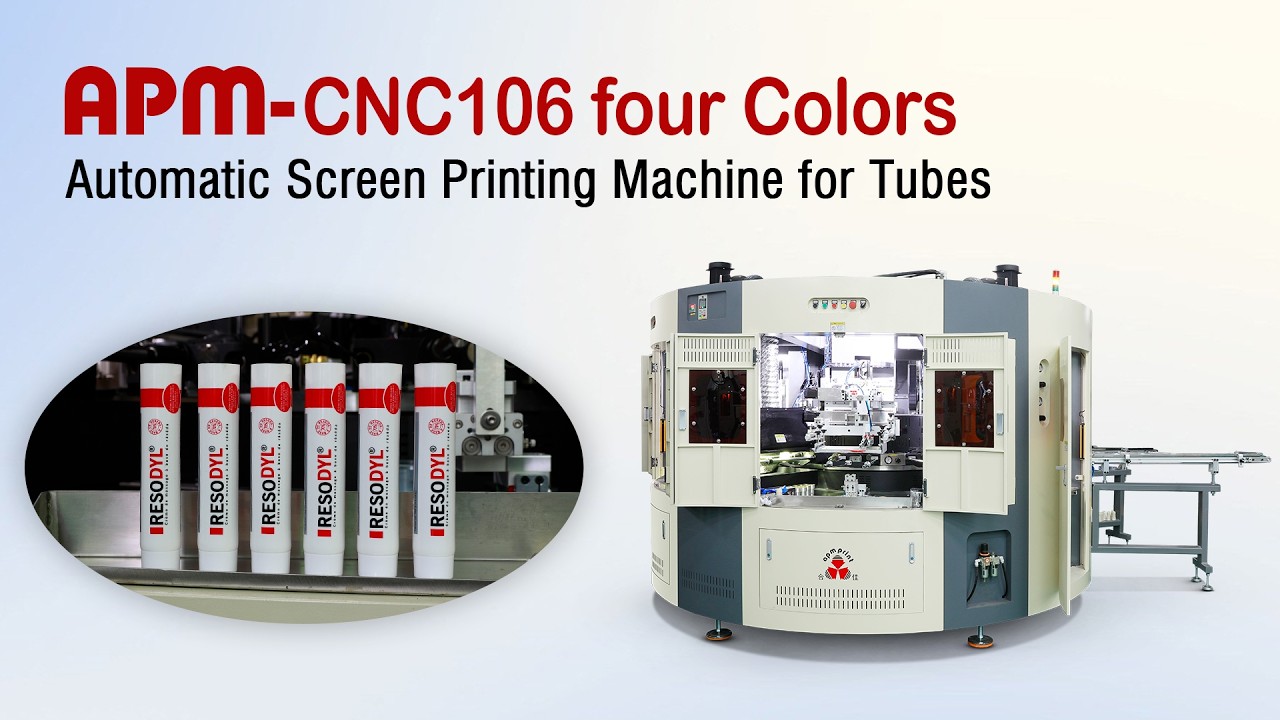
Watch this production video to see high-speed automatic screen printing running multi-color decoration on cosmetic tubes — including UV curing, tube indexing, and end-of-line inspection at full production speed.

Glossário de termos-chave
| Termo | Definição |
|---|---|
| ΔE (Delta E) | A numerical measure of color difference. ΔE 1.0 is imperceptible to the human eye. ΔE 2.0 is the standard acceptance tolerance for Pantone-matched cosmetic tube colors. ΔE > 3.0 is visibly different and typically requires reprinting. |
| ABL (Laminado de Alumínio com Barreira) | A multi-layer tube construction incorporating an aluminum foil barrier layer (9–12 µm) between polyethylene layers. Provides near-complete oxygen and moisture barrier. Standard for pharmaceutical topicals and barrier-sensitive cosmetic formulas. |
| PBL (Laminado com Barreira Plástica) | An all-plastic laminated tube using EVOH polymer as the barrier layer instead of aluminum foil. More compatible with PE recycling streams. Requires UV-primer or corona pre-coat before digital UV printing. |
| LED-UV Curing | An ink curing method using LED lamp arrays emitting at defined UV wavelengths (typically 365–385 nm). Uses 55–65% less energy than mercury arc UV systems. No mercury content. LED lamps last 20,000+ hours vs. 1,000–2,000 hours for mercury arc. |
| Offset (Dry Offset) Printing | The dominant tube decoration process: UV ink transfers from a raised relief plate to a rubber blanket, then to the tube surface. Produces ink films of 3–6 µm. Fastest tube printing process at 6,000–12,000 tubes/hour. |
| Serigrafia | Forces UV ink through a mesh stencil directly onto the tube surface, depositing 15–30 µm ink films. Delivers opaque whites, metallics, and tactile raised-ink effects not achievable with offset. |
| VDP (Variable Data Printing) | A digital printing capability that changes printed content (text, barcode, image) from unit to unit without stopping the machine. Enables personalization, multilingual production, and pharmaceutical batch coding within the primary decoration pass. |
| OEE (Eficiência Geral do Equipamento) | A manufacturing performance metric: OEE = Availability × Performance × Quality. 85% is world-class for tube printing. Below 72% indicates significant recoverable capacity losses. |
| COV (Compostos Orgânicos Voláteis) | Carbon-based chemicals that evaporate at room temperature. Present at high concentrations in solvent-based inks. Subject to EU Industrial Emissions Directive emission limits. Near-zero in UV-curable and water-based ink systems. |
| SPC (Statistical Process Control) | The use of statistical charts to monitor production parameters — color density, registration, UV energy — in real time, detecting process drift before out-of-specification tubes are produced. |
| Tratamento da COVID-19 | A high-voltage electrical surface treatment applied to PE and PBL tubes before printing. Raises surface energy from ~32 mN/m to 44+ mN/m, enabling UV ink adhesion that passes ASTM D3359 tape adhesion testing. |
| IQ/OQ (Installation/Operational Qualification) | A two-stage validation protocol for pharmaceutical-grade equipment. IQ confirms correct installation; OQ verifies the machine operates within specification across its full operating range. Required before pharmaceutical production on new or significantly modified equipment. |
Perguntas frequentes
FAQ 1: What’s the real difference between digital and traditional tube printing methods?
Digital UV inkjet printing deposits ink directly from a fixed print head array onto a rotating tube — no plates, no screens, no minimum order tooling cost. Traditional methods (offset, screen, rotogravure) use physical printing elements that must be fabricated before production begins. Digital printing offers print-on-demand flexibility and full-color photorealistic quality at volumes from 500 units. Offset produces the lowest cost per tube at volumes above 25,000–30,000 units per SKU per year and achieves the fastest sustained throughput (6,000–12,000 tubes/hour). Screen printing delivers opaque ink layers 15–30 µm thick — enabling metallic effects, tactile textures, and pharmaceutical-grade opaque white base coats that digital and offset cannot replicate at equivalent ink build. Most production-scale manufacturers use a deliberate combination of all three methods, allocating work to each based on batch size, substrate type, and decoration requirements.
FAQ 2: How long does it typically take to see ROI from upgrading tube printing equipment?
Most manufacturers recoup their investment within 18–36 months through a combination of: reduced energy costs (LED-UV conversion, 55–65% electricity saving), reduced QC labor (inline vision replacing manual inspection), setup waste elimination (quick-change format tooling, recipe-based changeover), reduced unplanned downtime (predictive maintenance), and new revenue from short-run digital work previously declined. Facilities with high changeover frequency and multi-SKU portfolios see shorter payback periods because setup efficiency improvements compound across every changeover event. Facilities running high-volume single-SKU production see longer payback driven primarily by energy and waste savings. For a mid-volume facility decorating 8–15 million tubes annually, a payback period of 2–3 years is well-documented across multiple customer installations.
FAQ 3: Can modern tube printing machinery handle both cosmetic and pharmaceutical products?
Yes, with important configuration considerations. For pharmaceutical production, the machine must generate compliant batch records with ink lot traceability, operator authentication, and inline measurement data retention — all tied to a specific production run. The control system must be 21 CFR Part 11-compatible for FDA-regulated markets or equivalent for EU GMP requirements. For cosmetic production, these documentation requirements may be less prescriptive, but are increasingly requested by major retail buyers as part of supplier sustainability and quality audits. Multi-market contract facilities serving both categories typically configure a single machine with switchable documentation modes — pharmaceutical batch record mode for regulated runs, standard production mode for cosmetic runs — avoiding the capital cost of separate pharmaceutical-grade and cosmetic-grade lines.
FAQ 4: What sustainability features should I prioritize in new equipment?
Three changes deliver the highest combined impact on sustainability compliance and operating cost: (1) LED-UV curing systems — eliminate mercury waste, reduce energy consumption 55–65%, improve cure consistency; (2) water-based or UV-curable ink systems — reduce VOC emissions to near-zero, supporting EU Industrial Emissions Directive compliance and retail buyer sustainability scoring; (3) precision ink metering — reduce ink consumption 18–23% per shift through closed-loop delivery control, lowering both material cost and ink waste requiring disposal. Documentation capability — the ability to generate auditable records of ink type, energy consumption per batch, and waste metrics — is increasingly required for retail sustainability audit compliance. Machines without data logging cannot participate in supplier sustainability programs regardless of how eco-friendly their ink systems are.
FAQ 5: How do I know if my current production volume justifies investing in new machinery?
Four threshold indicators that typically justify an upgrade assessment: (1) You are running at 70%+ machine utilization and experiencing scheduling pressure or are declining new orders due to capacity constraints. (2) Your cosmetic brand or pharmaceutical customers are requesting quality documentation — inline QC data, color traceability, batch records — that your current equipment cannot provide. (3) Your setup and changeover time makes short-run orders (below 10,000 units) unprofitable at any price you can charge competitively. (4) Your annual QC rejection rate for decoration defects — color, registration, adhesion failures — exceeds 1.5% of production. Any one of these conditions represents a documented cost that an equipment upgrade addresses directly. An accurate ROI calculation mapping your specific production data against documented equipment capability improvements will determine the payback period for your situation.
FAQ 6: What training and support do equipment providers typically offer?
Quality suppliers provide: structured operator training (minimum 5–8 days on-site at the machine covering HMI operation, changeover procedures, inline QC system, and first-line fault diagnosis); documented operator qualification records; video-based remote procedure support for post-installation reference; preventive maintenance training for facility maintenance engineers; a 3-year spare parts forecast with unit pricing; and a committed technical support response time — not a best-efforts estimate. For pharmaceutical installations, the supplier should additionally provide IQ/OQ protocol templates, completed IQ/OQ test reports, and ongoing calibration support documentation. Verify all of these commitments in writing in the purchase agreement before signing — verbal assurances during the sales process do not constitute contractual obligations.
FAQ 7: Can I integrate new printing machinery with my existing production line?
Most current-generation tube printing machines support integration via standard industrial communication protocols (OPC-UA, Profinet, EtherNet/IP), enabling speed matching, alarm sharing, and production data exchange with upstream tube forming equipment and downstream filling and sealing lines. Compatibility depends on the control system age and protocol support of your existing equipment. The most reliable integration approach is to share your existing line’s PLC specifications and control architecture with the new equipment supplier during the evaluation phase — before purchase commitment — and request a documented integration plan confirming that the interface is achievable with your current equipment configuration. The line-balancing analysis is equally important: printing machine throughput at your tube diameter and substrate should match within 15% of your upstream forming and downstream filling machine rates to avoid creating a new bottleneck.
FAQ 8: How do I ensure compliance with FDA and EU regulations for pharmaceutical tube printing?
Three actions cover the regulatory baseline: (1) Specify a machine with 21 CFR Part 11-compatible electronic batch records (for FDA) or equivalent GMP data logging documentation (for EU). (2) Require IQ/OQ validation documentation from the equipment supplier, and conduct PQ (Performance Qualification) using your actual product tube and ink specification before releasing the machine to commercial production. (3) Obtain ink composition data, migration test reports, and substrate-specific adhesion qualification data from your ink supplier and retain these in the product’s PIF (EU) or batch file (FDA). Working with equipment suppliers who have documented experience in pharmaceutical tube decoration — and who can produce reference customer contacts in regulated markets — reduces the time and cost of achieving audit-ready compliance significantly compared to qualifying a machine that was not designed with pharmaceutical applications in mind.
FAQ 9: What happens if I need to print tubes in multiple sizes or materials?
Confirm with the equipment supplier the specific diameter and length range the machine handles with standard tooling sets — and what tooling is required for each format change. A well-specified multi-format tube printing machine handles diameters of 13.5–50 mm and lengths of 50–220 mm through mandrel set changes (5–10 minute physical swap per diameter) and HMI recipe recall (under 2 minutes). For substrate changes — from PE to ABL laminate to PBL — the key variables are corona treatment settings (PE and PBL require corona pre-treatment; ABL typically does not), UV cure energy (ABL’s lacquered surface may require slightly different cure profiles than PE), and impression pressure settings. Modern quick-change systems store all of these parameters in the SKU recipe, making substrate changeover as straightforward as diameter changeover.
FAQ 10: Is leasing or purchasing tube printing equipment better for my business?
Purchase if your production volume is stable and predictable, you plan to operate the machine for 8–12 years, and you have capital available without constraining market growth investment. Leasing typically costs 30–50% more over a 10-year equipment period — but preserves cash flow, which is a meaningful trade-off for brands in early rapid growth phases where capital deployed to distribution generates higher returns than equipment ownership. The practical decision tool: calculate the total lease cost over your expected holding period and compare it to purchase price plus maintenance over the same period. If the lease premium is below the opportunity cost of the capital tied up in an outright purchase — for fast-growing facilities deploying capital into market development — leasing makes financial sense. If the lease premium is simply additional financing cost without flexibility benefit, purchasing wins on economics.
FAQ 11: How can I reduce waste and improve sustainability without sacrificing profitability?
Three targeted investments with documented positive ROI impact on both waste reduction and margin: (1) Precision ink metering with closed-loop density control — reduces ink consumption 18–23% per shift, cutting material cost and ink disposal requirement simultaneously. (2) LED-UV curing conversion — reduces energy cost 55–65% while eliminating mercury lamp waste. (3) Digital printing capability for short-run SKUs — eliminates tube setup waste (500–800 tubes per color per changeover on conventional offset), reduces ink waste from wash-up cycles, and enables print-on-demand inventory management that eliminates obsolete-tube write-downs. Taken together, these three upgrades typically improve gross margin on printed tube production by 3–6 percentage points — while generating the documented sustainability metrics that retail buyers increasingly require in supplier sustainability scorecards.
FAQ 12: What’s the best way to choose between different equipment providers and technologies?
Request a machine demonstration on your actual tube substrate — not a generic demonstration tube — with your actual artwork file and ink specification. Observe registration accuracy, setup time, inline QC response to a deliberate color deviation, and the changeover procedure from one SKU to another. Request fill weight Cpk equivalent for printing: ΔE data from a minimum 4-hour production run at rated speed, showing mean and standard deviation of color deviation across the run. Compare total cost of ownership — not purchase price — across your evaluation candidates. Request references from customers in your market segment (cosmetic or pharmaceutical, similar volume) and contact them independently. Ask specifically about support responsiveness after purchase, because the sales process behavior and the post-sale service behavior frequently diverge. And evaluate the supplier’s upgrade path documentation: the machine you buy today should have a clearly defined, costed path to the capabilities you’ll need in three years.