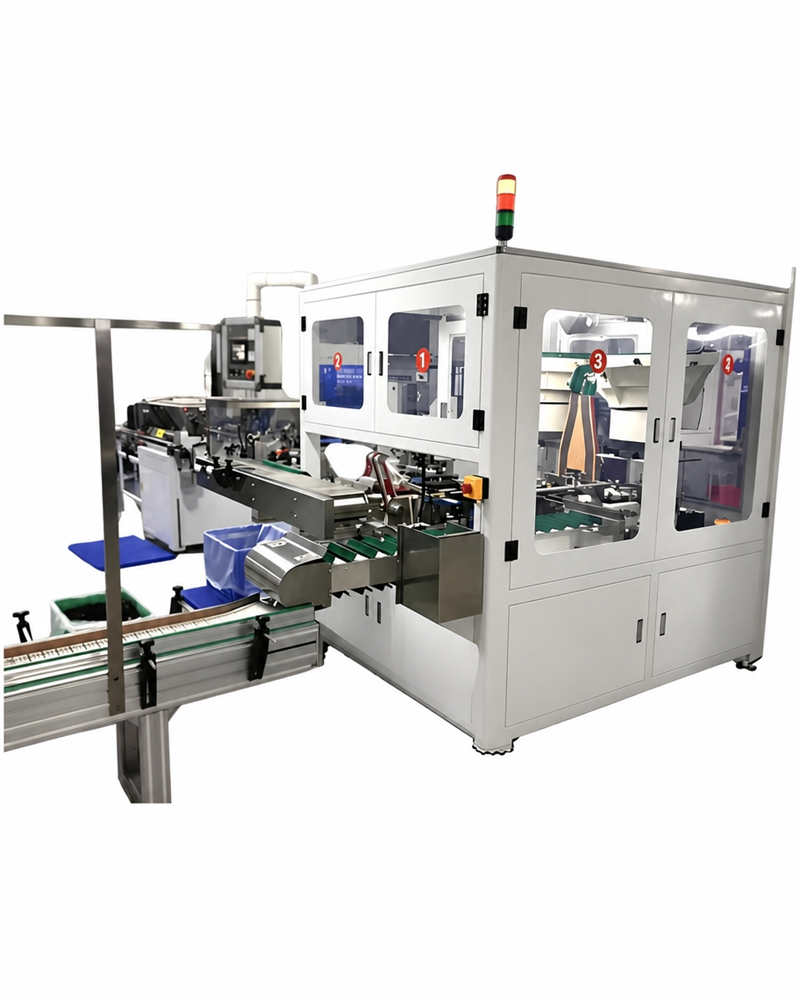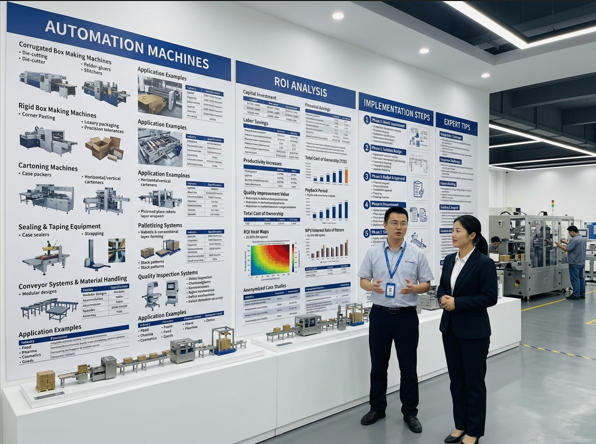

If you manage a box making or packaging operation — whether in FMCG, food, pharmaceuticals, or e-commerce fulfillment — the question in 2026 is no longer whether to automate, but which automation solutions fit your production reality and how to sequence the investment. Automation in this context means the use of purpose-built machinery and software to handle box forming, filling, sealing, palletizing, and material handling with minimal manual intervention — converting what used to be a labor-intensive sequence of manual steps into a controlled, data-monitored production flow.
The market numbers confirm the urgency. The global packaging automation market was valued at USD 79.78 billion in 2025 and is projected to reach USD 170.96 billion by 2035 at a 7.8% CAGR, according to Towards Packaging. The corrugated box making machine segment alone is set to grow from USD 2.9 billion in 2025 to USD 4.3 billion by 2034. This growth is not speculative — it is driven by three concrete operational pressures: rising industrial labor costs, stricter food and pharmaceutical packaging compliance requirements, and the accelerating adoption of on-demand, right-sized packaging to reduce freight and material spend.
This guide walks through every layer of box making and packaging automation: the core machine types, the systems that connect them, how to implement them step by step, what it costs, and how to calculate whether the investment is justified for your specific operation. It is written for factory managers, plant engineers, and procurement specialists at B2B manufacturers — not for retail or consumer audiences.
Automation Solutions Overview
Types of Automation Technologies
Box making and packaging automation covers a broad family of technologies, each addressing a distinct stage of the production workflow. At the upstream end, die cutters (machines that stamp or cut flat sheet material into box blanks using shaped steel dies) and folder-gluers (machines that fold and adhesively bond flat box blanks into finished cartons) convert raw corrugated board or paperboard into the structures that everything else depends on. Downstream, case erectors (machines that automatically form flat-pack cases into open boxes ready for filling), case sealers, and robotic palletizers handle the filled product. Connecting all of these are conveyor and material handling systems — the circulatory system of any automated line.
The level of automation can be segmented into three tiers. Semi-automatic systems require operator input at defined steps (loading blanks, positioning product) but automate the mechanically intensive tasks like folding, gluing, and sealing. Fully automatic systems operate continuously with a single supervisor monitoring multiple machines. Hybrid configurations — increasingly common in mid-size factories — automate the highest-labor-intensity steps while retaining manual operation for low-volume or high-variability product runs, reducing capital spend while still delivering meaningful labor savings.
Integration in Packaging Processes
True automation value is not realized by individual machines — it is realized by the integration of those machines into a synchronized production line. A case erector running at 30 cases/min feeding a fill station capped at 20 cases/min creates a downstream bottleneck and idle asset cost. Effective integration requires mapping the entire production flow first: input material feed rate, fill speed, sealing speed, palletizing speed, and the accumulation buffer between each station. Cartonization software — software that algorithmically determines the optimal box size for a given product or order — sits at the top of this integration stack, feeding dimensional instructions to on-demand box making equipment and reducing both material use and freight cost simultaneously.
Industry insight: The factories gaining the most measurable ROI from automation in 2025–2026 are not those that installed the most expensive equipment — they are those that audited their material flow first, identified the top-three bottlenecks, and targeted automation precisely at those constraints. A PMMI industry survey found that plants with integrated line control systems (where all machines share a common PLC network) averaged 8–12% higher OEE than plants where individual machines operated independently, even when the individual machines were identical models.
🔄 Typical Automated Box Making & Packaging Production Flow
Material Feed
Digital Cutter
Gluer
Erector
Pack
Sealer
Stretch Wrap
Each station linked by conveyor; cartonization software governs box dimensions from the top of the flow.
Benefits of Packaging Automation
Efficiency and Productivity
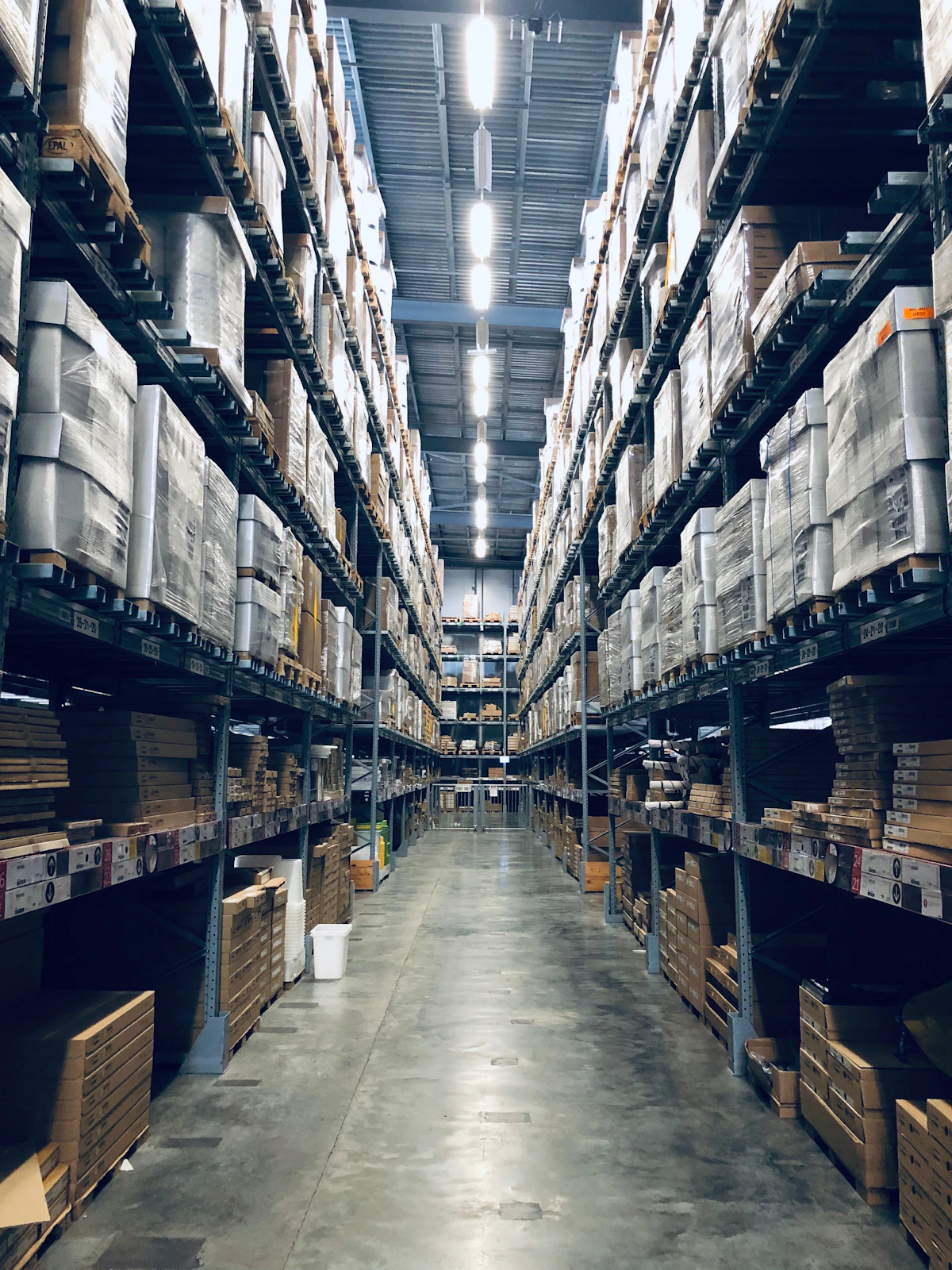
The productivity advantage of automation is most visible not in theoretical peak speeds, but in sustained throughput across a full shift. Manual packaging lines lose 15–25% of available production time to fatigue-related slowdowns, inconsistent operator pace, and informal break patterns. A fully automatic case erector-sealer combination running at a conservative 20 cases/min sustained over a 10-hour shift produces 12,000 cases — versus a manual team of 4–5 workers producing 6,000–8,000 cases with greater variability and a higher re-work rate. That productivity delta compounds: factories running automated lines typically see 35–50% higher annual throughput per square meter of floor space compared to equivalent manual operations.
Cost Savings
Labor displacement is the most immediately quantifiable savings stream. A fully automated packaging line typically reduces direct labor headcount by 3–6 operators per shift. At an average industrial labor cost of $18–$25/hour (including benefits), that represents $110,000–$300,000 per year in annual labor savings per line — before any material efficiency or quality gains are counted. Right-sizing technology adds another layer: a Packsize study found that companies implementing right-size packaging saw an average 40% reduction in packaging size and a 26% reduction in shipping cost per unit, as fewer void-fill materials and smaller carton dimensions reduce both material spend and freight cube utilization.
Quality and Consistency
Manual packaging introduces three quality failure modes that automation eliminates: inconsistent glue application (leading to box failures in transit), incorrect fold sequences (leading to structural weakness), and variable seal strength (leading to product exposure or leakage). Automated folder-gluers apply adhesive at a precisely controlled temperature, volume, and position, with vision systems verifying bond quality at speeds of 200–600 boxes/min. The practical result: one FMCG manufacturer reported reducing transit damage claims from 2.1% to 0.4% of shipments within six months of deploying automated case sealing — a quality improvement that directly reduced customer chargebacks and returned goods processing costs.
Scalability
Manual lines scale linearly: double the output requires roughly double the headcount. Automated lines scale at a fraction of that cost — upgrading from 20 to 40 cases/min often requires a conveyor speed adjustment and a feeder magazine upgrade, not a full headcount doubling. This non-linear scalability is particularly valuable for factories with seasonal demand peaks (food, consumer goods, e-commerce fulfillment) where hiring and training temporary workers for a 3-month peak season carries both cost and quality risk that automation simply does not.
📊 Key Performance Improvements After Packaging Line Automation (% improvement vs. manual baseline)
Sources: Packsize right-sizing study; PMMI industry benchmarks; Viking Masek ROI data; Weldmaster 2026 automation trends report
Box Making Machines and Manufacturers

Die Cutters
A die cutter uses a shaped steel rule die — a blade bent into the exact outline of the desired box blank — to simultaneously cut and crease flat corrugated or paperboard sheets. Conventional flatbed die cutters offer very high precision (±0.1mm typical) and are the standard for large-volume, fixed-format production runs. They process sheets at 4,000–8,000 impressions/hour depending on format size. The key procurement decision: flatbed die cutters require a custom steel die for each box design, which costs $300–$1,500 per die and takes 2–5 days to produce. For factories running 5–10 fixed box formats in high volume, this is the most cost-efficient technology. For factories with frequent format changes, the next option is more relevant.
Digital Cutters
Digital cutting machines (also called CNC cutters or knife plotters) use computer-controlled cutting heads to cut box blanks directly from digital design files — no physical die is required. This eliminates die tooling cost and lead time entirely, making digital cutters ideal for short runs, prototype development, and operations with high SKU variety. Trade-off: digital cutters are slower than flatbed die cutters (typically 1,500–3,000 sheets/hour at full format) and carry a higher capital cost. For a factory producing 50+ different box formats or running regular custom orders, the flexibility advantage outweighs the speed difference. As American Micro Industries notes, digital cutting also enables more complex structural geometries that conventional dies cannot economically produce.
Folder-Gluers
A folder-gluer takes a die-cut flat blank and converts it into a finished, glued carton ready for erection and filling. Modern automatic folder-gluers operate at 200–600 boxes/min with hot-melt adhesive application systems that maintain glue temperature within ±2°C for consistent bond strength. The folder-gluer machine market was valued at USD 678.4 million in 2025 and is forecast to reach USD 1.30 billion by 2035 (GMInsights) — driven primarily by corrugated packaging growth in Asia-Pacific and European sustainability packaging mandates requiring more complex folded carton designs. Key specification to review: changeover time between box formats. Leading models achieve format changeover in under 15 minutes with digitally stored job parameters; older mechanical-adjustment machines require 45–90 minutes, which directly limits SKU flexibility.
Case Erectors
A case erector automatically unfolds flat-packed (knocked-down flat, or KDF) corrugated cases, squares them, and folds/seals the bottom flaps — producing a fully formed open case ready for product loading. Speed range: 15–50 cases/min for industrial automatic models. The case erectors market exceeded USD 3.41 billion in 2025 and is projected to grow at 4.3% CAGR through 2035 (Research Nester). When specifying a case erector, the critical parameter is case size range — some models handle a fixed case size with quick-change adjustments, while servo-driven models store multiple size programs and switch automatically between them with zero manual adjustment. For factories with high format variety, servo-driven case erectors eliminate the 20–40 minute mechanical changeover that limits flexible packaging operations.
Case Sealers
Once a case is filled, a case sealer closes and seals the top flaps using tape, hot-melt glue, or both. High-speed random case sealers (machines that automatically detect and adjust to different case heights without mechanical setup) run at up to 25 cases/min on mixed-format lines. Fixed-format tape sealers reach 42 cases/min on dedicated lines. Industry insight: hot-melt glue sealing produces stronger bonds than tape for heavy product loads (typically anything over 15 kg per case), but requires more maintenance (nozzle cleaning, adhesive temperature management). For food and pharmaceutical environments, hot-melt is also preferred because it leaves no tape adhesive residue that could contaminate product contact surfaces during unpacking.
Right-Sizing Solutions
Right-sizing systems — also called box-on-demand or on-demand box making machines — take a different architectural approach. Instead of pre-making boxes in fixed formats, these systems cut and score a continuous roll of corrugated board into a custom-dimensioned box for each order or product, eliminating void fill and minimizing external box dimensions. Packsize and Smurfit WestRock are leading providers. A corrugated packaging operation that implemented a right-sizing system reported eliminating 3.2 million void-fill bags per year while reducing per-shipment packaging material cost by 32% within 14 months of deployment. The systems’ height-reduction cutters can process up to 15 custom-sized boxes per minute — sufficient for most mid-scale fulfillment operations.
Leading Box Making Machine Manufacturers
The global corrugated box making machine market is led by a mix of European precision engineering companies (BOBST, Fosber, Göpfert), US integrators (Pearson, Lantech, Combi Packaging Systems), and Asia-Pacific volume manufacturers. The Asia-Pacific segment is particularly relevant for B2B buyers in emerging markets — Chinese and Taiwanese manufacturers offer CE-certified lines at 30–50% lower capital cost than European equivalents, with comparable throughput specifications, though after-sales support infrastructure varies significantly. When evaluating Asian-market suppliers, prioritize those with documented installations in your target region and local service engineers rather than relying solely on remote technical support.
Source: GMInsights, Research Nester, Pearson Packaging, Lantech, Ranpak — 2025 published specifications
Packaging Automation Systems
▶ Watch: Automated Box Packing & Sealing Line in Operation
A high-speed automatic packaging line demonstrates how case forming, filling, sealing, and conveying are integrated into a single synchronized flow.
Automated Packaging Lines
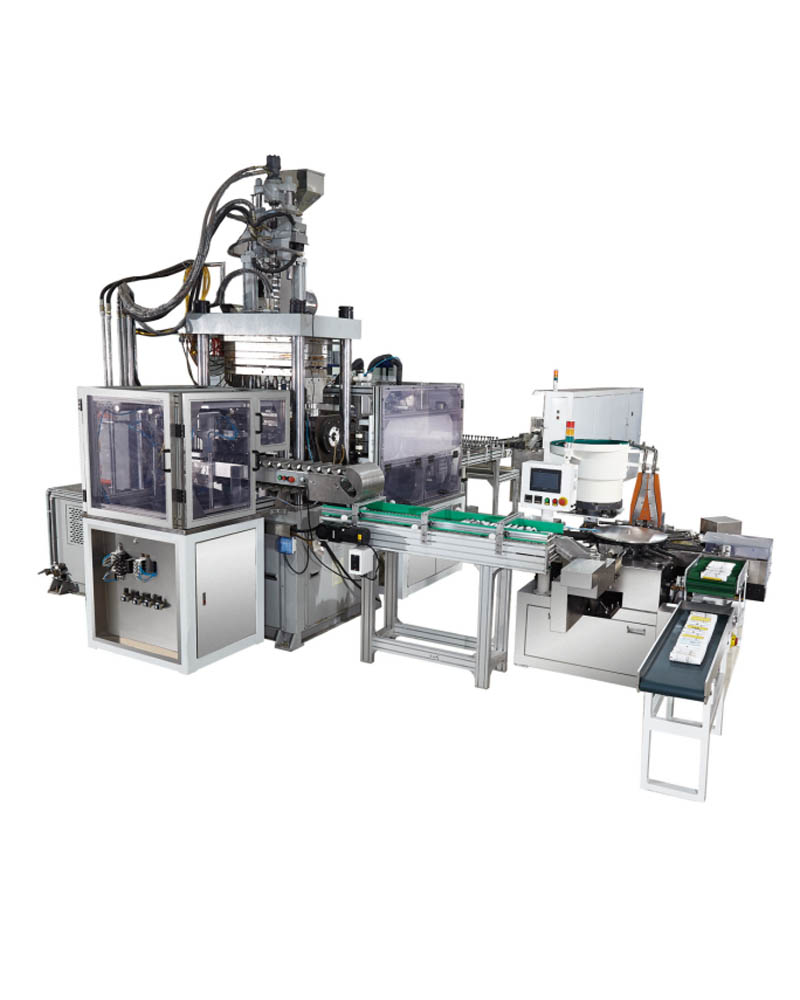
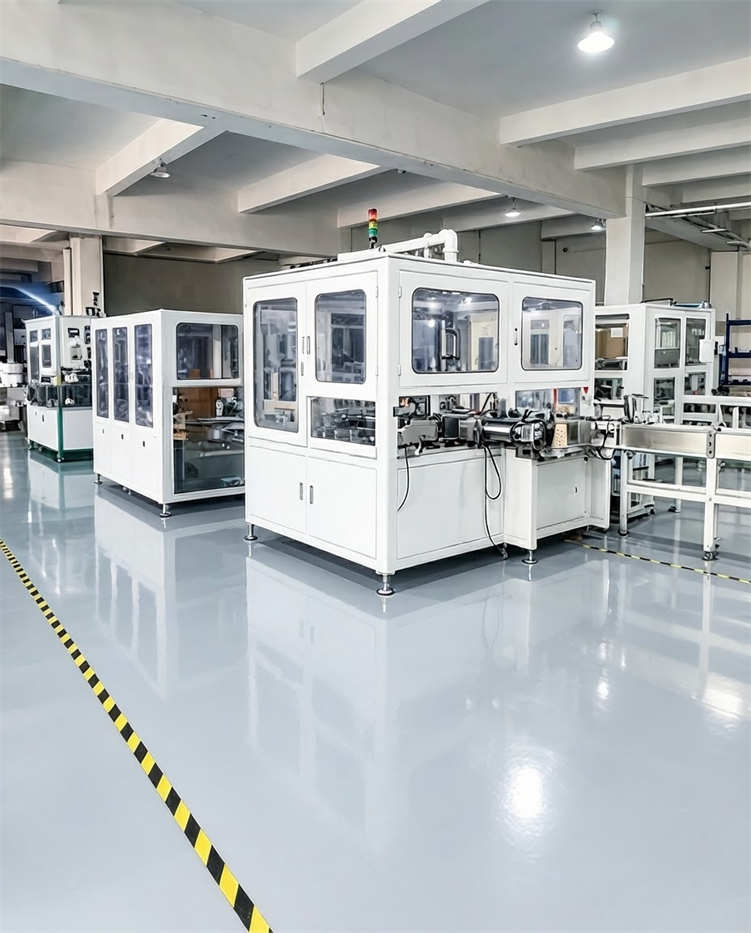
A fully automated packaging line integrates all individual machine stations — case erector, fill station, case sealer, labeler, and palletizer — under a unified PLC (Programmable Logic Controller) network with a central SCADA (Supervisory Control and Data Acquisition — a system that collects real-time data from all machines and presents it on a unified dashboard) interface. Every station’s speed, status, and fault conditions are visible in one place. When a downstream station falls behind, upstream machines automatically decelerate to match — preventing case pile-ups that lead to jams, product damage, and line stoppages. This coordination is what separates a true automated line from a collection of individual machines placed sequentially.
For B2B manufacturers in food and pharmaceutical sectors, automated lines also provide a critical compliance advantage. FDA 21 CFR and EU GMP regulations increasingly require documented evidence of process control — that every packaged unit was processed under controlled, verified conditions. Automated lines with data logging capability generate this evidence automatically, reducing audit preparation time and the risk of regulatory findings that manual line documentation cannot reliably prevent.
Robotic Solutions
Industrial robots in packaging serve two primary functions: pick-and-place (transferring individual products from a conveyor into cases) and palletizing (building pallet loads from filled, sealed cases). The robotic packaging systems market exceeded USD 6.4 billion in 2024 and is growing at 5.3% CAGR through 2034. Six-axis articulated robots handle the most complex pick-and-place tasks (irregular product shapes, mixed-SKU cases); delta robots (fast, lightweight arm systems suspended above a conveyor) excel at high-speed uniform product placement at up to 150–200 picks/min. Collaborative robots (cobots) — designed to operate safely alongside humans without physical guarding — are increasingly deployed in hybrid lines where full automation is not yet justified but labor reliability is a constraint.
Hybrid Systems
Hybrid systems are the pragmatic choice for mid-size manufacturers whose production mix does not uniformly justify full automation. A typical hybrid configuration automates the highest-labor-intensity, lowest-variability tasks (case erecting, sealing, palletizing) while retaining manual operation for high-variability tasks (product loading, kitting, bundle assembly). The capital cost of a hybrid system is typically 40–60% lower than a fully automated equivalent, with 50–70% of the labor savings — a favorable ratio for factories not yet at the volume threshold where full automation closes its payback period in under 24 months.
Conveyors and Material Handling
Conveyors are the infrastructure layer of any automated packaging line — they determine how fast, gently, and reliably product moves between stations. The main conveyor types relevant to box making and packaging are: belt conveyors (flat surface, general product transport), tabletop chain conveyors (modular interlocking links, preferred for wet or wash-down environments), roller conveyors (accumulation zones between stations), and cleated belt conveyors (inclined transport, typically from a lower fill station to a higher sealing or palletizing level). Material handling also includes case turners, diverters, and print-and-apply labeling stations that attach shipment labels and barcodes in-line, eliminating a manual labeling step entirely.
Cartonization Software
Cartonization software is the algorithmic decision layer that determines which box size and packing configuration minimizes material use and freight cost for a given order. Modern cartonization platforms (Optioryx Pulse, Paccurate, MagicLogic) integrate with WMS (Warehouse Management Systems) and ERP platforms via API, receiving order data and returning optimal carton selection and pack instructions in real time before a box is even erected. The reported savings: companies implementing cartonization software alongside right-sizing hardware report 12–22% reductions in material cost and 8–15% reductions in freight cost within the first year. For high-SKU B2B shippers, this is one of the highest-ROI software investments in the packaging technology stack.
🥧 Packaging Automation Adoption by System Type — Industrial Manufacturers 2025
- Fully Automatic Lines: 35%
- Hybrid Systems: 30%
- Semi-Automatic: 25%
- Manual / No Automation: 10%
Source: PMMI State of the Industry 2025 — industrial B2B manufacturers (FMCG, food, pharma, industrial)
Implementation Steps

Step 1 — Needs Assessment
A needs assessment is a structured audit of your current production process that quantifies where manual labor is most concentrated, where defect rates are highest, and where throughput constraints exist. It produces three outputs: a current-state process map (every step, every handoff, every wait), a gap analysis (where automated solutions exist for your specific constraints), and a prioritized investment roadmap (what to automate first for fastest payback). The assessment should be led jointly by production engineering and finance — engineering maps the process, finance values the gaps. Typical duration: 2–4 weeks for a medium-complexity factory.
A common mistake: starting the needs assessment by asking “what machine should we buy?” rather than “what problem are we solving?” One food packaging plant spent $180,000 on a high-speed case erector only to discover that the limiting constraint was the manual fill station downstream — the erector sat at 30% utilization while a $25,000 fill automation upgrade would have delivered more throughput improvement per dollar invested.
Step 2 — System Selection
System selection should be driven by four criteria in this order: (1) functional fit (does the machine handle your specific product, format, and material?), (2) integration compatibility (does it communicate with your existing or planned control infrastructure?), (3) supplier service capability (can they commission, train, and support you within a reasonable response time?), and (4) total cost of ownership (not just purchase price, but energy cost, spare parts availability, and expected MTBF). Request a factory acceptance test (FAT) — a live run of your own product at the supplier’s facility before shipment — for any capital equipment purchase above $50,000. This single step has prevented more mismatched implementations than any other due diligence activity.
Step 3 — Installation and Integration
Physical installation is typically the shortest phase but creates the most disruption if not planned carefully. A phased installation approach — where new automated equipment is installed alongside the existing manual line and tested before the manual line is decommissioned — reduces production risk significantly versus a hard cutover. Allow for a parallel operation period of 2–4 weeks where both the manual and automated processes run simultaneously, so operators can validate automated output quality against the manual baseline and engineers can fine-tune machine parameters under live production conditions.
PLC integration — connecting the new machine to your existing line control network — deserves its own workstream. If your existing machines use Siemens S7 PLCs communicating via PROFINET and the new machine uses a Mitsubishi controller on EtherNet/IP, a protocol gateway or OPC UA bridge will be required. Confirm communication protocol compatibility during system selection, not during installation.
Step 4 — Staff Training
Automation does not eliminate the need for skilled operators — it changes the skills required. Manual operators need to become machine monitors, troubleshooters, and changeover specialists. Training should cover: touchscreen HMI operation and recipe management, standard fault response procedures (what to do when the machine faults — without calling engineering), basic PM (preventive maintenance) tasks the operator owns (lubrication, cleaning, minor adjustments), and changeover procedures for different product formats. Suppliers who provide on-site training during commissioning and leave behind clear, visual SOPs (Standard Operating Procedures with photographs, not just text) consistently report lower first-year downtime rates than those who provide only a video tutorial and a technical manual.
Cost and ROI Considerations
Initial Investment
Capital investment ranges vary significantly by automation scope. A single semi-automatic case sealer starts at $15,000–$25,000. A complete automated end-of-line system (case erector + fill station + case sealer + labeler + palletizer + conveyor integration) typically runs $250,000–$600,000 for a mid-scale FMCG configuration. High-speed corrugated box making lines with die cutting, folder-gluing, and integrated case erection can reach $1M–$3M for full-line configurations. Budget planning should also include: installation cost (typically 10–15% of machine cost for straightforward installations, up to 25% for complex PLC integration projects), operator training cost ($5,000–$20,000 for on-site supplier training), and spare parts initial stocking (typically 2–3% of machine value for first-year coverage).
Operating Costs
Operating costs for automated packaging equipment break into three categories: energy (typically $8,000–$35,000/year per major machine depending on power draw and shifts run), consumables (hot-melt adhesive, tape, strapping — highly variable by production volume and material cost), and maintenance (preventive maintenance labor + spare parts, typically budgeted at 3–5% of machine purchase price per year for well-maintained industrial equipment). The AI-powered packaging automation trend is also beginning to reduce energy costs: Weldmaster’s 2026 trends report notes that AI-optimized motion control systems are reducing energy consumption in automated packaging lines by 12–18% through smarter acceleration and deceleration profiling.
ROI Calculation
A comprehensive ROI model for packaging automation should capture five value streams: labor savings, defect rate reduction, throughput increase, material efficiency (right-sizing), and maintenance/downtime reduction. The payback period formula:
Industry data from Viking Masek’s ROI analysis indicates that FMCG manufacturers running 2-shift operations typically achieve full payback on packaging automation investments in 10–18 months for end-of-line systems and 18–30 months for upstream box making equipment. The FMCG sector’s report on automation impact via Oxmaint cites an average ROI payback of 12–18 months for automated packaging lines in consumer goods manufacturing — a figure consistent with internal ROI models used by Tier-1 procurement teams.
📊 Annual Value Capture by Stream — Mid-Scale Automated Packaging Line (illustrative, 2-shift FMCG operation)
Illustrative model: $330K total annual value vs. ~$350K machine investment = ~12.7 month payback. Sources: Viking Masek, UBL Packaging, Oxmaint FMCG data
Choosing the Right Automation Solution
Selection Criteria
The most reliable selection framework used by experienced procurement engineers starts with a binary compatibility check before any commercial evaluation: Does this machine physically handle my product dimensions, weight, and material? Can it achieve my required throughput within a realistic OEE range (not theoretical peak)? Does the supplier have documented installations in my industry segment? If any of these questions produces a “no” or “unclear,” the machine is removed from the shortlist — regardless of price or marketing claims.
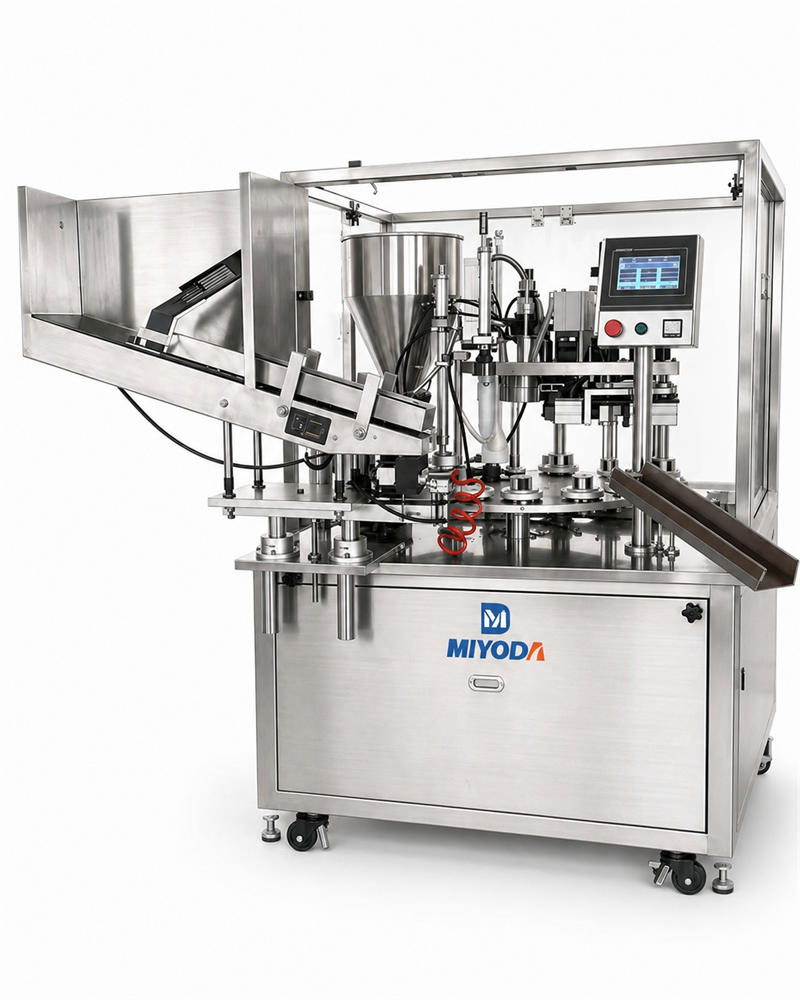
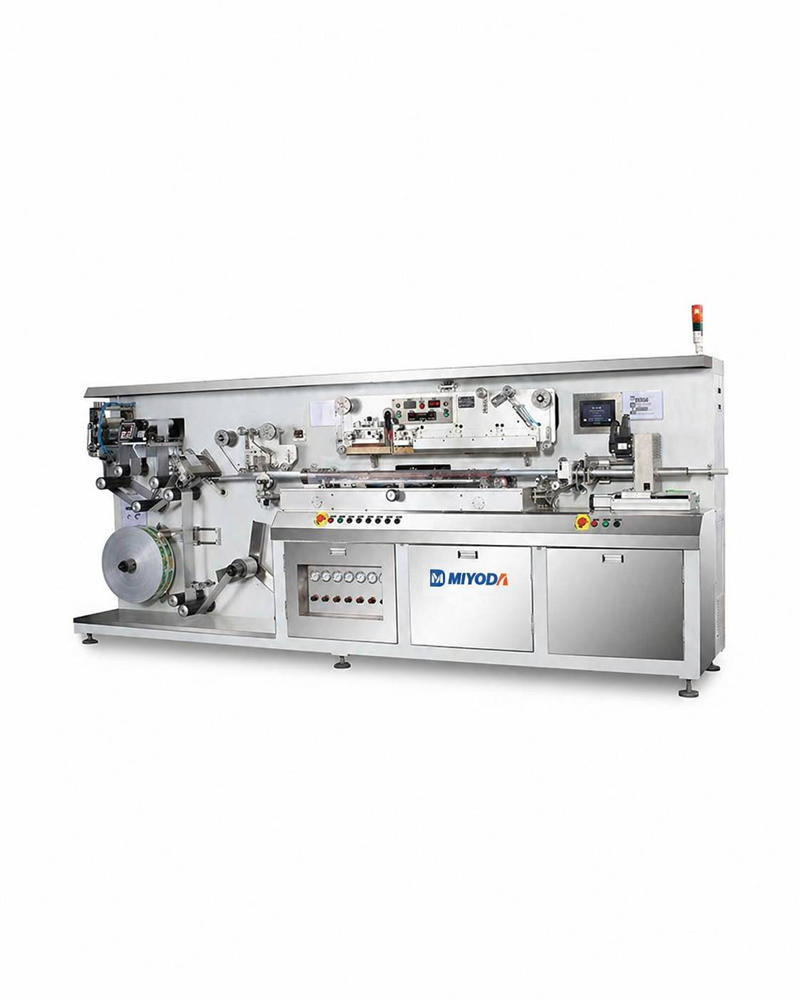
For tube packaging and specialized cosmetics/pharmaceutical packaging applications, it is worth evaluating suppliers whose core competency is specifically in your packaging format. Miyoda Packaging Machinery — a Shanghai-based manufacturer of automated tube production lines for cosmetics and pharmaceutical industries — exemplifies this specialization approach: their complete production line architecture (extrusion → printing → capping → filling → sealing) is designed as an integrated system rather than assembled from independent machines, which simplifies both the integration phase and the ongoing maintenance relationship. For buyers evaluating tube-specific automation within a broader packaging line project, their technical resources on extrusion tube manufacturing provide useful context for understanding full-line architecture choices.
Matching Solutions to Business Size
Product Type and Customization
Product type fundamentally drives machine specification choices. Heavy products (machinery parts, canned goods, bulk chemicals) require case erectors and sealers with heavier-duty structural ratings and hot-melt sealing rather than tape. Food and pharmaceutical products require stainless steel contact surfaces, wash-down capable motors, and compliance with FDA 21 CFR or EU GMP material standards. Fragile products (glass, electronics) require gentler robot end-of-arm tooling (vacuum suction rather than mechanical grippers) and lower conveyor speeds. High-variability product lines (e-commerce fulfillment with hundreds of SKUs) require servo-driven case erectors with electronic format memory and cartonization software to make the economics viable. Confirming product-type requirements in the specification document before approaching suppliers eliminates the most common source of post-purchase regret in packaging automation procurement.
For additional neutral guidance on machine standards and automation technology trends, resources such as PMMI — The Association for Packaging and Processing Technologies and Packaging World publish current equipment evaluation frameworks and industry case studies relevant to B2B procurement decisions.
Challenges and Solutions
Technical Integration
The most common technical failure in packaging automation projects is not mechanical — it is communication incompatibility between machine PLCs. A factory that purchased a German case erector (Siemens S7 PLC, PROFINET protocol), an Italian folder-gluer (Beckhoff TwinCAT, EtherCAT), and a Chinese palletizer (Fatek PLC, Modbus RTU) will spend more on integration engineering than on any individual machine — unless this was specified and budgeted in advance. The solution: define your facility’s standard control architecture (preferred PLC brand, communication protocol, SCADA platform) before issuing any RFQ, and require all new machine suppliers to comply with it or provide a protocol gateway as part of their scope. This single specification decision reduces integration risk by 60–70% in complex multi-vendor line projects.
Change Management
Production workers who have performed manual packaging tasks for years experience automation implementation as a direct threat to their employment security — whether or not redundancies are actually planned. This creates passive resistance: operators who follow the letter of their training but do not proactively surface machine issues, report faults promptly, or perform PM tasks consistently. The practical consequence is higher downtime, slower ramp-up to target OEE, and a longer payback period. The solution is not a motivational presentation — it is involving operators in the implementation process from the needs assessment stage, giving them roles in the parallel run evaluation, and transparently communicating how automation changes job content (monitoring, troubleshooting, changeover) rather than eliminating it. Projects where operators participated in the FAT evaluation report 40% faster ramp-up to target OEE versus projects where the machine arrived and operators were handed a manual.
Maintenance and Downtime
Unplanned downtime is the single biggest destroyer of packaging automation ROI. A $300,000 case erector-sealer running at 96% availability generates approximately $290,000 more annual throughput value than the same machine running at 85% availability — a $90,000 OEE difference that exceeds the entire annual maintenance budget for most facilities. Best-practice maintenance architecture for automated packaging lines includes: condition-based monitoring (vibration sensors on key drive components that alert before bearing failure, not after), a documented PM schedule that is visible on the HMI and sends shift-change reminders, a critical spare parts kit stocked on-site (not just in the supplier’s warehouse), and a supplier remote access connection for rapid diagnostic support when complex faults occur.
Compliance Concerns
Automated packaging equipment in food and pharmaceutical environments must comply with applicable regulations: FDA FSMA Preventive Controls for Human Food (21 CFR Part 110 for GMP in food packaging), EU GMP Annex 1 (sterile pharmaceutical products), and CE machinery directive (EU markets). The practical compliance check for procurement: verify that the machine supplier provides a Declaration of Conformity for the applicable regulation, that contact-surface materials are documented as food-grade or pharmaceutical-grade as appropriate, and that the machine’s design enables the cleaning validation required by your quality management system. Automated lines that were not designed with cleanability in mind — with hollow structural members, unsealed cable trays, and flat horizontal surfaces that collect debris — create ongoing GMP compliance exposure that manual cleaning cannot reliably remedy.
Key Takeaways for Operations and Procurement Teams
Automation in box making and packaging is no longer a strategic option — it is an operational baseline for any B2B manufacturer competing on cost, quality, or delivery speed in 2026. The technology range is mature and accessible across all budget levels, from a $20,000 semi-automatic case sealer to a $3M fully integrated corrugated line. The ROI is consistently positive when the investment is matched to real operational constraints, implemented with proper integration planning, and supported by a disciplined PM program.
The implementation path is clear: start with a rigorous needs assessment that maps your actual production flow before selecting any equipment. Evaluate suppliers on service capability and integration compatibility as much as on machine specifications. Involve your operators in the process from the beginning — their knowledge of failure modes and workflow nuances is irreplaceable during commissioning. And model your ROI across all five value streams, not just labor savings, to build the business case that gets budget approved.
Next step: Benchmark your current packaging line’s OEE, defect rate, and per-unit labor cost against the automation benchmarks in this guide. If the gap is 15% or more in two or three of those metrics, the payback case for your next automation investment is almost certainly already justified — the needs assessment just needs to prove it. For complete integrated packaging line solutions, reach out to established specialists like Miyoda Packaging Machinery for tube-format packaging lines, and review broader machine directories on DirectIndustry and industry bodies like Packaging Digest for neutral technology benchmarking.
📖 Key Terms Glossary
- OEE (Overall Equipment Effectiveness)
- A KPI calculated as Availability × Performance × Quality Rate. An OEE of 85% means 85% of scheduled time produces conforming output. Industry benchmark for automated packaging lines is 85–92%.
- KDF (Knocked-Down Flat)
- Pre-scored flat corrugated cases stored in flat-pack form for space efficiency. Case erectors convert KDF cases into formed, open boxes ready for filling.
- SCADA (Supervisory Control and Data Acquisition)
- A software platform that collects real-time operational data from all connected PLCs on a production line and displays it on a unified dashboard for monitoring and control.
- Cartonization Software
- Software that algorithmically selects the optimal box size and packing configuration for a given order, minimizing material use and freight cost. Integrates with WMS and ERP systems via API.
- FAT (Factory Acceptance Test)
- A live demonstration of a machine at the supplier’s factory, running the buyer’s actual product or a close analog, to verify performance before shipment. Standard due diligence for capital equipment purchases above $50,000.
- Right-Sizing
- An on-demand packaging approach where box dimensions are cut to match the exact product dimensions for each order, eliminating void fill and minimizing freight cube consumption.