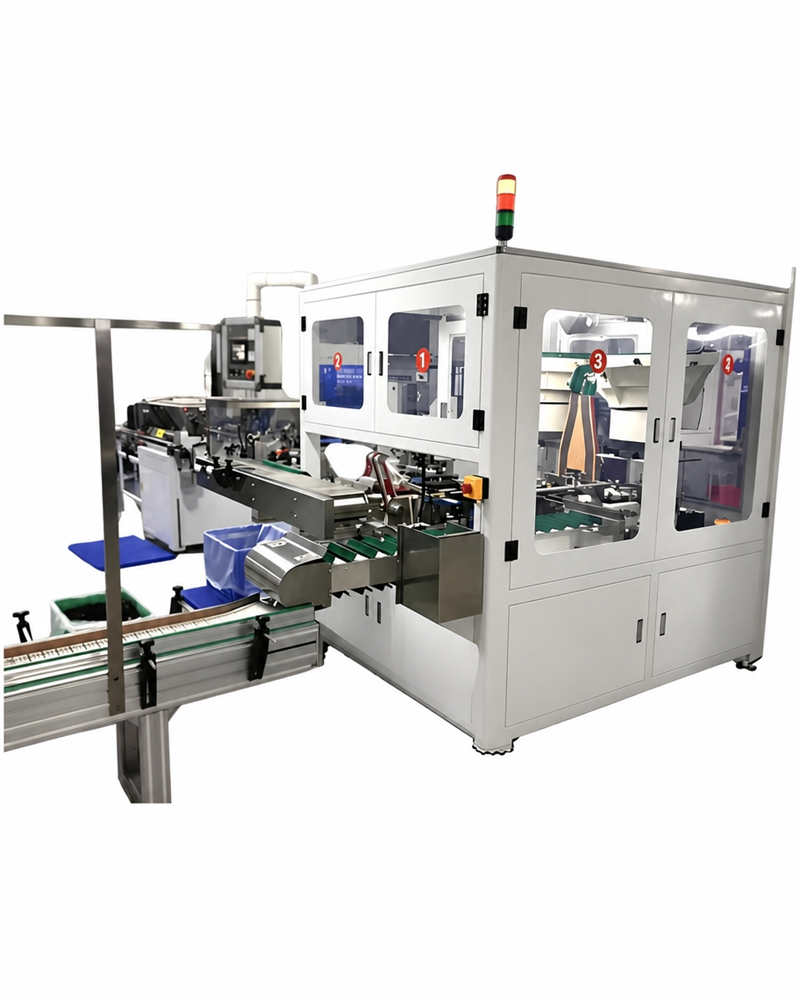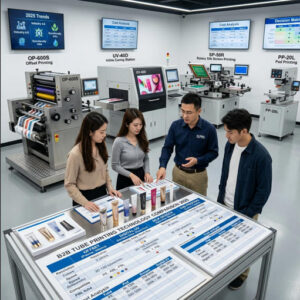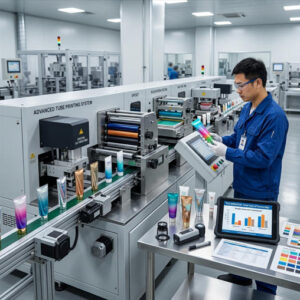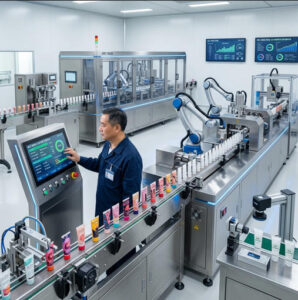
Choosing a tube printing machine is not a catalogue exercise. It is a production architecture decision that will determine print quality consistency on every batch you run, set the floor for your changeover efficiency across your entire SKU portfolio, and define your compliance posture for every regulatory inspection your facility faces over the next decade.
For B2B buyers at cosmetic contract manufacturers, pharmaceutical packaging operations, and tube machinery distributors, a poorly specified printing machine creates problems that compound: substrates that adhesion-fail six months into production, colour drift across multi-shift runs that shows up in retailer shelf comparisons, and GMP audit findings rooted in the absence of print parameter logging that should have been a machine procurement requirement.
This guide breaks the selection process into a structured decision framework: production goals and constraints first, technology options second, quality and integration requirements third, and total cost of ownership and vendor qualification last. Follow the sequence, and you will arrive at a machine specification that fits your current line and your three-year business plan.

Define Your Production Goals and Constraints
Determine Target Volumes, Cycle Times, and Growth Plans
Every tube printing machine specification starts with output numbers — but the number that matters most is not your current daily volume. It is your peak daily volume in year three, and the changeover frequency required to deliver it across your SKU portfolio.
A mid-scale cosmetic contract manufacturer running 15 SKUs across three product families might average 8,000 tubes per shift today but project 22,000 per shift within 24 months as two new brand accounts ramp. A machine specified at comfortable current volume — 12,000 tubes per shift capacity — is undersized before it is fully paid off. The correct specification starts with the year-three peak, then works backward to confirm that automation level, substrate handling, and print station configuration can sustain that output without throughput degradation at high-viscosity ink loads or multi-colour register changes.
Cycle time — defined as the time per tube from entry to print-complete exit, typically expressed in tubes per minute — must be verified at your specific tube diameter, print area, and colour count under production conditions, not under demo conditions. A machine rated at 120 tubes/min on a 25mm diameter single-colour tube may deliver 68 tubes/min on a 40mm diameter four-colour tube with UV cure dwell time. Request production data from a comparable tube format before the specification is finalised.
Assess Space, Power, and Utility Requirements
Production floor constraints are frequently underweighted in machine procurement specifications and become the source of costly installation redesigns. A fully automatic tube printing line with inline UV curing, vision inspection, and robotic tube handling may require 8–12 metres of linear floor space, three-phase power supply at 15–22 kW, dedicated ventilation for UV-cure off-gas management, and compressed air supply at 6–8 bar for pneumatic handling systems.
For pharmaceutical manufacturing environments, additional constraints apply: the machine must be compatible with cleanroom classifications applicable to the production area, compressed air systems must meet pharmaceutical-grade air quality standards, and all machine surfaces in contact with the production environment must be constructed from materials that can withstand validated cleaning and disinfection protocols. These requirements must be documented in the machine purchase specification before vendor shortlisting — not discovered during factory acceptance testing.
A pharmaceutical contract packager in Southeast Asia specified a tube printing machine that met all print quality and throughput requirements, but whose UV curing system required a dedicated ventilation extract that was incompatible with the existing cleanroom HVAC design. The retrofit cost — new extract ducting, cleanroom recertification, and production downtime — added USD 38,000 to the total project cost and delayed the production launch by 11 weeks. Confirming utility compatibility with the actual installation environment — not the machine’s stated requirements — is a pre-shortlisting task, not a post-purchase discovery.
Tube Printing Technology Options
Inkjet vs. Pad Printing vs. Laser vs. Screen — The Real Trade-Offs
The four dominant printing technologies applied to cosmetic and pharmaceutical flexible tubes each address a different combination of production requirements. The correct technology choice is determined by your tube substrate, print area geometry, colour complexity, volume profile, and compliance requirements — not by market trend or vendor preference.
🖨️ Digital Inkjet
- No plate or screen tooling cost
- Fastest changeover: file-to-print in minutes
- Supports variable data / serialisation
- Best for short-run and high-SKU variety
- Resolution: 600–1200 DPI typical
- Higher ink cost per unit at volume
- Adhesion on PE requires corona or primer pre-treatment
🖐️ Pad Printing
- Excellent for curved / irregular surfaces
- Suited to fine detail and logos
- Low-to-medium volume efficiency
- Per-colour plate required (tooling cost)
- Limited to 1–4 colours per pass typically
- Good ink adhesion on flexible substrates
- Used for specialty cap and shoulder printing
🎨 Screen / Offset Printing
- High-volume production efficiency
- Vibrant colour and thick ink layers
- UV-cured ink options for cure speed and durability
- 4–8 colour stations common on modern machines
- Screen change required per SKU (15–45 min)
- Dominant technology for cosmetic tube production globally
- Cost-per-unit lowest at high volumes
⚡ Laser Marking / Engraving
- No inks, no consumables per mark
- Permanent, tamper-evident traceability codes
- Ideal for batch / lot / expiry date marking
- Limited to monochrome or low-colour content
- Requires substrate that responds to laser energy
- Minimal maintenance; high uptime
- Used as complement to other print methods, not standalone decoration
Trade-Offs in Speed, Durability, and Colour Capabilities
No single printing technology leads across all three dimensions simultaneously. The trade-off matrix that experienced packaging engineers use as a selection filter is:
| Technology | Production Speed | Ink Durability | Colour Range | Changeover Time | Best Fit Volume |
|---|---|---|---|---|---|
| Digital Inkjet | Moderate (30–80 t/min) | Good (with primer) | Full CMYK+ | <5 min | Low–Mid (≤5M/yr) |
| Pad Printing | Low (15–40 t/min) | ممتاز | 1–4 spot colours | 20–40 min | Low (≤1M/yr) |
| UV Screen / Offset | High (80–150 t/min) | Excellent (UV cure) | 4–8 colour stations | 15–45 min/screen | Mid–High (5M+/yr) |
| Laser Marking | Very High | Permanent | Monochrome only | <1 min | Traceability / complement use only |
Print Quality Requirements
Resolution, Line Fidelity, and Colour Consistency
Print quality on flexible tubes is evaluated differently from flat substrate printing because the substrate deforms during and after printing. The relevant quality metrics for B2B cosmetic and pharmaceutical tube printing are: resolution (measured in DPI — Dots Per Inch — at the print surface after tube curvature, not on a flat test substrate), ΔE colour deviation (the standardised colorimetric measurement of colour difference between the target colour specification and the printed result, with ΔE <1.5 considered commercially acceptable for brand-colour-critical cosmetic applications), and registration accuracy (the geometric alignment between successive colour stations, typically specified at ±0.1–0.2mm for fine detail work on tubes with diameters below 30mm).
For pharmaceutical packaging specifically, print fidelity carries regulatory weight. Under FDA 21 CFR Part 211 requirements, printed text on drug product packaging — including lot numbers, expiry dates, dosage instructions, and active ingredient statements — must be legible, accurate, and verifiable throughout the product’s shelf life. A printing machine that cannot demonstrate barcode scan success rates above 99.8% on printed expiry date labels under accelerated aging conditions is not a compliant machine for pharmaceutical tube applications, regardless of its throughput specification.
Substrate Compatibility and Adhesion Considerations
Ink adhesion to flexible PE tubes is the most technically demanding aspect of tube printing quality — and the most common source of field failures that procurement teams did not anticipate. LDPE and HDPE substrates have inherently low surface energy (28–32 mN/m), which causes most standard inks to bead rather than wet and bond to the surface without pre-treatment.
The standard pre-treatment solutions are: corona discharge treatment (which temporarily raises surface energy to 38–42 mN/m by oxidising the surface layer), flame treatment (which achieves similar surface activation through controlled combustion), and UV/ozone treatment (suitable for sensitive substrates where heat is a concern). Machine specifications must document which pre-treatment technology is integrated, at what treatment level it operates, and what the surface energy decay profile is over time — since corona-treated tubes can lose activation within 24–72 hours if not printed promptly.
A cosmetic brand in Europe discovered adhesion failures — ink peeling under fingernail force — on 280,000 printed LDPE body lotion tubes six weeks after distribution to retailers. Root cause investigation traced the failure to a corona treatment unit that had been operating at 60% of specified power for four months due to a degraded electrode — a fault not detectable without periodic surface energy measurement of pre-treated tubes. Any machine specification for PE tube printing must include a corona treatment power monitoring system with production-interlocked alarms and documented surface energy verification protocol as mandatory, not optional, features.
- Adhesion / Pre-treatment Failure — 34%
- Colour Registration Drift — 24%
- Incomplete UV Cure — 18%
- Cross-shift Colour Inconsistency — 14%
- Other / Mechanical — 10%
Throughput, Uptime, and Line Integration
Overall Line Efficiency, Downtime Costs, and Changeover Ease
OEE (Overall Equipment Effectiveness) — the product of Availability × Performance × Quality rates — is the correct metric for evaluating a tube printing machine’s operational contribution. A machine rated at 120 tubes/min achieving 78% OEE delivers 93.6 effective tubes/min across a production shift. The same machine at 65% OEE — realistic for a poorly specified or poorly maintained system — delivers 78 tubes/min. Across a 250-day working year on two shifts, the OEE gap represents 4.5 million tubes of lost output — a material commercial impact that dwarfs any purchase price difference between shortlisted machines.
Changeover time is the OEE lever most directly controlled by machine specification. A high-SKU cosmetic contract manufacturer running 25 SKUs per week with an average 5 changeovers per shift faces a very different changeover optimisation requirement than a pharmaceutical manufacturer running 3 long-run products with monthly changeover cycles. For the high-changeover operation, the difference between a 45-minute screen-change process and a 15-minute recipe-managed servo-adjusted changeover is 150 production minutes recovered per day — which at 100 tubes/min equals 15,000 additional printable tubes per day before a single production speed improvement is made.
Downstream Equipment Compatibility and Synchronisation
A tube printing machine does not operate in isolation. It receives tubes from upstream tube-making or tube-loading equipment and feeds into downstream filling and sealing lines. The technical interfaces that must be verified before machine specification is finalised are: tube conveyor speed compatibility (can the printing machine’s input conveyor synchronise with the output speed of your tube-making or manual loading stage?), tube orientation handoff (does the printing machine maintain tube orientation from print station to downstream fill station, or does reorientation add a process step?), and reject handling (how does the machine isolate print-rejected tubes — inline, at end-of-line, or by operator — and does this create a bottleneck at high throughput?)
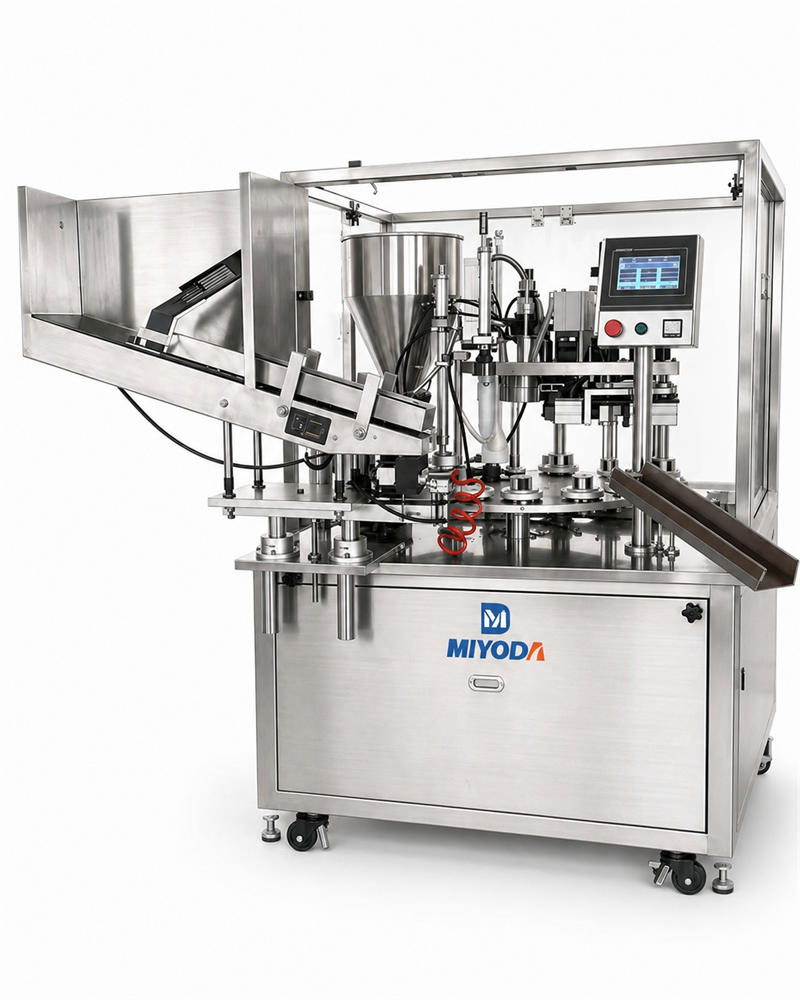
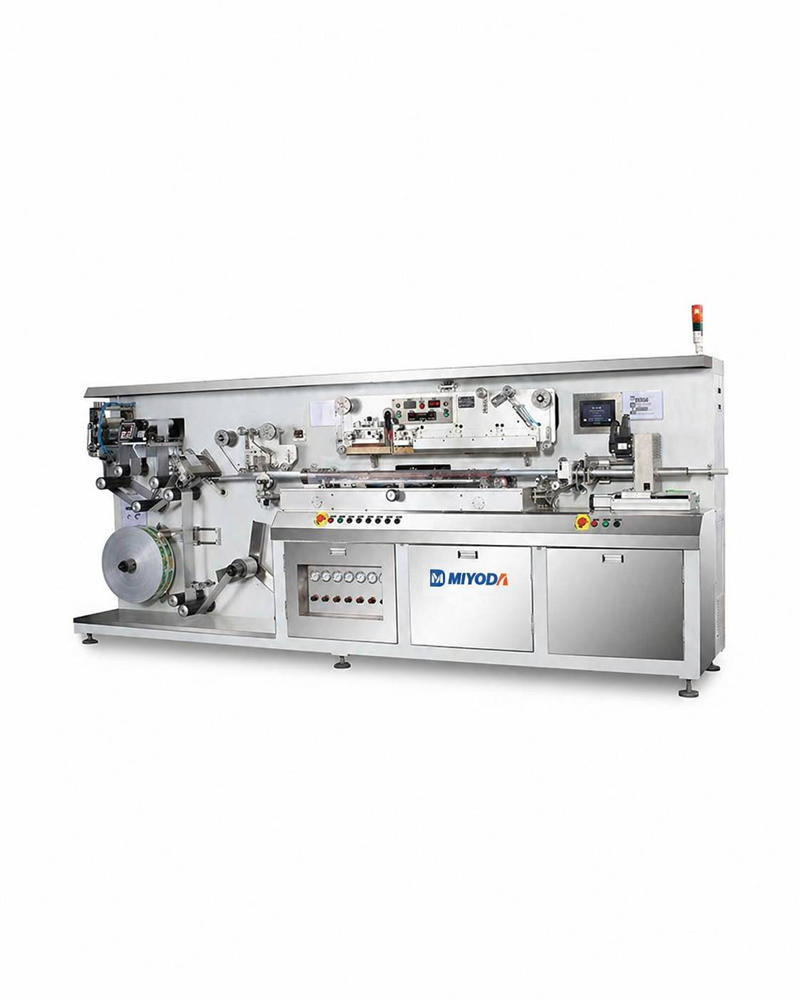
For operations integrating tube printing into a complete cosmetic or pharmaceutical packaging line, machinery compatibility between the printing stage and the filling/sealing stage is a design-level integration requirement. Miyoda Packaging Machinery’s tube filling machine range is designed with input conveyor configurations compatible with the major tube printing machine formats used in cosmetic and pharmaceutical production — a compatibility that simplifies the line integration specification and reduces the risk of tube handling damage between the print and fill stages.
Tube Material and Size Compatibility
Available Diameters, Wall Thickness, and Coating Compatibility
The mechanical handling system of a tube printing machine — the chuck, mandrel, or carrier that rotates and indexes the tube through print stations — is dimensionally fixed or limited to a defined adjustment range. Before finalising any machine specification, map every tube diameter, length, and wall thickness in your current portfolio plus your projected 3-year portfolio against the machine’s documented handling range.
Wall thickness matters in printing because thin-wall tubes (below 0.35mm LDPE) deform under the contact pressure of screen or pad printing processes, causing print distortion and registration failure. Machines designed for thin-wall flexible tubes use non-contact or low-contact print processes, mandrel support systems, or controlled impression pressure settings to manage this. A machine without these provisions cannot reliably print thin-wall pharmaceutical ointment tubes at production speed — a limitation that may not appear in a standard machine demo but will manifest within the first week of production startup.
Surface coatings — including soft-touch lacquers, matte finishes, and metallic basecoats pre-applied by the tube manufacturer — alter the ink adhesion and UV cure behaviour of the tube surface significantly. Always specify and test tubes with their final surface treatment applied, not bare substrate. A machine that achieves ΔE <1.0 on bare LDPE may deliver ΔE 3.2 on the same tube with a soft-touch lacquer applied — a field colour mismatch that becomes a brand quality complaint.
Core and Finish Considerations: Caps, Labels, and Closures
Tube printing machines must accommodate the full tube assembly — including the cap or closure already fitted in some production sequences — without causing cap damage or print contamination from cap-contact points during conveying. For tube formats with flip-top or screw caps pre-fitted before printing, confirm that the machine’s tube carrier system clears the cap geometry without creating mechanical interference at production speed. For tubes with adhesive labels applied before printing (common in pharma where serialised labels are applied upstream of decoration), confirm ink adhesion performance over the label substrate, not just over bare tube.
Automation, Controls, and Data Integration
Automation Options: Robotic Handling and Vision Systems
Automation in tube printing machines operates at two levels: mechanical automation (servo-driven print stations, automatic tube loading, reject handling, UV cure intensity control) and intelligence automation (vision-based inspection, statistical process control data capture, recipe management). Both deliver measurable operational value — but they address different cost problems.
Mechanical automation primarily reduces labour cost per unit and improves throughput consistency. On a fully automatic 100-tube/min line, one technician monitors the system and manages exceptions; on a semi-automatic equivalent, three to four operators manage loading, monitoring, and rejection handling. The labour differential over a two-shift operation in a high-labour-cost region is significant at the annual P&L level.
Vision inspection systems — which use cameras and image analysis to verify print registration, colour accuracy, barcode readability, and surface defect presence on every tube at production speed — address a different problem: they reduce the batch rejection rate and the cost of print quality escapes to downstream customers. A vision system that catches 0.3% additional defects per batch on a 500,000-unit monthly output prevents 1,500 defective tubes from reaching the filler — at pharmaceutical formulation values, this is a meaningful product protection number.
Control Interfaces, Software, and MES/ERP Compatibility
Modern tube printing machines are PLC-controlled (PLC = Programmable Logic Controller, the industrial computer managing machine sequences) with HMI touchscreen interfaces for recipe management and parameter monitoring. The software capabilities that deliver operational value beyond basic machine control are: production data logging (recording print parameters, reject counts, and speed data by batch — essential for pharmaceutical traceability and GMP audit readiness), recipe library management (storing complete print parameter sets per SKU for instant, error-free changeover), and MES/ERP integration (bidirectional communication with Manufacturing Execution Systems to receive job orders and report completed output without manual data entry).
MES integration via OPC-UA (Open Platform Communications Unified Architecture — the industrial communication standard enabling machines from different manufacturers to exchange data across factory networks) is increasingly a specification requirement for pharmaceutical manufacturers operating under 21 CFR Part 11 electronic records compliance, which mandates that manufacturing process data be captured electronically in a system with access controls and audit trail capability. A machine without OPC-UA or equivalent data export capability creates a compliance gap that must be filled by supplementary systems — adding cost that should have been part of the machine specification.
Total Cost of Ownership (TCO)
Capital Expenditure vs. Operating Expenditure, Maintenance, and Consumables
The purchase price of a tube printing machine is the number that appears in the capital approval request. The number that determines whether the investment was correct is the 7-year TCO — and for tube printing machines, the gap between purchase price and TCO is consistently wider than most procurement teams model.
| Cost Category | % of 7-yr TCO (Typical) | Key Cost Drivers | Modelling Approach |
|---|---|---|---|
| Purchase Price | 35–45% | Technology type, automation level, colour stations, UV cure configuration | Itemised quote: machine, tooling, installation, training |
| Ink & Consumables | 20–28% | Ink type (UV curable premium vs. solvent), coverage area, reject rate waste | Cost per mL × ink consumption per tube × annual volume |
| Energy | 8–12% | UV lamp power, servo motor draw, corona treatment power | Rated kW × utilisation × local electricity rate × shifts/year |
| Planned Maintenance | 6–10% | UV lamp lifecycle (2,000–4,000 hrs), screen/plate replacement, corona electrode | Documented service interval × parts cost + engineer time |
| Unplanned Downtime | 8–15% | Machine MTBF, spare parts lead time, remote diagnostic capability | Historical downtime hours × production loss rate per hour |
| Labour (Direct) | 5–10% | Automation level, changeover frequency, shift structure | Operators per shift × shift cost × annual operating days |
| Tooling (Screens/Plates) | 3–6% | SKU count, changeover frequency, screen lifecycle | Screen cost × annual replacement frequency × SKU count |
The consumables line in tube printing TCO deserves particular attention. UV-curable screen printing inks — the dominant ink system for cosmetic and pharmaceutical tube printing — cost 3–6× more per litre than conventional solvent inks. For a machine running 10 million tubes annually at an average 30% print coverage area on a 35mm diameter tube, annual ink consumption can represent USD 40,000–80,000 in operating cost. The difference between a machine with efficient ink delivery (closed chamber doctor blade system) and one with open ink trough (with evaporation and oxidation losses) can represent 15–20% of annual ink cost — a figure that belongs in the procurement TCO model alongside the purchase price.
Energy Use, Depreciation, and Potential Financing
UV curing systems — which polymerise ink at the moment of exposure to high-intensity UV light, enabling the high-durability, instant-dry characteristics of UV printing — are the largest energy consumers on modern tube printing lines, typically accounting for 40–60% of machine total power draw. Specifying LED UV curing systems over traditional mercury arc lamp systems reduces curing energy consumption by 50–70%, extends lamp lifecycle from approximately 2,000 hours to 20,000+ hours, eliminates ozone generation (removing an extraction requirement), and reduces heat delivery to the tube substrate — a meaningful benefit for thin-wall tubes that distort under thermal load.
A mid-scale cosmetic contract manufacturer running two UV screen printing lines at 12 hours per day documented an annual energy cost reduction of USD 22,400 after retrofitting both machines with LED UV curing systems to replace mercury arc lamps — plus a USD 8,800 annual reduction in lamp replacement cost. The LED retrofit investment of USD 36,000 achieved full payback in 14 months before accounting for the eliminated ozone extraction maintenance cost. For procurement teams evaluating new machines, LED UV curing should be specified as standard, not as a premium option.
Maintenance, Service, and Spare Parts
Service Levels, Response Times, and Remote Diagnostics
The service infrastructure behind a tube printing machine is as operationally critical as the machine itself. A production line that generates USD 1,200/hour in contribution when running and USD 0 when stopped turns every unplanned maintenance hour into a direct cash cost. The service specification questions that carry the highest predictive value for future operational performance are:
What is the documented first-call remote resolution rate — the percentage of fault events resolved via remote diagnostics without an on-site engineer visit? Best-in-class suppliers achieve 65–75%. A supplier who cannot provide this figure from service records is providing a qualitative assurance, not a data-backed commitment.
What is the committed on-site response time for a fault that cannot be resolved remotely, in your specific geography? For facilities in Southeast Asia sourcing from European or Japanese manufacturers, this is frequently a 48–96 hour window — during which a production line sits idle. Understanding this reality before purchase allows procurement teams to negotiate on-site spare parts stocking agreements or regional service centre commitments that reduce the response window to acceptable levels.
Availability of Spare Parts and Training
The critical consumable parts that drive the most unplanned downtime on tube printing machines are UV curing lamps (if mercury arc), print station bearings, corona treatment electrodes, ink metering components, and vision system lighting units. For each category, procurement teams should obtain documented lead times from the supplier’s regional warehouse — not from the central manufacturing facility — and model the production loss implication of a worst-case lead time event before signing the purchase agreement.
Training is frequently treated as a delivery-day formality rather than an operational investment. A tube printing machine operated by technicians who are proficient only in normal operation — and not in fault diagnosis, preventive maintenance execution, and basic calibration procedures — generates 40–60% more unplanned downtime in the first two years than the same machine operated by fully trained technicians. Specify operator training, maintenance training, and advanced troubleshooting training as separate deliverables in the purchase specification, each with defined content scope and assessment criteria.
Safety, Compliance, and Reliability
Operator Safety Features and Guarding
Tube printing machines incorporate several operating hazards that require documented safety architecture: UV radiation from curing systems (which causes corneal and skin damage at industrial intensities), rotating mechanical components during tube indexing and print station operation, ink exposure during maintenance procedures, and compressed air system risks during pneumatic component service. Machine compliance with CE marking requirements (for EU-market installations) or equivalent national machinery safety directives is a minimum procurement requirement — but the specific safety feature implementation should be verified in detail, not assumed from a CE declaration.
For pharmaceutical manufacturing environments, operator safety requirements extend to solvent ink fume management (ATEX zone compliance where solvent vapours are present), cleanroom-compatible guarding materials (surfaces that can be disinfected without guarding degradation), and emergency stop system architecture that does not create a product contamination event when triggered mid-production (e.g., ink not left on tube surfaces under UV cure lamps when an e-stop is triggered).
Regulatory Certifications and Traceability
Under cGMP compliance requirements for pharmaceutical printing, the printing machine must support documented, auditable control of every print parameter for every batch produced. This means the machine’s data management system must capture: ink lot number and supplier for each production run, UV cure intensity and duration per batch, corona treatment power level per production session, colour measurement data for each batch (ΔE values against approved standard), reject count and rejection reason per batch, and operator identity for each production and maintenance event.
The FDA’s current Good Manufacturing Practice regulations require that all critical process parameters for pharmaceutical packaging operations be documented and accessible for regulatory inspection. A printing machine without integrated data logging capability — one that requires manual paper-based recording of the above parameters — creates audit risk, data integrity risk, and operator time burden that is entirely avoidable at the machine specification stage.
During a routine EU GMP audit of a pharmaceutical contract packager, inspectors requested production records for print parameter settings on three specific batches of ointment tubes printed 14 months previously. The printing machine in use had no electronic data logging; records were hand-written operator logs. Two of the three batch records could not be fully reconstructed from available documentation. The resulting GMP observation required a full CAPA (Corrective and Preventive Action) investigation and a six-month re-audit commitment — a compliance event that would have been entirely prevented by a machine with standard production data logging. Electronic print parameter logging is not a premium feature for pharmaceutical buyers. It is a compliance requirement that belongs in the machine specification as a non-negotiable criterion.
Vendor Assessment, Trials, and References
Conducting Pilot Runs and Evaluating Print Quality and Uptime
The vendor assessment process for a tube printing machine should be structured around a formal pilot run — not a supplier-managed demonstration. The distinction is critical: a demo uses supplier-selected tubes, supplier-optimised ink formulations, and supplier-set operating parameters on a machine that has been tuned for display performance. A pilot run uses your actual production tubes, your standard ink specifications (or a formally agreed equivalent), and operating conditions set to your production parameters — then evaluated against your acceptance criteria, not supplier metrics.
The minimum pilot run scope for a B2B tube printing machine qualification should include: a minimum 2,000-unit continuous run at target production speed, colour measurement at defined intervals (start, mid-run, end of run) against your approved colour standards, adhesion testing on a sample of 50 tubes per 500 produced using the cross-hatch adhesion test method, barcode scan success rate measurement on all 2,000 units (pharmaceutical applications), simulation of one full SKU changeover timed from last tube of outgoing SKU to first accepted tube of incoming SKU, and a simulated maintenance event (UV lamp pre-heat recovery or ink circulation system restart) to assess recovery time and first-tube-after-restart quality.
Reviewing Customer References, Training, and Support
Customer references carry the most reliable signal quality of any vendor evaluation input — when they are from truly comparable customers. Request references that match your application specifically: cosmetic tube printing at comparable SKU diversity, pharmaceutical tube printing at comparable compliance requirements, and comparable geography (to assess realistic service infrastructure performance). Generic references from other industries or dramatically different volumes tell you almost nothing about the machine’s performance on your application.
When speaking with references, ask specifically: what is your documented average changeover time for an ink and screen change, what unplanned downtime events have occurred in the past 12 months and how long did each take to resolve, has the machine’s colour consistency performance changed since installation and how was it managed, and has the machine been included in any regulatory inspection and what were the outcomes?
For B2B buyers sourcing tube printing machines as part of a broader cosmetic or pharmaceutical packaging line investment, integrating tube printing machine selection with filling and sealing machine selection reduces the risk of line integration mismatches. Miyoda Packaging Machinery provides B2B technical consultation for complete tube packaging line specifications — helping procurement teams identify compatibility requirements between printing, filling, and sealing equipment before capital commitments are made. Visit Miyoda’s contact page for project-specific guidance.
Align Machine Capability with Production Strategy

The decision framework in this guide is designed to eliminate the two most expensive mistakes in tube printing machine procurement: under-specification (a machine that cannot grow with your volume, cannot support your compliance requirements, or cannot handle your substrate portfolio) and over-specification (paying for automation levels or feature sets that your production model cannot utilise, eroding ROI without delivering operational benefit).
Follow the sequence: define production volume and cycle time requirements for year three, not today. Resolve material and substrate compatibility before shortlisting machines. Specify print quality metrics in measurable terms — ΔE limits, registration tolerances, adhesion standards — not qualitative descriptions. Build the TCO model before comparing purchase prices. Require pilot runs on your actual tubes. Verify service infrastructure against your geography’s lead time reality.
The machine that passes this process is not necessarily the most expensive or the most technically impressive. It is the one that delivers your required output, at your required quality level, at the lowest verified total cost, with the service infrastructure to sustain that performance across a 7–10 year production life.
✅ Final Vendor Engagement Checklist — Tube Printing Machine
- Year-3 volume and cycle time targets documented and shared with all shortlisted vendors
- Technology type selected (inkjet / screen / pad / laser) against substrate, volume, and colour complexity requirements
- Print quality acceptance criteria formalised: ΔE limit, registration tolerance, adhesion standard, barcode scan rate
- Pre-treatment system (corona/flame/UV) verified as integrated with production-interlocked alarm on treatment level
- Pilot run conducted on actual production tubes at target speed, evaluated against your acceptance criteria
- Changeover time measured during pilot: full SKU change timed from last tube to first accepted tube
- UV curing system specified as LED (preferred) with documented power monitoring and cure intensity logging
- Electronic data logging confirmed for all critical print parameters per batch (GMP/pharmaceutical requirement)
- MES/ERP integration via OPC-UA or documented equivalent confirmed for pharmaceutical applications
- Critical spare parts lead time documented for your geography — modelled against production loss cost
- Customer references obtained from comparable cosmetic/pharma tube printing operations and contacted directly
- 7-year TCO model completed: purchase price, ink/consumables, energy, maintenance, downtime, labour, tooling
📖 Technical Terms Glossary
- ΔE (Delta E)
- A standardised colorimetric measurement of the perceptible difference between two colours. ΔE <1.0 is imperceptible to the human eye; ΔE 1.0–2.0 is acceptable for most commercial cosmetic brand colour applications; ΔE >3.0 is visibly different and typically fails brand colour approval. Example: a tube printed in “Pantone 485” that measures ΔE 2.8 against the approved standard will be rejected at retailer incoming inspection for most premium cosmetic brands.
- OEE (Overall Equipment Effectiveness)
- A manufacturing KPI calculated as Availability × Performance × Quality. A tube printing machine running 90% of scheduled time, at 94% of rated speed, with 98% first-pass print quality delivers OEE of 82.8%. The industry benchmark for world-class tube printing lines is 80–85%.
- UV Curing
- A process in which UV-curable ink is polymerised (hardened) instantly upon exposure to high-intensity ultraviolet light, creating a dry, durable print surface without solvent evaporation. Eliminates blocking (wet ink stacking), enables fast throughput, and produces chemically resistant prints. LED UV systems are the current best practice for energy efficiency and lamp lifecycle.
- Corona Treatment
- A surface activation process that applies an electrical discharge to a plastic tube surface, temporarily raising surface energy from 28–32 mN/m (untreated PE) to 38–44 mN/m, enabling ink wetting and adhesion. Treatment effectiveness decays over 24–72 hours; tubes should be printed promptly after corona treatment and treatment level must be monitored continuously during production.
- MES (Manufacturing Execution System)
- A software system that manages production operations in real time between the business planning level (ERP) and the production floor level (machine controllers). In tube printing, MES integration allows the machine to receive job orders electronically and report completed output, reject counts, and process parameters back to the system without manual data entry.
- cGMP (current Good Manufacturing Practice)
- FDA regulations (21 CFR Parts 210 and 211) governing the manufacturing, processing, and packaging of pharmaceutical products and their packaging components. For pharmaceutical tube printing, cGMP requires documented, auditable control of all critical print parameters per batch, with electronic records where practicable under 21 CFR Part 11.
- OPC-UA
- Open Platform Communications Unified Architecture — an industrial communication standard enabling machines from different manufacturers to exchange data securely over factory networks. Machines with OPC-UA connectivity can feed production data directly to MES and ERP systems without custom integration software.
- TCO (Total Cost of Ownership)
- The complete financial cost of owning and operating a machine across its lifecycle. For tube printing machines, TCO includes purchase price, installation, training, ink and consumables, energy, planned maintenance, unplanned downtime losses, tooling (screens/plates), and decommissioning. TCO modelling over 7 years is the correct basis for comparing machines at different purchase price points.
الأسئلة المتداولة
Payback periods for tube printing machines vary significantly by production volume, automation level, and the cost structure they replace. At production volumes above 10 million tubes per year, fully automatic UV screen printing lines with vision inspection typically achieve payback periods of 18–28 months through a combination of labour reduction, quality improvement (lower rework and customer complaint handling cost), and energy savings from LED UV curing vs. older lamp systems. At lower volumes (3–5 million tubes per year), semi-automatic systems with standard automation achieve payback periods of 24–42 months. Digital inkjet systems at low-to-mid volume operations (under 3 million tubes per year) typically show payback periods of 14–24 months driven primarily by tooling cost elimination (no screens or plates required) and changeover efficiency gains on high-SKU portfolios. The payback model should include all TCO components — not just the labour comparison — and should use year-three production volumes in the denominator to avoid underestimating the return on a correctly specified machine.
Changeover time on tube printing machines varies substantially by machine type, automation level, and changeover scope. A full changeover on a UV screen printing machine — changing all screens, ink colours, and tube format settings — runs 45–90 minutes on machines without recipe management, and 15–30 minutes on current-generation servo-driven machines with digital recipe management where most parameters are called automatically. Partial changeovers (same tube format, different artwork on same colour system) run 15–30 minutes without recipe management and 8–15 minutes with it. Digital inkjet machines require no tooling change for an artwork changeover — the new job file is loaded and the machine is ready to print in under 5 minutes, which is why they deliver disproportionate value in high-SKU, short-run environments. For B2B procurement managers evaluating changeover time, always measure during a supervised pilot run on your actual SKU transition — not during a supplier demonstration with pre-prepared setups.
For high colour fidelity on flexible LDPE and HDPE cosmetic tubes at production volumes above 5 million units per year, UV-cured screen printing with a closed-chamber doctor blade ink metering system is the industry benchmark technology. It achieves ΔE <1.0 against approved colour standards at production speed with consistent results across multi-shift production when properly maintained, and delivers opaque colour coverage on dark substrate tubes that digital inkjet cannot match without multiple passes. For volumes below 3 million units per year or for high-SKU portfolios where screen tooling cost per SKU is prohibitive, 6-colour+ UV inkjet printing on properly corona-pretreated tubes achieves ΔE 1.2–1.8 consistently — acceptable for most commercial cosmetic brand colour programmes but below the ΔE <1.0 threshold some premium brands require. Pad printing achieves the lowest ΔE on spot colour logos and fine detail on irregular surfaces (caps, shoulders) but cannot match screen or inkjet for full-coverage decoration across the tube body. The optimal configuration for most cosmetic tube manufacturers is UV screen printing for primary decoration combined with laser marking for variable data and lot/expiry coding.
For pharmaceutical tube printing applications under cGMP (FDA 21 CFR Parts 210/211 or EU GMP equivalent), the machine must provide: electronic data logging of all critical print parameters per batch — including ink lot, UV cure intensity, corona treatment level, colour measurement values, and reject counts — in a format compliant with 21 CFR Part 11 electronic records requirements; access control and audit trail functionality on the control system (operator identity must be recorded for all production and parameter change events); automatic barcode verification on every printed tube with documented scan success rate per batch; and a change control notification process for any modification to machine hardware, software, or process parameters. Machines without native electronic data logging force pharmaceutical operations into manual paper-based recording — creating audit risk and data integrity exposure that regulatory agencies actively flag during GMP inspections. Any pharmaceutical tube printing machine procurement specification should include electronic batch records as a pass/fail criterion, not an optional feature.
Ink adhesion failure on flexible PE tubes occurs when the surface energy of the tube substrate is insufficient for the ink to wet, spread, and form a polymer bond during the curing or drying process. LDPE and HDPE tubes have inherently low surface energy (28–32 mN/m), causing standard inks to form discrete droplets rather than continuous films — resulting in print that appears acceptable initially but detaches under normal handling or storage conditions. Prevention through machine specification requires: (1) integration of a corona discharge, flame, or UV/ozone pre-treatment system that raises tube surface energy to 38–44 mN/m immediately before printing; (2) a production-interlocked alarm system that stops the machine if corona treatment power drops below the defined minimum (failure of this feature is the most common root cause of adhesion escape to field); (3) surface energy verification protocol with documented test frequency using dyne test inks; and (4) UV ink system and substrate pre-treatment validated together on your specific tube material — surface energy requirements differ between LDPE, HDPE, ABL, and soft-touch coated surfaces. Request adhesion test data (cross-hatch adhesion per ISO 2409 or ASTM D3359) on your specific tube substrate from the machine supplier’s application laboratory before finalising the specification.
UV mercury arc lamp curing and LED UV curing are both used on industrial tube printing lines to polymerise UV-curable inks, but they differ significantly on operating cost, lamp lifecycle, heat delivery, and compliance implications. Mercury arc lamps emit a broad UV spectrum (200–400nm) at high intensity, have lamp lifecycles of approximately 1,500–3,000 hours (requiring replacement every 3–6 months on high-volume lines), generate ozone (requiring ventilation extract), and deliver significant heat to the substrate — which can distort thin-wall flexible tubes. LED UV systems emit a narrow UV spectrum matched to specific ink photoinitiator absorption peaks, have LED array lifecycles of 20,000+ hours (10× longer than mercury arc), generate no ozone (eliminating extraction requirements), deliver minimal heat to the substrate (critical for thin-wall tubes), and consume 50–70% less energy. The trade-off is that LED UV systems require inks specifically formulated for LED wavelengths — standard mercury-arc-optimised inks may not fully cure under LED exposure. When specifying a new machine, LED UV curing with LED-optimised inks is the current industry best practice recommendation for both operational efficiency and ink adhesion performance on flexible cosmetic and pharmaceutical tubes.
Evaluating after-sales service capability requires documented data, not vendor assurances. The specific data points to request are: first-call remote resolution rate (percentage of fault events resolved remotely without an on-site engineer visit — industry benchmark for well-supported machines is 65–75%); committed on-site response time for your specific geography from the nearest certified service engineer (get this in writing, verified against the engineer’s actual location, not a generic statement); critical spare parts lead time for UV lamps, print station components, corona electrodes, and vision system components from the supplier’s regional warehouse to your facility; documented Mean Time Between Failures (MTBF) for the specific machine model from production field data; and the software update policy (are firmware and control system updates included in warranty and how are they deployed remotely). Request references from customers in comparable geographic locations and ask specifically about their experience with maintenance response times — not print quality performance. For B2B buyers in Southeast Asia sourcing from European suppliers, a commitment from the supplier to maintain a spare parts inventory at a regional logistics hub (Singapore, Bangkok, or Kuala Lumpur) for the machine’s critical consumables is a meaningful risk mitigation that should be negotiated as part of the commercial terms.
Yes, the same physical tube printing machine can handle both cosmetic and pharmaceutical tube printing, provided it is specified to the pharmaceutical compliance requirement level — which represents the higher of the two specification sets. A machine with full electronic data logging, 21 CFR Part 11 compliant audit trails, validated cleaning procedures, and GMP documentation satisfies both cosmetic and pharmaceutical regulatory requirements. Running a pharmaceutical-compliant machine on cosmetic-only production adds some compliance overhead but no operational constraint. The reverse — running a cosmetic-specification machine on pharmaceutical production — creates significant compliance gaps that cannot be resolved after purchase without expensive retrofitting or supplementary system investment. For contract manufacturers whose portfolio includes both cosmetic and pharmaceutical clients, specifying to the pharmaceutical standard for all machines is the correct strategy, as it provides full portfolio flexibility without regulatory risk. The incremental capital cost of pharmaceutical-grade specification over cosmetic-only specification on a full UV screen printing line typically runs 8–15% of machine purchase price — a manageable premium against the cost of future compliance retrofitting or client portfolio limitation.
Specifying a Tube Printing Line for Your Facility?
Miyoda Packaging Machinery provides B2B technical consultation for complete cosmetic and pharmaceutical tube packaging line specifications — helping procurement teams align tube printing, filling, and sealing equipment requirements before capital commitments are made.
Request a Technical Consultation →