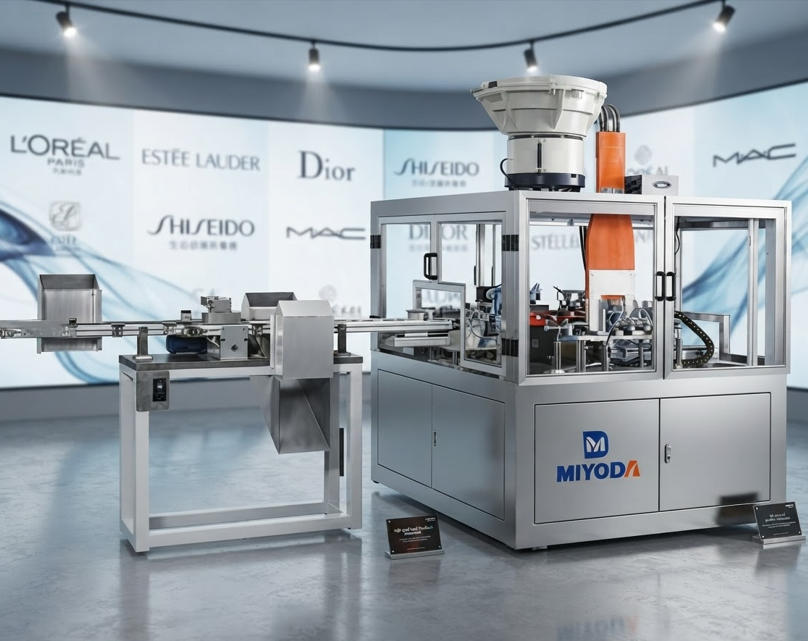
Maximizing the Efficiency of Your Injection Shoulder Machine: Best Practices and Tips
The injection moulding cosmetic packaging market is projected to grow from USD 16.4 billion in 2025 to USD 24.5 billion by 2035 at a CAGR of 4% (توقعات السوق المستقبلية، 2025). That growth is creating pressure on every tube manufacturer: more orders, tighter delivery windows, stricter quality standards, and increasing compliance demands from pharmaceutical and premium cosmetic buyers.
Your injection shoulder machine — the equipment that forms the shoulder and nozzle on plastic soft tubes — sits at the intersection of all four pressures. Get it running efficiently, and it is a revenue engine. Run it below its potential, and it is a quiet but consistent drain on your margin.
This guide covers the ten operational and strategic areas where most producers leave efficiency — and money — on the table, with concrete actions, industry data, and production scenarios grounded in real-world tube manufacturing.
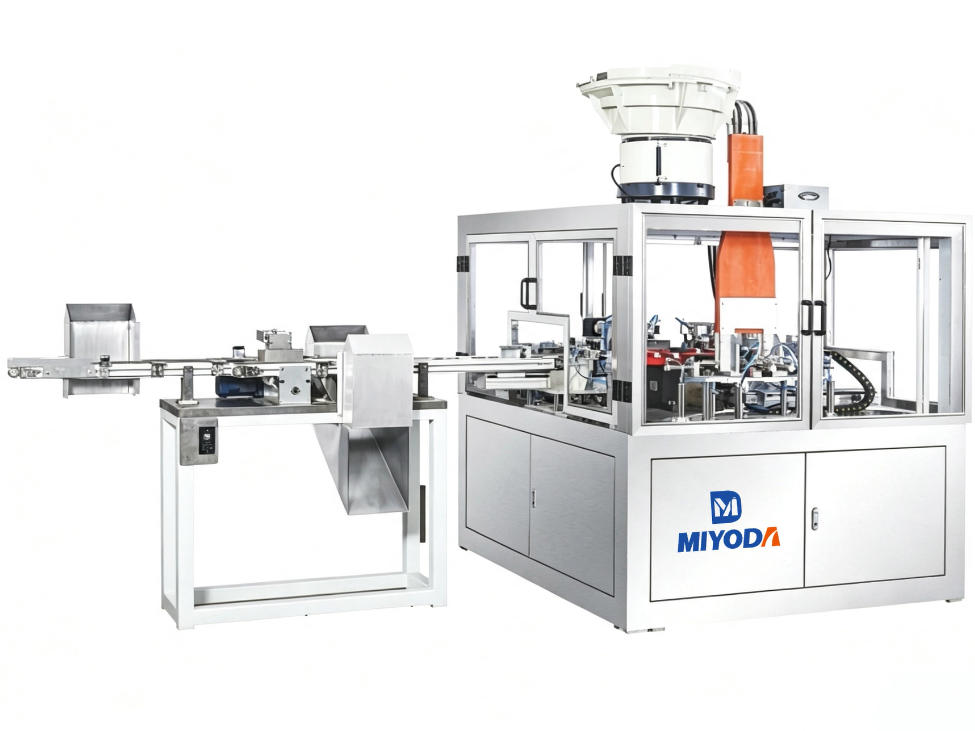
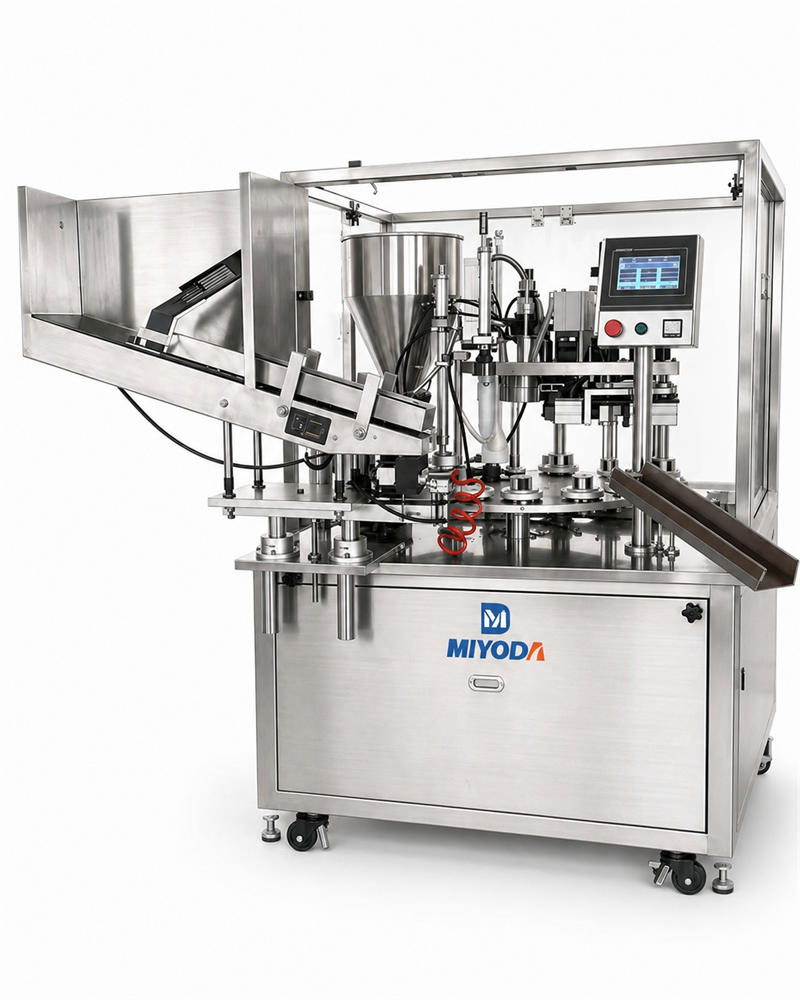
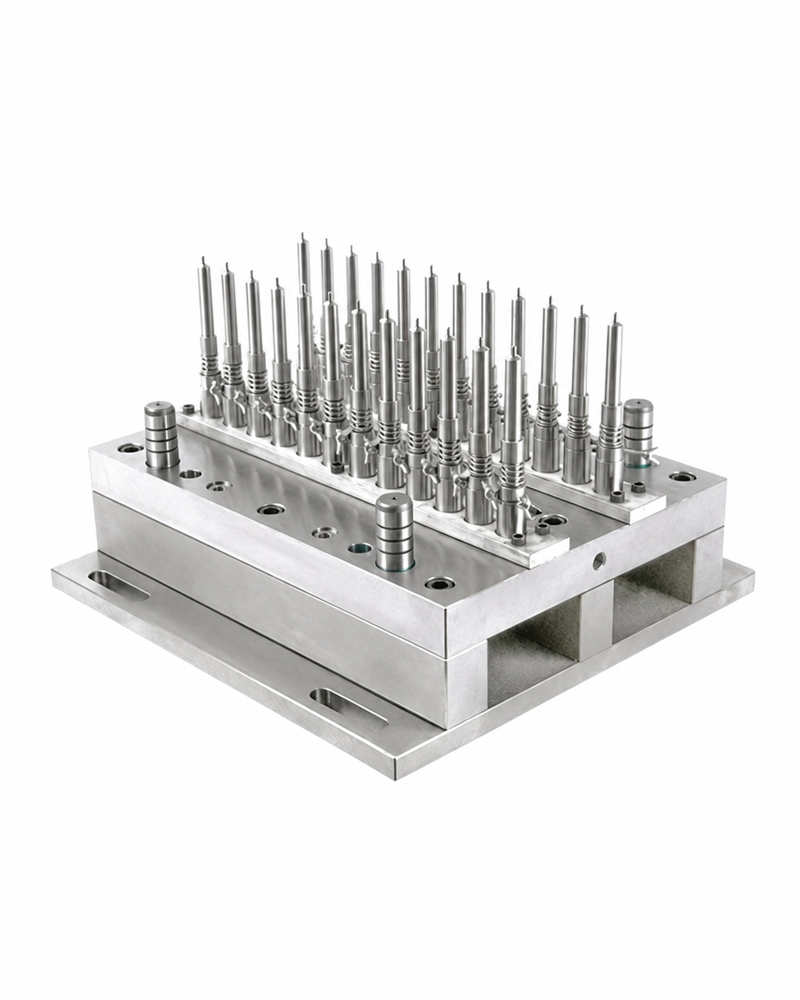
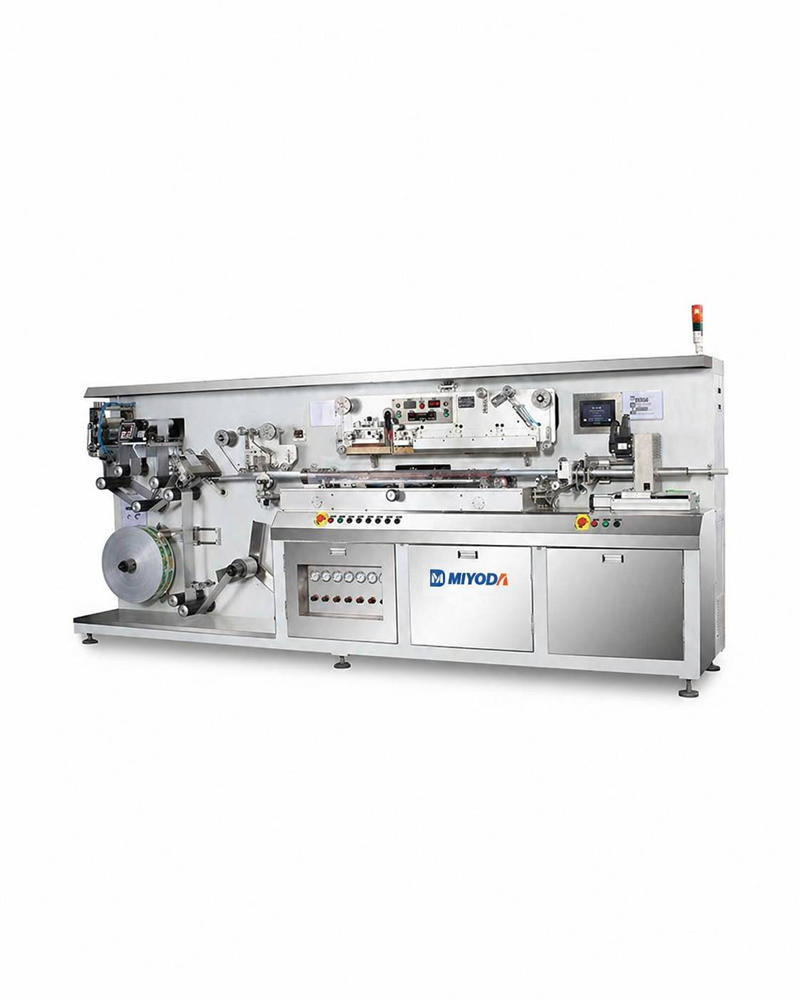
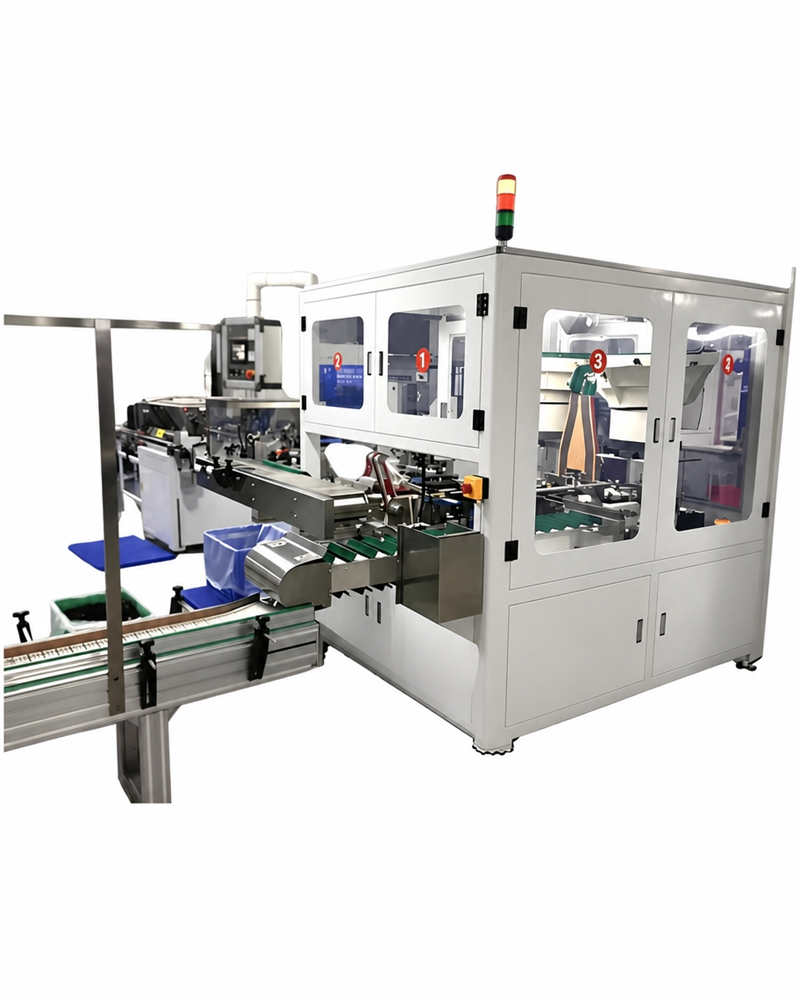
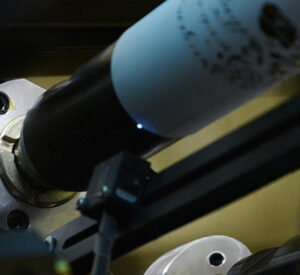
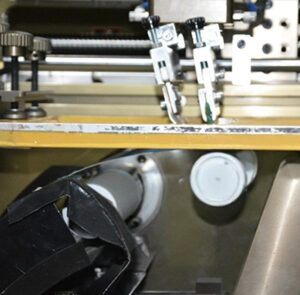
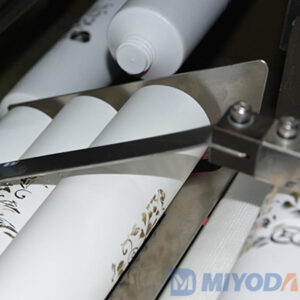
An automatic injection shoulder machine at work — PLC-controlled, servo-driven, producing consistent tube shoulders for cosmetic and pharmaceutical soft tube packaging. Source: Miyoda Packaging Machinery
1. Understanding Your Production Goals: Aligning Machine Performance with Business Outcomes
Efficiency is not a machine specification — it is a business outcome. Before tuning a single parameter or adjusting a single process, you need to establish what efficiency actually means in your specific production context.
Yield, Cost-Per-Unit, and Time-to-Market: The Three Business Levers
A tube producer running 120 shoulder formations per minute at 88% yield is not running the same business as a producer running the same machine at 100 per minute with 96% yield. Even at the lower speed, the second producer is producing more usable shoulders per hour — and at a materially lower per-unit cost.
These three metrics define the efficiency equation for an injection shoulder machine:
- Yield rate: The percentage of formed shoulders that pass visual and dimensional inspection first time, without rework. World-class shoulder injection operations run at 95–98% yield. Operations with inconsistent mold temperature control or worn tooling typically see 88–92% — and often assume that is normal.
- Cost-per-unit: The total cost of producing one shoulder, including resin, energy, machine depreciation, operator labour, and scrap. On a line producing 5 million shoulders per year, a $0.01 reduction in cost-per-unit adds USD 50,000 in annual margin from the same machine, same facility, same team.
- Time-to-market: How quickly your line can move from raw resin to qualified finished shoulder output. This is constrained by cycle time, changeover duration, and startup qualification time — all of which are covered in detail below.
Setting a Performance Baseline
Before implementing any of the strategies in this guide, spend one week measuring your actual output against your machine’s rated capacity. Most manufacturers discover a gap of 15–25% between rated and actual output — not because the machine is worn out, but because parameters were set conservatively during commissioning and never re-validated, or because changeover and startup waste have never been quantified.
Measure these three numbers for five consecutive production days:
| النظام المتري | How to Measure | Target Benchmark |
|---|---|---|
| Shoulders per shift (actual) | Production counter at shift end | ≥85% of rated capacity |
| First-pass yield rate | Inspection rejects ÷ total produced | ≥95% |
| Unplanned stops per shift | Maintenance log | <2 per 8-hour shift |
These three numbers, captured honestly for five days, will tell you exactly where your efficiency improvement effort should begin.
2. Pre-Installation Planning: Setting the Foundation for Peak Efficiency
A poorly planned installation creates efficiency constraints that no amount of operational tuning can fully overcome. The machine’s position in the production floor, its utility connections, and its workflow integration determine whether it runs at 70% of rated capacity or 90% — for its entire service life.
Site Preparation: What Actually Matters
The three most commonly overlooked site preparation factors that directly affect production efficiency:
Floor loading and vibration isolation. Injection shoulder machines exert cyclic mechanical loads during clamping, injection, and ejection. A floor that transmits this vibration to adjacent equipment — or that flexes under dynamic loading — degrades shoulder dimensional consistency and accelerates bearing wear. Confirm floor loading capacity with a structural engineer before installation, and specify anti-vibration mounting pads if the machine shares a floor section with other reciprocating equipment.
Compressed air supply quality. Most injection shoulder machines use pneumatic actuation for part ejection, core pulls, and auxiliary functions. Supply the machine from a dedicated air line with a coalescing filter and pressure regulator at the machine inlet — not from a shared facility header that experiences pressure fluctuations when other equipment cycles. Pressure variation of ±0.3 bar in the machine air supply produces measurable cycle-time variation.
Electrical supply stability. Servo drives and PLC systems on modern injection shoulder machines are sensitive to voltage fluctuation. Install a line conditioner or UPS on the machine’s electrical feed if your facility experiences regular voltage sag during peak load periods. A 10% voltage drop during an injection cycle affects resin plasticisation consistency and can produce short shots — incomplete shoulder formation — that are traced to “machine problems” but are actually a utility issue.
Workflow Integration: Layout Decisions That Pay for Themselves
Position your injection shoulder machine so that upstream (tube body in-feed) and downstream (shoulder inspection, capping, or decoration) flows are linear — not crossed or doubled back. Every unnecessary tube handling step between the heading station and the next process adds cumulative cycle time, damage risk, and labour cost.
For operations integrating the shoulder machine into a complete extrusion line — from tube sleeve through heading, decoration, and filling — the Miyoda Packaging Machinery complete tube production line overview provides line layout guidance and integration specifications for each station, helping you plan the physical workflow before equipment arrives.
3. Daily Operational Best Practices for Consistent Output
The difference between a well-run injection shoulder machine and a poorly run one is almost never the machine itself. It is the consistency of the people and processes operating it.
Standardized Startup, Shutdown, and Changeover Procedures
Every shift should begin with the same startup sequence, in the same order, every time. This is not a bureaucratic requirement — it is the fastest way to eliminate the first-hour production variability that most lines experience and most managers assume is normal.
Startup sequence (20–30 minutes before first production cycle):
- Confirm mold temperature controller setpoints match the current job recipe — verify actual mold surface temperature with a contact thermometer before starting, not just the controller display
- Purge the injection barrel for 5–10 shots at the specified purge temperature to clear any degraded resin from the previous run
- Confirm hopper resin level and drying temperature are at specification
- Run 15–20 qualification cycles and measure shoulder dimensions (height, diameter, wall thickness at three points) before releasing to production
- Confirm all ejection mechanisms cycle cleanly — no sticking, no short ejection strokes
Shutdown sequence:
- Reduce screw speed and execute a barrel purge with purge compound or compatible resin to clear production material
- Open mold and inspect cavity surfaces for resin residue, surface degradation, or ejector pin marks — log any findings
- Apply mold release agent or corrosion inhibitor to cavity surfaces before extended downtime
- Log cycle count on the production record — this data drives your mold maintenance schedule
Glossary — Mold Temperature Controller (MTC): A device that circulates temperature-controlled water or oil through channels in the injection mold to maintain the cavity at a specified temperature. Correct mold temperature is critical for part dimensional consistency, surface finish, and cycle time. Temperature deviation of ±5°C from specification typically increases shoulder dimensional variation by 15–25%.
Operator Training and Checklist Implementation
Operators who are trained on what to look for — not just what buttons to press — catch problems early, when they are cheap to fix. A shoulder that is 0.2 mm out of dimensional specification is a process adjustment taking 3 minutes to correct. That same deviation, undetected for 2 hours of production, is 14,400 scrapped units on a 120-cavity-minute machine.
Laminate the startup checklist, the critical quality check parameters, and the top 10 fault codes with their operator response at the machine. Operators working a night shift with no supervisor present should never have to guess what to do when Fault Code E-12 appears.

An operator measuring shoulder wall thickness and diameter against specification. On a 120-shot-per-minute line, catching a 0.2 mm deviation in the first 15 minutes prevents thousands of rejected units. Source: Miyoda Packaging Machinery
4. Preventive Maintenance: Avoiding Costly Downtime Before It Happens
A mold failure during a peak production run does not just cost the repair. It costs the output loss, the scrap from tubes in-process at failure, any expedited freight to meet a customer commitment, and the erosion of your production team’s confidence in the equipment. All of which is preventable.
Scheduled Inspections: What to Check and When
Cosmetic injection molds — particularly those running high-volume tube shoulder production — should be inspected on a cycle-count basis, not a calendar basis. A mold running two shifts per day accumulates twice the wear cycles of the same mold on one shift; a calendar-based maintenance schedule misses this entirely.
Standard inspection intervals for tube shoulder injection molds:
| Inspection Type | Interval | Key Checks |
|---|---|---|
| Visual cavity inspection | Every 50,000–100,000 cycles | Surface scoring, parting line wear, gate erosion, ejector pin marks |
| Dimensional verification | Every 250,000 cycles | Shoulder height, diameter, wall thickness at 5 points vs. original spec |
| Water circuit flow check | شهريًّا | Flow rate, pressure drop, any restriction indicating scale or blockage |
| Full mold strip and clean | Every 500,000 cycles | Full disassembly, ultrasonic clean, surface polish, sealing ring replacement |
| Ejector system check | Every 100,000 cycles | Pin stroke, spring force, return function, pin diameter vs. bore tolerance |
Glossary — Parting Line: The interface between the two halves of an injection mold, where the mold separates to eject the finished part. Wear at the parting line creates flash — a thin film of excess resin that forms outside the intended part geometry. Flash on a tube shoulder requires removal (adding handling time) or causes rejection.
Monitoring Molds, Nozzles, and Clamping Units
Mold lifespan under regular production: Steel injection molds used in cosmetic tube shoulder production typically last 500,000 to 1,000,000 cycles under correct operating conditions — but only with consistent preventive maintenance (Xometry, 2025). A poorly maintained mold can degrade to the point of producing out-of-tolerance shoulders within 150,000–200,000 cycles.
Nozzle inspection is the highest-frequency wear item. Nozzle tips erode from repeated contact with the sprue bushing and from abrasive filler content in some resin formulations. Inspect the nozzle tip seat and bore diameter every 100,000 cycles — a worn nozzle seat is a primary cause of drool (resin leaking from the nozzle between shots) that creates stringing defects on the shoulder gate point.
Clamping unit maintenance affects part dimensional consistency more than most operators realise. A clamping system delivering 90% of its rated force because tie bars are unevenly stressed or toggle links are worn produces molds that breathe slightly under injection pressure — creating flash at the parting line and dimensional variation in shoulder height.
5. Optimizing Cycle Time Without Sacrificing Quality
Here is the data point that makes cycle time optimization non-negotiable: a 10-second reduction in a 60-second cycle can generate over USD 50,000 in additional annual profit per machine (Evokpoly, 2025). On a line running 250 operating days per year at a margin of USD 0.05 per shoulder, 10 additional seconds of output per minute across a full shift equals 30,000 additional profitable shoulders per day.
The Four Phases of the Injection Cycle and Where Time Is Lost
An injection cycle on a tube shoulder machine has four phases:
- Injection: Resin is pushed into the closed mold cavity under pressure (typically 1–5 seconds)
- Cooling: The cavity is held closed while the shoulder solidifies sufficiently for ejection (typically 60–80% of total cycle time)
- Mold opening and ejection: The mold opens, ejectors push the part out, and the mold closes for the next shot (2–6 seconds)
- Recovery: The screw rotates to build the next shot while the mold is cooling (overlaps with cooling phase on properly optimised machines)
Since cooling accounts for 60–80% of total cycle time (Protoshop, 2025), it is the highest-leverage target for cycle time reduction. Every 10% reduction in cooling time reduces total cycle time by 6–8%.
Data-Driven Cycle Time Reduction Protocol
الخطوة 1: Record your current cycle time for 500 consecutive shots. Calculate mean and standard deviation — cycle time variation above ±0.5 seconds indicates a process instability (pressure variation, temperature drift, or mechanical inconsistency) that should be resolved before attempting to reduce average cycle time.
الخطوة 2: Review your cooling channel design. Poorly positioned cooling channels — too far from the cavity surface, or with flow restrictions from scale build-up — are the most common cause of excessive cooling times. Flush cooling circuits with descaling solution annually and verify flow rate at both circuit entry and exit.
الخطوة 3: Validate mold surface temperature at multiple cavity points during production using an IR thermometer or contact probe. Temperature variation across the mold face of more than ±3°C indicates uneven cooling — parts from hotter zones will be dimensionally inconsistent compared to cooler zones, and the cooling time must accommodate the worst zone, not the average.
Step 4: Once process stability is confirmed, reduce cooling time in 10% increments. At each reduction, run 200 shots and measure shoulder wall thickness and ejection quality. Stop when dimensional variation exceeds specification. Set production cooling time at 110% of the minimum validated time — a 10% buffer against ambient temperature variation.
Important: Speed and quality must be validated together, not traded against each other. A shoulder moulded 8 seconds faster that fails dimensional inspection has a net negative effect on output — it consumes resin and machine time without producing a saleable unit.
6. Material Handling and Feed Optimization
Resin that arrives at the injection barrel in the wrong condition — too wet, too cold, or contaminated — produces shoulder defects that cannot be corrected by any parameter adjustment downstream. This is the step that most operations treat as a given, and it causes a disproportionate share of quality problems.
The Hygroscopic Resin Problem
Many resins used in cosmetic and pharmaceutical tube shoulder production — including Nylon (PA), ABS, and certain modified PPs — are hygroscopic, meaning they absorb moisture from the ambient air. When hygroscopic resin is moulded without adequate drying, the moisture converts to steam in the barrel, producing splay marks (surface streaks), bubbles, and reduced molecular weight that weakens the shoulder mechanically.
Glossary — Hygroscopic Resin: A resin that absorbs moisture from the surrounding atmosphere through molecular bonding. Unlike non-hygroscopic resins (like LDPE and standard HDPE), hygroscopic materials must be dried to specified moisture levels before moulding — typically below 0.02–0.05% by weight — using a dehumidifying hopper dryer. Processing hygroscopic resin at 0.1% moisture instead of 0.02% moisture can reduce part tensile strength by 15–30%.
Even non-hygroscopic resins like standard LDPE and HDPE can carry surface moisture from condensation during storage or transportation — particularly in tropical climates or facilities without climate control. Establish a simple incoming moisture check: fill a test shot at normal barrel temperature, inspect the surface for splay or silver streaking. If either is present, run the resin through the drying hopper for 2–4 hours before continuing.
Reducing Waste from Material Degradation
Resin left in a hot barrel at rest temperature degrades progressively — the longer it sits, the more degradation occurs. On a machine that pauses mid-production for an operator issue or a downstream line stop, the material in the barrel continues to experience thermal degradation for the duration of the stop.
Establish a 30-minute rule: if the machine is stopped for more than 30 minutes, reduce barrel temperatures to standby setpoints (typically 30–40°C below processing temperature) and purge the barrel at restart before producing good parts. The purge material cost is lower than the cost of producing degraded shoulders that fail colour consistency or impact testing.
For colour changeovers — switching from one pigmented resin to another — use a formal purge sequence with purge compound rather than resin-to-resin transition. A proper purge typically consumes 3–5 barrel shots’ worth of material; a resin-to-resin colour changeover without purge typically wastes 15–25 shots before the new colour is clean. On a 40-gram shoulder at USD 3.50 per kg, the purge compound approach saves 40–80 grams of expensive production resin per changeover, which compounds to meaningful savings across hundreds of annual changeovers.
7. Quality Control Integration: Building Consistency into Every Cycle
Quality control on an injection shoulder machine is not an end-of-line activity. By the time a defective shoulder reaches final inspection, it has already consumed the full cost of production — resin, energy, machine time, operator labour. The objective of integrated quality control is to catch problems at the process level, before defective parts accumulate.
In-Line Monitoring for Flash, Short Shots, and Dimensional Accuracy
Flash (excess material at the parting line) and short shots (incomplete cavity fill) are the two highest-frequency defect types in tube shoulder injection moulding. Both are detectable at the machine before the part leaves the station:
- Flash is visible at the shoulder parting line — establish a 100% operator visual check at the ejection point during startup and sampling checks of 1 in 20 during steady-state production
- Short shots manifest as voids or incomplete formation in the shoulder nozzle area — detectable visually and by in-mold pressure sensors if the machine is equipped with cavity pressure monitoring
Dimensional accuracy is the critical quality parameter for tube shoulder compatibility with filling machine mandrels, caps, and customer specifications. Shoulder outer diameter tolerance for standard cosmetic tubes is typically ±0.15–0.20 mm; nozzle bore diameter tolerance is typically ±0.10 mm — tighter than the shoulder body because the cap fit depends on it.
Measure shoulder dimensions using a calibrated digital calliper at the following frequencies:
| Production Phase | Measurement Frequency | Dimensions to Verify |
|---|---|---|
| Startup qualification | First 20 shots: measure every shot | OD, ID, height, wall thickness at 3 points |
| Early steady-state | 1 in every 50 shots | OD, ID |
| Stable production | 1 in every 100–200 shots | OD, ID; full measurement every 500 shots |
| After any parameter change | First 20 shots post-change: measure every shot | All dimensions |
Implementing SPC for Real-Time Process Feedback
SPC (Statistical Process Control) — the use of statistical methods to monitor a process and detect changes before they produce defects — is the most powerful tool available for maintaining consistent shoulder dimensions across large production runs.
Glossary — SPC (Statistical Process Control): A quality control method using control charts to monitor process outputs in real time. Common SPC charts for injection moulding track shoulder outer diameter over time. When data points trend toward the control limit (even if still within specification), SPC gives operators an early warning to adjust the process — before the limit is exceeded. Documented SPC studies in injection moulding environments show defect rate reductions of 40–60% compared to conventional sampling inspection (ProtoShop, 2025).
In practice, SPC for tube shoulder production requires:
- Measuring shoulder OD on every 50th–100th part during production
- Plotting measurements on a control chart with upper and lower control limits set at ±3 standard deviations from the process mean
- Training operators to recognize trending (7 consecutive points moving in one direction) as an action signal — not waiting for a point to exceed the control limit
For pharmaceutical tube clients who require process capability data, SPC records also provide the Cpk values that validation documentation demands.
 SPC charts on the production floor give operators real-time process feedback — catching dimensional drift minutes after it begins, not hours later when thousands of parts have already been produced. Source: Miyoda Packaging Machinery
8. Energy Efficiency and Sustainability in High-Volume Production
Energy is a meaningful cost in high-volume injection shoulder production. A machine running two shifts per day, 250 days per year on a standard hydraulic drive system consumes substantially more power than the same throughput on a servo-driven platform — and the difference compounds directly into your per-unit production cost.
Servo-Driven Systems: The Energy Data
The comparison between hydraulic and servo-driven injection moulding machines is settled by measurement, not marketing. ENGEL’s documented production data shows that servo-hydraulic systems consume less than 60% of the energy used by conventional hydraulic machines with variable pump systems (ENGEL, 2025). All-electric servo systems reduce power consumption by 60–80% compared to hydraulic in matched-throughput comparisons.
For a machine running 4,000 hours per year at a blended energy cost of USD 0.12/kWh:
$$\text{Annual energy saving (servo vs. hydraulic)} = 4{,}000 \text{ hr} \times 15 \text{ kW saved} \times $0.12/\text{kWh} = $7{,}200/\text{year}$$
Across a 10-year machine service life, that is USD 72,000 in recovered energy cost — a significant contribution to total cost of ownership that rarely appears in purchase-price comparisons.
Idle Mode Optimization
Injection shoulder machines in multi-SKU operations spend measurable time in standby states between production runs — during changeovers, operator breaks, and material replenishment. Modern servo-driven machines can enter a low-power idle state during these periods, reducing barrel heater cycling and drive system load while maintaining thermal stability.
Configure your machine’s idle mode activation for any stop exceeding 5 minutes. This small operational change delivers meaningful energy savings without affecting startup time or product quality — the machine returns to full operational readiness within 60–90 seconds of idle activation.
Alignment with Pharmaceutical and Premium Cosmetic Environmental Standards
Pharmaceutical buyers and premium cosmetic brands increasingly include environmental performance criteria in their supplier qualification processes. ISO 14001 certification for environmental management, documentation of energy consumption per unit produced, and use of recycled or recyclable tube materials are appearing as scored criteria in supplier RFQs that previously focused exclusively on quality and price.
Aligning your energy infrastructure with servo-driven efficiency and documenting your per-unit energy consumption positions your facility advantageously in competitive supplier qualification processes — particularly as EU cosmetic brands face increasing regulatory pressure on supply chain environmental performance.
9. Leveraging Automation and Smart Manufacturing Features
The most significant efficiency gains available to cosmetic and pharmaceutical tube producers over the next five years will not come from faster machines — they will come from smarter integration of the machines already in operation.
Robotic Integration: Pick-and-Place and Beyond
Robotic part removal from injection moulding machines eliminates the two primary bottlenecks of manual part handling: inconsistency and labour cost. A robot removes each shoulder from the ejection zone in the same position, at the same speed, with the same grip force — every cycle, every shift, regardless of operator fatigue or attention.
For cosmetic tube shoulder production, the integration case for robotics is strongest when:
- Cycle time is below 30 seconds: Manual handling cannot keep pace with the ejection rate without multiple operators, making a robot economically compelling at this throughput level
- The part requires orientation: Shoulders destined for inline printing or labelling need to be placed in a consistent rotational orientation — a task robots perform reliably and manual handlers do inconsistently
- Cleanroom or GMP-grade handling is required: Pharmaceutical tube shoulder production in controlled environments benefits from robotic handling that minimises human contact with product-contact surfaces
Standard 3-axis Cartesian robots for injection moulding integration start at approximately USD 8,000–20,000 and typically achieve full payback within 12–24 months through labour saving alone. Six-axis articulated arms for more complex handling tasks are more expensive (USD 30,000–80,000) but enable part inspection, re-orientation, and multi-step handling within a single robotic cell.
IoT-Enabled Diagnostics and Predictive Maintenance
Modern injection shoulder machines equipped with IIoT (Industrial Internet of Things) connectivity continuously transmit production data — cycle time, barrel temperatures, injection pressure, clamp force, and fault frequency — to a monitoring dashboard accessible to both your production team and your equipment supplier’s technical team.
The practical value is not the data itself — it is the patterns the data reveals. An injection pressure that increases gradually over 50,000 cycles without a corresponding change in mold temperature is a diagnostic signal: the nozzle or hot runner is partially restricting. Caught at cycle 50,000, it is a 2-hour maintenance intervention. Missed until cycle 120,000 when the restriction becomes severe, it is a production stop, a nozzle replacement, and potentially a batch of undersized shoulders already shipped.
Research on IIoT-enabled predictive maintenance in industrial manufacturing environments documents 70–90% reduction in unplanned downtime with properly implemented systems (Frontiers in AI, 2020). For tube shoulder operations, the highest-value monitoring parameters are: mold temperature variance across zones, clamp tonnage consistency, injection pressure per cycle, and cycle time standard deviation over rolling 1,000-cycle windows.
Watch: Automatic Tube Shoulder Injection Moulding Machine in Operation
Understanding what efficient injection shoulder production looks like at operational speed helps identify where your current process has room to improve. The video below demonstrates a fully automatic plastic tube shoulder injection moulding machine — observe the cycle speed, part ejection mechanism, and the consistency of each formed shoulder:
{% youtube 8EmFWeroUrQ %}
Automatic plastic tube shoulder injection moulding machine in operation — full cycle from mold close through injection, cooling, ejection, and part removal. Observe cycle timing, mold actuation, and the consistency of shoulder formation at production speed.
10. Partnering with the Right Supplier: Support, Training, and Long-Term ROI
The most technically capable injection shoulder machine on the market delivers poor results if the supplier cannot support it effectively in your production environment. Support infrastructure — spare parts availability, technical response time, training quality, and software currency — determines whether your machine investment performs at its potential or fights you every time something goes wrong.
Why Technical Support Response Time Is a Financial Metric
When a mold temperature controller fails during a production run, the cost is not the repair — it is the downtime while you wait for help and parts. On a line producing 7,200 shoulders per hour at a USD 0.08 margin per shoulder, every hour of unplanned downtime costs USD 576 in lost output. A supplier whose committed response time for remote diagnostics is “next business day” is a supplier whose delays cost you approximately USD 4,600 per incident if the stop lasts 8 hours.
Before purchasing any injection shoulder machine, require the following commitments in writing:
- Remote diagnostic response time: What is the maximum time from your support request to a live remote session with a qualified technician? For production-critical issues, this should be 2–4 hours, not 24.
- Critical spare parts lead time: What is the committed delivery time for your top 5 wear items — mold cooling circuit seals, nozzle tip, ejector pins, temperature controller, and screw tip assembly — to your facility? Suppliers who stock critical spares regionally can deliver in 24–72 hours; suppliers who source from a single manufacturing location may require 4–8 weeks.
- Backward compatibility commitment: Will critical spare parts be available for this machine model for a minimum of 10 years from purchase? This is a financial commitment with real production risk implications — ask for it in the contract, not as a verbal assurance.
Training Programs That Protect Your Investment
Machine performance over a 10-year service life depends largely on the quality of the operators and maintenance technicians running it. A team that understands their machine — its parameters, its wear patterns, its diagnostic indicators — consistently delivers 15–25% higher output and significantly lower unplanned downtime than a team operating from habit and intuition.
Effective supplier training for injection shoulder machine operators should cover:
- Complete startup, production, and shutdown sequences with documented SOP review
- Hands-on parameter adjustment: barrel temperature profiles, injection pressure, cooling time, clamp force — with the trainer explaining the production quality implication of each setting
- Fault code interpretation and first-response troubleshooting for the 15 most common alarm conditions
- Mold handling, inspection, and basic maintenance — how to inspect a mold correctly without damaging cavity surfaces
- Quality check execution: dimensional measurement, visual inspection criteria, and how to interpret a control chart
Training at commissioning is the minimum. Build a refresher training cycle into your annual operational plan — particularly when new products, new mold designs, or new resins are introduced.
The Total ROI Calculation
The ROI on a well-specified and well-supported injection shoulder machine extends well beyond production output. Consider a pharmaceutical tube producer purchasing a servo-driven machine at USD 180,000, producing 8 million shoulders per year:
$$\text{Labor saving (2 operators eliminated vs. manual)} = 2 \times $18{,}000/\text{yr} = $36{,}000/\text{yr}$$
$$\text{Energy saving (servo vs. hydraulic)} = $7{,}200/\text{yr}$$
$$\text{Scrap reduction (98% yield vs. 91%)} = 0.07 \times 8{,}000{,}000 \times $0.04 = $22{,}400/\text{yr}$$
$$\text{Total annual saving} = $36{,}000 + $7{,}200 + $22{,}400 = $65{,}600/\text{yr}$$
$$\text{Payback period} = \frac{$180{,}000}{$65{,}600} \approx 2.7 \text{ years}$$
After payback, the machine generates USD 65,600+ per year in net operating advantage — before accounting for the revenue from contracts won because of the facility’s demonstrated GMP compliance and dimensional consistency data.
شركة ميودا لآلات التغليف designs its tube heading and shoulder machine platform — covering diameters from 16 mm to 60 mm across plastic and laminated tube formats — for exactly this long-term ROI model. Their tube heading and shoulder machine is engineered for PLC-controlled precision forming with high-speed automatic operation and multiple diameter capability. Their after-sales model includes remote technical support, spare parts guarantees, and application-specific commissioning training for cosmetic and pharmaceutical clients globally.
For producers evaluating the complete tube production workflow — from extrusion through heading, decoration, and filling — the Miyoda tube production line integration guide covers how each station interconnects and what to specify at each step for seamless line performance.

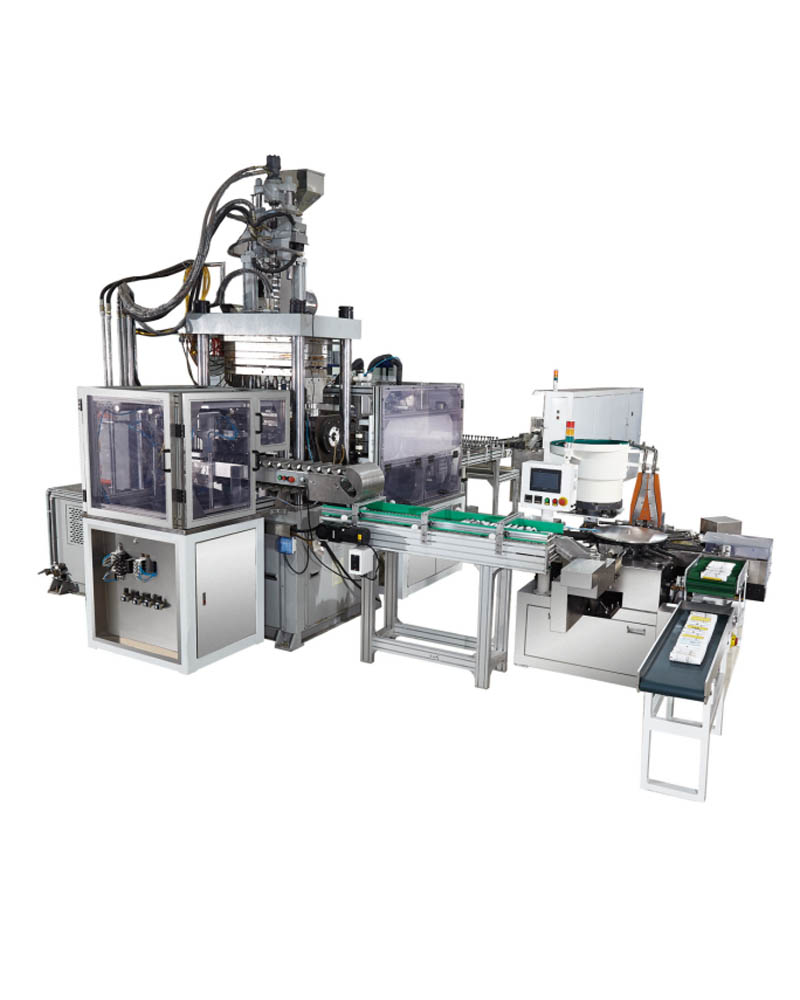
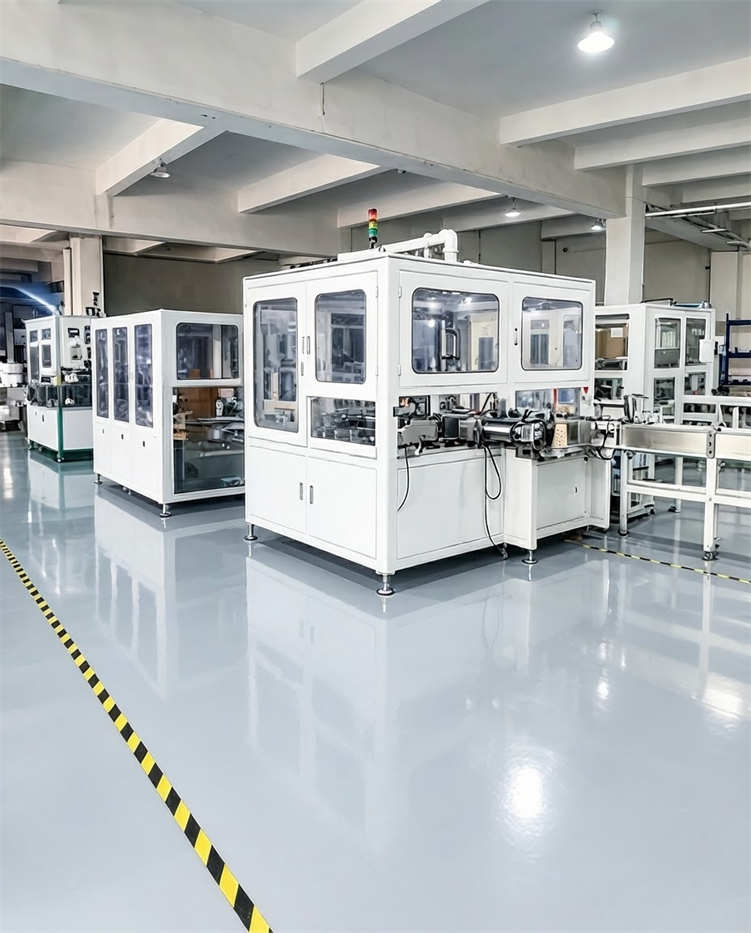
An integrated tube production line — extrusion, injection shoulder heading, and decoration operating in sequence. Line integration planning at pre-installation stage determines how much of this throughput potential you actually capture. Source: Miyoda Packaging Machinery
مسرد المصطلحات الأساسية
| المصطلح | Definition |
|---|---|
| Injection Shoulder Machine | Equipment that forms the shoulder and nozzle of a soft plastic tube by injecting molten resin into a mold cavity at the open end of the tube sleeve |
| Mold Temperature Controller (MTC) | Device circulating temperature-controlled fluid through mold channels to maintain cavity temperature within specification |
| Parting Line | The interface between mold halves; wear here creates flash on formed shoulders |
| Flash | Excess resin that escapes the mold cavity at the parting line, forming a thin fin that requires removal or causes rejection |
| Short Shot | Incomplete cavity fill — the mold closes correctly but insufficient resin reaches all areas, leaving voids in the formed shoulder |
| Hygroscopic Resin | A resin that absorbs moisture from ambient air; must be dried to specification before moulding to prevent splay, bubbles, and reduced part strength |
| SPC (Statistical Process Control) | Real-time statistical monitoring of process outputs using control charts to detect drift before defects occur |
| Cpk (مؤشر قدرة العملية) | Measure of how consistently a process produces parts within specification; Cpk ≥ 1.33 is the pharmaceutical standard |
| OEE (فعالية المعدات الإجمالية) | OEE = Availability × Performance Rate × Quality Rate; world-class benchmark is 85% |
| IIoT | Industrial Internet of Things — network-connected sensors transmitting machine data for remote monitoring and predictive maintenance |
| Purge Compound | Specialised material used to displace production resin from the barrel and screw during material changeovers or shutdowns |
| Clamp Tonnage | The force applied by the clamping unit to keep the mold closed against injection pressure; insufficient tonnage causes flash and dimensional inconsistency |
| Sonotrode | Ultrasonic vibration component used in ultrasonic assembly or sealing operations; not typically part of shoulder injection but relevant in downstream sealing integration |
| التحقق من الصلاحية (IQ)/التأهيل التشغيلي (OQ)/التأهيل الدائم (PQ) | Installation, Operational, and Performance Qualification — three-stage pharmaceutical equipment validation protocol |
| Cycle Time | The total time from the start of one injection cycle to the start of the next; cooling phase accounts for 60–80% of total cycle time |
الأسئلة المتداولة
1. How can I reduce cycle time on my injection shoulder machine without affecting tube quality?
Begin with a five-day production baseline — measure actual cycle time across 500 consecutive shots and quantify variation. If variation exceeds ±0.5 seconds, stabilise the process before attempting to reduce average cycle time. Target the cooling phase first, since it represents 60–80% of total cycle time. Reduce cooling time in 10% increments, running 200 qualification shots at each level to verify shoulder dimensional consistency. Stop when any dimension exceeds specification and set your production cooling time at 110% of the validated minimum. Most machines have 10–20% additional cycle time reduction available through this validated approach — a 10-second reduction on a 60-second cycle generates over USD 50,000 in additional annual profit per machine.
2. What maintenance schedule do you recommend to prevent unplanned downtime?
A three-tier schedule: daily pre-shift checks (10–15 minutes) covering mold cavity visual inspection, nozzle condition, barrel temperatures, and ejector function; weekly inspection covering water circuit flow, drive system condition, and full dimensional verification on 20 shots; monthly deep maintenance covering full mold strip and clean, cooling channel descaling, and clamping unit tie-bar load balance check. All intervals should be based on cycle counts, not calendar time — a mold running two shifts accumulates wear at twice the rate of the same mold on one shift.
3. Can your machines handle both cosmetic and pharmaceutical-grade materials?
Yes — with appropriate configuration. The key distinction is documentation and validation requirements. Pharmaceutical shoulder production requires IQ/OQ/PQ qualification documentation, GMP-compliant cleaning SOPs between products, electronic batch records, and process capability data (Cpk ≥ 1.33 for critical dimensions). Cosmetic production has more operational flexibility. The machine hardware for both applications is often identical — the difference is the process control infrastructure, documentation rigour, and material certification requirements surrounding it. Confirm with your supplier at specification stage which validation documentation support is included in the scope of supply.
4. What training do you provide for operators and maintenance teams?
Comprehensive commissioning training should cover: machine startup and shutdown sequences with documented SOP, hands-on parameter adjustment with quality implication explanation, fault code interpretation and first-response troubleshooting for the 15 most common alarm conditions, mold handling and basic inspection procedures, and quality check execution including dimensional measurement and control chart interpretation. For pharmaceutical operations, training should also cover GMP documentation requirements for batch records and maintenance logs. Confirm training scope, duration, and qualification documentation in the purchase agreement — not as a verbal commitment at installation.
5. How do I ensure consistent shoulder dimensions across large production runs?
Three things working together: SPC monitoring of shoulder OD on every 50th–100th part during production, mold temperature verification at multiple cavity points at startup and every 2 hours during production, and quarterly mold dimensional verification against the original commissioning baseline. Most large-run dimensional drift is traceable to mold temperature controller calibration drift (the controller reads correctly but the actual mold surface is off) or to gradual cooling channel scale build-up that reduces cooling efficiency. Addressing both through the maintenance schedule in Section 4 of this guide prevents the majority of large-run dimensional variation.
6. Are your machines compatible with automation systems like robotic pick-and-place?
Yes — modern injection shoulder machines include standard electrical interfaces (I/O signals for mold open, ejection complete, and robot clear-to-enter) that allow integration with most Cartesian and 6-axis robotic systems. Confirm the specific interface protocol (digital I/O, Euromap 67, or OPC-UA) with your machine supplier at specification stage, and confirm the same protocol is available on your chosen robot controller. This interface specification detail prevents costly retrofit work during installation.
7. What energy-saving features are built into your injection shoulder machines?
Servo-driven clamping and injection systems reduce power consumption by 60–80% compared to conventional hydraulic systems. Idle mode activation during stops exceeding 5 minutes reduces barrel heater cycling and drive system load while maintaining thermal stability. PLC-controlled heating zone management reduces startup energy consumption by ramping zone temperatures progressively rather than simultaneously. These three features combined typically reduce annual energy consumption by USD 6,000–9,000 per machine compared to an equivalent hydraulic system at standard operating hours.
8. How do I minimize material waste during startup and changeovers?
For startup: use recipe recall from the HMI to restore all parameters to the last validated settings for that mold — eliminating the trial-and-error parameter restoration that generates qualification waste on machines without recipe storage. Allow the mold to reach full thermal stability (typically 15–20 minutes at operating setpoints) before starting the qualification sequence. For colour changeovers: use purge compound rather than resin-to-resin transition — a 3–5 shot purge sequence produces clean colour faster and with 60–70% less waste material than direct resin changeover.
9. Can the machine be adjusted easily when switching between different tube sizes?
Yes — servo-driven machines with recipe storage recall complete parameter sets (injection pressure, speed, cooling time, clamp force, ejector stroke) from the HMI for each mold design, completing a pure parameter changeover in 2–5 minutes. Physical tooling changeover (mold change) typically requires 45–90 minutes depending on mold weight and connection complexity. Quick-change clamping systems and standardised mold plate dimensions reduce physical changeover time by 30–50% compared to non-standardised mold mounting. Confirm mold plate standardisation (VDMA or Euromap standard) with your supplier if your facility runs multiple mold designs.
10. What kind of technical support do you offer internationally?
Evaluate technical support on three criteria: remote diagnostic capability (live PLC access for real-time troubleshooting), committed response time for critical production stops (target: 2–4 hours from support request to live session), and regional spare parts availability (committed lead time for critical components to your facility). شركة ميودا لآلات التغليف provides remote technical support for international clients with a documented spare parts guarantee, enabling response to critical production issues without waiting for on-site engineer travel.
11. Do your machines meet GMP and ISO standards for pharmaceutical packaging?
GMP-compliant injection shoulder machines include: product-contact surfaces in materials compliant with relevant pharmacopoeia (FDA 21 CFR, EU Pharmacopoeia), documented cleaning validation SOPs, electronic batch record capability for mold identity, cycle count, and process parameters per batch, and IQ/OQ/PQ validation documentation support. ISO 15747 covers plastics for injectables packaging; ISO 22716 governs cosmetic manufacturing practice. Confirm which standards your specific product and market require at specification stage — and verify that the supplier can provide validation documentation templates as part of the delivery scope.
12. How quickly can spare parts be delivered in case of a breakdown?
This is a procurement decision criterion, not a question to ask after purchase. Before signing a purchase agreement, require a written commitment on maximum delivery time for your top 5 critical spare parts: nozzle tip assembly, mold cooling circuit seals, ejector pins, barrel heater bands, and temperature controller. Suppliers with regional spare parts warehouses can commit to 24–72 hours for critical components. Suppliers without regional stocking may quote 4–8 weeks. The difference in a production stop situation is the difference between a half-day disruption and a catastrophic schedule impact.
13. Is remote diagnostics available for troubleshooting production issues?
Modern injection shoulder machines with IIoT connectivity support secure remote PLC access, allowing supplier technicians to read live process data, review fault logs, and adjust parameters in real time. Remote diagnostics reduces average fault resolution time from 4–8 hours (local technician dispatch) to 30–90 minutes in documented packaging equipment cases. When evaluating this feature, confirm: is remote access included in the standard after-sales package or priced separately? What cybersecurity protocol governs remote access? What is the committed activation time from your support request?
14. What is the expected lifespan of the mold and critical machine components?
Hardened steel injection molds in cosmetic tube shoulder production last 500,000 to 1,000,000 cycles under correct operating conditions and preventive maintenance. Semi-hardened molds (for lower-volume applications) typically last 100,000–250,000 cycles. Barrel screws and barrels last 5,000–15,000 operating hours depending on resin abrasiveness and operating temperatures. Servo drives have a mean time between failures (MTBF) of 50,000–80,000 hours under normal conditions. Track mold cycle counts and screw operating hours in your maintenance log and plan replacements proactively, not reactively.
15. How do your machines handle hygroscopic resins commonly used in tube production?
The machine itself does not manage hygroscopic resin drying — this is handled upstream in the hopper dryer system. The machine specification question is: does the hopper dryer capacity match the machine’s hourly resin consumption rate? A machine consuming 30 kg/hr of nylon (PA) resin requires a drying capacity that maintains a minimum 4-hour drying residence time at the correct dew point (typically -40°C outlet dew point for nylon). Specify hopper dryer capacity at 6× hourly consumption to maintain adequate buffer against production rate variation. Confirm resin-specific drying parameters with the resin supplier — not just with the machine manufacturer.
16. Can I integrate quality inspection systems directly into the production line?
Yes — vision inspection systems can be integrated at the ejection point to inspect each shoulder for flash, short shots, colour consistency, surface defects, and gate quality at 100% inspection rates. Entry-level systems for tube shoulder inspection cost USD 15,000–30,000 and integrate via digital rejection output to a diverter gate. They also generate defect frequency and type data that is valuable for process improvement and GMP batch records. For pharmaceutical applications, 100% inline inspection is increasingly a regulatory expectation rather than an option.
17. What is the average return on investment (ROI) for your injection shoulder machines?
ROI varies by production volume, labour cost, and existing equipment baseline, but the calculation framework is consistent: sum annual labour savings (reduced headcount or overtime), energy savings (servo vs. hydraulic delta), scrap reduction value, and revenue from contracts won through demonstrated quality capability. Divide total machine investment cost (purchase + installation + validation) by annual net savings. For a pharmaceutical tube producer at 8 million shoulders per year, documented payback periods typically fall in the 2.5–4 year range, with the machine generating its full purchase price in net operating advantage every 2.5–4 years thereafter across its remaining service life.
18. Do you offer line design consulting to optimize the entire tube production workflow?
Yes — line design consulting involves mapping the full production sequence from tube sleeve extrusion through shoulder injection, decoration, filling, and packaging, and optimising the physical layout, equipment specifications, and workflow integration at each step before equipment is purchased. This upfront planning prevents the most expensive production efficiency problems — those that are physically built into the line layout and cannot be corrected without relocating equipment. The Miyoda Packaging Machinery tube production line guide covers the integration considerations for each stage of a complete tube production line.
19. How do you ensure machine precision for thin-walled or complex shoulder designs?
Precision for thin-wall and complex shoulder geometries requires three things working together: high-precision mold tooling (machined to ±0.01–0.02 mm tolerance), process stability (cycle time variation < ±0.3 seconds, mold temperature variation < ±2°C across all zones), and validated injection parameters (pressure, speed, and hold time profiles validated against dimensional outcomes on the specific thin-wall design). Thin-wall injection moulding typically uses higher injection speeds and pressures than standard moulding to fill the cavity before premature cooling — confirm that the machine’s injection speed and pressure ratings match the requirements of your thinnest-wall shoulder design before purchase.
20. Are your machines suitable for producing recyclable or biodegradable tubes?
Yes — injection shoulder machines running standard LDPE and HDPE resins are directly compatible with post-consumer recycled (PCR) content materials, which are increasingly specified by cosmetic brand buyers committing to recycled packaging targets. The processing adjustment for PCR resins involves tighter melt temperature control (PCR resins typically have wider MFI variation than virgin grades, requiring more responsive barrel temperature management) and higher-grade melt filtration to manage contamination from the PCR feed. For bio-based PLA or PHA resins used in biodegradable applications, confirm barrel temperature ranges and screw geometry compatibility with the resin supplier before committing to a machine platform.