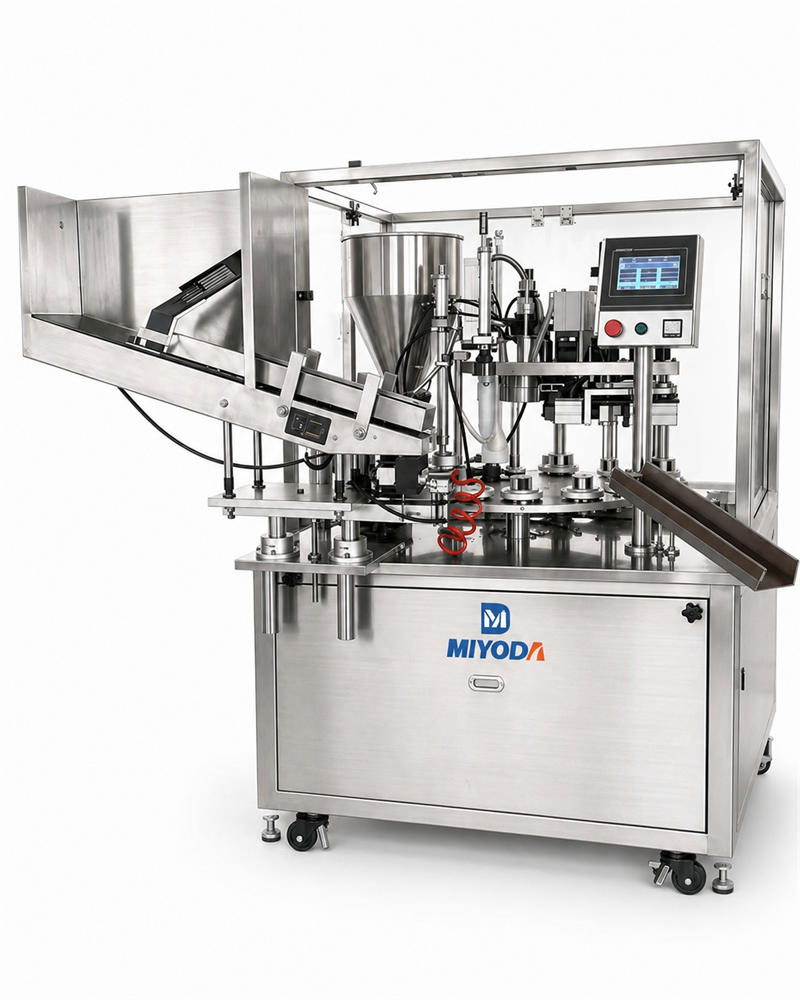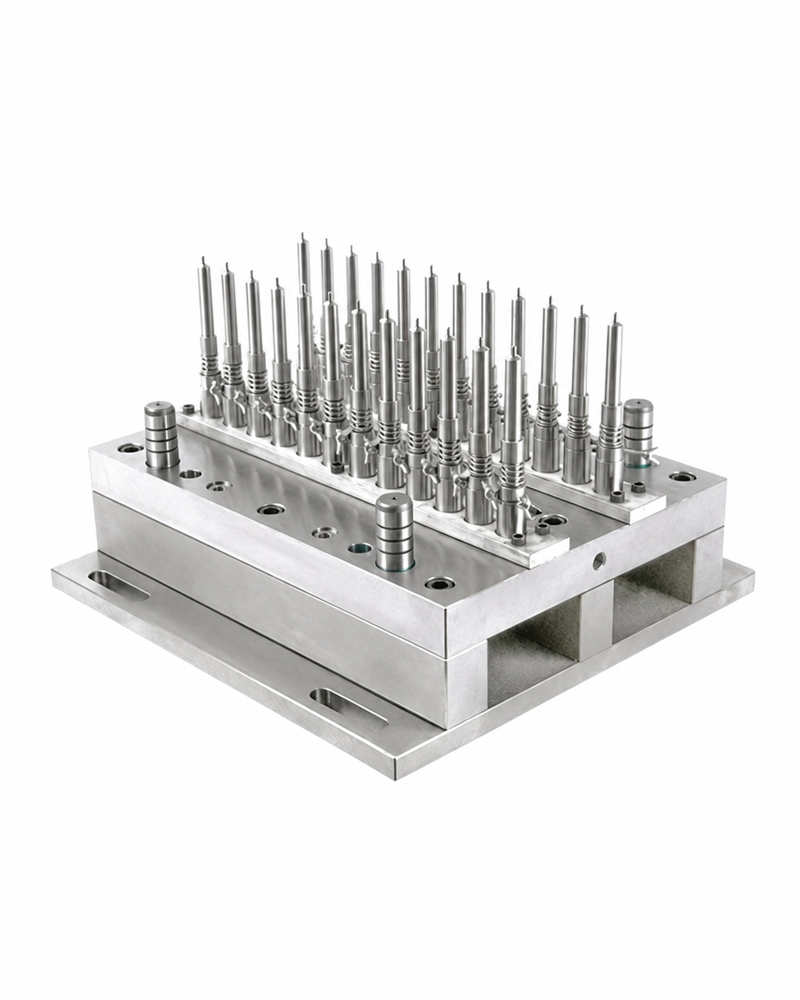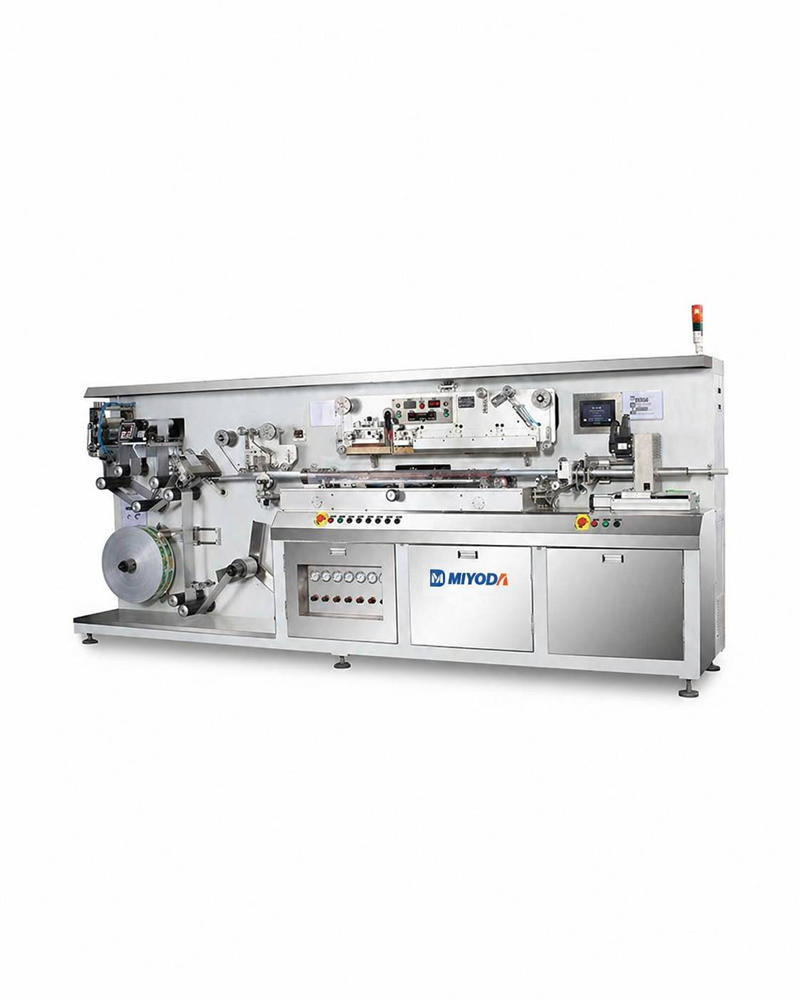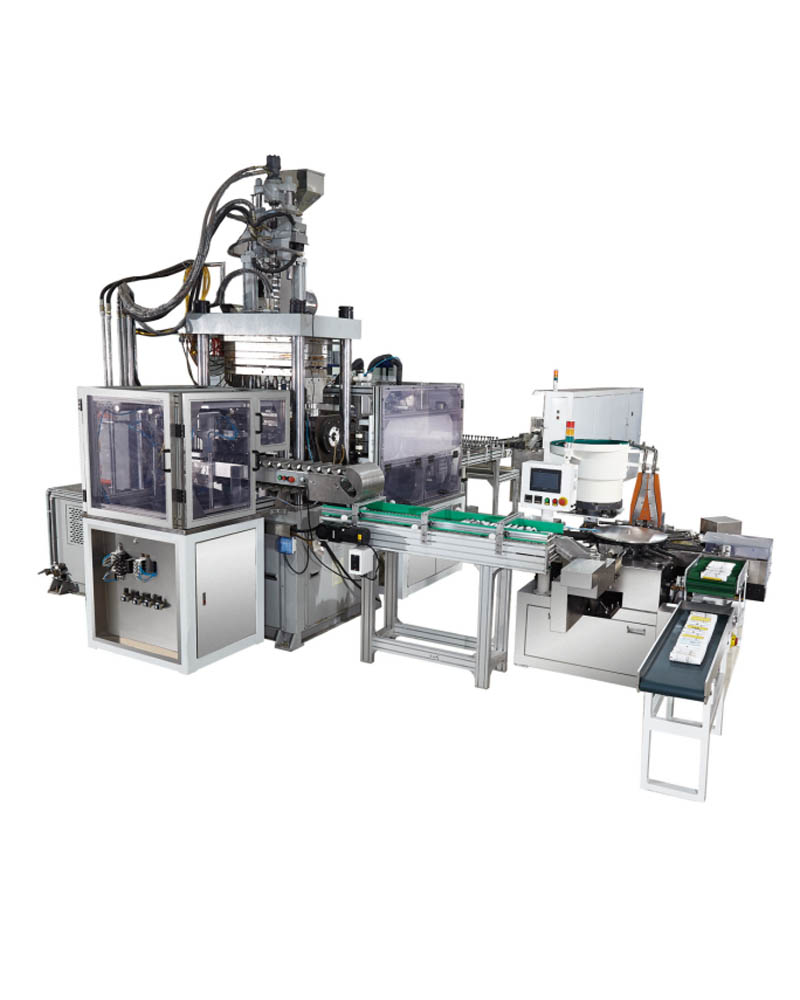
The Ultimate Guide to Choosing the Right Injection Shoulder Machine for Your Manufacturing Needs
A Strategic Buyer’s Guide for Cosmetic & Pharmaceutical Packaging Producers, Distributors, and Agents
Pick up any cosmetic cream tube from your desk. Run your fingers from the tail to the cap end. At the transition point between the cylindrical tube body and the threaded neck that holds the cap — that is the shoulder. It is injection-molded directly onto the tube body, and it is the single most structurally demanding component of the entire package.
The shoulder carries the cap thread geometry, the sealing surface that interfaces with the filling line, and the aesthetic profile that your brand designer specified. If the thread dimension drifts by more than ±0.05 mm, the cap torque test fails. If the sealing surface has flash contamination — excess material from a poorly calibrated mold — the filling line seal is compromised. If the shoulder-to-body bond is inconsistent, the tube leaks under fill pressure before it reaches the retailer.
The machine that forms that shoulder determines whether your tube production runs at 98.5% yield or at 91% yield — and the financial difference between those two numbers on a line running 500,000 tubes per month is substantial. At $0.18 average material cost per tube, a 7.5 percentage-point yield improvement is worth $6,750 per month — $81,000 per year — from a single process upgrade.
This guide exists because that decision deserves more than a brochure comparison. Every section addresses a real challenge faced by producers scaling cosmetic or pharmaceutical tube manufacturing, distributors evaluating equipment for their clients, and agents representing machinery that needs to perform in verified production conditions — not in a demonstration room.
شركة ميودا لآلات التغليف designs and builds tube heading and shoulder machines alongside complete tube production lines serving cosmetic and pharmaceutical manufacturers globally. The insights in this guide reflect what experienced buyers ask, what production data actually shows, and what the right machine decision looks like when it is grounded in real operational requirements.
1. Understanding the Critical Role of Injection Shoulder Machines in Soft Tube Production
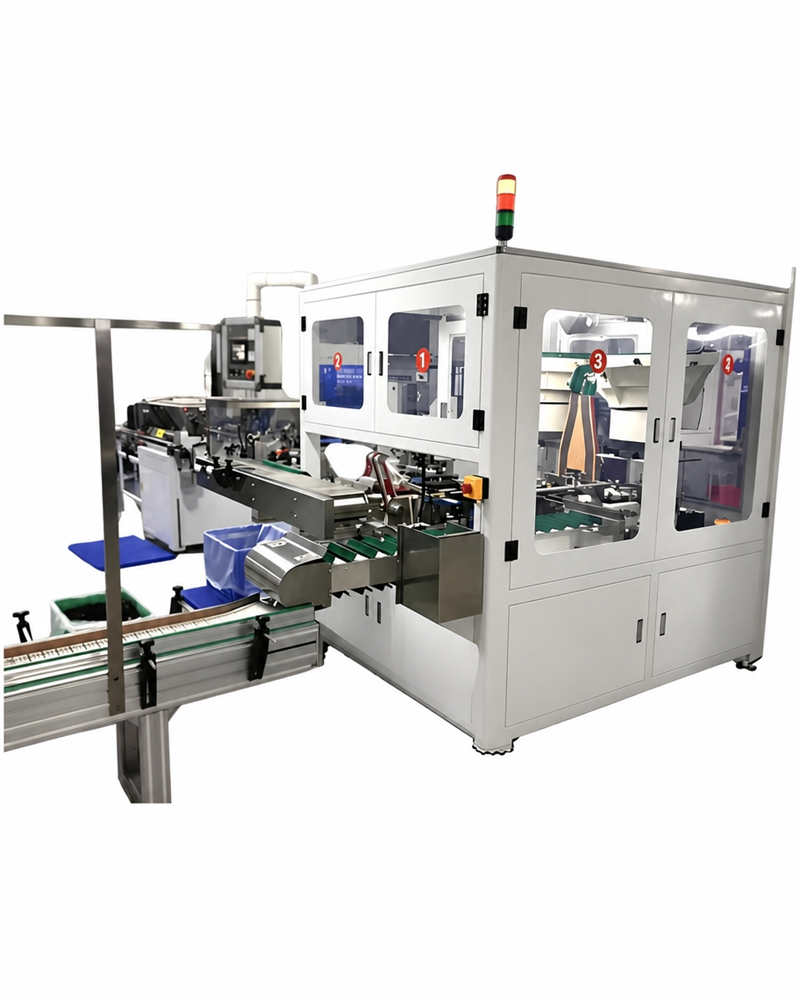
The injection shoulder machine performs one specific task in the tube production sequence — but it is the task that everything else depends on.
In soft tube manufacturing, the tube body is extruded or formed as a cylindrical blank. That blank has no functional top end until the shoulder injection process forms it. The machine takes the open-ended tube body, positions it precisely over a heated injection mold, and injects molten resin — typically PE or PP — into the mold cavity that defines the shoulder profile, the neck geometry, and the thread form.
In a single injection cycle lasting 8–18 seconds depending on the machine type and tube format, the shoulder goes from molten resin to a dimensionally stable, thread-formed, aesthetically finished component bonded to the tube body. The bonding between the extruded tube wall and the injected shoulder is not mechanical — it is a molecular fusion of the same base polymer, which is why the shoulder-to-body joint on a correctly produced tube is stronger than either component individually.
What machine performance means for product integrity:
The shoulder determines the cap’s thread engagement depth — which directly controls the torque required to open and close the tube. Too shallow, and the cap falls off in the retailer’s display. Too deep, and the cap is difficult to remove and the thread strips under normal use. The dimensional window for acceptable thread geometry is typically ±0.02 mm on thread height and ±0.05 mm on thread pitch diameter.
The shoulder also defines the sealing surface that the filling machine’s chuck grips when it loads the tube. If the shoulder geometry varies by more than the filling machine’s centering tolerance — typically ±0.15 mm — the tube is rejected at the filling station before any product is added. A batch of correctly formed tube bodies becomes a batch of filling-line rejects because the shoulder machine was running outside its calibrated tolerance.
Brand reputation enters at the shoulder:
For luxury cosmetic brands, the shoulder profile is designed with the same precision as the cap it interfaces with. A shoulder running at 0.3 mm below the specified diameter creates a visible gap between cap and tube body — the kind of gap that a premium skincare customer notices on a €45 product and never forgets. Consistent shoulder geometry is not just a manufacturing requirement. It is a brand requirement.
2. Key Pain Points in Current Soft Tube Manufacturing — And How the Right Machine Solves Them
Producers who come to the shoulder machine purchasing decision with experience on their current line typically arrive with one of five specific problems. Understanding these problems — and how machine design addresses them — is the most direct path to a productive purchasing conversation.
Pain Point 1: Inconsistent shoulder geometry across the production run.
A machine with inadequate clamping force or worn mold parting surfaces allows the mold halves to shift under injection pressure — producing shoulders where the diameter, thread form, or shoulder height varies by cycle. The variance may be small enough to pass visual inspection but large enough to fail capping torque testing or filling line compatibility checks. Root cause: insufficient clamping tonnage for the injection pressure required by the material being processed, combined with deferred mold maintenance.
Pain Point 2: Flash formation at the shoulder-to-body interface.
Flash is excess molten resin that escapes the mold cavity through the parting line during injection — producing a thin, visible membrane of plastic at the shoulder edge. On a cosmetic tube, flash is an immediate visual reject. On a pharmaceutical tube, flash in the sealing area is a GMP deviation — a foreign material source. Flash occurs when injection pressure exceeds the mold’s clamping force, when the mold parting surfaces are worn or contaminated, or when the gate position and runner geometry create pressure imbalances across the cavity. Modern machines with servo-controlled injection and real-time cavity pressure monitoring reduce flash incidence by automatically adjusting injection parameters when pressure deviation is detected.
Pain Point 3: Extended cycle times that limit throughput.
A shoulder injection machine rated at 4 cycles per minute (15-second cycle) on a 4-cavity mold produces 16 shoulders per minute — 960 per hour. The same rated machine running at an actual 18-second cycle due to extended cooling time produces 800 per hour — a 17% throughput reduction that compounds across shifts and months into significant output gaps. Extended cooling times are usually the result of inadequate mold temperature control — specifically, cooling channel flow rates that are insufficient for the wall thickness of the shoulder being produced. Optimized mold cooling design, combined with precise mold temperature controllers (±0.5°C), reduces cycle time by 15–25% on most shoulder configurations without any sacrifice in dimensional quality.
Pain Point 4: Material waste from sprue and runner systems.
In a conventional cold-runner injection mold, the resin in the sprue and runner channels solidifies with each cycle and must be separated from the shoulder. This runner waste — typically 8–15% of the total resin injected per cycle — is either granulated for reuse (at the cost of degradation risk to the recycled material) or discarded. Hot-runner mold systems eliminate this waste by maintaining the runner channels at melt temperature throughout the production run, meaning only the cavity (the shoulder itself) solidifies. For a machine running 200 kg of PP per shift, the 10% runner waste reduction from a hot-runner system saves 20 kg of resin per shift — at $2.80/kg, that is $56/shift, $1,120/month, $13,440/year from a single material efficiency improvement.
Pain Point 5: Rejected batches that reach the filling or decorating stage.
When shoulder geometry variation goes undetected through the forming stage — because inspection is manual and sampling-based rather than 100% automated — defective shoulders reach downstream processes before they are caught. A tube with a defective shoulder that is filled, sealed, labeled, and cartoned before rejection costs approximately 5–8× more in total production cost than the same tube caught at the shoulder inspection stage. Automated dimensional inspection systems mounted at the machine discharge — measuring shoulder diameter, height, and thread form on every cycle using laser or vision technology — eliminate this cost by catching defects at the point of origin.
3. Types of Injection Shoulder Machines: Matching Technology to Your Production Scale
The three principal machine technologies for tube shoulder injection each have a distinct performance profile, cost structure, and ideal application range. Choosing incorrectly between them is one of the most common sources of post-purchase dissatisfaction.
Hydraulic Injection Shoulder Machines
Hydraulic machines use pressurized hydraulic fluid to drive the injection, clamping, and ejection functions. They are the established technology for high-force applications and are particularly suited to large-format shoulder molds that require clamping forces above 200 tons.
Their advantages include high clamping force at relatively lower capital cost, robust performance in high-ambient-temperature production environments, and well-understood maintenance requirements that most production engineering teams can handle in-house. Their limitations are significant in pharmaceutical and premium cosmetic contexts: hydraulic oil contamination risk (from seal degradation) poses a cleanroom compatibility challenge, energy consumption is substantially higher than equivalent electric machines, and positional repeatability — the ability to execute exactly the same injection stroke every cycle — is inherently limited by hydraulic fluid compressibility.
All-Electric Injection Shoulder Machines
All-electric machines replace every hydraulic actuator with a servo motor — injection, clamping, ejection, and mold rotation all driven by precision electric servo axes. The performance advantages over hydraulic systems in tube shoulder production are measurable and documented.
Precision: All-electric machines achieve injection speed repeatability of ±0.01 mm/s and position repeatability of ±0.005 mm — two to five times better than equivalent hydraulic machines. For tube shoulder thread geometry that must hold ±0.02 mm across a production run, that precision directly translates into yield improvement.
Energy consumption: All-electric injection machines consume 30–50% less energy than hydraulic equivalents under comparable production conditions. Servo motors draw power only during active motion phases; hydraulic pumps run continuously regardless of machine state. On a two-shift annual production schedule, the energy cost difference between an equivalent hydraulic and all-electric machine is typically $4,000–$9,000/year — savings that begin accumulating from the first production day.
Cleanroom compatibility: No hydraulic oil means no hydraulic oil contamination risk. All-electric machines are the standard specification for pharmaceutical tube shoulder production in ISO Class 7 and cleaner environments.
Capital cost: All-electric machines carry a 20–35% purchase price premium over equivalent hydraulic machines. The total cost of ownership analysis (see Section 7) consistently shows this premium recovered within 2.5–4 years through energy savings and reduced maintenance costs.
Hybrid Injection Shoulder Machines
Hybrid machines use servo-electric drives for injection and clamping — the precision-critical functions — while retaining hydraulic actuation for auxiliary functions such as core pulls and ejector systems. They achieve 80–90% of the energy efficiency of all-electric machines at a 10–15% lower capital cost, making them a strong value proposition for producers who need pharmaceutical-grade injection precision but are working within tighter capital budgets.
Scale matching — bench-top vs. industrial:
| Configuration | Cavitation | Typical Output | أفضل تطبيق |
|---|---|---|---|
| Bench-top / pilot machine | 1–2 cavity | 60–180 shoulders/hr | R&D, new product trials, small runs |
| Mid-range industrial | 2–4 cavity | 240–600 shoulders/hr | Small to medium brands, multi-SKU production |
| High-speed industrial | 4–8 cavity | 800–1,800 shoulders/hr | High-volume cosmetic, toothpaste, pharma |
| High-cavitation continuous | 8–16 cavity | 1,800–4,000+ shoulders/hr | Mass-market single-SKU production |
The cavitation output calculation is straightforward but frequently misapplied. Cavitation refers to the number of shoulder cavities in a single mold — how many shoulders are produced in one machine cycle. Rated output (shoulders/hour) = (cavities × 3,600 seconds) ÷ cycle time in seconds.
$$\text{Shoulders/Hour} = \frac{\text{Cavities} \times 3{,}600}{\text{Cycle Time (seconds)}}$$
A 4-cavity mold with a 15-second cycle produces 960 shoulders per hour under ideal conditions. Apply an OEE (Overall Equipment Effectiveness — Availability × Performance × Quality) factor of 82% for realistic production conditions, and sustained output is approximately 787 shoulders per hour — the figure to use in your production planning.
4. Precision Engineering: Why Tolerance Control Matters in Pharmaceutical and Premium Cosmetic Applications
Tolerance is the permitted variation in a dimension — the band within which a measured value can fall while still being acceptable. A shoulder thread diameter specified at 20.00 mm with a tolerance of ±0.02 mm means any shoulder measuring between 19.98 mm and 20.02 mm is acceptable; anything outside that band is a defect.
For soft tube shoulders, the critical dimensions and their required tolerances in pharmaceutical and premium cosmetic production are:
| Dimension | Specification | Acceptable Tolerance | Consequence of Exceedance |
|---|---|---|---|
| Thread height | Per cap specification | ±0.02 mm | Cap strips or falls off |
| Shoulder outer diameter | Per cap specification | ±0.05 مم | Visible cap gap, aesthetic reject |
| Shoulder height (from tube body end) | Per design spec | ±0.10 mm | Filling line chuck incompatibility |
| Neck bore diameter | Per filling line spec | ±0.08 mm | Filling nozzle alignment failure |
| Sealing surface flatness | — | ≤0.03 mm runout | Cap sealing failure, leakage |
These tolerances are not conservative specifications written for regulatory compliance documents. They are the dimensions that determine whether your tube passes the cap supplier’s compatibility test, the filling machine operator’s test run, and the brand owner’s sampling inspection before retailer submission.
The defect-rate reality of tolerance drift:
Precision injection molding research establishes that standard commercial injection molding achieves tolerances of ±0.2 mm under normal process conditions — ten times wider than the ±0.02 mm specification for cosmetic tube thread geometry. Achieving ±0.02 mm requires: a machine with servo-controlled injection and clamp axes, a mold built to tool-room precision standards, active mold temperature control (not just cooling water flow), and a validated process recipe stored in the machine controller.
A tube producer upgrading from a hydraulic shoulder machine with manual process adjustment to an all-electric machine with servo injection and closed-loop cavity pressure control typically sees defect rates (dimensional rejects plus flash rejects) fall from 6–9% to 1.5–2.5% within the first validated production run. At 500,000 tubes per month and $0.18 material cost per tube, that 5-percentage-point yield improvement is worth $4,500/month — $54,000 annually — in recovered material alone, before counting the labor and rework cost of the previously rejected tubes.

5. Maximizing Efficiency: Cycle Time, Automation Integration, and Uptime Optimization
A tube shoulder injection machine is never the only machine on your production floor. It operates within a production sequence — upstream from tube body forming, downstream from the extruder or laminate line, and parallel to or upstream of the decorating line. Its throughput must match the overall line design, and its uptime must support the schedule that your delivery commitments depend on.
Evaluating real-world output — not theoretical specs:
The rated speed in a machine specification is measured under ideal laboratory conditions — correct material temperature, optimal mold temperature, zero changeover time, and no quality holds. Real production output is different. The formula that matters for production planning uses OEE:
$$\text{Actual Output (shoulders/shift)} = \text{Rated Output} \times \text{OEE Factor} \times \text{Shift Length (hours)}$$
A machine rated at 1,200 shoulders/hour running at 82% OEE across an 8-hour shift produces approximately 7,872 shoulders per shift — not the 9,600 that the rated speed implies. Build your production plan around the OEE-adjusted figure.
Robotic take-out systems:
Manual shoulder removal from the mold discharge requires an operator positioned at the machine, performing a repetitive motion every 10–18 seconds. On a high-speed machine running 15-second cycles, this is 240 manual pickups per hour per operator — a task that fatigues within 2 hours and introduces the human variability that causes handling damage and directional errors in tube orientation. Robotic take-out systems (articulated arm or linear axis end-of-arm tooling) remove this variability entirely, simultaneously improving shoulder quality, reducing scrap from handling damage, and freeing the operator for monitoring and quality checking tasks.
Quick mold changeover:
Changing the mold on a tube shoulder machine for a different tube format — different diameter, different thread specification, different shoulder profile — typically takes 1.5–3 hours on a standard machine, or 30–45 minutes on a machine designed with quick-change mold mounting (standardized hydraulic or magnetic clamp systems, pre-set temperature connections). For operations running 3 or more tube formats per production week, the changeover time difference adds up to 6–12 hours of recovered production time per week.
Predictive maintenance integration:
Modern PLC-controlled shoulder injection machines generate continuous sensor data on injection pressure profiles, mold temperature trends, servo motor current draws, and cycle-time variation. A machine that cannot process this data and generate maintenance alerts is producing the information that would allow you to prevent failures — and discarding it. Machines with integrated SCADA (Supervisory Control and Data Acquisition — a real-time monitoring and control system that collects machine data and displays it on a dashboard) capability alert maintenance teams to parameter drift before it produces defects or machine failures, typically providing 24–72 hours of advance warning for planned intervention versus emergency repair.
Watch a high-speed automatic tube shoulder injection machine in operation:
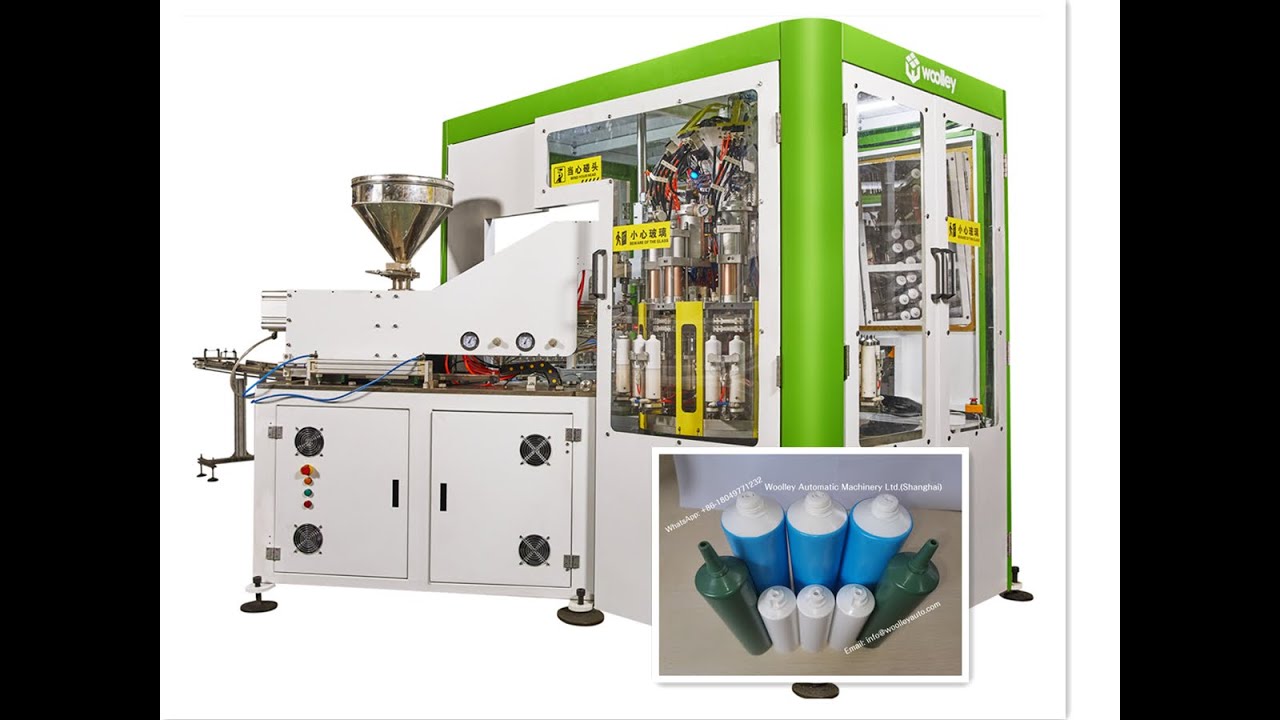
▶ Watch: Fully automatic tube shoulder injection machine running at 80–120 pieces/minute — cosmetic, toothpaste, and pharmaceutical tube production
6. Material Compatibility and Flexibility: Adapting to PE, PP, and Multi-Layer Composites
The resin injected into the shoulder mold must be chemically and physically compatible with the tube body material it bonds to. An incompatible combination produces a shoulder that meets dimensional specifications but deaminates under mechanical stress — the shoulder-to-body joint separates when the filled tube is squeezed, dropped, or subjected to thermal cycling during shipping.
PE (Polyethylene) shoulders on PE tube bodies are the standard for most cosmetic tubes. The molecular similarity of the shoulder and body materials creates a strong fusion bond at the injection interface. The processing window for PE shoulder injection is relatively wide — melt temperature 180–230°C, mold temperature 15–35°C — making it forgiving of minor parameter variation. The risk: wide processing windows can mask the need for precise parameter control, resulting in inconsistent bond quality that only appears under pressure testing.
PP (Polypropylene) shoulders offer higher stiffness than PE — important for tube formats where the cap requires a rigid thread engagement, such as pump-top and flip-top closures that apply torque loads the softer PE thread cannot sustain. PP requires higher melt temperatures (220–270°C) and more precise mold temperature control than PE, and it bonds less readily to PE tube bodies — requiring specialized co-injection techniques or adhesion-promoting surface treatment at the shoulder-body interface.
Multi-layer composite tubes (ABL and PBL):
ABL (Aluminum Barrier Laminate) tube bodies have an aluminum foil core that does not melt under injection conditions — meaning the shoulder bond to an ABL tube is not a molecular fusion but a mechanical bond between the injected shoulder and the outer PE layer of the laminate. This bond is adequate for most cosmetic applications but requires that the outer PE layer of the ABL body is correctly specified (sufficient thickness and molecular weight) and that the injection machine maintains consistent melt temperature and injection pressure to achieve repeatable bond strength above 2.5 N/15mm.
PBL (Plastic Barrier Laminate) tube bodies present similar bonding considerations, with the added complexity that the EVOH barrier layer within the PBL structure is sensitive to excessive heat — overheating the tube body during shoulder injection can degrade the EVOH layer’s oxygen barrier function, which is the primary reason PBL was specified over standard PE.
Material compatibility across tube structures is a technical specification that your machine supplier must validate — not just claim. Request bond strength test data (peel test results, N/15mm) from a production trial using your actual tube body material before committing to any machine configuration.
Screw design and temperature zone control:
The injection screw geometry determines how efficiently the resin melts, how uniformly it mixes, and how much thermal and mechanical shear stress the material experiences during plasticization. A general-purpose screw designed for standard PE processes on a machine expected to run PP or modified resins will degrade material quality and produce inconsistent melt, increasing defect rates and requiring frequent purging. Confirm that the machine’s screw specification matches your material range — and ask the supplier to provide the screw L/D ratio, compression ratio, and the material families it is validated for.
7. Total Cost of Ownership: Beyond the Initial Purchase Price
The purchase price of an injection shoulder machine is typically 20–30% of what you will spend on that machine over the first five years. Buyers who optimize only on purchase price and ignore TCO (Total Cost of Ownership — the complete financial cost of owning and operating a machine over a defined period, including purchase, energy, labor, maintenance, downtime, and residual value) consistently find that the machines that cost less to buy cost significantly more to operate.
The five-year TCO framework for a mid-range all-electric tube shoulder injection machine vs. an equivalent hydraulic machine:
| فئة التكلفة | Hydraulic Machine (5-Year) | All-Electric Machine (5-Year) | Difference |
|---|---|---|---|
| سعر الشراء | $85,000 | $110,000 | +$25,000 electric |
| Energy cost (2 shifts, 240 days) | $52,000–$68,000 | $28,000–$42,000 | -$24,000 to -$26,000 electric |
| Hydraulic system maintenance | $18,000–$28,000 | $0 (no hydraulics) | -$18,000 to -$28,000 electric |
| General maintenance (PM) | $12,000 | $10,000 | -$2,000 electric |
| Unplanned downtime | $15,000–$25,000 | $8,000–$14,000 | -$7,000 to -$11,000 electric |
| Operator labor (1 per machine) | $140,000 | $140,000 | متساوي |
| 5-Year TCO | $322,000–$368,000 | $296,000–$316,000 | -$26,000 to -$52,000 electric |
The all-electric machine that costs $25,000 more to purchase delivers a 5-year TCO saving of $26,000–$52,000 — a net advantage of $1,000–$27,000 over the ownership period, before accounting for the yield improvement value from better dimensional consistency.
Energy: the hidden operating cost that adds up daily:
A hydraulic injection machine running continuously on a two-shift schedule draws 15–25 kW from the hydraulic pump motor alone, regardless of whether the machine is in active injection or in idle between cycles. An all-electric equivalent draws 0 kW between servo cycles. On a 16-hour production day with 40% idle time, the hydraulic machine wastes 96–160 kWh daily on idle energy consumption that the all-electric machine eliminates entirely. At $0.12/kWh, that is $11.52–$19.20/day — $2,765–$4,608 per year from idle energy alone.
Spare parts: the cost that surprises buyers most:
Hydraulic systems require periodic replacement of seals, hoses, pump components, and hydraulic fluid (with proper disposal cost). These are well-understood maintenance items on hydraulic machines, but their cumulative 5-year cost of $18,000–$28,000 — documented across multiple production operations — is rarely reflected in the purchase budget. All-electric machines eliminate hydraulic system maintenance entirely, replacing it with servo motor bearing inspection and periodic ball screw maintenance — substantially lower in total cost and frequency.
Why a 30–50% higher upfront investment often leads to 30–50% lower operating costs:
The TCO data above shows a 29% higher purchase price for the all-electric machine delivering 8–14% lower 5-year TCO. For high-volume producers running their machine above 200 million cycles over 10 years, the compounding effect of lower energy and maintenance costs is more dramatic — the all-electric advantage grows with production volume and machine utilization.
8. Compliance and Validation: Meeting GMP, FDA, and ISO Standards for Pharmaceutical Tubes
If your tube production includes pharmaceutical applications — topical ointments, ophthalmic preparations, dermatological products — the shoulder injection machine is a piece of GMP-regulated production equipment. It must be designed, installed, and validated to demonstrate that it produces shoulders meeting specification consistently, under documented and controlled process conditions.
GMP (Good Manufacturing Practice) in pharmaceutical tube production means that every process variable affecting product quality — injection temperature, pressure, mold temperature, cycle time — is documented, controlled within validated limits, and recorded with batch traceability. A machine that cannot log and export its process parameters for batch records is not GMP-compatible, regardless of its mechanical capability.
IQ, OQ, PQ validation — what it means in practice:
- IQ (Installation Qualification): Documents that the machine was received as specified, installed correctly, and that all utilities (power, cooling water, compressed air) meet the machine’s requirements. This is fundamentally a documentation exercise — the IQ protocol defines what is checked and what the acceptance criteria are.
- OQ (Operational Qualification): Demonstrates that the machine performs its specified functions across its defined operating range. For a shoulder injection machine, OQ includes testing that injection temperature control holds ±3°C across the validated range, that cavity pressure profiles are reproducible cycle-to-cycle, and that dimensional output meets specification across the full production speed range.
- PQ (Performance Qualification): Demonstrates that the machine consistently produces shoulders meeting all quality specifications under real production conditions — with actual tube body material, at full production speed, over a minimum production run sufficient to generate statistically valid quality data.
The IQ/OQ/PQ validation framework is a regulatory requirement for pharmaceutical equipment qualification. Suppliers who cannot provide validation protocol templates — documents that define what to test and what acceptance criteria apply — are not equipped to support pharmaceutical production qualification, regardless of their machine’s mechanical specifications.
Cleanroom design requirements:
Pharmaceutical tube shoulder injection in ISO Class 7 or cleaner environments requires that the machine design eliminates oil contamination sources (hence all-electric), uses stainless steel or anodized aluminum for all surfaces exposed to the cleanroom environment, and allows complete cleaning of all surfaces per validated cleaning procedures. Machines with complex, inaccessible mechanical assemblies in the shoulder forming area are difficult to validate for cleanroom cleaning — an issue that a regulatory inspector will identify during an equipment qualification review.
Material compliance documentation:
All product-contact materials — the mold surfaces that shape the shoulder, the plasticizing barrel and screw, and any conveying surfaces that contact the formed shoulder — must be certified as compliant with the applicable food-contact or pharmaceutical-grade material standards: اللائحة 21 من قانون اللوائح الفيدرالية (CFR)، الجزء 211، الصادرة عن إدارة الغذاء والدواء (FDA) for pharmaceutical applications, EU Regulation 10/2011 for food-contact plastics, and the equivalent standard for your target market. Request material compliance certificates for all product-contact components as a standard part of the machine documentation package.

9. Choosing the Right Supplier: Support, Training, and Long-Term Partnership
The machine decision does not end at the purchase order. It begins there.
Installation, commissioning, operator training, process validation support, spare parts logistics, remote troubleshooting, and the response time when something stops your production line at 11 PM before a major shipment — these are the dimensions of the supplier relationship that determine whether your capital investment delivers the returns you projected or becomes an operational liability.
Technical service response time is a specification.
For a production line where the shoulder injection machine is the throughput bottleneck — which it is, on most tube production lines — a machine stoppage stops the entire line. Every hour of unplanned downtime has a total cost (lost output + recovery labor + material waste) that typically runs $2,000–$8,000 for a mid-volume cosmetic tube operation. A supplier whose regional technical team can respond on-site within 24 hours prevents the same event from costing what it costs when the response time is 5 business days.
The specific evaluation questions that reveal service capability:
Ask any shortlisted supplier: “Who is your closest service engineer to our facility, and what is their average on-site response time for a production-stop emergency?” Ask for a documented service level agreement, not a verbal commitment. Ask for contact information for three current customers who have exercised warranty claims, and call them.
Remote diagnostics: the support layer that most producers don’t know to ask for.
Modern PLC-controlled machines with secure network connectivity allow the machine manufacturer’s engineers to access the control system remotely — reviewing alarm histories, checking parameter logs, and guiding operators through corrective procedures in real time. This capability resolves the majority of production stoppages that are caused by parameter drift, alarm conditions, or process setup errors — within 1–2 hours from the initial contact, without a service visit. For international buyers, remote diagnostic capability is the difference between a 2-hour production interruption and a 4-day wait for a service engineer’s travel schedule.
Spare parts: the cost that surprises international buyers most.
For cosmetic tube machines purchased from Asian manufacturers serving markets in Europe, the Middle East, or the Americas, spare parts logistics is the most common source of post-purchase dissatisfaction. A critical mold component that needs replacement arrives from a factory order in 3–6 weeks — 3–6 weeks of either full production stoppage or degraded output on a worn component. The evaluation criterion: does the supplier maintain a regional spare parts warehouse with a documented inventory of the critical components for your machine configuration, and can they ship emergency spares to your facility within 48 hours?
Operator training that transfers to production:
On-site training — at your facility, with your material, on your machine, with your team — is the only training format that actually transfers to consistent production performance. Factory training on demonstration materials in a controlled environment is useful for initial machine familiarization, but it does not teach your operators how the machine behaves with your specific PE grade or PP formulation under your production conditions. Require a minimum of 5 days of on-site commissioning and training as a contractual delivery requirement, with documented operating procedures provided in your team’s working language.
Miyoda Packaging Machinery’s tube heading and shoulder machine division supports buyers with on-site installation, process validation, and operator training as standard delivery commitments — not premium service options — because the team understands that a machine that produces good shoulders in the factory but runs poorly in the customer’s facility is not a successful machine delivery.
10. Future-Proofing Your Investment: Scalability, Smart Manufacturing, and Industry 4.0 Readiness
A capital investment in production equipment carries a minimum 10-year planning horizon for most cosmetic and pharmaceutical tube producers. The machine you purchase today must be capable of meeting not just your current production requirements, but the requirements your business will have in 2028, 2030, and beyond.
Industry 4.0 and IoT connectivity:
Industry 4.0 refers to the integration of digital technology — sensors, data networks, analytics, and automated control — into physical manufacturing processes. For tube shoulder injection machines, Industry 4.0 readiness means the machine can connect to your production monitoring system via standard industrial protocols (OPC-UA, MQTT) and stream real-time data on injection pressure profiles, mold temperatures, cycle times, and production counts to a central dashboard.
The practical production value of this connectivity is immediate: a supervisor monitoring 4 machines from a single dashboard can identify that Machine 2’s mold temperature has been trending 3°C below setpoint for the last 45 minutes — before it produces dimensional drift visible in the QC data. Without connectivity, that trend is invisible until the batch fails inspection.
Predictive maintenance — turning data into scheduled interventions:
Machines generating continuous sensor data enable predictive maintenance algorithms that identify the signature patterns of developing failures — increased injection pressure variability indicating screw wear, declining servo motor torque indicating ball screw lubrication depletion, cycle time extension indicating cooling channel fouling — and generate maintenance alerts before the failure occurs. The industry data on smart cosmetic manufacturing confirms that IoT-enabled machines with predictive maintenance reduce unplanned downtime by 30–45% compared to time-based preventive maintenance schedules, and reduce emergency repair costs by 40–60%.
Modular design for scalability:
The most practical form of future-proofing is a machine designed to grow with your production requirements. A modular injection shoulder machine allows:
- Cavity expansion: Adding cavities to the existing machine (from 2-cavity to 4-cavity tooling) without replacing the base machine — doubling output at a cost of new tooling rather than a new machine.
- Automation module addition: Adding robotic take-out, automated inspection, or inline orientation systems to a machine initially configured for manual operation — without mechanical modification of the forming system.
- Control system upgrade: Replacing the HMI (Human-Machine Interface — the screen and control panel through which operators interact with the machine) and PLC with current-generation hardware as control technology evolves, without replacing the mechanical base.
The evaluation question for modularity: “What cavity count can this machine support with the base frame, and what is the capital cost of moving from our initial cavity configuration to the maximum supported configuration?” A supplier who answers with a specific technical path and documented upgrade cost is describing genuine modularity. A supplier who answers with “we can accommodate your future needs” is describing a new machine sale.
Sustainability and the circular economy:
The cosmetic industry’s movement toward recyclable tube substrates — driven by retailer sustainability requirements and consumer preference — is changing which tube materials enter production lines. Fully recyclable mono-material PE tubes (without aluminum foil) are growing in market share at the expense of ABL. Machines that are configured for ABL tube bodies and not validated for mono-material PE shoulder bonding will face increasing format incompatibility as the substrate shift continues. Future-proofing your shoulder machine investment means confirming that the machine is validated for current materials و has a documented path to handle the materials that your key customers are likely to mandate over the next 5 years.

مسرد المصطلحات الفنية الأساسية
| المصطلح | Definition | Where It Applies |
|---|---|---|
| Flash | Excess resin escaping mold cavity during injection, forming a thin membrane on the shoulder edge | Visual and compliance reject in cosmetic/pharma tubes |
| Cavitation | Number of shoulder cavities in a single mold — determines parts produced per cycle | Output calculation and production planning |
| OEE (Overall Equipment Effectiveness) | Availability × Performance × Quality — realistic throughput metric | Production capacity planning |
| GMP (Good Manufacturing Practice) | Regulatory standard governing pharmaceutical manufacturing processes and documentation | Required for all pharmaceutical tube production |
| التحقق من الصلاحية (IQ)/التأهيل التشغيلي (OQ)/التأهيل الدائم (PQ) | Installation, Operational, and Performance Qualification — the regulatory validation sequence for pharmaceutical equipment | Required for pharmaceutical production approval |
| TCO (Total Cost of Ownership) | Complete 5-year cost including purchase, energy, maintenance, downtime, and labor | Machine selection and investment justification |
| Servo Motor | Precision electric motor with closed-loop position and speed control — the drive technology in all-electric machines | Injection precision, energy efficiency |
| SCADA | Supervisory Control and Data Acquisition — real-time production monitoring and control system | Industry 4.0 connectivity and predictive maintenance |
| ABL (Aluminum Barrier Laminate) | Tube body material with aluminum foil core — requires specialized shoulder bonding | Material compatibility consideration |
| PBL (Plastic Barrier Laminate) | All-plastic barrier tube body with EVOH layer — fully recyclable | Growing market preference; requires heat-management |
| Hot Runner | Mold system that keeps runner channels at melt temperature — eliminating runner waste per cycle | Material efficiency; 8–15% resin saving per cycle |
| HMI (Human-Machine Interface) | The operator screen and control panel for machine interaction | Operator training and control system upgrades |
الأسئلة المتداولة
1. What is an injection shoulder machine, and why is it critical for soft tube production?
An injection shoulder machine forms the functional top section of a soft tube — the threaded neck that accepts the cap, the shoulder profile that defines the tube’s aesthetic, and the sealing surface that interfaces with the filling line. It does this by injecting molten resin into a precision mold positioned at the open end of the extruded or laminated tube body, fusing the shoulder to the tube in a single automated cycle. Without a correctly formed shoulder, the tube cannot be capped, filled, or sealed reliably — which is why shoulder machine precision directly determines whether your downstream production line runs at 98% first-pass yield or generates batch-level rejection events.
2. How do I know which machine capacity matches my production volume?
Use the OEE-adjusted output formula: Actual hourly output = (Cavities × 3,600 ÷ Cycle Time in seconds) × OEE Factor (0.82 is a realistic benchmark). A 4-cavity machine with a 15-second cycle delivers 960 rated shoulders per hour and approximately 787 actual shoulders per hour at 82% OEE. Multiply by your production hours per month to determine whether the machine meets your target. Build to your 3-year production projection, not your current volume — the machine you purchase today should reach its efficient operating range at your anticipated future throughput.
3. Can one machine handle both cosmetic and pharmaceutical-grade tubes?
Yes — with the qualification that pharmaceutical production requires a machine equipped for GMP operation: servo-controlled injection for documented process repeatability, real-time parameter logging for batch records, cleanroom-compatible design (all-electric, no hydraulic oil contamination risk), and validated material compliance for product-contact surfaces. A machine designed for cosmetic production that meets these specifications can serve both applications. A machine designed only for cosmetic production that lacks parameter logging and cleanroom-compatible design cannot be formally qualified for pharmaceutical use regardless of its mechanical capability.
4. What level of precision should I expect from a high-quality shoulder injection machine?
A high-quality all-electric shoulder injection machine achieves thread geometry tolerances of ±0.02 mm for thread height and ±0.05 mm for shoulder outer diameter across a sustained production run. Injection speed repeatability should be within ±0.01 mm/s cycle-to-cycle, and position repeatability within ±0.005 mm. These figures should be validated in a production trial using your tube material and mold, not cited from the machine specification sheet alone. Request dimensional measurement data from a 500-tube production run as part of your supplier evaluation.
5. How do electric machines compare to hydraulic ones in tube shoulder production?
All-electric machines outperform hydraulic machines on three dimensions critical to tube shoulder quality: precision (servo axes achieve position repeatability 2–5× better than hydraulic actuators), energy efficiency (30–50% lower consumption in documented production comparisons), and cleanroom compatibility (no hydraulic oil contamination risk). Hydraulic machines retain a capital cost advantage (20–35% lower purchase price) and a force advantage for very large molds requiring above 200-ton clamping force. For most cosmetic and pharmaceutical tube shoulder applications in the 50–180 ton clamping range, all-electric machines deliver superior total cost of ownership despite their higher purchase price.
6. What maintenance is required, and how often?
A well-specified maintenance schedule for a tube shoulder injection machine includes: daily checks of mold cooling water temperature and flow, mold surface cleaning, and servo drive status review; weekly inspection of barrel and screw seals, mold parting surface condition, and ejector pin lubrication; monthly calibration of temperature sensors against certified reference instruments; quarterly inspection of ball screws, linear guides, and servo motor couplings; and annual full machine service by the OEM technical team. Modern machines with integrated self-diagnostics alert maintenance teams to parameter drift before it causes failures — reducing reactive maintenance events by 30–45% versus machines without diagnostic capability.
7. Are spare parts readily available, especially in Asia, Europe, or North America?
This is one of the most consequential supplier evaluation criteria, and it varies substantially between suppliers. The minimum acceptable commitment from any supplier is: a documented spare parts holding for your specific machine configuration at a regional warehouse or the supplier’s facility, with a guaranteed maximum shipment time of 48 hours for critical components to your facility. Before purchasing, ask for the specific inventory list held for your machine model, the warehouse location relative to your facility, and a written lead-time commitment for emergency parts orders. Suppliers who cannot provide this documentation are not equipped to support your production continuity needs.
8. Can the machine be integrated with existing tube decorating or filling lines?
Yes — tube shoulder injection machines can communicate with upstream and downstream equipment via standard industrial automation protocols. Siemens S7 and Allen-Bradley ControlLogix PLC protocols are the two most widely supported in cosmetic tube production. The integration points typically include: tube body infeed synchronization (the shoulder machine receives tube bodies from the extrusion or laminate line at a metered rate), shoulder discharge orientation (ensuring shoulders are discharged in the correct orientation for downstream handling), and production count communication (for real-time OEE tracking across the full production line). Confirm protocol compatibility with your existing equipment supplier before purchase.
9. Do you provide installation, training, and validation support?
These three elements should be contractual delivery requirements, not optional services. Installation and commissioning should include: mechanical installation and utility connection (2–4 days), process parameter setup and initial production trials using your actual tube material (2–3 days), and acceptance testing against your agreed quality specification (1–2 days). Operator training should be on-site, in your team’s working language, covering machine operation, process monitoring, alarm response, cleaning procedures, and routine maintenance tasks. For pharmaceutical applications, IQ/OQ/PQ documentation support should be included — at minimum, protocol templates that your quality team can adapt and execute, with the supplier’s technical team available for protocol review questions.
10. How long is the typical lead time for delivery and setup?
Standard machine configurations with standard mold specifications typically carry a 8–12 week lead time from order confirmation to factory acceptance testing, plus 2–3 weeks for international shipping and installation. Custom configurations — unusual tube diameters, non-standard shoulder profiles, specialized cleanroom design features, or multi-material capability — extend this timeline to 14–20 weeks. Factory Acceptance Testing (FAT — a witnessed production trial at the supplier’s facility before shipment, using your tube material if possible) is a standard contractual milestone that should be completed before the machine ships, confirming it meets your specification before you commit to the shipment.
11. Can the machine produce multi-layer or barrier material tubes (ABL, PBL)?
Yes — with the specific machine configurations required for each material. ABL tube body shoulder injection requires that the machine’s injection pressure and temperature profiles be validated for the PE outer layer of the specific ABL laminate you are using, and that the mold design ensures adequate bonding surface contact without thermally damaging the aluminum foil layer. PBL tube bodies require that injection heat input at the shoulder interface does not degrade the EVOH barrier layer within the PBL structure. Both requirements are manageable with the correct machine setup and validated process parameters — but they must be confirmed with bond strength test data from a trial production run using your actual tube body material before volume production begins.
12. What is the expected lifespan of a quality injection shoulder machine?
Industry data on injection molding machine service life shows that well-maintained machines from reputable manufacturers regularly achieve 15+ years of service life and accumulate 40,000–70,000+ operating hours without major mechanical rebuilds. The mechanical frame, platens, and drive systems of quality machines are designed for this longevity. The components that require periodic replacement — barrel liners, screw tips, mold components, servo bearings — are consumable maintenance items, not indicators of machine end-of-life. The practical limitation on machine service life is usually control system obsolescence rather than mechanical failure: machines where the PLC manufacturer has discontinued spare parts and software support for the control hardware. Machines with modular, upgradeable control architectures extend functional service life by allowing electronic component renewal without mechanical replacement.
13. How does machine choice affect my ability to scale production in the future?
A machine designed with genuine modularity allows you to increase production output as your volume grows — by adding mold cavities, adding a second injection unit, integrating robotic take-out, or expanding to a multi-machine cell — without replacing the capital investment you have already made. A fixed-configuration machine requires full replacement when your production requirements exceed its capacity. The evaluation question is specific: “What is the maximum cavitation this machine’s clamping unit can support, and what is the documented path and cost to reach that maximum from my initial configuration?” A supplier with a genuine modular upgrade path can answer this in writing with a price list. A supplier without one cannot.
14. Are there energy-efficient models that reduce operational costs?
All-electric injection shoulder machines reduce energy consumption by 30–50% compared to equivalent hydraulic machines under comparable production conditions, based on documented energy consumption data from Shibaura Machine and Engel. The energy saving comes from two sources: servo motors that draw power only during active motion (versus hydraulic pumps running continuously), and regenerative energy recovery systems that capture the braking energy of deceleration and feed it back to the machine’s power supply — recovering 15–25% of motion energy that hydraulic machines simply dissipate as heat. On a two-shift, 240-day annual production schedule, the energy saving of an all-electric machine versus a hydraulic equivalent is typically $4,000–$9,000 per year, with the higher saving applying to machines running smaller shot sizes where the idle-period energy waste of hydraulic systems is proportionally largest.
15. What should distributors look for when recommending machines to end clients?
The five criteria that experienced distributors use to evaluate injection shoulder machines for client recommendation — in order of importance — are: (1) Production reliability — documented uptime performance from existing customers with comparable production conditions, not factory claims; (2) Service infrastructure — the supplier’s technical team presence and guaranteed response time in the client’s region; (3) Compliance readiness — whether the machine design and documentation package meet the client’s regulatory requirements without expensive modifications after purchase; (4) Total Cost of Ownership — the 5-year financial comparison, not the purchase price alone; and (5) Scalability — whether the machine supports the client’s production growth without requiring full replacement within the planning horizon. Recommending a machine that scores well on all five criteria protects the distributor relationship with the client over the long term. Recommending a machine on price alone is the most reliable path to a one-transaction relationship that ends in a warranty dispute.
This guide is written exclusively for business owners, distributors, and agents who need reliable, accurate information to make confident equipment purchasing decisions in cosmetic and pharmaceutical tube production. For technical consultation, production trial arrangements, or a quotation for a shoulder injection machine configuration matched to your specific tube format and production volume, contact شركة ميودا لآلات التغليف — specialists in cosmetic and pharmaceutical tube production equipment serving manufacturers across Asia, Europe, the Middle East, and the Americas.