How to Choose the Right Screen Printing Solution That Delivers Precision, Cost Savings, and Compliance for Your Cosmetic and Pharmaceutical Packaging Operations
You’ve been burned before. Maybe it was a batch of luxury face cream tubes where the Pantone teal came back two shades off — and the client noticed before you did. Or a pharmaceutical contract that stalled for six weeks because your printer couldn’t produce legible lot numbers at the required font size for FDA review. Or worse: a machine that looked competitive on paper but spent more time idle waiting for spare parts than running your orders.
Choosing the wrong screen printing machine doesn’t just cost you money on that one job. It compounds. It damages the relationship with a brand client who needed perfection. It creates compliance exposure in a regulatory environment where the margin for error is zero. It locks your team into a production bottleneck exactly when your order book starts growing.
This guide is built for cosmetic and pharmaceutical tube packaging buyers, distributors, and agents who need to make this decision correctly the first time. We walk through every factor that separates a good machine decision from an expensive one: technology comparison, compliance requirements, material compatibility, true total cost of ownership, vendor red flags, and implementation realities. No padding, no vendor glossing — just the information your purchasing process actually needs.
1. Understanding Your Packaging Printing Pain Points
Why Standard Printing Solutions Fail Your Cosmetics and Pharma Business
Here’s the uncomfortable truth most machinery salespeople won’t open with: a large percentage of screen printing machines sold to the cosmetic and pharmaceutical tube market are sold to buyers who didn’t fully understand what they were buying. Not because the buyers were careless — but because the pain points only become visible after the machine is on the production floor and the first real order is running.
In luxury cosmetics, color accuracy isn’t a preference — it’s a brand contract. When a prestige skincare client approves a specific Pantone shade for their hero serum tube, they expect that shade to appear identical on Batch 1 and Batch 47, months apart, across different production shifts. A machine that delivers Delta-E (ΔE) color variance above 2.0 — a measure of visible color difference that trained brand managers and even attentive consumers can detect — creates returns, client disputes, and reprint costs that quickly exceed the perceived savings of choosing a cheaper machine.

In pharmaceutical packaging, the stakes are categorically different. The text on a medicated tube — dosage instructions, active ingredient concentration, expiry date, lot number — is not decoration. It is a safety-critical communication to patients and caregivers. A printing system that produces inconsistent ink adhesion, smeared characters, or legibility failures under FDA minimum font-size requirements doesn’t just create a compliance headache. It can trigger a product recall, generate regulatory fines, and cause direct patient harm. Those consequences don’t reverse when you replace the machine.
The Real Impact of Choosing Wrong
Let’s quantify what “choosing wrong” actually looks like in practice. A cosmetics contract packager running 80,000 tubes monthly at a 4% defect rate — which is typical for a poorly-calibrated or aging screen printing system — is scrapping 3,200 tubes per month. At a conservative finished-tube cost of $0.45 per unit, that’s $1,440 in direct material waste every month, $17,280 annually, before you count the labor cost of reprinting, repackaging, and the cost of delayed shipments to brand clients.
For pharmaceutical operations, add regulatory penalty exposure. FDA enforcement actions related to labeling non-compliance can reach $100,000+ per violation, and a single product recall can generate costs that dwarf any machinery savings. The decision you make about printing technology ripples forward through every production batch your operation runs for the next 7–10 years.
2. Key Performance Metrics That Matter to Your Bottom Line
Precision and Color Accuracy
The industry benchmark for pharmaceutical labeling is ±1mm print registration tolerance — meaning every color layer must align within one millimeter of the design specification on every single tube produced. Miss that standard and you have text that bleeds, color that frings, and lot codes that fail legibility audits. For luxury cosmetic tubes, the visual standard is equally demanding, but measured in color rather than position: brands operating in the prestige segment routinely specify ΔE ≤ 1.5 as their batch acceptance criterion.
Flat-bed screen printing systems, when well-maintained, typically achieve ΔE ±2 color consistency. Rotary systems with proper calibration reach ΔE ±1, which is why distributors sourcing for pharmaceutical clients and luxury cosmetic brands increasingly specify rotary or semi-automatic systems rather than accepting whatever is cheapest at the point of purchase.
Production Speed Without Sacrificing Quality
Speed is the metric manufacturers lead with. It is rarely the metric that determines your actual profitability. The more operationally honest question is: what is your effective output per shift, accounting for setup time, job changeovers, quality checks, and machine warm-up? A press rated at 150 tubes per minute that requires a 2-hour setup between jobs may produce fewer billable units per day than a 70-tube-per-minute machine with a 20-minute changeover, if your schedule involves multiple SKUs daily.
Before evaluating any machine, map your last 12 months of production orders: average batch size per SKU, number of job changeovers per day, and actual uptime percentage. That data tells you what speed matters and what changeover efficiency is worth paying for.
Cost Per Unit and Total Cost of Ownership
The purchase price of a screen printing machine is a poor predictor of its actual cost to operate. Consider a real comparison: a $50,000 machine consuming $2.00 per unit in combined ink, maintenance, and labor costs becomes more expensive over 5 years than a $75,000 machine operating at $0.75 per unit — by a margin of more than $300,000 on a 100,000-unit annual operation.
Build every machine evaluation around a true Total Cost of Ownership (TCO) model that captures: purchase price, installation and commissioning, operator training, ink and consumable costs per unit produced, scheduled maintenance contracts, spare parts lead time risk, and projected downtime cost. Only compare machines on that full picture — never on price alone.
| Categoría de costes | Flat-Bed System | Hybrid / Semi-Auto | Rotary System |
|---|---|---|---|
| Precio de compra de la máquina | $20,000–$45,000 | $50,000–$100,000 | $100,000–$250,000+ |
| Ink Cost (per 100k units/yr) | $12,000–$18,000 | $9,000–$13,000 | $7,000–$10,000 |
| Defect / Waste Rate | 3–5% | 1.5–3% | 0.5–1.5% |
| Operator Skill Required | Low–Medium | Medio | Alta |
| Typical Break-Even (100k units/yr) | 12 a 18 meses | 18–30 months | 24–42 months |
*Figures are illustrative estimates based on industry benchmarks. Actual costs vary by production volume, geography, and ink specification. Contact Miyoda Packaging Machinery for a tailored TCO analysis.
3. Screen Printing Technology Comparison: What Actually Works

Traditional Flat-Bed Screen Printing
Flat-bed screen printing remains a viable entry point for cosmetic tube producers running short-run, high-customization orders — think boutique skincare brands that change design every quarter, or contract packagers handling 500–3,000 unit jobs across many different clients. The print quality for spot colors and opaque inks on PE tubes is genuinely strong: thick ink deposits, vibrant color saturation, and a tactile finish that communicates quality on shelf. Initial investment is the lowest of the three categories, which makes it accessible for small-to-medium operations that haven’t yet established the consistent volume to justify a larger capital outlay.
The growth ceiling is real, however. Manual setup between jobs — typically involving screen changes, ink color flush, and registration re-alignment — can consume 60–120 minutes per job change. If your operation runs more than 4–5 different SKUs per day, that setup time accumulates into a genuine production bottleneck. Labor intensity also scales poorly: every incremental volume increase requires proportional operator headcount, unlike rotary systems where automation absorbs volume growth without linear staffing costs.
Rotary Screen Printing Systems
Rotary screen printing is the technology of choice for pharmaceutical tube producers and high-volume cosmetic manufacturers who need to run 10,000+ consistent units per day. Continuous production capability — where tubes feed, print, cure, and exit in a single uninterrupted sequence — eliminates the stop-start inefficiency of flat-bed systems and enables throughput rates of 100–300+ tubes per minute on fully automated lines.
The ΔE ±1 color consistency achievable on well-calibrated rotary systems is the reason pharmaceutical clients and premium cosmetic brand managers specify this technology in their supplier quality agreements. Reduced setup time between jobs (typically under 30 minutes on servo-driven systems with digital color preset recall) also makes high-SKU operations feasible at scale.
The investment reality is straightforward: rotary systems require higher upfront capital, more complex maintenance protocols, and operators trained to a higher technical level. These are not objections to dismiss — they are real business considerations that should be weighted against your production volume projections and client requirements.
Hybrid and Semi-Automatic Systems
For growing brands that have outgrown flat-bed limitations but aren’t yet running the volumes that justify full rotary investment, hybrid and semi-automatic systems occupy the strategically important middle ground. These machines handle both short and medium production runs with faster changeover than manual flat-bed systems, while keeping investment and operator training requirements manageable. The ROI potential is strong precisely because the machines are appropriately sized: you’re not paying for industrial-scale capability you won’t use for two more years.
The honest limitation: semi-automatic systems still require manual intervention at loading, changeover, or quality verification stages. They are not suitable for ultra-high-volume operations exceeding 10,000 units daily, and they typically don’t satisfy pharmaceutical GMP clients who require fully automated, traceable production processes.
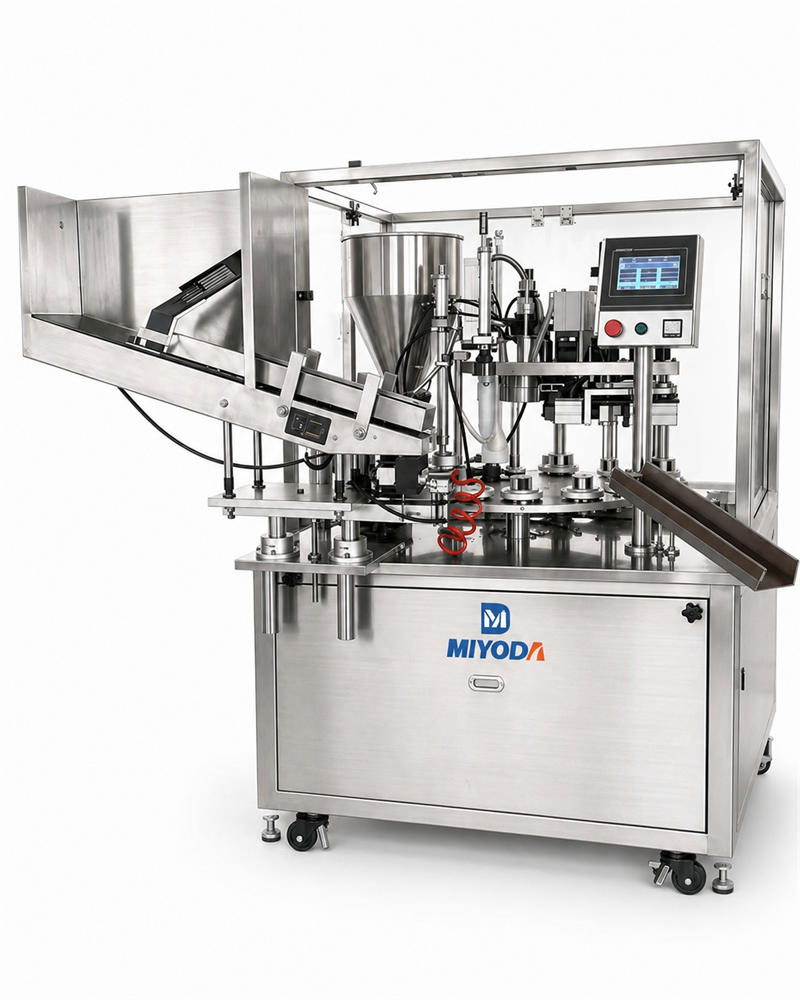
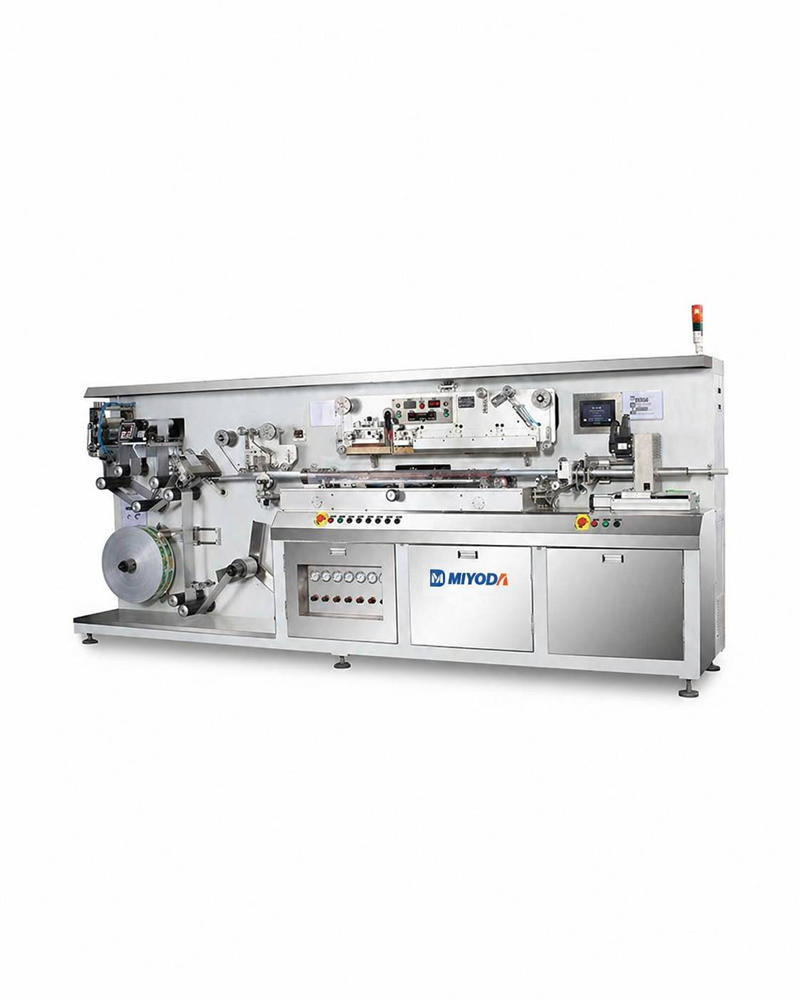
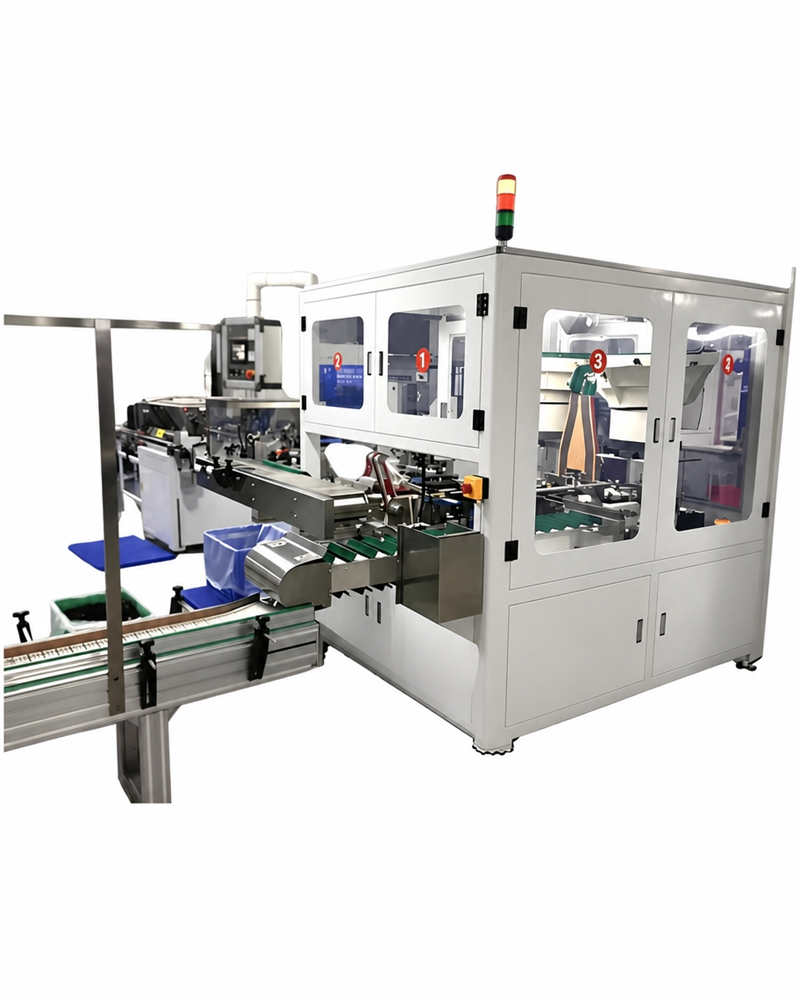
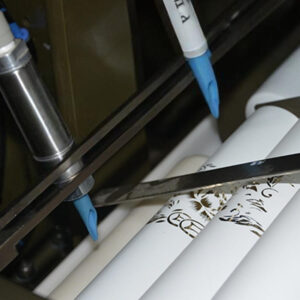
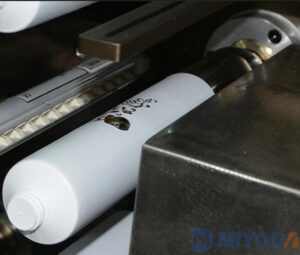
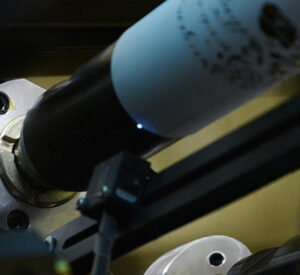
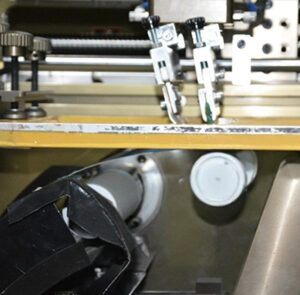
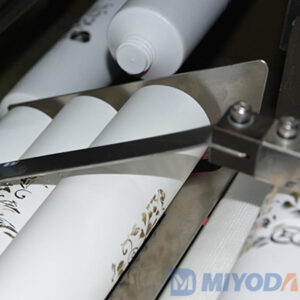
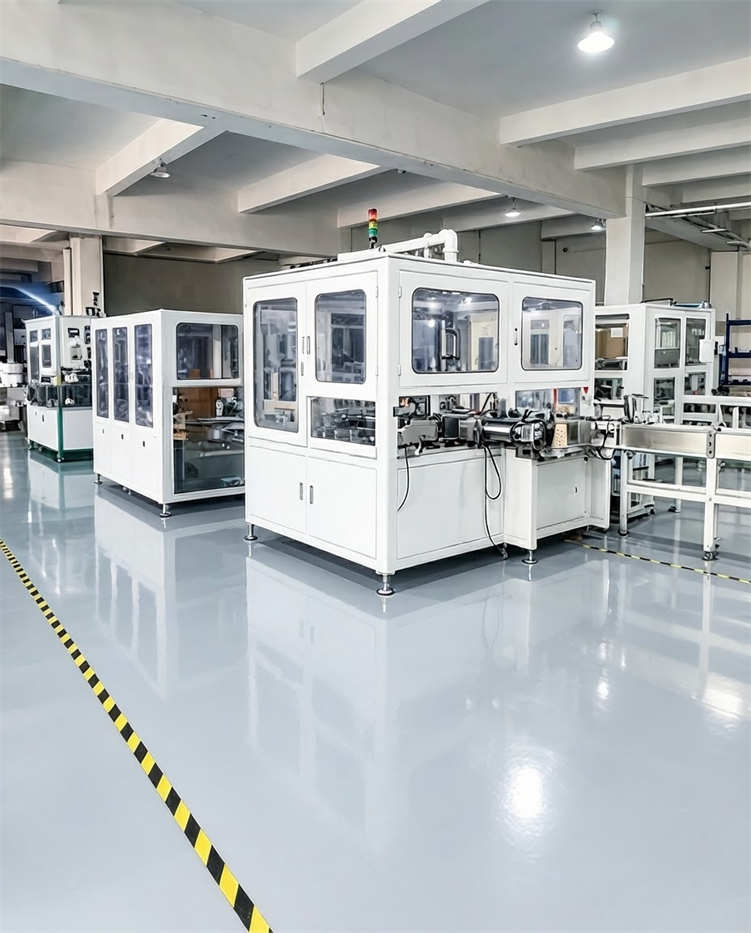
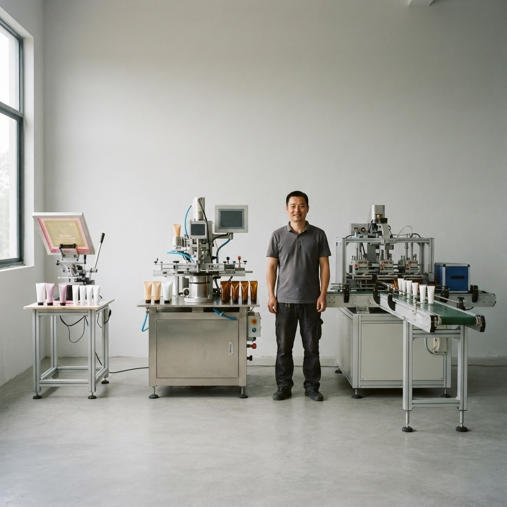
High-speed automatic screen printing on cosmetic and pharmaceutical tubes — the precision and throughput benchmark your production evaluation should start with.
4. Precision and Compliance: Non-Negotiable Requirements
Pharmaceutical Packaging Standards You Must Meet
FDA labeling requirements under 21 CFR Part 201 establish mandatory content, legibility, and durability standards for pharmaceutical tube labels. Text must remain legible through the product’s shelf life, resist smearing during handling and transit, and meet minimum character height specifications that are incompatible with printing systems producing variable ink adhesion or ink thickness inconsistency across the tube circumference.
Beyond FDA requirements, operations serving European pharmaceutical clients must align with EU GMP Chapter 5 and ISO 15378 — the primary packaging materials standard for medicinal products — which defines GMP principles for the development, production, and quality control of packaging that contacts or influences the product. Your printing machine, the inks it uses, and the validation documentation it produces may all be subject to supplier qualification audits from pharma clients. This is not paperwork. This is your commercial eligibility with major pharmaceutical buyers.
A printing error on a pharmaceutical label isn’t a quality complaint — it’s a patient safety event. The financial and reputational consequences of a product recall triggered by illegible dosing instructions, a transposed lot number, or an incorrect expiry date dwarf any cost savings from choosing an uncertified machine.
Cosmetic Branding Requirements
Luxury cosmetic brand managers operate with Pantone references, Delta-E tolerance specifications, and batch-to-batch color approval protocols that are sometimes more demanding than pharmaceutical text legibility requirements — just measured on a different axis. A serum tube where the brand’s signature shade drifts by ΔE 3.5 between the Q1 and Q3 production batches will be noticed by attentive retail consumers comparing a newly purchased tube to one already in use at home. That’s not a hypothetical scenario — brand managers report it as a recurring complaint when production printing is not tightly controlled.
Multi-color registration accuracy — how precisely multiple ink layers align over each other on the tube surface — determines whether fine text is sharp or blurred, whether gradient elements look intentional or accidental, and whether the tube communicates prestige or signals quality compromise. For complex designs involving 4–8 colors, registration accuracy below ±0.2mm is the standard that separates acceptable print quality from premium print quality in the luxury segment.
Sustainability Certifications and Eco-Friendly Printing
The EU’s Packaging and Packaging Waste Regulation (PPWR), now in force, increasingly constrains ink formulations used on packaging sold in European markets. Water-based and UV-curable inks, which produce significantly lower VOC (Volatile Organic Compound) emissions than conventional solvent-based systems, are becoming the required standard rather than a sustainability differentiator. According to INX International’s 2025 analysis, water-based and UV-cure formulations now match or exceed conventional ink performance in adhesion and color gamut on standard cosmetic tube substrates.
Precision machines reduce ink waste directly: a reduction in defect rate from 4% to 1% on a 100,000-unit annual run saves approximately $1,500 in material alone — and proportionally reduces the environmental footprint of your ink consumption. For clients who embed sustainability metrics in their supplier scorecards, your machine’s waste rate is a procurement criterion, not just an internal efficiency number.
5. Material Compatibility: Ensuring Your Machine Handles Your Substrates

Printing on Soft Cosmetic Tubes
Polyethylene (PE) tubes — the most common substrate in cosmetic packaging — have low surface energy, which creates a fundamental ink adhesion challenge. Without adequate surface pre-treatment, inks sit on rather than bond to the tube surface, leading to adhesion failures that manifest as ink scratching off during transit or peeling under normal use conditions. Quality screen printing machines for cosmetic tubes integrate or interface directly with corona discharge or flame treatment systems that raise the surface energy of the tube immediately before ink is applied.
Flexible tube materials also introduce distortion risk during printing: if the mandrel system holding the tube doesn’t provide consistent tension and support, the tube flexes during ink application, causing registration drift mid-run. This is particularly problematic on tubes below 30mm diameter, where the mandrel geometry has less surface contact to stabilize the substrate. Machine design details at this level — mandrel material, gripping mechanism, and indexing precision — separate machines that work on paper from machines that work on your actual production line.
Rigid Pharmaceutical Bottles and Containers
Rigid pharmaceutical containers require different tension settings, registration fixtures, and sometimes different ink formulations than flexible tubes. The handling system must accommodate varying bottle geometries — round, oval, and rectangular cross-sections — without damaging container integrity or requiring excessive changeover time between formats. Surface preparation requirements also differ: while flame treatment is standard for PE tubes, rigid PP or PET bottles may require corona treatment at different power settings to achieve equivalent adhesion performance.
Specialty Materials and Emerging Packaging Innovations
ABL (Aluminum Barrier Laminate) tubes — widely used for pharmaceutical ointments, high-barrier cosmetic formulations, and oral care products — present a distinct printing challenge. The metallic outer surface reflects UV curing energy differently than PE, creating the risk of inconsistent cure depth across the print area. Under-cured inks on ABL tubes crack when the tube is squeezed in normal use — generating consumer complaints and potential safety issues if the packaging is pharmaceutical-grade. Verify ABL compatibility explicitly, with printed sample trials on your actual production tubes, before committing to any machine.
Sustainable packaging innovations — including bio-based resins, recyclable mono-material laminates, and post-consumer recycled PE — are entering cosmetic and pharmaceutical tube specifications at increasing rates. Future-proofing your machine investment means verifying that the system’s ink qualification matrix and surface treatment capability can be extended to new substrate variants as your clients’ packaging specifications evolve over the machine’s 7–10 year operating life.
6. Production Efficiency and Your Operational Reality
Calculating Your True Production Capacity
Manufacturers quote theoretical throughput. You operate on actual throughput. The gap between these two numbers — often 25–40% — is where profitability gets eaten. Theoretical throughput assumes continuous operation with no changeovers, no maintenance stoppages, no quality reject pulls, and no operator breaks. Actual throughput accounts for all of them.
A more honest capacity assessment starts with your existing order data. Take your last 12 months: how many distinct SKUs did you run? What was your average batch size per SKU? How many job changes occurred per shift? Use those numbers to model realistic output for any machine you’re evaluating — at its rated speed, minus estimated changeover time, minus a conservative 10–15% for quality checks and minor stoppages. That number tells you whether the machine actually meets your production requirements.
Reducing Waste and Improving Yield
Industry benchmarks are instructive here. Manual and lower-precision screen printing systems typically generate 3–5% waste rates from print defects, misregistration, and ink adhesion failures. Precision semi-automatic and rotary systems operating under proper calibration routinely achieve 0.5–2% waste rates. On a 100,000-unit annual operation at $0.50 per finished unit, that difference — from 4% waste to 1% — represents $1,500 in direct material savings annually. Add the labor cost of identifying, segregating, and reprocessing defective units, and the actual saving per year approaches $3,000–$4,500 for a mid-scale operation. Over a 5-year machine life, precision pays for itself in waste reduction alone, before counting any revenue or throughput gains.
Scalability: Growing Without Reinvesting in New Equipment
The most expensive mistake in packaging machinery procurement is undersizing. A machine that serves your current volume perfectly but has no room to grow forces you into a capital equipment decision again in 18–24 months — at a time when your operation may not have the cash position to make an optimal choice. When evaluating machines, build your purchasing decision around your projected volume 3 years from now, not your volume today. Look for upgrade paths: additional color stations, faster drive systems, automation add-ons that can be retrofitted. A machine that can grow from 50,000 to 150,000 monthly units with a component upgrade is worth paying more for upfront than one that maxes out at your current capacity.
7. Total Cost of Ownership: Beyond the Purchase Price
Initial Investment and Financing Options
Machine purchase price ranges across the three technology categories are substantial: flat-bed systems typically enter the market at $20,000–$45,000; hybrid and semi-automatic systems at $50,000–$100,000; and fully automated rotary systems from $100,000 to $250,000 or more for premium configurations. Installation costs — electrical connection, compressed air, dust extraction, and commissioning — add a further 5–10% of machine cost in most facilities. Operator training, particularly for rotary systems, should be budgeted as a minimum of 4–8 weeks of dedicated time, with productivity ramping gradually over 3–6 months to full competency.
Financing options vary by market and machine category. For distributors and agents building out their first printing capability, equipment leasing structures that spread capital cost over 36–60 months are increasingly available from established machinery suppliers and through third-party equipment finance providers. Evaluate financing terms as part of your TCO calculation — a leased machine at 6% annual interest rate adds meaningfully to the per-unit cost of production and should be modeled explicitly.
Ongoing Operational Costs
The operating cost categories that most consistently surprise first-time buyers are UV lamp replacement cycles and their impact on print quality, printing blanket (for offset systems) or mesh screen (for screen printing) replacement frequency, and ink consumption variability across different tube substrates and colors. UV lamps typically degrade meaningfully in curing effectiveness after 800–1,200 operating hours — a gradual reduction in UV intensity that produces increasing numbers of under-cured tubes before the lamp failure is obvious enough to trigger replacement. Budget UV lamp replacement as a scheduled maintenance item, not a reactive repair.
Hidden Costs That Surprise Buyers
Three cost categories consistently blindside buyers: downtime expenses when equipment fails unexpectedly, quality control testing requirements (particularly for pharmaceutical clients who require periodic print legibility audits and ink adhesion testing), and compliance documentation costs. For pharmaceutical operations, every new ink formulation introduced to a production line may require material safety data review, migration testing, and regulatory change notification — costs that don’t appear on any machinery quote but can run to thousands of dollars per ink change event. Standardize your ink supplier relationship early and document it thoroughly to minimize requalification costs over the machine’s life.
8. Vendor Selection: Choosing a Partner, Not Just a Supplier

What to Evaluate in a Machine Manufacturer
Track record with cosmetics and pharmaceutical clients is the starting filter. A machinery supplier who can provide references from operations running the same substrate types, at similar production volumes, in your regulatory market, is a supplier who has already solved the problems you’re about to encounter. Request references before you request quotes. Ask reference customers specifically about: the accuracy of vendor performance claims, the speed and competence of after-sales support, the spare parts availability experience, and whether they would purchase the same machine again.
Technical support quality and response time is the factor that determines your operational risk profile post-purchase. Before committing, ask: Is remote diagnostic support available? What is the average response time to a technical support call? Is there time-zone-aligned support if your facility is in a different geography from the manufacturer? What is the guaranteed response time in your service contract? A machine that breaks down on a Friday with no technical support until the following Tuesday is a production crisis that no sales pitch can compensate for.
Teams that serve both cosmetic and pharmaceutical tube packaging customers — as Miyoda Packaging Machinery does across its full tube production equipment portfolio — bring integrated expertise that single-machine specialists often lack. When your printing quality question turns out to be a substrate pre-treatment question, a filling line compatibility question, or an ink cure temperature question, a supplier who understands the full production chain resolves it faster and more accurately than one who only knows the printing station in isolation.
Red Flags to Avoid
Unrealistic performance promises — throughput numbers that seem implausibly high, defect rates suspiciously lower than industry averages, changeover times that don’t match the machine’s mechanical configuration — are the first warning sign. Any claim that cannot be independently verified through a reference site visit or independently reviewed case study should be weighted accordingly. Poor or evasive responses to questions about after-sales infrastructure, local spare parts availability, and warranty scope are equally significant. A vendor confident in their product welcomes the scrutiny; a vendor who deflects those questions is a vendor who knows their answers won’t survive examination.
9. Implementation and ROI Timeline
Planning Your Transition
A realistic procurement-to-production timeline for a screen printing machine runs 90–120 days minimum: 2–3 weeks for RFQ comparison and initial vendor shortlisting, 3–4 weeks for sample trials and reference visits, 3–4 weeks for commercial negotiation and contract finalization, 6–10 weeks for manufacturing lead time and international shipping, and 2–4 weeks for installation, commissioning, and initial operator training. Pharmaceutical applications add a further 6–12 weeks for IQ/OQ/PQ validation before the machine can be used for commercial production. Build your operational timeline around these realities, not around the delivery date in the sales proposal.
For multi-line operations conducting a phased rollout, plan a parallel operation period where the new machine runs alongside existing equipment for at least 2–4 weeks before the old system is decommissioned. This overlap period is essential for identifying integration issues, operator knowledge gaps, and quality calibration discrepancies before they affect commercial production batches.
Measuring Success and ROI
Break-even on a screen printing machine investment typically ranges from 18 to 36 months, depending on production volume and the cost differential between your current printing solution (outsourced or existing equipment) and the new machine. A 50,000-unit monthly operation transitioning from contract printing to in-house production typically breaks even in 18–24 months. Higher production volumes accelerate ROI; lower volumes extend it.
The metrics worth tracking post-implementation are: defect rate (target: below 2% within 90 days of full production), average job changeover time (target: 20% improvement on baseline within 60 days), ink cost per unit (should decline as operator calibration improves), and machine uptime percentage (target: above 90% in steady-state operation). These numbers tell you whether your investment is delivering the ROI model you built, and where to direct operational improvement focus if it isn’t.
$$\text{Annual Waste Savings} = (\text{Old Defect Rate} – \text{New Defect Rate}) \times \text{Annual Units} \times \text{Cost Per Unit}$$
$$\text{Break-Even (months)} = \frac{\text{Total Machine Investment}}{\text{Monthly Savings (waste + labor + reprints)}}$$
Troubleshooting Common Implementation Challenges
The operator learning curve is the most consistently underestimated implementation variable. Flat-bed system operators reach basic operational competency in 2–4 weeks; rotary system operators require 4–8 weeks of dedicated training. Full mastery — the ability to troubleshoot color consistency issues, diagnose adhesion failures, and optimize print parameters independently — takes 3–6 months. Budget for this ramp period explicitly in your production planning. Overpromising throughput to clients during the first 60 days of machine operation is a common mistake that creates customer satisfaction problems before the machine has had time to prove its value.
10. Future-Proofing Your Investment
Industry Trends Affecting Packaging Printing
En screen printing machine market is undergoing significant transformation driven by Industry 4.0 integration — the connection of production machines to networked monitoring, data analytics, and predictive maintenance systems. Machines with PLC (Programmable Logic Controller) systems capable of logging print parameters, fault codes, and production data per job are increasingly standard in mid-tier equipment. This data traceability serves pharmaceutical clients who need documentation per batch, and operations managers who need to diagnose quality variations across shifts or operators.
Automation advances are simultaneously reshaping labor economics in tube printing. As wage costs rise in traditional manufacturing markets and operator availability tightens, the cost advantage of semi-automatic systems over fully automated ones narrows. The decision that makes sense today at $X labor cost may make less sense in 3 years at $1.4X labor cost. Build your purchasing decision with that trajectory in mind.
Emerging Technologies to Consider
UV LED curing systems are replacing traditional UV mercury lamp systems in newer printing machines, offering three significant advantages: longer lamp life (20,000+ hours versus 800–1,200 for mercury lamps), lower energy consumption (up to 70% energy reduction), and instant on/off capability that eliminates warm-up time. For operations that change jobs frequently, the instant-on capability of LED curing alone can recover 15–30 minutes of productive time per shift.
Variable data printing capabilities — the ability to encode unique serial numbers, QR codes, or batch-specific information directly into the print run without plate changes — are increasingly relevant for pharmaceutical serialization requirements and for cosmetic brands implementing anti-counterfeiting measures. Evaluating whether a machine’s architecture can support variable data printing as an add-on, even if you don’t need it today, is a form of investment protection worth considering.

Making the Right Choice for Your Business
The decision you’re making about screen printing technology for your cosmetic or pharmaceutical tube packaging operation is not a single purchase — it’s a 7–10 year operational commitment that will define your production capacity, your compliance posture, your client relationships, and your cost structure for the better part of a decade. The brands and operations that make this decision well are the ones that start from their actual production reality rather than from a sales brochure, that build a true TCO model rather than comparing sticker prices, and that evaluate vendors on their after-sales track record as rigorously as their machine specifications.
The three most common and most expensive mistakes in this category are: choosing technology that fits today’s volume but has no headroom to grow, evaluating machines on vendor demo results rather than trials with your own substrates and inks, and underestimating the operational cost of service gaps when equipment goes down. Each of these errors is avoidable with the right evaluation process and the right partner.
Whether you’re a cosmetic brand building in-house printing capability for the first time, a pharmaceutical contract packager expanding your tube decoration services, or a distributor or agent helping clients evaluate machinery options, the framework in this guide gives you the structure to make this decision with confidence. Miyoda Packaging Machinery builds tube production systems specifically for cosmetic and pharmaceutical applications — from silk screen and offset printing presses to complete integrated lines covering extrusion, printing, filling, sealing, and decoration. The right machine for your operation exists. The right process to find it is what separates a good decision from an expensive one.
Ready to Make the Right Decision?
Our technical team works with cosmetic and pharmaceutical tube packaging buyers, distributors, and agents worldwide. Let’s build your ROI analysis together — no generic quotes, no pressure, just the specific data your purchasing decision needs.
Or explore our complete tube printing press guide for 2025 · Full product catalogue
📖 Industry Glossary
- Delta-E (ΔE)
- A numerical measure of color difference between two samples. ΔE < 2.0 is imperceptible to most consumers; ΔE > 3.5 is visibly noticeable on packaging. Used as a batch acceptance criterion by luxury cosmetic brands.
- Precisión de registro
- The precision with which multiple ink color layers align on the printed surface, measured in millimeters. Industry standard for quality cosmetic and pharma printing: ≤ ±0.2mm.
- Curado UV
- A process where ultraviolet light instantly crosslinks and hardens printed ink, preventing smearing and enabling high-speed production. LED UV systems extend lamp life to 20,000+ hours versus 800–1,200 hours for mercury UV lamps.
- ABL (laminado de aluminio con barrera)
- Multi-layer tube material with an aluminum foil core for barrier protection against oxygen, moisture, and light. Common in pharmaceutical ointment tubes and premium cosmetic packaging.
- Corona / Flame Treatment
- Surface pre-treatment applied to low-energy PE tubes immediately before printing to raise surface energy and improve ink adhesion. Essential for quality printing on uncoated polyethylene substrates.
- IQ/OQ/PQ
- Installation Qualification / Operational Qualification / Performance Qualification — the three-stage validation protocol required for pharmaceutical manufacturing equipment under GMP regulations. Generates the documentation your pharma clients require for supplier audits.
- TCO (Total Cost of Ownership)
- The full financial cost of a machine over its operating life, including purchase price, installation, training, consumables, maintenance, and projected downtime losses. The correct basis for comparing machines at different price points.
- VOC (Volatile Organic Compound)
- Carbon-based chemicals present in conventional solvent-based inks that evaporate at room temperature. Regulated in pharmaceutical and increasingly in cosmetic production environments; water-based and UV-cure inks are the low-VOC alternatives.
Preguntas frecuentes
Practical answers to the questions buyers, distributors, and agents ask most — from technology selection to compliance, cost, and ROI.
1. How do I know which screen printing technology is right for my cosmetic tube production?
The answer is grounded in your production data, not in technology preference. If your operation runs fewer than 5,000 units monthly with frequent design changes between jobs, flat-bed systems offer the flexibility and lower capital cost that fits your reality. For operations consistently running 10,000+ unit batches of the same design, rotary systems deliver better economics per unit and the color consistency that premium cosmetic and pharma clients require. The most reliable approach: analyze your last 12 months of actual orders — your real batch sizes, SKU count, and changeover frequency — and let that data drive the technology decision.
2. What’s the real difference in color accuracy between machine types, and does it matter for my brand?
Color accuracy is not a cosmetic preference — it’s a commercial contract and, in pharmaceutical contexts, a regulatory requirement. Flat-bed systems typically deliver ΔE ±2 color variance under standard conditions; rotary systems with proper calibration achieve ΔE ±1. For luxury cosmetic brands, the ΔE 2 variance is visible to consumers comparing fresh and existing product side-by-side on a bathroom shelf, and brand managers report it as a recurring quality complaint. For pharmaceuticals, consistent color on label elements is part of the GMP quality system, and color variation can be interpreted as a production process failure during regulatory audits.
3. How much waste should I expect, and how does machine precision affect my bottom line?
Industry benchmarks for screen printing waste: 3–5% for manual and lower-precision systems, 0.5–2% for precision semi-automatic and rotary systems. On a 100,000-unit annual production run at $0.50 per unit, reducing waste from 4% to 1% saves $1,500 in direct material annually. Add labor for identifying, segregating, and reprocessing defective units, and the annual saving approaches $3,000–$4,500 for a mid-scale operation. Over a 7-year machine life, that accumulated waste reduction alone is worth $21,000–$31,500 — before counting any throughput or client retention benefits from improved quality.
4. What compliance risks exist if I choose a machine that can’t meet pharmaceutical printing standards?
FDA non-compliance in pharmaceutical labeling can result in mandatory product recalls, Warning Letters, consent decrees, and financial penalties exceeding $100,000 per violation. Beyond financial penalties, a labeling-related recall creates documented public regulatory action that damages your commercial reputation with all pharmaceutical clients, not just the one affected by the specific incident. In the EU, GMP non-compliance in packaging can trigger suspension of a manufacturer’s authorization to supply pharmaceutical clients. Choosing a machine certified and validated for pharmaceutical printing isn’t a premium option — it’s the baseline requirement for operating in this market segment.
5. Can I print on both soft cosmetic tubes and rigid pharmaceutical bottles with the same machine?
Some hybrid systems handle both substrate types, but they require different mandrel fixtures, tension settings, surface treatment parameters, and often different ink formulations. Operations producing both product types should evaluate their product mix carefully and honestly. Attempting to force a machine optimized for one substrate to perform at the same quality level on a fundamentally different substrate often results in acceptable-but-not-excellent results on one or both — and “acceptable” in pharmaceutical labeling is a risk, not a compromise. If your volume justifies it, separate equipment dedicated to each substrate type will consistently outperform a single versatile machine trying to serve both.
6. How long does it typically take to break even on a screen printing machine investment?
Break-even typically runs 18–36 months, with the precise timeline determined by your production volume, the cost of your current printing solution (outsourced contract printing or existing equipment), and your actual machine utilization rate. An operation producing 50,000 units monthly transitioning from contract printing to in-house production generally breaks even within 18–24 months. The formula: (Total Machine Investment + Operating Costs Year 1) ÷ (Monthly Savings from Waste Reduction + Labor Savings + Margin Improvement) = Break-Even in Months. Build this model using your actual production data — not industry averages — before committing to any purchase.
7. What training do my operators need, and how long before they’re productive?
Flat-bed screen printing operators typically reach basic operational competency within 2–4 weeks of supervised training. Rotary system operators require 4–8 weeks to reach basic competency, given the greater mechanical complexity and more critical calibration requirements. Full mastery — the ability to troubleshoot color consistency problems, diagnose adhesion failures, optimize print parameters, and train new operators — typically takes 3–6 months of production experience. Budget for the productivity ramp period explicitly. Operations that overpromise throughput to clients during the first 60 days of machine operation regularly create customer satisfaction problems that persist far longer than the ramp period itself.
8. What happens if the machine breaks down, and how quickly can I get spare parts?
Every hour your printing machine is down is an hour of production cost you carry without producing revenue. For a mid-scale operation running 1,000 units per hour at $0.50 per unit, one unplanned day of downtime costs $4,000 in lost production — plus any client deadline penalties. Evaluating a vendor’s Mean Time To Repair (MTTR) and spare parts lead time is as important as evaluating machine speed. A machine that is 95% reliable but takes 3 weeks to source a replacement UV lamp is operationally worse than a 90% reliable machine repaired within 48 hours. Ask every vendor for their written spare-parts SLA before signing any purchase agreement. Visit suppliers like Miyoda Packaging Machinery to understand their after-sales support infrastructure before committing.
9. Are water-based inks compatible with all screen printing machines, and do they affect production speed?
Water-based inks are compatible with most modern screen printing machines designed in the last 5 years, but require specific mesh types, adjusted squeegee pressure, and curing systems calibrated for water-based formulations. They typically cure more slowly than UV or solvent-based systems, which can reduce throughput by 10–15% in configurations not optimized for water-based use. However, newer machine designs increasingly accommodate water-based inks with minimal speed penalty. For operations serving EU markets where PPWR restrictions on conventional inks are now active, and for pharmaceutical applications where lower VOC and health risk profiles are important, the water-based transition is commercially necessary — and the throughput trade-off is manageable.
10. How do I compare total cost of ownership when vendors quote different prices?
Request a standardized cost breakdown from every vendor covering: machine purchase price, installation and commissioning cost, operator training time and cost, annual ink and consumable cost per 100,000 units, scheduled maintenance contract cost, estimated spare parts cost in Year 1–3, and the warranty scope and duration. Build a 5-year TCO model using those inputs, at your projected production volume. A $50,000 machine at $2.00 per-unit operating cost becomes more expensive than a $75,000 machine at $0.75 per-unit operating cost within approximately 14 months at 100,000 units per year — and costs $312,500 more over 5 years. This math is why every purchasing decision should start with the TCO model, not the purchase price.
11. What sustainability features should I look for, and do they actually reduce environmental impact?
Meaningful sustainability features in a screen printing machine include: compatibility with water-based or UV-cure ink systems, LED UV curing (70% lower energy consumption than mercury UV), precision calibration systems that reduce ink waste through lower defect rates, and solvent recovery systems if conventional inks are used. Precision machines cut scrap by 50–75% compared to lower-calibration alternatives — a direct reduction in ink consumption, substrate waste, and the embedded energy cost of scrapped tubes. For clients embedding sustainability KPIs in their supplier scorecards, your machine’s waste rate and ink system type are commercial requirements. Investing in eco-compatible printing technology is both the responsible choice and, increasingly, the commercially necessary one.
12. How do I validate a vendor’s performance claims before committing to a purchase?
Never accept vendor performance claims without independent verification. The validation process should include: at least 3 references from operations running your substrate type and production volume, in your regulatory market; a trial run producing actual samples from your specific artwork files on your own production tubes (not supplier demo cylinders); performance guarantees specified in writing in the commercial contract, with defined remedies for non-performance; and a facility visit to a reference customer site where you can see the machine running in production conditions and ask the operators — not the sales team — about their real-world experience. A vendor confident in their product’s performance welcomes every part of this process. A vendor who resists it is a vendor who knows the scrutiny won’t go well for them.