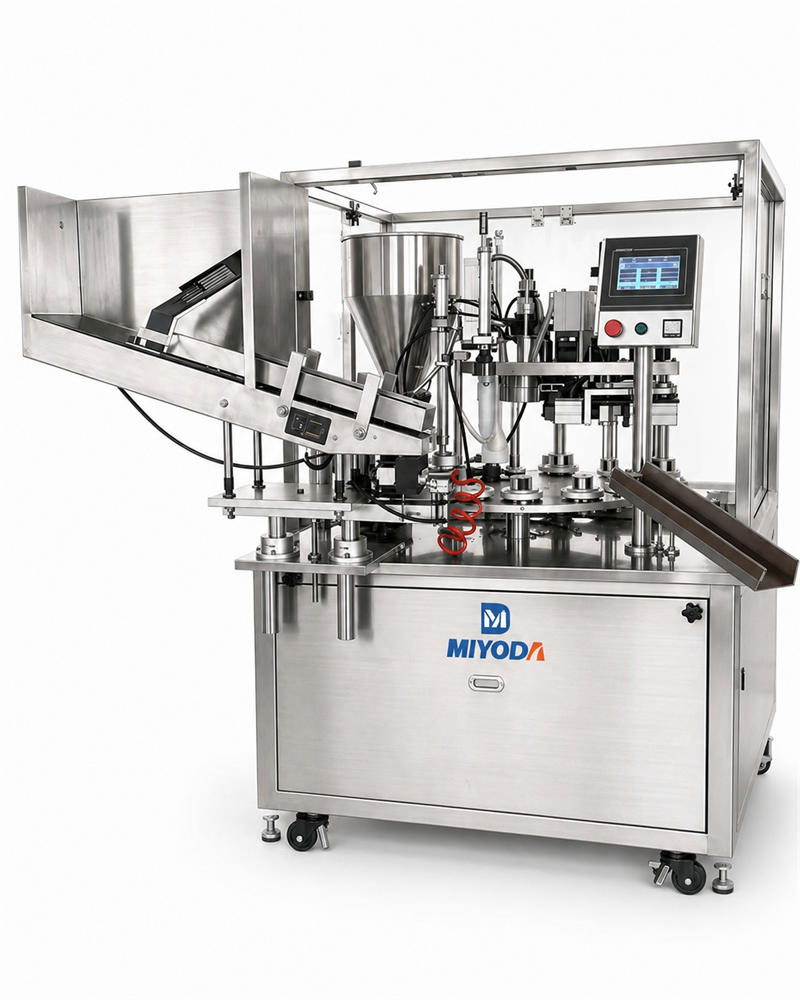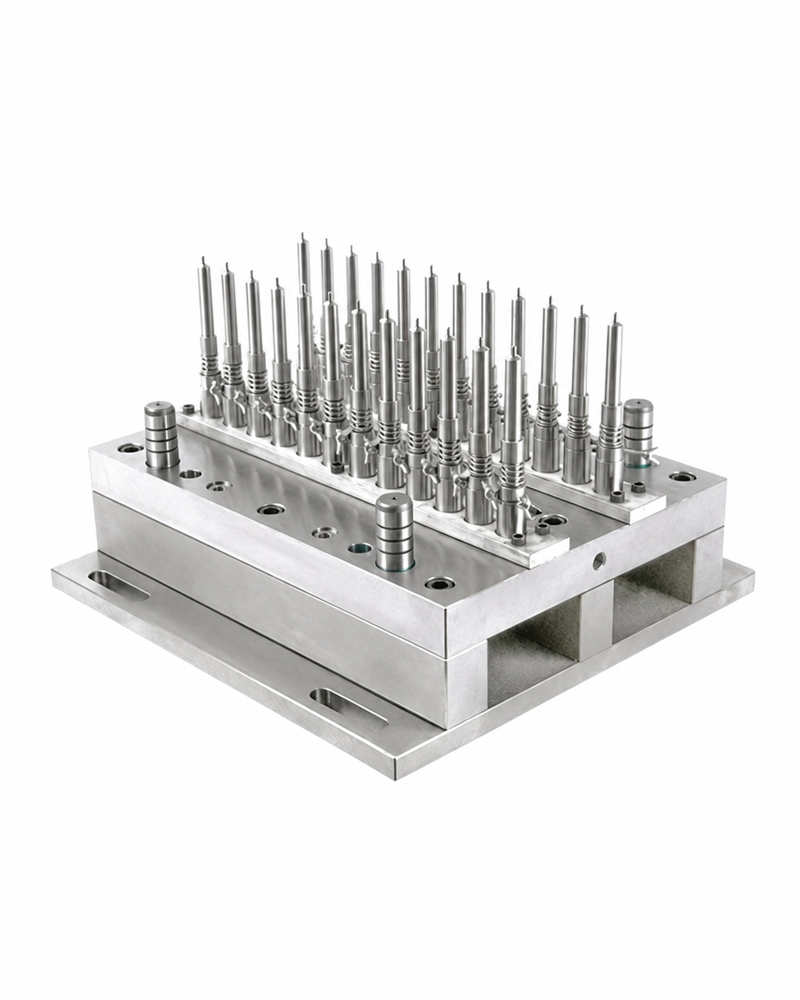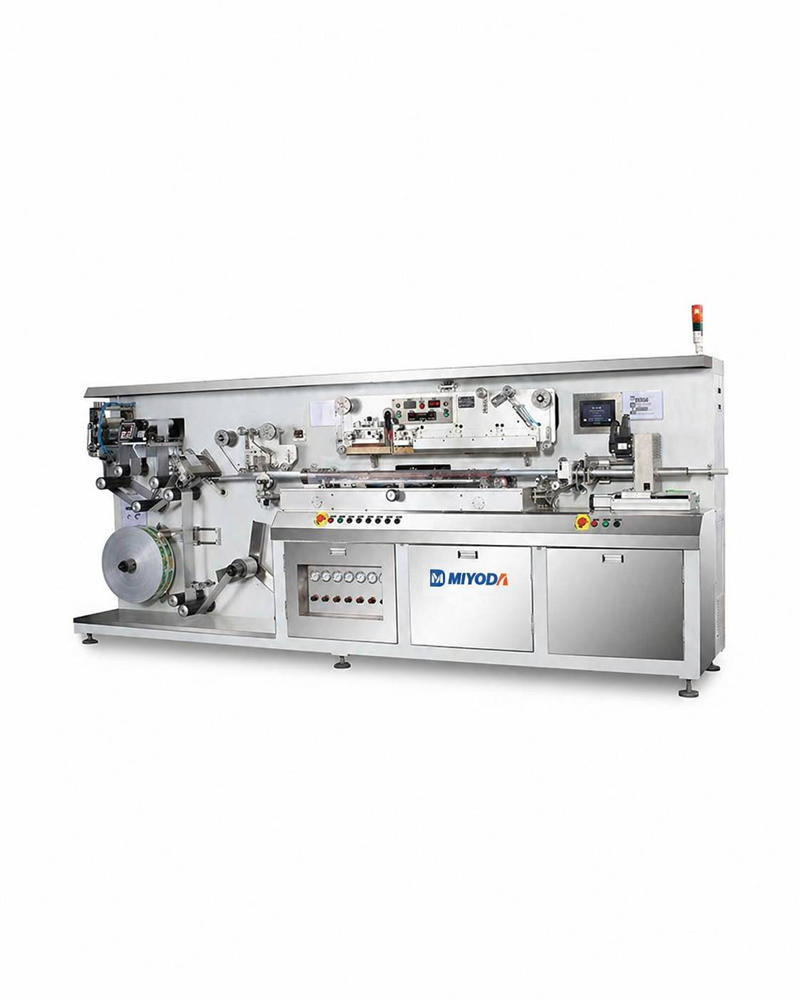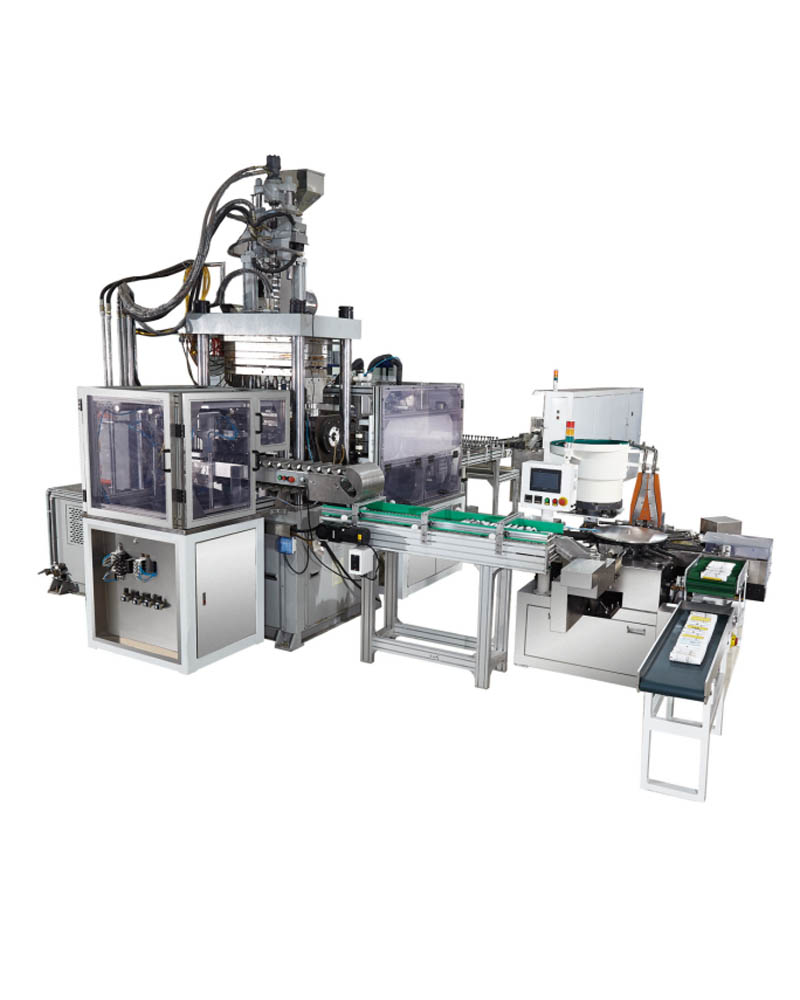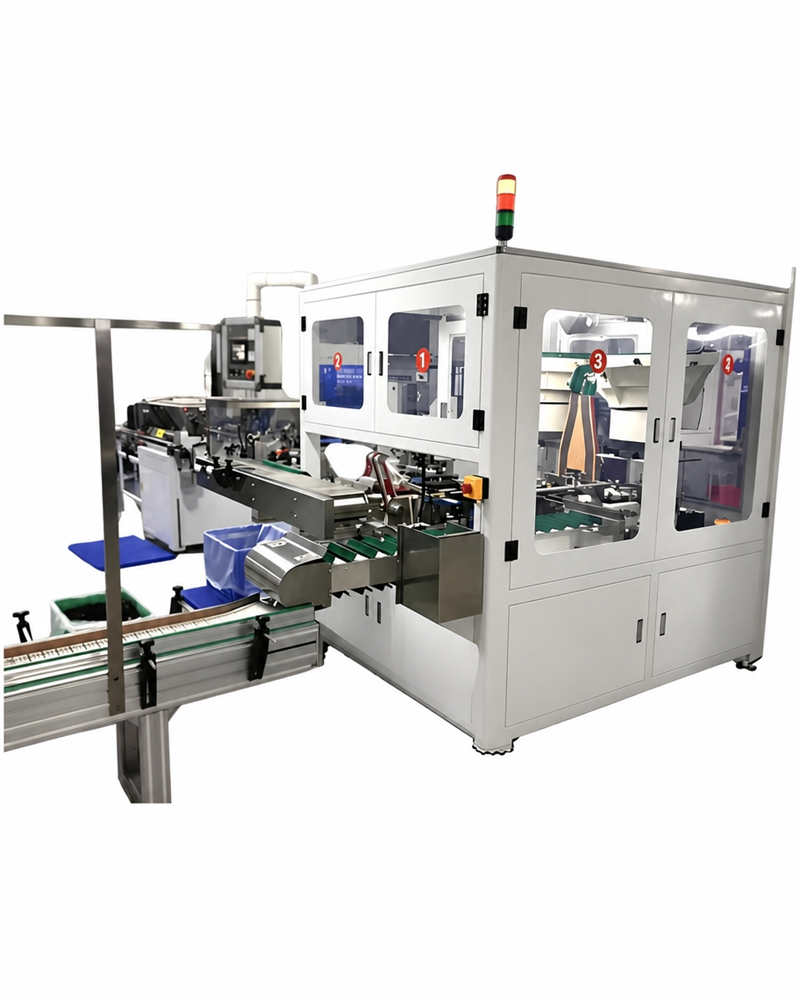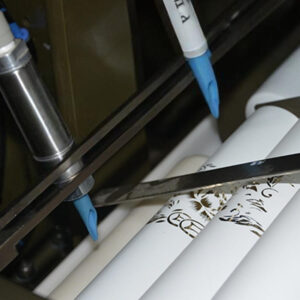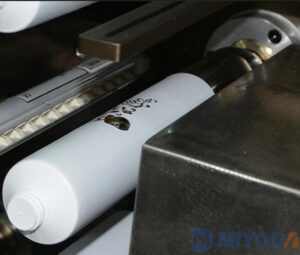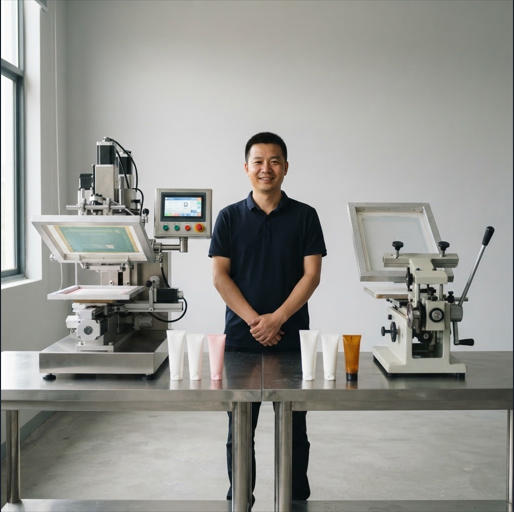
Choosing the right screen printing machine for cosmetic and pharmaceutical tube production requires more than price comparison. This technical breakdown helps packaging manufacturers and distributors make informed decisions about precision, reliability, and long-term ROI — so you can confidently select equipment that protects your brand reputation and production margins.
There’s a conversation happening in factories across Southeast Asia, the Middle East, and Latin America right now. A production manager opens a quote for a German-engineered tube screen printing machine at €50,000 and one for a budget alternative at €15,000. The spec sheets look similar. The sales pitch for the budget machine is compelling. And the pressure from finance to minimize capital expenditure is real.
What that comparison misses — and what this guide is designed to show you — is that the €35,000 difference isn’t the cost of the machine. It’s the cost of the guarantee attached to it. Guaranteed registration tolerance. Guaranteed uptime. Guaranteed compliance documentation. Guaranteed support when something fails at 2 AM before a pharmaceutical delivery deadline.
For cosmetic brand manufacturers and pharmaceutical packaging suppliers, the machine you print on is an extension of your quality commitment to every client whose product comes off your line. A print defect isn’t just a rejected tube — it’s a conversation with your client’s quality director about whether you’re the right supplier for the next contract.
This guide gives you the technical and financial framework to make the machine comparison honestly: real precision data, real downtime costs, real regulatory implications, and a clear decision matrix that matches equipment tiers to your specific business model.

See High-Speed Precision Tube Screen Printing in Action
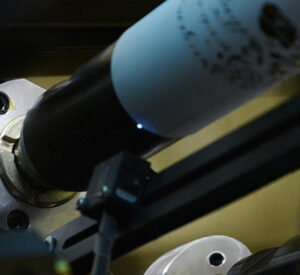
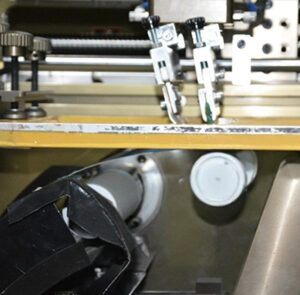
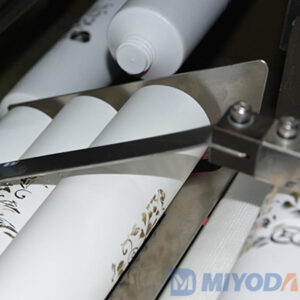
Before comparing specifications on paper, it’s worth seeing what best-in-class automatic screen printing actually delivers on cosmetic and pharmaceutical tube production. The video below demonstrates the print registration precision, throughput consistency, and UV curing quality that premium equipment achieves at production speed — and why pharmaceutical clients increasingly treat this output standard as a baseline expectation, not a premium option.
High-speed automatic tube screen printing on cosmetic and pharmaceutical packaging — demonstrating the registration precision and throughput consistency that differentiate premium equipment from budget alternatives at production scale.
Understanding Your Production Requirements Before Comparing Machines
Assessing Your Current and Future Production Volumes
The most expensive equipment decision isn’t choosing the wrong machine — it’s choosing the right machine for the wrong volume assumption. Manufacturers who spec equipment based on today’s output rather than their 24-month production trajectory consistently arrive at the same outcome: a machine that constrains growth at exactly the moment that growth matters most.
The useful question isn’t “how many tubes do we print today?” It’s “what is the largest single-client contract we realistically expect to win in the next 18 months, and what daily volume does that contract require?” The answer to that question — not your current daily average — should anchor the machine specification discussion.
Oversizing creates its own problem: a high-capacity machine running at 30% utilization generates depreciation costs against revenue that can’t absorb them. The correct sizing is the tier that covers your realistic 18-month peak with 20–30% headroom — enough buffer for growth and multi-shift flexibility without idle capacity that destroys investment economics.
Volume-Based Decision Framework
| Production Scale | Monthly Volume | Recommended Machine Tier | Key Priority |
|---|---|---|---|
| Small-Batch Producers | Under 50,000 units | Semi-automatic, mid-range | Flexibility, fast changeover, low tooling cost |
| Medium-Scale Operations | 50,000 – 500,000 units | Fully automatic, European-spec preferred | Print consistency, uptime reliability, compliance documentation |
| High-Volume Manufacturers | 500,000+ units | Industrial-grade premium systems | OEE maximization, MES integration, zero-defect pharmaceutical compliance |
Growth Projections and Machine Flexibility
Equipment obsolescence is a real financial risk that rarely appears in procurement analyses. A machine specified for your current tube diameter range that cannot accommodate the laminated tube formats your new pharmaceutical client requires — discovered 14 months after installation — is not an upgrade problem. It’s a product specification failure that belonged in the original procurement process.
The flexibility checklist for future-proofing machine investment covers three dimensions: tube format range (diameter, length, wall thickness, and substrate — does the machine handle your current portfolio plus plausible future additions?), automation scalability (can the machine’s handling and inspection systems be upgraded without full replacement?), and data architecture (does the control system support the MES integration and electronic batch record requirements that pharmaceutical clients will increasingly mandate?).
Machines that pass all three dimensions aren’t just better machines — they’re investments that remain productive assets instead of becoming upgrade liabilities.
German Engineering Standards vs. Budget Alternatives — What Actually Matters
Build Quality and Material Specifications
The difference between a European-engineered tube screen printing machine and a budget alternative isn’t visible on a specification sheet. It lives in the precision of the tolerances, the grade of the components, and the manufacturing discipline applied to the machine’s structural elements — all of which determine not what the machine does on day one, but what it does in month 18 of production under real operating loads.
German precision machines are engineered to maintain ±0.5mm registration tolerance — the measurement of how accurately successive color layers align — across sustained production runs. Budget equipment typically achieves this specification during factory acceptance testing. In field conditions, after six to eight weeks of production, registration drift on budget machines commonly reaches ±2–3mm as frame components settle, print station bearings wear unevenly, and mechanical play accumulates in the indexing system.
For a cosmetic tube printing a two-color design where the second color must align within the first, ±0.5mm registration is invisible to the consumer. ±2.5mm registration produces a visible halo effect that no brand director accepts — and no premium cosmetic retailer passes at incoming inspection. For pharmaceutical tubes where regulatory compliance requires that printed lot numbers and expiry dates remain precisely located within defined label areas, ±2.5mm drift is a compliance finding, not just an aesthetic concern.

Frame Rigidity and Structural Integrity
Machine vibration is the enemy of print registration, and frame rigidity is the primary defense against it. European-engineered machines use welded or precision-cast frames machined to sub-millimeter flatness specifications — a manufacturing step that adds cost but creates the structural foundation that registration precision requires across years of production.
Budget alternatives frequently use bolted frame assemblies from rolled steel sections. This construction method is faster and cheaper to manufacture. It also allows micro-movement at joint interfaces under the cyclical mechanical loads of production, creating progressive registration drift that compounds over months. By month 18 to 24 of operation, the frame flex accumulates into a registration problem that cannot be resolved by recalibration — because the root cause is structural, not parametric.
Long-term wear patterns differ proportionally. A European machine’s print station bearings — specified to industrial precision grades with documented mean time between replacement cycles — maintain consistent print pressure and registration geometry across their rated lifecycle. Budget machines use lower-grade bearing assemblies where early wear creates lateral play in the print station that directly translates to color misregistration and print pressure inconsistency across the tube surface.
For pharmaceutical clients, regulatory compliance documentation must include machine calibration records and maintenance logs that demonstrate the equipment operated within specified parameters throughout the production period. A machine whose registration drifts between calibration cycles creates documentation gaps that GMP auditors flag — turning a mechanical quality issue into a regulatory compliance finding.
Component Sourcing and Supply Chain Reliability
What happens when a critical component fails at 2 PM on a Thursday, with a pharmaceutical delivery committed for Friday morning? The answer depends entirely on where that component comes from and how fast it arrives.
European machine manufacturers source drive systems, servo motors, pneumatic components, and control electronics from established industrial suppliers — Siemens, Festo, Schneider Electric, Bosch Rexroth — whose components are stocked at regional distributors in most major manufacturing markets. When a Festo pneumatic valve fails on a Rexroth-equipped machine in Southeast Asia, a qualified replacement arrives from regional stock in hours, not weeks.
Budget machine manufacturers frequently source components from local or regional suppliers whose parts are not independently stocked outside their domestic market. A failed motor controller on a budget machine sourced from a no-name PLC supplier can carry a 4–12 week lead time from the machine manufacturer’s facility — during which your production line sits idle, your orders miss their committed delivery dates, and your client relationship absorbs damage that price savings cannot compensate for.
Over a 10-year operating life, total cost of ownership for a €50,000 European machine — including parts, maintenance, and downtime losses — typically runs 30–40% lower per printed tube than a €15,000 budget alternative, because the budget machine’s lower purchase price is absorbed by higher component replacement frequency and longer downtime events during those replacements.
Print Consistency — The Critical Factor for Brand Protection
Achieving Repeatable Precision Across Production Runs
Print consistency is the difference between a cosmetic brand that owns shelf presence and one that manages shelf complaints. When a consumer picks up a tube of face cream from a retailer’s shelf and places it next to the tube they bought three months ago, color variation between batches — even subtle variation that a manufacturer might dismiss as within tolerance — signals quality inconsistency to that consumer’s eye. Premium cosmetic brands do not tolerate this. Their brand standards specify color accuracy in ΔE (Delta-E) units, and incoming inspection at major retailers checks incoming tube lots against approved color standards before accepting shipment.
ΔE (Delta-E) measures the perceptible difference between two colors on a standardized scale: ΔE below 1.0 is imperceptible to the human eye; ΔE 1.0–2.0 is acceptable for most commercial cosmetic applications; ΔE above 3.0 is visibly different and fails most brand color approval processes. Premium European screen printing machines, when properly maintained and calibrated, consistently achieve ΔE below 1.5 across production runs. Budget equipment in field conditions typically achieves ΔE 2.5–4.0 — within the range that generates retailer incoming inspection rejections and brand quality complaints.
Pharmaceutical regulatory requirements add a different dimension to the consistency requirement. FDA 21 CFR and EU GMP requirements for pharmaceutical packaging mandate that printed text — lot numbers, expiry dates, dosage information, active ingredient statements — be legible, accurately positioned, and durable throughout the product’s shelf life. A printing machine that cannot demonstrate consistent compliance with these requirements isn’t just an operational risk; it’s a regulatory liability.
Screen Registration and Alignment Systems
Multi-color tube printing requires each color to be applied in precise registration with the previous color — measured by how accurately the print station positions each successive screen relative to the tube surface. This registration is controlled by the mechanical precision of the print station indexing system and, on modern machines, by servo-driven positioning systems that automatically compensate for thermal expansion and mechanical wear.
Budget machines use manual registration adjustment — an operator physically adjusts screen position during setup and periodically during the production run as registration drifts. This creates two problems: setup time increases as operators spend 20–45 minutes achieving acceptable registration on each color change, and in-run drift is corrected reactively rather than proactively, meaning that defective tubes are produced and potentially not caught before the correction is made.
Automatic servo-driven registration in European machines corrects for drift within each production cycle, maintaining consistent registration without operator intervention. The practical output difference: budget machines on multi-color pharmaceutical tube jobs run reject rates of 5–10%; European machines with servo registration hold below 1% across the same job type. On a 50,000-tube production run, the difference between 7.5% and 0.8% reject rates is 3,350 additional good tubes — a meaningful margin impact on every batch.
Color Accuracy and Ink Transfer Consistency
Maintaining brand color specifications across multiple production batches is fundamentally an ink transfer consistency problem — and ink transfer consistency is determined by the precision of the machine’s ink metering system. European machines use closed-chamber doctor blade systems that deliver consistent ink volume to the screen across the full width of the print area and across the full duration of the production run. The ink chamber is sealed, preventing viscosity changes from solvent evaporation, and doctor blade pressure is servo-controlled to maintain consistent ink transfer rate at all production speeds.
Budget machines use open ink troughs — the ink sits exposed to air throughout the production run. Solvent evaporation increases ink viscosity over the shift; ink buildup on the squeegee blade degrades transfer consistency; and color density drifts measurably from the start to the end of a long production run. For pharmaceutical batch record documentation that requires consistent color measurement values throughout the batch, this drift creates documentation challenges that a calibrated machine with controlled ink metering avoids by design.
Downtime Rates — The Hidden Cost That Kills Profit Margins
Reliability Metrics That Impact Your Bottom Line
Downtime in a tube printing operation is not a maintenance cost — it’s a revenue cost. When a machine producing 1,000 tubes per hour at a revenue yield of €0.35 per tube stops unplanned for four hours, the lost production value is €1,400. Multiply that across the 15–30 hours of monthly unplanned downtime that budget equipment operators consistently report, and the monthly revenue cost runs €5,250–€10,500 — before factoring in overtime labor to recover the lost output, expedited shipping costs when deliveries are threatened, or the client relationship cost when a committed delivery date is missed.
Industry-wide manufacturing data consistently places unplanned downtime costs at 5–11% of annual revenue for manufacturing operations. For pharmaceutical packaging operations specifically, unplanned downtime costs run €5,000–€25,000 per event due to the batch record invalidation, investigation requirements, and delivery commitment impacts that accompany an unplanned production stop in a regulated manufacturing environment.
Premium European machines average 2–4 hours of monthly planned maintenance downtime — events that are scheduled, prepared for, and executed without production impact. Budget alternatives average 15–30 hours of monthly downtime, the majority of which is unplanned — meaning it occurs during production runs, disrupts committed delivery schedules, and requires emergency repair responses that cost more than planned maintenance and take longer to resolve.
⚠️ The Real Monthly Downtime Cost — What Operators Report
| Metric | Premium European Machine | Budget Alternative |
|---|---|---|
| Monthly planned maintenance hours | 2 – 4 hrs | 4 – 8 hrs |
| Monthly unplanned downtime hours | <1 hr | 11 – 22 hrs |
| Estimated monthly revenue loss (€0.35/tube, 1,000/hr) | €350 | €3,850 – €7,700 |
| Typical machine lifespan before replacement | 10 – 15 years | 3 – 5 years |
Common Failure Points in Budget Equipment
Budget machine failure patterns follow a predictable progression that most operators discover 12–24 months into production. Squeegee blade degradation accelerates faster than rated due to lower-durometer blade materials that wear against screen mesh unevenly, causing print pressure inconsistency that begins manifesting as color density variation before blade failure is obvious. Motor and pneumatic system failures — the most production-disruptive failure category — arrive earlier than rated MTBF values suggest because drive systems are specified at their maximum rated load rather than with the headroom margin that premium machine designs build in. Software instability on automated systems is the failure mode operators find most frustrating: a PLC that drops its recipe parameters mid-batch, requiring manual re-entry of print settings and a restart that invalidates the in-progress batch record, is not a minor inconvenience in pharmaceutical production — it’s a batch discard event with full investigation implications.
Preventive Maintenance Requirements and Costs
European machines ship with detailed, interval-specified preventive maintenance schedules — documented service events tied to production hours, with specific procedures, required components, and pass/fail criteria for each check. Following these schedules maintains the machine’s performance specification and documents the maintenance discipline that GMP auditors require. Annual preventive maintenance costs for premium European machines run €3,000–€6,000 in parts and technician time — a known, plannable cost that appears in the operating budget as a fixed line item.
Budget machine maintenance is inherently reactive rather than scheduled, because most budget manufacturers do not provide the detailed interval-based documentation that structured preventive maintenance requires. Operators learn what needs replacing by what fails — a discovery method that prioritizes machine reliability behind crisis management. Annual actual maintenance spend on budget machines, including reactive repairs, runs €5,000–€15,000 and is volatile: a motor controller failure or print station rebuild can represent €3,000–€5,000 in a single event.
Spare parts inventory management presents a specific operational challenge for budget equipment. Stocking spare components for a machine whose parts are not available from regional distributors requires purchasing from the original manufacturer — typically with 4–12 week lead times. The operational choice is either holding expensive inventory of parts that may never be needed, or accepting production stop risk when an unforeseen failure creates a critical parts requirement. Neither option is attractive; neither is necessary with equipment whose components are regionally stocked.
Regulatory Compliance and Documentation for Pharmaceutical and Cosmetic Industries
Meeting FDA, EU, and International Standards
Regulatory compliance in pharmaceutical tube printing isn’t a post-production verification step — it’s a continuous production discipline that the machine must be designed to support. FDA current Good Manufacturing Practice regulations (21 CFR Parts 210 and 211) require documented, auditable control of all critical process parameters for pharmaceutical packaging operations, with electronic records where practicable under 21 CFR Part 11. This is a machine specification requirement: the printing equipment must generate the required documentation as a byproduct of normal operation, not as a supplementary manual recording burden.
EU GMP requirements under Annex 15 for packaging qualification add the IQ/OQ/PQ validation documentation requirement — Installation Qualification, Operational Qualification, and Performance Qualification records that demonstrate the machine operates within its defined parameters consistently. These documents must be generated using the machine’s own measurement and data logging systems. A machine without integrated data logging cannot generate IQ/OQ/PQ documentation to the standard that EU GMP inspectors accept — creating a compliance gap that is discovered during supplier qualification, not after purchase.
Print Quality Verification and Testing Protocols
Ink adhesion standards for pharmaceutical tubes define the mechanical bond strength required between the printed ink layer and the tube substrate across the product’s full shelf life and under the temperature, humidity, and mechanical handling conditions the product will experience in distribution. The cross-hatch adhesion test (ISO 2409 / ASTM D3359) cuts a grid pattern through the ink layer and applies standardized tape to test adhesion — passing criteria require zero to minimal ink removal. For pharmaceutical tubes, this test must be documented per batch, with results traceable to the production batch record.
Color fastness and durability testing — simulating UV exposure, humidity cycling, and mechanical handling — must demonstrate that printed colors remain within approved ΔE limits throughout the product’s shelf life. European machines generate the consistent UV cure dosage that adhesion and durability test results require. Budget machines with inconsistent UV cure intensity — a common failure mode when UV lamp power degrades without detection — produce tubes that pass initial adhesion testing but fail accelerated aging tests, creating a compliance issue that appears months after production.
Machine calibration documentation for audits must demonstrate that print parameters — UV cure intensity, corona treatment level, ink viscosity, print pressure, registration accuracy — were verified within specification at defined intervals throughout the production period. This documentation is the audit evidence that demonstrates process control. A machine without automated calibration monitoring forces manual recording of these parameters — creating documentation that auditors view with appropriate skepticism about its completeness and accuracy.
Risk Management in Regulated Production
A print defect on a pharmaceutical tube is not the end of a quality event — it’s the beginning of a mandatory investigation process. Under GMP requirements, a batch with print quality out-of-specification results triggers a deviation report, a root cause investigation, a corrective action plan, and potentially a product recall if the defect reached distribution. The direct cost of a product recall in pharmaceutical packaging runs from tens of thousands to millions in recall execution, regulatory notification, and reputational impact — triggered by a print quality failure that a properly specified machine prevents by design.
Non-compliant equipment creates liability exposure that extends beyond the quality event itself. Pharmaceutical clients who suffer regulatory findings traceable to a packaging supplier’s equipment failures have legitimate grounds for contract termination, damages recovery, and supplier disqualification. The machine choice is not just an operational decision — it’s a risk management decision whose downside exposure extends far beyond the equipment purchase price.
Long-Term Reliability and Total Cost of Ownership
Calculating True Machine Investment Over 5–10 Years
The comparison that matters isn’t purchase price — it’s cost per printed tube over the machine’s operating life. This calculation incorporates every financial variable: purchase price, installation and training, annual maintenance, spare parts, unplanned downtime losses, ink and consumables, energy, and the capital cost of replacement when the machine reaches end of useful life. When this full calculation is executed honestly, the premium machine’s higher purchase price consistently produces a lower per-tube cost over 7–10 years — because the variables that budget equipment wins on (lower initial price) are outnumbered by the variables it loses on (higher downtime, higher defect waste, shorter operating life, higher emergency repair costs).
| Categoría de costes | Premium European (€50K purchase) | Budget Alternative (€15K purchase) |
|---|---|---|
| Precio de compra | €50,000 | €15,000 |
| Installation + training | €3,000 – €6,000 | €1,500 – €3,000 |
| Annual planned maintenance | €3,000 – €6,000/yr | €5,000 – €15,000/yr (reactive) |
| Annual downtime revenue loss | €4,200 – €8,400 | €46,200 – €92,400 |
| Annual defect waste cost | Low (<1% defect rate) | High (5–10% defect rate) |
| Useful operating life | 10 – 15 years | 3 – 5 years |
| 10-yr cost per printed tube (est.) | Lower by 30–40% | Higher by 30–40% |
Warranty and Service Support Comparison
Extended warranty options for European machines typically run 2–3 years on major mechanical and electrical components, with options for extended service contracts that provide scheduled preventive maintenance, priority parts supply, and guaranteed response time commitments. The warranty is backed by a manufacturer with the engineering depth to diagnose and resolve issues quickly — because they built the machine to a documented specification and maintain the institutional knowledge required to service it.
Service response time for European machines in Asia-Pacific markets runs 24–72 hours for remote technical support and 72–120 hours for on-site technical response from regional service centers — windows that are manageable with advance spare parts planning. Budget machine support in the same geography often means contacting the original manufacturer’s factory support line during their business hours, waiting for diagnosis, and then waiting for part shipment — a response chain that commonly runs 3–6 weeks for complex failures.
For distributors and agents advising clients on equipment investment, the service infrastructure question is the most consequential evaluation criterion after the machine specification itself. A manufacturer whose production depends on a machine whose service infrastructure cannot respond within their delivery commitment window has not bought a production asset — they’ve bought a production vulnerability.
Resale Value and Equipment Depreciation
Premium European screen printing machines retain meaningful resale value because the secondary market recognizes their reliability, the availability of service documentation, and the continued availability of spare components. A well-maintained European machine at 8 years of age represents a known quantity to a buyer in the secondary market — and commands pricing that reflects its remaining service life. Budget machines at 3–5 years of age — typically approaching or past their effective operating life — have negligible resale value and are frequently unresaleable because buyers with production experience have learned to recognize the operational risks they represent.
This resale dynamic affects upgrade economics significantly. Manufacturers who purchased premium machines and wish to upgrade to higher-capacity systems recover a meaningful portion of their initial investment through equipment resale. Manufacturers who purchased budget machines and need to upgrade typically cannot recover any capital from equipment disposal — making the true first-equipment cost of a budget machine higher than the purchase price alone suggests.
Real-World Performance Data — What Manufacturers Report
Case Studies: German Machines in Cosmetic Production
A cosmetic contract manufacturer in Southeast Asia running multi-color tube printing at 800–1,200 tubes per hour — skincare serums, body lotions, and sunscreen tubes for four cosmetic brand clients — transitioned from a budget machine to a European-engineered system after their largest client flagged incoming inspection rejections at 6.8% across two consecutive batches. The client’s brand standard specified maximum ΔE 2.0 against approved color standards; the budget machine was producing ΔE 3.2–4.1 at the end of production shifts as ink viscosity drifted without closed-loop control.
Twelve months after the European machine installation, the manufacturer’s incoming inspection rejection rate had dropped to 0.6%. Monthly unplanned downtime — previously running 18–24 hours — had dropped to under 1 hour. The labor previously dedicated to quality sorting and rework was redirected to productive output. The contract that had generated the original complaint was renewed for a second year with a 20% volume increase — with the client specifically citing improved print consistency as the renewal rationale. ROI on the machine investment was achieved in 14 months.
Performance Benchmarks from Industry Operators
Manufacturers who have operated both budget and premium equipment in the same production environment provide the most reliable comparison data — because they control for every variable except the machine itself. The consistent findings from these comparative operating experiences are: print defect rates drop from the 5–10% range (budget, multi-color) to below 1% (premium) on the same tube formats; monthly maintenance hours required drop from 20–30 hours to 4–8 hours; and the intangible metric of operator confidence improves measurably — setup technicians working with consistent, predictable equipment make fewer adjustments, catch issues earlier, and produce stable output across shifts.
Customer satisfaction and repeat business impacts are the downstream metric that makes the investment case most compellingly. Cosmetic brand clients who experience consistent, accurate print quality across 12+ months of supply do not actively evaluate alternative suppliers — consistency creates inertia in a positive direction. Clients who experience quality variability are continuously open to alternative sourcing, because every new quality issue reopens the question of whether the current supplier relationship is worth maintaining. The machine behind the print directly determines which dynamic your client relationships operate under.
Budget Machine Experiences — What Distributors See
Distributors who have placed budget screen printing machines with cosmetic and pharmaceutical clients report a consistent post-sale experience: the machine performs acceptably for the first 6–12 months, quality issues begin appearing in months 12–18 as registration drift and ink transfer inconsistency accumulate, and by months 18–24 the client is either requesting support that the machine’s manufacturer cannot deliver within their timeline, or is having a difficult conversation about whether the equipment investment is salvageable.
The hidden costs that emerge after 18–24 months of budget machine operation follow a predictable pattern: screen replacement frequency accelerates beyond the rated cycle as screen mesh degrades from inconsistent squeegee pressure; the control system requires increasing operator attention to maintain production parameters; and the cumulative downtime events that seemed individually manageable in the first year have compounded into an equipment reliability problem that maintenance cannot resolve because the root causes are design-level, not maintenance-level. Distributors who recognize these dynamics early build their recommendations around realistic total cost of ownership — and build the client trust that makes them advisors rather than transaction vendors. For a deeper framework on evaluating machine brands and specifications, Miyoda Packaging Machinery’s brand comparison guide covers the key evaluation criteria in detail.
Making Your Decision — European vs. Budget Equipment Selection Matrix
Matching Machine Type to Your Business Model
Premium machines make unambiguous financial sense for high-value cosmetic brands where ΔE color accuracy determines retailer acceptance, for pharmaceutical packaging suppliers where compliance documentation is a supplier qualification criterion, and for any manufacturer whose client relationships depend on delivery reliability that requires consistent uptime. In these contexts, the premium machine’s higher purchase price is not a cost — it’s the price of the operational capability and risk mitigation that the client relationship requires.
Mid-range options — machines from manufacturers who bring European engineering principles to Asian manufacturing cost structures — represent the realistic sweet spot for many growing cosmetic tube manufacturers. These machines deliver registration precision and component quality meaningfully above budget alternatives, with service infrastructure that, for operations in Asia-Pacific markets, is often more responsive than European manufacturers’ regional service networks. For manufacturers evaluating this category, Miyoda Packaging Machinery’s complete tube printing machine selection guide provides the technical evaluation framework for identifying which mid-range specifications genuinely deliver premium performance versus those that replicate premium aesthetics with budget internals.
Budget equipment has legitimate applications in low-risk, low-volume, single-color contexts where brand color consistency is not a retailer requirement and regulatory compliance documentation is not a client expectation. These contexts exist — but they represent a small and shrinking fraction of the cosmetic and pharmaceutical tube packaging market, where brand standards are rising and regulatory expectations are increasing across all client tiers.

Key Performance Indicators to Compare
| KPI | Premium European | Mid-Range | Budget |
|---|---|---|---|
| Print registration tolerance | ±0.5mm | ±0.8–1.2mm | ±2.0–3.0mm (after 6 wks) |
| Multi-color defect rate | <1% | 1–3% | 5–10% |
| Monthly unplanned downtime | <1 hr | 2–5 hrs | 15–30 hrs |
| Regulatory compliance documentation | Full electronic batch records | Partial electronic + manual | Manual only |
| Effective operating life | 10 – 15 years | 6 – 10 years | 3 – 5 years |
| Maintenance labor hours/month | 2 – 4 hrs (planned) | 5 – 10 hrs | 20 – 30 hrs |
Questions to Ask Manufacturers and Distributors
The procurement conversations that prevent expensive post-purchase discoveries are the ones that require specific, documented answers rather than accepting qualitative assurances. Before finalizing any machine purchase decision, get written answers to these questions: Can you provide documented performance data — registration tolerance measurements and defect rates — from reference installations running my specific tube format and color count? What is your committed on-site service response time for my geography, verified against the actual location of your nearest certified service engineer? What is the parts lead time for these five specific components (provide a list of the machine’s critical consumables), from your regional warehouse to my facility? Can you provide references from three pharmaceutical or cosmetic tube manufacturers who have contacted your service team for unplanned repairs — not just satisfied clients, but clients who tested the support infrastructure under real conditions?
Manufacturers who can answer all four questions with specific, verifiable data are worth serious consideration. Manufacturers who deflect any of them with qualitative assurances are telling you what their service infrastructure actually looks like under pressure.
Implementation Strategy — Transitioning to Your New Machine Without Production Loss
Planning Your Equipment Transition Without Production Loss
The 30–60 day period surrounding a new machine installation is the highest-risk interval in the equipment investment. Production commitments made before the installation are still running. The new machine needs commissioning, calibration, and production validation before it can carry live client orders. And the team needs to build operational confidence in unfamiliar equipment before the old machine is decommissioned.
Parallel operation — running the old and new machines simultaneously for the commissioning period — is the standard risk mitigation strategy for high-value production operations. It requires floor space and temporary overcapacity, but it eliminates the production gap risk that sequential transition creates. For pharmaceutical operations where client delivery commitments cannot absorb a commissioning-related delay, parallel operation for 4–6 weeks during machine qualification is a non-negotiable implementation requirement, not an option to be traded away for space efficiency.
Staff training during transition deserves specific time allocation, not just inclusion in the installation schedule as a half-day workshop. Operators who are proficient only in machine startup and normal operation — but not in setup optimization, fault diagnosis, or routine calibration procedures — will produce suboptimal output on the new machine until their knowledge gaps are closed. Premium European machine manufacturers typically provide structured training programs; budget machine training is commonly limited to basic operation with no structured troubleshooting or maintenance component.
Integration with Existing Production Lines
Compatibility with your current tube materials — aluminum, LDPE, HDPE, and laminated tubes with varying wall thicknesses — must be verified against the new machine’s handling system specifications before purchase, not during installation. A machine whose chuck and mandrel system is designed for 40mm diameter plastic tubes may require significant tooling modifications to handle 22mm diameter aluminum pharmaceutical tubes — a compatibility issue that belongs in the purchase specification, not the installation discovery.
Software integration with your production management system — whether a full MES or a simpler production tracking approach — should be specified in the purchase agreement. For operations moving toward pharmaceutical compliance requirements, the machine’s OPC-UA (Open Platform Communications Unified Architecture — the industrial communication standard that allows machines from different manufacturers to share data across factory networks) capability determines whether electronic batch records can flow automatically to your quality management system or require manual data entry.
Quality control checkpoints — the inspection steps between print, fill, and seal operations — should be redesigned around the new machine’s output characteristics. A machine that delivers 0.8% defect rates requires different inspection sampling strategies than one that delivers 7% defect rates. Optimizing your quality control resource allocation to match the new machine’s actual output quality is a meaningful contribution to the investment’s ROI calculation that often goes unmodeled. For reference on integrating printing equipment with filling and sealing operations, Miyoda Packaging Machinery’s guide to tube sealing technology across regulated industries provides relevant context on production line integration for cosmetic and pharmaceutical applications.
First 90 Days — Optimization and Stabilization
Premium European machines have a defined break-in period — typically 4–8 weeks — during which mechanical components settle to their operating clearances, print settings are fine-tuned for specific tube formats and ink systems, and operators build the intuitive familiarity with equipment behavior that enables fast setup and confident quality judgment. During this period, production output targets should be set at 80–90% of the machine’s rated capacity to allow optimization without delivery pressure.
Fine-tuning settings for your specific tube specifications — your tube substrates, your ink system, your color standards, your production speed targets — is a collaboration between your operators and the machine manufacturer’s technical support team. European machine manufacturers typically provide dedicated commissioning support during the first-run period; budget machines are typically delivered with a brief setup visit and no ongoing commissioning support. This difference in post-installation support is one of the most significant practical differentiators between equipment tiers in the first 90 days of operation.
Building confidence in print quality and consistency requires documented evidence, not just operator perception. Establish a measurement protocol from day one: color measurement samples at defined production intervals, registration accuracy checks against documented standards, adhesion test samples per batch. This protocol generates the commissioning data that pharmaceutical clients require for supplier qualification, and it creates the performance baseline that makes future quality discussions with clients specific and evidence-based rather than subjective.
Your Competitive Advantage Starts With the Right Equipment Choice
The cost of choosing wrong isn’t the price difference between equipment tiers — it’s the cumulative cost of the quality events, downtime losses, client conversations, and missed contracts that wrong equipment generates over its operating life. A cosmetic tube manufacturer running a budget machine that produces 7% defect rates on multi-color jobs isn’t just wasting 7% of production materials — they’re maintaining a client relationship on borrowed trust that each quality event draws down further.
The cost of choosing right is the premium purchase price plus the discipline to implement properly and maintain rigorously. The return on choosing right is production reliability that enables delivery commitments, print quality that earns retailer acceptance, compliance documentation that passes pharmaceutical audits, and the client retention that transforms individual contracts into long-term supply relationships.
Whether you’re a manufacturer evaluating your first serious equipment investment or a distributor helping a client through this decision, the framework is the same: start with the client’s quality requirements, work backward to the machine specifications that meet them, and evaluate total cost of ownership over the equipment’s real operating life — not the purchase price in isolation. That analysis, done honestly, points clearly toward the right choice for your specific situation.
Ready to Make an Informed Equipment Decision?
Our technical specialists at Miyoda Packaging Machinery work exclusively with cosmetic and pharmaceutical packaging manufacturers to match you with equipment that delivers:
- ✓ Consistent print quality that protects your brand and passes retailer inspection
- ✓ Minimal, planned downtime that keeps your delivery commitments intact
- ✓ Regulatory compliance documentation built into the machine’s normal operation
- ✓ Long-term reliability that justifies your investment across a 10-year operating life
Book a 30-Minute Technical Assessment →
Let’s discuss your specific production challenges and find the right solution for your operation.
📖 Glosario de términos clave
- ΔE (Delta-E)
- A standardized colorimetric measurement of the perceptible difference between two colors. ΔE below 1.0 is imperceptible; ΔE 1.0–2.0 is acceptable for most commercial cosmetic applications; ΔE above 3.0 fails most brand color approval processes at retailer incoming inspection. Example: a tube printed in “Pantone 485 Red” measuring ΔE 3.6 against the approved standard will be rejected by most premium cosmetic brand clients.
- Registration Tolerance
- The precision with which successive color layers align on a printed tube, measured in millimeters. ±0.5mm is the premium standard; ±2–3mm produces visible color misregistration (halos, shadows) on multi-color designs. For pharmaceutical tubes, registration accuracy determines whether printed lot numbers and dosage text remain within their required label positions.
- OEE (eficacia global de los equipos)
- A manufacturing KPI calculated as Availability × Performance × Quality. World-class tube printing OEE targets 80–85%. A machine at 65% OEE on a 1,000-tube/hour line delivers 650 effective tubes per hour — a 35% productivity gap that compounds across annual production.
- IQ/OQ/PQ Validation
- Installation Qualification, Operational Qualification, and Performance Qualification — the three-stage validation documentation required for pharmaceutical manufacturing equipment under GMP regulations. Machines must generate this documentation through their own data systems; manual records do not satisfy modern GMP audit standards.
- cGMP (current Good Manufacturing Practice)
- FDA regulations (21 CFR Parts 210 and 211) governing pharmaceutical manufacturing and packaging operations. For tube screen printing, cGMP requires documented, auditable control of all critical print parameters per batch, with electronic records compliant with 21 CFR Part 11 where practicable.
- Tratamiento contra el coronavirus
- An electrical discharge pre-treatment applied to plastic tube surfaces to raise surface energy from 28–32 mN/m (untreated LDPE/HDPE) to 38–44 mN/m, enabling ink to wet and bond rather than bead. Treatment effectiveness decays within 24–72 hours; production-interlocked monitoring of treatment power is a mandatory specification item for pharmaceutical tube printing.
- TCO (Total Cost of Ownership)
- The complete financial cost of owning and operating equipment across its lifecycle: purchase price, installation, training, maintenance, spare parts, energy, downtime losses, and eventual replacement. TCO per printed tube over 10 years is the correct basis for comparing machines at different purchase price points — not the upfront price.
- OPC-UA
- Open Platform Communications Unified Architecture — the industrial communication standard that enables machines from different manufacturers to share production data securely across factory networks. Required for machines integrating with MES or ERP systems in pharmaceutical manufacturing environments under 21 CFR Part 11 electronic records compliance.
- MTBF (Mean Time Between Failures)
- The average operating time between unplanned equipment failures — a reliability metric that predicts maintenance frequency and downtime exposure. A machine with 2,000-hour MTBF on a two-shift operation (16 hrs/day) has approximately one failure event every 4.2 months. Budget machines in field conditions commonly run MTBF values 40–60% below manufacturer specification.
Preguntas frecuentes
1. What’s the real difference in print quality between a €50,000 German machine and a €15,000 budget alternative?
German precision machines maintain ±0.5mm registration tolerance consistently across sustained production runs under real operating conditions. Budget equipment achieves similar tolerance during factory acceptance testing but typically drifts to ±2–3mm after 6–8 weeks of production as frame components settle and print station bearings accumulate wear. For cosmetic tubes where multi-color registration is a brand quality standard, this drift produces visible halos that fail retailer incoming inspection. For pharmaceutical tubes where label placement must meet regulatory specifications, ±2.5mm drift is a compliance finding. The color accuracy difference follows the same pattern: premium machines deliver ΔE below 1.5 across batches; budget equipment in field conditions produces ΔE 2.5–4.0 — within the range that generates brand color rejection events.
2. How much downtime should I realistically expect monthly from each equipment type?
Premium European machines average 2–4 hours per month in planned preventive maintenance — scheduled, prepared events that don’t interrupt production commitments. Budget alternatives experience 15–30 hours per month, with the majority being unplanned failures that interrupt live production runs. On a machine producing 1,000 tubes per hour at €0.35 per tube, 20 hours of monthly unplanned downtime represents €7,000 in lost monthly production value — before factoring in overtime recovery labor, expedited logistics costs when deliveries are threatened, and client relationship costs when committed dates are missed. Industry downtime cost data consistently places pharmaceutical packaging unplanned downtime losses at €5,000–€25,000 per event when batch record invalidation and investigation costs are included.
3. Can budget machines handle multi-color printing for cosmetic and pharmaceutical tubes?
Mechanically, yes. Practically, with significant constraints. Budget machines on multi-color tube printing jobs consistently produce 5–10% reject rates due to registration drift across successive color passes — a rate that generates €3,500–€7,000 in waste material cost alone on a 50,000-tube monthly run, before accounting for the production time and labor absorbed in sorting and rework. German machines with servo-driven registration maintain below 1% defect rates on equivalent multi-color jobs. For pharmaceutical tubes where multi-color printing includes regulatory text elements that must be precisely positioned, budget machine reject rates on multi-color jobs represent a documentation and compliance burden that premium machines eliminate by delivering consistent output the first time.
4. What’s included in a proper total cost of ownership calculation for tube printing machines?
A complete TCO calculation for tube printing machines includes: purchase price, installation and commissioning, operator training, annual planned maintenance costs, spare parts inventory (including the capital tied up in safety stock), unplanned downtime losses (production value lost × downtime hours), defect waste costs (material and labor cost per rejected tube × annual reject count), annual consumables (ink, screens, UV lamps, corona electrodes), energy costs, and the capital cost of the machine’s replacement at end of effective operating life. Over 10 years, a €50,000 German machine running at <1% defect rates and <1 hour monthly unplanned downtime consistently produces a lower per-tube cost than a €15,000 budget machine running at 7% defect rates and 20 hours monthly downtime — the gap typically runs 30–40% per printed tube over the operating period.
5. How critical is machine precision for pharmaceutical tube labeling compliance?
Precision is not optional for pharmaceutical tube printing — it’s a regulatory requirement. FDA cGMP regulations and EU GMP standards require that printed text on drug product packaging be legible, accurately positioned, and durable throughout the product’s shelf life. Non-compliant printing — text outside its required label area, ink adhesion failures under shelf-life conditions, barcode scan failures — can trigger product recalls, regulatory fines in the €10,000–€100,000+ range for EU GMP violations, and supplier disqualification from pharmaceutical client programs. German machines provide documented precision with electronic batch records that pass audit scrutiny; budget machines relying on manual parameter recording create the documentation gaps that GMP inspectors flag as data integrity concerns.
6. Is a budget machine adequate for basic single-color tube printing applications?
Single-color printing is the most forgiving application for budget equipment — but “most forgiving” doesn’t mean free of risk. Even single-color tube printing requires consistent ink transfer volume to maintain color density uniformity across a production run, consistent registration accuracy to keep the printed element in its intended position on the tube, and consistent UV cure dosage to ensure adhesion durability. Budget machines with open ink troughs allow viscosity drift across the production shift, creating density variation that becomes visible when comparing new and existing product packaging on a retail shelf. For cosmetic brands with established visual identity standards, even single-color density drift represents a brand consistency failure. For pharmaceutical single-color print applications, the documentation requirements apply equally regardless of color count.
7. How long does a German machine last compared to a budget alternative?
Premium European screen printing machines, properly maintained on planned service schedules, operate reliably for 10–15 years in cosmetic and pharmaceutical tube production environments. Budget machines typically require replacement after 3–5 years due to progressive component failures — frame flex that cannot be resolved through recalibration, drive system degradation that produces throughput variability, and control system instability that creates production unpredictability in the 18–36 month period. This operating life differential fundamentally changes the purchase price comparison: a €15,000 machine replaced every 4 years costs €37,500 over 10 years in equipment alone — before downtime and defect costs — versus €50,000 for a European machine with a single purchase across the same period. The secondary market value differential extends this: European machines retain meaningful resale value at year 8–10; budget machines at year 3–5 are typically unsaleable.
8. What’s the learning curve for operators switching from budget to premium equipment?
Counterintuitively, operators switching from budget to premium equipment typically experience a shorter effective learning curve to confident, consistent production — not a longer one. Budget machine operation requires constant operator intervention to maintain output quality: manual registration adjustment during production, ink viscosity management to compensate for open-trough evaporation, and reactive responses to the quality variability that the machine’s mechanical inconsistency generates. Premium machines automate these adjustments, allowing operators to focus on setup quality, batch changeover efficiency, and exception management. Setup times for routine SKU changeovers typically drop from 30–60 minutes (budget) to 15–25 minutes (premium servo-managed), reducing both training burden and daily setup labor investment. German machines specifically are noted by operators for intuitive HMI interfaces that document their own operating state rather than requiring operator memory of undocumented parameter settings.
9. Can I upgrade a budget machine’s performance to close the quality gap, or should I replace it?
Upgrades to budget machines are rarely cost-effective and almost never resolve the performance gap that matters most. The registration drift that is the primary quality differentiator between budget and premium equipment originates in frame rigidity and bearing grade — design characteristics that cannot be meaningfully improved through aftermarket upgrades without essentially rebuilding the machine from its structural foundation. Ink metering system upgrades (replacing open troughs with closed-chamber doctor blades) are possible on some budget frames but require significant fabrication work and often exceed the capital cost of a replacement machine at the mid-range tier. The practical decision for manufacturers whose budget machine is generating client quality concerns is to quantify the monthly cost of continued operation — defect waste, downtime losses, client relationship risk — and compare it to the annualized cost of a replacement investment. In most medium-volume operations, this calculation reaches replacement payback in 12–18 months.
10. How do I verify that a machine will meet my pharmaceutical compliance requirements before purchasing?
Verification requires documented evidence, not vendor assurances. Request: ISO certifications for the machine and manufacturing facility; documented electronic data logging capability with specific data fields logged per batch (ink lot, UV cure intensity, corona treatment level, colour measurement values, reject count, operator ID); references from pharmaceutical manufacturers currently using the machine model in GMP-regulated production, with whom you can speak directly about audit outcomes; a pilot run on your actual tube substrates with your specific ink system, evaluated against your approved colour standards and adhesion test protocols; and draft IQ/OQ/PQ documentation templates from the manufacturer showing the validation framework they support. Machine suppliers who cannot provide all five of these elements are not equipped to support pharmaceutical tube printing compliance requirements. For context on how compliance documentation integrates with tube packaging production broadly, Miyoda Packaging Machinery’s overview of tube technology across regulated industries provides useful reference on compliance requirements across cosmetic and pharmaceutical production environments.
11. What’s the typical ROI timeline for investing in premium tube screen printing equipment?
For medium-to-high volume producers running 50,000–500,000 tubes per month, premium machine investments typically achieve full ROI in 18–24 months through the combination of reduced defect waste, lower unplanned downtime losses, improved client retention, and the capacity to accept quality-sensitive contracts that budget equipment cannot serve. High-volume pharmaceutical suppliers often see ROI within 12–18 months because their per-unit pricing is higher, their defect waste costs are higher, and their compliance documentation capability directly determines which contracts they can access. The ROI calculation should include not just operational savings but strategic positioning value: a premium machine that qualifies you for pharmaceutical distributor contracts opens revenue streams that generate returns far beyond the equipment savings alone. For a framework on how to build the complete ROI model for your specific production situation, Miyoda Packaging Machinery’s tube printing machine selection guide provides the TCO framework in detail.
12. Should distributors stock budget or premium machines for their cosmetic and pharmaceutical tube manufacturer clients?
Distributors who build long-term client loyalty — rather than maximizing individual transaction margins — carry both tiers and recommend based on documented client production requirements, not budget. The recommendation framework is clear: for pharmaceutical and premium cosmetic clients where compliance documentation, colour accuracy, and production reliability are non-negotiable, premium equipment is the only defensible recommendation. Budget machines in these applications create client quality problems that eventually generate complaints directed at the distributor who recommended them. For low-risk, low-volume, non-regulated applications where single-colour printing tolerances are less demanding, budget equipment can be appropriate. The distributors who consistently build the most valuable client bases are those whose recommendations prove accurate over time — who told a pharmaceutical client the truth about what their production requirements demand, even when a budget machine would have generated the sale. That integrity is a competitive moat that price-focused distributors cannot replicate. For reference on how to advise clients through the full equipment comparison process, Miyoda Packaging Machinery’s brand and model comparison guide covers the evaluation framework that supports honest client recommendations.