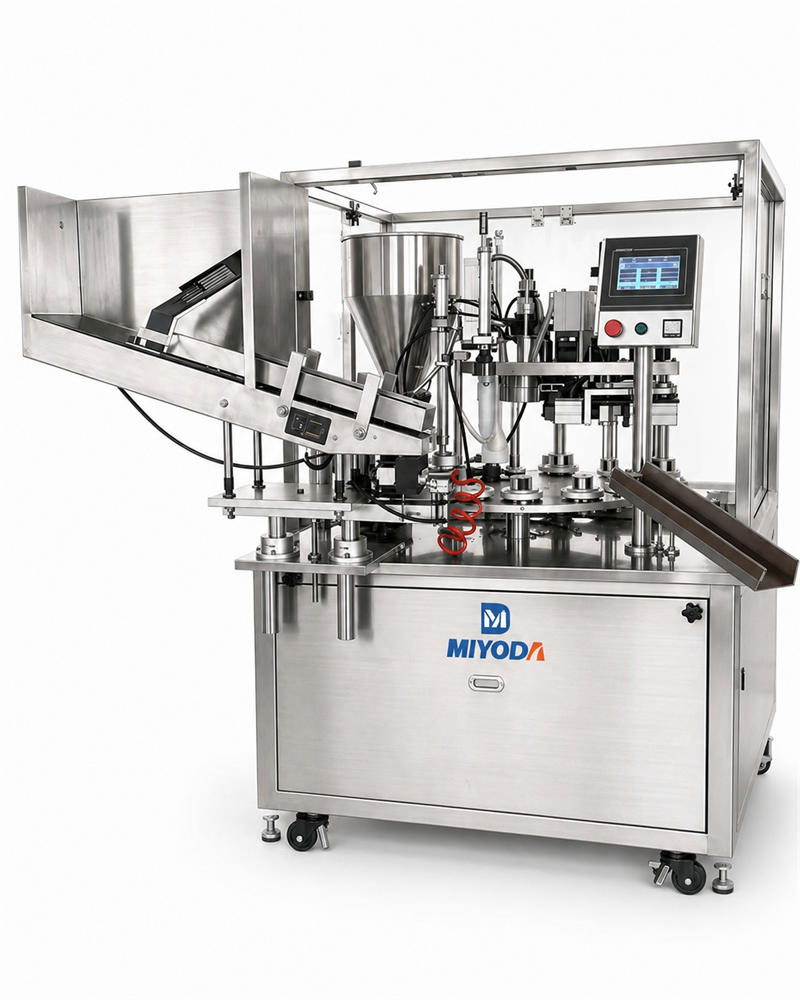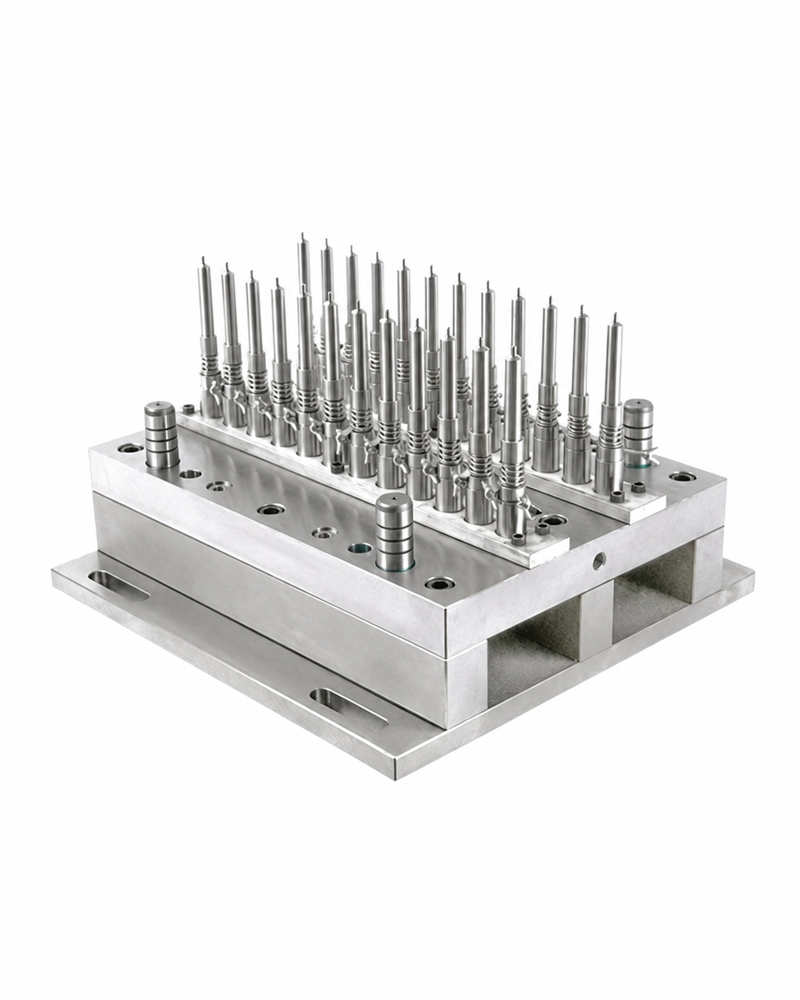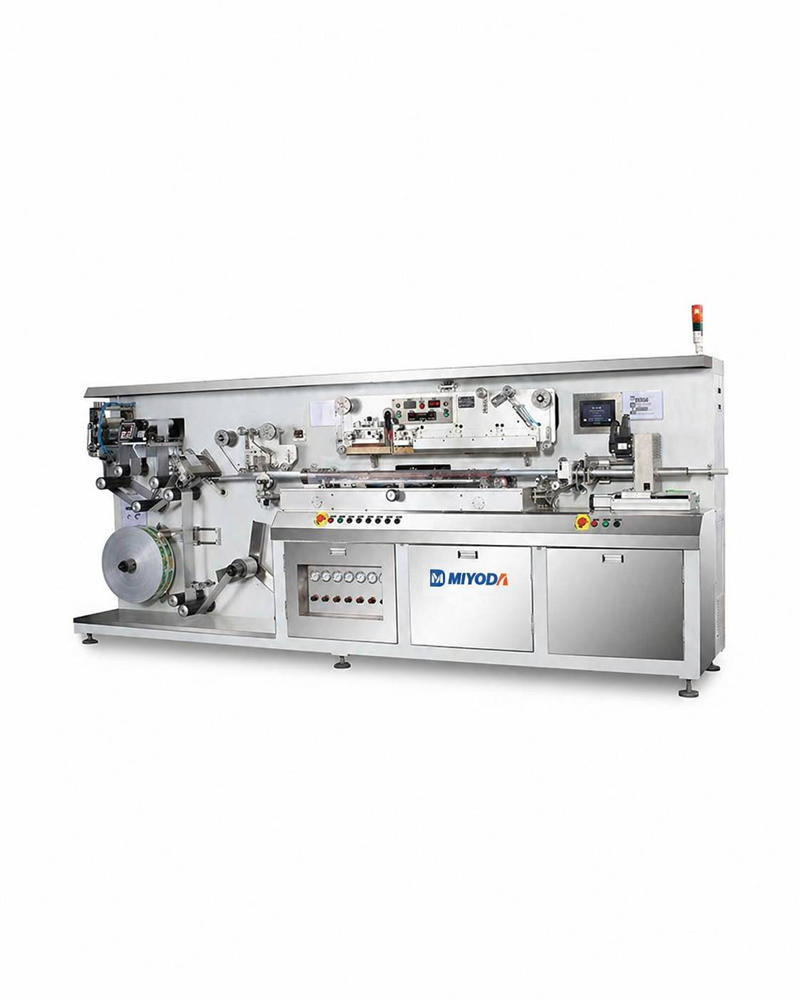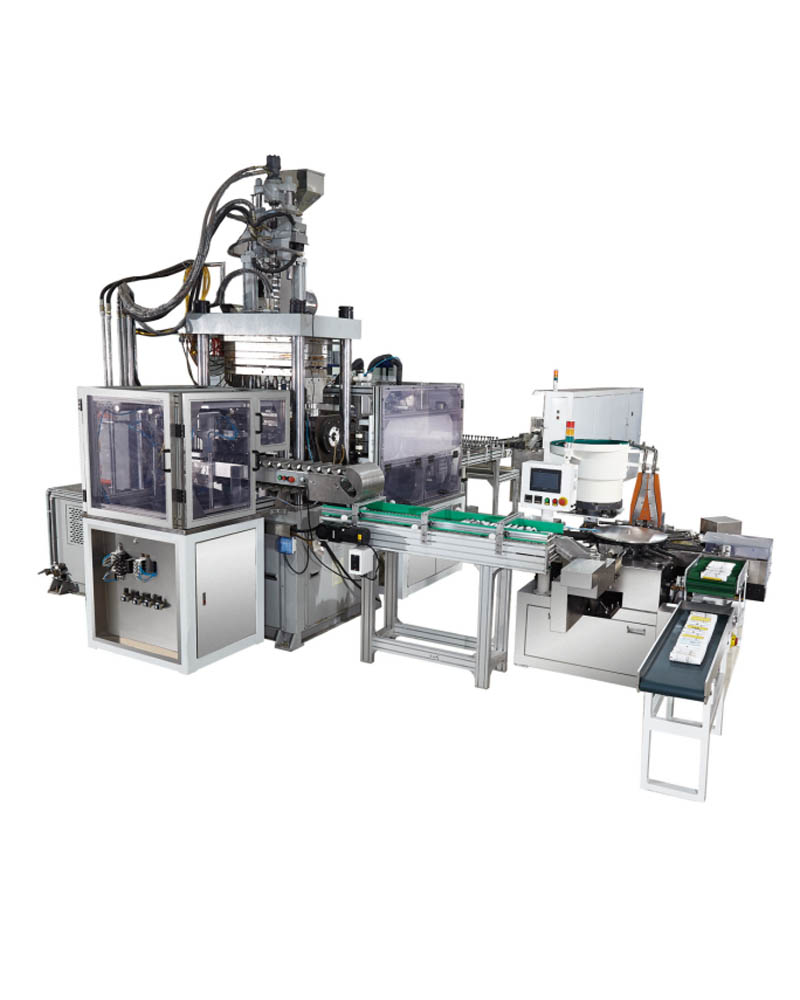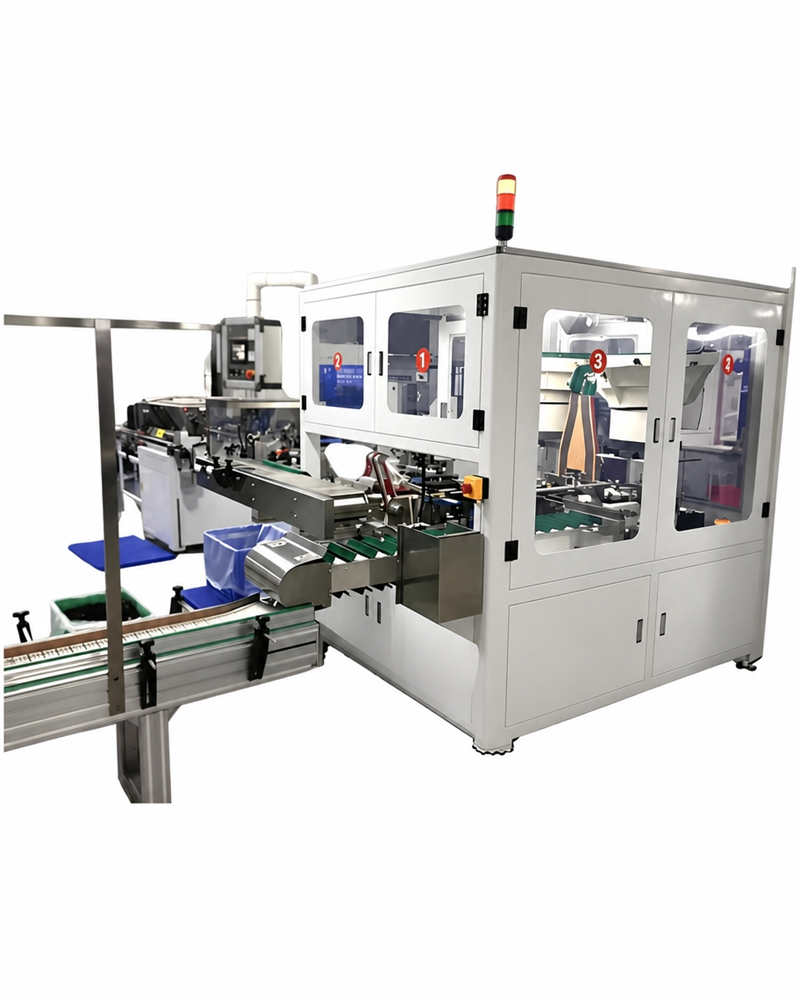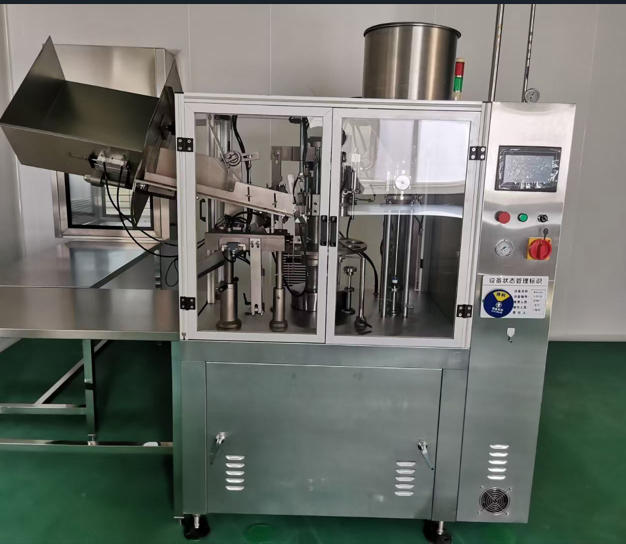
Why Tube Filling Efficiency Is a Business Decision, Not Just a Technical One
A toothpaste tube filling machine running at 70% OEE (Overall Equipment Effectiveness) when the same platform is capable of 88% represents a gap of 18 percentage points. On a machine running 80 tubes per minute across two 8-hour shifts and 250 operating days, that gap is approximately 4.4 million tubes per year — unrealized production capacity that either becomes overtime, outsourcing cost, or declined customer orders.
OEE is defined as: Availability × Performance × Quality. A machine that runs well most of the time but generates 3% defective tubes is not an 88% OEE machine. A machine that achieves near-perfect quality but stops unexpectedly twice a week is not an 88% OEE machine either.
This guide is for production managers, equipment buyers, and distributors sourcing tube filling machinery for oral care, cosmetic, or pharmaceutical applications. Each of the ten sections covers a specific operational domain where production data — not theory — shows that targeted improvements deliver measurable, compounding returns.

1. Understanding Your Production Goals: Aligning Machine Performance With Business Objectives
Define Output Targets Before You Define Machine Specifications
The most common — and most expensive — tube filling machine purchase error is specifying equipment to projected aspirational volume rather than current confirmed demand plus a realistic growth buffer.
A startup oral care brand committing to a USD 85,000 automatic filling line capable of 80 tubes per minute, when their confirmed volume requires 15 tubes per minute on a good month, has three to four years of idle capacity ahead of them. Every shift run at 20% of machine capacity generates depreciation at 80% of the machine’s cost per hour — a structural margin drain that compounds quietly until volume catches up.
The calculation is straightforward:
$$\text{Required TPM} = \frac{\text{Monthly Volume}}{(\text{Shifts/Day} \times \text{Hours/Shift} \times 60 \times \text{Operating Days}) \times \text{OEE}}$$
Key Term: TPM (Tubes Per Minute) — The standard production rate metric for tube filling equipment. Nameplate TPM is measured under ideal conditions. Sustained production runs at 75–85% of nameplate speed after startup sequences, product heating to fill temperature, minor stops, and changeovers are factored in.
Example: A brand producing 300,000 tubes per month, running 2 shifts of 8 hours across 22 operating days, at 80% OEE:
$$\text{Required TPM} = \frac{300,000}{(2 \times 8 \times 60 \times 22) \times 0.80} = \approx 18 \text{ TPM minimum}$$
That brand needs a machine rated at 18 TPM minimum — comfortably within a semi-automatic platform — not the 80 TPM automatic machine a sales conversation might gravitate toward.
Match Machine Capabilities to Your Formulation — Not Just Your Tube Format
Toothpaste is one of the more mechanically demanding formulations in tube filling. Whitening variants containing silica abrasives run at viscosities of 80,000–120,000 cP at room temperature. Gel formulations run at 15,000–40,000 cP. Striped toothpaste with co-injection requires simultaneous product delivery at different viscosities from separate circuits — a capability only specific machines support.
Key Term: Viscosity (cP / Centipoise) — A measurement of a fluid’s resistance to flow. Water is 1 cP. Standard hand cream is 10,000–30,000 cP. Whitening toothpaste with abrasives can exceed 100,000 cP. Your fill pump type, nozzle bore size, and fill pressure settings must all be matched to your product’s viscosity at filling temperature — not its room temperature viscosity, which may be very different.
Machines under-specified for your product viscosity will stall, produce inconsistent fill weights, or wear out piston seals within months instead of years. Confirm viscosity compatibility at the RFQ stage with your actual formulation, tested at your intended fill temperature.
Avoid Over-Investment or Underperformance by Selecting the Right Scale of Automation
| Production Volume (tubes/month) | Recommended Machine Type | Approximate Capex (USD) |
|---|---|---|
| < 30,000 | Manual or entry semi-automatic | USD 3,000–12,000 |
| 30,000–100,000 | Semi-automatic (15–35 TPM) | USD 12,000–35,000 |
| 100,000–500,000 | Automatic linear (40–80 TPM) | USD 45,000–120,000 |
| 500,000–1,500,000 | High-speed automatic (80–150 TPM) | USD 100,000–200,000 |
| > 1,500,000 | Multi-head rotary or dual-line | USD 160,000–350,000+ |
For operations between tiers, modular machine architecture — where a semi-automatic base can be upgraded with automatic tube-feeding and discharge systems later — provides a capital-efficient path to scale without full machine replacement. Miyoda Packaging Machinery designs their tube filling and closing platforms with modular upgrade paths that allow buyers to match today’s volume while retaining documented upgrade options as their business grows.
2. Streamlining Workflow Integration: Designing an Efficient Production Line Layout
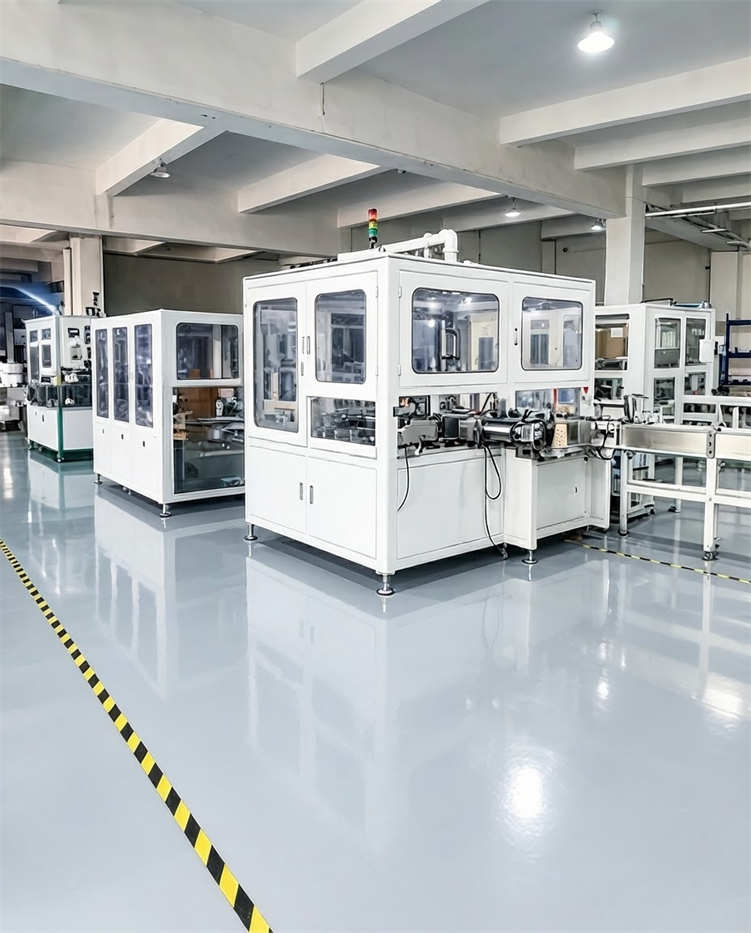
Optimize Machine Placement to Reduce Bottlenecks and Material Handling
Production line layout is one of the highest-impact, lowest-capital efficiency improvements available in tube filling — yet it is almost universally underinvested in at the facility design stage.
The principle is simple: every meter a filled tube travels between production stations on a conveyor, in a bin, or in an operator’s hands is a meter of non-value-adding time where contamination, damage, and schedule variability accumulate.
A tube filling line with the product holding tank 15 meters from the filling head, requiring a pump, transfer hose, and pressure regulator — rather than a heated hopper mounted directly on the machine — introduces three additional failure points, two additional cleaning steps, and one additional calibration requirement. The direct-mounted hopper is not just simpler. It produces better fill accuracy because product temperature and pressure are more stable over shorter distances.
Optimal layout principles for toothpaste tube production:
- Product storage and fill hopper: maximum 3 meters apart, with insulated, heated transfer where product requires elevated temperature to maintain flowability
- Tube filling machine → inline check-weigher: integrated immediately downstream, within 1–2 tube lengths of the discharge point — not as a separate standalone station 5 meters away
- Check-weigher → coding/dating station: directly in-line, no manual transfer
- Coding → cartoning or tray-packing: continuous conveyor, no accumulation tables that create manual intervention points
Integrate Filling, Sealing, Coding, and Packaging Stations Seamlessly
Modern automatic tube filling machines communicate with downstream equipment via standard industrial communication protocols (OPC-UA, Profinet, EtherNet/IP). When your filling machine is connected to your coding system and your cartoner, a jam at the cartoner signals the filling machine to decelerate gracefully — rather than producing tubes that stack up and jam the discharge conveyor.
This connected-line architecture reduces the manual supervision burden by eliminating the need for operators to monitor inter-station buffer accumulation, and it produces cleaner batch records because all connected stations log their status against the same production run timeline.
Use Modular Designs for Scalability and Future Expansion
The facility investment made today should not constrain your production decisions five years from now. Specify floor layouts with the machine footprint plus maintenance clearance (minimum 1 meter on all access sides) and with utility provisions (compressed air, electrical supply, drain connection, chilled water if applicable) at potential future machine positions — even if those positions will be empty for the next two years.
Retrofitting utility connections into an operating production facility costs 3–4× what installing them during the original fit-out costs. The incremental cost of running a compressed air stub to an unused floor position is trivial. The cost of reconfiguring a production facility to add a second line around existing utility constraints is not.
3. Preventing Downtime: Proactive Maintenance and Machine Readiness
Why Reactive Maintenance Is Your Most Expensive Maintenance Strategy
A filling head seal failure at 9pm Thursday stops production. By 9am Friday, the repair is complete — 12 hours of downtime. Direct loss: labor, energy, and material waste from the in-process batch. Indirect loss: the production schedule now runs behind, the Friday overnight shift runs overtime to recover, and the product delivery that was supposed to ship Monday is now Thursday — and the client has already called.
Industry data is consistent: unplanned downtime in cosmetic and pharmaceutical packaging operations costs between USD 10,000 and USD 100,000 per hour when all downstream effects are included. At the lower end of that range, a 12-hour unexpected stoppage costs USD 120,000 — more than the annual preventive maintenance budget for most mid-scale tube filling operations.
The three highest-failure-frequency components on toothpaste tube filling machines, and their documented replacement intervals:
| Componente | Failure Mode | Replacement Interval | Cost of Planned Replacement | Cost of Failure During Production |
|---|---|---|---|---|
| Piston cup seals | Internal leakage → fill weight drift | 6–9 months (abrasive formulations) | USD 200–400 | USD 5,000–15,000 (batch rejection + stoppage) |
| Fill nozzle valve seats | Valve wear → drip after close | 4–8 months | USD 300–600 | USD 3,000–8,000 |
| Jaw heater elements | Element failure → no seal | 12 a 18 meses | USD 400–800 | USD 8,000–25,000 (full batch rejection) |
| Tube feeder drive belts | Slip → tube misfeed jams | 12 months | USD 150–300 | USD 2,000–6,000 |
Implement Scheduled Maintenance Routines Tailored to Usage Cycles
The correct preventive maintenance trigger is not a calendar date — it is a runtime-hour threshold. A machine running two 8-hour shifts 5 days per week accumulates 4,160 runtime hours per year. A machine running three shifts 6 days per week accumulates 7,488 hours per year. The same calendar-based PM interval produces very different actual protection levels for these two machines.
PM schedule framework by runtime interval:
- Every 500 runtime hours: Replace nozzle tip O-rings and piston seals; calibrate fill-weight system against traceable reference weights; inspect jaw faces for contamination and parallelism; verify all emergency stop circuits
- Every 1,500 runtime hours: Replace drive belts on feeder and discharge conveyors; re-lubricate all bearing assemblies; inspect piston cylinder bores for scoring; clean and recalibrate all optical sensors
- Every 4,000 runtime hours: Replace jaw heater elements (proactively); conduct full machine dimensional inspection; re-validate fill-weight accuracy across all product viscosity ranges; update maintenance records for regulatory documentation
Keep Critical Spare Parts in Inventory to Minimize Repair Delays
Before signing a purchase agreement, request a 3-year spare parts forecast from the supplier — including unit prices and lead times. Specifically ask: which components are stocked in your regional warehouse versus requiring international shipping from the manufacturer’s home country?
A seal kit with a 6-week import lead time does not protect a production facility from a 6-day unplanned stoppage. The spare parts inventory for your highest-risk components (piston seals, jaw heater elements, drive belts, nozzle assemblies) should be sized to cover your MTBR (Mean Time Between Replacement) plus a safety buffer of at least one additional replacement unit held on-site.
4. Optimizing Production Schedules: Balancing Speed, Changeovers, and Batch Sizes
Use Data-Driven Planning to Reduce Idle Time Between Runs
Production scheduling for a multi-SKU toothpaste line involves balancing tube substrate inventory, product holding tank availability, machine setup time, and downstream packaging capacity across a product portfolio that may include 8–15 active SKUs with different viscosities, tube diameters, and decoration requirements.
Facilities that schedule based on intuition and experience — rather than data from their production history — consistently underestimate changeover frequency and overestimate sustained throughput. The result is a production plan that looks achievable on paper and is missed by 15–25% in practice.
The data to collect before optimizing your schedule: actual changeover time (time-stamped from last good tube of prior batch to first good tube of next batch) for every changeover event in the last 90 days; actual throughput during first hour of each batch (typically 15–25% below rated speed due to product temperature stabilization); and actual reject rate during first 200 tubes of each batch (consistently the highest-reject period in any production run).
Standardize Changeover Procedures (SMED Principles) for Faster Transitions
Key Term: SMED (Single-Minute Exchange of Die) — A lean manufacturing methodology for reducing machine changeover time. The core principle: separate activities that must happen with the machine stopped (internal setup) from activities that can be prepared while the machine is still running the prior batch (external setup). Converting internal to external setup reduces total changeover time by 40–70%.
Applied to a toothpaste tube filling line, SMED implementation looks like:
While the current batch is still running: the operator prepares the next batch’s tube supply at the loading station, warms the next product in a secondary hopper connected to the machine, pre-mixes the cleaning solution for the CIP cycle between products, and calls up the next batch’s machine recipe on the HMI (Human-Machine Interface) — displaying the parameter changes required without applying them yet.
When the machine stops: the operator executes CIP, applies the new recipe (parameter change takes under 90 seconds on recipe-based systems), performs the mandrel/nozzle format change if tube diameter changes, runs 10 qualification tubes and verifies fill weight and seal integrity before releasing to full production speed.
A mid-sized toothpaste manufacturer who applied SMED methodology to their tube filling changeovers in 2023 documented average changeover time reduction from 4 hours to 47 minutes — recovering approximately 26 hours of production time per week across their three-line facility. At their fill rate of 60 tubes per minute, that recovery was equivalent to 93,600 additional tubes per week of available capacity.
Group Similar Products to Minimize Cleaning and Setup Time
Campaign scheduling — grouping similar formulations together in production sequence — reduces the frequency and complexity of full CIP cleaning cycles between batches. Standard industry practice for multi-formulation tube filling:
- Sequence by ascending abrasiveness: Run non-abrasive gel formulations before silica-containing whitening variants. Abrasive formulations accelerate nozzle and pump wear; running them last in a campaign minimizes the wear they cause before the next PM cycle.
- Sequence by ascending concentration of active ingredients: For pharmaceutical topical applications, run lower-concentration variants before higher-concentration ones. Trace carryover of a lower-concentration product into a higher-concentration run has lower compliance risk than the reverse.
- Group tube diameters: Where your product line allows it, batch all 35mm tube jobs before 40mm jobs to minimize format changeover frequency within a production week.
5. Ensuring Consistent Fill Accuracy: Calibration and Real-Time Monitoring

Why Fill Accuracy Is a Margin Issue, Not Just a Quality Issue
At USD 18/kg product cost and a 130g tube with ±3% fill tolerance, each tube gives away up to 3.9g of product — worth USD 0.07 per tube. At 5 million tubes per year, that is USD 350,000 in annual product giveaway from fill tolerance alone. Tightening to ±1% reduces that figure to USD 117,000 — a USD 233,000 annual saving purely from calibration investment.
This is not a hypothetical. It is the calculation that justifies servo-driven piston filling systems over gear pump systems for high-value formulations, and it is the calculation that makes inline check-weigher investment — typically USD 15,000–40,000 — pay for itself in under 12 months on most mid-volume toothpaste filling lines.
Key Term: Cpk (Process Capability Index) — A statistical measure of how consistently fill weight stays within specification limits relative to natural process variation. Pharmaceutical requirements typically mandate Cpk ≥ 1.33. A servo-driven automatic filling machine achieves Cpk of 1.5–2.0 in sustained production. Older pneumatic or gear-pump systems typically produce Cpk of 0.9–1.2 — meaning a measurable, predictable defect rate is baked into the process.
Regularly Calibrate Dosing Pumps and Sensors for Precision
Fill-weight drift — where actual fill weights trend gradually away from target over a production run — is the most commonly reported issue on toothpaste filling lines. The three most common root causes:
1. Product temperature change in the hopper: Toothpaste viscosity is temperature-sensitive. A product at 28°C and 50,000 cP behaves very differently at 22°C and 95,000 cP. If your hopper temperature controller loses 3°C across a shift, your pump output per stroke changes measurably — without any mechanical fault occurring. Calibration of the hopper temperature control system is as important as calibration of the fill pump itself.
2. Piston seal wear: As piston cup seals wear, internal leakage increases — reducing effective displacement volume per stroke. This wear is gradual and produces a consistent downward drift in fill weight over weeks. The diagnostic signature: fill weights on Monday morning are within spec; by Friday afternoon they are trending below the lower control limit. Track this pattern, and it tells you exactly when seal replacement is due.
3. Air entrainment: Toothpaste with high silica content can trap air during mixing. When aerated product fills the pump chamber, the compressed air pocket displaces product — producing underfills that vary randomly rather than trending in one direction. Resolution: de-aeration recirculation of the product batch in the hopper at fill temperature for 15–20 minutes before production begins.
Use Inline Check-Weighers and Vision Systems for Continuous Verification
End-of-batch QC sampling — pulling 20 tubes from a completed 10,000-tube batch and weighing them — detects defective batches. Inline check-weighers detect defective tubes.
The difference is 9,980 tubes. An inline check-weigher positioned immediately after the fill station weighs every tube individually, compares each weight against the target ± control limits, and automatically diverts out-of-tolerance tubes before they reach the sealing station. The rejected tubes are collected, can be emptied and recycled into the product batch, and are never sealed or labeled — meaning zero customer exposure and minimal material waste.
A production line that switches from end-of-batch sampling to inline check-weighing typically sees its measured defect rate increase sharply in the first week — not because quality got worse, but because it is now measuring what was previously invisible. The visible rate stabilizes within weeks as the detected root causes are corrected.
6. Enhancing Quality Control: From Raw Materials to Sealed Tube Integrity
Implement In-Process Inspections at Critical Control Points
Quality control on a toothpaste tube filling line is not an end-of-line activity. By the time a defective tube reaches the end of the line, it has consumed filling, sealing, and coding resources. The economic optimum is detecting defects at the earliest possible point in the process — which means establishing Critical Control Points (CCPs) at each major production stage.
Key Term: CCP (Critical Control Point) — A specific production stage where a control measure can be applied to prevent, eliminate, or reduce a food or product safety hazard to acceptable levels. In tube filling, CCPs include: the product temperature in the fill hopper (controls viscosity), the jaw temperature at the sealing station (controls seal integrity), and the fill weight at the check-weigher station (controls product quantity).
Practical CCP monitoring for toothpaste tube filling:
| Production Stage | Critical Parameter | Monitoring Method | Control Limit | Response to Exceedance |
|---|---|---|---|---|
| Product hopper | Temperature | Thermocouple + PID controller | ±2°C of target | Stop fill cycle, recalibrate heating |
| Fill station | Fill weight per tube | Inline check-weigher | ±1.5% of target | Auto-reject + operator alert |
| Seal station | Jaw temperature | Thermocouple per jaw | ±5°C of target | Stop seal cycle, inspect element |
| Seal station | Seal dwell time | PLC timer log | ±0.1s of target | Alarm, investigate servo response |
| Coding station | Code readability | Inline camera reader | Any unreadable code | Auto-reject + operator alert |
Test Seal Strength, Crimp Quality, and Contamination Risks Systematically
Tube seal integrity is a safety issue, not just an aesthetic one. A toothpaste tube with a compromised seal may not be immediately visible on the line — but it will leak in distribution, generating a consumer complaint, a retail return, and a brand reputation event that dwarfs the cost of the rejected tube.
Seal integrity tests for routine in-process QC:
- Burst pressure test: Pressurize the sealed tube to the specification threshold (typically 50–100 kPa for toothpaste tubes) and hold for 30 seconds. Any tube that leaks or deforms fails. Test frequency: minimum 5 tubes per 1,000 produced, or after any seal parameter adjustment.
- Peel strength test (ASTM F88): A calibrated tensile tester measures the force required to peel the seal apart. Minimum specification: typically ≥ 15 N/15 mm for pharmaceutical tubes, ≥ 10 N/15 mm for cosmetic. Test frequency: start of each batch, every 2 hours during production, and after any jaw temperature variation event.
- Visual seal inspection: Check for complete seal width (uniform across the full tube width), absence of product contamination in the seal zone (toothpaste residue in the tail prevents polymer fusion), and consistent fold pattern.
Comply With GMP, ISO, and Industry Standards
For toothpaste products in pharmaceutical or OTC drug categories (fluoride concentrations above 1000ppm, therapeutic claims), compliance with FDA 21 CFR, parte 211 for finished pharmaceuticals requires that filling equipment be validated, cleaned to documented procedures, and operated under a quality system that generates retrievable batch records for every production run.
For cosmetic toothpaste, ISO 22716 Good Manufacturing Practice for Cosmetics provides the applicable GMP framework — increasingly required by major retail buyers as a supplier qualification criterion.
7. Reducing Waste and Material Loss: Precision Engineering and Operator Training
Minimize Overfilling, Spillage, and Rejected Tubes Through Fine-Tuned Settings
Waste in a toothpaste tube filling operation accumulates from five specific sources — each with a targeted technical response:
1. Fill weight overshoot (giving product away free): Servo-driven piston filling systems with closed-loop feedback from the inline check-weigher continuously micro-adjust piston stroke to maintain fill weight at the center of the specification range — not at the top. A machine running at the upper control limit of ±2% is giving away product on every tube. A machine running at ±0.5% around the center target is not. The difference at 5 million tubes per year is significant.
2. Startup and shutdown waste: Every production run start consumes 5–20 tubes before the fill weight stabilizes at specification — more for higher-viscosity products that require longer temperature stabilization. Heated hopper systems with pre-production recirculation cycles reduce startup tube consumption by 60–70% by presenting product at stable fill temperature before the first production tube is filled.
3. Nozzle drip between fills: A fill nozzle that drips product between strokes contaminates tube exteriors and the production environment. Anti-drip nozzle designs — incorporating suck-back actuation (a brief retraction of the piston after fill completion that draws product back from the nozzle tip) — eliminate this contamination without product loss.
4. Changeover product waste: Product remaining in the fill hopper and product circuit at batch changeover must be either recovered into the next batch (if formulation-compatible) or disposed of as waste. Minimum-volume fill circuits — the shortest practical distance between product supply and fill nozzle — reduce the volume stranded at changeover. Recirculation systems that return nozzle-level product to the hopper during shutdown recover material that would otherwise be discarded.
5. Seal zone contamination rejections: Toothpaste that migrates into the tube tail during filling contaminates the seal zone and prevents complete polymer fusion. This is the most common cause of seal integrity failures on toothpaste lines. The engineering response: a fill nozzle position that deposits product below the designed seal zone, combined with a tube-tail wiper that clears residue from the seal zone before the jaw closes.
Train Operators on Proper Handling and Troubleshooting Techniques
Operator error accounts for an estimated 40–55% of all tube filling quality non-conformances across the industry. Not because operators are careless, but because most training programs teach procedure execution without teaching the underlying process reasoning that enables good real-time decisions.
An operator who knows only that “fill weight should be 130g ± 2.6g” will report an out-of-specification reading to a supervisor. An operator who understands that low fill weights at the end of a shift are typically caused by declining hopper temperature as product is consumed and fresh product hasn’t had time to warm can investigate and resolve the issue in 8 minutes without a supervisor escalation or a production stoppage.
The training investment that produces this second type of operator: structured on-machine training covering the process reasoning behind each setup parameter, not just the parameter values themselves, combined with a documented troubleshooting decision tree for the 10 most common fault modes. This training typically takes 3–5 working days per operator and needs to be refreshed annually, or when formulations or machine configurations change.
8. Leveraging Automation and Data Analytics for Smarter Operations
Integrate IoT-Enabled Machines for Real-Time Performance Tracking
Key Term: IoT (Internet of Things) — A network of physical sensors and devices embedded in manufacturing equipment that collect and transmit operational data in real time. In tube filling, IoT sensors monitor fill weight trends, sealing temperatures, machine speed, vibration signatures at bearings and motors, and environmental conditions — sending this data to a dashboard visible on any connected device.
A tube filling operation without real-time data visibility is making decisions based on information that is, at best, 30 minutes old — the interval between manual operator checks. A machine that develops a fill weight drift at 10:15am generates its first manual measurement report at 10:45am, by which time approximately 2,400 tubes have been filled outside specification on a 80 TPM line.
Real-time IoT monitoring detects that drift within 50–100 tubes — before any human has looked at the machine — because it measures every tube and calculates a rolling statistical trend. The alert reaches the operator’s display (and the shift supervisor’s phone) at the point where corrective action prevents a quality event, not after the quality event has already generated 2,000 tubes of rework.
Miyoda Packaging Machinery’s AI and IoT integration guide for tube filling documents specific implementation approaches for cosmetic and pharmaceutical tube filling operations, including the sensor retrofit path for existing machines and the documented ROI benchmarks from facilities that have completed the transition.
Use Production Dashboards to Monitor OEE in Real Time
Most tube filling facilities know their output volume at end of shift. The ones consistently improving their operations know their OEE during the shift — so they can act on it while there is still time in the day.
A production dashboard displaying live OEE data for each filling line gives a shift supervisor the information they need to make four types of decisions in real time: when to call maintenance (availability is dropping), when to investigate a speed loss (performance is below target), when to check fill weight and seal quality (quality rate is declining), and when to authorize overtime (OEE data predicts the shift will end short of its production target by more than X units).
Facilities that implement real-time OEE dashboards and hold shift supervisors accountable to the data — not just end-of-shift summaries — consistently achieve 8–15 percentage point OEE improvements in the first 6 months of operation, simply from better-informed real-time decisions.
Predict Maintenance Needs and Optimize Performance Using Historical Data
Machine learning algorithms trained on sensor data from a toothpaste filling line learn to recognize the patterns that precede failures. Bearing wear on a tube feeder produces characteristic vibration frequency changes 3–5 weeks before the bearing fails audibly. A declining trend in the correlation between piston motor current and fill weight indicates developing internal seal leakage before it reaches the scale of measurable fill weight drift.
Industry data from predictive maintenance deployments in pharmaceutical and cosmetic packaging consistently documents 40–50% reductions in unplanned downtime and 20–40% reductions in total maintenance costs within 18 months of implementation — with the highest ROI achieved in the first 12 months on facilities with the worst prior downtime records.
9. Meeting Regulatory and Compliance Demands in Sensitive Markets

Ensure Machines Support Traceability, Batch Recording, and Audit Readiness
For toothpaste products regulated as over-the-counter drugs in the US (fluoride toothpaste above 1,000 ppm falls under FDA OTC drug regulations), every production batch must be documented with complete traceability to raw material lots, production parameters, and quality test results — in records that are retrievable, protected from alteration, and retained for a minimum period defined by regulation.
Key Term: 21 CFR Part 11 — The FDA regulation governing electronic records and electronic signatures in regulated manufacturing. A filling machine control system that automatically logs fill weights, sealing temperatures, and operator actions against a batch number satisfies the core 21 CFR Part 11 data integrity requirement — provided the system also includes audit trail functionality (a record of all changes to data, with timestamp and user ID), access control (only authorized users can change production parameters), and data backup.
Manually compiled paper batch records — where a QC technician transcribes fill weight data from the check-weigher readout to a paper form at the end of each shift — do not satisfy current FDA expectations for data integrity. Transcription creates the possibility of undetected error and intentional alteration that electronic systems with audit trails prevent by design.
Design for Cleanability (CIP/SIP Compatibility) in Pharmaceutical Applications
Key Term: CIP (Clean-In-Place) — An automated cleaning system that circulates cleaning and sanitizing solutions through the product circuit without dismantling the machine. CIP reduces cleaning time from 2–3 hours of manual teardown to 30–45 minutes of documented automated cycling — and generates a cleaning cycle log that becomes part of the GMP batch record.
Key Term: SIP (Sterilize-In-Place) — A process where steam or chemical sterilant is circulated through the product circuit after CIP. Required for aseptic pharmaceutical filling applications where microbial contamination is a safety concern.
For pharmaceutical toothpaste production, product-contact surfaces must be SUS 316L stainless steel (the molybdenum-containing grade with superior resistance to the alkaline cleaning agents used in CIP), with crevice-free electropolished welds (surface finish Ra ≤ 0.8 µm) that prevent microbial adhesion in joint areas. All elastomeric seals must be FDA-approved materials (platinum-cured silicone or PTFE) that do not leach extractables into product contact surfaces.
At the machine evaluation stage, ask the supplier to confirm CIP compatibility by demonstrating the cleaning cycle on their equipment with the specific cleaning agents you intend to use — and verify that no product-contact surfaces require manual disassembly to achieve adequate cleaning. Any machine with dead-leg zones (areas where product can accumulate without reaching the cleaning solution flow) is not genuinely CIP-compatible.
Document Validation Protocols (IQ/OQ/PQ) for Regulatory Submissions
Key Term: IQ / OQ / PQ — The three-stage equipment qualification framework required for pharmaceutical-grade tube filling:
- IQ (Installation Qualification): Documents that the machine was installed per the design specification with correct utilities and environmental conditions.
- OQ (Operational Qualification): Verifies the machine performs within specification at minimum, target, and maximum operating settings across its defined operating range.
- PQ (Performance Qualification): Demonstrates consistent production of compliant product (fill weight within specification, seal integrity passing, batch records complete) across three consecutive batches under normal production conditions.
A realistic IQ/OQ/PQ execution timeline for a pharmaceutical tube filling line is 10–18 weeks after machine installation. Total cost — protocol writing, test execution, documentation, and regulatory review — typically runs USD 25,000–80,000 depending on equipment complexity and the regulatory authority oversight level.
Equipment suppliers who provide template IQ/OQ/PQ protocols as standard purchase scope — not as a paid professional services add-on — are demonstrating genuine regulated-industry experience. Treat this as a supplier qualification criterion.
📺 Watch: Automatic Tube Filling and Sealing Machine in Production
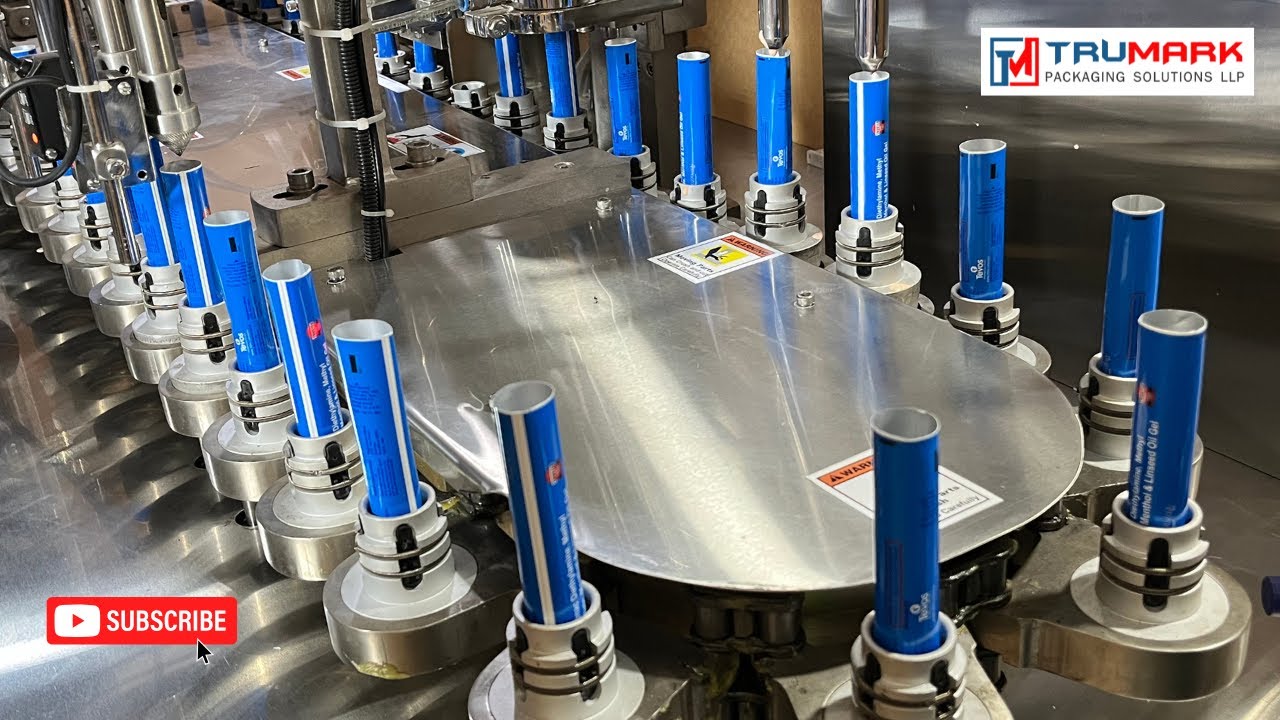
Watch a high-speed automatic 2-head tube filling and sealing machine running at full production speed — observe the servo fill stations, inline UV curing, hot-air sealing jaw, and batch coding integration in a single continuous cycle. This is the operational benchmark for operations targeting above 80 TPM on toothpaste and cosmetic tube lines.
10. Partnering With the Right Supplier: Support, Training, and Long-Term Success
Choose Suppliers Offering Comprehensive After-Sales Service and Technical Support
The relationship with your tube filling machine supplier does not end at delivery. It begins there. The machine you purchased today will need spare parts in 6 months, a technical service call within 18 months (statistically), and a software update or sensor calibration service within 24 months. The supplier who cannot deliver those services reliably is not a supplier who saves you money on the purchase price — they are a supplier who defers equipment costs into unpredictable future expenses.
Before signing any purchase agreement, confirm in writing:
- What is the contractual response time for a critical production stoppage? Not “we aim to respond within 48 hours” — what is the SLA (Service Level Agreement) with a penalty if not met?
- Where is the nearest spare parts depot, and which critical components are held there versus requiring international shipping?
- What is the warranty scope — specifically, what components are classified as consumables excluded from warranty coverage?
- What is the software update policy, and at what cost are updates provided after the warranty period?
Access Operator Training Programs and Remote Diagnostics
A machine delivered without structured operator training is a machine whose performance will peak at commissioning and decline from there as operator familiarity erodes and informal practices diverge from the designed procedure.
Effective operator training for a toothpaste tube filling machine covers: HMI recipe management and changeover execution; fill weight sampling protocol and out-of-specification response procedure; CIP cycle execution and cleaning cycle verification; first-line fault diagnosis using the machine’s alarm history and sensor data; and the correct escalation path when a fault exceeds first-line repair capability.
Remote diagnostics — where the machine supplier can connect to the machine’s control system via secure internet connection and view live operational data, alarm logs, and PLC outputs — allows a service engineer to diagnose a fault from the factory before a technician is dispatched, reducing the time from “machine stopped” to “machine running” by an average of 4–12 hours in documented implementations.
For international buyers, remote diagnostics is not a premium feature — it is an operational necessity. A 48-hour on-site response time to a facility in Southeast Asia or Latin America is a service commitment that requires either a regional service network or effective remote diagnosis capability. Both should be confirmed before purchase, not assumed.
Benefit From Continuous Improvement Updates and Retrofitting Options
The tube filling machine you commission today should not be the exact same machine 5 years from now. Servo motor firmware updates improve motion accuracy. New nozzle designs extend wear life for abrasive formulations. Vision inspection modules can be added to existing machine bases. IoT sensor retrofits connect legacy equipment to predictive maintenance platforms.
Suppliers who treat equipment sale as a transactional endpoint — with no structured process for customer updates, retrofit options, or performance reviews — deliver less value over a machine’s 8–12 year service life than suppliers who maintain an active improvement program for their installed base.
Ask at the evaluation stage: what improvements have you made to this machine platform in the last two years that are available to existing customers? The answer to that question reveals whether the supplier’s investment in your long-term success extends beyond the sales cycle.
Miyoda Packaging Machinery’s full tube production equipment range — covering tube extrusion, laminate tube production, filling and closing, printing, and decoration — provides a coherent, single-source approach to building or upgrading a complete tube production ecosystem rather than integrating incompatible equipment from multiple vendors.
Summary: The Five Numbers That Define Your Filling Line’s True Performance
Before any investment decision, measure and document these five numbers for your current operation. They define both the baseline and the improvement opportunity.
| KPI | How to Measure | World-Class Benchmark | Typical Underperforming Line |
|---|---|---|---|
| OEE (%) | Availability × Performance × Quality | ≥ 85% | 60–72% |
| Fill Weight Cpk | Statistical analysis of fill weight data over 4-hr run | ≥ 1.33 (pharma) / ≥ 1.0 (cosmetic) | 0.7–1.0 |
| Changeover Time (min) | Time-stamped from last good tube to first good tube | < 30 min (with SMED) | 90–240 min |
| Defect Rate (%) | Defective tubes / total produced × 100 | < 0.5% (with inline inspection) | 1.5–4% |
| Unplanned Downtime (hrs/month) | Maintenance log, unplanned events only | < 4 hours/machine | 12–30 hours/machine |
Every percentage point of OEE improvement on an 80 TPM machine running 2 shifts translates to approximately 96,000 additional tubes per year. Every 1% reduction in defect rate at USD 0.25/tube recovered is USD 5,000–25,000 in annual material cost depending on production volume. These are not industry estimates. They are calculable from your own production data.
Ready to Optimize Your Toothpaste Tube Filling Line?
The best-run toothpaste tube filling operations share a simple discipline: they measure what matters, they act on what the data shows, and they partner with suppliers who support that process rather than just delivering equipment and moving on.
Miyoda Packaging Machinery supplies tube filling and closing machines for cosmetic and pharmaceutical brands worldwide — from semi-automatic benchtop fillers for emerging brands to high-speed integrated lines for established manufacturers. Their application engineers work with buyers before the purchase decision to confirm formulation compatibility, validate capacity sizing, and document the upgrade path as volume grows.
👉 Explore the Complete Tube Filling and Closing Machine Range →
👉 Read the Automatic vs. Semi-Automatic Tube Filling Machine Comparison Guide →
👉 Contact us for a production assessment — bring your current OEE data, changeover time, defect rate, and monthly volume. We will show you specifically where efficiency improvements are available on your line and what a realistic upgrade path looks like for your production scale.
Glosario de términos clave
| Término | Definición |
|---|---|
| OEE (eficacia global de los equipos) | A composite production performance metric: OEE = Availability × Performance × Quality. 85% is world-class for tube filling. Below 72% indicates significant recoverable losses. |
| Cpk (índice de capacidad del proceso) | Statistical measure of how consistently fill weight stays within specification limits. Pharma requirement: Cpk ≥ 1.33. Cpk < 1.00 means a measurable defect rate is structurally embedded in the process. |
| SMED (Single-Minute Exchange of Die) | A lean manufacturing methodology for reducing machine changeover time by separating activities that require the machine to be stopped from those that can be prepared while the machine is still running. |
| TPM (Tubes Per Minute) | Standard production rate metric. Nameplate TPM is measured under ideal conditions; sustained production runs at 75–85% of nameplate speed. |
| Viscosity (cP / Centipoise) | Measurement of a fluid’s resistance to flow. Water = 1 cP. Toothpaste gel = 15,000–40,000 cP. Whitening toothpaste = 80,000–120,000 cP. Always specify at filling temperature. |
| CIP (Clean-In-Place) | Automated cleaning system that circulates cleaning solutions through product pathways without machine disassembly. Reduces cleaning time from 2–3 hours manual to 30–45 minutes automated. |
| SIP (Sterilize-In-Place) | Circulation of steam or chemical sterilant through the product circuit after CIP. Required for aseptic pharmaceutical filling. |
| IQ / OQ / PQ | Installation, Operational, and Performance Qualification — the three-stage pharmaceutical equipment validation framework. Required before regulatory-compliant pharmaceutical production can begin. |
| CCP (Critical Control Point) | A production stage where a control measure prevents, eliminates, or reduces a product safety hazard to acceptable levels. Key CCPs in tube filling: hopper temperature, fill weight, jaw temperature, code readability. |
| 21 CFR Part 11 | FDA regulation governing electronic records and electronic signatures. Filling machine control systems must satisfy audit trail, access control, and data backup requirements to comply. |
| SID (densidad de tinta sólida) | Densitometric measurement of ink coverage on a printed tube — used to monitor and control decoration color consistency across production runs. |
| TCO (Total Cost of Ownership) | Complete cost of owning and operating equipment over a defined period — purchase price, installation, training, energy, maintenance, waste, and downtime losses. Purchase price typically represents only 25–30% of 5-year TCO. |
| MTBR (Mean Time Between Replacement) | The average operating time between planned replacements of a specific component — used to schedule spare parts inventory and PM intervals. |
Preguntas frecuentes
1. How can I reduce changeover time when switching between different toothpaste formulations?
Apply SMED (Single-Minute Exchange of Die) methodology: separate activities that require the machine to be stopped from those that can be prepared while the prior batch is still running. Practical steps: pre-warm the next product in a secondary hopper during the final 30 minutes of the current run; prepare and stage all tooling for the format change before the machine stops; store complete machine recipes per SKU in the HMI so parameter changes take under 90 seconds rather than manual re-entry. Facilities applying SMED to toothpaste tube filling changeovers consistently achieve 60–75% reductions in changeover time — from 3–4 hours to 45–60 minutes in documented implementations. Quick-release nozzle assemblies, tool-free hopper cleaning access, and color-coded format components each contribute meaningfully to that reduction.
2. What maintenance schedule should I follow to prevent unexpected breakdowns?
Base your PM schedule on runtime hours, not calendar dates: machines running three shifts accumulate 2× the runtime hours of single-shift operations with identical calendar intervals. Every 500 runtime hours: replace nozzle tip O-rings and piston seals; calibrate fill weight system against traceable reference weights; inspect jaw faces for contamination and parallelism. Every 1,500 hours: replace drive belts; re-lubricate bearing assemblies; inspect piston bores. Every 4,000 hours: replace jaw heater elements proactively (before failure); conduct full machine dimensional inspection. For abrasive formulations like whitening toothpaste containing silica, reduce piston seal replacement interval to 300–400 runtime hours — silica accelerates seal wear significantly compared to non-abrasive gels.
3. How do I ensure consistent fill volume across thousands of tubes per hour?
Three elements working together produce consistent fill volume at scale: a servo-driven piston filling system (not gear pump or pneumatic) that maintains fill-weight repeatability of ±0.5–1.0% regardless of production speed; a heated hopper with PID temperature control that maintains product viscosity within a ±2°C band throughout the production run; and an inline check-weigher that measures every tube individually and feeds statistical process control data back to the fill head control — enabling automatic micro-adjustment before drift becomes a quality event. On a well-configured system, fill weight Cpk above 1.5 is achievable in sustained production — meaning fewer than 3.4 tubes per million are outside the ±1% fill specification.
4. Can the machine handle both cosmetic and pharmaceutical-grade toothpaste tubes?
Yes — with appropriate configuration. The mechanical capability is the same: servo-driven filling, ultrasonic or hot-air sealing, and inline coding work identically for cosmetic and pharmaceutical formulations. The distinction is in compliance configuration. For pharmaceutical (OTC drug) applications, the machine must generate GMP-compliant electronic batch records, be built from SUS 316L stainless steel at product-contact surfaces, be compatible with validated CIP procedures, and have a supplier-provided IQ/OQ documentation package. For cosmetic toothpaste, ISO 22716 GMP compliance is the applicable standard — less stringent on equipment validation formality but increasingly required by major retail buyers as a supplier qualification condition. Confirm both capability sets with your supplier before purchase if you intend to serve both market segments.
5. What causes sealing defects, and how can I prevent them?
The five most common seal defect types and their root causes: (1) Partial seal — insufficient jaw temperature, inadequate jaw pressure, or product contamination in the seal zone. Prevention: maintain jaw temperature within ±5°C of specification; verify anti-drip nozzle and tube-tail wiper function before each run. (2) Burn-through — excessive jaw temperature or dwell time. Prevention: reduce dwell time by 0.1-second increments; verify thermocouple calibration. (3) Wrinkled seal — incorrect tube tail clamping or tube material stored outside recommended temperature/humidity range. Prevention: verify clamping alignment and jaw parallelism; condition tube stock at 20–25°C before production. (4) Pinhole leak — ultrasonic horn wear or misalignment. Prevention: inspect horn face for metal-to-metal contact evidence at every PM interval. (5) Uneven seal width — jaw face wear or product buildup. Prevention: clean jaw faces daily; inspect for wear quarterly.
6. How do I minimize product waste during startup and shutdown?
Three targeted measures reduce startup and shutdown waste: (1) Heated hopper systems with pre-production recirculation — circulate toothpaste at fill temperature for 15–20 minutes before the first production tube, so viscosity is stable from the first stroke. This alone reduces startup tube consumption (tubes filled while dialing in fill weight) by 60–70%. (2) Closed-loop fill control from the first tube — inline check-weigher connected to fill head control with an auto-correction algorithm that adjusts fill volume based on the first 5 tubes’ weights, rather than waiting for a manual sample. (3) Nozzle suck-back — a brief piston retraction after fill completion that draws product back from the nozzle tip, preventing drip during machine indexing between fill cycles. Collectively, these measures reduce startup and shutdown waste from a typical 50–120 tubes per batch change to under 15 tubes.
7. Is automation worth the investment for small to mid-sized producers?
For producers running below 30,000 tubes per month: probably not yet. The economics of a fully automatic machine at USD 60,000–120,000+ require production volume to amortize the capital. At 20,000 tubes per month, a semi-automatic machine at USD 15,000–25,000 produces lower cost per tube when all factors are included. For producers above 50,000 tubes per month — and particularly those running more than 5 SKUs with frequent changeovers — the labor saving from automation (one operator on a fully automatic line versus two to three on semi-automatic equivalents producing the same volume) typically justifies the capital premium within 18–30 months. The crossover point depends on your local labor rates, your SKU diversity (higher SKU count = more changeovers = more benefit from quick-change automation), and your compliance requirements (pharmaceutical applications almost always justify automatic equipment for documentation capability alone).
8. How can I verify that my tubes meet regulatory standards for safety and hygiene?
Four verification mechanisms for your toothpaste tube production: (1) Material compliance documentation — obtain certificates of compliance from your tube supplier confirming that tube materials (PE, ABL, PBL) comply with FDA food-contact regulations (21 CFR) or EU Framework Regulation 1935/2004 for applicable markets. (2) Fill equipment validation — for pharmaceutical applications, IQ/OQ/PQ validation conducted by qualified personnel and reviewed by your regulatory affairs function. (3) Cleaning validation — documented evidence that your CIP procedure consistently reduces product residue below established limits before each new product introduction. (4) Batch-level quality records — electronic batch records linking each production batch to fill weight data, seal integrity test results, cleaning cycle records, and material lot numbers. Your machine supplier should support items 2 and 4 directly; items 1 and 3 are supplier and in-house quality function responsibilities respectively.
9. What training is required for operators to run the machine efficiently?
Effective operator training for a toothpaste tube filling machine covers five competency areas: (1) Machine startup and HMI recipe management — calling up the correct product recipe, verifying startup parameters, and interpreting the ready-to-run state. (2) Changeover procedure — physical format change, CIP execution, first-fill qualification, and production release. (3) In-process quality monitoring — fill weight sampling protocol, seal inspection, code readability verification, and out-of-specification response procedure. (4) First-line fault diagnosis — using the machine’s alarm history and the troubleshooting decision tree for the 10 most common fault modes. (5) End-of-shift shutdown and cleaning — CIP execution, documentation completion, and machine handover checklist. This training takes 4–6 days for a motivated operator on a semi-automatic machine, and 7–10 days for a fully automatic line with PLC-based alarm management. Annual refresher training and competency reassessment is best practice for pharmaceutical operations where documented operator qualification is a regulatory requirement.
10. Can I integrate the filling machine with my existing labeling or packaging line?
Most current-generation tube filling machines support integration via PLC-based I/O connections and standard industrial communication protocols (OPC-UA, Profinet, EtherNet/IP). Integration with downstream labeling, cartoning, or tray-packing equipment enables: speed matching (the filling machine modulates output speed to match downstream line capacity); jam detection propagation (a downstream stop signals the filling machine to decelerate gracefully, preventing tube accumulation and jam events); and unified batch record generation (all connected stations log their status against the same production run timeline). Compatibility depends on the control system of your existing downstream equipment. Before committing to any filling machine purchase, provide your supplier with the PLC make, model, and firmware version of your existing line equipment and request a documented integration compatibility assessment — not a verbal assurance.
11. How does tube material (laminate, aluminum, plastic) affect filling performance?
Each tube material requires specific machine configuration adjustments: Tubos de plástico PE — standard for cosmetic toothpaste; require hot-air or jaw heat sealing; standard nozzle and mandrel configuration; corona pre-treatment not required for most sealing methods. ABL laminate tubes — standard for pharmaceutical toothpaste with barrier requirements; compatible with ultrasonic sealing (preferred) or hot-air sealing; require careful jaw temperature calibration as ABL sealing windows are narrower than PE. Aluminum tubes — used for pharmaceutical ointments and premium toothpaste; require mechanical crimp sealing rather than heat or ultrasonic; require dedicated crimp tooling per tube diameter. PBL (plastic barrier laminate) — increasingly used for recyclable cosmetic toothpaste packaging; requires similar sealing parameters to ABL but may have different wall thickness tolerances requiring mandrel adjustment. Always confirm the full range of tube materials you plan to run with your machine supplier, and request production samples on each substrate type before finalizing purchase.
12. What is OEE, and how can I improve it with my current setup?
OEE (Overall Equipment Effectiveness) = Availability × Performance × Quality. A machine that ran 7.5 out of 8 planned hours (93.75% Availability), at 90% of rated speed (90% Performance), and produced 97% conforming tubes (97% Quality) achieved OEE = 0.9375 × 0.90 × 0.97 = 81.9%. World-class tube filling is 85%+. To improve each component: Availability — implement preventive maintenance to reduce unplanned stoppages; track Mean Time Between Failure (MTBF) by component and address the worst-performing three components first. Performance — identify the specific production conditions (product viscosity extremes, tube substrate changes, startup periods) during which speed is below target, and address each cause systematically. Quality — implement inline check-weighing to convert end-of-batch defect detection to real-time tube-level detection; address the three most frequent defect causes from your reject category data. Improving from 70% to 85% OEE on an 80 TPM machine running 2 shifts recovers approximately 14.4 million tubes per year of output — before spending a dollar on additional equipment.
13. Do you offer remote diagnostics and technical support for international clients?
Yes — modern tube filling machine suppliers provide remote diagnostic support via secure cloud connectivity. When a fault occurs, a service engineer at the supplier’s facility can connect to the machine’s PLC (Programmable Logic Controller — the industrial computer controlling machine operation) and view live operational data, alarm history, and sensor readings as if they were standing at the machine. This allows remote diagnosis of most fault modes without a technician on-site — reducing resolution time from 24–48 hours (international travel) to 4–12 hours for the majority of technical issues. Confirm before purchase: what is the remote diagnostics platform, what is the response time SLA for remote support requests, and what is the security protocol for the remote connection? For pharmaceutical applications, the remote access session itself should be logged as part of the machine’s audit trail — confirm this capability with your supplier.
14. How do I scale up production without compromising quality?
The pattern that works consistently: establish quality control infrastructure before scaling speed, not after. Specifically — implement inline check-weighing and seal integrity monitoring at your current production speed, establishing your baseline performance metrics (Cpk, defect rate, OEE) at current volume. Then scale speed in 10–15% increments, measuring quality metrics at each increment before moving to the next. Speed increases that degrade Cpk by more than 0.1 point or increase defect rate above your established control limits indicate that the process has not been adequately prepared for that speed — and the cause should be identified and resolved before continuing. This incremental approach takes longer than simply setting the machine to maximum speed, but it prevents the scenario where a quality problem discovered at full speed has already produced 100,000 non-conforming units before it is detected.
15. Are your machines suitable for viscous or abrasive formulations like whitening toothpastes?
Yes — with specific configuration requirements. Whitening toothpaste formulations typically contain 15–25% silica or calcium carbonate abrasives at viscosities of 80,000–120,000 cP. The machine requirements for these formulations: a heated hopper system that maintains product at filling temperature (typically 25–35°C) to keep viscosity within the piston filler’s operating range; large-bore piston cylinders (minimum 50–60mm bore for high-viscosity formulations) with sufficient stroke volume to avoid excessive pump cycling speed; wear-resistant piston cup seals (PTFE-reinforced or UHMWPE for silica-containing formulations, not standard NBR rubber) with replacement scheduled at 300–400 runtime hours; anti-shear nozzle design that deposits abrasive product without particle fracture (which reduces particle size distribution and alters abrasive performance); and a heated transfer system from product supply to hopper that maintains laminar flow to prevent abrasive settling in transfer lines. Always conduct a production trial with your actual whitening formulation on the specific machine model before purchase commitment — not a demonstration with a substitute medium.