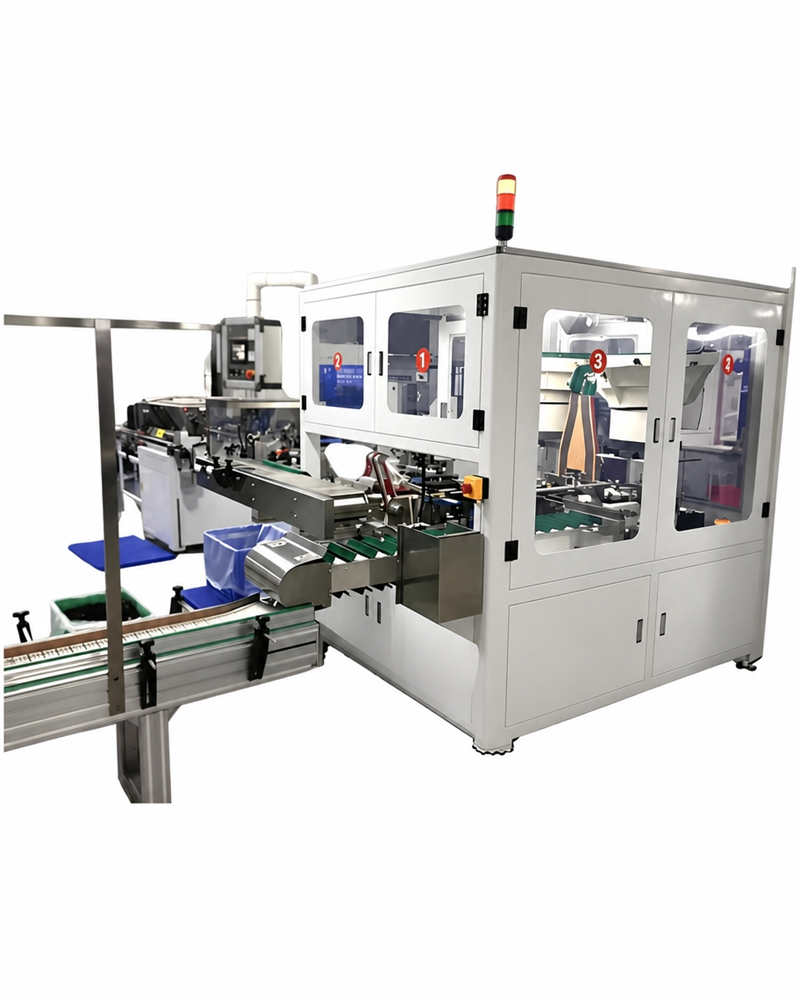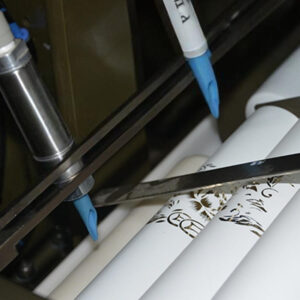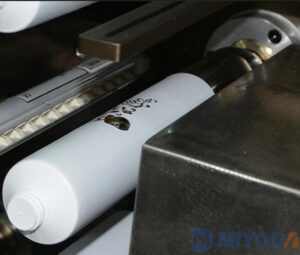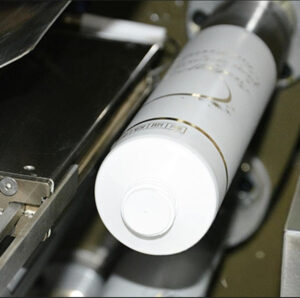
Introduction: Why Tube Sealing Technology Matters in Modern Manufacturing
Squeeze a tube of toothpaste, apply a dab of anti-inflammatory gel, or pump out a swipe of vitamin-C serum, and you are interacting with the end result of one very specific, very unglamorous piece of engineering: the tube seal. It is the last thing a machine does to a product before it leaves the factory, and it is also the first thing that fails when something goes wrong. A weak seal on a cosmetic tube shows up as a retail return. A weak seal on a pharmaceutical ointment tube shows up as a regulatory finding, or worse, a patient safety event.
Tube sealing technology sits at a strange intersection in manufacturing: it is the least visible station on a production line and simultaneously the one with the most direct line to brand reputation, shelf life, and compliance risk. Get it right and a plant runs at 90%+ equipment effectiveness with defect rates under half a percent. Get it wrong and the same plant bleeds material, labor, and customer trust one bad batch at a time.
This article looks at seven industries where tube sealing technology has moved from a background process to a competitive differentiator: cosmetics, personal care, pharmaceuticals, household products, food, and specialty industrial applications, plus the buyer-side decisions that determine whether an equipment investment pays off. Throughout, we will use real production benchmarks rather than vague quality claims, because in packaging machinery, the numbers tell the story better than adjectives ever could.

1. The Evolution of Tube Sealing Technology: From Basic to Advanced Solutions
Historical Development and Modern Innovations
Early sealing methods and their limitations
For most of the 20th century, tube sealing meant a mechanical crimp: metal tubes, mostly aluminum, folded and pinched shut by hand or by simple foot-pedal presses. This worked reasonably well for aluminum because the metal deforms predictably under pressure, but it created two lasting constraints. First, seal consistency depended almost entirely on operator skill — a tired worker on the night shift produced measurably weaker seals than the same worker three hours into a shift. Second, as plastic tubes began replacing aluminum in the 1960s and 1970s for cost and weight reasons, the old crimping approach simply did not work; plastic does not fold and hold the way aluminum does, so manufacturers needed a fundamentally different closure mechanism — heat.
How today’s technology solves yesterday’s problems
The shift to thermal and ultrasonic sealing solved the consistency problem by replacing human judgment with controlled, repeatable physics. A modern hot-jaw sealer maintains its sealing surface within roughly 2°C of a target setpoint at steady state, which is a tolerance no human hand can replicate cycle after cycle. Ultrasonic sealing went a step further: instead of waiting for conducted heat to soften a tube’s inner layer, it generates friction heat directly at the seal interface in milliseconds, cutting cycle time by 25–40% compared to conventional jaw heating on equivalent tube formats. What used to be an art performed by a skilled line operator is now a data-driven process governed by PID temperature control loops, calibrated jaw pressure, and validated dwell times.
Key Technological Breakthroughs in the Industry
Automation and precision engineering advances
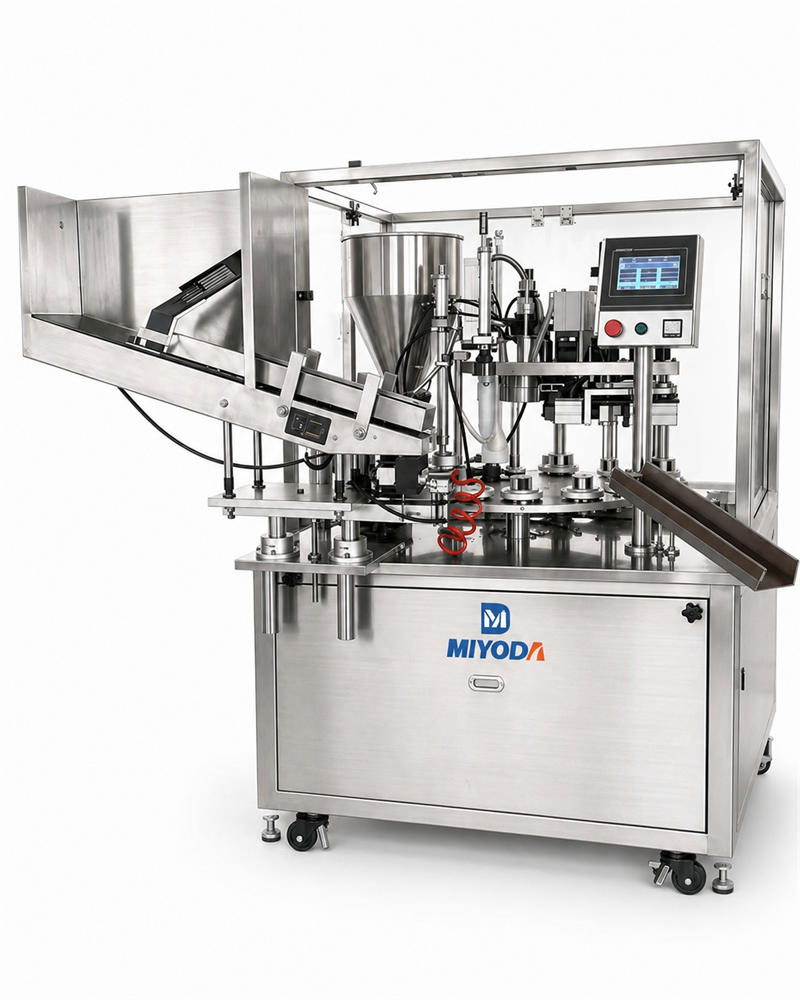
The single biggest leap in the last decade has been the move from mechanically fixed sealing parameters to servo-driven, recipe-based systems. A servo-controlled sealer can store named parameter sets for each SKU — temperature, pressure, dwell time — and recall them instantly on changeover, rather than requiring a technician to manually reset dials. This matters more than it sounds: on a line running six SKU changes per shift, a 40-minute manual changeover consumes 240 minutes, or half an eight-hour shift, in pure non-productive time. Recipe recall built into Miyoda Packaging Machinery’s integrated tube production lines cuts that changeover window dramatically, which translates directly into more sealed, sellable tubes per shift without adding a single hour of labor.
Integration with Industry 4.0 standards
The newer generation of sealing equipment does not just seal — it reports. Thermocouple feedback from the jaw surface itself (not just the heating cartridge) detects contamination or thermal drift before a reject is produced, and that data streams into a central monitoring dashboard. This is the practical, unglamorous side of Industry 4.0: not robots replacing people, but sensors catching a 3°C temperature drift at 2 a.m. before it turns into 4,000 rejected tubes by the morning shift change.
2. The Cosmetics Industry: Beauty Products Demand Precision Sealing
Why Cosmetics Manufacturers Need Reliable Tube Sealing
Product integrity and shelf-life considerations
Cosmetic formulations, particularly active-ingredient products like vitamin-C serums and retinol creams, are chemically unstable in the presence of oxygen and moisture. A seal with even a microscopic gap becomes a slow leak point for both — not enough to spill product, but enough to let air in over a six-to-twelve-month shelf life, degrading the active ingredient before the “best before” date the brand printed on the box. Industry testing standards such as ASTM D3078 (the bubble leak test used across cosmetic tube manufacturing) exist precisely because this failure mode is invisible until the product is already in a customer’s bathroom cabinet.
Meeting consumer expectations for quality packaging
Premium skincare buyers notice things that mass-market buyers might not: a wrinkled seal tail, an uneven crimp width, a tube that looks slightly “off” compared to the last purchase. Luxury brands increasingly write maximum crimp deviation tolerances of 0.2 mm directly into their supplier contracts — a tolerance achievable only with servo-driven jaw closure, not older spring-tensioned mechanisms. The seal is no longer just a functional barrier; it is part of the unboxing experience a brand is selling.
Real-World Case Study: How a Leading Cosmetics Brand Increased Production by 40%
Challenge: Inconsistent seal quality affecting customer returns
A mid-sized skincare contract manufacturer running a vitamin-C serum line was seeing end-of-line leak-test rejections around 1.8% — high enough that returns from a major retail partner were becoming a recurring line item in quarterly quality reviews. The root cause traced back to a hot-air sealer that had been specified for a different, thinner laminate than the five-layer tube the brand actually used.
Solution: Implementing advanced tube sealing technology
Switching to an ultrasonic sealer correctly matched to the tube’s laminate structure resolved the mismatch at the source. Ultrasonic sealing generates heat precisely at the polymer interface rather than conducting it through the entire tube wall, which meant the outer cosmetic finish was no longer exposed to unnecessary thermal stress. Combined with a shift to servo-controlled jaw alignment, the manufacturer cut leak-test rejections from 1.8% to under 0.3% — and because ultrasonic cycles run faster than hot-air cycles on the same platform, overall line throughput increased by roughly 40% within two production quarters. This is consistent with what we cover in Miyoda’s cosmetic tube sealing machine buyer’s guide, where sealing technology mismatch is identified as the single most common root cause of avoidable rejects in cosmetic tube lines.
Key Performance Metrics for Cosmetics Tube Sealing
Seal strength and consistency standards
For a standard 100 ml skincare laminate tube, the typical seal strength specification sits between 25 and 40 N per 15 mm, measured against ASTM F88 peel strength testing. A process running below Cpk 1.33 (a statistical process capability threshold, meaning the process reliably stays within specification limits) is generally considered inadequate for a brand-facing product where visible seal defects trigger retail rejection.
Production speed and cost reduction benefits
Table 1 below shows the throughput and cost tradeoffs across automation tiers for cosmetic tube sealing — a comparison worth reviewing before any capital request goes to finance.
| Automation Level | Typical Output | Seal Consistency (Cpk) | Capital Cost Range (USD) |
|---|---|---|---|
| Manual | 50–200 tubes/hr | Below 0.80 | $1,000–$8,000 |
| Semi-Automatic | 500–2,000 tubes/hr | 0.80–1.10 | $8,000–$35,000 |
| Automatic (Standard) | 2,000–8,000 tubes/hr | 1.10–1.33 | $35,000–$90,000 |
| Automatic (Servo-Driven) | 8,000–15,000+ tubes/hr | 1.33+ | $90,000–$250,000+ |
Source: compiled from industry benchmarking data on cosmetic tube sealing equipment.
3. Personal Care Products: Toothpaste, Creams, and Beyond
Unique Sealing Requirements for Personal Care Applications
Viscosity variations and material compatibility
Personal care lines are notorious for running a wide viscosity spread on the same equipment — a light hand lotion one week, a thick petroleum-based balm the next. This matters for sealing because dwell time (the seconds a jaw stays in contact under heat and pressure, typically 0.3–2.0 seconds) needs to account for how much thermal mass the product itself adds near the seal zone, especially when fill levels run close to the tube shoulder. Toothpaste specifically presents its own quirk: most formulations include mild abrasives and humectants that can leave a thin residue in the seal zone during filling, and that residue is one of the leading causes of partial or “cold-weld” seals if the fill nozzle height is not properly calibrated.
Regulatory compliance and safety standards
Toothpaste containing fluoride compounds falls under cosmetic or quasi-drug regulation depending on the market, which means seal integrity documentation is not purely a quality nicety — in several jurisdictions it is a requirement tied to product registration.

Real-World Case Study: Toothpaste Manufacturer Reduces Defect Rates by 65%
Initial problems: High waste and customer complaints
An oral care contract manufacturer running three shifts on a laminate tube line was logging a defect rate — mostly wrinkled seals and occasional partial fusion — that hovered around 4% of total output, high enough to draw complaints from a downstream distributor about inconsistent tube tails on retail shelves.
Implementation strategy and measurable results
The corrective path combined two changes: recalibrating fill-nozzle height to eliminate product residue in the seal zone, and upgrading the jaw temperature control loop to tighter tolerance (from roughly ±5°C to ±2°C at steady state). Within one full production cycle, defect rates fell from 4% to approximately 1.4% — a 65% reduction — and the associated material waste savings alone covered the cost of the temperature-control upgrade within nine months. This kind of process tightening is a recurring theme across high-speed toothpaste tube filling technology, where small calibration errors compound quickly at 100+ tubes-per-minute production speeds.
Optimizing Production Efficiency in Personal Care Manufacturing
Speed, accuracy, and consistency benchmarks
Automatic tube sealers in personal care applications typically run 40–120 tubes per minute, with high-speed linear systems exceeding 200 tubes per minute for standardized formats. The gap between rated speed and actual production output, captured by the Overall Equipment Effectiveness (OEE) metric, is where most unrealized capacity hides — a machine rated at 10,000 tubes/hour running at a typical 75% OEE delivers only 7,500 net tubes/hour, a gap worth quantifying before comparing supplier quotes on speed alone.
ROI calculation for tube sealing investments
Most manufacturers see measurable payback within 12 to 18 months on a correctly specified automatic sealer, driven primarily by reduced reject rates and lower per-unit labor cost rather than by raw speed gains alone.
4. Pharmaceutical Packaging: Where Safety and Compliance Are Non-Negotiable
Stringent Requirements Driving Pharmaceutical Tube Sealing Technology
GMP (Good Manufacturing Practice) compliance essentials
In pharmaceutical packaging, sealing is not merely a quality metric — it is a documented, auditable process step under FDA current Good Manufacturing Practice regulations (21 CFR Parts 210 and 211) and equivalent EU GMP frameworks. Every sealed tube must be traceable to a specific batch, a specific set of validated process parameters, and a documented equipment qualification record. This is the reason pharmaceutical buyers request IQ/OQ/PQ documentation (Installation, Operational, and Performance Qualification — the three-phase protocol proving a machine was installed correctly, operates within its validated range, and consistently produces conforming output) before signing off on new sealing equipment, something Miyoda’s tube filling and sealing machine guide walks through in detail for buyers new to regulated packaging.
Tamper-evident and child-resistant packaging solutions
Pharmaceutical tube tails are frequently sealed using a fold or crimp geometry specifically because it provides visible tamper evidence — any attempt to reopen and reseal a tube leaves a visually detectable distortion that a heat-fused plastic seal does not always show as clearly.
Real-World Case Study: Pharmaceutical Company Achieves 99.8% Seal Integrity
Regulatory challenges and how advanced sealing solved them
A topical ointment manufacturer faced a warning-letter-level audit finding related to inconsistent seal documentation — not a product failure per se, but a gap in evidence that every batch had been produced within validated parameters. The finding forced a full re-evaluation of the sealing station’s control system.
Quality assurance protocols and continuous improvement
The manufacturer implemented a sealer with electronic batch recording tied to 21 CFR Part 11 requirements — meaning every seal cycle’s actual temperature, pressure, and dwell time was logged and timestamped against the batch record automatically, rather than relying on operator sign-off sheets. Combined with a non-destructive vacuum decay leak test on a statistical sample of every batch, the plant achieved and sustained 99.8% seal integrity across subsequent audits, closing the original finding and avoiding escalation to a formal warning letter.
Risk Mitigation Through Superior Sealing Technology
Contamination prevention and product safety
For aluminum-barrier laminate (ABL) tubes — the standard for pharmaceutical topicals requiring oxidation protection — the internal lacquer coating must be chemically compatible with the formulation’s pH and solvent content. An incompatible lacquer can corrode within 3 to 6 months, introducing trace heavy-metal contamination, which is a recall-category event rather than a minor quality deviation.
Traceability and documentation capabilities
Modern pharmaceutical sealing lines integrate batch coding directly into the seal cycle, so the lot number and expiry date are applied to the same tube in the same station that closes it, eliminating a handoff point where mismatched coding could otherwise occur.

5. Household Products: Scaling Production Without Sacrificing Quality
The Challenges of High-Volume Household Product Manufacturing
Diverse product types requiring flexible sealing solutions
Household tube products span an unusually wide range — silicone sealants, adhesive pastes, cleaning gels, agricultural pastes — each with different viscosity, solvent content, and tube material requirements. A single contract packer serving multiple household brands may need to switch between plastic laminate and pure aluminum tubes within the same shift, which puts changeover flexibility ahead of raw speed as the priority specification.
Cost pressures and the need for operational efficiency
Household products compete on shelf price far more aggressively than cosmetics or pharmaceuticals, which means the margin available to absorb reject rates or slow changeovers is thinner. A 1% seal defect rate that a premium cosmetic brand might absorb as a rounding error becomes a meaningful cost pressure on a low-margin household SKU running millions of units annually.
Real-World Case Study: Cleaning Product Manufacturer Doubles Capacity
Problem: Manual sealing bottlenecks and quality inconsistencies
A household adhesive and sealant producer running semi-automatic sealing equipment was capacity-constrained — demand had grown past what two shifts of manual tube loading and sealing could support, and seal quality varied noticeably between operators, occasionally causing product to ooze from a poorly sealed tail during warehouse storage.
Solution: Automated tube sealing system implementation
Moving to a fully automatic sealing line with tool-free jaw cassettes for quick format changes between the company’s three tube diameters allowed one operator to oversee output that previously required two full manual stations. Combined with tighter jaw pressure calibration matched to each tube’s wall thickness, production capacity effectively doubled without adding floor space, since the automated line’s smaller footprint replaced two separate manual stations.
Sustainability Considerations in Household Product Packaging
Reducing material waste and environmental impact
Modern servo-driven sealers with on-demand heating (active only during the dwell phase, rather than continuous heating) cut energy consumption by 40–60% compared to older continuous-heating jaw sealers, a meaningful factor for household brands publishing sustainability commitments alongside their packaging claims.
Meeting eco-conscious consumer demands
Post-consumer recycled (PCR) tube material is increasingly common in household categories, but PCR tubes carry wall-thickness variability that older sealing equipment was never calibrated to handle — a detail worth confirming directly with any equipment supplier before committing to a PCR packaging transition.
6. Food Industry Applications: Maintaining Safety and Freshness
Food-Grade Sealing Standards and Regulatory Requirements
FDA and international food safety compliance
Food-grade tube applications — condiment pastes, nutritional gels, flavoring concentrates — require product-contact surfaces built to food-safe material standards, typically 316L stainless steel or FDA-compliant polymers such as PTFE or PEEK. Lubricants used anywhere near the product path must carry an H1 food-grade rating in case of incidental contact, a detail that separates food-grade sealing stations from general industrial equipment even when the mechanical sealing process itself looks identical.
Preventing contamination and extending shelf life
A hermetic seal on a food tube is doing double duty: keeping product in and keeping airborne contaminants and moisture out, both of which directly affect microbial shelf life claims printed on the package.
Real-World Case Study: Food Manufacturer Improves Product Freshness Indicators
Challenge: Inconsistent sealing affecting product quality
A specialty condiment producer packaging a nutritional paste in flexible tubes noticed a pattern of early spoilage complaints traced back to seals that passed visual inspection but failed under the pressure changes tubes experience during distribution and warehouse stacking.
Results: Extended shelf life and reduced spoilage costs
Switching to a sealer validated with vacuum decay leak testing (per ASTM F2338, the standard used to detect micro-leaks that visual inspection cannot catch) identified and eliminated the specific seal geometry that had been passing visual checks while failing under distribution stress. Post-implementation, spoilage-related returns dropped by more than half within two quarters, and the company was able to extend its printed shelf-life claim with supporting stability data.
Temperature and Humidity Considerations in Food Tube Sealing
Equipment specifications for food-grade production
Food production environments often run cooler and more humid than typical cosmetic plants (for product stability reasons), and sealing equipment temperature calibration must account for that ambient variation — a machine calibrated in a 22°C test lab will not necessarily hold the same seal window in a 15°C, high-humidity food production room without re-validation.
Validation and testing protocols
Periodic destructive testing — peel strength and burst pressure — remains necessary alongside in-line non-destructive checks, since destructive tests catch failure modes that real-time monitoring alone can miss.
7. Industrial and Specialty Applications: Expanding Market Opportunities
Emerging Uses for Tube Sealing Technology
Adhesives, sealants, and specialty chemicals
Beyond consumer goods, tube sealing technology increasingly serves industrial adhesives, silicone sealants, and specialty chemical pastes, where the packaging tube itself often functions as the dispensing tool at the point of application. This changes the sealing requirement subtly: the seal must resist not just storage pressure but also the mechanical stress of repeated squeezing by an end user in a workshop or garage setting.
Lubricants and technical fluids packaging
Technical greases and lubricants packaged in tubes often carry solvent content that can attack certain elastomer seals over time, making material compatibility testing between the product formulation and the tube’s inner lacquer or liner a non-negotiable step before production commitment.
Real-World Case Study: Specialty Chemical Producer Enters New Markets
Capability expansion through advanced sealing technology
A mid-sized specialty chemicals firm previously limited to bottle and cartridge formats invested in tube sealing capability specifically to compete for contracts requiring flexible tube packaging for a new line of technical adhesives — a format their existing bottling equipment simply could not produce.
Market growth and revenue diversification
Within its first year of tube production, the company reported that tube-packaged products opened access to two new distribution channels that required tube formats as a contractual specification, diversifying revenue away from its historically bottle-dependent product mix.
Custom Solutions for Unique Industry Challenges
Flexible equipment design and adaptability
Industrial and specialty applications rarely run standardized tube formats, which is why modular sealing platforms — capable of handling multiple diameters and wall thicknesses without a full mechanical rebuild — tend to outperform fixed-configuration equipment in this segment over a multi-year investment horizon.
Technical support and troubleshooting capabilities
Because specialty chemical formulations vary so widely, supplier technical support during commissioning (not just after a fault occurs) becomes a meaningful differentiator between vendors when evaluating a first-time tube packaging investment.
8. Choosing the Right Tube Sealing Equipment: A Buyer’s Guide for Manufacturers
Critical Factors in Equipment Selection
Production capacity and speed requirements
The starting point for any equipment decision is your confirmed order volume plus a realistic growth buffer — not your aspirational three-year forecast. A common rule of thumb is to specify equipment rated at no more than 80% utilization during a standard shift, preserving headroom for slower-running viscous products and minor stoppages without forcing overtime to hit volume targets.
Material compatibility and flexibility
As covered throughout this article, sealing technology must match tube material construction. Buyers evaluating PE plastic versus aluminum-plastic laminate tubes should request a supplier’s jaw-pressure-to-wall-thickness compatibility matrix covering their complete tube portfolio, not just their launch SKU.
Technical Specifications and Performance Metrics
Seal quality assurance features
Look for PID-controlled temperature loops maintaining ≤2°C variation at steady state, thermocouple feedback from the jaw surface itself (not just the heating element), and — for pharmaceutical or premium cosmetic applications — non-destructive in-line leak testing rather than statistical sampling alone.
Integration with existing production lines
A sealing station does not operate in isolation; it must accept tubes at the indexing pitch and speed the upstream filler delivers, and hand off to downstream coding and inspection without creating buffer zones where tube handling introduces new defects.
Cost-Benefit Analysis and ROI Projections
Initial investment versus long-term savings
Table 2 illustrates why higher upfront capital expenditure frequently produces lower total cost of ownership at meaningful production volumes.
| Automation Tier | 5-Year TCO per 1,000 Tubes | Best Suited Volume |
|---|---|---|
| Manual Sealer | ~$0.72 | Under 500 tubes/day |
| Semi-Automatic | ~$0.52 | 5,000–50,000 tubes/day |
| Automatic (Standard) | ~$0.44 | 50,000–500,000 tubes/day |
| High-Speed Automatic (Servo) | ~$0.28 | 500,000+ tubes/day |
TCO includes capital depreciation, labor, energy, consumables, maintenance, and reject cost. Figures are industry-compiled benchmarks and vary by region and SKU mix.
Maintenance costs and downtime considerations
Annual maintenance and spare parts costs typically run 3–5% of equipment value on well-maintained sealing machines. Predictive maintenance programs, where vibration and thermal sensors flag component wear before failure, can meaningfully extend service life beyond the standard 10–15 year benchmark for quality equipment.
Vendor Evaluation and Partnership Criteria
Technical support and training programs
Request on-site installation support and documented operator training as standard, not an add-on — an under-trained operator is one of the most common sources of avoidable seal defects on newly installed equipment.
Warranty, service agreements, and spare parts availability
Before signing, confirm heating element and jaw component lead times specifically. Any critical-path spare part with a supplier lead time exceeding four weeks should be stocked on-site from day one to avoid unplanned line downtime.

9. Implementation Strategy: Maximizing Your Tube Sealing Investment
Pre-Purchase Planning and Needs Assessment
Conducting a thorough production audit
Before requesting quotes, map your complete tube portfolio: every material, diameter, wall thickness, and closure type you expect to run over the next three years, along with annual volume per format. This becomes the non-negotiable technical baseline every supplier proposal is measured against, a step outlined in more depth in Marco de auditoría previa a la compra de Miyoda para líneas de procesamiento de tubos.
Identifying bottlenecks and efficiency gaps
If sealing sits downstream of a filling station that already runs below 80% OEE, a faster sealer will not fix your throughput problem — it will simply wait longer between cycles. Audit the entire line, not just the station generating the most visible complaints.
Installation, Training, and Transition Management
Minimizing production disruption during implementation
Factory acceptance testing with your own tube materials — not generic demonstration stock — should run a minimum of 30 continuous minutes at target speed before any equipment ships. Any supplier unwilling to run this test with your production operators at the controls is a warning sign worth heeding.
Staff training and capability development
Documented training records matter for GMP-regulated operations specifically, but even in non-regulated categories, structured training reduces the human-error component of quality issues, which industry data suggests accounts for roughly 40–55% of all tube line quality events.
Ongoing Optimization and Continuous Improvement
Performance monitoring and data analytics
Track Mean Time Between Failures (MTBF) on high-wear components — heating elements, jaw inserts, pneumatic seals — and replace them on a schedule rather than waiting for failure. Lines following structured preventive maintenance consistently achieve OEE above 85%; lines without it typically run below 75%.
Predictive maintenance and equipment longevity
Vibration sensors on jaw bearings and thermal monitoring on heating cartridges enable planned maintenance windows instead of unplanned breakdowns — the difference between a scheduled two-hour maintenance stop and an unplanned eight-hour production loss.
Scaling Your Operation for Future Growth
Modular systems and expansion capabilities
Modular equipment architecture, where a semi-automatic base can later be upgraded with automatic feeding and discharge systems, lets growing brands match capital spend to today’s actual volume while engineering a clear upgrade path for tomorrow’s growth, an approach reflected in how Miyoda structures its tube filling and closing equipment range.
Future-proofing your investment
Buying for a three-year volume projection with a 20% growth buffer, rather than for current SKU count alone, avoids the common trap of outgrowing new equipment within eighteen months of installation.
10. Industry Trends and Future of Tube Sealing Technology
Smart Manufacturing and Industry 4.0 Integration
IoT-enabled equipment and real-time monitoring
The next generation of sealing equipment treats every seal cycle as a data point rather than a discrete mechanical event. Jaw-surface thermocouples, pressure transducers, and cycle-time logging feed into dashboards that flag drift trends — a gradual upward temperature creep, for instance — long before that drift produces a batch of rejects.
Predictive analytics and AI-driven optimization
Pattern recognition applied to historical seal-quality data is starting to predict component wear (particularly jaw inserts and heating elements) with enough lead time to schedule replacement during planned downtime rather than reacting to failure mid-shift.
Sustainability and Green Manufacturing Initiatives
Reducing energy consumption and material waste
On-demand heating architectures, active only during the dwell phase rather than continuously, are becoming the default rather than the premium option, driven as much by energy cost pressure as by sustainability positioning.
Biodegradable and eco-friendly tube materials
Mono-material and PCR tube constructions are gaining share specifically because they simplify recycling, but they require sealing equipment recalibration since these materials often behave differently under heat than traditional multi-layer laminates — a transition worth planning with your equipment supplier well ahead of a packaging redesign launch.
Emerging Market Opportunities and Growth Projections
Global expansion and regional market variations
Market research from Grand View Research places the cosmetic tube packaging market at roughly $3.9 billion in 2024, growing at over 7% annually through 2034 — growth driven disproportionately by emerging markets scaling up cosmetic and personal care manufacturing capacity for the first time.
New product categories and application development
As covered in Section 7, industrial and specialty chemical applications represent the fastest-diversifying use case for tube sealing technology outside its traditional cosmetic and pharmaceutical base.
Preparing Your Business for Future Innovations
Technology roadmap and strategic planning
Rather than chasing every new feature announcement, the more durable approach is building a relationship with an equipment partner capable of supporting both your current production reality and your documented three-to-five-year growth plan.
Building partnerships with equipment manufacturers
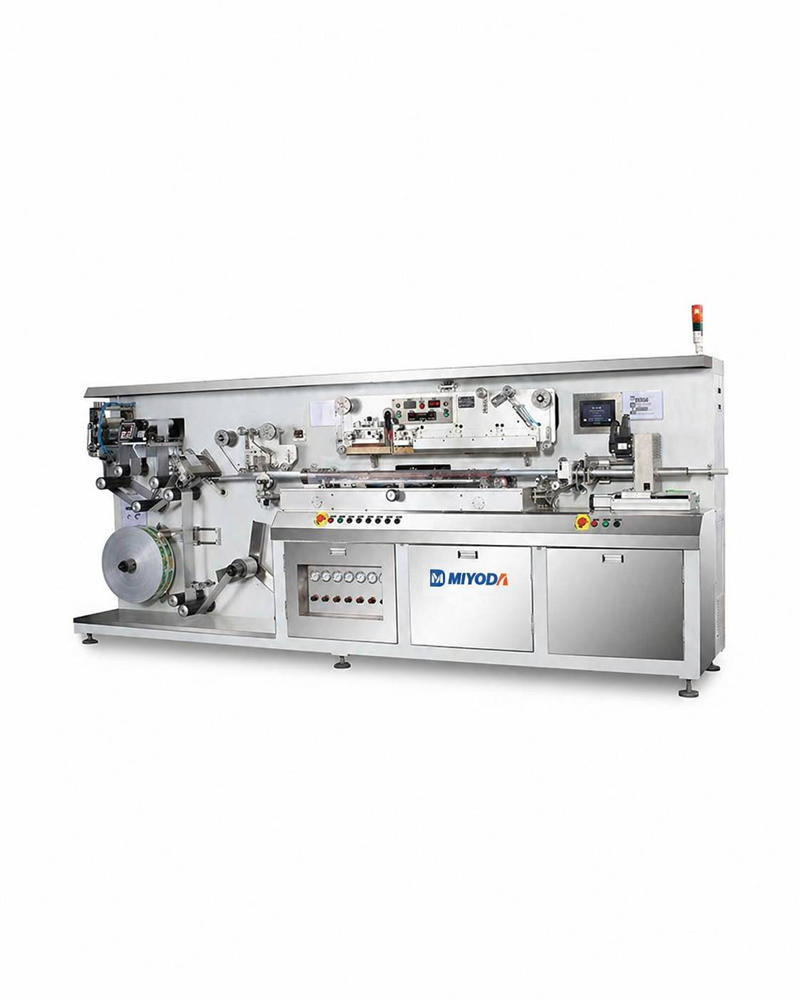
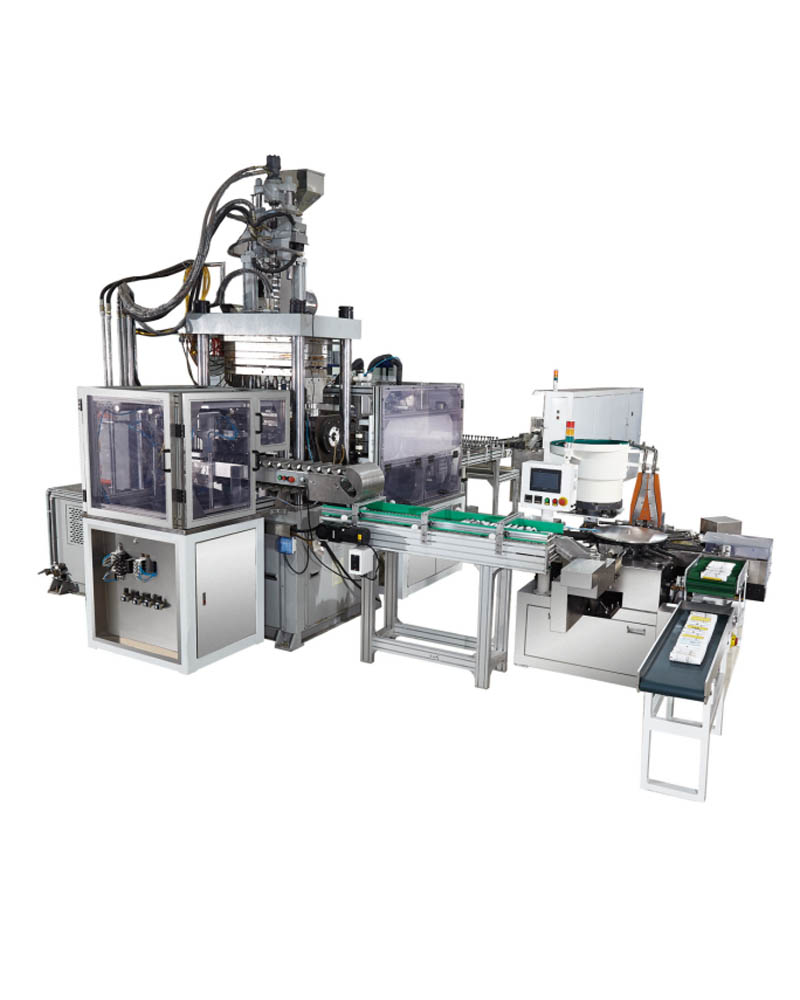
Suppliers offering complete integrated lines — from extrusion through printing, filling, sealing, and capping — eliminate the integration gaps that occur when individual machines are sourced from different vendors and forced to work together after the fact.
Watch how tube orientation, filling, sealing, and coding operate as a single integrated cycle on a modern automatic line:
https://www.youtube.com/watch?v=1Y6SYdsELr0
Transform Your Production with Tube Sealing Excellence
Key Takeaways from Industry Leaders
Across cosmetics, personal care, pharmaceuticals, household goods, food, and specialty industrial applications, the pattern repeats: seal quality is never “good enough” until it is measured, and measurement only matters if it is tied to a validated, repeatable process. The manufacturers who treat sealing as a specification decision — matching technology to material, sizing throughput to real volume, and building in documented quality checks — consistently outperform those who treat it as a commodity purchase made after everything else on the line is already decided.
Your Pathway to Improved Efficiency and Profitability
The path forward is not complicated, even if it requires discipline: map your complete tube portfolio honestly, model your throughput needs against realistic OEE assumptions rather than nameplate speed, and insist on factory acceptance testing with your own materials before any equipment leaves the supplier’s floor. Each of these steps costs time upfront and saves multiples of that time in avoided rework, avoided downtime, and avoided compliance headaches later.
The Competitive Advantage of Superior Tube Sealing Technology
In every industry covered here, the businesses that got sealing right did not necessarily buy the most expensive machine — they bought the machine correctly matched to their actual production reality, backed by a supplier willing to validate that fit before the sale closed. That is the real competitive advantage: not the fastest sealer on paper, but the one that keeps running at spec, shift after shift, for the next decade.
Ready to Revolutionize Your Tube Production?
Schedule a free consultation with our equipment specialists today and discover how advanced tube sealing technology can transform your manufacturing operation. Get a customized ROI analysis for your specific production needs by reaching out through Miyoda Packaging Machinery’s team, or explore the complete tube filling and closing machine range to see which configuration fits your current production volume and growth plan.
Preguntas frecuentes
1. What is the typical ROI timeline for investing in advanced tube sealing equipment? Most manufacturers see measurable returns within 12–18 months through reduced waste, increased production speed, and fewer quality-related issues. The exact timeline depends on current production volume, defect rates, and labor costs, so a customized ROI projection based on your specific operation is more reliable than any generic industry average.
2. Can tube sealing equipment handle different tube materials and sizes? Modern tube sealing machines can accommodate various materials — aluminum, plastic, and laminate — and diameters typically ranging from 15 mm to 60 mm. Changeover time and tooling requirements vary significantly by machine design, so confirming compatibility against your full tube portfolio before purchase is essential.
3. What maintenance schedule should I follow to ensure optimal equipment performance? Most tube sealing equipment requires daily cleaning of jaw surfaces and tube guides, weekly inspection of alignment and thermocouple accuracy, and monthly calibration of temperature and pressure systems. Specific schedules depend on production volume and material types, and predictive maintenance using vibration and thermal sensors can further reduce unplanned downtime.
4. How do I ensure my tube sealing equipment meets pharmaceutical GMP compliance? GMP compliance requires documented IQ/OQ/PQ validation, product-contact surfaces built to FDA-compliant material standards (typically 316L stainless steel), and electronic batch recording aligned with 21 CFR Part 11 where applicable. Request this documentation package from any supplier before purchase, not after installation.
5. What is the difference between heat sealing and ultrasonic sealing technology? Heat sealing conducts thermal energy through heated jaws to melt and fuse the tube tail, and is cost-effective and broadly compatible with standard plastic laminates. Ultrasonic sealing uses high-frequency vibration to generate friction heat directly at the seal interface in milliseconds, reducing cycle time and thermal stress on heat-sensitive formulations or premium cosmetic finishes.
6. How can I reduce seal defects and improve consistency? Most defects trace back to incorrect temperature, pressure, or dwell time settings, or to product contamination in the seal zone from an improperly calibrated fill nozzle. Real-time monitoring with statistical process control, combined with scheduled jaw and thermocouple maintenance, typically resolves the majority of recurring defect patterns.
7. What production speeds can I expect from modern tube sealing equipment? Semi-automatic systems typically run 20–40 tubes per minute, while fully automatic systems range from 40 to over 200 tubes per minute depending on tube format and sealing technology. Always request field-reported OEE data from a supplier’s existing customers rather than relying on peak laboratory speed claims alone.
8. Are there environmental or sustainability benefits to upgrading tube sealing equipment? Yes. Modern servo-driven sealers with on-demand heating reduce energy consumption by 40–60% compared to older continuous-heating designs, and improved seal consistency reduces material waste from rejected tubes. Some systems also support PCR and mono-material tube constructions for improved recyclability.
9. How long does equipment installation and staff training typically take? Installation generally takes two to four weeks depending on facility readiness and line complexity, while operator and maintenance training typically requires one to two weeks on-site, supplemented by remote support during the initial production ramp-up period.
10. What should I look for in a tube sealing equipment supplier or distributor? Look for proven experience in your specific industry, transparent field-reported performance data (not just factory test speeds), a documented spare parts list with realistic lead times, and willingness to conduct factory acceptance testing using your own tube materials before finalizing the purchase.