Upgrading a vial filling line for sterile production is one of the most complex, high-stakes capital projects a pharmaceutical manufacturer can undertake. The technical scope is broad — cleanroom infrastructure, filling equipment, containment barriers, sterilization systems, control architecture, and validation protocols — and each element carries both GMP regulatory obligations and direct patient safety implications.
The good news is that the industry has developed a well-tested framework for navigating this complexity. The key is approaching the upgrade as a phased, risk-based program — not a single capital event — with clear performance targets, defined validation milestones, and a change management structure that brings operations, quality, engineering, and regulatory affairs into alignment before the first tool is turned.
This guide walks through every stage: from the initial current-state assessment through equipment selection, validation, commissioning, training, and lifecycle planning. Whether you are modernizing a 1990s open-line filling suite or integrating isolator technology into a mid-generation aseptic line, these are the steps that determine whether the project delivers on its compliance, efficiency, and ROI promises.
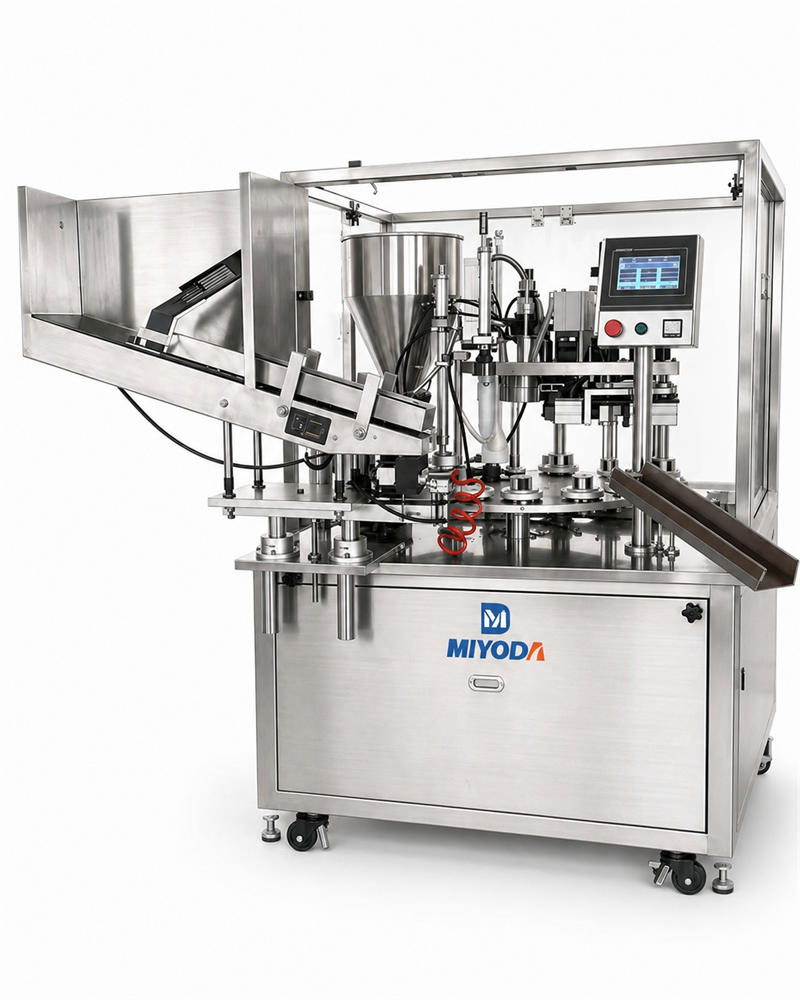
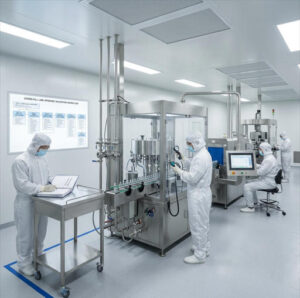
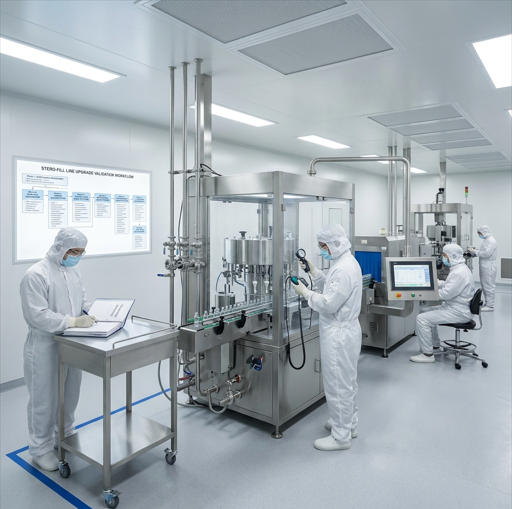
A modern sterile vial filling line in a GMP-compliant cleanroom. Upgrading from legacy open-line configurations to RABS or isolator-based systems is the central compliance challenge facing pharmaceutical manufacturers under revised Annex 1 requirements.
Assessing Current Line and Regulatory Scope
Inventory of Equipment and Processes
Before any upgrade specification can be written, you need a complete and honest picture of your current line. This means a systematic equipment inventory that documents not just what each machine is, but how it is actually performing — fill-weight accuracy over the past 12 months, seal integrity rejection rates, environmental monitoring exceedance frequency, and documented corrective maintenance events that indicate chronic wear rather than isolated failures.
For each major line component — vial washer, depyrogenation tunnel, filling machine, stoppering station, crimping unit, and downstream conveyance — record the following: original installation year, last major overhaul or component replacement, current rated speed versus actual production speed, and documented deviations or non-conformances generated in the last 24 months. This data forms the objective evidence base for upgrade prioritization. Lines that generate frequent batch record non-conformances from equipment-related causes have a different risk profile than lines that are mechanically sound but compliance-deficient due to outdated barrier technology.
EU GMP Annex 1: The European regulatory guideline governing manufacture of sterile medicinal products, last revised August 2022 (enforceable August 2023). Now mandates Contamination Control Strategies and RABS/isolator use for aseptic fill zones.
CCS (Contamination Control Strategy): A documented, facility-wide risk assessment and control system covering all potential contamination sources in sterile manufacturing — required by the revised Annex 1.
RABS (Restricted Access Barrier System): A physical barrier separating operators from the ISO Class 5 fill zone while maintaining open-access interventions. Lower capital cost than isolators; higher contamination risk.
Isolator: A fully enclosed barrier system providing the highest level of aseptic protection. Decontaminated by VHP (vaporized hydrogen peroxide) before each production campaign.
CPP (Critical Process Parameter): A process variable (e.g., fill speed, stopper insertion force, nozzle temperature) whose variation directly impacts a Critical Quality Attribute of the product.
CQA (Critical Quality Attribute): A physical, chemical, biological, or microbiological property of the drug product that must be within defined limits to ensure product quality, safety, and efficacy.
OEE (Overall Equipment Effectiveness): Availability × Performance × Quality — the composite operational efficiency metric for production equipment. World-class pharmaceutical lines target 85%+ OEE.
Regulatory Standards and Compliance Gaps
Map your current line against the specific requirements of the regulations that govern your product registrations. For EU-marketed products, this means the revised Annex 1 — particularly the 10 key areas of change: Contamination Control Strategy, PUPSIT (Pre-Use Post-Sterilization Integrity Testing) for sterilizing grade filters, environmental monitoring, personnel, documentation, and barrier technology requirements. For FDA-regulated products, the current guidance includes 21 CFR Parts 210/211 and the FDA Aseptic Processing Guidance (2004, with ongoing revisions).
A structured gap assessment compares each regulatory requirement against your current documented practice. The output is a prioritized gap list: Critical gaps (those likely to generate a regulatory observation or warning letter in a current inspection), Major gaps (those that represent non-compliance but are unlikely to trigger immediate regulatory action), and Improvement opportunities (areas where current practice meets minimum requirements but falls below current industry best practice).
Defining Upgrade Objectives and Scope
Performance Targets and ROI
Every upgrade project needs quantified performance targets — not qualitative aspirations. “Improve sterility assurance” is not a project objective; “achieve documented sterility assurance level (SAL) of 10⁻⁶ with validated RABS containment and media fill pass rate of 100% across three consecutive 5,000-vial media fills” is. The difference matters because quantified targets define what “done” means and make the project’s ROI calculation possible before capital is committed.
ROI for a sterile line upgrade is calculated across four dimensions. Compliance protection value: the cost of a potential regulatory shutdown or product recall avoided by the upgrade. Efficiency gain: throughput improvement and waste reduction from modern equipment at validated operating parameters. Labor savings: the reduction in manual interventions and monitoring labor from automated environmental monitoring, CIP/SIP, and isolator decontamination. And capacity expansion: the additional products or batch sizes that become feasible after the upgrade.
Compliance risk reduction consistently accounts for the largest share of ROI value in sterile line upgrades — because the cost of a regulatory shutdown or batch recall dwarfs all other line upgrade investments combined. Source: Industry estimates, 2024–2025.
Project Boundaries and Phased Approach
Defining what is in scope and what is explicitly out of scope for the current upgrade phase is as important as defining what you are upgrading. A common project failure mode is scope creep — a CIP system upgrade expands to include a full HVAC overhaul, which then triggers a cleanroom reclassification exercise, which requires a complete revalidation of the depyrogenation tunnel. Each expansion is individually justified, but collectively they turn an 18-month project into a 4-year program that misses its original compliance deadline.
A phased approach structures the upgrade around priority regulatory risks first. Phase 1 addresses the gaps that a current inspection would flag as critical — barrier technology, electronic record compliance, and documented CCS. Phase 2 addresses major gaps — CIP/SIP modernization, process parameter automation, and environmental monitoring expansion. Phase 3 captures improvement opportunities — advanced process analytical technology (PAT), predictive maintenance systems, and capacity expansion.
Process Risk Assessment and Validation Strategy
A structured process risk assessment, conducted by cross-functional teams from engineering, quality, and regulatory affairs, identifies Critical Process Parameters before validation protocols are written — not during execution.
Identify Critical Process Parameters
A CPP (Critical Process Parameter) is any process variable whose change, outside its defined acceptable range, directly impacts a Critical Quality Attribute (CQA) of the product — sterility, particulate burden, fill volume accuracy, or container-closure integrity. For a vial filling line, the CPPs that consistently appear in risk assessments include: fill speed (affects fill accuracy and product aeration), fill nozzle temperature (for products that require heated filling to maintain flowability), stopper insertion force (affects container-closure integrity), environmental monitoring parameters (viable and non-viable particle counts at defined sample locations), and sterilization cycle parameters (temperature, time, and steam quality for SIP; concentration, exposure time, and humidity for VHP decontamination).
CPP identification is conducted through a formal Risk Assessment using tools such as FMEA (Failure Mode and Effects Analysis) or HAZOP (Hazard and Operability Study). The risk assessment output is a CPP register that defines each parameter’s normal operating range, acceptable range, and the action required if a parameter exceedance is detected during production. This register then drives the process parameter monitoring architecture in your upgraded control system.
Validation Framework (IQ/OQ/PQ)
En IQ/OQ/PQ validation framework — Installation Qualification, Operational Qualification, and Performance Qualification — is the documented evidence package that demonstrates your upgraded line is installed correctly, functions as designed, and consistently produces product within specification. Understanding what each stage requires prevents the most common validation project failure: PQ failures that trace back to OQ parameters that were never properly challenged, and IQ documentation that doesn’t match the actual installed configuration.
IQ documents that every equipment component was installed according to the manufacturer’s specification, that all required utilities are connected and within specification, and that all documentation (calibration certificates, material certificates for product-contact components, wiring diagrams, P&IDs) is present and current. OQ challenges the equipment across its full operating range — filling speed extremes, temperature setpoint excursions, alarm system response — to demonstrate it functions correctly under all defined operating conditions. PQ runs the actual product (or qualified placebo) through the validated process on the upgraded line, producing fill-weight data, environmental monitoring data, and seal integrity results that confirm the line performs within specification in production conditions.
| Validation Stage | What It Proves | Key Documents Required | Typical Duration |
|---|---|---|---|
| IQ (Installation Qualification) | Machine installed per design; all utilities correct; documentation complete | Material certs, calibration records, P&IDs, wiring diagrams, software version records | 2–4 weeks |
| OQ (Operational Qualification) | Machine performs correctly across full operating range; all alarms function | Test protocols, challenge test results, alarm verification records, deviation reports | 3–6 weeks |
| PQ (Performance Qualification) | Line consistently produces within specification using actual product in production environment | Fill-weight data, environmental monitoring data, batch records, media fill results | 4–8 weeks (3 consecutive batches minimum) |
| Media Fill (Process Simulation) | Aseptic process delivers sterile product — zero contaminated vials in ≥3 consecutive runs | Microbiological culture results, vial count records, incubation and reading logs | 2–4 weeks per run + incubation |
Equipment and Technology Selection
Sterile Filling Technologies Options
The central equipment decision in most sterile line upgrades is filling technology — specifically, the filling mechanism and containment approach. Filling mechanism options for pharmaceutical vials include the five core technologies: piston fillers (±0.5–1% accuracy, 1–50,000 cps viscosity range), positive displacement pumps (high-speed aqueous applications), peristaltic pumps (zero metal-to-product contact, single-use for multi-product facilities), time-pressure filling (low-viscosity high-speed applications), and Coriolis mass-flow systems (±0.1–0.3% accuracy for high-value biologics).
For most sterile pharmaceutical vial filling upgrades in 2025, the Coriolis mass-flow or servo piston systems represent the current-generation standard — because they generate the continuous fill-weight data required by modern electronic batch record systems and provide the ±0.5% or better accuracy needed to demonstrate process capability (CpK ≥ 1.33) in PQ documentation. Selecting a filling mechanism that cannot generate these data outputs will require supplementary in-line check-weigher installation, adding cost and line complexity.
Line Integration with Containment
The containment decision — RABS versus isolator — is the highest-impact choice in a sterile line upgrade project, affecting capital cost, operating cost, cycle time, validation burden, and long-term compliance risk profile.
RABS provides a physical barrier with Grade A airflow protection. An existing filling line can be retrofitted with open RABS at significantly lower capital cost than a full isolator installation. RABS requires the surrounding cleanroom environment to maintain Grade B (ISO 7) conditions and relies on controlled interventions through glove ports. The revised EU GMP Annex 1 accepts both RABS and isolators for aseptic filling, but the contamination risk profile of RABS is higher because the Grade B surrounding environment represents a potential contamination source pathway.
Isolators provide a fully enclosed, VHP-decontaminated environment — eliminating the Grade B background requirement and substantially reducing the contamination risk from personnel and environment interactions. Isolators are the current industry direction for new sterile line installations; the capital premium over RABS (typically 40–70% higher equipment cost) is increasingly offset by the Grade B cleanroom cost elimination and the lower media fill failure rate over a 10-year operating life.
Cleanroom and GMP Compliance Upgrades
HVAC and Particulate Control
A sterile vial filling line upgrade almost always requires HVAC (Heating, Ventilation, and Air Conditioning) system review and often significant upgrade. The Grade A fill zone requires 0.45 m/s ±20% unidirectional airflow and HEPA-filtered air providing ≤3,520 particles ≥0.5 μm per cubic meter — matching ISO Class 5 requirements as defined in ISO 14644-1. The surrounding Grade B background (required for open RABS configurations) requires ISO 7 conditions: ≤352,000 particles ≥0.5 μm per cubic meter.
Practical HVAC upgrade considerations include: HEPA filter bank replacement and recertification (HEPA filters in aseptic zones are typically replaced every 3–5 years or after any ceiling work), pressure cascade verification (the fill zone must maintain positive pressure relative to adjacent zones, with typical differential pressures of 10–15 Pa between classified zones), air change rate verification (ISO 5 cleanrooms require 300–480 air changes per hour), and airflow visualization studies (smoke studies) to confirm unidirectional airflow patterns in the critical fill zone without turbulence that could carry contamination toward open vials.
Surface Materials and Cleanability Considerations
Any new or modified surface within the cleanroom environment must be evaluated for its cleanability — the ease and reliability with which it can be cleaned and sanitized to the required microbiological standard. This covers wall and floor materials (smooth, non-shedding, resistant to the sporicidal agents used in environmental sanitization programs), ceiling construction (flush-mounted with minimal ledges or horizontal surfaces where particles can settle), equipment external surfaces (smooth stainless steel with minimal crevices), and cable management systems (enclosed conduit rather than open cable trays).
One consistently underestimated surface challenge in legacy line upgrades is utility penetrations — pipe, conduit, and duct entries through cleanroom walls that were sealed with materials that have degraded over years and now represent both particulate generation and microbial ingress points. A thorough surface audit that includes all penetrations is mandatory before any cleanroom re-qualification activity.
Validation of Cleanroom Functionality
Cleanroom qualification — called ISPE (International Society for Pharmaceutical Engineering) room qualification in modern practice — covers four activities that must be completed before any product can be manufactured in a modified or upgraded cleanroom. Airborne particulate classification (ISO 14644-1 test methods), air velocity and uniformity measurement, HEPA filter integrity testing (DOP/PAO challenge test), and pressure differential verification across all zone boundaries. These tests must be performed at rest (no equipment operating, no personnel present) and in operation (equipment running, personnel working). Both states must meet the required classification.
Control System and Software Modernization

Modern PLC/SCADA control systems for pharmaceutical filling lines must support 21 CFR Part 11-compliant electronic records, audit trails, and electronic signatures — replacing paper batch record systems that create data integrity risk.
Automation Architecture
The control system is the nervous system of a sterile filling line. It monitors and controls every CPP, generates the electronic batch record, executes automated alarm responses, manages the CIP/SIP cycle, and interfaces with the facility’s MES (Manufacturing Execution System) and/or LIMS. A control system upgrade for a sterile line in 2025 should be built around an industrial PLC platform (Allen-Bradley ControlLogix, Siemens S7, or equivalent) with a SCADA (Supervisory Control and Data Acquisition) layer for operator interface and data historian functions.
The SCADA system must be classified under GAMP 5 (Good Automated Manufacturing Practice) as a Category 4 or 5 system, requiring full computerized system validation (CSV). This means a User Requirements Specification (URS), Functional Requirements Specification (FRS), hardware and software design specifications, installation qualification, and operational qualification — documented evidence that the system was designed, built, and tested to meet defined requirements. The CSV process for a filling line SCADA system typically requires 4–8 months and generates several hundred pages of documentation.
Data Integrity and Cybersecurity
21 CFR Part 11 (the US FDA regulation governing electronic records in regulated industries) requires that all electronic records used in place of paper records are: attributable (linked to the operator who created them), legible and permanent, contemporaneous (created at the time of the action), original, and accurate. These are the ALCOA principles — the foundational data integrity standard. For a filling line control system, this means: individual operator login with unique credentials (no shared passwords), complete audit trails for every record modification, electronic signature capability for batch record approval, and a data backup and recovery system that protects production records against loss or corruption.
Cybersecurity for pharmaceutical manufacturing control systems has moved from advisory to regulatory priority since 2022. FDA’s guidance on cybersecurity for medical devices extends to manufacturing systems, and EU NIS2 Directive obligations now cover pharmaceutical manufacturing infrastructure in many jurisdictions. Any control system upgrade should include a cybersecurity risk assessment, network segmentation between the operational technology (OT) filling line network and the corporate IT network, and documented procedures for patch management and incident response.
CIP/SIP and Sterilization Enhancements
Tank, Piping, and Nozzle Sterilization
CIP (Clean-In-Place) and SIP (Sterilize-In-Place) are the two process systems that maintain microbiological cleanliness of all product-contact surfaces between filling campaigns. CIP automates cleaning without disassembly — circulating cleaning solutions through tanks, piping, pump chambers, and fill nozzles to remove product residue and biofilm. SIP follows CIP, circulating saturated steam or hot WFI (Water for Injection) through the same circuit to achieve bioburden reduction to the validated sterility assurance level.
Legacy CIP/SIP systems in pharmaceutical facilities commonly suffer from: inadequate spray coverage in tanks (shadow zones that cleaning solution doesn’t reach), dead legs in piping (sections of pipe beyond the last outlet that don’t drain completely and allow microbial growth), and manual valve operations that introduce operator variability and contamination risk into what should be a fully automated cycle. A CIP/SIP upgrade should eliminate all identified dead legs (piping redesign to meet the 6D rule: no dead leg longer than 6 pipe diameters from the main flow path), automate all valve actuation, and install conductivity and temperature sensors at defined critical points to generate automated cycle completion verification records.
Validation of Sterilization Cycles
Every CIP and SIP cycle used on the upgraded line must be validated before it can be used for GMP production. SIP validation demonstrates that the cycle achieves the required sterilization equivalent — typically ≥121°C for ≥15 minutes in the coolest point of the circuit for moist heat sterilization, or the equivalent F₀ (sterilization value) for longer, lower-temperature cycles. The validation uses biological indicators (BI) — spore preparations of Geobacillus stearothermophilus with a defined D-value — placed at the designated “worst case” (coldest/least accessible) points in the circuit to confirm kill.
CIP validation uses a combination of riboflavin (UV-visible dye) studies to confirm complete surface coverage, TOC (Total Organic Carbon) monitoring of rinse water to confirm cleaning efficacy, and microbiological swab sampling to confirm bioburden reduction. Once validated, the cycle parameters (temperatures, flow rates, times, chemical concentrations) become CPPs that are controlled and recorded automatically by the upgraded control system on every cycle execution.
Commissioning, IQ/OQ/PQ, and Validation Plan
▶ Watch: Aseptic vial filling machine process explained — covering vial washing, compounding, filling, crimping, visual inspection, and GMP qualification protocols (IQ/OQ/PQ) in a pharmaceutical fill-finish context.
Test Protocols Development
Validation protocols are formal documents that define, in advance, what tests will be performed, how they will be performed, what acceptance criteria the results must meet, and what deviation handling procedure applies if a result falls outside the criteria. Writing the protocol before execution — not after — is a GMP requirement, not a recommendation. A protocol written retrospectively to match results that have already been collected is a data integrity violation.
A well-written validation protocol for a filling line upgrade component includes: a clear scope statement defining which equipment and processes are covered; reference to the User Requirements Specification and risk assessment that drove the protocol design; pre-execution prerequisites (calibration status, training completion, environmental monitoring baseline); individual test scripts with defined steps, required equipment, and specific acceptance criteria for each measured parameter; and a deviation section that defines what constitutes an unplanned deviation and requires formal investigation before the protocol can be approved.
Acceptance Criteria and Traceability
Acceptance criteria must be pre-defined, scientifically justified, and linked to product CQAs. “Fill weight within specification” is not an acceptance criterion — “fill weight of 10.00 mL ± 0.10 mL (±1.0%) for all 20 samples across each of 3 test runs, with no individual sample outside ±2.0% of target” is. The quantitative specificity matters because it defines unambiguously whether the test passed or failed, without room for post-hoc interpretation.
Traceability — the ability to connect every validation result back to the requirement it demonstrates compliance with — is both a GMP requirement and a practical inspection readiness tool. A traceability matrix maps each URS requirement to the IQ, OQ, or PQ test that demonstrates it, with the protocol reference and test result. When an FDA or EMA inspector asks “how do you know this equipment meets the requirement in your URS?” the traceability matrix is your answer — and facilities that cannot produce one on demand generate inspection findings that outlast the upgrade project itself.
Changeover, Throughput, and Maintenance Planning

Preventive maintenance programs reduce unplanned downtime by 40–60% compared to reactive maintenance strategies on pharmaceutical filling lines — and on sterile lines, unplanned downtime often triggers full environmental re-monitoring before resumption.
Changeover Optimization
On a sterile vial filling line, changeover is not just a format-switch activity — it is a regulated microbiological event. Every changeover requires CIP execution, environmental monitoring before restart, and a documented line clearance confirming no previous product materials remain in the line. The total time from last vial of Campaign A to first qualified vial of Campaign B — including CIP, SIP, cleaning verification, environmental monitoring sample incubation (typically 48–72 hours), and line setup — can range from 3 days to 2 weeks depending on the facility’s validated cleaning procedures and monitoring turnaround.
Changeover optimization on upgraded lines focuses on three levers: automation of the CIP/SIP sequence (eliminating manual valve operations that create step variability and contamination risk), rapid environmental monitoring methods (ATP bioluminescence testing provides 30-minute results for cleaning verification compared to 48-hour microbiological culture methods), and digital recipe changeover for the control system (servo preset recall for fill volumes, jaw parameters, and coding data, reducing operator-driven setup errors).
Spare Parts and Preventive Maintenance
Unplanned downtime on a sterile filling line carries costs that are qualitatively different from those on a conventional packaging line. In addition to lost production output, a sterile line stoppage during a campaign may require full re-environmental monitoring of the fill zone before production can resume — adding 48–72 hours of environmental sample incubation to the downtime cost regardless of how quickly the mechanical fault is resolved.
A structured spare-parts strategy for an upgraded sterile filling line identifies three categories: critical on-site spares (components that would cause line shutdown if failed, with lead times exceeding 48 hours — fill nozzle assemblies, stopper bowl components, UV lamp banks, servo drive modules), scheduled replacement spares (components replaced on a time-based schedule before failure — O-rings, pump seals, HEPA filter sections, jaw heating elements), and supplier-held strategic spares (high-cost, long-lead components held at the equipment supplier’s regional warehouse). Maintaining the critical on-site spares kit current is a continuous operational task, not a one-time purchase.
Illustrative budget allocation for a mid-scale sterile vial filling line upgrade incorporating RABS containment, control system modernization, and cleanroom re-qualification. Filling equipment and containment represent the largest single cost category. Validation costs are frequently underestimated — budget at minimum 10–12% of total project cost. Source: Industry estimates, 2024–2025.
Training, Documentation, and Lifecycle Management
Operator and Technician Training
A sterile filling line is only as good as the operators who run it. This is not a motivational statement — it is an empirical observation from pharmaceutical quality incident data. Human error is consistently identified as a contributing factor in the majority of sterile manufacturing quality events, including media fill failures and environmental monitoring exceedances. Most of that error is attributable to training deficiencies, not deliberate deviation.
For an upgraded sterile line, the training program must cover three populations. Operators require training on all revised SOPs governing their activities — tube and vial handling, fill-weight sampling and recording, intervention procedures at the RABS/isolator glove ports, environmental monitoring sample collection, and batch record completion. Maintenance technicians require training on all equipment maintenance procedures, including safe re-entry procedures after RABS decontamination, preventive maintenance schedules, and spare-parts identification and replacement. Quality Assurance staff require training on the updated validation packages, environmental monitoring specifications, and batch record review procedures relevant to the upgraded line. All training must be documented, signed, and retrievable — both for GMP compliance and because undocumented training creates personal liability for operators and supervisors when deviations occur.
Documentation, SOPs, and Audits
The documentation system for an upgraded sterile filling line is a living asset, not a project deliverable. Every changed process, every new equipment component, every modified operating parameter requires a corresponding update to the documented procedures and records systems. Standard Operating Procedures (SOPs) for all line activities must be written, reviewed by quality assurance, approved, and distributed before the upgraded line is used for GMP production. SOPs written after an audit finding that “no documented procedure exists” are a red flag for regulators — they suggest the facility manages by undocumented practice rather than by documented system.
An internal audit program for the upgraded line should be established at go-live and scheduled at least twice annually. The audit assesses whether actual practice matches documented procedure, whether documents are current and accessible, whether equipment maintenance is performed on schedule, and whether training records are complete. Internal audit findings feed the facility’s CAPA (Corrective and Preventive Action) system, which is itself a GMP requirement — documented evidence that the facility identifies problems, investigates root causes, implements corrections, and verifies effectiveness.
Decommissioning and Future Upgrades
A GMP facility’s obligation to its equipment doesn’t end when a newer line is installed. Decommissioning a cGMP system requires documented evidence that all production records associated with the system are retained for their regulatory-required duration (typically 1–2 years beyond the expiry date of the last batch produced), that the system’s configuration is frozen and cannot generate new GMP records after decommissioning, and that any computerized systems are decommissioned following a validated data migration process that preserves audit trail integrity.
Future upgrade planning — starting the moment the current upgrade goes live — ensures that decisions made today don’t create constraints tomorrow. Document the design rationale for every major decision in the current upgrade: why RABS rather than isolator, why piston filler rather than peristaltic, why this CIP chemistry rather than an alternative. Future engineers making next-generation upgrade decisions will thank you — and regulators reviewing your change control history will expect to find this decision rationale documented.
Upgrading Your Tube or Vial Packaging Line?
Miyoda Packaging Machinery provides complete tube production line solutions for cosmetic and pharmaceutical manufacturers — from tube extrusion and laminate tube making through printing, filling, sealing, and decoration. Whether you’re building a new GMP line or upgrading existing capacity, our team can help you match equipment to production and compliance requirements.
Explore Miyoda Tube Production Line Solutions →A Phased, Risk-Based Path to Sterile Production Excellence
Upgrading a vial filling line for sterile production is not a single capital event — it is a multi-year program that requires sustained alignment between engineering, quality, regulatory affairs, operations, and finance. The facilities that execute these upgrades successfully share three characteristics: they start with rigorous current-state assessment and gap analysis before writing a single specification; they define quantified performance targets and validated acceptance criteria before capital is committed; and they maintain a phased, risk-based approach that addresses compliance-critical gaps first and optimization opportunities later.
The regulatory landscape is not softening. EU GMP Annex 1’s enforceable requirements for RABS/isolator use, documented Contamination Control Strategies, and advanced environmental monitoring are setting a new industry floor — not a future aspiration. Facilities that treat these requirements as optional until the next inspection cycle are building compliance debt that compounds with each passing year.
The good news is that modern equipment and technology — servo-controlled filling systems, intelligent CIP/SIP platforms, GAMP 5-validated control systems, and advanced containment barriers — make it technically feasible to achieve world-class sterile fill-finish performance at scales ranging from Phase II clinical trial batches through full commercial production. The framework in this guide provides the roadmap; the execution discipline — consistent documentation, rigorous validation, and continuous training — is what converts the roadmap into durable GMP compliance and patient safety assurance.
For producers whose scope extends beyond injectable vials to the broader tube packaging ecosystem — topical pharmaceutical creams in laminate tubes, cosmetic gel tubes, and ointment tubes that share the same filling and sealing principles — the same risk-based upgrade approach applies. Resources at Miyoda Packaging Machinery’s cosmetic tube sealing buyer’s guide and their tube sealing innovation overview address the tube-specific considerations that complement the vial filling framework covered here.
Glossary of Key Terms
ATP Bioluminescence: A rapid surface cleanliness test based on the detection of adenosine triphosphate (ATP) from biological residue. Provides results in <30 minutes versus 48–72 hours for microbiological culture methods.
D-value: The time required at a defined temperature to reduce a microbial population by 1 logarithm (90%). Used in sterilization cycle development and biological indicator characterization.
F₀ (Sterilization Value): A measure of the cumulative lethal effect of a moist heat sterilization process, expressed as equivalent minutes at 121°C. An F₀ of 8–12 is standard for terminal sterilization of pharmaceutical products.
MES (Manufacturing Execution System): A digital system that manages and documents manufacturing operations in real time — connecting shop floor control systems to business planning systems and generating electronic batch records.
PUPSIT (Pre-Use Post-Sterilization Integrity Testing): Testing of sterilizing-grade filters immediately after sterilization and immediately before use — required by the revised EU GMP Annex 1 for all aseptic filling operations.
VHP (Vaporized Hydrogen Peroxide): The primary decontamination method for pharmaceutical isolators. Achieves a 6-log sporicidal reduction on exposed surfaces and is compatible with most equipment materials in the fill zone.
WFI (Water for Injection): Highly purified water meeting pharmacopeial specifications for use in pharmaceutical manufacturing, CIP rinse cycles, and product formulation.