
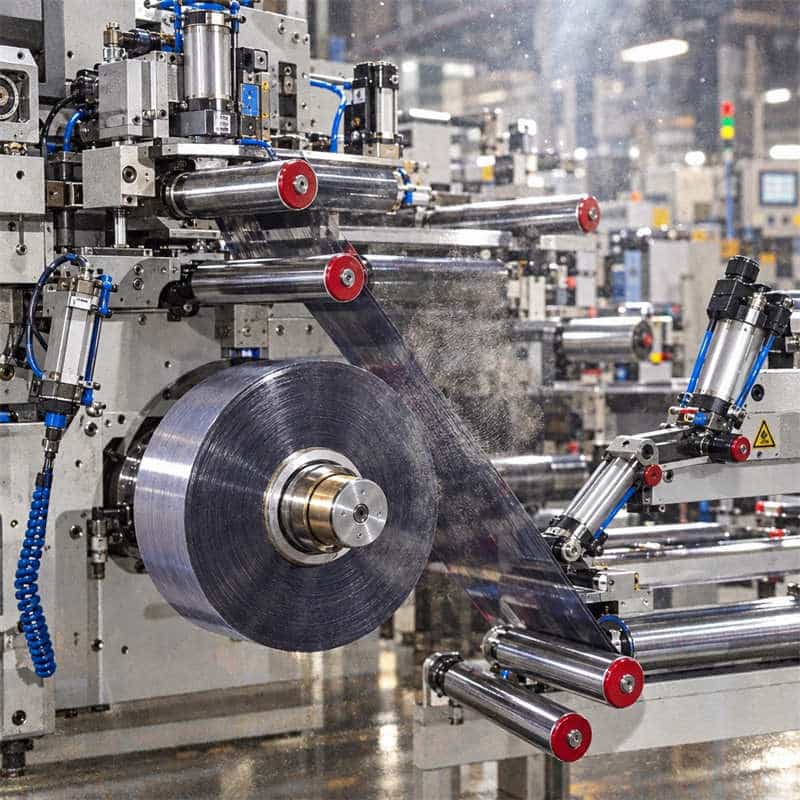
Why Efficiency in Lamination Determines Your Entire Production Outcome
Your lamination machine does not just bond layers of film together. Every tube that comes off your production line passed through it first — and the quality, speed, and consistency of what the lamination machine delivers sets the ceiling for everything downstream.
A tube with a weak laminate bond will fail a seal integrity test. A substrate with inconsistent coat weight will produce uneven print adhesion. A run where tension drifted by 12% will create micro-delamination that shows up as a peel defect three months later on a customer’s shelf.
This guide was written for production managers, line owners, distributors, and agents who want to run their lamination machine at its real potential — not its theoretical one. Every section addresses a practical challenge, with numbers and decisions you can use today.
Quick definition: OEE (Overall Equipment Effectiveness) — the gold standard metric for real machine productivity, calculated as Availability × Performance × Quality. Industry surveys consistently show that average OEE in packaging production sits between 65–75%. The top-performing lamination lines run at 82–88%. The gap between those two numbers is mostly made up of preventable losses — the focus of this entire guide.
1. Understanding Your Production Goals: Aligning Lamination Output with Market Demand
Start with the Number That Actually Matters
Most buyers ask: “How fast does this machine run?” The right question is: “At what speed does this machine need to run to meet my monthly tube target — at realistic efficiency?”
These are different questions that lead to different machine selections and different production plans.
Here is the calculation framework:
$$\text{Required Lamination Speed (m/min)} = \frac{\text{Monthly Tube Target} \times \text{Tube Body Length (m)}}{\text{Monthly Production Minutes} \times \text{OEE Factor}}$$
A practical example: a facility targeting 300,000 tubes per month, each with a 120 mm body, running 20 eight-hour shifts (9,600 minutes) at 80% OEE:
$$\frac{300{,}000 \times 0.12}{9{,}600 \times 0.80} = \frac{36{,}000}{7{,}680} = 4.7 \text{ m/min substrate consumption}$$
That is the substrate feed rate — not the lamination web speed, which must also account for your waste and trim allowance. Build in 15–20% overhead for start-up scrap, changeover transitions, and splice events, and your required web speed is approximately 5.5–5.7 m/min. On a machine rated for 100–250 m/min, this is well within the efficient operating band — but the exercise confirms your production model before you commit capital.
Matching Scale to Your Growth Horizon
The machine you purchase today must serve your Year 3 volume, not just your current order book. If your 3-year growth plan doubles monthly output, evaluate a machine that runs your current requirement at 50–60% of its rated capacity — giving you room to grow without replacement.
Common mistakes to avoid:
- Over-specifying on speed, under-specifying on substrate range: A machine rated for 250 m/min but only validated for standard PE laminates cannot produce the ABL or EVOH barrier tubes your pharmaceutical clients will ask for next year.
- Ignoring seasonal demand: If your client base includes seasonal cosmetic launches (summer sun care, holiday gift sets), your peak monthly demand may be 2–2.5× your average — and your lamination line must absorb that without outsourcing.
Key Production KPIs to Track from Day One
Define these metrics before you start production, so you have a baseline to improve against:
| KPI | Definición | Target (Well-Run Line) |
|---|---|---|
| OEE | Availability × Performance × Quality | 82–88% |
| First-Pass Yield | % of substrate output meeting spec on first run | ≥ 97.5% |
| Tiempo de cambio | Minutes from last good unit of run A to first good unit of run B | < 60 min |
| Scrap Rate | % of substrate consumed but not converted to good tubes | < 2.5% |
| MTBF | Mean Time Between Failures — average operating hours between unplanned stops | > 720 hrs |
2. Pre-Installation Planning: Setting the Foundation for Optimal Performance
Layout Is a Long-Term Decision
The floor plan decision you make before the machine arrives determines the workflow ergonomics, the material handling efficiency, and the maintenance accessibility your team will live with for 10–15 years. This is not an area to improvise.
A standard lamination line for cosmetic soft tube production requires:
- Minimum floor area: 10 m × 3 m for a compact single-substrate machine; 20 m+ for a full line with drying ovens, coating stations, and automatic winders
- Material flow direction: Substrate unwinds should align with the direction of the downstream tube-forming machine to minimise re-handling distance
- Maintenance access: A minimum 1.2 m clearance on all four sides of the machine is required for roller changes, tension sensor access, and adhesive system servicing without moving the machine
- Overhead clearance: Drying ovens and substrate tension towers may add 2.5–3.5 m to the machine height — confirm ceiling clearance before delivery
Utilities and Environmental Requirements
Before machine installation, confirm:
- Electrical supply: Confirm the machine’s phase, voltage, and amperage requirements match your facility supply. A 3-phase 380V/50Hz machine cannot simply be plugged into a 208V/60Hz supply without transformer and control panel modification.
- Compressed air: Lamination machines use pneumatic actuators for nip control, substrate edge guides, and tension dancer systems. Confirm supply pressure (typically 0.6–0.8 MPa) and flow rate (litres per minute) match machine specifications.
- Ventilation: Solvent-based adhesive systems require explosion-proof ventilation and solvent recovery systems. Even solventless adhesive systems generate heat and require adequate air exchange to maintain the operating temperature window (typically 20–25°C ambient).
- Humidity control: Laminate film substrates — particularly EVOH-containing structures — absorb moisture from the air, which affects surface energy and adhesion performance. A stable relative humidity of 40–60% in both the material storage area and the production floor prevents substrate conditioning issues that cause adhesion inconsistency.
Staff Readiness Before the Machine Arrives
The most common commissioning delay is not a technical problem with the machine — it is an operator team that has not been prepared to receive it. Three actions that prevent this:
- Designate a lead operator who will be responsible for the machine’s daily operation and routine maintenance from Day 1. This person should attend factory acceptance testing (FAT) at the supplier’s facility if possible — seeing the machine run on your substrate before it ships is the best possible pre-deployment training.
- Prepare your SOP library before commissioning, not after. Your startup procedure, shutdown procedure, emergency stop procedure, and cleaning validation protocol should be drafted — with your supplier’s input — before the machine arrives.
- Confirm training delivery is included in the purchase agreement. On-site training using your actual substrate materials, conducted by the supplier’s application engineer (not a sales engineer), is non-negotiable for a successful commissioning.
3. Routine Maintenance: Preventing Downtime Before It Starts
The Real Cost of Unplanned Downtime
An unplanned stoppage on a lamination line running at 150 m/min, producing substrate for a tube-forming line downstream, does not just stop the lamination machine. It starves the entire downstream production sequence — tube forming, heading, filling, sealing — within minutes. In a facility with a fully integrated production line, one hour of lamination downtime can trigger 4–6 hours of total production disruption while the downstream buffer is consumed and the line restarts.
At an average production value of USD 800–1,500 per hour in a commercial cosmetic tube operation, unplanned downtime is one of the most expensive costs in manufacturing — and most of it is preventable with structured maintenance.
Maintenance Schedule: Daily, Weekly, Monthly
Daily (End of Every Shift):
- Clean all lamination rollers and nip surfaces with manufacturer-specified solvent — adhesive residue builds up and causes coat weight variation if not removed daily
- Inspect the adhesive application head (gravure roll, slot die, or metering bar) for dried adhesive, scoring, or clogging
- Check web tension readout at zero-flow condition — a non-zero reading at standstill indicates a tension sensor calibration drift
- Inspect all web edge guides for debris and free movement
- Log production output, substrate consumption, and any alarm events for the shift record
Weekly:
- Inspect all drive belts and chains for tension and wear — replace at the first sign of elongation or cracking
- Lubricate all specified bearing points per the manufacturer’s lubrication map
- Calibrate the adhesive coat weight system against a gravimetric reference — weigh a 10 cm² sample from five points across the web width and compare against target
- Check tension sensor load cells for cleanliness and verify span calibration using a known reference weight
- Inspect substrate unwind brakes and torque limiters for consistent slip performance
Monthly:
- Full roller inspection: check all nip rollers for surface wear, scoring, and concentricity (a roller that is not perfectly round produces periodic coat weight variation at the roller’s rotational frequency)
- Adhesive system pump inspection: check pump seals, metering accuracy, and temperature consistency across the adhesive supply zone
- Vision system cleaning: clean camera lenses and light sources on inline inspection systems — contamination causes false rejects and missed defect detection in equal measure
- Electrical cabinet inspection: check terminal connections for corrosion, verify all safety interlock function, and clear any stored alarm histories after investigation
Perspectiva del sector: A study of packaging production lines found that 68% of unplanned mechanical failures were preceded by a detectable warning signal — abnormal vibration, elevated temperature, or increased current draw — that was present in machine data for 3–14 days before failure. Structured preventive maintenance that includes these checks prevents the majority of unplanned stops.

Weekly roller inspection: adhesive residue on a nip roller accumulates in less than one production day without cleaning. After three unmanaged shifts, the variation in coat weight becomes detectable as a banding pattern in bonded substrate — the first step toward a delamination complaint.
4. Material Selection and Handling: Ensuring Consistent Lamination Quality
The Substrate You Feed Is the Quality You Get
Lamination defects are most commonly attributed to machine parameters — and frequently, the machine settings are correct and the substrate is the problem. Inconsistent film thickness, surface energy variation from poor storage conditions, and moisture absorption in barrier materials are all substrate-side problems that show up as lamination defects and are diagnosed (incorrectly) as machine faults.
The three primary substrate families in cosmetic soft tube lamination have distinct handling requirements:
- PE (Polyethylene) films: Stable in storage, low surface energy requiring corona treatment before adhesive application. Store at 15–25°C, away from UV light sources that cause surface oxidation and adhesion reduction.
- EVOH (Ethylene-Vinyl Alcohol) barrier films: Excellent oxygen barrier, but hygroscopic — EVOH absorbs moisture from the air, and even minor moisture uptake (>0.5% by weight) degrades the bond strength at the EVOH/PE interface. Always condition EVOH-containing substrates in the production environment (20–25°C, <60% RH) for 24 hours before lamination.
- Aluminium foil (ABL construction): Stiff, high-barrier, non-porous. Requires precise nip pressure calibration — excess pressure distorts the foil. Store in sealed packaging until production use, as surface oxidation on exposed aluminium foil increases in high-humidity environments and reduces adhesion.
Humidity and Temperature Control in Storage
Flexible packaging films perform best when stored between 15°C and 25°C with relative humidity controlled to 40–60%. Outside this range:
- Above 28°C: PE films soften and deform under roll tension, causing gauge variation when unwound
- Below 12°C: some adhesive formulations increase in viscosity, requiring additional heat-up time and causing coat weight instability during the first 20–30 minutes of a production run
- Above 65% RH: EVOH and nylon-containing barrier films absorb moisture, degrading both barrier performance and laminate bond strength
Reducing Waste Through Precise Feeding and Tension Control
Material waste in lamination production falls into two categories: process waste (substrate consumed during start-up, changeover, and splicing) and defect waste (substrate that does not meet specification and must be quarantined or scrapped).
Precision-guided edge feeding systems — where substrate edge position is actively controlled by servo-actuated edge guides responding to a sensor reading the substrate position at 100+ Hz — reduce the lateral position variation that causes edge trim waste and alignment defects. On a 300 mm wide substrate running at 150 m/min, an edge position variation of ±3 mm without active control becomes ±0.5 mm with servo edge guidance — reducing edge trim waste by 65–70% on that substrate width.
5. Optimizing Machine Settings for Speed and Precision
The Three Parameters That Control Lamination Quality
Every lamination machine — regardless of type (dry, solventless, extrusion, or cold) — has three process variables that determine output quality: temperature, nip pressurey web tension. These three interact with each other and with the substrate properties in ways that require systematic calibration, not guesswork.
Temperature controls adhesive viscosity and cure rate. Too low: the adhesive does not wet the substrate surface adequately, producing weak bond strength. Too high: the adhesive degrades, and in PE-coated substrates, the outer film surface begins to soften, distorting print registration and increasing the tendency for blocking (adjacent tube bodies sticking together after forming).
The correct temperature setpoint for a given adhesive-substrate combination is established during process validation and stored as a recipe parameter. A production team that manually adjusts temperature setpoints during a run without recipe authority is one of the leading causes of between-batch quality variation.
Nip pressure determines the intimate contact between adhesive and substrate surfaces during bonding. The optimal nip pressure for a given substrate is the minimum pressure that achieves target bond strength — not the maximum the machine can deliver. Excess nip pressure on aluminium-containing substrates distorts the foil; on PE-only substrates, it can squeeze adhesive laterally, creating edge adhesive lines and blocking problems.
Tensión de la banda is the most dynamic of the three parameters because it changes continuously as the substrate roll diameter decreases and as the machine accelerates through speed changes. Closed-loop tension control — where load cell sensors measure actual substrate tension in real time and feed back to dancer roller or brake control systems — maintains tension within ±5% of setpoint regardless of roll diameter changes. Without closed-loop control, tension variation of ±15–25% across a production roll is typical, creating the periodic bonding variation that produces tunnelling and delamination defects.
For a technical deep-dive into closed-loop tension control in lamination production, the web tension control guide from RE Spa explains the sensor types, control architectures, and achievable accuracy specifications for industrial lamination applications.
Reducing Start-Up Waste with Stored Recipes
Every time a lamination machine starts from cold — or transitions between products — there is a period of parameter stabilisation before the process reaches its target state. During this period, the substrate being processed is off-specification and must be scrapped.
The length of this start-up waste period depends on whether the parameters are set manually (operator adjusts each parameter from memory or a paper sheet) or recalled from stored PLC recipes (all parameters — temperature zones, nip pressure setpoints, web tension profiles, adhesive dosing rates, line speed — are restored to validated values in under 60 seconds).
On a machine running 8 format changeovers per month, reducing start-up waste from 80 metres per changeover to 20 metres through stored recipe management saves 480 metres of substrate per month. At a substrate cost of USD 1.00/m², that is USD 480/month — USD 5,760/year — from a single operational improvement.
Using Data Logging to Find Your Optimal Parameters
Modern lamination machines equipped with PLC data logging capture every process parameter at each production second. This data — typically exportable as CSV or accessible via OPC-UA — enables a rigorous approach to parameter optimisation that is impossible with manual observation:
- Run a production trial at your standard settings and log all parameters alongside the yield and bond strength results for that run
- Identify any parameter deviation events during the run (tension spikes, temperature excursions, adhesive pump pressure drops)
- Correlate parameter events with downstream quality outcomes (delamination incidents, coat weight variation events)
- Tighten setpoints and alarm thresholds around the values that produced your best quality outcomes
This is not a one-time exercise. Parameter optimisation is a continuous improvement process — and facilities that treat it that way consistently achieve 3–5 percentage point improvements in first-pass yield over 12–18 months.
6. Workflow Integration: Bridging Lamination with Tube Forming and Filling
The Line Is Only as Fast as Its Slowest Station
A lamination machine running at its optimal speed creates no efficiency value if the tube-forming machine downstream is running slower — because the lamination machine will be throttled back to match, and the capacity you paid for sits idle. Equally, a tube-forming line that outpaces lamination output will be starved and produce intermittent stops.
The first integration task is establishing the throughput hierarchy of your production line: which station sets the pace, what buffer capacity exists between stations, and where the first constraint appears as volume grows.
In most cosmetic soft tube lines, the constraint is typically the heading station (where tube shoulders are injection-moulded or ultrasonically bonded) or the filling and sealing machine. The lamination machine is usually not the bottleneck — but it must be configured to feed the downstream constraint without creating start-stop cycles that interrupt the lamination process and generate splice waste.
Buffer Zones: The Underrated Efficiency Tool
A buffer zone — a controlled-length accumulator of laminated substrate between the lamination machine and the tube-forming machine — decouples the two processes from each other. This allows:
- The lamination machine to complete a splice or perform a brief maintenance stop without stopping the tube-forming line
- The tube-forming machine to absorb a brief speed variation without requiring the lamination machine to chase every change
A well-designed buffer zone holds 3–5 minutes of substrate at the downstream machine’s consumption rate. For a tube-forming line consuming substrate at 5 m/min, this means a 15–25 metre accumulator — modest floor space for a significant improvement in production continuity.
PLC Integration for Real-Time Synchronization
When the lamination machine and the tube-forming machine share a common PLC network, speed matching becomes automatic. The downstream machine’s speed signal is fed to the lamination machine’s drive control, and the lamination machine adjusts its substrate feed rate to maintain the target buffer level rather than running at a fixed speed.
This master-follower architecture eliminates the operator intervention required to match speeds manually — and the quality variation that occurs during every manual speed adjustment. For facilities running multiple tube diameters and formats, it also enables format-based speed profiles to be stored alongside product recipes, so the entire line transitions to the correct speed during a changeover without individual machine adjustments.
For producers evaluating complete integrated line solutions, Miyoda Packaging Machinery’s guide on soft tube production efficiency covers the integration architecture between lamination, tube forming, and filling stations in detail — including synchronization protocols and buffer zone design recommendations.

A synchronized production line: when lamination output speed and tube-forming consumption rate are matched through shared PLC control, the stop-start cycles that generate scrap and wear at both stations are eliminated.
Watch: Automated Laminated Tube Production Line in Operation
Before finalising your workflow integration plan, watch a fully automated laminated tube production line — body making, heading, sealing, and capping — running in synchronized operation. This demonstrates the downstream pace that your lamination machine must consistently supply:
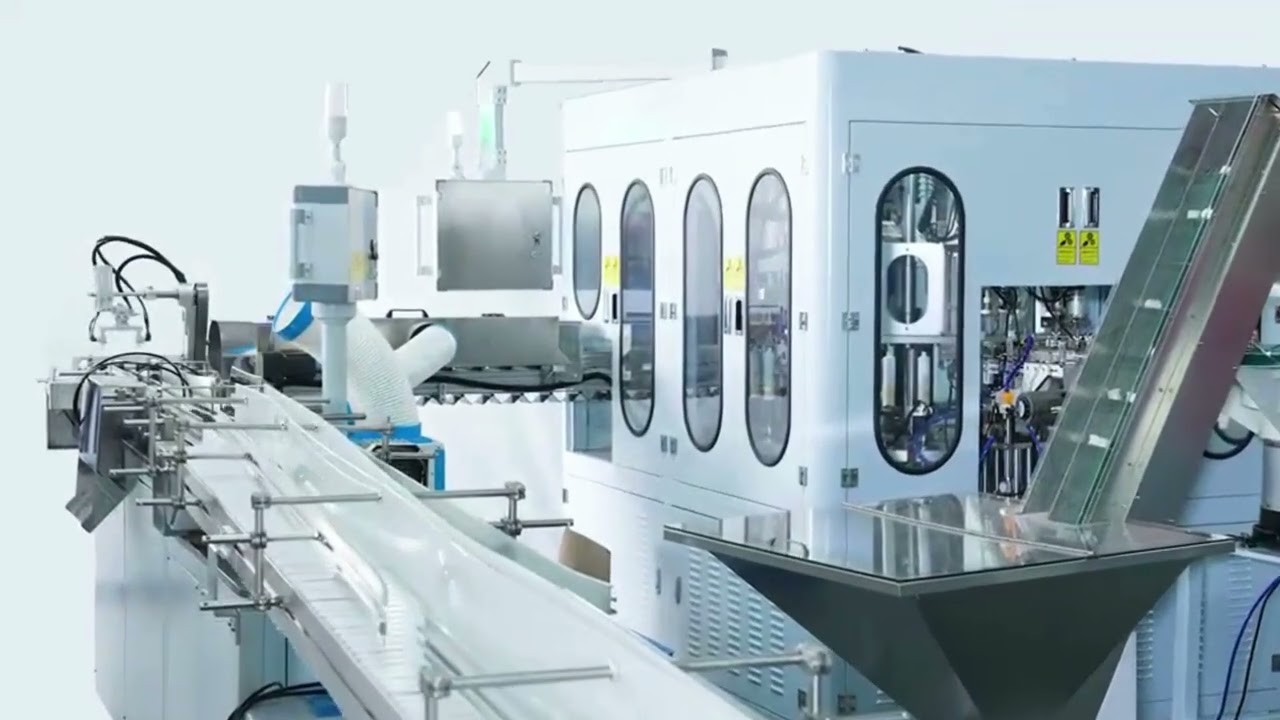
Click to watch: A fully automated laminated tube production line running body making, heading, top sealing, and capping in synchronized sequence — the downstream system your lamination process must reliably supply.
7. Quality Control: Building Trust Through Consistent Output
Why Quality Escapes Are More Expensive Than Quality Controls
A lamination defect caught at the inline inspection station costs the value of the substrate up to that point in the process. The same defect caught by a patient’s pharmacist — because the tube delaminated at the tail seal after filling — costs the value of the substrate, the filled product, the recall administration, the regulatory notification, and the customer relationship.
The economics of in-process quality control are not a close call. The question is not whether to invest in inline inspection — it is how to make the investment work effectively.
The Three Quality Gates in Lamination Production
Gate 1 — Coat Weight Verification (at the adhesive station): Gravimetric or infrared sensors measure adhesive application weight per unit area in real time. Acceptable coat weight variation for cosmetic laminate tube production is typically ±5% of target. Variation above this threshold produces inconsistent bond strength — strong in zones of excess coat weight, weak where adhesive was applied too lightly.
Gate 2 — Bond Strength Spot Testing (during production): At intervals of 30–60 minutes, a trained operator removes a 15 mm × 150 mm strip from the laminated substrate and performs a T-peel test using a spring scale or tensile tester. The peel force should meet or exceed the validated minimum (typically 2,5 N/15 mm for cosmetic tube shoulders). Results are logged against the batch record. Any reading below threshold triggers an investigation of the process parameters for the preceding interval.
Gate 3 — Inline Vision Inspection (at the web output): Camera-based systems scan the laminated substrate surface for physical defects: bubbles, wrinkles, delamination zones, foreign material inclusions, and print registration errors. Modern vision systems operating at 150 m/min can resolve defects as small as 0.5 mm² and respond within 20 ms — flagging the defective substrate length for downstream rejection before it reaches the tube-forming station.
Meeting ISO and Regulatory Standards
For pharmaceutical packaging production, the quality management system governing the lamination process must align with ISO 15378:2017 — the international standard for primary packaging materials for medicinal products. This standard incorporates GMP principles and requires that all production equipment is qualified (IQ/OQ/PQ), all process parameters are documented and controlled, and all batch records are retained and traceable.
En ISO 15378 requirements overview from ILT USA provides a clear breakdown of the documentation and process control requirements that a lamination line must satisfy to support pharmaceutical packaging qualification.
For cosmetic production, ISO 22716 (Buenas prácticas de fabricación de productos cosméticos) applies — with broadly similar requirements for equipment qualification, batch documentation, and deviation management.
8. Operator Training and Skill Development: Empowering Your Team
The Most Expensive Component in Your Production Line Is the One You Ignore
The lamination machine is a capital asset. Your operator team is the variable that determines whether that asset performs at 65% OEE or 85% OEE. The difference between those two numbers — on a production line generating USD 1,200/hour of value — is USD 240/hour of output. Over a two-shift, 240-day operating year, that difference is USD 921,600 in annual production value.
Operator training is not an HR activity. It is a production efficiency investment with a direct and quantifiable return.
Structured Training: What “Comprehensive” Actually Means
Effective operator training for a lamination machine covers five domains:
- Machine architecture: Understanding what each zone of the machine does — unwind, coating station, drying/curing, nip, winder — and how the process variables in each zone affect the substrate leaving that zone. An operator who understands the process can diagnose problems; one who only follows procedures cannot adapt when something unexpected happens.
- Startup and shutdown procedures: The documented sequence for bringing the machine to operating temperature, threading the substrate, priming the adhesive system, verifying tension setpoints, and confirming all parameters are within tolerance before production substrate is processed. The shutdown procedure is equally important — improper shutdown of solventless adhesive systems is the leading cause of pump seal damage.
- Parameter adjustment authority: A clear, written definition of which parameters operators may adjust autonomously (minor speed adjustments, alarm acknowledgements) versus which require a shift supervisor or quality sign-off (temperature setpoint changes, coat weight target adjustments, recipe modifications). This boundary prevents quality variation caused by well-intentioned but unvalidated adjustments.
- Defect recognition and response: Operators should be able to identify — by sight — the five most common lamination defects (tunnelling, bubbles, delamination, silvering, edge lifting), understand the most likely process cause of each, and know the immediate response protocol (continue and investigate, slow and correct, or stop and call).
- Routine maintenance tasks: The daily maintenance activities that are operator-executed — roller cleaning, edge guide inspection, adhesive system checks — should be demonstrated, practised, and signed off by the supplier’s application engineer during commissioning. A maintenance task that operators have never performed incorrectly is not a risk.
Troubleshooting Common Defects: A Quick Reference
| Defecto | Most Common Cause | First Corrective Action |
|---|---|---|
| Tunnelling (channels between layers) | Web tension too low during lamination | Increase tension setpoint; check dancer roller response |
| Bubbles | Entrapped air at nip; substrate surface contamination | Clean nip roller; verify nip pressure and line speed |
| Delamination after curing | Insufficient adhesive coat weight; incorrect cure temperature | Verify coat weight gravimetrically; check cure zone temperature profile |
| Silvering | Surface energy mismatch; corona treatment failure | Verify corona treatment station operation; check dyne level on substrate |
| Edge lifting | Adhesive insufficient at substrate edges; uneven coat width | Check coating head width; verify adhesive flow at edges |
| Wrinkles | Uneven tension across web width; roller misalignment | Check roller parallelism; verify tension profile across web |
9. Leveraging Technology: Smart Features for Predictive Efficiency
From Reactive to Predictive: The Shift That Changes Your Maintenance Economics
Traditional maintenance in packaging production is reactive: the machine stops, you find the fault, you fix it. Preventive maintenance is an improvement: you service components on a time-based schedule before they fail. Predictive maintenance is the most advanced approach: sensors continuously monitor machine health indicators and software algorithms detect deterioration trends before they cause failure.
According to a 2025 market analysis, the predictive maintenance segment in packaging machinery is growing at over 15% annually — driven by documented results showing 25% improvement in uptime y 15–30% reduction in maintenance cost in facilities where IoT-enabled monitoring has been deployed on production lines.
For lamination machines specifically, the components most amenable to predictive monitoring are:
- Nip roller bearings: Vibration sensors detect bearing raceway defects as a characteristic frequency signature in the vibration spectrum, typically 2–6 weeks before the bearing fails catastrophically. Planned replacement at the next scheduled stop avoids an unplanned failure.
- Adhesive pump motors: Current signature analysis on the pump drive motor detects increased mechanical resistance (from seal wear or internal wear) as elevated current draw — detectable 1–3 weeks before pump output becomes inconsistent.
- Web tension sensors (load cells): Load cell drift — where the sensor output shifts from its calibrated value — is detectable by monitoring the zero-flow baseline reading. A load cell showing baseline drift of >0.5% per week is approaching failure.
Remote Diagnostics: What It Means in Practice
When a lamination machine is connected to the supplier’s remote support system — through an encrypted industrial VPN connection to the machine’s PLC — the supplier’s application engineer can access the full machine status from anywhere in the world. This means:
- An alarm event at 2 AM local time triggers an automatic notification to the supplier’s support team
- The engineer accesses the machine’s data remotely, reviews the alarm history and parameter trend for the preceding hour, and identifies the root cause
- Within 30–60 minutes, the operator receives a specific corrective instruction — tighten a specific roller, adjust a specific parameter — rather than waiting for a site visit
This capability reduces the average time from alarm to resolution by 60–70% for faults that do not require physical access to the machine. For facilities in time zones distant from their equipment supplier, it is the difference between a 30-minute stoppage and a 16-hour overnight production loss.
En Miyoda Packaging Machinery team provides remote diagnostic support for international clients through secured PLC connectivity — a feature that distributors and agents should confirm as standard for any machine they represent to clients running multi-shift operations.
10. Scaling for Growth: Future-Proofing Your Production Line
Three Signals That Tell You It’s Time to Add Capacity
Most production managers know intuitively when their line is under pressure. Knowing specifically when the data signals that it is time to invest in additional capacity prevents both under-investment (accepting constrained growth) and over-investment (buying capacity before the volume is there to justify it).
The three quantitative signals:
- Sustained OEE above 88% for 3+ consecutive months. When a line consistently achieves near-world-class OEE, there is no further efficiency to extract from the existing asset. Additional volume requires additional capacity — not better utilisation.
- Average changeover time rising despite best practice. When a line running multiple formats spends more than 15% of its scheduled production time in changeover, it has hit a capacity ceiling. Adding a second machine to handle a dedicated format run reduces the changeover burden on the primary line.
- Customer order lead time increasing. If your quoted lead time to customers has grown from 4 weeks to 8 weeks because your production schedule is full, you are losing competitive position — and probably losing quotes to competitors who can commit to shorter timelines.
The Modular Advantage
Modular machine design means the production line is built from standardised, independently functional units — an unwind station, a coating station, a curing zone, a nip station, a winder — that can be reconfigured or duplicated without replacing the entire system.
For cosmetic and pharmaceutical tube producers planning 3–5 year growth trajectories, modular architecture delivers:
- Capacity expansion without full replacement: Adding a second coating station to a modular line doubles coat weight flexibility without replacing the frame, drive system, or controls
- Technology upgrade without full investment: Replacing only the adhesive application module to upgrade from gravure coating to slot-die coating — improving coat weight consistency — without changing any other module
- Format flexibility expansion: Adding a wider substrate unwind module to handle a new substrate format without a new machine purchase
Partnering for the Long Term: What to Look for in a Supplier
The supplier relationship for a lamination machine is a 10–15 year partnership, not a one-time transaction. The factors that determine whether that partnership supports your growth or constrains it:
- Spare parts availability for 10+ years: Confirm in writing that the supplier maintains spare parts stock for your machine configuration for a minimum of 10 years from delivery. A supplier who discontinues parts support at year 5 forces a full machine replacement rather than a component upgrade.
- Software support and updates: PLC firmware and HMI software updates that maintain compatibility with evolving industrial communication standards (OPC-UA, PROFINET) keep the machine integrable with your facility automation systems as they evolve.
- Application engineering support: A supplier whose engineers can advise on substrate compatibility for new materials your clients want to use — recyclable mono-material PE, PCR content laminates, bio-based barrier films — is a supplier who grows with your product portfolio rather than limiting it.
For distributors and agents representing lamination machine suppliers, this is the value proposition that earns renewal business: not the machine you sold 5 years ago, but the support that made it possible for the client to still be running it profitably today. The top 5 benefits of a lamination machine for cosmetic tube production resource documents the operational performance benchmarks clients should be achieving — a useful reference for annual account reviews with existing clients.
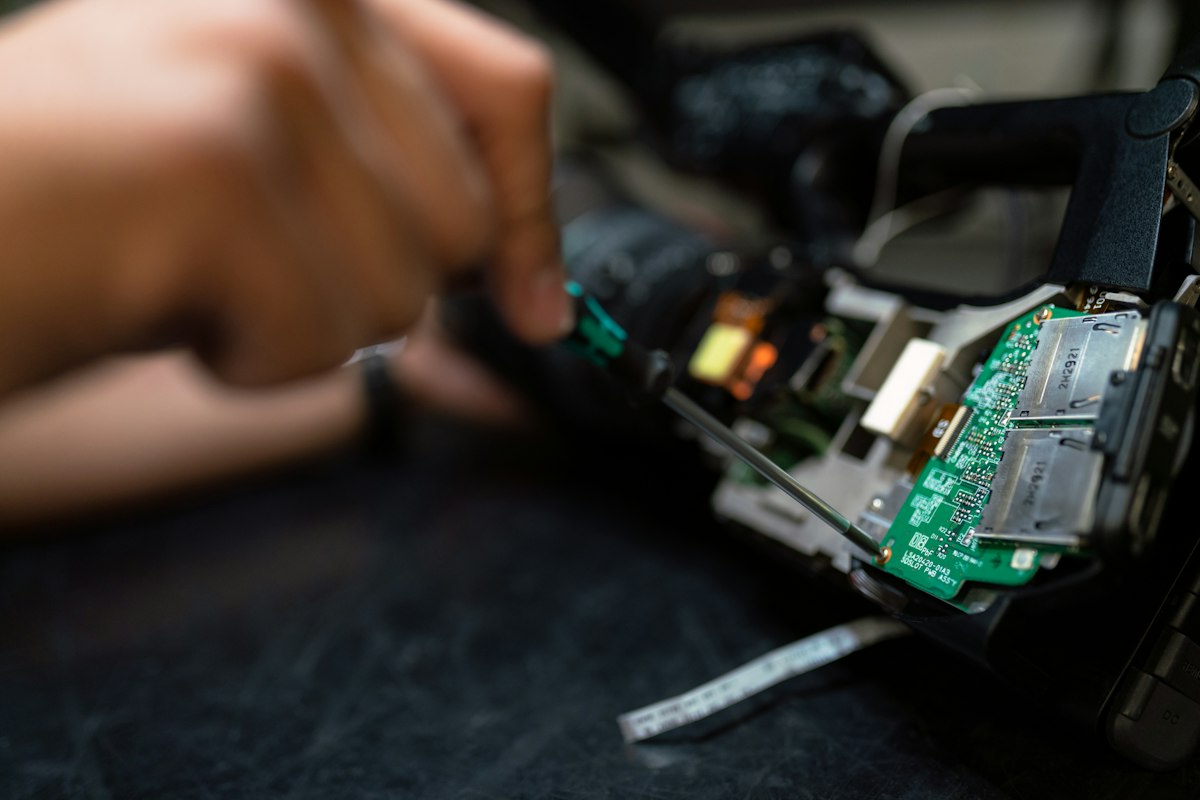
Scaling with modular design: adding a coating station module to an existing lamination line frame costs 30–45% less than purchasing a new machine — and takes 3–4 weeks to install versus 16–20 weeks for a full new machine delivery.
Glosario de términos clave
| Término | Definición |
|---|---|
| OEE (eficacia global de los equipos) | Availability × Performance × Quality — the standard metric for realistic production efficiency; world-class ≥ 85% |
| Tensión de la banda | The force applied to the substrate film as it moves through the machine; must be precisely controlled to prevent wrinkles, stretch, and delamination |
| Control en bucle cerrado | A control system that measures a parameter in real time and automatically adjusts the process to maintain the target setpoint |
| EVOH (Ethylene-Vinyl Alcohol) | A plastic copolymer barrier layer used in multi-layer laminates for high oxygen barrier; hygroscopic — must be stored below 60% RH |
| ABL (laminado de aluminio con barrera) | Multi-layer substrate with aluminium foil interlayer — near-total oxygen and moisture barrier; standard for pharmaceutical and sensitive cosmetic actives |
| Nip | The pressure point where two rollers press the substrate layers together under heat and force to bond them |
| Coat Weight | The mass of adhesive applied per unit area of substrate (g/m²); must be within ±5% of target to achieve consistent bond strength |
| MTBF (Mean Time Between Failures) | Average operating hours between unplanned stops; a key reliability metric — >720 hours is the target for commercial lamination production |
| IoT (Industrial Internet of Things) | A network of sensors and connected devices that collect and transmit machine data to monitoring systems for real-time performance tracking |
| ISO 15378 | International standard specifying GMP requirements for primary packaging materials for medicinal products; requires IQ/OQ/PQ equipment qualification |
| IQ/OQ/PQ | Installation Qualification, Operational Qualification, Performance Qualification — the three-stage validation sequence for pharmaceutical production equipment |
| Master-Follower Architecture | A PLC control configuration where one machine (master) sets the pace and other machines (followers) automatically synchronize their speed to match |
| FAT (Prueba de aceptación en fábrica) | A testing procedure conducted at the supplier’s factory before shipment to verify the machine meets all specified requirements on the buyer’s substrate |
| Mantenimiento predictivo | A maintenance strategy that uses sensor data and analytics to detect developing faults before they cause failure — replacing time-based schedules with condition-based ones |
Preguntas frecuentes (FAQ)
Q1: How often should I perform maintenance on my lamination machine to ensure peak performance?
The three-tier schedule that prevents the majority of unplanned downtime: daily (end of every shift) — clean all rollers and adhesive application surfaces, check tension sensor zero-flow baseline, log shift data and any alarm events; weekly — lubricate all specified bearing points, calibrate coat weight system gravimetrically, inspect drive belts and tension dancer systems; monthly — full roller concentricity check, adhesive pump seal and metering accuracy inspection, vision system cleaning and calibration, electrical cabinet terminal inspection. Adherence to this schedule — documented per the machine’s maintenance log — is typically a warranty condition, and it directly correlates with MTBF performance. Facilities with documented preventive maintenance programmes consistently report 40–60% lower unplanned downtime than those relying on reactive maintenance alone.
Q2: What are the most common causes of lamination defects in soft tubes?
The five most frequent defects and their root causes: (1) Tunnelling — web tension too low, causing layers to separate at the edges; (2) Bubbles — entrapped air at the nip due to surface contamination or excessive speed relative to adhesive viscosity; (3) Delamination — insufficient coat weight, incorrect cure temperature, or substrate surface energy mismatch; (4) Silvering — incomplete adhesive wetting, often caused by corona treatment station failure reducing substrate surface energy; (5) Wrinkles — uneven web tension across the substrate width, typically caused by roller misalignment or tension sensor drift. The common thread in all five is process parameter deviation — which is why closed-loop control systems and regular calibration prevent the majority of defects before they occur.
Q3: Can the same lamination machine handle both cosmetic and pharmaceutical-grade tubes?
Yes, with appropriate qualification. The mechanical requirements are essentially the same — what changes is the documentation framework. For pharmaceutical-grade tube production, the machine must be included in the site’s IQ/OQ/PQ validation programme, all production parameters must be electronically logged with batch traceability, and process deviations must trigger documented investigation and disposition. The machine must also be cleanable to the standard required between pharmaceutical production batches — typically a validated CIP (clean-in-place) or manual cleaning procedure with residue testing. Confirm that the supplier provides validation protocol support and that the machine’s control system generates and exports the data format required by your QMS. A machine sold for “cosmetic use only” may not have the control system audit trail capability required for pharmaceutical qualification.
Q4: How can I reduce material waste during the lamination process?
Material waste reduction starts with measurement — if you are not tracking scrap rate per production run, you cannot improve it systematically. The four highest-impact actions for waste reduction: (1) Stored PLC recipes to reduce parameter stabilisation time at startup and changeover — each changeover that takes 5 minutes instead of 30 minutes to reach specification saves 25 minutes of off-spec substrate at your production speed; (2) Precision edge-guided feeding — servo-controlled edge guides reduce lateral position variation and edge trim waste by 60–70%; (3) Adhesive coat weight real-time monitoring — catching a coat weight deviation within 30 seconds of its onset versus 30 minutes later reduces the defective substrate length by 50–60×; (4) Splice training — a correctly executed butt splice on a roll change generates 0–1 metre of splice waste; a poorly executed one can generate 5–15 metres of unusable substrate at the splice zone.
Q5: What training should my operators receive before running the lamination machine?
A minimum 5-day structured training programme delivered by the machine supplier’s application engineer at your facility, using your actual production substrates. Day 1: machine architecture overview, safety systems, and emergency stop procedure. Days 2–3: substrate threading, tension setup, adhesive system priming, and parameter calibration on your production materials. Day 4: full changeover procedure for each substrate and format combination in your production portfolio — a changeover the operator has not practised is a changeover that will take 3× longer and produce more waste than necessary. Day 5: routine maintenance tasks, defect recognition, alarm response, and batch record completion. Remote or factory-based training is a substitute that consistently produces longer learning curves and more costly startup errors in the first 3–6 months of production.
Q6: How do I know if my lamination machine is properly calibrated?
Three verification tests that together confirm calibration status: (1) Coat weight gravimetric check — cut 5 samples of 10 cm × 10 cm from across the substrate web width immediately after the adhesive station, weigh each on a calibrated balance, and verify that all five readings are within ±5% of the target coat weight specified in your product recipe; (2) Tension sensor zero check — stop the machine with substrate threaded but stationary, confirm all tension readings show zero ±0.5% of full scale; (3) Bond strength T-peel test — peel a 15 mm strip of bonded substrate and measure the peel force on a calibrated tensile tester or spring scale. If all three verify within specification, the machine is calibrated. If any of the three fails, investigate and correct before continuing production, and document both the finding and the corrective action in the equipment maintenance log.
Q7: What environmental conditions are ideal for lamination machine operation?
The production environment should maintain: temperature 20–25°C (stable within ±2°C — temperature variation causes adhesive viscosity fluctuation that affects coat weight); relative humidity 40–60% (above 65% RH, EVOH-containing substrates absorb moisture that degrades bond strength; below 35% RH, static buildup on PE films causes substrate handling problems); airborne particulate — the production area should be maintained at a level consistent with the downstream product’s cleanliness requirements; for pharmaceutical packaging, this typically means an ISO Class 8 or better environment. Lamination machines should not be installed near sources of process vibration (large presses, compressors) that generate mechanical noise detectable by load cell tension sensors, as this introduces measurement noise into the closed-loop tension control system.
Q8: Can I integrate my lamination machine with automated tube forming lines?
Yes — modern lamination machines support integration through standardized industrial communication protocols (OPC-UA, Modbus TCP/IP, PROFINET) that allow the lamination machine’s PLC to communicate with the tube-forming line’s control system. In a master-follower configuration, the tube-forming machine sets the pace and the lamination machine automatically adjusts its substrate feed speed to maintain the target buffer level between the two stations. This eliminates the manual speed-matching interventions that cause quality variation at acceleration and deceleration events. Confirm the communication protocol compatibility between your lamination machine and your tube-forming machine before purchase — a mismatch requires a gateway interface that adds cost and a potential communication latency point.
Q9: What should I look for in a lamination machine supplier to ensure long-term support?
Five criteria that separate a reliable long-term supplier from a price-competitive one-time vendor: (1) Documented spare parts availability for ≥10 years — written warranty in the purchase agreement, not a verbal commitment; (2) Remote diagnostics capability — encrypted VPN access to the machine PLC for real-time fault diagnosis from the supplier’s support team; (3) Application engineering support — engineers who can advise on new substrate compatibility rather than simply servicing existing validated materials; (4) Regional service coverage — technicians capable of on-site visits to your facility within 72 hours for mechanical faults; (5) Training infrastructure — structured, documented training programmes delivered by engineers rather than sales representatives. The insights resource from Miyoda on the cosmetic tube manufacturing process covers the full production line context that a capable supplier should be able to discuss fluently.
Q10: How can I improve production speed without sacrificing lamination quality?
Speed increases in lamination production must be validated — not assumed. The correct approach: increase line speed in 5% increments, run a minimum 30-minute production trial at each new speed, collect coat weight samples, perform bond strength tests, and review inline inspection data before proceeding to the next increment. Stop when any quality metric drops below specification. The maximum validated speed is the highest speed at which all quality metrics simultaneously meet specification — and this should be stored as the upper limit in the machine’s speed recipe for that substrate. On most modern solventless lamination machines, the practical speed ceiling for cosmetic tube substrates is set by adhesive cure time rather than mechanical speed — the substrate must spend sufficient time in the curing zone for the adhesive to reach its target cross-link density before the nip.
Q11: Are there energy-efficient lamination machines suitable for sustainable production?
Yes — and energy efficiency is a specification parameter that should be evaluated quantitatively before purchase, not accepted as a marketing claim. The features that deliver the most significant energy savings: heat recovery systems in dry lamination drying ovens, which recirculate hot exhaust air to pre-heat incoming fresh air — reducing primary heating energy by 20–35%; variable frequency drives (VFDs) on all motor-driven systems — reducing energy consumption by 15–25% compared to fixed-speed drives on the same motor; low-power standby modes that maintain minimum safe temperatures in adhesive systems and reduce main drive energy during scheduled breaks; LED lighting in inspection zones instead of fluorescent fixtures. Request the supplier’s measured energy consumption data (not rated peak power) at your production speed — on a 40 kW average draw machine, a 20% energy reduction represents USD 1,400–2,800/year in direct electricity savings at industrial rates.
Q12: What certifications should my lamination process meet for pharmaceutical packaging?
For pharmaceutical primary packaging materials, the controlling standard is ISO 15378:2017 — which incorporates GMP principles and requires equipment qualification (IQ/OQ/PQ), process validation, batch traceability, and deviation management. The machine must also support compliance with FDA 21 CFR, parte 211 (US market) or EU GMP Annex 15 (EU market) for the validation documentation framework. Materials must comply with Reglamento (CE) n.º 1935/2004 y 10/2011 (plastics for food/pharmaceutical contact). CE marking on the machine confirms European machinery directive compliance. For export market access, additional certifications may apply — confirm the specific requirements for each target market with your regulatory affairs team before finalising machine specification. The TÜV SÜD overview of ISO 15378 certification requirements provides a detailed breakdown of the documentation and process control elements required.
Q13: How do I troubleshoot delamination issues after the curing process?
Post-cure delamination — where bonded substrate peels apart after the adhesive has had time to cure — is one of the most concerning defect types because it is not detected at the time of production. The systematic investigation sequence: (1) Retrieve the batch record for the affected production interval and review: coat weight data, cure zone temperature profile, and line speed. Any parameter excursion during that interval is the starting point for root cause investigation; (2) Cut samples from the affected substrate and measure peel strength — if values are consistently below specification, the adhesive cure was insufficient; if peel strength varies periodically, correlate the variation frequency with machine rotation rates to identify a mechanical cause; (3) Check substrate storage records — if the substrate was exposed to humidity above 60% RH before lamination, moisture uptake may have reduced surface energy and inhibited adhesive bonding; (4) Test the adhesive batch: mix ratio accuracy and pot life are the two most common adhesive-side causes of post-cure delamination in two-component solventless systems.
Q14: Can I switch between different tube diameters and laminate structures quickly?
Yes — on machines with stored recipe management and quick-change tooling systems. A machine with stored PLC recipes restores all validated parameters (temperature profiles, tension setpoints, adhesive dosing, line speed) for a new format in under 60 seconds. The mechanical changeover — changing substrate unwind spool holders for different reel widths, adjusting edge guide positions, changing coating head width if required — typically takes 30–45 minutes when operators are trained and tooling is well-organised. The total changeover time target for a well-run operation with stored recipes and trained operators is under 60 minutes for format-to-format transitions within the same substrate family. Cross-family transitions (ABL to PBL, or coated PE to aluminium) require additional validation steps — allow 90–120 minutes and a brief qualification run before committing to production output.
Q15: What is the typical lifespan of a well-maintained lamination machine?
The mechanical service life of a high-quality lamination machine is 12–18 years with adherence to a documented preventive maintenance programme. The frame, main drive systems, and heating infrastructure typically outlast consumable components (rollers, adhesive pump seals, tension sensors, nip pressure actuators) by a factor of 5–8. Practical functional lifespan is often limited not by mechanical wear but by control system obsolescence — PLC hardware that loses manufacturer support, HMI software that becomes incompatible with current operating systems, or communication protocols that cannot interface with updated facility automation. Machines with modular, upgradeable control architectures extend functional service life by 5–8 years beyond fixed-architecture equivalents. When evaluating machine longevity, ask the supplier specifically: “What is your committed support period for the PLC platform on this machine, and what is the upgrade path when that platform is discontinued?”















