Master tube design and customization to differentiate your cosmetic products, increase shelf appeal, and command premium pricing in a competitive market
Why Tube Packaging Design Matters More Than You Think
A shopper in a Sephora or a pharmacy aisle makes a tube selection decision in under four seconds. In those four seconds, your packaging has already communicated your product’s price point, quality level, intended user, and brand personality — before they have read a single ingredient or marketing claim.
That is not a retail opinion. Research published in Packaging Technology and Science found that 73% of consumer purchase decisions for personal care products are influenced by packaging aesthetics at the point of sale, and a study in PMC / NIH (Srivastava, 2022) concluded that packaging functions as the single most powerful brand communication tool in the cosmetics industry — more impactful at the point of decision than advertising, celebrity endorsements, or influencer content.
For manufacturers, distributors, and agents who supply cosmetic tube packaging or the machinery to produce it, this has a direct commercial implication: a brand that invests in strategic tube design commands 15–40% higher price realization than comparable formulas in commodity packaging. That is not a marketing statistic — it is a margin number that directly affects your business model and theirs.
The cosmetic tubes market was valued at USD 3.05 billion in 2025 and is projected to reach USD 4.82 billion by 2035 (Precedence Research), growing at 4.68% CAGR. The brands winning disproportionate share of that growth are not necessarily the ones with better formulas — they are the ones with packaging that does more work at the shelf, in the consumer’s hand, and in the unboxing moment.
This guide breaks down exactly how to make that happen.
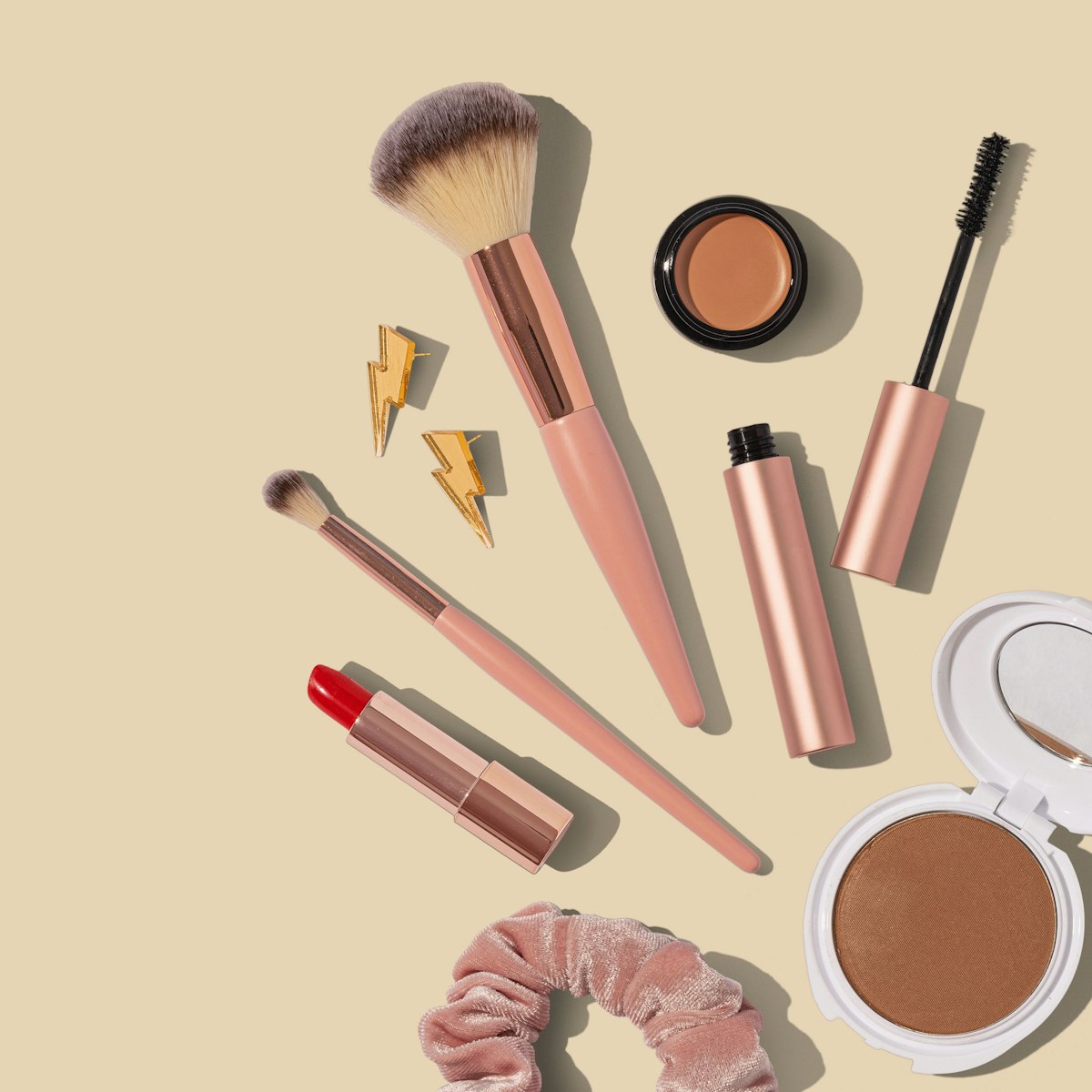 The shelf is your brand’s most competitive arena. Every design choice — shape, finish, color, size — either adds or subtracts from your brand’s commercial performance. Source: Unsplash (royalty-free)
The Psychology Behind Cosmetic Tube Selection
How Consumers Make Split-Second Purchasing Decisions at Retail
The four-second decision window at retail is not a guess — it is a documented behavioral reality. Eye-tracking studies in cosmetic retail environments show that shoppers scan a shelf fixture in a Z-pattern, with attention dwell time averaging 1.7 seconds per product before a “reach decision” is made or the gaze moves on. Your tube has that window to communicate enough to earn the reach.
What triggers the reach? In order of documented impact: shape distinctiveness (does the tube stand out from the standard round format?), color contrast (does the dominant color stand out within the category color field?), finish signal (matte communicates prestige; high-gloss communicates accessibility), and information hierarchy (is the brand name legible and prominent within 0.5 seconds of gaze?).
Manufacturers who understand this sequence design backward from the shelf — not forward from the formula.
Visual Hierarchy and Color Psychology in Tube Design
Color psychology in cosmetic packaging follows consistent patterns across cultures and categories:
| Color Family | Consumer Association | Strongest Application |
|---|---|---|
| White / off-white | Clinical, pure, minimalist | Medical-adjacent skincare, anti-aging |
| Black | Luxury, authority, premium | High-end serums, prestige positioning |
| Gold / metallic | Affluence, efficacy, celebration | Prestige skincare, gift sets |
| Soft pastels (lavender, blush, mint) | Gentle, natural, sensitive | Sensitive skin, natural beauty |
| Navy / deep blue | Trust, science, reliability | Pharmaceutical-adjacent cosmetics |
| Green tones | Sustainability, nature, wellness | Eco-positioned, botanical ranges |
| Red / coral / orange | Energy, warmth, immediacy | Body care, men’s grooming |
The application insight for manufacturers: match your tube’s color language to the emotional promise of the formula. A retinol serum packaged in lavender pink creates brand dissonance — the formulation is clinical and active, but the packaging signals gentleness. The result is a consumer who picks it up, senses the mismatch, and puts it back.
Color consistency across production batches is a separate, operationally critical challenge addressed in Section 5.
The Role of Texture and Finish in Perceived Quality
Tactile perception activates the moment a consumer’s hand closes around your tube. Research from the Packaging Institute of America found that consumers held matte-finish tubes for an average of 2.8 seconds longer than equivalent glossy tubes before making a purchase decision — a finding that packaging designers have translated into the premium positioning of matte finishes across prestige skincare.
The commercial translation:
- Soft-touch matte coating adds approximately USD 0.03–0.08 per tube in production cost and is consistently associated with price points USD 20–50+ in consumer research
- High-gloss finish is the most cost-efficient option and reads as contemporary and clean in mass-market contexts
- Metallic / chrome finishes signal luxury and are most effective for limited edition or gift positioning
- Embossed texture (raised patterns, logo embossing on the tube body or shoulder) creates proprietary tactile branding that competitors cannot replicate without identical tooling
The hand feel principle: a tube that communicates quality through touch before the consumer sees the label price is doing pre-sale persuasion work that your marketing budget cannot do at the same cost.
Why Premium Tube Packaging Commands Higher Price Points
The Unboxing Experience and Brand Loyalty Connection
The “unboxing effect” — the documented consumer response to premium packaging at first use — has been studied extensively in the context of e-commerce, but it applies equally to the cosmetic tube at first open. A tube with a satisfying cap click, a properly weighted shoulder, a smooth dispensing action, and a beautifully printed exterior creates a micro-moment of positive reinforcement that shapes the consumer’s expectation of the product inside.
Dermatological brands have quantified this effect. Studies tracking repeat purchase rates found that consumers who reported positive packaging experiences showed 22% higher repeat purchase rates than those who found the packaging neutral or frustrating — even when product performance ratings were equivalent between groups.
For manufacturers and distributors, this is not an aesthetic indulgence — it is a customer retention lever.
How Luxury Materials Translate to Perceived Value
A premium tube material does not require a prestige brand name to command a premium price. Research on consumer purchase behavior consistently shows that material cues signal quality independently of brand recognition. A consumer encountering an unfamiliar skincare brand in a laminated tube with an aluminum shoulder, matte soft-touch finish, and embossed logo will perceive higher product quality than the same unfamiliar brand in a standard PE tube — and will accept a meaningfully higher shelf price.
The quantified premium: studies reviewed in ResearchGate (2025) on packaging design and cosmetic purchase decisions found that premium material signals (metallic elements, matte texture, structured closures) supported consumer willingness-to-pay premiums of 15–40% compared to standard packaging equivalents for the same formula.
For manufacturers, this means the question is not “can we afford premium packaging?” — it is “what is the ROI of the packaging upgrade given its impact on achievable retail price?”
Moving Beyond Standard Tubes to Distinctive Shapes
Common Tube Shapes and Their Market Positioning
Shape is your tube’s most powerful differentiator — and the most underutilized by brands defaulting to whatever is cheapest and fastest from their supplier. Understanding what each shape communicates positions you to advise clients accurately and to specify the right tooling investment.
 Shape is the first brand signal your tube sends — before any consumer reads a word of copy. Source: Unsplash (royalty-free)
Round Tubes: Classic Appeal and Mass-Market Accessibility
The round tube is the default — and for good reason. It is the most production-efficient format, compatible with the widest range of extrusion, heading, and filling equipment. Round tubes fill efficiently from all angles, stack uniformly, and fit standard retail fixture openings. They are the correct choice for mass-market personal care, body care, and oral care applications where volume throughput and cost efficiency are the primary commercial drivers.
The market signal: round tubes read as accessible, familiar, and unpretentious. For premium positioning, they require strong decoration and finish differentiation to compete with distinctive shape formats.
Oval Tubes: The Sweet Spot Between Elegance and Functionality
Oval cross-section tubes — produced with oval extrusion dies and specialized heading tooling — occupy a commercially valuable middle ground. They communicate more sophistication than round formats without the tooling investment of fully custom shapes. The flat faces of an oval tube also provide superior print real estate: more surface area for graphics, and better print registration consistency on decoration equipment.
Oval tubes are the most popular format in the USD 15–45 prestige skincare segment and are frequently specified for hand cream, targeted serum, and premium moisturizer applications. For manufacturers investing in oval tube tooling, the ROI argument is straightforward: the format addresses a growing market segment with materially higher margins than mass-market round tube production.
Flat/Rectangular Tubes: Modern Minimalism and Space Efficiency
Flat, rectangular cross-section tubes — sometimes called “pillow tubes” — are a design-forward format gaining significant traction in minimalist prestige skincare and men’s grooming. Their distinctive geometry creates strong shelf differentiation. The large flat face allows for bold, full-surface graphics that communicate premium positioning effectively.
The practical advantage for retailers: flat tubes stack more efficiently in display fixtures and consume less shelf depth than round equivalents, a consideration that matters in pharmacies and specialty retailers where shelf space is allocated, negotiated, and expensive.
Contoured Tubes: Premium Positioning and Ergonomic Advantage
Custom contoured tubes — with ergonomically shaped bodies, waisted profiles, or asymmetric cross-sections — represent the highest level of shape differentiation. They function simultaneously as a design asset and a user experience improvement. A tube contoured to fit naturally in the hand reduces squeeze effort, improves dispensing control, and creates a tactile brand identity that a competitor would need to invest in identical tooling to replicate.
The commercial case for contoured tubes: they signal deliberate design investment, support premium retail price points above USD 35, and — when the contour is proprietary — create a packaging identity that is genuinely difficult to counterfeit or imitate at commodity prices.
Custom Shape Development: Solving Real Production Challenges
Design Feasibility vs. Aesthetic Goals — What Your Production Team Needs to Know
The most expensive mistake in custom tube shape development is completing a design brief before consulting the production team. Design-led shapes that ignore extrusion geometry constraints — undercuts that prevent tube release from the die, extreme asymmetry that causes wall thickness inconsistency, or shoulder transitions too sharp for clean heading — generate beautiful 3D renderings that cost USD 15,000–35,000 in mold development before anyone discovers they cannot be reliably manufactured.
The correct process: conduct a design feasibility assessment before committing to mold investment. This assessment evaluates wall thickness distribution at the design’s cross-sections, die geometry requirements for the target shape, heading tool compatibility, and decoration surface availability. A production-experienced design review catches these issues in the rendering stage — not after the mold is cut.
Mold Investment Considerations and ROI Timelines
Custom tube mold development typically costs:
| Mold Type | Investment Range | Development Timeline |
|---|---|---|
| Minor shape modification (standard tooling) | USD 800–2,500 | 2–3 weeks |
| Oval or flat tube extrusion die | USD 2,500–6,000 | 3–5 weeks |
| Fully custom cross-section die + heading tooling | USD 6,000–15,000 | 5–8 weeks |
| Complex contoured multi-component mold set | USD 15,000–35,000+ | 8–14 weeks |
ROI on mold investment is determined by the premium the custom shape enables over standard format pricing and the volume over which that premium is realized. The standard calculation:
For a USD 8,000 mold enabling a USD 0.06 per unit premium (custom oval vs. standard round, same material), the mold investment recovers at 133,000 units — achievable within 12–18 months for a growing skincare brand at mid-volume production. Beyond that threshold, every unit sold at the premium price is pure mold investment return.
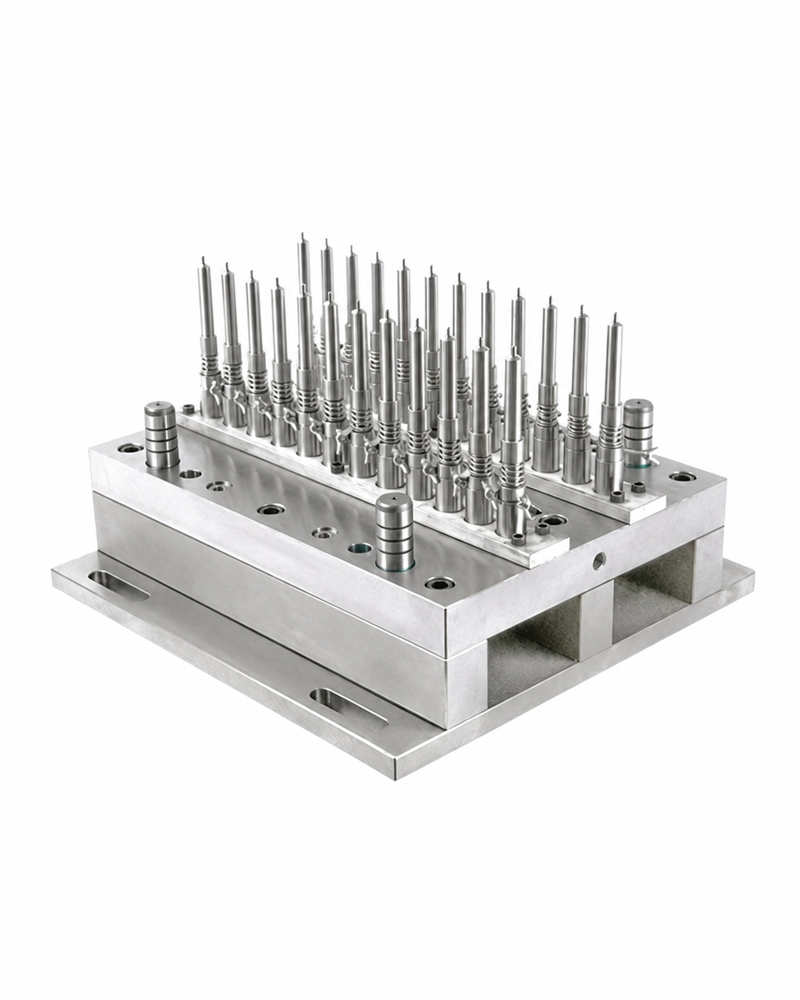
Negotiate tooling ownership upfront. Your contract with the mold manufacturer should explicitly state that tooling belongs to your company after payment. This allows you to transfer molds between production facilities without renegotiation — a protection that has commercial significance as you scale.
How Custom Shapes Reduce Production Waste and Improve Margins
A well-designed custom shape creates production efficiency advantages beyond differentiation. Oval and flat tube formats with optimized wall thickness distribution use 5–12% less resin per unit than equivalent-capacity round tubes with uniform wall thickness — because the geometry allows the designer to place material where structural strength is needed (shoulders, seal area) and reduce it where it isn’t (body mid-section of a laminate tube). For a manufacturer producing 1 million tubes per month, that material efficiency compounds into meaningful resin cost savings.
Custom shapes that improve dispensing ergonomics also reduce product waste per use — which increases net formula utilization rate and reduces consumer dissatisfaction with “I couldn’t get it all out” — a documented driver of negative reviews in premium skincare categories.
Case Studies: Brands Winning Through Distinctive Tube Shapes
Luxury Skincare Brands Leveraging Ergonomic Tube Design
A Korean skincare brand launching its first European retail line specified a waisted, ergonomic oval tube for its hero eye cream — a shape that required a USD 9,200 custom die set and heading tool. The shape enabled a retail price of EUR 48, compared to EUR 32 for comparable eye creams in standard round packaging from direct competitors. Within 18 months of European launch, the distinctive tube shape had become an identifiable brand asset — consumers could recognize the product at a distance in a retail fixture without reading the label. The mold investment recovered at approximately 154,000 units. Annual production volume by month 18: 380,000 units.
How Indie Cosmetics Brands Use Shape Differentiation to Compete with Giants
Indie brands cannot win on distribution scale or marketing budget against established multinational cosmetic companies. Their competitive leverage is design specificity and visual distinctiveness in narrow category niches. A flat, matte-black tube in a premium hand care niche creates disproportionate shelf presence relative to the brand’s size — precisely because the mass-market incumbents run standard round formats at volume economics that preclude custom tooling investment.
The lesson for manufacturers and distributors advising indie brands: custom shape investment is where small brands create outsized competitive returns, and framing the mold cost as a revenue-generating asset (not a sunk cost) makes the investment conversation considerably more productive.
Choosing the Right Tube Sizes for Your Product Portfolio
Understanding Size-to-Price Ratio Psychology
The relationship between tube volume and consumer price perception follows a documented pattern that strategic brands exploit deliberately. Most consumers dramatically overestimate the cost-per-milliliter difference between travel and standard sizes — which is exactly why travel sizes are margin-accretive rather than loss leaders when priced correctly.
Travel Sizes (5–15ml): Building Brand Loyalty and Trial Conversion
Travel-size tubes (5–15ml) serve two commercial functions: trial conversion for new customers and accessible price-point entry for consumers reluctant to commit to a full-size purchase of an unfamiliar brand. For prestige skincare brands, travel sizes priced at USD 8–18 generate 3–5x the margin per milliliter of full-size equivalents — because the packaging cost, decoration cost, and retail fixture cost are similar to full-size, but the formulation cost is minimal.
The strategic application: use travel sizes as self-funded sampling. A brand that sells 50ml face cream at USD 38 (USD 0.76/ml) can price a 10ml travel size at USD 15 (USD 1.50/ml) — a 97% per-milliliter premium that consumers accept because the absolute price feels accessible. For manufacturers, travel sizes require smaller tubes but similar decoration investment — which means the per-unit decoration cost is proportionally higher, reinforcing the economics of running them on the same line as standard sizes.
Standard Sizes (30–50ml): The Profit-Maximizing Sweet Spot
The 30–50ml range is the category sweet spot for most premium cosmetic tube products. It is large enough to provide genuine value perception relative to travel sizes, small enough to maintain product freshness in daily use applications, and carries retail price points (typically USD 18–65 for premium cosmetics) that support healthy margin structures for both manufacturers and brands.
Production efficiency peaks in this range: standard 35mm and 40mm diameter tubes in 30–50ml formats run at the highest output speeds on commercial extrusion lines, require the least changeover time between SKUs, and generate the lowest per-unit overhead of any format. For manufacturers optimizing their line economics, the 30–50ml format should be the anchor of your production portfolio.
Professional/Salon Sizes (100–250ml): B2B Opportunities and Premium Positioning
Large-format tubes (100–250ml) address a distinct commercial channel: professional salon, spa, medical aesthetics clinic, and B2B institutional use. These tubes carry different purchasing dynamics — buyers are professionals evaluating performance and value per application, not retail consumers making aesthetic choices in four seconds. The decoration investment can be simpler; the premium material and formulation quality matter more.
For manufacturers with existing 35–50ml lines, adding 100–200ml production capability (typically requiring head tooling adjustment and filling system adaptation) opens the professional channel without a fundamentally different equipment investment.
Value Sizes (200ml+): Competing on Perceived Value in Mass Market
Large value-format tubes (200ml+) are the domain of mass-market body care: body lotion, sunscreen, hair removal cream, and family-use personal care. The consumer decision is driven by value perception — “more product for less money” — and the brand communication is functional rather than aspirational. These formats require high-speed, high-volume production lines and favor PE materials for cost efficiency. For manufacturers already serving the mass-market segment, value sizes extend your production into formats that large-volume private-label buyers frequently require.
Capacity Decisions That Directly Impact Your Bottom Line
How Overfilling Reduces Margins Without Increasing Perceived Value
Overfilling — filling tubes above their specified net volume — is the most common, least-discussed margin leak in cosmetic tube manufacturing. It happens for benign operational reasons: operators who set fill volume conservatively to avoid under-fill claims, or filling machines calibrated with generous tolerances. But the commercial consequence is real.
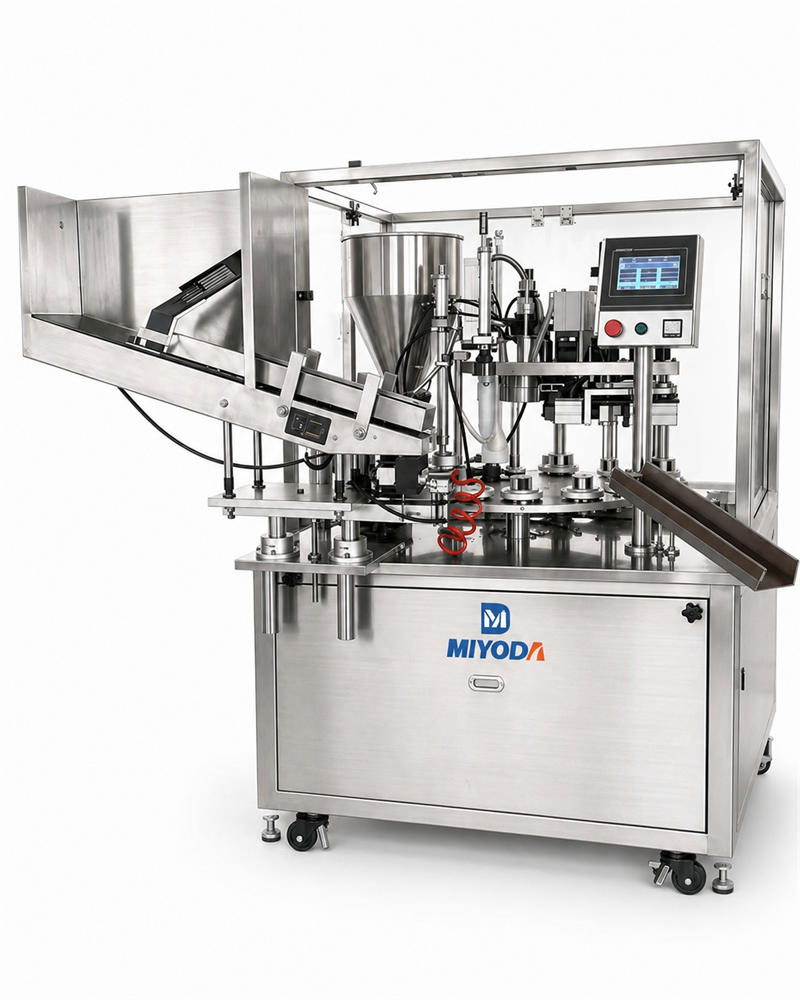
A manufacturer filling 50ml tubes at an average of 52.5ml (5% overfill) is giving away 2.5ml of formulation per unit. For a face serum with a formulation cost of USD 0.15 per ml, that is USD 0.375 per tube in unrecovered margin — on 500,000 units per month, that is USD 187,500 in annual margin loss from overfilling alone. Precision filling equipment — calibrated to ±0.5% fill accuracy — eliminates this loss and pays for itself rapidly at commercial volumes. For context on the filling equipment that supports this precision, Miyoda Packaging Machinery’s tube filling and closing systems are engineered for exactly this level of fill consistency across cosmetic and pharmaceutical applications.
Strategic Underfilling: Premium Positioning Through Exclusivity
Legitimate strategic underfilling — offering 15ml or 20ml of a prestige formula in a tube sized to appear fuller — is a deliberate premium positioning tool. The consumer perceives the tube as full-size; the price per ml is substantially higher than mass-market alternatives; and the formulation cost per unit is lower than full-size packaging. This strategy works for genuinely premium, efficacious formulations where the per-ml value is supported by clinical performance claims. It does not work for commodity formulations — consumers who discover the fill disparity without performance justification become dissatisfied customers.
Multi-Size Strategies: Maximizing Shelf Space and Customer Lifetime Value
A three-size SKU strategy — travel (10ml), standard (50ml), value (150ml) — across a hero product maximizes several commercial outcomes simultaneously: retail fixture presence across three different shelf locations (travel section, standard skincare, value section), trial conversion from entry-level buyers, repeat purchase depth from committed users buying value format, and gifting opportunity from standard-size packaging. Each size feeds the next stage of the customer lifecycle.
For manufacturers producing all three sizes, the key production efficiency consideration is minimizing tooling and changeover differences between sizes. A tube design family where all three sizes share the same diameter, same cap, and same decoration layout allows color and label artwork to transfer between sizes without plate changes — dramatically reducing multi-size production costs.
Production Efficiency Across Multiple Tube Sizes
Minimizing Changeover Time and Setup Costs
Every size changeover on a production line costs real time and real money: machine reset, new tooling setup, purge and prime for the new fill volume, and first-article quality verification before production starts. Industry benchmarks for cosmetic tube production put total changeover time at 35–90 minutes per size change depending on equipment type and automation level.
Applying SMED (Single-Minute Exchange of Die) principles — a lean manufacturing methodology that pre-stages all tooling and materials required for the next run while the current run is still operating — reduces changeover time by 40–60% in typical cosmetic tube environments. At five size changes per week, 60 minutes saved per changeover generates 260 hours of additional production time annually — equivalent to approximately 1.2 million additional tube opportunities on a 4,800 tube/hour line.
Economies of Scale: When to Consolidate Sizes vs. Expand Offerings
The decision to add a new tube size to your production portfolio should always include a breakeven volume analysis against the additional tooling and changeover cost burden. A new size that generates only 20,000 units per month may not justify its production overhead if it forces 4–5 additional weekly changeovers on a high-volume line. Conversely, a new size that captures a B2B professional channel at 100,000+ units per month justifies full tooling investment and a dedicated production slot.
The consolidation principle: fewer sizes, more volume per size, with multi-size product families that share tooling where possible, consistently outperforms fragmented SKU proliferation in production economics.
How Tube Materials Communicate Brand Value
Material Options That Elevate Perceived Quality
Material selection is not a cost decision alone — it is a brand positioning decision that communicates quality before a consumer reads a word on your label. The right material for your product is the one that matches your brand’s promise, your formulation’s technical requirements, and your target consumer’s expectations at your retail price point.
Laminated Tubes: Barrier Protection and Premium Feel
Laminated tubes — ABL (Aluminum Barrier Laminate) and PBL (Plastic Barrier Laminate) — combine multi-layer material construction with a premium hand feel and decorative surface quality that extruded PE tubes cannot match at equivalent cost. ABL tubes achieve near-zero OTR (Oxygen Transmission Rate), making them the correct specification for vitamin C serums, retinol formulations, pharmaceutical topicals, and any active-ingredient cosmetic where oxidative degradation is a shelf-life risk.
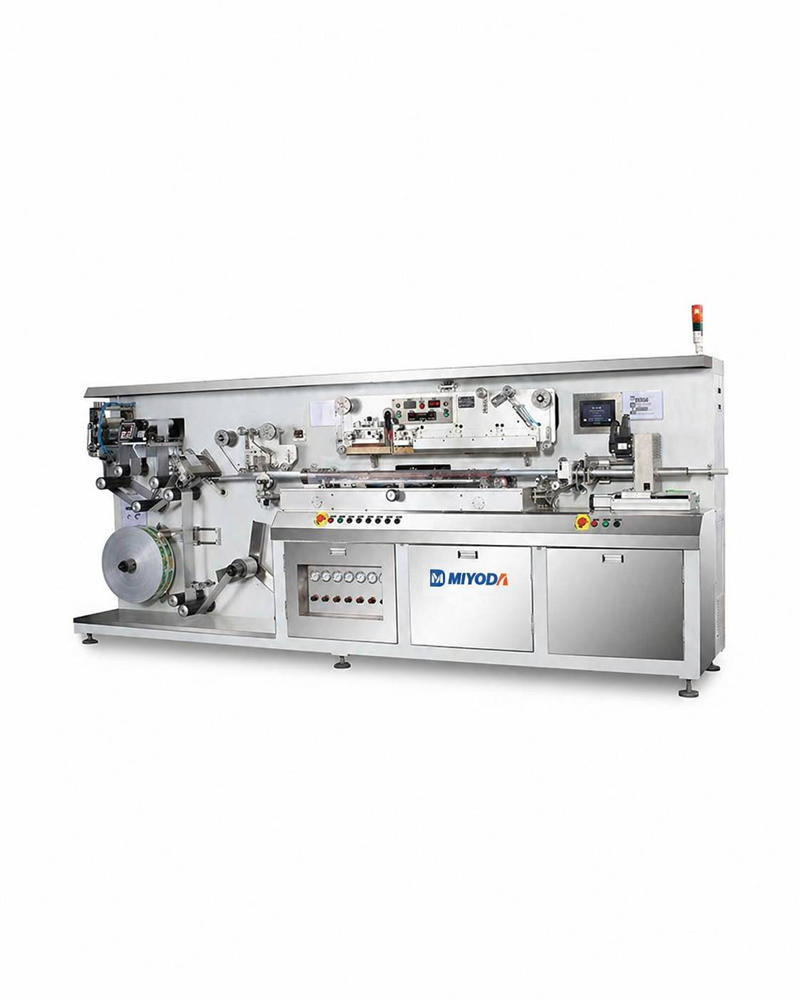
The laminate surface accepts multi-color print with exceptional vibrancy and sharpness, and the tube body maintains its shape after dispensing — a quality signal that consumers notice and associate with premium brand intent. For manufacturers producing laminate tubes, Miyoda Packaging Machinery’s laminate tube making machines are configured for both ABL and PBL production across the full commercial diameter range.
Aluminum Tubes: Luxury Positioning and Product Protection
Aluminum tubes communicate luxury, clinical efficacy, and serious formulation protection simultaneously. Their complete barrier to oxygen, light, and moisture makes them technically mandatory for pharmaceutical topicals and genuinely optimal for prestige cosmetic actives. Their weight, their distinctive metallic sound when handled, and the mechanical crimp seal are all tactile brand signals that communicate investment and quality.
For brands positioned above USD 60 retail, aluminum is a packaging format that justifies and supports the price — not just aesthetically, but through the demonstrable formulation protection that discerning consumers and their dermatologists expect.
Plastic Tubes: Cost-Efficiency Without Sacrificing Aesthetics
Modern PE and PP tubes — particularly with matte soft-touch coatings, hot stamping accents, and precision multi-color screen or offset printing — can achieve visual and tactile quality that rivals more expensive material formats at a fraction of the cost. A PP tube with a matte finish, gold hot-stamp logo, and embossed shoulder communicates premium positioning effectively at a material cost of USD 0.10–0.18 per unit.
The aesthetic gap between a well-finished plastic tube and a laminate tube has narrowed significantly with decoration technology improvements — the key insight for manufacturers is that the right decoration investment on an extruded plastic tube often delivers 80% of the premium shelf impact at 40–50% of the material cost of laminate.
Specialty Materials: Sustainable and Eco-Friendly Positioning
PCR (Post-Consumer Recycled) PE and PP, bio-based PE, and mono-material HDPE tubes are growing rapidly in brand specifications. McKinsey’s 2025 Sustainable Packaging survey found that consumers in Europe and North America willing to pay more for sustainable packaging represent a meaningful and growing segment — with average premium willingness of 10–12% above equivalent non-sustainable alternatives.
For manufacturers investing in PCR-capable production lines, the commercial positioning opportunity is real: document and certify the PCR content (GRS certification, Chain of Custody), and your tube production qualifies for a growing list of brand programs including Sephora’s Clean at Sephora, Target’s sustainable packaging standards, and EU PPWR-compliant specification requirements.
Finish and Coating Strategies That Justify Premium Pricing
Matte vs. Glossy Finishes: Market Positioning Implications
The single most impactful finish decision a brand makes — and the most consistent finding in cosmetic packaging consumer research — is the choice between matte and glossy. Matte finishes are associated with premium positioning, clinical seriousness, and sophisticated aesthetics. Glossy finishes are associated with accessibility, energy, and contemporary cleanliness.
Neither is “better” — they serve different market positions. The error is misaligning finish with positioning: a natural, wellness-positioned skincare brand in high-gloss packaging creates brand dissonance. A mass-market energy body care line in matte finish creates a pricing signal that confuses consumers at the shelf.
Metallic Accents and Special Effects: Creating Shelf Impact
Hot stamping — the transfer of metallic foil onto the tube surface using heat and pressure — creates premium brand signals that print alone cannot replicate. Gold or silver hot-stamp logo placement on a matte tube body is the single most cost-effective decoration upgrade available to cosmetic tube brands: it adds USD 0.02–0.06 per unit in production cost and is consistently associated with premium retail price positioning.
For manufacturers with tube decoration capability — including Miyoda Packaging Machinery’s tube decoration machine range that covers hot stamping, UV coating, and surface finishing — hot stamping is a high-margin decoration service that premium brand clients will pay significantly for.
Textured Surfaces: Tactile Differentiation and Hand-Feel
Embossed or debossed patterns on the tube body or shoulder create a proprietary tactile brand element that cannot be replicated without identical tooling. A brand that embosses its logo into the tube shoulder owns that design element physically — a competitor cannot imitate it without investing in the same tooling development. This is particularly valuable for brands that operate in category niches where visual differentiation is difficult.
Material Durability and Supply Chain Reliability
Ensuring Consistent Quality for Repeat Orders
Cosmetic brands with retail distribution relationships face strict retailer quality requirements: color within ΔE < 1.5 of approved standard, dimensional tolerance within ±0.3mm, seal integrity at minimum 10N/25mm. These are not aspirational benchmarks — they are retailer listing requirements. A manufacturer who delivers to specification on the first order and drifts on the third order loses the retail account, not just the order.
Supply chain reliability requires: approved resin grades with documented lot traceability, certified ink suppliers with batch-level color records, and in-process quality monitoring at critical production stages. Quality system investment is not overhead — it is the infrastructure that protects your retail account relationships.
Managing Material Costs Without Compromising Brand Perception
Material cost management requires distinguishing between visible and invisible cost elements. Invisible costs — resin grade within approved specifications, production efficiency parameters, reject rate management — can be optimized without any visible impact on brand output. Visible costs — tube material weight, decoration quality, finish standard — should never be degraded without explicit brand client sign-off, because they directly affect consumer perception and repeat purchase rates.
The sustainable cost management principle: optimize invisible costs aggressively; protect visible quality absolutely.
Designing Tubes That Stop Shoppers and Build Brand Recall
Color Psychology in Cosmetic Tube Design
Niche Market Colors: Premium Beauty, Skincare, and Pharmaceutical Positioning
Color strategy differs meaningfully across category niches. In pharmaceutical-adjacent skincare (clinical anti-aging, prescription topicals, professional-use acids), white and off-white with minimal accent color communicate clinical authority that consumers trust and healthcare providers accept. In prestige beauty, deep charcoals, blacks, and gold accents communicate luxury and exclusivity. In natural and botanical beauty, earth tones, forest greens, and unbleached whites communicate ingredient authenticity.
The most common color mistake: defaulting to category norms without evaluating where differentiation creates competitive advantage. If every premium serum in your category is in black packaging, a thoughtfully positioned brand in deep navy may actually stand out more effectively because it signals premium quality through differentiation rather than imitation.
Seasonal Color Strategies and Limited Edition Launches
Limited edition packaging with seasonal color variations — holiday metallics, spring pastels, summer brights — generates purchase urgency (“buy now before it’s gone”) and social media shareability that standard permanent packaging cannot create. The production consideration: limited editions require efficient changeover capability and low MOQ decoration runs.
For manufacturers with digital printing capability alongside standard screen or offset print, short-run limited editions become commercially viable — 2,000–5,000 unit runs for limited edition colorways without the plate cost overhead that makes short runs prohibitive in traditional printing.
Color Consistency Across Production Batches: Meeting Retailer Expectations
Color consistency is operationally non-negotiable for brands in retail distribution. A retailer shelf with a hero product in two slightly different shades of rose gold across consecutive stock orders creates a quality complaint, an internal audit at the retailer, and potential delisting. The standard measurement is Delta-E (ΔE) — the mathematical distance between two color measurements. Retail standard: ΔE < 1.5 between batches; pharmaceutical standard: ΔE < 1.0.
Achieving consistent color requires: spectrophotometer approval of ink batches before production, on-press color checks at set-up and every 2,000 units, and certification of approved ink suppliers whose batch-to-batch color variance is documented and contractually guaranteed.
Printing Technologies That Bring Designs to Life
 Multi-color silk screen printing on cosmetic tubes: the production technology behind the shelf impact that drives purchase decisions. Source: Miyoda Packaging Machinery
Flexographic Printing: Cost-Effective for High-Volume Production
Flexographic printing uses flexible relief plates to apply ink directly onto tube substrates. It is the most cost-efficient printing method for high-volume runs (100,000+ units per color set), delivering good color saturation and consistent output at speeds compatible with high-volume extrusion lines. The limitation: minimum cost breakeven requires meaningful volume before plate costs are amortized, making it less suitable for short runs or frequent design changes.
Digital Printing: Enabling Customization and Short Runs
Digital printing — direct inkjet or laser transfer onto tube surfaces — eliminates plate costs entirely, enabling economical runs from 500 to 10,000 units. For indie brands launching new SKUs, brands testing seasonal colorways, or pharmaceutical clients requiring serialization and batch-variable printing, digital is the enabling technology. The limitation: color gamut and opacity on curved tube surfaces is narrower than screen or offset printing, making it less suitable for heavy-coverage metallic or fluorescent ink applications.
Hot Stamping and Embossing: Creating Tactile Luxury
Hot stamping transfers metallic or pigmented foil onto the tube surface using a heated die under pressure. The result is a reflective, precisely defined decoration that print inks cannot replicate. Combined with embossing (raising or recessing the tube surface to create three-dimensional design elements), hot stamping creates the premium tactile brand signals that prestige cosmetic brands specify as non-negotiable.
For manufacturers investing in multi-decoration capability — combining screen or offset printing with hot stamping in a single production line pass — Miyoda Packaging Machinery’s machine d'impression offset sur tubes provides multi-color, high-registration capability suited to prestige cosmetic decoration requirements. The combination of offset print for photographic-quality graphics and hot stamp for accent decoration is the production formula behind most premium cosmetic tube packages currently on retail shelves.
Label Placement and Information Hierarchy
Regulatory Compliance Without Sacrificing Aesthetic Appeal
Regulatory label requirements for cosmetic tubes vary by market but universally include: product name, net content (volume or weight), list of ingredients (INCI format for cosmetics), manufacturer name and address, batch/lot code, expiry date, and market-specific warnings. The information density challenge: fitting all of this onto a tube that is often 35mm in diameter and 150mm in length, without turning the tube into a regulatory notice board.
The solution is deliberate information architecture: lead with brand identity (logo, product name, hero claim) on the primary display surface; place required regulatory information on the secondary surface or tube body; use font sizes at or just above regulatory minimums; and group regulatory elements in a clean block that reads as intentional rather than cluttered.
Creating Visual Balance Between Branding and Ingredient Information
The design principle that resolves the brand-versus-regulatory tension: one primary message, clearly dominant. Every other element on the tube is secondary. If your primary message is “24-hour hydration,” that claim should be the most visually prominent element after the brand name. Ingredient lists, batch codes, and regulatory warnings are placed with care but never compete visually with the brand’s commercial communication.
How Smart Tube Design Improves User Experience and Reduces Returns
Dispenser Design and Applicator Selection
The dispenser is the user’s primary touchpoint with your product — the moment where the packaging either enables or frustrates the use experience. Return rate data in premium skincare consistently identifies dispensing frustration (product doesn’t come out cleanly, cap leaks in bag, difficult to control application amount) as a top-5 driver of negative reviews and non-repeat purchase.
Pump Dispensers: Precision and Hygiene for Premium Positioning
Airless pump dispensers on tube packaging eliminate air ingress during dispensing, extending product stability and delivering precise, contamination-free doses. For serums, eye creams, and pharmaceutical topicals where both hygiene and accurate dosing matter, pump dispensers represent a significant user experience upgrade over standard flip-cap. The cost premium (USD 0.12–0.35 per unit for quality pump mechanism) is justified for products at retail prices above USD 25, where the mechanism communicates quality commensurate with the price.
Flip-Top Caps: Convenience and Daily-Use Appeal
The flip-top cap is the highest-value closure upgrade for daily-use cosmetics — moisturizers, sunscreens, body care — where one-handed operation during application is a meaningful convenience benefit. One-handed opening without cap removal reduces spillage, speeds application, and signals that the brand has considered the actual use context of their product. Consumer survey data from APC Packaging (2024) found that 64% of daily skincare users rated “ease of opening during application” as a significant factor in repeat purchase decision.
Twist Dispensers: Controlled Application for Targeted Products
Twist dispensers — where a calibrated dose is extruded by turning the base — provide the most precise dose control available in tube format. They are the correct specification for products where application accuracy matters: spot treatments, concentrated actives, pharmaceutical topicals with weight-based dosing requirements. The production complexity (specialized heading and closure tooling) is justified for high-value, low-volume formulations where dose control is a clinical benefit claim.
Nozzle Design: Preventing Leakage and Improving Shelf Appeal
Nozzle geometry determines both user experience and shelf presentation. A well-designed nozzle — with a positive closure that prevents product migration to the cap, a clean break on dispensing that minimizes residue around the orifice, and a geometry that directs product accurately to the intended application area — prevents the most common user complaint in tube cosmetics: “the product gets gunky around the cap.” This complaint, when it appears in product reviews, is not a formulation issue — it is a nozzle and cap design issue that is entirely preventable at the engineering stage.
Ergonomic Considerations That Enhance Perceived Value
Grip Design for Different Hand Sizes and Usage Scenarios
A tube used in the shower encounters wet hands. A tube dispensed by elderly consumers encounters reduced grip strength. A tube applied by a makeup artist is handled with gloved hands at speed. Each use scenario creates different grip requirements, and packaging designers who consider the actual use environment rather than the idealized retail presentation create measurably better user experiences.
Practical ergonomic solutions: waisted tube profiles that nest naturally in a closed hand, matte surface finishes that maintain grip when wet, and tube diameters in the 28–40mm range that accommodate most hand sizes comfortably for a full-pressure squeeze.
Weight Distribution and Balance: The “Luxury Feel” Factor
The weight distribution of a filled tube communicates quality through a mechanism consumers cannot articulate but consistently feel. A tube that feels weighted toward the shoulder (heavier closure system, more substantial shoulder) communicates quality investment. A tube that feels flimsy and light communicates economy. This is why premium tube designers specify heavier closure components, more robust shoulder wall thickness, and occasionally weighted closures on prestige products — not because these elements add functional benefit, but because they add perceived quality.
Ease of Use for Elderly and Mobility-Limited Customers
The aging consumer demographic in the US, Europe, and Japan is simultaneously the most purchase-powerful and the most packaging-frustrated segment in beauty and skincare. Large-format brands that have redesigned closures for easier one-handed opening, reduced cap torque requirements, and clearer label typography (larger fonts, higher contrast colors) have documented measurable improvements in repeat purchase rates among consumers 55+. For manufacturers advising brand clients, this design consideration is not charitable — it is commercial.
Sustainability Features That Appeal to Conscious Consumers
Recyclable Tube Design Without Increasing Costs
Mono-material tube design — where tube body, shoulder, and closure are all in the same polymer family (all-HDPE or all-PP) — enables genuine recyclability through standard municipal recycling streams. The engineering constraint: mono-material tube designs must compensate for the absence of dissimilar barrier layers through alternative approaches (EVOH co-extrusion in the tube body for barrier; compatible closure materials in the same polymer family).
The cost reality: mono-material recyclable tubes in HDPE or PP are cost-neutral to cost-competitive versus standard mixed-material tubes at equivalent wall thickness. The material cost difference is negligible; the production efficiency advantage (fewer component types, simpler sorting) is positive. For brands targeting the EU market with its 2030 PPWR recyclability mandate, specifying mono-material designs now avoids a forced reformulation in 3–5 years.
Refillable Tube Systems: Building Customer Loyalty and Repeat Revenue
Refillable cosmetic tube systems — where the consumer retains the closure and shoulder component and replaces only the tube body — are a growing niche in prestige skincare, particularly in European and Japanese markets where environmental consciousness drives purchase behavior. Brands offering refill formats at 30–40% below full-size pricing retain consumers who might otherwise switch to lower-priced competitors at the repurchase moment. For manufacturers, refill formats require precision fill compatibility between the refill unit and the retention component — a production engineering consideration worth solving for brands with the volume to support it.
Balancing Design Ambitions with Manufacturing Reality
Understanding Production Constraints Before Design Finalization
 Production reality check: the most beautiful tube design is worth nothing if it cannot be manufactured consistently at commercial scale. Source: Unsplash (royalty-free)
Minimum Order Quantities (MOQs) and Their Impact on Your Launch Timeline
MOQ structures for cosmetic tube production vary by format and material complexity:
| Tube Type | Typical MOQ |
|---|---|
| Standard PE/PP round (existing tooling) | 10,000 – 30,000 units |
| Oval or flat format (existing tooling) | 15,000 – 40,000 units |
| Custom shape (new tooling) | 20,000 – 50,000 units |
| Aluminum tube | 25,000 – 100,000 units |
| Laminate tube (ABL/PBL) | 20,000 – 50,000 units |
For emerging brands launching new SKUs, MOQ planning is a cash flow exercise as much as a production planning exercise. Committing to 50,000 units of a new SKU before market validation can create inventory carrying costs that damage the brand’s financial runway. Strategies that mitigate this: starting with standard tube formats (lower MOQ, existing tooling), piloting in a single geographic market before full rollout, and negotiating a blanket purchase order (annual volume commitment, quarterly release) that gives the manufacturer production visibility while giving the brand delivery flexibility.
Lead Times for Custom Molds vs. Standard Tube Options
Timeline planning for custom tube launches must account for the full critical path — not just the tube production run:
| Stage | Standard Tube | Custom Tube (New Mold) |
|---|---|---|
| Design specification finalization | 1–2 weeks | 2 à 4 semaines |
| Mold/tooling development | None (existing tooling) | 4–10 weeks |
| Sample production and approval | 2–3 weeks | 3–5 weeks |
| Mass production | 2 à 4 semaines | 2 à 4 semaines |
| Total (China to US/EU delivery) | 7–11 weeks | 13–25 weeks |
Brands launching custom tube products for a fixed retail listing date — Q4 holiday, spring catalog — need to have tube specifications finalized 6–7 months in advance, not 6–7 weeks. The brands that consistently miss launch dates are the ones that treated packaging as the last step rather than the first.
Quality Control Measures That Protect Your Brand Reputation
The three quality control stages that protect brand reputation at scale: incoming material inspection (resin and ink lot certification before production begins), in-process quality monitoring (dimensional, color, and seal strength checks at 20–25% production completion), and pre-shipment inspection (third-party AQL sampling before the container is loaded).
For cosmetic tubes destined for retail distribution, specify AQL 2.5 for major defects (visible surface defects, dimensional failures) and AQL 4.0 for minor defects (minor cosmetic blemishes, slight color variation within ΔE tolerance). These are the standards that major cosmetic retailers apply in their own incoming quality programs — aligning to them from the manufacturing stage prevents downstream quality holds.
Cost Optimization Strategies Without Visible Compromises
Material Sourcing Decisions That Maintain Margins
The material cost optimization hierarchy: first, optimize resin grade selection (using the minimum performance-specification grade that meets technical requirements, not a premium grade where standard grade delivers the same result); second, optimize order volume (resin price breaks at 3-tonne, 10-tonne, and 25-tonne quantities are significant — consolidate resin orders across multiple SKUs to reach better price tiers); third, dual-source resin suppliers (eliminates spot-price vulnerability when your single source goes on allocation or raises prices).
Never compromise on pigment or ink quality in visible-facing applications. A USD 0.003 per unit saving on cheaper ink that produces inconsistent color across 100,000 units creates a retailer complaint that costs far more than the ink savings to resolve.
Production Efficiency Improvements That Reduce Per-Unit Costs
The three highest-impact production efficiency improvements in cosmetic tube manufacturing: faster changeover (SMED methodology reduces changeover time 40–60%); reduced startup waste (better SOP documentation for startup sequence reduces purge waste 20–35%); and predictive maintenance (scheduling maintenance proactively before failure reduces emergency downtime by 60–75% compared to reactive maintenance). None of these require capital investment — they require process discipline.
Negotiating Volume Pricing While Maintaining Design Flexibility
The volume pricing negotiation position that generates the best commercial outcome: annual volume commitment, quarterly delivery flexibility. Tell your supplier: “Our annual requirement is 600,000 units. We want to commit to that annually for pricing purposes, with quarterly releases of approximately 150,000 units with 6-week production notice.” This gives the supplier the forward demand visibility they need to run efficiently; it gives you pricing at annual volume without the cash flow commitment of ordering 600,000 units upfront.
Scaling Production as Demand Grows
Planning for Success: Capacity Planning and Expansion Timelines
Scale-up planning for cosmetic tube production follows a predictable timeline: at 3x current volume, changeover frequency and setup costs require process optimization; at 5x volume, additional equipment is needed; at 10x volume, additional production shifts or a second production line becomes necessary. Build this planning into your business case from the start — a brand planning to grow from 50,000 to 500,000 units per year in 18 months needs a supplier whose production infrastructure can scale with that trajectory, or a pre-agreed transition plan to additional manufacturing capacity.
Managing Supplier Relationships During Growth Phases
The most common supplier relationship failure during growth phases: the brand grows faster than the supplier’s capacity and begins experiencing lead time slippage without notice. Prevention requires: transparent volume forecasting shared with suppliers (rolling 6-month demand estimates, updated monthly), advance notice of major volume step-ups (minimum 90 days for production capacity adjustments), and regular performance review meetings that include both quality and capacity topics. Suppliers who have forward visibility on your growth are suppliers who can invest in the capacity to serve it.
Meeting Standards While Maintaining Premium Positioning
Cosmetic and Pharmaceutical Packaging Regulations
FDA Compliance for US Market Entry
Cosmetic tube packaging for the US market must comply with FDA requirements under 21 CFR Part 177 (resin compliance for indirect food/cosmetic contact) and, since MoCRA (Modernization of Cosmetics Regulation Act, 2022), with expanded GMP requirements for cosmetic manufacturing that include packaging material documentation. The FDA’s Cosmetics Labeling Requirements provides the complete labeling specification — net content statement size, ingredient list format, and required warning statements.
For pharmaceutical tubes, compliance escalates to 21 CFR Parts 210/211 (cGMP), USP <661> (plastic containers), and the FDA’s Container Closure Systems Guidance — requiring documented compatibility testing between the tube material and the specific drug formulation.
European Regulations and CE Marking Requirements
EU cosmetics packaging must comply with EU Cosmetics Regulation 1223/2009 (Annex I safety assessment including packaging characterization) and EU Regulation 10/2011 (migration limits for plastic materials in food/cosmetic contact). The new EU PPWR (Packaging and Packaging Waste Regulation 2025/40) — summarized at EUR-Lex — introduces recyclability requirements that will affect tube material specifications for all brands selling in the EU from 2026 onward.
International Standards for Different Geographic Markets
Japan, South Korea, China, Australia, and Canada each maintain cosmetic packaging regulatory frameworks that require market-specific compliance review before export. For manufacturers and distributors advising clients on market entry strategy, engaging a regulatory consultant with documented expertise in the specific target market is standard practice — regulatory non-compliance in a new market can result in import holds, product destruction costs, and brand reputation damage that far exceeds the cost of upfront compliance assessment.
Safety Features That Build Consumer Trust
Tamper-Evident Design Elements
Tamper-evident features — breakaway seals, shrink-wrap over the closure, membrane seals under the cap — serve dual commercial purposes: regulatory compliance in pharmaceutical and some cosmetic categories, and consumer confidence building in the retail environment. For premium brands, a subtle tamper-evident seal (an embossed breakaway ring on the cap, for example) adds minimal cost (USD 0.01–0.03 per unit) while communicating brand integrity and product safety seriousness.
Child-Resistant Closures for Pharmaceutical Applications
Pharmaceutical tubes containing any formulation with toxicity risk to children must use closures tested to CPSC (US) or EN 862 (EU) child-resistant standards. These are mechanical test standards — a closure must pass standardized open/close tests by adult panels and failure tests by child panels. The commercial implication: child-resistant closures require specific engineering, specific tooling, and specific testing documentation. Include this in your supplier qualification requirements from the start for any pharmaceutical tube application.
Material Safety Certifications and Testing Requirements
Material safety certification requirements by market: for US cosmetics, FDA 21 CFR 177 section compliance from the resin manufacturer; for EU cosmetics, EU Regulation 10/2011 migration test report from an accredited laboratory; for pharmaceutical applications in any market, extractables and leachables (E&L) testing as defined in ISO 10993 (for medical devices) or ICH Q3C/Q3D (for pharmaceutical products). These tests identify and quantify chemical compounds that may migrate from the packaging into the formulation — and their results must be acceptable relative to the safety thresholds for the specific use.
Documentation and Traceability
Maintaining Compliance Records for Regulatory Audits
For cosmetic brands in retail distribution, maintain the following documentation per production lot for a minimum of 3 years (FDA) or 10 years (EU Cosmetics Regulation requirement): tube material Certificate of Analysis (CoA), ink supplier batch records, in-process quality check records, pre-shipment inspection report, and resin/material compliance certificates. For pharmaceutical tubes, retain all documentation for minimum 1 year post expiry date of the drug product — which often means 5–7 years total.
Supply Chain Transparency and Supplier Certifications
Retailer and pharmaceutical client supply chain transparency requirements are increasing. Brands are now routinely asked to provide: tier-1 supplier (tube manufacturer) certification documentation, tier-2 supplier (resin and ink supplier) compliance documentation, and evidence of periodic supplier audits. Building a supplier documentation management system — even a well-organized shared folder structure — is infrastructure investment that pays off every time a major retail buyer or pharmaceutical distributor conducts a supply chain audit.
📺 Watch: Cosmetic Tube Packaging Design — Full Process
Understanding the full design-to-production journey helps manufacturers and distributors advise brand clients on realistic timelines and creative possibilities. This video walks through the complete cosmetic tube packaging design process from concept to production-ready artwork:
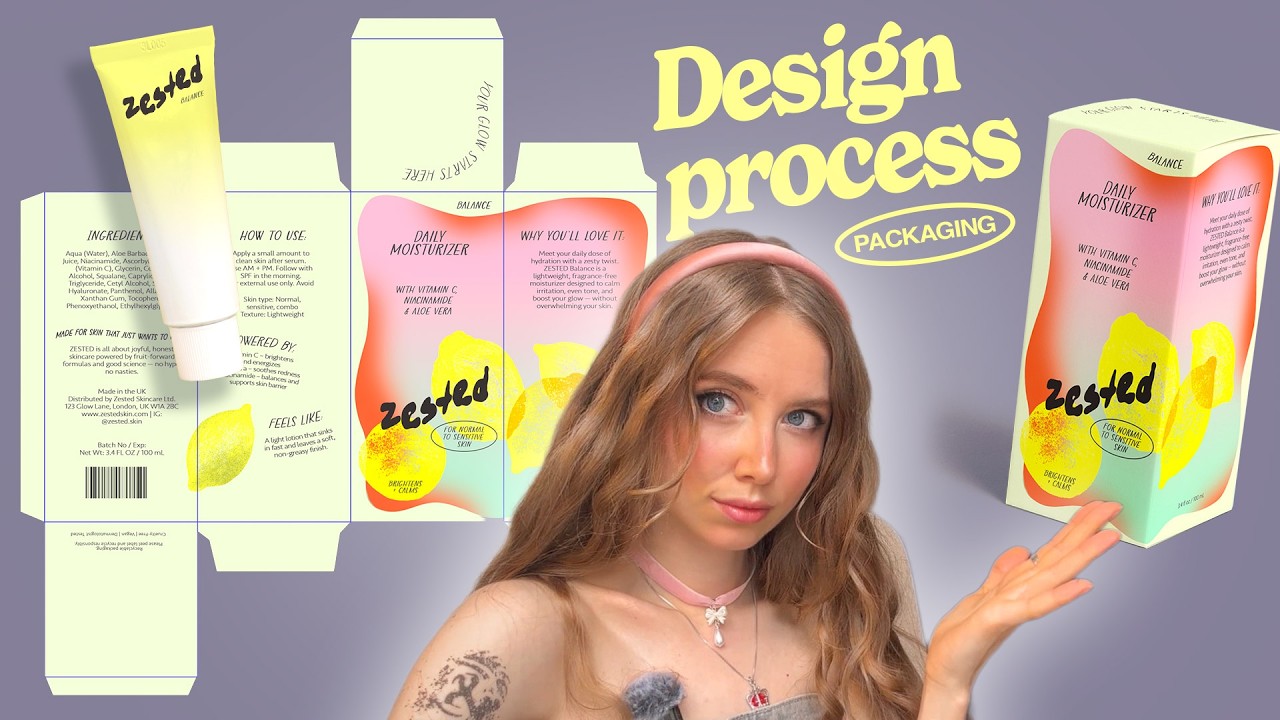
Full packaging design process for a skincare brand — from concept through production-ready tube artwork. Understanding this process helps manufacturers align client expectations and production timelines from the first briefing conversation.
Validating Your Tube Design Before Full Production Commitment
Prototype Development and Consumer Testing
Low-Cost Prototype Options for Concept Validation
Physical prototypes for cosmetic tube design validation are available at three cost tiers: 3D-printed mockups (USD 200–800, production in 3–5 business days, non-functional but accurate to shape and proportion for visual evaluation), hand-finished samples from standard tooling (USD 400–1,200, using existing mold geometry with custom decoration, suitable for retail shelf testing and focus groups), and production-representative samples from new tooling (USD 2,000–6,000 including sample tooling, required for formulation compatibility testing and filling line validation).
Use 3D-printed mockups for internal brand alignment and early retail buyer presentations. Use production-representative samples for consumer research and filling compatibility. The most expensive mistake: committing to full tooling investment based on 3D renders without physical sample validation.
Gathering Consumer Feedback on Design, Functionality, and Pricing
Consumer testing for packaging design should evaluate three distinct dimensions: visual appeal (does the design attract attention in a mock shelf environment?), functional usability (is the closure intuitive? Does it dispense cleanly? Is it easy to read?), and perceived value (what price would a consumer willingly pay for a product in this packaging?). The third question — perceived value — is the most commercially important and the most frequently omitted from packaging research.
Methodology: present consumers with your tube design alongside 2–3 competitor alternatives in a shelf context. Ask for price estimates, purchase intent, and functional evaluation. Compare the perceived value price to your intended retail price. A significant gap in either direction — consumers expecting to pay much less or much more than you plan to charge — is design signal that warrants investigation before tooling commitment.
A/B Testing Different Tube Designs in Controlled Markets
E-commerce provides a practical A/B testing environment for tube design: run the same product in two tube designs in split-sample email campaigns or identical digital advertising creative with different product imagery. Measure click-through rate, product page engagement time, and conversion rate across the two design variants. The design with measurably better conversion data should inform your packaging decision with real purchase intent signal — not just focus group opinion.
Retail Feedback and Real-World Performance
Working with Retailers to Understand Shelf Performance
Major cosmetic retailers (Sephora, Ulta, Boots, Mecca, Watsons, etc.) provide shelf performance data to brand vendors through category management reviews — sell-through rate, return rate, adjacency performance (how a product sells relative to its neighbors on the fixture), and consumer return and complaint data. This is invaluable packaging design intelligence. Brands that engage retailers as partners in design evolution — sharing prototype concepts for retailer feedback before production commitment — build relationships that support preferential shelf placement and marketing support.
Analyzing Return Rates and Customer Complaints for Design Improvements
Track product return and complaint data with packaging design as a variable. Complaints segmented by root cause: dispensing failure (nozzle or pump issue), leakage (seal integrity), labeling clarity (confusion over use instructions), and formulation performance (not a packaging issue but attributed to packaging by consumers). Each category maps to a specific design or production improvement opportunity. A 3% return rate with 60% of returns citing “pump doesn’t work after 2 weeks” is a product specification issue with a specific engineering fix — not a formulation issue requiring reformulation.
Seasonal Adjustments and Product Line Evolution
Packaging evolution without brand disruption requires protecting the consistent brand visual equities — the elements that create immediate brand recognition — while evolving secondary elements (seasonal color accents, updated formula claims, refined typography). The visual equities for most established cosmetic brands are: logo treatment and placement, primary brand color family, and signature design element (embossed texture, characteristic shape, proprietary closure design). Evolve everything else; protect these.
Competitive Analysis and Differentiation Validation
Benchmarking Your Design Against Competitor Offerings
Before finalizing any custom tube design investment, conduct a structured competitive audit: photograph every competitive product in your category at point of purchase, document shape, finish, color palette, closure type, primary decoration technique, and retail price. Map these attributes visually. The spaces with few occupants — the “white spaces” in the competitive landscape — represent design positioning opportunities where your brand can stand distinctively without blending into an existing visual cluster.
Identifying White Space Opportunities in Your Market Segment
A representative white space finding from a typical premium facial skincare competitive audit: category is dominated by white and off-white matte tube packaging; no competitor uses deep forest green as a primary color despite the category’s increasing natural positioning; no competitor uses an oval tube shape at the USD 35–50 price point. A brand that enters this space with a deep-green oval tube immediately occupies a visual position with no direct competitor — and does so with a design signal (green = natural; oval = premium) that is directly aligned with the market positioning opportunity.
Measuring Success and Continuous Improvement
Key Performance Indicators (KPIs) for Tube Design Success
Design ROI is not abstract — it is measurable through specific commercial metrics that connect packaging decisions to business outcomes.
Shelf Velocity and Sell-Through Rates
Shelf velocity — units sold per store per week (US terminology) or units per distribution point per week (UK/EU) — is the primary retail performance metric. A packaging redesign that improves shelf velocity by 15% generates the same revenue impact as a 15% increase in distribution, but without the sell-in cost and retailer relationship complexity. Track velocity before and after any packaging change; the data isolates the packaging contribution from other marketing variables.
Price Realization and Margin Protection
Price realization measures the actual average selling price achieved relative to the intended retail price, net of promotional discounts, retailer allowances, and markdowns. Premium packaging commands better price realization because it reduces markdown pressure — retailers and consumers perceive value that sustains the price point. For manufacturers, this translates to: brands with premium packaging make fewer pricing concession requests and sustain volume at margin-accretive prices longer than brands whose packaging doesn’t support their price point.
Customer Retention and Repeat Purchase Rates
Packaging experience is a statistically significant predictor of repeat purchase. Brands with positive packaging experience ratings — ease of use, perceived quality alignment with price, aesthetic satisfaction — show 18–25% higher 6-month repeat purchase rates than brands with neutral or negative packaging experience ratings (internal research cited across multiple major cosmetic brand annual reports, 2022–2024). For manufacturers, the commercial implication: a brand client whose packaging delivers positive consumer experience will maintain and grow volume, while one with packaging friction will lose customers and eventually reduce orders.
Brand Perception Metrics and Market Positioning
Track brand perception metrics — unaided brand awareness, quality perception ranking within category, price-quality association — through regular consumer research panels. Packaging changes should produce measurable shifts in quality perception within 3–6 months of retail introduction. A matte finish upgrade that increases quality perception ranking from 7th to 4th in a 12-brand competitive set is not an aesthetic outcome — it is a commercial outcome with direct implications for shelf placement priority, influencer partnership value, and retailer promotional support allocation.
Building Long-Term Brand Equity Through Consistent Design
Maintaining Design Consistency Across Product Lines
Brand design consistency — applying the same visual language (color family, typography, shape format, decoration technique) across all SKUs within a brand portfolio — creates the cumulative visual presence that earns consumer recognition without advertising. Consistent design is why you recognize a La Mer product in a travel-size tube you have never seen before at first glance. That recognition is not brand magic — it is a production specification discipline that requires manufacturers to match Pantone standards, maintain approved tooling, and flag any deviation from approved specifications before production proceeds.
Evolution Without Alienation: Refreshing Designs While Protecting Brand Loyalty
The brand design refresh cycle for cosmetic tube packaging is approximately every 3–5 years for established brands (annual updates signal brand instability; 7+ year cycles risk appearing dated). Successful refreshes follow a consistent principle: protect the equities, evolve the aesthetics. The equity elements — logo, brand color, signature design element — remain consistent to preserve consumer recognition; the aesthetic elements — typography, secondary colors, finish, decoration detail — are updated to reflect contemporary design language.
The financial implication for manufacturers: a design refresh is typically a lower tooling investment than original development because existing mold geometry is retained and only decoration tooling (printing plates, hot stamp dies) and finish specifications are updated. This makes the 3–5 year refresh cycle commercially accessible for most cosmetic brands.
Creating Signature Design Elements That Become Brand Identifiers
The most valuable packaging design investment a cosmetic brand can make is the development of a signature design element — a distinctive visual or tactile characteristic that becomes associated exclusively with the brand over time. Examples: a proprietary closure shape, an embossed pattern unique to the brand, a specific color combination that no competitor uses, or a distinctive tube proportioning (unusually long and narrow, or wide and short) that creates an identifiable silhouette.
Signature elements create competitive moats: competitors cannot imitate them without making their imitation obvious; and brand fans develop affinity for the element itself, not just the product inside. For manufacturers advising brands on design strategy, encouraging the development of proprietary elements — and investing in the tooling to create them — builds the kind of production relationship that generates sustained, growing volume rather than commodity price competition.
Planning Your Next Innovation Cycle
Staying Ahead of Market Trends
The major trends reshaping cosmetic tube packaging in 2025–2030 that should inform design and production investment decisions now:
Sustainability imperative: EU PPWR 2030 recyclability requirements are creating specification pressure on all brands selling in European markets. Manufacturers investing in mono-material recyclable tube production capability and PCR-capable lines are positioned ahead of this shift.
Personalization at scale: Digital printing capability enables short-run, personalized, and variable-data tube decoration that mass-market brands are using for limited editions, loyalty programs, and influencer collaboration launches. Manufacturers with digital decoration capability capture this growing segment.
Minimalism in design: The visual trend toward clean, pared-back design with minimal color (white, off-white, deep neutrals) and typography-focused graphics is not a fad — it reflects a durable consumer preference shift toward confidence and understated luxury. Production implication: clean, minimalist designs require exceptional print registration accuracy and surface finish quality, because there is nowhere for imperfections to hide.
Investing in Design Improvements That Deliver Measurable ROI
The packaging design investments that consistently deliver measurable ROI, ranked by typical return magnitude:
- Finish upgrade (gloss to matte soft-touch): USD 0.04–0.08/unit cost → 15–25% retail price premium achievable
- Hot stamp accent (logo or pattern): USD 0.02–0.06/unit cost → 10–20% quality perception improvement
- Closure upgrade (standard cap to flip-top): USD 0.06–0.15/unit cost → 22% higher repeat purchase rate (documented)
- Shape differentiation (round to oval): USD 2,500–8,000 tooling → premium positioning supporting 20–35% higher retail price
- Multi-size strategy (adding travel size): USD 800–2,000 tooling → 3–5x margin per ml on travel format
Companies that invest 5–10% of product cost into packaging design see returns of 300–400% on that investment (Hidden Path Creative, packaging ROI research). The discipline is directing that investment to the elements with the highest commercial return — not the most visually interesting design change.
Building Strategic Partnerships with Design and Manufacturing Experts
The most commercially successful cosmetic tube brands treat their tube manufacturer not as a vendor but as a design and engineering partner. A manufacturer who understands your brand’s positioning, target consumer, retail environment, formulation requirements, and growth trajectory can anticipate design opportunities, flag production risks before they become problems, and contribute engineering insights that improve the final product beyond what a design-only brief would achieve.
For manufacturers looking to build these partnerships with clients — and for distributors and agents positioning themselves as trusted advisors — the investment in understanding your clients’ full commercial context (their target consumer, their retail strategy, their formulation profile) generates relationship depth that price competition cannot erode.
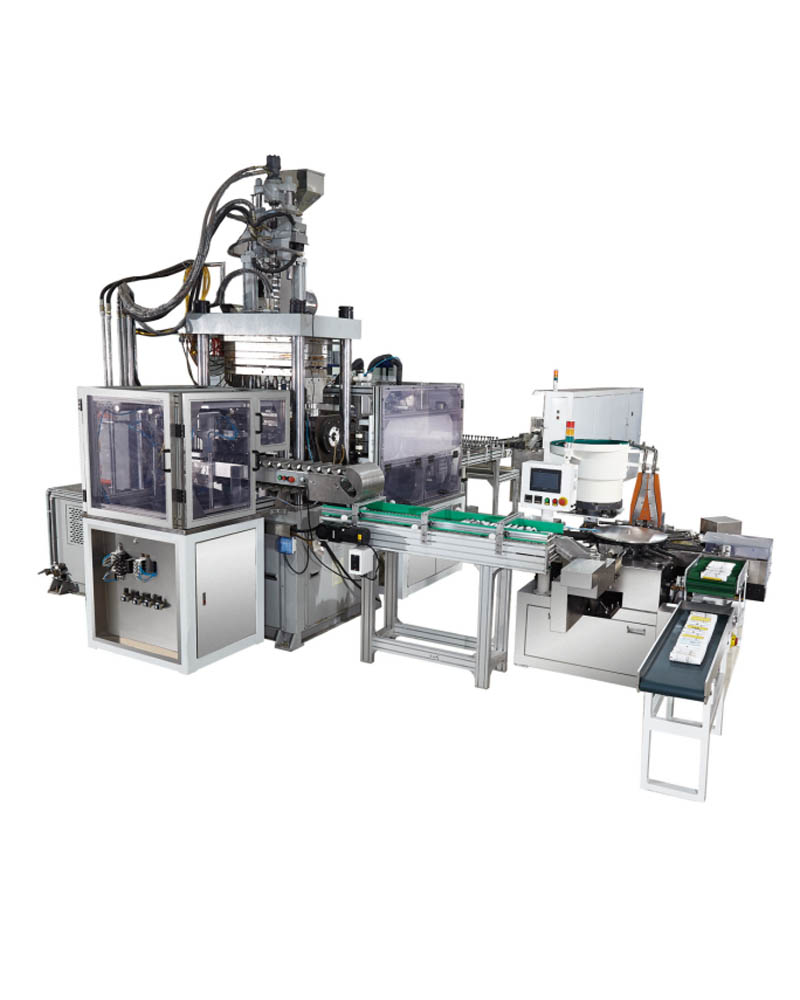
Miyoda Packaging Machinery’s range of tube production equipment — from extrusion lines and laminate tube machines to silk screen and offset printing systems — is designed with this partnership model in mind: giving manufacturers the production capability to execute what their brand clients design, at the quality and consistency that retail and pharmaceutical accounts demand.
Your Tube Design Is Your Silent Salesman — Make It Work Harder
Your cosmetic tube is not a container. It is a strategic business asset that makes a purchase case to your consumer before your formulation has a chance to prove itself. Every design decision — shape, size, material, finish, color, dispenser — is either adding to or subtracting from the commercial performance of your product.
The framework this guide has built:
Psychology first — design backward from the shelf, understanding the four-second decision window and the hierarchy of cues (shape, color, finish, information) that determine whether a consumer reaches for your tube. Shape as competitive moat — custom shape development is the most defensible investment a cosmetic brand can make in packaging, creating proprietary visual identity that competitors cannot imitate without identical tooling. Size as margin strategy — the 30–50ml sweet spot maximizes production efficiency and price realization; travel sizes generate 3–5x the margin per ml of full-size equivalents when priced strategically.
Material as brand signal — laminate for clinical premium, aluminum for luxury and pharmaceutical, PP for sophisticated mid-market, PE for volume-efficient mass market; the material must match the consumer’s expectation at your retail price point. Color and print as conversion driver — multi-color screen printing and hot stamping are the production technologies behind the shelf impact that drives purchase decisions, and manufacturers with capability in both serve a broader and more profitable client base.
Functional design as retention tool — flip-top closures, ergonomic grips, precision dispensers, and tamper-evident seals are not premiums; they are the use experience features that drive positive consumer reviews and repeat purchase rates 18–25% higher than packaging that frustrates. Sustainability as commercial advantage — mono-material recyclable tubes and PCR content documentation support premium pricing and retailer listing requirements that are only becoming more stringent.
The investment in strategic tube design — and the manufacturing capability to execute it — pays dividends through improved margins, reduced returns, and increased customer lifetime value. Your next step is to assess your current packaging against these principles and identify where a design or production investment creates the most measurable commercial return.
Ready to Transform Your Tube Packaging Into a Competitive Advantage?
Whether you’re launching a new product line, refreshing an existing portfolio, or scaling production to meet growing demand, the right combination of design strategy and manufacturing capability is the difference between packaging that generates margin and packaging that erodes it.
Miyoda Packaging Machinery works with tube manufacturers, distributors, and agents who understand that their production equipment is the foundation of every design their brand clients can bring to market. From laminate tube making machines for ABL and PBL premium formats, to tube silk screen printing machines et tube offset printing systems for multi-color decoration that drives shelf appeal, to complete tube extrusion production lines for PE and PP high-volume runs — the machinery behind your tube determines the design possibilities available to your clients.
📩 Schedule a confidential consultation with our packaging specialists to explore how custom tube design capability can elevate your production offering, improve your clients’ profitability, and capture market share in the growing cosmetic and pharmaceutical tube packaging market.
👉 Explore Miyoda’s Full Tube Production Range | 📲 WhatsApp: +86 137 7421 4471
 Glossary: Essential cosmetic tube design and production terms for manufacturers, distributors, and agents. Source: Unsplash (royalty-free)
Glossaire des termes clés
Visual Hierarchy: The deliberate arrangement of design elements in order of their visual prominence — ensuring the most important brand communication (name, hero claim) is seen first, before secondary elements (regulatory, ingredient information).
Delta-E (ΔE): A mathematical measurement of color difference between two samples. ΔE < 1.5 is the cosmetic retail standard for acceptable batch-to-batch color variation; ΔE < 1.0 is the pharmaceutical standard.
INCI (International Nomenclature of Cosmetic Ingredients): The standardized naming system for cosmetic ingredients used on labels in compliance with EU, US, and most international cosmetic regulations.
OTR (Oxygen Transmission Rate): The rate at which oxygen permeates through a tube wall, measured in cc/m²·day. Lower OTR = better barrier = longer shelf life for oxygen-sensitive formulations.
AQL (Acceptable Quality Level): A statistical sampling standard defining the maximum percentage of defective units acceptable in a production lot. AQL 2.5 for major defects and AQL 4.0 for minor defects are typical cosmetic tube standards.
Hot Stamping: A decoration technique in which heat and pressure transfer metallic or pigmented foil onto the tube surface, creating a reflective premium finish that print inks cannot replicate.
Soft-Touch Matte Coating: A varnish or coating applied over printed tube surfaces that creates a matte, slightly rubberized texture. Associated with premium cosmetic positioning and increases tactile dwell time at point of purchase.
SMED (Single-Minute Exchange of Die): A lean manufacturing methodology for reducing changeover time between production runs, typically achieving 40–60% reduction in changeover duration by pre-staging all required tooling and materials while the current run is still in progress.
PCR (Post-Consumer Recycled): Material derived from recycled post-consumer waste. PE and PP tubes can be produced from 25–100% PCR content. Documented PCR use supports brand sustainability claims and EU PPWR 2030 compliance.
EU PPWR (Packaging and Packaging Waste Regulation): EU Regulation 2025/40 requiring all packaging placed on the EU market to be recyclable by 2030. Directly affects tube material specifications for brands selling in European markets.
MoCRA (Modernization of Cosmetics Regulation Act): US legislation enacted in 2022 that expanded FDA oversight of cosmetic manufacturing and product safety, including expanded GMP requirements with packaging material documentation implications.
Shelf Velocity: A retail performance metric measuring units sold per store per week (or per distribution point per week). The primary indicator of packaging effectiveness in a retail shelf environment.
Tamper-Evident Seal: A packaging feature (breakaway ring, membrane seal, shrink band) designed to provide visible evidence if a closure has been opened prior to purchase. Required for certain pharmaceutical categories and increasingly specified in premium cosmetics.
Extractables and Leachables (E&L): Chemical compounds that may migrate from packaging material into the formulation. Identification and safety assessment of E&L is required for pharmaceutical packaging and increasingly expected for premium cosmetic active formulations.
Questions fréquemment posées
1. How much does it cost to develop a custom tube shape, and what’s the typical timeline?
Custom tube mold development ranges from USD 2,500 (minor die modification for oval or flat format using existing tooling infrastructure) to USD 35,000+ (complex multi-component contoured shape with proprietary heading tooling). The most common investment range for growing cosmetic brands is USD 6,000–15,000 for a meaningful shape differentiation that creates genuine shelf distinctiveness. Timeline from design approval to first production samples: 5–10 weeks for standard complexity; 10–16 weeks for fully custom geometry. This timeline is the critical factor most brands underestimate — a custom tube concept confirmed in January cannot be in retail for a March launch. Build the tooling timeline into your product launch calendar as its first critical path constraint, not its last.
2. Can we start with a small production run to test a new tube design before committing to larger quantities?
Yes, and for new designs you should. Most cosmetic tube manufacturers offer prototype and small-batch production options in the 2,000–10,000 unit range, with higher per-unit costs than commercial scale (typically 1.5–3x higher) but manageable minimum investment for market validation. The right approach: produce 3,000–5,000 units of the new design for a geographically contained market test or e-commerce launch, measure sell-through rate and consumer feedback, then commit to commercial tooling and full MOQ production once demand validation is confirmed. The cost of this validation step — typically USD 5,000–15,000 — is far less than the cost of tooling and producing 50,000 units of a design that doesn’t perform.
3. What’s the difference between standard and custom tube designs in terms of production cost?
Standard tubes (existing tooling, off-the-shelf shapes) have zero tooling cost amortization — you pay material, production, and decoration cost only. Custom tubes add tooling amortization on top of those costs. At 100,000 units with a USD 10,000 mold investment, the tooling adds USD 0.10 per unit — a significant premium at low volumes, negligible at high volumes. The economic crossover point where custom design becomes cost-equivalent to standard: typically 50,000–200,000 units depending on the mold investment and per-unit premium the custom design enables in retail pricing. Beyond that crossover volume, the premium pricing enabled by the distinctive design generates net positive ROI compared to the standard alternative.
4. How do I ensure my custom tube design is manufacturable before investing in mold development?
Request a design feasibility assessment from your tube manufacturer before any mold commitment. This assessment evaluates: wall thickness distribution across the custom geometry (adequate and consistent material flow), die geometry requirements (can the cross-section be extruded or impact-extruded without undercuts or flow defects), heading tool compatibility (can the shoulder be formed without wrinkles or stress-whitening), and decoration surface geometry (is there adequate flat or consistent-radius surface for print registration accuracy). A written feasibility assessment from production engineers — not design engineers — is the correct validation step. Molds built without production-engineer feasibility review have a measurably higher rate of first-article rejection and tooling modification cost.
5. What materials offer the best barrier protection for cosmetic products while maintaining a premium feel?
ABL (Aluminum Barrier Laminate) tubes provide near-zero oxygen transmission and complete light blocking — the correct specification for vitamin C (>5%), retinol, pharmaceutical topicals, and any formulation with documented oxidative sensitivity. They also deliver a premium hand feel with a printable exterior that accepts high-quality decoration. PBL (Plastic Barrier Laminate) offers moderate barrier (OTR 0.05–0.5 cc/m²·day) with full recyclability and a slightly lower material cost — the right choice for mid-premium formulations requiring better-than-PE performance without ABL’s cost. For formulations without active barrier requirements, 5-layer EVOH co-extruded PE or PP delivers good barrier performance in a fully plastic tube at a cost point accessible to the mid-market. For the highest-tier pharmaceutical and prestige applications, aluminum tube with internal lacquer provides complete barrier protection with a luxury tactile and visual signal that positions the product at the premium end of its category.
6. How do you ensure color consistency across large production batches?
Color consistency requires four systemic controls: (1) spectrophotometer-approved ink batches before production begins — ink suppliers must provide batch color certificates, and each new ink batch must be measured against the approved master before it enters production; (2) approved color standard (physical plaque or certified digital file) retained at the production facility and used for every set-up check; (3) in-process color measurement at production start-up and every 2,000 units using a calibrated spectrophotometer, with results recorded per batch; (4) pre-shipment color comparison between the shipment samples and the retained approved standard, with ΔE measurement documented in the pre-shipment inspection report. For brands with retail distribution in major cosmetic chains, these four controls are typically audit requirements, not optional quality measures.
7. Are sustainable/eco-friendly tube options available without significantly increasing costs?
Mono-material HDPE tubes (all-polyethylene body, shoulder, and closure) are recyclable through standard municipal streams and are cost-neutral to cost-competitive compared to standard mixed-material plastic tubes at equivalent wall thickness — there is no meaningful cost premium for recyclability when the design is mono-material. PCR (Post-Consumer Recycled) PE and PP content adds approximately USD 0.01–0.04 per unit at 30–50% PCR content levels — a modest premium for a documentable sustainability credential that supports retail listing requirements and brand sustainability claims. Bio-based PE carries a 20–35% material premium but delivers a verifiable carbon footprint reduction. The sustainable packaging option that most frequently surprises brands with its cost-competitiveness: mono-material recyclable HDPE tubes with screen-printed decoration — similar or lower cost than a laminate tube, with recyclability credentials that laminate cannot match.
8. What are typical minimum order quantities, and can they be negotiated for new customers?
Standard MOQs: 10,000–30,000 units for existing tooling formats; 20,000–50,000 units for custom shapes; 25,000–100,000 units for aluminum. For first-time orders from new brand clients, manufacturers typically apply their standard MOQ at first-order pricing. Negotiating lower MOQs is possible — and more likely to succeed — when you offer: an annual volume commitment (accept this MOQ now, commit to X annual units in a supply agreement); a higher per-unit price in exchange for lower quantity; or multiple SKUs ordered together to reach combined volume that justifies the production run. Agents and distributors who understand the manufacturer’s fixed-cost structure are better positioned to negotiate productively than clients who simply ask “can you go lower?” without offering any trade-off.
9. How long are lead times from order placement to delivery, and what factors affect them?
Standard tubes with existing tooling: 4–6 weeks production, plus 3–5 weeks ocean freight (China to US/EU) = 7–11 weeks total. Custom tubes with new tooling: add 5–12 weeks for mold development and sample approval = 12–23 weeks total. Factors that extend timelines: factory capacity utilization (orders placed during peak March–October season face longer queues), revision cycles in sample approval (every revision adds 2–3 weeks), formulation compatibility testing requirements (adds 30+ days), and customs clearance complexity for pharmaceutical-designated products. The most reliable way to protect your timeline: finalize complete specifications (all dimensions, colors to Pantone reference, artwork in print-ready format, material grade, closure type) before placing the purchase order. Every specification gap that requires back-and-forth after PO placement adds days to your timeline.
10. Can you handle multiple SKUs (different sizes, colors, designs) in a single production run?
Multiple SKUs can be produced in a scheduled production block, but each SKU requires its own set-up and changeover — there is no production efficiency from running SKUs “together” in the way that a batch process might suggest. The efficiency gain from multi-SKU production scheduling comes from grouping SKUs with similar configurations (same tube diameter, same closure type, different colors or labels) so that changeovers between them are faster. Best practice: consolidate SKUs by tube diameter and format, minimizing the number of physical tooling changes required. Five color variants of the same tube size and format can run with color changeovers only (15–25 minutes each); five different tube sizes require full die, heading, and fill system changeovers (45–90 minutes each). The production scheduling efficiency difference between these two scenarios is significant at commercial volumes.
11. How do I know if my tube design will perform well in retail environments?
Before full production commitment, conduct: (1) a mock shelf test — print your tube design at actual size, create a representative shelf fixture with 3–5 competitive brands, and measure attention-attraction in a consumer viewing exercise; (2) a consumer intercept study in the target retail category (you can do this in a participating store with retailer permission or through an online simulated shelf tool); (3) retailer presentation — share prototype samples with your retail buyer for their feedback before production. Retailers see hundreds of new products annually and have pattern recognition for what sells in their specific store format. Their feedback on a prototype is more commercially valuable than any focus group. Return rate and consumer review data from comparable products already in market are also strong predictive signals — a category with documented dispensing-related negative reviews is a design opportunity for a brand that solves the dispensing problem.
12. What’s the relationship between tube design and pricing power — can premium packaging really support higher prices?
The research evidence is unambiguous: premium packaging design supports materially higher consumer willingness-to-pay, independent of formula quality or brand recognition. Studies on cosmetic packaging and perceived value (Srivastava, PMC 2022; ResearchGate 2025) document consumer willingness-to-pay premiums of 15–40% for equivalent formulations in premium versus standard packaging. The mechanism: consumers use packaging quality as a proxy for formula quality, brand investment, and product efficacy — because they cannot evaluate the formula until after purchase, the packaging is their primary pre-purchase quality signal. Practically: a moisturizer in a standard PE tube at USD 12 competes on price. The same formulation in a PP oval tube with matte soft-touch finish and hot-stamp logo can command USD 22–28 — a 83–133% retail price premium on roughly USD 0.12 per unit additional packaging cost. The packaging investment ROI in this scenario is exceptional.
13. How often should we refresh our tube design, and what’s the financial impact of rebranding?
Design refresh cycles of 3–5 years maintain market relevance without triggering the brand loyalty disruption that comes with complete redesign. The financial structure of a refresh: decoration tooling costs (printing plates, hot stamp dies) are replaced at USD 500–3,000 per SKU depending on color count; mold tooling (tube geometry) is typically retained, significantly reducing refresh investment versus original development. The risk of no refresh beyond 5–7 years: the design signals “dated” to contemporary consumers, reducing the perceived value premium that supported your price point. The risk of too-frequent refresh (annually): consumers and retailers lose recognition of your brand’s visual identity, eroding the accumulated visual equity you have built on shelf. The 3–5 year cycle is the commercially calibrated balance that maintains freshness while protecting brand recognition equity.
14. What regulatory certifications and testing do cosmetic tubes require for different markets?
US cosmetics: tube material must comply with 21 CFR 177.1520 (PE/PP) or 177.1390/177.2420 (aluminum with lacquer); supplier provides Certificate of Compliance per production lot; MoCRA expanded GMP documentation applies. EU cosmetics: EU Regulation 10/2011 migration test report required; EU PPWR 2025/40 recyclability compliance required from 2026 onward; material Declaration of Conformity (DoC) per lot. Pharmaceutical tubes (US): FDA Container Closure Systems Guidance requirements — compatibility, extractables/leachables, and stability testing documented per drug application submission. Pharmaceutical tubes (EU): ISO 15378 certification from the manufacturer; EU GMP Annex 1 compliance for sterile applications; Ph.Eur. material compliance documentation. Japan, South Korea, China: market-specific cosmetic packaging material standards that require regulatory consultant review before export. Start with the FDA and EU requirements for most global brands; engage a market-specific regulatory consultant for Japan, South Korea, and China entry.
15. How do you handle intellectual property protection for custom tube designs?
IP protection for custom tube designs operates on three levels: (1) Contractual NDA — your design supplier signs a non-disclosure agreement covering all custom design information, drawings, and specifications before any design sharing; (2) Tooling ownership clause — your supply contract explicitly states that all tooling (molds, dies, printing plates) paid for by your company is owned by your company, with the manufacturer holding tooling only as a production service provider, with obligation to transfer tooling on request; (3) Industrial design registration — register your proprietary tube shape with the relevant national IP office (USPTO in the US, EUIPO in the EU, CNIPA in China) as an industrial design. Registration costs USD 500–2,500 per market and creates an enforceable statutory right to prevent others from manufacturing or selling tubes in your registered design. For designs with significant commercial value — a proprietary shape that becomes a brand identifier — registration in your key markets is a proportionate IP investment.
For expert guidance on the tube production machinery behind world-class cosmetic and pharmaceutical packaging, explore Miyoda Packaging Machinery’s full resource library — covering tube extrusion technology, laminate tube production, multi-color decoration systems, and the complete production line integration that turns great packaging design into consistent commercial reality.