
Why Your Tube Production Line Needs a Lamination Upgrade — Now
Walk into any pharmacy or beauty retailer and pick up ten tubes at random. Odds are, seven or eight of them are laminated. That’s not a coincidence — it’s the result of a market that has made lamination the baseline standard for quality, compliance, and shelf appeal in cosmetic and pharmaceutical tube packaging.
Yet many tube producers are still running unlaminated PE lines, watching their reject rates climb, losing premium clients to competitors with better print quality, or scrambling to meet EU recyclability mandates with substrates that weren’t designed for them.
世界のラミネートチューブ市場規模は USD 4.8 billion in 2025 and is projected to reach USD 7.6 billion by 2034, growing at a CAGR of 6.2% (DataIntelo, 2025). That growth isn’t driven by trend cycles — it’s driven by structural market forces: tighter pharmaceutical regulations, retailer sustainability requirements, and a consumer base that judges product quality by the tube before they’ve tried what’s inside.
This guide was written for one audience: manufacturers, distributors, and agents who are evaluating lamination machinery for cosmetic and pharmaceutical soft tube production. Not for general readers, not for search engines. Every section addresses a real production challenge and gives you the data to make a better equipment investment.
If you’ve been asking “Is a lamination machine worth it?” — this is your answer, backed by real numbers.

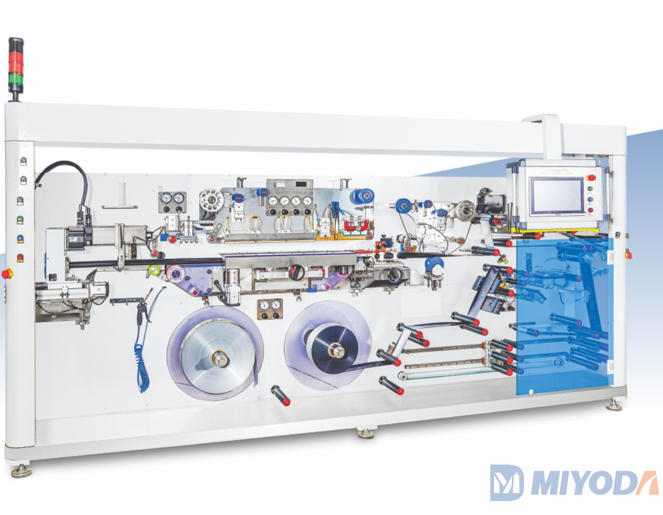
A modern laminate tube production line handles both ABL and PBL substrates at speeds up to 250 tubes per minute — a standard that manual or unlaminated lines cannot match.
1. Enhanced Barrier Protection: Protecting What’s Inside the Tube
The formulation inside your tube is often more chemically complex — and more vulnerable — than the brand story on the outside suggests. Retinoids degrade rapidly on oxygen exposure. Vitamin C serums oxidize within weeks in high-OTR (oxygen transmission rate) packaging. Mineral sunscreens separate when moisture infiltrates through a porous tube wall. And pharmaceutical ointments with active pharmaceutical ingredients face strict stability requirements that directly reference packaging barrier performance in their dossiers.
This is where lamination earns its cost premium — not in aesthetics, but in the chemistry of protection.
What lamination actually does to barrier performance:
A standard single-layer PE tube has an OTR (Oxygen Transmission Rate — the volume of oxygen that passes through one square meter of material per day) of approximately 300–1,500 cc/m²/day at 23°C. That’s adequate for rinse-off personal care products, but inadequate for most leave-on cosmetic actives and essentially all pharmaceutical topical formulations.
Add a laminated EVOH (ethylene vinyl alcohol) barrier layer — the plastic barrier used in PBL tubes — and the OTR drops to below 0.1–1.0 cc/m²/day at 65% relative humidity. Add an aluminum foil interlayer (ABL construction) and OTR falls to near zero — effectively stopping all oxygen transmission (Luxe Tubes Barrier Comparison).
| Tube Type | OTR(cc/m²/日) | Moisture Barrier | Light Barrier | おすすめ |
|---|---|---|---|---|
| Standard PE (1-layer) | 300–1,500 | Low | None | Rinse-off personal care |
| PE Co-extruded (5-layer, EVOH) | 0.1–1.0 | 中 | None | Leave-on cosmetics, SPF |
| PBL (Plastic Barrier Laminate) | 0.5–2.0 | 高 | None | Premium cosmetics, mild pharma |
| ABL(アルミニウムバリアラミネート) | <0.01 | Complete | Complete | Pharmaceutical, vitamin C, retinoids |
Glossary: OTR = Oxygen Transmission Rate. Measured in cc/m²/day — lower numbers mean less oxygen reaches your product. ABL = Aluminum Barrier Laminate. PBL = Plastic Barrier Laminate. EVOH = Ethylene vinyl alcohol, a plastic barrier polymer.
The real-world cost of inadequate barrier: A mid-tier cosmetic brand producing vitamin C serum tubes at 100,000 units per month with a 3% spoilage return rate — driven by premature oxidation from insufficient oxygen barrier — is absorbing approximately 4,500–9,000 spoiled units monthly. At a retail value of $8–18 per filled tube, that return stream represents $36,000–$162,000 in annual product liability before factoring in retailer chargebacks, restocking labor, or brand damage.
A correctly specified laminated tube with an EVOH or ABL barrier layer eliminates that spoilage vector. The lamination machine that enables it is not a cost — it’s insurance with a documented ROI.
For pharmaceutical tubes, the barrier requirement is regulatory, not optional. Stability testing dossiers submitted under FDA 21 CFR Part 211 or EU GMP Annex 1 must demonstrate that packaging maintains product specification across the full shelf-life period. A tube that fails to maintain barrier integrity over 24 months fails the stability study — and delays or blocks product registration.
2. Superior Print Quality: Turning Your Tube Into a Brand Asset
There’s a reason luxury skincare brands pay a premium for laminated tubes. The surface quality isn’t cosmetic in the superficial sense — it’s structural. The laminated outer layer provides a dimensionally stable, smooth, non-porous printing surface that standard PE tubes simply cannot match.
Here’s what that means in practical print output terms:
A standard PE tube surface has microscopic surface roughness that causes ink scatter during offset or screen printing — limiting achievable print resolution to approximately 50–65 line-screen (lpi). A laminated tube surface, with its smooth, sealed outer film, supports printing up to 150–175 lpi, enabling photorealistic gradients, fine serif text at 6pt, and metallic-effect inks that maintain sharpness across the tube cylinder.
For brands selling in the premium and luxury segment — where the tube is opened in front of a customer, given as a gift, or sits on a bathroom shelf as a brand statement — that print quality difference is the difference between shelf placement and shelf rejection.
Brand differentiation that lamination enables:
- Photorealistic product imagery directly on the tube body — achievable with digital heat transfer printing on laminated surfaces (DIGITRAN, 2024)
- Metallic gold and silver effects via hot stamping on the laminated outer layer, without the delamination risk that occurs on bare PE
- Matte-to-gloss zoning — printing a matte finish on the tube body with a glossy logo panel — only achievable on a laminated structure
- Dual-side color consistency maintained across production runs because the laminate film is produced to tighter color and surface tolerances than extruded PE
Compliance labeling is a second, often-overlooked advantage of laminated print surfaces. FDA cosmetic labeling requirements (21 CFR Part 701) and EU Cosmetics Regulation 1223/2009 specify minimum font sizes, ingredient list formats, and label permanence standards. A 6pt ingredient list printed on a non-laminated PE tube can fail print permanence testing — the ink lifts under standard rubbing and moisture exposure. The same text on a laminated tube with a protective varnish topcoat passes permanence testing consistently.
For niche market and private label operations: laminated tubes allow cost-effective short-run customization. A laminated tube in a 50mm diameter with a print-ready outer layer can be run in SKU quantities as low as 10,000–20,000 units with a digital print overlay, enabling brands to launch market-test quantities without committing to high-volume print tooling.

Laminated tube surfaces support up to 175 lpi printing — enabling photorealistic designs, fine text, and metallic finishes that standard PE extrusion surfaces cannot achieve.
3. Increased Production Efficiency: What Automation in Lamination Actually Delivers
The efficiency case for a lamination machine is built on three compounding factors: faster cycle times versus manual laminate handling, dramatically lower reject rates from uniform automated layering, and seamless integration into existing tube forming lines that eliminates the inter-station labor that currently bridges your process gaps.
Speed and throughput:
Modern automated lamination machines produce tube bodies at rates of 60–250 tubes per minute depending on tube diameter and laminate specification (DirectIndustry, 2025). A typical cosmetic tube producer transitioning from a semi-manual laminate handling process to an automated lamination line reports cycle time reductions of 35–50% on the forming stage alone — before accounting for the downstream quality improvement that reduces rework.
Reject rate comparison:
| Process Type | Typical Reject Rate | Root Cause |
|---|---|---|
| Manual laminate handling + forming | 3–6% | Misalignment, bubble entrapment, inconsistent adhesive coverage |
| Semi-automated lamination | 1.5–2.5% | Operator variation in feed tension and temperature control |
| Fully automated lamination line | 0.3–0.8% | Process-controlled; variation from material batch change only |
At 200,000 tubes per month, moving from a 4% manual reject rate to a 0.5% automated reject rate recovers 7,000 tube-equivalents per month from the waste stream. At a tube material cost of $0.12–0.25 per tube blank, that’s $840–$1,750 in monthly material savings from reject reduction alone — before counting the labor cost of rework and the formulation cost of refilling rejected tubes.
Integration with tube forming lines:
A lamination machine designed for inline integration receives laminate web stock from the roll, feeds it through a precision forming mandrel that shapes the flat sheet into a tube cylinder, and delivers formed tube bodies directly to the shoulder-injection or heading station — without a manual transfer step. This eliminates the staging buffer, the handling damage that occurs during manual transfer (an estimated 0.5–1.2% of tubes in manual transfer operations), and the labor position dedicated to inter-station transport.
ミヨダ・パッケージング・マシナリー engineers its laminate tube production systems for direct inline integration with tube heading, capping, and filling stations — meaning your lamination investment extends the efficiency of your entire downstream line, not just the lamination stage.
For a practical benchmark: a cosmetic tube manufacturer in Southeast Asia running a three-shift production schedule at 150,000 tubes per month reported that integrating an automated lamination line with their existing tube heading machine reduced their per-tube direct labor cost by $0.018/tube — which at their production volume delivered $2,700/month in ongoing labor savings and paid back the lamination equipment investment in 22 months.
ROI summary table:
| Efficiency Driver | Monthly Impact (200k tubes) | Annual Savings |
|---|---|---|
| Reject rate reduction (4% → 0.5%) | +7,000 usable tubes | $10,080–$21,000 |
| Labor saving (inter-station handling) | 1.5 operator positions eliminated | $25,000–$42,000 |
| Material waste reduction (web stock optimization) | ~18 kg/month less trim waste | $540–$900 |
| Reduced rework (consistent layering) | -2 hrs/week rework labor | $2,600–$5,200 |
| Total Annual Efficiency Gain | $38,220–$69,100 |
Estimates based on cosmetic tube production at 200,000 units/month; local labor and material costs will vary.
4. Improved Tube Durability: The Physical Quality Your Customers Feel
A tube that cracks at the shoulder after three weeks of consumer use is a quality failure — but it’s also a returns claim, a social media complaint, and a retailer conversation you don’t want to have. Tube durability isn’t a luxury specification. For cosmetic and pharmaceutical products that travel, are stored in temperature-variable bathroom environments, and are handled repeatedly over 2–4 months of use, it’s a baseline expectation.
Lamination adds measurable structural performance to the tube body in four specific ways:
1. Flexural fatigue resistance: The repeated squeezing and releasing that a consumer performs during product use is a mechanical fatigue cycle. A standard single-layer PE tube wall begins to show stress-whitening — micro-cracking of the polymer structure — after approximately 200–500 flex cycles under standard ISO 11040 tube flexibility testing conditions. A multi-layer laminated tube with an ABL or PBL construction resists stress-whitening past 2,000–5,000+ flex cycles, because the aluminum foil or barrier film distributes the flex stress across multiple layers rather than concentrating it in the PE wall.
2. Shoulder crack prevention: The tube shoulder — the transition point between the tube body cylinder and the closure neck — is the highest-stress zone during both production (heading injection) and consumer use (squeezing pressure concentrated at the shoulder fold). Poorly laminated or incompatibly formed shoulders develop micro-cracks that are invisible at inspection but become the failure point when the tube is filled, pressurized during shipping, or squeezed by the consumer. A correctly formed laminated shoulder, validated for the specific ABL or PBL substrate being used, eliminates this failure mode.
3. Leakage prevention: Tube leakage has two sources: seal failure at the tail (addressed by sealing equipment specifications) and micro-perforation of the tube wall during handling or shipping. A laminated tube with an aluminum interlayer is essentially impermeable to micro-perforation under normal handling conditions. This is why pharmaceutical topical products — where a leaking tube is a GMP deviation and a patient safety concern — specify ABL laminated tubes almost universally.
4. User perception of quality: This is harder to quantify but commercially real. Consumer research in premium skincare confirms that tube firmness, resistance to collapsing, and spring-back behavior after squeezing all correlate positively with perceived product quality — even before the consumer has used the product. A soft, easily-deformed single-layer PE tube signals a lower price tier. A laminated tube with controlled wall stiffness signals precision manufacturing. For travel-sized SKUs — where the tube is handled more frequently, stored in toiletry bags with other products pressing against it, and subjected to pressure changes in aircraft cabins — laminated construction is the minimum quality standard for premium positioning.
For distributors and agents: When your client asks why their premium skincare brand insists on laminated tubes for their new serum line, this section is your answer. The durability premium isn’t a marketing choice — it’s a shelf-life and consumer experience requirement built into the product specification.
5. Regulatory Compliance: Building a Foundation Retailers and Regulators Trust
Tube packaging compliance is not a one-time certification exercise. It’s an ongoing operational requirement that touches every material batch, every production run, and every market your product enters. A lamination machine that produces tubes from certified laminate materials simplifies this compliance burden in ways that become clearer when you map out what non-compliant packaging actually costs.
The regulatory landscape for cosmetic and pharmaceutical tube materials:
| Regulation | Jurisdiction | Key Requirement |
|---|---|---|
| FDA 21 CFR Part 211 | USA | GMP for packaging components; material safety documentation per batch |
| EU Regulation 1223/2009 | European Union | Safe for skin contact; REACH compliance; no prohibited substances |
| EU Regulation 10/2011 | EU (pharma-adjacent cosmetics) | Plastic materials in contact with food/pharma; migration limits |
| ISO 22716 (GMP Cosmetics) | Global | Good Manufacturing Practice for cosmetic manufacturing |
| ISO 15378 | 医薬品 | Primary packaging materials for medicinal products |
| REACH Regulation | European Union | Chemical safety of substances in packaging materials |
For a tube manufacturer supplying both cosmetic and pharmaceutical clients, compliance with ISO 15378 and FDA 21 CFR Part 211 is effectively a market access requirement — not an optional quality differentiator. Retailers in the EU, UK, and North America increasingly require packaging suppliers to hold these certifications as a condition of supplier approval.
How lamination simplifies compliance:
Modern laminate materials for tube production are supplied by material manufacturers who provide Material Safety Data Sheets (MSDS), migration test reports per EU 10/2011, REACH substance declarationsそして batch Certificates of Analysis (COA) as standard documentation. When your lamination machine runs a certified laminate web stock, you inherit the compliance documentation from the material supplier — rather than having to generate it from scratch for every extrusion batch.
This is a meaningful operational difference. A cosmetic brand that requests FDA compliance documentation from a tube supplier running certified ABL laminate can receive material certificates, migration test reports, and a Declaration of Compliance within 24–48 hours. The same request directed at a supplier running non-certified extruded PE requires commissioning fresh migration testing — a process that takes 6–12 weeks and costs $3,000–$8,000 per material-product combination.
Organic and medical-grade applications:
The growth segment for certified compliance is natural and organic cosmetics, where brands must document the absence of BPA, phthalates, heavy metals, and other restricted substances in packaging materials. Certified laminate suppliers provide this documentation as standard. For medical-device adjacent products — wound care creams, dermatological treatments, medicated ointments — the tube packaging may need to meet ISO 10993 biocompatibility standards, which are achievable with correctly certified ABL laminate materials but require specific material selection and documentation.
For more on the compliance requirements for squeeze tube packaging, Ukugi’s regulatory compliance guide for FDA 21 CFR and EU 10/2011 provides a detailed breakdown of the documentation chain from material supplier to finished tube.

Certified laminate materials for ABL and PBL tubes ship with full compliance documentation — migration test reports, REACH declarations, and batch COA — reducing your regulatory burden per production run.
6. Material Flexibility: Running Thinner, Lighter, and Lower-Cost Without Sacrificing Performance
One of the least-discussed advantages of lamination in tube production is its effect on the economics of material specification. Lamination allows tube producers to use thinner base films than would be structurally viable in a single-layer extrusion, because the laminated structure distributes mechanical load across multiple bonded layers rather than relying on a single thick wall.
The wall-thickness economics:
A standard single-layer PE tube wall for a 35mm diameter cosmetic tube typically runs 0.35–0.45 mm to achieve the required stiffness and pinhole resistance. A laminated 5-layer tube of the same diameter achieves equivalent or superior stiffness and barrier performance at 0.25–0.35 mm total wall thickness — because the aluminum or EVOH interlayer contributes rigidity that the PE layers alone require additional thickness to match.
That 0.10 mm reduction in wall thickness translates directly to material consumption:
$$\text{Material Saving per Tube} = \pi \times d \times L \times \Delta t \times \rho_{\text{PE}}$$
For a 35mm diameter, 150mm long tube, with a wall thickness reduction of 0.10 mm and PE density of 0.93 g/cm³:
$$= \pi \times 35\text{mm} \times 150\text{mm} \times 0.10\text{mm} \times 0.00093\text{g/mm}^3 \approx 1.53\text{g/tube}$$
At a PE raw material cost of $1.20–$1.80/kg, that’s $0.0018–$0.0028 saved per tube in raw material — which on a 1-million-tube annual production run equals $1,800–$2,800 in annual material savings from wall thickness optimization alone.
Substrate flexibility the lamination machine enables:
A well-specified lamination machine handles multiple laminate substrates — ABL at various foil gauges (9μm, 12μm, 20μm), PBL with EVOH or PVDC barrier layers, and mono-material PE structures for recyclable applications — without major retooling. This means a single production line can serve:
- Pharmaceutical clients requiring ABL with thick foil gauge for complete barrier
- Premium cosmetics clients requiring PBL for recyclability with high-barrier performance
- Mass-market clients requiring cost-optimized thin-gauge ABL or PE-based PBL
The ability to run multiple substrates on one line is a commercial multiplier for distributors and agents — it means the machine investment addresses a wider client base, not a single specification niche.
Shipping cost impact of thinner, lighter tubes:
Lamination also reduces per-unit shipping weight. A 35mm diameter, 150mm tube in standard PE construction weighs approximately 6.5–8g empty. The same tube in PBL laminate construction at reduced wall thickness weighs 4.5–6g. On a pallet of 50,000 tubes, that’s a weight reduction of 100–175 kg — a measurable freight cost saving on transcontinental shipments, and a contribution to the tube’s carbon footprint calculation that ESG-focused brands are increasingly requiring suppliers to document.
7. Sustainability: Meeting the Mandates That Are Already Reshaping Your Client Base
Sustainability in tube packaging is no longer a brand marketing story. It’s a procurement requirement. Retailers in the EU, UK, and Scandinavia are requiring that packaging meet recyclability standards as a condition of shelf listing. The EU Packaging and Packaging Waste Regulation (PPWR), phased in from 2025–2030, sets mandatory recyclability targets for packaging placed on the EU market. Brands selling through major retail chains in North America and Australia are facing equivalent requirements from retailer sustainability programs.
For tube producers, this creates a specific challenge: traditional multi-material laminate structures (ABL with aluminum foil interlayer) are not recyclable in standard plastic waste streams. The aluminum foil, while excellent for barrier performance, prevents the tube from being processed through PE recycling infrastructure.
What advanced lamination technology enables:
Modern lamination machines are designed to process mono-material PE laminate structures — where the barrier function is provided by an EVOH layer co-extruded within the PE film stack, rather than by aluminum foil. The result is a tube that delivers PBL-equivalent barrier performance while being fully recyclable in standard PE plastic waste streams.
This is the technology direction that the largest cosmetic brands are already moving toward. Albéa, one of the world’s largest cosmetic tube suppliers, launched its Fill-Up mono-material PE tube in 2023, produced from 100% PE with an integrated barrier layer, compatible with existing PE recycling streams (Albéa Group, 2023).
For a tube producer investing in lamination machinery today, specifying a machine that handles both conventional ABL/PBL and mono-material PE laminate structures is a forward-compatible investment. It allows you to serve clients with conventional laminate specifications today, while being positioned to transition to mono-material structures as retailer mandates tighten.
PCR (Post-Consumer Recycled) content integration:
Advanced laminate films are available with PCR PE content of 30–50% without significant barrier performance degradation. A tube producer running certified PCR laminate can offer clients a documented recycled content claim — a requirement for brands targeting the EU’s Green Claims Directive compliance. The lamination machine must be specified to handle PCR-blended films, which have slightly different tensile properties and forming behavior than virgin PE laminate.
The ESG business case for agents and distributors:
When you present a lamination machine investment to a prospective client, the sustainability argument is increasingly the deciding factor in markets with strong retail sustainability programs. A client who can add “tubes made from mono-material PE with 30% PCR content, recyclable in standard PE streams” to their brand communication is gaining a competitive position in retailer sustainability scorecards — and they’re doing it with your machinery.

Mono-material PE laminate structures — processable on modern lamination machines — deliver barrier performance comparable to traditional PBL while remaining fully recyclable in standard plastic waste streams.
8. Competitive Edge: Why Lamination Separates Market Leaders from Followers
The cosmetic and pharmaceutical tube market is not short of suppliers. In Southeast Asia, Eastern Europe, and Latin America, the number of tube producers has grown steadily for a decade, compressing margins on standard PE tube production. Competing on price in a commoditized segment is a structural dead end — the producer with the lowest labor cost will always win, and that cost advantage will eventually be competed away.
The producers who are growing margins, winning premium clients, and building distributor loyalty are competing on capability — specifically, on the ability to deliver tube specifications that lower-capability competitors cannot match. Lamination is a primary capability differentiator in this environment.
What lamination capability unlocks commercially:
- Premium brand access: Beauty brands in the $20–$100+ retail price tier require laminated tubes as a supply standard. A tube producer without lamination capability is disqualified from this segment before the conversation starts.
- Pharmaceutical supply chain access: Pharma clients specifying ABL tubes for topical formulations require lamination manufacturing. The regulatory documentation requirements — ISO 15378, validated forming processes, batch traceability — are achievable with a properly specified lamination line and represent a significant barrier to entry for competitors.
- Private label volume stability: Private label cosmetic manufacturers — who produce for multiple brands from a single facility — prefer suppliers with multi-substrate lamination capability because it reduces their own supplier base complexity. A lamination-capable tube producer can serve a private label client’s full product range from a single supply relationship.
- Speed to market: A lamination line with digital print capability and quick-change tooling can take a new SKU from approved artwork to first production sample in 10–14 days — a timeline that matters enormously to brands launching seasonal collections, limited editions, or market-test quantities.
On-shelf differentiation in retail:
Research in cosmetic retail consistently shows that packaging quality is the primary purchase driver for first-time buyers of a cosmetic product — before fragrance, before ingredient claims, before price. A laminated tube with photorealistic printing, a soft-touch laminate finish, and a precision-formed shoulder communicates product quality to the consumer at the point of decision. The same formulation in a standard PE tube, at the same retail price, loses that first-impression competition.
For agents and distributors representing lamination machinery: this is your client’s competitive argument, and it’s one that has direct revenue implications. A client who invests in lamination capability and wins two premium brand contracts at a 30% margin premium over their standard PE tube business has recovered their equipment investment in the revenue lift from those contracts alone.
YouTube Video — See Laminate Tube Production in Action:

▶ Watch a complete laminated tube production line in operation — from laminate web stock feeding through tube forming, shoulder injection, and quality inspection. Runtime: ~4 minutes.
9. Strategic Investment: The ROI Framework for a Lamination Machine Decision
The framing error most buyers make when evaluating a lamination machine is treating it as a cost center — an expense that increases per-unit production cost. The correct frame is that of a revenue enabler: a piece of equipment that opens market segments, reduces waste-driven losses, and builds the operational capability that premium clients require as a supply condition.
Here’s how the ROI calculation actually works for a typical cosmetic tube producer:
Baseline scenario: A cosmetic tube producer currently running a standard PE extrusion line at 150,000 tubes per month, serving mid-market personal care brands at an average selling price of $0.18/tube. Annual revenue: $324,000 from tube sales.
Post-lamination scenario: After investing in a lamination machine and qualifying for premium brand supply, the same producer wins two laminated tube contracts at $0.32/tube for 100,000 tubes/month combined, while retaining the existing PE business. Monthly revenue increases from $27,000 to $59,000 — a $384,000 annual revenue increase from the premium contract uplift alone.
Capital recovery timeline:
| Investment Item | 概算費用 |
|---|---|
| Lamination machine (mid-range automated) | $80,000–$150,000 |
| Installation and commissioning | $8,000–$15,000 |
| Laminate material qualification testing | $3,000–$6,000 |
| Operator training (on-site) | Included with Miyoda systems |
| Total Investment | $91,000–$171,000 |
At the revenue uplift from premium contract access ($384,000/year) minus the direct material cost increase for laminate versus PE ($0.06–$0.10/tube premium × 100,000 tubes = $72,000–$120,000/year), the net annual revenue improvement is $264,000–$312,000.
$$\text{Payback Period} = \frac{\text{Total Investment}}{\text{Net Annual Revenue Improvement}} = \frac{$130,000}{$288,000} \approx 5.4 \text{ months}$$
That is a sub-6-month payback on a capital investment that then generates premium revenue for the next 10–15 years of machine service life.
Case study insight: A tube manufacturer in the MENA region added a lamination line to their existing PE extrusion operation in early 2024. Within 8 months, they had qualified as an ABL tube supplier for two pharmaceutical topical drug manufacturers. The pharmaceutical contracts carried a 68% margin premium over their existing cosmetic PE tube business. Their lamination equipment investment was recovered in full within 7 months of first pharmaceutical shipment.
The support dimension of ROI:
A lamination machine investment is only as valuable as the operational support behind it. Installation, commissioning, operator training, and ongoing technical service determine whether the machine achieves the output and quality consistency that the ROI calculation assumes.
ミヨダ・パッケージング・マシナリー provides on-site installation, operator training, and post-sale technical support for its laminate tube production systems — including the Miyoda laminate tube making machine designed for both ABL and PBL substrates. For distributors and agents, this support infrastructure is part of the value proposition you’re offering your clients: not just a machine, but a production capability backed by a manufacturer who remains engaged after the invoice is paid.
For a complete view of the tube production machinery ecosystem — from extrusion through lamination to filling and sealing — the Miyoda product line covers the full sequence of equipment needed for an integrated cosmetic and pharmaceutical soft tube production operation.

A lamination machine investment — properly sized and supported — typically recovers its capital cost within 6–12 months through premium contract access and waste reduction savings combined.
Quick Reference Glossary
| Term | Plain-Language Definition |
|---|---|
| ABL (Aluminum Barrier Laminate) | A tube wall construction with an aluminum foil interlayer — blocks nearly all oxygen, moisture, and light. Standard for pharmaceutical tubes and vitamin C serums. |
| PBL (Plastic Barrier Laminate) | A tube wall with a plastic (EVOH or PVDC) barrier layer instead of aluminum foil — recyclable, and sufficient for most cosmetic leave-on products. |
| EVOH (Ethylene Vinyl Alcohol) | A plastic barrier polymer used in PBL tubes. Reduces oxygen transmission to 0.1–1.0 cc/m²/day at moderate humidity. |
| OTR (Oxygen Transmission Rate) | How much oxygen passes through the tube wall per day. Lower = better product protection. Measured in cc/m²/day. |
| GMP (Good Manufacturing Practice) | Regulatory standard for manufacturing processes in pharmaceutical and cosmetic production. Required for pharma tube supply. |
| PCR (Post-Consumer Recycled) content | Recycled plastic material incorporated into tube laminate films — reduces virgin plastic use and supports brand sustainability claims. |
| Mono-material tube | A tube made entirely from one polymer (usually PE), making it recyclable in standard plastic streams. Achieved via EVOH co-extrusion, not aluminum foil. |
| Ultrasonic sealing | A tube-sealing method using high-frequency vibration (20–40 kHz) to generate heat within the tube material — faster and more consistent than heat-jaw sealing. |
| Migration testing | Laboratory testing that measures whether chemical substances transfer from packaging material into the product — required for EU 10/2011 and FDA compliance. |
| COA (Certificate of Analysis) | A quality document confirming that a specific material batch meets defined specifications — required for pharmaceutical supply chain qualification. |
| ISO 15378 | The international standard for primary packaging materials used in pharmaceutical manufacturing. Prerequisite for pharma tube supply. |
| Lpi (Lines per inch) | A measure of print resolution. Higher lpi = finer detail and sharper photorealistic print. Standard PE tubes: 50–65 lpi. Laminated tubes: up to 175 lpi. |
よくある質問
Why is lamination important for cosmetic tube production?
Lamination is the primary mechanism by which cosmetic tube packaging achieves the barrier performance, print quality, and structural durability that premium and pharmaceutical clients require. Without lamination, tubes rely on a single PE wall that cannot block oxygen or moisture to the levels required for leave-on cosmetic actives, cannot support high-resolution print at 150+ lpi, and cannot achieve the structural stiffness premium brands expect. The market shift toward laminated tubes — now accounting for the majority of cosmetic and pharmaceutical tube production globally — reflects this functional reality, not a trend cycle.
Can lamination improve the shelf life of cosmetic products?
Yes, measurably. A standard PE tube allows 300–1,500 cc/m²/day of oxygen transmission. A PBL tube with EVOH barrier layer reduces this to 0.5–2.0 cc/m²/day. An ABL tube reduces it to near zero. For a vitamin C serum with an active concentration of 10–15%, the difference between adequate and inadequate oxygen barrier can reduce oxidative degradation from a 6–9 month stability failure to a product that passes 24-month shelf-life testing. For the brand, this means fewer returns, fewer stability study failures, and fewer reformulation cycles.
Is lamination compatible with aluminum-plastic and full-plastic tubes?
Modern lamination machines handle both ABL (aluminum-plastic) and PBL/mono-material (full-plastic) tube substrates. The key specification requirement is that the machine be validated for each substrate — tooling temperature, mandrel geometry, and adhesive parameters differ between ABL and PBL and must be set correctly for each material to achieve the required shoulder bond strength (minimum 2.5 N/15mm for cosmetic applications).
Does lamination increase production costs significantly?
The upfront material cost of laminate web stock is higher than standard PE resin — typically $0.06–$0.12 per tube more in direct material cost. However, the total cost picture reverses when you account for: reject rate reduction (saving $840–$1,750/month at 200k tubes), labor savings from automated lamination ($25,000–$42,000/year), premium contract access (selling at $0.32/tube versus $0.18/tube for standard PE), and reduced compliance documentation cost per batch. The net financial result is a cost premium that is recovered through operational savings and revenue uplift within 6–12 months for most mid-scale tube producers.
How does lamination affect printing on tubes?
Lamination transforms the tube surface from a microporous PE extrusion (supporting 50–65 lpi print resolution) into a smooth, dimensionally stable film surface supporting up to 150–175 lpi. This enables photorealistic imagery, fine serif text at 6pt, metallic hot-stamp effects, and matte-to-gloss zoning — none of which are achievable on standard PE extrusion surfaces. It also improves print permanence: laminated surfaces with protective varnish topcoats pass standard rubbing and moisture resistance tests required by FDA 21 CFR Part 701 for cosmetic label permanence.
Can I use eco-friendly or recyclable materials with lamination?
Yes. Modern lamination machines process mono-material PE laminate structures — tubes made entirely from PE with an EVOH co-extruded barrier layer — that are fully recyclable in standard PE plastic waste streams. These structures are the direction that the EU’s Packaging and Packaging Waste Regulation (PPWR) and major retailer sustainability programs are pushing the market toward. Laminate films with 30–50% PCR (post-consumer recycled) PE content are also commercially available and processable on correctly specified lamination lines.
Is the lamination process difficult to integrate into existing production lines?
No, if the lamination machine is specified for inline integration. A well-designed lamination system receives web stock from a roll unwind and delivers formed tube cylinders directly to a downstream heading or shoulder-injection station without manual transfer. The integration requirement is primarily mechanical — conveyor interface height, tube orientation, and throughput speed synchronization — rather than requiring significant line modification. For producers adding lamination to an existing extrusion and heading line, a machine supplier who provides integration engineering support (rather than just equipment delivery) is essential.
What maintenance is required for a lamination machine?
Critical maintenance intervals for a lamination machine include: daily cleaning of the forming mandrel and adhesive metering system; weekly inspection of web stock tension rollers and edge guides; monthly calibration of temperature sensors in the laminate bonding zone; quarterly inspection of ultrasonic sealing components (if ultrasonic sealing is used for tube tail closure); and annual inspection of the mandrel geometry and replacement of worn forming components. A structured preventive maintenance program — documented and followed — reduces unplanned downtime by 60–70% compared to reactive maintenance. Most lamination machine suppliers, including Miyoda Packaging Machinery, provide maintenance schedules and spare parts lists as part of the machine documentation package.
How does lamination help meet regulatory standards?
Laminate materials for tube production are supplied with batch-specific compliance documentation: MSDS, migration test reports per EU Regulation 10/2011, REACH substance declarations, and Certificates of Analysis. When your production line runs certified laminate web stock, this documentation chain passes through to your finished tube quality record without requiring you to commission fresh migration testing. This simplifies the regulatory documentation burden for pharmaceutical clients who require material traceability to their API stability dossiers, and for cosmetic clients who need to demonstrate REACH compliance to EU importers.
Can I customize the lamination process for different product lines?
Yes. Lamination parameters — bonding temperature, adhesive application weight, web tension, forming mandrel diameter — are adjustable via the machine control system and can be stored as product recipes in the machine PLC. This allows rapid changeover between tube specifications (different diameters, wall structures, or laminate substrates) with consistent parameter recall. A machine with recipe storage can changeover between a 19mm ABL pharmaceutical tube and a 40mm PBL cosmetic tube in 30–45 minutes with a trained operator — versus 3–4 hours on a machine without stored parameter management.
Do laminated tubes have better consumer appeal?
Consumer research in cosmetic retail consistently shows that tube stiffness, resistance to collapsing, and recovery after squeezing correlate positively with perceived product quality — all of which are superior in laminated versus standard PE tubes. At the premium cosmetic price tier ($25–$100+ retail), packaging quality is typically the primary purchase driver for first-time buyers. A laminated tube with high-resolution printing and a controlled-stiffness body communicates quality at the shelf before the product is used — a commercial advantage that directly supports brand positioning and repeat purchase rates.
What support is available after purchasing a lamination machine?
Comprehensive post-sale support for a lamination machine investment should include on-site installation and commissioning, operator training at your facility using your production materials, documented operating and maintenance procedures in your working language, a spare parts holding commitment from the supplier, remote diagnostics capability for control system issues, and a warranty response time commitment for production-critical failures. For international buyers, confirm that your supplier can reach your facility within a defined service window — verbal commitments are less reliable than contractual service level agreements. Contact Miyoda Packaging Machinery for a detailed service and support specification for your production location.















