
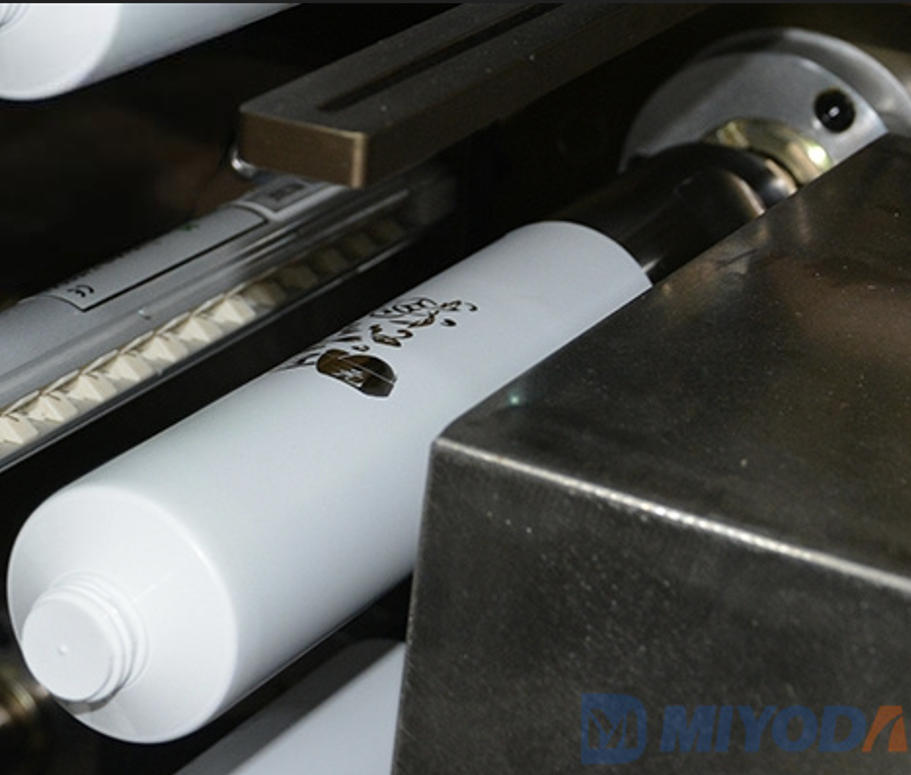
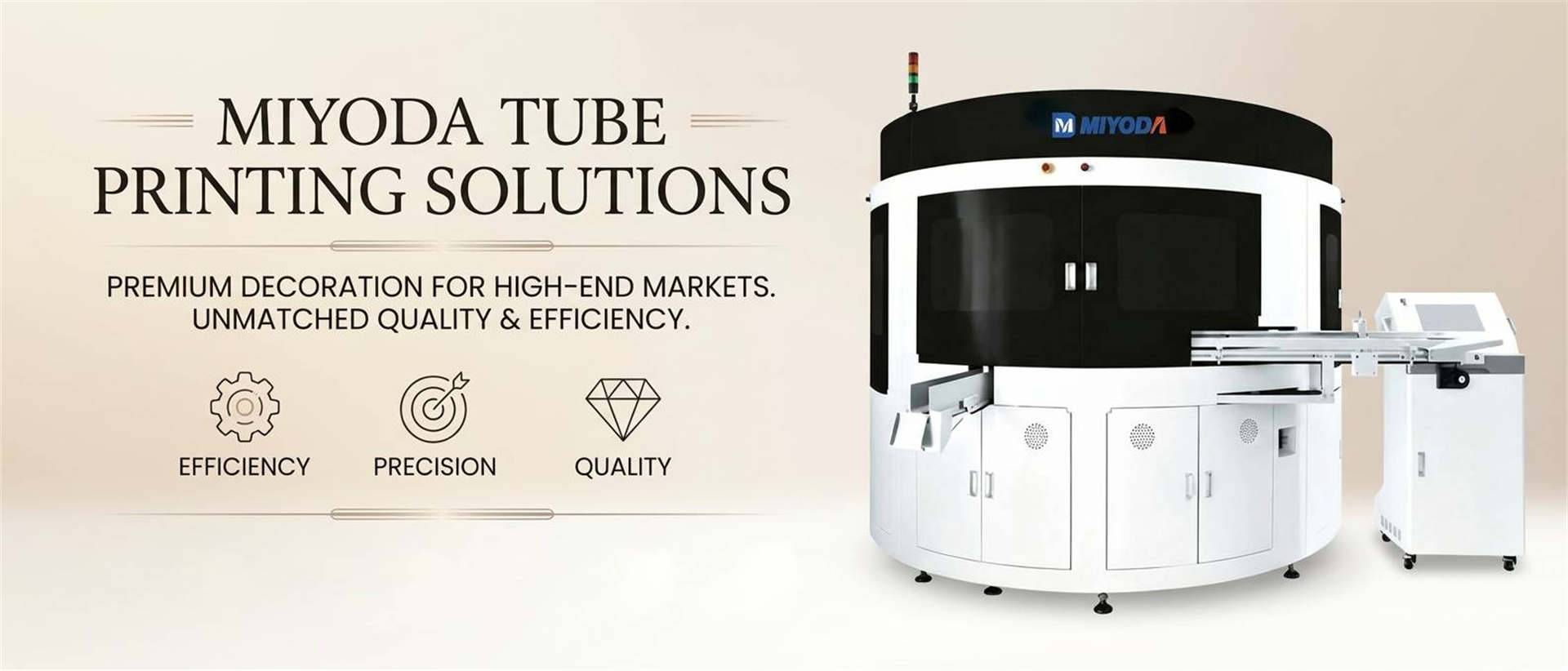
The short answer: To get a strong ROI and pharmaceutical-grade precision from a tube silk screen printing machine, don’t stop at the spec sheet. Judge every machine on three things: how efficiently it runs in a real shift, how fast it changes over, and how well it scales as your orders grow.
I. Navigating the Complexity of Tube Printing Investments
Where Aesthetic Appeal Meets Regulatory Compliance
A printed tube has two jobs.
For a cosmetic brand, the print is the brand. A shopper decides in about three seconds, and a slightly blurred logo or a dull white base can push them toward the tube next to yours.
For a pharmaceutical client, the print is information. Drug name, strength, batch number, and warnings must be sharp, correctly placed, and must stay readable after the tube is squeezed, wiped with alcohol, or stored in a hot bathroom. Under GMP (Good Manufacturing Practice, the quality rules regulators enforce), a misprinted label can lead to a batch rejection or a product recall.
Quick definition: Silk screen printing Screen printing, also called silk screen printing, pushes ink through a fine mesh stencil onto a surface using a rubber blade called a squeegee. On tubes, the tube spins against the screen so the ink lands evenly around the curved body. The result is thick, opaque, vivid colour that offset printing can’t fully match.
The Hidden Costs of “Cheap” Machinery
A low-priced printer often costs more over its life. These costs don’t appear on the quotation:
- Downtime: Each hour a printer is down can stop your whole tube line, including extrusion, heading, and capping.
- Waste: Every misprinted tube carries the cost of the plastic, the shoulder, the cap, and the labour already put into it.
- Inconsistent registration: Registration means each colour lands exactly where it should relative to the others. When it drifts, a 3-colour logo looks “shadowed” or doubled.
Industry insight: Buyers who focus on price usually compare machines by purchase cost. Buyers who think about the full picture compare them by cost per good printed tube over five years. We’ve seen a printer that was 30% cheaper end up costing more within 18 months because of scrap, spare parts delays, and overtime. Our screen printing machine total cost of ownership guide breaks these costs down line by line.
Objective of This Guide
This guide gives you a practical framework for choosing a silk screen solution that removes bottlenecks instead of adding new ones. It is written for cosmetic and pharmaceutical tube producers, and for the distributors and agents who advise them.
II. Identifying Your Core Production Pain Points
Analyzing Current Throughput Gaps: Where Is the Bottleneck?
Before you look at any new machine, find out where your line actually slows down. A simple method is to time each station for one full shift:
| Station | Rated Speed (tubes/min) | Actual Average (tubes/min) | Gap |
|---|---|---|---|
| Extrusion + cutting | 120 | 110 | 8% |
| Heading / shoulder | 100 | 92 | 8% |
| Screen printing | 80 | 52 | 35% |
| Capping | 110 | 100 | 9% |
Example data from a typical mid-size cosmetic tube plant.
In this example the printer is clearly the bottleneck. It delivers only 65% of its rated speed, so every other machine is waiting on it.
Common hidden causes:
- Tubes jamming at the loading point
- Operators stopping to wipe screens
- Slow UV curing between colours
- Long set-up time on every new artwork
Balancing Quality vs. Volume
Manual precision and automated speed each have their place. Use this rule of thumb:
- Under about 5,000 tubes per day, many SKUs, frequent design changes: Semi-automatic printing with a skilled operator can work well.
- 5,000 to 30,000 tubes per day: A fully automatic single-colour or two-colour printer usually pays off.
- Over 30,000 tubes per day, or any pharma contract: Fully automatic, multi-colour, PLC-controlled, with inline inspection.
Assessing the Cost of Inaccuracy
Here is how one small error turns into real money:
Example: A premium skincare tube costs $0.18 to make before printing. A 2% misprint rate on a 500,000-tube order means 10,000 scrapped tubes, or $1,800 in lost material. Add re-running time, overtime, and a possible late-delivery penalty, and one order can lose $4,000–$6,000.
For pharma, the cost is often far higher. A smudged batch code can quarantine an entire lot until it is reinspected.
III. Performance Benchmarks for Pharmaceutical and Cosmetic Standards
Precision and Registration on Curved, Flexible Surfaces
Printing on a tube is much harder than printing on a flat card. The surface is curved, slightly soft, and may not be perfectly round.
Glossary: Registration accuracy How closely each colour layer lines up with the others. It is measured in millimetres. For cosmetic tubes, ±0.1 mm is a common target. For fine pharma text and multi-colour logos, buyers often ask for ±0.05–0.08 mm.
What separates high-precision machines from the rest:
- Mandrel support: A mandrel is a metal rod that goes inside the tube to keep it round under squeegee pressure. Worn or poorly sized mandrels are the top cause of oval prints.
- Optical or servo registration: A sensor finds a mark on the tube (often the side seam on laminate tubes) and rotates the tube to the same starting point every time.
- Synchronised servo drives: The screen movement and the tube rotation are locked together electronically, so the image doesn’t stretch or smear.
Ink Adhesion and Durability for Chemical-Resistant Pharma Tubes
Pharma tubes often hold creams with alcohol, oils, or active ingredients that attack weak ink. Ask how the machine handles:
- Surface pre-treatment: PE and PP have low surface energy, so ink beads up on them like water on a waxed car. Corona treatment or flame treatment raises the surface energy so the ink grips. A common target is 38–42 dyn/cm.
- UV curing: UV ink hardens in under a second under ultraviolet light. A strong cure is essential for scratch and chemical resistance.
- Inter-station curing: On multi-colour jobs, each colour should be at least partly cured before the next one is printed. Otherwise the colours can bleed into each other.
Simple in-house adhesion test: Press a strip of strong adhesive tape on the print, rub it down, and pull it off quickly. If any ink comes off, the cure or pre-treatment isn’t right. Pharma buyers often add an alcohol-rub test: 20 rubs with an IPA-soaked cloth and no visible ink loss.
Cleanliness and Contamination Control
For medical-grade production, the printer must not become a source of particles or contamination. Check for:
- Stainless steel or coated surfaces that are easy to wipe down
- Enclosed UV lamps with ozone extraction
- Low-lint squeegees and a closed ink supply
- A design that suits classified clean areas under standards such as ISO 14644-1 cleanroom classification
Pharma packaging suppliers are often audited against ISO 15378 for primary packaging materials. The printer’s documentation (material certificates, cleaning SOPs, and a validation support package) matters as much as its print quality.
For a side-by-side look at how cosmetic and pharma requirements differ, see our guide on screen printing machines for cosmetics vs. pharma packaging.
IV. The Automation Spectrum: Matching Technology to Your Volume
Manual vs. Semi-Automatic vs. Fully Automatic
| Factor | Manual | Semi-Automatic | Fully Automatic |
|---|---|---|---|
| Typical output | 300–800 tubes/hr | 1,200–2,500 tubes/hr | 3,000–6,000+ tubes/hr |
| Operators per shift | 1 per machine | 1 per machine | 1 per 2–3 machines |
| Registration consistency | Depends on operator skill | Good | Excellent and repeatable |
| Best for | Samples, start-ups | Boutique brands, short runs | Contract makers, pharma, export |
| Upfront cost | Lowest | 中 | Highest |
| Cost per printed tube | Highest | 中 | Lowest at volume |
Speeds are typical industry ranges and vary with tube size, number of colours, and ink.
Integration with Extrusion and Capping Lines
A standalone printer creates “islands” in your plant. Tubes are boxed, carried, and loaded by hand, and each handling step risks scratches and dust.
An integrated printer receives tubes straight from the extrusion and heading stages, then passes them to capping. When you evaluate a machine, ask:
- Can it take an automatic feed from a hopper or conveyor?
- Does it share signals with upstream and downstream machines, so that if the capper stops, the printer pauses instead of piling tubes up?
- Can it match the speed of your チューブ押出ライン?
Reducing Human Error with PLC Controls
Glossary: PLC (Programmable Logic Controller) An industrial computer that runs the machine. It stores settings such as squeegee pressure, print speed, and UV power as “recipes.”
With recipe storage, the night shift runs SKU #A-204 exactly the way the day shift did. No one has to remember settings or rely on handwritten notes. Access levels also stop untrained staff from changing critical values.
Industry insight: In our experience, most of the quality difference between shifts doesn’t come from the machine. It comes from small, undocumented tweaks. Locking recipes behind a password often fixes “mystery” defects within a week.
V. Evaluating Speed vs. Stability
The “True Speed” Metric
A brochure might say “up to 100 pcs/min.” That figure is usually measured with one colour, a small tube, simple artwork, and no stops.
Glossary: OEE (Overall Equipment Effectiveness) OEE = Availability × Performance × Quality. It shows how much good output you actually get compared with the theoretical maximum. World-class lines reach about 85%. Many tube printers run at 55–65%.
Example of true speed:
- Rated speed: 80 tubes/min
- Availability (time actually running): 88%
- Performance (speed while running): 90%
- Quality (good tubes): 97%
- True speed = 80 × 0.88 × 0.90 × 0.97 ≈ 61 good tubes/min
Always ask suppliers for sustained output over an 8-hour shift on your own tube and artwork.
Managing Vibration at High Speeds
At high speed, even small vibrations shake the screen against the tube. The results are blurred edges, “ghost” double images, and broken fine text.
What helps:
- A heavy, rigid frame, ideally cast or thick welded steel
- Servo motors with smooth acceleration curves instead of hard mechanical cams
- Precision linear guides for screen travel
- A machine that stays level and anchored on a solid floor
Cycle Time Optimization: Load, Print, Unload
A tube’s cycle on the printer has three parts:
- Loading: Tube onto the mandrel, then pre-treatment
- Printing: Registration, then the print stroke, then UV cure
- Unloading: Tube off the mandrel and onto the conveyor
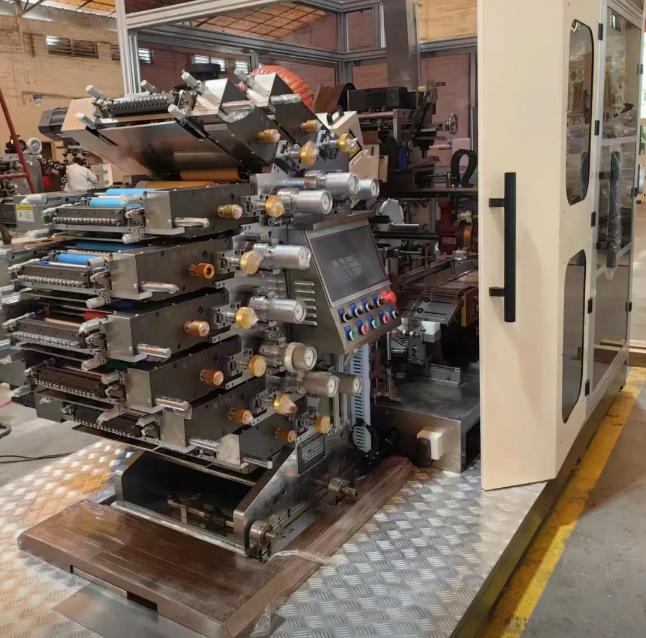
On rotary indexing machines, loading and unloading happen at other stations while printing is under way. That parallel work is how automatic machines reach much higher output than manual ones. If loading takes longer than printing, upgrading the print head won’t help you.
VI. The Changeover Challenge: Minimizing Non-Productive Time
Tool-less Adjustment Systems
Changeover is the time between the last good tube of one job and the first good tube of the next. It is often the biggest hidden loss for producers who make many SKUs.
Look for:
- Quick-release mandrels with no wrenches needed
- Scales or digital readouts on adjustment axes, so settings can be repeated
- Clip-in screen frames with locating pins
- Stored recipes for each tube diameter
| Changeover Approach | Typical Time (16 mm → 35 mm) |
|---|---|
| Older machines with bolted mandrels and manual alignment | 60–120 minutes |
| Modern machines with quick-change parts and recipes | 15–30 minutes |
Many plants use SMED (Single-Minute Exchange of Die) methods. The core idea is to prepare everything you can, such as screens, ink, and mandrels, while the current job is still running.
Setup Calibration Speed: Reaching “First-Piece Correct”
“First-piece correct” means the first tube after changeover passes quality inspection. Some machines need 20–50 test tubes before registration is right. Better machines get it right within 3–5 tubes because recipes restore the exact positions.
Across 6 changeovers per week, the difference is roughly 200–300 wasted tubes per week, or more than 10,000 per year.
Versatility Across PE, Laminate, and Aluminum
| Tube Material | Printing Challenge | What the Machine Needs |
|---|---|---|
| PE (polyethylene) extruded | Low surface energy, soft walls | Strong pre-treatment, firm mandrel support |
| Laminate (ABL/PBL) | Side seam, flexible body | Seam detection for registration |
| Aluminum | Rigid but dents easily | Gentle handling, matched ink system |
To learn more about how materials behave, see PE vs. PP vs. aluminum tube materials compared.
VII. Long-Term Reliability and Maintenance Frameworks
Component Sourcing: Keep Wear Parts Close
Silk screen printers have predictable wear parts. Ask every supplier for a recommended spare parts list with lead times:
| Wear Part | Typical Replacement Interval | Downtime Risk If Out of Stock |
|---|---|---|
| Squeegee blades | Every 1–4 weeks (depends on ink and hours) | 高 |
| Screens (mesh) | Every 20,000–100,000 prints | 高 |
| UV lamps | Every 800–1,500 hours | 中 |
| Mandrel sleeves / bearings | Every 6–12 months | 中 |
| Belts and grippers | Every 12 months | Low to medium |
Intervals are typical ranges and depend on ink, artwork, and running hours.
Industry insight: Machines that use standard brand-name electrical parts (PLC, servo, sensors) are much easier to support locally. A distributor in South America can buy a common servo drive in days. A custom board from overseas can take weeks.
Ease of Cleaning
Colour changes and screen swaps can take a lot of time. Machines that save the most time have:
- Removable ink trays
- Screens that come out without disturbing their alignment
- Smooth surfaces with no hidden ink traps
- A UV ink system, since UV ink doesn’t dry on the screen during short pauses
Technical Support Infrastructure
When a machine stops, every hour counts. Before you buy, check:
- Remote support: Can engineers connect to the PLC to diagnose faults?
- Video support: Is live video troubleshooting available in your time zone?
- On-site service: How fast can a technician arrive, and who pays for travel?
- Training: Is operator training included at installation?
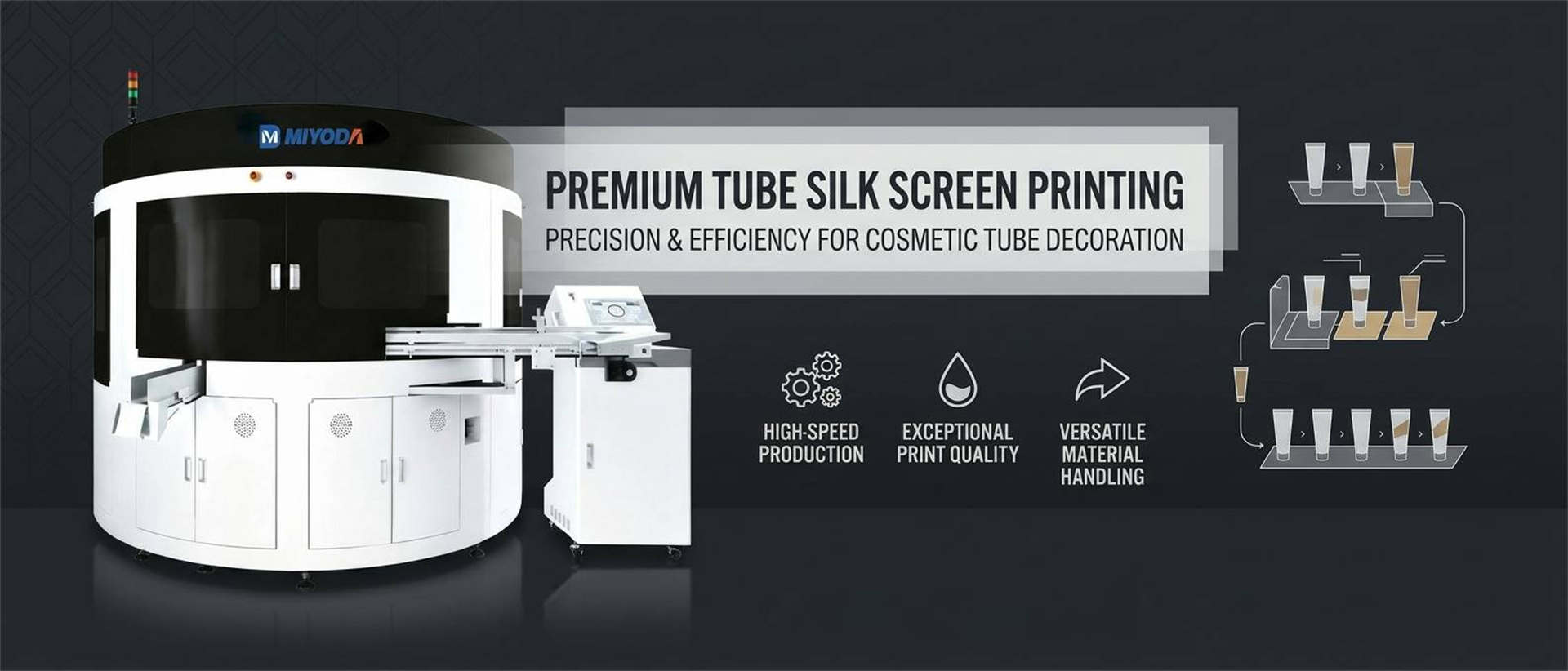
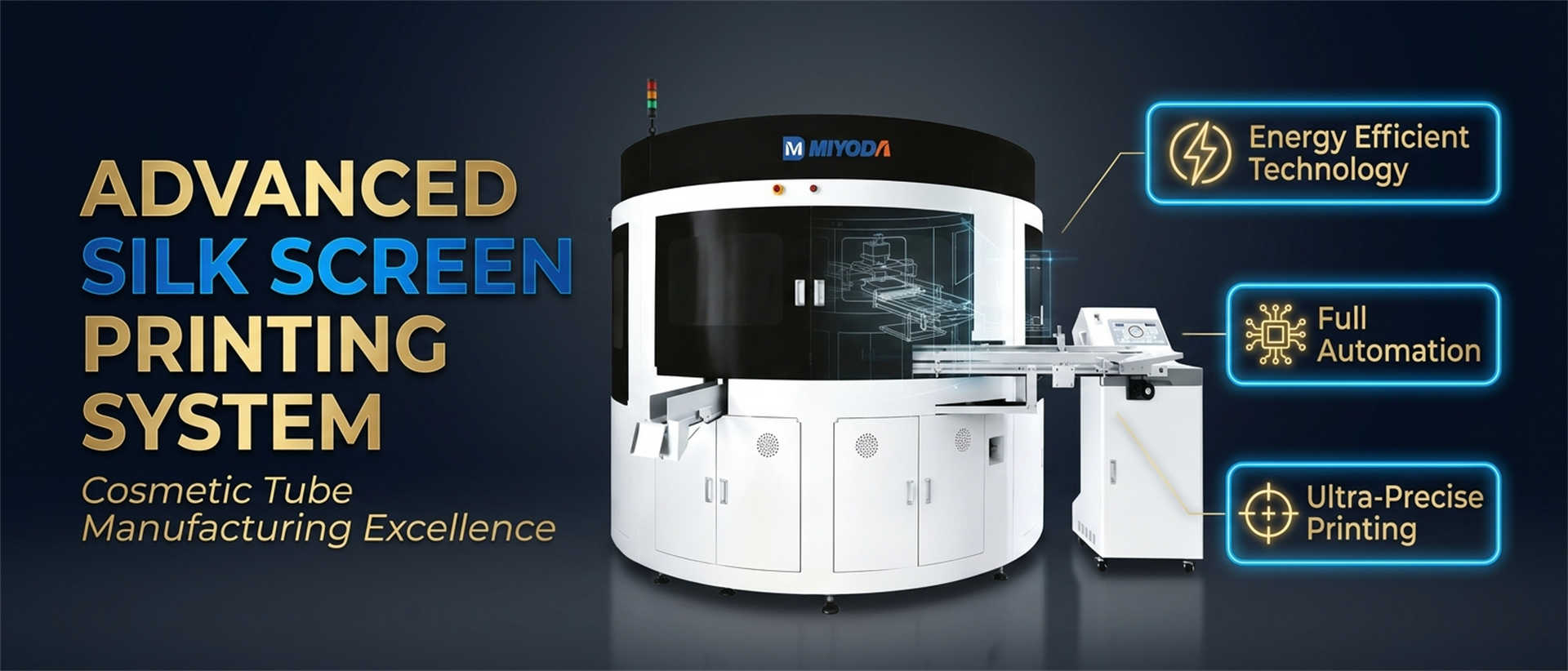
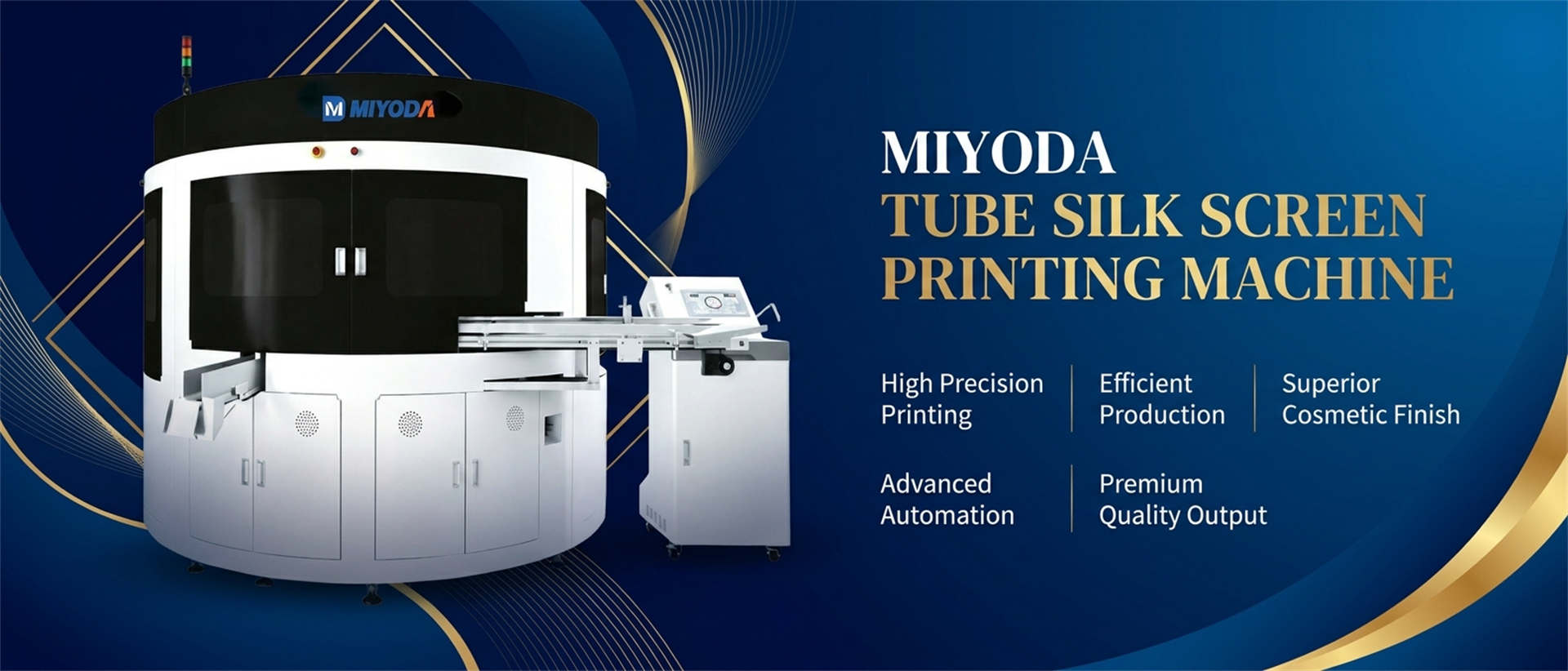
At Miyoda Packaging Machinery, we test-print customer artwork on their own tubes before shipment. Problems with ink, mesh, or registration get solved in our factory instead of on your floor during your first big order. You can see the configuration options on our tube silk screen printing machine page.
VIII. The Distributor’s Guide: Matching Models to Client Profiles
Segmenting Clients
| Client Profile | Typical Volume | Key Priorities | Recommended Machine Type |
|---|---|---|---|
| Boutique cosmetic brand | 2,000–10,000 tubes/day | Fast artwork changes, vivid colour, small runs | Semi-automatic or compact 1–2 colour automatic |
| Mid-size contract manufacturer | 10,000–50,000 tubes/day | Fast changeovers, many SKUs | Fully automatic multi-colour with recipes |
| Large-scale pharma lab | 50,000+ tubes/day | Registration, validation, traceability | Fully automatic, line-integrated, inline vision inspection |
| Toothpaste / oral care FMCG | 100,000+ tubes/day | Speed, uptime | High-speed rotary, linked to production line |
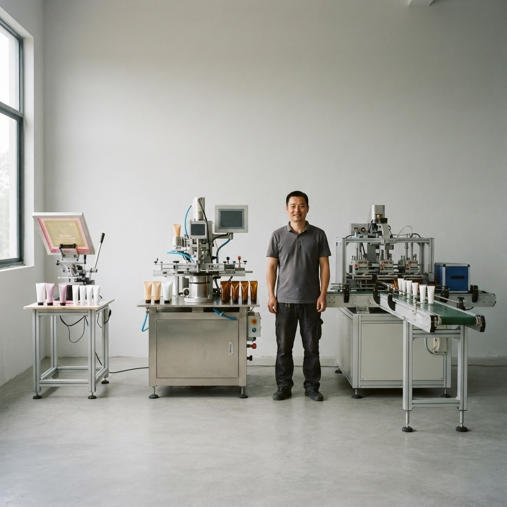
Value-Based Selling: From “Price per Machine” to “Cost per Printed Tube”
Distributors who win long-term accounts change the question the client asks. Instead of “What does it cost?”, the question becomes “What does each good tube cost me?”
Simple comparison for a client:
| Machine A (Lower Price) | Machine B (Higher Spec) | |
|---|---|---|
| Purchase price | $38,000 | $55,000 |
| True speed | 45 good tubes/min | 62 good tubes/min |
| Scrap rate | 3.5% | 1.2% |
| Good tubes per year (2 shifts) | ~11.3 million | ~15.6 million |
| 5-year cost per good tube (machine + scrap + labour) | より高い | より低い |
Showing clients numbers like these makes the conversation about value instead of price.
Portfolio Strategy
A strong distributor portfolio usually covers three tiers:
- Entry: Semi-automatic for start-up brands and sample rooms
- Core: Fully automatic 1–3 colour for most contract makers
- Premium: Multi-colour, line-integrated, with vision inspection for pharma and big FMCG
Make sure the portfolio covers the common tube diameters your market uses, often from about 16 mm up to 50–60 mm. Our article on how to choose tube printing machinery can help you build a selection checklist for your sales team.
IX. Financial Impact Analysis: Calculating True ROI
Reducing Scrap Rates
Example: A plant prints 8 million tubes a year at a pre-print value of $0.15 each.
- Old scrap rate: 3.0% = 240,000 tubes = $36,000 lost per year
- New scrap rate: 1.0% = 80,000 tubes = $12,000 lost per year
- Annual saving: $24,000
Labor Cost Reduction
| Item | Semi-Automatic Setup | Fully Automatic Setup |
|---|---|---|
| Machines needed for 30,000 tubes/day | 3 | 1 |
| Operators per shift | 3 | 1 |
| Shifts | 2 | 2 |
| Annual labour cost (at $18,000 per operator) | $108,000 | $36,000 |
| Annual saving | $72,000 |
Simple ROI Formula
Payback period (months) = Extra investment ÷ Monthly savings Example: ($60,000 extra) ÷ (($24,000 + $72,000) ÷ 12) = 60,000 ÷ 8,000 = 7.5 months
Your numbers will differ based on local wages, energy, and tube value. Use your own data for a real estimate.
Market Competitiveness Through Faster Turnaround
Brands keep shortening launch cycles. Many cosmetic brands now expect printed tubes in 2–3 weeks instead of 5–6. Fast changeover and stable printing let you:
- Accept short-run, high-margin private label orders
- Respond quickly to rush orders without overtime
- Win contracts competitors can’t deliver in time
Real-world results from brands that upgraded are summarised in our tube printing case studies.
Watch: Automatic Screen Printing on Cosmetic Tubes
This video shows high-speed automatic screen printing on cosmetic and pharmaceutical tubes. Watch the loading, registration, printing, and UV curing steps work together in one continuous cycle.
https://www.youtube.com/watch?v=hJydOxl5OZU
X. Future-Proofing Your Packaging Production
Summary of the Evaluation Framework
| Pillar | What to Measure | Question to Ask the Supplier |
|---|---|---|
| Precision | Registration, adhesion, cleanliness | “Can you print my artwork on my tube and send the data?” |
| Speed | True speed (OEE), stability | “What is sustained output over 8 hours?” |
| Agility | Changeover time, first-piece correct | “How long from 16 mm to 35 mm, start to good tube?” |
The Risk of Under-Investing
The wrong machine rarely fails on day one. It fails slowly: a little more scrap each month, longer changeovers, more overtime, a delayed shipment, and one lost contract. By the time the true cost is clear, you are already shopping for a replacement.
From a Vendor-Led Purchase to a Solution-Led Investment
The best printer decisions start with your production problem, not a catalogue. Share your tube sizes, materials, artwork, daily volume, and compliance needs, and ask for a sample-based proposal.
The engineering team at ミヨダ・パッケージング・マシナリー can review your current line, test print your artwork, and recommend the right level of automation for your volume, whether that’s a single printer or a fully linked line from extrusion through laminate tube making to tube filling and closing.
Glossary of Key Terms
| Term | Plain-English Meaning | Example |
|---|---|---|
| Registration | How well colours line up | ±0.05 mm on a 3-colour pharma logo |
| Mandrel | Metal rod that supports the tube during printing | Different sizes for 16 mm and 35 mm tubes |
| Squeegee | Rubber blade that pushes ink through the screen | Replaced every 1–4 weeks |
| Mesh count | Number of threads per cm in the screen | Higher mesh = finer detail, thinner ink |
| Corona treatment | Electrical surface treatment that helps ink stick | Raises PE surface to ~40 dyn/cm |
| UV curing | Hardening ink instantly with UV light | Ink fully cured in under 1 second |
| ABL / PBL | Aluminum Barrier Laminate / Plastic Barrier Laminate | ABL for sensitive pharma creams |
| OEE | Real productivity vs. theoretical maximum | 80 × 88% × 90% × 97% ≈ 61/min |
| First-piece correct | First tube after changeover passes QC | Target: within 3–5 tubes |
For more detail on techniques, see the ultimate guide to tube printing techniques.
よくある質問
1. How do I determine if I need a semi-automatic or fully automatic machine for my current volume?
Start with your daily output and number of SKUs. Below about 5,000 tubes a day with frequent artwork changes, semi-automatic is usually enough. Above 10,000 tubes a day, or for any pharma contract, a fully automatic machine typically pays back faster because it cuts labour and scrap.
2. What is the average changeover time for switching between a 16mm and 35mm tube diameter?
On modern machines with quick-change mandrels and stored recipes, it usually takes 15–30 minutes. Older machines with bolted parts and manual alignment often need 60–120 minutes. Always ask the supplier to show the changeover on video using your tube sizes.
3. How does the machine ensure registration accuracy on flexible laminate tubes compared to rigid plastic?
Laminate tubes have a side seam and a softer body, so the machine uses a sensor to find the seam and rotates every tube to the same start point. A well-fitted mandrel keeps the tube round during printing. Rigid tubes need less support but still benefit from servo-synchronised rotation.
4. What are the most common causes of ink smudging in tube printing, and how does the machine prevent them?
Smudging is usually caused by incomplete UV curing, contact before the ink is cured, too much ink (low mesh count), or poor surface treatment. Good machines prevent it with curing between colours, controlled tube transfer, correct pre-treatment, and stable squeegee pressure.
5. Can this machine handle UV-curable inks for high-end cosmetic finishes?
Yes. Most modern tube silk screen printers are designed around UV inks, which give bright, scratch-resistant finishes and allow special effects such as matte, gloss, or tactile textures. Confirm the UV lamp power and the cooling system with your supplier.
6. What is the expected lifespan of the primary wearing parts, and how easy are they to replace?
Squeegees last about 1–4 weeks, screens 20,000–100,000 prints, UV lamps 800–1,500 hours, and mandrel bearings 6–12 months. On well-designed machines, a trained operator can replace most wear parts in under 15 minutes without special tools.
7. How does the machine handle different tube materials (e.g., ABL vs. PBL)?
ABL (Aluminum Barrier Laminate) and PBL (Plastic Barrier Laminate) tubes print in a similar way. The main adjustments are pre-treatment level, squeegee pressure, and ink choice. A versatile machine stores a recipe for each material so the operator can switch quickly.
8. What level of technical training is required for an operator to run the machine independently?
Most operators with basic mechanical skills can run daily production after 3–5 days of hands-on training. Changeovers and troubleshooting usually take 2–4 weeks of guided practice. Supplier-led training at installation shortens this considerably.
9. How do I calculate the payback period (ROI) for upgrading from manual to automated printing?
Divide the extra investment by your monthly savings from labour, scrap, and added output. For example, $60,000 ÷ $8,000 per month = 7.5 months. Use your own wage rates, tube value, and volumes for an accurate result.
10. What safety certifications does the machine hold for use in pharmaceutical cleanrooms?
Look for CE marking for machine safety, ISO 9001 manufacturing quality, and designs that support GMP cleaning and documentation. For cleanroom use, confirm that surface materials, UV lamp enclosure, and ozone extraction meet your cleanroom class, and request a validation support package.
11. How does the machine maintain consistency across a production run of 100,000+ units?
Consistency comes from servo-controlled registration, locked PLC recipes, stable UV output, a rigid frame, and scheduled squeegee checks. Many pharma lines add inline vision inspection to check every tube and reject defects automatically.
12. What options are available for integrating the printer into a fully automated end-to-end production line?
The printer can link to tube extrusion or laminate forming, heading, capping, and packing through conveyors and shared control signals. Integrated lines reduce manual handling, protect print quality, and keep every station running at a balanced speed.















