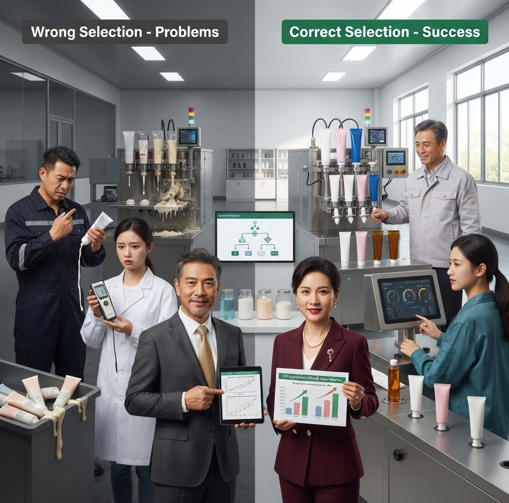

How Incompatible Tube Filling Machines Cost Factories Thousands in Lost Productivity and Revenue — A Complete ROI Analysis for Cosmetic and Pharmaceutical Manufacturers
Why Machine Selection Matters More Than You Think
Picture this: a mid-size cosmetic manufacturer in Southeast Asia spent $120,000 on a new automatic tube filling machine to scale up their lotion line. Six months later, they were running at 60% capacity, filing constant quality complaints, and watching their star contract slip to a competitor. The machine wasn’t broken. It was simply the wrong machine for their product’s viscosity profile.
This scenario plays out in factories across the globe more often than most procurement teams want to admit. The tube filling machine market is projected to reach USD 6.5 billion by 2030 (Strategic Market Research, 2024), yet a disproportionate number of buyers still make selection decisions based on unit price alone, ignoring the deeper compatibility variables that determine whether a machine generates profit or erodes it.
In cosmetic and pharmaceutical tube packaging, the stakes are especially high. Regulatory compliance windows are tight. Customer delivery expectations are unforgiving. And the physical chemistry of your product — its viscosity, its tube material requirements, its fill tolerance — must be precisely matched to your equipment’s mechanical capabilities. Missing on any one of these dimensions doesn’t just create operational headaches. It creates cascading financial losses that compound month after month.
The True Cost of Incompatibility: Beyond the Purchase Price
The purchase price of a tube filling machine is a one-time event. The cost of choosing the wrong one is a recurring subscription you never signed up for. Every day of unplanned downtime, every tube of product lost to overfilling, every order that ships late because your throughput fell short — these are the real numbers that define whether a capital investment was sound or catastrophic.
This guide unpacks those numbers in full. It examines real-world case studies, walks through 24-month ROI models under different machine scenarios, and gives you a practical, step-by-step selection framework that matches machine capability to product chemistry — before you commit a single dollar.
1. Understanding Tube Filling Machine Fundamentals
What Makes a Tube Filling Machine Compatible With Your Product
Compatibility is not a vague concept in tube filling — it is an engineering constraint. A machine is either built to handle your product’s physical properties within acceptable tolerance ranges, or it is not. No amount of operator skill compensates for a mechanical mismatch between pump design and product flow behavior.
Viscosity Requirements and Machine Specifications
Viscosity — the resistance of a fluid to flow, measured in centipoise (cP) — is the single most predictive variable in tube filling compatibility. Water sits at 1 cP. A light cosmetic serum might be 200–800 cP. A pharmaceutical ointment could range from 10,000–50,000 cP. A dense zinc oxide paste can exceed 100,000 cP.
Every tube filling machine is engineered around a pump system optimized for a specific viscosity band. Piston pumps handle mid-range products (500–30,000 cP) well. Gear pumps suit low-to-mid viscosity products. Peristaltic pumps work for low-viscosity liquids prone to contamination risk. When a manufacturer tries to run a 40,000 cP pharmaceutical paste through a piston pump rated to 20,000 cP, the result isn’t a minor inefficiency — it’s blockages, incomplete fills, excessive pump wear, and eventual mechanical failure.
Before evaluating any machine, test your product’s viscosity across your full temperature operating range using a calibrated viscometer. That number is the first filter in your selection process.
Tube Material Compatibility (Aluminum, Plastic, Laminate)
The tube itself is not a passive container in the filling process — it is a structural component that must interface precisely with the machine’s sealing, capping, and conveying systems. Aluminum tubes require crimping and fold-sealing at controlled pressure. Plastic tubes (polyethylene, polypropylene) use heat sealing via hot jaw or ultrasonic methods. Laminate tubes — multi-layer constructions combining plastic film and aluminum barrier layers — demand the most precise temperature and pressure calibration to avoid delamination or incomplete seals.
A machine configured for aluminum tube production is not interchangeable with one designed for heat-sealed plastics without significant mechanical modification. Understanding this at the procurement stage prevents expensive retrofit projects later.

The Three Critical Compatibility Factors
Product Consistency and Flow Rate Demands
Beyond viscosity, product consistency matters. Some formulations exhibit thixotropic behavior — they thin when sheared and thicken when at rest, which means filling speed itself changes the product’s flow properties. Others are highly temperature-sensitive, requiring heated hoppers and jacketed lines to maintain pumpability. Documenting these behavioral characteristics and matching them to a machine’s operational parameters is the foundation of true compatibility.
Tube Diameter and Length Specifications
Machine tooling — the mandrels, nozzle holders, and tube guides — is designed for specific diameter and length ranges. Most machines can accommodate a range (e.g., 13–50 mm diameter, 50–200 mm length) but require physical tooling changes between sizes. Failing to verify your tube dimensions against a machine’s tooling range leads to crooked fills, damaged tubes, and jamming on the conveyor line.
Sealing and Capping Requirements for Different Materials
Sealing is the final quality gate in tube filling. The wrong sealing method for the tube material produces leaks, weak seams, or cosmetically unacceptable crimps that trigger retailer returns. Aluminum tubes require mechanical fold or crimp sealing. Plastic tubes use hot-air, hot-jaw, or ultrasonic sealing, each with distinct temperature and dwell-time settings. Laminate tubes typically require ultrasonic or hot-jaw sealing with precise temperature profiling to bond all layers without burning the outer print layer.
2. Real-World Case Study: The $500,000 Mistake
Company Profile and Initial Machine Selection
Product Line Overview (Cosmetic Creams and Pharmaceutical Ointments)
The company in question was a contract manufacturer operating in South Asia, producing both cosmetic skin creams (viscosity range: 3,000–8,000 cP) and over-the-counter pharmaceutical ointments (viscosity range: 15,000–35,000 cP) for regional retailers and hospital supply chains. They ran a single production facility with two filling lines and approximately 45 employees in the packaging department.
Production Volume and Growth Projections
At the time of machine selection, the company was producing 80,000 tubes per month and had secured a contract that would require scaling to 180,000 tubes per month within 18 months. The procurement team chose a fully automatic machine with a stated viscosity range of 500–20,000 cP, rated at 80 tubes per minute, at a cost of $95,000. The machine was spec-compliant on paper for the cosmetic cream line. The pharmaceutical ointment line — running at 15,000–35,000 cP — exceeded the machine’s upper viscosity limit by a significant margin.
The Problem: Wrong Machine Choice for Product Viscosity
Incompatible Viscosity Handling Led to 40% Downtime
Within three months of installation, the pharmaceutical ointment runs were generating 40% downtime per shift. The piston pump was undersized for the product’s resistance, causing incomplete fill cycles. Operators were manually priming the pump between batches — a procedure that should never be necessary on a properly matched automatic machine. Each manual intervention introduced contamination risk and added 8–12 minutes of non-productive time per batch changeover.
Quality Control Failures and Product Waste Analysis
Fill weight variance on the pharmaceutical ointment climbed to ±8% — four times the acceptable limit of ±2% for OTC drug products under GMP standards. In a single month, quality control rejected 6,200 tubes, representing approximately $18,600 in wasted raw materials and labor at their average fill cost. Customer complaint rates rose from 0.3% to 4.1% within the first quarter of full operation.
Financial Impact Breakdown
Direct Costs: Equipment Replacement and Modifications
After nine months of attempting to run the incompatible machine, the company invested $62,000 in a replacement piston pump assembly and heated hopper system to extend the viscosity range. This modification failed to fully resolve the issue and was ultimately abandoned. A replacement machine — this time correctly specified for their full viscosity profile — cost an additional $140,000. Total direct equipment outlay: $297,000 against an original budget of $95,000.
Indirect Costs: Lost Production, Delayed Orders, and Customer Penalties
The indirect cost picture was even more damaging. Eight months of reduced pharmaceutical line throughput (running at 52% of target capacity) cost the company approximately $185,000 in lost contract revenue. Two penalty clauses were triggered by missed delivery windows, totaling $34,000. One pharmaceutical distributor contract — worth $220,000 annually — was not renewed. When all figures were totalized over 18 months, the true cost of the wrong machine selection exceeded $500,000 against a purchase price of under $100,000.
💡 業界動向: According to a downtime analysis published in the International Journal of Engineering Trends and Technology, unplanned mechanical downtime on tube filling lines accounts for 30–45% of total production losses in mid-size cosmetic and pharma facilities — the majority of which trace back to product-machine incompatibility rather than mechanical defects.
3. Automatic vs. Semi-Automatic: ROI Comparison for Cosmetic and Pharmaceutical Tubes
Automatic Tube Filling Machines: Full Analysis
Initial Investment and Long-Term ROI (12–36 Month Timeline)
A fully automatic tube filling and sealing machine for cosmetic or pharmaceutical applications typically carries an initial investment of $60,000–$250,000 depending on throughput, compliance requirements, and material handling capabilities. Installation, validation, and initial training add another $10,000–$30,000. However, at production volumes above 100,000 tubes per month, the cost-per-unit economics shift dramatically in favor of automatic equipment. Across a 36-month horizon, a well-matched automatic machine running at 80–120 tubes/minute typically delivers an ROI of 180–280% compared to the manual and semi-automatic alternatives it replaces.
Production Capacity and Throughput Advantages
A single-head automatic machine at 80 tubes/minute completes approximately 38,400 finished, sealed, and coded tubes per 8-hour shift. A dual-head configuration at 120 tubes/minute delivers over 57,600 tubes per shift. For a production operation running 22 shifts per month, that translates to 844,800–1,267,200 tubes per month from a single machine — throughput that would require 8–12 semi-automatic stations staffed continuously to match.
Best Use Cases: High-Volume, Consistent Viscosity Products
Automatic machines deliver peak value when product formulations are stable and consistent, production runs are long (ideally 5,000+ units per run without changeover), and the volume justifies the capital outlay. Leading cosmetic brands producing foundation creams, sunscreen lotions, and body butters in standardized tube formats are the ideal candidates. Similarly, pharmaceutical manufacturers producing high-volume topical ointments or gel formulations under GMP conditions benefit significantly from the accuracy, audit trail, and reduced labor cost of automated systems.
Semi-Automatic Tube Filling Machines: Complete Breakdown
Lower Capital Requirements and Faster Payback Period
Semi-automatic tube filling machines typically range from $8,000–$45,000, with installation and training adding $2,000–$8,000. Their lower capital threshold means that at production volumes of 20,000–80,000 tubes per month, payback periods of 12–24 months are achievable even at lower margins. For startups, contract manufacturers building client diversity before committing to automation, or operations running boutique cosmetic lines, the semi-automatic entry point creates a viable path to profitability without over-capitalizing on equipment before demand is proven.
Flexibility for Multiple Product Types and Viscosities
Where semi-automatic machines genuinely outperform their automatic counterparts is in product and material flexibility. An operator-loaded semi-automatic station can be adjusted manually between fills, accommodating viscosity swings from 200 cP (lightweight serums) to 10,000+ cP (dense creams) with relatively simple pump speed and nozzle adjustments. This makes semi-automatic equipment the practical choice for operations managing 8–15 different product SKUs across multiple tube formats.
Best Use Cases: Diverse Product Lines and Lower Production Volumes
Semi-automatic machines are the right tool for contract manufacturers servicing multiple cosmetic brands with small batch requirements, pharmaceutical compounding operations producing specialty topicals in limited quantities, and new product development lines where formula iterations occur frequently. The operational flexibility offsets the throughput gap when batch frequency, not batch size, defines your production model.
Head-to-Head ROI Comparison
Cost Per Unit Analysis Across Different Production Scales
| Metric | Semi-Automatic | Automatic |
|---|---|---|
| Initial Machine Cost | $8,000 – $45,000 | $60,000 – $250,000 |
| 速度(本/分) | 20 – 60 | 60 – 200 |
| Fill Accuracy | ±3 – 5% | ±1 – 2% |
| Labor per Shift | 2 – 3 operators | 1 operator |
| 年間メンテナンス費用 | $2,000 – $5,000 | $5,000 – $15,000 |
| Typical Payback Period | 12 – 24 months | 18 – 36 months |
| Best Volume Range | < 80,000 tubes/mo | > 100,000 tubes/mo |
| Viscosity Flexibility | High (wider range) | Moderate (optimized band) |
Quality Output and Consistency Metrics
The ±2% fill accuracy of a well-configured automatic machine versus the ±3–5% range typical of semi-automatic equipment sounds marginal. But the financial arithmetic is concrete: a 3% overfill on 10,000 units per month equals 300 unit-equivalents of wasted product. At a fill cost of $5.00 per tube, that’s $1,500 in monthly product giveaway, or $18,000 annually — recurring, compounding losses from a single accuracy gap. At the scale of 100,000 tubes per month, the same 3% overfill represents $180,000 in annual product waste.
Maintenance, Downtime, and Long-Term Operating Costs
Semi-automatic machines, with their simpler mechanical architecture, carry annual maintenance costs of $2,000–$5,000 and are more easily serviced with in-house technicians. Automatic machines run $5,000–$15,000 annually and typically require vendor support contracts for PLC and servo system maintenance. However, automatic machines that are properly matched and maintained consistently achieve 95%+ uptime — whereas a poorly matched machine of either type can fall below 60% effective uptime, erasing any cost advantage from the purchase price differential.
4. The Viscosity Problem: How Wrong Machine Selection Destroys Profitability
Identifying Your Product’s Viscosity Requirements
Understanding cP (Centipoise) Ratings and Machine Specifications
Centipoise (cP) is the standard unit for measuring dynamic viscosity in the filling equipment industry. Understanding where your product falls on the viscosity scale — and how that maps to machine pump specifications — is the first technical competency any procurement team must develop.
| Product Type | Typical Viscosity (cP) | Recommended Pump Type |
|---|---|---|
| Light serums / toners | 50 – 500 | Peristaltic / Gear pump |
| Cosmetic lotions / moisturizers | 1,000 – 8,000 | Piston pump (standard) |
| Pharmaceutical ointments / gels | 10,000 – 35,000 | Heavy-duty piston pump |
| Zinc oxide pastes / thick creams | 50,000 – 150,000+ | High-pressure piston / screw pump |
| Toothpaste | 80,000 – 120,000 | Screw / rotary piston pump |
How Viscosity Affects Filling Accuracy and Speed
A machine optimized for 5,000 cP products runs its piston cycle at a speed calibrated for that resistance. When a 30,000 cP paste is introduced, the pump cannot complete its draw stroke in the allotted cycle time — resulting in short fills. The machine attempts to compensate by extending cycle time, which reduces throughput. If cycle time extension exceeds the machine’s control parameters, quality variance escalates. This cascade — reduced speed leading to fill deviation leading to quality rejection — is the viscosity mismatch penalty in operational form.
Common Viscosity Mismatch Scenarios
Case Study A: Thin Cosmetic Serums in Heavy-Duty Machines (Overfilling and Spillage)
A European private-label cosmetic producer attempted to run a 300 cP vitamin C serum through a heavy-duty piston filler rated for 500–30,000 cP. The pump’s minimum controllable stroke volume at low cP delivered an average overfill of 22%. At €3.40 per unit fill cost, they were giving away €0.75 of product per tube — on a 40,000-unit monthly run, that amounted to €30,000 in monthly product giveaway before the issue was diagnosed and corrected with a pump replacement.
Case Study B: Thick Pharmaceutical Pastes in Light-Duty Machines (Underfilling and Blockages)
A pharmaceutical contract manufacturer in India ran 18,000 cP antibiotic ointment through a semi-automatic filler with a rated maximum of 10,000 cP. The result: persistent blockages in the nozzle assembly averaging twice per shift (each requiring 15–20 minutes to clear), fill weights consistently 12–18% below target (triggering batch rejection under GMP standards), and a pump seal failure every 6–8 weeks (at $800 per seal replacement). In a quarterly review, this single product line generated $47,000 in direct losses attributable to machine-product incompatibility.
Quantifying Viscosity-Related Losses
Product Waste and Giveaway Calculations
The formula for quantifying product giveaway loss is straightforward:
$$\text{Monthly Giveaway Loss} = \text{Monthly Volume} \times \text{Overfill \%} \times \text{Fill Cost per Unit}$$
At a 5% overfill rate on 50,000 units at $4.00 per unit fill cost, monthly giveaway = $10,000 — or $120,000 annually. This single metric often exceeds total annual maintenance costs and underscores why fill accuracy is a financial KPI, not just a quality metric.
Production Speed Degradation and Throughput Loss
Viscosity-induced speed degradation rarely shows up as a clean number on a production report. It accumulates invisibly as extended cycle times, more frequent operator interventions, and additional cleaning runs. A machine rated at 80 tubes/minute, forced to run at 45 tubes/minute due to high-viscosity product incompatibility, loses 43% of its nameplate throughput. On a target of 150,000 tubes/month, that lost throughput represents approximately 64,000 missed units — revenue that either goes to a competitor or triggers costly overtime and rush production runs.
Quality Rejection Rates and Customer Returns
When fill variance exceeds specification limits — typically ±2% for pharmaceuticals and ±3% for cosmetics — batch rejection is the regulatory outcome. Each rejected batch carries the cost of raw materials, packaging, labor, and disposal. For a batch of 5,000 pharmaceutical ointment tubes at an all-in production cost of $3.50 per unit, a single rejected batch costs $17,500 before factoring in the regulatory documentation, customer notification obligations, or supply chain disruption.
5. Tube Type Compatibility: Material-Specific Machine Requirements

Aluminum Tube Requirements and Machine Specifications
Sealing Temperature and Pressure Demands
Aluminum tubes are sealed mechanically — folded and crimped at the tail end after filling. This requires a crimping unit capable of applying precise, consistent pressure without perforating the tube wall or creating weak-point cracks at the fold. Crimping force typically ranges from 800–2,500 N depending on tube wall thickness (0.2–0.4 mm range is common for cosmetic and pharmaceutical aluminum tubes). Machines not calibrated to this range either under-crimp (creating leak points) or over-crimp (fracturing the tube end and causing immediate rejection).
Compatible Filling Speeds and Accuracy Standards
High-speed aluminum tube filling lines used for pharmaceutical ointments and dermatological creams typically run at 40–120 tubes/minute. The relatively lower speed ceiling compared to plastic tube lines reflects the mechanical complexity of the crimping operation and the need for tighter fill tolerances (±1–2%) required by pharmaceutical regulations. Accuracy at these speeds requires precision-metered piston pumps with servo-controlled stroke profiles — not standard single-speed piston systems.
Plastic Tube Compatibility Challenges
Heat Sensitivity and Deformation Risks
Polyethylene and polypropylene tubes are heat-sealed at the tail end post-filling. The critical variable is sealing temperature — too low produces an incomplete bond (peel-open seals that leak under consumer use); too high melts or deforms the tube body, creating cosmetically defective seals that retailers reject on sight. The optimal sealing temperature window for LDPE tubes is typically 130–160°C, with a dwell time of 1.5–3.0 seconds. Machines without precise PID temperature controllers drift outside this window during extended runs, increasing the defect rate progressively over a shift.
Capping System Requirements for Different Plastic Types
Plastic tube lines frequently also require automatic cap tightening torque systems. Over-torqued caps crack the shoulder junction — a common source of customer returns. Under-torqued caps loosen in transit. Cap torque specification varies by cap size and shoulder design, requiring a machine’s capping station to be programmable per product SKU.
Laminate Tube Specifications and Machine Adaptation
Unique Sealing Challenges and Equipment Needs
Laminate tubes — the dominant format for premium cosmetics and pharmaceutical topicals — are multi-layer constructions combining printed polyester or nylon outer layers, aluminum foil barrier layers, and polyethylene inner layers bonded together. Sealing this structure requires either ultrasonic welding or hot-jaw sealing with carefully profiled temperature and pressure settings that bond only the inner PE layer without compromising the outer print layer. Machines without this level of sealing precision produce visually delaminated seals that fail packaging aesthetics tests — a particularly costly failure for premium cosmetic brands.
Precision Requirements for Cosmetic and Pharmaceutical Applications
For pharmaceutical laminate tubes (topical drugs, medicated ointments), GMP guidelines require seal integrity testing — typically a pressure burst test or dye immersion test — on a statistical sample from every batch. A machine producing even 0.5% seal failures on a 10,000-unit pharmaceutical batch triggers a 50-unit quality hold and investigation. The precision engineering of the sealing station is not optional — it is a regulatory compliance asset.
Multi-Material Capability: When One Machine Isn’t Enough
Flexibility vs. Specialization: The Cost-Benefit Analysis
Multi-material capable machines exist and carry significant premium pricing — typically 30–50% above single-material configurations. For operations running aluminum tubes on Monday, plastic tubes on Tuesday, and laminate tubes on Wednesday, this premium is often justified. For operations with a dominant material format (e.g., 90% laminate), specialization delivers better per-unit cost and higher throughput than a compromise configuration optimized for nothing in particular.
Changeover Time and Production Efficiency Impact
Even on multi-material machines, changeover between tube types requires 30–90 minutes of mechanical adjustment, cleaning, and validation. At a throughput of 80 tubes/minute, 60 minutes of changeover represents 4,800 tubes of lost production per switchover. Operations performing 20+ changeovers per month accumulate 96,000 tubes of lost capacity — a figure that frequently justifies dedicating separate machines to separate material formats when volume permits.
6. The Hidden Costs Nobody Talks About
Downtime and Production Loss
Unplanned Maintenance and Equipment Failure Rates
Industry benchmark data suggests that packaging lines in pharmaceutical and cosmetic facilities target an Overall Equipment Effectiveness (OEE) of 85% or above. An OEE below 70% — common on poorly matched machines — means you are paying full depreciation, maintenance, and labor costs on an asset delivering less than 70 cents of productive output for every dollar of operating capacity. On a $150,000 machine with a 15-year useful life, the difference between 85% OEE and 65% OEE represents approximately $2,000 in lost production value per working day.
Changeover Time Between Different Products and Tube Types
In a contract manufacturing environment where 3–5 products rotate through a single filling line weekly, changeover time is a major operational cost. A 90-minute changeover on a line producing 80 tubes/minute represents 7,200 tubes of lost production per switchover — at $2.50 blended revenue per tube, that’s $18,000 per changeover event in lost throughput. Multiplied across 20 changeovers per month, changeover alone costs $360,000 in annual lost production capacity.
Quality Control and Waste
Filling Accuracy Problems and Giveaway Analysis
Product giveaway — the systematic overfilling of tubes beyond the stated net weight — is the quiet profit killer in tube filling operations. Manufacturers who track this metric precisely discover that giveaway consistently runs 2–6% above target on mismatched equipment. On high-value pharmaceutical formulations costing $12–$30 per tube fill, a 4% giveaway on 20,000 monthly units represents $9,600–$24,000 in product given away for free every month.
Sealing Failures and Customer Returns
A 1% seal failure rate on a 50,000-unit cosmetic production run generates 500 defective units. The visible cost is the product replacement. The invisible cost is the returns handling labor, retailer relationship damage, and the potential for media exposure of a product quality issue — particularly damaging for brands in the premium skincare segment where consumer trust is the primary brand asset.
Labor and Operational Inefficiency
Operator Training and Supervision Requirements
A mismatched machine demands disproportionate operator attention. Operators on poorly matched lines spend 30–45% of their shift on adjustment, monitoring, and manual intervention tasks that a well-configured machine would handle automatically. This creates two compounding labor costs: direct overtime hours on the problematic line, and opportunity cost from diverting experienced operators away from value-adding activities.
Manual Adjustments and Constant Recalibration Needs
Every manual recalibration during a production run introduces variability. Operators adjusting fill volumes mid-batch, compensating for temperature drift on the sealer, or manually clearing nozzle blockages are performing interventions that break the controlled process conditions required by GMP. In pharmaceutical manufacturing, these interventions must be documented in the batch record — adding administrative burden and creating audit exposure.
Opportunity Costs and Lost Revenue
Missed Order Deadlines and Penalty Clauses
Most cosmetic and pharmaceutical supply contracts contain delivery performance clauses with financial penalties for late shipment. A typical clause might impose a 2–5% penalty on the late order value. For a $200,000 quarterly supply contract, missing a delivery window by seven days can trigger a $4,000–$10,000 penalty — directly reducing your margin. Chronic lateness due to throughput shortfalls erodes the commercial relationship and eventually results in contract non-renewal.
Inability to Pursue High-Volume Contracts
Perhaps the most invisible cost of a throughput-limited machine is the business you never bid on. When your maximum monthly capacity is constrained by equipment limitations, high-volume tenders — the contracts that transform a small manufacturer into a mid-market player — are simply unreachable. Every month a mismatched machine caps your throughput, it also caps your growth trajectory.
7. Detailed Financial Modeling: 24-Month ROI Projections
Scenario A: Automatic Machine for High-Volume Cosmetic Production
Year 1 Costs (Equipment, Installation, Training)
Assumptions: A cosmetic manufacturer selects a properly matched automatic tube filling machine at $130,000. Installation and commissioning: $15,000. Operator training: $5,000. Spare parts inventory: $8,000. Total Year 1 investment: $158,000. Production target: 150,000 tubes/month at $3.20 average revenue per tube.
Year 2 Operational Efficiency and Profit Margins
Year 1 revenue (at 90% ramp efficiency): $5,184,000. Year 2 revenue (at 98% OEE): $5,644,800. Annual operating costs (labor, energy, maintenance): $285,000. Net contribution Year 1: $4,741,000. Net contribution Year 2: $5,359,800. The machine pays for itself within the first 12 months of full operation at this volume — with Year 2 operating entirely in profit territory.
Break-Even Analysis and Long-Term Profitability
$$\text{Break-Even (months)} = \frac{\text{Total Investment}}{\text{Monthly Net Contribution}} = \frac{\$158,000}{\$432,000 \div 12} = \text{approx. 4.4 months}$$
At this scale, the financial case for automation is not a question of if — it is a question of which machine to select. The entire 36-month ROI, assuming 2% annual production cost inflation, exceeds 340%.
Scenario B: Semi-Automatic Machine for Multi-Product Pharmaceutical Line
Initial Investment and Setup Timeline
Assumptions: A pharmaceutical contract manufacturer selects two semi-automatic tube filling stations at $22,000 each, supporting 8 different product SKUs at varying volumes. Total equipment investment: $44,000. Installation and GMP validation: $12,000. Training and documentation: $4,000. Total Year 1 investment: $60,000.
Flexibility Benefits and Market Responsiveness
The two-station configuration allows simultaneous production of different viscosity products in parallel. When a new client requests a trial batch of 2,000 units of a specialty topical, the semi-automatic station can accommodate it within hours without disrupting the main production run — a commercial agility that an automatic single-product line cannot replicate without costly retooling.
ROI Timeline and Profit Projections
At a blended revenue of $4.80 per pharmaceutical tube and 35,000 units/month across both stations, Year 1 revenue reaches $2,016,000. At 28% contribution margin, net contribution is $564,480 — returning the $60,000 investment within the first 38 days of operation. The 24-month ROI reaches approximately 480% — outperforming the automatic scenario in percentage terms due to the far lower capital outlay, though absolute profit is lower.
Scenario C: Wrong Machine Choice (The Cost of Mistakes)
Unexpected Repair and Replacement Costs
Referencing the case study from Section 2: an initial $95,000 investment led to $62,000 in failed modification attempts, $140,000 for a replacement machine, and $297,000 in total direct equipment expenditure. The 24-month ROI from the original machine purchase is deeply negative — the initial investment generated no positive return while accumulating modification, replacement, and downtime costs.
Lost Revenue and Customer Dissatisfaction Impact
The indirect revenue impact over 18 months — $185,000 in lost contract revenue, $34,000 in penalties, and $220,000 in non-renewed contracts — brought the total 18-month cost of the wrong machine selection to approximately $536,000 against a $95,000 purchase price. Return on investment: -464%.
Total Cost of Ownership Comparison
| Scenario | 24-Month Total Investment | 24-Month Net Revenue | ROI |
|---|---|---|---|
| Scenario A: Correct Automatic | $158,000 | $10,100,800 | +340% |
| Scenario B: Correct Semi-Auto | $60,000 | $4,032,000 | +480% |
| Scenario C: Wrong Machine | $536,000+ | $1,200,000 (partial) | -464% |
See It In Action: How a Modern Tube Filling & Sealing Machine Works
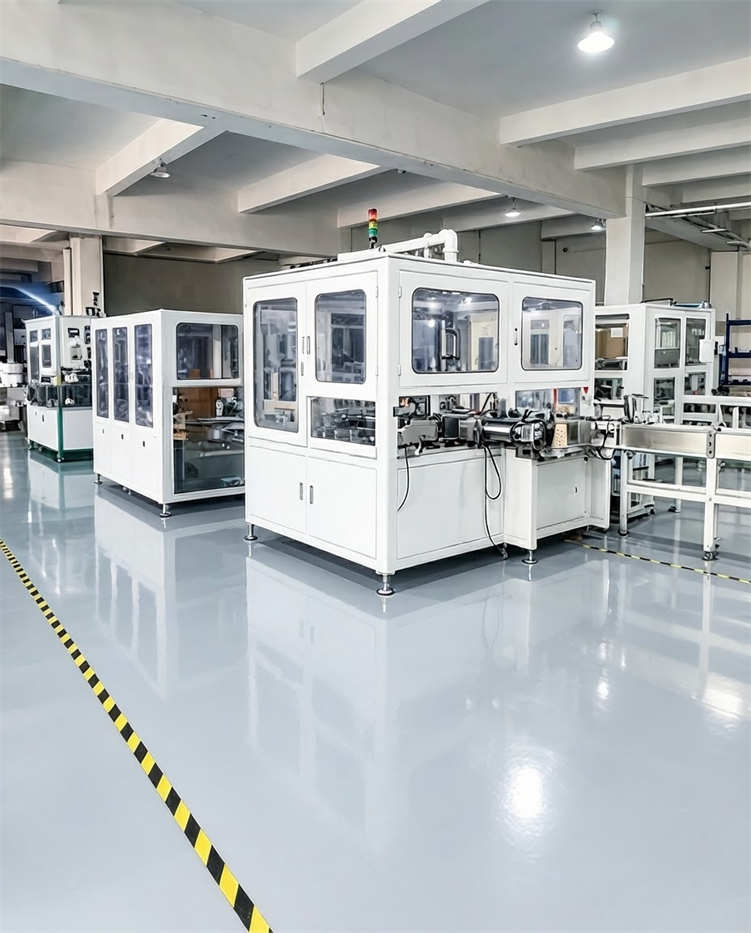
Before investing in tube filling equipment, watching a high-speed automatic machine in operation gives you a clear sense of what correctly matched, properly specified equipment looks and performs like — and how far below that benchmark a mismatched machine actually operates.
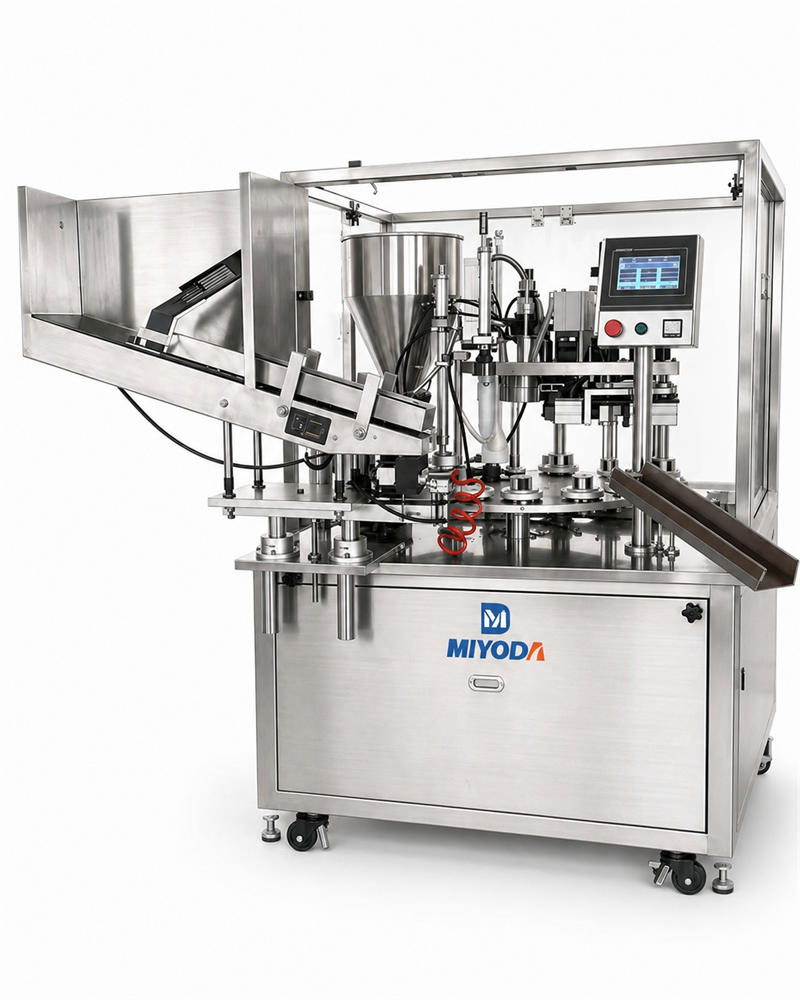
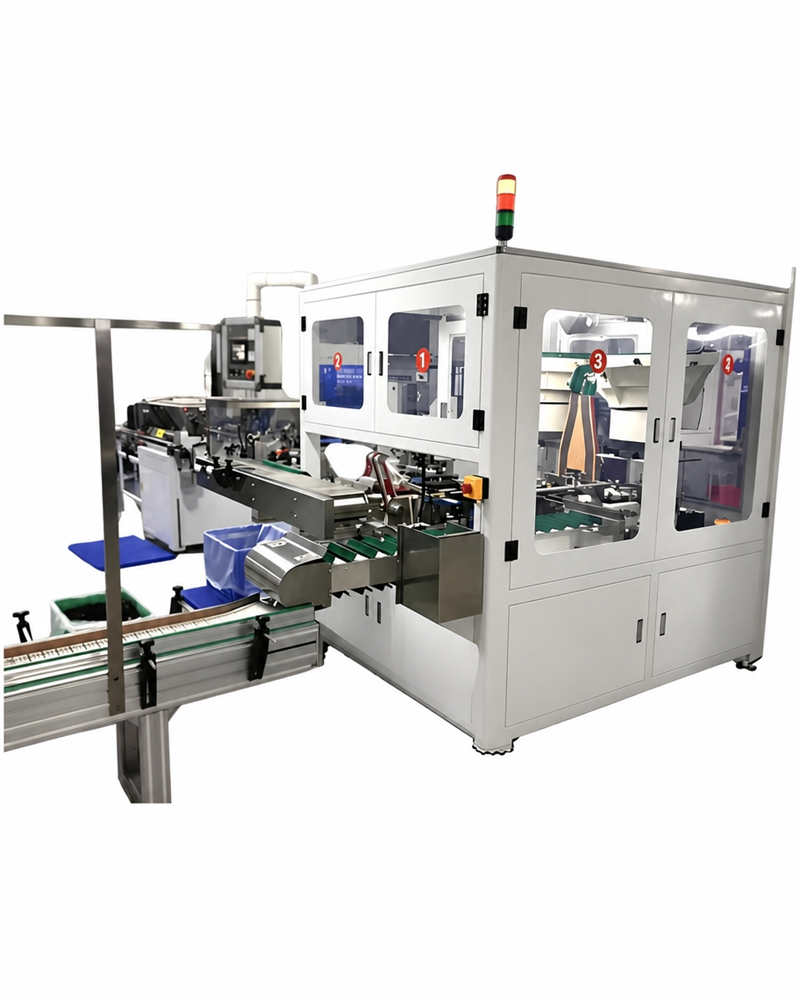
Video: High-speed automatic 2-head tube filling & sealing machine in cosmetic and pharmaceutical production — note the consistent fill speed, sealing precision, and operator-free cycle.
8. How to Select the Right Machine for Your Specific Needs
Step 1: Comprehensive Product Analysis
Viscosity Testing and Documentation
Measure your product’s viscosity at three temperatures: ambient (20°C), process temperature (if heated filling is used), and the minimum operating temperature of your facility. Use a Brookfield or equivalent rotational viscometer. Record readings in cP at multiple shear rates if your product is non-Newtonian (most cosmetic creams and pharmaceutical ointments are). This documentation becomes your primary technical filter for machine specification matching. If you cannot provide a viscosity profile to a prospective machine vendor, no credible vendor should be able to guarantee compatibility — and any vendor who guarantees it without this data should raise immediate concern.
Volume Forecasting and Growth Planning
Build your volume forecast across three horizons: current capacity requirement, 18-month growth target, and 36-month strategic plan. Machine selection based only on today’s volume is a common error that leads to premature re-investment. If your 36-month plan involves a 3× volume expansion, evaluate whether your current machine choice has an upgrade path — additional filling heads, servo system upgrades, or parallel line integration — or whether it will become a bottleneck you need to replace entirely.
Step 2: Tube Type Assessment
Current and Future Tube Material Requirements
Map every tube format in your current product catalogue: material type, diameter range, length range, cap style (flip-top, screw, pump). Then map your projected new product introductions over the next 24 months. If 80% of your business runs on laminate tubes with occasional aluminum runs, a laminate-optimized machine with aluminum tooling capability may serve you better than a universal machine optimized for neither.
Compatibility Verification with Prospective Machines
Request a formal compatibility matrix from each prospective vendor — a document that maps each of your tube formats against the machine’s validated operating parameters. Any vendor unwilling to provide this document, or providing it without supporting test data, is presenting a commercial claim rather than an engineering guarantee. The machine selection resources available at Miyoda’s cosmetic tube filling machine guide provide a practical reference framework for building this compatibility matrix for your own product line.
Step 3: Machine Specification Matching
Filling Speed, Accuracy, and Consistency Requirements
Calculate the minimum fill speed required to meet your production target: divide your monthly unit target by your available operating hours (accounting for planned maintenance and changeover time). Add a 20% buffer for unplanned interruptions. This is your minimum nameplate speed requirement. Do not spec exactly to minimum — machines consistently operating at maximum rated speed degrade faster and produce less consistent quality than machines running at 70–80% of their rated capacity.
Sealing and Capping System Compatibility
Match your tube material’s sealing requirements (temperature range, pressure profile, dwell time) explicitly to the machine’s sealing station specifications. For pharmaceutical applications, verify that the sealing station can generate and log the temperature and pressure data required by your batch record documentation system — a GMP compliance requirement that many cost-optimized machines cannot meet.
Step 4: Vendor Evaluation and Trial Runs
On-Site Testing Protocols and Success Criteria
Before signing a purchase order, run a minimum of 1,000 tubes of your actual product through the prospective machine at the vendor’s facility or through a validated test program. Define your pass/fail criteria in advance: fill weight variance ≤±2%, seal integrity 100% pass rate on pressure test, production speed ≥ your minimum requirement, zero blockages over a 30-minute continuous run. These criteria should be included in the purchase contract as performance acceptance standards.
References and Case Study Review from Similar Operations
Request three client references from the vendor — specifically from operations running products in your viscosity range on tube materials matching your requirements. Speak directly to the production manager at those facilities, not just the purchasing contact. Ask specifically about year-two performance, maintenance experience, and whether they would purchase the same machine again. A vendor confident in their machine’s real-world performance will facilitate these conversations without hesitation. The key factors for picking a tube filling machine outlined by Miyoda Packaging Machinery provide an additional due-diligence checklist worth reviewing alongside vendor references.
Step 5: Total Cost of Ownership Calculation
Initial Investment vs. Long-Term Operating Costs
Build a 36-month TCO model for each finalist machine option. Include: purchase price, installation and commissioning, operator training, annual maintenance contract, spare parts inventory requirement, energy consumption (kWh/year × local energy cost), and estimated downtime cost (hours/year × hourly throughput value). The machine with the lowest purchase price is rarely the lowest TCO option. As BW Packaging has documented in their TCO framework, equipment cost typically represents only 35–50% of total ownership cost over a machine’s useful life — operating costs and downtime carry the rest.
Maintenance Contracts and Support Availability
Evaluate the vendor’s support infrastructure: spare parts lead time (target: critical components available within 48 hours), on-site technical support availability (target: 24-hour response guarantee), remote diagnostic capability (increasingly standard on PLC-based machines), and the vendor’s track record of parts availability for machines 5–10 years post-purchase. A machine whose manufacturer discontinues parts support at year 7 of an expected 15-year asset life creates an expensive forced replacement scenario.
9. Risk Mitigation: Protecting Your Investment
Pre-Purchase Due Diligence
Technical Specifications Review and Validation
Treat a machine specification sheet the way a lawyer treats a contract — every stated range and parameter matters, and vague language (“suitable for various viscosities”) should trigger a request for clarification in writing. The critical specs to verify in writing are: viscosity operating range (minimum and maximum cP), fill accuracy guarantee (±% at stated production speed), sealing temperature range and control precision, tube diameter and length tooling coverage, and hourly throughput at rated conditions versus maximum conditions.
Vendor Credibility and Support Infrastructure Assessment
Assess vendor credibility across four dimensions: years in the tube filling equipment market (prefer 10+ years for complex applications), installed base size and geographic distribution (a vendor with 500+ installed machines in your region has established a local service network), certifications (CE, ISO 9001, and for pharmaceutical applications, GMP compliance documentation), and financial stability (a vendor who cannot fulfill a warranty claim two years after purchase because they’ve ceased trading is a significant risk). Teams evaluating vendors benefit from the brand and model comparison resources available at Miyoda’s cosmetic tube machine brand guide, which maps key vendors against these credibility criteria.
Contract and Warranty Considerations
Performance Guarantees and Penalty Clauses
A well-structured purchase contract for tube filling equipment includes: performance acceptance criteria (fill accuracy, throughput, seal integrity at defined conditions), a commissioning period with full vendor support (typically 2–4 weeks), a warranty period of minimum 12 months on all mechanical and electrical components, and specific provisions for what happens if the machine fails to meet acceptance criteria — including full refund or replacement obligations. Never accept a warranty that covers only parts but not the cost of a vendor technician traveling to your site for warranty-covered repairs.
Extended Warranty and Maintenance Options
Extended warranty programs — covering years 2 and 3 post-installation — are increasingly offered by quality machine manufacturers and typically cost 3–6% of the machine purchase price annually. For a $100,000 automatic machine, a 3-year extended warranty at 4% represents $4,000/year in covered protection against a potential $15,000–$40,000 major repair event. The math consistently favors extended coverage on complex automatic systems.
Training and Operational Readiness
Comprehensive Operator Training Programs
Machine capability is only realized through operator competence. Ensure the vendor provides structured training covering: machine operation at all production modes, changeover procedures for all tube formats and product types, routine cleaning and sanitation protocols, basic mechanical troubleshooting (clearing nozzle blockages, adjusting fill volumes, resetting sealing parameters), and safety procedures. Training should culminate in a competency assessment — not just a sign-off that training was attended.
Documentation and Troubleshooting Resources
Request comprehensive documentation in your operating language: operating manual, maintenance schedule, spare parts catalogue with part numbers and recommended stocking quantities, and troubleshooting guide covering the 20 most common fault conditions. Machines delivered without this documentation create operational dependency on the vendor — a dependency that becomes expensive when emergency support is needed at short notice.
Scalability and Future-Proofing
Growth Capacity and Upgrade Pathways
Evaluate each candidate machine’s scalability architecture. Can additional filling heads be added to increase throughput without full machine replacement? Can the sealing station be upgraded to handle additional tube materials? Can the control system interface with your ERP or MES software through standard protocols (OPC-UA, Modbus, MQTT)? These upgrade pathways represent options on future capacity that have real financial value in a growth scenario.
Technology Updates and Industry Evolution
The tube filling equipment industry is undergoing a technology transition toward servo-driven filling systems, vision-system quality control, IoT-enabled maintenance monitoring, and automated changeover systems. Machines with modular, open-architecture control systems are more likely to support these capability additions as retrofit upgrades than machines built on proprietary, closed-system designs. Industry insights from platforms like GM Insights’ tube filling market analysis confirm that technology-adaptive machines are commanding premium residual values in the secondary market as well.
10. Implementation Timeline and Best Practices
Pre-Implementation Planning (Weeks 1–4)
Facility Assessment and Infrastructure Requirements
Before the machine arrives, your facility must be ready to receive it. Confirm: floor load bearing capacity (automatic machines typically weigh 800–2,500 kg), electrical supply requirements (most automatic machines require 3-phase 380V/480V supply with specified amperage), compressed air supply (flow rate and pressure: typically 6–8 bar at 200–400 L/min), ventilation for sealing fumes (particularly relevant for PVC or certain laminate materials), and physical access dimensions for delivery and installation (door widths, ceiling height, forklift access).
Stakeholder Alignment and Team Preparation
Identify and brief every stakeholder whose workflow will be affected by the new machine: production manager (throughput planning), quality assurance manager (batch record integration, cleaning validation requirements), maintenance technician (training timeline, spare parts ordering), and commercial team (delivery commitment updates during the installation and ramp period). Misaligned stakeholder expectations during machine installation are a common and avoidable source of implementation conflict.
Machine Installation and Setup (Weeks 5–8)
Installation Timeline and Production Pause Planning
Plan for a 5–10 day installation window for a standard automatic machine, followed by 3–5 days of commissioning and calibration. Build a production buffer inventory of 2–3 weeks of your key SKUs before installation begins, so customer supply is unaffected during the transition. For pharmaceutical lines operating under GMP, add 5–15 days for equipment qualification (Installation Qualification / Operational Qualification / Performance Qualification — IQ/OQ/PQ) before the machine can be used for commercial production.
Calibration and Performance Testing Protocols
Commissioning calibration should verify: fill weight accuracy across the full intended volume range, sealing integrity under accelerated production speed, temperature profile stability over a 4-hour continuous run, and alarm and fault detection response. Document all calibration results formally — this documentation forms the baseline for future performance comparison and regulatory audit evidence.
Transition and Ramp-Up (Weeks 9–12)
Operator Training and Certification
Run the first two weeks of commercial production with the vendor’s commissioning technician on-site or available remotely. This overlap period is when most operational questions arise — having expert support immediately accessible prevents small operator uncertainties from becoming production incidents. By week 12, your certified operators should be able to perform all routine operations, changeovers, and basic maintenance independently.
Quality Assurance and Performance Monitoring
Establish your performance monitoring dashboard during the ramp-up period: track fill weight variance per batch, seal integrity pass/fail rate per batch, machine uptime percentage per shift, and changeover time per product switchover. Baseline these metrics against vendor specification commitments. Any deviation from specification commitment during the ramp period should trigger an immediate vendor notification under the commissioning warranty terms.
Optimization and Continuous Improvement (Ongoing)
Data Collection and Performance Analytics
Modern PLC-based tube filling machines generate rich operational data: cycle counts, fault codes, temperature profiles, fill weight logs. Connecting this data to a simple production analytics platform — even a well-structured spreadsheet, though purpose-built OEE software is preferable — transforms raw machine data into actionable production intelligence. Operations that systematically analyze this data identify drift patterns weeks before they cause detectable quality issues, enabling proactive intervention that prevents costly batch rejections.
Regular Maintenance Schedules and Preventive Care
Follow the vendor’s preventive maintenance schedule rigorously. Preventive maintenance contracts reduce emergency repair incidents by 60–70%, according to industry maintenance benchmark data. Budget 10–15% of annual machine cost for maintenance — roughly $5,000–$15,000 per year for a mid-range automatic machine. This is not a discretionary expense. It is the insurance premium on a $100,000–$250,000 asset that your production targets depend on daily. The 7 must-have features in modern tube filling equipment, as outlined by Miyoda Packaging Machinery, includes robust maintenance access design as a critical selection criterion — a feature that directly determines your long-term maintenance cost and downtime exposure.
Making the Right Decision Saves Money
Key Takeaways: Avoiding Costly Machine Selection Mistakes
The financial case laid out across this analysis is unambiguous: the wrong tube filling machine doesn’t just underperform — it actively destroys value at a rate that can exceed 4× the machine’s original purchase price within 18 months. The right machine, correctly specified and properly maintained, generates ROI of 300–500% across a 24-month horizon and creates the throughput capacity to pursue growth rather than manage firefighting.
The four non-negotiable elements of a sound machine selection decision are: a precise, documented viscosity profile of every product the machine will run; a formal compatibility verification covering all current and planned tube materials; a 36-month TCO model that accounts for operating costs, not just purchase price; and an on-site or trial production run against defined pass/fail criteria before contract signature. Skipping any one of these steps is where the $500,000 mistakes begin.
Your Next Steps: Assessment and Consultation
If you’re currently evaluating tube filling equipment for a cosmetic or pharmaceutical production line — or if you’re experiencing performance issues with existing equipment that suggests a compatibility problem — the most valuable next step is a structured product and machine assessment conducted with an experienced application engineer, not a sales pitch. The Miyoda Packaging Machinery team works with cosmetic and pharmaceutical tube manufacturers globally, matching machine specifications to product requirements with the technical precision this decision demands. Explore the full range of tube filling and production line solutions at Miyoda — or connect directly with their engineering team for a product-specific compatibility assessment.
The cost of a wrong decision, as this analysis has shown, is measured in hundreds of thousands of dollars. The cost of getting the right input before you decide is a conversation.
Schedule a Free Consultation with Our Tube Filling Specialists Today
Don’t let machine incompatibility drain your profitability. Our experts at ミヨダ・パッケージング・マシナリー will analyze your specific product requirements, viscosity specifications, and tube types to recommend the perfect solution for your operation.
Key Terms Glossary
cP (Centipoise): The standard unit for measuring dynamic viscosity. Water = 1 cP. Cosmetic lotions typically range 1,000–8,000 cP. Thick pharmaceutical pastes can exceed 100,000 cP.
OEE (Overall Equipment Effectiveness): A composite metric (Availability × Performance × Quality) measuring how effectively a production machine is being utilized. Industry benchmark: 85%+.
GMP (Good Manufacturing Practice): Regulatory standards governing the manufacture of pharmaceuticals and, to a lesser degree, cosmetics — covering facility design, equipment, processes, personnel, and documentation.
TCO(総所有コスト): The complete financial cost of owning and operating a machine across its useful life, including purchase price, installation, training, maintenance, energy, downtime losses, and end-of-life disposal.
IQ/OQ/PQ: 設置適格性評価/運用適格性評価/性能適格性評価 — GMPに基づき、医薬品製造設備に求められる3段階のバリデーション手順。.
Thixotropic: A product behavior where viscosity decreases under shear stress (mechanical agitation) and recovers when at rest. Common in many cosmetic creams and pharmaceutical gels — important to account for in filling machine pump selection.
Giveaway: The unintended overfilling of packaging units beyond the stated net weight or volume — a direct product cost that accumulates silently and continuously on mismatched equipment.
よくある質問
1. How do I know if my product’s viscosity is compatible with a specific tube filling machine?
Viscosity compatibility is determined by the machine’s pump system and specifications measured in centipoise (cP). Most manufacturers provide viscosity ranges (e.g., 100–5,000 cP for light-duty piston pumps; up to 50,000+ cP for heavy-duty screw or high-pressure piston systems). Test your product’s actual viscosity using a calibrated rotational viscometer (e.g., Brookfield DVII) at your operating temperature, then match it to machines within that validated range. Never rely solely on a vendor’s verbal claim — request the viscosity specification in writing, and always insist on an on-site trial run with your actual product before purchase to verify compatibility under real operating conditions.
2. What’s the difference between filling accuracy in automatic vs. semi-automatic machines, and how does it affect my bottom line?
Automatic machines typically achieve ±1–2% filling accuracy, while semi-automatic machines range from ±3–5%. This seemingly small difference compounds significantly at scale: a 3% overfill on 10,000 units per month equals 300 unit-equivalents of wasted product. For a $5 cosmetic cream fill, that’s $1,500 in monthly losses — $18,000 annually from a single accuracy gap. For pharmaceutical fills at $15–$30 per unit, the same 3% overfill on 20,000 monthly units represents $9,000–$18,000 in monthly giveaway. Fill accuracy is not an engineering footnote — it is a direct profit driver that should be specified, contracted, and monitored as a KPI.
3. Can a single tube filling machine handle multiple viscosity products, or do I need separate equipment?
Semi-automatic machines offer greater viscosity flexibility, handling ranges from 100–10,000 cP with pump speed and stroke adjustments. Automatic machines are typically optimized for narrower viscosity bands and deliver best accuracy and throughput within their rated range. Multi-viscosity capability — particularly spanning from light serums (200 cP) to heavy ointments (30,000+ cP) — requires either adjustable pump systems (variable stroke piston pumps with heated hoppers) or separate machine configurations per product group. The additional cost of multi-viscosity flexibility (typically 20–40% premium on machine price) is justified when your product mix genuinely spans a wide viscosity range with frequent changeovers.
4. How much downtime should I expect when switching between different tube types (aluminum, plastic, laminate)?
Changeover time varies significantly by material pair: aluminum to plastic typically requires 30–60 minutes (nozzle changes, sealing method switch from crimping to heat-seal, tooling adjustment), while laminate conversions may take 60–90 minutes due to specialized sealing equipment calibration. For operations performing 15–20 changeovers per month, this accumulates to 450–1,800 minutes of lost production monthly — equivalent to 36,000–144,000 tubes at 80 tubes/minute. Semi-automatic machines with quick-change tooling packages reduce changeover time by 40–50%, paying for themselves rapidly in high-changeover environments.
5. What’s the typical payback period for an automatic vs. semi-automatic tube filling machine?
Automatic machines typically achieve payback in 18–36 months (higher initial cost offset by volume throughput and labor reduction). Semi-automatic machines reach payback in 12–24 months (lower capital, faster return at lower production volumes). The actual payback period depends on your production volume, product margin, current labor costs, and the throughput improvement versus your existing process. Use a full TCO model — not just machine price — for accurate projections. Operations running above 100,000 tubes/month with consistent product formulations almost always find the automatic machine has the faster real-world payback despite the higher sticker price.
6. How do sealing failures impact my profitability, and which machines minimize this risk?
A 1% seal failure rate on a 50,000-unit run generates 500 defective units. Direct replacement cost plus returns handling easily reaches $2,500–$7,500 per incident. For pharmaceutical products, a seal failure rate above your validated limit triggers a GMP batch hold — a $17,500+ loss on a 5,000-unit pharmaceutical batch. Machines with precision PID temperature controllers, closed-loop pressure monitoring, and integrated vision inspection systems reduce sealing failures by 85–95% compared to basic fixed-parameter machines. The premium for this sealing precision — typically $8,000–$25,000 on the machine purchase — recovers through waste reduction in 6–18 months depending on your production volume.
7. What happens if I choose a machine that’s too powerful for my product viscosity?
Overpowered machines create overfilling, product splatter, and waste. For thin serums (100–500 cP), a heavy-duty piston pump’s minimum controllable fill volume is often larger than the intended fill amount — resulting in 20–30% overfill before the machine reaches its minimum stroke volume. This produces inconsistent fill levels, consumer complaints about product “overflowing” the tube on first use, and product giveaway costs that directly reduce your margin. The lesson is that machine power rating should match your viscosity range in both directions — too light and it can’t handle your product; too heavy and it cannot be accurately controlled at the low end.
8. Are there specific tube filling machines designed for pharmaceutical applications vs. cosmetics?
Yes. Pharmaceutical tube filling machines require GMP-compliant design (stainless steel contact surfaces, CIP/SIP capability, no dead legs in product pathways), higher filling accuracy standards (±1–2%), batch record and data integrity compliance (21 CFR Part 11 for US markets, EU Annex 11 for European markets), and validated cleaning protocols. These specifications add 30–50% to machine cost but are regulatory requirements, not options. Using a cosmetic-grade machine for pharmaceutical production is a GMP violation that creates FDA inspection liability, product recall risk, and potential facility shutdown. The specification boundary between cosmetic and pharmaceutical machines is a compliance boundary, not merely a performance preference.
9. How do I calculate the true cost of ownership for a tube filling machine beyond the purchase price?
True Cost of Ownership (TCO) = Equipment cost + Installation and commissioning + Initial training + Annual maintenance × machine life + Spare parts inventory + Annual energy cost + Annual labor cost + Annual downtime loss (hours × hourly throughput value) + Quality rejection costs. Divide by total lifetime production volume to arrive at cost per unit — the metric that enables accurate cross-machine comparison. As a rule of thumb, equipment purchase price accounts for 35–50% of total lifetime ownership cost; operating expenses and downtime carry the remainder. Any procurement decision that ignores this ratio is evaluating only half the financial picture.
10. What maintenance costs should I budget for, and how do they differ between automatic and semi-automatic machines?
Semi-automatic machines: $2,000–$5,000 annually (simpler mechanics, fewer electronic components, more operator-serviceable parts). Automatic machines: $5,000–$15,000 annually (servo systems, PLC controllers, vision inspection, complex sealing stations). Budget 10–15% of machine purchase price annually as a maintenance reserve. Preventive maintenance programs — following vendor-prescribed schedules for lubrication, seal replacement, calibration verification, and electrical system checks — reduce emergency repair incidents by 60–70%. The comparison to neglect is stark: a $12,000/year preventive maintenance program on a $120,000 machine is far less costly than a single emergency servo drive replacement at $8,000–$15,000 plus 3–5 days of production downtime.
11. Can I upgrade or modify a machine if my product requirements change after purchase?
Limited but meaningful upgrades are possible. Viscosity range extension via pump replacement: $2,000–$8,000 and generally achievable. Tube type compatibility expansion via tooling changes: $1,000–$5,000 for nozzle and mandrel replacement. Speed upgrades through servo motor or control system upgrades: $5,000–$20,000, feasible on modern platform-architecture machines. Major capability changes — such as converting a semi-automatic station to a fully automatic line — require new equipment. This is precisely why growth planning and scalability assessment are critical in initial machine selection: upgrade pathways exist, but they have limits, and exceeding those limits requires a capital reinvestment decision rather than a modification.
12. How do filling speed variations affect my production timeline and customer delivery commitments?
Automatic machines fill at 60–200 tubes/minute; semi-automatic at 20–60 tubes/minute. A 10,000-unit order takes approximately 2–3 hours on an automatic line versus 4–8 hours on a semi-automatic station — and that’s under ideal conditions. When throughput falls below nameplate due to viscosity incompatibility or mechanical issues, a 3-day delivery window can quietly become a 5-day production requirement. Since customer contracts are built on your stated capacity, throughput shortfalls don’t just affect one order — they cascade through your production schedule, creating a compounding delay effect that damages multiple customer relationships simultaneously.
13. What quality control metrics should I monitor to ensure my machine selection was correct?
The four primary performance metrics for tube filling line monitoring are: fill weight variance (target ±2–3% maximum; pharmaceutical target ±1–2%), seal integrity pass rate (target 100% on statistical sample testing), production line uptime (target 95%+; below 85% suggests a systemic problem), and defect rate as a percentage of total output (target below 1%). Track these metrics per batch and per shift, reported weekly. Deteriorating trends in any metric are an early warning system — a fill weight variance creeping from ±2% to ±4% over three months indicates pump wear, temperature drift, or viscosity change, and is far less costly to address proactively than reactively.
14. How do I evaluate a vendor’s post-sale support, and why does it matter for long-term profitability?
Evaluate vendor support on four criteria: spare parts lead time (target: critical wear parts available within 24–48 hours; avoid vendors quoting 3–6 week international lead times for consumable components), on-site technical support response time (24-hour commitment for emergency fault response is the industry benchmark), quality and completeness of maintenance documentation (a machine delivered without a comprehensive service manual is a liability), and longevity of parts supply (vendors with fewer than 5 years of operation may not support your machine for its full 15-year useful life). A production line generating $100,000/month in revenue losing 4 days to a component failure with a 3-week parts lead time loses $13,000 — more than a year of extended warranty premium.
15. What are the regulatory compliance risks if I choose a machine that doesn’t meet pharmaceutical or cosmetic standards?
For pharmaceutical production, using non-compliant equipment constitutes a cGMP violation under FDA 21 CFR Parts 210/211 and equivalent regulations in other markets. Consequences range from FDA Warning Letters (which become public and damage commercial relationships) to mandatory product recalls (average recall cost: $10 million for a mid-size pharmaceutical company according to FDA data), facility inspection holds, and in severe cases, facility shutdown. For cosmetics, regulatory risk is lower but not absent — inadequate fill accuracy or seal integrity creates product liability exposure and potential FTC false labeling claims in markets with net weight regulations. The compliance cost of correct equipment is a fraction of the legal, reputational, and operational cost of a compliance failure.