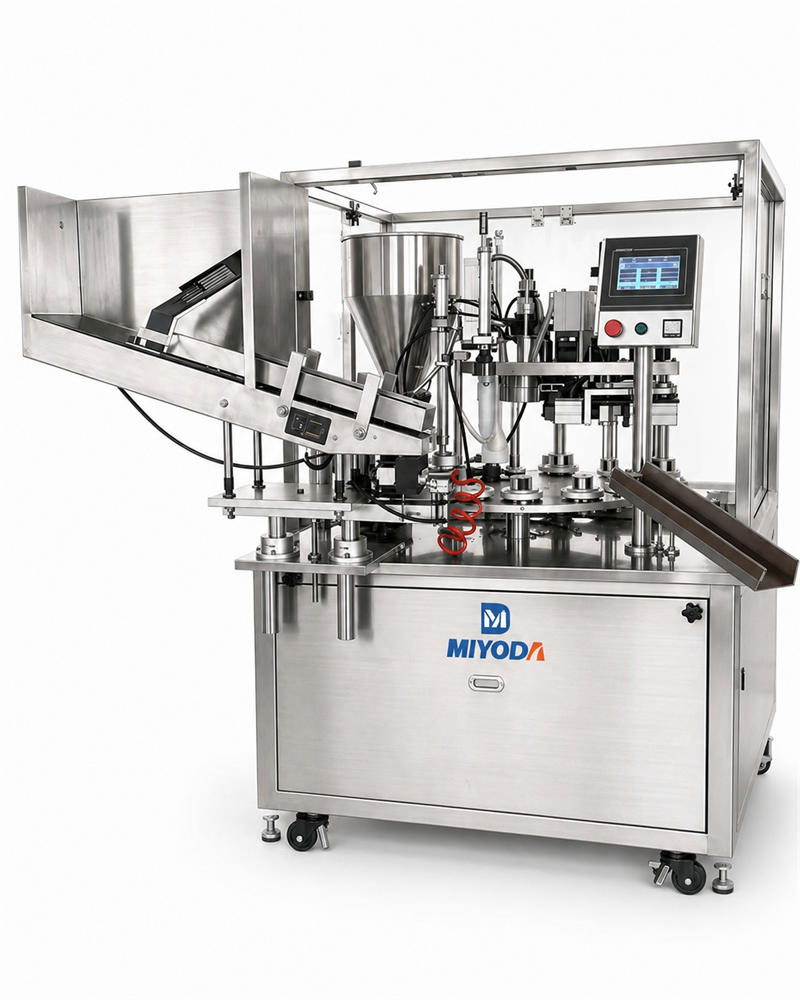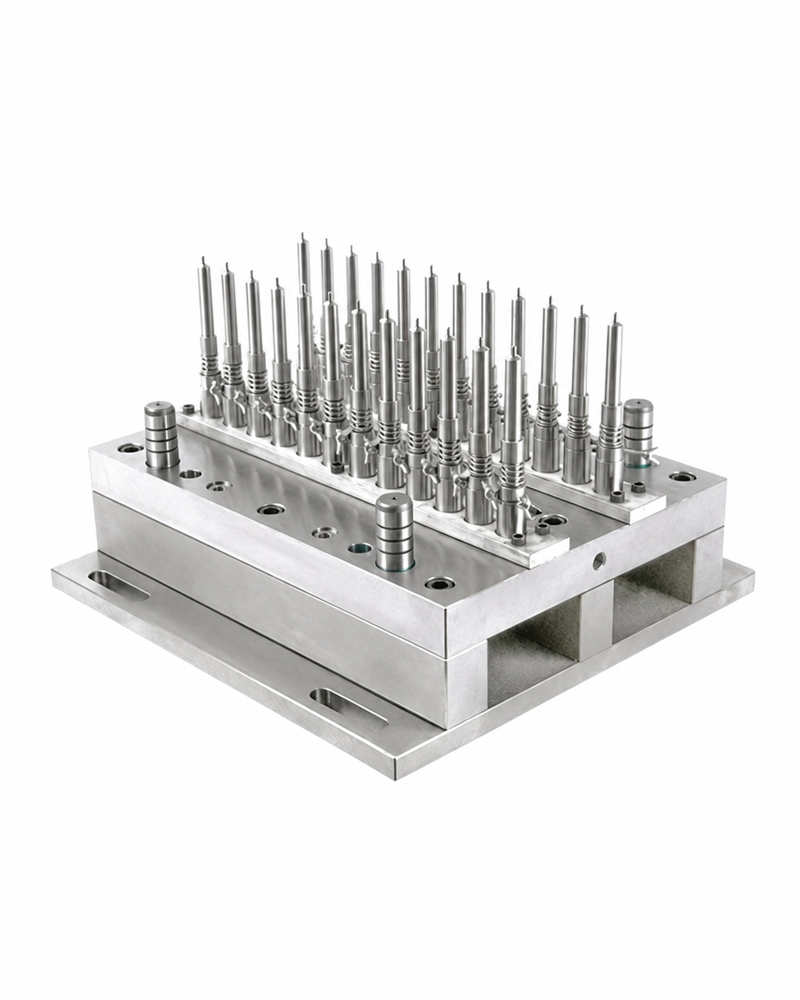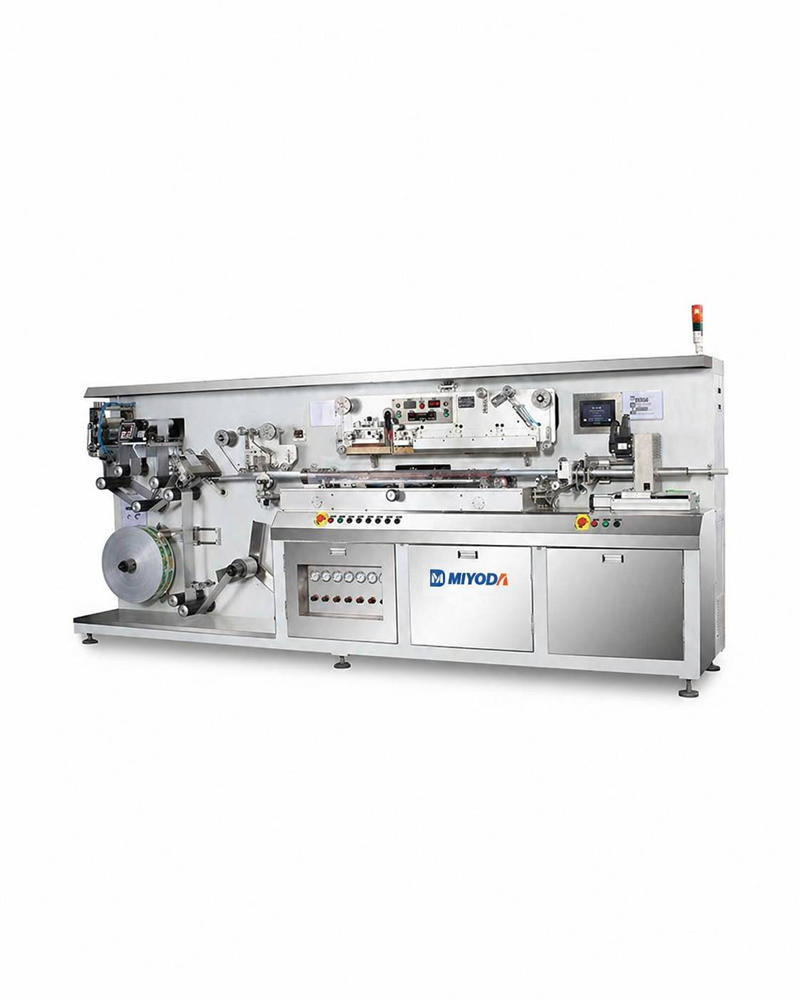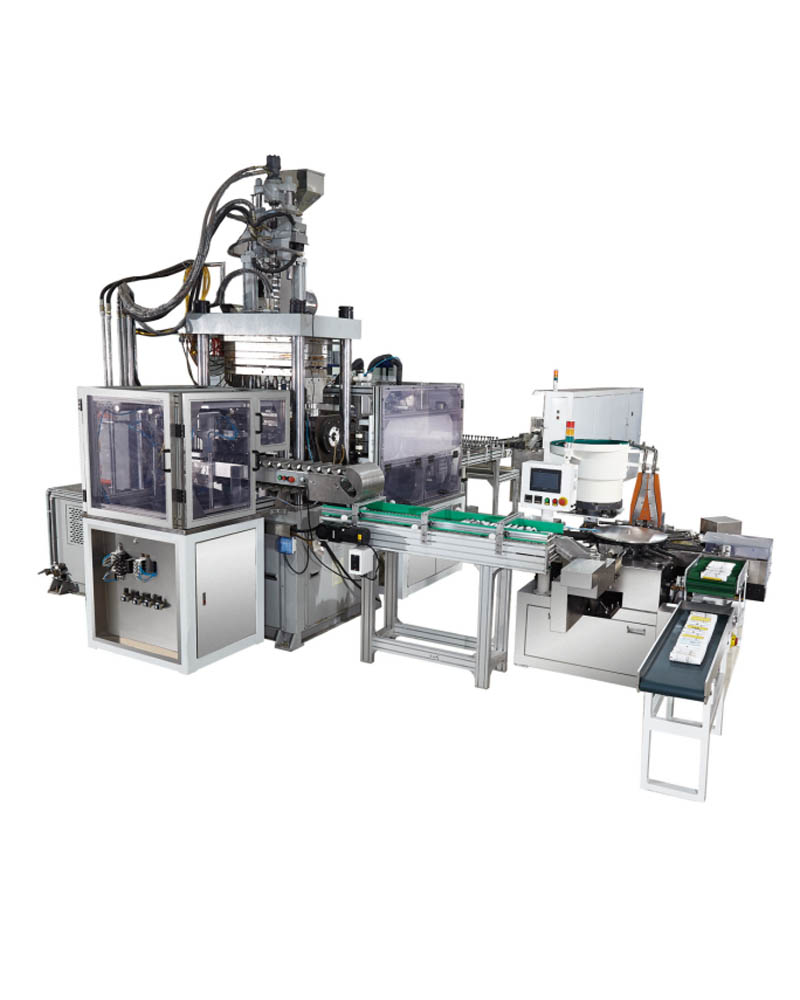

Modern soft tube packaging production lines serve cosmetics, oral care, and pharmaceutical markets — with manufacturing method selection directly impacting cost, quality, and compliance outcomes.
Understanding Injection Molding for Tube Manufacturing
How Injection Molding Works: The Technical Process
Injection molding in the tube context refers to a cycle-based manufacturing process where molten thermoplastic material is injected under high pressure into a precisely engineered closed mold cavity. Unlike a continuous process, each cycle produces a discrete, fully formed component — most commonly the tube shoulder and head assembly in soft tube production. The extrusion process forms the tube body (the sleeve), while injection molding forms the structurally complex shoulder, orifice, and neck that define a tube’s functionality and brand identity. Understanding this distinction is critical: in most cosmetic and pharmaceutical tube production lines, both methods are actually used in combination, not as straight alternatives to each other.The Step-by-Step Injection Cycle Explained
- Clamping: The mold’s two halves are clamped shut by the machine’s hydraulic or electric clamping unit, generating pressures of 1,000–5,000 tonnes to withstand the force of material injection.
- Material Injection: Thermoplastic pellets (typically HDPE, LDPE, or PP) are fed from a hopper into a heated barrel where a reciprocating screw melts and homogenizes the material. The screw then advances, injecting molten plastic into the mold at pressures of 700–1,500 bar (10,000–21,750 PSI).
- Cooling & Solidification: The injected material cools and solidifies within the mold, conforming precisely to the cavity geometry. Cooling typically takes 5–30 seconds depending on wall thickness and material.
- Mold Opening & Ejection: Ejector pins push the solidified part from the mold. On tube shoulder machines, this yields a formed shoulder/head assembly ready for attachment to the extruded tube body.
- Cycle Reset: The mold closes and the sequence repeats. High-speed tube shoulder injection machines achieve 80–120 parts per minute in commercial production.
📘 Key Terms: Injection Molding
- Clamping Force (tonnes)
- The force applied to keep the mold halves closed during injection. Higher viscosity materials and larger part areas require greater clamping force to prevent flash — material escaping at the mold parting line.
- Shot Size (cm³)
- The volume of molten material injected per cycle. For tube shoulder components, shot sizes are typically small (5–50 cm³), enabling fast cycle times.
- Cooling Time
- The portion of the cycle where the injected material solidifies. It represents 60–80% of total cycle time in most applications — reducing it through optimized cooling channel design is the primary lever for improving throughput.
- Flash
- Thin film of excess plastic that escapes between mold halves during injection. A quality defect that requires manual trimming, adding labor cost and creating material waste.
Key Equipment Components and Their Functions
A tube shoulder injection molding machine integrates several subsystems. The injection unit (barrel, screw, and nozzle) plasticizes raw material and delivers it to the mold. The clamping unit opens, closes, and locks the mold with sufficient force. The mold tool itself — a precision-machined steel cavity set — defines the shoulder geometry and is the primary driver of both part quality and capital cost. Modern machines use servo-electric drives rather than purely hydraulic systems, offering 20–30% energy savings and significantly tighter repeatability across millions of cycles.Advantages of Injection Molding Technology
Superior Product Quality and Consistency
Injection molding delivers wall thickness precision to within ±0.05mm on well-maintained tooling — a level of dimensional consistency that is nearly impossible to match with extrusion alone on complex 3D geometries like tube shoulders. For a premium skincare brand whose customer associates squeeze feel and cap snap-fit with product quality, this precision translates directly to perceived brand value. Pharmaceutical clients operating under FDA CGMP (Current Good Manufacturing Practice) standards require documented dimensional consistency and material traceability that injection molding processes are specifically engineered to provide.Design Flexibility and Customization Capabilities
The mold cavity is, in essence, a 3D template with unlimited geometric freedom. Injection molding can produce tube shoulders with integrated flip-top closures, tamper-evident bands, multi-orifice tips, child-resistant mechanisms, and decorative surface textures — all in a single cycle, with no secondary operations. A cosmetic brand launching a prestige face cream tube with an embossed logo cap and a tapered oval shoulder can achieve that design through injection molding in a way that extrusion simply cannot replicate. For contract manufacturers serving multiple premium brands, this flexibility is a meaningful competitive differentiator.
Injection molding enables complex tube shoulder geometries, decorative surface textures, and integrated closure features that extrusion alone cannot achieve — a key advantage for premium cosmetic and pharmaceutical packaging.
Limitations and Challenges of Injection Molding
Higher Initial Capital Investment
A production-ready injection mold for a standard tube shoulder typically costs between $15,000 and $80,000 depending on cavity count, steel grade, and geometric complexity. A multi-cavity mold (8–16 cavities) for high-volume production can exceed $150,000 before the machine investment. Compare this to extrusion dies, which typically range from $3,000 to $15,000 — a 5–10× difference. For a brand testing a new product line at 50,000 units annually, that tooling cost alone can make injection molding economically unjustifiable until volumes scale.Longer Setup Times and Mold Development Costs
Mold development from final design approval to first production-quality sample typically takes 8–16 weeks for a standard tube shoulder tool, and 16–24 weeks for a complex multi-feature mold. Every design change after steel is cut adds both cost (typically $2,000–$15,000 per major modification) and time. For brands operating in fast-moving beauty markets where a product launch window is measured in months, not quarters, this lead time can represent a genuine strategic risk.Exploring Extrusion Methods in Tube Production
How Extrusion Molding Works: The Technical Foundation
Extrusion is a continuous manufacturing process where thermoplastic material is melted and forced through a shaped die to produce a continuous tube profile. Unlike injection molding’s discrete cycles, extrusion runs uninterrupted — making it the dominant method for producing the cylindrical tube body (sleeve) in soft tube packaging. The extruded tube body is then cut to length, and a separately injection-molded or compression-molded shoulder is attached in a downstream heading/shoulder operation. In this architecture, extrusion and injection molding are complementary, not interchangeable — each performing the task it’s mechanically best suited for.Continuous Extrusion Process and Material Flow
Raw thermoplastic pellets are fed from a hopper into a heated barrel containing a rotating screw. As the material travels along the barrel, it progressively melts through conduction from the barrel walls and frictional shear heat from the screw. Fully plasticized material is then forced through a precision die head. In multi-layer cosmetic tube production — which is standard for barrier-performance applications — co-extrusion die heads combine 3, 5, or 6 separate material streams simultaneously, forming a tube with distinct functional layers (e.g., LDPE/TIE/EVOH/TIE/LDPE) in a single pass. Systems like those built by Miyoda Packaging Machinery’s tube extrusion line achieve production speeds of 10–15 meters per minute with PLC control and laser diameter monitoring for real-time quality management.Die Design and Tube Formation Mechanisms
The extrusion die is the precision heart of the process. It must distribute melt flow uniformly around its circumference — any imbalance produces wall thickness variation that results in weak spots or dispensing inconsistency. Spiral mandrel dies are the current standard for cosmetic tube extrusion, using helical melt channels that eliminate weld lines (the streaks that occur when melt streams rejoin after splitting around a mandrel). After leaving the die, the hot tube is pulled through a vacuum sizing sleeve and water cooling bath that sets its external diameter to tolerance — typically ±0.1mm on commercial lines.Watch the step-by-step cosmetic tube extrusion process — from raw PE pellets through co-extrusion, cooling, cutting, and heading — to understand exactly how a finished soft tube body is formed.
Key Advantages of Extrusion Technology
Rapid Production Speeds and High Output Capacity
A single extrusion line running at 12 meters per minute on a standard 35mm-diameter tube produces approximately 2,400–3,600 tube bodies per hour after cutting — far exceeding the output of a single injection molding press on a comparable footprint. At commercial scale with two or three extrusion lines running in parallel, output can reach 150,000–300,000 tube bodies per 24-hour day. For high-volume applications — mass-market toothpaste, sunscreen, shampoo, and over-the-counter pharmaceutical creams — this throughput advantage is decisive.Lower Tooling Costs and Faster Time-to-Market
Extrusion dies for standard tube diameters cost $3,000–$12,000, compared to $15,000–$80,000+ for injection molds producing equivalent tube shoulder components. More importantly, die lead times of 6–10 weeks are shorter than mold development cycles, and a single die set produces consistent tube bodies regardless of batch size — unlike injection molding, where high cavity-count tools are needed to achieve economic efficiency at high volumes. For a new brand needing 200,000 toothpaste tubes in three months, extrusion’s tooling economics and timeline often make it the only viable path.
Extrusion’s continuous production architecture delivers the throughput volumes that mass-market toothpaste, sunscreen, and personal care brands depend on — at tooling costs 5–10× lower than injection mold tooling.
Disadvantages and Operational Constraints
Limited Design Customization Options
Extrusion produces uniform, rotationally symmetric tube bodies. It cannot produce oval cross-sections, flat tubes with non-uniform wall distributions, or integrated surface features like embossed logos directly in the tube body wall. These design elements require secondary operations — offset printing, hot stamping, silk-screen printing, or shrink-sleeve labeling — that add process steps, cost, and potential quality control points. For brands where the tube itself is a design statement (think luxury skincare or pharmaceutical packaging where dosing accuracy indicators are molded into the tube wall), extrusion’s geometric limitations matter.Quality Control Challenges in High-Speed Production
Running at 10–15 meters per minute, an extrusion line can produce hundreds of meters of out-of-specification tube before manual inspection detects an issue — particularly with subtle defects like wall thickness drift or micro-layer delamination. This is why modern extrusion lines for cosmetic and pharmaceutical tubes invest heavily in in-line laser gauging, ultrasonic wall measurement, and automated rejection systems. A line without these controls operating at high speed for a pharmaceutical client can generate a significant scrap event before an alarm triggers. The monitoring technology adds cost, but for regulated applications it is non-negotiable.Cost Comparison: Total Cost of Ownership Analysis
Initial Capital Equipment Investment
Injection Molding Machine Costs and ROI Timeline
A production-grade tube shoulder injection molding machine — including the machine press, automation handling, and a single mold tool — represents a capital investment of $150,000–$300,000 for a mid-range automatic system capable of 80–120 shots per minute. The mold tool itself must be added for each new product SKU. At $30,000 per mold and 10 active SKUs, tooling alone adds $300,000. ROI timelines of 24–48 months are typical at production volumes of 500,000–2,000,000 tube shoulders per year, assuming competitive pricing and high utilization rates. Machines built with servo-electric drives (increasingly standard) offset energy operating costs and reduce ROI timelines by 15–25%.Extrusion Equipment Pricing and Budget Considerations
A complete cosmetic tube extrusion line — extruder, co-extrusion die head, cooling system, haul-off, cutter, and winder — ranges from $120,000 for a basic single-layer system to $400,000+ for a 5-layer co-extrusion line with laser gauging and automated rejection. The higher investment in multi-layer capability is justified by the premium this technology commands in the market: 5-layer EVOH barrier tubes sell at 30–80% premiums over single-layer PE tubes of equivalent dimensions. Miyoda Packaging Machinery’s full tube production line range covers both single-layer and multi-layer co-extrusion configurations for cosmetic, pharmaceutical, and oral care applications.Tooling and Mold Expenses
Injection Mold Development and Maintenance Costs
Injection molds for tube shoulder production are typically manufactured from P20 or H13 tool steel, with cavity surfaces hardened and polished to Class A standards. A single 4-cavity shoulder mold for a standard 35mm cosmetic tube costs approximately $25,000–$45,000. This cost is amortized across the mold’s working life of 500,000–1,000,000+ cycles with proper maintenance — yielding a tooling cost contribution of $0.025–$0.090 per part. Annual mold maintenance (polishing, ejector pin replacement, cooling channel cleaning) typically adds $2,000–$5,000 per tool per year to running costs.Extrusion Die Costs and Replacement Frequency
Extrusion dies — particularly spiral mandrel multi-layer co-extrusion die heads — require less frequent replacement than injection molds under normal operating conditions. A well-maintained die head for a 5-layer cosmetic tube line has an operational life of 5–10 years. However, die head cleaning (required when switching materials or colors) can take 4–8 hours of downtime, and a damaged die tip from contaminated material can cost $5,000–$20,000 to repair or replace. Tooling costs per unit produced are therefore substantially lower than injection molds over any production horizon exceeding 500,000 units.Operational and Running Costs
Energy Consumption and Utility Expenses
Injection molding machines for tube shoulder production typically consume 15–25 kW per operational cycle, with significant variation based on clamping force requirements and material type. Extrusion lines run continuously at 20–40 kW depending on output speed and number of extruder layers. At high volumes, extrusion’s continuous operation yields better energy efficiency per unit produced — particularly on 24-hour production schedules where the thermal mass of the barrel system holds temperature with less energy than repeatedly cycling an injection press between shots. Modern servo-electric drives on both machine types reduce energy consumption by 20–35% compared to hydraulic-only predecessors.Labor Requirements and Personnel Training Investments
An injection molding cell for tube shoulder production typically requires one skilled operator per shift per machine for setup, quality monitoring, and mold changes. Mold changeover training is complex — mishandled tool installation is a leading cause of mold damage in tube plants. Extrusion lines typically run with one operator per line per shift, but demand higher technical expertise in die head management, material changeovers, and real-time process adjustment. Investment in operator training for either technology runs $3,000–$8,000 per trained technician, plus 60–90 days of supervised production to reach full competency.| 費用区分 | Injection Molding | Extrusion | Advantage |
|---|---|---|---|
| Machine Capital Cost | $150,000–$300,000 | $120,000–$400,000 | Comparable |
| Tooling per SKU | $15,000–$80,000 | $3,000–$15,000 | Extrusion |
| Tooling Lead Time | 8–16 weeks | 6–10 weeks | Extrusion |
| Tool Lifespan | 500K–1M+ cycles | 5–10 years | Comparable |
| Energy per Unit (high vol.) | Higher (cycle-based) | Lower (continuous) | Extrusion |
| Material Waste Rate | 5–10% | 2–5% | Extrusion |
| Per-Unit Cost @ 100K units | $0.15–$0.35 | $0.20–$0.40 | Injection |
| Per-Unit Cost @ 1M units | $0.12–$0.25 | $0.08–$0.18 | Extrusion |
| Design Complexity Capability | High (3D geometries) | Limited (linear profiles) | Injection |
| Changeover Time (per SKU) | 2–4 hours | 4–8 hours | Injection |
Production Speed and Capacity: Meeting Market Demands
Cycle Times and Output Metrics
Injection Molding Production Rates per Hour
A high-speed tube shoulder injection molding machine running a 4-cavity mold at 80 shots per minute delivers 320 shoulder components per minute, or approximately 19,200 per hour. A 16-cavity mold on the same press multiplies this to 76,800 components per hour — but requires a proportionally larger machine and a substantially more expensive mold tool. In practice, commercial tube shoulder injection operations run 8–16 cavity molds at 60–100 shots per minute, yielding 28,800–57,600 parts per hour per press. This represents meaningful output — but the cost and complexity of the tooling required to achieve it is a constant in the equation.Extrusion Speed Capabilities and Volume Potential
A modern cosmetic tube extrusion line running at 12 meters per minute on 150mm-cut-length tubes produces 80 cuts per minute — approximately 4,800 tube bodies per hour per line. Two parallel lines yield 9,600 per hour, and a facility with six lines achieves 28,800 tube bodies per hour with a relatively small equipment footprint and two operators per shift. At this scale, with 24-hour operation and 300 production days per year, a six-line extrusion facility can produce over 200 million tube bodies annually — a volume that defines the economics of major toothpaste and personal care brands globally.Scalability Considerations for Growth
Ramping Production with Injection Systems
Injection molding scales through adding presses or increasing cavity counts — both of which require capital investment but can be staged strategically. A plant starting with two 8-cavity shoulder molds can add a third mold and press when volume justifies it, without disrupting existing production. The modularity of injection molding systems suits manufacturers serving multiple brand clients with different SKUs, where flexibility of allocation across presses is more valuable than raw throughput maximization.Expanding Capacity with Extrusion Equipment
Extrusion capacity scales by adding parallel lines — each line is a self-contained production unit that can run different tube dimensions or material formulations independently. This parallel architecture suits large-volume manufacturers and contract packers with consistent demand for specific tube specifications. The risk in scaling extrusion is over-investment in single-specification capacity: a line optimized for 35mm 5-layer LDPE/EVOH tubes has limited flexibility for a sudden shift to 22mm 3-layer tubes — requiring die head changes, screw speed recalibration, and potentially different extruder barrel configuration.Downtime and Maintenance Impact on Throughput
Scheduled Maintenance Requirements for Each Method
Injection molding presses require quarterly lubrication of tie bars, toggle joints, and injection unit components, with annual full overhaul of hydraulic systems (where applicable) and electrical control validation. Mold tools require separate preventive maintenance programs: quarterly polishing of cavity surfaces, inspection of ejector pins, and verification of cooling channel flow rates. Extrusion lines require daily inspection of die face and melt temperature profiles, weekly screw and barrel dimensional checks, and quarterly cleaning of die head flow channels. Both systems, when maintained on schedule, achieve OEE (Overall Equipment Effectiveness) of 85–92% — falling to 65–75% in facilities with deferred maintenance programs.Unplanned Downtime and Troubleshooting Protocols
The most common unplanned downtime events on injection molding lines are mold-related: ejector pin breakage, cavity scoring, cooling channel blockage, and parting line flash. Typical resolution times range from 30 minutes (ejector pin replacement) to 72+ hours (mold removal, repair, and reinstallation). On extrusion lines, unplanned downtime most commonly results from material degradation events (burnt material blocking die channels), haul-off drive failures, and cooling system temperature excursions. A blocked die head requiring full disassembly and cleaning represents 4–12 hours of downtime — a significant production impact at high-volume output rates.Product Quality and Material Performance Comparison
Wall Thickness Uniformity and Consistency
Injection Molding Precision Standards
For tube shoulder components produced by injection molding, wall thickness tolerance of ±0.05mm to ±0.10mm is achievable on well-maintained tooling with consistent melt temperature and injection pressure control. This level of precision is critical for orifice dimensions (which determine product dispensing rate) and thread geometries (which determine cap sealing integrity). A pharmaceutical client whose product label states “apply 1cm of cream” depends on orifice diameter consistency within tenths of a millimeter — a specification that injection molding can meet reliably and injection-molded components can document in batch records.Extrusion Accuracy and Tolerance Specifications
Modern cosmetic tube extrusion lines with laser diameter gauging maintain external diameter tolerance of ±0.15mm to ±0.25mm and wall thickness uniformity of ±0.02–0.05mm under stable operating conditions. The critical quality parameter in extrusion is eccentricity — the degree to which the tube wall is thicker on one side than the other, resulting from die mandrel misalignment. Eccentricity above 10–15% creates weak spots that fail during squeeze testing and can cause tube splitting at retail. Spiral mandrel die designs and real-time wall thickness monitoring are the principal technical defenses against this failure mode.
Quality control in tube manufacturing — particularly for pharmaceutical applications — demands dimensional verification, barrier integrity testing, and in-process statistical monitoring. The method chosen (injection vs. extrusion) determines which parameters require the most intensive control effort.
Aesthetic Qualities and Surface Finish
Color Matching and Pigment Distribution
Injection molding achieves uniform pigment distribution through the shear mixing action of the reciprocating screw — provided that masterbatch concentration and melt temperature are controlled within specification. Color consistency between shots is typically excellent on stable, well-maintained injection presses: Delta-E (color difference) values of 0.5–1.5 are achievable across a production run. Extrusion achieves good color consistency on the tube body but is more sensitive to masterbatch feed rate variation — a fluctuation of even 0.1% in pigment concentration at a high-speed line can produce visible color banding visible under fluorescent retail lighting.Surface Defects and Quality Control Measures
Common surface defects in injection molding include sink marks (depressions caused by material shrinkage away from the mold surface), weld lines (visible lines where two melt flow fronts meet), and gate marks (witness marks at the injection point). In extrusion, the primary aesthetic defects are die lines (longitudinal streaks caused by die damage or contamination), gels (unmelted material particles visible as specks in the tube wall), and surface roughness (caused by material degradation or excessively high output speeds). Both processes benefit from automated camera inspection systems that detect these defects at line speed, far exceeding what manual inspection can achieve.Structural Integrity and Durability Testing
Pressure Resistance and Burst Strength Metrics
Cosmetic and pharmaceutical tube burst strength testing typically measures the internal pressure at which the tube body splits or the seal fails. Well-produced LDPE extrusion tubes (0.4mm wall thickness) routinely withstand 3–6 bar of internal pressure — well above the 0.5–1.5 bar generated during normal consumer squeeze use. Injection-molded tube shoulders must withstand both the squeeze stress transmitted through the body-shoulder joint and direct cap application torque. Joint integrity between the extruded body and injection-molded shoulder is itself a critical quality parameter — failure at this bond is more common than either component failing independently, and is managed through controlled heading machine temperature and pressure settings.Shelf-Life Performance and Material Degradation
For products with active pharmaceutical or cosmetic ingredients susceptible to oxygen degradation (vitamin C serums, retinol formulations, antibiotic creams), oxygen transmission rate (OTR) through the tube wall is the primary shelf-life determinant. Single-layer LDPE tubes have OTR values of 1,500–3,000 cm³/m²/day·bar — adequate for most cosmetics but insufficient for oxidation-sensitive pharmaceuticals. 5-layer co-extruded tubes with EVOH barrier layers achieve OTR values of 0.1–5.0 cm³/m²/day·bar — a 300–30,000× improvement that can extend pharmaceutical product shelf life from 12 months to 24–36 months. This barrier performance is the technical justification for the premium pricing of multi-layer extruded tube construction.Best-Use Scenarios: Matching Method to Your Needs
When Injection Molding Is Your Optimal Choice
Complex Geometries and Intricate Design Requirements
Injection molding is unequivocally the right choice when your product’s competitive positioning depends on distinctive, complex packaging geometry. If your brief includes an asymmetric flip-top cap that snaps precisely, an oval tube shoulder with embossed branding, a tapered nozzle with a precision-controlled orifice diameter, or a child-resistant closure mechanism integrated into the tube head — injection molding is the only process that delivers these features within a manufacturable cost structure. Luxury fragrance brands, medical device companies requiring precise drug delivery from topical tubes, and dental product manufacturers with precision applicator requirements all fit this profile.Small to Medium Production Volumes with Premium Positioning
At volumes of 100,000–500,000 tube shoulders annually, injection molding’s tooling cost amortizes to a manageable per-unit level while its quality and design advantages are fully realized. A dermatology brand producing 150,000 units per year of a prescription scar treatment cream — sold through pharmacies at premium pricing — gains more from injection molding’s dimensional precision and design customization than from extrusion’s throughput speed. The higher per-unit cost of injection molding is absorbed by the premium retail price, and the brand’s technical differentiation is protected by mold tooling that competitors cannot immediately replicate.When Extrusion Manufacturing Excels
High-Volume Production and Mass-Market Applications
The economics of extrusion become dominant at 1,000,000+ tube bodies annually. A major toothpaste brand producing 50 million tubes per year across five SKUs operates extrusion lines continuously — the per-unit tube body cost at this scale, including energy, labor, and amortized tooling, drops to $0.04–$0.10 per tube body, a cost structure that injection molding cannot approach. Sunscreen, body lotion, shampoo-in-tube, hand cream, and over-the-counter ointment categories all operate in this volume regime and depend on extrusion economics to maintain retail price competitiveness.Standard Tube Designs with Quick Market Entry
Extrusion’s shorter tooling lead time (6–10 weeks vs. 8–16 weeks for injection molds) and lower die cost make it the preferred route for time-sensitive product launches where standard circular tube designs are acceptable. A new brand launching a white-label sunscreen for a retail chain with a 90-day lead time requirement, or a contract manufacturer responding to a spot order for 500,000 pharmaceutical cream tubes, turns to extrusion as the only commercially viable option within the given timeline.🔵 Choose Injection Molding When:
- Your tube shoulder requires complex 3D geometry, integrated closures, or precision orifice control
- Annual volumes are below 500,000 units and design differentiation justifies tooling investment
- You serve premium cosmetic, specialty pharmaceutical, or dental product markets
- Fast SKU switching (2–4 hour mold changes) is operationally critical for your order profile
- Regulatory documentation of dimensional consistency is required per your quality system
🟢 Choose Extrusion When:
- Annual volumes exceed 500,000–1,000,000 tube bodies and cost-per-unit is the primary metric
- Your tube design is rotationally symmetric and standard diameters (16–60mm) are acceptable
- Barrier performance (EVOH multi-layer) is required for oxidation-sensitive formulations
- Time-to-market pressure makes 6–10 week die lead times preferable to 8–16 week mold cycles
- Continuous 24-hour production schedules can be maintained to maximize line utilization
Hybrid Approaches and Combination Strategies
Using Both Methods for Different Product Lines
The most sophisticated tube manufacturers use both processes simultaneously — extrusion for tube body production and injection molding for tube shoulder/head components — within the same production ecosystem. This is, in fact, the standard architecture of the global soft tube manufacturing industry. Companies like ミヨダ・パッケージング・マシナリー build complete integrated production lines that combine tube extrusion machines with tube heading and shoulder machines (which use injection molding to form the shoulder), plus downstream printing, filling, and capping equipment — precisely because neither process alone is sufficient to produce a complete, finished soft tube.Sequential Processing for Enhanced Results
Beyond the standard extrusion-then-injection-heading sequence, some advanced manufacturers use sequential co-extrusion with in-line compression molding for tube heads — forming the shoulder from a slug of extruded material that is then compressed into shape rather than injection-molded from separate pellets. This approach reduces material transitions and can improve body-to-shoulder bond integrity. It’s particularly relevant for FDA-compliant pharmaceutical tube packaging where process simplification reduces validation scope and regulatory documentation burden.Material Compatibility and Formulation Considerations
Thermoplastic Materials Suited for Each Method
Polyethylene (PE) and Polypropylene (PP) Performance
LDPE (Low-Density Polyethylene) is the dominant material for extruded soft tube bodies — its flexibility, chemical inertness, and compatibility with a wide range of cosmetic and pharmaceutical formulations make it the industry default. HDPE is used for tube shoulders and caps (injection molded) where greater stiffness and snap-fit integrity are needed. PP (Polypropylene) offers higher temperature resistance and chemical compatibility for aggressive formulations (high-alcohol toners, medicated creams with polar solvents) but is somewhat less flexible than LDPE, making it less ideal for tube bodies that must flex repeatedly during dispensing. Processing parameters differ significantly between these materials — LDPE extrudes at 160–220°C while PP requires 220–260°C, influencing both energy cost and equipment specification.Specialized Polymers and Barrier Material Options
EVOH (Ethylene Vinyl Alcohol) is the barrier layer of choice in multi-layer co-extruded tubes — offering oxygen transmission rates 1,000–10,000× lower than LDPE alone. Its limitation is moisture sensitivity: EVOH’s barrier performance degrades if it absorbs water, which is why it’s always sandwiched between LDPE layers in tube construction (the 5-layer LDPE/TIE/EVOH/TIE/LDPE architecture). TIE resins — adhesive polymers that bond incompatible materials like LDPE and EVOH — are the invisible heroes of multi-layer tube technology. Selecting the correct TIE resin for a given EVOH/PE combination is a technical specification that directly impacts inter-layer adhesion strength and thus tube burst performance in drop tests and temperature cycling.Handling Sensitive Formulations
Temperature Control During Processing
Many pharmaceutical and premium cosmetic formulations contain active ingredients that are sensitive to heat exposure during tube manufacturing — specifically during the heading/shoulder injection step, where temperatures of 180–240°C are applied in close proximity to the extruded tube body. Managing heat exposure at the heading station is critical for formulations that will later contact retinol (which degrades above 25°C in solution), live probiotic cultures (killed above 40°C), or certain antibiotic compounds. The solution in commercial practice is maintaining an air gap between the hot shoulder injection zone and any product-contacting surfaces — the tube is empty during heading, so direct product exposure does not occur, but radiant heat must be managed to prevent tube body distortion.Shear Stress Management for Delicate Products
The high-shear environment of both injection molding (injection pressures of 700–1,500 bar) and extrusion (screw shear zones) can degrade shear-sensitive materials — including certain high-molecular-weight polymer additives, long-chain pigments, and some bio-based barrier polymers being developed for sustainable tube packaging. For these materials, single-screw extruder designs with optimized screw geometry and conservative output speeds are preferred over twin-screw systems (which generate higher shear energy). In injection molding, wider gates and runners that reduce flow velocity mitigate shear damage to sensitive material systems.Regulatory Compliance and Industry Standards
FDA and International Certification Requirements
Food Contact Surface Compliance for Both Methods
Both injection-molded and extruded tube components that will contact cosmetic or food products must comply with FDA 21 CFR §177 (Indirect Food Additives) and the equivalent FDA regulations for food and drug contact materials. In practice, this means using only resins, pigments, and additives that appear on the FDA’s positive lists for food-contact applications — and documenting their use in a material specification that suppliers must maintain and provide on request. EU cosmetic and pharmaceutical packaging must additionally comply with EC Regulation 10/2011 (Plastic Food Contact Materials) and the European Pharmacopoeia requirements for pharmaceutical container materials.Pharmaceutical Packaging Standards and Documentation
For pharmaceutical tube packaging, the regulatory environment adds several layers beyond cosmetic requirements. Tube materials must be tested for extractables and leachables (E&L) — the chemical compounds that can migrate from the tube wall into the product over its shelf life. This testing protocol, conducted by accredited third-party laboratories, can take 6–12 months to complete and costs $15,000–$50,000 per material system — a significant investment that is completed once per material formulation and then leveraged across all products using that tube construction. Both injection-molded and extruded components require E&L testing; the multi-layer complexity of co-extruded tubes can expand the test scope significantly.
Pharmaceutical tube packaging must pass extractables and leachables testing, dimensional validation, and FDA/EU GMP documentation requirements — processes that apply to both injection-molded and extruded components but with different scopes and timelines.
Quality Assurance and Testing Protocols
Third-Party Testing and Certification Processes
Beyond E&L testing, commercial tube production for regulated markets requires ISO 15223 symbol compliance (for medical device adjacent applications), ISO 11607 packaging validation for sterile pharmaceutical products, and ASTM D4169 distribution simulation testing (drop, vibration, and compression) to verify that tubes maintain integrity through the supply chain. Many major cosmetic retailers — including Sephora, Ulta, and major pharmacy chains — now require suppliers to provide REACH compliance declarations confirming that no substances of very high concern (SVHC) are present in tube materials at concentrations above 0.1% by weight.In-House Quality Control Implementation
A robust in-house QC system for tube manufacturing — whether injection or extrusion-based — should include: incoming material certification review (verifying resin and masterbatch certificates of analysis against specification limits before use), first-article inspection (FAI) at the start of each production run (dimensional check of first 5–10 parts against the drawing), in-process statistical process control (SPC) with control charts tracking critical dimensions and weight, and final outgoing inspection per AQL (Acceptance Quality Level) sampling plans. Maintaining this QC infrastructure requires investment in measurement equipment — including coordinate measuring machines (CMMs) for injection-molded shoulders and laser gauges for extruded tube bodies — costing $20,000–$80,000 in capital equipment for a fully equipped QC lab.Making Your Decision: A Practical Comparison Framework
Evaluating Your Production Volume Requirements
Volume Thresholds for Economic Viability
The economic logic of technology selection in tube manufacturing is most clearly expressed through volume thresholds. Below 100,000 units annually, neither injection molding nor full extrusion lines are truly economically optimized — at this scale, purchasing tube bodies from a tube supply specialist and focusing capital on filling and packaging equipment is often the smarter strategy. Between 100,000 and 500,000 units, injection molding for shoulders combined with purchased tube bodies is the typical solution. Above 500,000 units, investing in in-house extrusion capacity begins to show positive ROI, particularly if multiple SKUs can share a production line. Above 2,000,000 units, dedicated extrusion lines running continuously are almost always the most cost-effective manufacturing configuration.Calculating Break-Even Points for Equipment Investment
The break-even calculation for tube manufacturing equipment compares the cost of purchasing finished tubes from external suppliers against the total cost of in-house production. A typical break-even analysis framework: if an external tube supplier charges $0.30 per tube body and your in-house extrusion cost (capital amortized over 7 years + energy + labor + materials) is $0.12 per tube body, you save $0.18 per unit. At 1,000,000 units per year, that saving of $180,000 annually justifies a capital investment of approximately $900,000–$1,260,000 (5–7 year payback). The choice of automation level in your tube filling line interacts with this calculation — a fully automatic line maximizes labor efficiency and strengthens the in-house production business case.Assessing Your Design and Customization Needs
Complexity Scoring System for Your Tube Design
🎯 Quick Design Complexity Scoring Guide
Score your tube design against the criteria below. A total score of 12+ strongly favors injection molding for the shoulder component; scores of 6 or below indicate extrusion is likely sufficient.