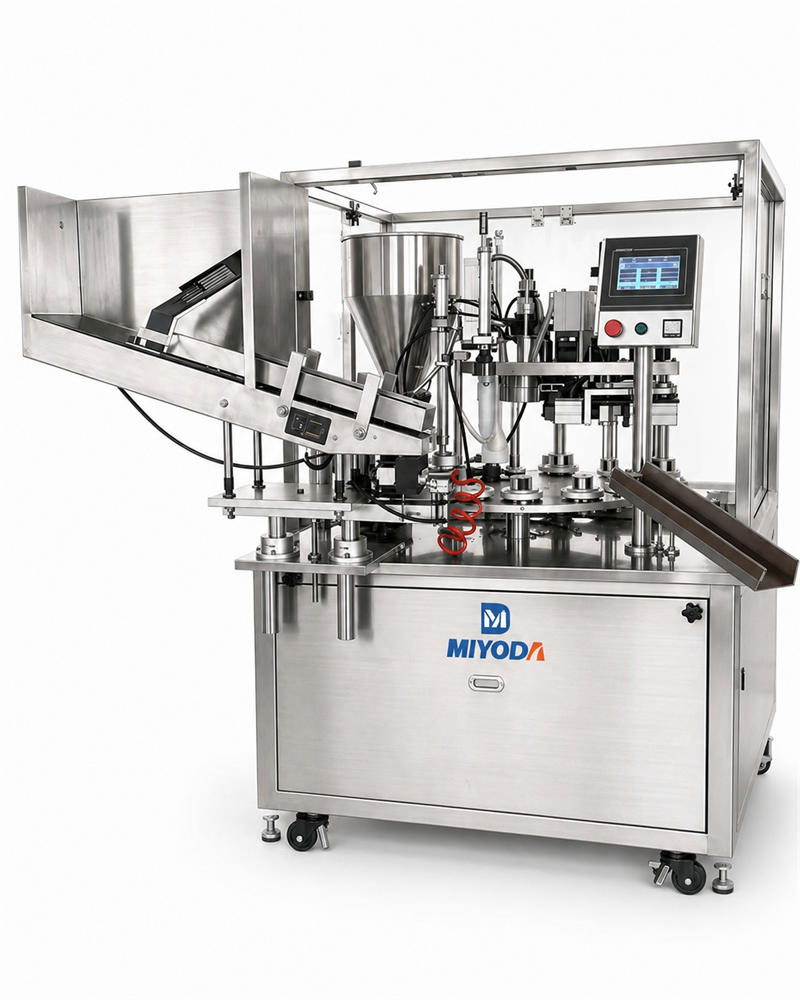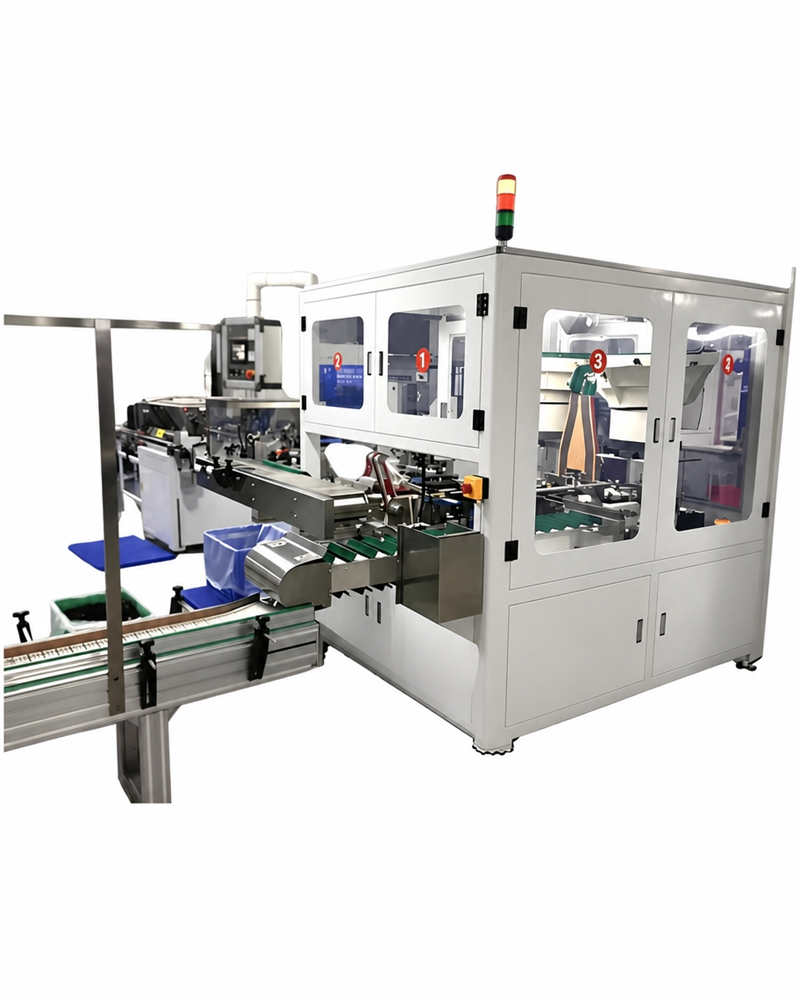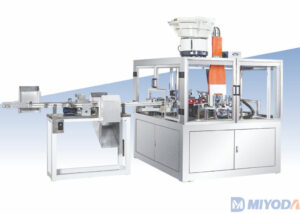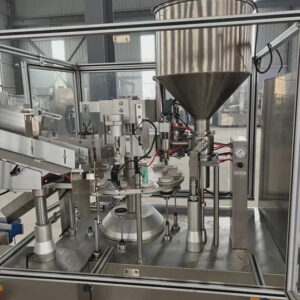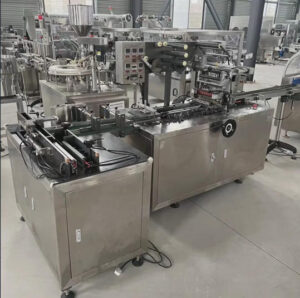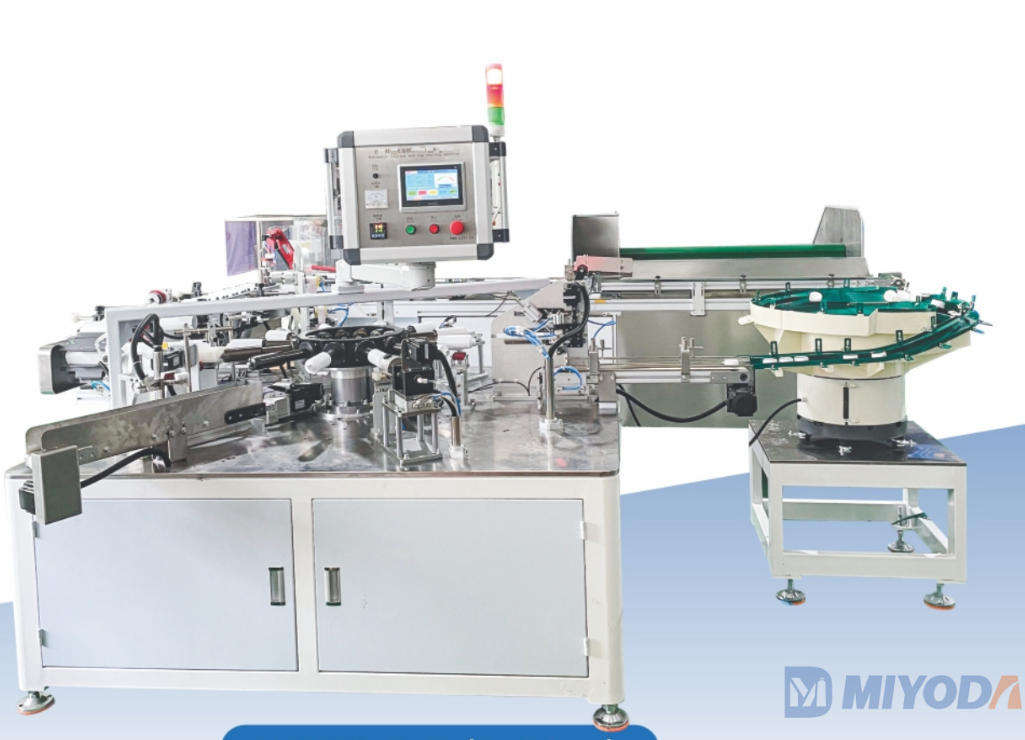

Why the Right Cosmetic Tubes Making Machine Is a Game-Changer for Your Business
The tube on a pharmacy shelf holding a prescription ointment, the premium skincare squeeze tube in a luxury hotel bathroom, the children’s toothpaste your brand wants to launch in three markets simultaneously — all of them start with the same decision: which machine will make them, and how well.
Packaging is not a passive container. For cosmetic and pharmaceutical products, the tube is the delivery mechanism for your formulation, the physical expression of your brand, and the thing your customer interacts with every single day. A tube that leaks, seals inconsistently, or looks slightly off-register on the shelf damages the product, the brand, and the relationship with the retailer — often before anyone traces the problem back to the machine that made it.
El mercado mundial de envases cosméticos en tubo se valoró en 3.9 mil millones de dólares en 2024 y se prevé que alcance 7.800 millones de dólares estadounidenses para 2034, growing at a CAGR of 7.2%. Behind every dollar in that market is a production decision made by someone like you — a brand owner assessing whether their contract manufacturer has the right equipment, a distributor evaluating a supplier for a regional client, an agent representing a machinery brand that needs to demonstrate real-world performance, not brochure claims.
This guide was written specifically for you. Not for a search engine, not for a general audience. Every section addresses a real purchasing challenge, a real risk, or a real cost that the wrong machine choice creates — and gives you the framework to avoid it.
When experienced teams at companies like Miyoda Packaging Machinery work through equipment evaluations with buyers across Southeast Asia, the Middle East, and Europe, the same pattern appears: buyers who understand what they’re purchasing make better decisions, negotiate more effectively, and experience fewer costly surprises after installation. This guide exists to give you that understanding before the purchase conversation starts.
1. Understanding Your Production Needs: Matching Machine Capacity to Business Goals
The most common and most expensive mistake in cosmetic tube machine purchasing is buying based on the manufacturer’s rated speed rather than the throughput your business actually requires.
Here is the calculation that matters — and that most suppliers will not volunteer:
$$\text{Required Machine Speed (tubes/min)} = \frac{\text{Monthly Unit Target}}{\text{Monthly Production Minutes} \times \text{OEE Factor}}$$
OEE (Overall Equipment Effectiveness) is the standard packaging industry metric for realistic machine productivity — calculated as Availability × Performance × Quality. A well-run cosmetic tube production line realistically achieves 80–88% OEE. Using 82% as a conservative benchmark:
| Monthly Target | Shifts/Month | Minutes Available | Required Throughput | OEE-Adjusted Machine Speed |
|---|---|---|---|---|
| 100,000 tubes | 20 × 8-hr shifts | 9,600 min | 10.4 tubes/min | ~13 tubes/min rated |
| 300,000 tubes | 20 × 8-hr shifts | 9,600 min | 31.2 tubes/min | ~38 tubes/min rated |
| 600,000 tubes | 20 × 8-hr shifts | 9,600 min | 62.5 tubes/min | ~76 tubes/min rated |
The practical lesson: buy a machine rated at 120–130% of your current requirement. That gives you near-term efficiency (the machine runs in its optimal performance band, not at its limit) and 2–3 years of growth headroom without paying for a decade of unused capacity.
Beyond throughput, your product mix determines your machine requirements in ways that pure speed numbers never reveal.
Gels and thin serums (viscosity 100–800 cP) behave very differently in a filling system than thick ointments or mineral sunscreens (30,000–80,000+ cP). A machine configured for one will perform poorly on the other without significant pump and hopper modifications. Tube diameter range — whether you’re filling 16mm lip balm tubes or 50mm body cream tubes — requires physical tooling changes that take anywhere from 30 minutes (on quick-change systems) to 4 hours (on standard tooling). If you run multiple SKUs across different diameters, that changeover time multiplies directly into lost production capacity.
A brand producing 6 SKUs across 3 diameter formats, with monthly changeovers per SKU and 240 production days annually, faces 18 changeover events per format. The difference between a 45-minute and a 3-hour changeover at that frequency is 121 hours of recovered production time per year — at 40 tubes/min and $0.35 wholesale value per tube, that is over $100,000 in additional annual output from the same capital investment.
Underestimating capacity creates a different, slower-moving problem than a machine that can’t run your product. A line consistently running at 95–100% of its rated speed under sustained production pressure accumulates more mechanical wear, reduces quality consistency, and leaves no buffer for maintenance windows. Brands that hit this wall face a difficult choice: add a second production shift (expensive in labor), purchase a second machine (expensive in capital), or push back delivery commitments (expensive in customer relationships).
2. Material Compatibility: Ensuring Your Machine Handles Laminated, PE, and Aluminum Tubes with Precision
Not all tube materials are equal — and the machine that produces them cannot be either.
The three primary cosmetic tube constructions each require different equipment configurations, different tooling materials, and different process parameters. Purchasing a machine without confirming its compatibility with your specific tube substrate is one of the most common sources of post-installation disappointment.
PE co-extruded tubes — including 3-layer and 5-layer co-extruded structures — are manufactured entirely through extrusion: melted polyethylene resin is formed, cooled, cut, and headed. These tubes offer full recyclability in PE waste streams, making them the preferred substrate for brands with sustainability positioning. The inner EVOH barrier layer in 5-layer construction provides oxygen barrier performance that rivals thin-gauge aluminum foil in most cosmetic applications while maintaining PE stream recyclability. Equipment for PE tube production centers on extrusion line precision — temperature zone control, screw L/D ratio, and die gap tolerance.
ABL (Aluminum Barrier Laminate) tubes incorporate an aluminum foil core — typically 9–30 microns thick — laminated between inner and outer PE layers. The aluminum layer reduces oxygen transmission by over 98%, making ABL the standard for pharmaceutical topical products and the premium choice for cosmetic actives such as retinoids, vitamin C derivatives, and high-potency peptides that degrade rapidly with oxygen exposure. The challenge for machinery: the aluminum layer cannot stretch like PE, so the forming and heading process must score and fold the foil precisely at the shoulder to prevent cracking. Equipment optimized for PE tubes frequently produces micro-cracks in the ABL shoulder fold — invisible to visual inspection but capable of causing product leakage under fill pressure.
PBL (Plastic Barrier Laminate) tubes replace the aluminum foil with a plastic barrier film — typically EVOH or PVDC — achieving 80–90% of ABL’s oxygen barrier performance at 20–35% lower material cost. PBL tubes are fully recyclable in plastic waste streams, addressing the retail listing requirements that exclude ABL in several EU markets. For brands producing moisturizers, body lotions, and SPF 30 sunscreens without photosensitive actives, PBL delivers the protection the formulation needs at the cost the margin can absorb.
The compatibility question that buyers must ask any machine supplier is specific: “What bond strength does your forming machine achieve on ABL tube shoulders at your rated production speed, and can you show me peel test data from a validated production run?” Bond strength below 2.5 N/15mm — the industry minimum for cosmetic laminate tube shoulders — produces delamination defects that appear as bubbling or whitening, typically visible but sometimes latent until the tube is mechanically stressed during filling.
Material waste is where compatibility problems directly damage your margin. A forming machine running ABL with mismatched tooling temperature or scoring geometry produces shoulder cracks that cause fill-stage leakage — discovered only after the tube has been filled and sealed, meaning the formulation inside is lost along with the tube. On a high-sensitivity active-ingredient product worth $8–$20 per filled tube, a 3% reject rate from forming incompatibility costs $24,000–$60,000 per 100,000 tube run. A machine properly validated for the tube material you’re running consistently achieves forming yield above 98.5%.
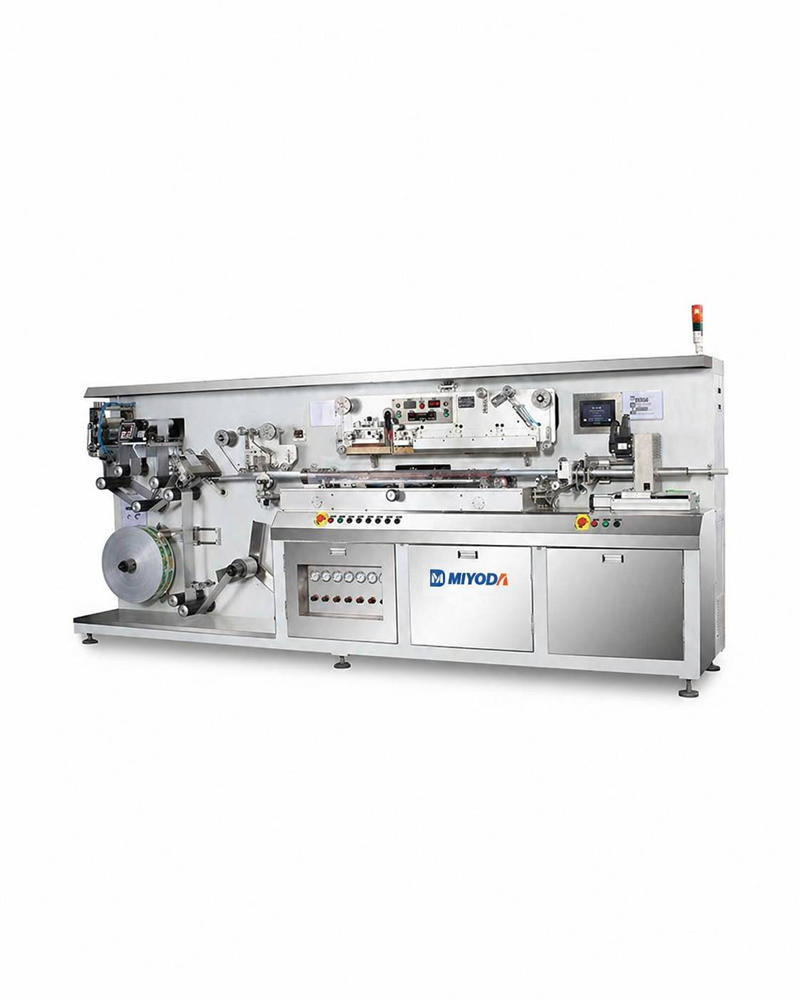
En Miyoda laminate tube making machine is engineered for both ABL and PBL substrates, with precision adhesive metering, temperature-controlled forming mandrels, and tooling geometry validated to prevent aluminum foil cracking at the shoulder — a critical distinction for buyers producing pharmaceutical tubes or premium cosmetic actives packaging.
3. Automation Level: Balancing Cost, Labor, and Output Efficiency
The automation decision is rarely purely financial — but it should always be grounded in real numbers, not instinct.
Here is what the labor cost comparison actually looks like on a cosmetic tube production line:
| Configuration | Operators Required | Annual Labor Cost per Line | Typical Defect Rate | Throughput Range |
|---|---|---|---|---|
| Manual/semi-automatic | 2.5 operators | ~$70,000/year | 1.2–2.5% | 15–45 tubes/min |
| Fully automatic | 1 operator (monitoring) | ~$28,000/year | 0.3–0.8% | 60–150+ tubes/min |
| Annual labor saving (automatic vs. semi-auto) | — | $42,000/year | — | — |
At a capital cost premium of $120,000 for a fully automatic system over a comparable semi-automatic line, the payback on labor savings alone is approximately 2.9 years. When you add the quality consistency improvement — fewer returns, fewer regulatory events, fewer customer service interactions — the real payback period is typically 18–24 months for lines running above 150,000 tubes per month.
But the calculation runs the other way for smaller operations. At 30,000 tubes per month, the capital cost amortization of a fully automatic line adds $0.08–$0.15 per tube in overhead — making the economics marginal compared to semi-automatic production. At 200,000 tubes per month, that amortized cost drops to $0.01–$0.02 per tube, while labor savings deliver an additional $0.021 per tube in direct cost reduction.
Semi-automatic machines require operator involvement at defined points — loading tube blanks, initiating fill cycles, monitoring seal quality. They are the right starting point for brands in early growth phases, operations with lower SKU volumes, and markets where skilled labor is available at rates that don’t justify automation capital expenditure. They are also the right platform when your product mix changes frequently enough that changeover flexibility matters more than peak throughput.
Fully automatic systems perform all steps — tube loading, orientation, filling, sealing, coding, and discharge — without manual intervention between cycles. The quality consistency advantage of full automation is structural, not marginal. Manual accuracy on sustained tube filling runs at 85–90% — meaning 2–8% of product routinely becomes waste in manual operations, as documented in Miyoda’s hidden cost analysis of manual tube filling. Automated systems consistently achieve 99.5–99.8% fill accuracy, reducing variation from ±3–5% to ±0.5–1%.
The practical guidance for buyers: evaluate automation level at your projected volume in year 3, not year 1. If your current volume requires a semi-automatic machine but your growth plan gets you to fully automatic territory within 36 months, a modular semi-automatic platform that can be upgraded to full automation in the field — without replacing the base machine — is worth a 15–20% premium over a fixed-configuration semi-automatic unit.
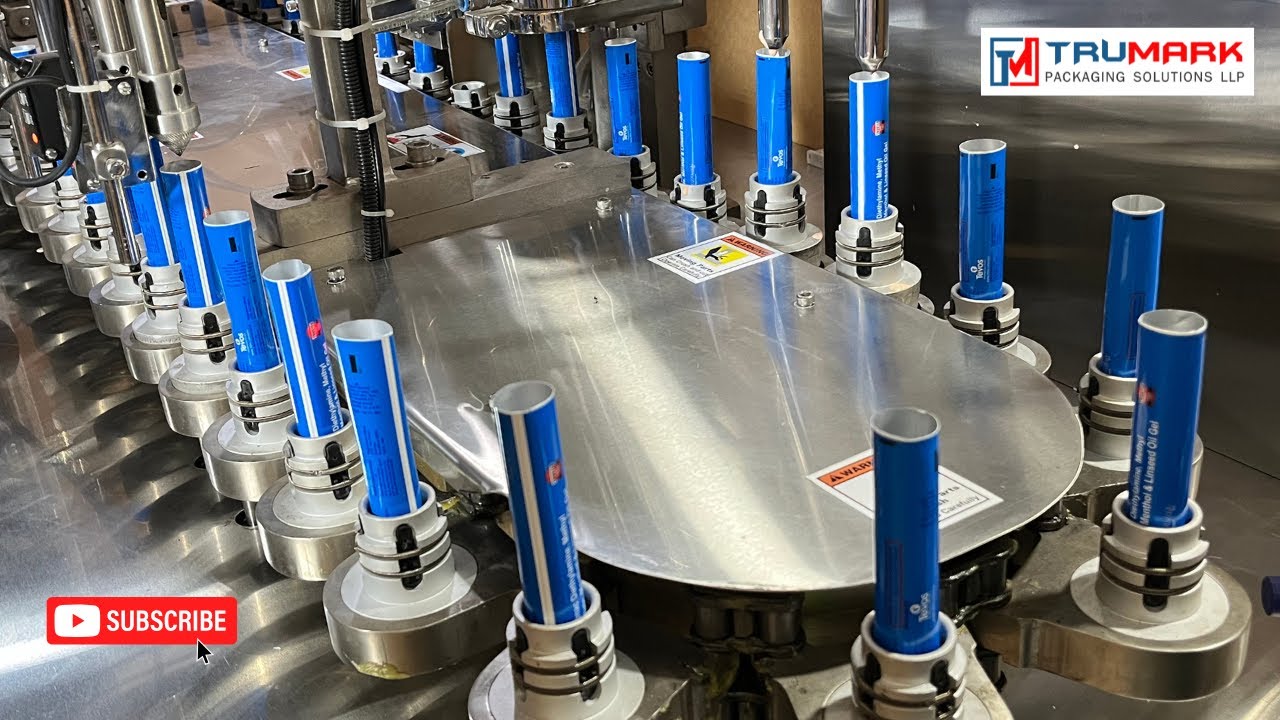
▶ Watch: How a fully automatic tube filling and sealing machine handles cosmetic and pharmaceutical tube production at speed
4. Sealing and Filling Accuracy: How Precision Impacts Product Integrity and Compliance
A tube that leaks is not a quality problem. It is a liability.
For cosmetic products, a leaking tube creates a contaminated retail package, a consumer complaint, and a returns claim. For pharmaceutical tubes, the same defect is a GMP (Good Manufacturing Practice) deviation, a potential regulatory finding, and — at scale — a recall event. The median cost of a cosmetic or pharmaceutical tube recall is $3–$72 million in direct costs before accounting for the commercial and reputational damage that follows.
Sealing accuracy has two measurable dimensions: seal integrity (whether the seal is hermetic — meaning completely airtight and leak-proof) and seal consistency (whether every tube in a production run seals to the same strength, regardless of minor process variation).
Heat sealing — the established standard for PE tube tails — uses heated jaw dies at 140–200°C to fuse the tube wall. The critical variables are jaw temperature (which must be controlled to ±3°C to prevent under-sealing or thermal degradation of the tube material), jaw pressure (which determines the seal width and the compression of the tube wall), and dwell time (the duration of jaw contact). A jaw running 8°C above setpoint because a temperature sensor has drifted produces seals that are thermally stressed, visually normal, but mechanically weak — failing peel strength testing below the 15 N/15mm cosmetic minimum.
Ultrasonic sealing uses high-frequency mechanical vibration (20–40 kHz) to generate frictional heat within the tube material itself. The advantages: seal formation time of 0.5–1.5 seconds versus 1.5–3.0 seconds for heat sealing; seal strength that is consistently higher and more uniform because the heat is generated in the material rather than conducted from an external surface; and zero risk of thermal damage to heat-sensitive formulations near the seal zone. For pharmaceutical topical products and heat-sensitive cosmetic actives, ultrasonic sealing is the technically superior choice above 80 tubes per minute throughput.
Filling accuracy is the companion dimension. Automated tube filling and sealing systems consistently achieve fill weight accuracy of ±0.5–1.0%, reducing the 3–5% variation typical of semi-manual operations. At a raw material cost of $18/kg for a mid-tier cosmetic cream and a 100 g target fill:
$$\text{Daily Product Loss (2% overfill)} = 0.02 \times 100\text{g} \times 60\text{ tubes/min} \times 960\text{ min/day} \times $0.018/\text{g} = $20,736/\text{year}$$
That figure — over $20,000 annually from a single filling machine running a 2% systematic overfill — does not appear on any cost report as “filling machine error.” It appears as elevated raw material consumption, which is why it goes undetected until someone runs the calculation.
Advanced machines incorporate inline checkweighers — automated scales that weigh every filled tube before sealing, triggering automatic rejection if the fill weight is outside specification. On a 60-tube-per-minute line, an inline checkweigher running 100% inspection prevents an estimated 8,000–15,000 out-of-specification tubes per year from reaching the sealing station, saving the full material and labor cost of those tubes. At $0.35–$0.80 per finished tube, that is $2,800–$12,000 in annual scrap avoidance from a single quality instrument.
For pharmaceutical packaging, sealing accuracy is also a regulatory compliance requirement. FDA 21 CFR, parte 211 requires documented evidence that your filling and sealing process reliably meets label claims across all validated operating conditions. A process that achieves ±2% fill accuracy in a factory demonstration but cannot demonstrate statistical consistency across production shifts is not a validated pharmaceutical process — it is a demonstration.

5. Maintenance and Downtime: Choosing a Machine That Maximizes Uptime
Every hour your production line is down costs you more than the lost output. It costs you recovery labor, in-process material waste, expedited logistics, and often a customer conversation you would rather not have.
Industry data on packaging line downtime is unambiguous: unplanned stoppages cost $2,000–$15,000 per hour when all direct costs are correctly calculated — lost production output, idle operator labor, material waste in the fill zone, emergency maintenance labor, and spare part logistics. For a cosmetic tube line running at 60 tubes/min at $0.40 net revenue per tube, each unplanned hour costs $1,440 in output alone — before the recovery costs compound it.
The root causes of most unplanned downtime events are documented and preventable. In a well-maintained tube production operation:
- Sealing jaw wear produces seal quality drift before it produces a stoppage — visible in daily seal strength measurements as a gradual decline from 2.8 N/15mm toward the 1.5 N/15mm limit. Planned jaw replacement at a scheduled maintenance window costs $200–$800 in parts and 2 hours of downtime. Emergency replacement after failure costs $800–$2,500 in expedited parts and 6–10 hours of unplanned downtime.
- Filling nozzle O-ring degradation causes fill weight drift before it causes a nozzle failure. An O-ring that costs $4 to replace preventively causes a $300–$600 cleanup and restart event when it fails in-run.
- Drive belt wear on the tube transport system produces increasing positional variation — measurable as seal placement drift — before the belt fails. Belt replacement on schedule: 1 hour. Belt failure during production: 4–6 hours, plus material waste from misaligned tubes that reached the sealing station.
The concept of TCO (Total Cost of Ownership) changes the evaluation framework for machine purchasing. TCO is the true 5-year cost of owning and operating a machine — not just the purchase price:
$$\text{5-Year TCO} = \text{Purchase Price} + \text{Energy Cost} + \text{Labor Cost} + \text{Maintenance Cost} + \text{Downtime Cost} – \text{Residual Value}$$
For a mid-tier automatic tube filling and sealing machine purchased at $90,000:
| Cost Category | Annual Estimate | 5-Year Total |
|---|---|---|
| Purchase price | — | $90,000 |
| Energy (38 kW avg draw, 2 shifts) | $7,200–$12,000 | $36,000–$60,000 |
| Maintenance (preventive, 5–8% of purchase) | $4,500–$7,200 | $22,500–$36,000 |
| Operator labor (1 operator) | $28,000 | $140,000 |
| Unplanned downtime (well-maintained) | $3,000–$8,000 | $15,000–$40,000 |
| 5-Year TCO | — | $303,500–$366,000 |
The purchase price represents 24–30% of the true 5-year cost. Buyers who optimize only on purchase price and ignore TCO consistently end up with machines that are cheap to acquire and expensive to operate. Machines that cost 15–20% more at purchase but consume 10% less energy, require 30% less maintenance labor, and generate 40% fewer unplanned downtime events deliver a lower TCO across the ownership period — often by $40,000–$80,000 over 5 years.
Ease of maintenance is a specification that buyers rarely evaluate correctly in a factory demonstration. The question is not whether the machine can be maintained — all machines can. The question is: how long does it take a trained technician to replace the components that will need regular service? A nozzle O-ring replacement that takes 8 minutes on a well-designed machine takes 45 minutes on a machine where the access panel requires removal of 12 fasteners and partial disassembly of the filling head. Across 52 weekly replacement cycles over 5 years, that difference is 30+ hours of maintenance labor — on a single consumable item.
The Miyoda filling and sealing machine maintenance guide details the maintenance program that keeps tube filling lines producing at peak efficiency — including the specific inspection intervals, component replacement triggers, and documentation requirements that GMP-regulated operations must demonstrate.
6. Customization and Flexibility: Adapting to Market Trends and Client Demands
The cosmetic market does not stay still. A machine that can only make one thing — one tube diameter, one tube length, one closure format — is not a production asset for a growing brand. It is a constraint.
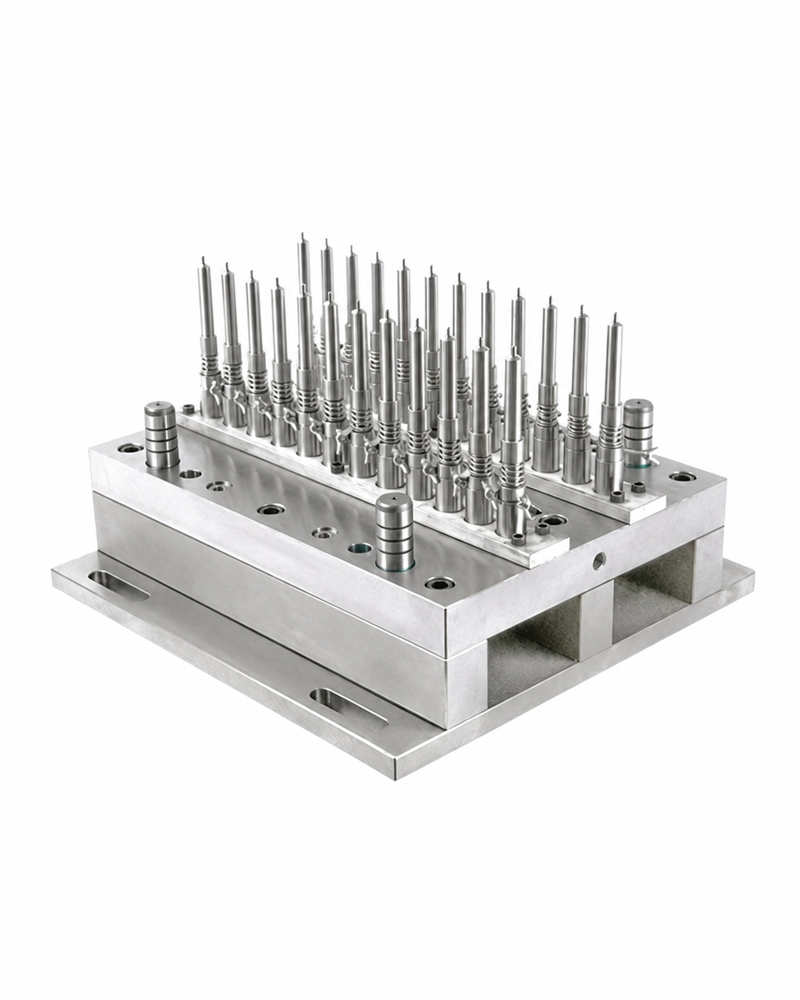
The tube parameters that require physical tooling changes when switching between products are: diameter (mandrel, die, and tube holder change), length (cut-length and sealing position adjustment), and shoulder/cap format (heading tooling change). Quick-change tooling systems — where these components swap in 30–45 minutes versus 2–4 hours on standard tooling — are available at a modest premium on mid-to-premium machines and deliver their payback in the first year for any operation running more than four SKUs.
Market flexibility has a commercial value that is easy to calculate but often ignored. A private label contract manufacturer who can accept a new SKU requiring a different tube diameter has a revenue opportunity. A manufacturer whose machine requires a 4-day retooling to accommodate the new diameter has a scheduling problem. As contract cosmetic manufacturing scales globally — particularly in markets like India, Vietnam, and the MENA region where local brands are growing rapidly — the ability to respond to new product launches quickly is a direct competitive advantage.
Modular machine design — where production speed, automation, and process modules can be added to a base machine configuration rather than requiring a full replacement — changes the investment economics for growing brands. The base machine delivers today’s required throughput and automation level; additional modules are installed as volume and operational maturity grow. This approach avoids both the capital waste of purchasing complexity before your team can use it and the disruption of replacing an installed machine to accommodate growth.
The practical evaluation question for any modular claim: “Can this machine be upgraded from semi-automatic to fully automatic at our facility? What components are replaced or added, and what is the cost?” A supplier who answers with a specific module list and a documented upgrade path is describing genuine modularity. A supplier who answers with “we can discuss upgrade options” is describing a fixed configuration machine with a flexible sales pitch.
For brands looking at the growing airless tube segment — where the tube wall collapses as product is dispensed rather than drawing air back in — compatibility requires a filling head configuration that does not rely on venting, and sealing geometry adapted to thinner, more deformable tube walls. Not every standard tube making machine accommodates airless formats. Confirming compatibility at the point of purchase, rather than discovering the limitation when your brand decides to launch an airless product, avoids a costly capital re-decision.
7. Energy Efficiency and Sustainability: Reducing Operational Costs and Environmental Impact
Energy costs are not a footnote in the economics of tube production. On a modern automatic tube filling and sealing machine drawing 35–45 kW across a two-shift production day, annual electricity costs run $7,200–$14,400 depending on local utility rates. Over 5 years, that is $36,000–$72,000 — a material component of the TCO that buyers who focus only on purchase price consistently undercount.
Variable Frequency Drives (VFDs) — electronic controls that adjust motor speed to actual production demand rather than running at full speed continuously — reduce energy consumption in tube production by 15–30% on drive systems that were previously running at constant speed regardless of load. On a 38 kW average machine, a 20% VFD saving represents approximately $1,400–$2,800 per year in direct energy cost reduction. Over a 10-year machine life, that is $14,000–$28,000 in cumulative savings from a single efficiency feature that costs $800–$2,500 to specify at purchase.
Servo-driven sealing systems replace the pneumatic actuation that older tube sealing machines use with electric servo motors. The energy efficiency advantage of servo systems over pneumatic is significant: servo motors draw power only during the active motion cycle, while pneumatic systems require a continuously running compressor whose energy consumption is largely independent of production speed. On a two-shift, 240-day annual production schedule, servo sealing systems typically consume 25–40% less energy than equivalent pneumatic sealing configurations.
The sustainability dimension extends beyond energy consumption. Retailers in the EU, UK, and increasingly in North America and Australia are requiring that packaging suppliers demonstrate progress toward recyclability and reduced carbon footprint — requirements that flow upstream to the tube manufacturers and machine operators who supply them. Machines compatible with mono-material PE tube substrates (fully recyclable) and with water-based ink decoration systems (lower VOC emissions) position your production output to meet these retailer requirements without reformulating your entire tube substrate strategy.
Research on cosmetic industry energy efficiency confirms that modern cosmetic filling machines in idle mode achieve efficiency above 96%, and that optimized production scheduling — minimizing idle-state energy consumption — reduces total line energy cost by 8–12% without any capital investment. The combination of efficient equipment and optimized scheduling is the baseline for a credible sustainability position in cosmetic tube production.

8. Supplier Support and Global Service Network: Why After-Sales Service Is Non-Negotiable
The machine decision does not end at delivery. It begins there.
Installation, commissioning, operator training, routine maintenance support, spare parts logistics, remote troubleshooting, and the availability of a trained technician when something unexpected happens at 11pm on a production deadline — these are the dimensions of the supplier relationship that determine whether your machine investment delivers the returns you projected or becomes an operational liability.
For buyers purchasing equipment across international borders — which describes most of the cosmetic and pharmaceutical tube machine market — the service network question is not theoretical. A machine purchased from a supplier with no local service presence requires that any technical issue be resolved either by your own team (without manufacturer documentation or support) or by a technician who may need 4–10 business days to reach your facility. On a production line that is the basis of your delivery commitments to brand clients, that is an unacceptable exposure.
The criteria that actually differentiate suppliers on service capability — not on their marketing materials, but in verifiable practice — are:
Response time commitment for production-critical issues. Request a documented service level agreement, not a verbal commitment. What is the contracted response time for a production stop that cannot be resolved remotely? For international customers, what is the escalation path if the local technical team cannot resolve the issue?
Remote diagnostics capability. Modern PLC-controlled machines with network connectivity can allow the equipment manufacturer’s engineers to access the machine control system remotely — diagnosing alarm states, reviewing parameter logs, and walking your operator through corrective actions without a service visit. This capability alone eliminates a significant proportion of service visit requirements and reduces mean time to resolution from days to hours for most non-mechanical issues.
Spare parts availability and logistics. Ask specifically: “What is your minimum guaranteed spare parts holding for my machine configuration, and where is it held?” A supplier holding 90 days of critical spare parts at a regional warehouse serves your production continuity needs. A supplier who orders parts from the factory after you report a failure adds 3–6 weeks to your downtime on every mechanical issue that requires a new component.
Operator training structure. On-site training — at your facility, with your actual production team, using your tube material and product formulation — is meaningfully different from factory training on demonstration materials. Require a minimum 5 days of on-site commissioning and training, with documented operating procedures delivered in your team’s working language. These requirements cost a committed supplier nothing; pushback on them is informative.
Warranty terms in practice. Request references from international customers who have exercised warranty claims. Ask specifically: “How long did it take from claim submission to resolution, and was the resolution satisfactory?” Warranty terms on paper are marketing; warranty performance in practice is the metric that matters.
9. Making the Final Decision: A Step-by-Step Checklist for Confident Investment
The framework below is not a generic checklist. It is a structured sequence that walks from your business situation to a machine specification — the same sequence that experienced packaging professionals use when evaluating equipment for a new production line.
Step 1: Define your tube specification precisely.
Before contacting a single supplier, document: tube material (PE co-extruded / ABL / PBL / aluminum), tube diameter range (mm), tube length range (mm), closure type (flip-top, snap-cap, standard screw), product viscosity range (cP — measure at production temperature), and any special requirements (pharmaceutical-grade cleanroom compatibility, airless format, recyclable substrate).
This document eliminates the 70% of supplier conversations that waste time on machines incompatible with your actual needs.
Step 2: Calculate your real throughput requirement.
Use the OEE-adjusted formula from Section 1. Calculate for your current monthly target and for your 3-year growth projection. The machine you purchase should fit comfortably at your current volume and reach its efficient operating range at your 3-year target.
Step 3: Set your total budget, not your purchase budget.
Estimate 5-year TCO using the framework from Section 5. Budget for installation, commissioning, operator training, 5 years of preventive maintenance, and a reasonable provision for unplanned maintenance events. If your TCO analysis shows that two machines with different purchase prices deliver similar 5-year TCOs, the lower-purchase-price machine is not necessarily the better value.
Step 4: Request a validated production trial.
For your shortlisted machines, request a 500–1,000 tube production trial using your actual tube material and a representative product formulation (or a viscosity-matched test product). Test the output against your full quality specification: seal integrity, fill weight accuracy, dimensional compliance, and surface finish. A production trial costs $2,000–$8,000 in your time and logistics — and is the most reliable protection against a $50,000–$200,000 capital investment that fails to produce your quality standard.
Step 5: Verify references with specificity.
Contact three current customers of the supplier who are producing tubes similar to your specification. Ask: “What sustained throughput do you achieve in an 8-hour shift?” “What is your first-pass yield on this machine?” “Have you needed warranty support, and how was it handled?” These three questions reveal more about the machine and the supplier than any brochure specification.
Step 6: Evaluate the service commitment in writing.
Before signing, confirm in your purchase contract: on-site installation and commissioning timeline, operator training days and format, warranty terms and claim response time, spare parts holding and logistics, and remote support availability. Verbal commitments made during the sales process do not survive the transition to the after-sales service team.
Here is the decision matrix that consolidates the key evaluation dimensions into a single comparison framework:
| Evaluation Dimension | Semi-Automatic | Fully Automatic | Your Weighting |
|---|---|---|---|
| Capital cost | $8,000–$45,000 | $60,000–$200,000+ | __ /10 |
| 5-Year TCO | Lower initial, higher labor | Higher initial, lower labor | __ /10 |
| Output (tubes/min) | 15–45 | 60–150+ | __ /10 |
| Fill accuracy | ±1.5–3.0% | ±0.5–1.0% | __ /10 |
| Labor requirement | 2–3 operators/line | 1 operator/line | __ /10 |
| Changeover time | 45 min–3 hr | 30–90 min | __ /10 |
| GMP/pharma compliance | Possible with qualification | Standard on validated models | __ /10 |
| Scalability | Limitado | High (modular options) | __ /10 |
| Supplier service | Varies by supplier | Varies by supplier | __ /10 |
Assign your operational priority weighting to each dimension. The machine that scores highest against your specific weighting is the correct choice for your business — not the machine with the highest headline speed or the lowest purchase price.
[Start the Quiz Now] → Use Miyoda Packaging Machinery’s tube machine selector tool to identify the configuration that matches your production requirements — and receive a specification comparison tailored to your tube format, product viscosity, and output target.
Glossary of Key Technical Terms
| Term | Definition | Por qué es importante |
|---|---|---|
| OEE (Overall Equipment Effectiveness) | Availability × Performance × Quality — the standard measure of production line efficiency; 85% = world-class | Used to calculate real required machine speed |
| ABL (Aluminum Barrier Laminate) | Tube material with aluminum foil interlayer providing >98% oxygen barrier | Required for pharmaceutical tubes and cosmetic actives |
| PBL (Plastic Barrier Laminate) | Tube material with EVOH or PVDC plastic barrier — recyclable, 80–90% of ABL oxygen barrier | Best value for most cosmetic products |
| Viscosity (cP) | Measurement of fluid thickness/resistance to flow in centipoise; water = 1 cP | Determines pump type and filling system configuration |
| TCO (Total Cost of Ownership) | 5-year cost including purchase, energy, labor, maintenance, and downtime | The correct framework for machine cost comparison |
| Cpk (Process Capability Index) | Statistical measure of process consistency within specification limits; ≥1.33 = pharmaceutical minimum | Fill accuracy and seal quality benchmarking |
| GMP (Good Manufacturing Practice) | Regulatory standard governing pharmaceutical and cosmetic manufacturing processes | Required for pharmaceutical tube production |
| VFD (Variable Frequency Drive) | Electronic control that adjusts motor speed to actual demand, reducing energy consumption | 15–30% energy savings on drive systems |
| IQ/OQ/PQ | Installation, Operational, and Performance Qualification — the formal validation sequence for pharmaceutical production equipment | Regulatory requirement for pharmaceutical tube filling |
| Hermetic Seal | An airtight, leak-proof seal that prevents any product or gas exchange across the tube tail | The minimum standard for pharmaceutical and premium cosmetic tubes |
Preguntas frecuentes
1. What production capacity do I need for a small to medium cosmetic brand?
A small cosmetic brand producing 50,000–150,000 tubes per month is well served by a semi-automatic filling and sealing machine rated at 20–40 tubes per minute. At 82% OEE across two 8-hour shifts per day, 20 days per month, a 25 tube/min machine produces approximately 198,000 tubes monthly — providing comfortable headroom for growth, quality holds, and changeover time. A medium brand at 200,000–500,000 tubes per month typically transitions to a single fully automatic line rated at 60–80 tubes per minute, with the labor and quality consistency advantages of full automation delivering positive ROI at that volume.
2. Can one machine handle both aluminum and plastic laminate tubes?
Yes — with the important qualification that handling both ABL and PBL substrates on the same machine requires validated tooling configurations for each material and a documented changeover protocol. The forming mandrel temperature, scoring geometry, and sealing parameters differ between ABL and PBL. A machine spec’d and validated only for PBL will produce micro-cracks in ABL shoulders at the same settings — a defect that may not appear in visual inspection but will fail pressure testing. When purchasing a machine intended for both substrates, require the supplier to demonstrate a full production trial with documented seal quality data for each material.
3. How do I reduce material waste during tube forming and sealing?
Material waste in tube production has four primary sources: forming rejects (dimensional or visual defects from the forming station), fill weight errors (over- or under-fill triggering rejection), sealing defects (weak seals, misaligned folds, or thermal damage), and changeover waste (material run during the parameter-stabilization period after a product or format change). Addressing forming rejects requires validated tooling geometry and temperature control; fill weight errors require calibrated filling systems with inline checkweighers; sealing defects require regular jaw inspection and replacement on documented intervals; changeover waste is reduced by documented changeover procedures that minimize the parameter-stabilization period through pre-set recipes stored in the machine PLC.
4. What is the average lifespan of a cosmetic tubes making machine?
A well-maintained tube filling and sealing machine from a reputable manufacturer has a mechanical service life of 10–15 years. The frame, drive systems, and electrical infrastructure typically outlast the consumable components (nozzle seals, O-rings, sealing jaws, belts) by a factor of 5–10. The practical limitation on machine life is usually not mechanical failure but technology obsolescence — control systems and HMI interfaces that become unsupported, or production requirements that exceed the machine’s rated capacity as the brand grows. Machines with modular, upgradeable control systems extend functional life by allowing electronic components to be updated without replacing the mechanical base.
5. Are fully automatic machines worth the higher upfront cost?
For operations producing above 150,000 tubes per month on a consistent basis, yes — the 5-year TCO analysis almost always favors full automation. The labor saving alone ($42,000/year per line based on 2.5 vs. 1 operators) pays back the typical capital premium of $80,000–$120,000 in approximately 2–3 years before accounting for quality consistency improvement and reduced returns. Below 100,000 tubes per month, the economics are less clear and depend heavily on local labor costs, SKU diversity (which affects changeover frequency), and the availability of semi-automatic platforms that can be upgraded as volume grows.
6. How much floor space does a typical tube making line require?
A semi-automatic tube filling and sealing machine typically requires 4–8 m² of floor space. A fully automatic single-head machine requires 12–20 m². A complete inline tube production line — integrating extrusion, forming, filling, sealing, coding, and discharge conveyor — typically requires 25–60 m² depending on the number of production stages and the linear arrangement of the line. Facility planning should add 50% to these figures for operator access, maintenance clearance, and material staging area around the machine.
7. Can the machine be upgraded later for higher output or new tube types?
This depends entirely on whether the machine was designed with genuine modularity. Machines with a modular PLC architecture, standardized mechanical interfaces for tooling, and a documented upgrade path from the manufacturer can be upgraded in the field — adding heads for higher throughput, swapping forming tooling for new tube diameters, or upgrading from semi-automatic to fully automatic feeding. Fixed-configuration machines cannot be meaningfully upgraded and require replacement when production requirements outgrow them. Ask any supplier to specify, in writing, what upgrades are available for the base machine and at what cost.
8. What kind of technical training is provided for operators?
Minimum acceptable training for a new machine installation is 5 days of on-site instruction covering: machine startup and shutdown procedures; filling parameter setup and calibration; sealing parameter setup and seal quality inspection; changeover procedure for each tube format and product combination; routine maintenance tasks and intervals; alarm identification and response; and batch record completion requirements. Training should be conducted with your actual production team, at your facility, using your tube material and a representative product formulation. Factory training on demonstration materials is not a substitute for on-site training in your production conditions.
9. How do I ensure the machine meets FDA or ISO standards for pharmaceutical packaging?
Pharmaceutical tube production requires equipment that can be formally validated through the IQ/OQ/PQ sequence — Installation Qualification (does the machine match its specification and is it installed correctly?), Operational Qualification (does the machine perform its specified functions across its operating range?), and Performance Qualification (does the machine consistently produce output meeting quality specification under real production conditions?). Require that the supplier provide an equipment design specification, factory acceptance test protocols, and installation qualification protocols as standard documentation. Confirm that all product contact surfaces are manufactured from materials compliant with FDA 21 CFR Part 211 requirements, and that the machine design has no dead zones where product can accumulate between cleaning cycles.
10. What are the most common causes of tube sealing failure — and how can they be prevented?
The five most common root causes of tube seal failure are: (1) jaw temperature drift — a temperature sensor that has drifted 5–10°C from setpoint produces seals that are thermally under-processed; resolved by weekly temperature calibration verification against a calibrated reference; (2) jaw face contamination — product residue on the sealing jaw face prevents full contact with the tube tail; resolved by daily jaw cleaning per documented protocol; (3) product contamination at the seal zone — fill spillage onto the tube tail creates a contaminated sealing surface; resolved by nozzle alignment verification at every shift start; (4) material variation — a new tube material batch with slightly different PE melt characteristics requires sealing parameter revalidation; resolved by incoming material inspection and parameter adjustment when material batches change; (5) jaw wear — jaw face distortion from accumulated thermal cycling produces non-uniform seal width; resolved by quarterly jaw face inspection with a caliper gauge and planned replacement before distortion reaches specification limit.
11. Do you offer remote diagnostics and troubleshooting support?
Leading cosmetic tube machine suppliers provide remote diagnostic access to their equipment’s PLC control system via secure network connection — enabling their engineering team to review alarm histories, check parameter logs, and guide operators through corrective actions in real time without a service visit. This capability should be confirmed as a standard feature, not an optional add-on, during the purchase negotiation. For international buyers where service engineer travel time could mean 4–10 business days of downtime, remote diagnostic support is a non-negotiable operational requirement.
12. How long does installation and commissioning take after delivery?
A single tube filling and sealing machine installed at an existing facility with adequate utilities (compressed air, electrical supply to specification, and product supply infrastructure) typically requires 3–5 days for mechanical installation and utility connection, followed by 2–3 days of commissioning and parameter validation, and then 5 days of operator training. The total on-site supplier engagement is therefore 10–13 days from machine delivery to production readiness. A complete tube production line integrating multiple stages (extrusion, forming, filling, sealing, printing, and quality inspection) requires 3–6 weeks of commissioning depending on line complexity and the number of tube formats being validated.
13. Are spare parts readily available, and how long do they typically last?
Critical consumable components on tube filling and sealing machines have the following typical service intervals under normal production conditions: nozzle O-rings (2–6 weeks depending on product viscosity and cleaning frequency), sealing jaw faces (3–6 months), drive belts (6–12 months), piston seals (3–6 months), and temperature sensors (12–24 months). A reliable supplier holds 90 days of critical spare parts at a regional distribution point. For international buyers, confirm that your supplier can ship emergency spare parts within 48 hours to your facility, and maintain your own local stock of the highest-frequency consumables (O-rings, jaw faces, belts) at a 3-month supply level.
14. Can the machine integrate with our existing labeling or packaging line?
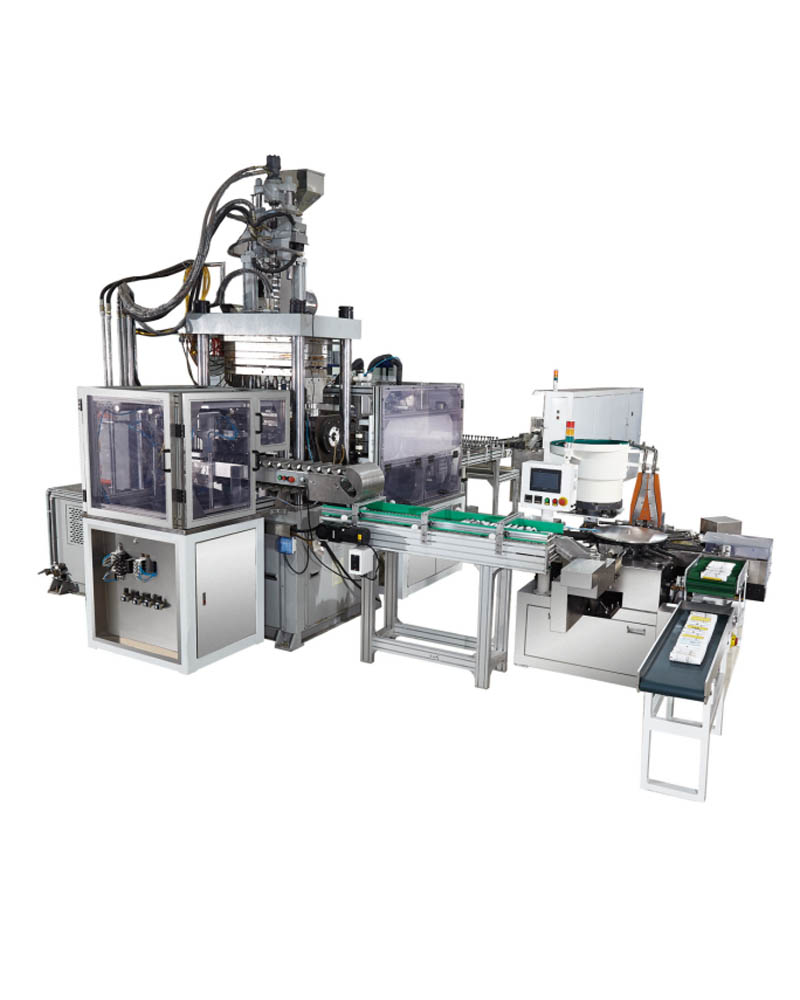
Yes — tube filling and sealing machines can be integrated with downstream labeling, coding, and cartoning equipment through standard conveyor interfaces and synchronized PLC communication. The integration of tube filling machines into complete production lines reduces manual handling between stations, eliminates double-counting errors, and allows a single operator to monitor the full downstream sequence rather than staffing each station separately. When integrating with existing equipment, confirm that the tube discharge speed and orientation are compatible with your existing downstream conveyor speed and label applicator format — mechanical integration is straightforward; speed synchronization and tube orientation at the interface point are where most integration issues arise.
15. What is the energy consumption of a standard tube making machine per 1,000 units?
A standard automatic tube filling and sealing machine draws 35–45 kW at full production. At 60 tubes per minute on a two-shift production day producing approximately 57,600 tubes, total daily energy consumption is approximately 300–360 kWh. Per 1,000 tubes, energy consumption is therefore approximately 5.2–6.3 kWh. At an industrial electricity rate of $0.10–$0.15/kWh, the energy cost per 1,000 tubes is $0.52–$0.95 — a meaningful but manageable component of total production cost. Machines equipped with VFDs and servo-driven sealing systems reduce this figure by 20–30%, to approximately $0.36–$0.67 per 1,000 tubes.
16. How do I verify the accuracy of the filling system before full-scale production?
Before committing a production batch to full-scale output, run a minimum 30-tube calibration sequence: tare-weigh the empty tubes on a calibrated scale, run the machine at production speed for 10 tubes, weigh each filled tube, calculate the mean and standard deviation of fill weight, and verify that the mean is within ±0.5% of target and the standard deviation is consistent with a Cpk ≥ 1.33. Repeat this sequence at 2-hour intervals during the first production shift and after any machine stop exceeding 20 minutes. Save all calibration records — these form part of your batch documentation and, for pharmaceutical products, are required by GMP regulations as evidence of process control.
17. What certifications should I look for in a machine supplier?
For cosmetic tube production equipment, the minimum certifications to verify are: CE marking (mandatory for EU market machinery), ISO 9001 certification for the manufacturer’s quality management system, and material compliance certificates confirming that all product contact surfaces meet food-grade or pharmaceutical-grade material standards (FDA 21 CFR 177, EU 10/2011, or equivalent). For pharmaceutical production, additionally verify that the supplier can provide IQ/OQ/PQ documentation support and that the machine design complies with Anexo 1 de las BPF de la UE and FDA 21 CFR Part 211 cleanable-surface design requirements.
18. Can the machine handle airless tube production if we expand in the future?
Airless tube production requires a filling system that does not rely on atmospheric venting — the filling head must operate as a closed system to prevent air from entering the tube during fill. Standard vented filling heads are incompatible with genuine airless tube formats. Before purchasing any machine with airless expansion in mind, confirm that the supplier offers a documented airless filling head upgrade and that the base machine’s PLC, conveyor, and sealing station are mechanically compatible with the airless tube body format (typically thinner, more deformable walls that require adjusted jaw pressure and dwell time). If the supplier cannot provide a specific upgrade specification and reference customer, the airless compatibility claim is aspirational rather than validated.
19. How do I calculate the ROI for investing in a new tube making machine?
The standard ROI calculation for packaging equipment investment uses two formulas:
$$\text{ROI (%)} = \frac{\text{Net Annual Benefit}}{\text{Total Investment Cost}} \times 100$$
$$\text{Payback Period (years)} = \frac{\text{Total Investment Cost}}{\text{Net Annual Benefit}}$$
Net Annual Benefit includes: labor cost savings (vs. current production method), material waste reduction value, quality-related cost reduction (returns, rework, regulatory events), and additional revenue enabled by the higher capacity or quality of the new machine. Total Investment Cost includes: machine purchase price, installation and commissioning cost, operator training cost, and first-year spare parts stock.
A concrete example: a brand replacing a semi-automatic line with a fully automatic machine at $120,000 total investment realizes $42,000/year in labor savings, $18,000/year in reduced material waste from improved fill accuracy, and $12,000/year in avoided quality costs. Net Annual Benefit = $72,000. ROI = 60%. Payback = 1.67 years.
20. Do you support clients with regulatory documentation for machine validation?
Reputable cosmetic tube machine suppliers provide a standard documentation package that includes: equipment design specification, functional specification, factory acceptance test report, installation qualification protocol template, operational qualification protocol template, and material compliance certificates for all product contact surfaces. For pharmaceutical clients requiring full IQ/OQ/PQ validation, confirm that the supplier has experience supporting validation projects in your target regulatory jurisdiction (FDA, EMA, NMPA, CDSCO) and can provide reference examples of completed validation packages for equivalent machine configurations. Suppliers who have never supported a pharmaceutical equipment validation before are not the right partner for your first pharmaceutical production qualification — regardless of their machine specification.
This guide is written exclusively for business owners, distributors, and agents who demand reliability, efficiency, and long-term value from their tube packaging equipment. Every section is designed to eliminate uncertainty, reduce risk, and accelerate smart decision-making — so you can focus on growing your brand, not troubleshooting your machinery.
For personalized equipment guidance, technical consultation, or a quotation matched to your specific production requirements, contact Miyoda Packaging Machinery — a specialist in cosmetic and pharmaceutical tube production equipment serving manufacturers globally.