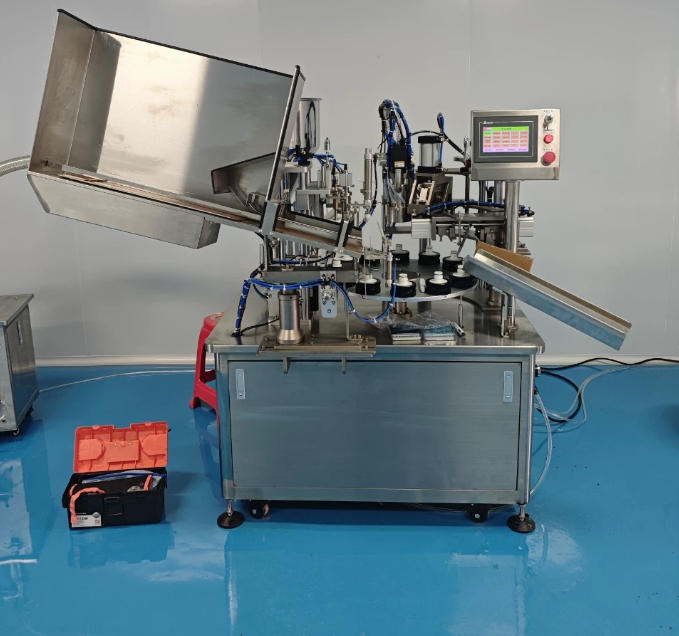
Tube Filling Machine Buyer’s Guide: What Pharmaceutical & Cosmetic Brands Need to Know in 2026
Your packaging line is only as reliable as the machine at its center. This guide gives pharmaceutical producers, cosmetic brand owners, distributors, and agents the concrete data, compliance framework, and decision tools to choose the right tube filling equipment — the first time.

Why Choosing the Right Tube Filling Machine Matters for Your Bottom Line
A mid-tier cosmetic producer in Southeast Asia committed to a USD 35,000 semi-automatic tube filler in early 2024 based on the lowest quoted price. Eighteen months later, they were running four machines in parallel with six operators per shift to meet a single retailer’s order volume. Labor costs had consumed every margin advantage the low equipment price had promised — and a regulatory audit from a European distributor flagged the absence of electronic batch records, blocking a USD 1.2 million annual contract.
That outcome is not unusual. It is, however, entirely avoidable.
The tube packaging market was valued at USD 13.43 billion in 2025 and is projected to grow at a CAGR of 6.2% through 2033 (Grand View Research, 2025). Cosmetic tube packaging specifically is projected to reach USD 7.8 billion by 2034, growing at 7.2% CAGR. As volumes grow and regulatory scrutiny intensifies across the US, EU, and regulated Asian markets, the tube filling machine at the center of your production line becomes a strategic capital decision — not just a procurement checkbox.
This guide addresses the questions that actually keep purchasing managers, production engineers, and brand owners awake: Which tube materials can this machine handle? What speed do I genuinely need? How long before regulatory approval? What does this truly cost over ten years? We answer each with real data and production scenarios, not manufacturer brochure language.
Understanding Your Tube Material Options and Compatibility Requirements
The first decision in tube filling is not which machine to buy. It is which tube material your formulation requires — because the material determines the machine architecture, the sealing method, and the fill-head design before any other specification is relevant.
Plastic Tubes: Balancing Cost Efficiency with Product Compatibility
Plastic tubes — predominantly LDPE (Low-Density Polyethylene), HDPE (High-Density Polyethylene), and PP (Polypropylene) — are the most widely used format in cosmetics. They are soft, squeezable to the last drop, and compatible with a broad range of formulations including moisturizers, hand creams, hair masks, and body lotions.
When plastic tubes work best for your formulations: LDPE works with water-based, oil-in-water emulsions and most surfactant-based cleansers. It is chemically compatible with pH ranges of 4–9. Where it fails is with high-concentration alcohol formulations (>15% ethanol), essential oil concentrations above 3%, and oxidation-sensitive actives like retinol and Vitamin C. For those categories, laminate or aluminum is required.
Cost savings potential and production speed advantages: Plastic tube filling machines run between 60 and 220 tubes per minute depending on automation level and product viscosity. Fill weight accuracy on servo-driven piston systems reaches ±0.5–1.0%. Material cost per tube sits between USD 0.08–0.25 for standard cosmetic sizes, making plastic the most economical substrate for high-volume commodity cosmetic products.
Laminated Tubes: The Middle Ground for Extended Shelf Life
Laminated tubes — either ABL (Aluminum Barrier Laminate) or PBL (Plastic Barrier Laminate) — combine the squeezability of plastic with significantly improved barrier performance.
Glossary: ABL vs. PBL ABL (Aluminum Barrier Laminate): A multi-layer tube sheet containing an aluminum foil inner layer, providing near-complete oxygen and moisture barrier. Used for pharmaceutical ointments, retinol products, toothpaste. PBL (Plastic Barrier Laminate): A multi-layer sheet using EVOH or nylon polymer barrier layers instead of aluminum foil. Fully recyclable, excellent printability, used for premium sunscreen, prestige skincare.
Barrier protection benefits for sensitive formulations: ABL provides oxygen transmission rates (OTR) below 0.05 cc/m²/day — roughly 200× lower than standard LDPE. For a retinol 0.3% night cream with a 24-month shelf life target, ABL is not optional; it is the specification requirement. A cosmetic brand in South Korea documented a 40% reduction in oxidative degradation complaints after switching from LDPE to ABL tubes for their vitamin C serum line.
Material compatibility considerations and machine requirements: Laminate tubes require different sealing than plastic. ABL uses hot-air sealing; PBL often uses ultrasonic sealing — a process where high-frequency vibration (20–40 kHz) generates frictional heat at the tube tail surfaces without external heating elements. Machines specified for plastic-only filling cannot seal ABL or PBL without tooling modifications. Verify sealing technology compatibility with your tube supplier before finalizing any machine specification.
Aluminum Tubes: Premium Packaging for High-Value Products
Aluminum tubes provide the highest barrier performance available in flexible tube packaging — effectively zero oxygen and moisture transmission. They are specified for pharmaceutical-grade ointments, prescription topicals, and certain premium luxury cosmetic categories where complete light and oxygen exclusion is required.
Superior protection for pharmaceutical-grade products: Aluminum tubes are the default specification for pharmaceutical topical products subject to stability testing under ICH Q1A(R2) guidelines. The aluminum substrate prevents active ingredient degradation across a 36-month shelf life — the minimum regulatory requirement for most markets.
Compatibility challenges and specialized filling equipment needs: Aluminum tubes cannot be heat-sealed. They are closed by mechanical crimp — a fold-and-press operation requiring dedicated crimping jaws calibrated to the specific tube wall thickness and tail length. Machines designed for plastic or laminate hot-air sealing require complete jaw replacement to handle aluminum. Additionally, aluminum tube inner surfaces are often lacquer-coated to prevent drug-metal interaction — a compatibility consideration that must be verified against your specific formulation before production starts.
| Tube Type | Idéal pour | Méthode d'étanchéité | OTR (cc/m²/day) | Approx. Cost/Tube |
|---|---|---|---|---|
| LDPE Plastic | Standard cosmetics, hair care | Hot-air | 5–10 | USD 0.08–0.20 |
| ABL Laminate | Pharma ointments, toothpaste, retinol | Hot-air | <0.05 | USD 0.18–0.45 |
| PBL Laminate | Premium sunscreen, prestige skincare | Ultrasons | 0.5–2.0 | USD 0.20–0.50 |
| Aluminum | Prescription topicals, luxury cosmetics | Mechanical crimp | ~0 | USD 0.30–0.80 |
Production Speed Benchmarks That Actually Matter to Your Business
Speed specifications in manufacturer brochures are nameplate figures — measured under ideal conditions with a single tube format and a low-viscosity test medium. Real production runs at 60–80% of nameplate speed after accounting for startup sequences, minor stops, quality checks, and changeovers.
Understanding Tubes Per Minute (TPM) and What It Means for Your Revenue
TPM (Tubes Per Minute) is the production rate metric used across the tube filling industry. Understanding what you actually need — not what sounds impressive — determines whether your investment is correctly sized.
How to calculate your required production capacity based on demand forecasts:
For example: a brand producing 12 million tubes per year across 250 operating days, 2 shifts of 8 hours, at 80% OEE:
That brand needs a machine rated at approximately 65–70 TPM minimum — not the 150 TPM machine a sales representative might recommend to “leave room for growth.”
Glossary: OEE (Overall Equipment Effectiveness) OEE = Availability × Performance Rate × Quality Rate. World-class tube filling lines achieve OEE of 85–92%. Semi-automatic lines typically run 70–80%; fully automatic lines achieve 82–92%. Always size machine capacity to OEE-adjusted output, not nameplate speed.
Hidden costs of undersized equipment: A line consistently running at 95–100% of its rated capacity has no buffer for cleaning cycles, minor jams, or peak order periods. A cosmetic manufacturer in Germany documented USD 28,000 in rush-order surcharges and expedited shipping costs in one quarter because their line was running at capacity with no output buffer. Adding 25–30% production headroom to your minimum calculated requirement is not over-engineering — it is margin protection.
Real-World Speed Comparisons Across Machine Types
Semi-automatic machines: A trained operator on a mid-range semi-automatic filler sustains 20–30 TPM in real production. At 25 TPM across a standard 8-hour shift with normal stops, output is approximately 10,000–12,000 tubes per shift. For a brand running 12 different SKUs per week with batch sizes of 1,500–3,000 units, this is often the right balance of flexibility and throughput.
Fully automatic systems: Production-grade automatic machines cycle at 60–200+ TPM. A single-head rotary system at 80 TPM and 90% OEE delivers approximately 34,560 tubes per shift. A dual-head system at 120 TPM produces approximately 51,840 tubes per shift — equivalent to running five trained operators on semi-automatic machines simultaneously. The capital premium for automation pays back through labor reduction alone at production volumes above 5 million tubes per year.
| Type de machine | Sustained Real TPM | Tubes Per 8-hr Shift | Ideal Annual Volume |
|---|---|---|---|
| Semi-Automatic (entry) | 10–20 | 4,800–9,600 | <2M/year |
| Semi-Automatic (mid-range) | 20–40 | 9,600–19,200 | 2–5M/year |
| Automatic (single-head) | 60–100 | 28,800–48,000 | 5–15M/year |
| Automatic (dual-head) | 100–150 | 48,000–72,000 | 15–30M/year |
| Automatic (high-speed) | 150–200+ | 72,000–96,000+ | >30M/year |
Matching Machine Speed to Your Growth Timeline
Avoiding the trap of over-investing in capacity you won’t use: A machine running at 25% of rated capacity for the first two years of operation has capital sitting idle. For a startup cosmetic brand projecting 3 million tubes in year one and 6 million in year three, a semi-automatic machine is the correct year-one decision — with a documented transition plan to automation at the volume threshold where labor costs exceed the automatic machine’s capital premium.
Planning for future product lines: Ask every supplier specifically whether their platform supports a speed upgrade through software and motor changes, or whether upgrading speed requires a new machine entirely. The answer materially changes the long-term capital planning calculation.
Navigating Regulatory Compliance Without Derailing Your Timeline
Regulatory compliance is the most frequently underestimated dimension of tube filling equipment procurement. Brands that treat it as a checkbox at the end of the procurement process routinely experience 6–9 month launch delays that erase the commercial value of the machine investment.
FDA and International Standards: What Applies to Your Products
GMP requirements for pharmaceutical tubes: In the United States, pharmaceutical tube filling must comply with FDA 21 CFR, partie 211 — the Current Good Manufacturing Practice (cGMP) regulations for finished pharmaceuticals. Key equipment-specific requirements include: equipment constructed from materials that do not contaminate product; cleaning procedures documented in validated SOPs; batch records generated for every production run; and equipment calibration documented on a defined schedule. Non-compliance can result in FDA Warning Letters, product seizure, and facility shutdown — consequences that have materialized for multiple cosmetic tube manufacturers who failed to document GMP compliance during expansion into pharmaceutical contracts.
Cosmetic-specific regulations: For cosmetics sold in the EU, ISO 22716:2007 Good Manufacturing Practice for cosmetics defines the compliance framework. It requires equipment qualification documentation, personnel hygiene procedures, and production records — less stringent than pharmaceutical GMP but increasingly audited by major retail buyers as part of supplier qualification programs.
Material Safety and Documentation Requirements
FDA Title 21 CFR compliance for food-contact materials: Tube materials used in pharmaceutical or food-adjacent cosmetic applications must comply with FDA Title 21 CFR regulations governing materials that may contact drug products. When evaluating tubes, request a Certificate of Compliance (CoC) from the tube supplier confirming which 21 CFR sections the material satisfies.
EU Regulation 10/2011: EU Regulation 10/2011 applies to plastic materials intended to contact food — and by extension, is applied by many EU cosmetic and pharmaceutical buyers as the material safety benchmark for tube packaging. It specifies migration limits for plastic additives and prohibits certain substances in product-contact plastic formulations. Maintain EU Regulation 10/2011 compliance documentation for any laminate or plastic tube intended for European market distribution.
Validation and Testing Protocols Before Market Launch
Glossary: IQ / OQ / PQ The three-stage qualification framework required for pharmaceutical and regulated cosmetic production:
- IQ (Installation Qualification): Documents that the machine was installed per design specifications with correct utilities.
- OQ (Operational Qualification): Verifies the machine performs within specification at minimum, target, and maximum operating settings.
- PQ (Performance Qualification): Demonstrates consistent production of compliant product across three consecutive batches at production conditions.
IQ/OQ/PQ timelines and cost implications: A realistic timeline for completing pharmaceutical equipment qualification is 8–16 weeks from machine delivery. Total cost — including protocol writing, test execution, documentation, and regulatory review — typically runs USD 20,000–100,000 depending on equipment complexity. Suppliers who provide IQ/OQ/PQ template protocols as standard scope — not as a paid add-on — signal genuine experience in regulated market supply. This is a supplier selection criterion, not a nice-to-have feature.
A contract pharmaceutical manufacturer in Brazil learned this the hard way: their domestically purchased filling machine had been running correctly for four years, but when a European distributor requested the machine qualification file before approving a supply contract, it didn’t exist. Remediation took seven months and approximately USD 38,000 in consulting work before the first EU-bound shipment cleared.
Batch testing and traceability documentation: Modern pharmaceutical-grade filling machines generate electronic batch records automatically — linking each production run to machine settings, fill weights, sealing temperatures, operator IDs, and raw material lots. Pharmaceutical regulations require minimum 5-year data retention. Budget for a manufacturing execution system (MES) or ERP integration if your machine does not generate audit-ready batch records natively.

Calculating True ROI: Beyond the Equipment Purchase Price
The purchase price of a tube filling machine represents 30–40% of its total cost of ownership over a 10-year service life. Optimizing solely for purchase price is the single most reliable path to the worst financial outcome in this equipment category.
The Hidden Costs That Surprise Most Buyers
Installation, training, and validation expenses: Industry data consistently shows these expenses running 20–40% of equipment purchase price. A USD 80,000 automatic filling machine carries the following realistic ancillary cost structure:
| Catégorie de coûts | Realistic Range |
|---|---|
| Site preparation & utility upgrades | USD 5,000–15,000 |
| Installation & commissioning (on-site) | USD 3,000–8,000 |
| Operator & maintenance training | USD 3,000–8,000 |
| IQ/OQ/PQ validation (pharmaceutical) | USD 20,000–60,000 |
| Spare parts initial inventory | USD 5,000–15,000 |
| Facility qualification (clean room, HVAC) | USD 5,000–30,000 |
| Total Ancillary Costs | USD 41,000–136,000 |
Maintenance contracts and spare parts pricing: Critical wear components on tube filling machines include piston pump seals (replaced every 3–6 months on abrasive products), sealing jaw heating elements (replaced annually), nozzle check valves (replaced every 6–12 months), and conveyor belts. Ask every supplier to provide a 3-year spare parts forecast with unit pricing at the time of quotation — not a generic “maintenance recommendation.” Suppliers who cannot provide this data are likely to support you poorly when you actually need the parts.
Revenue Impact Analysis: How Better Packaging Affects Sales
Premium pricing potential: In the European prestige skincare market, a brand switching from LDPE to PBL laminate tubes with matte finish and hot-stamp decoration documented a 12% increase in retail price acceptance without significant volume reduction — directly attributable to perceived quality improvement in the packaging format.
Reduced product waste and rejection rates: A pharmaceutical manufacturer filling 50 ml topical ointment tubes reported that migrating from semi-automatic to an automatic rotary system reduced fill weight variance rejections from 1.8% to 0.18% — recovering approximately 900 kg of product waste per month. At a product cost of USD 15/kg, that is USD 162,000 per year in recovered margin from defect reduction alone.
Payback Period Calculation for Your Specific Production Scenario
For a manufacturer producing 8 million tubes per year upgrading from two semi-automatic lines (4 operators per shift) to one fully automatic line (1 operator per shift) at a blended labor rate of USD 22/hour:
With waste reduction saving an additional USD 45,000 annually and a USD 90,000 automatic machine investment plus USD 30,000 in ancillary costs, the total investment of USD 120,000 achieves payback in approximately 4–5 months.
Financing options — lease vs. buy: Buy if you will operate the equipment for more than 5 years and have capital available. Lease if you require technology flexibility, expect to upgrade in 3–4 years, or need to preserve working capital. Leasing typically costs 30–50% more over a full 10-year period but preserves cash flow — a meaningful trade-off for brands in early rapid growth phases.
Key Equipment Features That Protect Your Product Quality and Brand Reputation
Filling Accuracy and Consistency Standards
Glossary: Cpk (Process Capability Index) Cpk measures how well your fill weight stays within specification limits relative to natural process variation. Pharmaceutical requirements typically mandate Cpk ≥ 1.33. Automatic servo-driven filling machines achieve Cpk of 1.5–2.0. Semi-automatic machines typically produce Cpk of 0.9–1.2.
Weight variation tolerances for regulatory compliance: EU pharmacopeia standards require fill volume accuracy within ±3% for pharmaceutical tube products. Many major cosmetic buyers require ±2% or better as a supplier qualification criterion. Premium automatic machines with servo piston systems and in-line checkweighers routinely achieve ±0.5–1.0% in sustained production.
How precision filling reduces product giveaway: A manufacturer filling 100g cosmetic tubes at ±3% tolerance (industry minimum) gives away up to 3g of product per tube. At USD 18/kg product cost and 10 million tubes per year, that is USD 270,000 per year in excess product given away free. Tightening fill accuracy to ±1% with a precision servo system reduces giveaway cost to USD 90,000 — a USD 180,000 annual saving from a single specification upgrade.
Contamination Prevention and Sterile Processing Capabilities
Aseptic filling options for sensitive pharmaceutical formulations: Aseptic filling — the process of filling pre-sterilized product into pre-sterilized containers in a controlled environment without subsequent terminal sterilization — is required for pharmaceutical products that cannot survive heat treatment. Class 100 (ISO 5) cleanroom environments, HEPA-filtered laminar airflow over the filling zone, and 316L stainless steel product-contact surfaces with electropolished Ra ≤ 0.8 µm finish are the baseline specifications for aseptic pharmaceutical filling.
Clean-room compatibility and contamination control design: For cosmetic products subject to ISO 22716 GMP, Class 100,000 (ISO 8) cleanroom filling environment and CIP (Clean-in-Place) systems represent current best practice. CIP automated chemical flushing of product pathways without disassembly reduces cleaning time from 2–3 hours manual teardown to 30–45 minutes of documented automated cycling.
Flexibility Features That Protect Your Future Product Development
Quick-change components for switching between tube sizes: A machine requiring 3-hour manual changeover between tube diameters limits you to a single format per shift, forcing either excessive finished goods inventory or customer delivery constraints. Modern quick-change tooling systems with color-coded format components and stored HMI recipe parameters can reduce diameter changeover to 25–45 minutes — a critical operational advantage when managing product portfolios of 15+ SKUs.
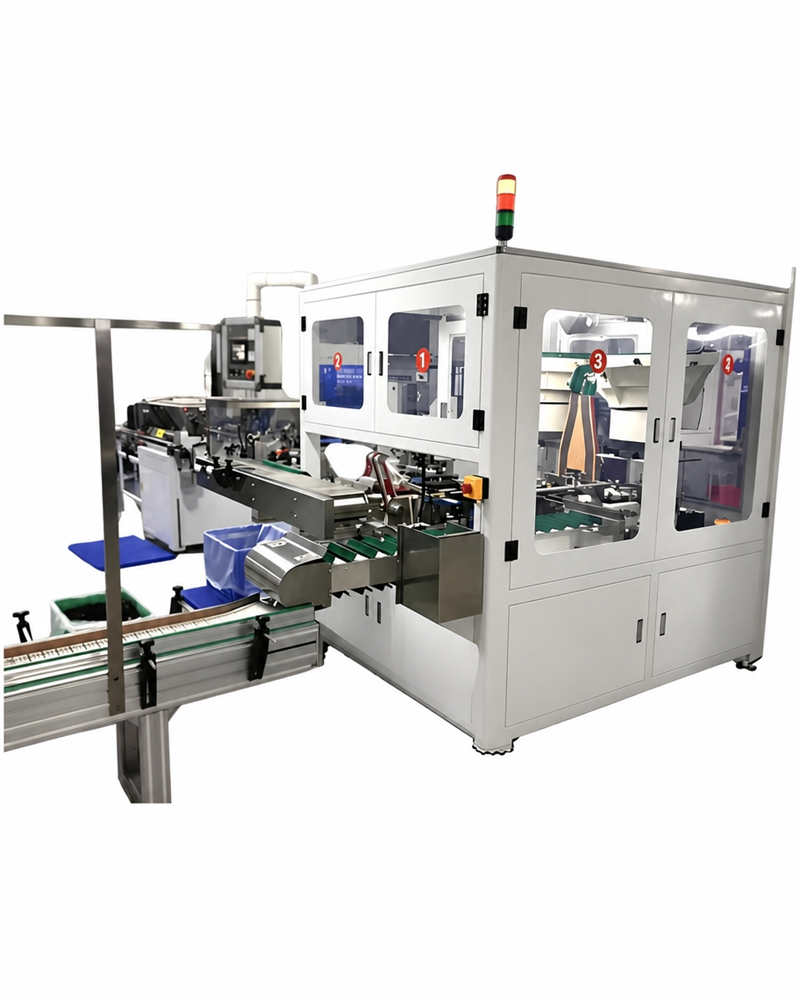
Modular design advantages: When evaluating suppliers, ask specifically whether speed upgrades can be achieved through software and motor changes versus requiring a new machine. Suppliers like Miyoda Packaging Machinery design their tube filling and closing platforms with modular architecture that allows production line upgrades — including additional fill heads or integrated vision inspection — without complete machine replacement.
Supplier Selection Criteria: Avoiding Costly Mistakes
The machine specification determines peak potential. The supplier relationship determines whether that potential is realized over a 10-year service life.
Evaluating Technical Support and After-Sales Service
Response time guarantees and regional service availability: When a filling machine sealing jaw fails during a production run of 40,000 pharmaceutical ointment tubes, the relevant metric is not when a technician can “probably” be available — it is the contractual response time guarantee and the nearest stocked spare parts depot. Ask every supplier: what is your committed response time for critical production stoppages? Where is your nearest regional service center? What critical spare parts are stocked within 48-hour shipping distance?
Training programs and documentation: Operator training for a semi-automatic machine requires 1–3 days to reach competent sustained production rate. Operator training for a fully automatic filling line — covering PLC alarm diagnosis, HMI recipe management, servo drive parameters, and changeover sequencing — requires 2–4 weeks to reach independent operation. Suppliers who provide on-site training with qualification documentation and video-based remote support eliminate a critical dependency on locally available specialist technicians.
Machine Reliability and Uptime Guarantees
What warranty coverage actually includes: A standard 12-month warranty covers manufacturing defects and component failures under normal use conditions. What it typically excludes: wear items (seals, gaskets, nozzle check valves), damage from incorrect operation or cleaning procedures, and calibration drift outside normal servicing intervals. Request the warranty document before signing the purchase order — not a verbal summary.
Spare parts availability and lead times: Spare parts lead times are a production risk that most buyers underestimate at purchase. Discover that a critical nozzle assembly takes 8 weeks to ship from an overseas warehouse after the machine has been running for 14 months, and the warranty conversation becomes irrelevant. Specify contractually which spare parts the supplier will maintain in regional inventory.
Supplier Financial Stability and Long-Term Viability
Verifying supplier track record: Request a reference list of installed machines in your product category — cosmetic or pharmaceutical — and your production scale. Contact those references directly. A supplier with 200 installed machines producing toothpaste has a different relevance profile than one with 50 installed machines producing the same pharmaceutical-grade cream tubes you intend to produce.
Contractual protections beyond warranty: For suppliers based in different regulatory jurisdictions, ensure your purchase agreement specifies the governing law, dispute resolution mechanism, and documentation obligations for the supplier — particularly relating to spare parts availability commitments and technology support through the machine’s expected service life.

Comparing Automatic vs. Semi-Automatic Systems for Your Operation
When Semi-Automatic Equipment Makes Financial Sense
Semi-automatic tube filling machines are the correct investment for specific, well-defined production scenarios — not a budget compromise. They make commercial sense when annual volume is below 3–5 million tubes per year, when SKU count is high with batch sizes below 5,000 units, for R&D stability batches, and for contract fillers managing diverse brand portfolios with frequent changeovers.
Labor cost trade-offs and volume thresholds: The economic tipping point between semi-automatic and fully automatic is approximately 5 million tubes per year at moderate labor cost markets (USD 15–25/operator-hour). Above that threshold, the annualized cost of the labor required to operate semi-automatic lines at equivalent output exceeds the capital cost premium of automation within 18–24 months. Below 3 million tubes per year in most markets, semi-automatic provides the better financial return.
Flexibility advantages: Switching between a 30mm plastic cream tube and a 40mm laminate tube on a semi-automatic machine typically requires swapping a filling nozzle and adjusting jaw clearance — completing in 15–25 minutes. On a fully automatic line, the same diameter change involves tooling sets, magazine adjustments, and orientation sensor calibration: 30–90 minutes minimum. For operations running 8–12 different tube formats per week, this changeover penalty materially affects capacity utilization.
Full Automation: The Investment Required and Timeline to ROI
Production capacity requirements that justify automation: At 5 million tubes per year with a blended operator cost of USD 22/hour, running a single automatic line at 80 TPM vs. three semi-automatic lines at 25 TPM each requires 3 fewer operators per shift. Across two shifts and 250 operating days, that saves USD 264,000 annually in labor alone — against a machine cost premium for automation of USD 40,000–80,000 over semi-automatic equivalents.
Quality consistency improvements that reduce regulatory risk: A pharmaceutical manufacturer’s fill weight Cpk data on semi-automatic lines (Cpk 0.95–1.15) versus fully automatic lines (Cpk 1.65–1.90) determines whether a batch passes or fails internal QA release criteria. The difference between Cpk 1.0 and Cpk 1.67 represents the difference between a 0.27% defect rate and a 0.006% defect rate — at 10 million units per year, that is 27,000 fewer rejected tubes annually. You can compare the full decision framework on the Miyoda Packaging Machinery automatic vs. semi-automatic guide.
Hybrid Approaches: Getting the Best of Both Worlds
Many of the highest-performing cosmetic and pharmaceutical tube operations run both: automatic lines for their core high-volume SKUs and semi-automatic stations for development batches, clinical trial supplies, and new product launches not yet at scale. This hybrid model deploys capital where volume justifies automation while maintaining the format flexibility required for innovation-driven product development.
Phased implementation strategies: Commissioning a semi-automatic line in year one and planning a transition to automatic in year three — with the automatic machine ordered and budgeted in advance — eliminates the forced decision that comes from outgrowing equipment without a plan. Build the automatic machine specification into the initial facility layout to avoid costly utility upgrades when the transition occurs.
Material Compatibility Testing and Pre-Purchase Validation
Conducting Compatibility Trials Before Committing to Equipment
No specification document substitutes for running your actual formulation through the actual machine with your actual tube material. This is not a nice-to-have step — it is the only reliable method for identifying compatibility issues that are expensive to discover after purchase.
How to request trial runs with your actual formulations: Equipment suppliers with genuine experience in regulated markets offer Factory Acceptance Testing (FAT) — a formal production trial at the vendor’s facility before shipment. A credible FAT for a tube filling machine includes a minimum 4-hour continuous run at target speed with your product, fill weight measurements across the run, seal integrity tests on finished tubes, and print registration verification. Request a copy of the FAT protocol template before signing the purchase order.
Glossary: FAT (Factory Acceptance Test) A formal production trial conducted at the vendor’s facility before machine shipment. FAT sign-off is a commercial milestone — the buyer confirms the machine performs to agreed specification before accepting delivery risk. Do not accept “visual inspection at the factory” as a substitute.
What to measure during testing: Fill weight mean and standard deviation across the full 4-hour run; seal peel strength (minimum 1.0 N/mm on plastic, 1.2 N/mm on laminate, verified per ASTM F88); tube tail geometry consistency (crinkle pattern, seal width); cap torque; and print registration alignment to within your specified tolerance (±0.1 mm for premium cosmetics, ±0.2 mm for standard commercial).
Understanding Potential Interactions Between Formulation and Packaging
Chemical compatibility issues that damage tube integrity or product stability: High-concentration essential oil formulations (>3% total) can permeate LDPE tube walls over time, causing dimensional changes in the tube and loss of active concentration. Alcoholic formulations above 15% ethanol can cause LDPE to swell and plasticizer migration. Formulations containing strong acids (pH < 4) or bases (pH > 9) may attack the lacquer coating on ABL tube interiors, causing particulate contamination. Each of these failure modes is discoverable only through compatibility testing — not by reviewing specification sheets.
How different tube materials affect shelf life and product efficacy: A sunscreen formulation with 5% zinc oxide and 7.5% octinoxate stored in LDPE vs. ABL laminate tubes showed a 28% greater active ingredient degradation in LDPE after 18 months in accelerated stability testing (40°C/75% RH). For products with regulatory stability claims, the difference between tube substrate choices is a regulatory compliance question, not just a packaging preference.
Documentation and Testing Protocols for Regulatory Approval
Stability testing timelines: ICH Q1A(R2) requires 12-month real-time stability data for pharmaceutical product approval in most markets, with 6-month accelerated stability (40°C/75% RH) required for preliminary submission. Factor stability testing time — which begins only after your final packaging configuration is confirmed — into your launch timeline from the moment you select tube material and equipment.
Building a compliance file that accelerates market approval: Maintain a single organized compliance file containing: tube supplier Certificates of Compliance (CoC), machine qualification reports (IQ/OQ/PQ), cleaning validation data, stability testing summary, batch records from validation batches, and operator training records. Regulators who receive a well-organized, complete documentation package at audit consistently provide faster approval decisions than those reviewing incomplete submissions.
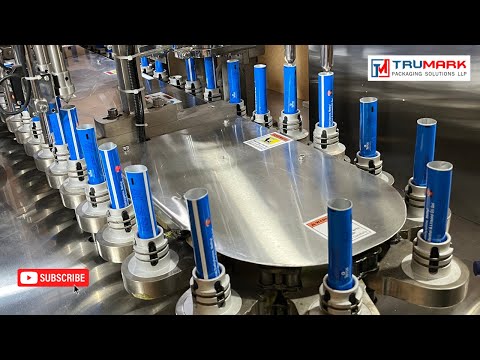
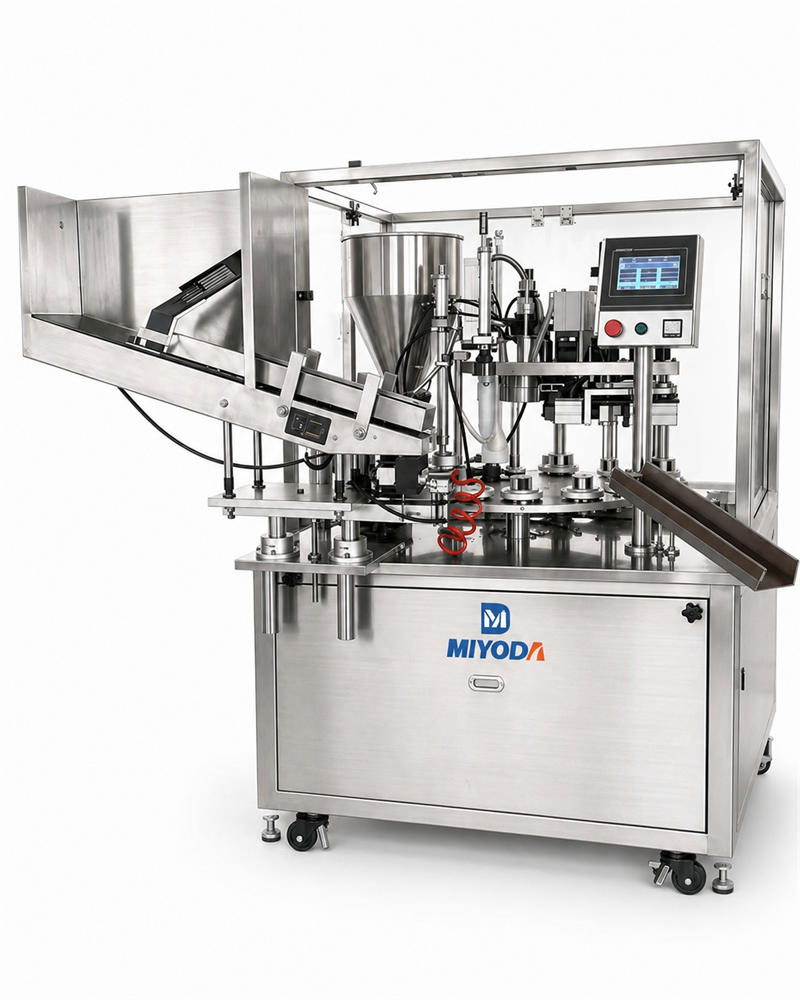
▶ Watch: High-Speed Automatic 2-Head Tube Filling & Sealing Machine in operation — observe the continuous rotary cycle, servo-driven indexing, automatic tube orientation, hot-air sealing station, and batch code embossing running at production speed. This is the type of output cosmetic and pharmaceutical tube brands depend on at 5M+ annual volume.
Implementation Timeline and Operational Readiness Planning
From Purchase Decision to First Commercial Production Run
Installation and commissioning timelines: Plan 4–12 weeks from machine delivery to first commercial production run for standard automatic tube filling equipment. High-speed multi-head systems with custom tooling and vision inspection can extend to 14–16 weeks on-site. Add to this the machine lead time from order to delivery — typically 10–16 weeks for standard configurations, 16–24 weeks for custom pharmaceutical-grade systems.
The full timeline from purchase order to first validated pharmaceutical batch is therefore realistically 28–40 weeks — seven to ten months. Cosmetic brands with less stringent validation requirements can expect 16–24 weeks from order to first commercial production. Plan your product launch date around these timelines.
Regulatory validation requirements that extend your launch timeline: IQ/OQ/PQ execution takes 8–16 weeks after machine installation. Stability testing for a new pharmaceutical product takes a minimum of 6 months for accelerated data (12 months for final submission). These timelines run sequentially, not in parallel, meaning validation completion feeds into stability testing initiation — adding a critical path dependency that is the most common source of product launch delays in this category.
Staff Training and Operational Protocols
Developing SOPs for consistent production: Standard Operating Procedures (SOPs) for tube filling operations cover machine startup, production monitoring, quality sampling, changeover procedures, cleaning protocols, and shutdown. Each SOP must be approved through your quality management system before commercial production begins in pharmaceutical environments. Writing, reviewing, and approving a full SOP set typically takes 4–8 weeks — factor this into your commissioning timeline.
Cross-training backup operators to prevent production disruptions: A pharmaceutical production facility in Thailand lost 11 days of production across one quarter when their sole qualified filling machine operator was absent due to illness. Their machine was functional; their documented operator pool was not. Cross-training a minimum of two operators per machine — and documenting their qualification in your training records — is a continuity requirement, not an optional investment.
Quality Assurance Setup and Continuous Monitoring
In-process testing protocols: A practical in-process testing protocol for tube filling includes: fill weight check every 30 minutes (minimum 5 tubes), seal integrity visual inspection every 15 minutes, cap torque verification every 2 hours, and batch code legibility check at start of each new roll. These are the minimum intervals that allow early detection of drift before it produces significant scrap quantities.
Glossary: SPC (Statistical Process Control) A method using statistical methods to monitor and control a production process. Control charts plot measurement data over time, with action limits set to detect systematic trends before they cause defects. Facilities implementing SPC on fill weight data typically reduce scrap rates by 35–45% compared to end-of-line inspection alone.
SPC implementation for early problem detection: At 80 TPM, a fill weight drift that moves the process mean by 2g produces 4,800 out-of-tolerance tubes before an end-of-line inspection check catches it. An SPC control chart with hourly sampling and statistical action limits detects the same drift after fewer than 15 tubes — reducing scrap by 99.7% for the same detection event.
Future-Proofing Your Investment: Technology Trends for 2026 and Beyond
Industry 4.0 Integration and Data Analytics Capabilities
The integration of IIoT (Industrial Internet of Things) connectivity into tube filling machines has shifted from premium feature to baseline expectation among major cosmetic and pharmaceutical brand buyers. OPC-UA protocol — the industrial standard for machine data exchange — is increasingly specified as a mandatory requirement in supplier qualification criteria by brands like Unilever, L’Oréal, and leading pharmaceutical CMOs, ensuring production data flows directly into their ERP systems.
Real-time monitoring systems that prevent equipment failures: Predictive maintenance algorithms analyzing vibration signatures, motor current profiles, and temperature patterns can predict component failures 15–20 minutes before they cause production stoppages. Industrial data shows this approach reduces unplanned downtime by 25–40% and extends bearing service life by 15–30% compared to fixed-interval replacement schedules.
Production data analytics that optimize efficiency: A leading contract manufacturer in Southeast Asia reduced average weekly changeover time from 6.2 hours to 1.8 hours after implementing servo-driven jaw adjustment with HMI recipe management — recovering 228 additional production hours per year without any additional headcount.
Sustainability Features and Eco-Friendly Packaging Trends
Equipment capability for biodegradable tube materials: Bio-based PE tubes (produced from sugarcane ethanol rather than petroleum feedstock) have become specification requirements from brands including The Body Shop and L’Occitane. These materials require slightly different sealing parameters than conventional PE — typically 5–8°C lower jaw temperature to avoid thermal degradation of the bio-based polymer chains. Verify that your machine’s HMI allows independent temperature fine-tuning per recipe, not just a single global temperature offset.
Waste reduction and energy efficiency: Modern servo-driven filling machines consume 30–40% less energy than pneumatic-actuator equivalents of comparable output. Counter-current CIP rinse systems reduce cleaning water consumption by 50–70%. For brands required to report Scope 3 emissions as part of supplier ESG disclosure requirements — increasingly common in European and North American supply chains — these specifications carry commercial as well as environmental value.
Scalability and Future Product Line Integration
Modular design advantages for adding capacity: When commissioning a filling line, specify whether additional fill heads can be added to the same base machine versus requiring a parallel second machine. For a brand projecting volume growth from 8 million to 18 million tubes in four years, a two-head upgrade on an existing base machine at USD 35,000 is materially different from purchasing a second machine at USD 120,000.

Common Mistakes to Avoid When Selecting Tube Filling Equipment
Undersizing Equipment Based on Current Volume Alone
Why growth projections matter more than today’s production numbers: A cosmetic brand that purchased a semi-automatic line sized exactly for their current 2 million tube annual volume faced a fundamental problem 18 months later: a major retail chain listing that increased demand to 5.5 million tubes per year. The machine could not meet the new volume even running two full shifts. Emergency outsourcing to a contract filler cost USD 0.08 per tube above their standard margin — on 3.5 million units, that was USD 280,000 in avoidable cost.
The hidden costs of equipment replacement when you outgrow your system: When a tube filling machine is replaced before end of service life, the residual value recovered through resale is typically 15–25% of original purchase price. The total cost of the premature decision — replacement machine, installation, validation, production downtime — frequently exceeds the cost differential that would have been required to buy correctly sized equipment in the first place.
Prioritizing Price Over Total Cost of Ownership
How cheap equipment creates expensive problems: A USD 12,000 entry-level semi-automatic filler with a 3-month spare parts lead time from the manufacturer’s home country is not a USD 12,000 machine. It is a machine whose first unplanned breakdown — statistically occurring within 18 months of heavy production use — can cost USD 15,000–40,000 in lost production, rush orders, and expedited repair service. The total cost of ownership over three years frequently exceeds that of a USD 28,000 machine from a supplier with a regional service network and 48-hour parts availability.
Calculating the true cost per unit produced across equipment lifespan:
A USD 25,000 semi-automatic machine producing 2 million tubes per year with USD 45,000 in annual operating costs yields a 10-year TCO of USD 475,000 and a cost per tube of USD 0.024. A USD 80,000 automatic machine producing 8 million tubes per year with USD 38,000 in annual operating costs yields a 10-year TCO of USD 460,000 and a cost per tube of USD 0.006 — 75% lower per unit despite a higher purchase price.
Neglecting Supplier Stability and Long-Term Support
Risks of working with suppliers who may not survive industry consolidation: The tube filling machine market has seen significant consolidation over the past decade, with several European equipment manufacturers absorbed by larger groups or exited. A buyer whose machine manufacturer was acquired in 2021 reported that spare parts sourcing became “nearly impossible” within two years — with critical components available only through secondary market brokers at 3–5× original pricing. Verify that your supplier has been operating independently for a minimum of 10 years and has a documented track record in your specific product category.
How to evaluate supplier commitment to your market segment: Miyoda Packaging Machinery provides a concrete example of this commitment. Specialized exclusively in automated tube production lines for cosmetics and pharmaceuticals — not a generalist packaging equipment manufacturer — their tube filling and closing machine portfolio is built around the specific regulatory, compatibility, and performance requirements of these two sectors. Clients upgrading from semi-automatic to fully automated lines report an average 30% efficiency improvement — a figure grounded in documented production data, not marketing copy.
Frequently Asked Questions (FAQs)
Equipment Selection & Specifications
Q1: How do I know if my formulation is compatible with plastic vs. aluminum tubes?
Compatibility depends on your formula’s pH, alcohol content, essential oil concentration, and active ingredient chemistry. LDPE plastic is compatible with pH 4–9 and water-based emulsions but fails with high-alcohol formulations (>15% ethanol), concentrated essential oils (>3%), and oxidation-sensitive actives. Aluminum tubes (with lacquer coating) are the specification standard for pharmaceutical ointments and formulations requiring near-zero oxygen transmission. Before finalizing tube material selection, request compatibility testing from your tube supplier using your actual formulation — accelerated at 40°C/75% RH for a minimum of 3 months before committing to production tooling.
Q2: What production speed do I actually need for my brand?
Calculate based on your annual volume requirement divided by available production hours, then apply an OEE factor of 75–85% as your efficiency assumption:
Most small-to-medium cosmetic brands start with 30–60 TPM capacity. Plan for 20–30% growth headroom above your calculated minimum to avoid premature equipment replacement when order volumes increase.
Q3: What’s the difference between IQ, OQ, and PQ validation, and why does it matter?
Installation Qualification (IQ) verifies the machine was installed per design specifications with correct utilities. Operational Qualification (OQ) confirms it performs correctly across its operating range. Performance Qualification (PQ) validates it consistently produces compliant product across three consecutive production batches. Pharmaceutical regulators require documentation of all three before approving commercial production. For cosmetic brands supplying major retail buyers, IQ/OQ/PQ documentation is increasingly required as part of supplier qualification. Budget 8–16 weeks and USD 20,000–100,000 for full pharmaceutical qualification.
Q4: Can I use the same machine for both pharmaceutical and cosmetic products?
Yes, with important operational constraints. Pharmaceutical production requires stricter GMP protocols, more frequent cleaning validation, documented change-over procedures, and electronic batch records. Running cosmetic and pharmaceutical production on the same machine is feasible but requires a robust cross-contamination prevention protocol and formal change control process that documents every deviation. Many contract manufacturers operate dedicated pharmaceutical lines to avoid audit complexity and regulatory exposure from mixed-use production.
Q5: How much should I budget for installation, training, and validation?
Typically 20–40% of equipment purchase price for cosmetic applications, and 40–80% for pharmaceutical applications requiring full IQ/OQ/PQ validation. For a USD 80,000 automatic tube filler in pharmaceutical service, total ancillary costs of USD 35,000–65,000 are realistic — bringing total project cost to USD 115,000–145,000. This often exceeds first-time buyers’ expectations significantly, making it the most common source of budget overruns in this equipment category.
Regulatory Compliance & Risk Management
Q6: What happens if my equipment doesn’t meet FDA GMP standards?
Pharmaceutical production in non-compliant facilities cannot legally proceed under FDA jurisdiction. Consequences range from Warning Letters (requiring documented corrective action plans) through consent decrees (court-ordered remediation) to facility shutdown and product seizure. For cosmetic brands seeking pharmaceutical contracts, non-compliance disqualifies the facility from the contract entirely — regardless of tube quality. Always verify equipment certification status and request supplier compliance documentation before purchase.
Q7: How do I ensure my tube material meets FDA requirements?
Request a Certificate of Compliance (CoC) from your tube supplier confirming which FDA Title 21 CFR sections the material satisfies. For pharmaceutical applications, also request extractables and leachables testing data demonstrating that no regulated substances migrate from tube material into product under intended storage conditions. Maintain these documents permanently as part of your regulatory file — they will be requested during any FDA or EU regulatory inspection.
Q8: What documentation do I need before launching a new product?
For pharmaceutical products: stability data (12+ months real-time, 6 months accelerated), compatibility testing results, IQ/OQ/PQ qualification reports, cleaning validation data, batch manufacturing records from validation batches, and approved quality procedures. For cosmetic products in major regulated markets: ISO 22716 GMP compliance documentation, safety assessment, and stability data. The FDA’s cGMP guidance provides detailed regulatory expectations for drug product containers and closures.
ROI & Financial Planning
Q9: How long does it typically take to break even on tube filling equipment?
18–36 months for fully automatic systems at production volumes of 5–15 million tubes per year. Semi-automatic machines at volumes of 1–3 million tubes per year typically break even in 6–12 months due to lower capital investment. Calculate your specific payback using the formula:
Faster payback requires higher production volumes, higher product margin, or significant labor savings. A pharmaceutical producer filling high-value specialty ointments (USD 25/kg product cost) recovers equipment investment faster than a commodity cosmetic producer — margin per unit accelerates payback even at lower volumes.
Q10: Should I lease or buy tube filling equipment?
Buy if you will operate equipment for more than 5 years, have capital available, and want to build equity in depreciating assets. Lease if you want technology flexibility, expect to upgrade in 3–4 years, or need to preserve working capital for market development activities. Leasing typically costs 30–50% more over a full 10-year equipment life but preserves cash flow — a meaningful trade-off for brands in early rapid growth phases where capital deployment to marketing and distribution generates higher returns than equipment ownership.
Q11: What are the biggest hidden costs I’m missing in my ROI calculation?
The most commonly overlooked cost items: facility modifications to accommodate equipment footprint and utility requirements (USD 5,000–30,000+), spare parts initial inventory (USD 5,000–15,000), IQ/OQ/PQ validation services for pharmaceutical applications (USD 20,000–100,000), ongoing preventive maintenance (USD 500–2,000/month), and staff training and qualification (USD 3,000–8,000 for initial commissioning). Together, these regularly add 30–60% to the machine purchase price in year-one total project cost. For a comprehensive ROI modeling approach for packaging machinery, this packaging machine ROI calculation framework provides a useful reference methodology.
Operational Readiness & Performance
Q12: How long does equipment installation and startup typically take?
4–12 weeks from machine delivery to first commercial production for cosmetic-grade automatic equipment. Pharmaceutical-grade systems requiring IQ/OQ/PQ validation add 8–16 weeks after installation. Total project timeline from purchase order to first validated pharmaceutical batch is realistically 28–40 weeks. Most brands underestimate this by 30–50%, resulting in product launch delays that are announced publicly and documented in retailer relationship records. Plan conservatively and communicate realistic timelines to commercial stakeholders from purchase order date.
Q13: What production speed should I expect in real-world conditions vs. manufacturer specs?
Expect 60–80% of maximum rated speed in actual sustained production. A machine rated at 100 TPM typically produces 65–80 TPM in sustained commercial production accounting for changeovers, quality checks, minor stops, and cleaning cycles. Apply an OEE factor of 72–82% when sizing equipment to production requirements — never plan capacity using nameplate speed.
Q14: What’s the minimum staff required to operate tube filling equipment?
Semi-automatic machines: 1–2 operators per machine per shift for tube loading, quality monitoring, and minor adjustments. Fully automatic lines: 1 qualified technician per shift monitoring one to three machines, plus 1 quality technician per production area. Budget for cross-training minimum 2 qualified operators per machine to maintain production continuity during absences, vacations, and sick days — a contingency that is frequently omitted from operational readiness planning.
Concluding Section: Making Your Final Equipment Decision with Confidence
The right tube filling machine is a 10-year capital commitment that directly shapes your production cost structure, regulatory compliance posture, and growth capacity. The decision that looks cheapest on day one — based on purchase price alone — consistently delivers the highest total cost over the life of the asset.
The framework this guide provides — tube material compatibility, realistic speed calculation, regulatory compliance planning, true TCO modeling, supplier qualification criteria, and implementation timeline management — gives you the decision architecture to evaluate any vendor’s proposal against your actual production reality, not their sales narrative.
Two actions to complete before issuing your first RFQ: define your complete tube specification in writing (substrate, diameter, wall thickness, fill volume range, decoration, sealing method, regulatory target markets) and calculate your 3-year and 5-year volume projections by SKU. Both take less than a week and filter out at least 40% of vendor proposals before the first conversation.
To explore the full range of tube filling and closing solutions built for cosmetic and pharmaceutical manufacturers, visit Miyoda Packaging Machinery’s product portfolio — including their complete tube filling, sealing, capping, and decoration line — or review their detailed comparison of cosmetic tube machine brands and models to benchmark specifications across the market.
For a deeper look at how automatic and semi-automatic filling systems compare at different production scales, Miyoda’s automatic vs. semi-automatic tube filling machine guide provides the technical comparison in detail with production data.
Ready to find the right tube filling solution for your pharmaceutical or cosmetic brand?
Schedule a confidential consultation with the engineering team at Miyoda Packaging Machinery. They will evaluate your specific production requirements, conduct compatibility testing with your formulations, and provide a detailed ROI analysis tailored to your production volume and regulatory environment.
Don’t let equipment selection derail your product launch. Get expert guidance from specialists who understand your production challenges — and have the installed base to prove it.
Glossaire des principaux termes techniques
ABL (Aluminum Barrier Laminate): Multi-layer tube body containing an aluminum foil inner layer providing near-complete oxygen and moisture barrier. Used for pharmaceutical ointments, retinol products, and toothpaste. Sealed by hot-air welding.
PBL (Plastic Barrier Laminate): Multi-layer tube body using EVOH or nylon polymer barrier layers instead of aluminum. Lighter, recyclable, used for premium cosmetic creams and sunscreen. Sealed by ultrasonic welding.
TPM (Tubes Per Minute): Production rate metric for tube filling machines. Always verify against OEE-adjusted output, not nameplate speed.
OEE (efficacité globale des équipements) : Composite measure of production efficiency = Availability × Performance Rate × Quality Rate. World-class filling lines achieve 85–92% OEE.
Cpk (Process Capability Index): Statistical measure of fill weight consistency relative to specification limits. Pharmaceutical standard requires Cpk ≥ 1.33. Automatic machines typically achieve 1.5–2.0.
IQ/OQ/PQ: Three-stage pharmaceutical equipment qualification framework. Installation Qualification / Operational Qualification / Performance Qualification. Required for regulated pharmaceutical production.
CIP (Clean-in-Place): Automated chemical flushing of product pathways without machine disassembly. Reduces cleaning time from 2–3 hours to 30–45 minutes while generating documentable, reproducible results for GMP audit.
FAT (Factory Acceptance Test): Formal production trial at vendor’s facility before machine shipment. Includes minimum 4-hour production run with customer’s actual product, dimensional measurements, and documented results. Critical risk-reduction step that most buyers skip to their detriment.
cGMP (current Good Manufacturing Practice): The FDA’s regulatory standard for pharmaceutical manufacturing, defined in 21 CFR Part 211. Mandates equipment design, documentation, calibration, and batch record requirements for commercial pharmaceutical production.
SPC (Statistical Process Control): Statistical method using control charts to monitor production process in real time. Facilities using SPC on fill weight data typically reduce scrap by 35–45% compared to end-of-line inspection.
SMED (Single-Minute Exchange of Dies): Lean manufacturing methodology targeting machine changeover times under 10 minutes. Increasingly applied to tube filling machine tooling design to reduce diameter and product changeover time.