
I. Optimizing Your Tube Production Investment
The printed tube is often the only part of a product the buyer holds before using it. On a cosmetic shelf, a sharp logo and even colour make a $38 face cream look like it’s worth $38. On a pharmaceutical tube, a misprinted dosage line or a smudged batch code can get a whole lot rejected.
That’s why your silk screen machine affects your profit more than most people expect.
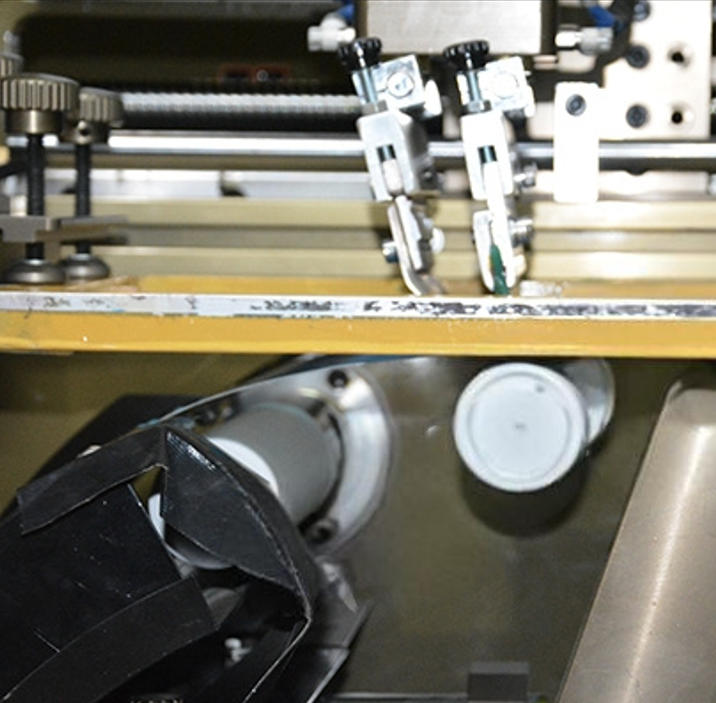
Quick definition: Silk screen printing Screen printing, also called silk screen printing, pushes ink through a fine mesh stencil onto a surface. On soft tubes, the tube turns on a mandrel (a support rod inside the tube) while a squeegee presses the ink through the screen. The result is a thick, opaque print that holds up well.
Why the cheapest quote often costs the most
Many buyers compare quotes on price alone. A lower price can hide costs that show up after installation:
- Wrong registration on 3–5% of tubes, every shift. Registration means each colour lands exactly where it should.
- Long setup times that eat into short-run cosmetic orders.
- Spare parts that take 6 weeks to arrive.
- Curing that can’t keep up with the rated print speed.
A $15,000 saving on the purchase price can disappear within the first year of scrap and downtime.
What this guide helps you do
This guide shows you how to budget, specify, and compare silk screen machines based on coût total de possession (TCO). TCO means the full cost of owning the machine over its life: purchase, energy, consumables, labour, scrap, and downtime. It’s written for cosmetic and pharmaceutical tube producers, and for the distributors and agents who sell to them.
II. Understanding the Pricing Spectrum: What Actually Drives the Quote?
The cost of a silk screen machine is not a fixed number. It reflects your specific production requirements.
Two suppliers may quote $20,000 and $95,000 for what looks like the same “tube screen printer.” In most cases they’re quoting very different machines.
Indicative price tiers
| Machine Tier | Vitesse typique | Typical Configuration | Indicative Price Range* |
|---|---|---|---|
| Semi-automatic | 15–30 tubes/min | Manual loading, 1 colour, basic IR or UV dryer | $8,000 – $25,000 |
| Automatic, entry level | 40–60 tubes/min | Auto load/unload, 1–2 colours, UV curing | $30,000 – $70,000 |
| Fully automatic, multi-colour | 60–100 tubes/min | Auto registration, 3–6 colours, UV per station, servo drives | $80,000 – $200,000+ |
*These ranges are based on typical market quotes. Actual pricing depends on configuration, options, and the destination market.
Technical complexity: automatic vs. semi-automatic
Most of the price difference comes from loading and registration:
- Semi-automatic machines need an operator to place each tube on the mandrel. Print position depends partly on how the operator loads the tube.
- Automatic machines use a feeder, a servo-driven mandrel (a motor-controlled rod that turns to an exact position), and an optical sensor that reads a register mark before printing. Placement errors drop sharply.
Glossary: Register mark (eye mark) A small printed mark on the tube that a sensor reads, so every colour starts at the same position. Without it, a 3-colour logo can drift 0.5 mm or more between colours.
Material versatility
Each type of tube puts different demands on the machine:
- PE (polyethylene) tubes are soft and flex under squeegee pressure.
- Tubes stratifiés (ABL, aluminium barrier laminate, and PBL, plastic barrier laminate) have a side seam. The print has to avoid it or cover it cleanly. Sleeves come from a machine de fabrication de tubes stratifiés, and the printer has to handle that seam.
- Tubes en aluminium are rigid but dent easily, so mandrel fit and pressure have to be gentle.
A machine that handles all three, with quick-change mandrels, costs more upfront. It usually costs less than buying two machines later.
Compliance standards
Pharmaceutical tube suppliers typically work under ISO 15378, the GMP standard for primary packaging of medicines. Their customers follow the FDA’s current good manufacturing practice regulations. Cosmetic buyers increasingly audit against ISO 22716.
For the machine itself, that means:
- Stainless steel or coated frames that are easy to clean
- Enclosed ink areas that limit dust
- Documentation packs (drawings, material certificates, manuals) ready for validation
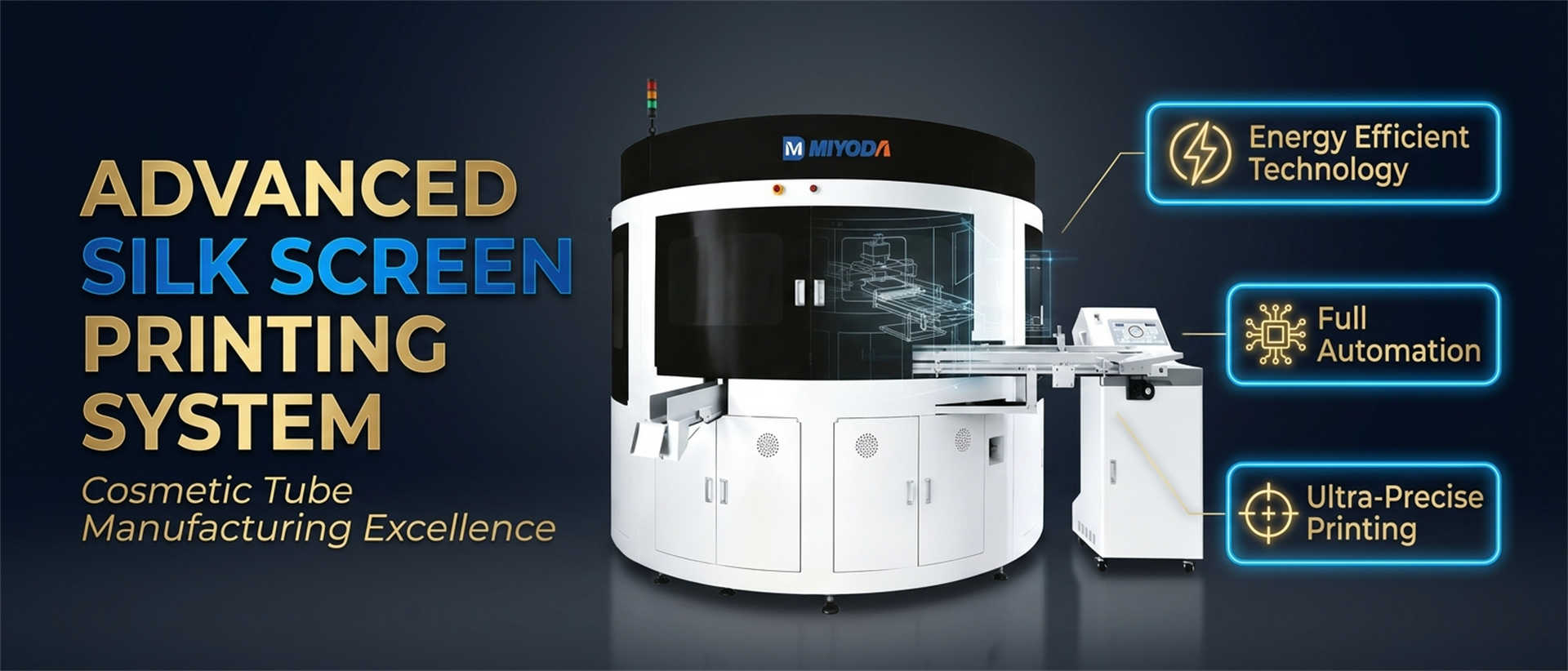
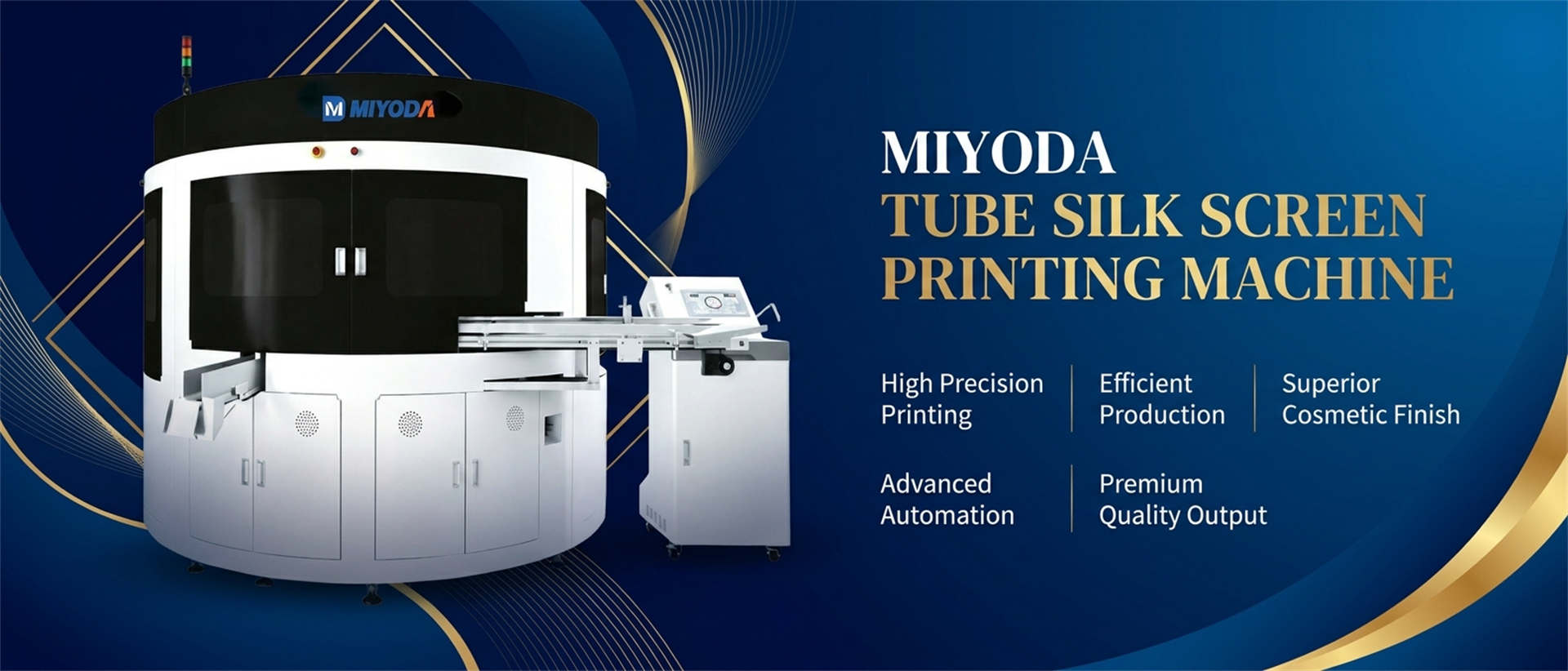
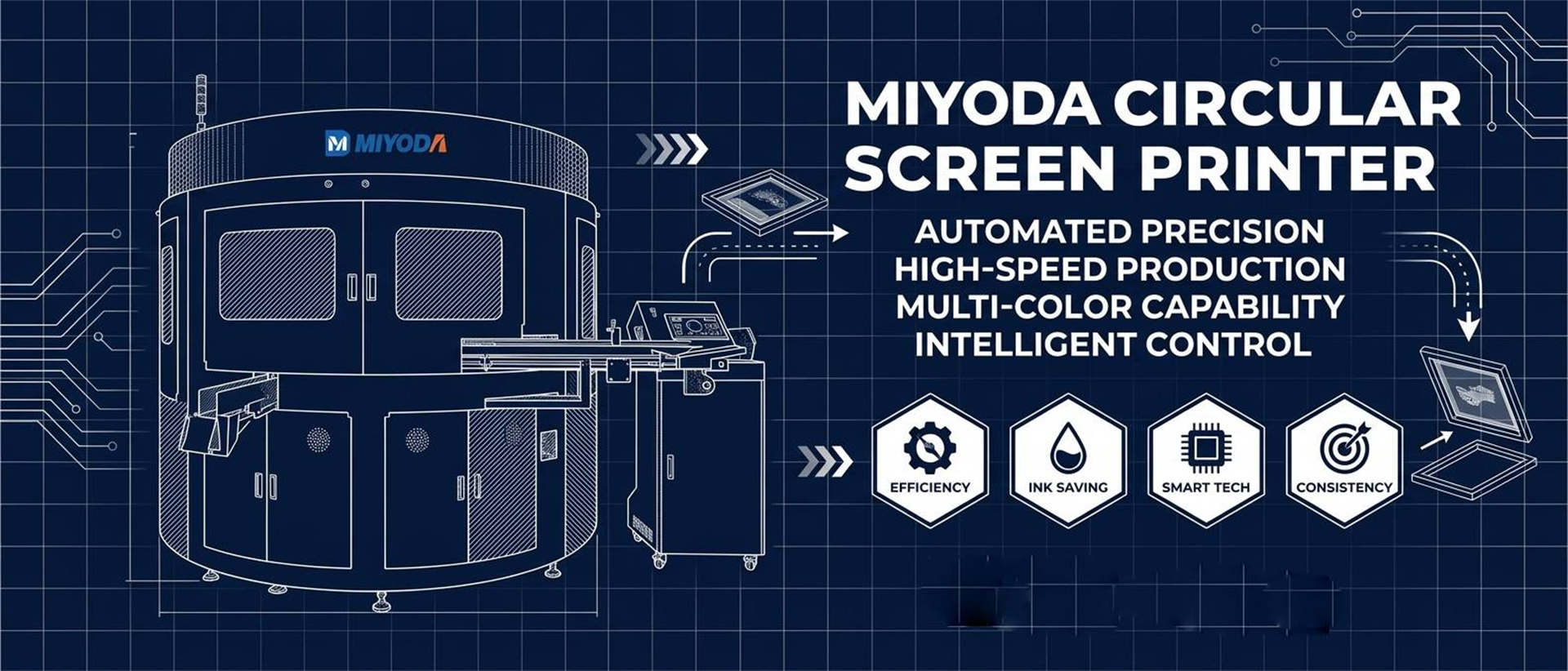
These features add cost, but they help you pass audits. The tube silk screen printing machine range from Miyoda Packaging Machinery offers multi-colour configurations for both cosmetic and pharmaceutical work.
III. The “Hidden” Cost Drivers: Evaluating Long-Term Value
To avoid budget overruns, analyze the variables that affect both the final quote and your ongoing operating costs.
Print head configuration: colours and stations
Each added colour usually means another print station, screen holder, and curing unit. As a rough guide:
| Colours | Relative Base Price | What Changes |
|---|---|---|
| 1 colour | 100% | Single station, single cure |
| 2 colours | ~120–135% | Second station + inter-colour cure |
| 4 colours | ~150–190% | Four stations, more servo axes, tighter registration control |
| 6 colours | ~200%+ | Long indexing table, higher precision demands |
Industry insight: Many cosmetic brands now use a white base layer plus 2–3 spot colours, instead of full-colour artwork. Printing that way on 4 stations is often cheaper per tube than adding an offset printer. Before you add stations, check what share of your orders actually need more than 3 colours.
Drying system efficiency: UV vs. IR
Glossary: UV curing UV curing hardens ink almost instantly with ultraviolet light. It works through a chemical reaction, not evaporation. IR (infrared) drying uses heat to drive off solvents.
| Facteur | UV Curing (LED) | UV Curing (Mercury Lamp) | IR Drying |
|---|---|---|---|
| Cure speed | Instant | Instant | Slower, needs a longer path |
| Heat on tube | Very low | Medium | High, so PE can deform |
| Lamp life | ~20,000+ hrs | ~1,000–2,000 hrs | Long |
| Energy use | Lowest | High | Medium–high |
| Upfront cost | Highest | Medium | Lowest |
Industry insight: More tube printers are moving to LED UV. It uses less power, and mercury lamps face tighter rules in several markets. LED also gives off very little heat, which matters for thin PE tubes (0.35–0.45 mm wall) that can oval under IR heat.
Automation integration
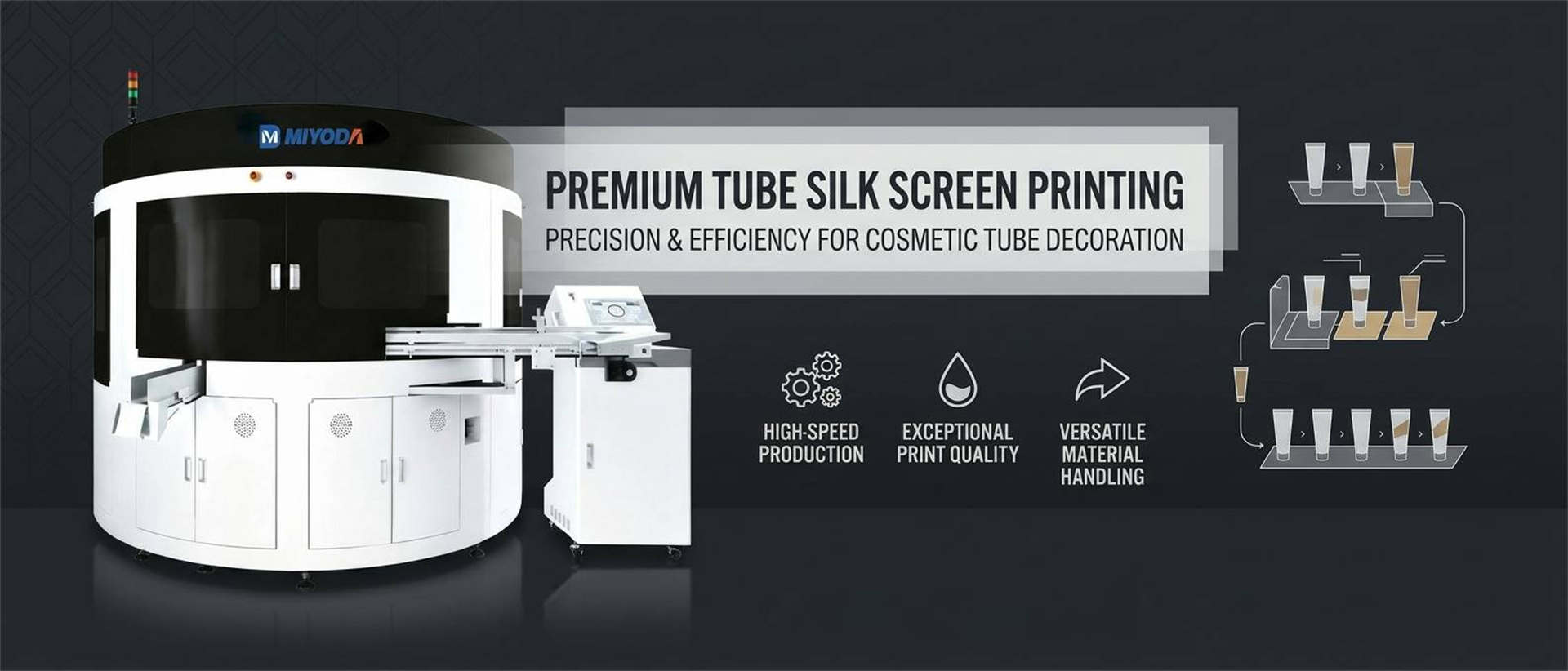
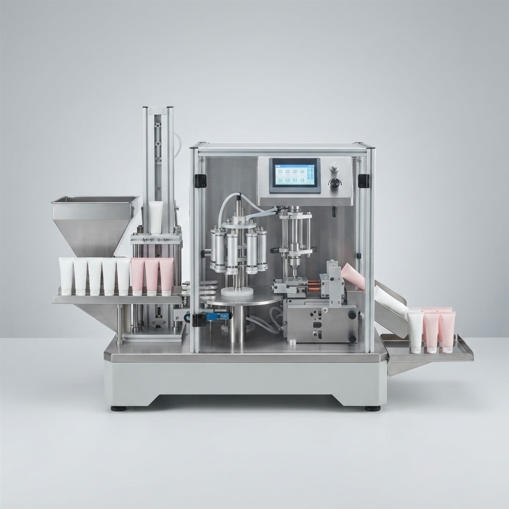
A printer that can’t hand tubes to the next machine creates a manual buffer, with a person moving trays between machines. Ask whether the machine can send and receive signals with your capping line and your tube filling and closing machine or upstream equipment.
Integration-ready controls cost a bit more at purchase. Adding them later costs much more.
IV. New vs. Used Machinery: A Risk-Benefit Analysis for Packaging Producers
Choosing between a new and a pre-owned machine means balancing the capital you spend now against reliability later.
New machinery
- Warranty coverage, typically 12 months on the machine
- Current energy-saving technology such as servo drives and LED UV
- Factory-tested precision with a documented FAT
Glossary: FAT (Factory Acceptance Test) A test run at the supplier’s factory, using your tubes and artwork, before the machine ships. You sign off only when it meets agreed targets.
Used machinery
- Purchase price is often 30–60% lower
- Mechanical fatigue in cams, indexing tables, and mandrel bearings
- Old PLC software that may not be supported anymore
The hidden cost of used equipment
| Cost Item | Typical Range for a Used Unit |
|---|---|
| Refurbishment (bearings, belts, sensors) | $3,000 – $15,000 |
| Discontinued PLC/HMI replacement | $5,000 – $20,000 |
| Obsolete parts sourcing delays | 2–8 weeks per part |
| Re-validation for pharma use | Full IQ/OQ/PQ needed again |
Industry insight: The most common shock with used tube printers is the controller, not the mechanics. If the PLC model is discontinued, one failed CPU card can stop the line for weeks.
To compare new options side by side, this guide on Comment comparer les machines d'emballage pour tubes souples gives a scoring method you can reuse.
V. Pre-Quote Checklist: How to Get an Accurate and Competitive Price
Giving precise specifications prevents “quote creep,” meaning surprise extras after the first quote, and makes sure the machine solves your real problems.
Send this information to every supplier so you get quotes you can actually compare.
1. Tube specifications
- Diameter range (for example 16–50 mm)
- Tube length range (for example 60–220 mm)
- Material: PE, ABL, PBL, aluminium, or a mix
- Whether tubes are capped or uncapped at printing
- Shoulder type (flat, oval, nozzle)
2. Production volume
State your required TPH (tubes per hour), the actual number of good tubes you need each hour.
Example: 6 million tubes per year ÷ (250 days × 16 hrs × 0.80 efficiency) ≈ 1,875 TPH, or about 31 tubes per minute. A machine rated at 50–60 tubes/min gives you room to grow.
3. Quality requirements
- Registration tolerance (for example ±0.2 mm between colours)
- Ink adhesion standard. Many buyers use the cross-hatch tape test in ASTM D3359 and aim for a 4B–5B rating.
- Rub, solvent, and product resistance (alcohol, oils, ointment bases)
Glossary: Surface treatment and dyne level PE has low surface energy, so ink beads up instead of sticking. Corona treatment or flame treatment raises it. Most tube printers target 38–42 dynes/cm before printing.
4. Commercial details
- Destination voltage and frequency
- Installation scope (on-site, remote, or agent-led)
- Spare parts kit included or optional
VI. Solving the “Waste” Pain Point: Precision and Yield Optimization
A machine’s true cost is measured by how much material it saves through precision.
Reducing setup waste
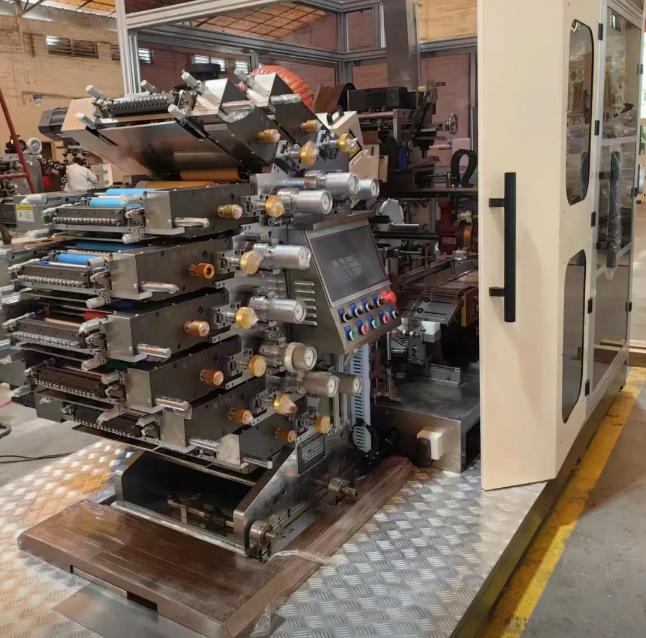
On a semi-automatic machine, a colour or design change can scrap 50–150 tubes before the print is right. Machines with servo registration and saved job recipes often get that down to 10–30 tubes.
At 20 changeovers a month, that’s roughly 800–2,400 tubes saved each month, and more on high-value pharma laminate tubes.
Ink management
- Closed or semi-closed ink trays reduce evaporation and skinning (a dried film on the ink surface).
- Correct mesh count controls how much ink is laid down. A 120–150 threads/cm mesh suits fine text, and lower counts suit bold opaque whites.
- UV inks don’t dry on the screen, so less ink is wasted during short stops.
Consistency across batches
High-end cosmetic brands often reject lots if the colour difference (Delta E, a measure of visible colour difference) is above 1.5–2.0 between batches. Consistent squeegee pressure, angle, and speed, controlled by servo or pneumatic regulators instead of hand settings, keeps reorders matching the first order.
VII. Scaling Your Operation: Modular Upgrades vs. Full Replacement
A good purchase plans for where your business will be in five years, not just where it is today.
Future-proofing with extra stations
Ask whether the frame and indexing table have room for extra colour stations. Adding a station to a modular machine might cost 15–25% of a new machine. Replacing the whole machine costs 100%.
Software scalability
Look for controls that can export production data such as counts, rejects, and downtime reasons, and connect to ERP or smart factory dashboards. Machines without data output become isolated as your plant grows.
Adaptability to tube sizes
Quick-change mandrels and screen holders let you switch diameters in 20–40 minutes, compared with half a day. That matters when your line feeds from a chaîne de production d'extrusion de tubes running several SKUs a week.
VIII. Maintenance and Lifecycle Costs: The Total Cost of Ownership (TCO)
The purchase price is only the first step. Uptime is where the profit is made.
5-year TCO example (illustrative)
Assumptions: 8 million tubes per year, a tube value of $0.08 at the printing stage, and $45 of lost margin per hour of downtime.
| Cost Item (5 years) | Bid A – Low Price | Bid B – Higher Spec |
|---|---|---|
| Purchase price | $42,000 | $68,000 |
| Scrap (4% vs 1.5%) | $128,000 | $48,000 |
| Downtime (600 vs 200 hrs/yr) | $135,000 | $45,000 |
| Energy (IR vs LED UV) | $32,500 | $19,000 |
| Consumables | $25,000 | $21,000 |
| Total 5-year cost | $362,500 | $201,000 |
Bid B costs $26,000 more upfront and saves about $161,500 over five years.
Consumables analysis
| Consumable | Typical Life | Notes |
|---|---|---|
| Screens (mesh) | ~50,000–150,000 impressions | Depends on ink abrasiveness and cleaning |
| Squeegee blades | Weeks to months | Replace when the edge rounds; check every shift |
| Mercury UV lamps | ~1,000–2,000 hrs | Output drops before they fail, so track the hours |
| LED UV modules | ~20,000+ hrs | Higher upfront cost, far fewer replacements |
Technical support
When a machine stops at night, response time matters. Remote diagnostics let a technician check PLC alarms by video or remote login, and many faults are fixed in under an hour. A local agent with trained staff and spare parts covers the rest.
Preventive maintenance
Short, planned stops prevent long, unplanned ones. A practical schedule:
- Tous les jours : Clean screens and squeegees, and check register sensor lenses.
- Chaque semaine : Check mandrel bearings and belt tension, and record UV lamp hours.
- Mensuel : Lubricate the cam/indexing drive and check pneumatic filters.
- Yearly: Run a full calibration and registration accuracy test.
For more detail, see these maintenance issues and solutions for cosmetic tube machines.
IX. Strategic Sourcing for Distributors and Agents
For agents, the focus shifts from day-to-day operation to how sellable and supportable the machine is.
Value proposition: sell cost per thousand tubes
End users compare price tags. Strong distributors show cost per 1,000 printed tubes instead. A machine that’s $20,000 more expensive but prints at $0.9 less per 1,000 tubes pays for itself on a 20-million-tube account.
Support infrastructure
Before you take on a product line, confirm the manufacturer provides:
- Installation training for your technicians, not just for end users
- Wiring diagrams, parts lists, and troubleshooting guides in English
- A recommended spare parts stock list for your region
Lead time management
Typical timelines run 45–90 days for standard builds and 3–4 months for custom builds, plus 2–6 weeks of shipping. Align FAT, shipping, and commissioning dates with your client’s launch schedule. Late commissioning is the fastest way to lose a client.
This article on packaging machine vendor selection covers how to audit a manufacturer before you sign a distribution agreement.
Watch: Automatic Screen Printing on Cosmetic Tubes
This video shows automatic loading, registration, printing, and curing on cosmetic tubes. Watch how consistent the print position stays from one tube to the next.
https://www.youtube.com/watch?v=hJydOxl5OZU
X. Securing a High-Yield Production Asset
Technical specifications and investment cost are directly linked. Automatic registration, the right curing system, quick-change tooling, and integration-ready controls all add to the quote. They also cut scrap, downtime, and labour every day the machine runs.
When you compare bids, judge them on precision, reliability, and support, not just the lowest number. The right machine prints at a lower cost per tube for 10–15 years. The wrong one usually ends up costing more than the right one would have.
À Miyoda Packaging Machinery, our engineers start with your tube sizes, materials, volumes, and quality targets, then build the specification around them. Request a custom specification sheet and get a quote based on your actual production needs.
Glossaire des termes clés
| Term | Plain-English Meaning | Example |
|---|---|---|
| Registration | How precisely each colour lines up | ±0.2 mm on a 3-colour logo |
| TPH | Good tubes produced per hour | 1,875 TPH |
| TCO | Full lifetime cost of owning a machine | Price + energy + scrap + downtime |
| CAPEX / OPEX | Purchase cost / running costs | $68,000 machine / $4,200 yearly consumables |
| Mandrel | Rod that holds and turns the tube during printing | 35 mm mandrel for a 35 mm tube |
| Mesh count | Threads per cm in the screen | 140 threads/cm for fine text |
| Dyne level | Surface energy needed for ink to stick | 38–42 dynes/cm on PE |
| IQ/OQ/PQ | Installation, operational, and performance qualification | Pharma validation steps |
Questions fréquemment posées
1. How does the price change if I need to print 4 colours instead of 2?
A 4-colour machine typically costs about 25–45% more than a 2-colour version of the same model. You’re paying for extra stations, curing units, and tighter registration control.
2. What is the typical ROI period for an automatic silk screen machine in the cosmetic sector?
Moving from semi-automatic to automatic on two shifts usually pays back in about 12–18 months. Most of the savings come from fewer operators and lower setup scrap.
3. Can this machine handle both aluminium and plastic tubes, or do I need separate units?
Many automatic machines handle both with the right mandrels and pressure settings. Confirm the full diameter and material range in writing before you order.
4. What is the difference in precision between a mid-range and a high-end machine?
Mid-range machines usually hold about ±0.3–0.5 mm registration. High-end servo machines with optical registration often hold ±0.1–0.2 mm, which is what fine pharma text and multi-colour logos need.
5. How much does installation and commissioning typically cost?
Remote commissioning is often included. On-site engineer visits usually cost travel plus a daily rate, typically a few thousand dollars in total depending on the region.
6. What are the power requirements, and will they significantly impact my monthly overhead?
Most units run on 380V three-phase power and draw about 5–15 kW, depending on the curing system. LED UV can cut curing energy by about half compared with mercury lamps.
7. How do I verify if a used machine is still viable for pharmaceutical-grade production?
Ask for a test run on your tubes, check the PLC model is still supported, measure registration accuracy, and plan for full IQ/OQ/PQ re-validation.
8. What is the average lead time from signed quote to delivery?
Standard builds usually take 45–90 days and custom builds 3–4 months, plus 2–6 weeks for shipping.
9. Does the warranty cover electronic components differently from mechanical wear parts?
Usually yes. Electronics and major mechanical parts are covered for about 12 months. Wear parts such as squeegees, screens, and lamps are treated as consumables.
10. How often do UV lamps need replacing, and what is the cost per unit?
Mercury UV lamps usually last about 1,000–2,000 hours and cost a few hundred dollars each. LED UV modules last 20,000+ hours.
11. Can the machine be integrated into a fully automated line with a tube filler?
Yes, if it has integration-ready controls and conveyor handover. Ask for signal interface details and a line layout drawing before you buy.
12. What training is provided for operators to ensure minimum waste during setup?
Good suppliers train operators on recipe setup, registration, squeegee settings, and cleaning, and provide written SOPs (standard operating procedures). This typically cuts setup scrap by half or more.
13. How does the machine handle varying tube diameters without a full teardown?
With quick-change mandrels, adjustable screen holders, and saved recipes. A diameter change usually takes 20–40 minutes.
14. Which ink types are most compatible for pharmaceutical packaging?
UV-curable inks with low-migration formulations are widely used. They should be tested for adhesion and resistance to the product, such as alcohol or ointment bases.
15. What is the expected lifespan of the machine under 24/7 production?
A well-built machine on preventive maintenance typically runs 10–15 years. Mandrels, bearings, and sensors are replaced along the way.















