
The Hidden Cost of the Wrong Supplier
Most production managers focus on the price per thousand tubes when evaluating suppliers. That is understandable. It is also incomplete.
The global tube packaging market is projected to grow from USD 10.26 billion in 2025 to USD 17.08 billion by 2034, driven largely by cosmetic and pharmaceutical demand (Fortune Business Insights). That growth is creating more supplier options — which makes choosing the right one harder, not easier.
Here is what often goes untracked in supplier selection: a defective or dimensionally inconsistent tube does not just fail inspection. It jams your filling line. It causes unplanned stoppages that cost packaging facilities between $8,000 and $40,000 per hour (Oxmaint Manufacturing Downtime Report). It triggers customer returns, audit findings, and in the pharmaceutical space, mandatory regulatory reporting.
A missed delivery from your tube supplier does not just shift your schedule. It leaves your filling lines idle, your staff standing by on overtime pay, and your downstream customers receiving a late-delivery notice that damages the relationship you spent years building.
This guide covers the five factors that matter most when choosing a toothpaste or cosmetic/pharmaceutical soft tube supplier — with real data, practical checkpoints, and the questions you need to ask before you sign a supply contract.
 The tube is the first point of contact between your filling machine and your customer’s shelf. Getting the specification right starts with the right supplier.
Factor 1: Material Quality and Regulatory Compliance
Why This Is the Non-Negotiable Starting Point
In cosmetic and pharmaceutical tube production, material compliance is not a sales claim you evaluate at face value. It is a documented, testable, auditable requirement — and the consequences of getting it wrong are not limited to a batch rejection.
For pharmaceutical tubes, ISO 15378 (“Primary packaging materials for medicinal products”) defines the GMP framework for how suppliers must design, manufacture, and quality-control the materials that contact drug products (ISO.org). This is not optional for any supplier selling into regulated pharmaceutical markets.
For cosmetic tubes, the relevant standards include FDA 21 CFR Part 211 for U.S.-marketed products, EU Cosmetics Regulation 1223/2009 for European markets, REACH (Registration, Evaluation, Authorisation and Restriction of Chemicals) and RoHS (Restriction of Hazardous Substances) for materials sold into the EU, and GMP ISO 22716 for cosmetic manufacturing.
Glossary — ISO 15378: An international standard specifying requirements for the design, manufacture, and supply of primary packaging materials (including tubes) used in pharmaceutical products. It incorporates GMP principles and requires a documented quality management system.
Glossary — REACH: A European Union regulation requiring manufacturers and importers to register and manage chemical substances used in their products, with restrictions on substances of very high concern.
What to Verify — Not Just Ask
The single most common compliance failure in supplier selection is accepting a supplier’s verbal certification claims without requesting the underlying documentation. The correct approach:
| What to Ask For | Ce que cela prouve |
|---|---|
| ISO 15378 or ISO 9001 certificate with current validity date | Quality management system is active and audited |
| Material Safety Data Sheets (MSDS) for all tube layers | Actual chemical composition of the tube material stack |
| Migration testing reports (specific to your product formulation) | The tube material does not leach harmful compounds into your product |
| REACH substance declaration for EU-destined products | Compliance with EU chemical restriction requirements |
| Batch COA (Certificate of Analysis) samples from recent production | The supplier actually tests what they ship, not just what they specify |
The Real-World Risk of Skipping This Step
A pharmaceutical contract manufacturer in Southeast Asia sourced laminate tubes from a new supplier to reduce unit cost by $0.0035 per tube — a saving that looked meaningful on a 2-million-unit order. The tubes passed visual inspection. The first regulatory audit found that the supplier could not produce migration testing data for the product’s active pharmaceutical ingredient. The batch was quarantined. The investigation consumed 340 hours of quality and management time. The cost of the audit response, repackaging, and re-release testing exceeded USD 180,000 — against a projected saving of USD 7,000.
The three materials used in the most common cosmetic and pharmaceutical soft tube constructions are:
LDPE (Low-Density Polyethylene): Used in standard cosmetic tubes. Lightweight, flexible, low cost. Adequate barrier for most topical formulations. Not suitable for products requiring high oxygen or moisture barrier.
ABL (Aluminum Barrier Laminate): A multi-layer construction with an aluminum foil core sandwiched between plastic layers. Excellent oxygen and moisture barrier. Standard for toothpaste, pharmaceutical ointments, and formulations sensitive to oxidation or moisture ingress.
PBL (Plastic Barrier Laminate): A multi-layer all-plastic construction without aluminum foil. Good barrier properties for mid-range cosmetic applications. Recyclable in PE recycling streams — ABL is not. Increasingly specified by brands with sustainability commitments (Xinfly Packaging ABL vs PBL Guide).
Factor 2: Customization and Design Flexibility
Brand Differentiation Requires More Than a Standard Tube
In a saturated personal care market, packaging is a primary brand signal. The shape of a tube nozzle, the finish of its shoulder, the print registration accuracy of its label — these are not aesthetic niceties. They are purchase triggers at the shelf and loyalty signals after the first use.
For machinery-focused buyers — distributors, agents, and contract manufacturers who run tube filling lines — this matters for a second reason: a custom tube that cannot reliably interface with your filling machine is a production problem before it is a branding success.
The Compatibility Dimension Most Buyers Underestimate
Tube filling machines specify operating ranges for tube outer diameter, tube length, shoulder geometry, and orifice diameter. A tube that deviates from these ranges beyond the machine’s tolerance band — typically ±0.2–0.3mm on OD, ±1.0mm on length — causes feed errors, orientation failures, and sealing defects.
Glossary — MOQ (Minimum Order Quantity): The smallest production run a supplier will accept for a custom specification. For custom-printed tubes, MOQs typically range from 50,000 to 500,000 units depending on the supplier and tube type.
When evaluating a supplier’s customization capabilities, verify:
- Prototype and sampling policy: Will they produce a 500-unit pre-production sample before committing to a production run? Can you test those samples on your actual filling machine before approving?
- Dimensional tolerance documentation: Can they provide a drawing with toleranced dimensions, not just a nominal spec sheet?
- Compatibility testing support: Have they worked with the filling machine brands you operate? Suppliers experienced with common platforms (including equipment from Miyoda Packaging Machinery) can flag fit issues at the design stage — before they become production problems.
- Design service scope: Do they offer pre-press artwork support, Pantone color matching, and 3D mockups for client approval, or does customization mean you select from a catalog of existing molds?
MOQ Reality for Cosmetic and Pharmaceutical Buyers
Typical MOQs in the custom toothpaste/cosmetic tube market:
| Tube Type | Typical MOQ | Trial/Sample MOQ |
|---|---|---|
| Standard PE tube, unprinted | 3,000–10,000 units | 500–1,000 units |
| Custom-printed PE tube | 50,000–100,000 units | 5,000–10,000 units |
| Custom ABL laminate tube | 100,000–500,000 units | 10,000 units (some suppliers) |
| New mold / custom shape | 100,000–500,000 units | 500 approval samples post-mold |
Source: Auber Packaging MOQ Guide; Top Tubes Oral Hygiene MOQ
For distributors and agents who need to offer custom solutions to smaller cosmetic brand clients, supplier MOQ flexibility is a direct constraint on what business you can win. A supplier with a 100,000-unit minimum for printed tubes locks you out of emerging brand clients whose initial orders are 20,000–50,000 units. Verify this before you build your customer proposition around a supplier’s product portfolio.
 Cap geometry, shoulder angle, and closure type must be verified against your specific filling machine’s operational parameters — not just against the design brief.
Factor 3: Production Capacity and Scalability
The Supplier That Fits Today May Not Fit Next Year
A supplier who can reliably fulfill a 500,000-unit annual order may not be the right partner for a 3-million-unit order 18 months later. The question is not just whether they can fulfill your current order — it is whether they can scale with your growth trajectory without the lead time and quality deterioration that typically accompanies a supplier operating at or above capacity utilization.
Key Capacity Metrics to Evaluate
Ask for documented answers to these questions, not estimated answers:
- Annual output capacity in units, by tube type and diameter range. A supplier running 95% capacity utilization has no buffer for your demand spikes — and will prioritize existing clients over yours when supply tightens.
- Number of production lines and whether they are dedicated by product type (pharmaceutical vs. cosmetic) or shared. Dedicated pharmaceutical lines indicate GMP segregation discipline; shared lines require verified changeover and cross-contamination control procedures.
- Seasonal demand management: How did the supplier handle Q4 demand in the last two years? Ask for on-time delivery data across the year, not just during their regular production cycle.
Supply Chain Disruptions Are Getting More Expensive
Direct procurement disruptions cost organizations an average of $16,000 per event in 2024, with global supply chain disruption events rising 38% year-over-year in 2024 (Conexiom Supply Chain Disruption Statistics). Supply chain disruptions cost companies approximately 8% of annual revenue on average (Procurement Tactics).
For a tube production operation generating $5M annually, that 8% exposure is $400,000 — not a theoretical risk, but a quantified business exposure that supplier capacity reliability directly mitigates.
The scalability questions that protect against this exposure:
- Does the supplier maintain safety stock (buffer inventory) of your specific tube specification, or do they produce to order with no buffer?
- Do they have dual production lines for your tube type, so a single-line failure does not stop your supply entirely?
- What is their documented capacity expansion timeline if you project 40% volume growth in the next 12 months?
Factor 4: Lead Times and Supply Chain Reliability
Unpredictable Lead Times Are Worse Than Long Lead Times
A supplier with a consistent, documented 8-week lead time is easier to plan around than a supplier who quotes 4 weeks but delivers in 7–11 weeks depending on their production schedule. Variability in lead times — not just the average — is what creates the production gaps, rush-order premiums, and client relationship damage that the cheapest-unit-price supplier always seems to generate.
Industry Lead Time Benchmarks
| Order Type | Industry Standard Lead Time | Fast-Track (Premium) Lead Time |
|---|---|---|
| New mold + first production run | 10–14 weeks | 6–8 weeks |
| Repeat order, existing spec | 4–6 weeks | 2–3 weeks |
| Urgent/expedited reorder | 2–3 weeks (with buffer stock) | 1–2 weeks (inventory buffer) |
Source: Xinfly Packaging Custom Tube Guide
What Reliable Supply Chain Performance Looks Like in Practice
A supplier’s lead time promise is only as good as their logistics infrastructure and inventory management. When evaluating supply chain reliability, request:
- On-time delivery rate for the past 12 months (expressed as percentage of orders delivered within the agreed window). World-class supply chain performance is 95%+. Below 85% is a contractual risk.
- Geographic logistics network: A supplier shipping from a single facility with a single logistics partner has more exposure to regional disruption events (port congestion, customs delays, extreme weather) than one with multi-modal shipping options and regional distribution inventory.
- Inventory buffer policy: Does the supplier pre-produce and hold your SKU in finished goods inventory between orders? A supplier willing to hold 4–6 weeks of buffer stock for a committed annual volume customer is a fundamentally different risk profile than one producing purely to order.
The Machine Uptime Connection
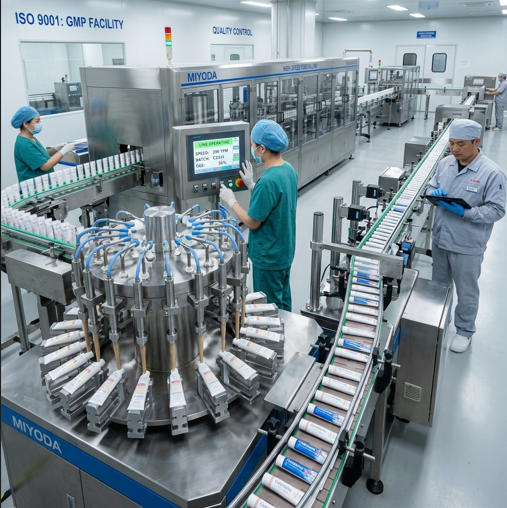
This is the point most packaging machinery buyers — and their suppliers — miss. Your tube filling machine’s uptime is directly dependent on your tube supply reliability. A Miyoda Packaging Machinery automatic tube filling line running at 120 tubes per minute and 2 shifts generates approximately 57,600 tubes per shift. A 24-hour supply gap from a late delivery creates an immediate 115,200-unit production shortfall. For a product with a $0.80 finished-unit margin, that is $92,160 in lost margin in a single day — not counting idle labor, overtime on the recovery shift, or the late delivery penalty your customer may impose.
The supplier evaluation question that directly addresses this: “If we place a confirmed purchase order and your production is delayed, at what point do you notify us and what are your remediation options?” A supplier with a documented escalation protocol is a different operational partner than one who notifies you when the shipment is already late.
 tubes pre-produced and held for you between orders — is the single most practical form of supply chain insurance for high-volume tube production.
Factor 5: Total Cost of Ownership — Not Just Unit Price
The Cheapest Tube Is Rarely the Least Expensive Choice
This is the factor that experienced production managers understand and new procurement teams consistently underestimate. Unit price is the entry point of the cost conversation, not the conclusion.
A tube that costs $0.0035 less per unit than your current supplier but generates a 1.5% higher defect rate on your filling line does not save money. It creates it: on a 2-million-unit annual volume, a 1.5% defect rate means 30,000 rejected tubes per year — each one consuming filling time, product fill, labor, and machine cycle before it fails inspection. At an average packaging line cost of $150–$250 per hour, those 30,000 defects represent $6,000–$12,000 in direct production waste, before accounting for rework, repackaging, or the regulatory documentation burden they trigger in pharmaceutical applications.
The Five Components of Real Tube Supply Cost
| Cost Component | What It Includes | How to Quantify It |
|---|---|---|
| Unit price | Tube cost per unit at contracted volume | Quoted price × annual volume |
| Defect-driven waste | Tubes rejected at incoming inspection + failures on the filling line | (Defect rate % × annual volume) × (unit cost + fill cost + labor cost per reject) |
| Downtime caused by tube quality | Machine stoppages from dimensional inconsistency, jams, sealing failures | Annual jam events × average downtime cost per hour |
| Rework and repackaging | Re-filling, re-sealing, or re-labeling from tube-caused failures | Rework labor hours × hourly cost |
| Logistics and minimum order premium | Freight cost, rush-order surcharges, storage cost for large MOQs | Actual freight + premium vs. standard lead time |
Sustainable Tube Materials: Recyclability Without Barrier Compromise
One emerging TCO consideration that is becoming commercially material: sustainability certification. Major retailers — including leading pharmacy chains and grocery retailers — are implementing packaging sustainability requirements for their suppliers. A tube that cannot be specified as recyclable may be excluded from these retailer programs, creating a commercial constraint that no unit price saving can compensate for.
Modern mono-material PE tubes with EVOH (Ethylene Vinyl Alcohol) barrier layers achieve recyclability in standard PE recycling streams while maintaining oxygen and moisture barrier properties comparable to ABL laminates (NCBI PMC, Recyclable vs. Non-Recyclable Barrier Films Study, 2024). The unit cost premium over standard LDPE tubes is typically 8–15%, but the commercial access to sustainability-mandated retail channels that premium enables can represent significantly more revenue than the cost increment.
Glossary — EVOH (Ethylene Vinyl Alcohol): A copolymer film layer used in multi-layer tube constructions as an oxygen and moisture barrier. EVOH barriers preserve product stability in formulations sensitive to oxidation without requiring an aluminum foil layer, making the tube compatible with PE recycling streams.
For a tube producer or distributor, the ability to offer compliant, recyclable, barrier-protected tubes positions you as a supplier who can help clients meet retailer sustainability mandates — a value that appears in client retention, not in the per-unit price comparison.
Case Study: How a Machinery Distributor Increased Client Retention by 40%
This scenario is based on a pattern seen repeatedly across cosmetic and pharmaceutical tube production operations in Southeast Asia and Eastern Europe.
A packaging machinery distributor had successfully sold tube filling and sealing equipment to 14 cosmetic brand clients over four years. Client retention at the two-year renewal mark was 58% — below the B2B average of 72.5% (CustomerGauge Industry Benchmarks).
Exit interviews with non-renewing clients identified the same root cause in 9 of 11 cases: their tube supplier was causing filling line disruptions. Defective shoulder geometry was creating orientation failures. Inconsistent OD was causing intermittent jams. The client attributed the operational problem to the machinery, not the tube material — and chose not to renew.
The distributor’s response: they developed a preferred tube supplier partnership with a certified ABL/PBL tube manufacturer, established a supplier qualification checklist, and began offering bundled guidance — machinery recommendation plus compatible tube supplier recommendation — as part of their sales proposition.
Results over the following 18 months:
- Client retention at two-year mark: 81% (up from 58%)
- Average client support calls related to tube-caused jams: reduced by 67%
- New client referrals attributed to “turnkey production setup” positioning: 6 accounts
The change in retention was not driven by better machinery. It was driven by ensuring the tube and the machine were matched before installation — not troubleshot after.
Red Flags to Watch For in a Tube Supplier
Some warning signs are easy to spot. Others only appear under production pressure. These are the ones that matter most:
Compliance documentation that cannot be verified. A supplier who provides ISO certificates without current validity dates, or who quotes compliance standards without being able to produce the underlying test reports, is presenting an unsubstantiated compliance claim. In pharmaceutical supply, an unsubstantiated compliance claim is a regulatory liability the moment it appears in an audit.
No sample policy or inflexible sampling terms. A professional tube supplier expects you to test samples before committing to mass production. A supplier who charges premium pricing for samples, limits sample quantities, or requires a purchase commitment before providing samples is managing risk in a way that transfers it entirely to you.
No compatibility testing data for filling line integration. A supplier who cannot provide dimensional drawings with toleranced specifications — or who has never tested their tubes on common filling machine platforms — is asking you to discover the fit issues on your production floor.
Poor or slow communication during evaluation. The communication quality during supplier evaluation is a direct predictor of the communication quality during a supply crisis. A supplier who takes 5 business days to respond to a technical question during the sales process will take 5 business days to respond to a quality deviation notification when you have a shipment on hold.
Vague or missing defect replacement policy. Ask directly: “If a batch fails our incoming quality inspection, what is your documented response process and timeline?” A supplier without a clear, written answer to this question does not have a quality system capable of supporting your operation.
For a structured approach to supplier red-flag assessment, the Packaging Industry Supplier Quality Audit Checklist from Packaging For Industry provides a practical evaluation framework aligned to current industry practice.
How to Evaluate and Onboard a Supplier: A 5-Step Checklist
A supplier evaluation that skips steps creates risk that surfaces after you have already committed production volume. Use this sequence before signing any supply agreement:
Step 1: Request Full Compliance and Material Documentation Collect: ISO certificates (with current validity), material composition sheets, migration test reports specific to your product formulation, REACH declarations for EU-destined products, and a recent batch COA. Do not accept verbal assurances as substitutes for documents.
Step 2: Order and Test Physical Samples Under Real Production Conditions Request a 200–500 unit pre-production sample of your exact specification. Run those samples on your actual filling machine at production speed — not at reduced speed. Measure OD on at least 20 tubes, run a seal integrity test on 10 filled tubes, and conduct a fill weight verification across the sample set. Samples that pass bench inspection but fail on the production line indicate a dimensional issue that was not tested under the right conditions.
Step 3: Audit the Production Facility An on-site audit is ideal. A virtual factory tour with live camera access to the production floor and quality control lab is a practical alternative for international suppliers. The audit should cover: production segregation practices (cosmetic vs. pharmaceutical), incoming material inspection procedures, in-process dimension monitoring, finished product testing protocol, and traceability records. The Ecobliss Pharma Supplier Audit Guide provides a pharmaceutical-specific audit checklist framework.
Step 4: Validate Lead Time Commitments with a Trial Order Place a trial order at 25–50% of your anticipated regular volume. Measure: actual lead time from PO to delivery, dimensional conformance on the received batch, and any communication gaps during the order cycle. The trial order performance is your most reliable predictor of regular order performance.
Step 5: Negotiate a Service Level Agreement (SLA) Define in writing: minimum acceptable on-time delivery rate (recommend 95%), maximum acceptable defect rate per incoming shipment (recommend <0.5% for standard cosmetic applications; <0.2% for pharmaceutical), defect replacement timeline and process, price adjustment mechanism for multi-year contracts, and escalation contacts for supply disruptions.
Conclusion: Your Supplier Is Your Strategic Partner
The right tube supplier does not just supply tubes. They deliver production predictability, compliance assurance, and the dimensional consistency that allows your filling machines to run at their designed efficiency.
For distributors and agents representing tube filling and packaging machinery — including equipment from Miyoda Packaging Machinery — the ability to recommend a vetted, compatible tube supplier is a service differentiation that competitors who only sell hardware cannot match.
The five factors in this guide are not a checklist to run through once during procurement. They are an ongoing evaluation framework. Lead times drift. Capacity gets reallocated. Material compliance documentation needs annual re-verification. The suppliers who reliably perform against all five factors over a multi-year relationship are the ones worth investing in — and the ones whose partnership makes every machinery sale stickier and every client relationship more durable.
If you are evaluating tube filling and sealing equipment alongside your tube supplier selection, the Miyoda tube filling machine buyer resources provide specification guidance on tube-to-machine dimensional compatibility — the most common integration issue that supplier evaluation programs miss.
Watch: Understanding Toothpaste Tube Filling Line Operations
Understanding how tube supplier quality directly impacts filling line performance gives context to every factor in this guide. The video below shows a high-speed soft tube filling and sealing operation — observe how tube consistency at the infeed directly affects the speed and quality of downstream sealing.
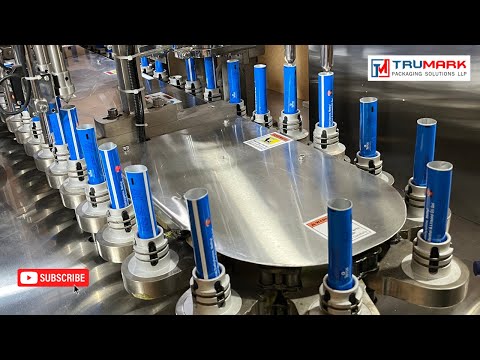 Source: YouTube — High-speed soft tube filling and sealing line for cosmetic and pharmaceutical production.

Incoming tube dimensional verification — OD, length, shoulder geometry — takes under 15 minutes per incoming batch and prevents hours of filling line disruption.
Glossaire des termes clés
| Term | Definition |
|---|---|
| ABL (stratifié à barrière d'aluminium) | A multi-layer tube material with an aluminum foil core. Provides excellent oxygen and moisture barrier. Standard for toothpaste and pharmaceutical ointment tubes. Not recyclable in standard plastic streams. |
| PBL (stratifié à barrière plastique) | A multi-layer all-plastic tube without aluminum. Good barrier properties for cosmetic applications. Recyclable in PE recycling streams. |
| LDPE (polyéthylène basse densité) | The most common soft tube material. Flexible, low cost, limited barrier. Suitable for standard cosmetic formulations not requiring high barrier protection. |
| EVOH (Ethylene Vinyl Alcohol) | A barrier polymer layer used in recyclable tube constructions as an alternative to aluminum foil, providing oxygen and moisture protection. |
| ISO 15378 | The international GMP standard for primary pharmaceutical packaging materials, including tubes. Requires a documented quality management system, material traceability, and validated processes. |
| GMP (Good Manufacturing Practice) | A regulatory framework defining the minimum standards for production facilities and processes in pharmaceutical and cosmetic manufacturing. |
| REACH | EU regulation restricting use of hazardous chemicals in products sold in European markets. Tube suppliers selling to EU customers must provide REACH declarations. |
| MOQ (Minimum Order Quantity) | The smallest production run a supplier will accept for a given specification. |
| COA (Certificate of Analysis) | A document issued by a manufacturer certifying that a batch of product meets the specified requirements, with actual test results recorded. |
| SLA (Service Level Agreement) | A contractual commitment specifying measurable performance standards — on-time delivery rate, defect rate, response times — with defined consequences for non-performance. |
| TCO (coût total de possession) | The full cost of a purchasing decision over its lifecycle, including unit price, defect-driven waste, downtime costs, rework, and logistics — not just the per-unit purchase price. |
| CAPA (Corrective and Preventive Action) | A formal quality management process documenting the root cause of a quality deviation, the corrective action taken to fix the current issue, and the preventive action taken to stop recurrence. |
Frequently Asked Questions (FAQs)
What certifications should a toothpaste tube supplier have for pharmaceutical use?
The minimum required certifications for pharmaceutical tube supply are ISO 15378 (primary packaging materials for medicinal products), GMP compliance documentation, and FDA 21 CFR, partie 211 compliance for products marketed in the United States. Suppliers should also be able to provide material-specific approvals and migration testing data for your product’s active ingredients. For European pharmaceutical markets, compliance with EU GMP Annex 1 (updated 2023) for contamination control is an additional requirement. Request all certificates with current validity dates and verify the certifying body is accredited — certificate copies without verifiable accreditation chain are not acceptable for pharmaceutical supplier qualification.
Can I get custom-shaped tubes for premium cosmetic brands?
Yes, but verify the supplier offers in-house mold design services and confirm that new mold development timelines (typically 6–10 weeks) fit your project schedule. For niche or premium brands with lower volume requirements, ask specifically about their minimum MOQ for new mold development — some suppliers require a 500,000-unit commitment to justify new mold investment, while others offer mold-sharing arrangements for initial orders. Also confirm that the custom shoulder geometry and orifice diameter are compatible with the cap closure and the filling machine nozzle diameter you are operating.
How do I verify the quality of tube materials before mass production?
Request a pre-production sample batch of 200–500 units produced at production conditions — not hand-assembled prototypes. Run the samples on your filling machine at production speed. Conduct the following tests: (1) OD measurement on 20 tubes using a calibrated micrometer — all should fall within ±0.2mm of the nominal specification; (2) seal integrity test (bubble immersion or vacuum decay) on 10 filled and sealed tubes; (3) peel strength test per ASTM F88 on 5 sealed tubes; (4) drop test from 1.0m onto a hard surface on 10 filled tubes. Request third-party laboratory reports for migration testing if your formulation contains active ingredients or high-concentration preservatives.
What is the typical lead time for custom tube orders?
For new mold development plus first production run: 10–14 weeks from mold design sign-off. For repeat orders on an existing specification with a regular supplier: 4–6 weeks. For expedited reorders where the supplier holds buffer stock: 2–3 weeks. These are industry benchmarks — always confirm the specific supplier’s committed timeline in writing, request their on-time delivery data for the past 12 months, and include a lead time SLA in your supply agreement with defined escalation procedures for delays.
Are recyclable or sustainable tubes available without compromising barrier properties?
Yes. Mono-material PE tubes with EVOH barrier layers achieve recyclability in standard PE recycling streams while providing oxygen and moisture barrier performance comparable to ABL laminates. Published research confirms that PE/EVOH recyclable laminates are competitive with conventional non-recyclable laminates for most toothpaste and cosmetic applications (NCBI PMC Barrier Film Study, 2024). The unit cost premium is typically 8–15% over standard LDPE. For brands under pressure from retailer sustainability mandates or pursuing ESG reporting targets, the commercial value of offering a certified recyclable tube frequently outweighs the cost premium.
How do tube defects affect high-speed filling lines?
Defective tubes create multiple categories of filling line disruption. Misshapen shoulders or out-of-tolerance OD dimensions cause orientation failures in automatic tube loaders, which generate machine stops averaging 2–5 minutes per event. At a filling line cost of $150–$250 per idle hour, five orientation failures per shift creates $18–$30 in direct cost per event — and at production speeds of 80–120 tubes per minute, each 3-minute stop also represents 240–360 lost units. Tubes with inconsistent neck threads or cap seating geometry fail the capping station and require manual rework. Tubes with weak or inconsistent wall thickness collapse during filling pressure, contaminating the fill nozzle and requiring a cleaning cycle. Any defect rate above 0.5% in incoming tube inspection should trigger a supplier quality investigation before the lot is released to production.
Can the supplier integrate with my existing tube filling and sealing machines?
A professional tube supplier should be able to provide a fully dimensioned technical drawing of their tube — including OD tolerance, length tolerance, shoulder geometry, orifice diameter, and wall thickness — that you can compare directly against your filling machine’s specification sheet. Ask whether they have tested their tubes on the filling machine brands you operate. For buyers running equipment from established manufacturers, the Miyoda Packaging Machinery product specifications provide the dimensional ranges each machine model accommodates, making it straightforward to verify supplier tube specifications before sampling.
What is the minimum order quantity for custom-printed tubes?
For fully custom-printed tubes, the typical MOQ ranges from 50,000 to 100,000 units for standard PE cosmetic tubes and 100,000 to 500,000 units for ABL laminate tubes. Some suppliers offer trial quantities of 10,000–50,000 units for new clients at a small price premium to cover setup amortization. Suppliers with flexible MOQ policies are particularly valuable for distributors and agents serving multiple smaller cosmetic brand clients, where per-client volumes may be below standard MOQ thresholds.
What should I do if a batch of tubes fails your quality inspection?
First, quarantine the entire lot — do not release any portion to production while the investigation is open. Then notify the supplier in writing within 24 hours with the specific nonconformance data: which dimensions failed, by how much, on how many samples tested. A professional supplier should respond within 48 hours with a root cause analysis commitment and a replacement shipment timeline. If the supplier cannot commit to a written response within 48 hours, that response time itself is data about their quality management system. Ensure your supply contract includes a defined defect replacement SLA and a clause requiring the supplier to fund third-party testing costs when a batch is rejected.
Can I visit the supplier’s manufacturing facility before signing a contract?
Yes — reputable tube suppliers welcome factory audits and routinely host client visits to quality control labs, production floors, and incoming material inspection areas. If an in-person visit is not logistically practical, request a virtual live-camera factory tour with access to the production line, incoming material inspection station, and finished goods quality check area. Ask specifically to see how they handle a batch dimensional measurement and how batch COA data is recorded and archived. A supplier who declines to host a factory audit or virtual tour without a specific, credible reason is managing information in a way that should raise immediate concern.
How can I reduce the risk of supply chain disruptions for tube supply?
The four most effective supply chain risk management practices for tube procurement are: (1) qualifying a secondary supplier on the same specification, so a single-supplier production failure does not stop your line; (2) negotiating a buffer stock arrangement where your primary supplier holds 4–6 weeks of your annual volume in finished goods inventory; (3) including supply chain resilience clauses in your supply SLA — specifically, requirements for advance notification of delivery delays and minimum notification lead time; (4) maintaining an incoming tube inventory buffer of 2–3 weeks at your own facility, sized based on your supplier’s actual (not quoted) lead time variance. For context: global supply chain disruption costs rose to approximately 8% of annual revenue in 2024 (Procurement Tactics). For a 2-million-unit annual production operation with a $0.15 tube cost, 8% exposure represents approximately $24,000 in annual supply-chain risk that these four practices directly mitigate.
What is the minimum acceptance testing protocol before releasing a tube lot to production?
For standard cosmetic tube production, the minimum incoming inspection protocol should cover: OD measurement on 10 tubes per incoming box (or per AQL 2.5 sampling plan for high-volume lots); length measurement on the same sample; visual inspection for surface defects, print registration, and shoulder integrity; and a seal integrity test on 5 filled-and-sealed test tubes from the lot. For pharmaceutical tube supply, the sampling plan and acceptance criteria must be defined in a formal supplier qualification agreement and validated against your product’s GMP requirements. Any lot failing incoming inspection at AQL 2.5 should be fully quarantined and a formal supplier non-conformance report issued before any decision on use or return.















