
How to Evaluate Injection Moulding Machine Products for Your Plant: A Strategic Buyer’s Guide for Soft Tube Producers & Industry Partners
1. Aligning Machine Investment with Business Outcomes
Every soft tube has an injection-moulded part at its business end: the shoulder. This is the cone-shaped top with the threaded neck and opening. It is where the tube meets the cap, and it is where the filling machine grips the tube.
If the shoulder is off by a fraction of a millimetre, problems pile up further down the line. Caps sit crooked, torque tests fail, filling chucks miss, and tubes leak in transit. Your injection moulding machine is the part of the line that prevents all of that.
That’s why picking this machine is more than a price comparison. Three numbers decide whether the investment pays off:
| Decision Driver | What It Means in Plain Terms | Why It Matters |
|---|---|---|
| ROI (Return on Investment) | How fast the machine pays back its cost | Tells you if the purchase makes financial sense |
| Uptime | The share of scheduled hours the machine actually runs | Every stopped hour stops the whole tube line |
| Quality consistency | How closely each shoulder matches the last one | Drives scrap rate, customer complaints, and audit results |
Here’s an example of how much is at stake. A plant making 500,000 tubes a month at roughly $0.18 of material per tube loses about $4,500 a month for every 5 points of yield it gives away. That money goes straight into the scrap bin.
This guide takes you through what to check, section by section, whether you’re buying for your own plant or recommending machines to clients as a distributor or agent. At Miyoda Packaging Machinery, these are the same questions our engineers work through with buyers before any quotation goes out.
Industry insight: On most soft tube lines, the heading/shoulder station sets the speed limit for the whole line. Extruders and printers usually have spare capacity. The injection station usually doesn’t. Get this machine right and the rest of the line can run at full speed.
2. Define Your Production Requirements: Build a Customized Buying Checklist
Most disappointing purchases trace back to a vague specification. “We need a fast machine” won’t get you a useful quote. “We need 60 tubes per minute of 35 mm LDPE tubes with M10 threads, on two shifts” will.
Step 1: Set Your Output Targets
Start with real numbers and work backwards:
- Daily target: for example, 50,000 tubes per day
- Running hours: 2 shifts × 8 hours = 16 hours
- Realistic efficiency: plan for about 85%, not 100%
- Required speed: 50,000 ÷ (16 × 0.85) ≈ 3,680 tubes/hour ≈ 61 tubes/minute
That last figure is the one to hand to suppliers.
Step 2: Specify Your Materials
| Material | Common Use | What to Check on the Machine |
|---|---|---|
| LDPE (low-density polyethylene) | Soft, squeezable cosmetic tubes | Stable melt at 180–230 °C |
| HDPE (high-density polyethylene) | Stiffer shoulders, better barrier | Higher injection pressure capability |
| PP (polypropylene) | Rigid threads for flip-top caps | Tighter temperature control, 220–270 °C |
| Multi-layer co-extruded bodies | Barrier tubes for sensitive formulas | Proven shoulder bonding to the outer layer |
| ABL / PBL laminates | Toothpaste, pharma ointments | Bonding without overheating the barrier layer |
If your tube bodies come from a multi-layer machine d'extrusion de tubes, your shoulder resin has to bond to that body’s outer layer, not just to the plastic in general. If you use a machine de fabrication de tubes stratifiés instead, the shoulder bonds mechanically to the PE skin of the laminate. For a clear side-by-side, this overview of ABL vs PBL vs co-extruded tubes is worth a read.
Step 3: Lock Down Tube Specifications
- Diameter range: list every size you make now and every size you expect to make within 3 years (e.g., 19, 25, 30, 35, 40 mm).
- Wall thickness: the body wall affects how much heat the shoulder can safely take.
- Nozzle/orifice types: standard round, long nozzle (ophthalmic), membrane-sealed (pharma), or flip-top neck.
Step 4: Add Your Regulatory Needs
Pharma buyers should list these up front:
- GMP (Good Manufacturing Practice): documented, controlled, repeatable processes. Under US rules such as FDA 21 CFR, partie 211, every process variable that affects quality has to be controlled and recorded.
- Cleanroom readiness: a design with no oil leaks, surfaces that are easy to wipe down, and minimal particle shedding.
- Validation support: the supplier should provide protocol templates for IQ/OQ/PQ qualification. That’s the three-stage proof that a machine is installed correctly, works correctly, and performs consistently.
Your Buying Checklist at a Glance
| Checklist Item | Your Answer |
|---|---|
| Tubes per day / shifts per day | ______ |
| Diameter range (mm) | ______ |
| Shoulder resin (LDPE / HDPE / PP) | ______ |
| Tube body type (mono-layer, co-ex, ABL, PBL) | ______ |
| Orifice / nozzle types | ______ |
| Cosmetic only, or pharma too? | ______ |
| Cleanroom class required | ______ |
| Planned formats in 3 years | ______ |
Pain point solved: A clear checklist stops you paying for 120 tubes/minute when 60 would do, and stops you buying a machine that tops out at 40 mm when your biggest customer is about to launch a 50 mm hand cream.
3. Evaluate Machine Capacity: Matching Volume to Throughput
Shot Weight vs. Tube Shoulder Mass
Shot weight is how much molten plastic the machine can inject in one cycle. A typical 35 mm LDPE shoulder weighs roughly 2–4 grams, depending on the neck design.
A rule of thumb from injection moulding practice: run each shot at about 20–80% of the barrel’s capacity.
- Below 20%: the plastic sits in the hot barrel too long and starts to degrade. You get yellowing, black specks, and weak bonds.
- Above 80%: the machine has trouble melting the plastic evenly, and shot-to-shot weight varies.
A bigger barrel isn’t automatically better. Oversizing is a common mistake, and it hurts quality on small cosmetic shoulders.
Clamp Tonnage vs. Mould Size
Clamp tonnage is the force that holds the mould closed while plastic is injected. Too little force and the mould opens slightly, leaving flash: a thin, unwanted film of plastic along the parting line.
The quick estimate works like this:
Clamp force ≈ projected area of all cavities × cavity pressure × safety margin (1.1–1.2)
Worked example: one 40 mm shoulder has a projected area of roughly 12.6 cm². At typical LDPE cavity pressures, each cavity needs about 5–6 tonnes. A 4-cavity mould therefore lands around 25–35 tonnes, and an 8-cavity mould around 50–70 tonnes. Always confirm the figure with the mould maker’s calculation.
Cycle Time Efficiency
Hourly output follows a simple formula:
Output per hour = (Cavities × 3,600) ÷ Cycle time in seconds
Then correct it for real life with overall equipment effectiveness (OEE). OEE is availability × performance × quality, and it tells you how much of the theoretical output you actually get.
| Scenario | Cavities | Cycle Time | Rated Output/hr | At 82% OEE |
|---|---|---|---|---|
| Small brand, multi-SKU | 2 | 12 s | 600 | ~492 |
| Mid-volume cosmetic | 4 | 12 s | 1,200 | ~984 |
| High-volume toothpaste | 8 | 10 s | 2,880 | ~2,362 |
Industry insight: Cooling time usually takes up 50–60% of a moulding cycle. Two machines with identical specs can differ by 20% in real output just because one has better mould cooling. Ask to see a trial with your actual mould, not a demo mould.
Plan for Growth
Size the machine for your 3-year volume, not today’s. Ask each supplier two questions: “What’s the maximum cavity count this frame supports?” and “What does it cost to go from 4 to 8 cavities?” A specific answer with a price means real scalability. A vague “we can accommodate that” usually means you’ll be buying a new machine later.
For more on matching machine types to production scale, see our guide on choosing the right injection shoulder machine.
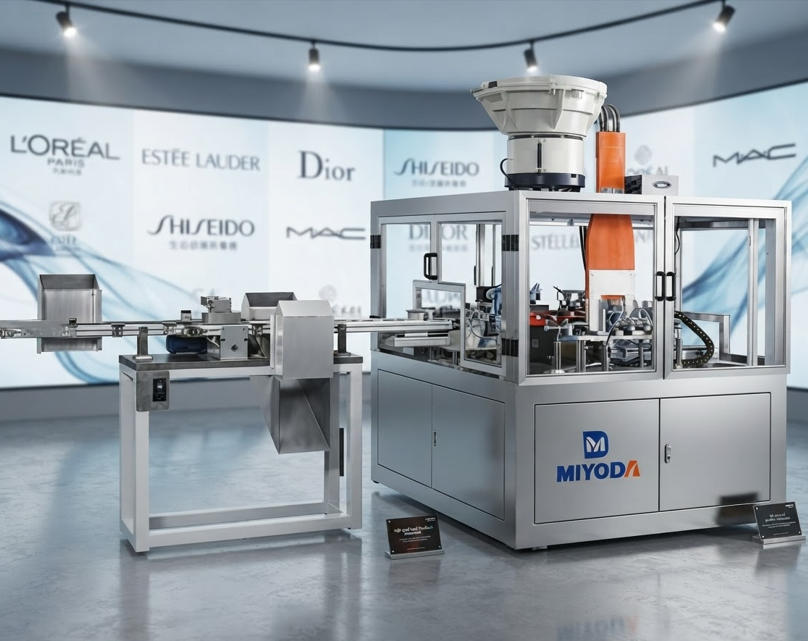
Pain point solved: Correct sizing means your shoulder station keeps up with the extruder and printer, so there are no piles of tube bodies waiting upstream and no idle printers downstream.
4. Automation Integration: Reduce Labor Costs and Human Error
Robotic Take-Out, Conveyors, and Inline Printing
On a manual line, an operator loads sleeves and unloads headed tubes hundreds of times an hour. After a couple of hours, fatigue sets in. Tubes go in crooked, shoulders get scratched, and the reject rate climbs late in every shift.
Automation removes that variability. Look for:
- Automatic sleeve feeding from the extruder or laminate cutter
- Robotic or mechanical take-out that keeps tubes correctly oriented
- Direct transfer to an automatic tube capping machine so there’s no manual handling between heading and capping
- Inline decoration, for example feeding a multi-colour tube offset printing machine without manual re-loading
Integration with Your Existing Line
Ask each supplier:
- Which PLC brands do you support (Siemens, Mitsubishi, Omron, Allen-Bradley)?
- Can the machine share start/stop and speed signals with upstream and downstream equipment?
- Who takes responsibility if the handshake between two machines fails?
If you’d rather avoid integration headaches entirely, a complete tube extrusion production line from one supplier puts responsibility for the whole line in one place.
Operator Skills and Training
A well-designed HMI (Human-Machine Interface), meaning the touchscreen operators use, should let a trained operator change recipes, read alarms, and adjust temperatures without calling an engineer. Ask for a live demo of the HMI and check that it’s available in your operators’ language.
IoT Monitoring for Predictive Maintenance
IoT (Internet of Things) monitoring means the machine streams live data such as temperatures, pressures, cycle times, and motor loads to a dashboard. Predictive maintenance uses that data to spot early warning signs, like a heater drawing more current or cycle time creeping up, so you can fix the problem before it causes a breakdown.
| Automation Level | Typical Operators per Line/Shift | Idéal pour |
|---|---|---|
| Manual load/unload | 2–3 | Pilot runs, very low volume |
| Semi-automatic | 1–2 | Growing brands, frequent changeovers |
| Fully automatic, integrated | 0.5–1 (one person watches several stations) | 24/7 cosmetic and pharma production |
Pain point solved: Fewer hands on the product means fewer handling defects and less dependence on hard-to-hire operators. That matters for 24/7 operations where night-shift staffing is the weakest link.
5. Maintenance & Downtime Management: Ensuring Maximum Uptime
Compare MTBF Across Models
MTBF (temps moyen entre deux pannes) is the average number of running hours between breakdowns. Higher is better. Ask suppliers for MTBF figures from installed machines, not from lab tests, and ask how they define a “failure.”
Wear Part Accessibility
Some parts wear out no matter how good the machine is. What matters is how quickly you can swap them:
| Wear Part | What It Does | Typical Check Interval* | Ask the Supplier |
|---|---|---|---|
| Screw & barrel | Melts and pushes the plastic | Inspect every 6–12 months | How many hours to pull the screw? |
| Nozzle / nozzle tip | Delivers melt into the mould | Monthly inspection | Is it a quick-change design? |
| Heater bands | Keep the barrel at temperature | Check monthly | Standard sizes or proprietary? |
| Thermocouples | Measure temperature | Calibrate quarterly | Where are they sourced? |
| Mould parting surfaces | Seal the cavity | Clean daily, inspect weekly | Is mould maintenance training included? |
*Intervals vary with resin, running hours, and use of recycled material.
Local Service and Spare Parts
A machine stoppage on a mid-volume cosmetic line often costs $2,000–$8,000 per hour once you add lost output, recovery labour, and scrap. So:
- Ask for a recommended spare parts list for 2 years of running, and buy it with the machine.
- Ask how fast critical parts can ship to your country (48–72 hours is a reasonable target).
- Ask for the name and location of the nearest service engineer.
Self-Diagnostics and Remote Troubleshooting
Modern machines log alarms and let the supplier’s engineers connect remotely, with your permission, to review settings. Most stoppages are caused by wrong parameters, not broken parts, and remote help can often fix those in under two hours. That’s much faster than waiting days for a technician to fly in.
Pain point solved: Planned maintenance, stocked spares, and remote support turn surprise shutdowns into short, scheduled pauses.
6. Energy Efficiency & Operational Cost Optimization
Compare Energy per Kilogram or per Cycle
Ask for energy use as kWh per kg of plastic processed or kWh per 1,000 tubes. A headline motor rating in kW tells you very little about what the machine actually draws in production.
Servo-Driven vs. Hydraulic
- Hydraulic machines use a pump to push oil. Traditional fixed pumps run all the time, even when the machine is idle.
- Servo-hydraulic machines use a servo motor to drive the pump, so it only works hard when needed.
- All-electric machines replace hydraulics with precision electric servo motors on every axis.
Industry data shows all-electric injection machines use 30–50% less energy than hydraulic ones under similar conditions.
| Drive Type | Typical Energy Use* | Precision | Oil Contamination Risk | Coût initial |
|---|---|---|---|---|
| Fixed-pump hydraulic | ~0.9–1.5 kWh/kg | Good | Yes | Lowest |
| Servo-hydraulic | ~0.5–0.8 kWh/kg | Very good | Low | Medium |
| All-electric | ~0.3–0.5 kWh/kg | Excellent | None | Highest |
*Typical industry ranges; actual figures depend on resin, part design, and cycle.
Don’t Forget Cooling and Compressed Air
- Cooling water: a well-sized chiller with proper mould channels shortens cycles et saves energy.
- Compressed air: leaks and over-pressurised blow-off nozzles quietly add thousands of dollars a year. Ask how much air the machine uses per hour at full speed.
Industry insight: More European brand owners now ask their tube suppliers for carbon-per-tube data. An energy-efficient shoulder station lowers your costs and also becomes a selling point in tenders.
Pain point solved: Lower kWh per tube means a lower cost per tube every day for the life of the machine, plus better sustainability numbers for your customers.
7. Quality Assurance & Process Control Features
Melt Temperature and Injection Pressure Control
Ask what temperature stability the machine holds: ±1 °C is a strong answer, ±5 °C is weak. Also ask whether injection is controlled in a closed loop. That means sensors measure what actually happened and the machine corrects itself on the next cycle.
Vision Systems and Inline Gauging
A vision system is a camera plus software that inspects each shoulder for short shots, flash, black specks, and misaligned orifices, then rejects bad tubes automatically. Catching a bad shoulder here costs cents. Catching it after filling and cartoning can cost many times more.
Repeatability (± Tolerance)
Tolerance is the allowed variation in a dimension. Typical targets for premium cosmetic and pharma shoulders:
| Dimension | Typical Target | What Happens if It Drifts |
|---|---|---|
| Thread height | ±0.02 mm | Caps loosen or strip |
| Shoulder outer diameter | ±0.05 mm | Visible gap between cap and tube |
| Orifice diameter | ±0.05–0.08 mm | Inconsistent dispensing, filling issues |
| Shoulder height | ±0.10 mm | Filling chuck misalignment |
Always ask for measured data from a trial run (for example, 300–500 tubes) using your own resin and mould, not a spec sheet.
Explore more key features to look for in an injection shoulder machine in our detailed checklist.
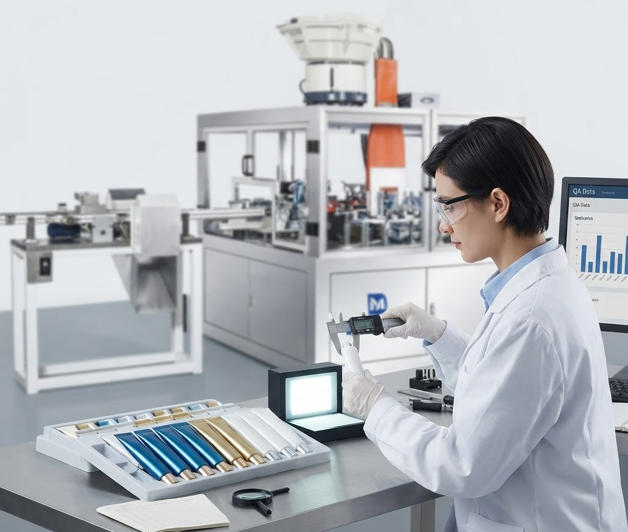
Pain point solved: Tight, repeatable process control keeps scrap low and gives you the data trail auditors and brand owners expect.
8. Flexibility & Changeover Speed for Multi-Product Lines
Contract tube makers often run 5–15 different SKUs a week. Every changeover is time the line isn’t earning.
Quick Mould Change Systems
- Quick-clamp platens (hydraulic or magnetic) replace dozens of bolts.
- Pre-connected water and heater circuits let one plug-in connection replace many.
- Standardised mould heights mean less adjustment for each new mould.
| Changeover Design | Typical Time |
|---|---|
| Conventional bolted mould | 1.5–3 hours |
| Quick-change with pre-set connections | 30–45 minutes |
If you do 4 changeovers a week, that difference can give you back 4–10 production hours every week.
Recipe Storage
A recipe is a saved set of machine settings (temperatures, pressures, speeds, times) for one tube type. With recipes, switching from a 30 ml LDPE tube to a 100 ml PP-shoulder tube takes a few taps instead of an hour of trial and error.
Modular Design
Ask whether you can add later: more cavities, a vision system, a robot, or a new diameter tooling set, all on the same base machine.
Industry insight: Short-run private-label and “indie beauty” orders are growing faster than mass-market volume. Plants that change over in under 45 minutes can profitably accept orders of 10,000–20,000 tubes that slower competitors turn down.
Pain point solved: Faster changeovers mean faster launches for new SKUs, less setup scrap, and the ability to say yes to smaller, higher-margin orders.
9. Supplier Partnership & After-Sales Support Ecosystem
The machine arrives once. The supplier relationship lasts 10–15 years.
Track Record in Soft Tube Applications
General injection moulding experience isn’t the same as soft tube experience. Ask for:
- Reference plants making tubes similar to yours (diameter, material, cosmetic or pharma)
- Videos of machines running in customer plants, not only in the supplier’s showroom
- A sample trial with your drawings or tubes. Miyoda Packaging Machinery, for example, runs sample validation in about 7–15 days before you commit.
Watch how a tube head and shoulder injection moulding process works:

https://www.youtube.com/watch?v=WUo2PylwqtM
Video: Injection moulding process forming the head and shoulder of cosmetic soft tubes.
Training, Documentation, and On-Site Support
Make these contract items, not promises:
- On-site installation and commissioning with votre material
- Operator and maintenance training in your team’s language
- Electrical drawings, spare parts lists, and a maintenance manual
- IQ/OQ/PQ document templates for pharma buyers
For Distributors and Agents: Spare Parts Logistics
If you represent machinery in your region, your reputation depends on the manufacturer’s back-end support. Ask:
- Will you help me stock a regional spare parts kit?
- Do you train my technicians so they can do first-level service?
- What’s your remote support response time in my time zone?
Notre vendor selection guide for tube packaging machines has a full scorecard you can use with any supplier.
Pain point solved: A proven partner lowers the risk during ramp-up, when most problems show up, and supports you through every future expansion.
10. Total Cost of Ownership (TCO) Analysis: Beyond the Initial Price Tag
TCO (coût total de possession) is everything the machine costs you over its life: purchase, installation, energy, labour, maintenance, scrap, and downtime. On a 5-year view, the purchase price is often only 20–35% of the total.
Illustrative 5-Year Comparison
| Catégorie de coûts | Lower-Price Machine | Higher-Spec Servo Machine |
|---|---|---|
| Purchase & installation | $85,000 | $110,000 |
| Energy (2 shifts) | $60,000 | $35,000 |
| Maintenance & spares | $35,000 | $20,000 |
| Scrap (6% vs 2% reject rate) | $54,000 | $18,000 |
| Unplanned downtime | $20,000 | $10,000 |
| 5-year TCO | $254,000 | $193,000 |
Illustrative figures for a mid-volume line. Plug in your own numbers.
In this example, the machine that costs $25,000 more to buy costs about $61,000 less to own.
A Simple TCO Calculator Framework
Use this formula with your own figures:
TCO (5 yrs) = Purchase + Installation + (Annual Energy + Annual Maintenance + Annual Labour + Annual Scrap + Annual Downtime) × 5 − Resale Value
Where:
- Annual energy = kWh per hour × running hours × electricity price
- Annual scrap = tubes per year × reject rate × cost per tube
- Annual downtime = unplanned hours × cost per stopped hour
- Annual labour = operators per shift × shifts × annual wage
For a broader method you can apply across your whole line, see how to compare soft tube packaging machines on value rather than price.
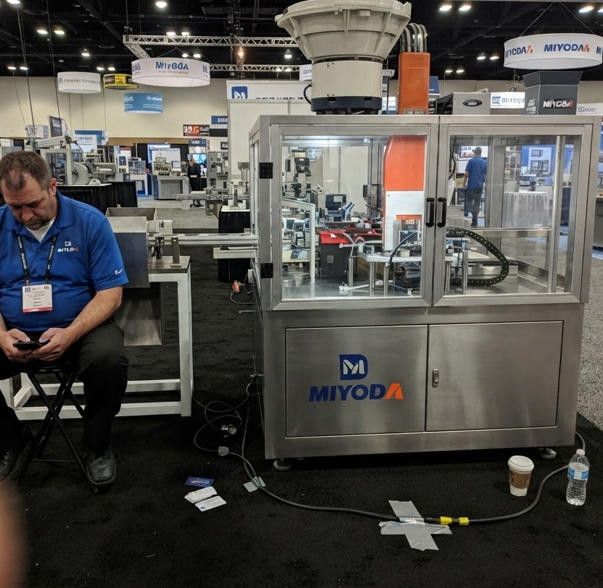
Pain point solved: A TCO view moves the conversation from “cheapest quote” to “best return,” and gives you numbers you can take to your finance team or your end client.
Glossaire des termes clés
| Term | Simple Definition | Example in Tube Production |
|---|---|---|
| Shoulder / Head | The injection-moulded top of the tube with neck and thread | The part the cap screws onto |
| Shot weight | Plastic injected per cycle | 8 cavities × 3 g = 24 g per shot |
| Clamp tonnage | Force holding the mould shut | 50 t for an 8-cavity 40 mm mould |
| Flash | Thin extra plastic leaking at the mould edge | Film on the shoulder rim, an instant reject |
| Cavity | One shoulder-shaped hollow in the mould | 4-cavity = 4 shoulders per cycle |
| OEE | Availability × performance × quality | 82% OEE = 82% of theoretical output |
| MTBF | Average running hours between failures | 2,000 hrs MTBF = roughly one stop per quarter on 2 shifts |
| Servo drive | Precision electric motor with feedback control | Gives repeatable injection strokes |
| Recipe | Saved machine settings for one product | “35 mm LDPE, M10 thread” recipe |
| GMP | Rules for controlled, documented pharma production | Parameter logs attached to each batch |
| IQ/OQ/PQ | Install, operation, and performance qualification | Required before pharma production starts |
| TCO | Full lifetime cost of owning a machine | Purchase + energy + scrap + downtime |
Frequently Asked Questions (FAQs) – For Manufacturers, Distributors & Agents
1. How do I determine the right machine capacity for producing 50,000 soft tubes per day?
Divide your daily target by your effective running hours. On 2 shifts (16 hours) at 85% efficiency, you need about 3,680 tubes per hour, or roughly 61 per minute. On 3 shifts, about 41 per minute is enough. Add 15–20% headroom for growth.
2. What clamp tonnage is ideal for LDPE cosmetic tubes with a 40mm diameter?
Each 40 mm LDPE shoulder typically needs about 5–6 tonnes. A 4-cavity mould usually needs 25–35 tonnes, and an 8-cavity mould 50–70 tonnes, including a safety margin. Confirm the final figure with your mould maker.
3. Can the machine handle multi-layer co-injection for barrier protection in pharmaceutical tubes?
Some machines can, but ask for proof. In many barrier tubes, the barrier sits in the co-extruded or laminated body, and the shoulder is often protected with a barrier insert or a special resin. Ask for peel-strength test results from a trial using your own tube body.
4. What level of automation is necessary to reduce labor costs in a 24/7 production environment?
For 24/7 running, you’ll want automatic sleeve feeding, automatic take-out, and direct transfer to capping at a minimum. Add vision inspection and remote monitoring so one operator can supervise several stations per shift.
5. How often should critical components like screws and barrels be serviced?
Inspect screws and barrels every 6–12 months under continuous running, and sooner if you use recycled resin or fillers. Check heaters and thermocouples monthly, and clean mould surfaces daily.
6. Are your machines compliant with ISO 13485 or GMP standards for medical-grade packaging?
ISO 13485 certifies a manufacturer’s quality system, not a single machine. What your machine needs is GMP-ready design: parameter logging, an oil-free build suitable for cleanrooms, compliant contact materials, and IQ/OQ/PQ document support. Miyoda machines carry ISO/CE certification, and pharma documentation needs are agreed during engineering review.
7. What support do you offer for fast mould changeovers between different tube designs?
Look for quick-clamp mould mounting, pre-connected cooling and heater circuits, and stored recipes. Together, these usually cut changeover from 1.5–3 hours to 30–45 minutes.
8. Do you provide remote diagnostics and real-time performance monitoring?
Modern PLC-controlled machines support secure remote access and live dashboards. Ask for a demo, and check that the setup meets your IT security policy.
9. How energy-efficient are your servo-driven models compared to traditional hydraulic systems?
Servo and all-electric machines typically use 30–50% less energy than fixed-pump hydraulic machines, because their motors only draw power while moving. The savings grow the more hours you run.
10. What is the average setup time when switching from a 30ml to a 100ml tube production run?
If only the length changes and the diameter stays the same, setup can take 15–30 minutes. If the diameter changes too, which means new shoulder tooling, plan on 30–45 minutes with a quick-change design, or 1.5–3 hours with conventional bolted moulds.
11. Can your machines integrate with inline printing, leak testing, and packaging systems?
Yes, through standard PLC signals and conveyors. On the brand-owner side, the finished tube then moves to a tube filling and closing machine, so shoulder and orifice consistency directly affects filling performance.
12. What training programs are available for operators and maintenance teams?
Expect on-site training during commissioning covering operation, recipe management, alarm handling, cleaning, and routine maintenance. Ask for manuals in your team’s language, plus refresher sessions for new staff.
13. For distributors: How do you support spare parts inventory and technical service in my region?
A strong manufacturer helps you build a regional spare parts kit, trains your technicians for first-level service, and gives you a remote support channel in your time zone. Get these commitments in writing.
14. What is the expected lifespan of the machine under continuous operation?
A well-maintained machine from a reputable builder usually runs 10–15+ years. The frame and platens last. Screws, heaters, and bearings are regular wear items, and control system upgrades can extend service life further.
15. How do you ensure consistent wall thickness in thin-walled soft tubes?
Body wall thickness is controlled at the extrusion stage, through precise die gaps and gauge feedback. At the shoulder, consistency comes from stable melt temperature, closed-loop injection control, balanced mould cooling, and precise sleeve positioning, so the shoulder-to-body joint is the same thickness all the way around.
Final Note
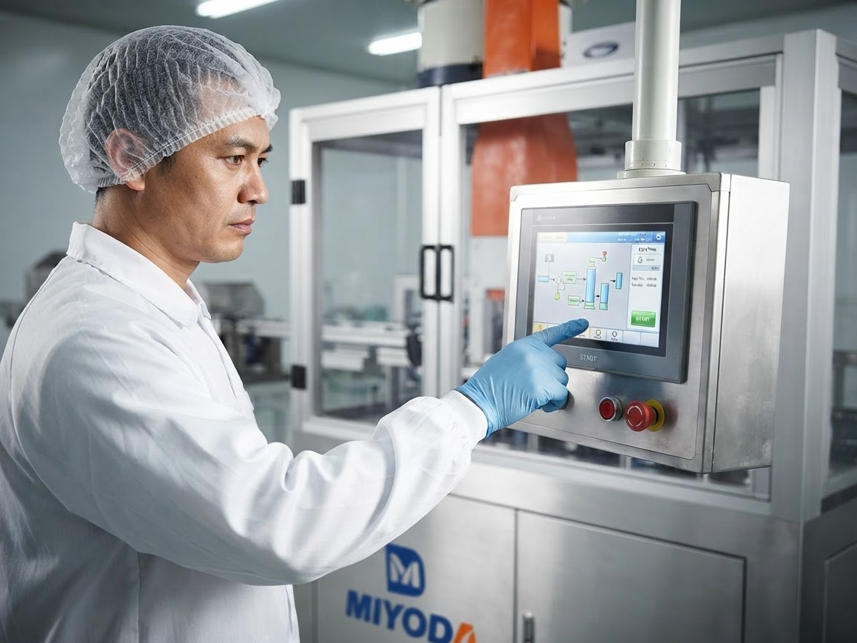
This guide is written for the people building cosmetic and pharmaceutical soft tube production: plant owners, production managers, and the distributors and agents who advise them. Each section covers a real decision about capacity, quality, cost, or scale.
If you’d like a second opinion on your buying checklist, send your tube drawings or samples to the Miyoda team. We’ll run a trial and share the measured results so you can decide based on data.















