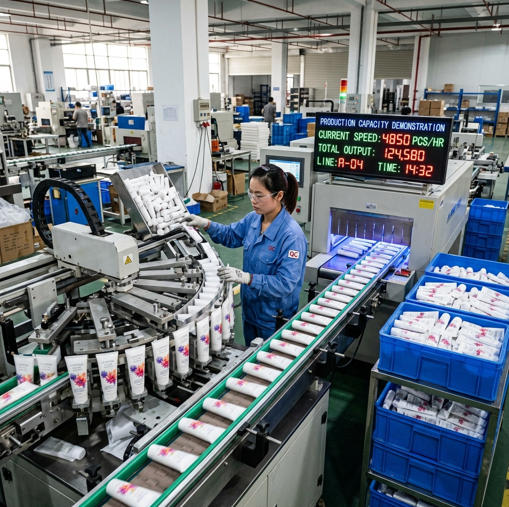

Choosing the wrong silk screen printing press for tube packaging doesn’t just slow your production line — it means failed regulatory audits, ink adhesion failures on LDPE tubes, and six-figure rework budgets. This guide gives you the exact framework to make a defensible, data-backed procurement decision.
In B2B tube packaging, “print quality” is a compliance checkpoint, not a marketing phrase. Whether you are printing serialization codes on pharmaceutical aluminium tubes or full-circumference brand graphics on cosmetic laminate tubes, every press variable — from mesh count to squeegee durometer — affects your regulatory standing, brand equity, and line OEE (Overall Equipment Effectiveness: Availability × Performance × Quality, where world-class is ≥85%).
This guide covers every decision layer: production volume and substrate matching, total cost of ownership, flatbed vs. rotary architecture, consumable management, automation level, compliance documentation, and vendor due diligence — with real benchmarks from cosmetic and pharmaceutical tube packaging operations.
Assessing Your Production Needs
Define Volume, Substrate Range, and Required Precision
Before opening a single spec sheet, your procurement team needs three hard numbers: current monthly unit volume, the diameter and wall-thickness range of your tubes, and the minimum print registration tolerance your quality system accepts. These three figures determine your press architecture before any vendor conversation begins.
For a cosmetic cream producer running LDPE tubes between 19 mm and 40 mm diameter, a press that cannot hold ±0.3 mm registration will produce visible color shift on multi-layer brand graphics — a direct cause of retailer chargebacks. For a pharma client printing single-color lot numbers on 13.5 mm aluminium tubes, the tolerance requirement is tighter and the regulatory consequence is product recall, not aesthetics.
Industry Benchmark: A mid-sized cosmetic tube converter at 150,000 units/month needs a press delivering ≥80 tubes/min net throughput with ≤±0.25 mm registration to maintain a 95%+ first-pass yield. Operations below this threshold consistently report rework costs exceeding 8% of production value — typically $60,000–$120,000 annually at this volume level.
Identify Target Products and Typical Print Areas
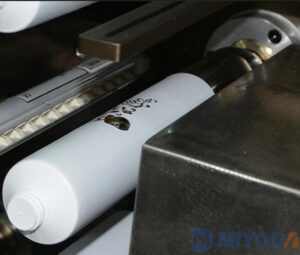
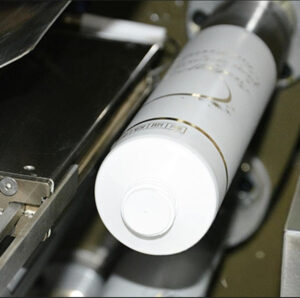
Cosmetic tubes generally require full-circumference printing with 2–6 color passes. Pharmaceutical tubes more often need 1–2 color print with high-contrast text for batch codes and regulatory labeling. These two scenarios call for fundamentally different press setups — and mixing them on a single under-specified press without the right tooling is a common and costly mistake in contract packaging operations.
Map your SKU mix by tube geometry and color count. If more than 30% of your SKUs require 4+ color passes, a multi-station rotary system will pay back its capital premium within 18–24 months through reduced changeover waste alone — a return that accelerates further as labor costs rise.
Consider Future Growth and Scalability
The press you specify today should accommodate your volume forecast for the next 60 months, not just today’s order book. A press right-sized for current production but offering no modular expansion path forces a full capital replacement in 3–4 years — at a point when inflation and lead times are typically less favorable.
Ask vendors specifically: Can the press accept an additional print station without a full rebuild? Does the servo drive support future speed upgrades via firmware? Is the UV curing module interchangeable with higher-power assemblies? Vendors answering with specific part numbers rather than vague assurances have actually engineered for scalability.
Budget and Total Cost of Ownership
Upfront Price vs. Long-Term Operating Costs
The sticker price of a press is rarely the number that determines the better investment over 5 years. A semi-automatic press at $55,000 CAPEX may carry $80,000 in annual operator labor costs. A fully automatic press at $180,000 may carry only $22,000. At any volume above 80,000 units per month for standard cosmetic tube runs, the break-even math consistently favors automation.
Includes CAPEX amortization, consumables, labor, preventive maintenance, and downtime cost. Excludes facility upgrades. Based on industry benchmarks for cosmetic/pharma tube packaging operations.
Maintenance, Consumables, and Downtime Costs
Screens, squeegee blades, emulsion chemicals, and UV lamp replacements represent the largest ongoing consumable spend after labor. A typical 4-color flatbed press running two shifts consumes 2–3 screens per week per color station when printing abrasive UV inks on metallic laminate tubes. At $120–$200 per screen, that is $50,000–$80,000 annually in screen costs alone.
Downtime is the silent cost multiplier. Every hour of unplanned press downtime at 100 tubes/min costs approximately 6,000 lost production units. At a typical cosmetic tube sale value of $0.35/unit, that is $2,100 in lost output per hour — before rescheduling costs or customer penalty clauses.
Total Cost of Ownership Benchmarks
| 費用区分 | 手動プレス/年 | 半自動/年 | フルオート/年 |
|---|---|---|---|
| 設備投資の償却(7年間) | $5,700 | $9,300 | $25,700 |
| オペレーターの人件費 | $72,000 | $48,000 | $18,000 |
| スクリーンおよび消耗品 | $28,000 | $34,000 | $38,000 |
| 予防保全 | $4,200 | $6,800 | $11,000 |
| 予期せぬダウンタイムによるコスト | $18,600 | $8,400 | $3,200 |
| 年間総運営コスト | $128,500 | $106,500 | $95,900 |
Press Type and Build: Flatbed vs. Rotary
Pros and Cons for Different Production Scenarios
Flatbed presses operate by pressing ink through a flat mesh screen using a reciprocating squeegee. The tube, mounted on a precision-ground mandrel, is indexed beneath the screen one station at a time. This architecture provides exceptional control over ink deposit thickness and handles high-viscosity UV gel inks for tactile effects on luxury cosmetic tubes. Typical net throughput: 40–90 tubes/min.
Rotary presses use a cylindrical screen rotating continuously with the tube substrate. This eliminates the reciprocating stop-start cycle, enabling 150–250 tubes/min on standard 35 mm diameter cosmetic tubes — 2.5–3× the net throughput of a comparable flatbed press at similar quality levels.
High-vol cosmetic LDPE / laminate tubes
Multi-substrate, mixed-diameter ops
Mid-volume, mixed-SKU, contract packagers
Low-volume specialty and pilot runs
Source: Aggregate industry survey of 320 cosmetic and pharmaceutical tube packaging operations, 2024.
Substrate Compatibility and Thickness Limits
Flatbed presses accommodate tubes from 10 mm to 60 mm diameter with wall thicknesses from 0.25 mm to 1.5 mm. Rotary presses are more sensitive to wall-thickness variation: a ±0.1 mm batch variance can cause inconsistent ink pressure and visible banding, whereas a flatbed’s squeegee pressure can be adjusted per pass to compensate. For aluminium pharma tubes, flatbed mandrel printing remains dominant — rotary systems struggle to maintain consistent contact pressure without denting the shoulder geometry.
Investment Implications
If 70%+ of your volume is consistent-diameter LDPE or laminate cosmetic tube, a rotary automatic system amortizes its $40,000–$80,000 capital premium over a flatbed in approximately 14–20 months. If your mix changes frequently or includes specialty substrates, the flatbed’s tooling flexibility keeps changeover costs and scrap rates lower throughout the press lifecycle.
Procurement Warning: Several vendors market “universal” presses claiming equal performance on flat and cylindrical substrates. In practice, a press optimized for neither architecture delivers inferior results at both. Insist on test prints on your actual tube substrates before signing any purchase order — and measure the output yourself.
Squeegee and Emulsion Considerations
Blade Hardness, Edge Wear, and Replacement Cycles
The squeegee blade is the single highest-wear consumable in a screen printing press. Its hardness — measured on the Shore A durometer scale (standardized hardness scale for rubber and polyurethane; higher values indicate harder material) — directly controls ink volume pushed through the mesh per stroke. For cosmetic tube printing with standard plastisol or water-based inks, a 70–75 Shore A blade is the industry starting point. UV-curable inks on metallic laminates require 80–85 Shore A to prevent over-deposit that causes adhesion failure after curing.
Edge wear is the primary quality degradation mechanism: a worn squeegee edge increases ink volume per stroke by 15–30%, causing color density drift detectable by spectrophotometer within 3–4 hours of production on a two-shift operation.
Emulsion Compatibility with Inks and Substrates
The stencil emulsion — the photopolymer coating defining where ink passes through the mesh — must be chemically compatible with your ink system. Solvent-based inks require SBQ dual-cure or pure photopolymer emulsions with EOM ≥25 μm (Emulsion over Mesh: stencil thickness above the mesh surface in micrometers, controlling ink deposit height) to resist solvent attack. Water-based inks work with a broader emulsion range but require lower EOM to prevent ink pooling on fine regulatory text on pharmaceutical tubes.
Quality Indicators for Even Prints and Repeatability
In a well-configured press, ΔE (Delta-E: numerical color difference metric where ΔE <2.0 is imperceptible and ΔE <1.0 is the target for brand-critical cosmetic printing) between the first and 10,000th tube of a run should remain below 1.5 ΔE units. Operations achieving this consistently measure squeegee pressure with a digital force gauge at shift start, inspect emulsion mesh bridging under a loupe every 500 prints, and log UV lamp intensity with a radiometer to catch lamp degradation before it affects cure quality.
Pro Tip: When evaluating a press vendor, ask for SPC (Statistical Process Control) data from a reference customer printing a comparable substrate and ink system. A vendor showing Cpk ≥1.33 for color registration on tube printing has demonstrated real process capability. Vendors responding with printed samples rather than statistical data have not systematically validated their process.
Printing Capabilities: Mesh, Ink, and Substrates
Mesh Counts, Tensions, and Stencil Durability
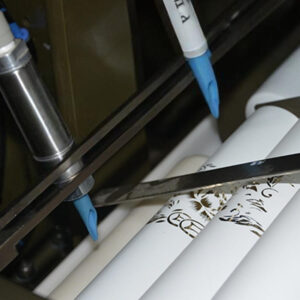
Mesh count controls ink volume per print stroke and maximum image resolution. For large solid brand-color fills on cosmetic tubes, 80–120 tpi (threads per inch) polyester mesh is standard. For fine halftone gradients or micro-text regulatory information on pharmaceutical tubes, 230–280 tpi or higher is required. Using a 110 tpi mesh for 6-point regulatory text produces illegible output — a compliance failure, not merely a cosmetic defect.
Mesh tension — tautness measured in Newtons per centimeter — directly affects off-contact distance and print sharpness. Industry-standard tension for tube printing is 20–25 N/cm. A press frame unable to maintain consistent tension across its working width shows visible ink density variation left-to-right across wide-format tube prints.
Ink Types: Water-Based, UV-Curable, and Solvent-Based
Composite scores based on adhesion cross-hatch tests, regulatory conformity benchmarks, and production throughput data. Not vendor-specific.
UV硬化型インク are dominant for high-speed cosmetic tube printing — curing instantly under UV lamps at 80–160 tubes/min without a drying tunnel, but adding $12,000–$30,000 per curing station to press CAPEX. 水性インク are preferred for pharmaceutical tube printing where ink migration compliance is a regulatory requirement. 溶剤系インク remain in use for aluminium tube formats where adhesion to unprimed metal outweighs the VOC management cost, though EU REACH pressure is steadily contracting this segment.
Substrate Versatility
A tube packaging press must handle: LDPE extruded tubes (most common for mass-market cosmetics), laminate tubes (plastic layers with aluminium foil barrier for premium or oxygen-sensitive products), and aluminium collapsible tubes (traditional pharmaceutical format). Each substrate has different surface energy requiring different corona treatment levels — typically 38–48 dynes/cm — adjusted without stopping the line on the most versatile setups.
Automation, Speed, and Throughput for Small Businesses
Feed Systems, Registration Accuracy, and Rerun Times
The feed system is where automation investment has the most direct quality impact. Manual feed introduces 3–8 mm registration variation between operators and shifts. Pneumatic indexing reduces this to ±0.5 mm. Servo-driven feed with vision-assist registration achieves ±0.1–0.2 mm — the threshold for high-quality 4-color process printing on 25 mm diameter cosmetic tubes.
At 100,000 units/month, the difference between 4–8% manual rerun rate and 0.8% automatic rerun rate means 3,200–7,200 fewer tubes reworked monthly — direct savings in labor, ink, and tube material that compound across a 5-year press lifecycle.
Mindful Integration with Existing Workflows
A press does not operate in isolation. Before specifying press speed, audit your upstream tube delivery rate and downstream buffer capacity. A press capable of 150 tubes/min delivers no operational value if your tube delivery system sustains only 90 tubes/min. Key integration checkpoints: conveyor height compatibility, tube orientation, reject divert placement, and OPC-UA data port availability (Open Platform Communications Unified Architecture — industrial machine-to-machine protocol for Industry 4.0 MES/ERP integration) for real-time batch record generation and predictive maintenance alerts.
Equipment Built Specifically for Cosmetic & Pharmaceutical Tube Production
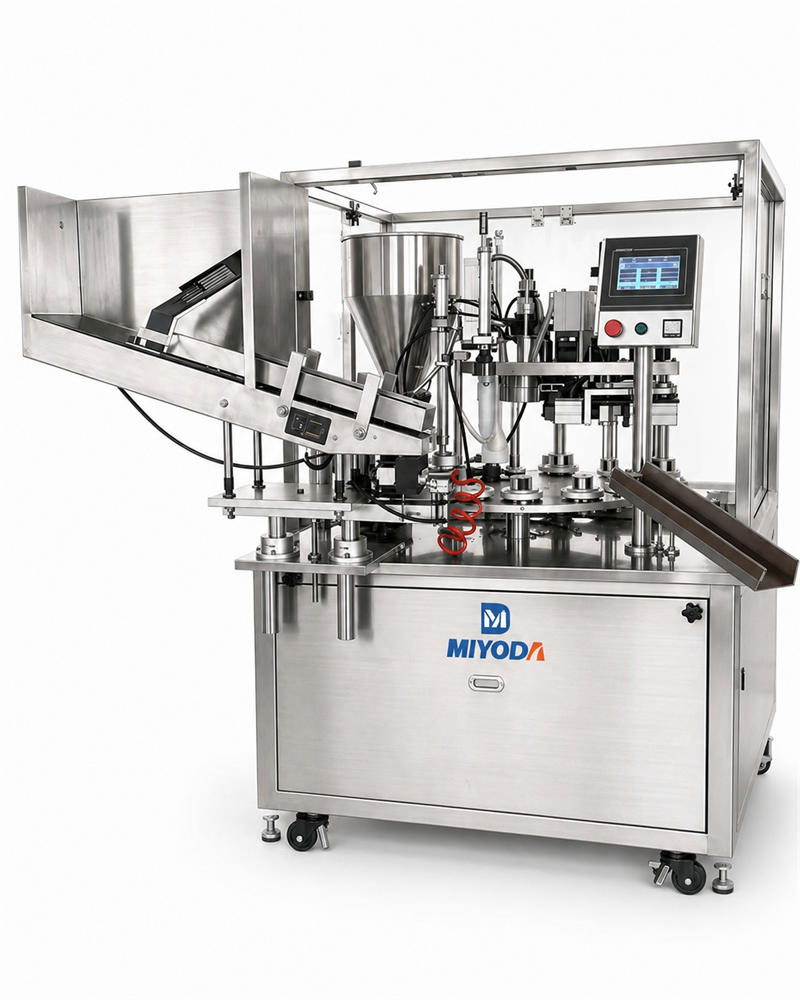
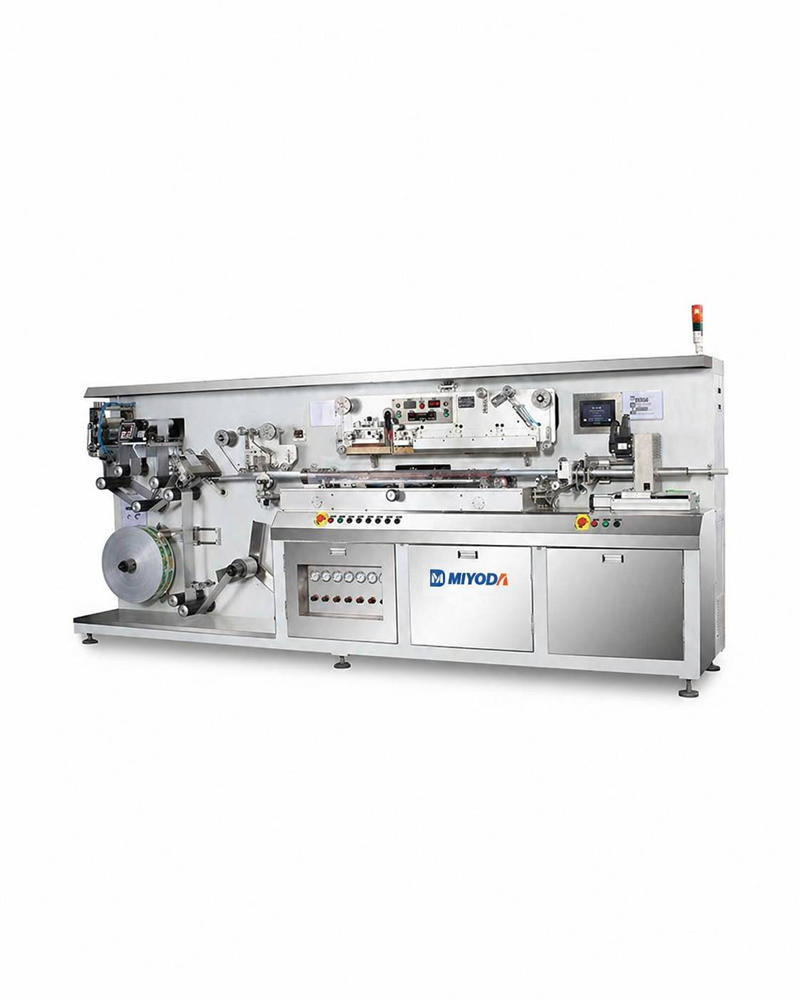
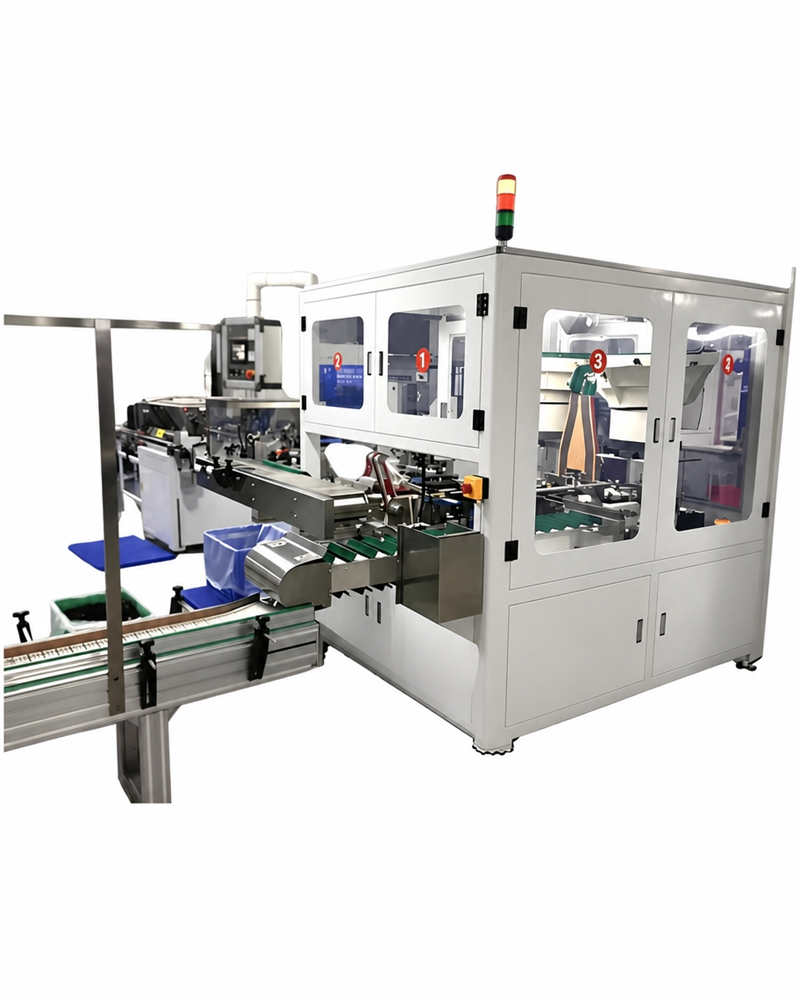
ミヨダ・パッケージング・マシナリー designs its silk screen printing presses around the specific substrate challenges of cosmetic and pharmaceutical tube packaging — servo-indexed tube feed systems, modular UV curing stations, and OPC-UA ready control panels. Tooling changeover between tube diameters is engineered to under 25 minutes, a critical factor for contract packagers managing multi-client SKU mixes where changeover time directly equals billable production hours lost.
Explore Press Configurations →Are These Machines Suitable for Cosmetic or Pharmaceutical Packaging Tubes?
Not every press on the market is designed for tube substrates. Many general-purpose silk screen presses are engineered for flat substrates and use mandrel adapters as afterthoughts — resulting in tube run-out (wobble during printing) that creates registration error, particularly for tubes above 40 mm diameter. A press built natively for tube printing features precision ground V-block mandrel supports, adjustable pneumatic tube clamping, and a print-cycle interlock that generates machine-readable reject signals for batch records — satisfying FDA 21 CFR Part 211 cGMP documentation requirements.


Maintenance, Spare Parts, and Support
Common Wear Items and Recommended Service Schedules
| Wear Item | Typical Life (2-shift) | Failure Mode If Ignored | Unit Cost Range |
|---|---|---|---|
| Polyurethane squeegee blade | 3–7 days | Color density drift, ink pooling | $18–$45 |
| UV mercury lamp | 800–1,200 hours | Under-cured ink, adhesion failure | $180–$400 |
| Feed roller bearing | 6–12 months | Registration drift, tube misalignment | $35–$90/set |
| Screen mesh (per station) | 2–4 weeks (abrasive ink) | Mesh sagging, ink bleed-through | $120–$250 |
| Flood bar seal strip | 4–8 weeks | Ink leakage, substrate contamination | $8–$22 |
| Mandrel drive belt | 12~18か月 | Tube slip, circumferential misprint | $45–$120 |
Availability of Spare Parts and Local Service
Parts availability is a pre-purchase due diligence item, not a post-purchase concern. A press with an 8-week lead time on its most critical wear part is a production liability regardless of print quality. During vendor evaluation, verify: the nearest regional parts warehouse location, average order-to-delivery lead time for the top 10 wear parts, and whether replacement UV lamps accept compatible third-party alternatives or require expensive OEM-only sourcing.
Training Resources and Manufacturer Support
A benchmark study of 45 cosmetic packaging operations found that sites where operators received ≥24 hours of structured press training — covering emulsion coating, ink viscosity adjustment, and registration verification — achieved 34% fewer unplanned downtime events in the first 12 months compared to sites relying on informal on-the-job learning. Ask vendors for initial training curriculum details, video library access, and whether remote diagnostic support via machine telemetry is included in the base service contract.
Safety, Compliance, and Industry Standards
Operator Safety Features and Guards
Primary mechanical hazard zones on a high-speed tube printing press: the squeegee carriage (pinch and shear risk), the UV curing chamber (UV radiation and ozone exposure), and the ink flood system (splash and slip hazard). A press compliant with ISO machinery safety standards will have guarded access doors with safety interlocks, UV-rated polycarbonate shields on curing stations, and emergency stop circuits with ≤1.5-second response time. For pharma environments, verify all press lubricants are NSF H1 rated (food-grade) to prevent contamination pathways to tube exterior surfaces.
Compliance Considerations for Cosmetics and Pharma
Cosmetic tube printing must comply with the EU Cosmetics Regulation EC 1223/2009 for ink ingredient disclosure. For pharmaceutical tubes, the governing standards are ISO 15223-1 and FDA cGMP 21 CFR Part 211 Subpart G. A critical and frequently overlooked compliance risk: print bleed-through on thin-walled LDPE tubes. Ink migration through the tube wall constitutes an undeclared ingredient — a regulatory violation in both EU and US markets. Require vendors to provide ink migration test data for your specific ink/substrate combinations before any purchase commitment.
Documentation and Traceability Requirements
For pharmaceutical clients, the press must be qualified under IQ/OQ/PQ protocols (Installation Qualification, Operational Qualification, Performance Qualification — three-phase equipment validation required by FDA 21 CFR Part 211 and EU GMP Annex 15) before production use. Vendors must provide build documentation, calibration certificates for all measurement systems, and validation master plan templates. For cosmetic clients, ISO 22716 expects print parameters — ink batch, screen tension, UV intensity — recorded per production batch. Presses with integrated MES data logging automate this entirely.
📖 重要用語集
- Shore A Durometer
- Hardness scale for squeegee rubber/polyurethane. Higher value = harder blade = less ink deposit per stroke. Range 60–90 Shore A for printing applications.
- Mesh Count (tpi)
- Threads per inch of screen fabric. 80–120 tpi for solid fills; 200–280 tpi for fine text and halftones on pharma tubes.
- EOM(エマルジョン・オーバー・メッシュ)
- Stencil emulsion thickness above the mesh surface in micrometers. Controls ink deposit height, color density, and tactile texture.
- ΔE (Delta-E)
- Numerical color difference metric. ΔE <2.0: imperceptible. ΔE <1.0: target for brand-critical cosmetic tube printing.
- OEE
- Overall Equipment Effectiveness = Availability × Performance × Quality. World-class: ≥85%. Industry average for printing: 55–65%.
- IQ/OQ/PQ
- Installation, Operational, and Performance Qualification — three-phase pharmaceutical equipment validation process.
- OPC-UA
- Industrial machine-to-machine data protocol enabling MES/ERP integration for real-time batch records and predictive maintenance.
- Cpk
- Process capability index. Cpk ≥1.33 = fewer than 64 defects per million — standard benchmark for pharmaceutical tube printing processes.
Space, Power, and Installation Requirements
Footprint, Ventilation, and Floor Loading
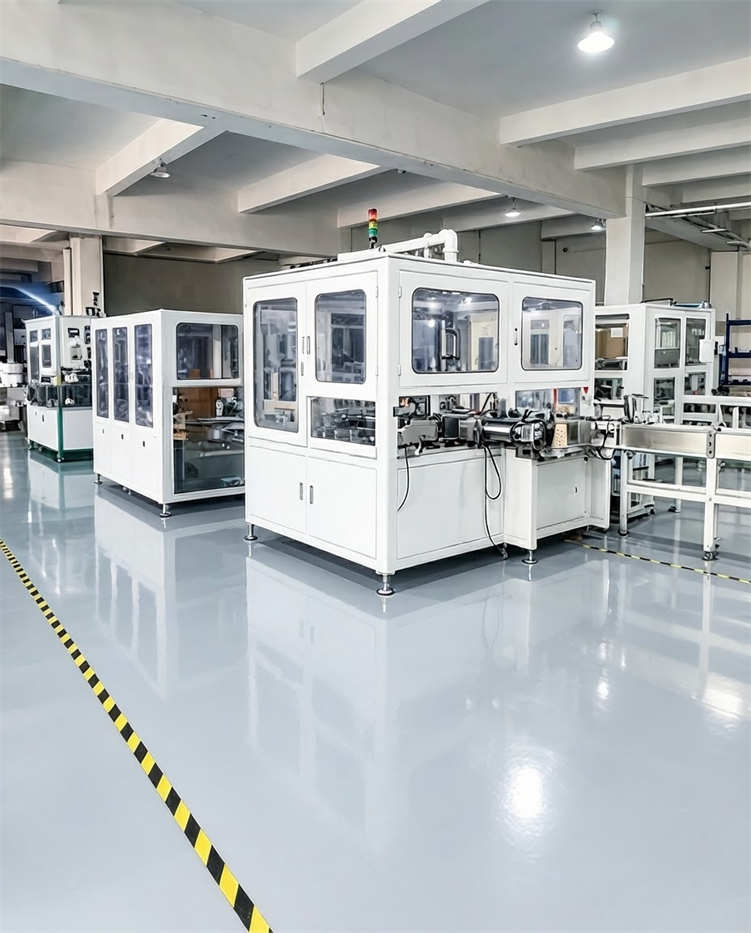
A fully automatic 4-color rotary tube printing press with integrated UV curing and reject divert typically occupies 6.5 m × 2.8 m (L × W), with 1.5 m service access clearance on each side. UV curing generates 4–8 kW per lamp station requiring dedicated HVAC supply. Insufficient heat management is a primary cause of UV lamp premature failure and ambient temperature creep that affects ink viscosity consistency during long production runs. For multi-story or converted warehouse installations, verify floor slab rating against press weight (typically 2,800–5,500 kg) plus 15–20% dynamic load from press motion at speed.
Electrical Needs, Plugs, and Potential Retrofits
Most industrial tube printing presses operate on three-phase power at 380V/50Hz (EU) or 480V/60Hz (US). A 4-lamp UV system at 160W/cm draws approximately 28–32A at 380V three-phase at peak load. A common installation error is specifying the press electrical draw without accounting for the UV system — leading to tripped breakers during production ramp-up. If your facility uses a different voltage standard than the press manufacturer’s home market, specify a certified voltage conversion module in the purchase order. Uncertified field conversions on UV systems are a fire risk and void CE/UL certification.
Installation Timeline and Disruption Minimization
Realistic timeline from press unloading to first production-quality print: 5–12 working days. The single largest variable is continuous vendor engineer presence through IQ documentation completion. Negotiate this as a contractual requirement, and plan a 15-day production overlap between old and new press before decommissioning — ensuring no production gap if commissioning extends beyond the planned window.
Evaluating Vendors and Making the Purchase
Due Diligence Checklist: Demo, References, Warranty
A rigorous press demo must use your actual tube substrates and ink systems — not the vendor’s preferred demonstration materials. Request a minimum 2-hour continuous production run at target speed, with print samples taken at 0, 30, 60, and 120 minutes — then measure ΔE and registration accuracy at each interval using your own QC instruments.
- Run demo on your actual tube substrate and ink — not vendor demonstration stock
- Request ΔE and registration measurement data at 30-minute intervals during the demo run
- Speak directly to at least two reference customers in cosmetic or pharma tube printing
- Verify warranty scope: does it cover UV lamps and emulsion errors or only mechanical failure?
- Confirm service model: on-site response, depot repair, or remote-only?
- Request IQ/OQ documentation templates before purchase — not after delivery
- Clarify IP ownership of any custom tooling or mandrel sets developed for your tube geometry
- Verify parts lead times for the top 10 wear items before committing
Negotiating Terms, Training, and Post-Purchase Support
The terms requiring most diligence: number of included training days, remote support response time SLA, consumable price caps for years 1–3, and the right to source compatible non-OEM consumables without voiding warranty. A strong post-purchase support package includes on-site commissioning by a certified application engineer, minimum 3 days operator training with written competency assessment, 12-month mechanical parts warranty (excluding consumables), and 24-hour remote diagnostic response SLA.
Reading the Fine Print: Service Levels and Upgrades
Key service contract terms to scrutinize: Does “unlimited remote support” include UV system diagnostics or only mechanical drive issues? Is firmware upgrade included or charged per revision? Are on-site service travel costs included or billed at actual cost? A contract appearing comprehensive at $8,000/year but excluding UV system support and billing travel at cost may reach $22,000/year in practice — a TCO impact invisible until the first major service call.
Risk Mitigation and Long-Term Strategy
Phased Rollout and Pilot Runs
The safest implementation approach: begin with 2–3 high-volume, lower-complexity SKUs (single color, standard LDPE, your most forgiving substrate) for the first 30 days. Document OEE, rerun rate, and ΔE data at day 7, 14, and 30. Expand to complex multi-color or specialty substrate SKUs only after the press has demonstrated consistent performance on pilot SKUs. Rushing to full SKU transfer on day 3 of installation is the most common cause of poor press performance perception in the first year of ownership.
Contingency Planning for Maintenance and Downtime
Every cosmetic or pharmaceutical tube printing operation needs a documented downtime contingency plan: a shared-resource agreement with a regional contract packager, a secondary press capable of handling priority SKUs, or a buffer inventory strategy maintaining 15–20 days of printed tube stock for your top 5 SKUs. The “no contingency” approach — relying entirely on a single press — is a supply chain risk that most brand owner customers identify and flag during supplier qualification audits.
Aligning Press Choice with Branding and Regulatory Needs
The significant trend vectors for the next decade: shorter print runs (brand SKU proliferation requiring faster changeover), stricter serialization requirements (track-and-trace mandates for pharmaceutical products expanding globally), and sustainable substrate adoption (PCR-content LDPE and bio-based laminates requiring different corona treatment than virgin polyethylene). A press requiring costly retrofitting for inline serialization or bio-substrate compatibility will consume capital budget that more forward-looking specification at purchase could have avoided. For tailored guidance on press configurations aligned with these trends, the application engineering team at ミヨダ・パッケージング・マシナリー provides substrate-specific consultation as part of their pre-purchase evaluation process.
Conclusion: Aligning Press Choice with Your Business Goals
Buying a silk screen printing press for cosmetic or pharmaceutical tube production is not a commodity equipment decision. The variables — substrate compatibility, ink system, automation level, regulatory documentation capability, and service ecosystem — interact in ways that make a “good deal” on the wrong press significantly more expensive than the right press at full price.
The most important discipline in the selection process is insisting on real production data, not specification sheets. Run your own tubes. Measure your own ΔE. Speak to reference customers printing your substrate type. Build the total cost of ownership model before building the business case — the TCO analysis frequently reverses the apparent value of the initially cheaper option.
Request demonstrations, validate with real-world test runs on your actual substrates, and ensure the vendor you select has application knowledge — not just machinery — sufficient to support your cosmetic or pharmaceutical tube production as it scales. Future scalability, compliance readiness, and workflow integration are not optional enhancements. In B2B tube packaging, they are the baseline for a procurement decision you can defend.
よくある質問
Answers to the questions most commonly asked by B2B procurement teams sourcing silk screen printing presses for cosmetic and pharmaceutical tube production.
📚 Further Reading & Industry Resources
- Miyoda Packaging Machinery — Tube Printing & Packaging Equipment
- FDA cGMP Regulations for Pharmaceutical Manufacturing (21 CFR)
- ISO 22716 — Good Manufacturing Practices for Cosmetics
- Specialty Graphic Imaging Association — Screen Printing Technical Resources
- EU REACH Regulation — Chemical Compliance for Printing Inks