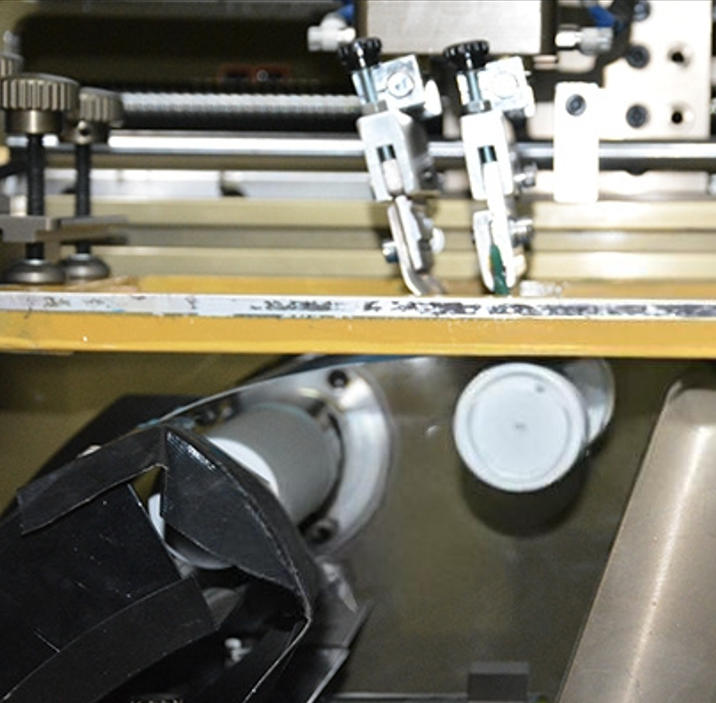
Manual vs Automatic Silk Screen Printing Machines for Cosmetic and Pharmaceutical Tubes
A shopper picks up a face cream tube. In two seconds, they decide if the product looks expensive. The print on that tube does most of the work.
Print defects cost more than they look. A smudged logo becomes a rejected pallet. A half-millimeter color shift becomes a failed batch record. A slow printer becomes a late product launch.
Most tube makers describe the same three problems. Ink smears on glossy surfaces. Colors drift out of line. The printing step turns into a bottleneck as orders grow.
This guide compares manual and automatic silk screen printing machines for soft tubes. It is written for the people who buy them: cosmetic and pharmaceutical tube producers, contract packers, and the distributors who advise them.
The short answer is simple. The right machine depends on three numbers: your monthly tube volume, the quality level your customers audit, and how fast you plan to grow. Everything else follows from those three numbers.
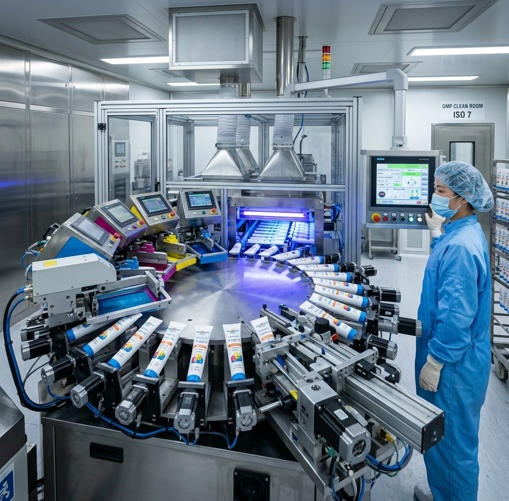
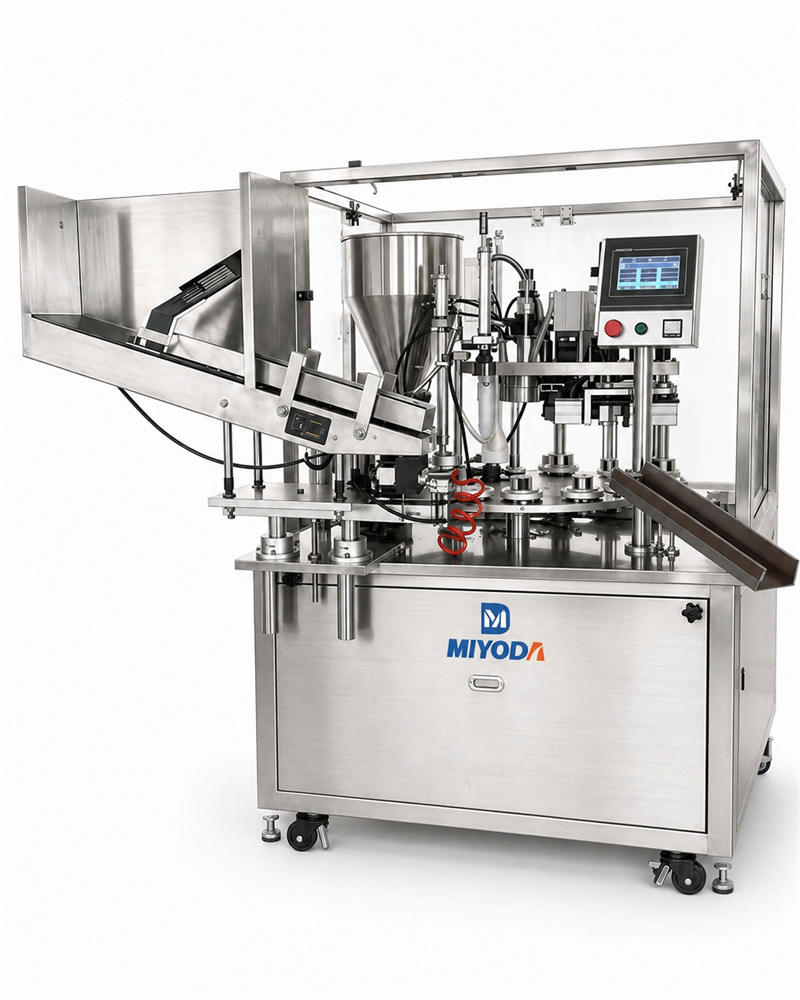
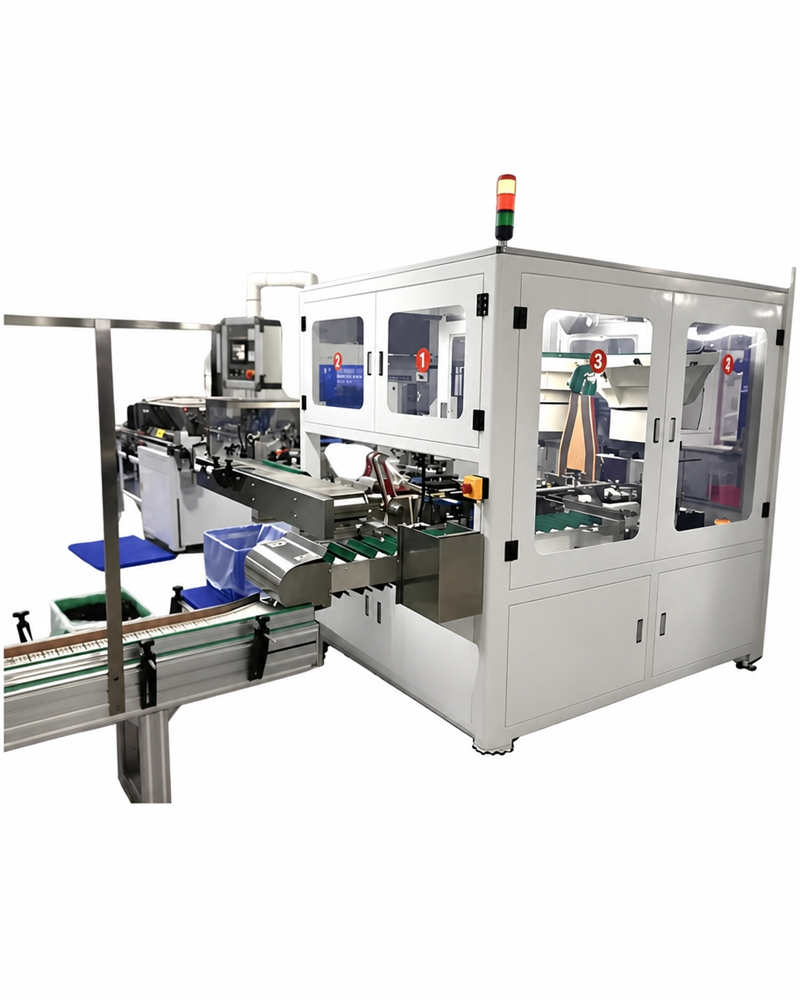
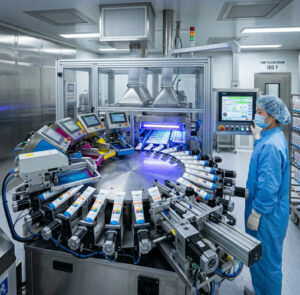
An automatic rotary printer runs inside a GMP clean room. One operator watches the line instead of handling every tube by hand.
1. Start With Your Real Production Number
Before you compare machines, count your tubes. Use a three-month average. Do not use your best week.
Write down four things:
- Tubes printed per month, by diameter
- Average number of colors per design
- How often the design changes
- Scrap rate you accept today
These four numbers decide almost everything. A plant that prints one design all year needs a different machine from a plant that runs forty designs a month.
A skilled operator on a manual or semi-automatic press prints about 400 to 1,000 tubes an hour. The range is wide because speed depends on color count, tube size, and how often the job stops.
Here is a simple way to read your own stage:
| Monthly printed tubes | Typical setup | What limits you |
|---|---|---|
| Under 50,000 | Manual or semi-automatic press | Nothing yet. Capital is the real limit. |
| 50,000 to 300,000 | Semi-automatic, or entry-level automatic | Labor hours and shift planning |
| 300,000 to 2 million | Automatic, 1 to 3 colors | Changeover time and print consistency |
| Above 2 million, or pharma contracts | Automatic, multi-color, line integrated | Validation, traceability, and uptime |
One more number matters: lead time. Five years ago, brands accepted five or six weeks for printed tubes. Many now ask for two or three weeks. Short lead times push work toward machines that start fast and repeat the same result every hour.
If you already know your volume, the next step is to model the real cost per printed tube instead of the purchase price.
2. Manual Silk Screen Printing: Low Risk, High Flexibility
A manual tube press holds one tube at a time on a rotating holder. The operator loads the tube, pulls ink across a mesh screen with a rubber blade, then lifts the tube off and sets it on a drying rack.
Three terms are worth knowing here:
- Screen: a mesh stretched on a frame. Ink passes through open areas and forms the image.
- Squeegee: the rubber blade that pushes ink through the screen.
- Mandrel: the metal holder that keeps a soft tube round while it is printed.
Manual machines win on three points.
Low entry cost. A manual or semi-automatic tube press usually costs a fraction of a fully automatic line. For a new brand or a new converting plant, that difference protects cash flow in the first two years.
Fast job changes. A small batch of 300 tubes for a trade show or a fragrance launch can be printed the same day. There is no recipe library to build and no servo axis to reset. The operator sets the screen, checks the position, and starts.
Simple maintenance. There is no PLC, no servo drive, and no vision camera. Most repairs are mechanical. A local technician can fix them with basic tools.
Many factories keep a manual press long after they buy an automatic one. It becomes the sample room machine. Sales teams use it to print client artwork in a day, and engineers use it to test new ink and new tube materials before a production run.
3. Where Manual Printing Breaks Down
Manual printing is not a quality problem in the first hour of a shift. It becomes one in the eighth hour.
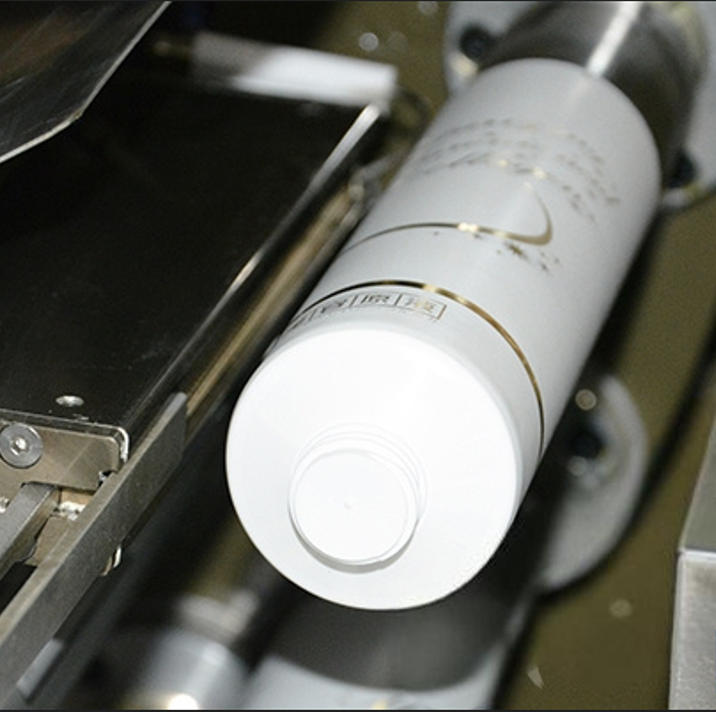
A tube sits on its mandrel after printing. On a curved, squeezable surface, a small position error is easy to see.
Three things go wrong as the shift goes on:
The operator gets tired. Output drops and defects rise. In many plants, scrap sits near 3 to 4 percent in the morning and climbs past 7 percent by late afternoon. The machine did not change. The hands did.
The screen stretches. Mesh tension falls slowly during a run. The printed image grows a little. Colors that lined up at 8 a.m. sit slightly off at 4 p.m. An experienced operator corrects this. A new operator does not see it.
The ink film changes. Room temperature, ink viscosity, and squeegee pressure all move during the day. On a glossy tube, that shows up as patchy gloss or thin edges.
Then there is scale. A pharmaceutical order for two million tubes is normal in this industry. At 1,000 tubes an hour, that order needs 2,000 printing hours. Even with two shifts, that is months of work. The same order on an automatic machine at 4,500 tubes an hour takes about 55 shifts.
There is a practical fix for the drift problem: a written setup and calibration routine that every operator follows at the start of each shift.
4. Automatic Silk Screen Printing: Precision at Volume
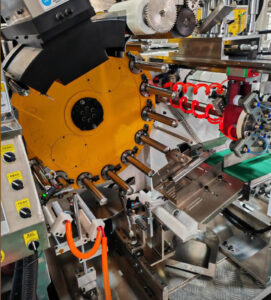
An automatic tube printer removes the operator from the print cycle. Tubes load onto mandrels on a rotating table. Each station does one job: flame treatment, first color, UV cure, second color, cure, inspection, unload.
One word shows up in every machine quote: registration. It means how closely each color lands on the same spot on every tube. On a curved surface, ±0.1 mm is the figure to ask for.
The numbers on a modern automatic tube printer look like this:
| Item | Typical specification |
|---|---|
| Speed | 4,000 to 5,000 tubes per hour (67 to 83 per minute) |
| Colors | 1 to 7, printed in one pass |
| Registration accuracy | ±0.1 mm |
| Tube diameter | 13 mm to 60 mm |
| Tube length | 50 mm to 240 mm |
| Curing | UV, around 5 kW, LED-UV optional |
| Changeover | 15 to 30 minutes; screen-only change 5 to 10 minutes |
| First-pass yield | 98 to 99 percent on a stable job |
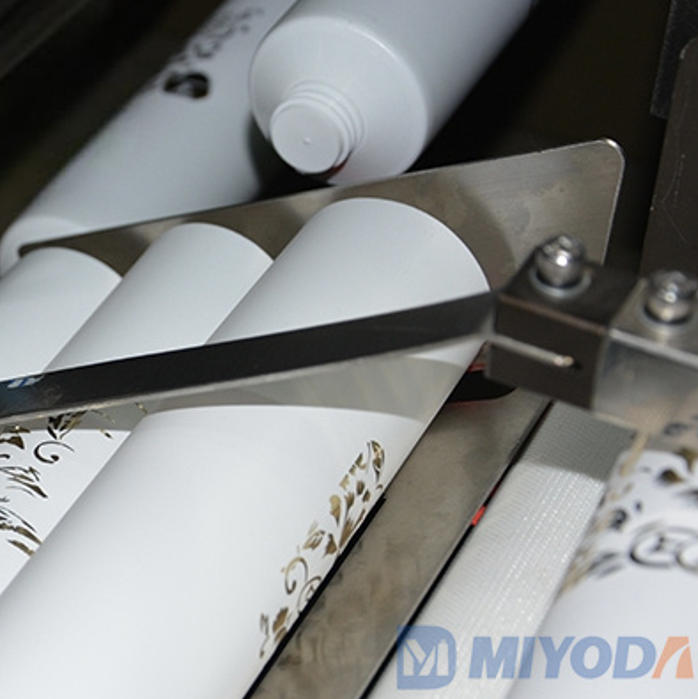
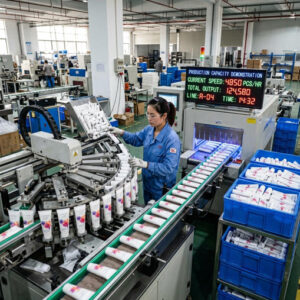
Multiple tubes print in one cycle. The gold decoration lands in the same position on every tube because the mandrel and the screen move on fixed axes.
Why does automation hold position so well? Two reasons.
The tube is held by a machined mandrel, so the print surface does not move. A servo axis indexes the table to a fixed angle for each color. The screen frame does not rely on the operator’s hand.
Some machines add a vision camera. The camera reads a printed mark and corrects small drift during the run. This is useful on long pharma batches, where a two-hour stop to re-register is expensive.
Here is the machine cycle in motion:
Watch: Automatic screen printing on cosmetic and pharmaceutical tubes
You can see loading, surface treatment, multi-color printing, UV curing, and unloading in one continuous loop. The Miyoda tube screen printing machine range uses this rotary layout with a 12-station table and recipe memory, so a diameter change is a recall of saved settings, not a rebuild.
5. The Trade-offs You Pay For
Automation is not free, and the invoice is only part of the cost.
Upfront capital. A fully automatic multi-color tube printer typically costs several times more than a manual press. In most quotes we see, the gap sits between 45,000 and 150,000 US dollars, depending on color count, speed, and inspection options.
A clear payback plan. Buyers should build the payback model before signing. Here is a working example for a plant that prints five million tubes a year:
| Cost line | Manual setup | Automatic setup |
|---|---|---|
| Operators per shift | 3 | 1 plus shared technician |
| Annual labor cost | $42,000 | $21,000 |
| Scrap rate | 4.0% | 1.2% |
| Tubes lost per year | 200,000 | 60,000 |
| Value of lost tubes at $0.12 | $24,000 | $7,200 |
| Net annual saving | — | About $35,800 |
| Extra investment | — | $45,000 |
| Simple payback | — | About 15 months |
These numbers are an example, not a quote. Your wages, tube value, and ink cost will move the result. The point is that payback is usually measured in months, not years, once volume passes a few hundred thousand tubes.
Skilled people. An automatic printer needs a technician who understands registration, ink viscosity, UV intensity, and PLC recipes. That person is not always available on day one. Budget for training and for a preventive maintenance plan from the start.
Site requirements. Most automatic tube printers need three-phase power, stable compressed air, UV shielding, and extraction for ozone and ink solvent. Floor space is larger than a bench press. Check the utility list before you commit to a room.
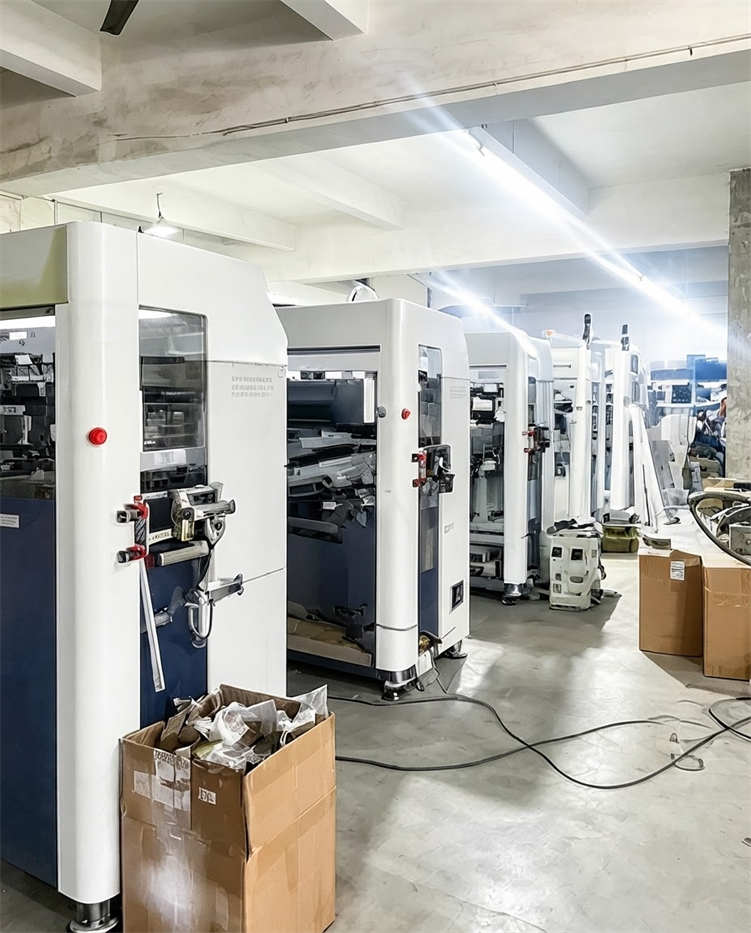
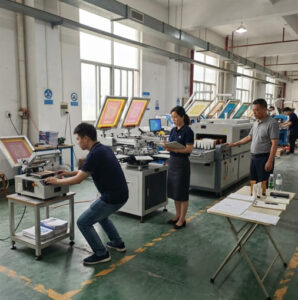
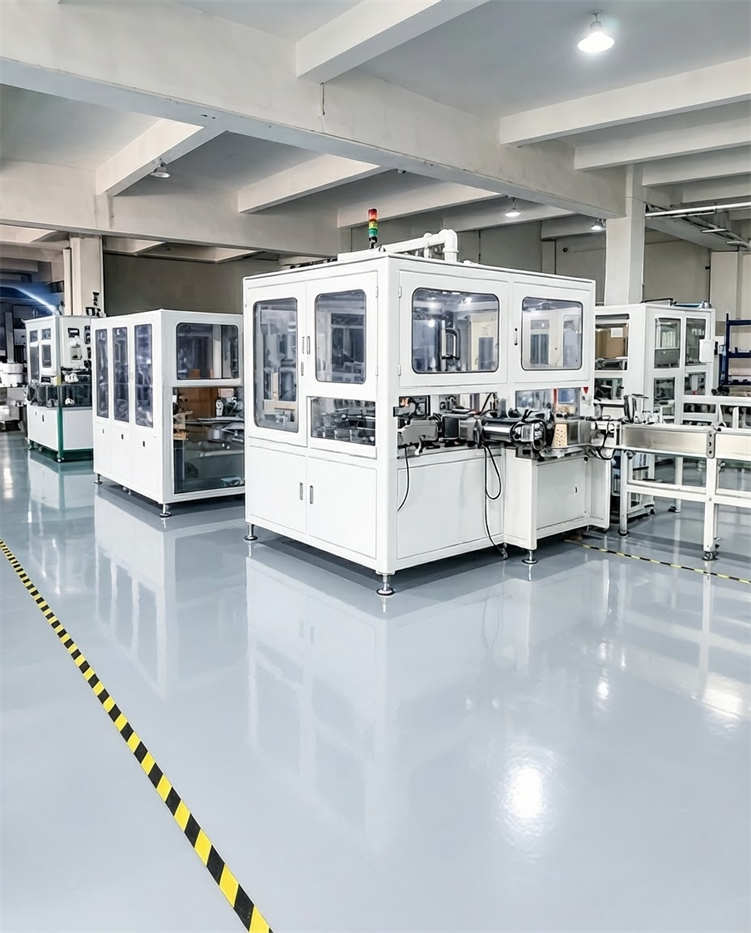
A row of tube printers on a factory floor. Space, power, and spare parts planning matter as much as the purchase price.
Long setup for one-off jobs. A single custom order of 500 tubes is slower on an automatic machine than on a manual press. Automation rewards repetition.
6. Which Machine Fits Which Business
There is no universal winner. There is a right answer for each production profile.
Scenario A: A boutique cosmetic brand doing limited editions. Four launches a year, 20,000 tubes per launch, six colors, heavy gloss finish. A semi-automatic press with a skilled operator is often the better buy. The brand keeps cash for formulation and marketing, and it can print a new design in an afternoon.
Scenario B: A pharmaceutical contract packer shipping worldwide. Batches of one to five million tubes, dosage text, batch records, and audits. Here an automatic line is not a luxury. It is the only way to hold ±0.1 mm registration for twelve hours and to document that you did.
Scenario C: The hybrid plant. Many successful tube makers run both. The manual press handles samples, color proofs, and short runs. The automatic line handles volume. The two machines share the same ink kitchen and the same quality lab.
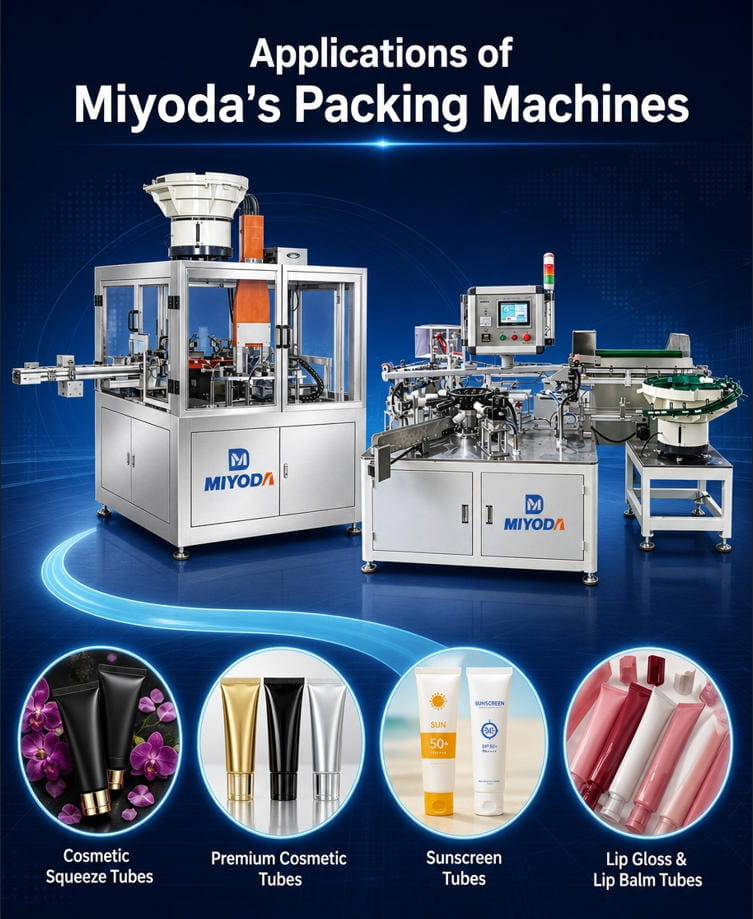
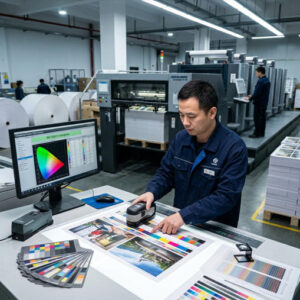
Tube types change the printing job. Matte laminate, glossy PE, and soft-touch surfaces each need different ink and cure settings.
A side-by-side view helps in a meeting:
| Criterion | Manual | Automatic |
|---|---|---|
| Entry cost | Low | High |
| Speed | 400–1,000 tubes/hour | 4,000–5,000 tubes/hour |
| Registration stability | Depends on the operator | Held by servo and fixture |
| Best batch size | 100–20,000 | 50,000 and above |
| Job change | Minutes | 15–30 minutes |
| Labor per shift | 2–3 operators | 1 operator plus technician |
| Scrap rate | 3–8% | 1–2% |
| Skill to run | Trained operator | Technician plus SOPs |
Plants that made the switch often publish their before-and-after numbers. You can read measured results from real tube printing projects to see how scrap and labor moved in each case.
7. Quality and Regulatory Compliance
Printing is a controlled process in pharma and in cosmetics. The machine has to support that control, not fight it.
Cleaning. Frames, guards, and mandrels should come off without tools. Ink should not collect in corners. Stainless surfaces and sloped panels make cleaning faster and easier to document.
Text accuracy. A logo that sits 0.2 mm off center is a design choice. A net content statement or a dosage line that sits 0.2 mm off is a compliance risk. Automatic registration protects the second case.
Ink compatibility. Pharmaceutical tubes usually need low-migration, UV-curable inks. The ink must be tested on your actual tube material, not on a sample from another supplier. Ask for a migration statement and a print trial.
Surface energy. Polyethylene tubes resist ink. Printers use flame or corona treatment right before printing to raise surface energy from about 30–32 dynes/cm to 44–50 dynes/cm. A dyne test pen and a tape test each shift keep adhesion honest.
Validation. Pharma buyers expect IQ, OQ, and PQ documents. Cosmetic buyers often work to ISO 22716 good manufacturing practice. Both expect CE marking, UV shielding, and emergency stops.
The legal frame is public. In the United States, drug labeling and current good manufacturing practice sit in 21 CFR Part 211. In Europe, cosmetic claims and labeling follow Regulation (EC) No 1223/2009. A printer that holds position and cures fully makes both sets of rules easier to meet.
For a full list of documents to prepare before an audit, use this tube packaging compliance checklist.
8. Advice for Distributors and Agents
If you sell tube machinery, the machine you recommend decides your reputation for the next five years. A client who buys too small a machine blames the seller, not the budget.
Three habits separate strong agents from order takers.
Ask about the three-year plan. A client printing 80,000 tubes a month today may sign a contract for 400,000 next year. Size the machine for year two, not for today. Write the growth assumption into the offer.
Check the support map. Spare mandrels, squeegee rubber, UV lamps, and screen frames are consumables. Confirm local stock or a realistic delivery time before you promise uptime. A machine that stops for three weeks waiting for a part costs more than the price difference between suppliers.
Present total cost of ownership. Clients compare purchase prices. Show them cost per good tube instead. Include labor, scrap, ink, power, spare parts, and downtime. The true cost of ownership model turns a price argument into a value discussion, and it protects your margin.
One more point: printing is only one step. The printer must match the speed of the tube filling and sealing line. If the filler runs faster than the printer, tubes wait. If the printer runs faster, the filler becomes the bottleneck. A 10 to 15 percent speed buffer between the two machines is a good rule.
9. Conclusion
Manual and automatic silk screen printing machines solve different problems.
Manual machines buy flexibility. They need little capital, they change over in minutes, and they are easy to repair. They suit startups, sample rooms, limited editions, and plants that print many designs in small batches.
Automatic machines buy consistency and scale. They hold registration at ±0.1 mm, run 4,000 to 5,000 tubes an hour, and cut scrap and labor per tube. They suit contract packers, pharma suppliers, and any plant chasing volume contracts with tight deadlines.
The decision comes down to one question. Will your next two years look like your last two years? If yes, buy for today’s volume. If not, buy for the volume you plan to reach, and keep a manual press for the work that automation handles badly.
Before you choose a model, run a print trial on your own tubes. Send your artwork, your tube material, and your target volume. Measured registration, adhesion, and speed data on your own product beats any brochure.
Miyoda Packaging Machinery builds tube printing, filling, sealing, and capping machines for cosmetic and pharmaceutical producers. To discuss tube diameters, ink systems, or line layout, send your tube and artwork to our engineers. You can also see how Miyoda builds tube packaging machinery before you shortlist suppliers.
Glossary: Terms Used in This Guide
| Term | Plain meaning |
|---|---|
| Registration | How well each color lands in the same position on every tube |
| Mandrel | The metal holder that keeps a soft tube round during printing |
| Squeegee | The rubber blade that pushes ink through the screen |
| Screen mesh | The woven fabric that carries the image; its tension affects print size |
| Dyne value | A measure of surface energy; higher values help ink stick to plastic |
| Flame treatment | A brief flame that raises surface energy just before printing |
| UV curing | Drying ink with ultraviolet light in less than a second |
| Changeover | The work needed to switch a machine from one job to another |
| First-pass yield | The share of tubes that pass inspection without rework |
| TCO | Total cost of ownership: purchase price plus running costs over the machine’s life |
Frequently Asked Questions
1. How do I calculate the ROI point where manual printing stops making sense?
Compare cost per good tube, not cost per hour. Add labor, scrap, ink, power, and downtime, then divide by the number of tubes that pass inspection. In most plants, manual printing stops being cheaper somewhere between 50,000 and 150,000 tubes a month, or when a single order needs more than three weeks of printing. Above that line, an automatic machine usually pays back within 12 to 24 months.
2. Which machine is better for high-gloss cosmetic tubes that smudge easily?
Both can work, but the automatic machine is safer. Glossy PE and laminate surfaces show fingerprints and ink transfer. An automatic line prints, cures, and unloads without touching the wet image, and UV curing sets the ink in under a second. On a manual press, the operator handles each tube near the wet print, so smudging depends on technique and on how the tubes are stacked.
3. Can an automatic machine handle different tube diameters without heavy re-tooling?
Yes, within a range. Most automatic tube printers cover 13 mm to 60 mm with quick-release mandrels. The operator swaps the mandrel set, loads the saved recipe, and the servo axes move to the stored positions. Expect 15 to 30 minutes for a full diameter change. Below 25 mm, check that the supplier offers a dedicated small-diameter kit.
4. What is the typical lifespan of a manual versus an automatic machine?
A manual press is simple and often runs 10 to 15 years with basic care. An automatic machine typically serves 8 to 12 years before a major rebuild, because servo drives, UV systems, and pneumatics wear. In both cases, the frame outlasts the electronics. Ask about the spare parts policy before you buy, since a 12-year-old control board can be harder to find than a new machine.
5. How does the machine choice affect curing time for pharmaceutical inks?
Curing is set by the ink and the lamp, not by the machine type. A UV ink cures in well under a second at the right dose. The difference is control. An automatic line holds lamp power, belt speed, and lamp-to-tube distance constant, so every tube gets the same dose and the batch record is repeatable. On a manual press, curing depends on how long the operator waits and where the tube sits under the lamp.
6. What causes registration errors on tubes, and how do automatic machines fix them?
The common causes are screen tension loss, loose mandrels, inconsistent tube diameter, and operator positioning. Automatic machines reduce all four. Fixed mandrels remove tube movement, servo indexing removes hand placement, and recipe memory restores the exact position for each color. Optional vision cameras catch slow drift during long runs and correct it without stopping the line.
7. Do automatic tube printers need special power or ventilation?
Most need three-phase power, clean dry compressed air, and extraction for ozone from UV lamps and solvent vapor from ink. A typical installation also needs a stable room temperature, because ink viscosity and registration both react to heat. Check the utility list early. Retrofitting extraction into a finished room costs far more than planning it before the machine arrives.
8. Which machine is more sustainable in terms of ink waste and energy?
Automatic wins on ink, manual can win on energy. An automatic line uses a fixed ink volume per print and loses less to cleanup, so ink waste per tube is lower. It also produces less scrap, and scrap is the largest hidden waste in tube printing. A manual press draws almost no power, but it uses more ink per good tube and generates more rejects.
9. How do these machines handle printing on soft, squeezable plastic tubes?
The mandrel does the work. A soft tube collapses under squeegee pressure unless it is supported from inside, so the mandrel diameter must match the tube, and the air inside must be controlled. Automatic machines index the mandrel to a fixed angle and apply constant squeegee pressure, which keeps the print even around the curve. On a manual press, uneven pressure shows up as light and dark bands along the tube.
10. Can I add an automatic printer to my existing filling line?
Usually yes, with planning. Match the printer speed to the filler with a 10 to 15 percent buffer, keep tube orientation on the conveyor, and connect start, stop, and line-full signals between the two machines. Ask the supplier for a layout drawing and a signal list before you order. If your filler is older, a buffer table between the machines is often the cheapest way to absorb speed differences.