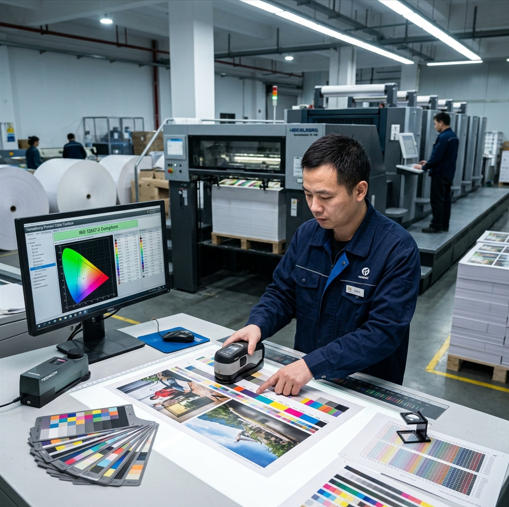
Walk onto a tube printing floor at seven in the morning and you can hear whether the line is making money. A steady rhythm means tubes index clean and ink cures fast. A stop-start rhythm means someone is wiping a screen, nudging registration, and doing quiet math on scrap.
Print is where cosmetic and pharmaceutical tubes get judged. A shopper picks the tube up, runs a thumb over the shoulder, and reads the ingredient list in bathroom light. If the text looks soft at the edges, or the second colour sits a hair off the first, the brand looks careless. In pharma, that same misprint is a compliance issue, not a design issue.
The pain points repeat in almost every plant:
- Ink smears on the conveyor or inside the carton because it was not fully cured.
- Registration drifts after a few thousand impressions, so the last third of a run goes to scrap.
- Changeovers eat the shift, and the team starts to fear small orders.
Here is the uncomfortable part. Buyers usually compare machines on price per unit and a spec sheet. Neither number tells you what the machine will do on your tubes, with your artwork, at 2 a.m. on a Saturday.
This guide is a buying framework, not a catalogue. At Miyoda Packaging Machinery we build tube printing and tube production equipment, and we sit in these decisions every week. The goal of every section below is the same: pick a machine that still works for you when your order book doubles.
The market push is real. Analysts put the tube packaging market at about USD 8.17 billion in 2026, growing near 5% a year. Growth does not arrive as one giant order. It arrives as more SKUs, smaller batches, and tighter delivery dates. That is the workload your printer has to survive.
The core argument: the right machine is not the most expensive one. It is the one whose speed, registration, substrate range and support match your production reality. Everything below tests one of those four.
II. Assessing Production Volume vs. Machine Automation
Matching machine throughput to your current and projected order volumes prevents costly under-utilization or production delays.
Start with the level of automation. Three levels cover almost every tube printer on the market.
| Automation level | Output per hour (typical) | People on the line | Best fit | Main risk |
|---|---|---|---|---|
| Manual (screen in a jig) | 300–600 tubes | 1–2 | Runs under 5,000 tubes | Registration depends on the operator’s hand |
| Semi-automatic | 1,200–3,000 tubes | 1 operator plus 1 helper | 5,000–50,000 tubes per run | Loading and unloading cap the speed |
| Fully automatic rotary | 3,600–7,200 tubes | 1 operator | 50,000+ tubes, repeat orders | Capital cost, plus idle time if volume is thin |
A semi-automatic machine is a sensible first step for a contract printer with mixed small jobs. A fully automatic rotary machine pays for itself when one or two accounts run continuously. Buying automatic too early is worse than buying it too late, because idle capacity still costs depreciation.
Point 1: Calculate real output, not brochure output.
The formula is short:
Output per hour = tubes per minute × 60 × real efficiency
Real efficiency runs 75–85% on a good day. It drops with every changeover, screen wash, and ink top-up. A “60 tubes per minute” machine at 82% efficiency delivers 2,950 tubes an hour, not 3,600. On a six-colour job with three changeovers per shift, the gap between the two numbers is your entire profit margin.
Point 2: Tube size changes the cycle.
A 150 mm tube needs a longer squeegee stroke than an 80 mm tube, so cycles per minute fall. Small diameters index faster but grip worse, because there is less wall to hold. Ask the vendor for a speed table by diameter and length, and check the number at your largest tube size, not the demo size.
Point 3: Price the upgrade path.
Modular frames cost a little more today and save a lot later. Ask three questions. Does the frame have reserved stations for a fifth or sixth colour? Can a flame treater, vision camera or auto-loader be added without replacing the indexer? Is the PLC licensed for the extra axes? A machine that cannot grow forces a second purchase in three years.
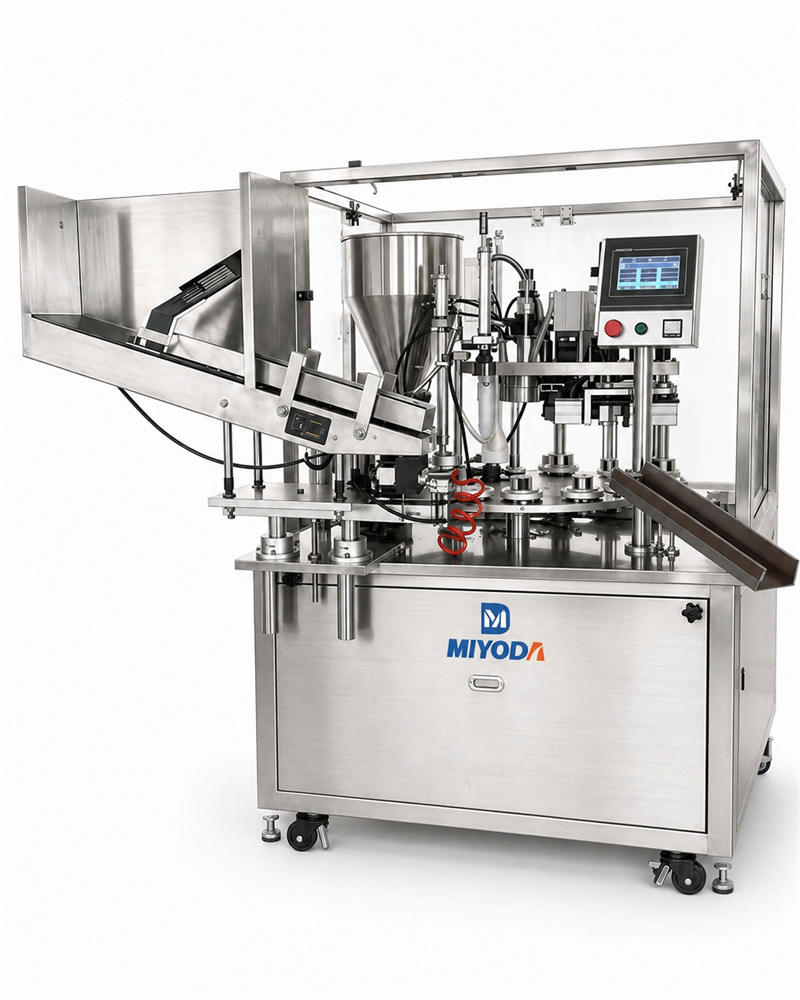
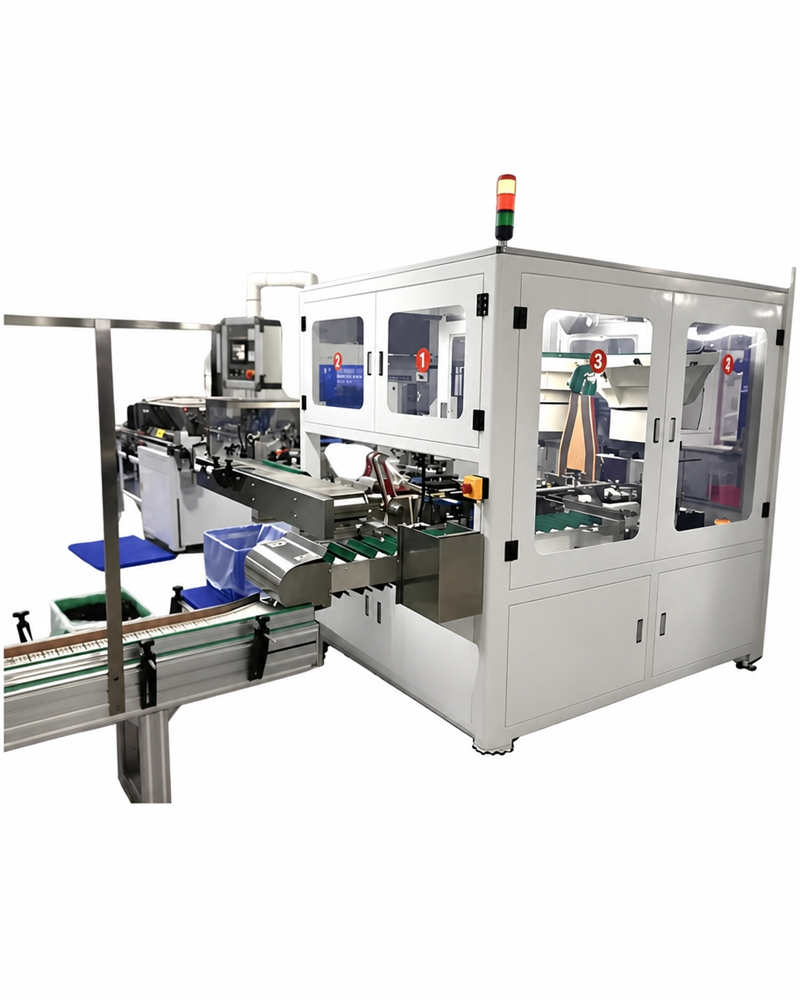
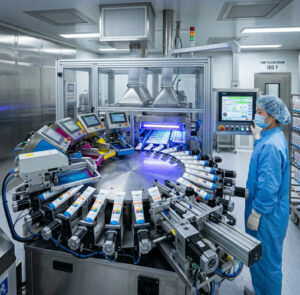
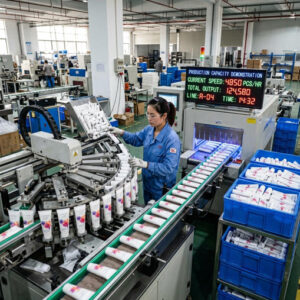
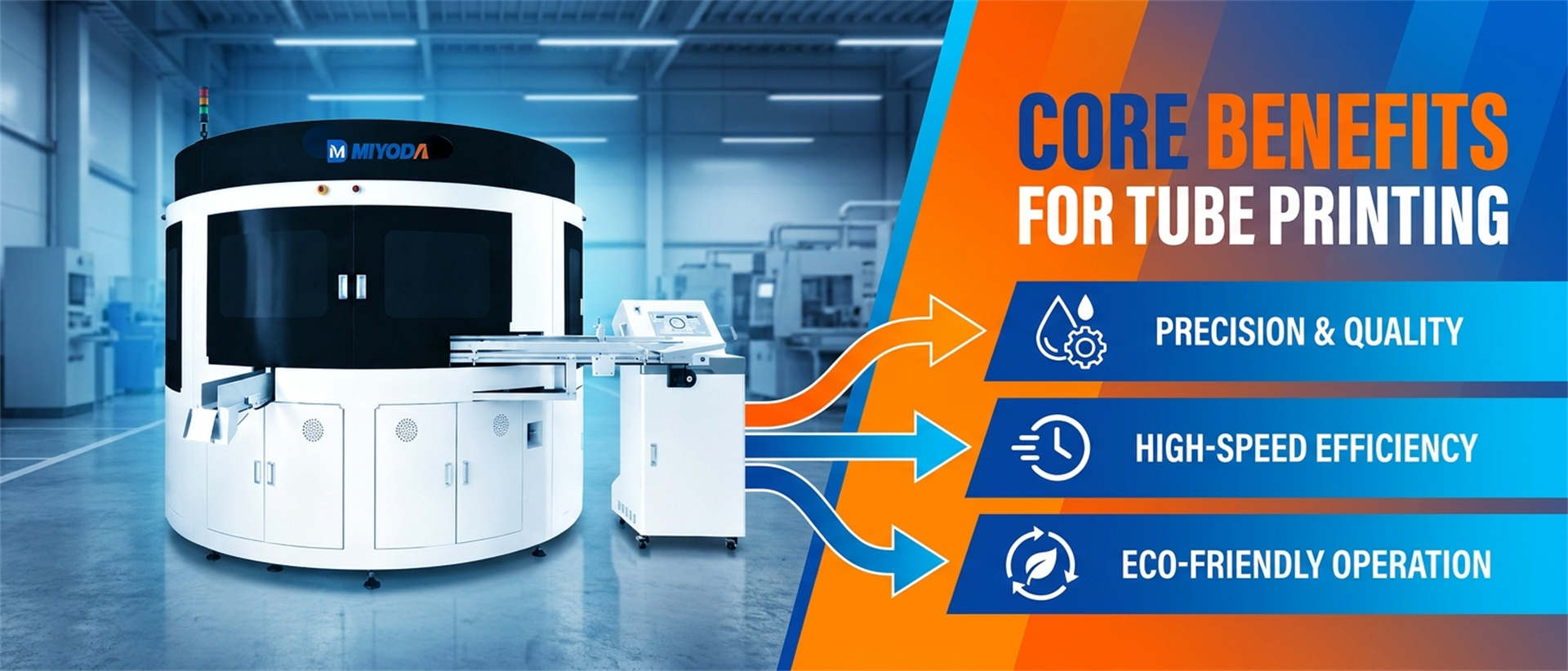
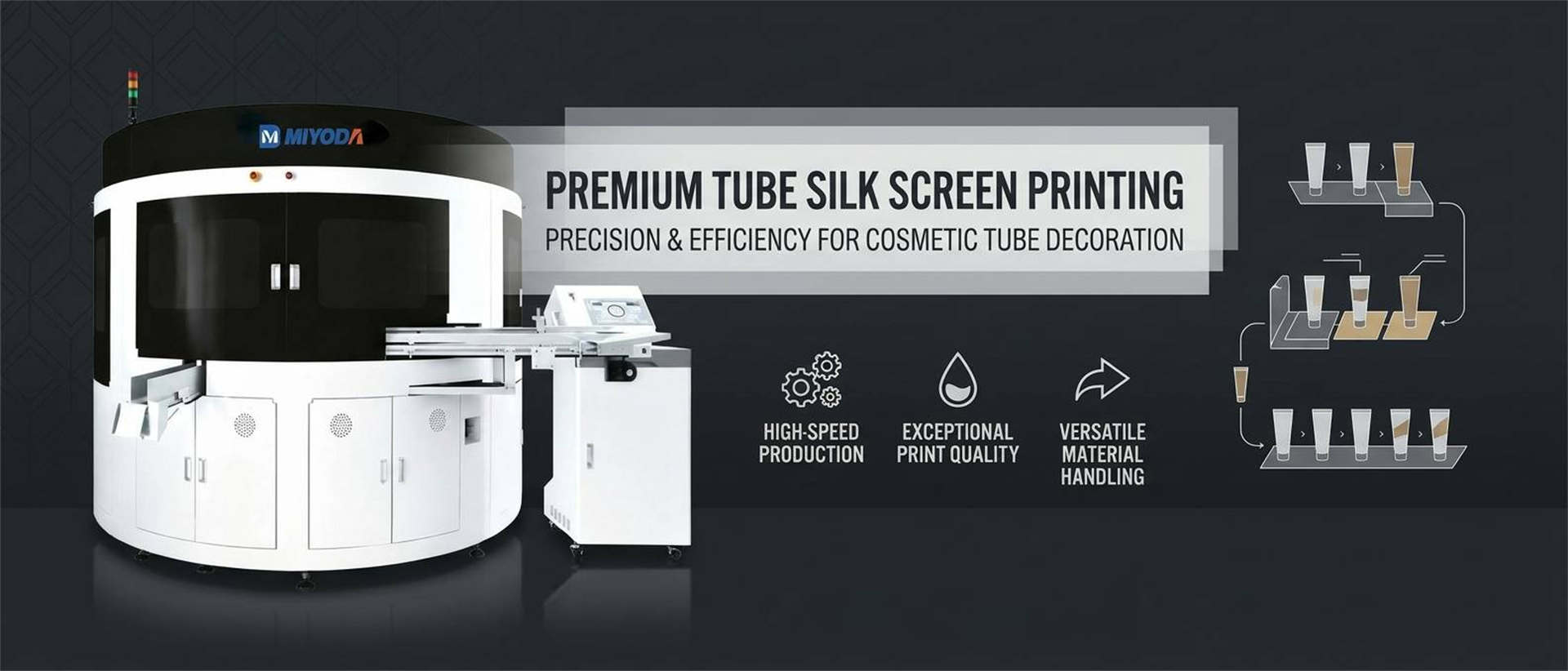
Rotary screen printing machine for tubes running at stable high speed
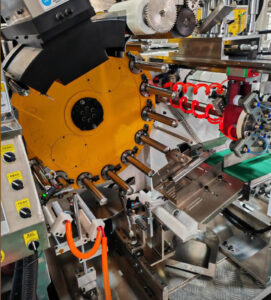
A rotary table keeps tube orientation stable through several stations. Orientation is what makes multi-colour work possible.
Here is the cycle in motion, from loading to curing to unloading:
www.youtube.com/watch?v=hJydOxl5OZU
Video: a full automatic cycle on cosmetic tubes, including surface treatment, multi-colour printing and UV curing.
Field note: the most expensive machine on the floor is the one running at 30% utilisation. We have seen plants buy a 120-per-minute printer for a 20,000-tube order and lose money on every tube. We have also seen a well-set semi-automatic line beat an automatic line on mixed small batches, because setup took twenty minutes instead of an hour.
III. Prioritizing Print Precision and Registration Accuracy
In the medical and beauty industry, a 1 mm misalignment can lead to entire batch rejections.
Registration is the alignment of one printed colour against another. It is measured in millimetres, and good tube work lives at ±0.1 mm. That number is not marketing. It is roughly the width of a human hair, and it is what separates a shelf-ready tube from a reprint.
Point 1: Multi-colour work multiplies error.
Each station adds its own small error. A machine that holds 0.04 mm at station one can sit at 0.12 mm by station four if the indexer is loose or the screen clamps flex. This is why the fourth colour is your true quality gate, not the first. Servo indexing and registration pins control the mechanical error. Vision cameras can correct drift during a run, but they cannot fix a soft frame.
Ask for a four-colour test print on your own artwork, then measure colour-to-colour distance on tube one and tube five thousand. The second measurement is the one that matters.
Point 2: Soft tubes deform under pressure.
A PE tube wall is often 0.4–0.6 mm thick. A squeegee pushes ink through the mesh and pushes the tube wall at the same time. Without proper support, the tube flattens slightly, the print stretches, and the artwork looks like it was printed on a balloon. Good machines solve this with a full-length mandrel, controlled squeegee pressure, and steady ink viscosity checked with a flow cup each shift. Some also add internal air support.
Point 3: Small pharma type needs a different setup, not a different machine.
Ingredient lists and dosage text often run at 6 point. To hold that, you need a finer mesh (350–420 threads per inch), a thin stencil (15–25 µm of emulsion), high screen tension, and a squeegee around 70–75 Shore A. A machine that prints bold cosmetic graphics beautifully can still fail a 6-point line if the frame flexes or the squeegee pressure is uneven.
Servo-driven registration holds colour-to-colour position across a long run. Mechanical pins alone drift as clamps wear.
Industry insight: most registration complaints we investigate are not machine faults. They are first-off approval failures. A plant prints ten tubes, glances at them, and starts the run. Then the screen stretches for twenty minutes under tension and the print walks. Sign off a golden sample, measure it, and check the run against it every hour. That single habit removes more scrap than any upgrade.
IV. Evaluating Ink Compatibility and Drying Efficiency
The choice of machine must support the specific chemical properties of inks used on PE, EVA, or laminated tubes.
Ink and drying are one system. Change the ink and you change the cure. Change the tube and you change the adhesion. A machine that only accepts one drying method limits you to one family of jobs.
Point 1: UV curing or IR drying.
| UV curing | IR drying | |
|---|---|---|
| Cure time | Under 1 second | 5–20 seconds per pass |
| Heat on the tube | Low | High; thin PE can distort |
| Ink family | Solvent-free UV ink | Solvent or water-based ink |
| Running cost | Higher ink price, lower energy per tube | Cheaper ink, more energy and floor space |
| Consumables | Mercury lamp 1,000–2,000 hours; UV LED 20,000 hours or more | Lamps and reflectors on a fixed schedule |
| Best for | PE, EVA, laminated tubes, frequent changeovers | Aluminium tubes, long runs, simple artwork |
The practical rule: if the tube is heat-sensitive or the order book is full of short runs, UV wins. If the substrate is aluminium and the artwork rarely changes, IR still makes money.
Point 2: Adhesion is a surface problem before it is an ink problem.
Untreated PE has a surface energy around 31 mN/m. Most inks need 38 mN/m or higher to wet out and stay. That is why a flame or corona treater sits right before the first print station. Check surface energy with a dyne pen at the start of every shift, not once at installation. Then confirm the result with a tape test and a rub test after 24 hours, because some failures only appear after the ink has fully hardened.
Point 3: Solvent control is a safety and quality issue.
Solvent inks release vapour. Without proper extraction, that vapour changes ink viscosity through the shift, and it puts operators in a space they should not breathe. Look for local exhaust at the screen and the oven, clear duct routing, and a machine layout that keeps solvent storage away from the UV lamp housing.
A UV tunnel cures ink before the tube is handled. Cure position matters as much as cure power.
Industry insight: low-migration UV inks now dominate pharma tube work, and they cure on a narrower energy window than standard cosmetic inks. Ask the vendor to run a cure test with the exact ink you plan to use. A lamp that is 20% down on power still looks bright to the eye, and it will still pass a thumb test, but it can fail a migration study.
V. Analyzing Durability and Maintenance Requirements
Total Cost of Ownership (TCO) is determined by machine uptime and the ease of routine maintenance.
Total Cost of Ownership means everything you spend on the machine over its life: purchase, install, power, consumables, spare parts, labour and downtime. The purchase price is often less than half of that number.
Point 1: Wear parts reveal the build quality.
Look at the linear rails, the timing belts, the indexer and the sensors. Hardened rails with recirculating bearings hold registration for years. Soft rails on bushings develop play in months, and play shows up as colour drift. Ask who makes the sensors, pneumatics and drive. Branded components matter less for prestige and more because you can buy a replacement anywhere in 48 hours.
Point 2: Screen change time is capacity.
On a well-designed automatic machine, a screen-only change takes 5–10 minutes. A full job change with a new diameter, new screens and new parameters takes 15–30 minutes. Older manual machines need one to two hours. Multiply that difference by the number of changeovers per week and you have a real capacity number, not a theoretical one.
Point 3: Support response time is a spare part you cannot stock.
Ask for four numbers in writing: spare parts lead time, technician response time, remote support hours in your time zone, and the price of a recommended first-year spares kit. A machine down for ten days costs more than a machine that costs 15% more and never stops.
Cheap wear parts do not fail loudly. They fail as slowly drifting registration and rising reject rates.
Field note: a converter running three shifts replaced bushings with hardened rails on two machines. Registration scrap fell from 4.1% to 0.9% in the first quarter, with no change to ink, screens or operators. The machine had not become faster. It had stopped moving.
If you want to see how these costs stack up over a decade, our breakdown of what a tube printer really costs over ten years uses the same line items. For day-to-day routines, this maintenance plan for soft tube printers is a good starting checklist.
VI. Optimizing for Tube Geometry and Material Variety
A versatile machine must handle various tube diameters and shoulder shapes without sacrificing print quality.
Point 1: Diameter range is a promise, not a spec.
Tubes for eye cream and samples run down to 10–13 mm. Body lotion and toothpaste tubes run past 50 mm. A machine that covers 15–50 mm is fine until a brand sends a 13 mm sampler, and then you are outsourcing. Check the tooling cost for each diameter too. Mandrels are consumables in practice, and a wide range with expensive tooling is not really versatile.
Point 2: Material decides the treatment.
Plastic (PE, EVA) needs flame or corona before printing. Laminated tubes print well after corona because the surface is already smooth, but they cure differently. Aluminium needs its own ink set and no flame treatment. Composite and PCR-rich tubes are stiffer and less round, which changes how they sit on the mandrel. Ask the vendor to run all four families, not just the one you buy today.
Point 3: Holding the tube is the whole trick.
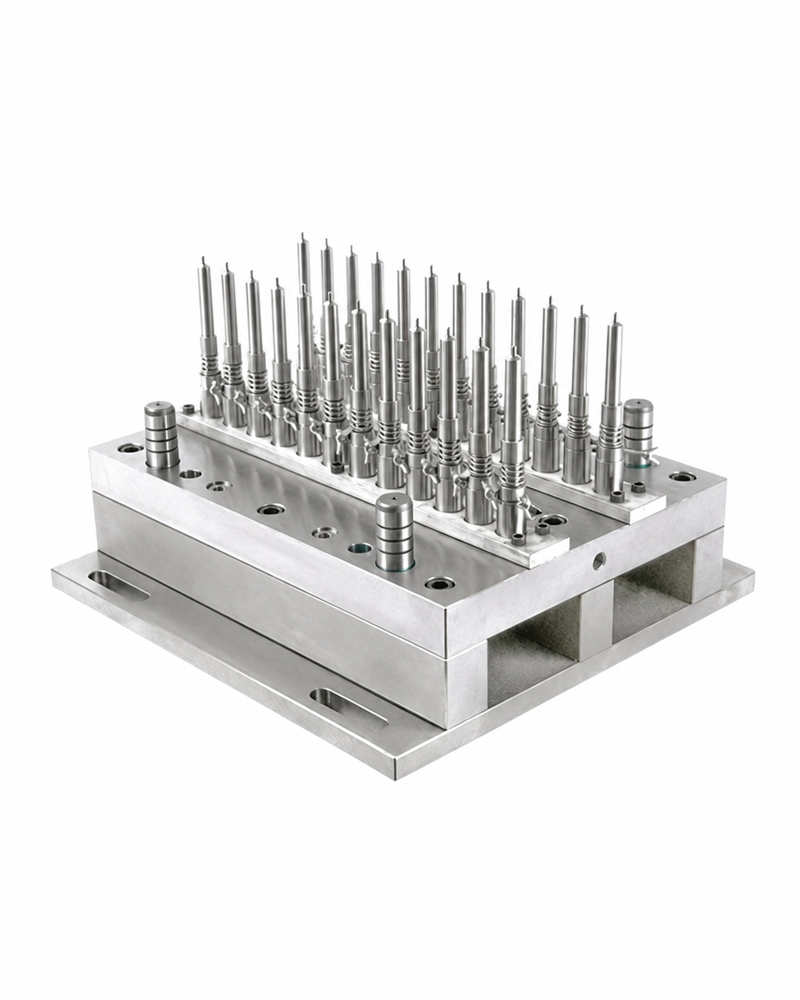
A tube that slips by 0.05 mm during printing produces a print that looks blurred at the edges. Look for a mandrel with both mechanical clamping and vacuum, runout under 0.05 mm, and a compliant section that can absorb ovality. Then test with your worst tube, not a perfect sample from the moulding line.
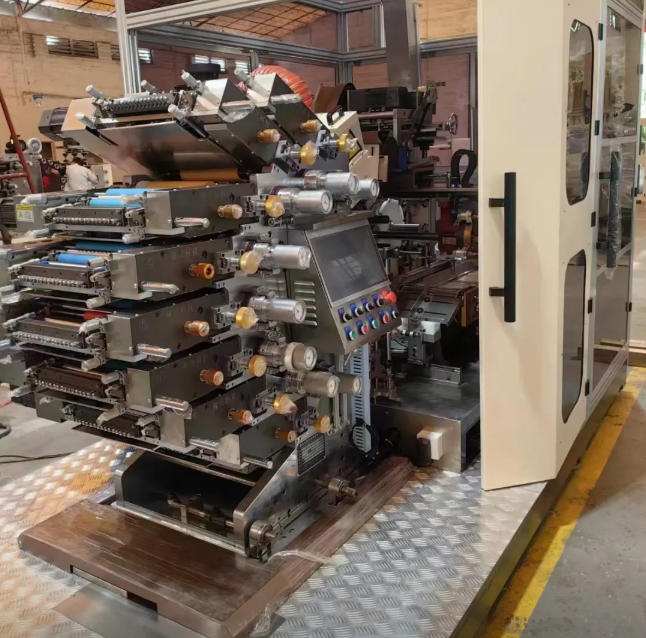
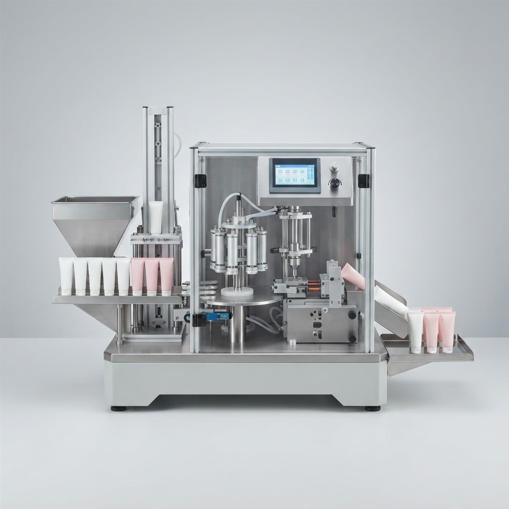
Plastic and aluminium tubes behave differently on the same mandrel. Versatility lives in the tooling, not the frame.
Industry insight: the shift to mono-material and recycle-ready tubes is changing substrate behaviour on the print floor. These tubes are stiffer, smoother and often thinner-walled. Settings that worked on a standard ABL laminate can smear on a mono-material PE tube. A machine with stored recipes per substrate turns that into a two-minute recall instead of an afternoon of trial prints.
VII. Evaluating User Interface and Labor Efficiency
Reducing the learning curve for operators minimizes human error and increases consistent output.
Point 1: Recipes beat experience.
A PLC is the programmable controller that runs the machine. An HMI is the touch screen you use to talk to it. Together they should store a full recipe: mandrel position, squeegee pressure, stroke length, print speed, UV power and cure delay. An operator should recall a job by number, not rebuild it from memory.
Point 2: Safety is a specification.
Look for CE marking, interlocked guards, a light curtain at the loading point, emergency stops within reach of every operating position, and UV shielding that does not depend on a curtain being closed by habit. In high-speed work, a guard that slows the line is better than a hand that does not come back.
Point 3: Fewer specialists, more consistency.
With good recipes and clear SOPs, one trained setter can run a shift with two assistants. That is the difference between a plant that depends on one expert and a plant that can add a second shift next quarter. Plan three to five days of hands-on training at installation, covering setup, ink handling, UV safety, cleaning and basic fault-finding.
Field note: restrict recipe editing to named setters. In plants where every operator can change parameters, we consistently see shift-to-shift colour variation that no machine upgrade fixes.
VIII. Cost-Effectiveness and ROI Analysis
The “best” machine is the one that optimizes the balance between initial capital expenditure and long-term operational savings.
Point 1: Energy and ink waste are small per tube and large per year.
A four-colour UV machine typically draws 8–15 kW. Power is rarely the deciding cost. Startup waste is bigger: each colour change can cost 20–50 tubes before registration and density settle. On 40 changeovers a month, that is up to 2,000 tubes of scrap, plus the labour to sort them out.
Point 2: Reject rate moves the bottom line fast.
Run the numbers on a mid-size plant: 1,000,000 tubes a month, printing cost around USD 0.055 per tube, reject rate 3%. That is 30,000 wasted tubes, or USD 1,650 a month — about USD 19,800 a year. Cut rejects to 0.5% and you recover roughly USD 16,500 a year. No extra sales, no extra staff.
Point 3: Payback usually comes from three places at once.
Add the numbers honestly:
- Scrap reduction (as above).
- Labour: one fewer operator per shift is often USD 20,000–30,000 a year in most markets.
- Capacity: two extra productive hours a day at 3,000 tubes an hour is 6,000 tubes a day you can bill for.
On a USD 95,000 machine, that mix usually lands under three years. If the math needs ten years to work, the machine is solving a problem you do not have yet.
IX. Strategic Sourcing: Choosing the Right Vendor/Partner
The machine is only as good as the support system behind it, especially for distributors and large-scale manufacturers.
Point 1: Niche experience shows in the questions they ask.
A vendor who knows cosmetic and pharma tube work will ask for your tube samples, artwork files, ink brand, cure target and daily volume before quoting. A vendor who quotes from a catalogue will ask for your budget first. Ask for reference lines in your region and talk to those customers about downtime, not about satisfaction.
Point 2: Installation, training and calibration are part of the product.
A proper handover includes a factory acceptance test on your tubes and artwork, site acceptance, and — for pharma work — IQ, OQ and PQ documentation. IQ confirms the machine is installed as designed. OQ confirms it runs inside stated limits. PQ confirms it keeps producing good tubes in real production. Pair that with 21 CFR 211.94 for container and closure requirements, and with ISO 22716 if you also print cosmetic tubes.
Point 3: Warranty and software commitments outlive the sale.
Twelve to twenty-four months is normal. What matters more is what happens in month thirty. Ask how long PLC software updates are supported, whether the HMI can be backed up to a USB drive, and whether remote diagnostics can reach the controller. Then ask for a print trial on your own tubes. At Miyoda Packaging Machinery we run customer artwork on customer tubes before shipment, because an ink or mesh problem is cheaper to solve in our factory than on your floor.
For distributors: ask for local first-line maintenance training, a demo unit you can show, and a clear spare parts stocking plan. A printer you cannot service is a printer you cannot sell twice.
X. Conclusion
The decision matrix, in order:
| Decide in this order | Question to answer | What a bad answer looks like |
|---|---|---|
| 1. Volume | What is my daily output at 80% efficiency? | A speed number from a brochure |
| 2. Precision | Does it hold ±0.1 mm at colour four, at tube 5,000? | A demo print on someone else’s tube |
| 3. Versatility | Can it take my 13 mm sampler and my 50 mm lotion tube? | Tooling costs revealed after the order |
| 4. Support | Who answers at 3 a.m. and how fast do parts arrive? | A sales email address |
Buy the machine that removes your bottleneck. If registration scrap is killing you, spend on the indexer and the frame, not on a faster loader. If changeovers are killing you, spend on quick-release tooling and recipes, not on six colours. If labour is killing you, spend on automation at the loading end first, because that is where hands touch the product most.
Then check the whole line. A printer is only as good as what feeds it and what follows it. A fast printer behind a slow tube extrusion line is a bottleneck with a nice paint job. Match it to your laminate tube making output, your shoulder and heading capacity, your capping systems and your tube filling and closing speed.
If you print very long runs of simple art, compare offset printing for high-volume tube work before you commit to screen. Screen wins on ink laydown, opaque whites and short runs. Offset wins on speed and cost per tube at volume. Some plants run both.
The final step is a conversation with people who build these lines. Send your tube sizes, artwork, ink and monthly volume to our engineers, and ask for a print trial before you ask for a price. You can talk to our engineers here, or review the configuration options on our tube silk screen printing machine page.
Quick Glossary of Tube Printing Terms
| Term | What it means in practice |
|---|---|
| Registration | How well one colour lines up with another. Measured in millimetres. |
| Mandrel | The rod that holds the tube from the inside during printing. |
| Squeegee | The rubber blade that pushes ink through the screen mesh. |
| Mesh count | Threads per inch in the screen. Higher count holds finer detail. |
| Dyne value | A measure of surface energy. Higher means ink wets better. |
| Flame treatment | A brief flame that raises surface energy on PE tubes so ink sticks. |
| UV curing | Drying ink with ultraviolet light in under a second. |
| IR drying | Drying ink with heat. Slower, and hotter on the tube. |
| Changeover | The work of switching from one job to another. |
| TCO | Total Cost of Ownership. Purchase plus everything after it. |
| OEE | Overall Equipment Effectiveness. Real output as a share of ideal output. |
| IQ / OQ / PQ | Installation, Operational and Performance Qualification for pharma lines. |
FAQ
1. How do I know if I need a semi-automatic or a fully automatic machine?
Count your tubes per day, not per year. Under 20,000 tubes a day with frequent design changes, a semi-automatic machine usually wins on cash flow. Above 50,000 tubes a day on repeat orders, a fully automatic rotary machine wins on cost per tube. Between those numbers, look at changeover frequency, because it decides which machine actually runs faster.
2. Which drying system is better for pharmaceutical-grade inks — UV or IR?
UV curing suits most pharma tube work. It cures in under a second, adds little heat, and works with low-migration inks on PE and laminated tubes. IR drying still makes sense on aluminium tubes and long runs with simple artwork. The deciding factor is the ink datasheet, not the machine brochure.
3. How does a machine handle PE, laminated and aluminium tubes on the same line?
Through tooling and recipes. Each material needs its own mandrel set, surface treatment setting and ink family. PE needs flame or corona treatment. Laminated tubes need corona and a matched cure window. Aluminium needs a different ink and no flame. A machine with stored recipes switches between them in minutes.
4. What is a realistic setup time for a colour or design change?
On a well-built automatic machine, a screen-only change takes 5–10 minutes. A full job change with a new diameter and new parameters takes 15–30 minutes. Manual machines often need one to two hours. Ask for a video of a real changeover, timed, before you buy.
5. How do I stop ink from bleeding or smudging on soft tubes?
Four things. Treat the surface before printing so ink wets properly. Hold ink viscosity inside a narrow band. Support the tube with a full-length mandrel so the wall does not flex under the squeegee. Confirm full cure before the tube is handled. If one of those four is off, the others cannot compensate.
6. What causes registration errors, and how are they fixed?
Loose screen clamps, worn indexer parts, inconsistent tube seating and screen tension loss cover most cases. Servo indexing plus registration pins hold position mechanically. Vision systems can correct drift during a run. Neither helps if the frame flexes, so check the mechanical build before you pay for cameras.
7. Can the printer be added to an existing packaging line?
Usually yes, if the speeds match. Size the printer 10–15% faster than the line so it can catch up after a stop, and confirm the start, stop and line-full signals are compatible. Ask for a layout drawing and a signal list before you order, not after.
8. What is the realistic lifespan of a tube printer running 24/7?
Eight to twelve years is normal for a well-maintained automatic machine with hardened rails and branded drives. Wear parts are the real variable: screens last 50,000–100,000 impressions, squeegees need replacement or resharpening every few weeks, and UV lamps have a fixed hour count. Budget consumables annually and the machine will outlast the artwork.
9. How do I calculate ROI when moving from manual to automatic?
Add four numbers: scrap reduction, labour saved, extra billable hours, and energy or ink savings. Then divide the machine price by the annual total. In most business cases we review, the payback lands under three years. If it takes longer, the volume assumption is usually too optimistic.
10. Are tube printing machines compliant with GMP for pharma packaging?
Compliance comes from the whole system, not the printer alone. Look for CE marking, stainless or easily cleaned surfaces, guarded UV zones, documented IQ/OQ/PQ, and change control for recipes. Then validate the print process on your own tubes. A machine can be GMP-ready and still fail a PQ if the settings are not locked down.