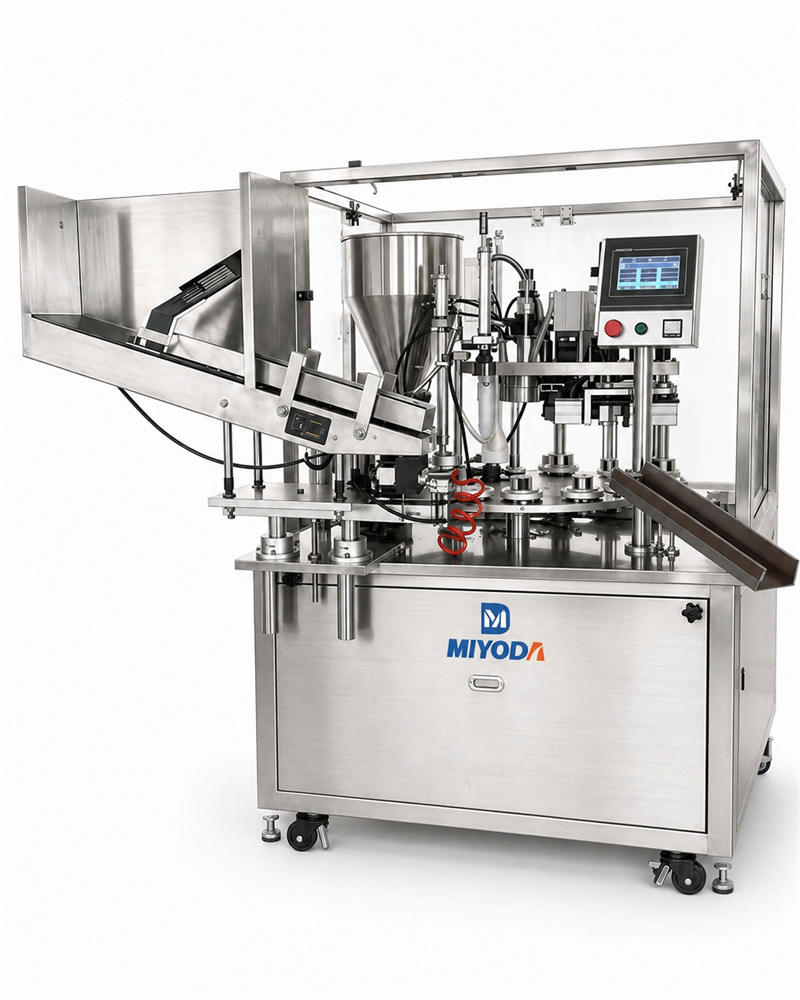
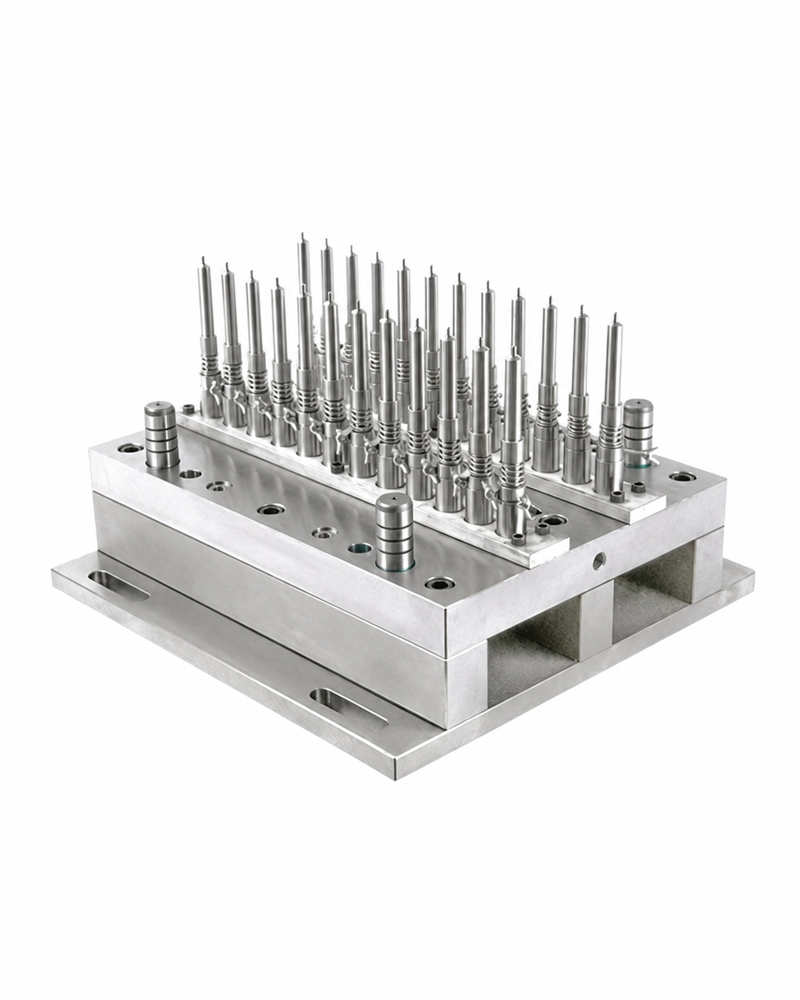
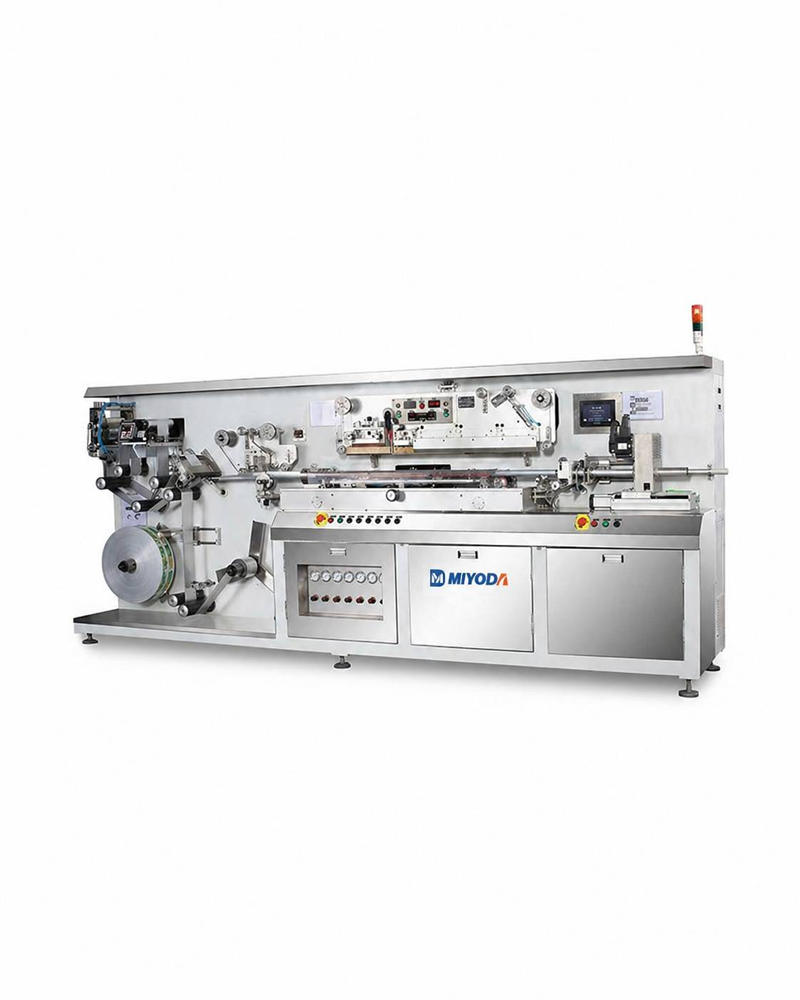
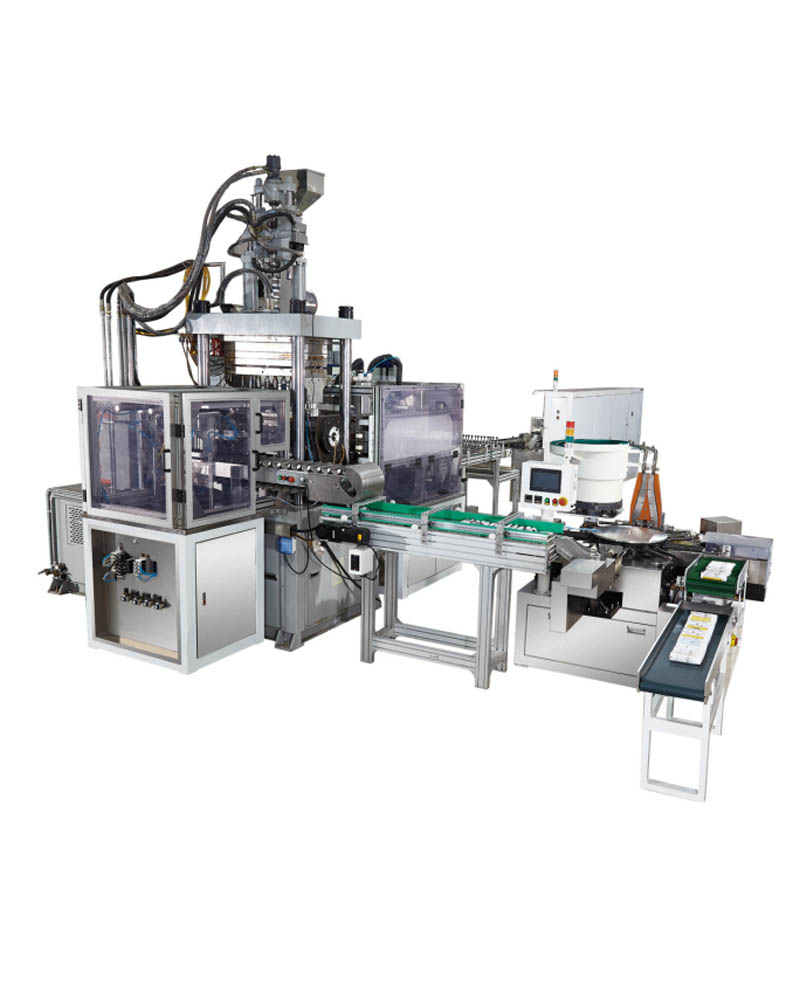
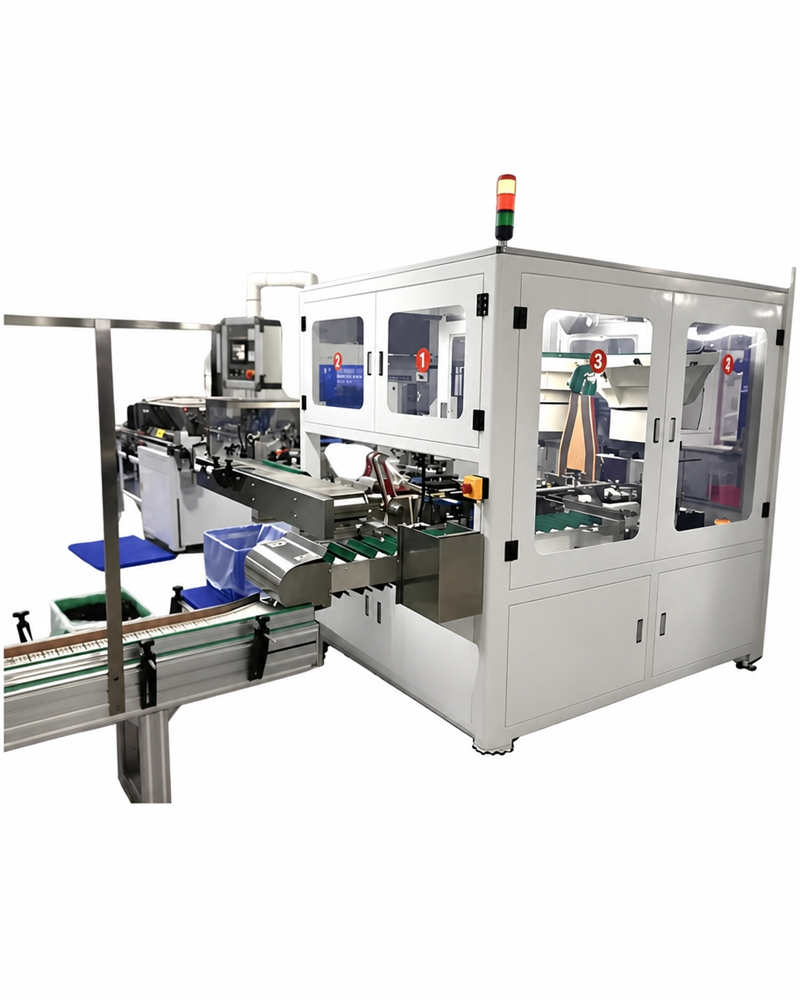
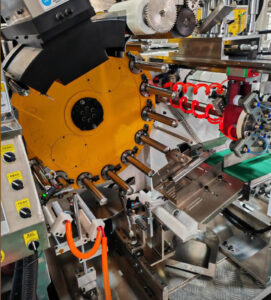
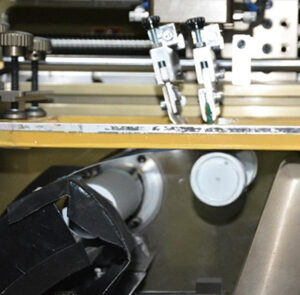
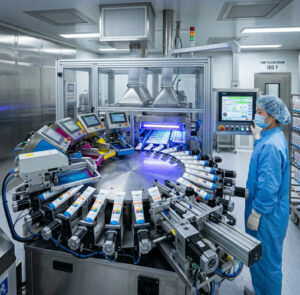
A tube printing system with a rotary carousel. The carousel holds the tube steady while each colour station prints in turn.
A tube order can be lost in three places. The print peels in the customer’s bathroom. The colours drift halfway through a batch. The machine stops for four hours because a $6 clamp came loose.
None of these are design problems. They are selection problems. The buyer chose a machine that could print well on a demo tube, in a showroom, on a good day.
This guide is for the people who sign the order. Brand owners building a soft tube line. Contract packers adding capacity. Distributors who must support several clients with one platform. We will walk through nine decisions, in the order they matter, and show what to check before money moves.
The goal is simple. Stop buying a machine. Start buying a production outcome.
Match Throughput and Precision to Your Real Demand
The first decision is capacity, not brand. A machine that runs 150 tubes a minute is wasted money if your average order is 8,000 tubes. A machine that runs 40 a minute becomes a bottleneck the moment you win a national retail account.
Start with three numbers from your own order book:
- Average batch size. Under 10,000 tubes per design points to fast changeovers over raw speed.
- Peak batch size. Your largest single order in the next two years sets the floor for capacity.
- Design complexity. Fine text, tight registration, and multiple colours each slow the machine down.
Small-run luxury cosmetics and high-volume pharmaceutical tubes pull in opposite directions. Luxury work rewards quick screen changes and short setup times. Pharma work rewards stability, documented settings, and the same result on tube 1 and tube 40,000.
Then look at precision. A 4 pt warning line is not the same job as a 14 pt logo. If your artwork includes small regulatory text, ask for the printer’s measured registration tolerance and a sample at that font size. Most automatic machines hold about ±0.1 mm. That number is only useful if you see it printed on your own tube.
Finally, balance automation against control. Full automation removes labour from the tube path. It also removes the operator’s hand from the process, so quality now depends on settings, sensors, and cure control rather than on a person watching every print. That trade is good, but only when the machine has proper first-piece checks and rejects bad tubes automatically.
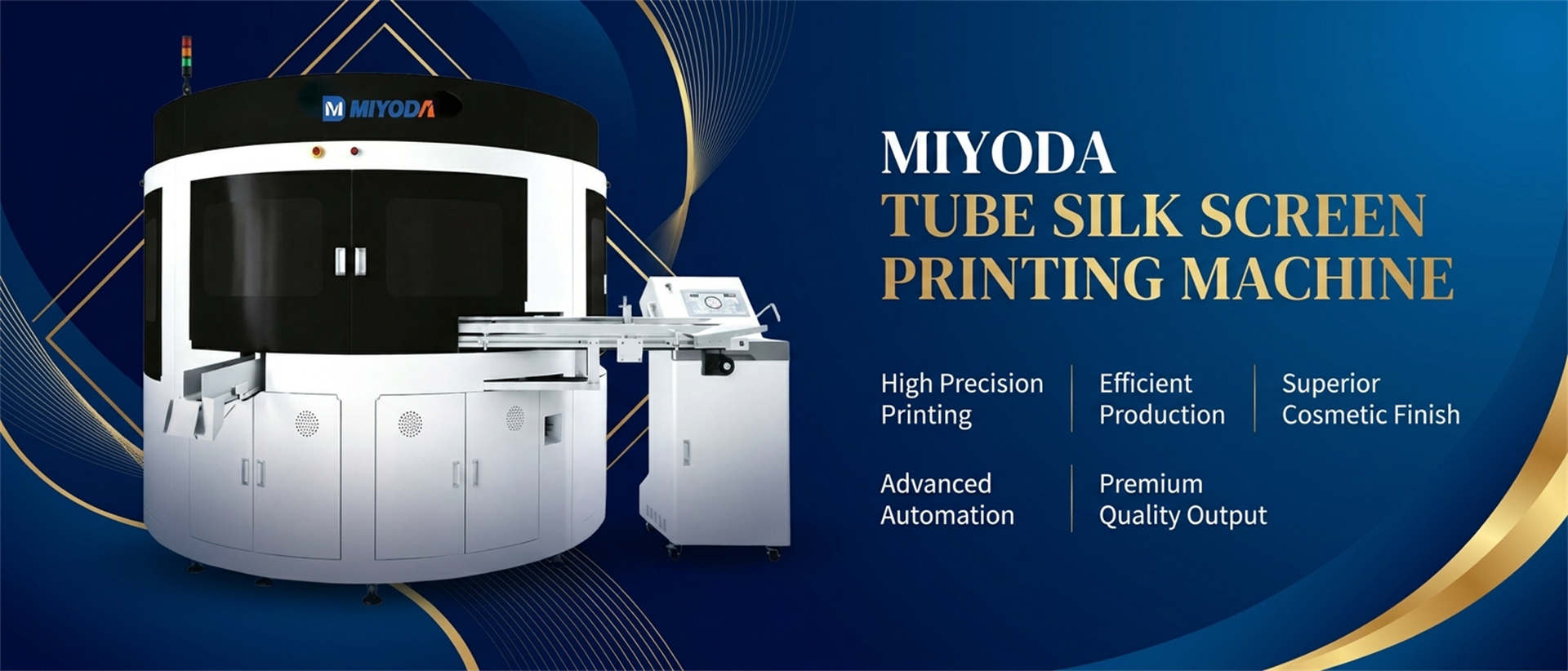
A rotary carousel printer. Tube diameter, screen count, and cure time decide how fast this machine can actually run.
Cosmetic vs Pharmaceutical: A Side-by-Side Checklist
Both industries want clean print. They audit it differently. A cosmetic buyer judges a tube with their eyes. A pharma auditor judges it with a lamp, a specification, and a batch record.
Use this table when you write your requirements. It is also a fast way to tell whether a supplier has actually served your sector.
| Requirement | Cosmetic tubes | Pharmaceutical tubes |
|---|---|---|
| Main goal | Shelf impact and brand feel | Legibility and traceability |
| Colour | Vibrant, metallic, neon, spot gloss | Controlled, matched to a master sample |
| Text size | Logo and claims, mostly large | Dosage, warnings, batch codes, often 4–6 pt |
| Ink | Decorating inks, specialty effects | Low-migration inks with documented data |
| Cure | Fast, cosmetic-safe | Fully cured, verified, and logged |
| Records | Batch reference | First-piece sign-off, cure logs, ink lot numbers |
| Standards | Brand spec, ISO 22716 GMP alignment | GMP, plus 21 CFR 211.94 on containers and closures |
Materials matter just as much as standards. Tubes arrive as PE, EVA, PBL, or aluminium laminate. Each one behaves differently under heat and under the squeegee. A machine that prints PE beautifully can deform a thin PBL tube if the cure zone runs too hot. Ask the supplier which substrates their machine has actually run, and ask for the tube surface temperature they hold during curing.
For a closer look at how the two sectors differ in practice, this comparison of cosmetics and pharma print requirements is worth ten minutes before you draft a specification.

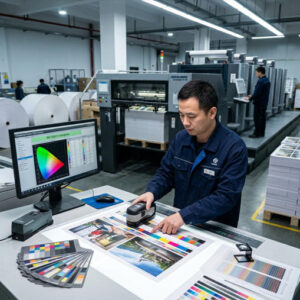
One machine, many substrates. The range of finishes on the bottom row is decided by ink, screen, and cure settings.
Ink Adhesion: The Technical Fixes That Prevent Recalls
Ink does not bond to untreated plastic. Plastic has low surface energy. Ink needs a high-energy surface to wet and grip. The gap is closed by treatment, seconds before printing.
Three systems do the work:
Surface treatment. Flame or plasma treatment raises surface energy, measured in dynes per centimetre. Most PE tubes need 38 to 42 dynes to hold ink. Plasma is cleaner and easier to control. Flame is fast and cheap to run. Either way, the treatment head must sit close to the first print station, because treated surface loses energy over time.
Curing. UV curing sets ink in under a second and keeps the tube cool enough to hold its shape. IR drying works by heat and suits some solvent inks, but it pushes more heat into the tube. For thin-wall laminate, that heat is a deformation risk.
| Curing type | Speed | Heat into tube | Best fit |
|---|---|---|---|
| UV mercury | Very fast | Low | High-volume PE and laminate |
| UV LED | Very fast | Very low | Heat-sensitive tubes, energy savings |
| IR / hot air | Slower | High | Solvent inks, some specialty effects |
Viscosity control. Ink thickness decides whether a line prints sharp or bleeds. Thin ink spreads and loses opacity. Thick ink clogs the mesh and leaves streaks. A machine with a closed ink system and temperature control holds viscosity steady through a long shift. A machine without one asks the operator to top up thinner by feel, and the print drifts all afternoon.
Test adhesion the same way every shift. Press tape on a cured print, rub it down, and pull. If ink lifts, stop the line. The cause is usually one of three things: weak treatment, under-cured ink, or the wrong ink for the substrate. Our guide to common tube printing mistakes lists the order to check them in.
Fitting the Printer Into Your Workflow
A printer only performs as well as the line around it. The most common integration failure is not electrical. It is rhythm.
Three things decide whether a new printer speeds up your line or slows it down:
- Loading and unloading. Automatic loaders need tubes presented in a consistent orientation. If your upstream machine outputs tubes in bulk bins, you may need a orienting feeder. That cost belongs in the budget from day one.
- Screen changes. A screen-only change takes 5 to 10 minutes on a well-designed machine. A full job change with a new diameter takes 15 to 30 minutes. Ask for a live demonstration, and time it yourself with a stopwatch.
- Data. Print counts, reject counts, and cure logs should be exportable. Pharma buyers need those records for batch files. Cosmetic buyers use them to price jobs accurately.
www.youtube.com/watch?v=RX1XMdHuIGE
Watch how tubes move through the print and handling stages, and note where the buffer sits between stations.
Plan the line as one system. The printer sits between tube making and capping. If the printer runs 10 to 15 percent faster than the machines on either side, short stops get absorbed and the line keeps moving. If it runs at exactly the same speed, every small pause becomes a full stop upstream. This guide to planning a complete tube printing line covers conveyor layout and signal handshakes in detail.
Downstream, a tube capping machine sets the pace for the back end. Upstream, a plastic tube extrusion line decides tube quality before print ever starts. Neither can fix a printer that was sized for the wrong job.
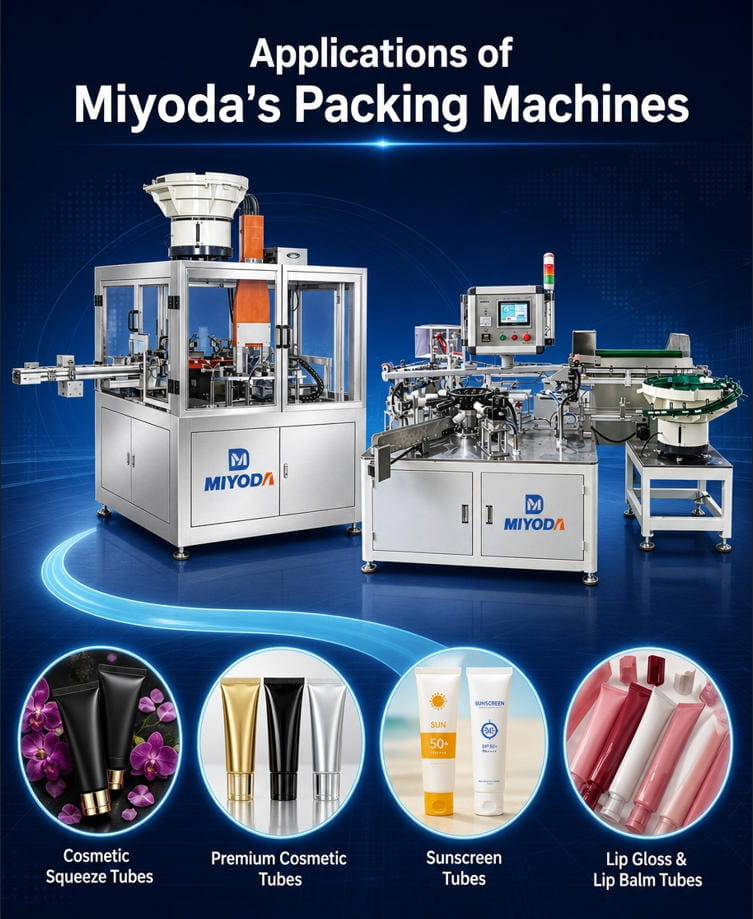
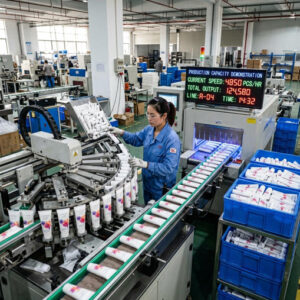
Printing is one station in a chain. Loading, capping, and filling decide whether the chain runs at speed.
Judging the Supplier, Not the Brochure
The machine arrives once. The supplier stays for ten years. Most buyers spend 90 percent of their evaluation time on specifications and 10 percent on the company that will support those specifications.
Flip that ratio.
Ask for sector proof. Request two or three references from buyers making the same product as you, in the same tube material. A machine running cosmetic PE tubes tells you little about pharma PBL work. If the supplier cannot name a project similar to yours, treat that as information, not as a rejection. Just price the risk.
Ask what was customised. Off-the-shelf machines are fine for standard work. But mandrel sizes, cure tunnel length, and screen frames usually need adjustment for a specific tube. A supplier who shows you drawings with your tube dimensions on them is a supplier who has done this before. Our own clients often start by sending samples, and we build the mandrel set around their actual tube, not a catalogue size.
Ask to see the factory. Not a video. A live walkthrough, or at minimum a recent audit report. Look at assembly cleanliness, wiring layout, and how machines are tested before shipment. A factory that runs every machine for several hours before crating it will find most faults before you do. This look at how Miyoda builds its machines shows the production and testing setup, and the certifications to ask for lists the documents worth requesting in writing.
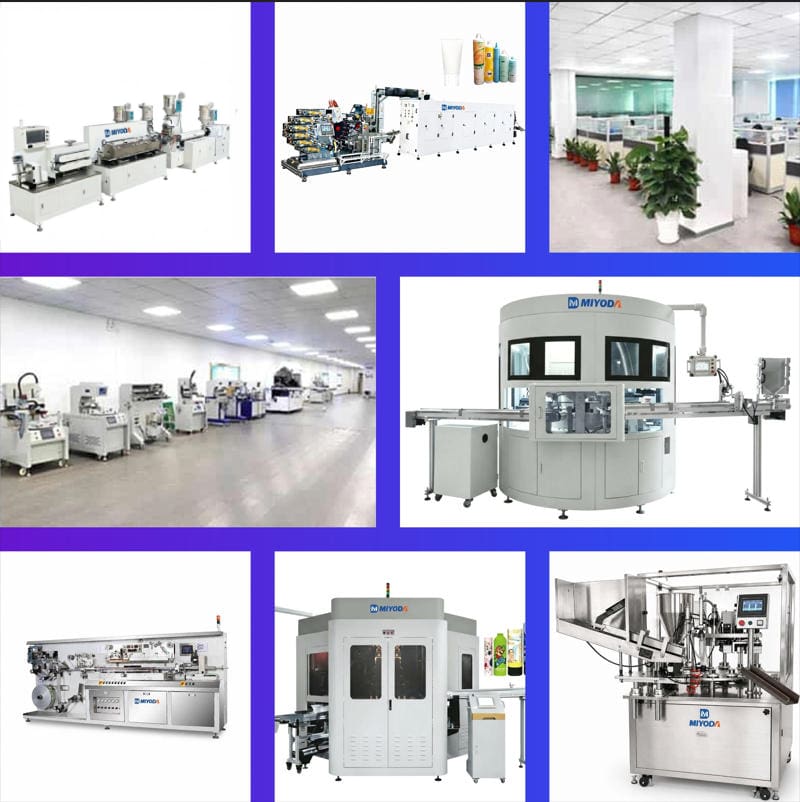
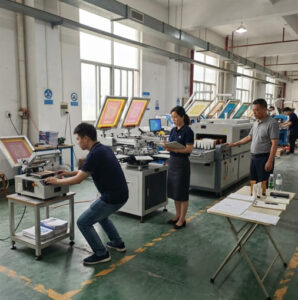
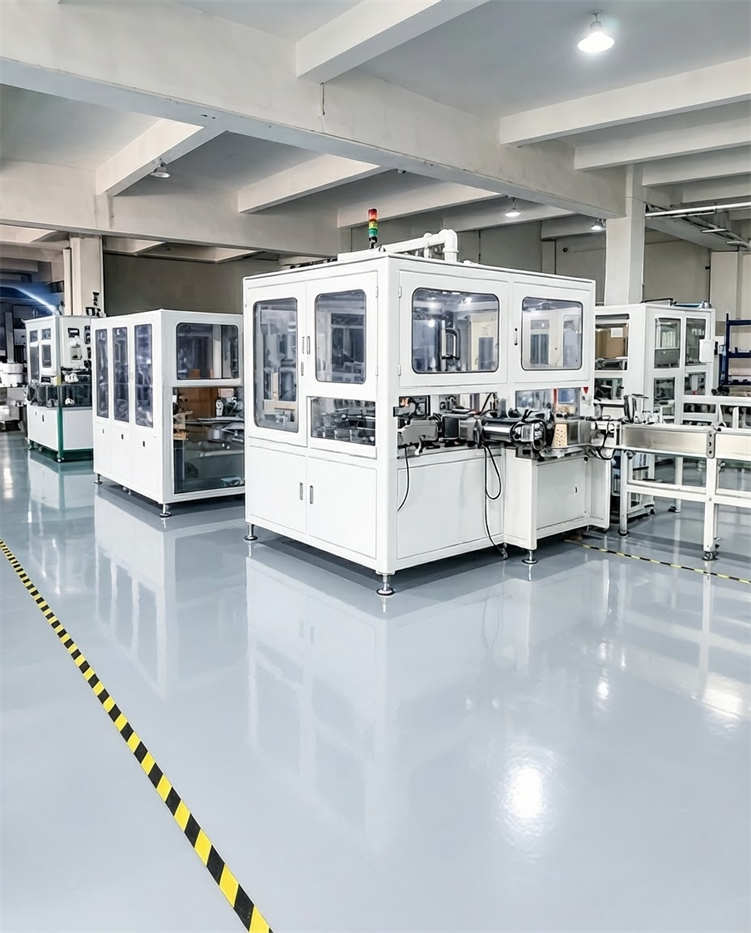
Assembly floor, testing bay, and showroom. Buyers should see all three before they sign.
The Hidden Costs: Service, Training, and Spare Parts
Total cost of ownership is decided after the invoice. Purchase price is the smallest part of a five-year cost picture, and the easiest to compare.
| Cost line | What to check | Typical impact |
|---|---|---|
| Technical support | Local engineer or remote diagnostics with camera support | Each day of downtime can cost more than a year of spares |
| Training | Days on site, written procedures, refresher option | Untrained setters cause most colour and registration drift |
| Spare parts | Lead time for squeegees, clamps, lamps, mandrels | A two-week part delay can idle a line |
| Energy | UV lamp type and compressed air use | LED curing cuts power draw noticeably |
| Freight and install | Crated size, rigging, commissioning days | Often 5 to 10 percent of machine cost |
Two questions separate good suppliers from average ones. First: how fast can you send a critical part, and which parts do you recommend we stock? Second: can your engineer see my screen over a video call? Remote diagnosis is not a gimmick. Most registration and cure faults are visible in a two-minute video of the machine running.
Training deserves its own budget line. Expect three to five days of hands-on training for operators, plus a written setup procedure for each tube size. Restricting recipe changes to trained setters is the cheapest quality control a factory can install. This breakdown of the hidden costs that follow the invoice puts numbers against each line.
Scalability: Leaving Room to Grow
Your machine should not cap your growth. Two years from now you may run more colours, new tube materials, or a second shift.
Check three things before you buy:
- Modular stations. Can you add a colour station, a hot stamping unit, or a varnish station later? A frame that accepts extra stations costs a little more now and saves a full machine later.
- New materials. Recycled and bio-based plastics behave differently. They often need gentler treatment and lower cure temperatures. Ask whether the machine’s cure zone can be tuned down without losing adhesion.
- Software updates. Recipes, alarm logs, and reporting should be updatable. A machine with locked firmware becomes outdated while it still has ten years of mechanical life left.
If your volumes are still small, a semi-automatic start with a clear upgrade path is often smarter than stretching for a large automatic unit you cannot fill. Our spec checklist in the tube printer buyer’s guide includes a section on upgrade paths by station count.
The Final Validation Before You Pay
Never buy from a brochure. Run your own tube, your own ink, and your own artwork on the machine before you commit.
A proper trial answers four questions:
- Does the print hold 4 pt text cleanly?
- Does the ink pass a tape test after full cure?
- What is the real reject rate over a 30-minute run?
- How long does a colour change actually take, measured by you?
Set acceptance targets in the purchase contract, not in conversation.
| Acceptance metric | Suggested target |
|---|---|
| Registration tolerance | ±0.1 mm on your artwork |
| Reject rate at steady state | Under 0.5 percent |
| Colour consistency across batch | Delta E under 2 |
| Cure check | Passes tape and rub test at line speed |
| Changeover, screen only | 10 minutes or less |
| Changeover, full job | 30 minutes or less |
Then read the paperwork. Warranty length, response time, who pays for travel, and what counts as a wear part. A service level agreement with a stated response window is worth more than an extra year of warranty with no response promise.
If you want a structured version of this step, use our pre-purchase audit checklist. It turns the trial into a signed document both sides can point to later.
Glossary: Words You Will Hear on a Quote
| Term | Plain meaning | Example |
|---|---|---|
| Registration | All colours landing in the right place | Red logo inside its white outline |
| Squeegee | Rubber blade that pushes ink through the mesh | 75 Shore A polyurethane |
| Mesh count | Threads per centimetre in the screen | 150 mesh for 4 pt pharma text |
| Snap-off | Small gap between screen and tube | 2 mm |
| Mandrel | Rod that holds the tube round during print | 35 mm for a 35 mm tube |
| Dyne level | Surface energy of the tube | 40 dynes/cm after treatment |
| Delta E | Measured colour difference between samples | Under 2 is hard to see |
| Viscosity | How thick the ink flows | Held steady by a closed ink system |
| TCO | Total cost of ownership over the machine’s life | Purchase plus service, spares, and downtime |
Buying a tube printer is a decision about uptime, not about specifications on a page.
The buyers who get it right do four things. They size the machine to their real order book, not to a brochure headline. They test ink adhesion and cure on their own tube. They price the support package as carefully as the machine. And they validate everything with a measured trial before they pay.
Do that, and the printer stops being a cost centre. It becomes the station that lets you promise a launch date, pass an audit, and charge for a tube that looks better than the one beside it.
If you are mapping a new line or replacing an aging printer, send us your tube samples and artwork. We will run them and share measured registration, adhesion, and speed data. You can reach the team through Miyoda Packaging Machinery and start with a line review rather than a price list.
FAQ
1. How do I decide between UV and IR curing for my tube material?
Choose UV for PE, PBL, and thin-wall laminate. UV sets ink in under a second and puts very little heat into the tube. Choose IR only when your ink chemistry requires it, and expect to manage tube temperature closely, especially on laminate.
2. What is the average downtime for a screen change, and how do I cut it?
A screen-only change takes about 5 to 10 minutes on an automatic machine. A full job change takes 15 to 30 minutes. You cut it further with quick-release frames, pre-registered screens prepared offline, and stored recipes for each tube size.
3. How does the machine hold registration across 10,000+ units?
Servo indexing keeps position stable, and mechanical indexing does the same when clamps stay tight. The drift usually comes from screen tension loss and heat build-up. Re-check clamps after the first two hours, and keep mesh tension in the 18 to 22 N/cm range.
4. Can the machine handle recycled or bio-based plastics without losing print quality?
Usually yes, with adjustment. Recycled plastics often vary more between batches, so surface energy swings. Test incoming tubes with dyne pens, raise treatment slightly, and keep cure temperature lower to avoid distortion.
5. What causes ink peeling on cosmetic tubes, and how does the machine prevent it?
Peeling comes from weak surface treatment, under-cured ink, or the wrong ink for the substrate. The machine helps by treating the tube right before printing, holding cure dose steady, and flagging low-temperature cure conditions. The rest is incoming material control.
6. How do I calculate ROI from throughput and waste reduction?
Add labour saved per tube, scrap reduction, extra output per shift, and any price premium for better print. Then subtract service, spares, and energy. Compare five-year totals. A machine that cuts rejects by 4 points often pays back within two years.
7. What skill level does my staff need to run this equipment?
Operators need three to five days of training to run, load, and clean the machine. Setup and recipe changes should stay with one or two trained setters. No engineering degree is required, but written procedures matter more than experience.
8. How does the machine comply with pharmaceutical GMP?
Compliance comes from records and control, not from the machine alone. Look for documented settings, cure logs, alarm history, and first-piece sign-off. Ask for alignment with ISO 22716 for cosmetics and with GMP expectations for drug packaging.
9. What is the typical lifespan of consumable parts?
Screens last 50,000 to 100,000 impressions with good care. Squeegees are re-sharpened or replaced every 50,000 to 80,000 prints. UV mercury lamps run 1,000 to 2,000 hours, while UV LED modules last far longer. Our maintenance routines for soft tube printers include a replacement calendar.
10. Can the printer be added to a fully automated line with existing tube machines?
Yes, if the speeds match and the handshakes are defined. Size the printer 10 to 15 percent faster than the line, keep tube orientation through transfers, and exchange start, stop, and line-full signals. Ask for a layout drawing and signal list before you order.