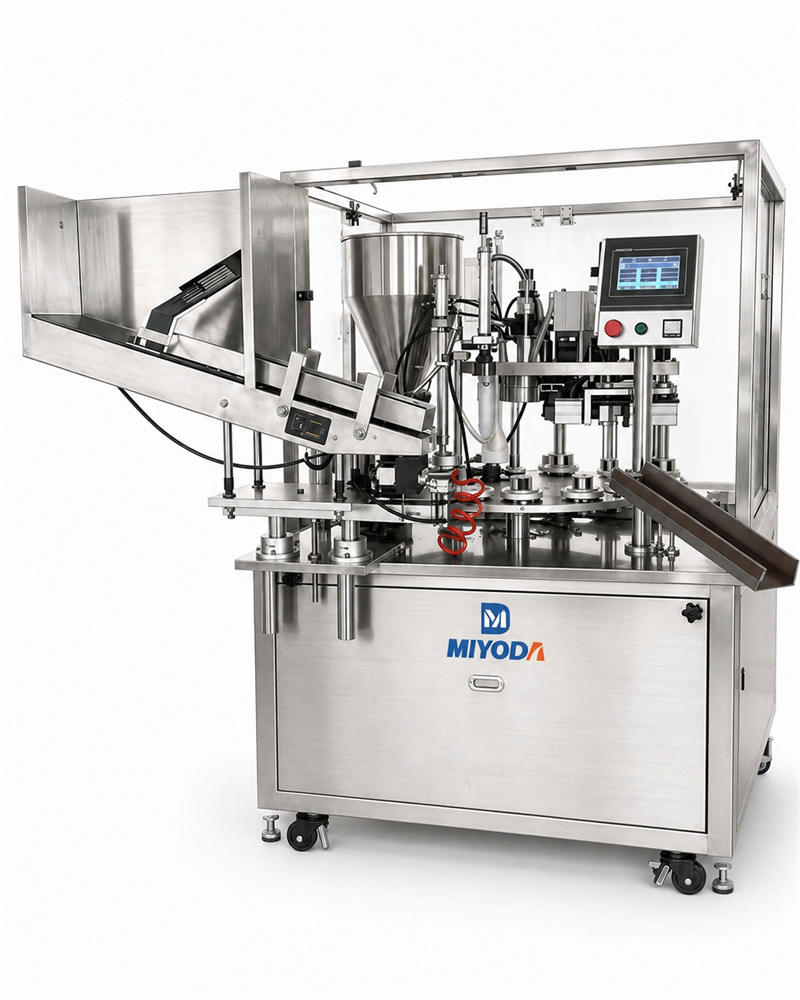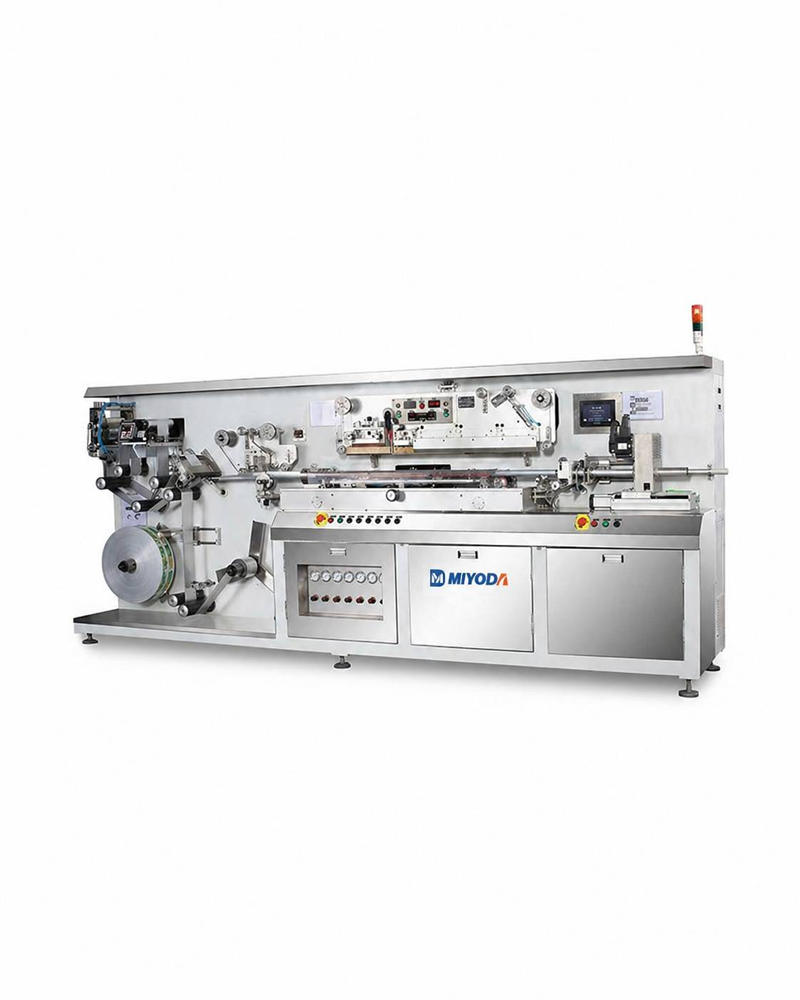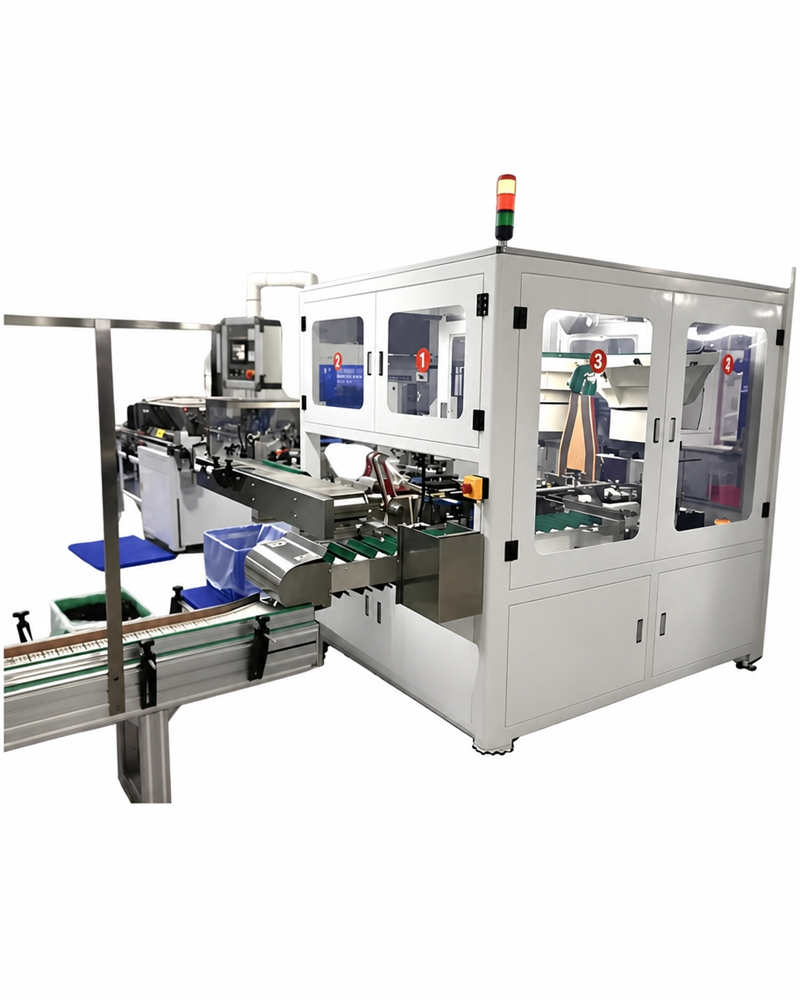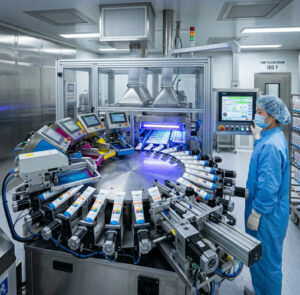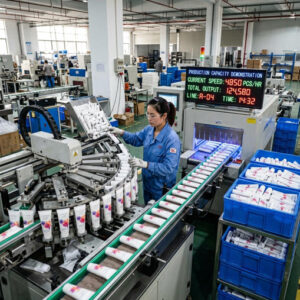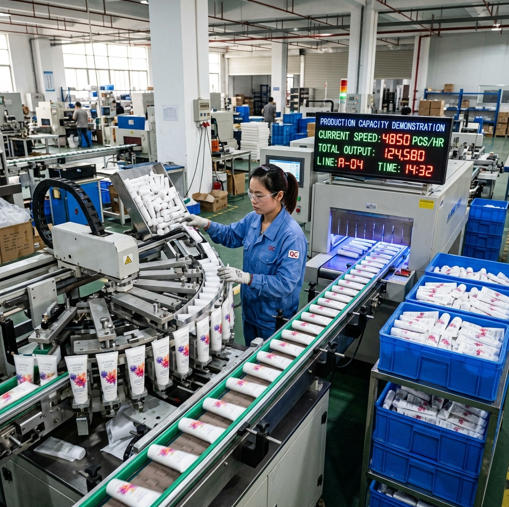

A four-colour automatic tube printer holding register while tubes index past the squeegee.
A buyer picks up a serum tube from a shelf. She has not read the label yet. She has already judged the product. The logo edges are sharp. The white is solid, not grey. The surface feels smooth under her thumb.
That judgment takes about two seconds. It comes from the print.
For soft tubes, most of that print still comes from one method. Silk screen printing carries the colour, the shine, and the tiny dosage text that regulators read under a lamp. When the print fails, the tube fails. When it holds, the tube sells.
This guide is written for people who buy the machines. Brand owners setting up a tube line. Contract packers adding capacity. Distributors who need one platform to serve many clients. We will look at what the method does, where it breaks, and what to check before you sign a purchase order.
What Silk Screen Printing Is, in Plain Words
Definition: Silk screen printing is a stencil method. A fine mesh is stretched tight on a frame. Ink sits on top of the mesh. A rubber blade, called a squeegee, pulls the ink through the open areas of the mesh and presses it onto the tube. The closed areas stay dry. One screen prints one colour.
The method is old. It is also hard to replace on a round, squeezable surface. The screen wraps the tube’s curve. The ink layer sits on top of the plastic instead of soaking in. That gives you dense colour in a single pass.
You can read the general history and mechanics of screen printing if you want the background. What matters on a production floor is simpler. Screen printing puts down a thick, opaque ink film at a speed that keeps up with a tube line.
Why This Method Still Wins on Soft Tubes
Three things decide whether a tube looks premium: opacity, adhesion, and feel.
Opacity. A white logo on a coloured tube needs hiding power. Screen ink deposits a film several times thicker than a digital or flexo ink film. One pass of a good opaque white usually hides the substrate. Two passes handle dark tubes and metallic backgrounds.
Adhesion. A body lotion tube gets squeezed, rolled, and carried in a bag for weeks. A toothpaste tube meets water twice a day. Screen inks built for PE and laminate hold up to oils, alcohol gels, and constant handling. Labels lift at the seam. Print does not.
Feel. Run your thumb across a screen printed tube and you feel a slight raised edge. That small physical cue reads as quality. Brands pay for it. A matte varnish over a gloss logo is a two-screen job, and it changes how the whole pack is perceived.
Industry note: The market moved. Ten years ago, one machine might run three SKUs all year. Today the same machine may run thirty SKUs in a year, each in smaller batches. Changeover time now decides profit more often than top speed does.
Material Match: Why Print Peels and How to Stop It
Ink does not stick to plastic. It sticks to treated plastic.
Plastic has low surface energy. Ink needs high surface energy to wet the surface and bond. The gap is closed with corona treatment or flame treatment, applied seconds before printing. Treatment raises the surface energy, measured in dynes. Most PE tubes need roughly 38 to 42 dynes per centimetre to hold ink.
Here is the trap. Treatment fades. A tube treated in March and printed in June may have lost several dynes sitting in a warm warehouse. The printer gets blamed. The real cause is the incoming tube.
Fix: test every incoming batch with a dyne pen. It takes ten seconds per tube and saves entire shifts of rejects.
| Tube type | What it is | Where printing happens | Main risk |
|---|---|---|---|
| PE mono-layer | Extruded plastic tube, one material | On the formed round tube | Low surface energy, needs fresh treatment |
| PE with EVOH layer | Extruded tube with a barrier layer | On the formed round tube | Barrier layer can heat-shrink under strong curing |
| ABL | Aluminium barrier laminate | On the flat web, before forming | Web stretch throws registration off |
| PBL | Plastic barrier laminate | On the flat web, before forming | Thin wall, easy to dent during handling |
That table hides a decision most buyers face early. On ABL and PBL tubes, the print usually goes onto the flat sheet, then the sheet becomes a tube. If your volume is laminate, you may need a laminate tube making machine with an inline print unit, not a round-tube printer. On extruded PE tubes, the print goes onto the finished tube, and a round-tube printer is the right tool.
Getting this wrong is expensive. It is the single most common mismatch we see in project reviews.
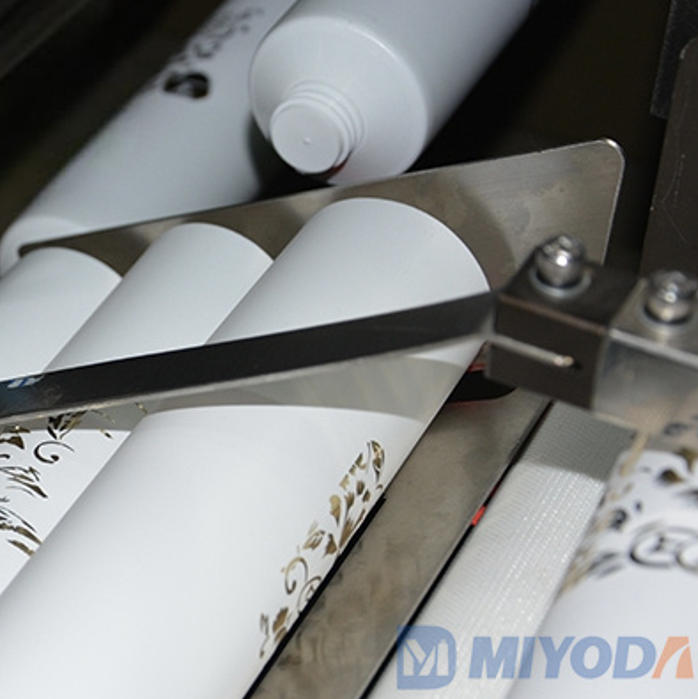
Ink passes through the mesh onto the tube surface. The gold pattern sits on top of the plastic, not inside it.
Fitting the Printer Into the Tube Line
A tube line has a rhythm. Extrusion or lamination makes the tube. Heading forms the shoulder. Printing decorates it. Capping closes it. Filling puts product inside.
Printing sits in the middle, and it is usually the slowest step. If the printer cannot match the speed of the machines around it, the whole line waits.
Three rules keep the rhythm:
- Size the printer 10 to 15 percent faster than the line. A small buffer absorbs short stops without starving the filler downstream.
- Keep tube orientation through every transfer. A tube that arrives rotated 90 degrees becomes a reject.
- Decide inline or offline before you buy. Inline printing on a plastic tube extrusion line removes a handling step and a storage step. Offline printing gives you flexibility to print for several lines from one machine.
Distributors usually choose offline. One printer, many clients, quick changeovers. Brand-owned factories with one dominant product often choose inline.
www.youtube.com/watch?v=hJydOxl5OZU
Watch a full automatic cycle on cosmetic tubes: loading, surface treatment, multi-colour printing, UV curing, and unloading.
Note what the video shows at the curing stage. Tubes leave the last print station and pass under UV lamps. The ink must be fully cured before a tube touches anything, including another tube. UV curing is fast, but it is not instant. A short cooling zone before the collection bin prevents tubes from sticking together and smearing in the box.
Print That Survives a Pharma Audit
In cosmetics, print is a design choice. In pharmaceuticals, print is a record.
A dosage line, a batch number, a warning, an expiry date: each one has to be readable, correct, and identical across batches. An auditor does not check whether the tube looks nice. They check whether you can prove the print was controlled.
What that means on the floor:
- Legible micro-text. A 6 pt warning line is routine. Pushing to 4 pt needs higher mesh counts, sharper artwork, and a clean squeegee edge. Blur at that size is a batch reject, not a cosmetic flaw.
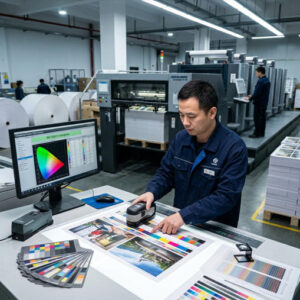
- Consistent colour. Colour drift between batches is measured as Delta E, the calculated distance between two colours. A Delta E under 2 is hard to see. Above 3, a customer notices on the shelf.
- Records, not just results. First-piece sign-off at shift start. Hourly pulls compared against a master sample. Lamp hour logs. Ink lot numbers. These are the documents an audit asks for.
For cosmetic GMP work, buyers often ask for alignment with the ISO 22716 GMP guidelines and, for machinery, CE marking, UV shielding, and easy-clean surfaces.
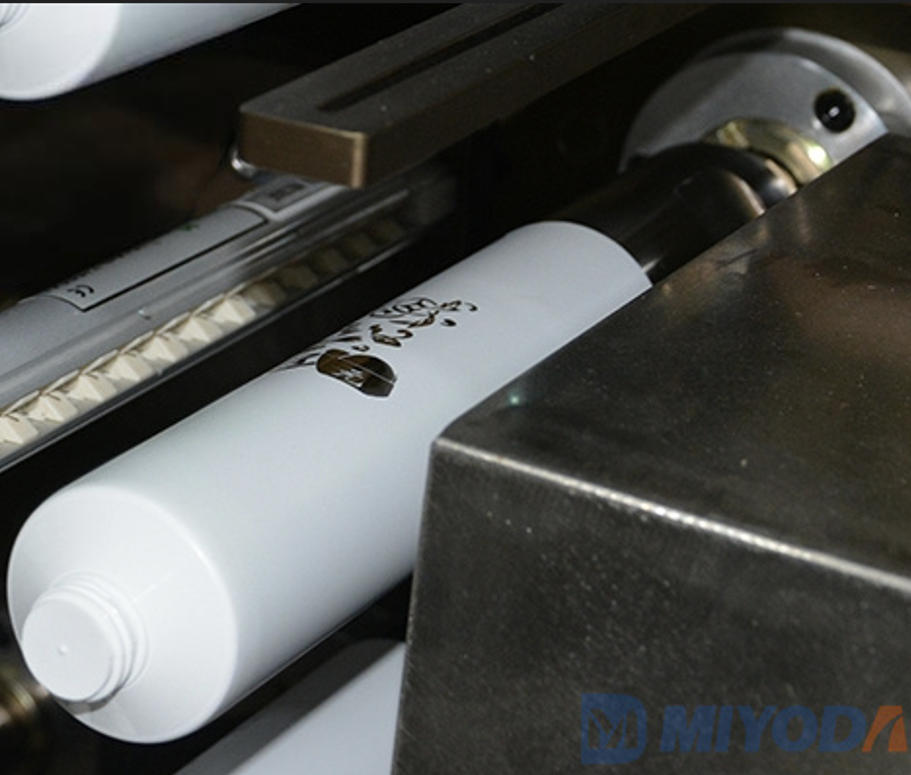
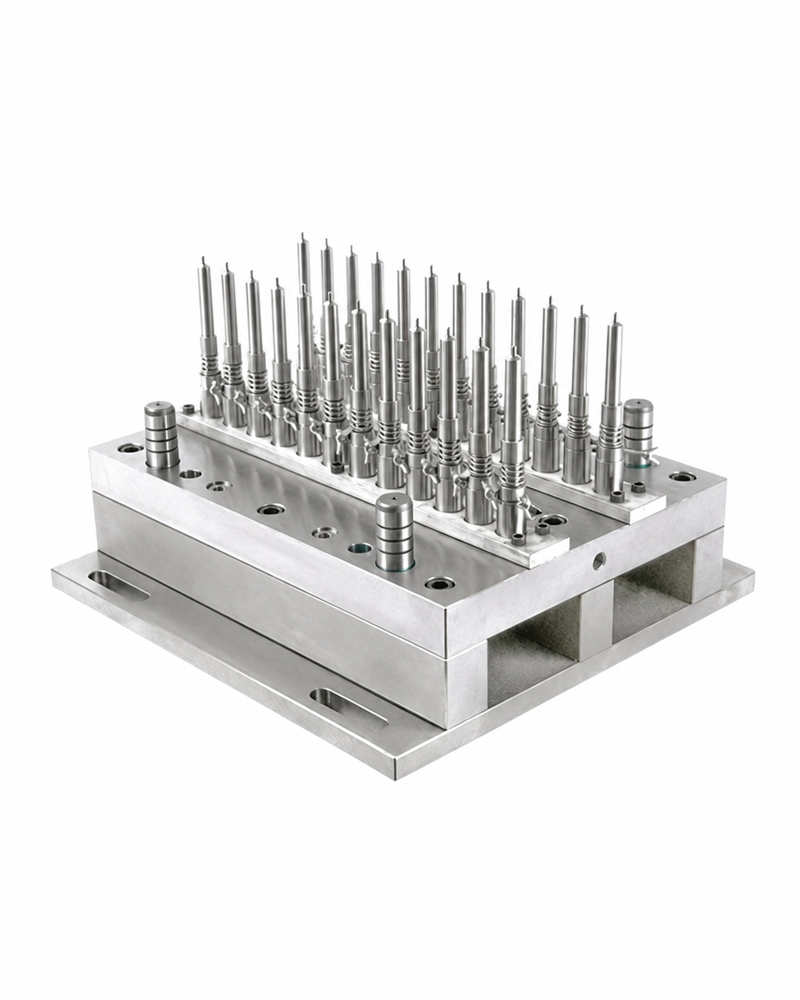
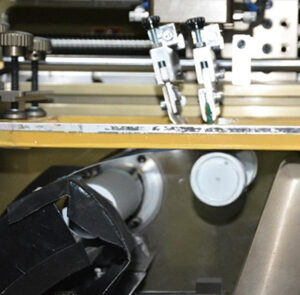
The mandrel holds the tube round. Registration depends on the tube sitting in exactly the same place every cycle.
Five Print Defects and How to Kill Them
Most defects are not random. They repeat, and they have a cause you can name.
| Defect | What you see | Usual cause | Fix |
|---|---|---|---|
| Ghosting | A faint second image beside the main print | Ink passing through a flooded or damaged screen area, or double squeegee stroke | Check screen condition, adjust squeegee pressure and flood speed |
| Misregistration | Colours drift out of line across a long run | Screen tension loss, loose frame clamps, heat build-up | Re-check clamps after two hours, use screens with stable tension |
| Smudging and set-off | Ink transfers to the next tube in the bin | Under-cured ink, no cooling zone, too much ink laid down | Raise UV dose, add cooling, cut ink deposit |
| Pinholes | Tiny unprinted dots in a solid block | Dust on the tube, clogged mesh, air bubbles in ink | Filter ink, clean tubes with ionised air before printing |
| Ink build-up | Print gets heavier and blurrier through the shift | Ink drying in the mesh, wrong thinner, hot workshop | Control viscosity, add retarder, keep the screen wet during stops |
Two of these deserve extra attention.
Ghosting is the one that ends up in the scrap bin most often. It looks like a shadow of the image. Operators tend to chase it with more pressure, which makes it worse. The real answer is usually a screen that has lost tension or a squeegee edge that has gone soft.
Registration drift is a maintenance problem wearing a quality costume. Servo indexing holds position well. Mechanical indexing also holds well, but only when the frame clamps are tight. After two hours of running, thermal expansion moves things by a few hundredths of a millimetre. At 0.1 mm tolerance, that is enough to fail. Our registration calibration steps walk through the check sequence in order.
Cost Per Tube, Not Price Per Machine
Two quotes can differ by 40 percent and still be the wrong comparison. What matters is cost per thousand printed tubes over five years.
Four levers move that number:
Scrap rate. Manual and semi-automatic printing commonly runs 3 to 8 percent rejects during changeovers. A well-set automatic machine holds under 2 percent. On a 200,000-tube order, that gap is thousands of tubes and a full shift of rework.
Ink metering. Screen printing wastes ink at set-up, not during the run. A machine with controlled squeegee pressure and consistent snap-off uses less ink per tube and, more importantly, produces fewer colour-drift rejects near the end of a batch.
Labour. One operator can run an automatic printer and a capping unit. A manual press needs a person at the machine for every tube. Labour cost per tube is often the largest single line in the calculation.
Utilisation. This one matters most for distributors. A machine that waits two hours for a screen change is not earning. A machine with quick-release frames and stored recipes can take a new job in 15 to 30 minutes and keep earning. You can model your own numbers with this ROI model for a tube printing upgrade.
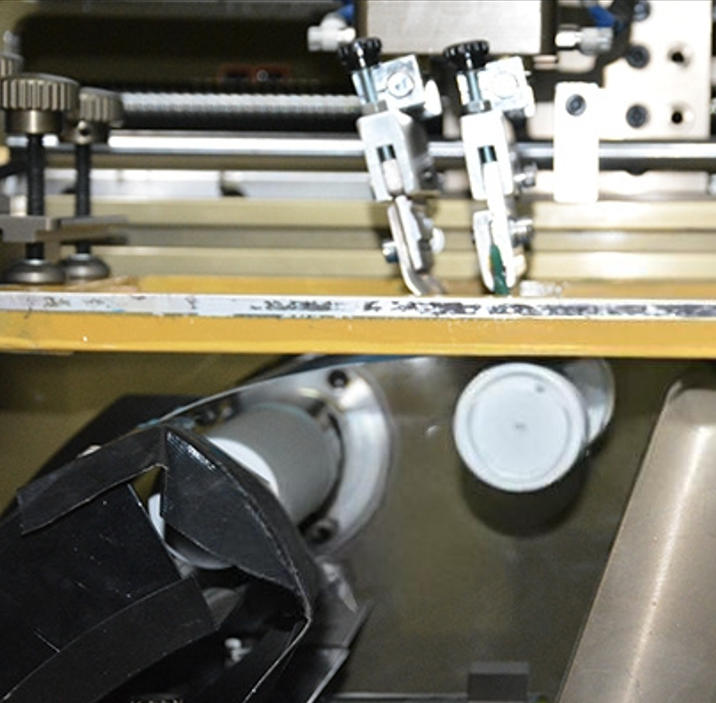
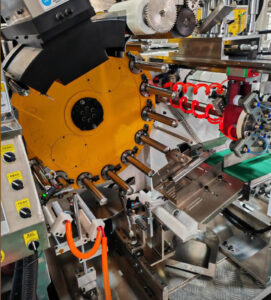
Mechanical detail decides uptime. Cams, clamps, and holders wear slowly, then fail fast.
Fast Changeovers and the Premium Feel
Seasonal packaging used to be a big-brand luxury. Now a 5,000-tube limited edition is normal for mid-size cosmetic brands. Two things make that possible: quick changeover and repeatable setup.
On a well-built automatic machine, a screen-only change takes 5 to 10 minutes. A full job change, including tube diameter, screens, and parameters, takes 15 to 30 minutes. Older manual machines often need one to two hours.
That difference changes what work you can accept. Short runs, sample batches, regional variants, influencer editions: these jobs pay a premium per tube because few suppliers can turn them around quickly.
There is a second commercial effect. When print is crisp and consistent, a brand can move up a price tier without changing the formula. The tube does the talking. A thicker ink film, a spot gloss on the logo, a matte background with a gloss highlight: these are screen printing jobs, and they read as expensive.
Metallic and neon inks are possible too. They need larger mesh openings and slower speeds, and they need a supplier who will run a trial on your actual tube before promising a result.
Maintenance That Protects Uptime
Downtime is rarely caused by a broken machine. It is caused by a loose clamp, a worn squeegee, or a lamp that has run past its hours.
A simple routine covers most of it:
- Screen tension: check weekly. Keep it in the 18 to 22 N/cm range. Low tension shows up first as blurred edges, then as ghosting.
- Squeegee: inspect the edge every shift. Re-sharpen or replace every 50,000 to 80,000 prints, sooner for abrasive white or metallic inks.
- UV lamps: log the hours. Mercury lamps typically last 1,000 to 2,000 hours. UV LED modules last far longer, but output still decays.
- Curing temperature: keep the tube surface below roughly 70 to 75 °C on laminate tubes, lower on soft LDPE. Overheating deforms the tube and can shrink the print.
- Training: three to five days of hands-on training, plus written procedures, is normal. Restricting recipe changes to trained setters is the cheapest quality control you can buy.
If you want the full schedule, our maintenance plan for soft tube printers breaks it into daily, weekly, and monthly tasks. It also explains why printed graphics fail on tubes when cure and tension drift together, which is covered in more depth in this guide to durable graphics on tube packaging.
Where Miyoda Packaging Machinery Fits
Miyoda Packaging Machinery builds tube printing and tube making equipment for cosmetic and pharmaceutical packaging. The work started with a simple observation: most print rejects come from setup and material handling, not from the print head.
So the machines are designed around access. Quick-release mandrels. Stored recipes for each tube size. Screens that load from the front. Curing zones you can reach and clean.
If you are comparing options, our buyer’s guide to tube screen printers covers the specification questions worth asking. If you need to print labels or sleeves alongside tubes, the UV digital label printer handles short-run work that screen printing is not built for. And if you are weighing methods, this side-by-side look at screen, offset, or digital printing will save you a week of research.
For buyers who need a full line rather than one machine, the tube filling and closing machine closes the loop between decoration and product.
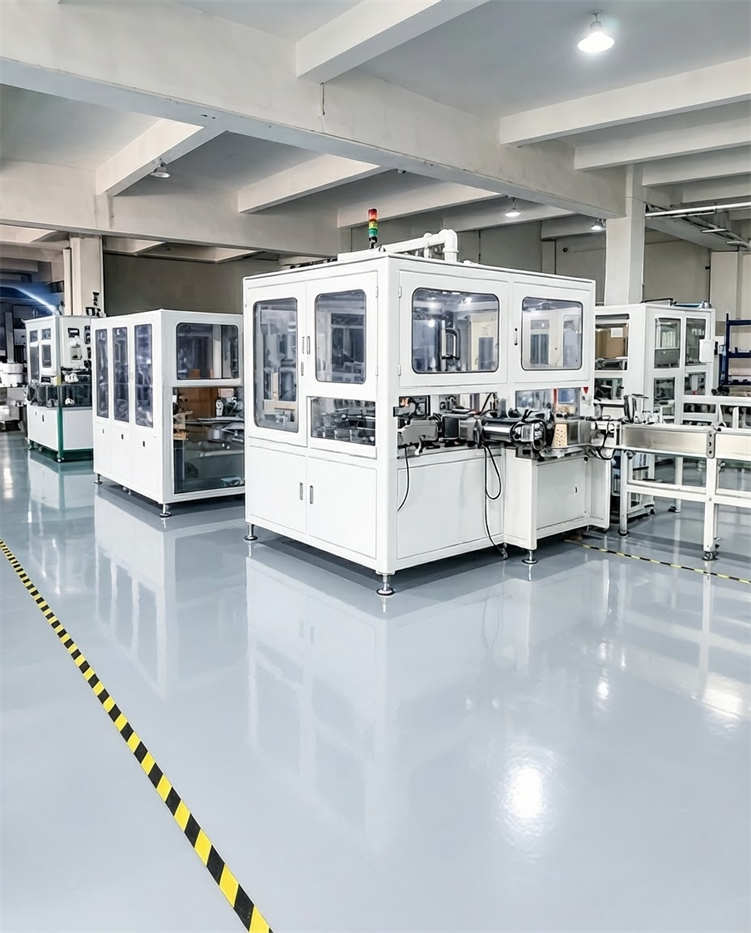
Before any deposit, run a pre-purchase check. This pre-purchase audit checklist lists what to inspect, what to measure, and what to ask for in writing. It is also worth seeing how Miyoda builds tube machinery before you compare quotes, because factory layout tells you more than a brochure does.
Glossary: Tube Printing Terms in Plain English
| Term | Plain meaning | Example |
|---|---|---|
| Registration | All colours landing in the right position | Red logo sits inside its white outline |
| Squeegee | Rubber blade that pushes ink through the mesh | 75 Shore A polyurethane blade |
| Mesh count | Threads per centimetre in the screen | 150 mesh for fine pharma text |
| Screen tension | How tight the mesh is stretched | 20 N/cm |
| Snap-off | Small gap between screen and tube | 2 mm |
| Mandrel | Support rod that holds the tube round | 35 mm mandrel for a 35 mm tube |
| Dyne level | Surface energy of the tube, in dynes/cm | 40 dynes after treatment |
| Delta E | Measured colour difference between two samples | Under 2 is hard to see |
| Ghosting | Faint double image beside the print | Caused by poor tension or flooding |
| Set-off | Wet ink transferring to the next tube | Under-cured ink, no cooling zone |
| PBL / ABL | Plastic or aluminium barrier laminate tube | Printed on the flat web before forming |
Print is the part of a tube that a customer actually touches. It carries the brand promise and, in pharma, the legal text. Silk screen printing remains the method that delivers both at production speed.
The results depend on three things working together. The right ink for the tube material. Fresh surface treatment on every batch. And a machine that holds registration while it runs, then lets you change jobs in minutes rather than hours.
Get those three right and the tube stops being packaging. It becomes the reason a buyer picks your product instead of the one next to it.
If you are planning a line, send us your tube samples and artwork. We will run a print trial on our machines and share the measured registration, adhesion, and speed data with you. That is a faster way to choose a machine than reading another brochure. Start with a quick conversation with our engineers at miyodamachine.com.
FAQ
1. Which ink types are safest for pharmaceutical-grade tubes?
UV-curable inks with low migration formulations are the usual choice for pharma tubes. They cure instantly, contain no heavy metals, and hold up to alcohol-based products. Ask for the ink supplier’s migration test data and safety data sheet, and confirm the ink is rated for indirect food or drug contact if the tube wall is thin.
2. How do I prevent ink peeling on high-squeeze cosmetic tubes?
Treat the tube surface immediately before printing, then verify it with a dyne pen. Target 38 to 42 dynes/cm on PE. Use an ink matched to the substrate, confirm full cure, and run a tape adhesion test on the first five tubes of every batch. If peeling starts later, check storage conditions first, not the printer.
3. Can silk screen printing handle metallic or neon colours for luxury branding?
Yes, with adjustments. Metallic and neon inks need larger mesh openings, slower print speeds, and more careful stirring to keep the particles suspended. Expect to run a trial on your actual tube before committing to a full order, because metallic density varies a lot between substrates.
4. What is the average setup time for a multi-colour print run?
On an automatic machine, a screen-only change takes about 5 to 10 minutes. A full job change with a new tube diameter, new screens, and new parameters takes 15 to 30 minutes. Manual presses often need one to two hours for the same work.
5. How does screen printing compare to digital printing in terms of cost per unit?
Screen printing wins above roughly 5,000 tubes per design. Screens carry a one-time setup cost, then the per-tube cost drops fast. Digital printing has almost no setup cost but a higher cost per tube, so it wins on short runs, variable data, and personalised editions.
6. What is the minimum legible font size achievable with this technology?
A 6 pt line is routine. With 150 to 180 mesh screens, sharp artwork, and a clean squeegee edge, 4 pt text stays readable. Below that, ink spread starts closing the gaps in letters, and auditors will flag it.
7. How do different tube materials affect ink drying times?
PE tubes cure faster because the surface is non-porous and the ink sits on top. Laminate tubes hold heat differently, and their surface must stay below about 70 to 75 °C to avoid deformation. In practice, laminate needs slightly lower UV dose over a longer zone, not a hotter lamp.
8. What are the most common causes of print misalignment?
Loose frame clamps, screen tension loss, and heat build-up during a long shift. Tube ovality and worn mandrels also move the print. Re-check clamps after the first two hours of running, and replace mandrels that no longer hold the tube round.
9. Can the machine handle varying tube diameters without extensive re-tooling?
Yes, if it uses quick-release mandrels and stored recipes. The operator swaps mandrels, loads the correct screen, and recalls the saved recipe for squeegee pressure, stroke, and speed. Only fine adjustment is needed, which keeps mixed orders practical.
10. How do I calculate the ROI when upgrading from manual to automatic screen printing?
Add four numbers: labour cost per tube, scrap rate, changeover hours per month, and the price premium you can charge for better print. Compare five-year totals, not purchase prices. A machine that costs 40 percent more but cuts scrap by 4 points usually pays back within two years.